• Features
  • Pricing
  • Migration
  • Integrations
  • Resources

Main meniu
Main meniu
Main meniu
Main meniu

Handing shopping over to AI: How far will shoppers actually go?

We surveyed 4,000 shoppers across the U.S., UK, Canada, and Australia to understand how AI is changing online shopping: where it’s being used, how far shoppers are willing to delegate, and where they draw firm boundaries.

Key findings

From assistant to shopping channel

In the past 6 months, have you used generative AI for any of the following while shopping online?

USA
UK
Canada
Australia

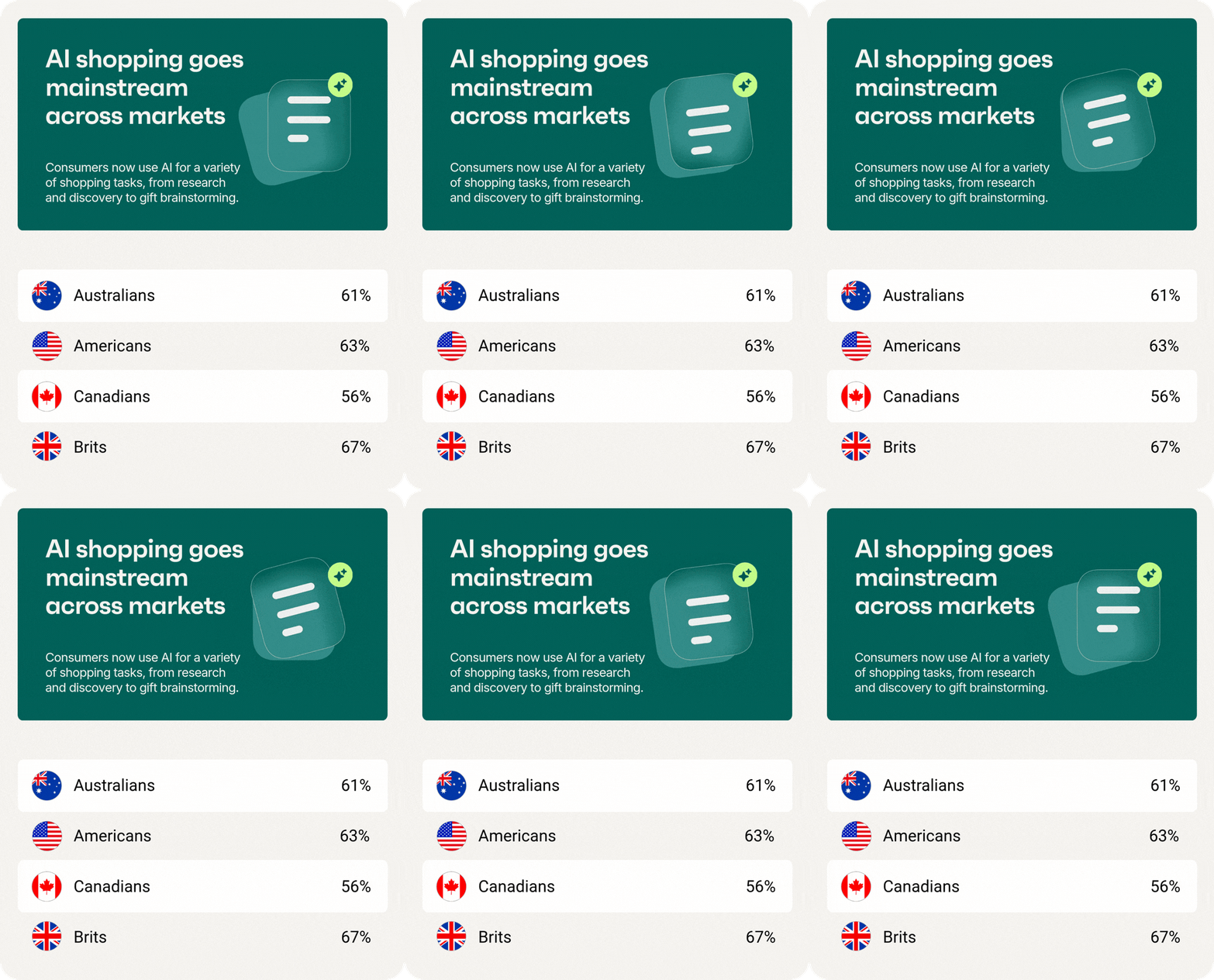
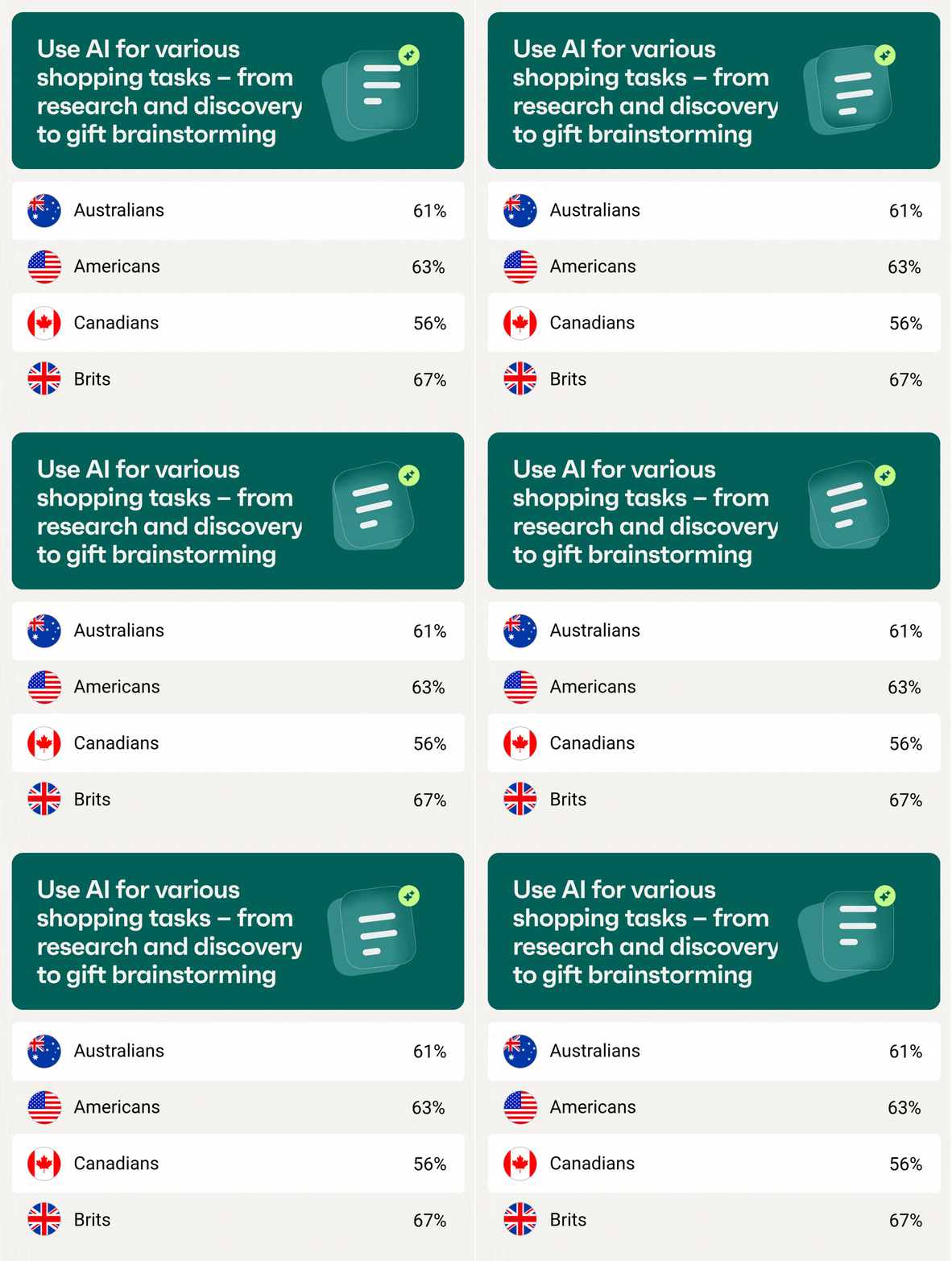
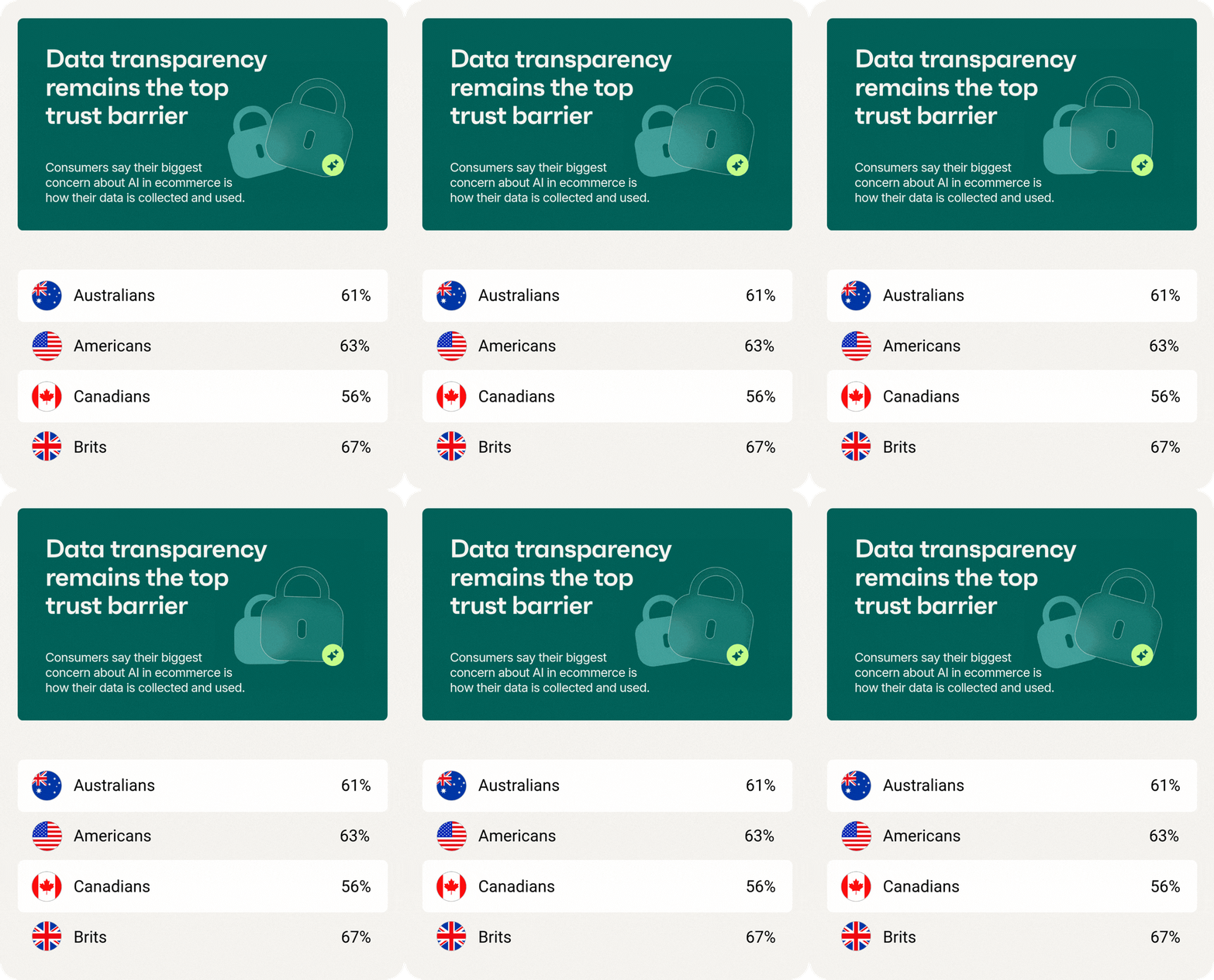
In the past six months, 63% of Americans say they’ve used generative AI for shopping-related tasks, alongside 67% of Brits, 56% of Canadians, and 61% of Australians. Most shoppers use AI for practical tasks: researching and comparing products (47% US), finding deals (41%), or summarizing reviews (39%). Others use it to brainstorm gift ideas (31%) or build shopping lists (29%).

Compared to August 2025, usage has grown in most markets. Last year, 59% of Americans, 55% of Brits, 56% of Canadians, and 55% of Australians reported using generative AI for shopping tasks. The shift suggests AI is moving beyond early adoption and into everyday use.

ChatGPT remains the dominant tool across all four markets. 56% of Americans say they use ChatGPT for shopping, compared to 60% of Brits, 64% of Canadians, and 70% of Australians, outperforming Google’s Gemini, Microsoft Copilot, and Amazon Rufus. While U.S. usage has slightly declined compared to last year (65%), adoption has grown significantly in the UK (39% → 60%), Canada (37% → 64%), and Australia (40% → 70%).

Perception has shifted alongside usage. 42% of American shoppers say ChatGPT provides better product recommendations than search engines, compared to 44% in the UK, 48% in Canada, and 52% in Australia. A year ago, those numbers were closer to one in four across markets.

AI adoption is also expanding into retailer-owned environments. 13% of Americans say they’ve used AI features built directly into a retailer’s website, alongside 12% in the UK, 9% in Canada, and 14% in Australia, showing that AI is not confined to standalone tools.

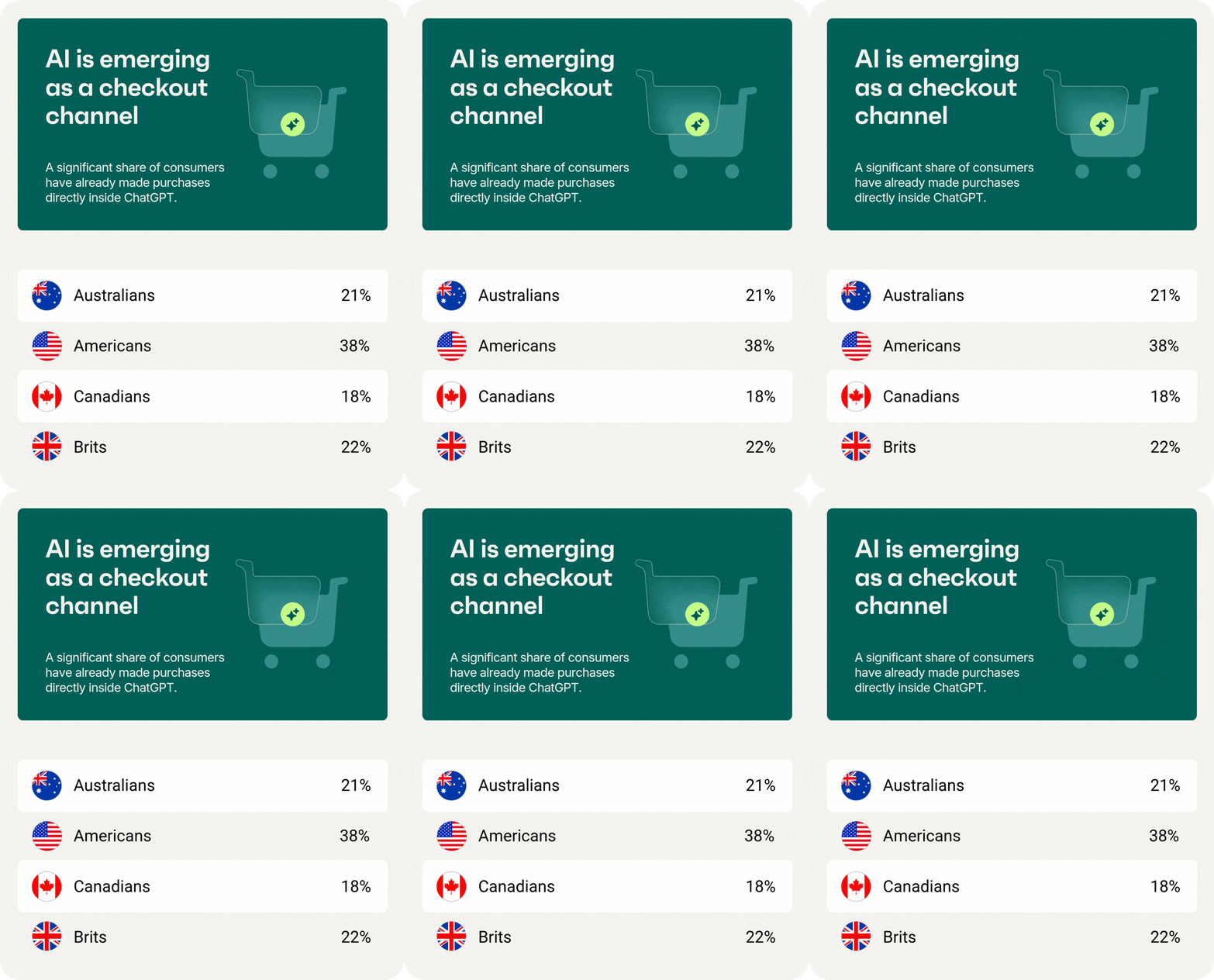
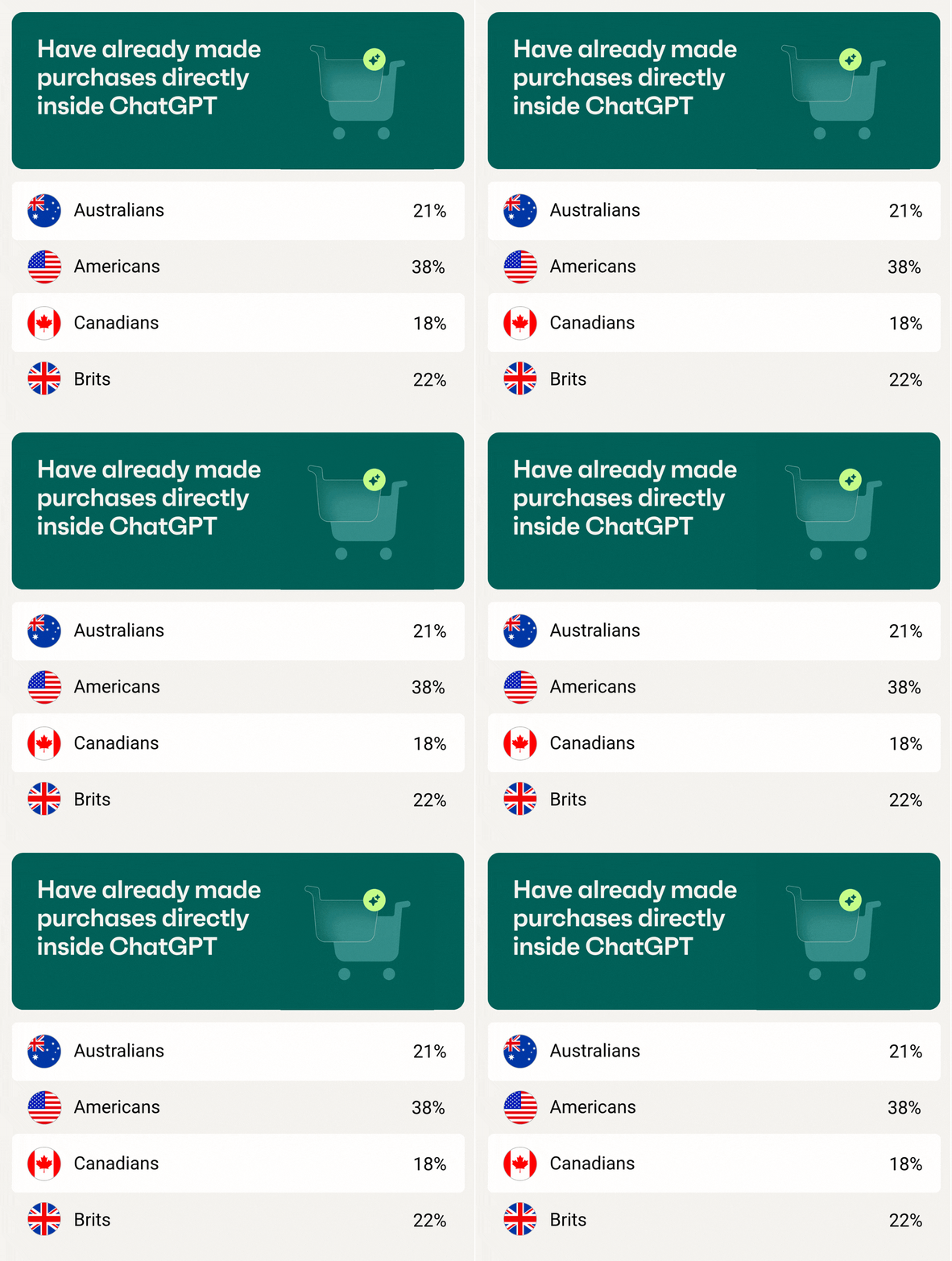
Most notably, AI is beginning to function as a checkout environment. In late September 2025, OpenAI introduced Instant Checkout within ChatGPT, allowing users to browse, select, and complete purchases without leaving the chat interface. The feature is currently available only in the U.S., and 38% of Americans say they’ve completed a purchase directly inside ChatGPT without being redirected to another website.

What began as a thinking assistant for research and comparison is now evolving into a place where purchases actually happen.

Why shoppers use AI and
where they draw the line

Why are you using AI for shopping?

USA
UK
Canada
Australia

AI adoption in shopping is driven first by practicality.

Across markets, the most common reason people use AI is simple: it saves time, as cited by 47% of Americans, 49% of Brits, 48% of Canadians, and 54% of Australians. Close behind are ease and simplicity: 40–45% say AI makes shopping easier, and nearly one in three say it reduces decision fatigue.

Discovery is another driver. Around one in three to four shoppers say AI helps them find products they wouldn’t have discovered otherwise. Others say it helps them shop with more confidence or find better deals.

For a meaningful minority, AI recommendations are already as persuasive as human ones. 18% of Americans say they prefer AI-generated product recommendations over those of their friends, alongside 15% in the UK and Australia and 13% in Canada. A similar share says AI recommendations outperform those from creators or influencers.

But enthusiasm has limits.

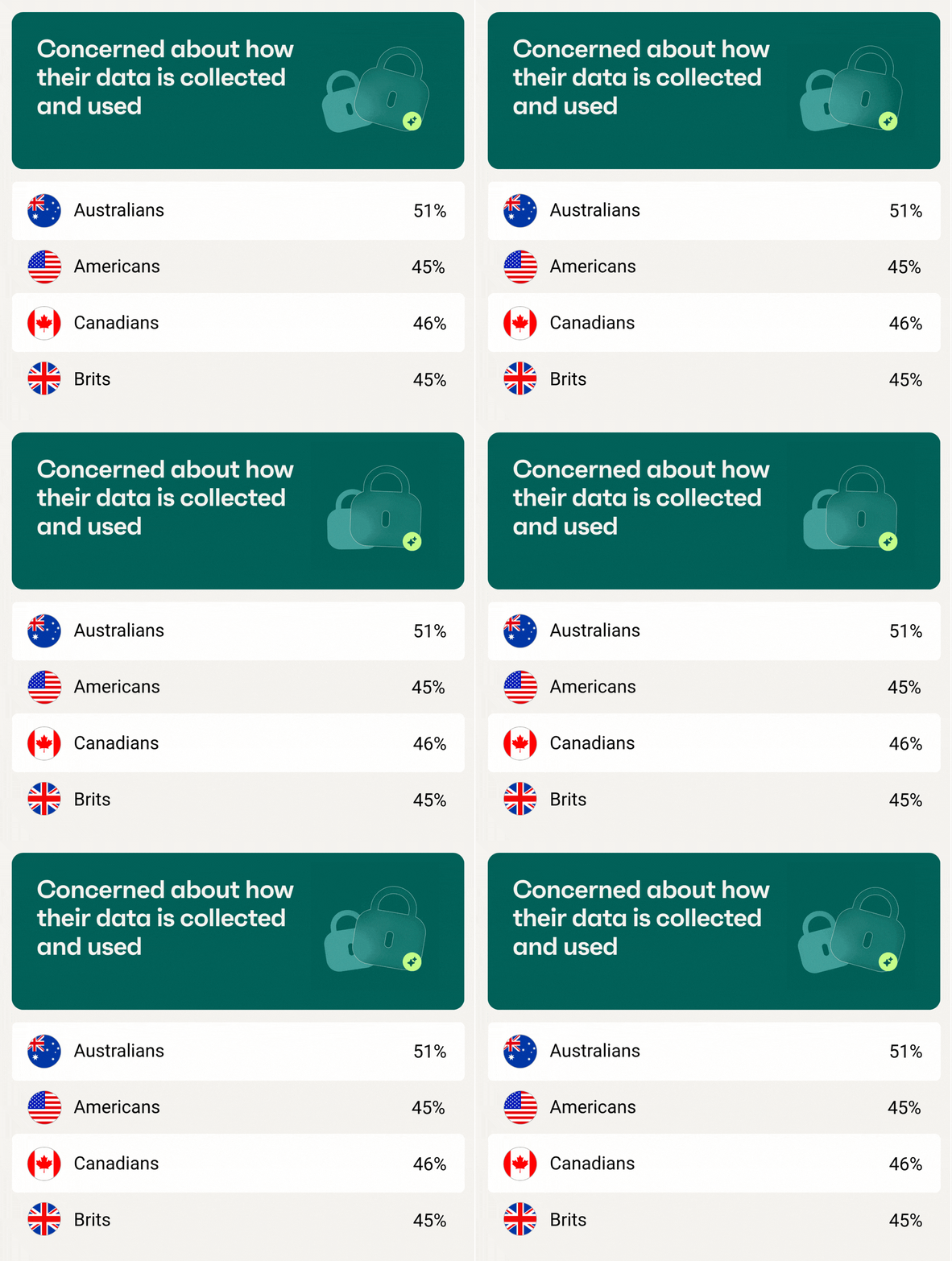
When asked about their biggest concerns, shoppers consistently point to transparency and control. Around half across markets (45–51%) worry about how their data is collected or how recommendations are generated. Roughly one-third are concerned that prices or choices may be optimized for the platform rather than for them.

Control is a recurring theme. 34% of Americans, 40% of Brits and Australians, and 36% of Canadians say they’re concerned about AI completing a purchase without their approval. Concerns about biased or sponsored recommendations are also common, cited by around 28–31% respondents across countries.

Only a small share (10–14%) reports having no concerns at all.

So adoption is expanding, but trust still remains conditional, shaped by concerns around control, transparency, and bias.


What’s your biggest worry about AI in online shopping?

USA
UK
Canada
Australia

Trusting AI with data, without
crossing the line

Would you allow a shopping AI assistant to access the following information to improve
recommendations? (Select all that apply)

USA
UK
Canada
Australia

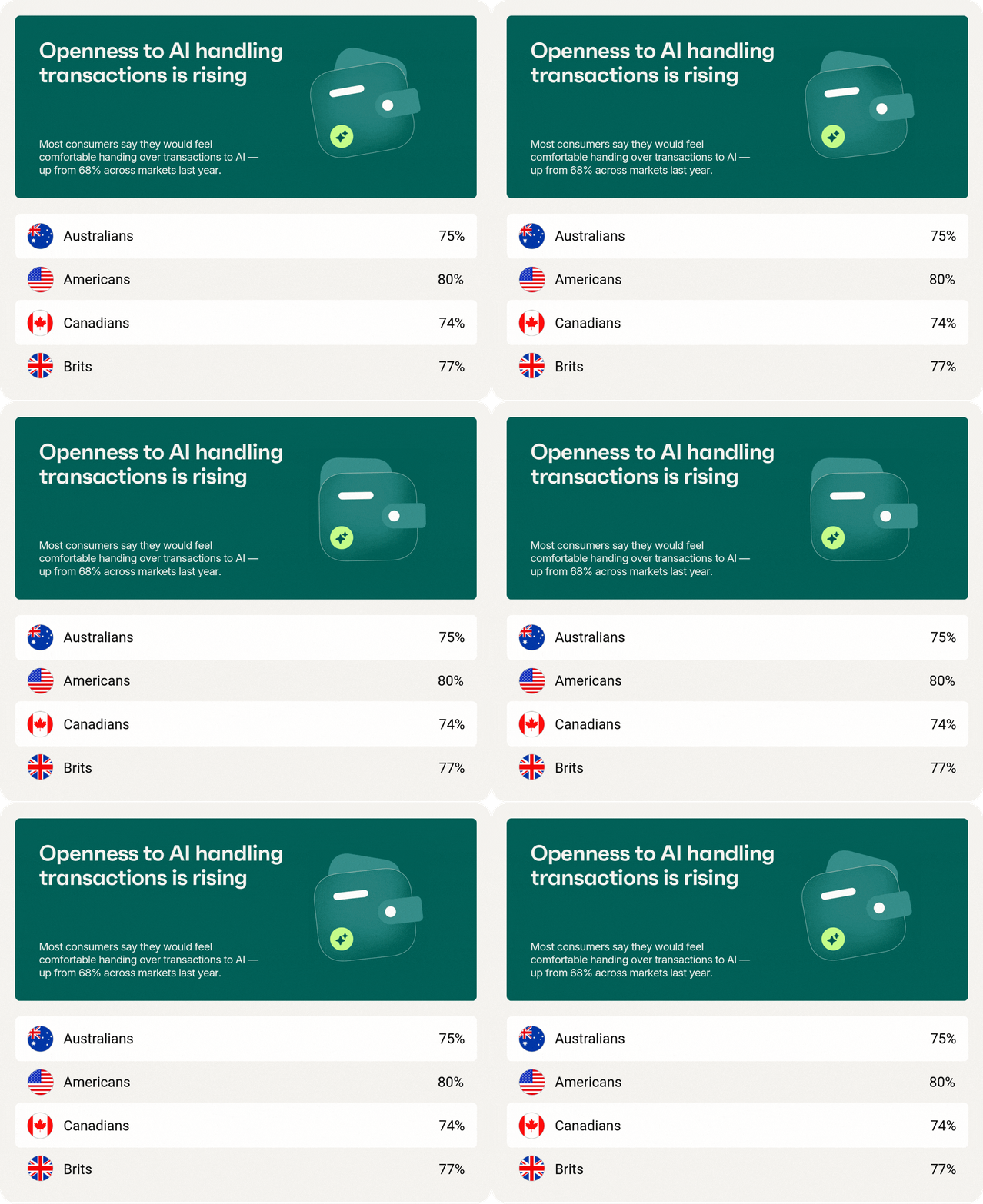
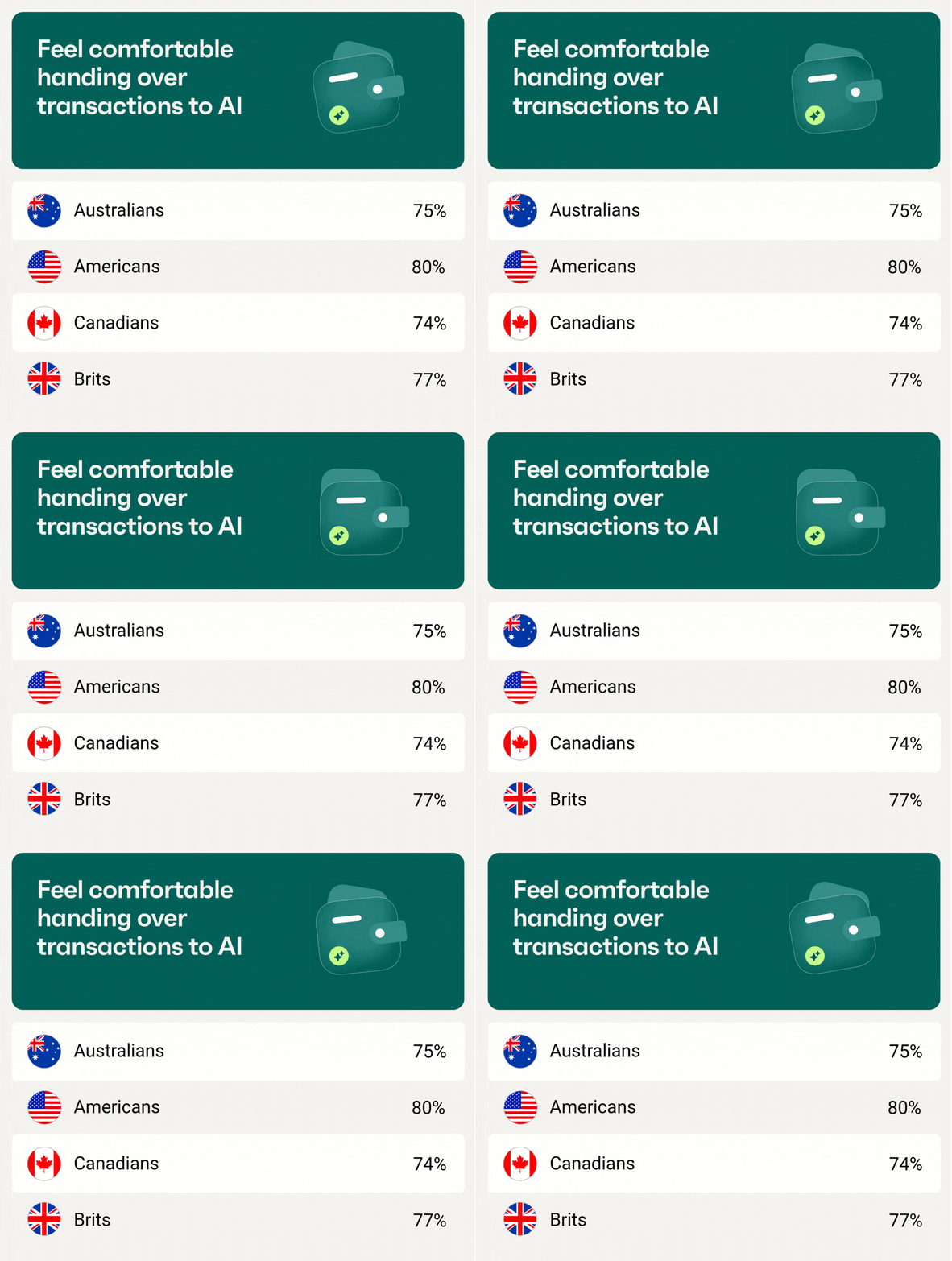
Comfort with AI-led transactions is high. 80% of Americans say they would feel comfortable handing over transactions to AI in some form, compared to 77% of Brits, 74% of Canadians, and 75% of Australians. But most often, with conditions such as full approval before purchase or limits to routine orders.

That comfort has increased over time. Last year, 68% across all four countries said they were comfortable with AI handling transactions, indicating a measurable shift in acceptance.

A smaller group is ready to fully delegate. 16% of Americans say they would allow AI to automatically reorder products without reviewing them, alongside 15% in the UK and Australia, and 13% in Canada.

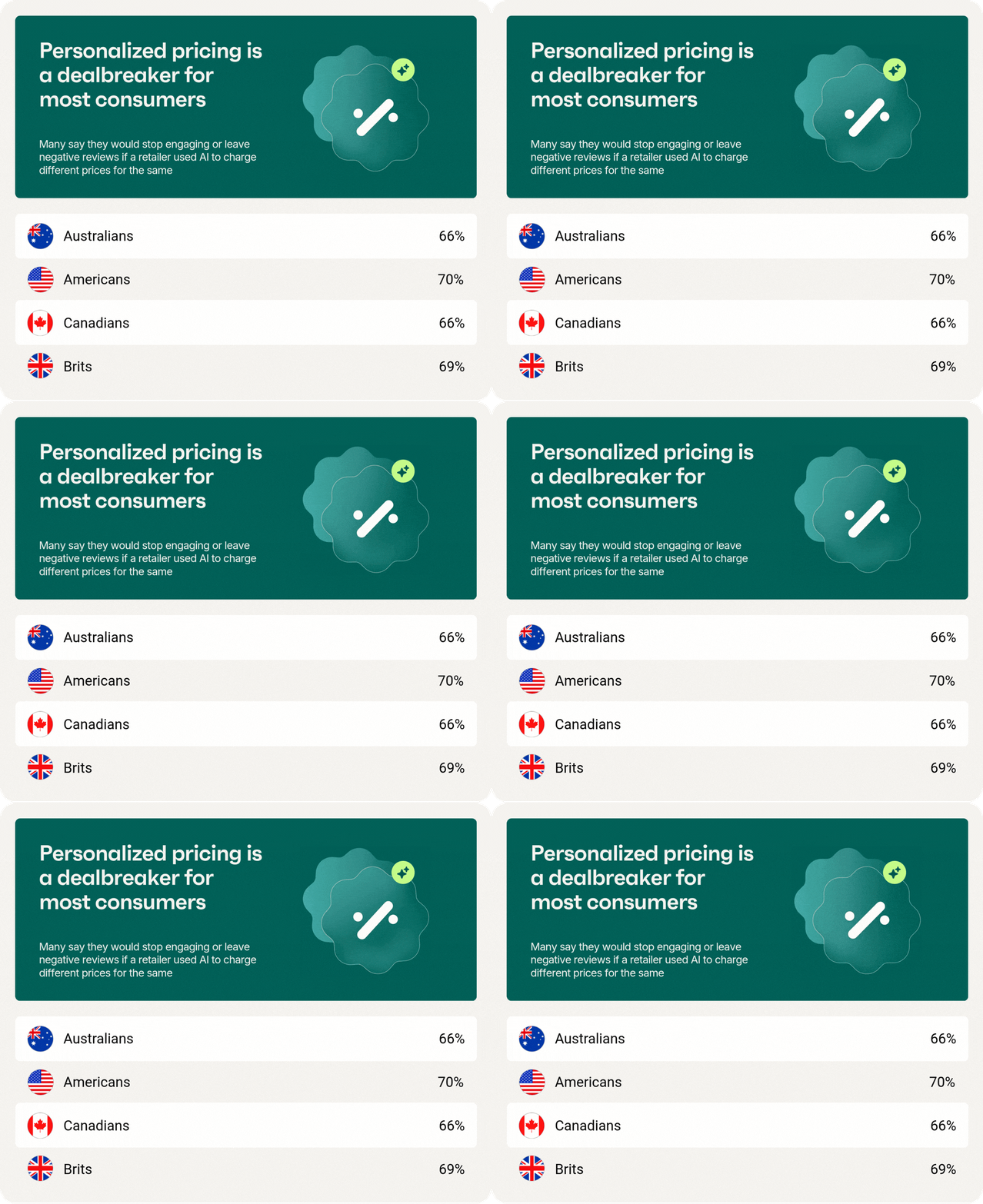
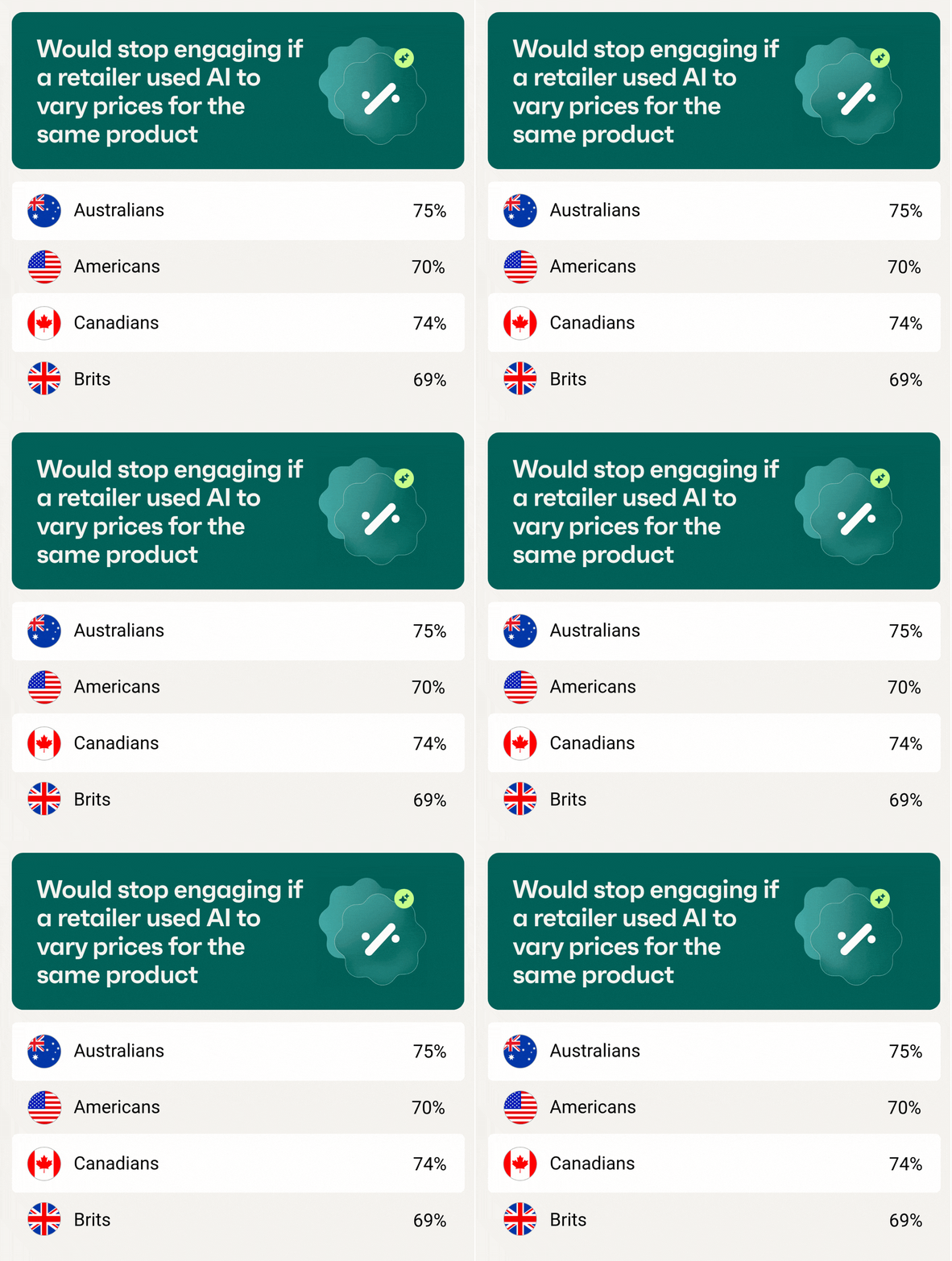
However, personalized pricing remains a clear red line. If a retailer used AI to charge different customers different prices for the same product, 70% of Americans, 69% of Brits, and 66% of Canadians and Australians say they would reduce engagement or stop shopping there, or even leave negative reviews. Only 8–9% in each country say it would not change their behavior.

All in all, these results show that trust grows when control, transparency, and safeguards are visible – and it retracts quickly when those boundaries are crossed.


What would make you trust AI more when shopping online? (Select all that apply)

USA
UK
Canada
Australia

What this means for
retailers

AI shopping isn’t a short-term experiment. 40% of Americans say they plan to use AI more for online shopping in the future, alongside 40% in the UK, 30% in Canada, and 39% in Australia. Whether retailers actively build for it or not, consumer behavior is already shifting.

Marty Bauer, Ecommerce Expert at Omnisend, recommends planning for it. Here are his tips for retailers looking to build trust and use AI responsibly:

1
Be explicit about how customer data is used

Shoppers are open to sharing browsing history, past purchases, and location data, but data use is also their biggest concern. Retailers should clearly state what data AI relies on, why it’s needed, and how it improves the shopping experience.

2
Explain recommendations in simple terms

When shoppers understand what data is being used — for example, “based on your browsing history” or “recommended based on past purchases” — AI feels more transparent and less invasive.

3
Keep approval steps in place

Many shoppers are comfortable letting AI assist with purchases, but they still want the final say. Provide clear opportunities to review, edit, or approve before anything is bought.

4
Prove recommendations aren’t pay-to-play

A significant share of consumers worry that AI prioritizes sponsored or paid products. If recommendations are influenced by partnerships, disclose them. If they aren’t, make that clear.

Expert insight

“AI adoption is expanding, but so are expectations. Retailers that focus on transparency, control, and clarity are more likely to turn experimentation into long-term trust.”

Marty Bauer
Omnisend’s Senior Ecommerce Expert
Methodology

The survey was commissioned by Omnisend and conducted by Cint in January of 2026, polling 4,000 consumers from the US, Canada, Australia, and the UK about their shopping habits from the last 12 months. Quotas were set for age, gender, and place of residence to achieve a nationally representative sample of users. The margin of error is +/-3 percent.

Have any questions?

Reach out to our Public Relations team by email [email protected] for more details. We're here to help and provide any additional information you might need.

Omnisend

Email and SMS marketing so good, it’s boring

Omnisend is a leading email and SMS marketing platform, trusted by over 150,000+ brands worldwide and with a 4.7-star rating from more than 6,000 Shopify reviews. With powerful tools like automation, segmentation, reporting, push notifications, and product reviews, Omnisend merchants generate $79 for every $1 spent.

Learn more