Omnisend AI


 OFFER
OFFER











The best Klaviyo alternatives are Omnisend for ecommerce value at $132/month vs. Klaviyo’s $150/month (10,000 contacts), MailerLite at $89/month for a website builder and campaigns, Brevo for volume-based plans from $32/month for 10,000 contacts, and GetResponse for content monetization at $134/month.
Other solid options include Drip, Shopify Messaging, HubSpot, Privy, ActiveCampaign, and Mailchimp.
We researched all 10 tools across their use cases, features, and pricing to help you find the perfect fit. Our full review process is public, including how we handle tools that compete with us.
Quick answer: top 10 Klaviyo alternatives by business need
Here’s how each brand compares with Klaviyo at a 10,000 contact mark:
- Best for combining email, SMS, and web push: Omnisend at $132/month. Enterprise-level omnichannel automation minus Klaviyo’s price tag.
- Best for subscription businesses sending lots of emails: Drip at $154/month. Klaviyo doesn’t have unlimited monthly email sends.
- Best for storing large lists cheaply: Brevo at $32/month includes 20,000 emails and 500,000 contacts. Klaviyo doesn’t offer volume-based email pricing.
- Best for automation-first stores: ActiveCampaign at $149/month. Klaviyo has fewer automation templates (60+ vs. 900+).
- Best for building and monetizing a website: MailerLite at $89/month. Klaviyo has no website builder.
- Best for free Shopify-native marketing: Shopify Messaging is free for all contact counts. Klaviyo bills by active profiles.
- Best for a built-in sales CRM: HubSpot at $410/month. Klaviyo’s CRM lacks HubSpot’s tool ecosystem.
- Best for list-building tools: Privy at $165/month. Klaviyo has fewer form and pop-up types.
- Best for content monetization: GetResponse at $134/month for the Creator plan. Klaviyo has no monetization features.
- Best for social posting plus email: Mailchimp at $110/month. Klaviyo doesn’t natively support social marketing.
How to choose the best Klaviyo alternative?
When comparing ecommerce email tools, try starting with data and workflows. Understand how each platform handles your welcome series, abandoned cart flow, post-purchase emails, customer winback campaigns, and the segments generating meaningful revenue. Can you quickly build them? Can you integrate and use the data? Can your team make changes independently? Now you’ve already narrowed down 80% of your shortlist, and the other questions matter a lot less.

Answer up to 10 questions and we’ll point you to the Klaviyo alternative that fits your store best.
Which Klaviyo alternative fits your store?
Are you on Shopify?
Do you need email, SMS, and web push inside the same automation workflow?
Do you email most of your list at least once a week?
Do you email your list three or more times a week, or keep hitting send limits?
Is list growth with pop-ups, quizzes, and spin-to-win your top priority?
Do you need a sales CRM with deals and pipelines?
Do you need a full sales, service, and content ecosystem, not just marketing?
Do you sell digital products, courses, or paid newsletters?
Do you need a website builder alongside your email tool?
Do you want social posting and scheduling in the same tool as email?
Are you sending 10,000 emails per month?
In-depth analysis of Klaviyo alternatives
| Tool | Key advantage over Klaviyo | Starting price (lowest-tier paid plan) | Price at 10,000 contacts (lowest-tier paid plan) | Customer support |
|---|---|---|---|---|
| Omnisend | Enterprise-level omnichannel automation minus Klaviyo’s price tag | $16/month (500 contacts) | $132/month | 24/7 live chat and email in all plans |
| Drip | Unlimited email sends | $39/month (2,500 contacts) | $154/month | Email, 24/5 live chat on $99/month+ plans |
| Brevo | Pricing based on monthly email volume | $9/month (500 contacts) | $32/month | Email, Professional plans receive phone support |
| ActiveCampaign | AI and automation-first toolkit | $19/month (1,000 contacts) | $149/month | Email and live chat in all plans |
| MailerLite | Website building and marketing | $12/month (500 contacts) | $89/month | Email support and live chat (plan-dependent) |
| Shopify Messaging | Native Shopify email marketing | Free (no contact limits, up to 10,000 emails) | Free | Live chat provided by Shopify |
| HubSpot | CRM and marketing ecosystem | $20/month per seat (1,000 contacts) | $410/month | Email, phone support in higher tiers |
| Privy | List-growth tools | $30/month (1,500 contacts) | $165/month | Email and live chat |
| GetResponse | Creator and monetization features ($134/month for 10,000 contacts) | $19/month (1,000 contacts) | $79/month | Email and chat in all plans |
| Mailchimp | Social posting, scheduling, and marketing in one tool | $13/month (500 contacts) | $110/month | 24/7 email and live chat |
| Klaviyo (for reference) | N/A | $20/month (500 contacts) | $150/month | 24/5 live chat and 24/7 email in paid plans |
Pricing verified as of September 2026.
1. Omnisend – best Klaviyo alternative for similar omnichannel capabilities at a lower price
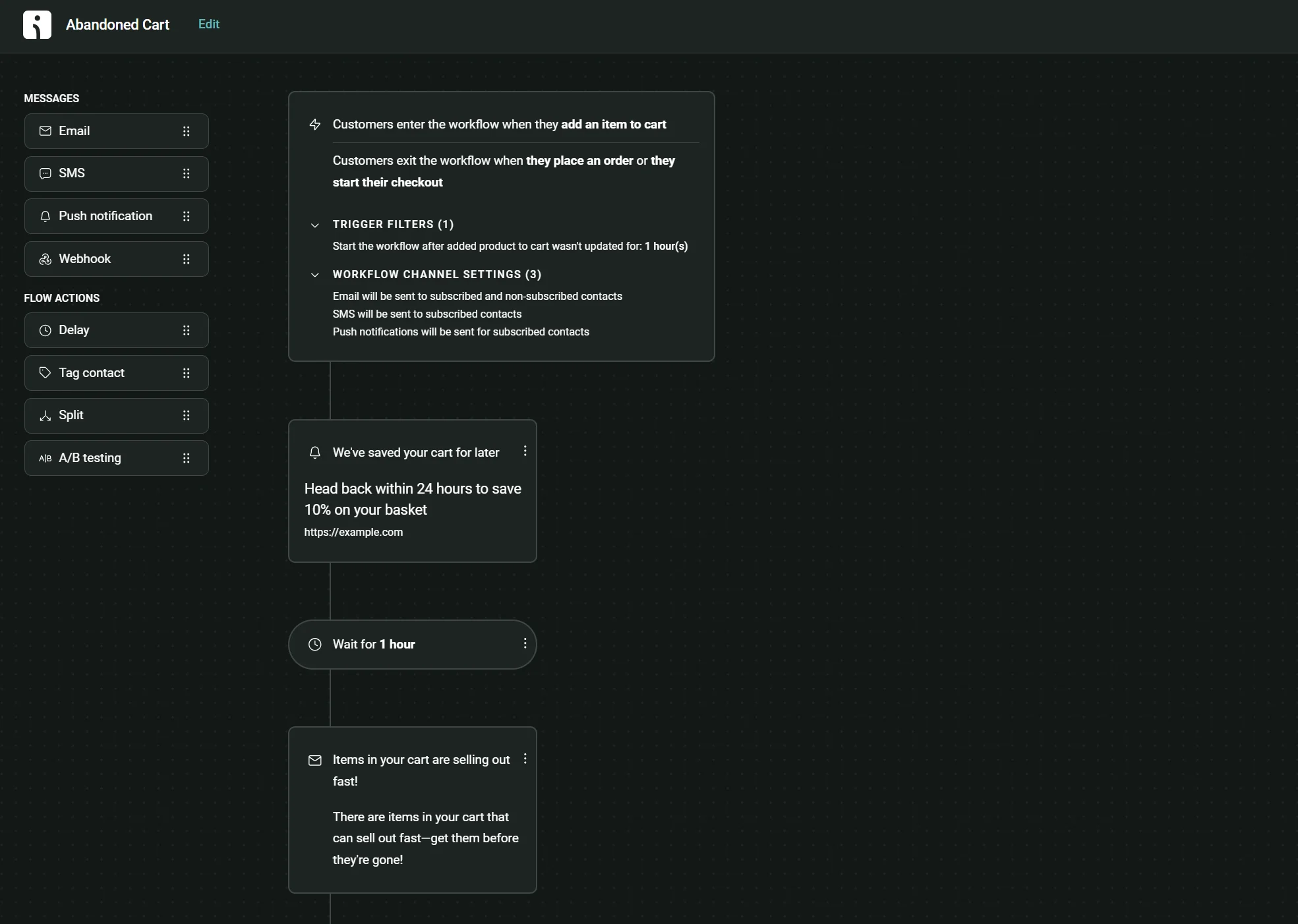
Omnisend is better than Klaviyo for omnichannel messaging across email, web push, and SMS with better value. Paid plans have unlimited web push, Pro plans have unlimited emails, and all automations can combine channels.
Omnisend vs. Klaviyo pricing
| Contacts | Omnisend | Klaviyo |
|---|---|---|
| 500 | $16/month | $20/month |
| 2,500 | $44/month | $60/month |
| 10,000 | $132/month | $150/month |
Standard plan pricing for email and web push. Omnisend’s Pro plan supports SMS, from $59/month for 2,500 contacts with unlimited email sends.
Omnichannel workflows: Omnisend vs. Klaviyo
Klaviyo doesn’t support native web push notifications, so customers can’t enter one workflow and receive a personalized browser notification alongside an email and an SMS. In Omnisend, all three channels are steps in the same workflow.
Standout features that set Omnisend apart from Klaviyo
- 24/7 live chat support in all plans; Klaviyo’s free plan has no live chat, and the paid plan has 24/5 live chat (weekdays)
- Multi-store management for up to 500 stores in one account; Klaviyo requires a separate account per store/brand
Omnisend’s limitations
Omnisend lacks Klaviyo’s CRM contact profiles. It doesn’t have predicted next order date and segment snapshots, and it can’t segment by predicted customer lifetime value (CLV), even though it shows historical and predicted CLV at the contact level.
Best for: Shopify and WooCommerce stores wanting fewer steps to launch campaigns and flows without missing out on ecommerce omnichannel reach.
Watch the video below for a complete comparison between Omnisend and Klaviyo:

Vagari Bags is a UK fashion brand that switched from Klaviyo to Omnisend. It now sees 40–50% email open rates, 6–7% SMS click rates, and a £121.38 return for every £1 spent across both channels combined, outstripping its results with Klaviyo. Could you realize the same?
2. Drip – best Klaviyo alternative for subscription businesses with a high send-to-contact ratio
Drip covers more subscription scenarios in its lead-nurturing email templates than Klaviyo. It can also be cheaper when you send more than 10 emails per contact. Drip offers unlimited emails at all contact tiers compared to Klaviyo’s 10x send limit.
Drip vs. Klaviyo pricing
| Contacts | Drip | Klaviyo |
|---|---|---|
| 500 | $39/month (2,500 contacts)* | $20/month |
| 2,500 | $39/month | $60/month |
| 10,000 | $154/month | $150/month |
*Drip’s cheapest plan already includes up to 2,500 contacts.
Email campaigns: Drip vs. Klaviyo
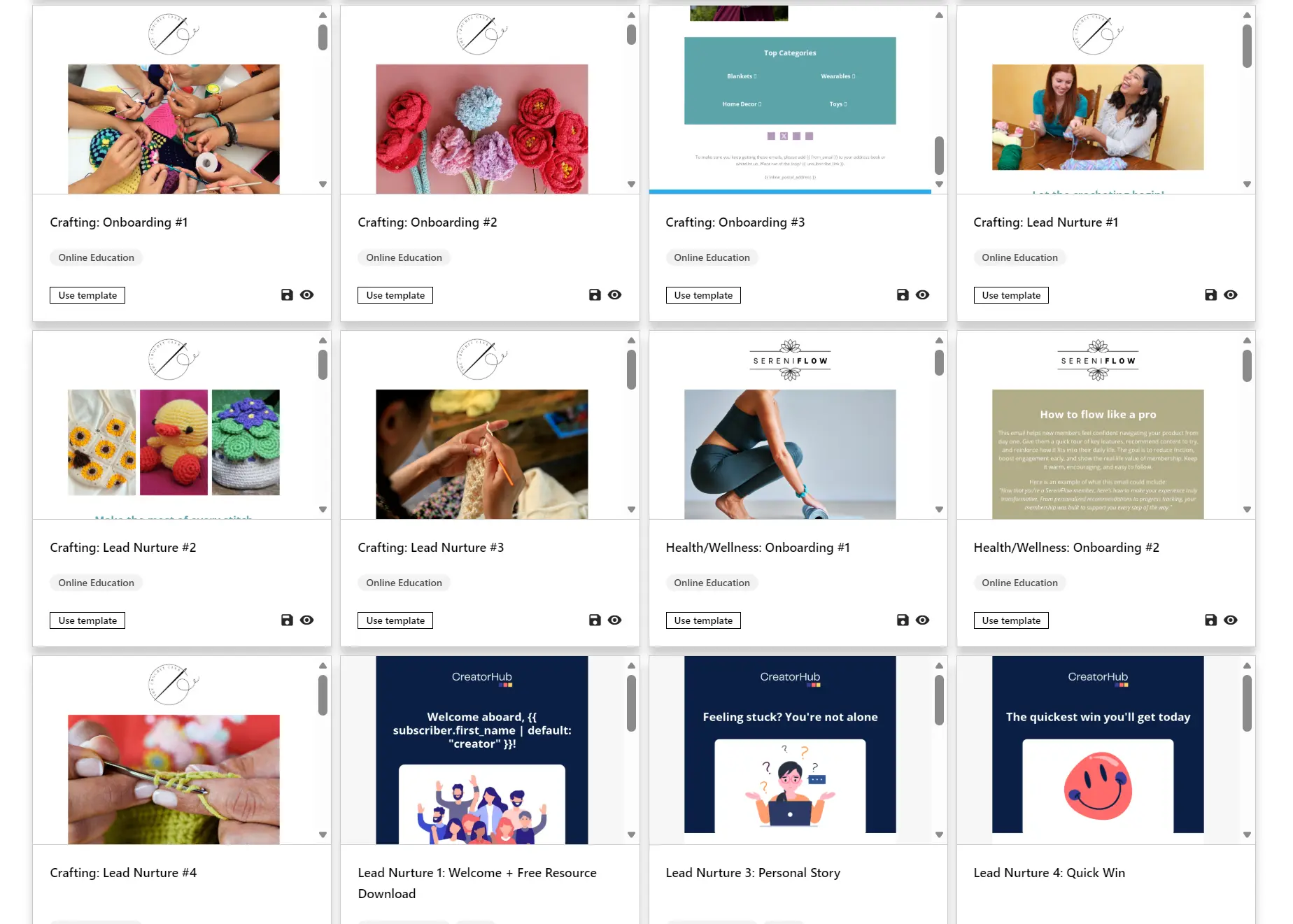
Klaviyo has fewer email templates for subscription-based businesses than Drip, instead focusing on ecommerce. Drip has 150+ email designs, with 60+ covering onboarding, soft sells, success stories, reminders, and more subscription moments for multiple industries.
Standout features that set Drip apart from Klaviyo
- Multiple triggers in a single workflow; Klaviyo caps each flow at one trigger, so it requires a separate workflow
- Pre-built automation workflows for online education, events, service providers, and travel, such as a service education series; Klaviyo covers none of these industries
Drip’s limitations
Drip’s contact management is weaker than Klaviyo’s, with no CRM or predictive analytics, and its automations lack Klaviyo’s branching depth of up to 20 paths. Klaviyo also re-checks contact eligibility at every step in a flow; Drip relies on Workflow Goals to exit people instead.
Best for: Subscription ecommerce businesses that want to automate their customer journey without worrying about email send limits.
3. Brevo – best Klaviyo alternative for storing large lists cheaply and tracking deals
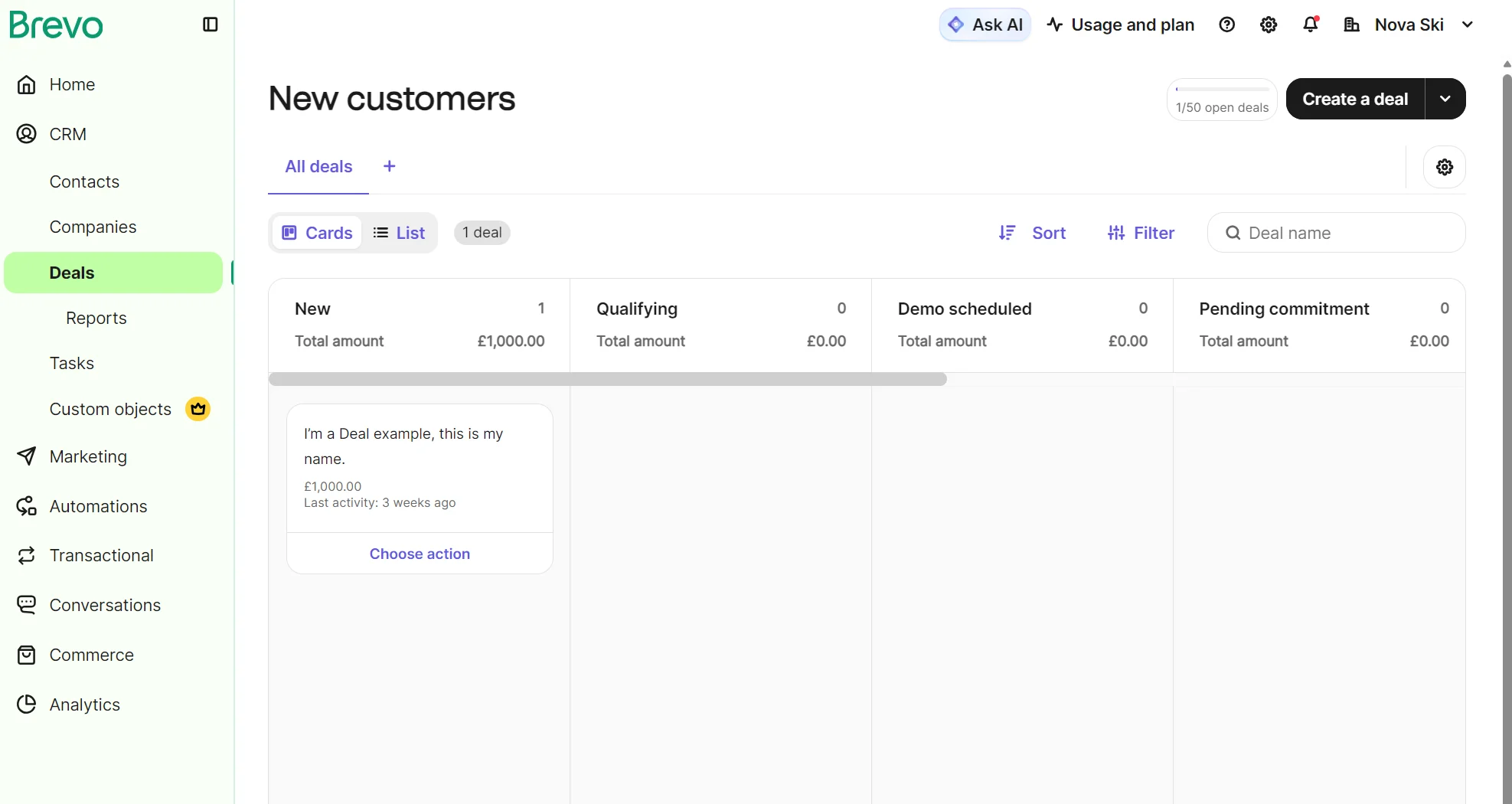
Brevo is better than Klaviyo for storing a large list and sending to it infrequently, with a CRM for consumers and businesses, plus deal and pipeline tracking.
Brevo vs. Klaviyo pricing
| Contacts | Brevo | Klaviyo |
|---|---|---|
| 500 | $9/month | $20/month |
| 2,500 | $25/month | $60/month |
| 10,000 | $32/month (500,000 contacts and 20,000 emails) | $150/month |
*Brevo primarily prices by email volume, so their contact offer jumps from 2,500 contacts to 500,000 contacts as you go to the next available plan. You still get 20,000 emails/month.
CRM and pipelines: Brevo vs. Klaviyo
Klaviyo only offers a marketing CRM; Brevo’s CRM includes sales and marketing, with dashboards for contacts and companies. The pricing model works in Brevo’s favor here: Starter plans have a 500,000-contact limit at the 20,000 email volume tier.
Standout features that set Brevo apart from Klaviyo
- Prepaid SMS credits that roll over and don’t expire; Klaviyo’s SMS credits expire and renew monthly regardless of whether you use them
- Sales engagement chat widget for websites in all plans; Klaviyo requires a paid add-on, Customer Hub or Customer Agent
Brevo’s limitations
Brevo’s pricing can become more expensive than Klaviyo as you approach 10 emails per contact per month. Klaviyo’s automations cover more complex scenarios: 20 paths in a single split on all plans, versus Brevo’s 10 branches restricted to Professional and Enterprise plans.
Best for: Business-to-business (B2B) sales and marketing, plus ecommerce stores that sell services and want to store a large list and pay to send to it.
4. ActiveCampaign – best Klaviyo alternative for automation-first stores that need a CRM
ActiveCampaign is better than Klaviyo for AI-assisted workflows such as creating email automations and campaigns. Its CRM branches into deals and pipelines, a feature that Klaviyo lacks. It also stays cheaper up to 10,000 contacts.
ActiveCampaign vs. Klaviyo pricing
| Contacts | ActiveCampaign | Klaviyo |
|---|---|---|
| 500 | $15/month (1,000 contacts)* | $20/month |
| 2,500 | $39/month | $60/month |
| 10,000 | $149/month | $150/month |
*Lowest available contact count at ActiveCampaign is 1,000 contacts, but it’s still cheaper than Klaviyo’s 500-contact plan.
Automation: ActiveCampaign vs. Klaviyo
Klaviyo doesn’t create an automated personalized marketing strategy during onboarding. In ActiveCampaign, you receive an AI-built campaign sequence to get started based on your details. Once inside, you can build automations with AI or from 900+ templates.
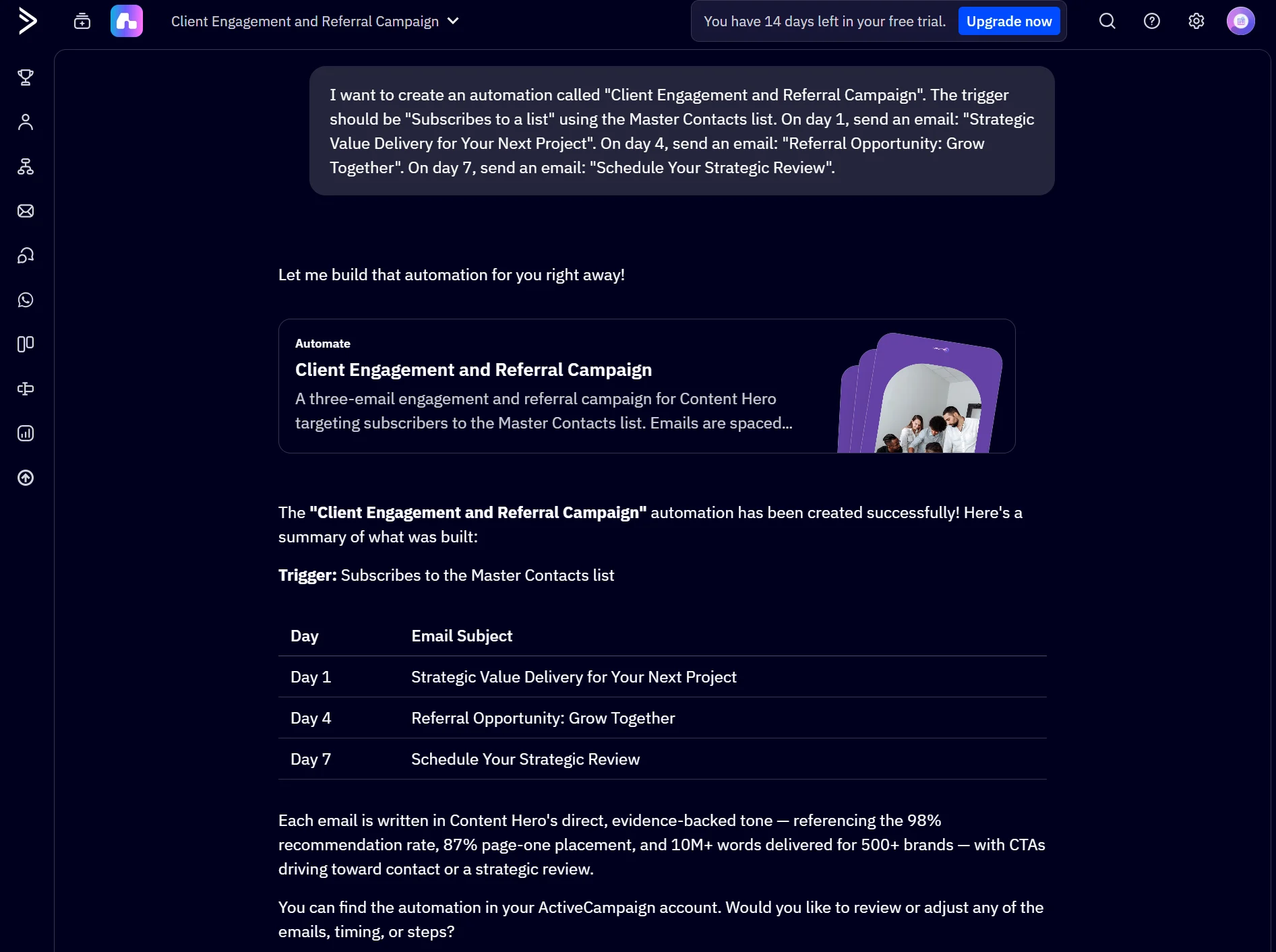
Standout features that set ActiveCampaign apart from Klaviyo
- Detailed trend reports for email client, predictive content, open/read, WhatsApp, website, and deals; Klaviyo’s trend reports cover fewer areas
- The Your AI dashboard shows scheduled tasks and history, and lets you search chats and add instructions to guide future outputs; Klaviyo has no such page
ActiveCampaign’s limitations
ActiveCampaign’s automation and AI features are the first options presented to complete most everyday tasks such as building campaigns, which doesn’t suit those who want manual control. Additionally, ActiveCampaign has feature restrictions across four plans, including four segmentation tiers.
Best for: Ecommerce stores and businesses with complex customer sales cycles wanting one tool for automation and CRM.
5. MailerLite – best Klaviyo alternative for building websites and marketing campaigns together
MailerLite is better than Klaviyo for sending basic newsletters and welcome emails to contacts at a lower monthly price. Its website builder allows one, 10, or unlimited websites depending on the plan, so you don’t need an external store.
MailerLite vs. Klaviyo pricing
| Contacts | MailerLite | Klaviyo |
|---|---|---|
| 500 | $12/month | $20/month |
| 2,500 | $33/month | $60/month |
| 10,000 | $89/month | $150/month |
Websites and marketing: MailerLite vs. Klaviyo
Klaviyo doesn’t have a website builder, only a landing page builder. MailerLite has 19 website templates, and an AI website builder is coming soon. Forms, payments, and engagement inside websites feed into segments and can trigger email workflows.
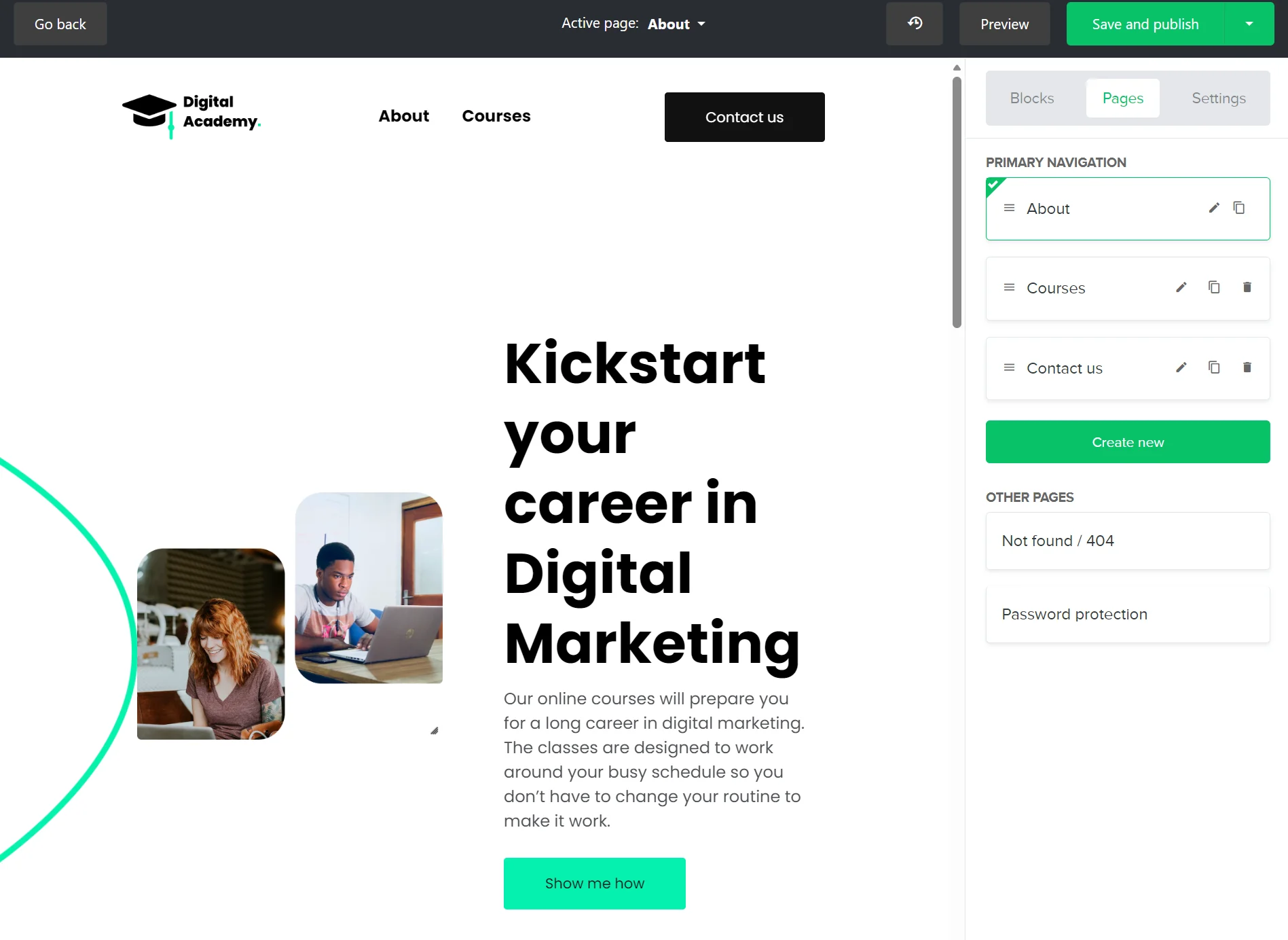
Standout features that set MailerLite apart from Klaviyo
- Monetization platform for selling digital products, bookings, newsletters, and recurring subscriptions; Klaviyo doesn’t have any monetization options
- One-click RSS-to-email campaign builder to send blog content to subscribers; Klaviyo requires potential developer work with the Web Feeds API
MailerLite’s limitations
MailerLite doesn’t have Klaviyo’s CRM or predictive analytics capabilities. Klaviyo includes transactional emails in its marketing plan send quota; MailerLite requires a separate MailerSend plan, starting at $7/month.
Best for: Solo marketers and small businesses looking for a single website and email marketing tool, without advanced ecommerce features.
6. Shopify Messaging – best Klaviyo alternative for free email marketing on Shopify
Shopify Messaging is better than Klaviyo for free email marketing on Shopify. It costs nothing up to 10,000 emails/month and has no contact limits. Pricing then jumps to $1 per 1,000 emails, which still undercuts Klaviyo (and other tools in our list) by a significant margin.
Shopify Messaging vs. Klaviyo pricing
| Contacts | Shopify Messaging | Klaviyo |
|---|---|---|
| 500 | Free | $20/month |
| 2,500 | Free | $60/month |
| 10,000 | Free | $150/month |
Native Shopify dashboard: Shopify Messaging vs. Klaviyo
Klaviyo doesn’t have a native dashboard inside Shopify. Shopify Messaging places all your marketing assets and flows in the same account as your store, so you can work on your Shopify setup and customer experience without logging into different tools.
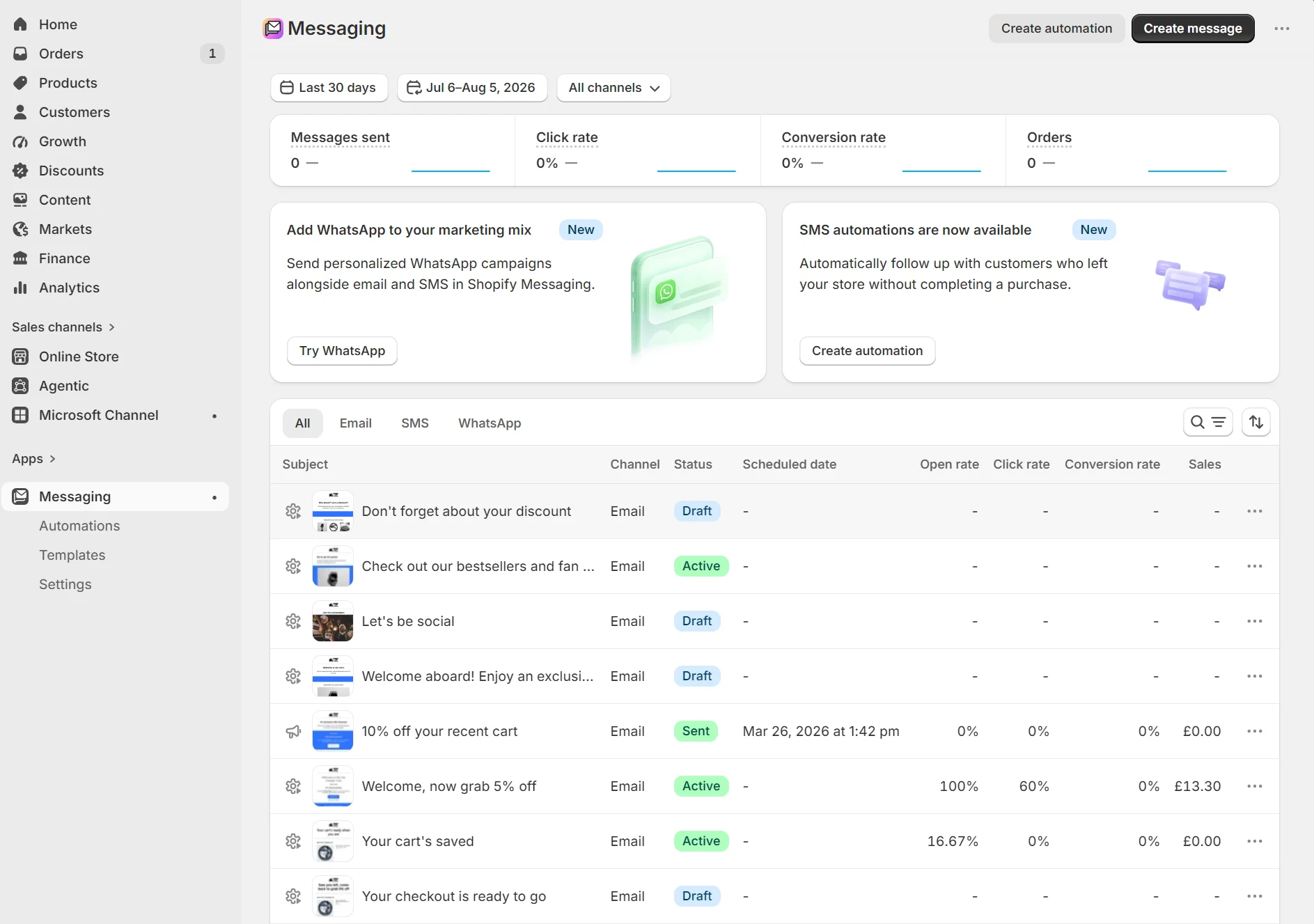
Standout features that set Shopify Messaging apart from Klaviyo
- Smart delivery prioritizes shoppers likely to convert based on Shopify data, available as a toggle; Klaviyo requires building an engaged/unengaged segment
- Conversion tracking is based on direct store data; Klaviyo’s conversion tracking is based on click/open attribution
Shopify Messaging’s limitations
Shopify Messaging has fewer pre-built automations than Klaviyo and lacks a custom builder. You need the Shopify Flow app for custom automations, which adds setup burden to your marketing workflow.
Best for: Shopify stores that send fewer than 10,000 emails/month and want a native email app for basic campaigns and automations without a hefty bill.
7. HubSpot – best Klaviyo alternative for a sales, marketing, service, and content ecosystem
HubSpot is better than Klaviyo for a free or low-cost CRM, sales, marketing, and content suite in one tool. It matches Klaviyo’s $20/month entry point but for 1,000 marketing contacts and a 5x email contact tier send limit.
HubSpot vs. Klaviyo pricing
| Contacts | HubSpot | Klaviyo |
|---|---|---|
| 500 | $20/month (1,000 contacts)* | $20/month |
| 2,500 | $120/month | $60/month |
| 10,000 | $410/month | $150/month |
*HubSpot paid plans start at a minimum of 1,000 contacts. Prices calculated without the 50% starter discount.
CRM: HubSpot vs. Klaviyo
Klaviyo’s CRM doesn’t have AI-generated record summaries, deals, or associated companies sections for sales cycles. HubSpot’s CRM covers more data points, which can help you create highly personalized campaigns per segment.
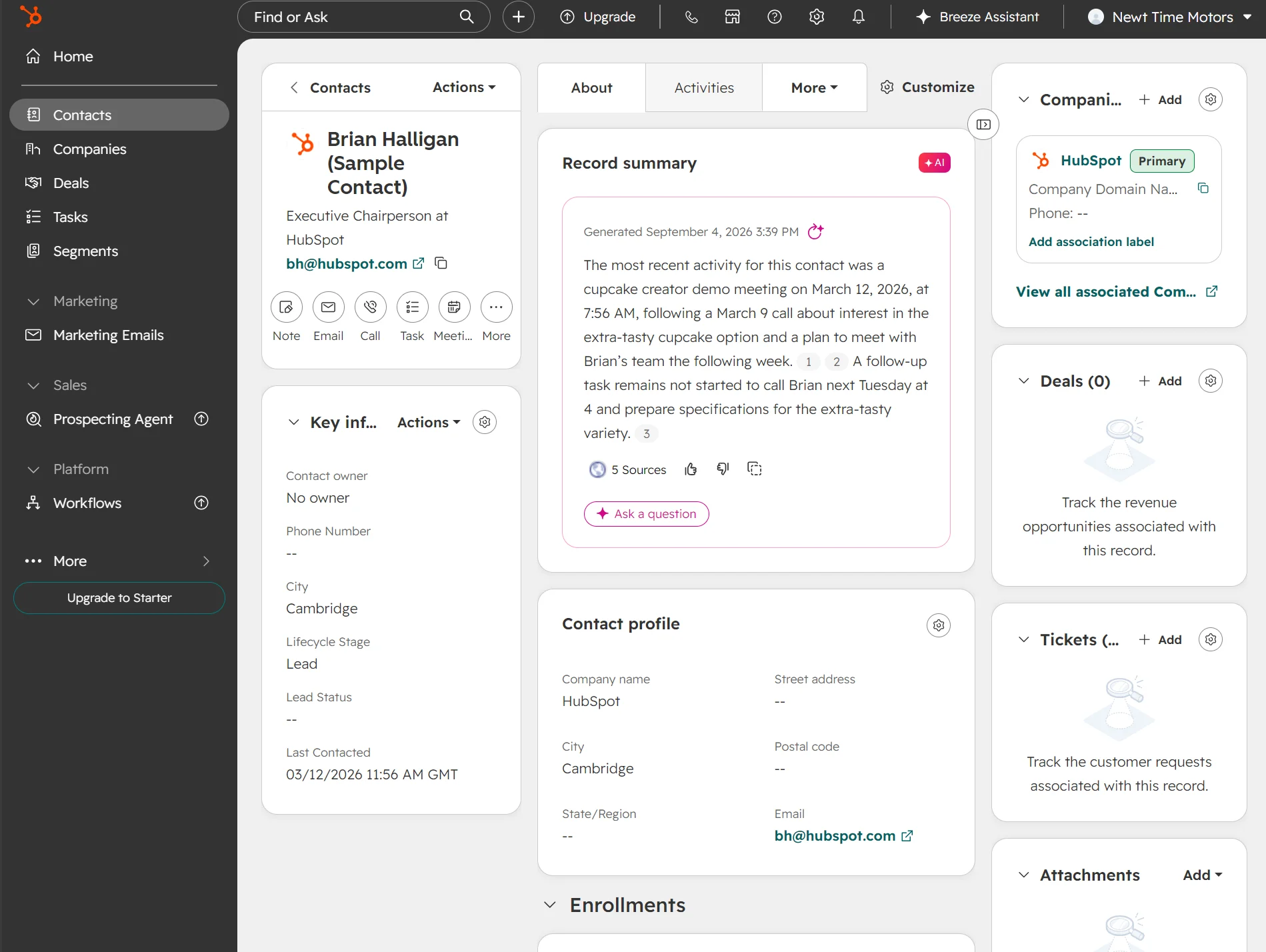
Standout features that set HubSpot apart from Klaviyo
- Prospecting agent generates sales pipelines and personalized outreach sequences with AI; Klaviyo’s AI lacks these capabilities
- Native Facebook Messenger integration for two-way conversations with your audience; Klaviyo doesn’t have an integration for Facebook Messenger
HubSpot’s limitations
HubSpot is part of a wider tool ecosystem than Klaviyo, with more setup steps and features to master. The Starter plan offers value at $20/month per seat to access HubSpot’s basic tools, but advanced features can quickly increase your bill. Klaviyo’s ecommerce-first toolkit suits most stores better.
Best for: Businesses wanting general features across sales and marketing, plus a CRM that can feed into emails and vice versa.
8. Privy – best Klaviyo alternative for growing a list with quizzes and gamified forms
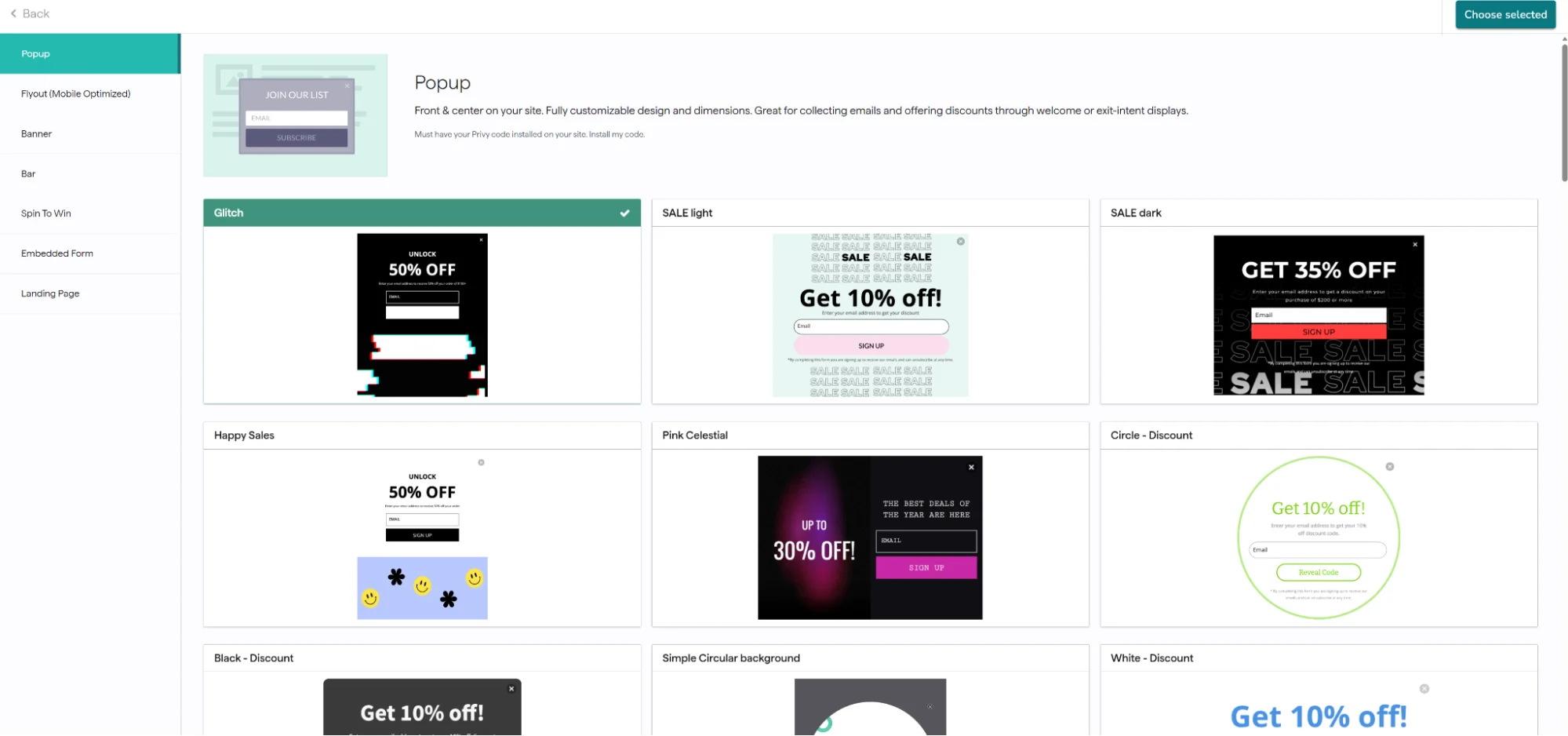
Privy is better than Klaviyo for growing a list and triggering basic email sequences, with 240+ form templates across its modern and classic editors. These include pop-up, spin-to-win, mini quiz, bar, and flyout formats. Klaviyo offers 70+ form templates and no quiz templates.
Privy vs. Klaviyo pricing
| Contacts | Privy | Klaviyo |
|---|---|---|
| 500 | $30/month (1,500 contacts)* | $20/month |
| 2,500 | $60/month | $60/month |
| 10,000 | $165/month | $150/month |
*Privy’s cheapest plan supports up to 1,500 contacts.
List-building: Privy vs. Klaviyo
Klaviyo can’t target forms by day of the week or time of day, only fixed start and end dates. Privy can. Privy also lets you chain forms: show one only to people who already saw form A, or hide it from anyone who’s seen form B.
Standout features that set Privy apart from Klaviyo
- Unlimited monthly emails in all plans; Klaviyo applies a contact send limit
- On Shopify, unique coupon codes generate automatically for each campaign recipient; Klaviyo makes you pre-generate a pool first, or it blocks the send
Privy’s limitations
Privy doesn’t have a CRM or AI features for building automations, segments, campaigns, and reports. It covers SMS, but doesn’t support WhatsApp (Klaviyo does).
Best for: Small Shopify stores growing a list and sending basic messages, such as an on-brand welcome series and abandoned cart email.
9. GetResponse – best Klaviyo alternative for digital product and content monetization
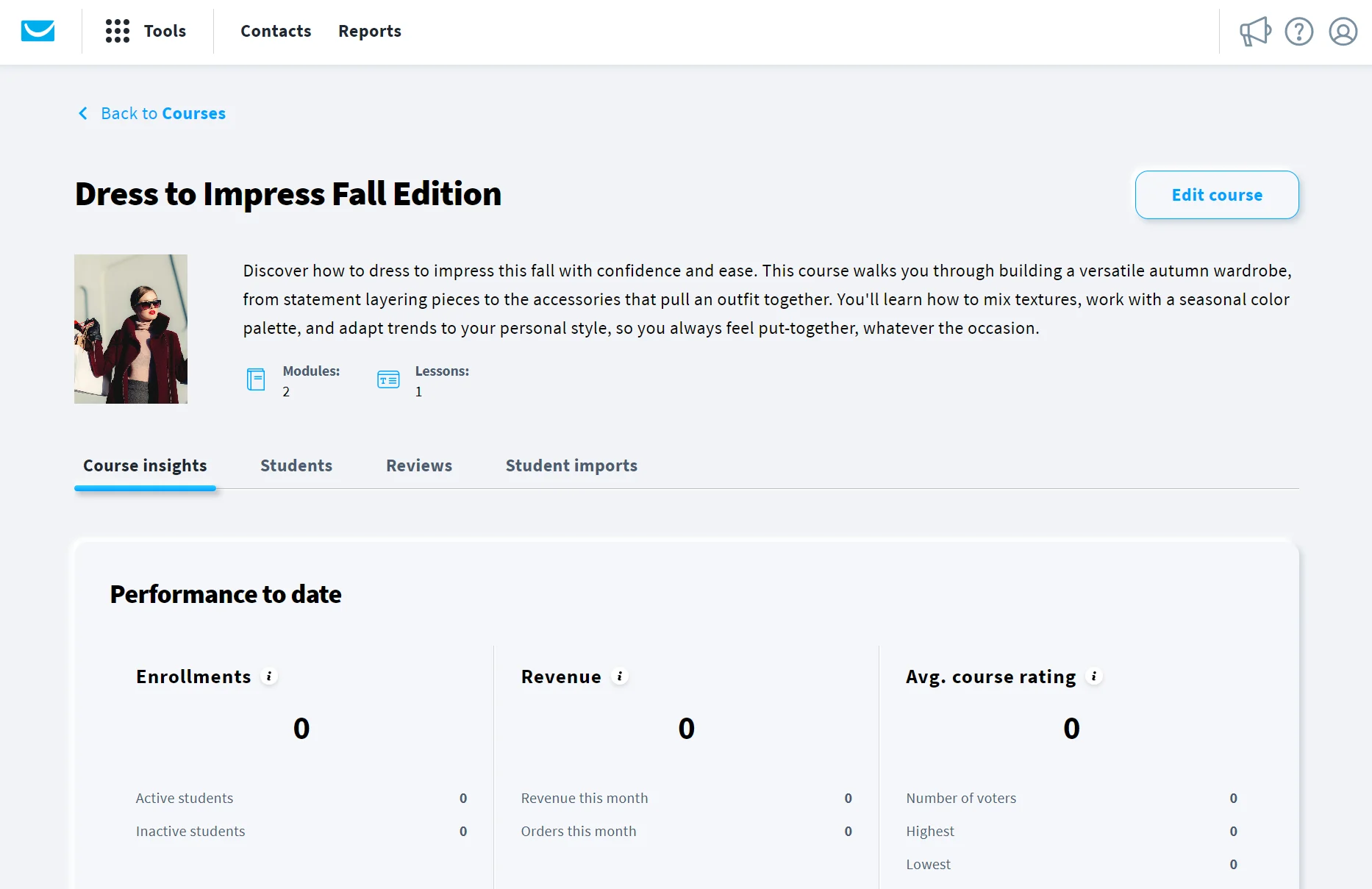
GetResponse is better than Klaviyo for monetizing content and marketing it thanks to its course creator and premium newsletters. The $69/month Creator plan (1,000 contacts) includes all these features with unlimited monthly email sends.
GetResponse vs. Klaviyo pricing
| Contacts | GetResponse | Klaviyo |
|---|---|---|
| 500 | Available with the free plan | $20/month |
| 2,500 | $29/month | $60/month |
| 10,000 | $79/month | $150/month |
Note: GetResponse Starter plan prices are shown above. The Creator plan has monetization features: it costs $79/month for 2,500 contacts and $134/month for 10,000 contacts.
Monetization: GetResponse vs. Klaviyo
Klaviyo doesn’t have PayPal and Stripe integrations that allow you to sell digital products and newsletters. GetResponse handles these integrations and provides conversion funnels for leads, lead magnets, sales, and webinars in the Creator plan.
Standout features that set GetResponse apart from Klaviyo
- Website builder in the Creator plan with an AI-powered builder that does it for you; Klaviyo only has landing pages
- Webinars, including live and paid webinars, with recording storage in the Creator plan; Klaviyo has no webinar features
GetResponse’s limitations
GetResponse is more expensive than Klaviyo for ecommerce features. The Starter plan lacks abandoned cart recovery and event-based automation. The Marketer plan includes those capabilities, but costs $59/month for 1,000 contacts versus Klaviyo at $30/month.
Best for: Digital product sellers and creators. Also, marketers who don’t need automation but do want basic autoresponders and newsletters.
10. Mailchimp – best Klaviyo alternative for built-in social marketing tools
Mailchimp is better than Klaviyo when your marketing strategy is heavy on social media and email, and you want them to work together. All plans include Social Posting, and Standard plans from $20/month have Social Post Scheduling.
Mailchimp vs. Klaviyo pricing
| Contacts | Mailchimp | Klaviyo |
|---|---|---|
| 500 | $13/month | $20/month |
| 2,500 | $45/month | $60/month |
| 10,000 | $110/month | $150/month |
Social and email integration: Mailchimp vs. Klaviyo
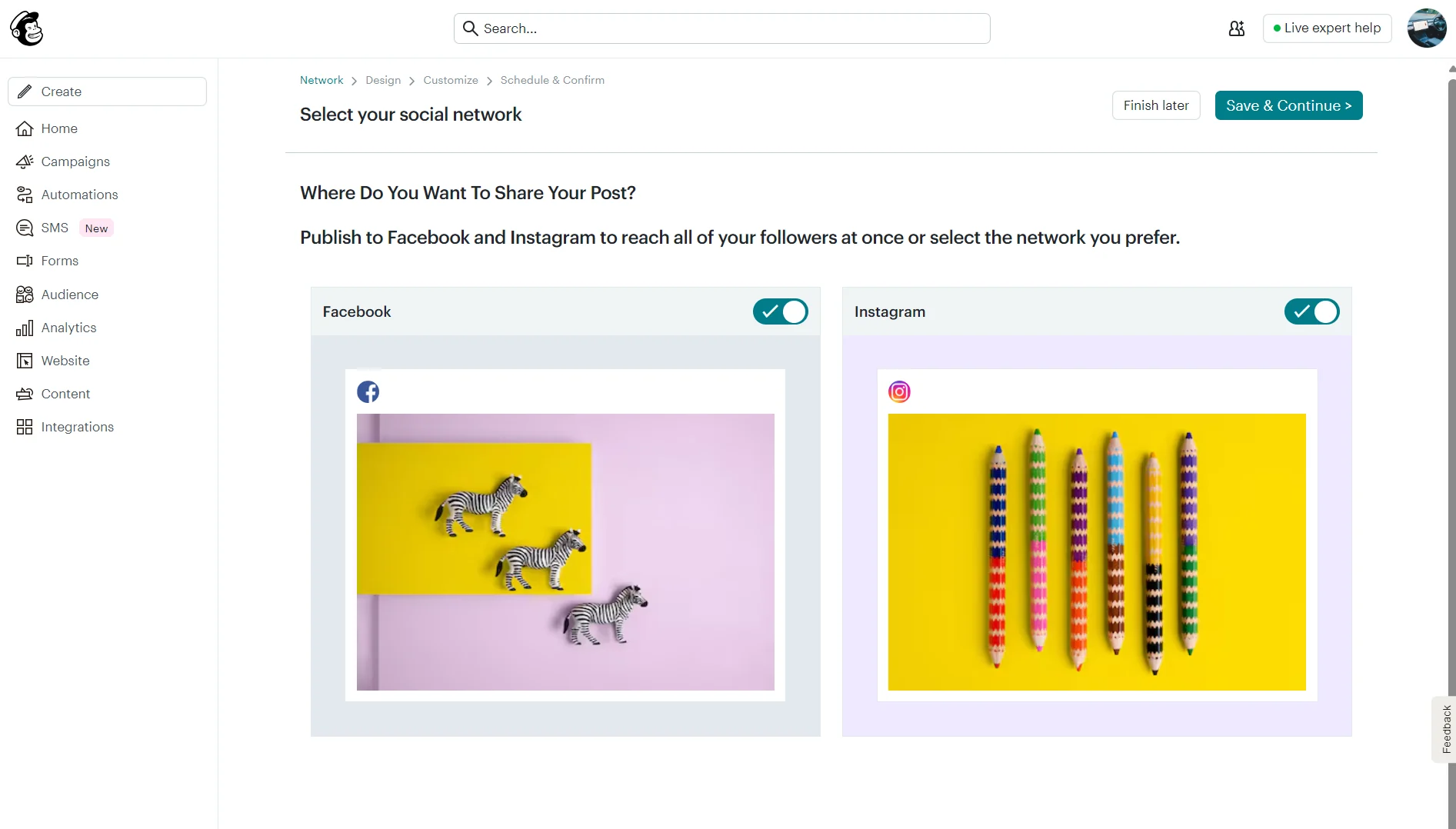
Klaviyo can’t automatically create a social media post when you send an email, nor can it add social posts to your emails. Mailchimp does both. It auto-publishes to Facebook, Instagram, and X when your email sends, with no manual steps.
Standout features that set Mailchimp apart from Klaviyo
- Personalized onboarding included in Standard and Professional plans; Klaviyo only includes onboarding for its highest-tier plans
- 24/7 chat and email support in all paid plans; Klaviyo only provides 24/5 live chat and 24/7 email support in paid plans
Mailchimp’s limitations
Mailchimp has fewer integrations than Klaviyo (300+ vs. 350+), and it restricts features to high-tier plans that you get with Klaviyo’s paid plan. These include custom reports, generative AI, and predictive analytics with customer lifetime value.
Best for: Small businesses that want their email and social marketing in one platform and lower costs for general marketing campaigns.
Why are ecommerce brands leaving Klaviyo in 2026?
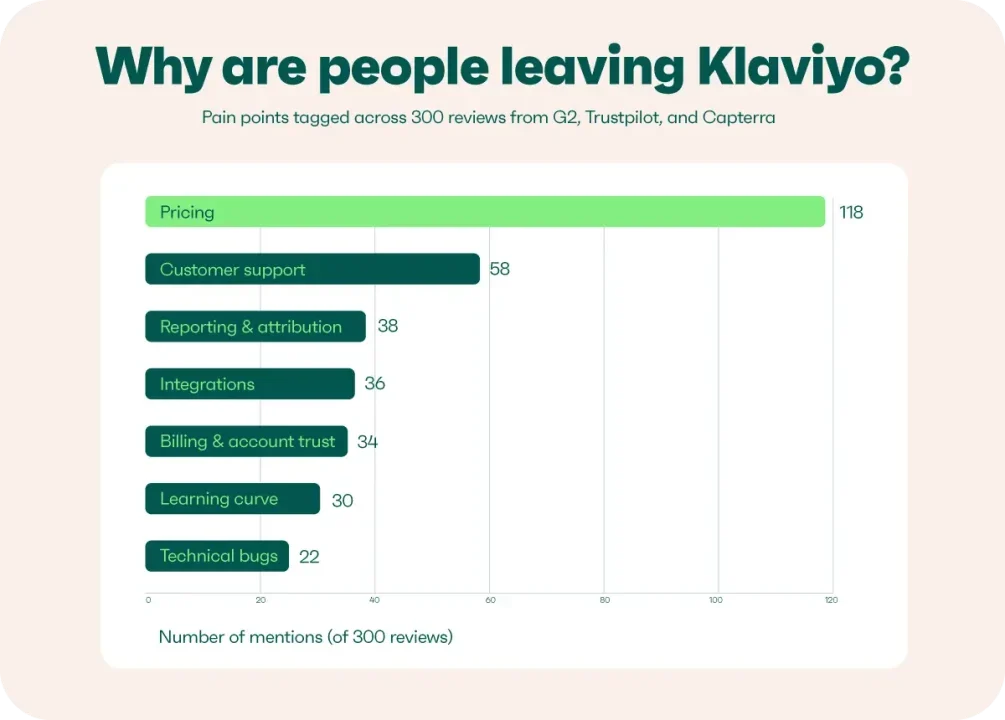
Ecommerce brands are leaving Klaviyo to save money on their email marketing and receive more helpful customer support. We uncovered this by analyzing 300 Klaviyo reviews for user sentiment across G2, Trustpilot, and Capterra.
| Rank | Pain point | Mentions (of 300) | Approx. share |
|---|---|---|---|
| 1 | Pricing | 118 | ~39% |
| 2 | Customer support | 58 | ~19% |
| 3 | Reporting and attribution | 38 | ~13% |
| 4 | Integrations | 36 | ~12% |
| 5 | Billing and account trust | 34 | ~11% |
| 6 | Learning curve | 30 | ~10% |
| 7 | Technical bugs and reliability | 22 | ~7% |
Pricing is the main pain point across G2, Trustpilot, and Capterra, mentioned as a con in 118 of 300 reviews, or roughly 39% of the reviews.
Interestingly, the complaint was rarely the price tier, but how pricing is calculated based on active profiles, which inflates plans without ongoing list management.
Customer support was the second most common pain point at 58 mentions. Reporting and attribution came third with 38 mentions, then integrations fourth at 36 mentions, followed by billing and account trust at 34 mentions.
Klaviyo’s least-cited pain points were its “learning curve” at 30 mentions and technical bugs at 22 mentions.
When to stay on Klaviyo?
Even though we’re a Klaviyo competitor ourselves, here’s our honest opinion: switching isn’t always the right call.
If someone on your team uses Klaviyo’s predictive analytics and peer benchmarks every week, or you’ve built custom integrations on its API, no tool below fully replaces those. Plus, the rebuild often costs more than the plan you’re trying to cut. The same goes if your real issue is an unclean list or flows nobody has touched in a year. Those problems move with you.
In such cases, we recommend cleaning up your lists and flows first, then evaluating whether switching platforms is worthwhile.
Our verdict: the best Klaviyo alternatives for ecommerce stores in 2026
For most ecommerce stores, especially Shopify and WooCommerce brands, Omnisend offers the best toolkit for combining email marketing, SMS, and web push.
That said, the best Klaviyo alternative depends on how complex your customer journey is and how advanced your segmentation, flows, and reporting need to be. Some brands need custom reports for analysis, others need everything pre-built, and most want more predictable pricing as their list grows.
In terms of numbers, Omnisend runs up to 35% less than Klaviyo at comparable contact tiers (Omnisend’s Standard plan vs. Klaviyo’s Marketing plan (Email) without SMS or add-ons). If you’re already on Klaviyo, the switch is taken care of as well: the migration team rebuilds your setup in five business days, free for all customers with 250+ contacts.
If you’re a Shopify or WooCommerce store and want to see how Omnisend compares to Klaviyo, start for free or book a demo.
A note on authorship: an Omnisend team member wrote this guide. As a Klaviyo alternative, we’ve tried our best to keep this comparison fair. Every price, feature, and rating has gone through our own review and verification. We’ve also flagged where Klaviyo genuinely outperforms the alternatives, including us.
Quick sign up | No credit card required