Omnisend AI

 OFFER
OFFER









“We’ve been using Omnisend since 2018,” says Greta Valaikaite, AirGuru’s Marketing Manager. “And we haven’t used anything else.”
Two sends a day
The conventional wisdom in travel marketing is simple: people only travel once or twice a year, so don’t flood their inbox. AirGuru looked at actual behavior and saw something different.
“People don’t book often, sure, but they browse, dream, compare, and wait for deals constantly,” Greta explains. “Travel is an always-on interest, not a once-a-year thought. Limiting emails to ‘when people are about to buy’ means you miss 95% of the time when they’re casually interested.”
The data confirmed the instinct. Open rates didn’t collapse with higher frequency, and unsubscribes stayed acceptable. Revenue per subscriber actually increased with more sends, as a fair share of bookings came from people who weren’t planning a trip at all but saw a deal and grabbed it.
“Fatigue isn’t about how often you send, but it’s about how relevant and valuable each email feels,” says Greta. “We send because we strongly believe in what we send: deals they must see.”
A funnel disguised as emails
AirGuru’s content mix looks spontaneous, but it’s deliberate. Every email has one job – get someone closer to booking – but the format changes depending on readiness.
Offer emails do the obvious job: prices, urgency, destinations. Value emails work differently though. They answer the doubts that sit between interest and booking: Is this legit? What if something goes wrong? And influencer content, reused from creators like travel journalist Orijus Gasanovas, acts as shortcut trust: Do real people actually enjoy this?
The influencer play has a measurable delayed effect. AirGuru tested it by partnering with creators who hadn’t posted about the featured hotel on their social channels. Spikes in branded searches, destination queries, and hotel page traffic followed the email sends are proof the lift came from the newsletter, not social.
“Price is the entry ticket,” Greta says. “If it’s not competitive, people won’t even open. But price alone isn’t enough to convert. You need good price plus clear urgency, strong destination appeal, or incredibly low friction.”
Subject lines are conversational and slightly urgent – “Got to be quick,” “Which one?,” “Have 200 euros to spare in your bank account?” – because that matches how people actually shop for travel. CTAs are specific: “Be the lucky one who grabs it.” And the first block always leads with the single strongest offer, because attention drops fast after the first scroll.
Specificity beats inspiration. “Summer deals in Europe” won’t cut it — but “7 nights in Crete in July from €XX, transfer included” will.
Automations finish what campaigns start
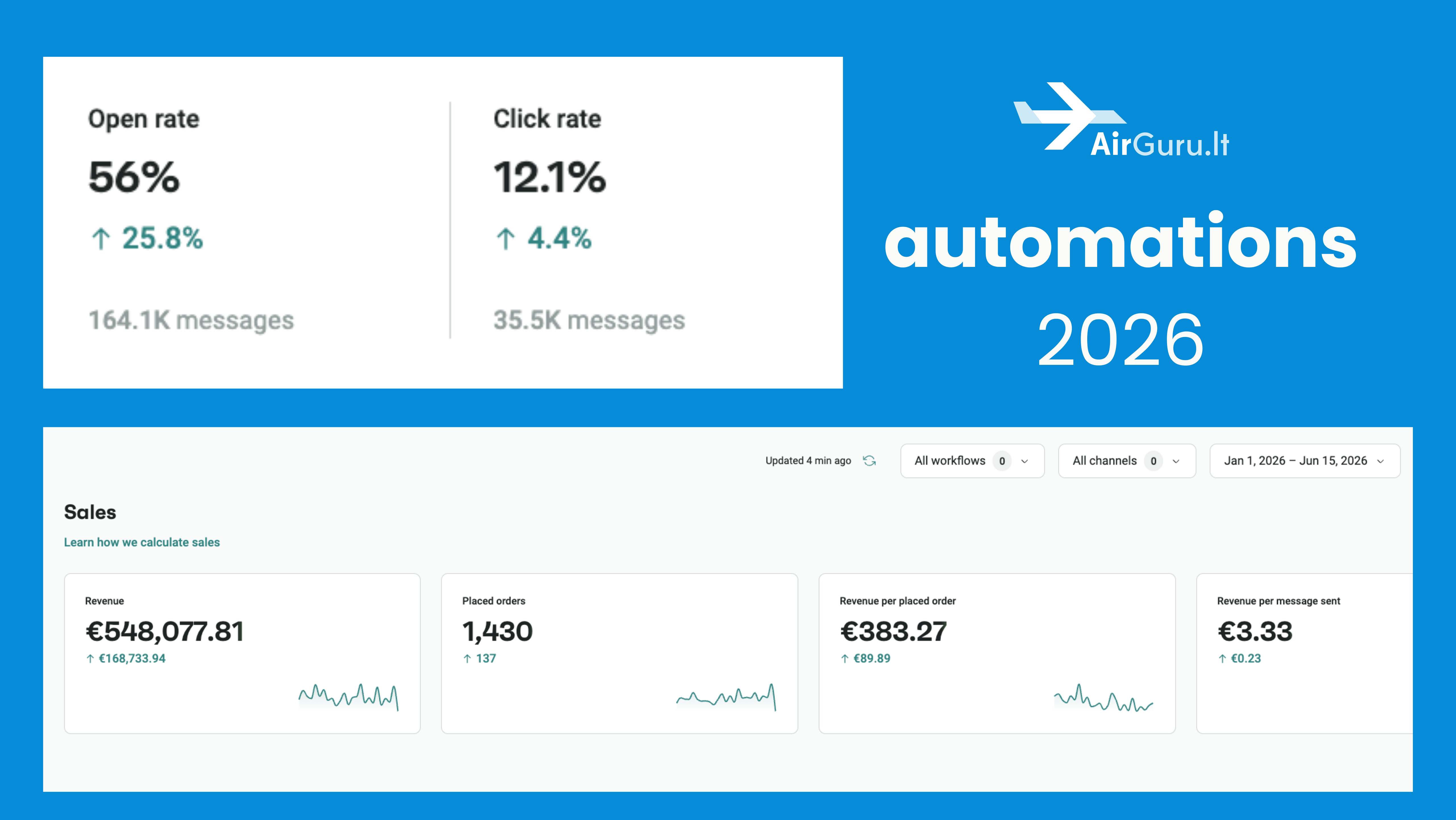
AirGuru runs a deep automation stack. Automations drive roughly 40% of Omnisend revenue, campaigns 60%. But the automations are disproportionately efficient for their share.
Product abandonment leads the pack: 53.7% of total automation revenue with a 51.9% open rate. The abandoned-browse flow pulls people back with a hotel reminder and urgency follow-ups. Its subject line reads “Without you it’s not that fun 🥹 Come here again, take a look — we’re still keeping a place on the plane for you.”
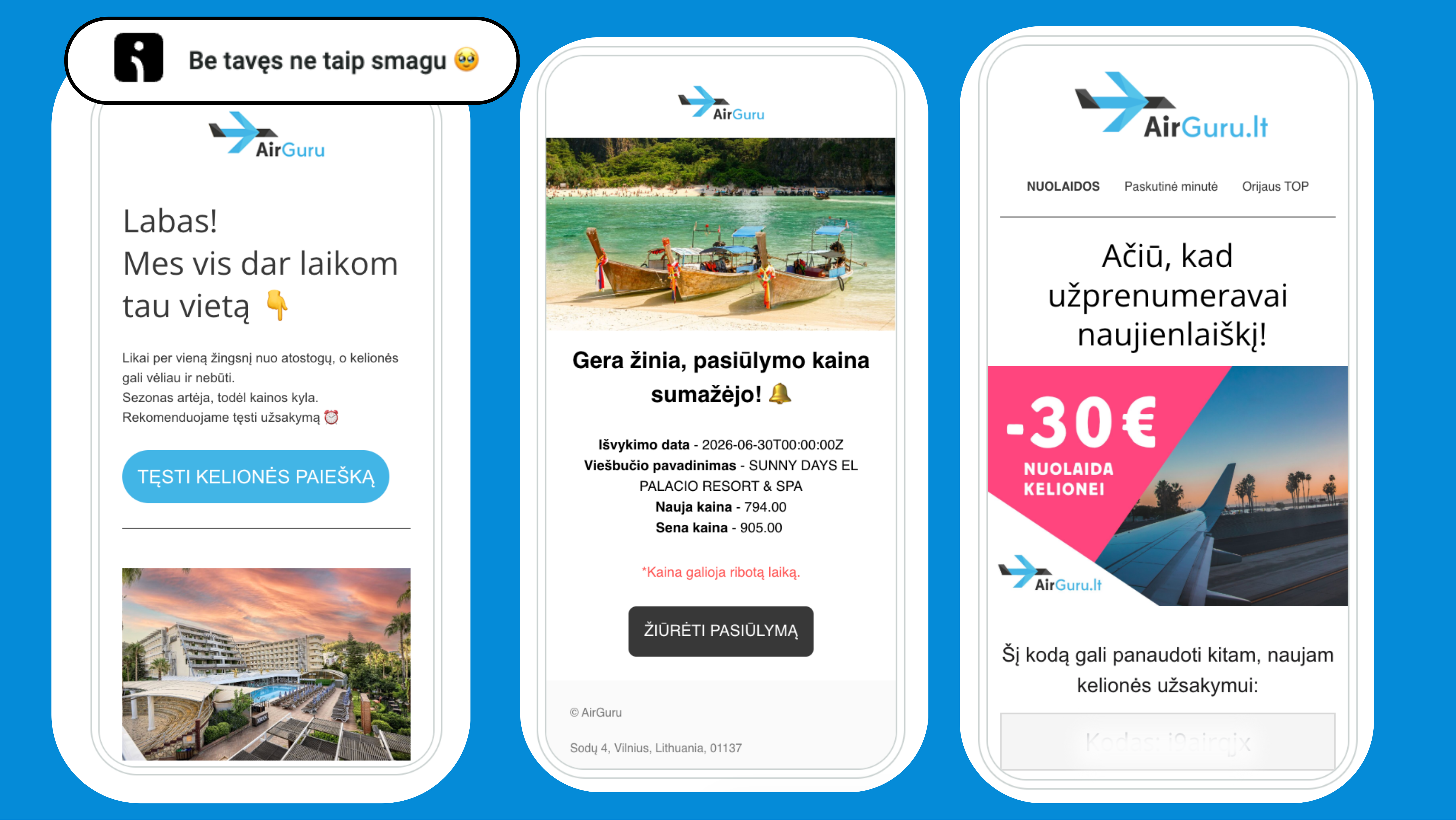
Price drop alerts are another high performer, especially for repeat-destination travelers attached to specific hotels in Turkey or Egypt who are simply waiting for the right price.
A recent addition, built with the Omnisend team, solves a different problem. A post-trip flow sends a gift coupon for the next holiday, but with a twist: non-subscriber contacts must “unlock” the coupon by opting in. It converts to subscribers significantly better than standard signup forms, solving two issues at once – losing post-trip customers and holding non-consented contacts.
“For us, campaigns start interest. Automations finish the job,” says Greta.
The results
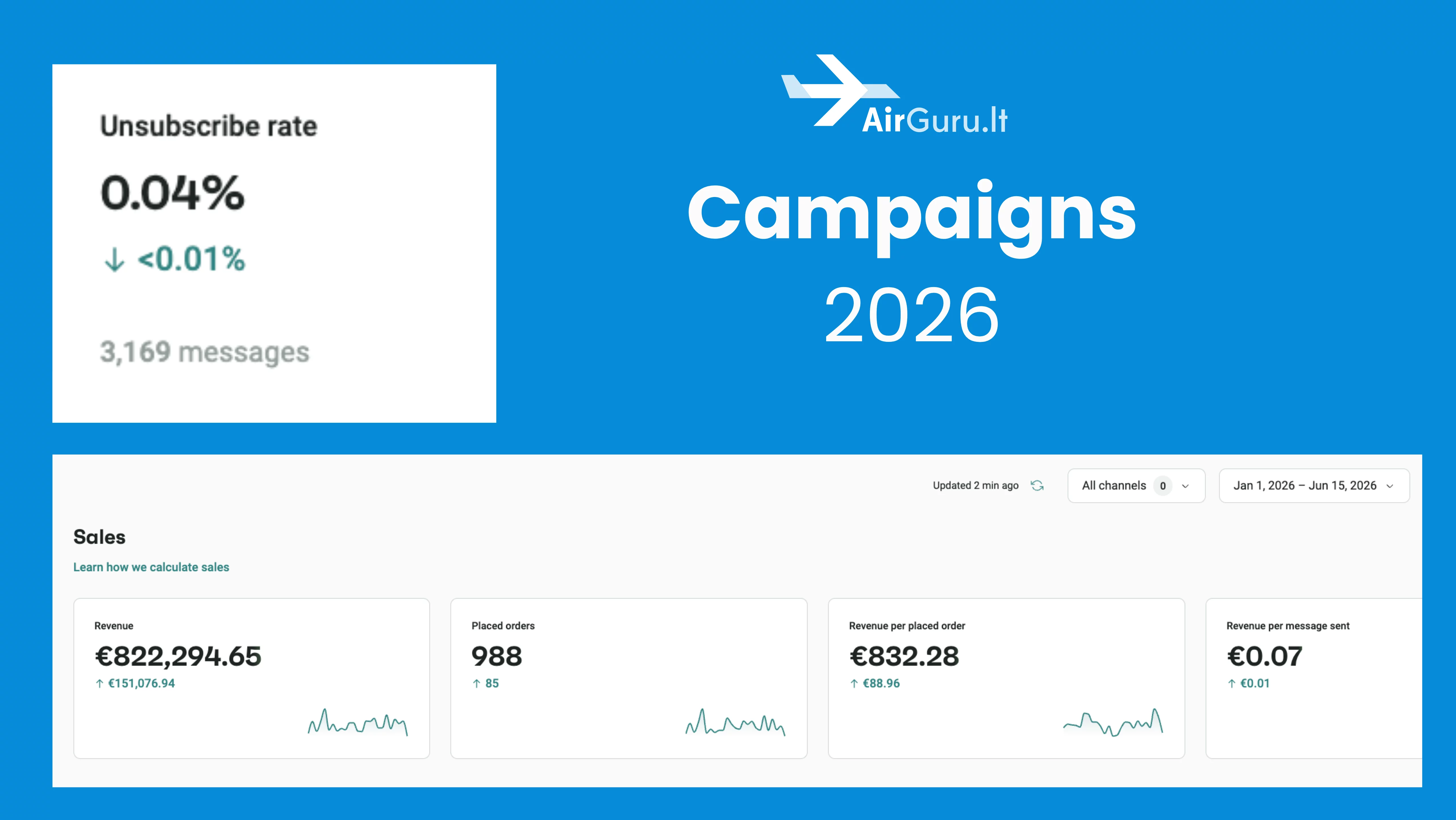
AirGuru’s email program through Omnisend drives 8.4% of total company revenue. Since implementing additional automated flows like product abandonment and price drop alerts, Omnisend-driven revenue has grown 33% year over year. The return: $247 for every $1 spent on the platform.
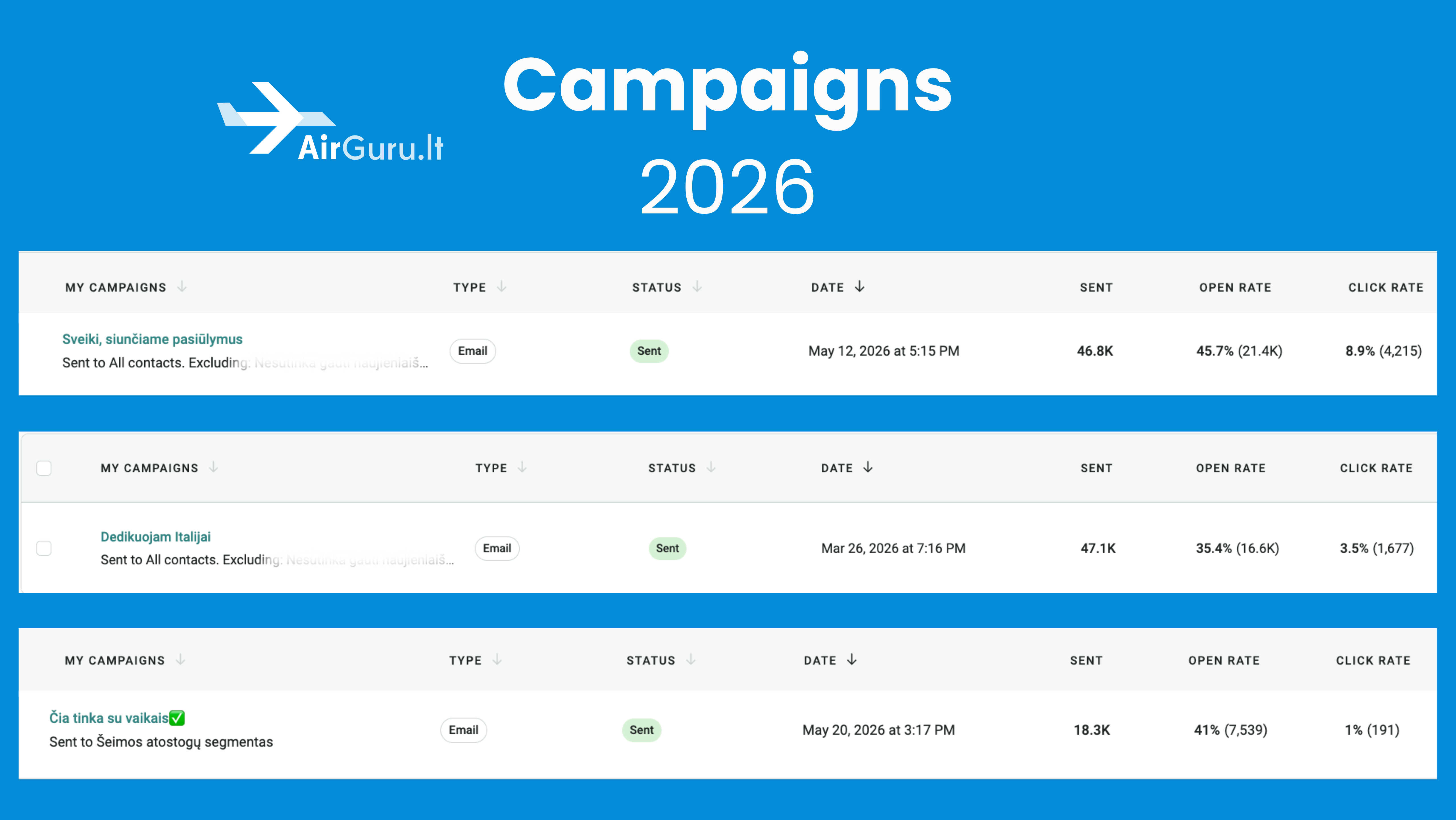
The numbers break down by how tightly AirGuru targets. Broad daily sends land open rates of 25–35% with click rates of 2–4%. Segmented sends — like the 20,000+ family segment, targeted with child-friendly deals and specific dates — push click-to-open rates to 12–25% and above, driven by relevance alone.
Wrap up
If another brand is nervous about sending frequently — that gives us more space in the inbox.
Greta’s advice for brands nervous about frequency is blunt.
“The concern is usually misplaced. The issue is not how often you send — it’s what you send,” she says. “Most brands overthink volume and underthink relevance. The real question isn’t ‘how often can we send?’ but it’s ‘how often do we actually have something worth saying?'”
Her parting advice: let low-intent users drop off naturally, because diluting performance for everyone to retain disengaged contacts helps no one. And remember that people don’t open because emails are “nice” — they open because there’s a real chance of a good deal or a relevant trip.
What’s ahead is more of the same, pushed harder: more automation, more real-time reactions to browsing behavior. Omnisend, Greta says, was the right fit because it let them scale a high-frequency, automation-heavy strategy without unnecessary complexity: newsletters, automations, and measurement in one place.
“We never needed fancy design features,” she says. “We needed a platform that was clean, bold, and simple to use every day.”