Omnisend AI


 OFFER
OFFER









We spoke with two customers who moved from Sendlane to Omnisend — a marketing agency that migrated a client and a lifestyle brand that handled the switch themselves. We wanted to know: was the migration process really as painful as common anxieties make it out to be?
The answer is: much less than expected.
“The migration process was painless.”
Audrey M. Dunkley, Account Manager at BAD Marketing, a US-based agency, describes the transition in simple terms:
“The migration process with Omnisend was painless, all thanks to the Omnisend team! They handled all of our backend integration, so the transition was seamless.”
For many brands, the fear isn’t switching tools, but rather handling the backend work. Rebuilding automations. Reconnecting integrations. Making sure subscriber data transfers correctly.
What stands out in Audrey’s experience is that the heavy lifting didn’t fall on her team.
And once the switch was complete, the difference was visible in performance.
“The biggest difference from Sendlane is the amount of revenue we’ve generated. The client is so thrilled with the switch, and the revenue speaks for itself! Automations are easier to edit and work inside than the previous platform.”
When asked how she’d explain the switch to another ecommerce marketer, Audrey put it this way:
“The switch is like watching your manager complete all your tasks when you’re OOO. It’s a breeze.”
For Nordace, structure made the difference
For Nordace, a Canadian-owned brand with customers worldwide, the migration was more complex. They rely heavily on segmentation and multilingual communication, tailoring campaigns based on region and language preference.
That usually makes migration riskier. More workflows. More data points. More room for error.
But according to Email Marketing Manager Anastasia Dee, the transition was smoother than expected:
“The migration process was much smoother than expected, especially when there is complexity in moving data, automations, and customer segments between platforms.”
What helped most was clarity.
“Omnisend has structured onboarding and clarity on documentation. We can map out our previous workflows and easily recreate them in Omnisend with minimal friction. There’s always a guided setup and support team to ensure the transition feels easier.”
Once live, Nordace leaned into one of Omnisend’s biggest differences: unified automation.
Previously, email and SMS required separate setups and strategies. With Omnisend, they were able to manage everything in one place.
“Omnisend is more like the unification of all channels — email, SMS, and push notifications. It’s kind of like a single automation builder that has not only saved me time but also improved the consistency of our customer journeys.”
For a brand that segments by language and builds workflows accordingly, that unified structure matters. Their automation tree ensures customers receive communication in their chosen language, while campaigns remain engagement-driven and segmented.
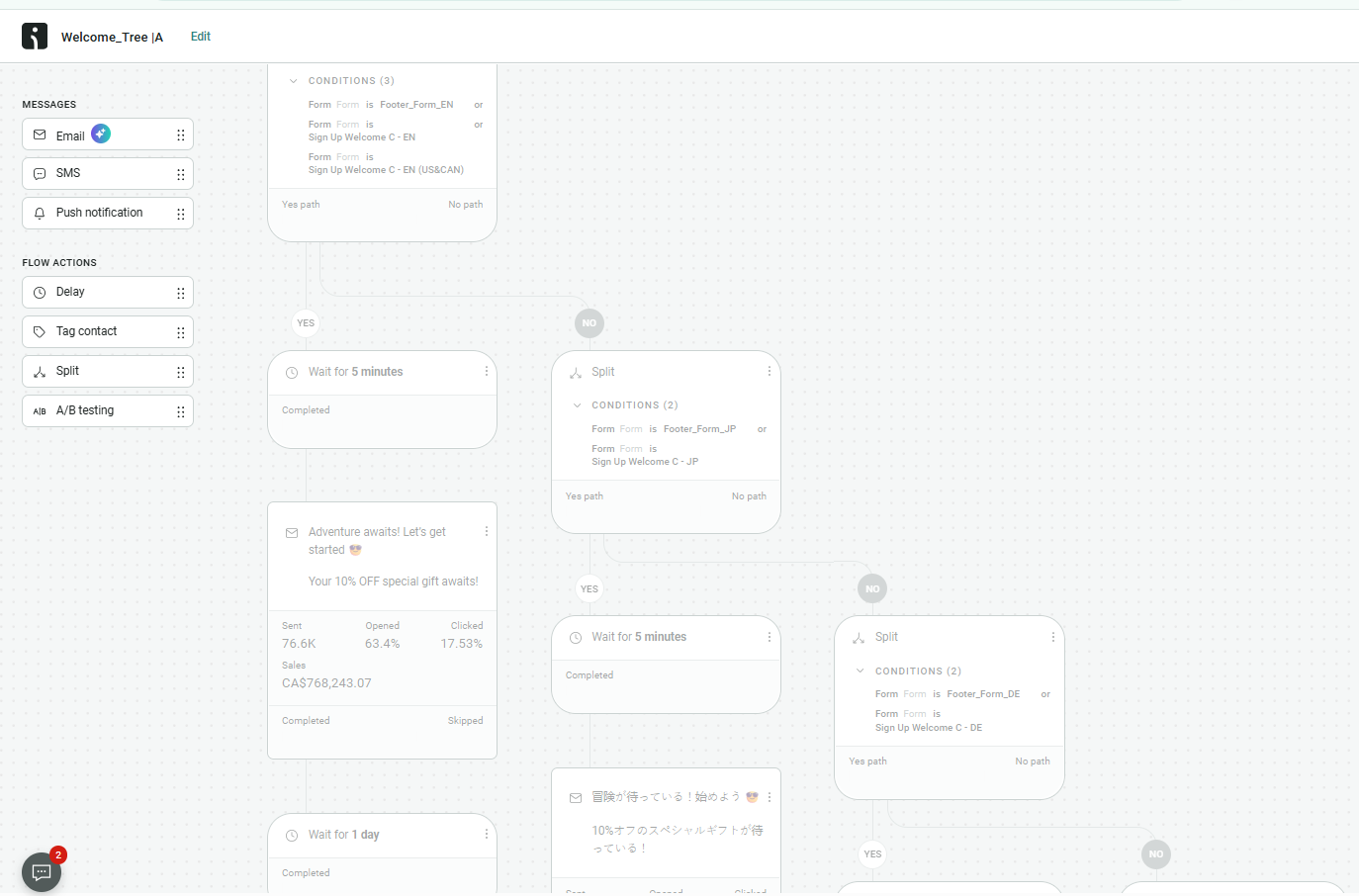
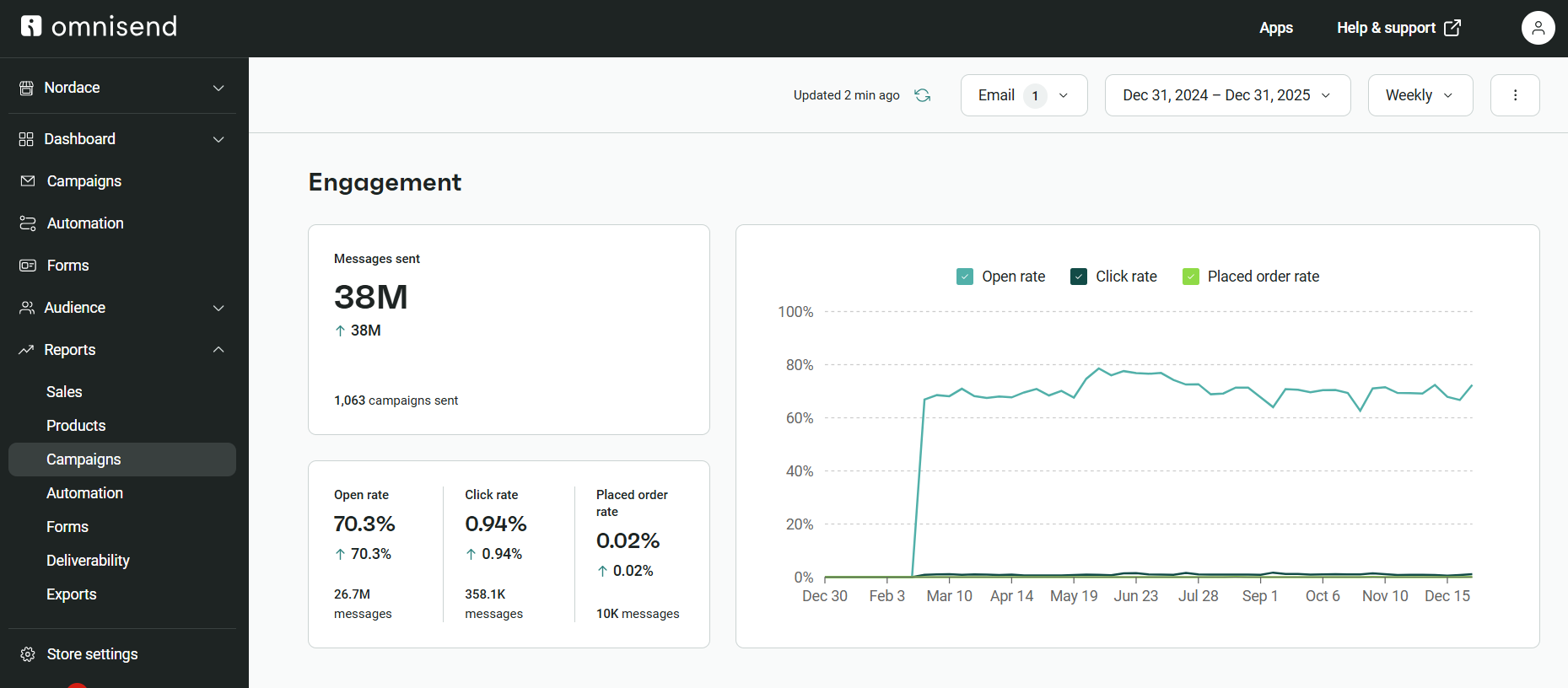
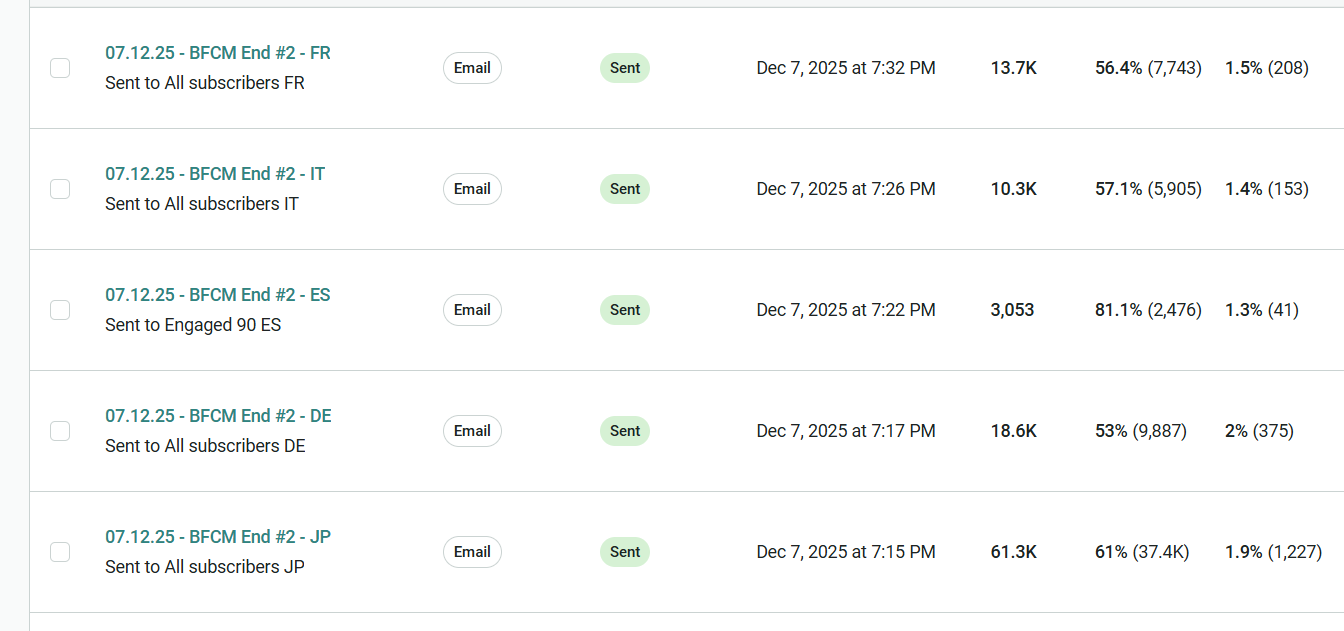
As a result, they’re maintaining strong open and click rates supported by language-based segmentation and behavior targeting.
Wrap up
It’s easy to treat platform migration as a technical task. In reality, it’s a strategic one.
For brands like Nordace, better segmentation and unified workflows mean more consistent customer journeys. For agencies like BAD Marketing, ease of use translates into stronger performance and happier clients.
The fear around migration is understandable. But based on these experiences, the bigger risk may be staying on a platform that limits growth.