Omnisend AI


 OFFER
OFFER









Successful brand personalities often focus on building an emotional relationship rather than focusing solely on products. For example, Nike often inspires excitement, Amazon shows competence, and Patagonia is all about adventure.
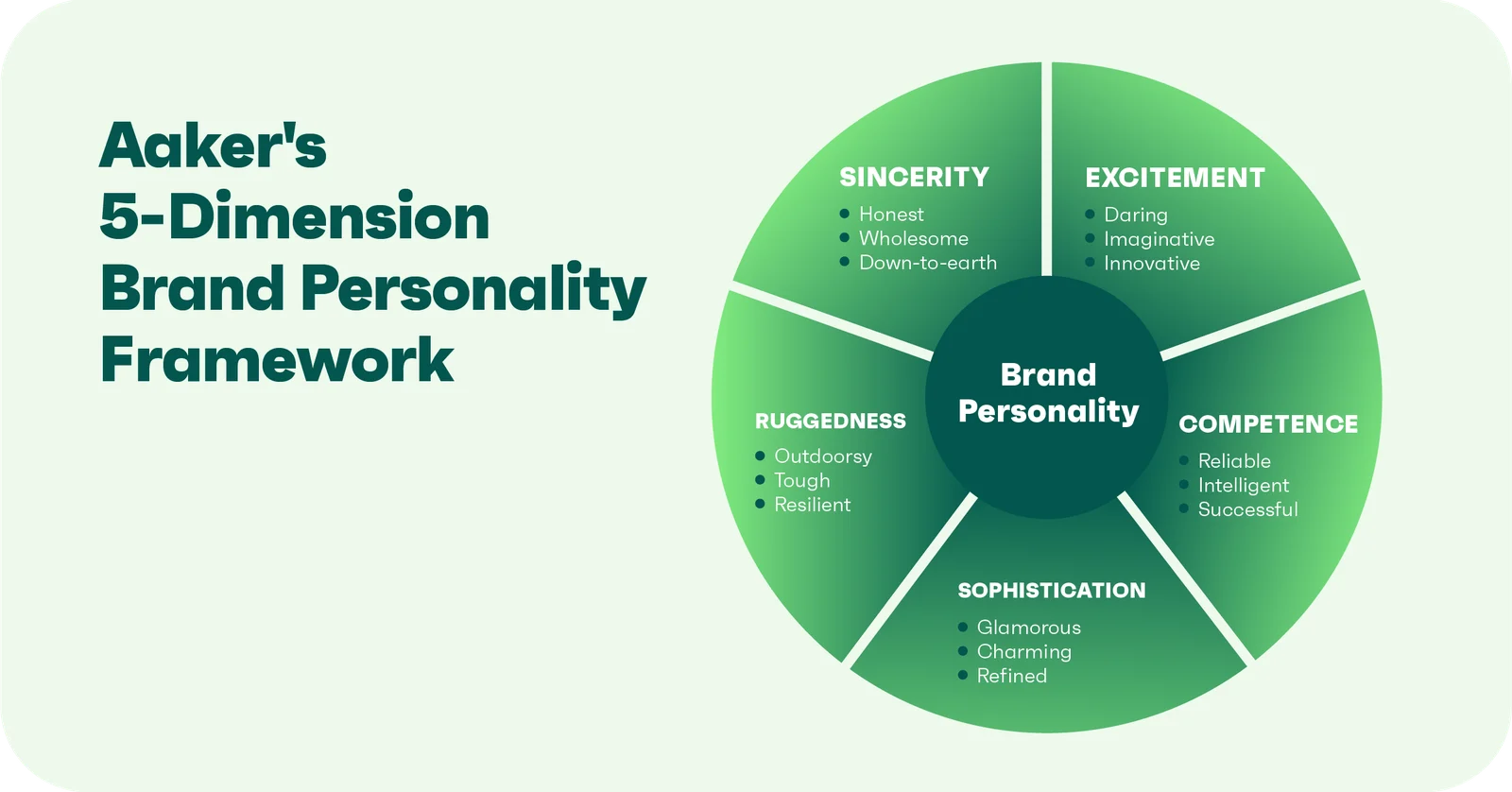
Jennifer Aaker, an American behavioral psychologist, says customers assign brands traits just like they do with people. She identifies 5 dimensions (sincerity, excitement, competence, sophistication, and ruggedness) that brands can fall into. While most brands express some of these, they struggle to keep them consistent.
This article covers everything you need to know about building a lasting brand personality that sticks. We’ll also explain the Aaker framework in more detail and go over more than 50 brand traits with real-life examples to help you define your unique brand.
Quick sign up | No credit card required
What is brand personality?
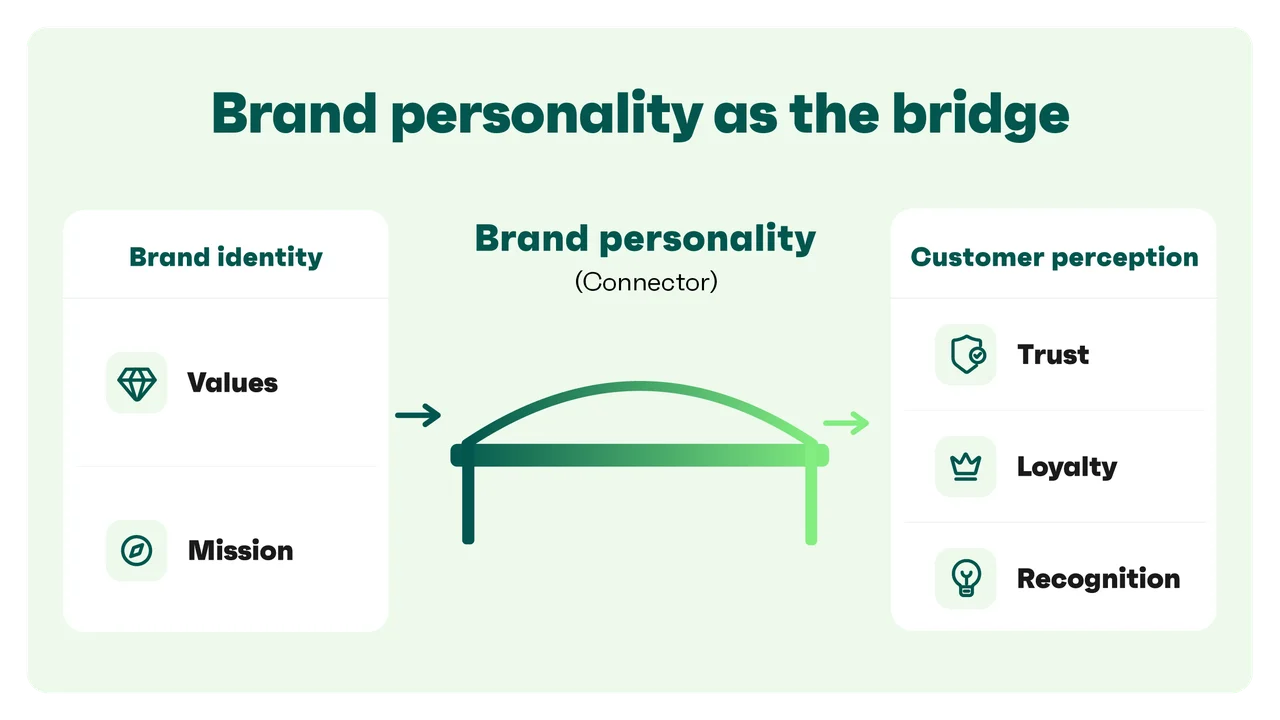
Brand personality is a unique set of human characteristics, traits, values, and emotions that businesses use to create their brand identity and distinct voice. Once established, brand personality defines business profiles and helps shape how target audiences understand and interact with brands, creating a basis for customer-brand relationships.
Specifically in marketing, brand personalities outline how businesses communicate with customers to make sure that no matter what channel visitors use, they receive the same information about your brand.
In practice, this can look like a second-hand clothing brand with a focus on sustainability launching a mindfulness-led campaign for Black Friday. Instead of announcing sales, the brand runs targeted campaigns on Instagram and TikTok with brand ambassadors showing how they create new outfits with clothing items that they already own, followed by genuine educational newsletters with expert tips on how to put together outfits, combine colors, and pair accessories.
The brand personality framework was laid down by Jennifer Aaker’s 1997 paper titled “Dimensions of Brand Personality,” published in the Journal of Marketing Research (Vol. 34, No. 3, pp. 347–356). In this paper, Aaker identified and laid out five core dimensions of brand personality:
- Sincerity: honest, genuine, cheerful, down-to-earth
- Excitement: daring, spirited, imaginative, up-to-date
- Competence: reliable, intelligent, successful, efficient
- Sophistication: glamorous, charming, romantic, upper class
- Ruggedness: outdoorsy, tough, strong, rugged
Every brand dimension maps individual human personality traits to different brand personas. For ecommerce brands, using the brand dimension framework means distinction and consistency, which can influence major metrics like increased repeat purchase rates, customer lifetime value (CLTV), and brand recall in a crowded market.
In fact, Capital One Shopping Research from 2026 shows that 33% of businesses report that brand consistency helped increase revenue by 20% or more.
Brand personality examples
Nike, Amazon, Starbucks, and Patagonia are some of the strongest brand personality examples, running successful businesses online and offline globally. Each of these brands combines identity, strategic marketing strategies, and targeted audience reach to solidify their brand personalities.
To understand exactly what makes a strong brand personality, we’ll review these four examples of brand personality to see exactly how they apply Aaker’s brand dimensions.
1. Nike
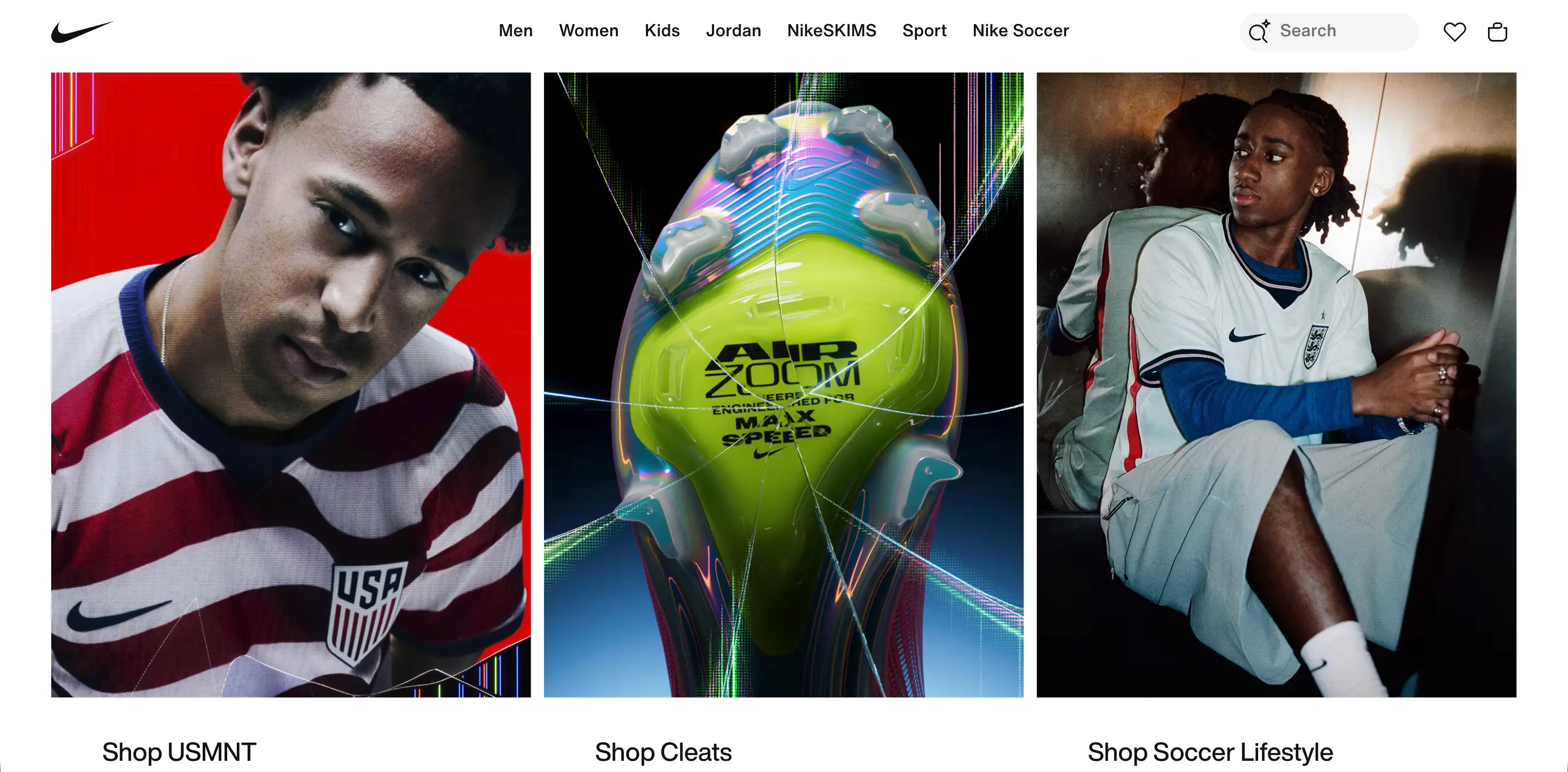
Despite Nike developing high-quality and popular products, the company’s loyal customers don’t buy those products just because they’re popular. Shoppers buy those products to be a part of the Nike culture. The professional athlete collaborations and global events have successfully created an entire community.
Nike, the global leader in athletic footwear and clothing, has created a powerful brand personality that includes all five dimensions. The brand’s identity is closely tied to Nike’s famous slogan, “Just Do It,” which communicates determination, perseverance, and achievement.
- Primary Aaker dimension: Excitement
- Secondary dimensions: Competence, Sincerity, and Sophistication
- Key traits: Daring, spirited, bold, adventurous, innovative
- Brand voice: High-energy, authentic, and direct, focusing on what customers can achieve with Nike rather than what they can buy
- Ecommerce takeaway: Use short but impactful messaging for your website, write goal-oriented CTAs, and create email campaigns focusing on brand identity
2. Amazon
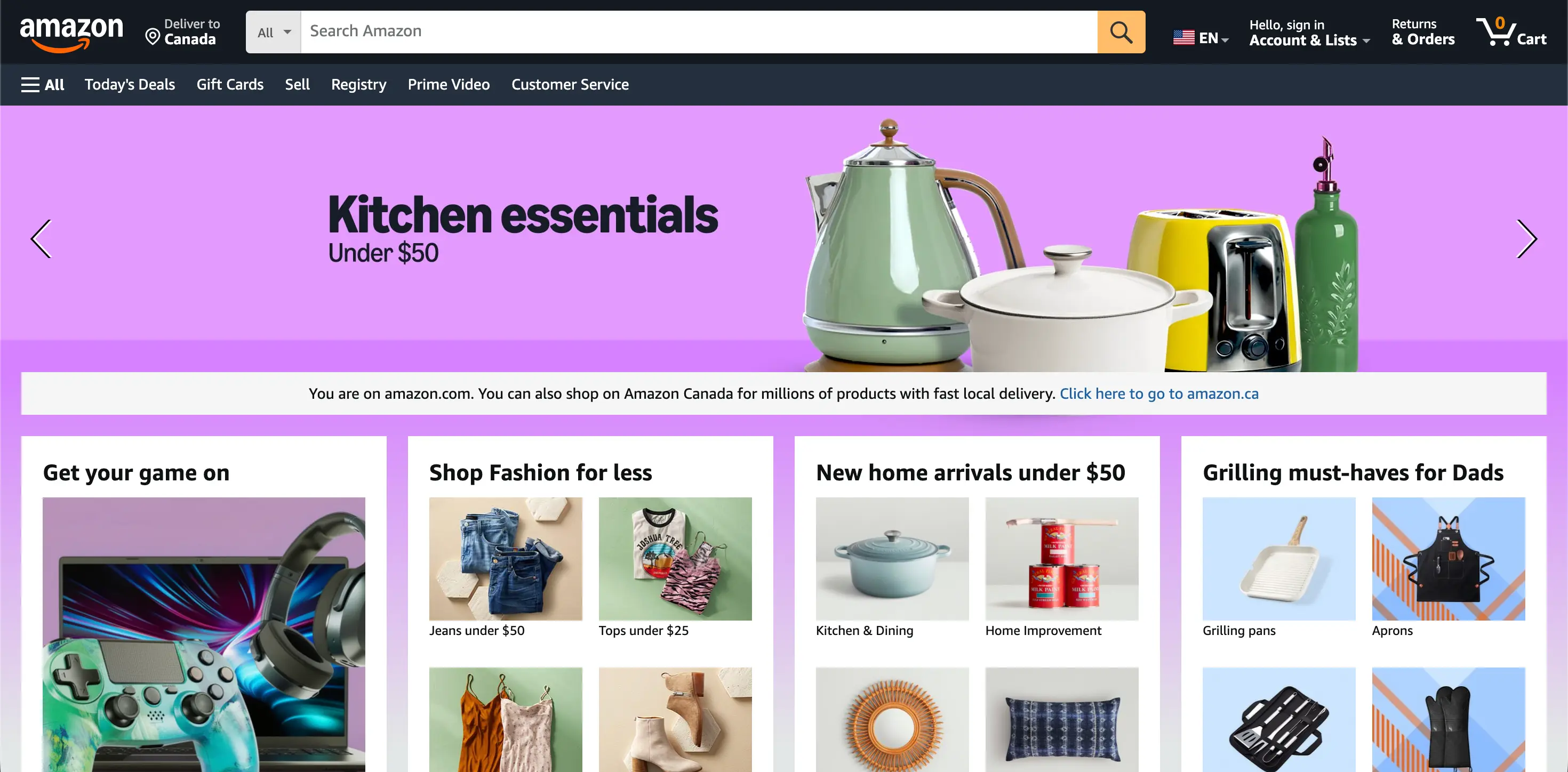
Amazon is a global giant most of us turn to for buying everyday household items, everyday clothes, and electronics, dominating the ecommerce industry. In 2026, the company has over 310 million active customers worldwide, generating $323 billion in revenue in the first half of the year.
The massive online marketplace has done an incredible job of creating a brand centered around Competence by selling millions of verified products from multiple merchants. Amazon today is defined by large product catalogs, timely deliveries, and high-level personalization, all of which translate to Competence.
- Primary Aaker dimension: Competence
- Secondary dimensions: Sincerity and Excitement
- Key traits: Helpful, dependable, intelligent, successful, precise, analytical, hardworking
- Brand voice: Clear and functional, emphasizing information quality over witty remarks or catchy ads
- Ecommerce takeaway: Emphasize building trust with clear product information and timely shopping updates, pairing them with helpful transactional emails
3. Starbucks
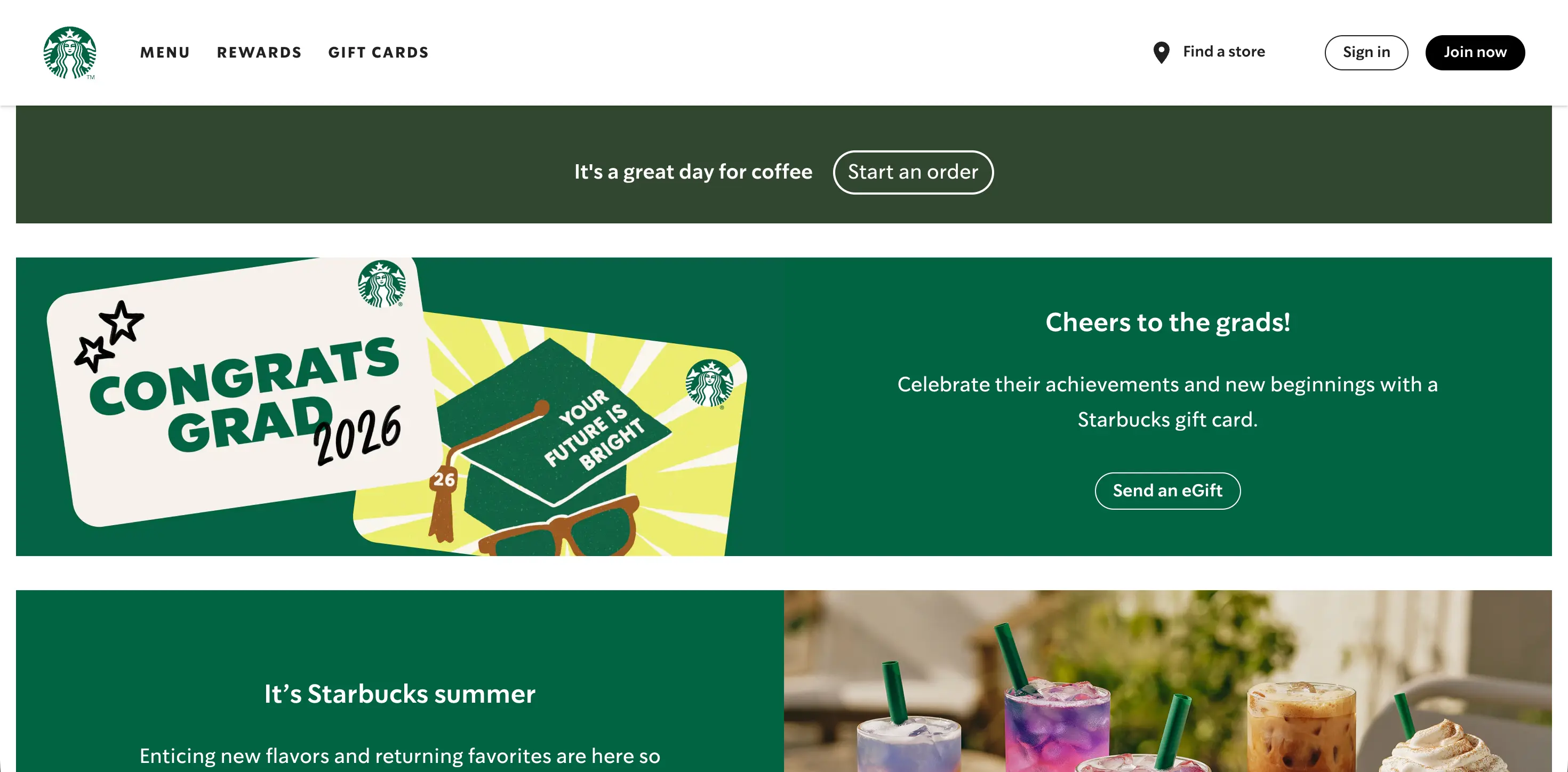
Starbucks runs over 40,000 shops worldwide that have become hubs for studying, coworking, relaxing, and spending time with friends. It transformed coffee from a simple personal pleasure to a cultural trend.
Even though Starbucks seems to appeal to different demographics and audiences, the way Starbucks presents itself is constant. It’s a trendy, refined coffee shop where everyone finds their version of a high-class coffee drink.
- Primary Aaker dimension: Sophistication
- Secondary dimensions: Sincerity and Excitement
- Key traits: Reliable, community-driven, welcoming, trendy, authentic
- Brand voice: Inclusive, aspirational, and open; Starbucks makes an effort to invite all customers to experience high-grade coffee and a “treat yourself” moment
- Ecommerce takeaway: Focus on creating a personalized experience with relevant product recommendations and consider building interactive loyalty programs to retain customers and keep them engaged
4. Patagonia
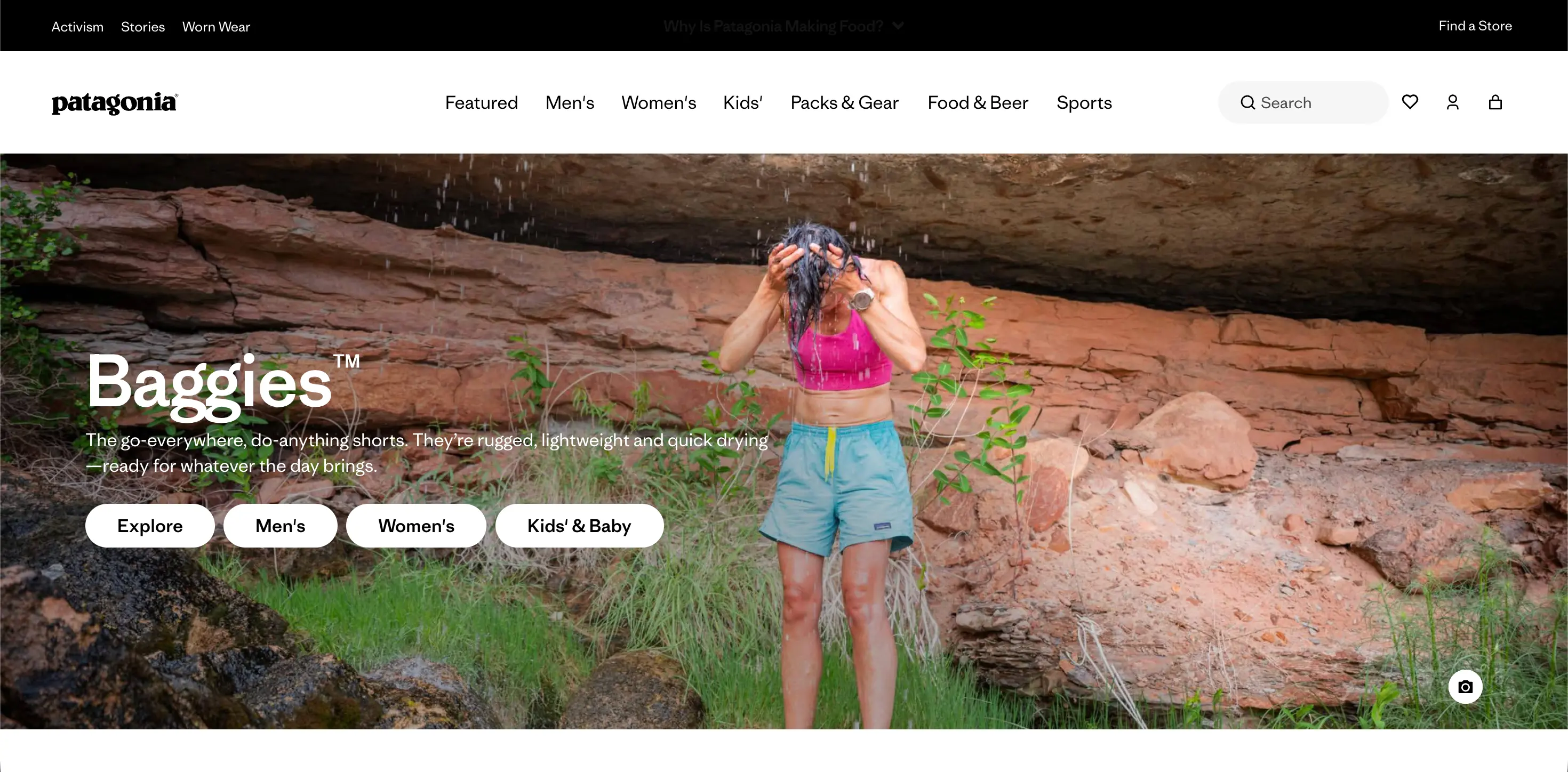
Patagonia is one of the best rugged brand examples. It was founded in 1973 by a climber and environmentalist, Yvon Chouinard, who wanted to establish a brand built on quality, sustainability, and usability.
The brand’s running slogan, “We’re in business to save our home planet,” embodies the entire idea behind Patagonia, which is people exploring the outdoors with high-quality and sustainable equipment.
As evidence of this, founder Yvon Chouinard gave the multibillion-dollar company to a trust and a non-profit organization to make sure all future profits are dedicated to fighting climate change.
- Primary Aaker dimension: Ruggedness
- Secondary dimensions: Sincerity and Competence
- Key traits: Outdoorsy, tough, resilient, authentic, sustainable, gritty
- Brand voice: Patagonia uses direct and inspired messaging, working towards an eco-friendlier future, selling premium products designed to perform for years to come
- Ecommerce takeaway: Add product sustainability and sourcing notes for transparency and choose an honest brand personality voice for all marketing channels
The Aaker brand personality framework: 5 dimensions explained
Jennifer Aaker’s brand personality framework proposed that brand personality, just like human personality, can be measured across five dimensions, each with individual traits. The types of brand personalities we explored earlier in the article focused on a single dimension to develop their brands.
The five dimensions have their own set of traits and characteristics, each one associated with unique behaviors that shape a brand’s personality. Here’s a practical three-step decision framework to pick the right dimension for your brand:
- Category alignment: Match your product type with one of the dimensions, like luxury skincare and Sophistication, or outdoor gear and Ruggedness
- Competitor gap analysis: Audit at least three direct competitors’ emails to find an unoccupied personality angle you can fill, if applicable
- Audience demographics: Examine your customer support chats to understand what language your audience uses to align a fitting dimension
1. Sincerity
Sincere brands commonly have honest, genuine, and warm brand characteristics. They focus on authenticity, which is often represented through their products or missions, all for the sake of building trust with their target audience.
Dove’s “Real Beauty” campaign is one of the best examples of Sincerity in modern marketing. The brand combined personal care with wholesome inclusivity, positivity, and healthy body image on a global scale.
Defining characteristics:
| Honesty | Genuineness | Warmth | Transparency |
| Friendliness | Relatability | Approachability | Authenticity |
2. Excitement
Excited brands can be extremely different, but the most common brand voice characteristics that define Excitement are colorful displays, informal speech, impactful ads, striking visuals, and overall enthusiasm. Another distinguishing aspect is how companies with the Excitement personality dimension think of new ways to engage with their audience.
“Red Bull gives you wings” is one of the most iconic marketing slogans. You may not know about the energy drink or the company, but this slogan is well-known around the world. This is because the brand markets a lifestyle tied to movement and freedom.
Defining characteristics:
| Energy | Enthusiasm | Creativity | Daring |
| Spirited | Imaginative | Trendy | Bold |
| Youthful | Adventurous | Innovative |
3. Competence
Competence is often conveyed through reliable services, efficient buyer journeys, and proven professionalism built over long periods of time.
IBM is the perfect example. The company spent years carefully building a credible, trustworthy brand to establish itself as an industry expert. Through consistent messaging about innovation, enterprise reliability, and thought leadership, IBM is a multinational technology and consulting corporation trusted by millions.
Defining characteristics:
| Reliability | Efficiency | Professionalism | Trustworthiness |
| Innovation | Intelligence | Success | Confidence |
| Dependability | Analytical |
4. Sophistication
The Sophistication brand personality dimension is usually associated with prestige, refinement, elegance, and lasting quality.
For decades, Chanel has embodied the Sophisticated personality we all recognize. Even though the brand is a high-end fashion company with a specific audience, Everyone has heard of Coco Chanel and her lively personality.
Defining characteristics:
| Elegance | Luxury | Refinement | Aspirational |
| Timelessness | Prestigious | Exclusive | Polished |
| Glamorous | Charming | Upper-class |
5. Ruggedness
The word Ruggedness may inspire a single image of someone who’s rough or that of a seasoned hiker. But in reality, Ruggedness combines more than off-road jeeps or extreme survivalists. This brand personality dimension is all about offering real and authentic experiences, a way to connect with nature through toughness and grit.
Patagonia is a wonderful example of Ruggedness, but so is Harley-Davidson. This brand literally built a subculture around this dimension, to the point where the company’s products became a way to join the Harley-Davidson culture.
Defining characteristics:
| Toughness | Durability | Adventurousness | Authenticity |
| Resilience | Outdoorsy | Hardened | Earthy |
| Gritty |
Brand personality traits list by dimension
Choosing your brand characteristics is just as important as establishing your primary brand personality dimension. The right traits help to define your business and shape your voice for writing product pages, social media posts, email flows, and general communication with customers.
Use the table below as your starting point to pick a single Aaker dimension you most resonate with and select three supporting traits that either reflect your current identity or align with the personality you want to create.
Finally, once you have a brief outline of your Aaker personality dimension and three traits, create a Do’s/Don’ts list with clear guidelines on what kind of language to use. For example, if you’re leaning towards an Excitement dimension, brief Do’s/Don’ts guidelines could look like this:
- DO use direct tone, power verbs, exclamation points, and a conversational tone
- DON’T use formal or passive language, especially corporate jargon
Following this personality development plan can help brands stay consistent and scale businesses while maintaining the same personality.
| Sincerity | Excitement | Competence | Sophistication | Ruggedness |
|---|---|---|---|---|
| Honest | Daring | Reliable | Glamorous | Outdoorsy |
| Genuine | Spirited | Intelligent | Charming | Tough |
| Warm | Imaginative | Successful | Cultured | Rugged |
| Down-to-earth | Trendy | Dependable | Smooth | Enduring |
| Cheerful | Youthful | Hardworking | Upper-class | Gritty |
| Caring | Bold | Analytical | Polished | Earthy |
| Wholesome | Adventurous | Precise | Refined | Hardened |
| Transparent | Innovative | Confident | Prestigious | Western |
| Approachable | Edgy | Authoritative | Exclusive | Resilient |
| Friendly | Energetic | Professional | Aspirational | Adventurous |
| Authentic | Creative | Trustworthy | Elegant | Durable |
| Relatable | Enthusiastic | Efficient | Timeless | Authentic |
How to write a brand personality statement
A brand personality statement is a natural next step in any brand’s personality-building process, forming a foundational blueprint for future brand-related descriptions and mentions. Think of it as a boilerplate description to be used for all taglines, product listings, social media posts, blogs, cases, and more.
Although there are many ways to create a unique brand personality, a widely used template covers all brand essentials. Refer to the template and examples below to write your own brand personality statement and make sure to add it to your internal brand style guide. This will help maintain consistency when working with copywriters or AI content generation tools.
Here’s the commonly used template using Apple as an example:
| Template | Apple example |
|---|---|
| [Brand name] has a [primary dimension] brand personality, characterized by [three key traits], which we express through [communication channels] to connect with [target audience]. | Apple has a Sophistication brand personality, characterized by elegance, precision, and refinement, which we express through minimalist design, understated copy, and premium product experiences to connect with people who value quality and performance. |
And here are a couple of other examples:
| Patagonia example | Nike example |
|---|---|
| Patagonia has a Ruggedness brand personality, characterized by authenticity, environmental conviction, and durability, which they express through activist-led storytelling, no-nonsense product copy, and community-driven campaigns to connect with outdoor enthusiasts. | Nike has an Excitement brand personality, characterized by boldness, inspiration, and relentless ambition, which they express through high-energy visuals, emotionally charged storytelling, and athlete-led campaigns to connect with people who see sport as a vehicle for self-transformation. |
After establishing your brand personality statement, you can then use it as a basis for creating visuals, copy, and other brand assets. Omnisend’s emails and SMS tools help brands use their personality statements at scale, guaranteeing all automated sequences stay on point with your personality and voice.
How to communicate your brand personality
To communicate your brand personality, focus on such aspects as website content, social media presence, email communication, packaging design, PR activities, and brand voice consistency. Communicating your brand identity consistently signals to audiences that they can get to know your brand and, over time, develop a relationship based on brand awareness and trust.
2026 Edelman Trust Barometer report states that 88% of customers claim brand trust is an important factor for making purchase decisions. So, the way you position and communicate about your brand with the right messaging and creative assets influences brand awareness and financial metrics.
1. Website design and content
Your website is often the primary point of contact between your brand and your audience, turning it into a critical platform for communicating your brand personality. That’s why it’s critical to define brand descriptions that serve as a focus point for building your website.
Start by choosing a color palette and fonts that convey your brand’s personality. Bold, bright colors communicate excitement and energy, while muted, sophisticated colors communicate class and refinement.
Remember to use imagery and graphics that resonate with your brand’s personality. Visuals can be powerful tools for communicating your brand’s traits, so an image of a fit mountain climber wearing branded gear can tell more than a block of text.
Finally, craft website copy that embodies your brand’s tone of voice. A friendly and approachable brand might use conversational and relatable language, while a luxurious brand might employ more formal and refined language
2. Social media
Social media platforms are by far one of the most important tools for creating brand personalities. These platforms allow businesses to extend their reach and experiment with how they communicate with target audiences. Not to mention spreading brand awareness to attract new customers.
Consider these tips for social media to help grow your brand while retaining the same personality:
- Consistency: Always communicate in a uniform tone of voice that reflects your brand’s personality traits, brand’s values, and mission
- Responsiveness: Engage with your audience by replying to comments and messages using the same characteristics that define your brand
- Visual unity: Use the same branded color palette, design guidelines, and typography to maintain visual consistency throughout all social media platforms
3. Email newsletters
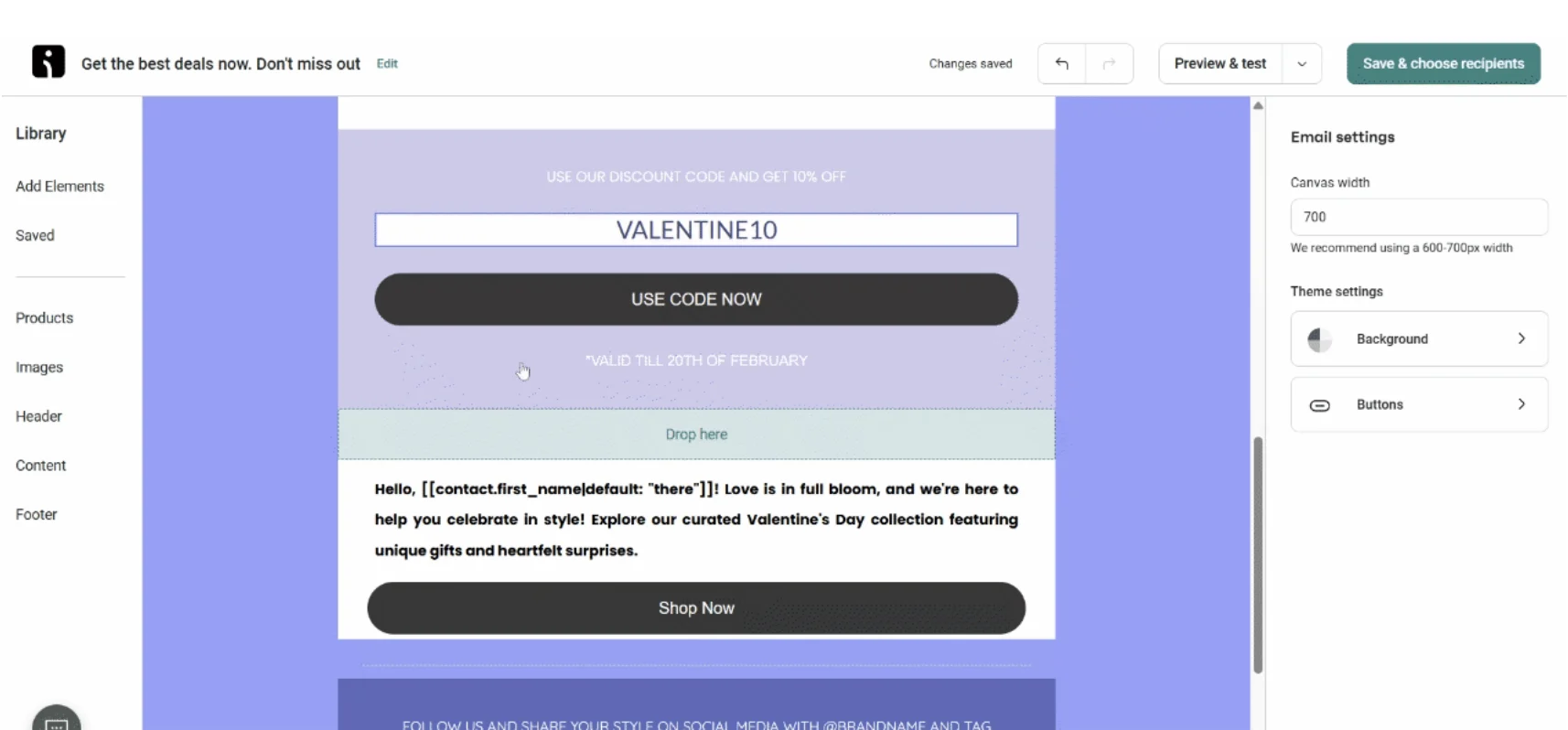
Efficient email marketing can strengthen your brand’s personality and positioning. Just like with social media, you should carefully construct your emails to reflect your brand colors, tone of voice, and visuals.
While the workbook can change depending on the brand type and focus, this flow can give you some idea of how to get started with your email flows:
- Welcome email series: Use the first email sent to new audiences to introduce your brand story and tone, and make sure to align subject lines with the personality dimension you chose
- Abandoned cart emails: Change your voice tone from a promotional one to character-driven recovery messaging, like a playful tone for Excitement or a reassuring tone for Sincerity
- SMS marketing: Keep your text copy under 160 characters and, if your primary personality dimension allows it, use appropriate emojis with short, direct CTAs
- Popups and sign-up forms: Avoid generic expressions like Subscribe for 10% off and go with more brand-specific messaging, like Join the X Club, Get exclusive access
Omnisend is an email marketing platform that helps businesses create highly personalized, engaging email campaigns at scale, all while using the same defining brand elements. We offer features for custom automation and detailed audience segmentation, making it easier for you to reach wider audiences.

CA Design is a leading Irish furniture retailer and a great example of a brand using the Sophistication dimension through subtle layouts and consistent design discipline.
After partnering with Omnisend, CA Design started using clean designs and clear, text-based hyperlinks in its newsletters, which resulted in a 5%+ CTR compared to its past 1.5% CTR and 2,000+ new leads from a single competition campaign.
Today, CA Design uses Omnisend to unify its email marketing with targeted segmentation.
“Omnisend has opened up a new world of possibilities for us. Now email marketing is our core sales driver.” – Harry Kelly, Ecommerce Manager at CA Design
Read the full CA Design success story.
Quick sign up | No credit card required
4. Packaging and branding materials
Product packaging communicates your brand’s personality before shoppers even get to the product they bought. The way you package, whether you use custom colorful boxes, include freebies, or use simple cardboard boxes, immediately starts to form an opinion about your brand.
Whether it’s packaging, business cards, brochures, or other promotional items, you should make sure every asset is created according to your brand’s personality:
- Create a brand style guide that details packaging colors and fonts
- Include any inserts, notes, or branded materials like a handwritten-style thank-you note for a Sincerity brand
- Combine personalization with brand messaging to create memorable unboxing experiences with branded QR codes or quirky packaging
For reference, you can check out Omnisend’s brandbook to see how we define our brand.
5. PR activities and events
Participating in PR activities takes going public to a different level. For instance, Red Bull sponsors extreme sports events like cliff jumping, which effectively reinforces Excitement. In contrast, Patagonia actively funds environmental campaigns, which go hand in hand with Ruggedness. Different brands can have wildly different sponsorship levels and expressions, but as a rule of thumb, these three points cover the basics:
- Choose partnerships that are relevant to your primary dimension
- Write press materials in your brand voice characteristics, not generic corporate language
- Use the same tone of voice for all communication, including for responding to public issues
6. Brand voice and personality
Your brand voice and personality should work together to communicate the same overall personality. In other words, the characteristics you use to define your brand should be the same as the ones used to outline your personality.
Identify your primary and secondary, if applicable, Aaker dimension with corresponding sub-traits and write a clear brand statement. To make it more straightforward, here’s how every Aaker dimension can be applied to voice characteristics:
- Sincerity: Warm, conversational, first-person; uses “we” and “you” frequently
- Excitement: Energetic, informal, action-first; uses active and short, snappy sentences
- Competence: Precise, authoritative, data-driven; uses statistics and evidence
- Sophistication: Elegant, measured, considered; uses longer sentences with rhythm
- Ruggedness: Direct, honest, no-nonsense; uses short sentences with grounded metaphors
Omnisend’s large library of email templates and automation workflows makes applying your brand voice straightforward and more consistent across every campaign.
How to build your brand personality
To start building your brand personality, analyze your context, develop a reliable and sustainable strategy for the future, execute it, measure the results, and make changes along the way to create a strong brand reputation. This process is widely used and outlined by The Branding Journal, which goes into great detail.
However, regardless of whether you already have a defined brand personality or want to create one, here’s a breakdown of the five steps and what each one involves:
| Steps | What to do | How to do it |
|---|---|---|
| Step 1: Audit customer sentiment | Identify how customers describe your brand | Read at least 50 recent customer reviews and post-purchase survey responses to see what words, especially adjectives, shoppers use to describe your brand |
| Step 2: Define your core dimension and traits | Define your brand personality | Select a single Aaker dimension and three supporting traits using the decision framework |
| Step 3: Create personality and copywriting guidelines | Turn the personality into practical writing rules | Use the statement template to create your brand’s personality statement and build a one-page Do’s/Don’ts guideline for copywriters |
| Step 4: Update key touchpoints | Apply the personality consistently | Update your top-performing and other key pages (homepage hero, product descriptions, email welcome series, and checkout confirmation pages) to fit your brand personality |
| Step 5: Run A/B tests and improve | Measure which messaging performs better | Evaluate two different subject lines for targeted email campaigns to get accurate data on click-through and conversion rates |
Conclusion
Building a lasting, recognizable brand personality requires auditing your top three competitors and customer sentiment, selecting a personality dimension with three traits, and updating welcome email subject lines. The Aaker framework consolidates the key elements of the brand personality definition process by giving you the necessary vocabulary to define your brand.
However, writing a brand description is only the first step in building a brand personality. The next step is to make sure you and your team reflect your brand personality across PR, emails, social media, website, and beyond.
Quick sign up | No credit card required
Frequently asked questions
What is brand personality?
Brand personality is rooted in a brand’s traits and characteristics, giving it a distinct identity. Usually, businesses use Aaker’s five dimensions to create their own unique brand personality, which also defines all actions, visuals, and communication, both internal and external.
What are the five brand personalities?
The five brand personalities are Sincerity, Excitement, Competence, Sophistication, and Ruggedness. They were first outlined by Jennifer Aaker, detailed in her 1997 paper “Dimensions of Brand Personality” and continue to be the main framework for defining brand personalities.
What is brand personality in marketing?
A brand personality is a set of human traits businesses use to define their personality and express it through visuals, actions, marketing channels, and PR. Both brand personality and voice need to communicate the same characteristics for consistency and brand trust.
What is the difference between brand personality and brand voice?
A brand personality describes a brand’s traits and characteristics, much like describing a person. A brand voice defines how a brand sounds and communicates, using a specific tone, language style, and vocabulary.
How do you define your brand personality?
Start by auditing how your customers perceive your brand right now. Use the Aaker framework and select a primary dimension with three to five supporting traits. Once done, combine the dimension and traits in a single brand personality statement and use it consistently across all communications.
What are some examples of brand personality?
Some of the biggest and most famous brands have incredibly established brand personalities, like Nike, Amazon, Starbucks, Patagonia, and many others. What ties these brands together is the fact that they built strong brand personalities that get recognized for their traits rather than their products.