Omnisend AI

 OFFER
OFFER








Attention is the most expensive thing in marketing right now, and traditional ads are easy to ignore.
Guerrilla marketing flips that problem on its head. Instead of buying reach, it earns it with one unexpected, creative idea that people notice, talk about, and share.
In this guide, we cover the guerrilla marketing definition, its origins, and the TASER approach behind it.
You’ll learn about the main types of guerrilla marketing, its legal considerations, pros and cons, and 15 standout examples. You’ll also find best practices for building a successful guerrilla marketing campaign in 2026.
Quick sign up | No credit card required
What is guerrilla marketing?
Guerrilla marketing is a marketing strategy that leverages unconventional, often surprising tactics to capture the attention of an audience.
It relies on creative, memorable methods designed to provoke strong emotions, such as shock or awe, with the goal of driving publicity and brand awareness.
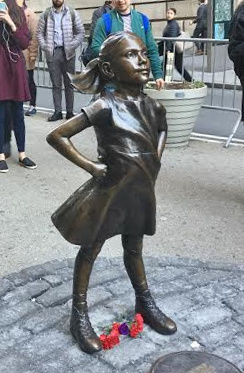
A guerrilla stunt in a public space can generate worldwide attention from a single creative idea. State Street’s Fearless Girl facing the Wall Street bull is a well-known example.
Unlike traditional marketing, which normally involves larger budgets for mass media channels like TV, radio, and print, guerrilla advertising operates on a smaller budget.
It uses creativity rather than expensive media buys. Guerrilla marketing tactics also tend to be more personalized.
Most involve direct interaction with people, such as street performances, public installations, or experiential events.
This hands-on approach creates a more personal connection than traditional ads’ one-way communication.
The term “guerrilla marketing” was coined by Jay Conrad Levinson in his book, “Guerrilla Marketing,” first published in 1984.
Inspired by guerrilla warfare tactics, Levinson emphasized creativity and surprise over traditional, costly advertising. His ideas have since revolutionized how brands engage with audiences.
How did guerrilla marketing start?
Guerrilla marketing started with Jay Conrad Levinson’s 1984 book Guerrilla Marketing: Secrets for Making Big Profits from Your Small Business. At the time, mass media were saturated and expensive. This shut most small businesses out of national advertising.
His answer was to borrow from guerrilla warfare. This way, smaller players didn’t have to match big advertisers dollar-for-dollar. Instead, they could win with agility, surprise, and unconventional tactics.
The idea was to trade money for imagination. Levinson’s book popularized the term and the small-budget, big-idea mindset behind it.
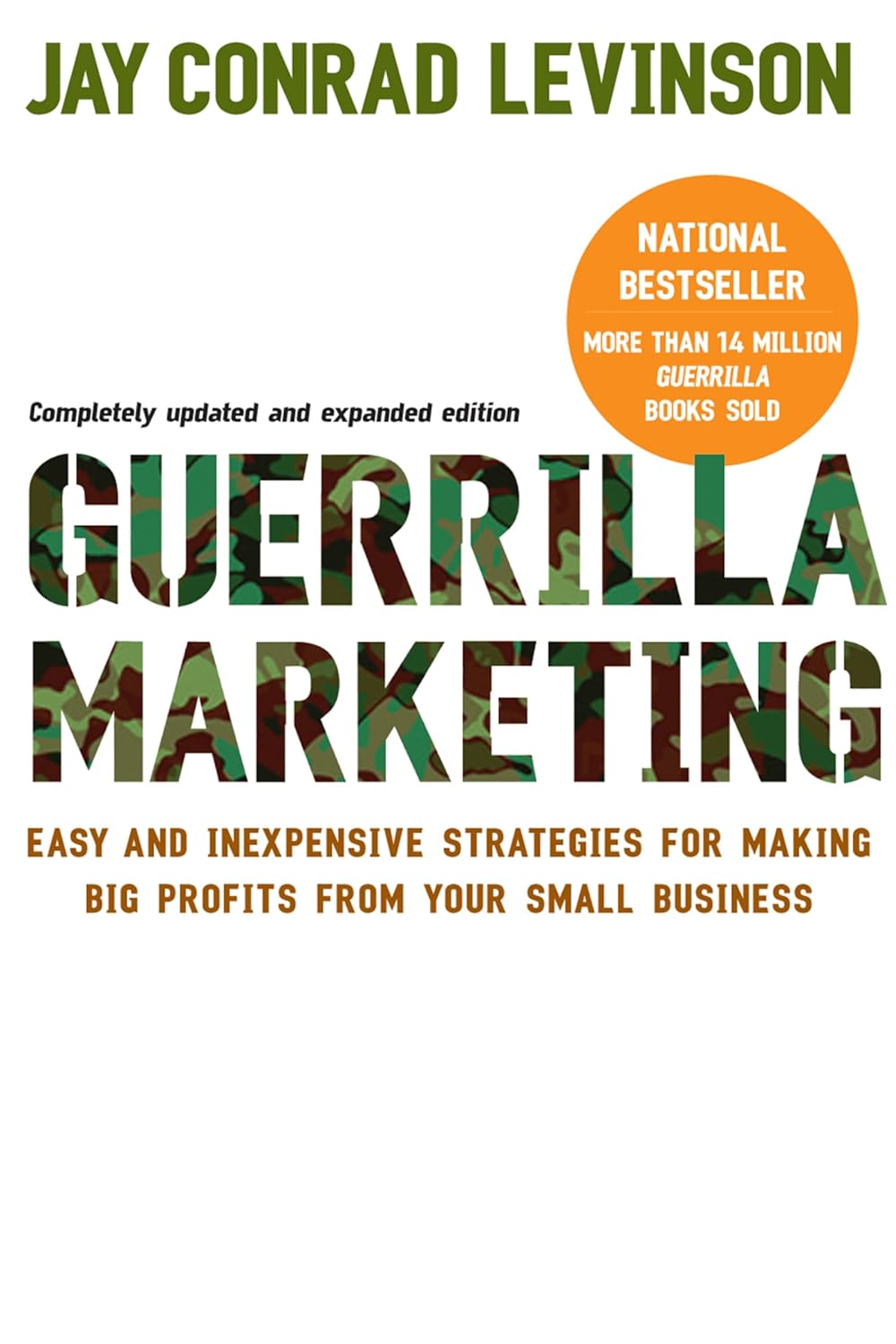
The book became one of the most influential marketing titles ever written, selling more than 20 million copies.
As digital channels emerged, the principle carried over. Brands began applying guerrilla thinking to social media, video, and online communities.
What is the TASER approach in guerrilla marketing?
The TASER approach describes how a strong guerrilla marketing campaign should feel in practice.
A taser delivers a small, precise jolt that triggers an immediate, outsized reaction. A great guerrilla campaign aims to do the same on a tiny budget.
In practical terms, it means picking one sharp idea, then aiming it at exactly the right audience. Do it at the right moment, too, and act boldly enough to provoke a genuine response.
The goal is maximum reaction from minimum spend. That’s the heart of Levinson’s small-budget philosophy.
Consider TASER as more of a guideline than a rigid formula. Before launching a campaign, check whether your idea is targeted, surprising, and worth sharing.
Types of guerrilla marketing
Guerrilla marketing offers excellent ROI but can also backfire if it isn’t done carefully.
A tactic that pleasantly surprises one audience can offend another, so the execution matters as much as the idea.
Understanding the various types and their distinct characteristics helps you leverage guerrilla marketing without tripping over its risks.
Below, we outline the five key types of guerrilla marketing strategies. They’ve been rated on their risks, cost-effectiveness, humor, and surprise factor:
- Risks: Assessed from low to high, considering legal issues, public backlash, and execution challenges
- Cost-effectiveness: Rated high, medium, or low, based on the typical costs of each approach
- Humor: Rated low to high, depending on how well humor fits the strategy
- Surprise: Rated low to high, reflecting how unexpected and attention-grabbing the tactic is
| Type of guerrilla marketing | Risks | Cost-effectiveness | Humor | Surprise |
|---|---|---|---|---|
| Indoor marketing | Low | Medium | Medium | Medium |
| Outdoor marketing | Medium | Medium to high | Low | High |
| Ambush marketing | High | Medium | Low | High |
| Experiential marketing | Medium | Low to medium | High | High |
| Digital guerrilla marketing | Medium | High | High | High |
Now, let’s discuss each type of guerrilla marketing in detail:
Outdoor marketing
This type of guerrilla advertising utilizes public spaces to create eye-catching and abstract campaigns.
It usually involves large-scale installations, street art, or interactive displays that engage passersby. It’s common in areas with high footfall.
Indoor marketing
For indoor guerrilla marketing, interior spaces, such as theaters, malls, and museums, are used to deliver creative and targeted messages.
It typically carries lower risks than outdoor marketing due to fewer environmental variables and regulatory concerns.
Ambush marketing
Here’s a tactic that capitalizes on high-profile events or locations to gain exposure without official sponsorship or permission from event organizers.
The element of surprise makes it a powerful tool for capturing attention and creating a lasting impression.
Experiential marketing
This type of guerrilla marketing can occur in any public space, whether indoors, outdoors, or at an event.
It creates immersive experiences that directly engage consumers, letting them interact with your brand in impactful ways.
Digital guerrilla marketing
With digital guerrilla marketing, the same principles are taken online. Tactics include viral stunts, meme-native content, reactive social posts, and hijacking a trending moment before it cools off.
The channel changes, but the goal is identical, which is an outsized reaction from a small, clever idea.
What sets it apart from offline types is speed and cost. A digital campaign can spread worldwide in hours and needs almost no production budget. It can fade just as fast once the feed moves on.
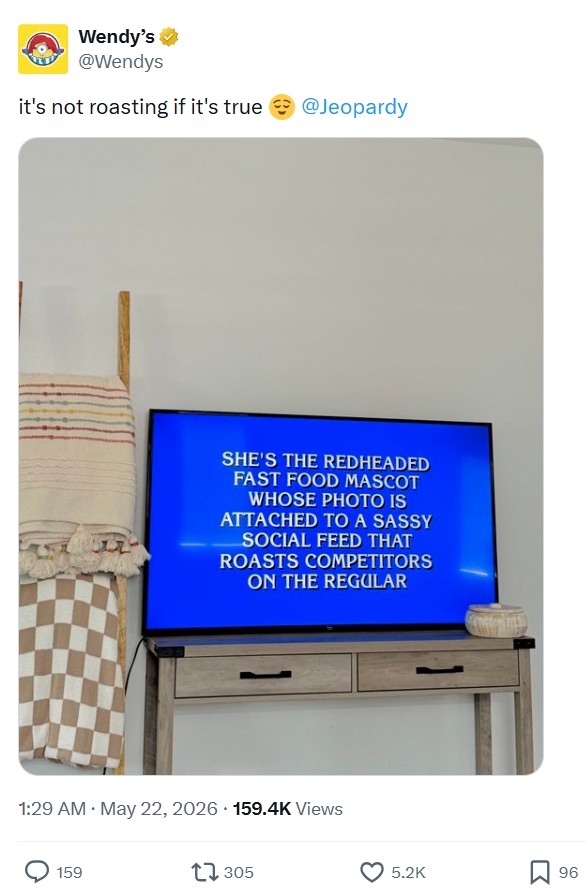
A well-known example is Wendy’s on X (formerly Twitter). The brand has built a sharp, reactive “roast” persona since 2017, which turns everyday replies into shareable entertainment. This is a textbook digital guerrilla play.
Is guerrilla marketing legal?
Guerrilla marketing is legal. Searches like “is guerrilla marketing illegal” come up often, but the strategy itself is just a creative, low-cost promotion.
There’s nothing unlawful about being unconventional. What gets brands into trouble is the specific execution, not the idea.
A few risk areas come up again and again:
- Property and permits: Using public or private property without permission can count as vandalism or unauthorized advertising
- Trademarked event IP: Ambush marketing that’s too close to a sponsored event can run into trademark and advertising restrictions
- Data and consent: Collecting personal information without proper consent can breach privacy laws
Two campaigns show how the bill arrives when execution goes wrong.
In 2001, IBM’s “Peace, Love, Linux” stencils on San Francisco sidewalks were treated as graffiti. They cost the brand about $120,000 in total. That figure covered a $100,000 fine plus cleanup.
In 2007, Cartoon Network’s LED devices triggered a bomb scare in Boston. Parent company Turner paid $2 million to settle, proving how costly placement without permits can get.
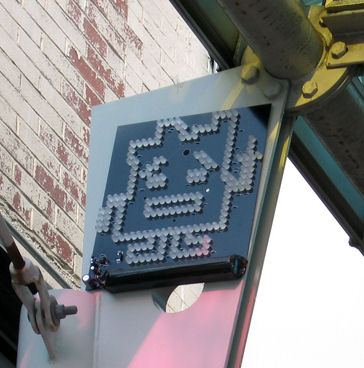
The fix is as simple as getting permits and securing venue approval in writing. You should also consult legal counsel whenever a campaign touches a public event or someone else’s IP.
Expert comment
“Guerrilla marketing campaigns that involve collecting data or interacting with individuals should be mindful of privacy laws. Brands must ensure they comply with regulations regarding data protection and privacy, such as GDPR or CCPA. Collecting personal information without proper consent can lead to legal repercussions and damage trust with the audience.”
— Evaldas Mockus, VP of Growth, Omnisend
Pros and cons of guerrilla marketing
Guerrilla marketing can be a dynamic and impactful approach. However, it has both benefits and drawbacks.
Understanding them can help you decide whether guerrilla marketing will work for your brand. The table below outlines the common pros and cons:
| Pros | Cons |
|---|---|
| Cost-effective because it can deliver a big impact with a smaller budget | Unpredictable outcomes since success isn't always guaranteed |
| High engagement, as it tends to capture attention | Risk of negative reactions if executed poorly |
| Viral potential that can lead to widespread social media sharing | Limited control because once in the public eye, it's hard to manage how people will react |
| Creative freedom encourages innovative ideas that stand out | Planning and executing the campaigns can be time-consuming |
| Boosts brand awareness by using unique tactics | May not reach the target audience |
Weighed together, these trade-offs explain why guerrilla marketing rewards careful planning.
The upside is large when an idea lands, and the downside is mostly reputational when it doesn’t. As such, the safest bets pair a bold concept with a clear plan for how people might react.
It also helps to start small. Test your idea with a limited audience or location, and scale it only once you see how people respond.
Guerrilla marketing tends to pay off most for brands that can move quickly and react in real time. This is often where smaller and mid-sized ecommerce teams have an edge.
Guerrilla marketing examples
When executed well, guerrilla-style marketing can help boost engagement, drive higher conversions, and strengthen your connection with your audience.
Here are 15 of the best guerrilla marketing campaigns to inspire your next one.
These guerrilla marketing examples span outdoor, indoor, ambush, experiential, and digital styles. So, you’ll find examples of guerrilla marketing to suit almost any goal:
- IKEA: Sofas at bus stations in Australia
- Dunkin’ Donuts: You look hot down there
- McDonald’s pedestrian crossing
- Kit Kat: “Have an uplifting break”
- KFC Crocs: KFC’s collaboration with Crocs
- Fiji Water: Fiji girl at the Golden Globes
- JetBlue: The ultimate ice breaker
- Spotify Wrapped
- Barbie: The pink takeover
- Duolingo on TikTok
- Jacquemus: Giant bags on Paris streets
- Burger King: The Moldy Whopper
- Aviation Gin: The Peloton response
- McDonald’s: Follow the Arches
- IKEA: Pee on this ad
IKEA: Sofas at bus stations in Australia
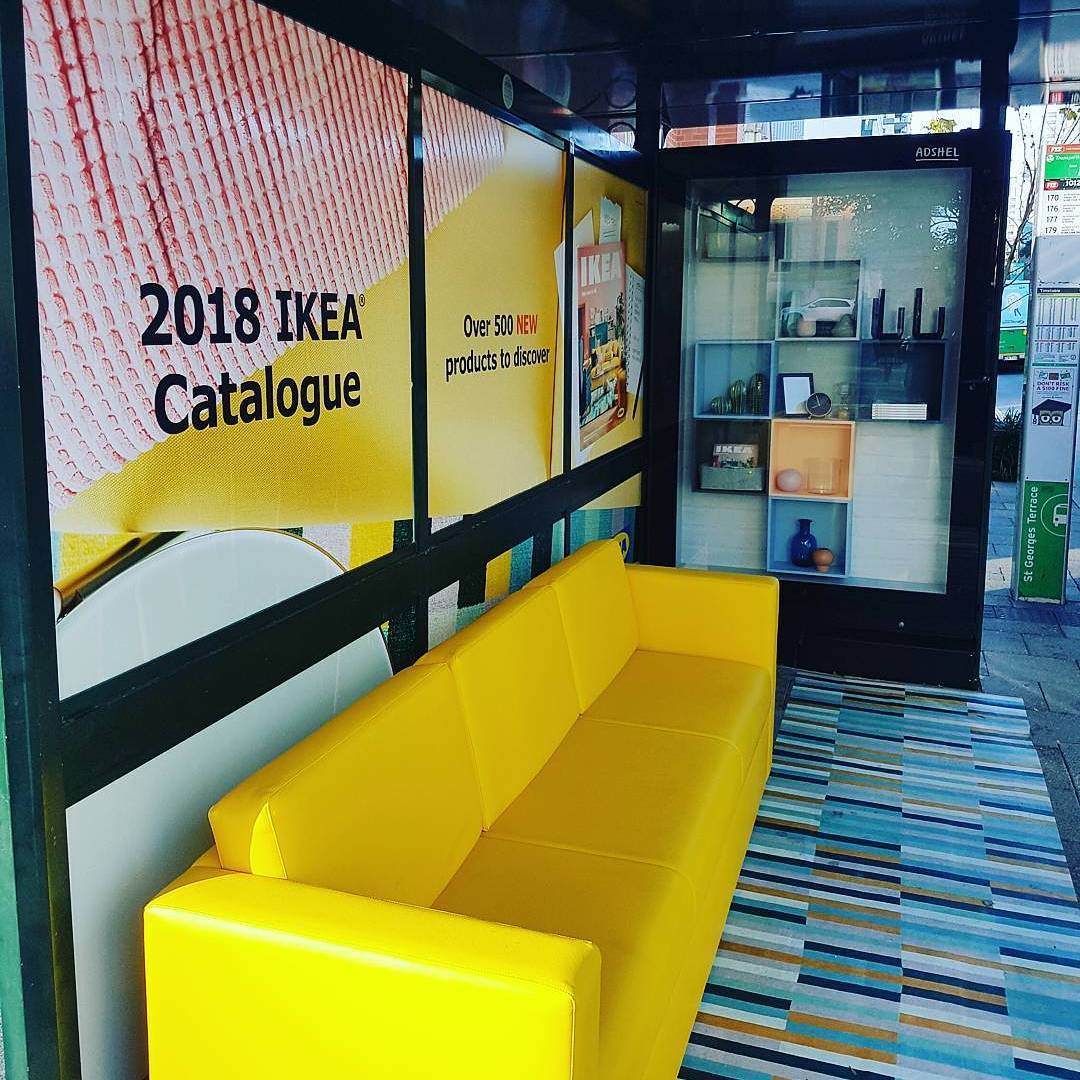
Type: Outdoor
IKEA’s campaign in Australia transformed ordinary bus stations into inviting lounge areas by placing its sofas at these locations.
The setup featured IKEA’s stylish, comfortable furniture, which made waiting for a bus a relaxed, enjoyable experience.
It didn’t just showcase the product range but gave a real-world demonstration of the furniture’s comfort. Passersby could physically experience the sofas, deepening their connection to the brand.
The strategic placement ensured high visibility with a diverse audience, creating a memorable and practical brand experience.
Dunkin’ Donuts: You look hot down there
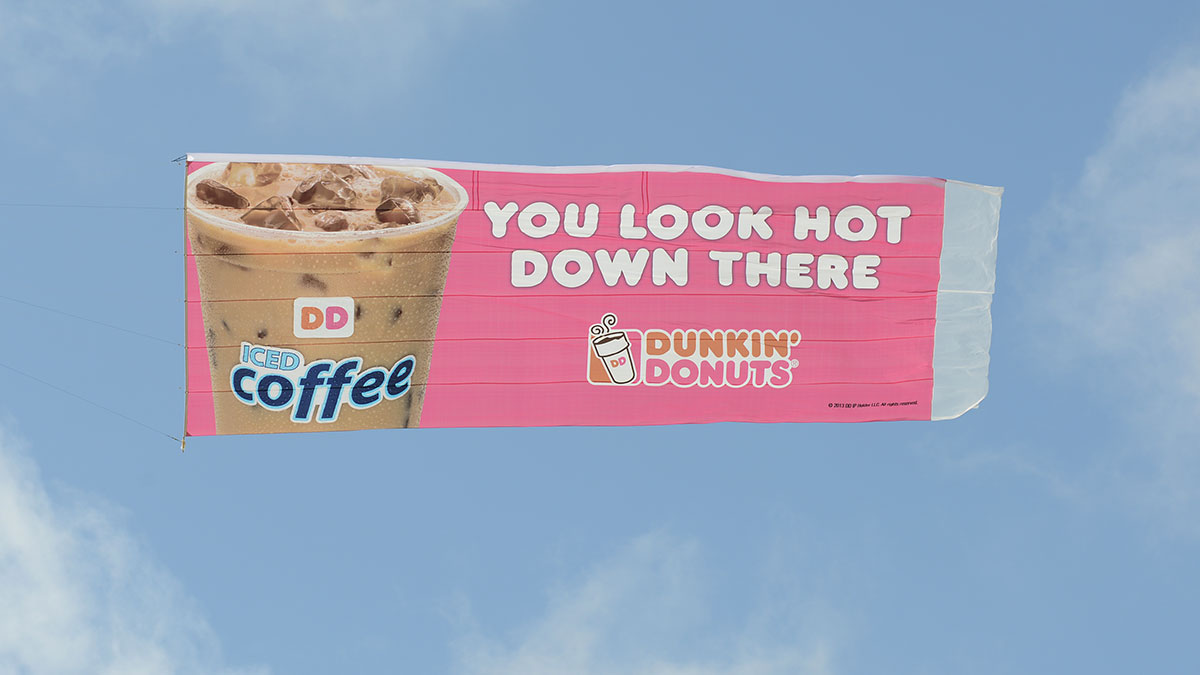
Type: Outdoor
Dunkin’ Donuts took to the skies with a bold campaign featuring an aerial banner flown over busy urban areas and events.
The message had high visibility and a touch of humor, which resonated with audiences.
The ad cleverly capitalized on its summer timing, using the heat as a playful reference to Dunkin’ Donuts’ iced coffee and donuts.
Its visual impact against the sky created a shareable moment, amplified through social media and word-of-mouth. The key takeaway is combining humor with strategic placement to capture attention.
McDonald’s pedestrian crossing
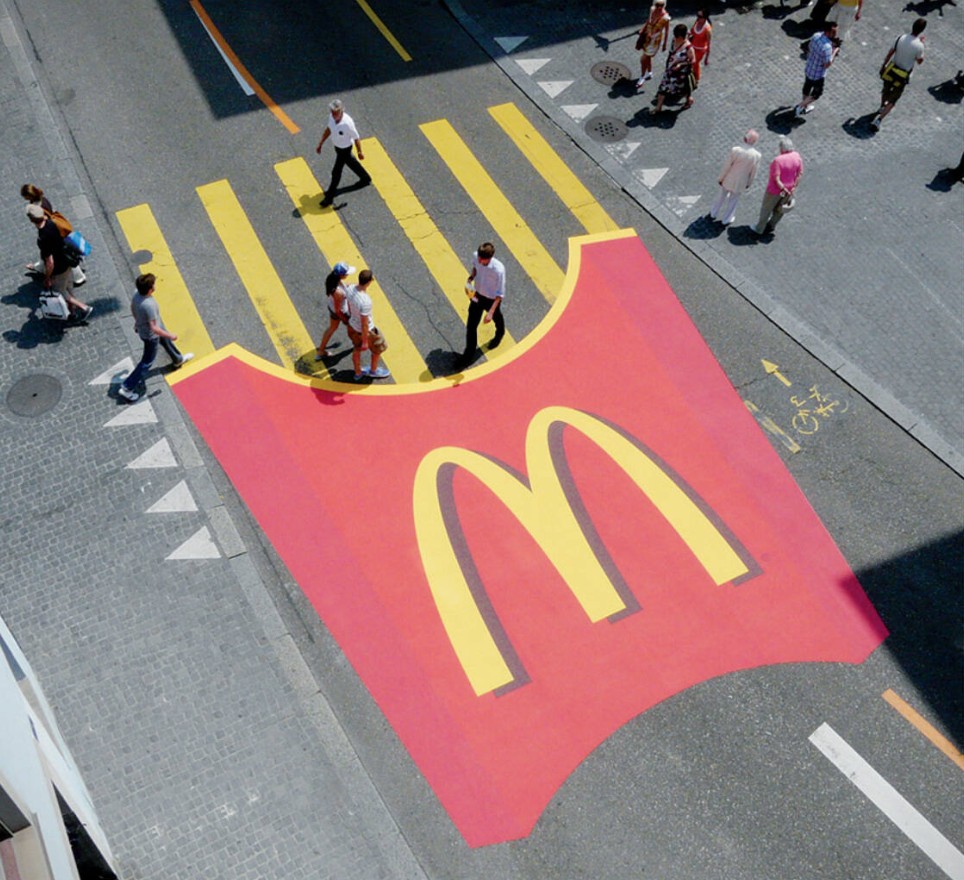
Type: Outdoor
McDonald’s turned a regular pedestrian crossing into an eye-catching, brand-focused ad by painting the yellow stripes to resemble its iconic fries.
This creative use of a functional crosswalk transformed an everyday moment into a brand experience.
The takeaway is how McDonald’s integrated its branding into public spaces without disrupting the environment, increasing visibility through a simple, memorable design.
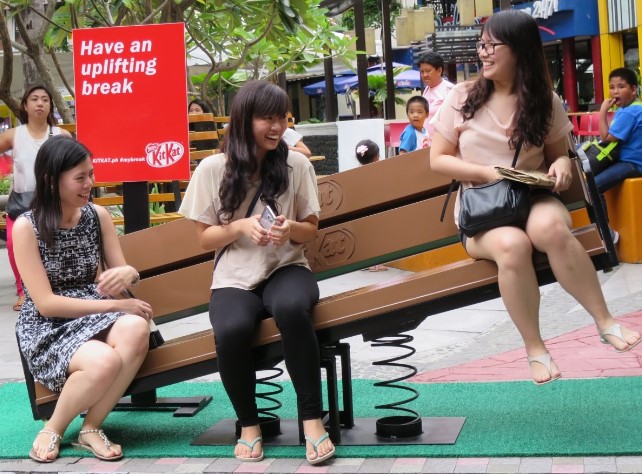
Kit Kat: “Have an uplifting break”
Type: Outdoor
Kit Kat cleverly turned an ordinary bench into a playful representation of its iconic chocolate bar.
It designed the seat to resemble a Kit Kat, tying the brand’s famous slogan “Have a break, have a Kit Kat” directly to taking a moment to rest.
By placing the seat in public spaces, the campaign encouraged people to pause and interact with the brand in a fun, casual way.
This imaginative approach strengthened brand recall, making taking a break synonymous with a Kit Kat bar.
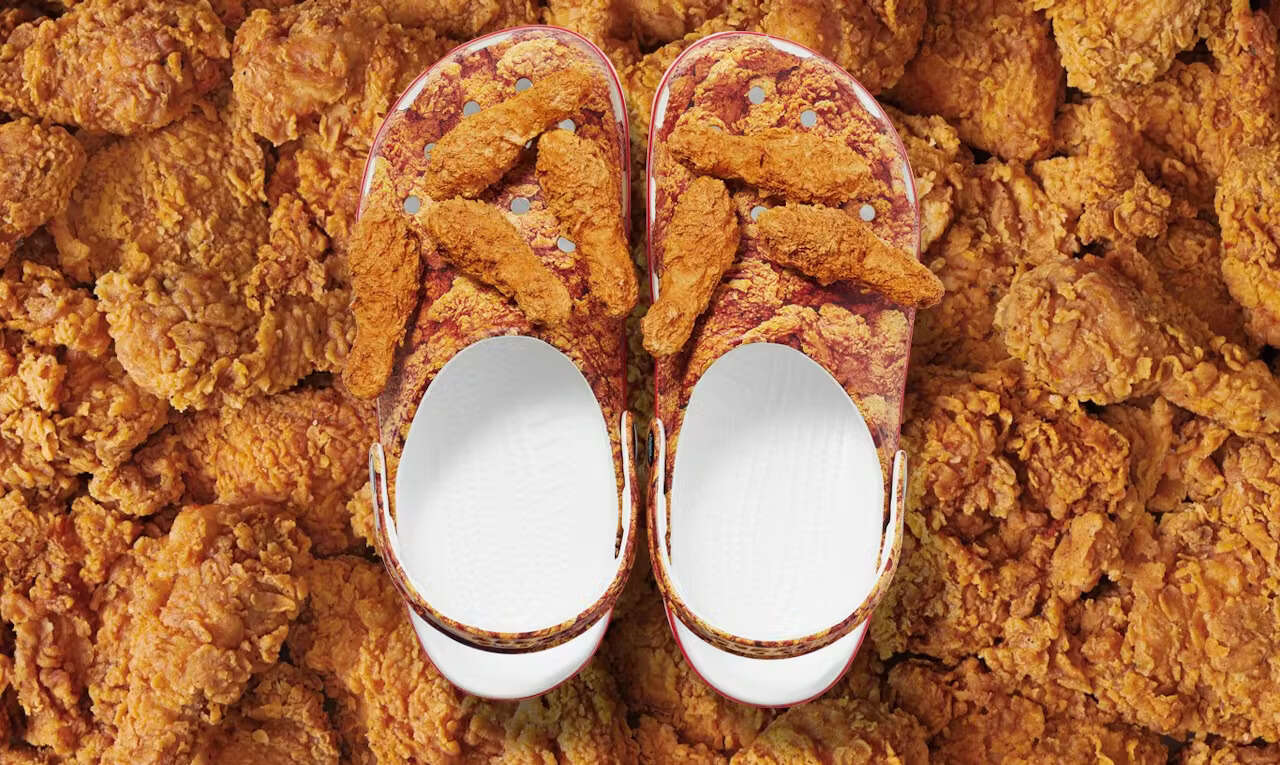
KFC Crocs: KFC’s collaboration with Crocs
Type: Indoor
KFC teamed up with Crocs for a limited-edition line featuring a bold, realistic KFC pattern and red-striped bucket, plus quirky drumstick-shaped charms.
The campaign caught widespread attention when a beauty influencer debuted the heeled version at New York Fashion Week (NYFW), and the Crocs sold out within an hour.
KFC donated $3 from each sale to its foundation’s educational grant program, adding a charitable angle.
The takeaway is how aligning with major events and influencers, and linking to a good cause, can maximize exposure and appeal.
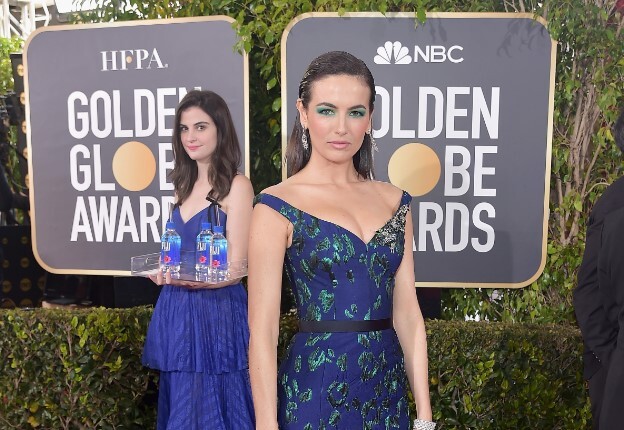
Fiji Water: Fiji girl at the Golden Globes
Type: Experiential
One of the most memorable stunts occurred at the Golden Globes when Fiji Water made an unforgettable appearance.
Model Kelleth Cuthbert, dubbed FijiGirl, stole the spotlight by standing in the background with a tray of Fiji Water bottles.
The clever positioning led to social media talk, countless memes, and free publicity for the brand.
The brand also lifted its visibility, proving that the right placement can greatly amplify a marketing effort.
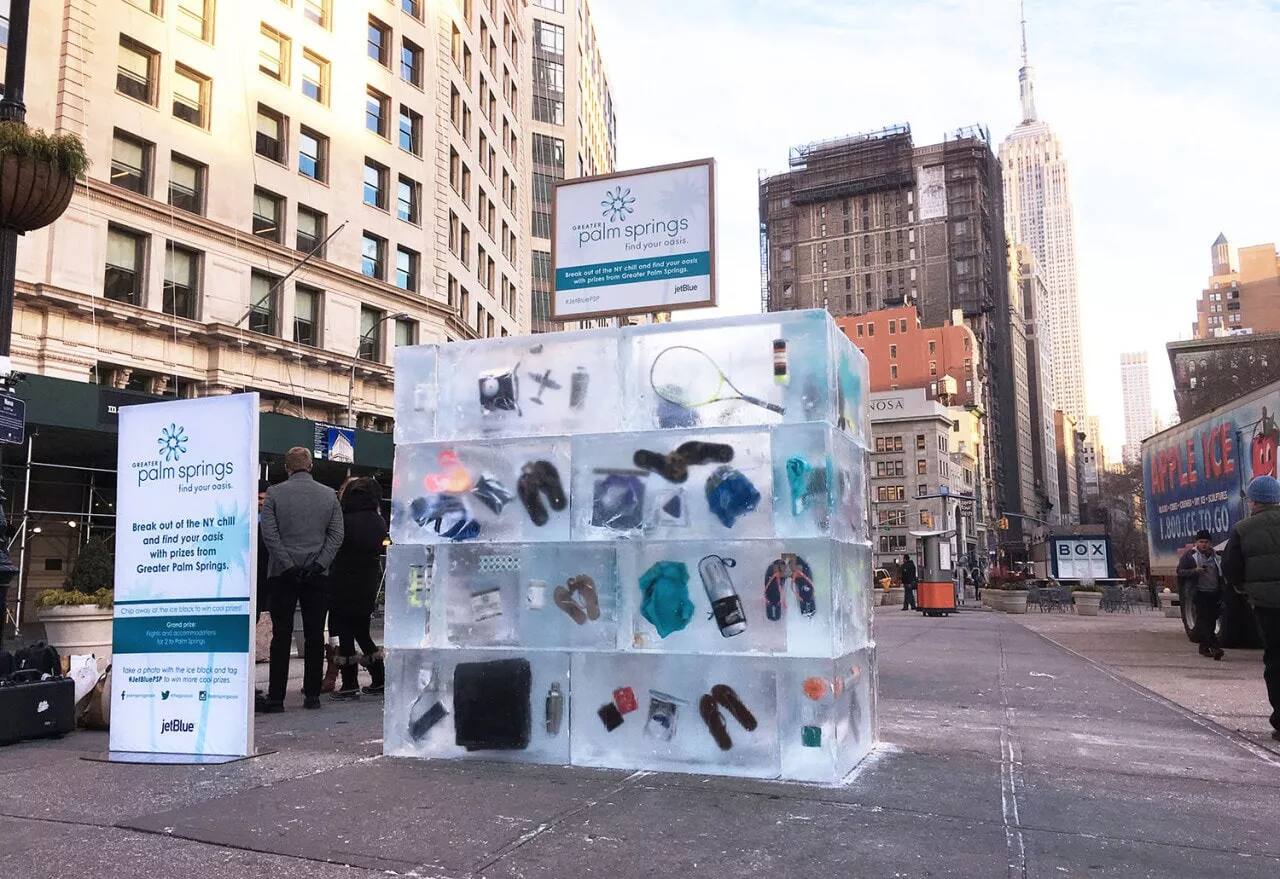
JetBlue: The ultimate ice breaker
Type: Experiential
During winter, JetBlue placed a six-foot by six-foot ice block filled with summer accessories in New York City.
To claim the prizes inside, New Yorkers had to chip away at the ice with whatever tools they had on hand, creating an interactive experience.
The campaign combined this physical activation with a strong social media strategy, driving excitement for JetBlue’s new direct flights to a sunny destination.
The takeaway is the power of combining gamified experiences with dynamic social media elements.
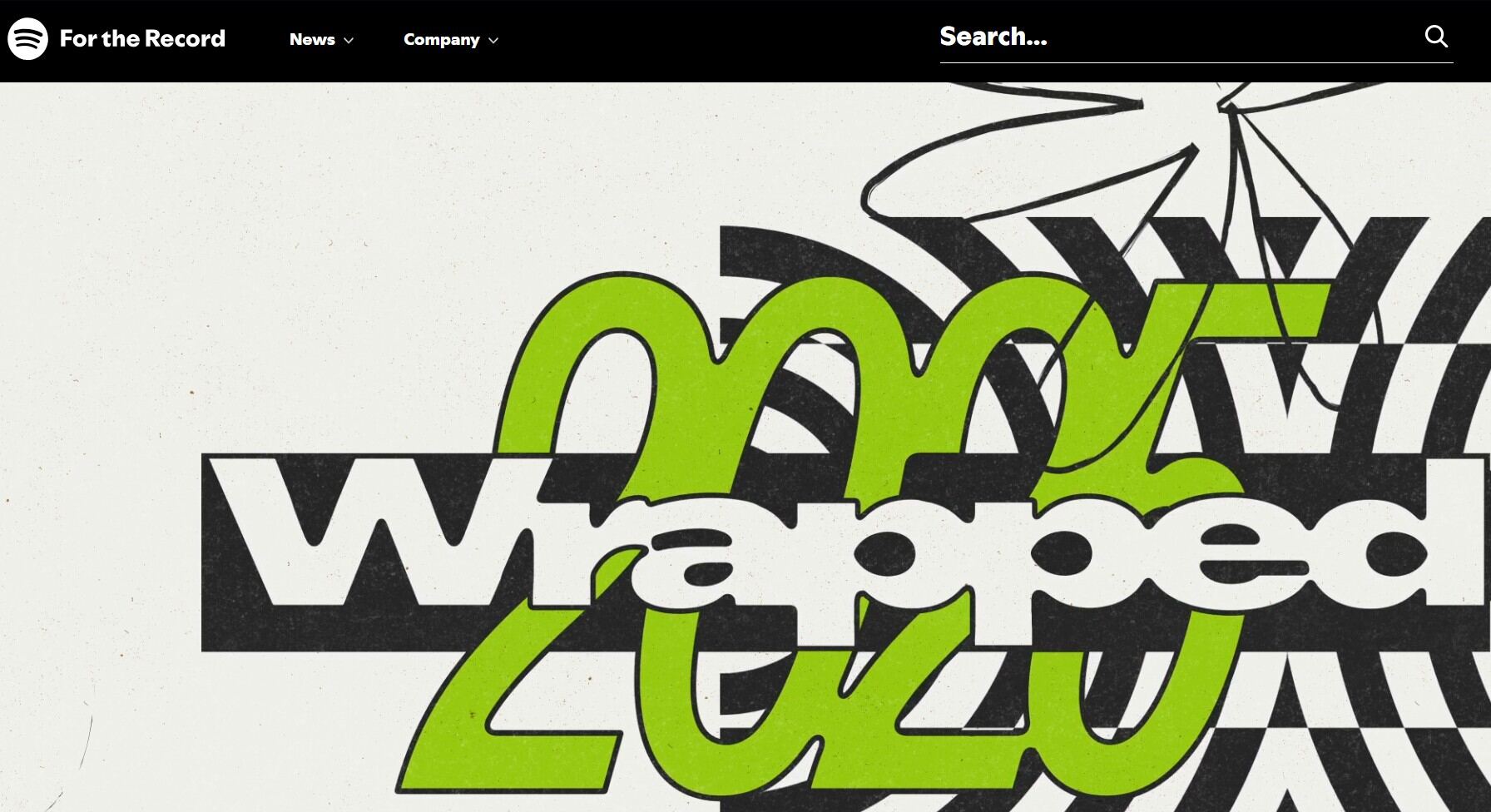
Spotify Wrapped
Type: Digital
Every December, Spotify turns each listener’s yearly habits into a set of colorful, shareable cards, and millions of people post them at once.
For a few days, social feeds filled with Spotify branding, the company didn’t have to buy.
Wrapped works because it makes the audience the advertiser. The stats feel personal, the design is built for sharing, and the fear of missing out pulls even casual users in.
The takeaway is that the data you already hold can become a campaign that turns customers into a distribution channel.
Barbie: The pink takeover
Type: Outdoor, experiential
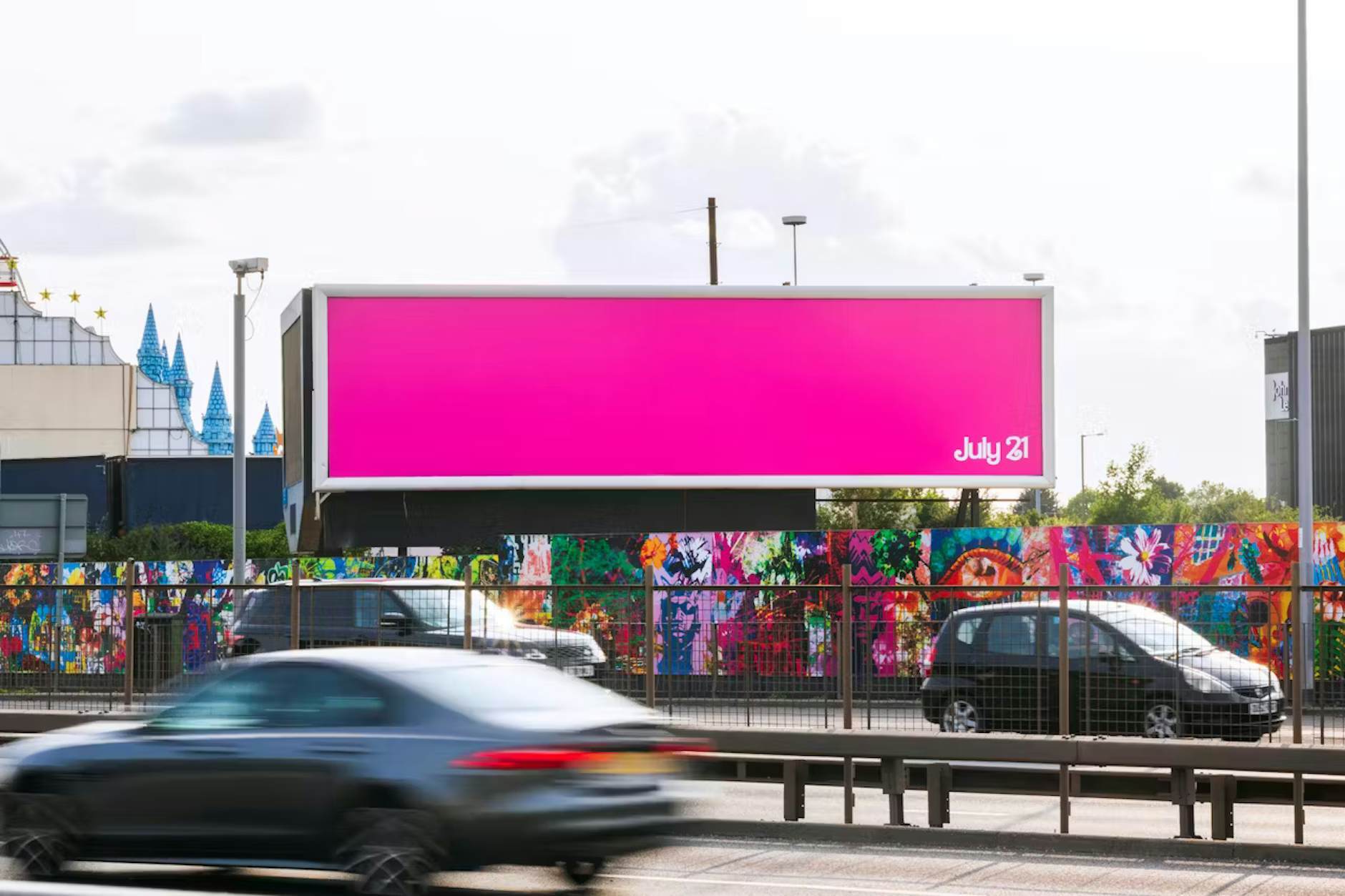
Ahead of the 2023 Barbie film, the marketing team blanketed cities with billboards showing nothing but Barbie pink and a release date. There was no title or copy needed.
An online selfie generator then lets fans drop themselves into a movie poster.
The campaign bet everything on instant color recognition, which worked exceptionally well. It paid off in billions of organic impressions as people made and shared their own versions.
The lesson is that a single, ownable visual can carry an entire campaign when it’s distinctive enough.
Duolingo on TikTok
Type: Digital
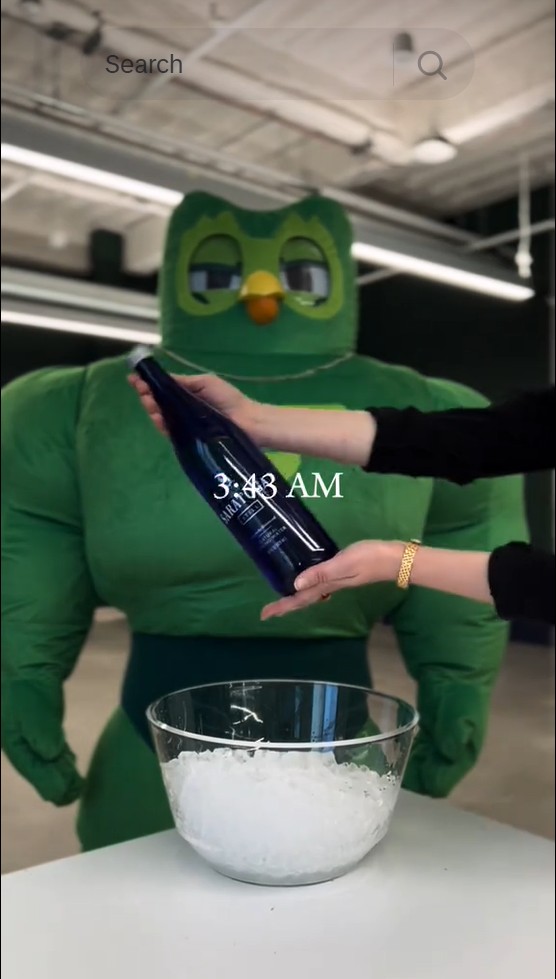
Since 2021, Duolingo’s mascot, Duo the Owl, has starred in chaotic, barely on-topic videos. These lean into humor rather than a hard sell, treating TikTok as a stage, not an ad slot.
It works because the content earns attention as entertainment first, and the brand comes along for the ride. Duolingo has linked its viral moments to spikes in new signups.
The takeaway is that a consistent, platform-native personality can build awareness that paid ads struggle to match.
Jacquemus: Giant bags on Paris streets
Type: Digital
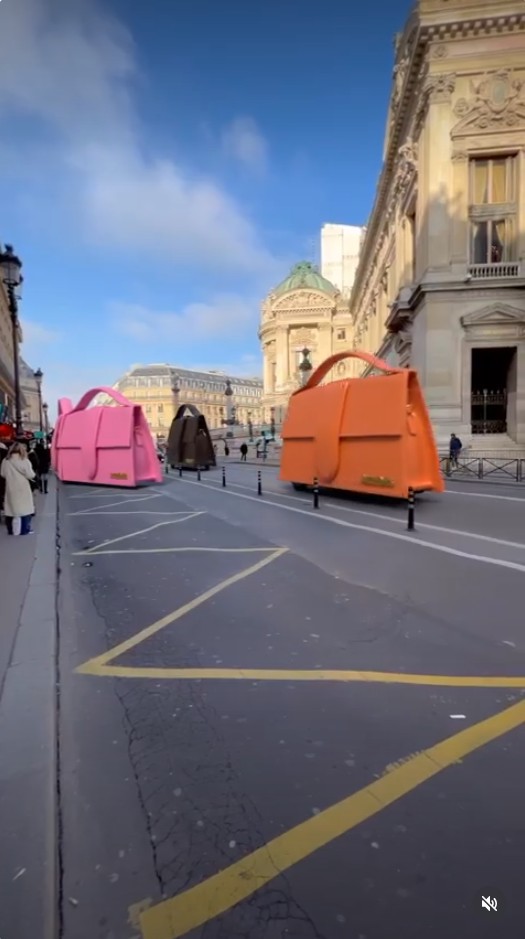
In 2023, fashion brand Jacquemus released a hyper-realistic CGI clip of its giant Le Bambino handbags driving like cars through the streets of Paris.
Nothing was physically built. The entire stunt lived in a video.
The disbelief it triggered made it impossible to scroll past. This helped kick off the wider faux out-of-home trend, drawing millions of interactions.
The lesson is that a believable, surprising visual can deliver the impact of a city-wide installation at a fraction of the cost.
Burger King: The Moldy Whopper
Type: Experiential, shock
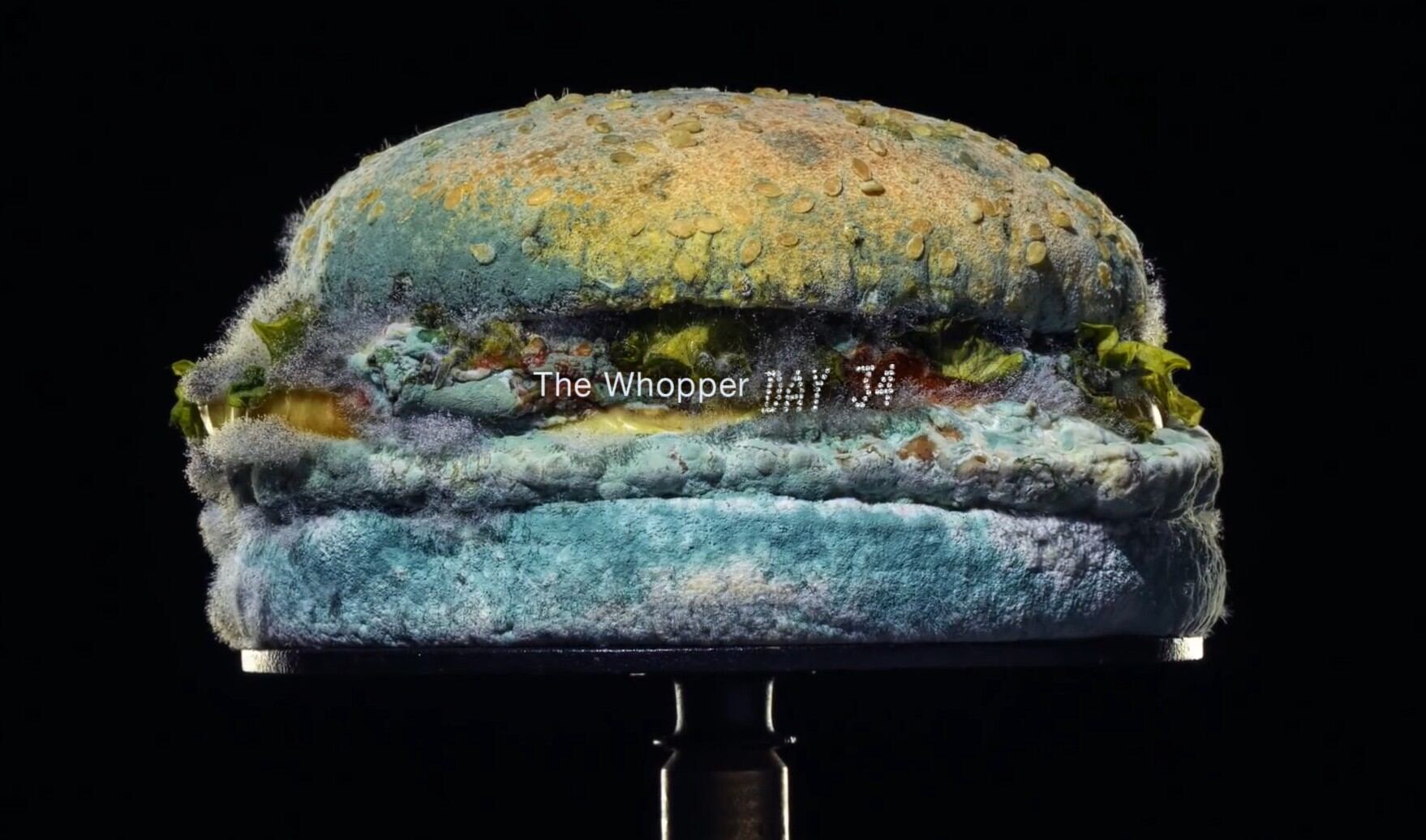
In 2020, Burger King showed a Whopper slowly decomposing over 34 days. The idea was to prove that their burger contains no artificial preservatives.
The ad broke the cardinal rule of food advertising, which is to always make the food look perfect.
The deliberate disgust was the point. It forced a double-take, earning huge press coverage and a shelf of awards.
The takeaway is that a brave, on-brand idea can turn an uncomfortable image into proof of a real claim.
Aviation Gin: The Peloton response

Type: Ambush, newsjacking
In December 2019, days after a Peloton holiday ad was widely mocked, Ryan Reynolds’ Aviation Gin cast the same actress, Monica Ruiz, in a quick spoof.
The spot showed her unwinding with friends over a martini.
The response hijacked a live news cycle within days, and the timing did the heavy lifting. Aviation Gin rode another brand’s controversy to a viral win with almost no media spend.
The takeaway is that speed and cultural awareness can be guerrilla tools in their own right.
McDonald’s: Follow the Arches
Type: Outdoor
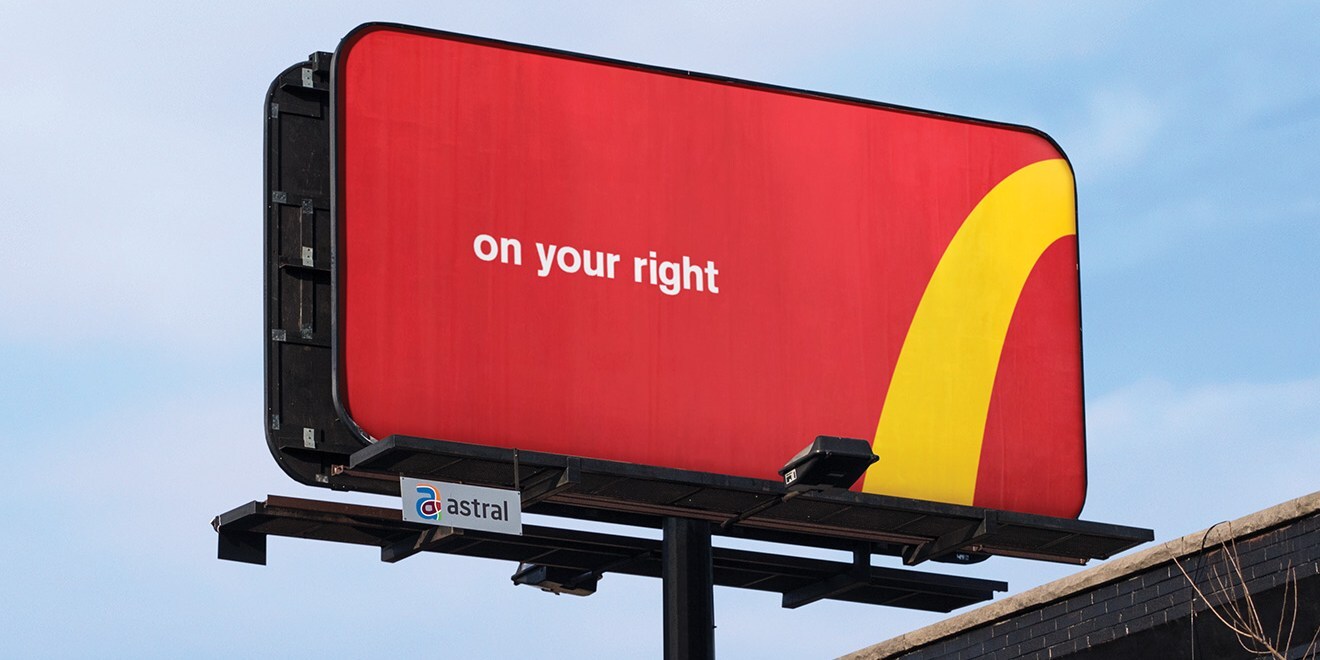
McDonald’s campaign in Canada won the 2018 Cannes Outdoor Grand Prix. The idea was simple: crop the golden arches into partial shapes that worked as directional road signs.
These pointed to the nearest restaurant, with no product shot and barely any copy.
It worked because the logo is so recognizable that a sliver of it is enough. The brand proved it doesn’t need its own name to be understood.
The takeaway is that strong brand assets can become the entire creative.
IKEA: Pee on this ad
Type: Experiential
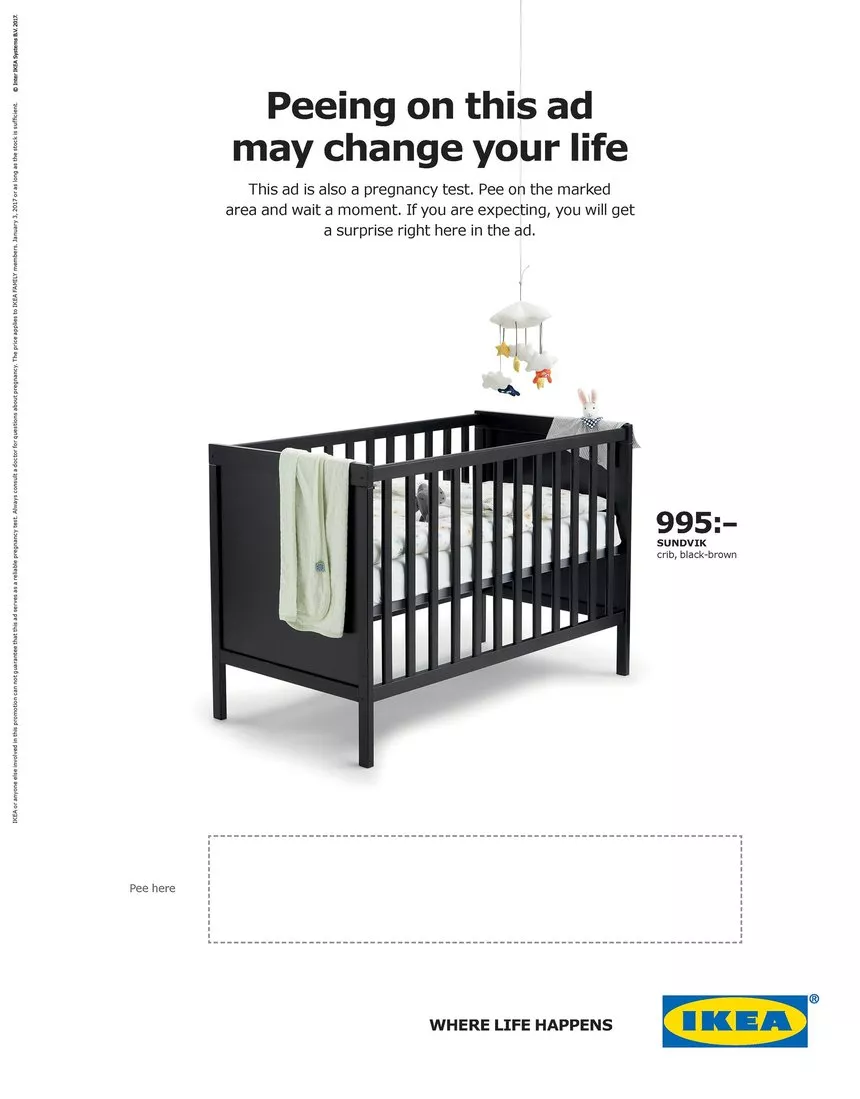
In 2018, IKEA Sweden ran a magazine ad printed on pregnancy-test paper.
For expectant readers who followed the prompt, the ad revealed a discounted price on a crib. The medium itself became the demo.
It was strange, intimate, and perfectly on-brand for a company built on family life and value. As a result, IKEA earned global press well beyond the magazine’s readership.
The takeaway is that an interactive format can turn a simple ad into a moment people can’t stop talking about.
Best practices for guerrilla marketing campaigns
To make your guerrilla marketing campaigns truly effective, here are some of the best guerrilla marketing tips, tactics, and practices to keep in mind:
- Research your target audience: Tailor campaigns to audience preferences and behaviors. The better you understand what they find share-worthy, the more likely your idea lands, and the less likely it backfires.
- Embrace creativity and innovation: Stand out with imaginative ideas people haven’t seen before, because a familiar concept rarely earns word-of-mouth. Give your team room to pitch bold ideas, then pressure-test them.
- Consider timing and context: Align your efforts with current events, seasons, or cultural moments. A well-timed campaign is far more likely to be shared, while the same idea at the wrong moment can fall flat.
- Integrate with digital marketing strategies: Pair your stunt with social media, email, and SMS to keep the buzz alive. With Omnisend, you can turn that attention into an owned audience you can reach again.
That follow-up is where the return lives. Omnisend merchants earn an average of $79 for every $1 spent across email, SMS, and push. This figure is based on Omnisend’s internal analysis of paid-plan merchants in 2025.
Summary
Guerrilla marketing is an incredibly versatile and powerful strategy that leverages unconventional tactics to achieve remarkable results.
The above examples show how innovation and originality can captivate your audience and create memorable moments that drive engagement and buzz.
Promoting these guerrilla marketing techniques through effective email marketing can extend their impact. The attention a stunt earns is only worth as much as your ability to act on it.
With Omnisend, you can streamline and optimize your email and SMS campaigns across the customer journey. It’s built for ecommerce, so the buzz around your brand becomes repeat visits, signups, and sales.
FAQs
What is guerrilla marketing?
The guerrilla marketing meaning is simple: it’s an unconventional, low-cost marketing strategy that uses surprise and creativity to grab attention and build brand awareness.
Instead of paying for mass-media reach, it relies on one memorable idea that people notice, talk about, and share.
What is the TASER approach to guerrilla marketing?
The TASER approach describes guerrilla marketing as a small, precise, well-aimed action that triggers an immediate, outsized reaction.
Much like a taser, it captures the core goal: the biggest possible response from the smallest possible spend.
Is guerrilla marketing legal?
Yes, guerrilla marketing is legal, though some risk may lie in the execution. Campaigns can run into trouble when they use property without permits, push too close to a trademarked event, or collect personal data without consent.
Securing approvals in advance keeps you on the right side of the line.
What are some guerrilla marketing ideas for small businesses?
Here are a few guerrilla marketing examples for small business owners to start with:
- Chalk art or creative signage in high-footfall spots, where permitted
- A reactive, personality-led social account that joins trending moments
- A small, surprising in-store experience worth photographing and sharing
- A local stunt or partnership that ties your brand to a community event
Used well, low-budget guerrilla marketing can help small businesses reap big.
Quick sign up | No credit card required