Omnisend AI


 OFFER
OFFER









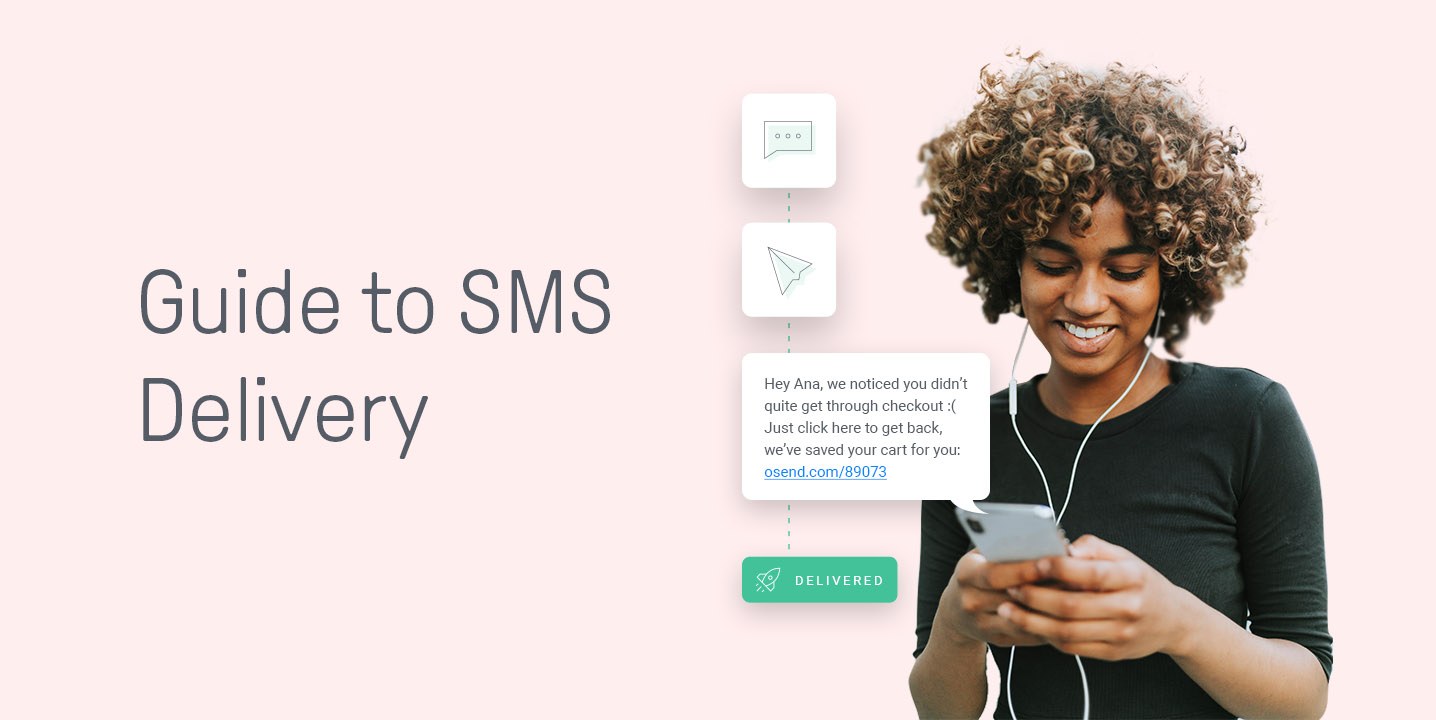
SMS deliverability is the percentage of sent text messages that actually reach your subscribers’ phones. In 2026, it’s also the number that decides whether your SMS program is profitable.
Even high-performing campaigns fail if the texts don’t reach recipients. You can write sharp copy, time the send well, and still lose revenue to silent delivery failures.
Getting a text delivered has become harder. Carriers filter aggressively to stop spam, and compliance requirements keep tightening.
On top of that, your sender reputation also influences whether messages reach customers. For ecommerce brands that rely on texts to recover carts and announce sales, every failed delivery is a missed order.
The good news is that most delivery problems are preventable. In this guide, you’ll learn what affects SMS deliverability and common reasons messages fail. You’ll also find practical steps to improve delivery rates and keep your campaigns compliant.
Quick sign up | No credit card required
What is SMS deliverability?
SMS deliverability measures the share of sent messages that successfully reach recipients’ phones. It’s the most fundamental health metric in SMS marketing. A message can leave your platform, be accepted by a carrier, and still never land on the handset. Your SMS delivery rate tracks that final point of delivery.
Here are the main reasons why SMS deliverability is important:
- It caps campaign performance, since unread messages cannot drive clicks
- It drives engagement and revenue, because every failed message is a missed storefront visit
- It protects your budget, as most platforms charge per sent SMS, delivered or not
The formula is simple:
Delivery rate = (Messages delivered ÷ Messages sent) × 100
Say one of your SMS campaigns reaches 10,000 subscribers, and 9,520 texts are delivered to phones. Your delivery rate is 95.2%. To budget each send, run your numbers through the SMS pricing calculator.
Delivery rates in SMS marketing typically run high. Low rates usually point to technical or compliance issues.
Common reasons SMS messages fail to deliver
A text can fail at several points between your platform and a subscriber’s phone. Carrier-side filtering is the most common reason SMS delivery breaks down, but it’s far from the only one. Here are the six causes worth checking first.
Incorrect phone number
An incorrect phone number is one of the common reasons why SMS fails to deliver. The number may have been typed or saved incorrectly.
It can also happen when the number belongs to a landline. Landlines cannot receive text messages. In these cases, the message is sent but never reaches the recipient.
High opt-out or complaint rates
SMS carriers track how subscribers react to every message. If too many people unsubscribe or complain after a send, it sends a negative signal. It suggests the message is not wanted.
Future messages can then be limited or filtered. This may affect delivery even for people who did not complain. One bad campaign can affect your entire list. Always review any spike in opt-outs before sending again.
Carrier spam restrictions
Many USA carriers use automated systems to block spam. These systems are getting stricter every year. The FTC reported that consumers lost $470 million to text scams in 2024.
These filters do not look at just one factor. They review your sender reputation, message content, and sending patterns.
SMS deliverability can be affected by factors such as spammy wording, sudden spikes in message volume, or repeated automated messages. Even opt-in lists are not always safe if the pattern looks suspicious.
Network problems
If mobile carrier networks experience brief interruptions, SMS delivery can be affected. These issues are usually temporary. They can occur due to weak signal in certain locations, network congestion, or brief technical faults on the carrier’s side. When this happens, a message may be delayed or fail to reach the phone at all.
In other cases, the device is temporarily unavailable. This can happen when a prepaid plan runs out of credit. Once service is restored, messages start coming through again.
Suspicious links or URL shorteners
Carrier filters check every link inside an SMS. Links carry a lot of weight in how messages are classified. Free URL shorteners are often flagged because they are used in spam and phishing attempts. When a link is shortened, the final destination is hidden. Since it’s harder for carriers to judge whether the message is safe, it gets blocked.
Spam filters also flag links that look unfamiliar or suspicious. This can stop your message from being delivered.
A safer approach is to use a branded link instead of a shortened one. Keep the full address visible so both carriers and users can trust it.
Using gray routes
Gray routes are unofficial ways of sending SMS that don’t go through normal carrier-approved systems. They avoid official agreements between mobile operators and messaging providers.
Some SMS delivery service operators use them because they are cheaper. However, they fall outside regulated telecom networks.
Carriers actively shut these routes down. They undermine SMS reliability and carry real compliance and security risks, so stick to providers that send through sanctioned routes.
How to improve SMS deliverability
Improving SMS deliverability is mostly preventive work, and none of it requires much technical know-how. These seven tips for improving SMS delivery rates apply to ecommerce stores of any size.
1. Use double opt-in
The TCPA requires clear written permission before you send any marketing texts. Double opt-in adds an extra layer of confirmation. Subscribers verify their number after signing up by replying to a confirmation message.
Browse these SMS opt-in message examples for compliant wording. Here’s what a proper opt-in process helps you achieve.
- Verifies subscribers genuinely want your messages
- Filters out invalid, mistyped, and fake numbers
- Reduces complaint and unsubscribe rates over time
With a confirmed list, your SMS marketing efforts would be focused on verified subscribers, which can improve engagement.
2. Clean contact lists regularly
People change numbers, switch devices, or stop using old SIM cards. Some simply stop engaging over time. When you keep sending messages to these contacts, your delivery rate will drop. You also end up paying for messages that never reach a real user.
Set a simple cleanup routine and follow it often. Remove hard bounces and contacts that have not engaged for several months. They are unlikely to respond again and only lower your performance.
Always remove opt-outs right away so you do not send messages to people who asked to stop.
3. Avoid spam-like messaging
Spam filters are sensitive to how a message is written. Carriers can flag content that seems too promotional, even if it is legitimate.
Excessive capitalization, misleading wording, suspicious links, or too many emojis do trigger filters.
To avoid being flagged, let your SMS messages be straightforward. Think of how you would explain an offer in a store. Focus on one message and one link. Also, make opting out simple and clear.
4. Segment audiences
Sending the same SMS blast to everyone is the fastest way to get opt-outs. With SMS segmentation, you can target subscribers by purchase behavior or engagement history. Then each message reaches people likely to act on it.
Relevance pays, too. Omnisend’s 2026 Ecommerce Marketing Report found automated, behavior-triggered SMS earned $0.74 per send, nearly five times the $0.15 campaign average.
“Email is for story, SMS is for ‘now.’ Email warms them up, SMS closes them.”
– Jimmy Kim, ecommerce email and retention expert.
From Omnisend’s interview, “The new email deliverability rules”
5. Control sending frequency
More sends don’t mean more sales. Too frequent messages are the top reason people leave. 40% of consumers name frequency as their main reason for opting out per EZ Texting’s 2026 Consumer Texting Behavior Report.
Also, sudden volume spikes can raise red flags for carrier filters. You should space your campaigns and set a limit on how many texts each subscriber gets per month.
Respect quiet hours, too. USA SMS regulations prohibit marketing texts before 8 AM or after 9 PM local time.
“Cannibalization happens when brands use SMS as a second email channel — they blast the same Tuesday newsletter to SMS and wonder why unsubscribes spike.”
– Jimmy Kim, ecommerce email and retention expert.
From Omnisend’s interview, “The new email deliverability rules”
6. Use verified sending infrastructure
Choose a reliable SMS provider that uses registered numbers and approved carrier routes.
A proper SMS text delivery service sends messages through compliant and recognized pathways, which helps reduce filtering and improve SMS deliverability.
Carriers also check the source of every message. In the USA, businesses texting on 10DLC numbers must register through The Campaign Registry (TCR).
With a verified infrastructure, your messages will be properly identified and linked to your brand.
7. Monitor deliverability metrics
Tracking SMS deliverability can help you identify problems before they affect your campaign performance. Regular reviews of key metrics show if your messages are reaching subscribers as expected.
You can monitor delivery rate, opt-out rate, click-through rate, and complaint rate after every campaign. Changes in these metrics can point to issues with message quality, audience targeting, or carrier filtering. Most SMS platforms provide these numbers in campaign reports, so it’s easy to spot and address issues.
How Omnisend helps improve SMS deliverability
An SMS delivery service with built-in compliance removes most of this guesswork. Omnisend is built for ecommerce, and its SMS tools handle the fundamentals of deliverability automatically. The practices above no longer depend on anyone remembering them.
Businesses collect consent at signup through forms that include phone number fields and opt-in language:
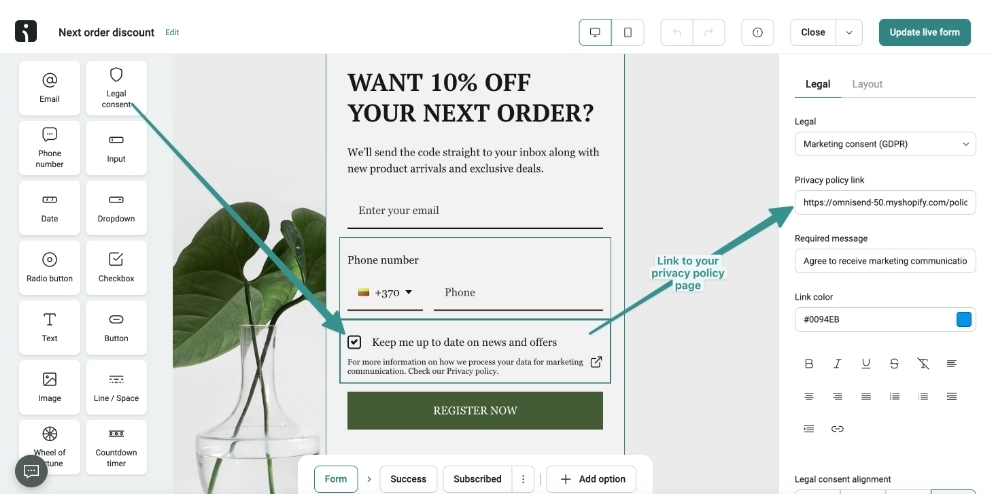
With this, you have a documented record of permission before sending any marketing messages. Beyond consent collection, the platform supports SMS deliverability with:
- Opt-in management that keeps subscriber consent records accurate
- Segmentation for behavior-based targeting instead of mass blasts
- Automated SMS workflows that pace sends naturally
- Quiet hours and frequency capping tuned to each market
- Compliance guardrails aligned with SMS compliance best practices
Omnisend SMS deliverability rates depend on the same best practices covered in this guide. The platform helps businesses apply them through built-in automation and compliance tools.
Conclusion
High SMS deliverability comes down to discipline in four areas — clean lists, genuine consent, relevant messaging, and a good sender reputation.
When these are in place, most delivery issues resolve on their own. Compliance becomes easier to manage, and carriers are more likely to trust your messages.
The payoff is direct. Messages that reach the phone get read and acted on. Even small improvements in delivery rate can lead to better engagement and stronger campaign results. This applies whether you are sending a few messages or managing campaigns at scale.
Make SMS deliverability and performance checks a part of your regular process. Review delivery rates, opt-outs, and complaints after each campaign.
Remove inactive contacts and keep your list up to date. Stay within compliance rules at all times. SMS deliverability isn’t a one-time fix. It’s a habit that compounds with every clean send.
Quick sign up | No credit card required