Omnisend AI


 OFFER
OFFER









We reviewed 247 themes and picked the 13 best Shopify themes for clothing stores in 2026 based on design quality, mobile performance, and how well each one supports marketing channels once the store is live. Dawn is the best free all-round option for beginner clothing stores, Blum suits fashion-first brands, and Impulse caters to high-end and luxury fashion.
All chosen themes are grouped by store type and use case rather than ranked against the others, and cover both free and paid options. Beyond the picks, this guide covers what to check before you commit, including mobile scores, product display features, SEO architecture, and marketing compatibility.
Quick sign up | No credit card required
Quick comparison: Best Shopify themes for clothing at a glance
All 13 themes have built-in email capture, five are free, and the eight paid options run from $170 to $500. Here’s a brief table that goes over all themes, their price, free option availability, mobile score, email capture, and what clothing brand they fit best:
| Theme | Price (one-time purchase) | Free option | Mobile score (PageSpeed Insights) | Best for |
|---|---|---|---|---|
| Dawn | Free | Yes | 66 | New stores, general use |
| Blum | $170 | No | 58 | New fashion brands |
| Fashionopolism | $200 | No | 50 | Growing apparel brands |
| Impulse | $500 | No | 53 | High-end and luxury fashion |
| Prestige | $400 | No | 73 | Editorial and storytelling brands |
| Symmetry | $420 | No | 68 | Large catalogs |
| Cascade | $350 | No | 69 | Established apparel retailers |
| Streamline | $420 | No | 73 | Trendy and lifestyle brands |
| Shine | $300 | No | 66 | Mid-market fashion stores |
| Colorblock | Free | Yes | 73 | Modern boutiques |
| Origin | Free | Yes | 73 | Handmade and streetwear brands |
| Spotlight | Free | Yes | 72 | Boutique and luxury-adjacent stores |
| Ride | Free | Yes | 69 | Athletic and outdoor apparel |
Comparison of top Shopify clothing themes by price, performance, and marketing readiness. We evaluated performance using PageSpeed Insights. Your results may vary slightly on repeat tests. Last verified in August 2026.
What are our top picks for best Shopify themes for clothing?
We identified the 10 best options after a thorough investigation: Dawn, Blum, Fashionopolism, Impulse, Prestige, Symmetry, Cascade, Streamline, Shine, and Colorblock. All themes are organized by use case rather than an arbitrary ranking that compares themes against each other.
Dawn — best free theme overall
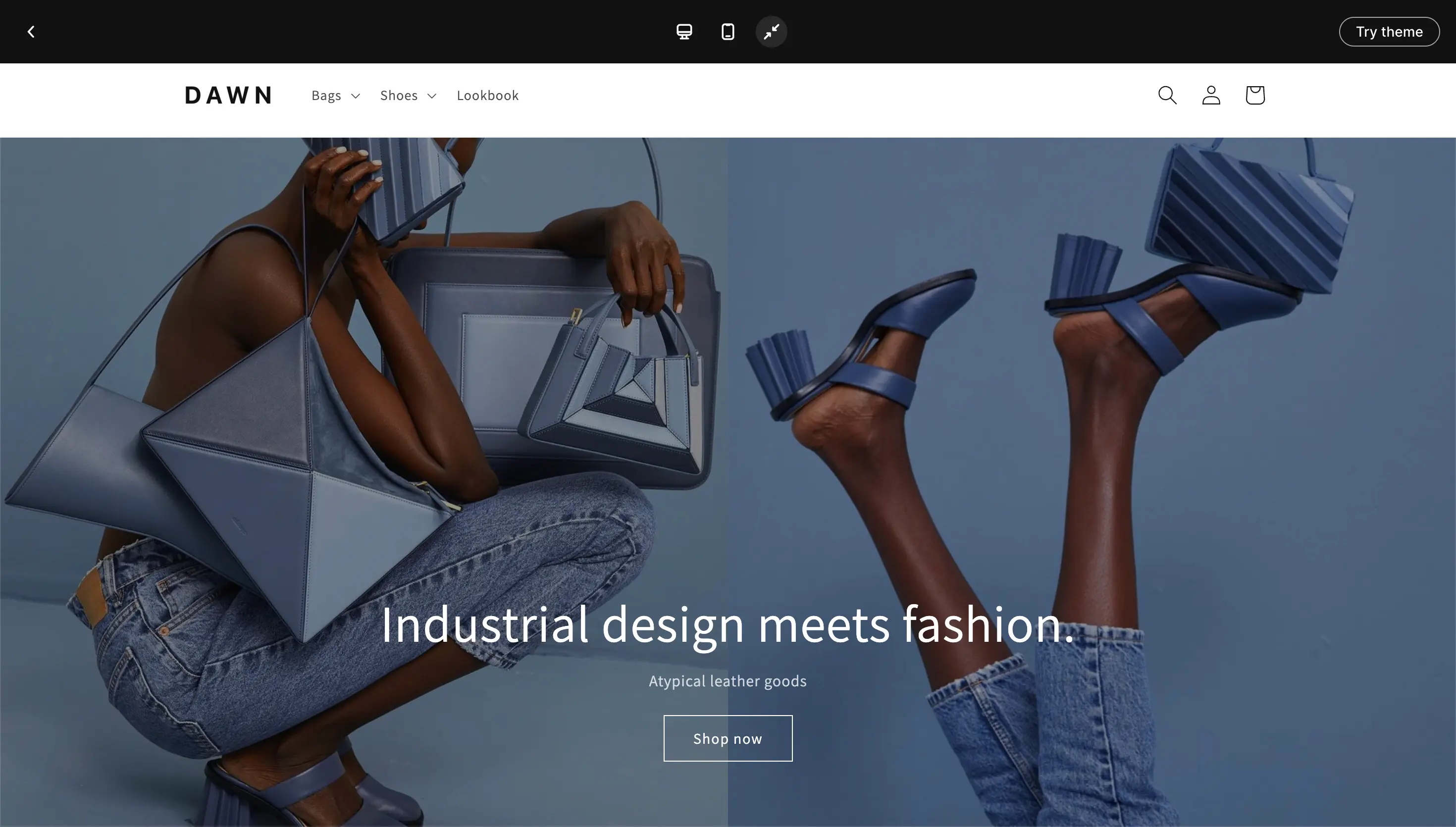
Dawn is one of Shopify’s official free Online Store 2.0 (OS 2.0) themes and one of the most widely used themes on the platform. Recently, Shopify added another new theme, Horizon, which is more modular and customizable.
Still, Dawn remains a top pick due to its straightforward design, lightweight build, and continuous development. Camille La Vie, BLANK Wardrobe, Wonder Noah, and many other clothing brands use this theme.
Its minimalist design focuses on high-quality product photography, which works well for clothing brands that either don’t have a large design budget yet or don’t want to commit to purchasing a theme at their current business stage.
Overall, Dawn is well-liked, giving brands the opportunity to get started with a well-known theme and upgrade in the future if they need to.
Main limitation: Dawn limits customization and doesn’t have native upsell options
Best for: New clothing stores and brands testing Shopify for the first time
Key features:
- Clean, image-first layout with editable sections
- OS 2.0 compatible, so it works with the latest Shopify apps
- Free to use without paying
- Fully compatible with basic elements of major email and marketing platforms (more advanced features can require third-party integrations)
Blum — best value for new fashion brands
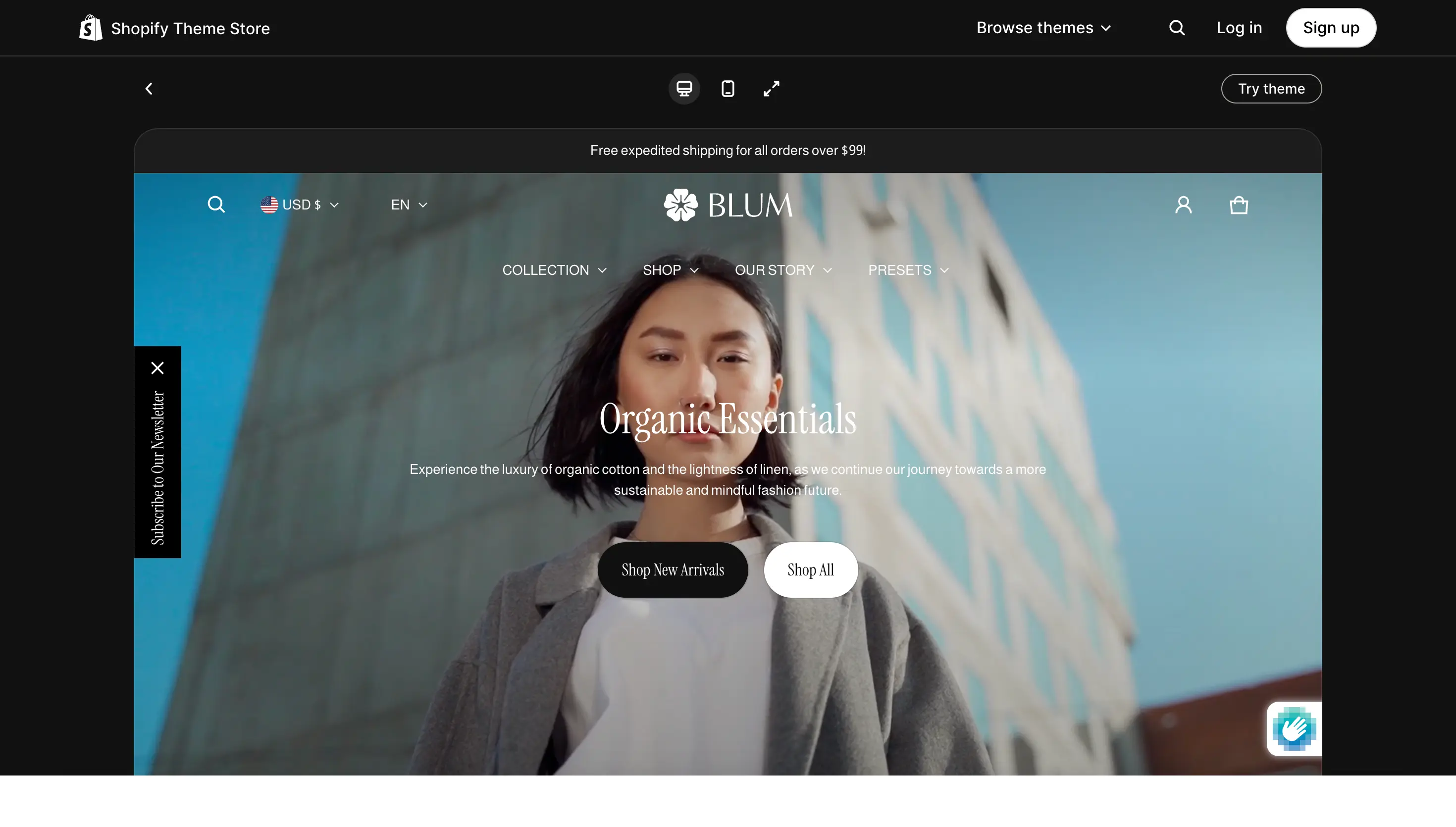
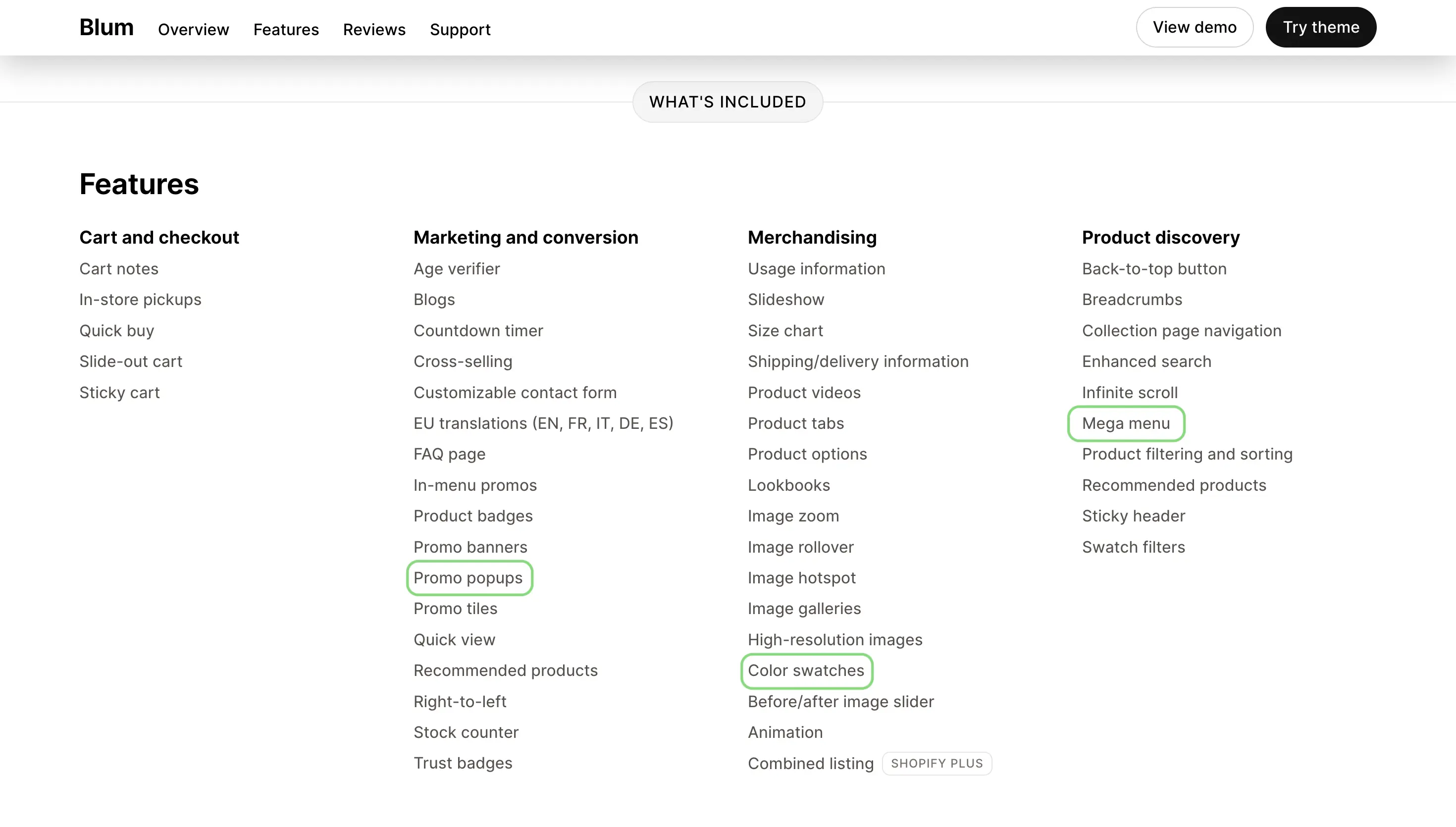
Blum is a paid theme built specifically for fashion, beauty, and lifestyle stores. While Blum is paid, it’s $170, which is well below most premium fashion themes. Moreover, despite the low-to-mid-tier pricing, Blum includes a polished and media-rich layout with 30+ pre-built sections and the ability to create new sections manually or with the help of AI.
Beyond the low upfront price, Blum reduces a store’s Total Cost of Ownership (TCO). While competing premium themes like Impulse or Prestige cost $350–$500, Blum offers valuable built-in native features, like color swatches, a sticky add-to-cart, mega menus, and interactive lookbooks.
If merchants choose Blum, they can save $40–$60 per month in recurring Shopify App Store subscription fees, allowing the theme to pay for itself within a few months, thanks to the native features. Example brands using this theme are Kaleidoscope Collective, Puntaloca, and Woolf PureFleece.
Main limitation: Blum leans hard into visuals, so high-quality images and videos are required to get the best out of it
Best for: New fashion and direct-to-consumer (DTC) brands
Key features:
- Five individually built storefront designs
- Integrations with top email marketing platforms
- Built-in size chart and lookbook sections
- Clean design with consistently high-speed performance reports
- Cross-selling and recommended-product sections included
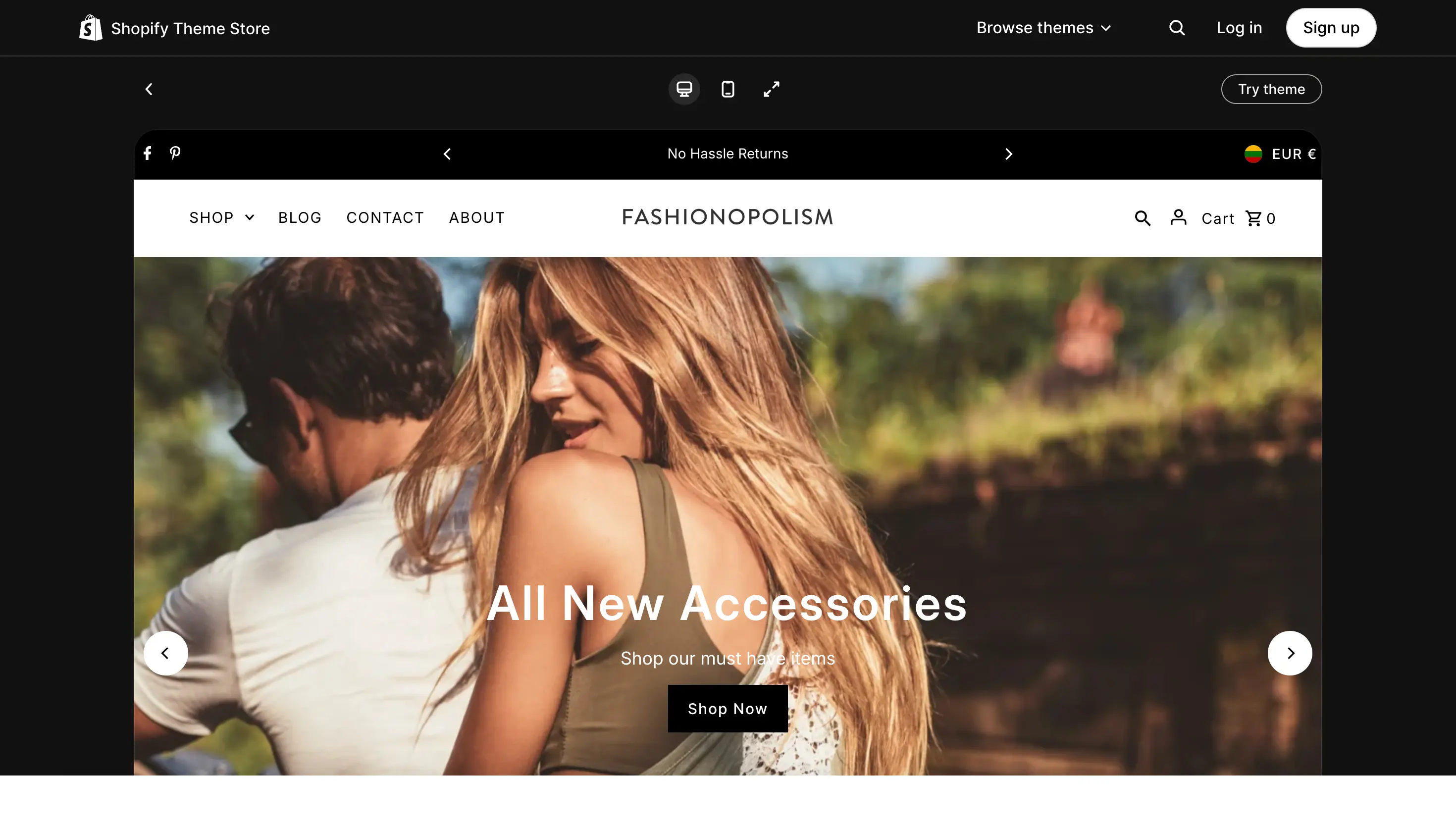
Fashionopolism — best for growing apparel brands
Fashionopolism is built to scale with your brand as your catalog and traffic grow. Thanks to the wide availability of over 30 customizable sections, merchants using this theme can adjust their digital store layout however they need as new collections come in.
Currently, Fashionopolism costs $200 upfront, but is capable of handling medium-to-large inventories smoothly with advanced filtering and multi-tier mega menus. Additionally, the built-in quick add-to-cart and pop-up features contribute to higher conversion and average order value. Many brands use this theme, namely Foxblood, Ahed, Fides, and Lenina.
Main limitation: While Fashionopolism offers many features, they might not be fitting for smaller brands
Best for: Mid-sized clothing brands looking to scale from $50,000 to $200,000 in annual revenue
Key features:
- Four separate webstore design presets
- Updated regularly by an active developer team
- Advanced multi-level navigation
- Built-in footer newsletter blocks and promotional pop-ups
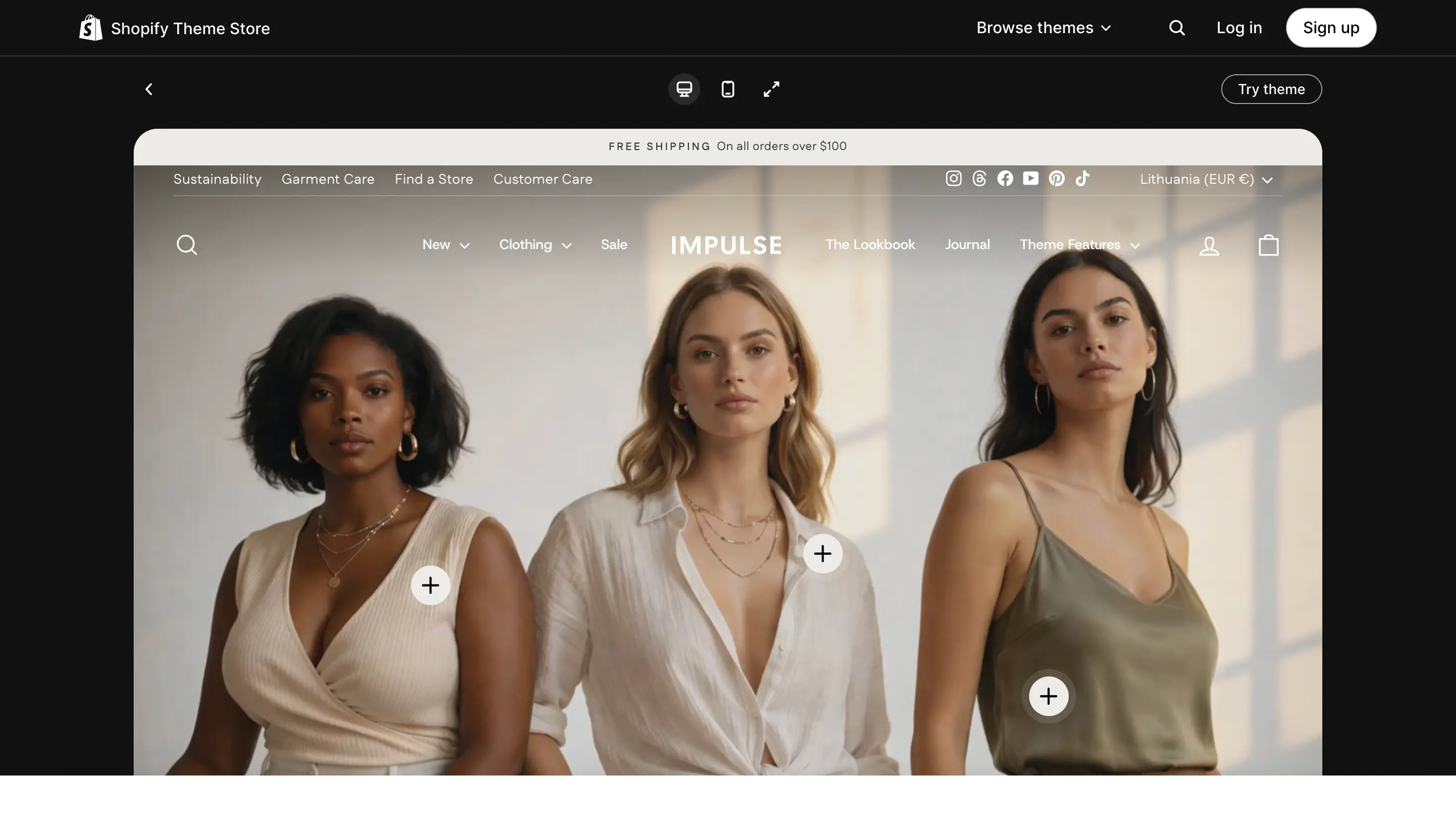
Impulse — best for high-end and luxury fashion
Impulse is among the more premium themes on Shopify, with a strong reputation within high-end and luxury fashion brands, reflected in its $500 price tag. This Shopify theme focuses heavily on customization. Impulse allows brands to use hero images to showcase shoppable products and improve conversions by offering cross-selling, countdown timers, promo elements, and trust badges.
Above all else, Impulse is built to be mobile-first, offering a hyper-responsive design fit for any device. Brands using Impulse can rest assured knowing that their buyers get a unified experience regardless of what device they use.
Main limitation: Impulse’s wide range of features may not be useful for smaller brands, particularly with the theme’s higher-end pricing
Best for: High-end and luxury clothing brands with a premium positioning
Key features:
- Four different pre-built webstore designs
- Advanced multi-tag and sidebar filters for shoppers to sort by size, price, and color
- Automatic image aspect ratio handling without the need to manually adjust every image
- Promotional tiles for seasonal campaigns
- Includes email sign-up section for footers and pop-ups, but requires integrations for advanced email marketing
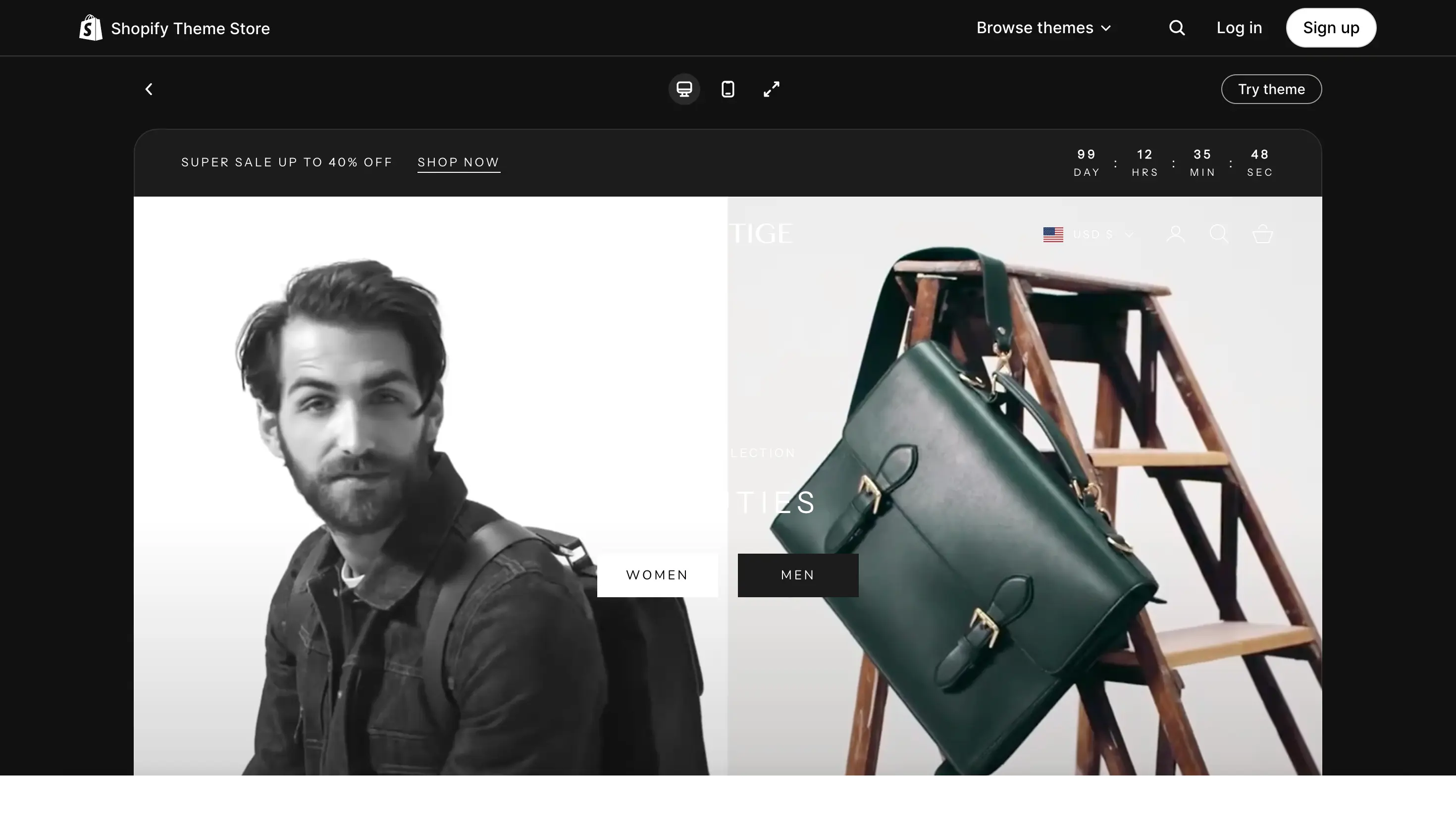
Prestige — best for editorial and storytelling brands
Prestige is built around visual storytelling, with full-width imagery and content-first product pages that let a brand’s narrative carry as much weight as the product photos themselves. Like Impulse, Prestige is also suited to and used by luxury brands.
The theme costs $400 and includes strong native marketing features and conversion tools. Coupled with its elegant design, Prestige gives premium brands all the tools needed to create a beautiful webstore that’s responsive and reflects the brand’s positioning.
Similar to other luxury brands, Prestige also comes with a package of features that make up the end price, particularly advanced visual merchandising, built-in conversion tools, and 30+ configurable sections.
Main limitation: It’s important to optimize all high-resolution visuals so they don’t end up slowing down your store’s performance
Best for: Fashion brands where brand narrative drives the purchase decision
Key features:
- Five unique design presets
- Full-width, editorial-style layouts
- Lookbook and cross-selling sections
- Persistent cart for a smoother shopping session
- Built-in newsletter pop-up and footer sign-up forms that go directly into your Shopify customer list
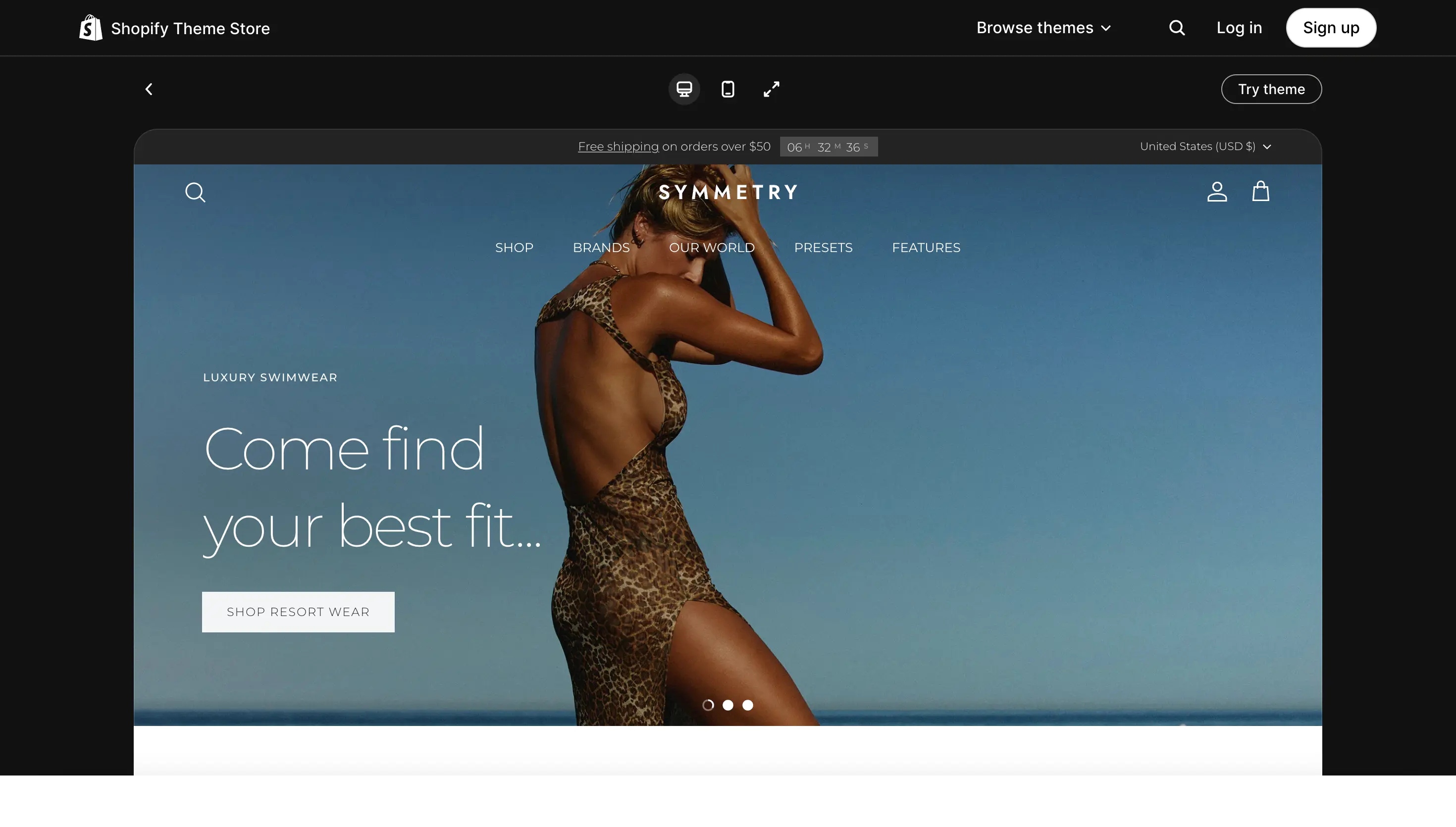
Symmetry — best for large catalogs
Symmetry is created by well-known Shopify Theme Partners with over 16 years of experience, resulting in a high-end Shopify theme suitable for a wide range of merchants. As a result, for $420, brands get highly customizable drag-and-drop sections, advanced filtering options, and a design that’s straightforward to switch to.
To date, Shopify lists Symmetry among the platform’s top-selling themes. Moreover, Symmetry also has a responsive support team that helps clear issues promptly.
Main limitation: Symmetry requires more technical know-how to navigate all the configurations
Best for: Established apparel retailers with deep product ranges and 100+ SKUs
Key features:
- Five different ready-made designs
- Advanced mega menu built for large catalogs
- Strong filtering and product discovery tools
- Supports basic newsletter sign-up blocks but requires integrations with email marketing platforms for more features
- Handles high SKU counts without slowing down navigation
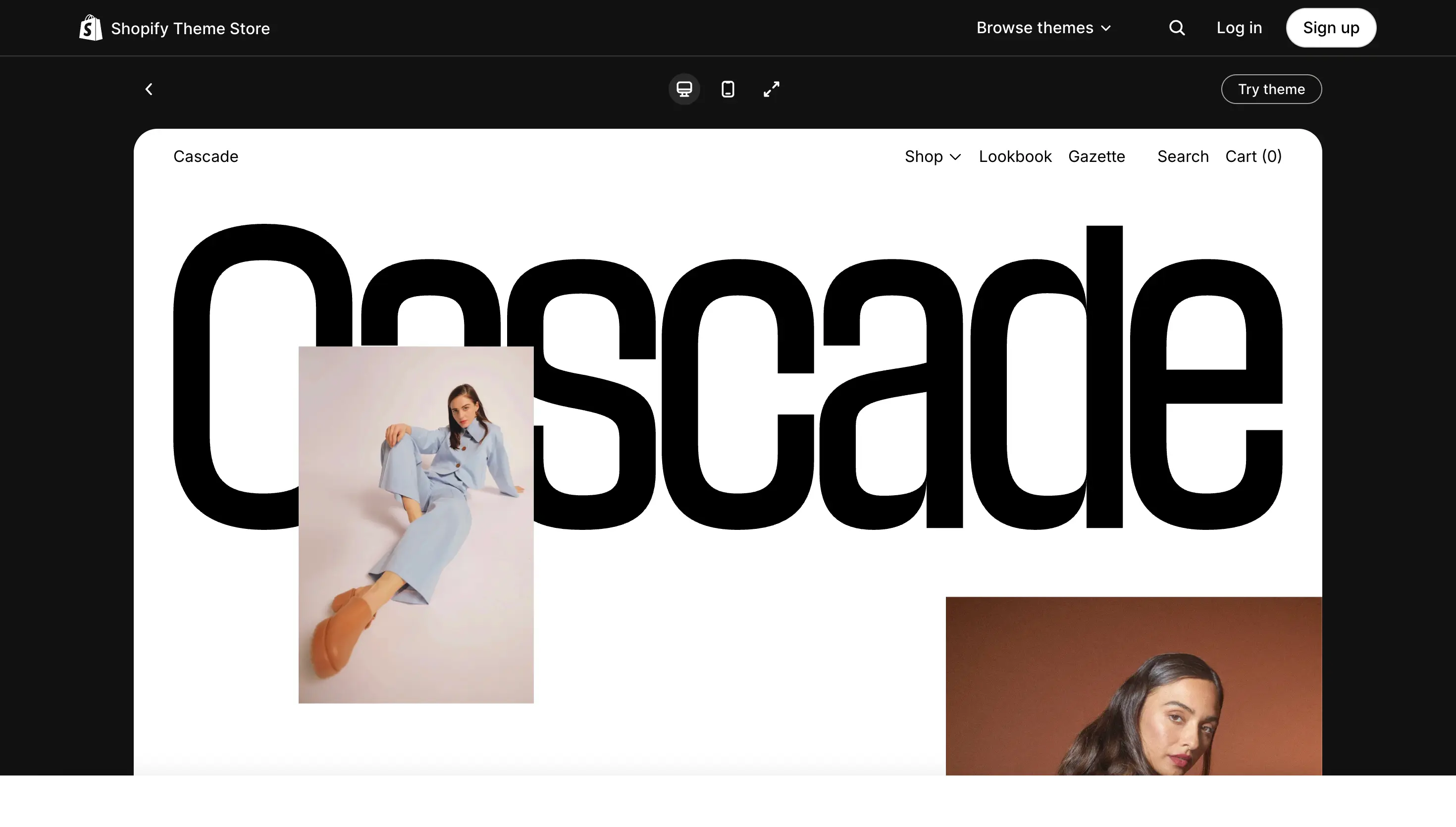
Cascade — best for established apparel retailers
Cascade uses a masonry-style, narrative-focused layout that groups different types of content together to tell a consistent brand story. The theme costs $350 and combines considerable editorial capabilities with solid ecommerce features.
With this theme, merchants can combine different text, images, and product listings while keeping page performance steady and uncluttered. To achieve this, Cascade’s theme creates a flowing experience for website visitors, guiding them through multiple product catalogs. However, the niche focus limits some brands from using this theme.
Main limitation: Cascade’s niche focus can limit some brands from using this theme
Best for: Experienced retailers generating $200,000 to $1,000,000+ revenue per year
Key features:
- Four pre-designed presets
- Custom color schemes per section
- Product feature highlights built into product descriptions
- Native newsletter and pop-up sections with automatic subscriber email synchronization
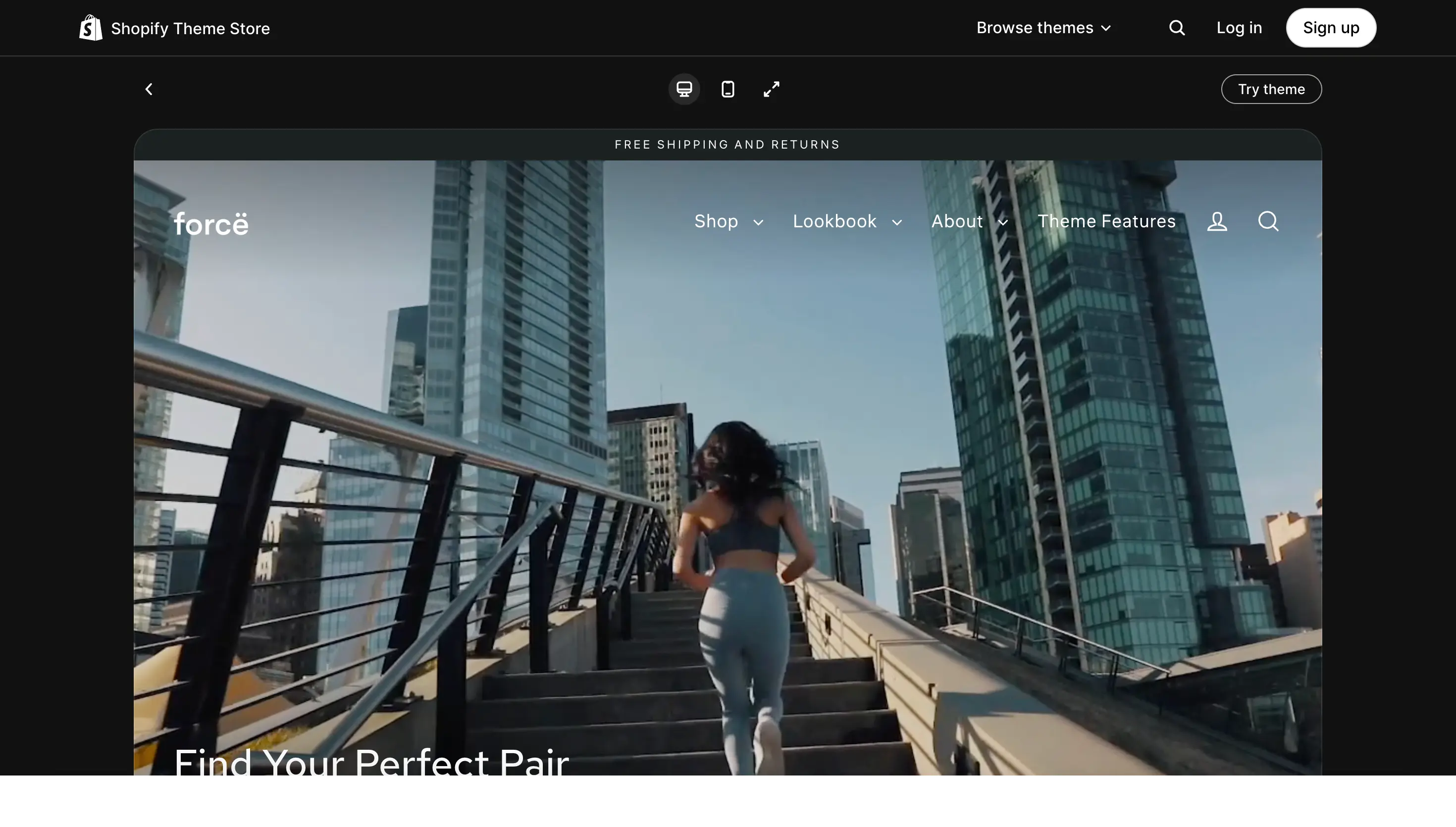
Streamline — best for trendy and lifestyle brands
Streamline costs $420 and is built by the same company that designed Impulse, so both Shopify themes give a premium feel. However, despite the similar premium positioning, Streamline differs with its support for high-volume and fast mobile shopping.
What really makes Streamline shine is video support, which, together with dynamic storytelling elements and collapsible product description tabs, works best for campaigns and flash sales. In short, this Shopify theme design is specifically built for bold, fast brands that may not be as suitable for other brands.
Main limitation: Streamline is primarily built for mobile-first use, including functionality and design
Best for: Trend-driven and lifestyle-focused clothing brands
Key features:
- Three different design presets
- Homepage slideshow and video support
- Multi-level dropdown navigation
- Product filtering system built in
- Dedicated newsletter sections and contact forms
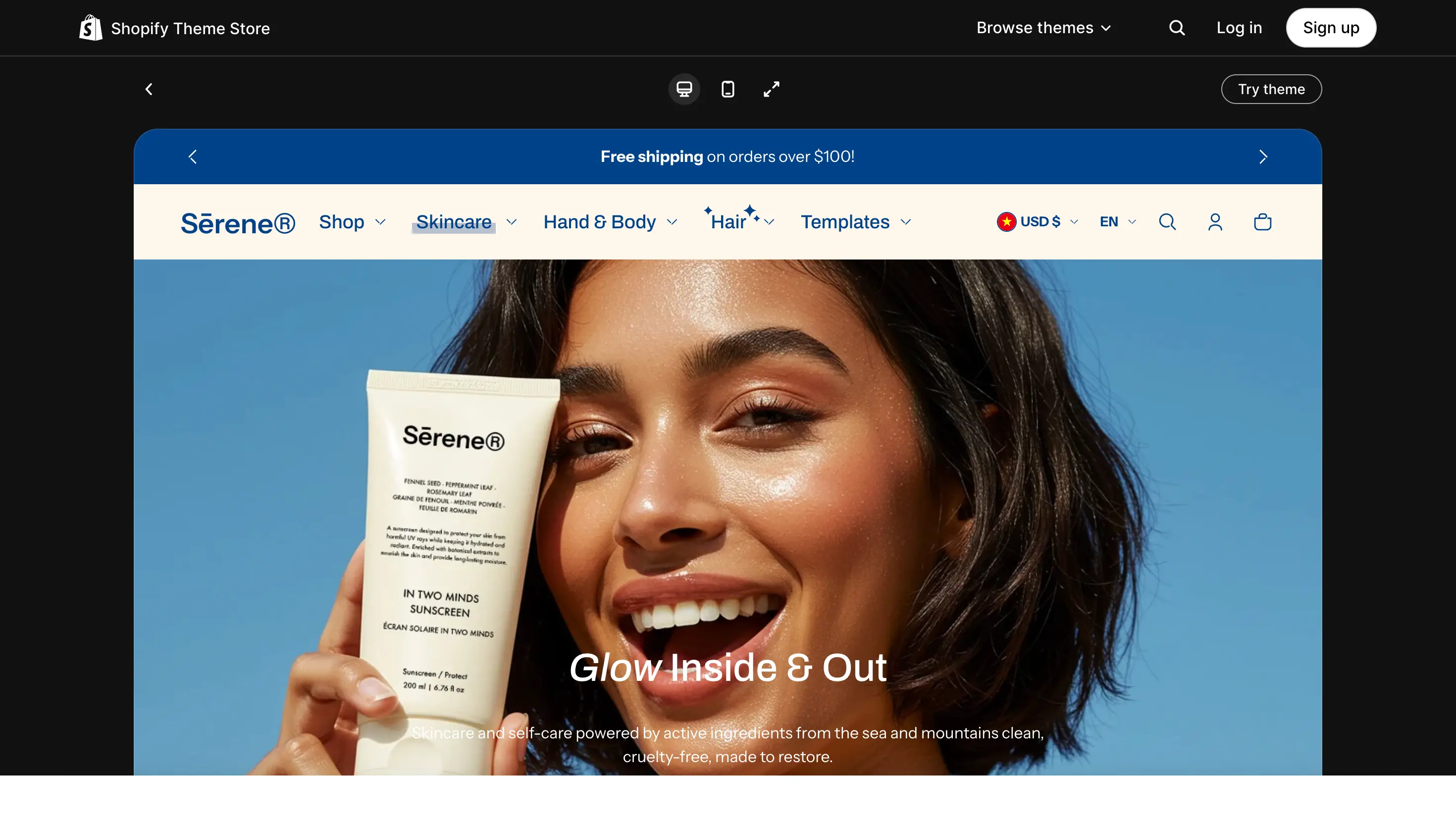
Shine — best for mid-market fashion stores
Shine is positioned between budget and luxury-tier themes, offering a cohesive and conversion-focused layout for $300. Originally built with beauty brands in mind, Shine now works well for mid-market apparel stores that want a more refined webstore look.
More importantly, this Shopify theme includes promo banners, pop-ups, and countdown timers as standard features. All of these features give medium-sized brands what they need to support seasonal sale spikes without leaning on multiple other apps or integrations.
Main limitation: Shine doesn’t include side-by-side spec comparison grids, which can be a deal-breaker for brands with large catalogs
Best for: Mid-market fashion stores that want a sophisticated webstore feel
Key features:
- Three different design presets
- Effective product page features
- Clean and well-structured product page hierarchy
- Footer newsletter blocks and promotional announcement sections
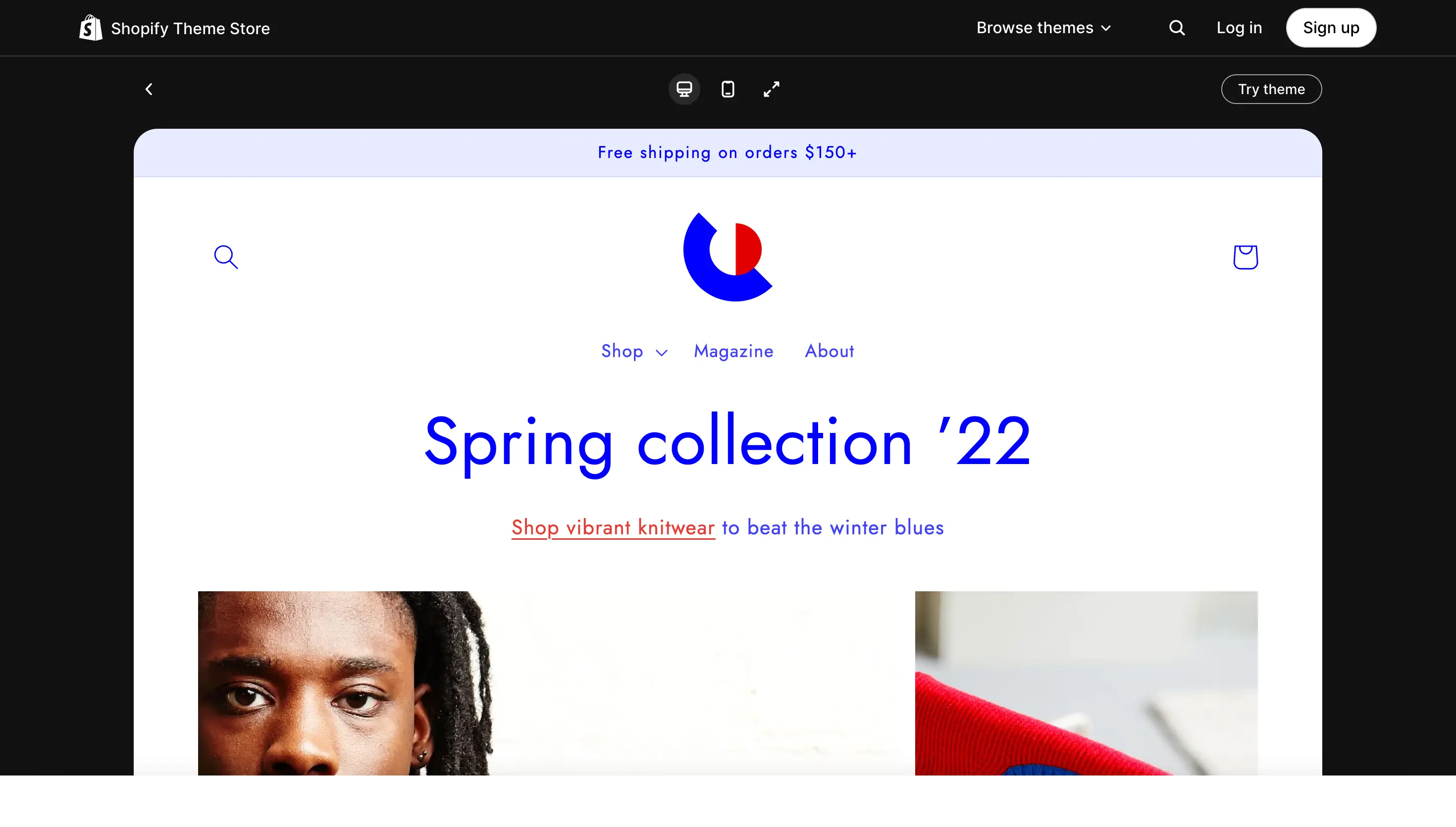
Colorblock — best free theme for modern boutiques
Colorblock is another free and bold theme developed officially by Shopify. It’s based on a grid layout designed for brands who prefer a strong visual contrast. In particular, the editorial sections of Colorblock allow brands to create long-form storytelling and balance it with colorful and customizable sections. All in all, Colorblock is a great option for brands looking for a standout grid design.
Main limitation: Colorblock’s distinct design can feel restrictive for some brands due to limited customization
Best for: Modern boutiques that want to stand out without relying on paid options
Key features:
- Zero-cost Shopify theme
- Grid-based layout for browsing large inventories
- Advanced menu navigation for large catalog support
- Full Online Store 2.0 support
- Newsletter sign-up sections for collecting subscriber emails
Best free Shopify themes for clothing stores
Dawn and Colorblock are two of the strongest free Shopify theme options, but they’re not the only ones. Origin, Spotlight, and Ride are worthy contenders, depending on your brand style and budget needs.
A free theme is usually more than enough for most clothing brands to get started, and most other paid Shopify themes come with uncomplicated redesign features. But regardless of which theme you use, once your storefront is live, the next step is to set up marketing channels with tailored automations to help your business grow.
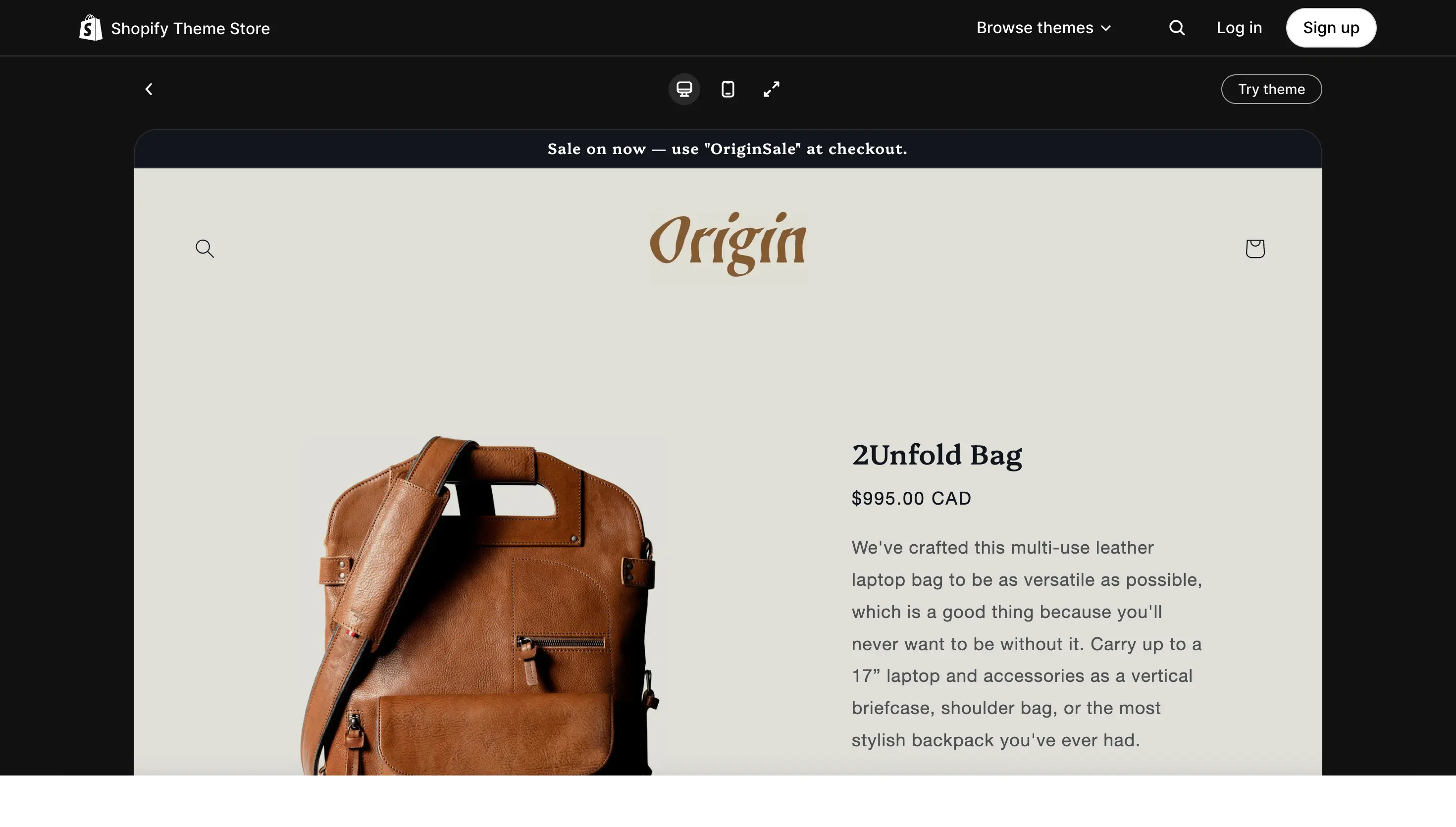
Origin
Origin is designed to bring out the uniqueness of different businesses, but especially handmade or independent/niche clothing brands. This Shopify theme offers strong visual control, especially for aesthetic-driven brands that value individuality over a polished retail look.
Main limitation: Origin’s theme limitations may require additional features to get the functionality you need
Best for: Artistic brands who want to emphasize their personality
Key features:
- Bold imagery with an editorial feel
- Mobile-friendly with an image-rich layout
- No-code customization
- Native email sign-up for newsletters that connects to Shopify Email
- No cost, with OS 2.0 support
Spotlight
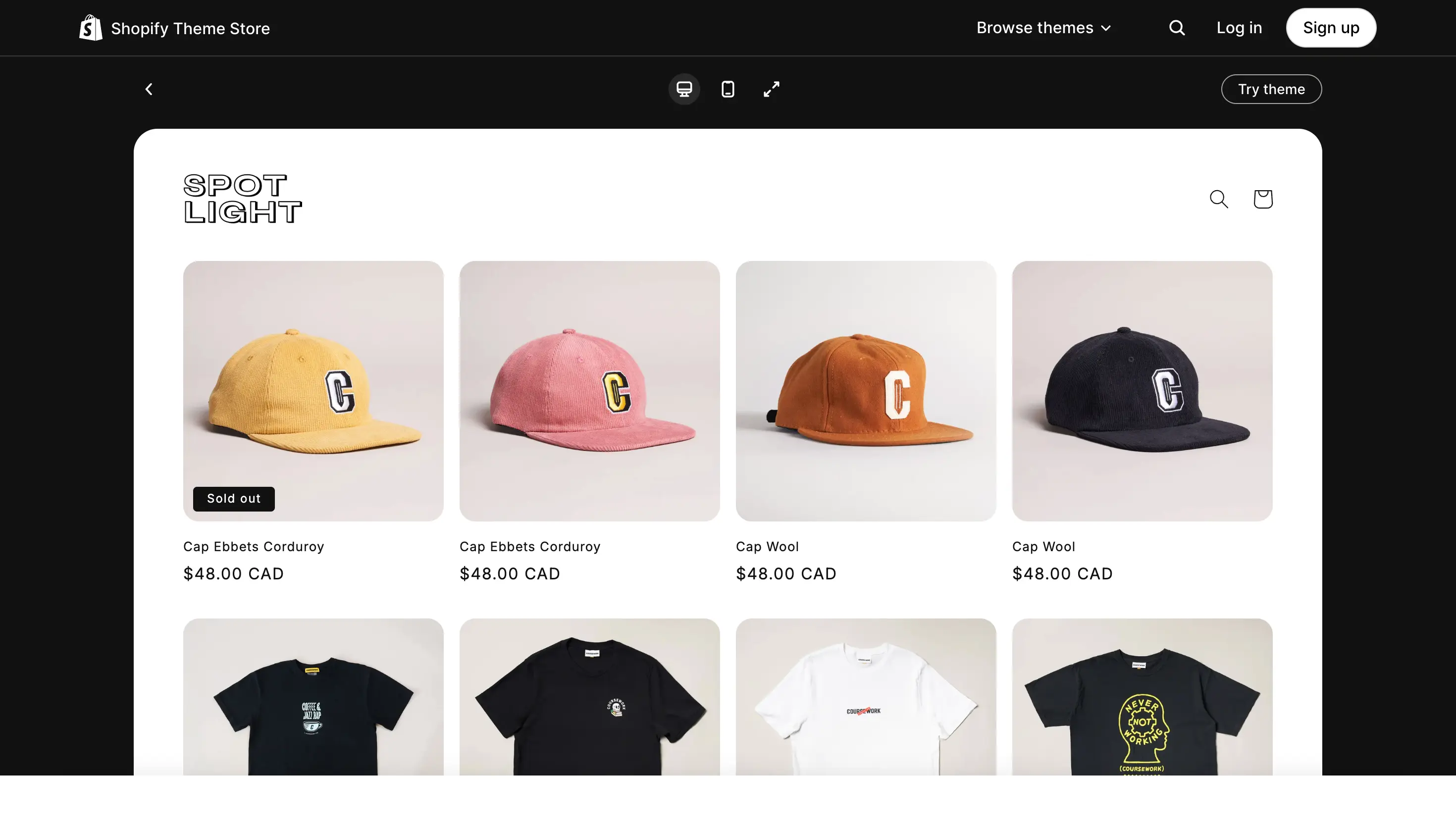
Spotlight is your free alternative to Blum, Impulse, Prestige, and Streamline, only without the premium price. This Shopify theme has most of what a small-to-medium-sized brand with a small number of hero products needs: a clean and refined look and a functional Shopify store.
Main limitation: Spotlight’s straightforward design lacks quite a few paid features for marketing and can present potential bottlenecks for brands with growing product catalogs
Best for: Boutique or luxury brands launching focused or limited-edition collections
Key features:
- Clear layout built for quick setup
- Large hero imagery and minimal distractions
- Minimalistic sections allowing brands to create their own layouts
- Integrates with email marketing tools through its built-in newsletter sign-up blocks
Ride
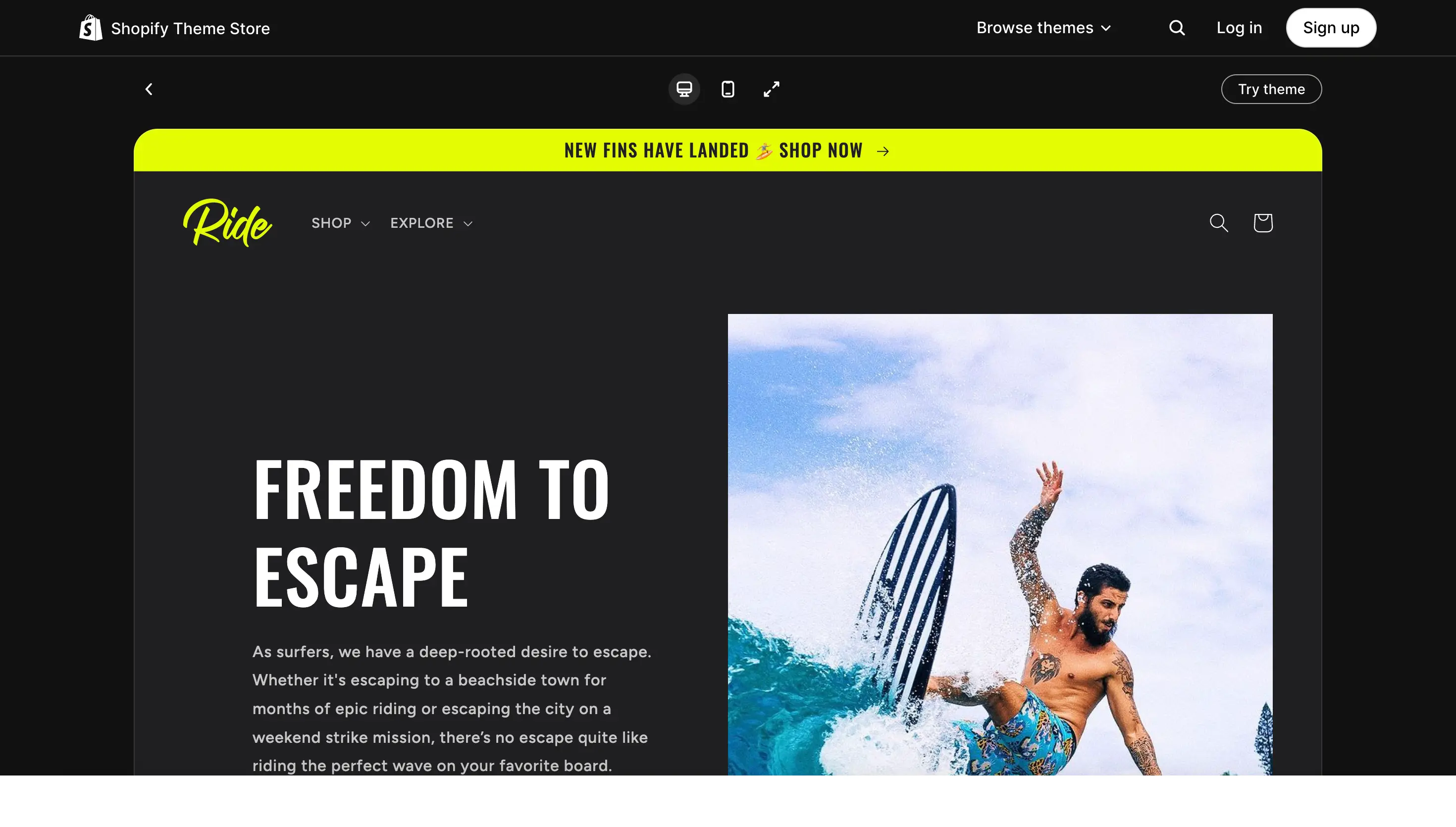
Ride has an action-oriented design built for brands with a focus on active lifestyle and sportswear. Some of the main elements of this theme include long-form text supporting content blocks suited for adding relevant context to every individual product to showcase use cases with impactful visuals.
Main limitation: The niche-specific focus also limits Ride to sports and outdoor brands only, and, like most other OS 2.0 themes, it comes with few features
Best for: Athletic and outdoor apparel brands
Key features:
- Specifically designed for dynamic activewear brands
- Supports longer product descriptions for technical details
- Testimonial sections with star ratings built in
- OS 2.0 support
- Standard compatibility with email marketing platforms
What makes a great Shopify theme for clothing stores?
The best Shopify themes for clothing balance four elements: mobile performance, product display optimization, compatibility with marketing platforms, and support for your SEO strategy.
Many Shopify theme guides highlight mobile experience optimization and proper product positioning using SEO, but including email/SMS marketing integrations, like pop-ups, as an early requirement can help build a strong foundation from the get-go.
Mobile performance
Mobile drove 77% of all retail site traffic in 2025, according to Contentsquare’s 2026 Digital Experience Benchmark, making mobile performance a major focus. For a clothing brand, that means most shoppers form their first impression of your storefront on a phone. A slow theme can ruin the first impression before a visitor even reaches a product page.
The main reasons why many fashion brand stores may fail Core Web Vitals are uncompressed lookbook images, high-resolution lifestyle videos, and app script bloat. To combat this, consider including lazy loading and using WebP compression to reduce file size.
Before you decide to go with any Shopify theme, you can test every theme’s demo version by entering the demo URL into Google PageSpeed Insights. Scores can and do shift often, but they generally stay within a consistent range. Just remember to choose the mobile option.
Product display features
Product listings need color swatches, size charts, quick-buy buttons, sticky add-to-cart bars, and lookbook layouts together with high-quality images to reduce friction between browsing and buying.
| Key product display features | Purpose |
|---|---|
| Color swatches | Allows shoppers to compare options |
| Size charts | Cut down spend on sizing-related returns |
| Quick-buy and sticky add-to-cart | Shorten the path to checkout and increase conversions |
| Lookbook layouts | Help shoppers picture how pieces work together to reduce cart abandonment caused by uncertainty |
Email capture and marketing compatibility
Marketing channel support is foundational for clothing webstores, especially since customers are increasingly interacting with brands via more than one channel. Omnisend’s 2026 ecommerce marketing report found that abandoned cart and welcome messages together drove 76% of all automated orders. Every such flow starts with an email address, and your theme’s pop-up or newsletter sign-up collects it.
This isn’t to say that brands should start multiple marketing channels at once, but looking for email and SMS marketing compatibility when choosing your Shopify theme can help create a strong foundation for sustainable expansion.
Providers like Omnisend integrate with many Shopify themes directly, allowing brands to sync sign-ups from the theme’s pop-up or newsletter section and turn them into detailed segmented lists.
SEO architecture
Any business that’s looking for a reliable Shopify theme should also look for technical SEO support. Using the right keywords is essential, but it needs to be used together with:
- Schema markup so that search engines can read structured product data
- Strong Core Web Vitals scores for monitoring and maintaining high page speeds
- Online Store 2.0 compatibility for faster app integrations and more flexible sections
Before you choose: 10 things your Shopify clothing theme must have
Whichever Shopify theme you choose, your decision will have to include the design and features that are specifically relevant for your brand. Here’s a checklist of the top 10 things to consider before moving forward with your chosen theme:
- Mobile PageSpeed score of 90+: Verify it with Google PageSpeed Insights, since most clothing shoppers browse on a phone
- Built-in color swatch and size variant display: Without this, you’ll need an app just to show basic product options
- Lookbook or editorial layout option: Clothing sells better in relevant context than just a plain background
- Email capture pop-up or newsletter section: This is the starting point for every automated flow you’ll run later
- Mega menu, if your catalog has 50+ products: A standard dropdown menu breaks down fast at that size
- Quick-buy and sticky add-to-cart: Both cut steps out of the path to checkout
- Schema markup for structured product data: This helps your listings show up correctly in search results
- Compatibility with Shopify apps, especially email and SMS tools: Some older or heavily customized themes can conflict with newer app integrations
- Transparent pricing: Most Shopify themes are a one-time fee, but it’s always better to confirm before you buy
- Active developer support and Online Store 2.0 compatibility: This determines whether the theme keeps getting updates as Shopify’s platform evolves
How to choose the right Shopify theme for your clothing store
To pick the best Shopify theme for your clothing store, you should objectively evaluate where your brand is now and what the projected business growth rate is. Most importantly, you should test the theme before committing.
Match the theme to your store stage
Your revenue and business growth stage narrows the list down faster than anything else. For example, if you’re running a niche boutique or only recently established your clothing business, Dawn and Blum are often great starting points. But if you’re operating a large clothing store and make over $1,000,000 in revenue annually, you could consider large-catalog supporting themes like Symmetry and Impulse.
Here’s a quick guiding table with four distinct store stages and recommended themes:
| Store stage | Revenue range | Recommended themes |
|---|---|---|
| New brands and boutiques | Pre-launch to $50,000 | Dawn, Blum |
| Growing fashion brands | $50,000–$200,000 | Fashionopolism, Shine |
| Established apparel retailers | $200,000–$1,000,000 | Cascade, Prestige |
| Large-catalog and enterprise stores | $1,000,000+ | Symmetry, Impulse |
Theme recommendations by store growth stage.
Test before you commit
Every paid theme on the Shopify Theme Store offers brands the option to test before they buy. This means that you can use this opportunity to build your entire store, add real products, and test the layout before ever committing to buying a single Shopify theme.
If you’re satisfied with a single Shopify theme, you can go ahead and publish your shop, which will finalize the theme purchase. That is, if you chose to use a paid theme. However, if you have doubts or considerations, hold off on publishing. Once a purchase is made, it’s final.
How to turn visitors into buyers?
A great theme attracts shoppers to your store, while strategic marketing keeps them engaged and converts them. As reported by Forbes, half of the surveyed marketers stated that email marketing is their most impactful channel.
Furthermore, email capture with targeted automated flows helps nurture relationships and eventually turn one-time visitors into repeat and loyal customers. Top Shopify clothing stores in 2026 consistently show that repeat revenue comes from balancing strong, visually appealing themes with segmented email and SMS marketing.
Omnisend is an all-in-one email and SMS marketing platform for ecommerce businesses, with integrations with multiple tools, including Shopify themes. Brands can get started for free to test the service and several Shopify themes to see how well they can connect available pop-up and newsletter sections with automated welcome, cart abandonment, and win-back flows.
Our free plan includes all core ecommerce features rather than gating them behind higher tiers. Plus, Omnisend customers see $79 back for every $1 spent.
MUSS is a Shopify-based wellness ecommerce brand from Latvia. The brand switched from Klaviyo to Omnisend, fully migrating in one day to combine email, SMS, pop-ups, automations, segmentation, and deliverability optimization. Since then, MUSS has grown its email open rate by 41% year-on-year and its revenue per recipient by 13%.
Read the full MUSS success story →
What’s our final verdict for the best Shopify theme for clothing?
Dawn remains one of the most popular choices as it’s free but sophisticated enough to offer many of the features that paid themes include, while Blum offers the strongest value at $170 for new fashion brands ready to invest.
For luxury brands, Symmetry, Prestige, and Impulse offer stylish themes and features for creating and maintaining a premium-first focus. But regardless of which theme you choose, it’s important to consider your brand’s near-future growth, which requires marketing channel compatibility, SEO support, and mobile optimization.
Quick sign up | No credit card required