Omnisend AI

 OFFER
OFFER







It’s a classic story: before considering whether local email marketing is actually worth the effort, a business owner will try going with flyers, social media ads, referrals, word-of-mouth, and more. Businesses sometimes find it hard to believe that people still read emails in 2026.
However, if you’re questioning “Is local email marketing still effective?”, the answer is a resounding yes. In fact, recent statistics show that email marketing delivers an average return of $36 for every $1 spent, proving it’s incredibly effective for both global and local companies.
This article will prove said effectiveness with recent data and share practical, easy-to-implement strategies and campaign ideas. We’ll show you exactly how segmentation and automation work, even for time-strapped local businesses.
You’ll find concrete examples tailored specifically for gyms, auto dealers, restaurants, retailers, and service businesses. And you won’t even need a huge budget to succeed.
Quick sign up | No credit card required
Why local email marketing is still so effective
Contrary to the misconception in local markets, email is one of the most reliable and affordable ways to communicate directly with your community. You don’t need to rely on expensive ads alone. Local email marketing simply means using email to engage customers in your specific area, resulting in increased foot traffic, local bookings, and repeat purchases.
Unlike rented channels, where algorithms limit your reach, building an email list gives you total control over your audience. When done correctly, email marketing for small businesses creates a loyal customer base and encourages positive online reviews. Later sections will show exactly how to get these strong results with segmentation and automation.
How local email marketing compares to other channels
There are four main ways you can reach your customers in a local market: email, social media, print, and radio. Let’s see how email stacks up against every one of those:
- Email vs. social media: Your social media presence depends entirely on the algorithms, which means you have very little actual control over it. Email, on the other hand, is a channel that you downright own, and nothing can change that.
- Email vs. print: Printing flyers or renting billboards can be very expensive, and it’s very difficult to measure efficiency without a dedicated budget and experimentation. Email, however, comes with a set of reporting features that track every metric for a fraction of the cost.
- Email vs. local radio: If you’re getting radio placement, you need to keep in mind that everyone hears the same message, which is less than ideal in today’s market that prefers personalization. Email allows you to segment your audience into multiple smaller lists and send more tailored messages to each.
Key ROI stats for local businesses
- Email is highly measurable and cost-efficient. Omnisend customers get $79 back for every $1 spent, which is one of the highest ROIs in marketing.
- According to HubSpot, if you’re getting 50%+ open rates, it signals an exceptional metric, which means loyal customers or successful segmentation of niche audiences.
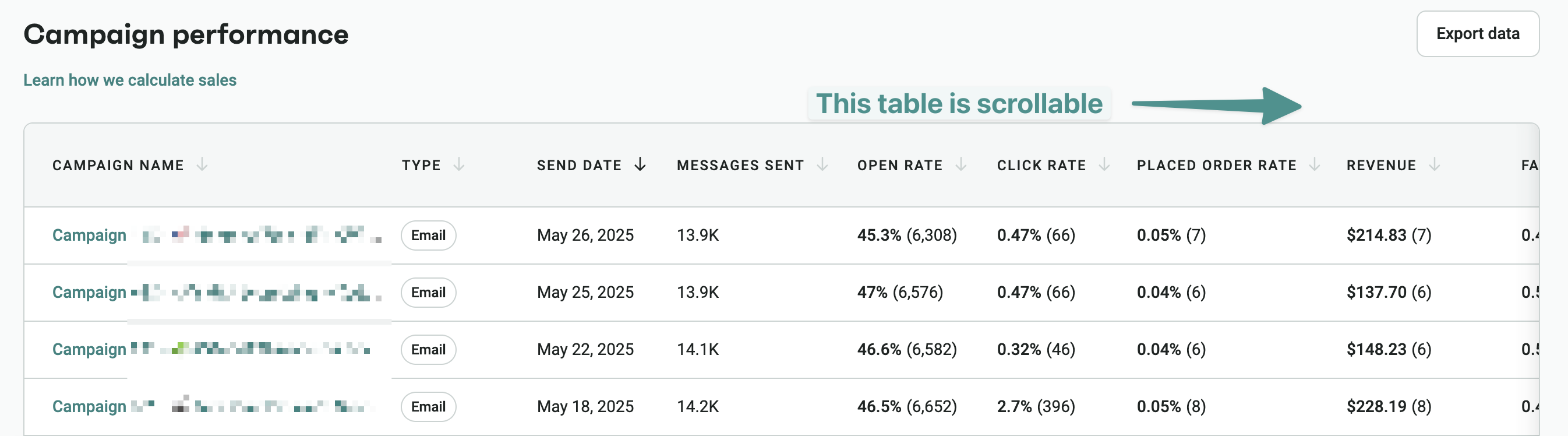
For example, here’s an example of how measurable and easy-to-understand local email campaigns are:
When local email marketing doesn’t work (and why)
Naturally, local email marketing is as good as the person behind it, so if you’re new at this, you may not see the best results at first. Here are some of the most popular mistakes people make:
- Using bad lists: Buying subscriber lists instead of earning them organically damages your sender reputation and leads to high spam complaints.
- Poor targeting: Blasting the same message to your entire list causes engagement to plummet.
- Ignoring mobile optimization: Most people read emails on their phones, so poorly formatted messages don’t get the attention you expect.
- Sending spammy content: If every email is a hard sell with no community value, locals will quickly unsubscribe.
Core local business email marketing strategies
Before you build the email, you need to strategize and define the exact goal and value of each campaign. This is the most effective local business email marketing strategy because it lets you focus on driving real actions rather than finding fulfillment in open rates.
The industry-standard best practice is a three-fold approach: consistent newsletters, timely promotions, and automated emails based on user behavior. Instead of trying to sell your product with every email, diversify your goals to make the recipients feel valued:
- With newsletters, give them tips or educational content
- With promotions, give them a discount or another reason to come to your shop
- With automations, give them important follow-ups after milestone actions or ask for reviews
The goal here is to mix direct promotions with genuine, non-salesy content so the customer feels respected and cared for.
“Consistency and clear objectives will always beat random messages to a single, unengaged list. Provide your newcomers with information about your values and brand, give VIP customers some special treatment, and ask returning customers to leave you a review.”
— Andrius Šeršniovas, Conversion Specialist at Omnisend
Set clear goals for your local email campaigns
Before you draft a Tuesday lunch promo or a seasonal update, choose two to three primary goals. This keeps your messaging focused and helps you measure what’s actually working:
- More store visits: Track this by measuring the redemption rate of in-store coupons or secret phrases.
- More online orders: Measure success through your click-through rate and revenue per email.
- Increased bookings: Track the number of scheduled appointments directly following a campaign send.
- Better customer retention: Monitor the repeat purchase rate and review submissions from your email subscribers.
Map emails to the local customer journey
To get the best return from your audience, map your messages to how people actually interact with your business. This is the best thing you can do to ensure that recipients of the email are at the right stage to read it.
This may be a bit difficult to understand without examples, so here’s what we’re talking about:
- Discover: When a new person joins your email list, don’t just jump straight into the sales pitch. Take the time to set up two or three emails to introduce yourself and your brand, and establish an emotional connection with the subscriber.
- Try: Once you’ve properly introduced yourself, you can start encouraging them to try your products. For example, if a local sports team has a game on Saturday, a restaurant could send an email on Thursday showcasing their one-bite snack plates for weekend delivery.
- Buy: When the customer makes a purchase, make sure you have an automation in place that says “thank you” and, optionally, gives serving recommendations or other tips for enjoying the snacks.
- Return: Keep your customers on the hook, and remind them about your brand consistently, but not excessively. Maintaining the restaurant example, if you noticed that the local sports team’s match worked well, you can try the same template for other sports events.
- Refer: Once you have clients who consistently buy from you, you can offer them referral bonuses for bringing more people into the circle. Word-of-mouth is powerful, especially in small local communities.
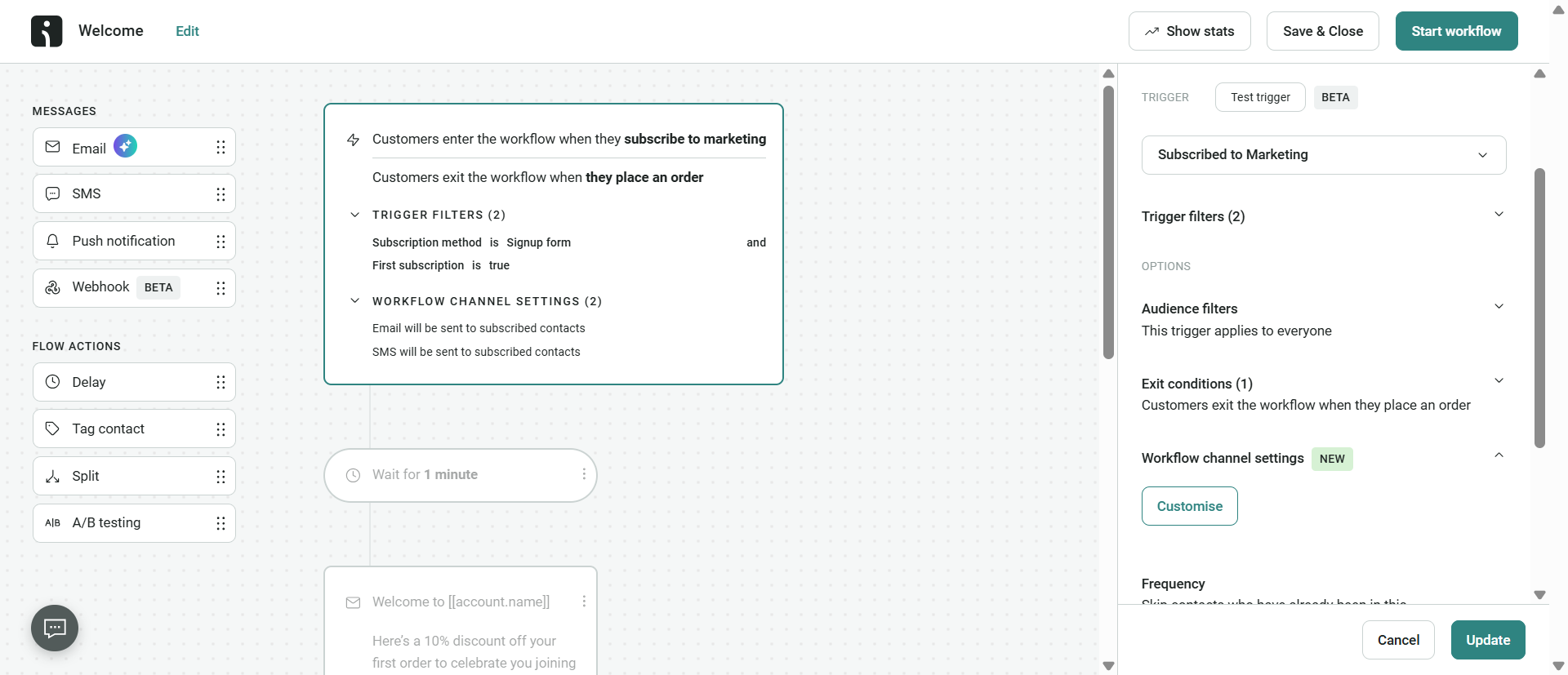
For example, here’s how the welcome automation workflow looks in Omnisend:
Timing and frequency for local audiences
Getting your timing right isn’t easy, and it takes time, but in smaller communities, it’s easier to achieve. The goal here is to balance staying top-of-mind without annoying the customer base with excessively frequent emails.
Here are some general recommendations for different businesses:
- Restaurants and cafes: Send one or two emails weekly. Share a lunch promo, new menu items, weekend live music schedules, or special deals for delivery meals, if applicable.
- Gyms and fitness studios: Send a weekly newsletter. Share registration forms and calendars for group workouts that week, and add recovery and nutrition tips.
- Auto dealers and mechanics: Send monthly or seasonal maintenance tips and rely on automated reminder messages for oil changes, tire changes, and more.
- Salons and SPAs: Send monthly updates on services, slot availability, and set up automated reminders for regular procedures.
Quick win: Send one simple email this week inviting locals to a small in-store event or offer an exclusive “locals only” discount code for the weekend.
Segmentation and personalization for local audiences
Email marketing segmentation for local businesses means dividing your subscriber list into smaller, targeted groups rather than blasting the same message to everyone. You might think you need thousands of contacts to even bother with this, but that’s far from the truth.
Segmenting is highly effective even for a small list of 300 to 500 local subscribers, and it helps you send relevant offers that people will actually want to read. When you tailor your messages based on specific traits, you also lay the groundwork for some of the most powerful automated workflows that we’ll discuss later.
“We created tiers based on recent opens/clicks (like last 30, 60, 90 days) and only hit the most active ones for key campaigns. Not only did open rates go up, but inbox placement did as well. We also run re-engagement flows every few months to either win people back or quietly sunset them. It’s less about blasting everyone, more about sending the right message to the people still listening.”
— Reddit user
Geographic and proximity-based segments
If your business operates within city limits, it opens up the capabilities for hyper-focused and relevant local updates tailored to the citizens. Here’s how you can play it out:
- Single-location business: Send last-minute invitations for in-store events to people in your city or come up with a real-life contest for prizes.
- Multi-location business: You can do the same thing for franchises as with a single-location business, just turn it into several different emails with different addresses and cities.
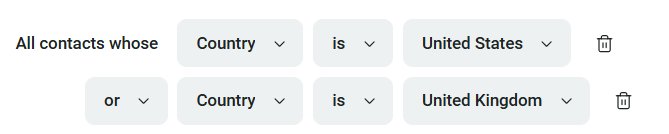
Here’s how segmentation works in Omnisend. The current setting is set to “Country”, but you can change the filter to city, ZIP code, and more:
Behavioral and lifecycle segmentation
You can also set up automations to fire off based on behavioral and lifecycle triggers. This way, you’ll be able to reach customers at peak moments in their customer journey automatically:
- New arrivals: Once they sign up via a form and join your list, a welcome sequence begins, delivering the lead magnet you offered in the popup and introducing your brand.
- Active regulars: This one can be triggered when they shop with you for the Xth time. The message can be a dedicated “thank you” for being a loyal customer and a VIP discount for the next time.
- Lapsed customers: If a customer doesn’t engage with your brand for a few months in a row, you can send them a strong “we miss you” message with a solid incentive to return. If nothing happens, stop sending them.
You can set up all these automations within minutes using Omnisend’s automation workflow templates, where nearly everything is done for you, and all that’s left is to edit the messages.
Personalization examples for local business emails
Personalization is all about making your recipients feel like you’re talking to them one-on-one, not just sending mass emails to everyone. You can achieve this by using dynamic name fields, referencing their order, or sending behavior-based emails.
Here are some examples you can steal:
- Restaurant: “Hey, (First Name). Looking to catch the game again next weekend? How about the (Product Name) you ordered last time?”
- Gym: “(City Name), are you ready? The new HIIT class kicks off tomorrow at (Time)!”
- Auto dealer: “Hi, (First Name). You didn’t forget it’s time for your oil change, did you? Schedule the service today.”
- Real estate: “Three new one-bed apartments just hit the market in (City Name). Don’t miss it!”
Campaign ideas for different local businesses
Sometimes all you need is a quick spark of inspiration to get started. While Omnisend provides exceptional value for ecommerce stores, its tools are equally powerful for local businesses that take bookings, sell tickets, or use digital menus. Let’s look at some proven campaigns you can easily recreate.
Retail and restaurant local email campaigns
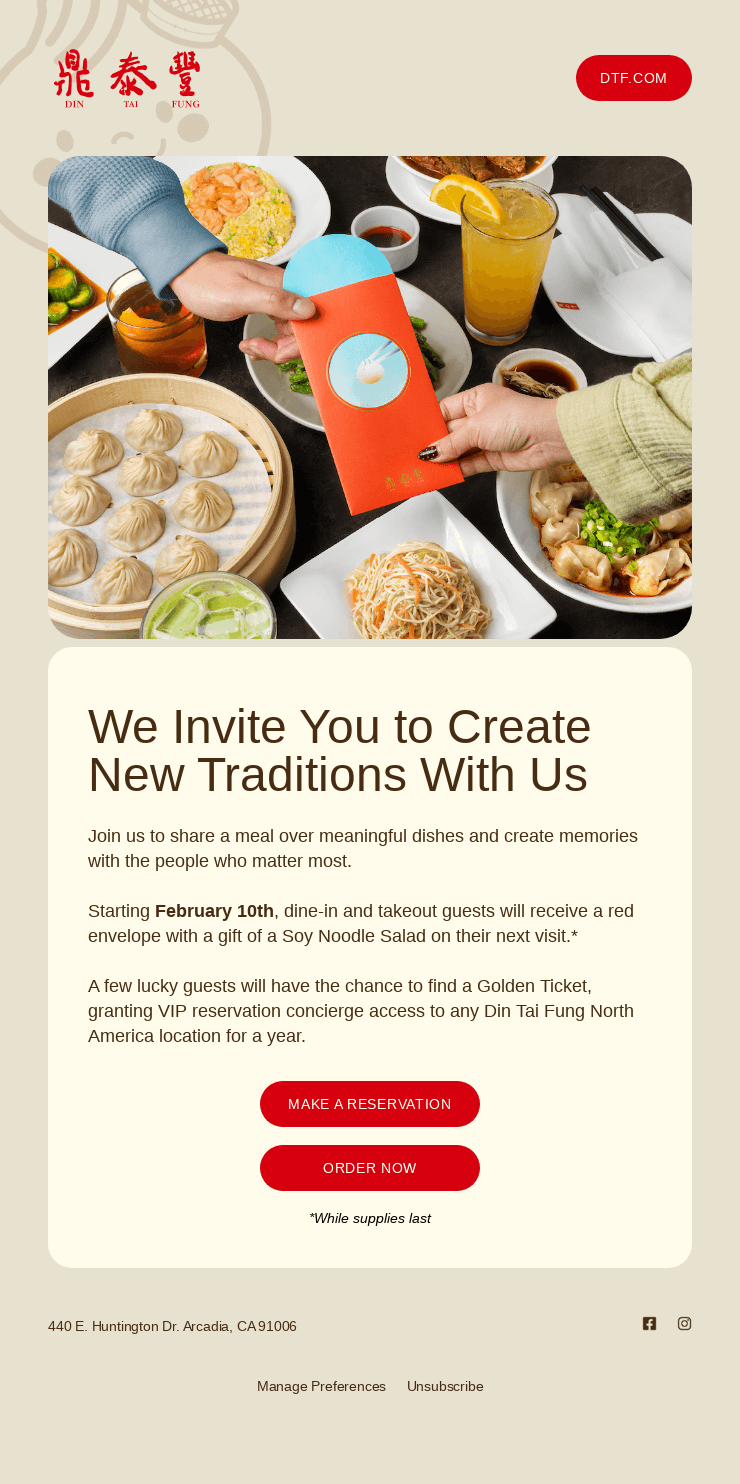
Food and retail businesses thrive on timely offers and visual appeal. You can quickly set these up using a drag-and-drop template editor. If you want to learn more, our guide on restaurant email marketing is a great place to start.
Weekly specials
- Subject line: Your weekend dinner plans are sorted
- Timing: Thursday morning
- Details: Highlight your chef’s weekend special and add the emotional appeal of having a truly relaxing weekend where they don’t have to worry about cooking and grocery shopping.
New menu launches
- Subject line: Taste our new spring menu first
- Timing: One week before launch
- Details: Give your loyal subscribers an exclusive preview or an early booking link, and communicate it clearly so they know this offer is for your VIPs only, making them feel special.
Local events
- Subject line: Catch us at the downtown farmers’ market
- Timing: The day before the event
- Details: Explain what event is taking place, share your booth location, add last year’s pictures if available, and maybe even give them a secret phrase for a free sample or a discount.
Local email marketing for gyms and fitness studios
Fitness centers are inherently community-driven, and a successful strategy for local email marketing for gyms often centers on class schedules and member motivation. For more on this topic, check out our insights on fitness email marketing.
New class launches
- Subject line: New early morning HIIT classes added
- Timing: One to two weeks before the starting date
- Details: Announce the new schedule, clearly define participants’ limits, include a link for recipients to sign up for the class, and add content on how HIIT benefits their health.
Challenge announcements
- Subject line: Join our 30-day summer body challenge
- Timing: Before a new month begins
- Details: Invite users to challenge themselves and prepare for beach season. Include details and rewards. This is where you can leverage emotion and encourage recipients to start their fitness journey.
Post-holiday reactivation
- Subject line: Let’s get back on track together
- Timing: Early January or after any major holiday
- Details: Acknowledge the holiday table joy and encourage recipients to come back to the gym so they can do the same freely during the next holiday, without restrictions. Just make sure you don’t overstep the boundaries, as it’s very easy to get into the fat-shaming and guilt-tripping territory.
Auto dealer and service-based email campaigns
Auto dealer local email marketing is all about sending reminders, sharing educational content, and keeping your brand top of mind. There’s no need for hard sells.
Service reminders
- Subject line: Time for your yearly car SPA
- Timing: 1 year after the last change
- Details: Remind subscribers that it’s been a year since the last maintenance, and it’s time to change the oil, check the brakes, and make other necessary repairs.
Weather-based tire campaigns
- Subject line: (Season) is coming: Get your (season) tires ready
- Timing: When the deadline for changing tires is near
- Details: Offer a small discount on tire rotations or seasonal replacements. You can also add current laws on tire-change deadlines and the consequences for noncompliance.
Local test-drive events
- Subject line: Test drive our new (Car Model) this Saturday
- Timing: Middle of the week
- Details: Offer an exclusive opportunity to test drive a new car and organize a quick get-together for the occasion. Explain the agenda and what to expect.

Community and event-driven local campaigns
Showcasing your involvement in the town can build amazing credibility for your brand. It shows that you stand true to your values and back them up with actions.
Sponsoring local teams
- Subject line: Proud to sponsor the (Town) Tigers
- Timing: The start of the local sports season
- Details: Share a team photo, explain what it means, and maybe even showcase merchandise that you created together. You can also send promotional emails with a discount every time the team wins.
Charity drives
- Subject line: Help us collect (Item) for (Local Charity Name)
- Timing: Before major holidays
- Details: Ask subscribers to donate unneeded items to those in need in exchange for a coupon they can redeem at the time of donation. Also, explain what the charity does in case some people don’t know.
Partnering with nearby businesses
- Subject line: Enjoy a free coffee with you next haircut
- Timing: Anytime
- Details: Throw a collaboration with a neighboring shop to cross-promote to both of your customer lists.
You can build any of these emails with Omnisend’s powerful and intuitive email builder. You can even browse hundreds of email templates if you don’t feel like designing one on your own. After selecting the desired template, you can change the colors, buttons, and edit the entire design to your liking.
Here’s a quick video that explains in detail how to build emails step-by-step:
Building and optimizing your local email list
Building an audience is all about cultivating and maintaining community trust while complying with local privacy regulations. You should, at all times, only message the people who have explicitly signed up to receive communications from you.
It’s in your best interest to start with a small but genuine audience. If you buy a list of contacts, you’ll be violating the law and not even gain any benefit from doing so, as those people will be less than engaged.
Building your own email list will take time and effort, but the return is well worth it when you use email marketing for your local business properly.
In-store and in-person list-building tactics
- Set up a “WiFi for email” login portal with a clear, optional opt-in for marketing emails so guests join your list when connecting to the internet
- Place QR codes at the checkout counter, offering a small discount for signing up
- Use table tents in dining areas with a link to join your club
- Print a special signup link or a QR code directly on your physical receipts
- Ask for an email address when customers join your in-store loyalty program
- Bring a tablet with a signup form to local community events and farmers’ markets
- Leave a business card, drop a bowl by the door for a weekly free reward drawing
Online and social tactics to capture local subscribers
- Add a timing-delayed pop-up to your website, offering a locals-only discount
- Place an embedded signup form clearly in your website footer
- Add a direct newsletter signup link to your Instagram and Facebook bios
- Post updates on your Google Business Profile that direct people to your subscription page
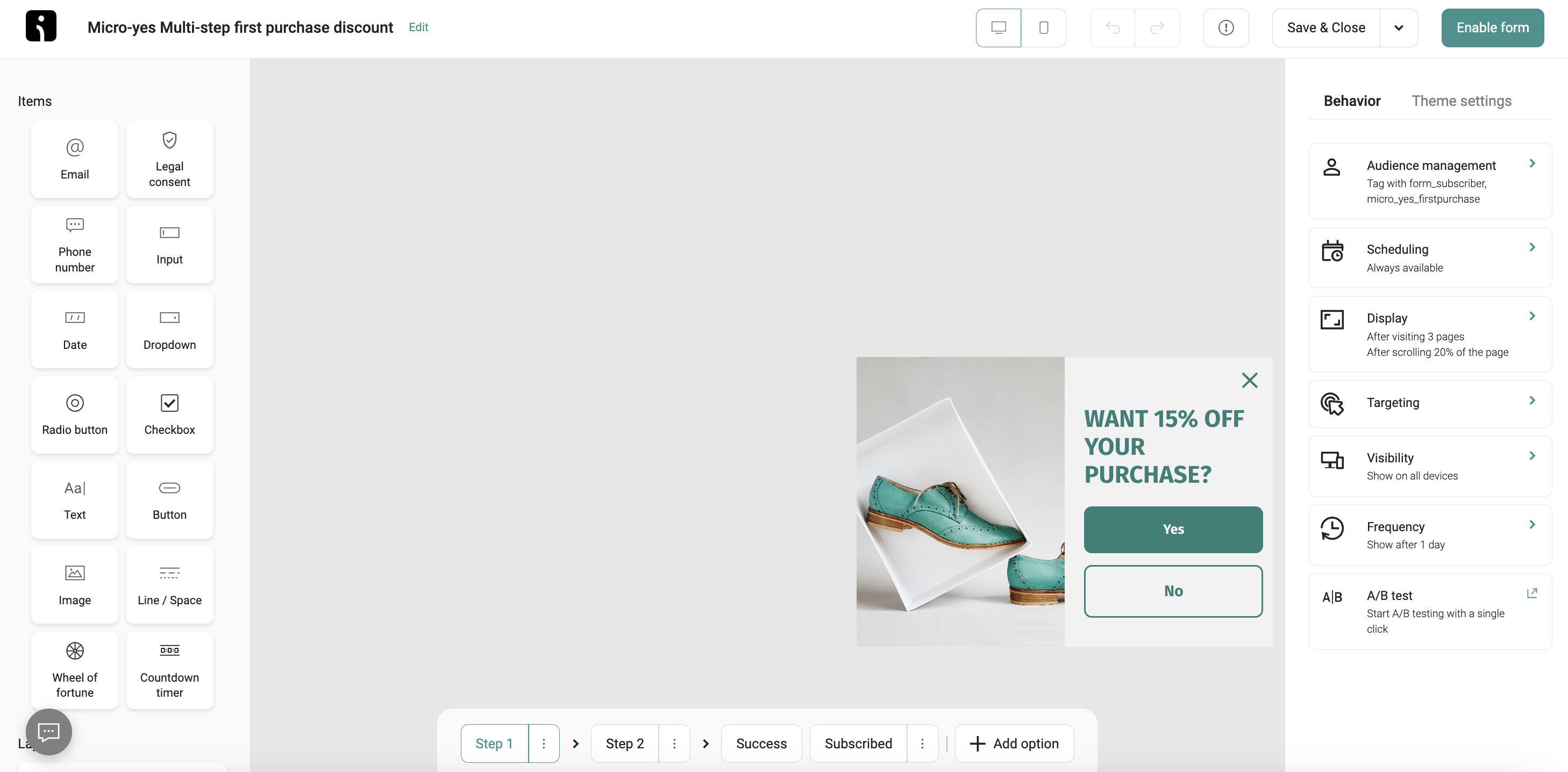
Here’s how the signup form builder looks on Omnisend. It’s an intuitive dashboard with drag-and-drop functionality that allows you to create one in minutes:
Managing, cleaning, and segmenting local email marketing lists
- Clean your list every six months to remove any inactive contacts to protect your sender reputation and deliverability
- Handle unsubscribers properly by making the opt-out button easy to find and respecting their choice
- According to recent 2025 deliverability studies by Litmus, regularly removing unengaged contacts improves your overall inbox placement rate
Learn exactly how to organize your audience with our complete guide on email list management.
Sustainable list growth checklist
- Only send to recipients who have given you consent to do so
- Offer a discount, a freebie, or some other attractive lead magnet in exchange for their email address
- Use both online and offline methods for the best results, and segment audiences based on how they joined
- Maintain good list hygiene and remove contacts who never engage with your emails
Automation, analytics, and omnichannel tactics for local success
Marketing automation simply means setting up emails once and having them send automatically based on specific customer actions. It provides a strong return on investment and frees you up to manage other business operations.
“Automation lets small teams do more marketing with the same number of hours, while clear analytics prove what’s actually driving revenue.”
— Evaldas Mockus, VP of Marketing, Omnisend
Omnisend provides an excellent set of features at a smarter price while delivering exceptional value. Unlike many competitors, Omnisend grants full access to advanced automation and SMS even on its free plan.
Essential automated workflows for local businesses
- Welcome series: Greet new local subscribers immediately after they sign up, introduce your brand and values, and offer a small incentive for their first visit.
- Abandoned cart or booking reminders: Recover lost revenue when someone leaves your site without finishing an ecommerce purchase or appointment booking.
- Post-purchase follow-ups: Automatically send a message a few days after a service to request an online review or a friend referral.
- Re-engagement campaigns: Win back inactive locals who haven’t opened an email or visited in months with a special offer.
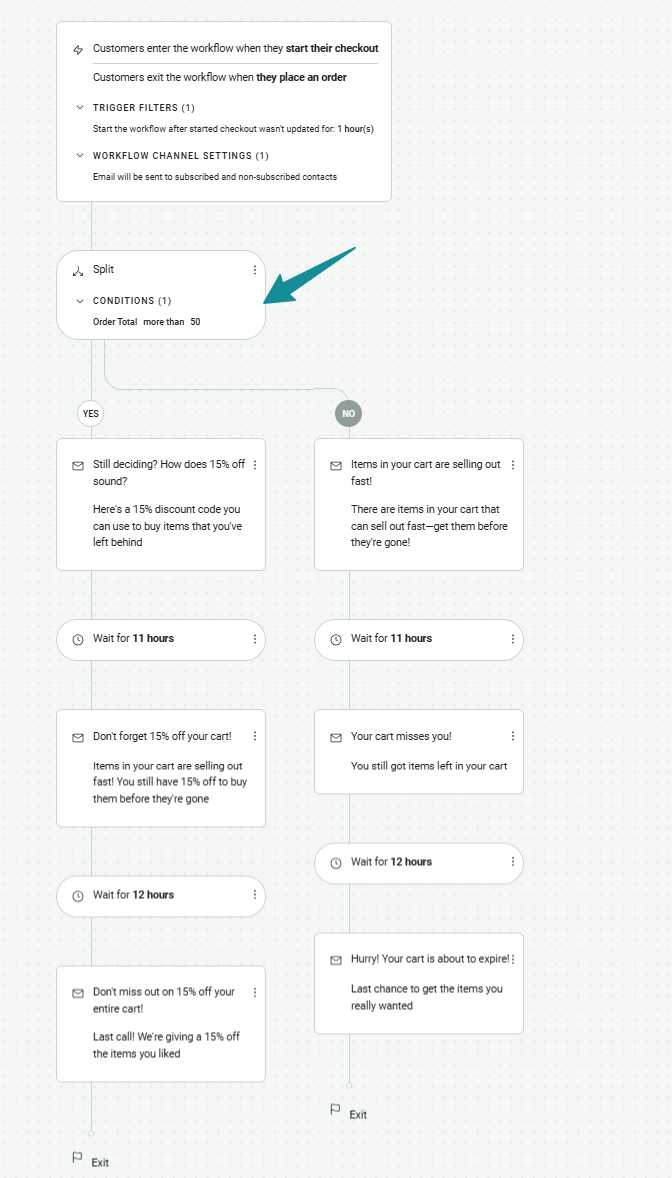
Here’s how the abandoned cart reminder workflow looks on Omnisend, and if you want to, you can even split the workflow to see which emails perform better:
Tracking results and focusing on simple KPIs
- Open rate: It shows how many people have opened your email. If you’re constantly hitting around 30% open rates, you’re in good shape. But aim higher based on your own benchmarks.
- Click rate: It shows how many people clicked a link in the email after reading it. A good percentage is around 2%-3%.
- Conversion and revenue per email: These measure how much money you’re actually making via email. You can use it to calculate your ROI.
- Unsubscribe rate: This indicates if you’re sending too often or sharing irrelevant content. Keep this below 0.5% to protect your sender reputation.
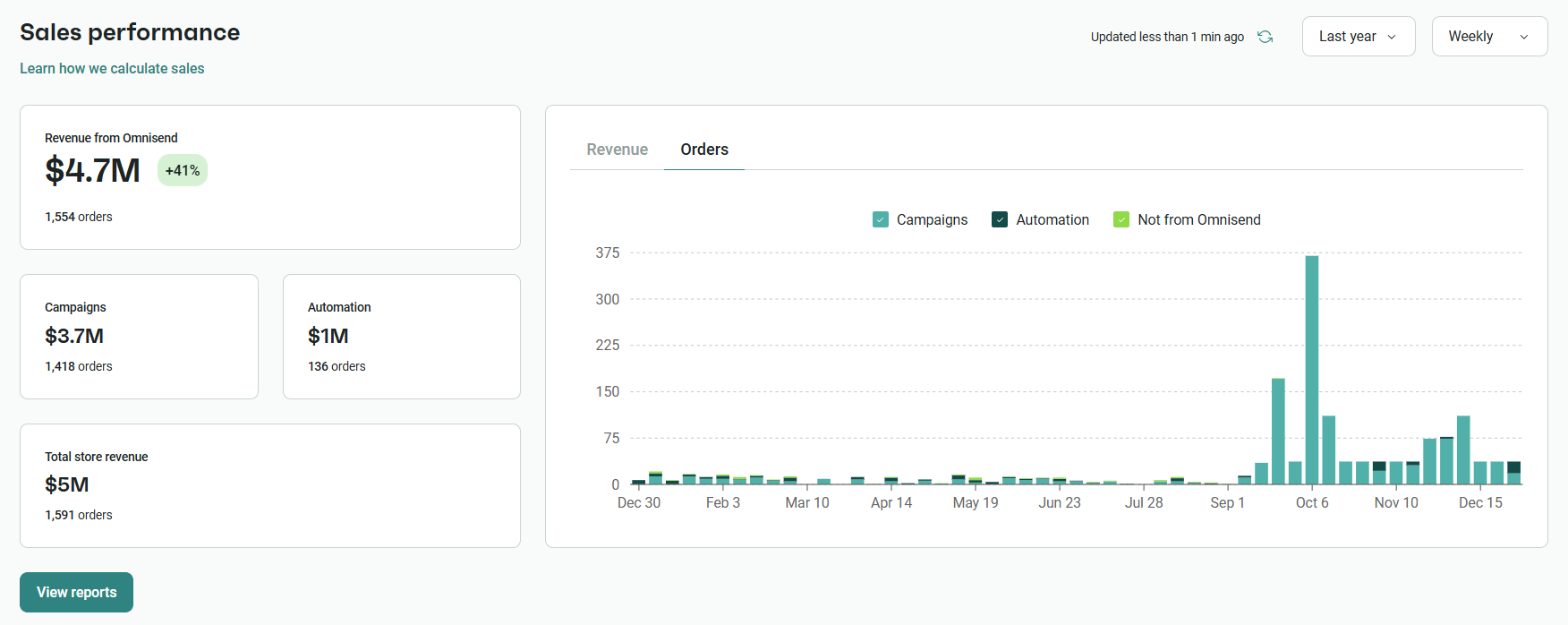
For example, here’s how sales performance for a single campaign is reflected on Omnisend:
Combining email, SMS, and other local channels
Omnisend seamlessly integrates with Shopify, WooCommerce, Wix, Bigcommerce, and other ecommerce platforms. It also offers global SMS marketing, allowing you to reach customers on their phones with timely updates.
- Email to drive reviews: Send a personalized email asking for a Google Business Profile review shortly after a customer visit.
- Email and SMS for flash sales: Pair a detailed morning newsletter with a quick afternoon text message to drive urgency for a weekend sale.
- Coordinated event posts: Send an email invitation and share the same imagery on social media to maximize local attendance.
Common mistakes, benchmarks, and first‑90‑days expectations
It’s completely normal to wonder what happens if things don’t work perfectly right away. As mentioned before, building an engaged local audience takes time, and you should be realistic about what email can achieve in just three months.
However, even modest early wins, like a few extra local bookings per week, compound over time into massive growth. If you ever get stuck setting things up, Omnisend offers award-winning 24/7 customer support for everyone to help you navigate early hurdles.
Typical local business email marketing mistakes
- Buying email lists: This outright destroys your sender reputation and leads to spam complaints. You should focus on growing your email list organically with proper permission.
- Sending only discounts: If all you ever do is try to get your subscribers to buy with no real value in between your promotions, you won’t go too far. Focus on keeping a balance between promotional emails, educational emails, community updates, and more.
- Inconsistent sending: If you go silent for months and then send a promotional email out of the blue, your audience will most likely ignore it. Instead, commit to a realistic schedule and stick to it.
- Ignoring mobile optimization: Most people read their emails on their phones, so you need to optimize your campaigns to display correctly on smaller screens. Use the “Preview” function on your selected email marketing provider before sending out campaigns.
- Having too many links: Don’t try to sell everything all at once. The more options you include, the less likely the user is to click. Take one primary CTA for one campaign and stick to it.
Benchmarks for local email performance
It helps to know what a healthy email list actually looks like. According to HubSpot, here are the typical ranges you should aim for:
- Average open rate: 42.35%
- Average click rate: 2.3%
- Average unsubscribe rate: 0.22%
What to expect in your first 90 days
Month 1
- Set up your tools
- Build an online signup form
- Publish core automated workflows
Month 2
- Launch consistent campaigns
- Send regular newsletters or promotions
- Review your analytics to refine send times
Month 3
- Start segmentation
- Test new campaigns
- Divide your audience based on behavior
Conclusion
Even with new marketing channels appearing constantly, local email marketing remains one of the highest-ROI channels for small businesses. You do not need a massive budget or a dedicated tech team to see a strong return on your investment.
The key is to start with clear goals and build a consistent strategy that uses segmentation and personalization to ensure your messages resonate. Always focus on building your lists ethically and locally to protect your reputation, both online and offline. Once the foundation is set, leverage automation and omnichannel features to save time and improve your overall results.
Take the next step by testing a few campaign ideas from this article over the next 30 days. When you’re ready to put these tactics into practice, choose a thoughtfully designed platform that lets you focus entirely on growing your business.
Quick sign up | No credit card required
FAQs
Yes, it’s highly effective and offers an exceptional return on investment. Local email marketing drives foot traffic, increases local bookings, and builds long-term customer loyalty much better than unpredictable social media algorithms.
First of all, prioritize permission-based signups and don’t buy email lists from third parties. Additionally, you can use QR codes at your physical locations that encourage visitors to sign up, use popups on your website if you have one, and add links to signup forms on your social media accounts.
Goal-driven email marketing strategies are always best. If you want to drive foot traffic to your store, focus on that. If you want to promote a weekend discount, generate a code and send it to recipients. Suppose you want reviews: set up a post-purchase automation that asks for them. The list goes on.
It highly depends on your industry and your audience. A good starting point is one newsletter a week, and then you can try sending an additional one the next week to see how engagement metrics change. From there, make the decision and move on to test the next thing.
Anything above 30% is decent, so that’s the benchmark you can use. However, using your own data and improving your campaigns that way is the best way to go. After all, audiences differ across businesses, even within similar niches, so find what works best for your specific audience.
Segmentation divides your audience by location, behavior, or interests. Instead of sending generic blasts, you can send highly relevant messages, like a city-specific offer or a past-purchase follow-up. These can significantly improve your overall engagement and sales.
Great campaign ideas include launching new restaurant menus, announcing gym fitness challenges, or sending automated service reminders for auto shops. You can also host local events or partner with neighboring businesses to cross-promote to both audiences.
Yes, automation saves small teams hours of work. Setting up a simple welcome series or an SMS reminder ensures you engage customers at the perfect moment, providing a strong return without requiring daily manual effort.