Omnisend AI


 OFFER
OFFER









Prime Day is a great day for consumers — and for ecommerce businesses doing business on Amazon. Most non-Amazon brands either ignore this event entirely or treat it like any other promo day, when in fact, Prime Day can be a significant revenue opportunity.
According to Omnisend’s 2026 Ecommerce Marketing Report, click-to-conversion jumped 53% year-over-year (YoY) as shoppers increasingly buy with a clear purpose. Amazon’s Prime Day bolsters that intent, creating a 48-hour window for consumers to get what they need and for businesses to get more revenue.
But how to approach Prime Day strategically? This guide will cover seven proven strategies to get the most out of this day without wasting resources.
What is Prime Day and why does it matter for non-Amazon brands?
Every year, Amazon announces a members-only sale, usually around July, known as Prime Day. It started off as a loyalty-driven initiative for Prime subscribers, but soon grew into a global shopping event that customers look forward to.
Many ecommerce businesses miss out on the Prime Day opportunity because they don’t sell on Amazon. But here’s the thing — you don’t have to operate on Amazon to benefit from Prime Day. Sure, customers plan their purchases primarily on Amazon, but they also do their own research, compare products, and look for the best prices on other platforms.
Prime Day creates a unique situation where brands can position themselves as alternatives rather than competing with ecommerce businesses on Amazon. You can use the channels you already have to send SMS and email automation messages informing your customers of your own product deals.
7 Prime Day marketing strategies
Now, it’s important to preface that while there are different strategies for adjusting marketing campaigns for Prime Day, they’re not interchangeable. Every strategy is aimed at a different goal, from building urgency to growing order value and converting new customers.
Truthfully, the best Prime Day campaign combines a few strategies, but only if they’re manageable and work together.
1. Build anticipation before Prime Day goes live
Start reaching out to your audience well before Prime Day as part of an anticipation campaign. Usually, these campaigns perform best three to seven days before the main event for two main reasons:
- To inform your audience about the upcoming promotion or deals
- To give your audience another chance to interact and purchase from you
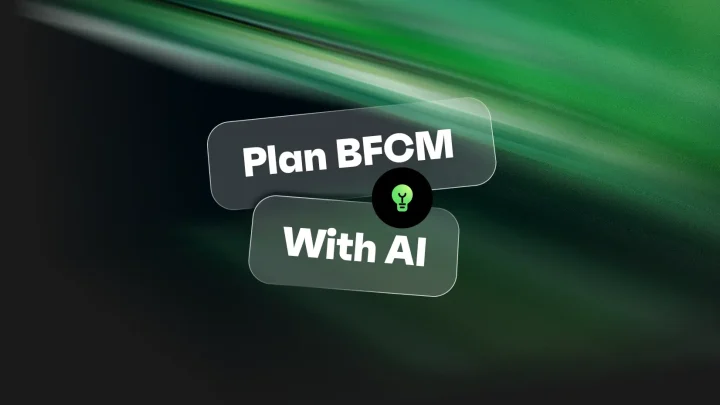
For this strategy, brands can review Amazon’s pre-Prime Day emails, which do a great job of crafting simple, short, but incredibly effective messages to build anticipation. Moreover, these emails don’t typically include discount codes or product recommendations — only a straightforward CTA asking subscribers to mark their calendars.
Practical takeaway: Send the first teaser email five to seven days before your Prime Day campaign, offering a “sneak peek” into what customers can expect.
2. Lead with a time-limited discount
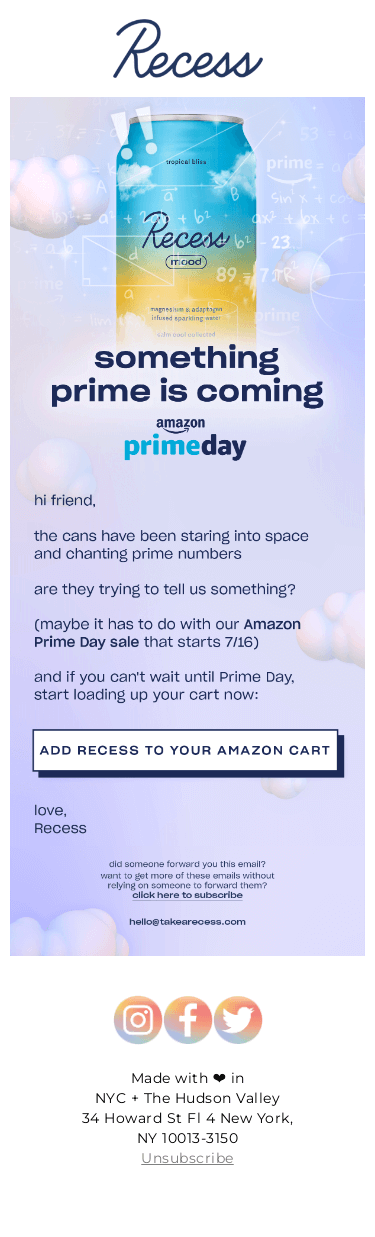
The key focus of the Prime Day event is to create urgency, particularly since the event lasts for only 48 hours. Customers wait for this event, prepared to buy needed items and explore other deals as well.
Messages like “48 hours only” or “deal ends at midnight tonight” shine during these campaigns. The best part is that these messages don’t have to be elaborate, so long as they communicate clearly about the time-sensitive event.
Amazon also often adds an early access layer to anchor an additional layer to their Prime Day emails. Announcing special deals for a limited time only incites customer interest, while early access offers give background for that interest.
Practical takeaway: Balance urgency with early-access messaging for your most loyal customers and send these emails at least one hour before the rest of the Prime Day emails.
3. Use tiered discounts to increase average order value
Flat discounts can bring great results, but they bring the risk of customers purchasing once and moving on. In contrast, tiered discounts keep customers interested for longer by showing all the other deals they can get, thus increasing order value.
A good tiered discount structure can look like:
- 10% off $50 orders.
- 15% off $100 orders.
- 20% off $150 orders.
Just keep in mind that you need to present this information clearly and without overexplaining it, so using visual graphics is often a good idea. Overall, a tiered discount signals to customers that they can get more value, which can deter them from jumping to competitors to buy different products.
Practical takeaway: If your business offers product categories, consider using a tiered discount system to introduce useful bundles to encourage customers to buy other products.

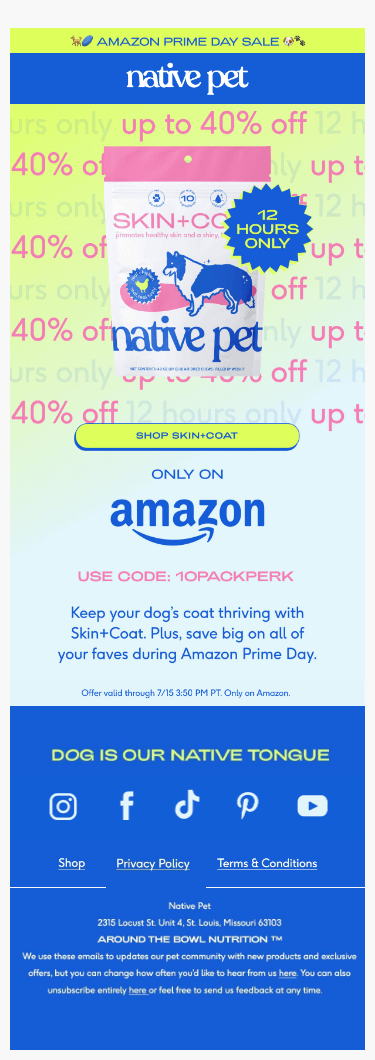
4. Put the product front and center with a clean, single offer
48 hours is a pretty short period to market large product lists, so it’s often best to focus on your bestselling items. Doing so leads to higher conversion rates when customers are in an active buying mode.
However, just naming the product isn’t enough; brands should use high-quality product visuals together with clear discounts. Moreover, it’s better to use benefit-focused messaging, like “was $100, now $55”. This communicates immediate value and the discount better than “45% off”.
You can take this strategy a bit further and use email segmentation to personalize your offers based on the individual purchases and searches of different customers.
Practical takeaway: Segment your emails — use single-offer emails for your highest-converting products, and multi-product format for browse-and-discover flows.
5. Use a countdown timer to make the deadline impossible to ignore
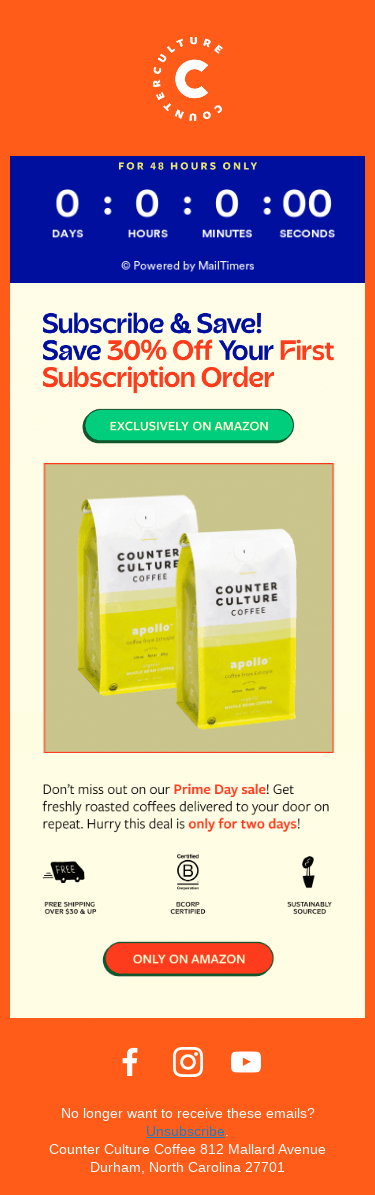
Tailoring your emails around urgency can already attract significant attention, but embedding an actual timer that shows the hours and minutes go down can create an immediate reason to act. Prime Day emails are known to include timers, which eliminate the “I’ll check this out later” reaction.
Some of the most common email designs with a timer include a prominent hero image or product photo, an impactful headline, and a centered CTA beneath it. When positioned correctly, these emails inform customers, emphasize urgency, show a popular product, and guide them towards a purchase.
Omnisend includes a countdown timer natively, so customers can add this element to their emails and set it so that the timer starts once subscribers open the email.
Practical takeaway: Add a real-time countdown timer to your Peak Day emails and position it above the fold, directly under your headline or offer.
6. Lead with brand story, close with the deal
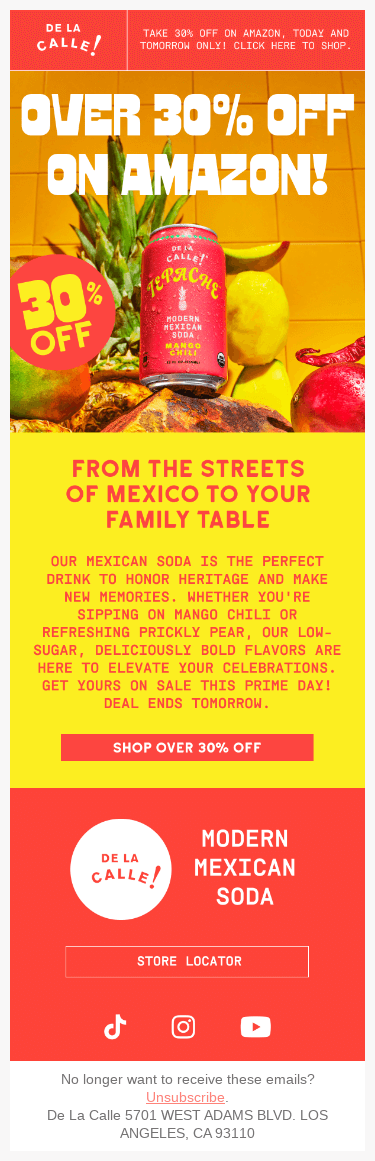
Most Prime Day emails circle around discounts, deals, and promotions, but opening the campaign with a brand story can be a better choice for ecommerce businesses that base their identity on values and a mission.
Start your emails with a brief, but resonant brand narrative, explaining the reason behind creating specific products, who manufactures them, and what the product stands for. Then, transition to an offer while keeping it centered on value.
Practical takeaway: Use a story-led email format for your most loyal customer segment to reinforce an already existing emotional connection.
7. Showcase bestsellers with individual CTAs
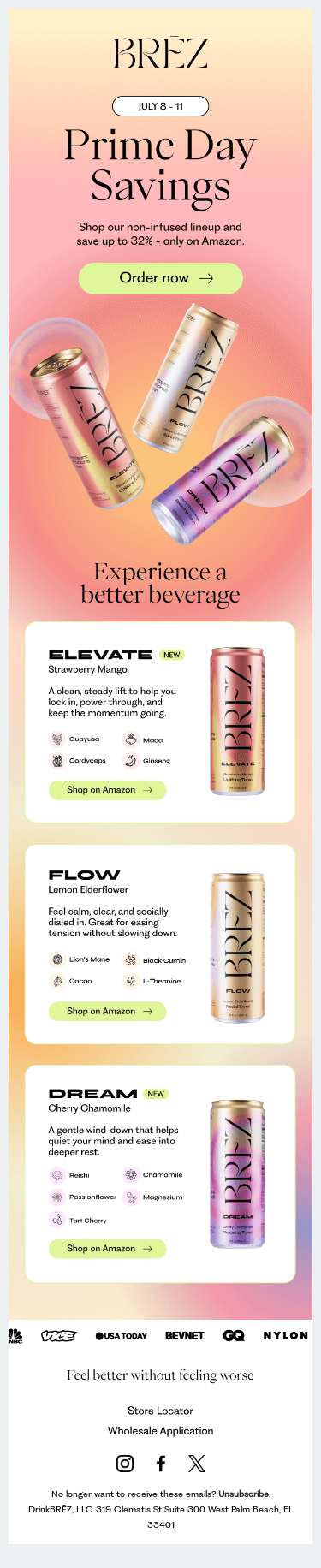
If your goal is to reach as many customers as possible, consider personalizing your emails by leading with different products for different buyers, but avoid overloading. This strategy performs best with carefully curated multi-product emails that display the best-performing products as a Prime Day selection.
With this strategy, it’s best to present every product with a dedicated section showing a clear product image, price, discount, and a CTA button leading directly to buy that particular product. Include up to five product sections following the same structure to make the email easy to scan.
These types of emails typically work great as a second send, either on Prime Day or a follow-up the day after for non-converting customers. Plus, you can pair these emails with abandoned cart emails configured to be sent during the Prime Day event.
Practical takeaway: Send your bestsellers’ emails on the second day of the event to an audience that’s already aware of your campaign and has time to understand what you offer.

Prime Day marketing timeline: what to do and when
Proper planning is key — a couple of strategically sent emails can bring better results than a string of emails without clear direction. Here’s a standard Prime Day marketing timeline that’s often used by Amazon and ecommerce businesses:
Stage 1: Six to eight weeks before Prime Day
- Audit your existing automation flows to make sure welcome series, abandoned cart reminders, and post-purchase sequences are in place and fully optimized to handle Prime Day traffic.
- Use email and SMS marketing to actively grow your email and SMS list, specifically dedicated to attracting customers interested in Prime Day.
- Plan your email well ahead to confirm messaging and supporting visuals.
Stage 2: Three to four weeks before Prime Day
- Launch your pre-Prime Day teaser campaign by sending the first emails to your most loyal customer base to increase awareness.
- Create Prime Day-specific landing pages and signup forms.
Stage 3: One to two weeks before Prime Day
- Send early access announcements to your VIP and loyal subscriber lists.
- Activate list-growth campaigns, like giveaways, referral programs, and spin-to-wins.
- Run A/B testing to finalize subject lines for your emails.
Stage 4: Two to three days before Prime Day
- Send out early access emails to loyal subscribers containing offer details.
- Send SMS announcements to your SMS list.
- Shorten your cart abandonment delay periods to allow recovery emails to be sent faster.
Stage 5: Prime Day
- Send your Prime Day emails in the morning to all of your subscribers.
- Launch SMS alerts throughout the day — at lunch, midday, and evening with limited-time offers.
- Activate push notifications for back-in-stock items and cart abandonment triggers.
- Check open rates regularly to adjust your emails if need be.
Stage 6: Two to three days after Prime Day
- Send post-Prime Day follow-ups to non-converting customers with extended “last chance” offers.
- Cross-sell to new customers who converted during the Prime Day event with post-purchase automation.
- Make sure welcome email flows run smoothly for all new subscribers to turn event-driven traffic into lasting customers.
Start building your Prime Day marketing program early
The earlier you start, the better results you can expect. The brands that benefit most from the Prime Day event aren’t the ones with the biggest budgets or reach, but those who plan ahead and polish their email automations to attract new subscribers, convert them, and turn them into loyal customers.
Omnisend covers every channel and strategy presented in this article, making it convenient for ecommerce businesses to plan email campaigns, SMS, push notifications, automation, email segmentation, and A/B testing from a single platform.
Quick sign up | No credit card required
Frequently asked questions
What is Prime Day marketing?
Prime Day marketing focuses on using a specific set of strategies and tactics that ecommerce businesses use to encourage customers to buy with Prime. Typical examples of marketing aimed at this event include promotional emails, SMS campaigns, time-limited discounts, and highly targeted advertising campaigns.
Do non-Amazon brands benefit from Prime Day?
Absolutely. In fact, if planned well, ecommerce businesses that don’t operate on Amazon can actually benefit more from the Prime Day event. While this event is great for consumers, for businesses, this means not just attracting customers but also spending additional resources to stand out from multiple competitors selling the same or similar products on Amazon.
When should I start my Prime Day marketing campaign?
The best time to start preparing for your Prime Day marketing campaign is around six to eight weeks before the actual event. This time window gives you enough time to run a full audit on all email automations, grow your email and SMS lists, and plan your offer and teaser campaigns.
What are the best Prime Day email strategies?
The best Prime Day strategies combine several actions, namely combining urgency and exclusivity with personalization aimed at different customers. In practice, this could look like sending a teaser email first, following it up with an early access offer, a launch day email, a non-opener re-send, and a post-event follow-up.