
 Omnisend AI


 OFFER
OFFER







Drive sales on autopilot with ecommerce-focused features
See FeaturesKey takeaways 
Embrace event-based emails that tap into shared moments, as they can outperform traditional campaigns by leveraging existing attention and emotional states.
Keep your messaging simple and human-like, avoiding heavy marketing language to foster authenticity and trust with your audience.
Use light humor or relatable observations to engage recipients, ensuring the product link feels like a natural extension of the conversation.
Measure success through conversions and revenue rather than just open rates, as this approach provides a clearer picture of your email campaign's effectiveness.
Reveal key takeaways
If you work in ecommerce email, you already know the routine.
You plan the “proper” campaigns. You write the perfect copy. You build the perfect layout. You add the product blocks, the social proof, the FAQs, the offer, the urgency… all the good stuff.
And then… it doesn’t really move.
Meanwhile, the email that’s basically a joke, a weather alert, or a “hey, good luck today” message ends up generating sales.
That happened to us with a client in Chile that sells smart locks and home automation products (digital locks, domotics, that world). And it didn’t happen once. It turned into a pattern we could actually rely on.
This is the story, the numbers, and the playbook we built from it.
We were doing “normal” ecommerce email marketing, and it wasn’t meeting our expectations
At the time, we were running email marketing for a growing brand. They weren’t tiny, but they weren’t a giant either. Which mattered, because it meant we could test things without a six-week approval process.
We were sending the usual mix:
- Product education emails (features, benefits, objections)
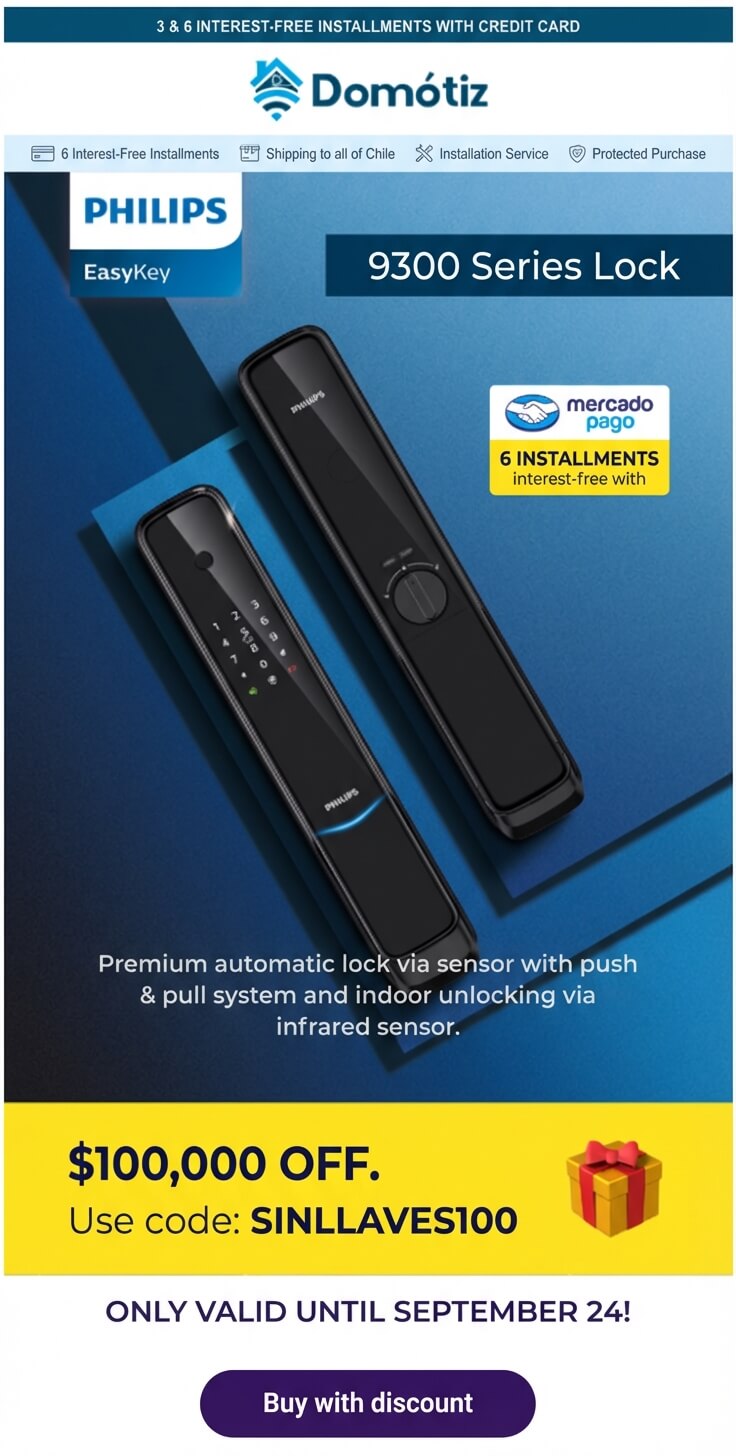
- Promotional emails (discounts, bundles, urgency)
- “Value” emails (tips, how-to, use cases)
And honestly, the results were inconsistent.
Sometimes a campaign worked. Most of the time, it was “fine.” Not terrible, not amazing. The kind of performance that makes you keep tweaking, rewriting, redesigning… and still feeling like you’re guessing.
At the same time, inbox behavior has been getting harder to read and harder to win.
So we needed something that didn’t depend on fancy design, or “perfect” copy, or even perfect tracking.
Then the client had an idea.
The first “event email” was basically a weather warning
Chile was going into an election day. In many places, people vote in person, and you end up outside, waiting in line, dealing with whatever the weather decides.
It also wasn’t typical rainy season… and suddenly the forecast showed rain.
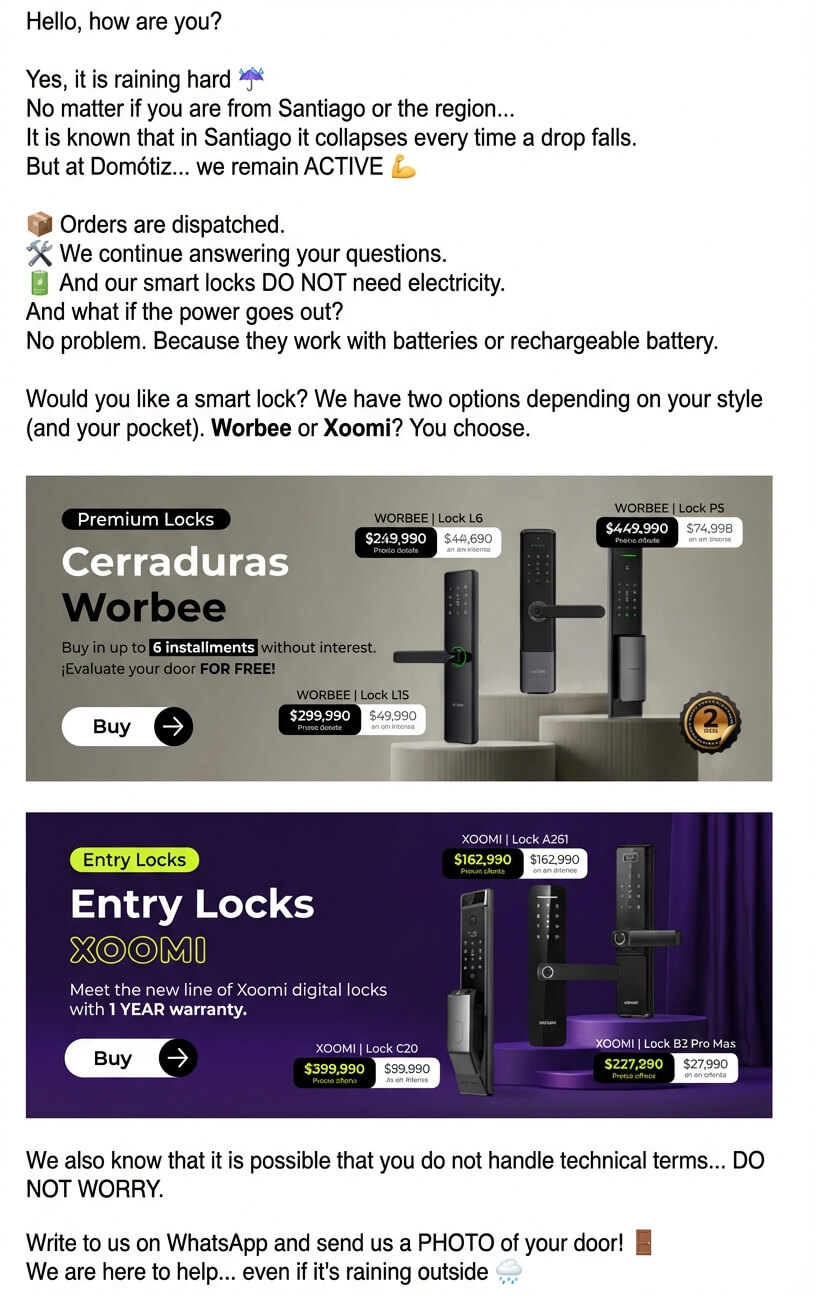
The client said something like: “What if we just email people to tell them it’s going to rain?”
Without a product pitch, a big offer, long explanations, or even a design.
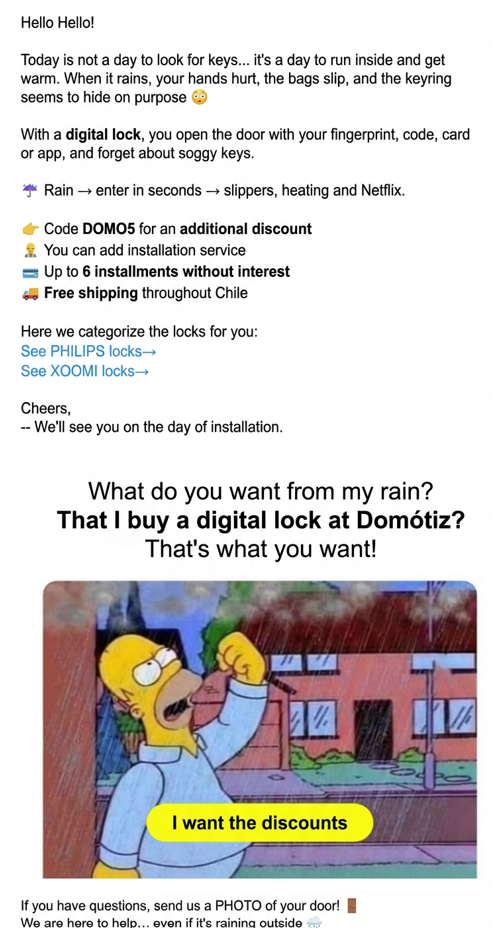
Just a simple heads-up, with two of the same images we always use with a link to the categories (because, yes, it’s ecommerce, we weren’t selling hard, but we still linked to the product).
We sent it.
And it sold.
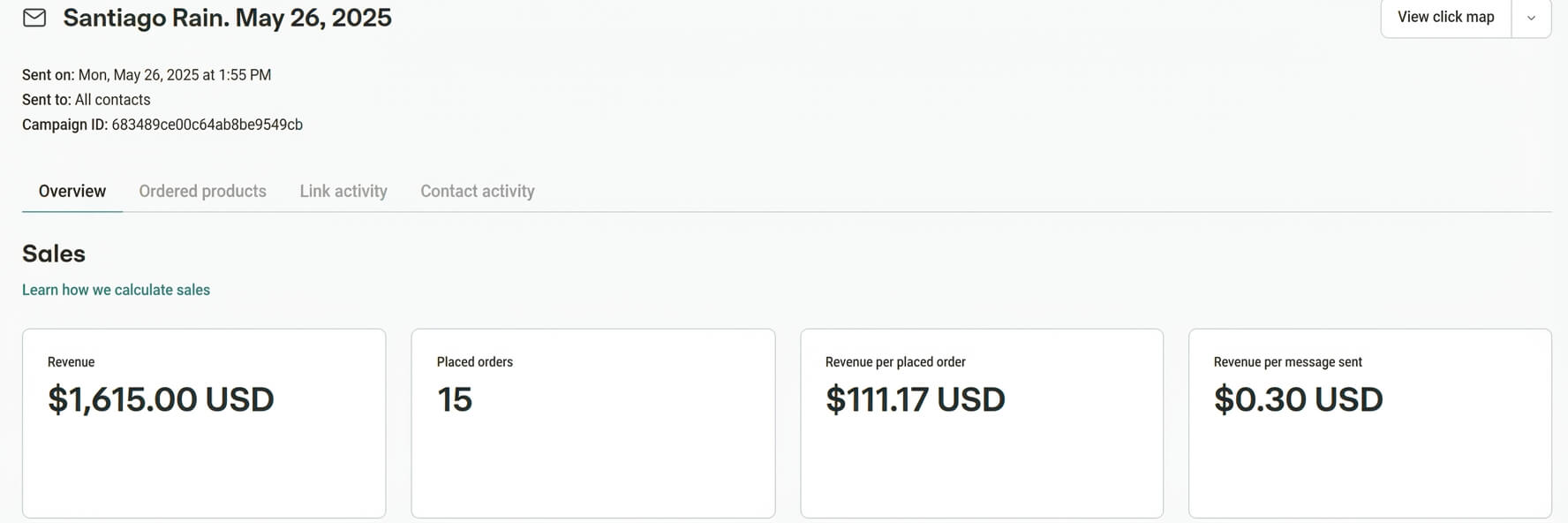
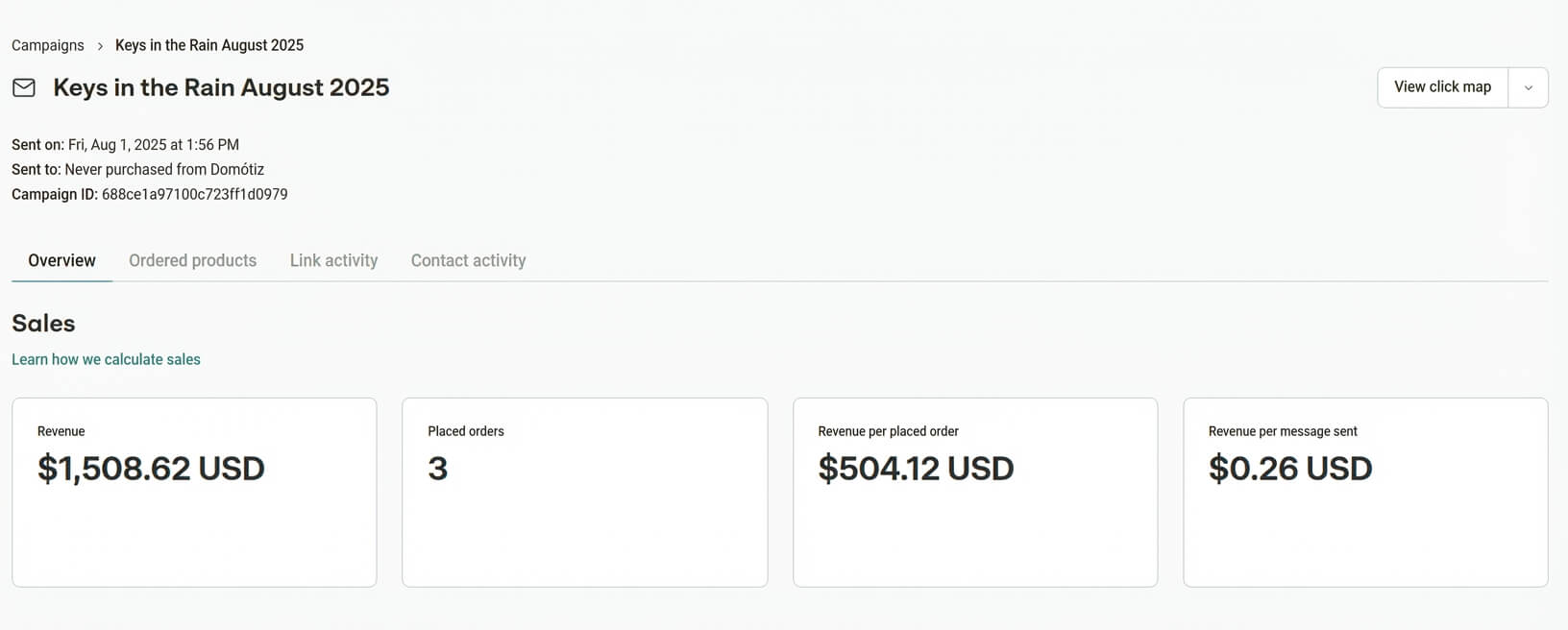
Not the biggest revenue email ever. But for something that was basically “FYI, it’s raining,” it was shockingly good.
That’s the moment where we stopped saying “that’s a weird idea” and started saying “okay, let’s test it.”
It became a repeatable format
After the first one worked, we started using the same concept whenever Chile had a “shared moment” where people were:
- already paying attention
- already feeling something (stress, excitement, annoyance, hype)
- and likely to talk about it the next day
So we did it again and again with:
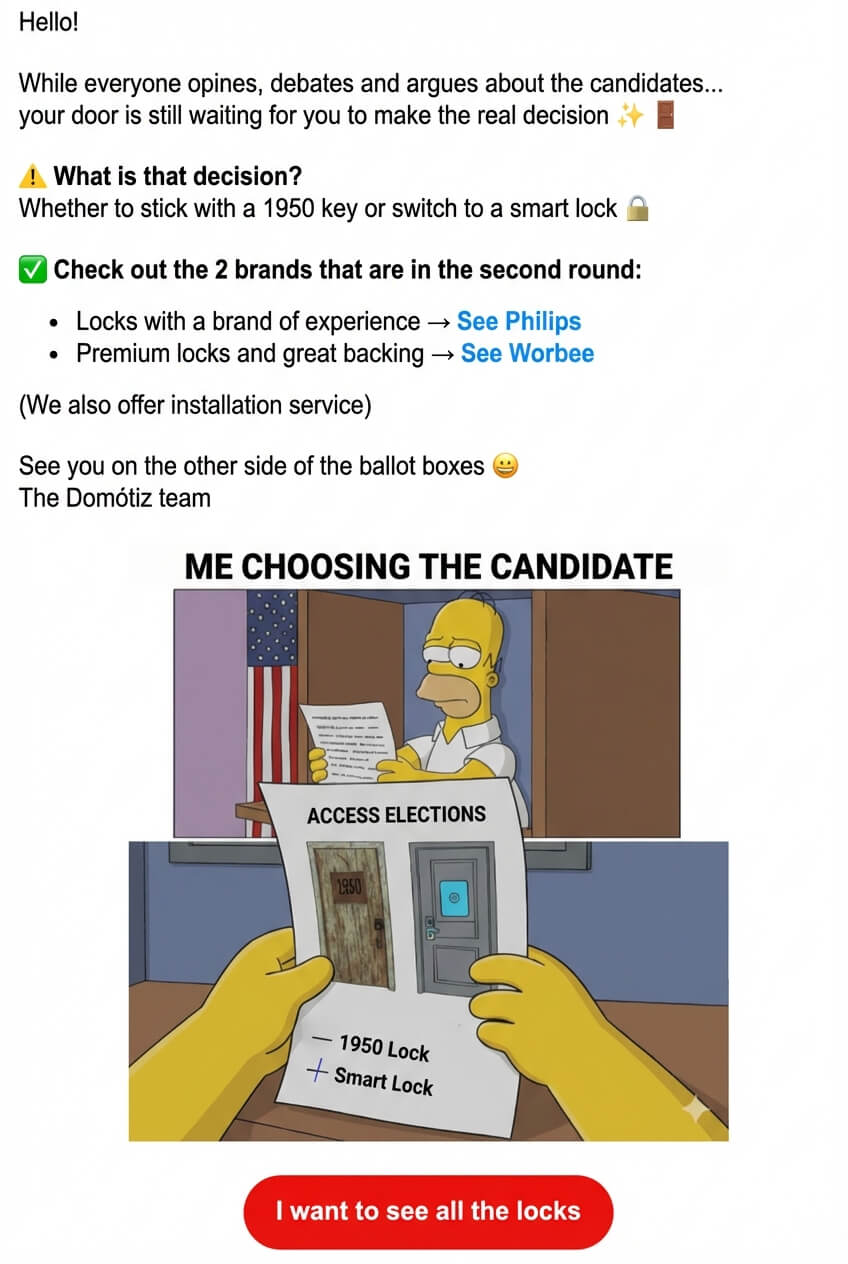
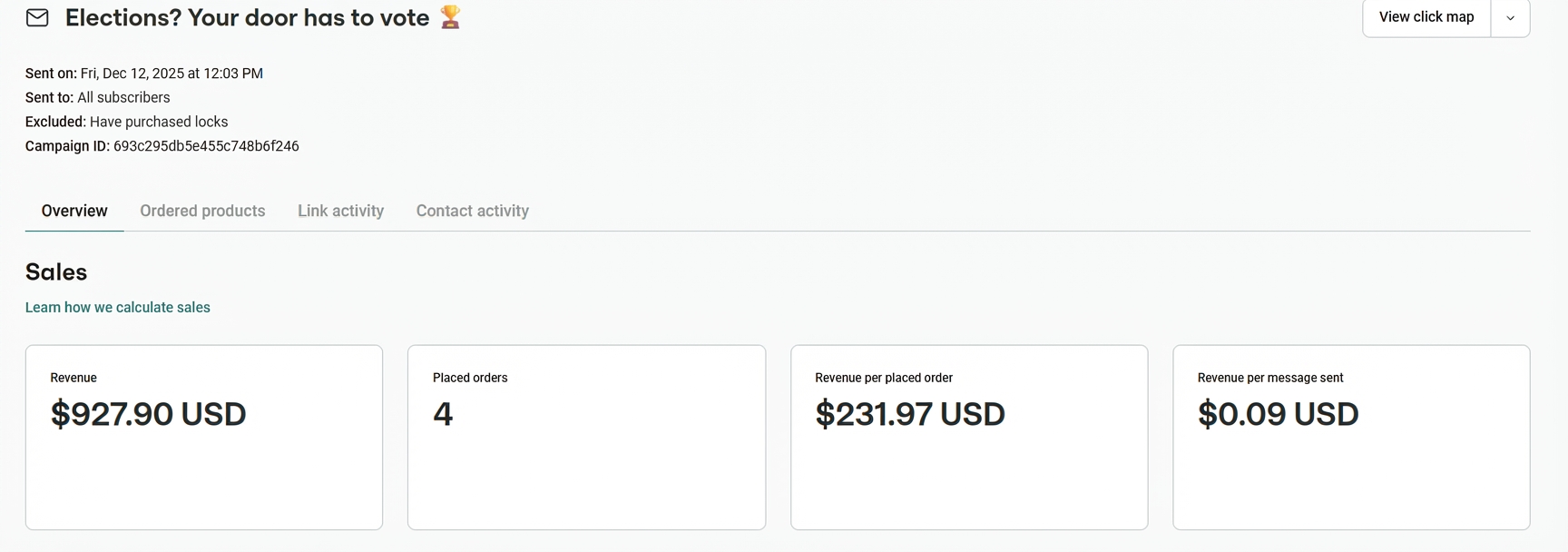
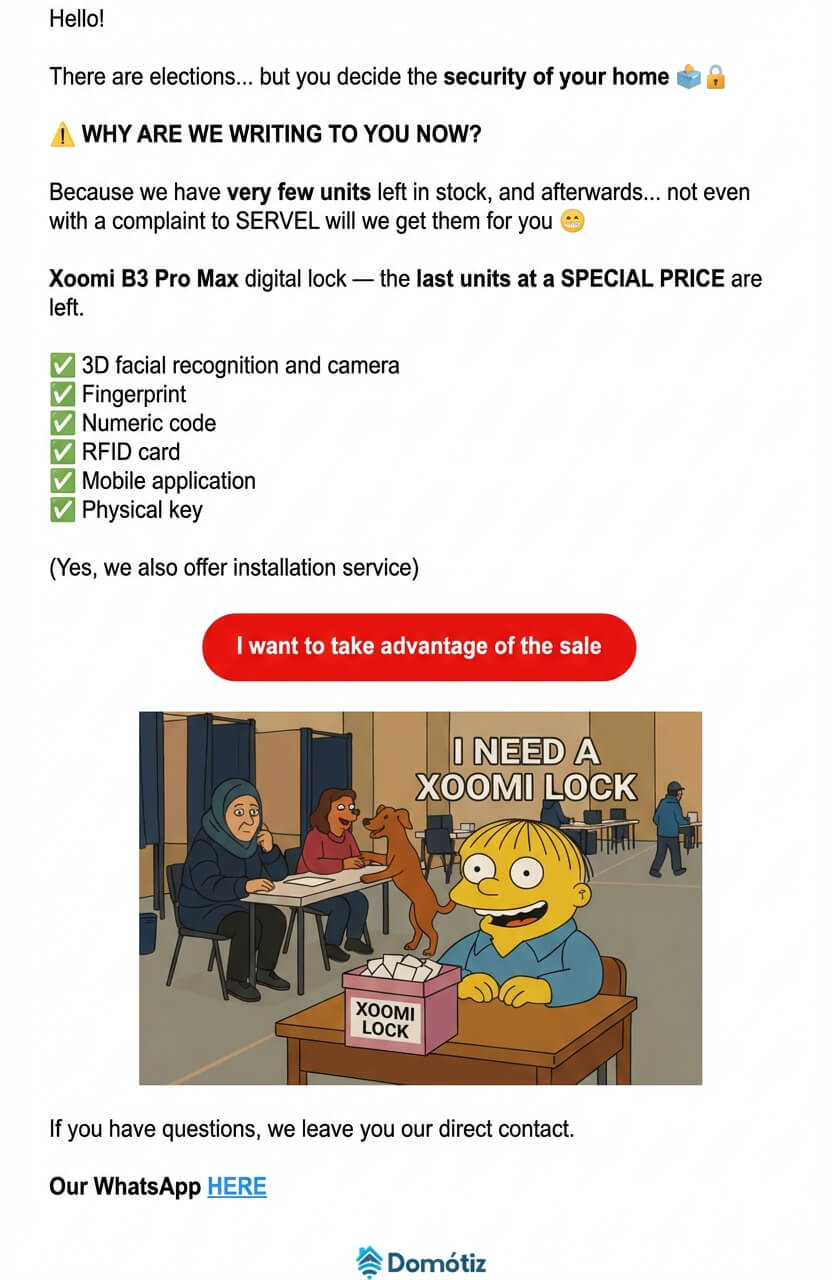
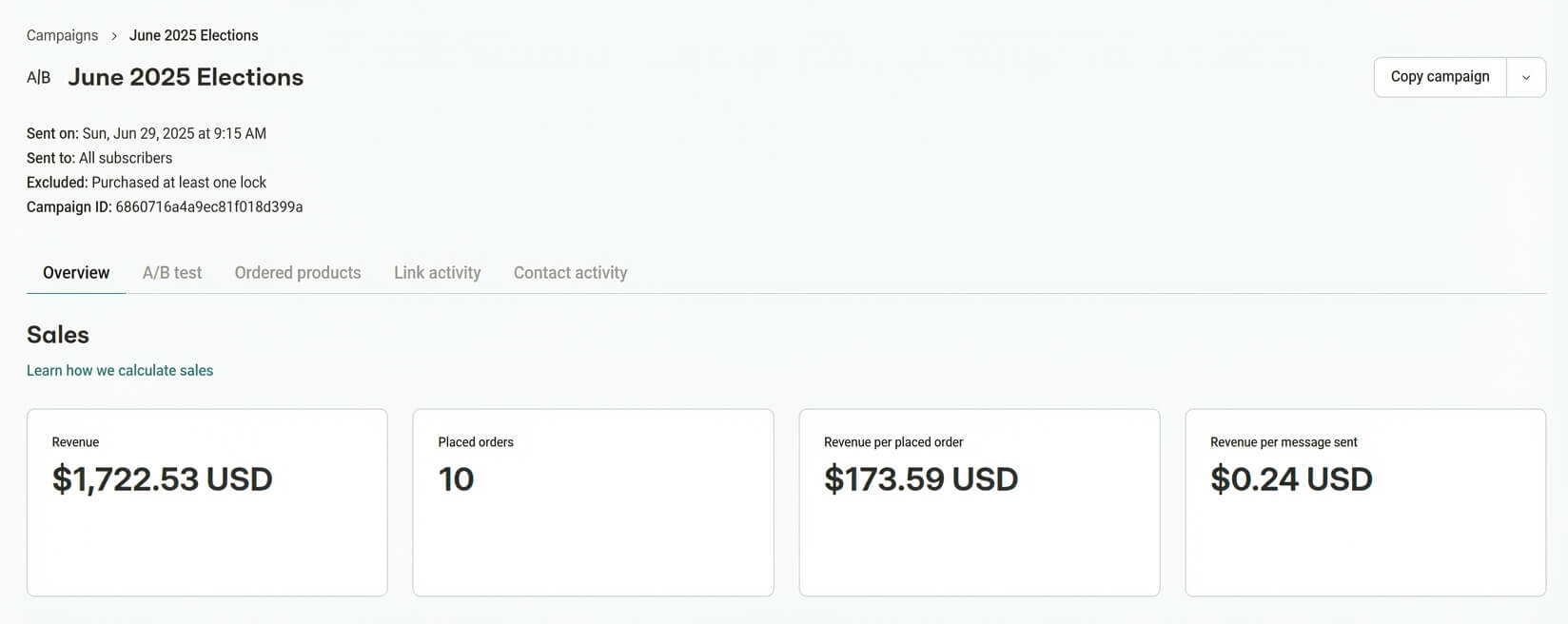
- Elections (multiple times)
- Rain days (multiple times)
- Sunny “it’s going to be hot” days
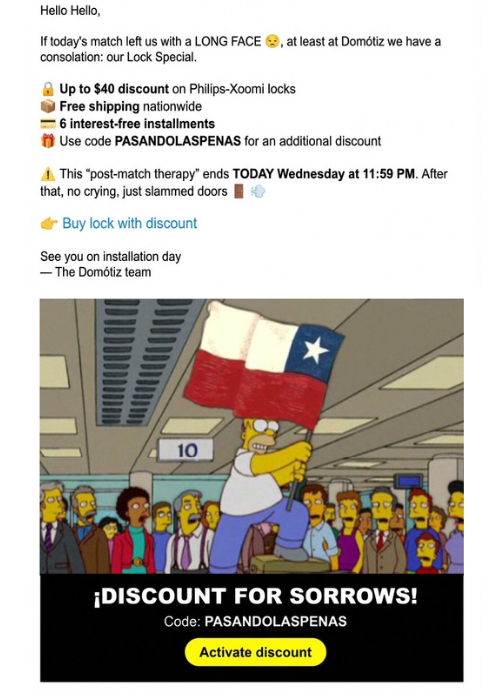
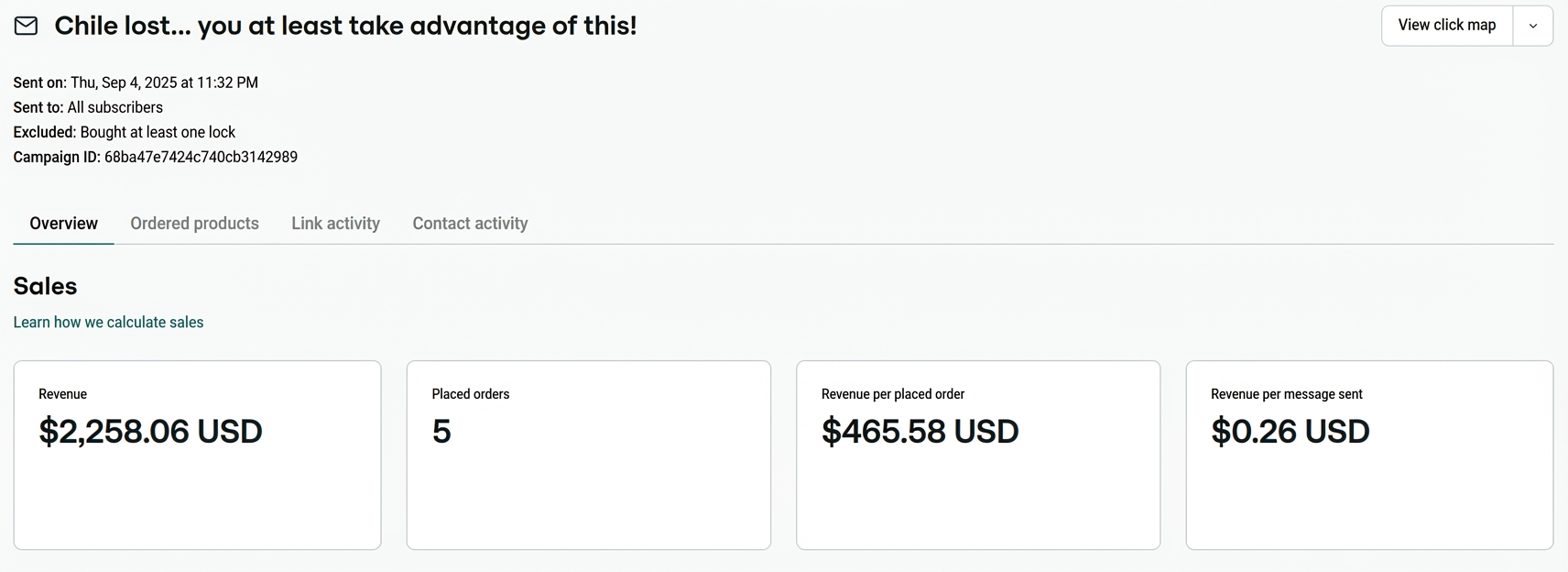
- Football matches (including painful losses)
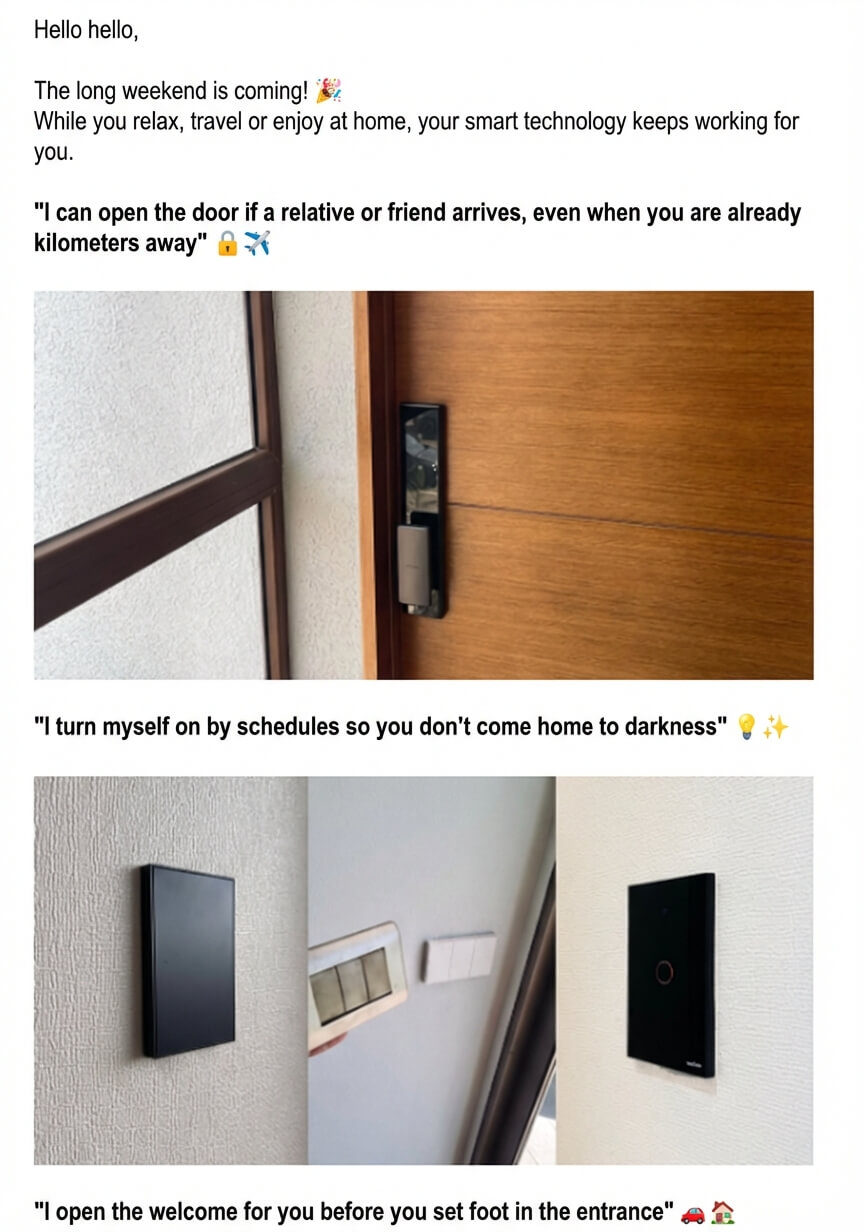
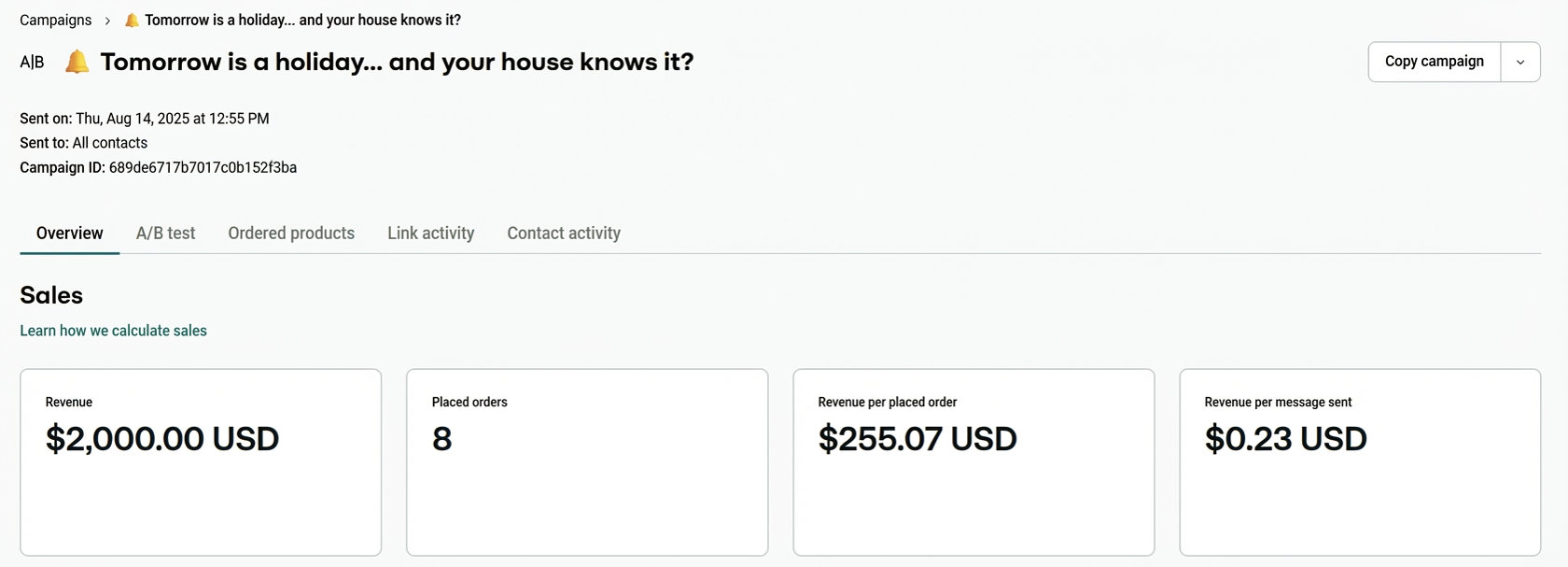
- Long weekends/holidays
Sometimes the angle was “helpful.” Sometimes it was “funny.” Sometimes it was basically a meme.
But the rule was consistent: the email had to feel like a human wrote it for that day, not like a brand pushing a product.
This is important: research on “real-time” marketing often shows that context-based messages don’t automatically outperform — execution matters a lot. Planned real-time messages can help engagement, but improvised ones can backfire when they’re unclear or feel forced.
So we didn’t treat this like “post something fast.” We treated it like a format we could plan and improve.
These emails weren’t the top sellers, but they always sold
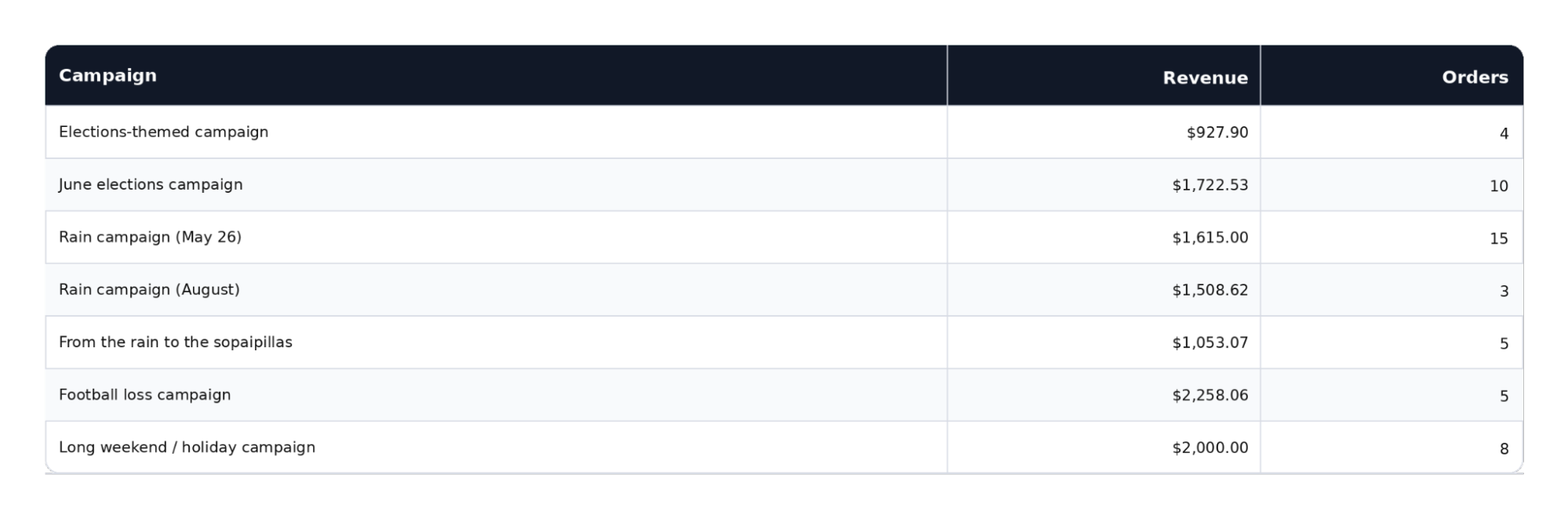
Here’s what we saw across this “event-based” style of campaigns:
They were rarely the #1 revenue email of the month.
But they were consistently profitable, which is the part that surprised us.
Even when the email was mostly value or humor, it would still generate real orders and real revenue.
In contrast, we’d sometimes send more “classic ecommerce” campaigns — heavily produced, product-heavy, polished copy, strong promo framing — and those would underperform compared to these simpler sends.
That’s what made us stop and ask the real question:
If the commercial emails had more effort and more selling power on paper… why were the human, context-first emails still winning so often?
Why this worked
We think three things were happening at the same time.
1) We were borrowing attention people already had
On election day, people are already thinking about election day.
On a rain day, people are already annoyed about rain day.
After a match, people are already emotional about the match.
We weren’t creating demand from zero, but rather stepped into existing attention.
2) It didn’t feel like a brand pretending to be a person
These emails were just… honest.
That matters more now than before. Trust and authenticity are becoming a bigger variable in how people respond to brands.
3) The CTA was secondary, which lowered resistance
People didn’t open thinking “I’m about to get sold.”
They opened thinking, “What’s this about today?”
Then at the bottom: “By the way, if you want to upgrade your door… here you go.”
Low pressure sells more than high pressure more often than marketers want to admit.
The playbook: how we now build “event-based” email campaigns
If you want to replicate this without turning into a cringe “real-time marketing” account, here’s what we’d do.
Pick moments that are shared and predictable
Examples that usually work:
- Weather alerts (rain, heat, storms)
- Elections
- Big sports matches
- National holidays / long weekends
- Major cultural events in your market
If the moment is only relevant to a niche, segment hard. Don’t blast everyone.
Write it like a message, not like a campaign
We keep it simple:
- one idea
- one story or observation
- one small bridge to the product
- one clear CTA
No overbuilding. No “marketing voice.”
If you want the exact framework we use (with templates and examples), here’s our full guide to event-based email campaigns.
Make the product link feel natural
A good bridge is basically:
- “Since we’re already talking about today’s problem…”
- “If you’re going outside / traveling / leaving home…”
- “If you’re going to be in the rain / carrying bags / dealing with keys…”
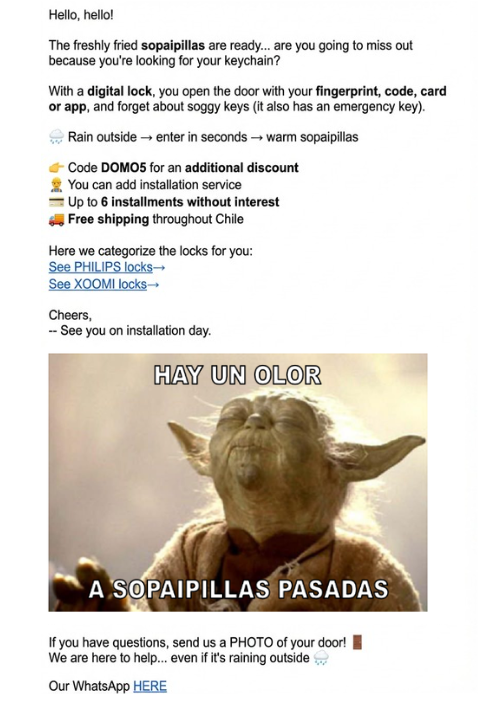
This is exactly what the brand did with the “keys in the rain” angle.
Use light humor, not forced humor
A meme can work. But it has to match your audience.
If your brand tone is normally serious, don’t suddenly become a comedian. Start small.
Measure conversion, not just opens
Because of inbox categorization and measurement changes, we don’t treat opens like the truth anymore.
We look at:
- clicks
- purchases
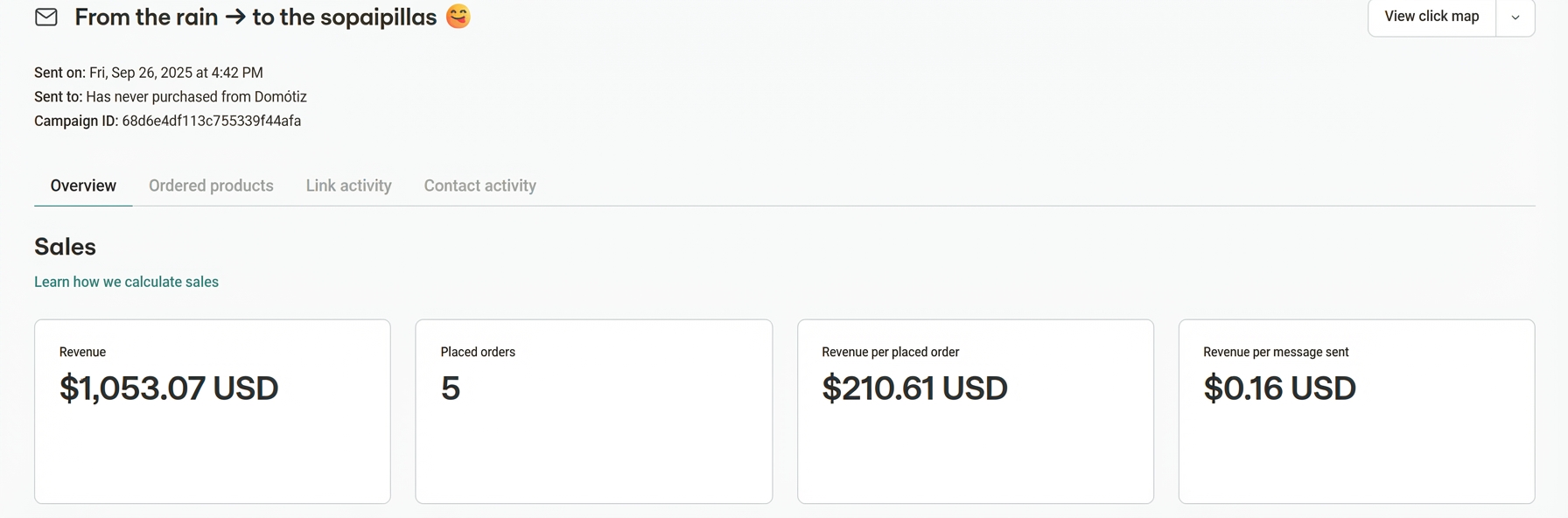
- revenue per message
- replies (if you use them)
Keep it inside a bigger strategy
These campaigns work best when the list already knows you. If email isn’t a consistent channel for the brand yet, these “moment emails” won’t have the same leverage—because there’s no relationship built up in the inbox. That’s exactly why we see email as one of the most undervalued growth assets for ecommerce brands, especially early on.
If you only email during “moments,” you’ll get attention, but you won’t build a relationship. We still keep a normal rhythm of:
- welcome + nurture automations
- abandon flows
- promos when needed
- education when it makes sense
(And yes, we run this inside automations too when the timing makes sense—because email is still one of the best channels for first-party, behavior-based messaging. )
What we learned
The biggest takeaway wasn’t “weather emails are magic.”
It was this:
We shouldn’t reject ideas just because they sound weird. We should reject ideas only after the data rejects them.
Not every brand can test everything. Some categories have stricter rules. Some audiences hate humor. Some markets don’t care about sports.
But if you’re working with an ecommerce brand that has room to experiment, event-based emails are one of the lowest-effort, highest-upside tests we’ve found.
They won’t replace your promotional calendar.
They’ll make your brand feel more human inside the inbox.
And in our case, they kept selling — every single time.
Author bio

Sebastian Caniulao is an ecommerce performance marketer focused on turning email into a consistent revenue channel through testing, segmentation, and lifecycle automation. He also builds custom ecommerce apps (especially for Shopify) to remove conversion friction and unlock new sales opportunities for growing brands.

TABLE OF CONTENTS
TABLE OF CONTENTS


Subscribe and don’t miss any updates!
No fluff, no spam, no corporate filler. Just a friendly letter, twice a month.