Omnisend AI


 OFFER
OFFER











Klaviyo is undoubtedly an industry giant. Its premium data tracking, predictive analytics, and segmentation capabilities make it an excellent choice for massive brands with dedicated data science resources.
And yet, some smaller ecommerce brands still switch. The question isn’t whether Klaviyo is flawed, but whether it’s the right fit. A platform built for enterprise data teams can be the wrong fit for a lean five-person marketing team.
With 62% of ecommerce brands negatively impacted by reduced consumer spending in 2026, companies are paying closer attention to their budgets. As a result, they may cut subscriptions that aren’t being used to their full potential.
We’ve asked businesses to share real insights into why they made a switch and how it affected them. Keep on reading if you’re interested in hearing what they had to say.
How we gathered these merchant insights
To understand why brands leave, we went to the people who did: ecommerce store owners who migrated from Klaviyo to Omnisend.
Most of the businesses we talked to run fast-growing Shopify or WooCommerce stores with small marketing teams. These are the people who feel platform costs and complexity the most.
Three themes came up again and again: pricing tied to list size, feature complexity that outpaced the team, and support that couldn’t keep up.
The financial strain of active-profile pricing models
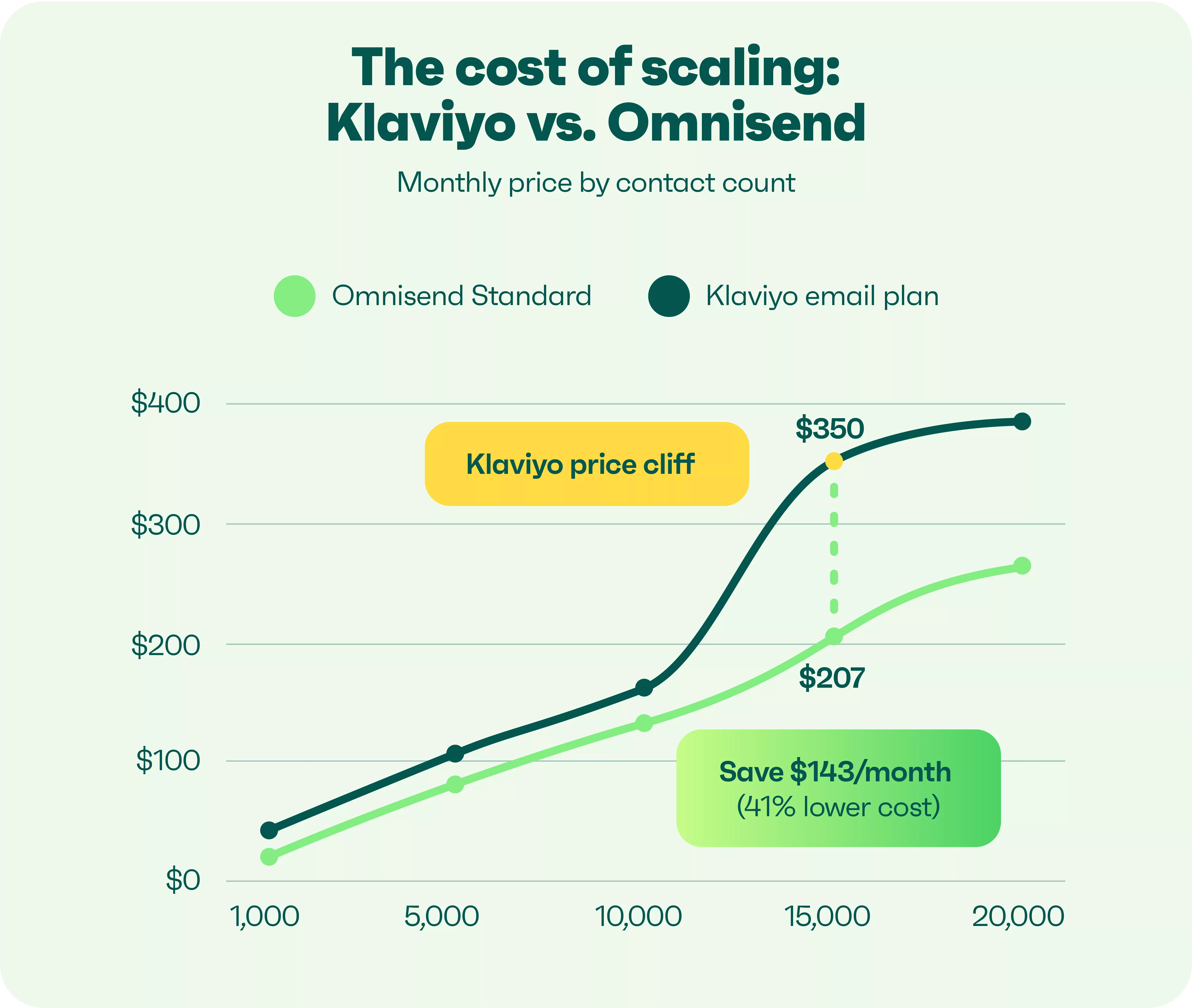
In February 2025, Klaviyo started charging users based on every contactable “active profile” in their database, regardless of whether those contacts were emailed, engaged, or long dormant. This meant brands paid for list size rather than the value they got from it.
To avoid overpaying, companies would have to spend hours pruning contacts and deleting the very list they worked to build.
As a result, pricing was often the deciding factor that prompted ecommerce businesses to look for Klaviyo alternatives:
“The primary factor was pricing, and we weren’t using many of the features there. We needed a simpler, less cluttered tool.”
— Viktorija Dvariškytė, Digital Marketing Manager, CoinGate Gift Cards
For agencies, the increased cost was impossible to justify to their clients, which prompted the switch:
“Before, they paid $600–1000 to Klaviyo for like two automations — welcome and a happy birthday flow. It became hard to justify such prices.”
— Alvaro Diaz-Rato, Founder, STRAT agency
Once brands migrated to Omnisend, the model no longer penalized list growth, and brands had more budget left over.
“What we were paying just for the email solution over at Klaviyo is nearly the same as what we’re paying for Omnisend with SMS.”
— Dan Judd, Head of Digital, Vape Superstore
“We moved from Klaviyo because the tier they were pushing us to was double. And even with double the emails we are sending in Omnisend, we are not paying half of that bill.”
— Veronica Jeans, Founder, TopFlyte Agency
Heavy-duty features versus daily execution speed
It’s true that Klaviyo’s machine-learning-powered predictive analytics and segmentation are powerful. But they’re built for teams with the resources to operate them.
Smaller marketing teams often don’t use these features fully, yet they end up paying an enterprise price. Even worse, the complexity can slow down the day-to-day work of actually shipping campaigns.
The businesses we talked to point out that quicker implementation and clarity motivated them to make the switch:
“Omnisend has a clear data pipeline and a clean UI, which makes it easy to inspect what’s happening at a glance. It’s logical to operate, and it doesn’t force you into endless micro-decisions just to build workflows that work.”
— Joy S., Growth Manager, FLEXTAIL
Others noted that Omnisend offered them all the core features needed to release successful campaigns without hold-ups and complexity:
“It allows us to quickly set up campaigns and automations, segment our audience, and optimize performance without too much complexity.”
— Viktorija Dvariškytė, Digital Marketing Manager, CoinGate Gift Cards
“I did two weeks of campaigns in Klaviyo, and I really don’t know how anybody does it unless they are experienced email creators or an agency.”
— Veronica Jeans, Founder, TopFlyte Agency
When slow customer support impacts real-time revenue
A broken automation or a drop in deliverability during a peak sales period like Black Friday and Cyber Monday can hurt revenue, especially with tiered support. Yet many businesses still overlook the importance of customer support and focus on features instead.
Klaviyo limits free plan users to only 60 days of email support, while paid plans offer varying response times from 1 hour to 48 hours. The businesses we spoke to pointed to inconsistent human support as a turning point, especially when issues needed immediate attention.
“The support we’re receiving far outweighed what we’d received from Klaviyo in the three years we’d been using them.“
— Dan Judd, Head of Digital, Vape Superstore
“What surprised us the most was how reliable, absolutely reliable Omnisend is. We did not miss a beat once we joined. The team had support throughout — taking away that we have to wait 24 hours sometimes for a response. We’re now looking at instant, real-time responses and assistance.”
— Jocelyn A., COO at Ecom2Win
What’s more, other brands emphasized that getting guidance from Account Experts really helped them with their workflows:
“The cost and lack of support were the biggest issues. Sometimes you just want to bounce ideas around or get help building flows. I found my dedicated Account Expert, Mangirdas, from the Omnisend team, really helpful.”
— Jake Hughes, Co-founder, Vagari Bags
The four-step self-audit: Is your marketing platform still a true fit?
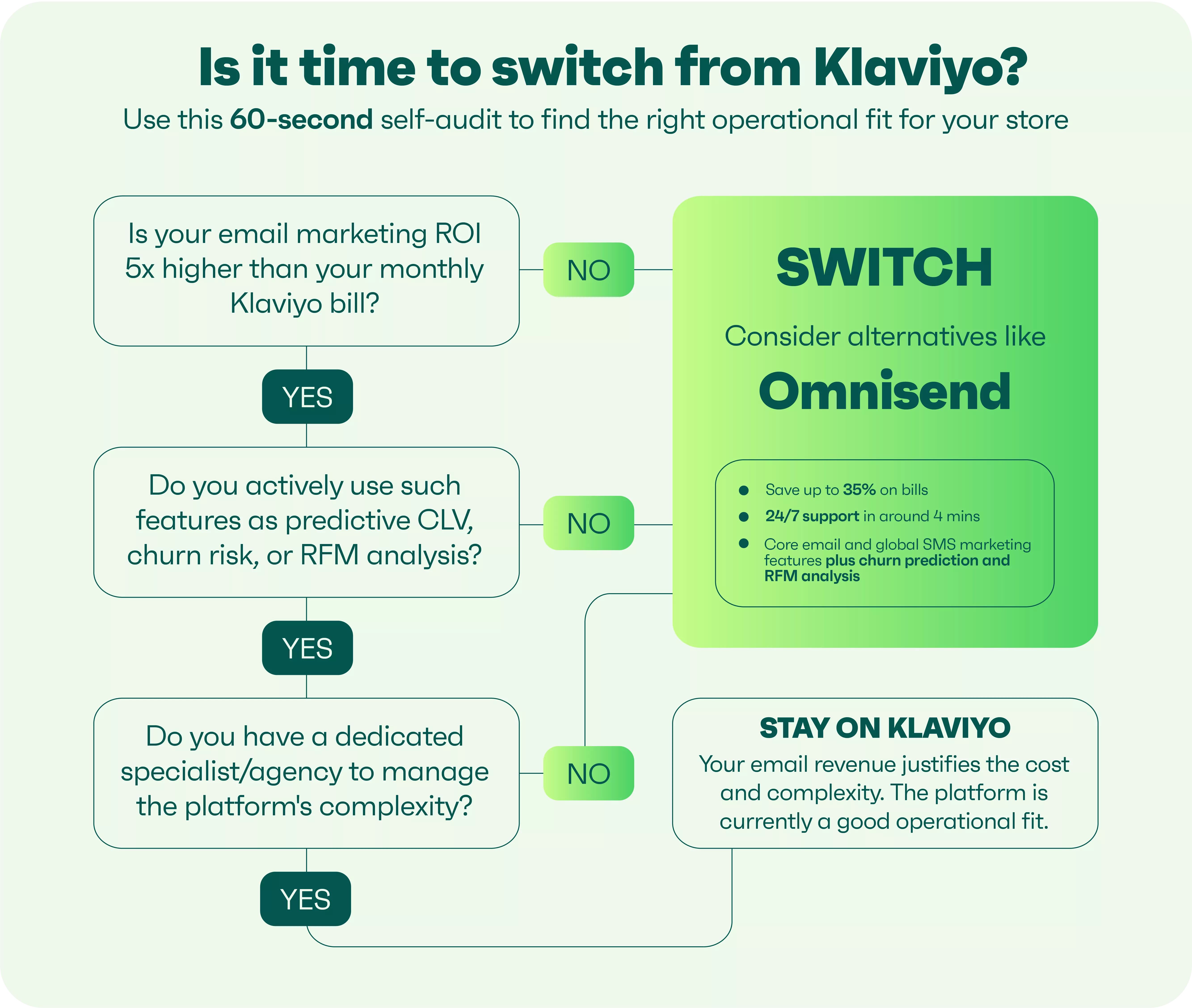
To understand whether it’s really time to make the switch, ask yourself four questions:
- ROI: Is your email marketing generating at least a 5x return on your monthly platform cost?
- Pricing model: Are you paying a premium for a large, unengaged contact list because of active-profile billing rules?
- Features: Do you need the complicated add-ons in your plan, or would core features do the job just as well?
- Execution: Is your team spending hours setting up basic flows or relying on an outside agency to make simple changes?
These will help you assess your current needs and challenges, and if your current platform truly meets them.
Transitioning without friction: How to migrate safely
The dread of deliverability drops, lost historical tags, or broken flows mid-transition can make businesses hesitate before making a switch. Even if staying with their current provider is costing them money.
It’s understandable; businesses need to ensure they follow best migration practices, and these can be challenging:
- Exporting data: gather contact, engagement, and consent data. It’s also useful to save workflow content and email templates for later.
- Importing data and setting up: import contacts and verify your sender domain (SPF/DKIM/DMARC). You should also confirm your toll-free number for SMS.
- Rebuild core flows: recreate your flows, forms, and campaign templates. Don’t forget segmentation and compliance settings.
- Warming up: make sure to warm up your email domain by gradually increasing your send volume and monitor deliverability.
Knowing how complex and time-consuming the process is, Omnisend offers free migration services to help companies switch in 5 business days. Most importantly, Omnisend’s team rebuilds the setup for them. That includes workflows, segments, forms, contacts, templates, and an automated warm-up for ex-Klaviyo.
Those who migrated were repeatedly surprised by how smooth it was:
“The migration from Klaviyo was a breeze, since there was already an app for that.”
— Alvaro Diaz-Rato, Founder, STRAT agency
Jocelyn A., COO at Ecom2Win agency, shared a story about their clients’ concerns that switching from Klaviyo to Omnisend during peak season would disrupt revenue due to deliverability and automation downtime.
In the end, those fears didn’t materialize:
“Revenue performance was comparable to the previous year, which validated that the migration had not negatively impacted performance. It’s a huge win considering switching platforms in such a short space of time before Black Friday. But it gave us peace of mind just knowing that our approach and the migration all worked out.”
Choosing a path that aligns with your growth
As your business matures, the decision to change your email marketing platform is a natural next step. As you start to prioritize cost efficiency and speed of execution, you may want to audit your current stack to ensure it still delivers what you need.
If your self-audit indicates it’s time to switch, find a platform that balances power and simplicity. For an in-depth comparison of pricing, features, and ease of migration among the leading providers, check out our detailed guide to the best Klaviyo alternatives.