Omnisend AI


 OFFER
OFFER









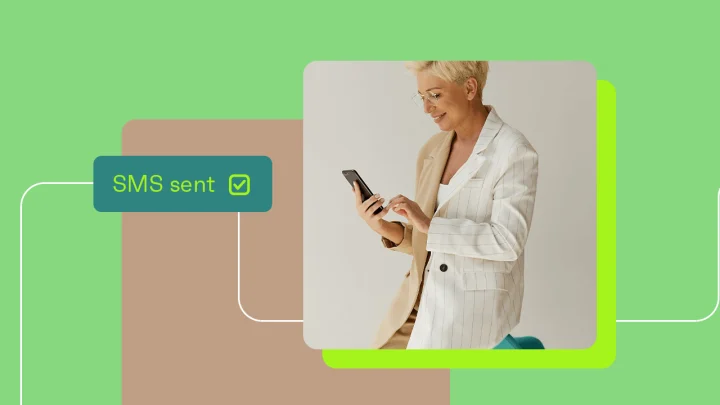
Branded SMS messages from recognizable sources and commercial messages from unknown numbers are more similar than you’d think. The only difference is that branded SMS messages take it a step further and provide more background, increasing recipient trust and open rates.
For businesses trying to connect with their audience, it’s a massive hurdle. Fortunately, branded SMS solves this problem by replacing those suspicious random digits with your actual brand name in the sender field.
This article breaks down exactly what branded SMS is, how it works, and its role on a global scale, and explores the necessary registration compliance rules.
Quick sign up | No credit card required
What is branded SMS?
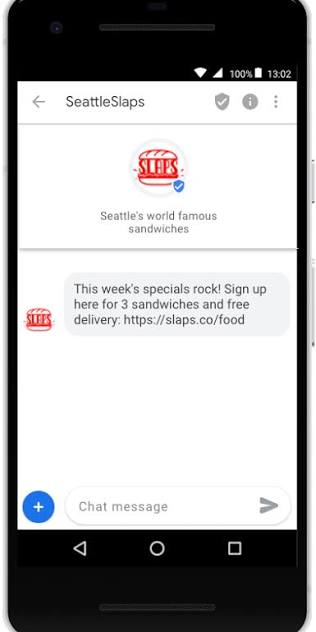
Branded SMS is a text messaging method that uses an alphanumeric sender ID to replace the traditional phone number in the sender field. So, when recipients receive your branded messages, instead of getting a sequence of random numbers, they’ll instantly see your business name right in their inbox.
Immediate recognition adds a major layer of trust and visibility, potentially leading to higher open and conversion rates.
We analyzed over 246M SMS campaign sends and 20M SMS automation sends across 27,000+ brands in 2025. The SMS marketing benchmarks we found show that SMS deliverability was 96.6% with a 12.39% click-through rate (CTR).
How does an alphanumeric sender ID work?
An alphanumeric sender ID replaces the standard phone number we typically see attached to new messages and replaces it with a recognizable text string, or in this case, a brand name.
When a text is routed through a branded SMS gateway, the network carrier replaces the originating phone number with a custom text string before it reaches the recipient’s mobile device.
Branded SMS messages make it easier for businesses to send no-reply reminders, shipping notifications, purchase confirmations, alerts, etc., with a higher open rate of around 98%. However, alphanumeric sender IDs come with a distinct set of operational rules:
- Character limit: Your sender ID can be up to 11 characters.
- Character restrictions: It supports both uppercase and lowercase letters (A-Z) and numbers (0-9). Special characters, symbols, and spaces are strictly prohibited.
- One-way communication: Alphanumeric sender IDs are inherently one-way by default. Because no real phone number is attached, recipients cannot text back or reply directly to the message.
- Carrier routing: Network providers process these IDs differently from standard numbers, often routing them through specialized corporate gateways to ensure high deliverability and prevent spoofing.
Branded SMS vs. standard SMS: key differences
Branded SMS and standard SMS messages may not look or sound different at first, but in practice, these two types of business messages differ significantly from an operational standpoint.
Here is a side-by-side comparison highlighting how alphanumeric sender IDs stack up against standard phone numbers.
| Feature | Branded SMS (Alphanumeric ID) | Standard SMS (Phone Number) |
|---|---|---|
| Sender display | Custom brand name (e.g., OMNISEND) | Long code, short code, or toll-free number |
| Reply capability | One-way only (no direct replies) | Two-way capable (recipients can text back) |
| Trust and recognition | Instantaneous, high credibility | Variable, can look like spam if unrecognized |
| Geographic support | Widely supported in the EU, UK, APAC, and blocked in the US/Canada | Universally supported globally |
| Primary use case | One-way alerts, flash sales, shipping updates | Customer support, conversational SMS, interactive polls |
Where is branded SMS supported?
Geographic availability is probably the most important factor in planning your branded SMS marketing strategy.
For starters, all regions, down to individual countries, have their own regulations, requirements, restrictions, and support for alphanumeric sender IDs — all of which are dictated or, in part, influenced by network operators and regional laws.
| Country | Alphanumeric sender ID supported | Registration required | Key restrictions | Alternative if not supported |
|---|---|---|---|---|
| United Kingdom | Yes | Yes (for some use cases) | Requires registration with major networks to prevent brand spoofing | N/A |
| Germany | Yes | No | Open routing, but content must fully comply with local privacy laws | N/A |
| France | Yes | Yes | Strict white-listing is required by local carriers. Marketing curfews apply | N/A |
| Netherlands | Yes | No | Generally open, but heavily monitored for phishing activities | N/A |
| Australia | Yes | Yes | Mandatory anti-spoofing registry system managed by the ACMA | N/A |
| New Zealand | Yes | No | Supported across primary national networks without pre-registration | N/A |
| India | Yes | Yes | Highly regulated Distributed Ledger Technology (DLT) registry system | N/A |
| Singapore | Yes | Yes | Full registration with the SSIR (SMS Sender ID Registry) is compulsory | N/A |
| South Africa | Yes | No | Broadly supported; must abide by WASPA codes of conduct | N/A |
| United States | No | N/A | Blocked by major US carriers | 10DLC, Toll-Free, or Short Codes |
| Canada | No | N/A | Blocked by major Canadian carriers | Toll-Free numbers or Short Codes |
Note: The information provided in this table was gathered in June, 2026.
While this table provides the most information on major commerce markets, there are a few points to highlight regarding some countries:
- United States and Canada: Neither country supports alphanumeric sender IDs for commercial applications. If you try to send a text with a text-based name to these countries, the carrier networks will simply block your messages entirely.
- Australia: The Australian Communications and Media Authority (ACMA) requires businesses to register their specific alphanumeric sender identity to verify their identities and prevent impersonation scams.
- India: The Telecom Regulatory Authority of India (TRAI) enforces strict Distributed Ledger Technology (DLT) rules, according to which businesses must register their corporate entity, headers, and specific message templates on a blockchain-backed ledger prior to sending.
Branded SMS compliance and registration requirements
Adhering to global and local SMS compliance regulations is an essential step every business has to take to make sure their messages actually reach their customers. Particularly, for branded text messaging, compliance focuses entirely on validating your identity with telecom regulators and network operators.
Countries requiring pre-registration
In many premium markets and major commerce hubs, brands must undergo strict pre-registration checks to be eligible to register their brand name for use in SMS marketing. For instance:
- India (DLT System): Marketers must submit corporate registration documentation to a certified DLT platform. Every unique text layout must be pre-approved as a template. The verification process can take anywhere from a few days to two weeks.
- Singapore (SSIR): To protect consumers against fraud, all alphanumeric IDs must be registered with the Singapore Network Information Center. Unregistered sender IDs are automatically marked as “Likely-SCAM” or blocked completely.
- Australia (ACMA Registry): Merchants must provide their Australian Business Number (ABN) or international corporate credentials to match their identity against the requested sender text string.
- European Union (country-specific requirements): For example, Spain has the Comisión Nacional de los Mercados y la Competencia (CNMC), and Ireland has The Commission for Communications Regulation (ComReg), both of which require brands to link their alphanumeric text strings to a verified corporate identity, legal trademark, or domain name.
Where branded SMS is not supported — and what to use instead
Because the US and Canada strictly prohibit alphanumeric sender IDs to protect user privacy and maintain two-way network capabilities, international businesses must adjust their approach for North America.
Notice for targeting North American consumers: Do not attempt to use an alphanumeric sender ID for customers in the US or Canada. Your messages will be blocked immediately at the carrier gateway, hurting your deliverability metrics.
On the other hand, this doesn’t mean that brands shouldn’t include the United States and Canada. The North American region is the second-largest ecommerce market in the world, so expanding operations there is a legitimate and often favorable strategy for most ecommerce brands.
If you plan to reach the US and Canada, use these standard carrier-approved alternatives:
- 10DLC (10-Digit Long Code): A standard, local 10-digit phone number approved for commercial volume. It requires a brand and campaign registry but offers highly reliable throughput.
- Toll-Free Numbers: 1-800 or 1-888 numbers verified for commercial use. They are intuitive to configure and highly functional for combined marketing and customer service operations.
- Short Codes: Dedicated 5-digit or 6-digit numbers built for extreme sending speeds. Excellent for massive flash sales, though they carry higher administrative maintenance fees.
How to set up and send branded SMS
While setting up a custom sender identity involves strict regulatory navigation, modern marketing platforms handle the technical heavy lifting behind the scenes.
The general process across the industry follows these main steps:
- Determine which of your target destination countries allow alphanumeric sender IDs
- Compile your corporate verification documentation tax IDs, business registry, or matching domains)
- Submit your preferred 11-character brand text through your marketing gateway provider.
- Wait for carrier-level approval or verification before executing your live broadcasts
This video provides detailed information on how to set up a dedicated domain for SMS short links:
Configuring a branded sender name in Omnisend
Omnisend provides an intuitive setup workflow for configuring your alphanumeric sender ID across supported global regions.
Follow these steps to configure your branded sender identity:
- Log in to your Omnisend dashboard, click on your account profile icon in the top right corner, and select Store settings
- Navigate directly to the Channels menu section and select SMS
- Locate the sender options area to view your available regional geographic profiles
- Enter your custom name into the alphanumeric field, making sure it strictly adheres to the 11-character maximum and contains no spaces, symbols, or emojis
If your brand name has more than one word or includes symbols, just drop those symbols and spaces between the words, like so:
Uncle Tom’s Shop → UncleTomsShop
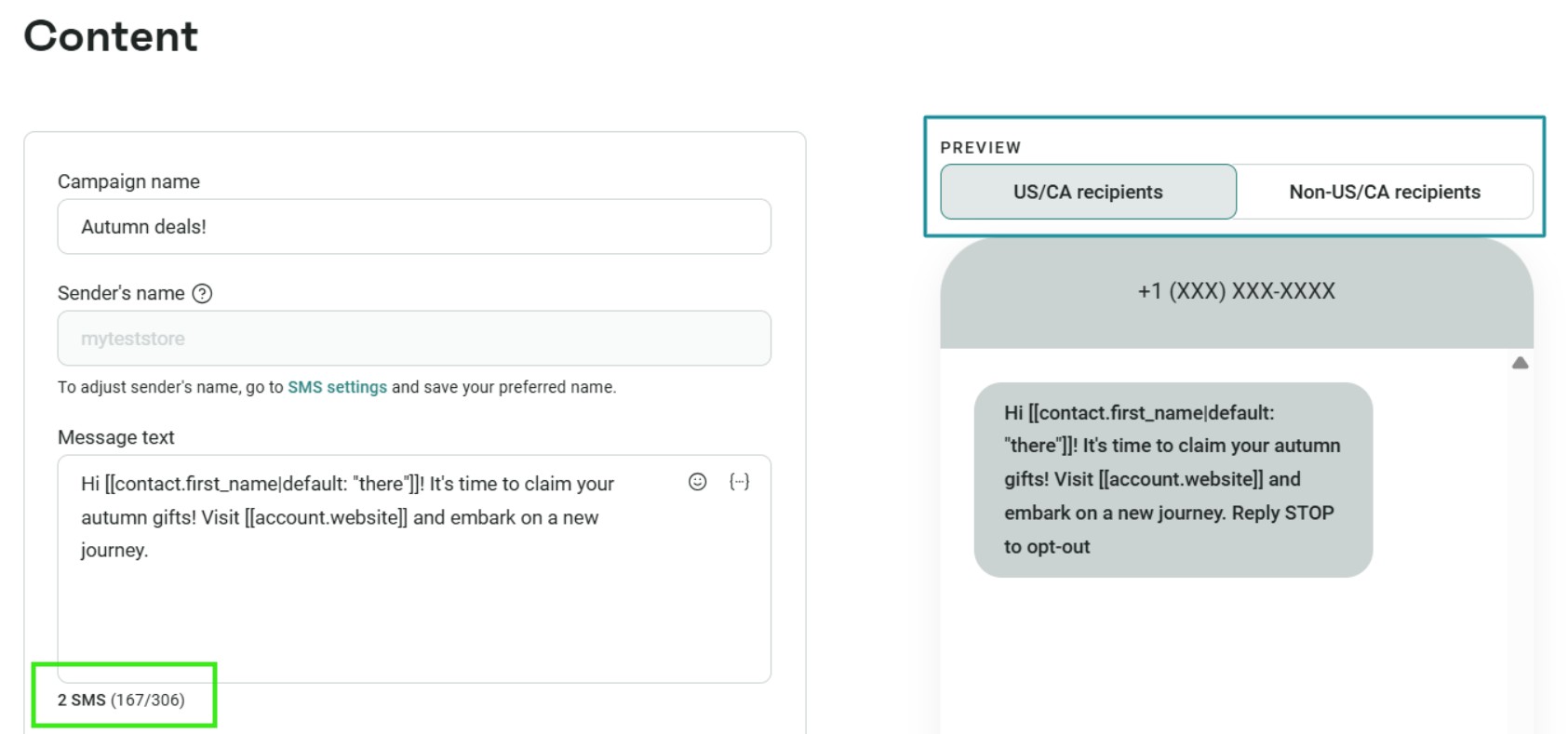
Since the US and Canada don’t support custom SMS sender names, Omnisend offers a feature that allows businesses to obtain a dedicated toll-free phone number (e.g., 1-833-XXX-XXXX).
To make your messages more recognizable to your recipients, start your SMS messages by mentioning your brand name:
UncleTomsShop: Your order is ready to be picked up!
5. Provide any regional documentation prompted by the system for countries requiring proactive pre-registration.
6. Save your settings. The dashboard will display the pending status while carrier validation takes place, updating automatically once approved for active delivery.
Branded SMS marketing: use cases for ecommerce brands
SMS marketing is one of the most effective channels for reaching customers directly with promotions, deals, sales, or transactional updates. Taking it a step further, branded SMS messages include brand names to increase recipient trust, helping recipients quickly recognize or look up the brand.
Consistent, well-planned branded SMS marketing can enable faster communication and significantly improved customer journeys, as customers move through the process more smoothly.
Here is how some brands use branded SMS throughout the customer lifecycle:
Welcome/order confirmation: Good Counsel
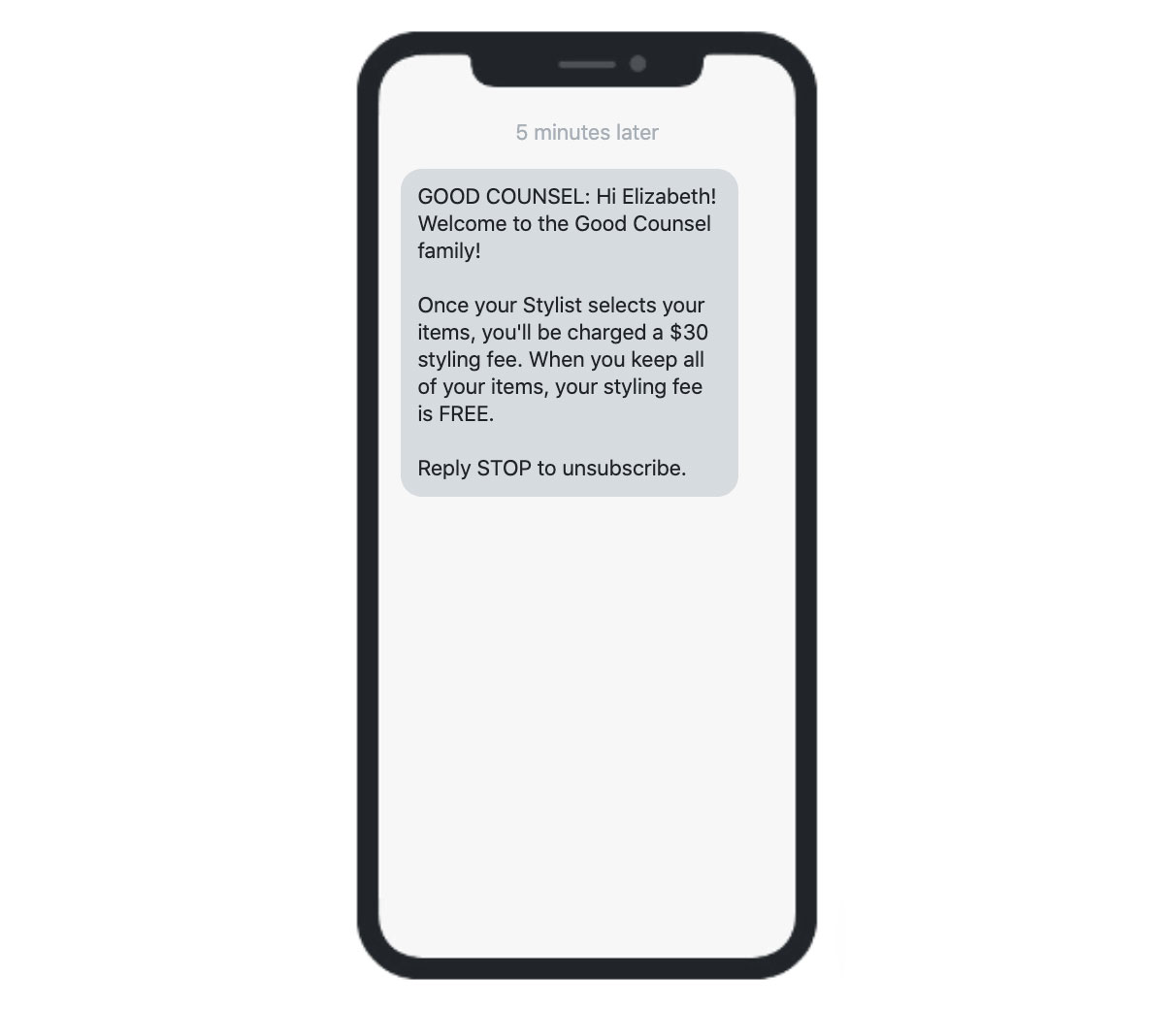
While not a traditional welcome SMS message per se, Good Counsel’s message combines two elements: welcoming new subscribers and informing them of an upcoming charge. While it’s a specific example for this brand, it can be used as a template for brands offering similar products and services.
Shipping confirmation: Petworld
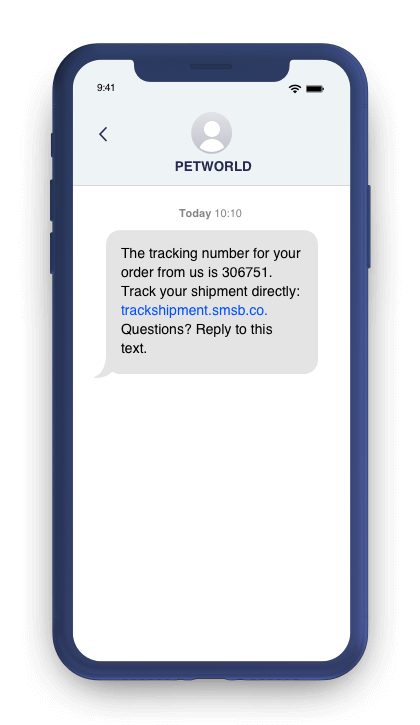
Petworld shows how they use concise messaging to provide six layers of important information in one simple message:
- Brand name
- Shipping confirmation
- Tracking number
- Tracking link
- A way to contact support
- A way to stop receiving messages
While recipients expect these types of transactional SMS messages, resulting in high open rates, Petworld’s shipping confirmation SMS message provides all necessary information to guide your customers along the buyer’s journey with the right keywords.
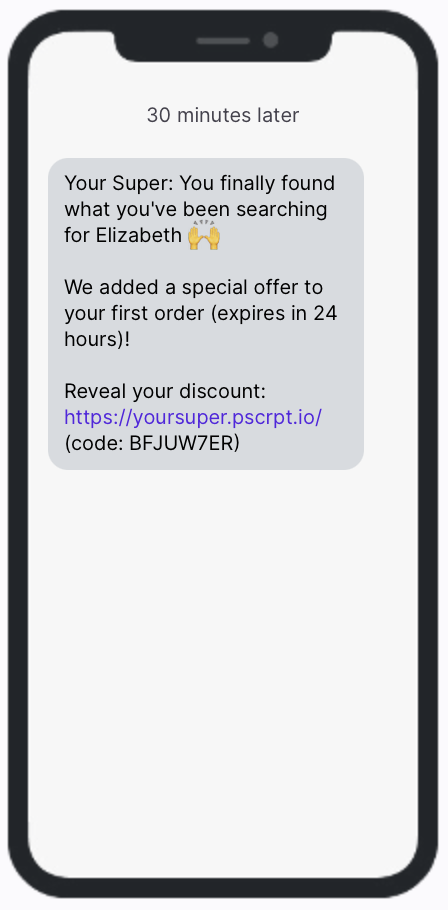
Abandoned cart: Super
Your Super, an organic food provider, sends branded SMS messages to maintain the interest of consumers who’ve recently reviewed their products. And to further incentivize, Your Super includes a special offer, signaling to customers that the brand genuinely cares about them. Plus, discounts are often a great way to encourage shoppers to complete their purchase.
Loyalty program and rewards: Coffee House
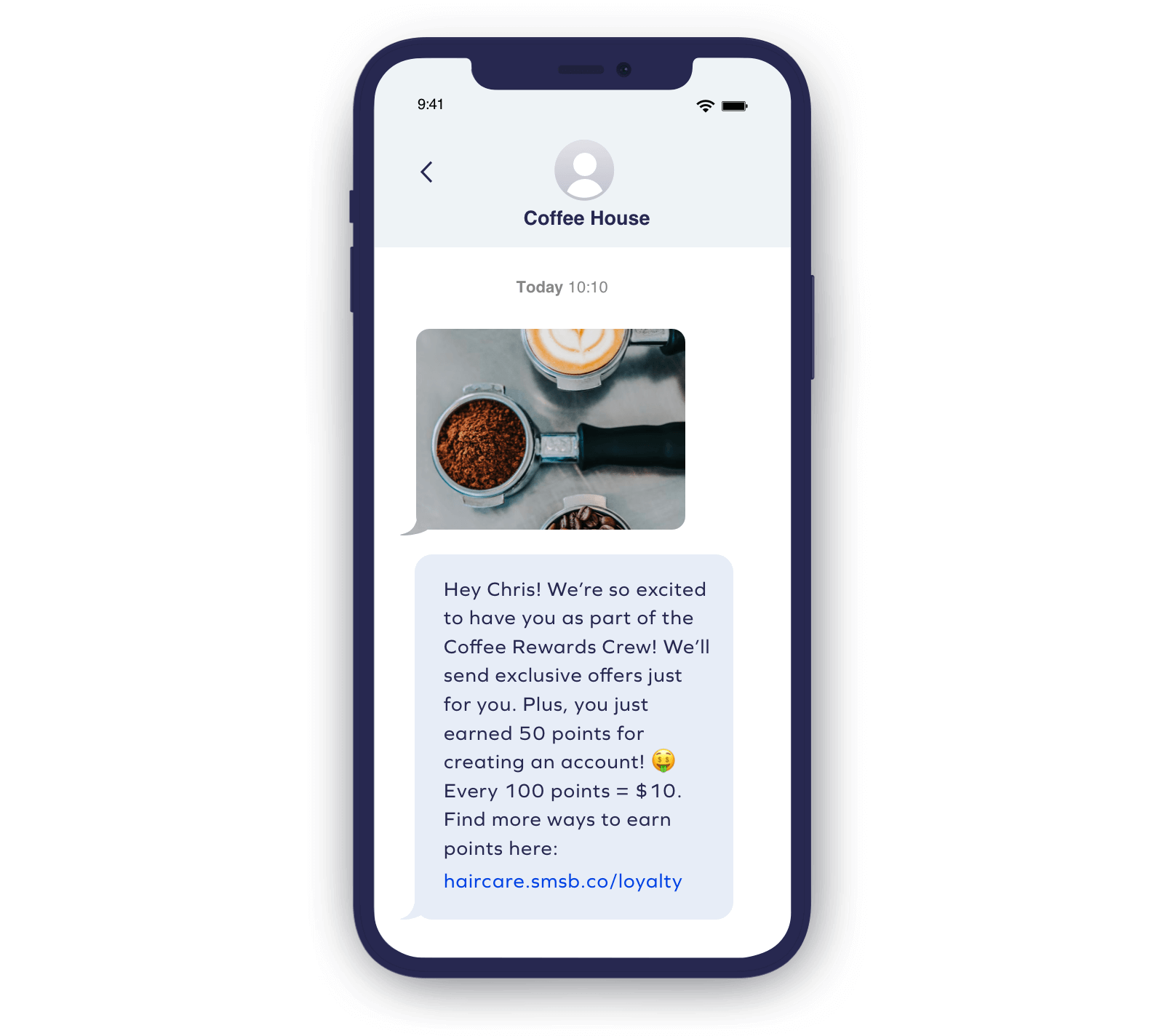
Just as promotional messages get attention, sending loyalty program confirmations and updates is a great way to establish and maintain relationships with customers. Coffee House’s message shows a common yet effective example of informing customers about the company’s loyalty program. Additionally, Coffee House gives 50 points as a welcome gift for creating an account.
Branded SMS short links: completing the brand experience
While an alphanumeric sender name helps your audience trust the sender of the text, that earned trust can quickly turn into suspicion if brands use generic shortened links in their SMS messages, like bit.ly/3kX9z.
A common answer is to use branded short links to replace anonymized shortened links with a custom domain or a subdomain tied to your business identity, for example: [link.yourbrand.com/sale](https://link.yourbrand.com/sale).
Including your brand name in the provided links can significantly affect how your SMS marketing lists view and respond to your messages.
How custom domain short links work in Omnisend
Omnisend treats your links as a vital extension of your digital storefront. By default, our platform packages links using its secure shared domain 0snd.com. However, you can easily choose to transition to a custom domain.
Using Omnisend’s custom domain short links feature offers:
- Increased CTR and trust: Matching your text sender name with a corresponding web link eliminates customer hesitation, resulting in higher click-through rates.
- Unified domain utility: Once configured, the same custom tracking domain can be used for your email and form tracking.
- Zero hidden costs: Omnisend’s custom domain short links feature can be used by all customers regardless of their pricing plan.
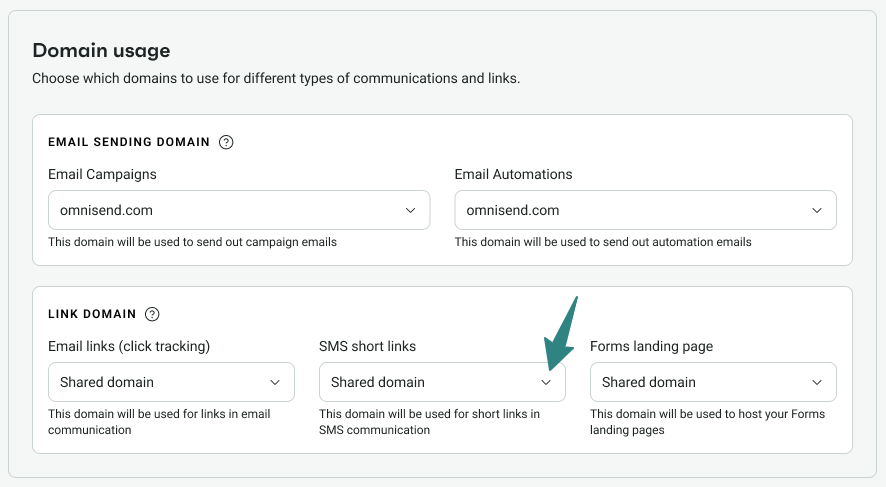
To start using this feature, all you have to do is:
- Set up and verify your link domain
- Open the Omnisend dashboard and go to your Store settings
- Click on Domains
- Navigate to Domain usage
Once your domain configurations are complete, remember that link shortening operates on an individual level rather than a global blanket switch.
Other than that, you can also enable automatic link shortening by toggling the Automatically shorten links button in the message creation box for every future text campaign you build.
How to choose a branded SMS service
Selecting the right branded SMS service for your business requires reviewing several key features and comparing them with your specific business goals. To help you get started, or if you’re looking for branded SMS alternatives, here’s a brief rundown of some of the key features to look for:
- Global carrier infrastructure: Check that the platform you’re interested in offers international delivery routes and can handle alphanumeric registration across the specific regions your customers live in.
- Integrated branding features: Verify whether the SMS marketing tool supports both alphanumeric sender names and custom link domains.
- Native ecommerce integration: Look for seamless sync capabilities with platform ecosystems such as Shopify, WooCommerce, and BigCommerce to automate text messages based on real-time customer behavior.
- Data compliance management: Choose a service that provides built-in tools to handle localized subscriber opt-out paths and list compliance automatically.
- Real value and ROI: Consider not just the immediate value, but also the long-term benefits and ROI your chosen tool can bring you in terms of sustainable growth.
- Unrestricted support availability: If your marketing strategies are working around the clock, so should your customer support team. This is a particularly important feature for global ecommerce brands running multi-market operations.
Brands using Omnisend see an ROI of $79 for every $1 spent. Our solution is an all-in-one marketing automation platform built to fully support ecommerce businesses, with features that unify email, SMS, and push notifications. This omnichannel approach allows brands to control major marketing channels and automate campaigns to run 24/7, so you can focus on other business tasks.
Quick sign up | No credit card required
Conclusion
Branded SMS messaging can turn unidentifiable text messages into a trusted channel for customer engagement. By replacing standard numbers with a recognizable alphanumeric sender ID — your brand name — you can make your business more recognizable and trusted by consumers, prompting more activity and better open rates.
While geographic restrictions require careful navigation, pairing an approved sender identity with custom domain short links creates a flawless, secure experience for your global audience.
Frequently asked questions
What is branded SMS?
Branded SMS is a text message that replaces standard numerical phone numbers in the sender field with a business’s actual name using an alphanumeric sender ID. This provides instant recognition and increases customer trust.
What is an alphanumeric sender ID, and how many characters can it have?
An alphanumeric sender ID is a unique combination of letters and numbers used as a sender identity. It’s limited to a maximum of 11 characters and can’t have spaces, special symbols, or emojis. You can quickly check whether your chosen alphanumeric sender ID fits the character requirements with Omnisend’s SMS character counter.
Can recipients reply to a branded SMS?
No. Alphanumeric sender IDs are designed exclusively for one-way outbound communication, informing recipients of important events, sales, and notifications. If your strategy requires interactive, two-way text conversations, you should use standard phone numbers, like 10DLC or toll-free numbers, instead.
Is branded SMS supported in the US?
No. Major mobile networks in the United States and Canada don’t support alphanumeric sender IDs for commercial traffic. If you’re planning on targeting North American audiences, you’ll have to use approved alternatives like 10DLC or verified toll-free numbers.
Do I need to register my branded sender ID?
Generally, yes. At the same time, registration requirements depend entirely on your recipient’s country. Overall, many countries, including Australia, India, and Singapore, mandate strict pre-registration with local registries before sending, while certain European countries allow open routing. If you’re unsure, it’s best to consult with specialists to avoid regulatory or legal issues.
What is a branded SMS short link?
A branded short link replaces generic tracking links with a custom subdomain that belongs to your brand. Branded SMS short links are one of the best ways to include links in SMS messages that are trusted and invite recipient action. Plus, this also helps merchants maintain brand consistency.