Omnisend AI


 OFFER
OFFER










The concept of discount was first introduced by Coca-Cola in the late 19th century. The company wanted to experiment with running discount campaigns at scale, offering redeemable coupons for a free glass of Coke. What started as a test became a major success, and Coca-Cola successfully introduced its product to a new market.
However, the science behind discounts isn’t as simple as lowering prices to attract buyers. It’s a tool that can bring great results when applied correctly, which also means there’s no one-size-fits-all approach.
Discounts are neither inherently good nor bad — their value depends entirely on how and when you use them. This article gives you a balanced breakdown of the advantages and disadvantages of discounts, real ecommerce examples for each, and a practical framework for deciding when a discount helps and when it hurts.
Advantages of discounts
According to Omnisend’s 2026 Ecommerce Marketing Report, click-to-conversion rates grew 53% year-over-year. When you apply discounts purposefully, it can be an incredibly effective strategy for revenue growth, moving people from browsing to buying. But before that, it’s important to understand why discounts work.
1. Attract new customers
Typically, if a visitor lands on your webstore, that’s an already great outcome, but it doesn’t guarantee a sale. They don’t know much about your brand, products, quality, or reliability yet. Discounts help lower the bar and make the initial decision to buy easier.
Moreover, lower prices or time-sensitive offers can be enough to bring in new customers. This can be said of both customers previously unaware of a store or brand and customers who haven’t purchased from a store or brand due to prices being perceived as too high. And when the offer is right, acquisition converts fast — click-to-conversion rates jumped 53% year-over-year.

B-Wear tried this out. The company sent out a 10% discount to new subscribers as part of their welcome series, then switched to 15%. This introduction resulted in increased sales by 390% and orders by 121%.
Read the full B-Wear success story.
2. Win back lapsed customers
If a store has already sold products to a customer, using discounts or promotions can be compelling enough to bring them back. In fact, reengaging lapsed customers is one of the highest-ROI strategies for retention marketing.
However, a generic discount might not have the same effect as attracting new customers. The key difference here is knowing who to target. Once you identify the right window to send discount notifications and pair it with the right messaging, you can get back your customers.

SM Global Shop chose to work with Omnisend, and one of the first things the company did was to run a targeted win-back automation with a discount offer, achieving a considerably increased conversion rate of 52%.
Read the full SM Global Shop success story.
3. Recover abandoned carts
As of today, abandoned carts are one of the biggest, and arguably most costly, problems in ecommerce. Most brands try to overcome this challenge by immediately sending follow-up emails with discounts so as not to lose potential customers.
While this strategy is completely valid and used by many, the risk here is that some brands can end up training their customers to abandon their carts intentionally, skewing key metrics. That’s why the recommended way of handling abandoned carts is to send reminders first and, if customers don’t respond, send another email with a discount.
This is exactly what Reptil did. By replacing immediate discounts with reminders, Reptil increased its average order value by 25%. The best part is that this strategy doesn’t require additional discounts, just adding a reminder to the original sequence.
Read the full Reptil success story.
4. Create exclusivity through personalization
Personalized and unique discount codes, even one-time usage codes, can create an air of exclusivity and help retain customers. These discount codes will appear custom-made for the customer, with them in mind, offering them a more positive customer experience.

One way Invisible Brands used personalization was by introducing early access discount automation with Omnisend’s segmentation tools. In the end, this decision helped the brand generate €370,000 and increase its open rate to 57%.
Read the full Invisible Brands success story.
5. Clear unsold inventory
One of the simplest reasons to lower a product’s price is to make it more likely to sell. The idea behind it is simple — a discounted product sells faster and clears the shelves, allowing space for other products.
Specifically, clearing old inventory is important for seasonal businesses like fashion ecommerce brands, which rely on end-of-season clearance to sell seasonal stock before launching new products. Discounts serve a crucial role in moving old inventory in cases like these.
6. Increase average order value
Discounts, when strategically paired with cross-selling and upselling techniques, prompt customers to consider complementary items. For instance, you can offer discounts for headphones with a laptop purchase. As a result, the average order value rises, increasing immediate sales while also enhancing the overall customer experience.

LEVEL8 used structured promotional campaigns with the same principle, leading to a 15% average order value increase. The brand adopted a highly holistic and detailed BFCM strategy, consisting of four stages and unified SMS and email messaging.
Read the full LEVEL8 success story.
7. Improve customer lifetime value when used strategically
We mentioned briefly at the beginning of the article that, in some cases, discounts can do more harm than good. Specifically, the most significant consideration in using discounts is that they can reduce customer lifetime value.
But it doesn’t have to be like that. When used correctly and at the right lifecycle stage, a discount can become a second-purchase incentive or a loyalty reward, building long-term value for a company.
Some of the top agencies using Omnisend generate an average of $170,000 per client annually, becoming a great example of a retention-focused discount strategy.
8. Drive urgency and time-sensitive revenue
Flash sales and limited-time offers create highly concentrated revenue streams that support cash flow, reach monthly targets, and contribute to clearing inventory. Creating urgency that works is based on complex psychology, but if we were to boil it down, urgency is created using the right amount of scarcity and time-based pressure.
But that’s just one side of the coin — brands need to carefully consider which channels to use for their offers. SMS can be a great communication channel for time-sensitive discounts. Our data shows that automated SMS messages can earn $0.74 per send rather than $0.15 for campaign sends.
Disadvantages of discounts
Using discounts can be compared to using medicine — depending on the dosage used, it can either improve or worsen the situation. In particular, offering discounts without a proper strategy can compound slowly and then snowball.
Some of the disadvantages aren’t as straightforward, however, so knowing what to look out for becomes that much more important.
1. Eroded brand perception and loss of exclusivity
Every brand, no matter how big or small, has a perceived value built with product quality, pricing, presentation, and brand story. However, if brands start to use a discounting strategy repeatedly and publicly through all channels, it can start degrading brand value little by little.
While this problem isn’t exactly an immediate one, for premium ecommerce brands, this can become dangerous very quickly. If customers start associating your brand with discounts, the premium label can fall away.

To’ak Chocolate is one of those premium brands that shows one of the best ways to use discounting to their advantage. This luxury chocolate brand avoids major sales events like Cyber Monday, Black Friday, and others. Instead, To’ak Chocolate generates $5.66 for every welcome email they send, which equates to 3,466% more revenue than its promotional messages generate.
Read the full To’ak Chocolate success story.
2. Training customers to wait for sales
This is potentially the most damaging outcome of discounting. When customers become accustomed to regular discount offers, you are telling them that it’s only worth it to buy from you when you provide discounts. In other words, we’re talking about behavioral conditioning.
On the brighter side, this outcome can actually be measured. If brands discount frequently, they’ll see open rates spike during sale periods and drop after they end. Inevitably, revenue gets harder to project.
3. Margin compression and profitability risk
Reduced margins are a risk, but it’s one of the more difficult ones to anticipate and calculate. This is because the math is simply not as intuitive. Let’s say you offer a 20% discount on a product with a 40% gross margin. You’d think this would reduce your revenue by 20%, but in reality, it would cut your gross margin by 50%.
If ecommerce businesses start experiencing this, they typically need to implement an appropriate break-even volume strategy to offset discounts. More than that, it’s better to evaluate current margins and calculate how many additional units you’d need to sell to generate the same profit.
4. Attracting the wrong customers
Buyers who are motivated solely by discounts typically have lower lifetime value compared to full-price or loyal buyers. While discounts are great for increasing revenue, they’re not exactly the most reliable way of generating and projecting revenue.
For brands that focus on driving customer acquisition with discounts, this can result in a structural problem. Essentially, the customers who buy from you via a promotion will likely return when you launch another promotion.
5. Decreased customer lifetime value
The second purchase is the most predictive moment for long-term loyalty. If the first purchase was discount-motivated, the customer lifetime value ceiling is lower from day one — these customers anchor on the reduced price and hesitate to come back at full price.
Second-purchase sequences at full product price can be useful tools for building not just repeat customers but also loyal customers.
6. Increased acquisition costs over time
Discounts can indeed feel like a low-cost way to get new customers, but it’s often not the case. Customers acquired through discounting need more discounts to stay engaged.
When a business offers discounts frequently, it may need to invest more in advertising and marketing efforts to attract price-sensitive customers. This can strain a company’s budget, particularly if the discounts are substantial or if they’re offered too frequently.
7. Damage to premium positioning
If a merchant opts to offer discounts over and over again, it will seem that they have no faith in their products. This lack of faith will then be seen as a lack of quality, reliability, or even desirability for products. This kind of downward spiral is hard to come back from, with customers unable to perceive a brand or product as anything but lesser.
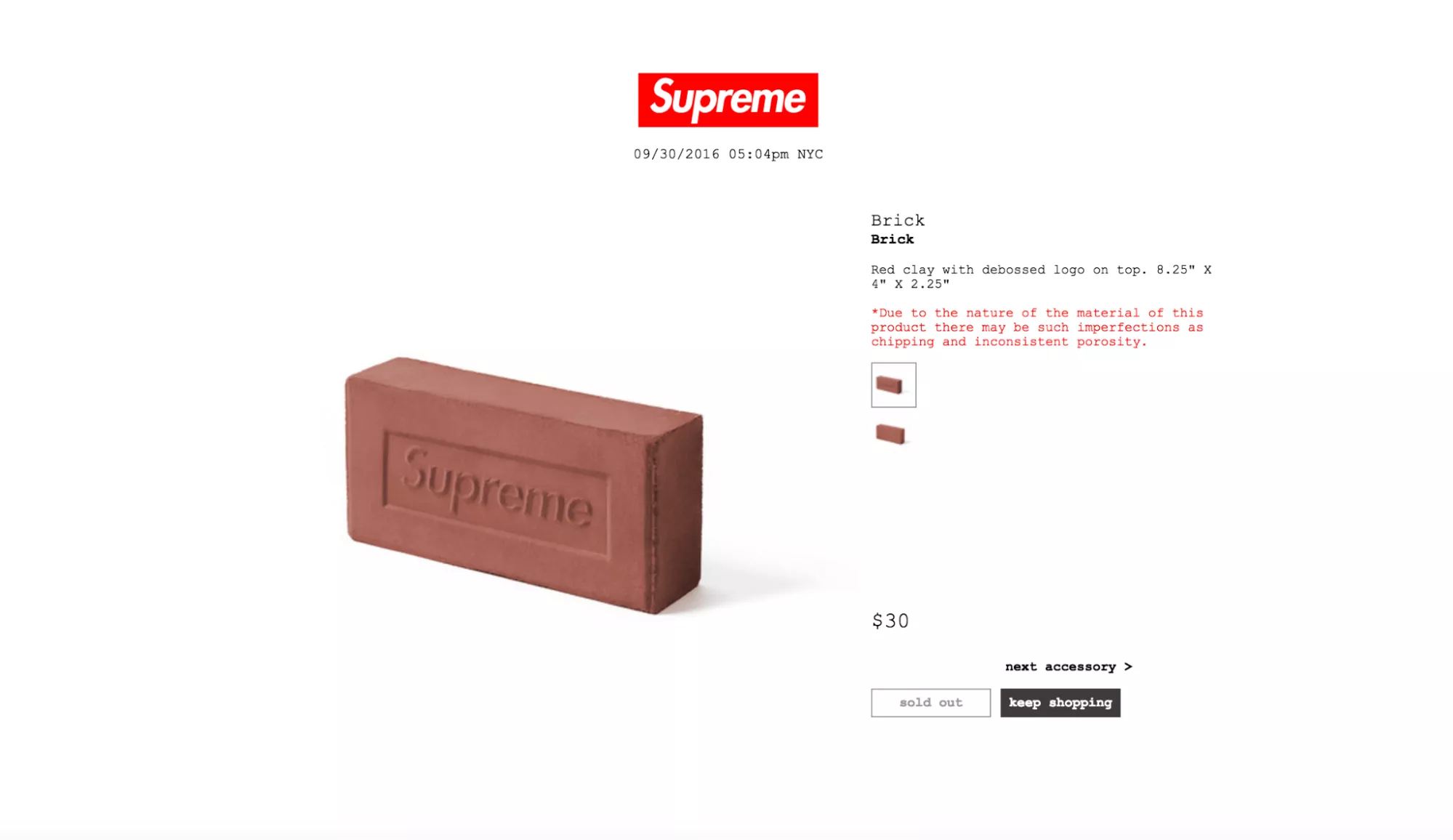
Supreme, as the name suggests, is one of the best examples of how a skillful use of scarcity and desirability maintains premium positioning. The brand sells out instantly at full prices, without promo codes or end-of-season clearances.
When to use discounts — and when to avoid them
Use discounts for:
- Clearing end-of-season inventory: If you’re a business with seasonal products, using end-of-season discounts is an integral part of this business model.
- Acquiring first-time customers in competitive categories: Ecommerce is one of the most crowded industries, so competing with multiple other brands is something to be prepared for. When notified and presented the right way, discounts can attract new customers.
- Running a win-back campaign for lapsed customers: Reengaging lapsed customers can be a valuable strategy. Discounts can be used as an incentive, sent together with a personalized message.
- Rewarding loyal customers with exclusive, personalized offers: Loyalty programs are growing fast, so ecommerce brands send targeted birthday discounts, loyalty milestone rewards, or VIP early-access offers.
Avoid discounts if:
- You have a premium or luxury brand: In this case, discounting can hurt premium brands. To’ak Chocolate shows how value-based storytelling can bring in viewers and turn them into customers.
- The margin math doesn’t work: Make sure to always calculate what discounts could bring and cost you, especially in terms of inventory. If you find that you’ll likely need to scale up your inventory unrealistically to compensate for lost margins, promotions might not be worth it.
- You’re using discounts as a substitute for a product or messaging problem: Discounts are useful tools, but they shouldn’t be used to solve a product positioning problem.
- Discounts have become so frequent that they’re expected: More often than not, discounts can become training tools for conditioning customers to purchase during promotions only.
The question is never “should we discount?” — it’s “does a discount serve our strategic goal at this specific moment, for this specific customer?”
How to offer discounts without hurting your brand
As with any tool, understanding how to use it to your advantage isn’t always straightforward. The situation is the same with discounts, as their use can depend on business size, focus, product, and positioning. Here are the top five principles to follow:
- Personalize over broadcast: B-Wear increased its sales per email by 390% by testing out different levels per target segment to find the right messaging rather than sending the same message to everyone.
- Sequence discounts strategically: Don’t anchor discounts to abandoned cart flows. Take a more personal approach, send a reminder, and tailor your messaging to be somewhere along the lines of “friendly reminder” or a suggestion to view similar products if customers aren’t sure of the product in their carts. By following this principle, Reptil increased its average order value by 25%.
- Set expiry dates: If you decide to run a promotional campaign, the best practices state that you should also use an element of urgency to avoid customer procrastination. In other words, if a discount has no expiration date, customers could prolong their consideration window, but a 48-hour period drives action.
- Track discount code performance by segment: Data can help you analyze your audience and see why some customers convert at full price and become repeat buyers while others wait for promotions, buy once, and move on.
- Protect full price segments: If you send a discount email to a customer who recently bought a product at full price, this could send a really negative message. This is why it’s important to separate your customers and exclude recent full-price buyers.
Advantages and disadvantages of discounts — summary
| Advantages | Disadvantages |
|---|---|
| Attract new customers | Erodes brand perception with repeated use |
| Win back lapsed customers with targeted offers | Trains customers to wait for sales |
| Recover abandoned carts | Risk of losing margins |
| Create exclusivity through personalized offers | Attracts price-sensitive buyers with lower CLV |
| Clear unsold or seasonal inventory | Decreases customer lifetime value when overused |
| Increase average order value with threshold offers | Increases acquisition costs over time |
| Build CLV at key lifecycle moments | Damages premium or luxury positioning |
| Drive urgency and time-sensitive revenue | — |
Regardless of how you decide to market your products or brand to your customers, Omnisend is here to help — customers get $79 back for every $1 spent, one of the highest ROIs in marketing. From creating interactive and engaging campaigns to crafting quality promotions that speak directly to your audience, Omnisend’s many features make omnichannel marketing simple — and the free plan includes every ecommerce-focused feature.
FAQs
What are the main advantages of offering discounts?
The key advantages of discounting is that it helps brands attract new customers, recover abandoned carts, win back lapsed buyers, and create urgency with flash sales. When used to fit a brand’s goals, discounts can increase order value and improve customer lifetime value.
What are the disadvantages of giving discounts to customers?
Some of the more notable disadvantages of discounts include margin compression, brand erosion, and training customers to wait for sales to purchase. The brands that can experience significant risks are premium and luxury brands.
How do discounts affect customer lifetime value?
When businesses use discounts repeatedly and without segmentation to push customer acquisition, this can lead directly to reduced CLV by attracting not just all customers, but those interested in deals only. This is why strategic discount use at specific lifecycle moments is important and requires audience segmentation.
When should a business avoid offering discounts?
Brands should avoid discounting if you:
- Run luxury or premium businesses.
- Want to protect margins.
- Need to prevent customers from becoming dependent on deals.
- Notice slower full-price sales.