Omnisend AI


 OFFER
OFFER









Good email subject lines for sales can help grab the reader’s attention, especially in crowded inboxes.
Open rates depend heavily on the clarity and relevance of email marketing subject lines, not clever tricks. Readers scan fast, so if you don’t pique their interest within a few seconds, they won’t bother reading the rest of the email.
In this post, we’ll provide great email subject lines for sales that show your subscribers why they should open your email. We’ll show you how wording and timing affect open rates. Keep reading to learn how to increase your email open rates.
Quick sign up | No credit card required
What makes good sales email subject lines?
The best email subject lines for sales should set clear expectations and respect the reader’s time. To avoid emails ending up in the spam folder, consider these tips:
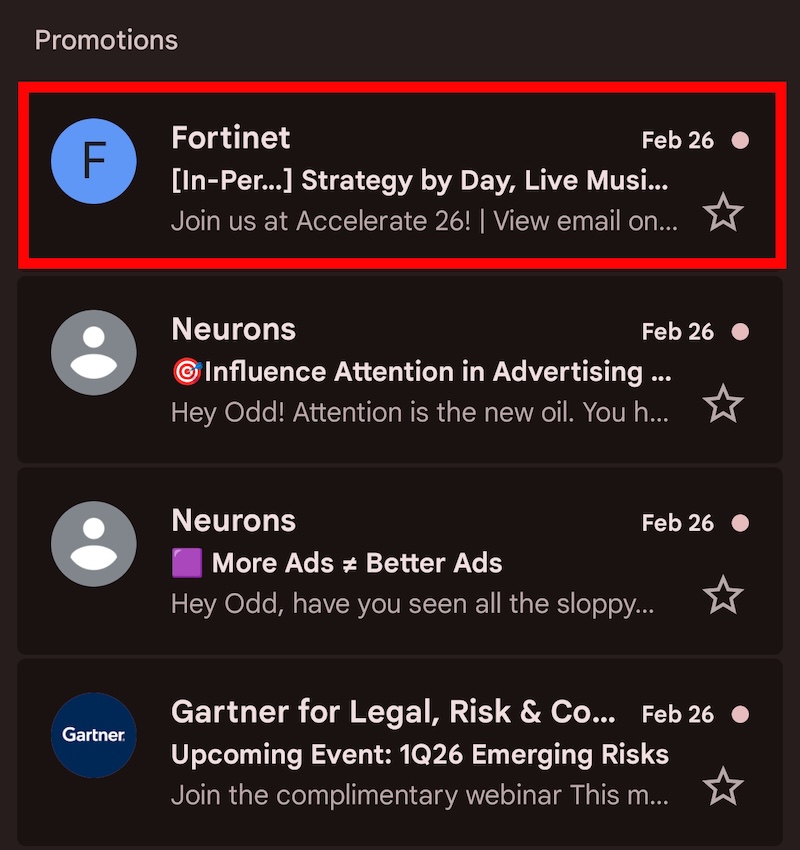
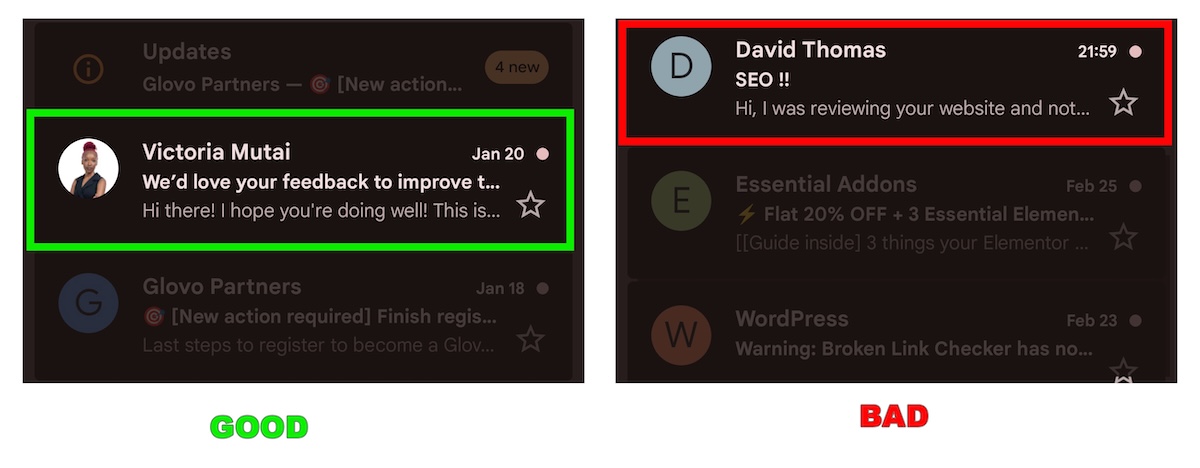
- Keep it short: Mobile screens cut off long lines, so aim for about 30 to 40 characters or four to seven words. Put key terms first, such as “price update today.” The example below shows subject lines that are being cut off after about 33 characters:
- Lead with value: State the benefit for the reader right away, which could be time saved, discount, outcome, or a new drop. A line like “New report template inside” works great.
- Ensure relevance to the buyer: Match the subject line to the reader’s recent action and ensure that this is reflected in the main message. If they viewed pricing, then reference pricing for consistent messaging.
- Use personalization carefully: Context is more meaningful than simply dropping the recipient’s name. Mention their last purchase or recently viewed products.
- Make preview text work: Preview text acts as a second subject line that the recipient quickly scans. Add timed power words, and avoid repeating words.
- Test variations: A/B testing different variations for sale email subject lines helps you see what works better before rollout. Test subject lines based on urgency vs benefit or direct vs curiosity.
100 best sales email subject lines that actually work
Here are some engaging email subject lines for sales that you can use in your emails:
Direct sales subject lines
Direct email subject lines for sales prospecting state the offer or action clearly. Use them with warm leads to set clear next steps.
1. About [issue] at [Company]
Since this mentions a specific problem, people are likely to open the email on priority.
Subject line example: About your Q4 hiring plan at BrightTech
2. [Your company] + [Another company]”
This hints at a potential brand collaboration, and many people would be excited to hear about it.
Subject line example: Omnisend plus BloomCo
3. Opportunity for [Company Name]
This instantly sparks curiosity by hinting at a potential business opportunity meant specifically for that company.
Subject line example: Opportunity for Northside Retail
4. Your [specific metric/goal]
Since it relates to goals or metrics someone is already tracking, they’ll find it relevant.
Subject line example: Your monthly revenue target
5. Want to try [Product/Service]?
This is a great subject line for emails that aim to get people to try your product or book a demo.
Subject line example: Want to try our automation platform?
6. Improve your [result or metric] today
Showing people what results they can achieve is a great way to get their attention.
Subject line example: Boost your retention today
7. Save [X]% on [Product]
When you mention the exact discount you’re offering, interested buyers will jump at the opportunity.
Subject line example: Save 25% on Pro Plans
8. Special offer for [Company/Segment]
Since this caters to a specific company or segment, it’s more relevant than a generic subject line.
Subject line example: Special offer for ecommerce brands
Curiosity-driven email subject lines
Curiosity-driven subject lines hint at information without giving it away. They work best in cold outreach by creating an information gap that urges readers to open the email.
9. Quick question about [process or strategy]
Subject lines like these pique people’s interest as they would want to, at least, hear the question, even if they choose not to answer.
Subject line example: “Quick question about your onboarding workflow”
10. Have you seen this about [industry topic]?
This is a simple way to spark curiosity by suggesting new information.
Subject line example: “Have you seen this about ecommerce returns?”
11. Is this happening at [Company]?
If nothing else, this will make people want to learn about what current happenings you’re talking about.
Subject line example: “Is this happening at Northline Logistics?”
12. One thing I noticed about [topic]
A line like that will surely get people curious about what you’ve noticed about them.
Subject line example: “One thing I noticed about your pricing model”
13. Curious how you handle [task or challenge]
Since this seems like the start of a discussion, not a pitch, it will get more engagement.
Subject line example: “Curious how you handle seasonal demand spikes”
14. This might affect your [goal or metric]
This will make people curious about what you’re talking about, which will affect their goals.
Subject line example: “This might affect your retention rate”
15. You might want to look at this
It’s a simple way to create intrigue through deliberate vagueness.
Subject line example: “You might want to check this out”
Personalized sales subject lines
Personalized email subject lines include a name, company, or specific detail. They work for warm leads and account-based outreach because people respond to relevant messages.
16. About your recent update at [Company]
This shows that you’re updated with what’s happening at the reader’s company, so your email must be relevant.
Subject line example: About your new pricing rollout
17. [Your company] and [Their company] alignment
This intrigues people because it hints at a possible collab.
Subject line example: Omnisend and Riverlane Commerce alignment
18. Idea for [Company Name]’s next phase
This works because it piques people’s curiosity about what you think the future of their company will be.
Subject line example: Idea for Atlas Freight’s next growth phase
19. Your current focus on [initiative]
This is a perfect example of a timely and relevant subject line as it mentions something the reader is currently working on.
Subject line example: Your current focus on onboarding speed
20. Following your update on [topic]
It shows that the email will continue a prior conversation.
Subject line example: Following your update on regional expansion
21. Question about your [workflow or system]
Most people will answer questions, especially those related to their work.
Subject line example: Question about your inventory tracking system
Discount and promotion email subject lines
These email subject lines highlight a price drop or a limited-time offer. They work for promotional campaigns, especially for price-sensitive customers.
22. Save [percentage] on your next order
By showing the offer or value upfront, such subject lines pique the interest of price-sensitive buyers.
Subject line example: Save 20% on your next renewal
23. [Product] now at a lower price
A price-drop alert is often what people need to buy a product they lilike, but thought was too expensive.
Subject line example: Get Pro Analytics at a lower price (just for today)
24. Limited offer on [category or service]
It creates a sense of urgency and encourages people to act quickly.
Subject line example: Limited offer on skincare sets
25. Exclusive deal for returning customers
When you give exclusive deals to loyal customers, they feel valued and keep buying from you.
Subject line example: Enjoy an exclusive 15% discount on your next order
26. Special pricing for [segment or group]
Another way to reward loyalty is to offer lower prices to repeat customers, and this subject line conveys just that.
Subject line example: Special pricing for nonprofit organizations
27. Price update on your selected plan
It highlights an important billing or subscription change.
Subject line example: Price update on your current growth plan
28. Your seasonal savings on [product type]
It ties the promotion to demand cycles.
Subject line example: Your seasonal savings on outdoor gear
Pain-point sales subject lines
These subject lines mention common problems that your target audience faces. They’re useful for both cold outreach and lead-nurturing emails.
They tend to grab attention because people are curious about how you can help them solve their problems.
29. Struggling with [specific problem] lately?
By naming a specific issue, you can signal that you can help solve their problem.
Example of subject line: Struggling with delayed client approvals lately?
30. Is [process] slowing your team down?
Every business has inefficiencies, and when you mention those, they will most likely pay attention to what you have to say.
Example of subject line: Is manual reporting slowing your team down?
31. Let’s fix the gaps in your [workflow or system]
It shows relevance and proves value by telling the reader that the email will help fix an issue.
Example of subject line: Let’s fix the gaps in your onboarding workflow
32. When [problem] starts affecting [business impact]
It ties a common problem to a larger business impact, instantly grabbing the reader’s attention.
Example of subject line: When stock delays start affecting growth
33. Reducing the cost of [specific issue]
It reframes the problem in terms of measurable loss.
Example of subject line: Reducing the cost of missed follow-ups
34. Concerned about your [metric or result]?
You can grab attention by addressing a specific pain point your subscriber is struggling with.
Example of subject line: Concerned about your churn rate this quarter?
35. Why [problem] keeps happening
Spark interest by hinting at the root cause of a frustrating issue your customers are facing.
Example of subject line: Why customer handoffs keep breaking down
Social proof sales subject lines
These subject lines reference results or well-known clients. They’re ideal for warm leads because people trust evidence from peers and groups.
36. How teams like yours handle [challenge]
When readers know they’re not the only ones facing a particular problem, they’ll be curious to discover the solution.
Example: How retail teams like yours handle seasonal demand spikes
37. [Number] companies improved [result] with this approach.
Nothing beats social proof, as it shows your customers what’s possible, with real results.
Example: 300 companies used this method
38. Why many managers switched to [solution type]
This line sparks curiosity and signals a trend your reader may not want to miss.
Example: Why sales teams switched to automation
39. Trusted by businesses your size
Eliminate doubt by reassuring your reader that the solution fits the specific scale of their organization.
Example: Trusted by 500+ small businesses like yours
40. A quick case from a team like yours
Sharing a relatable story tells your customers that you’re not just making vague promises.
Example: A quick case from a SaaS team
41. What other founders are doing about [problem]
This makes the reader feel like they’re getting insider info.
Example: What other founders are doing about rising ad costs
Referral and introduction subject lines
These mention mutual contact. They’re effective for cold outreach because trust transfers from the referrer to you.
42. Referred by [name] about [topic]
When you mention someone the reader knows, they’re more likely to warm up to you.
Example: Referred by James about your hiring expansion
43. [Mutual contact] suggested I reach out
Your customer will be more open to reading your email when it feels like a personal recommendation from a friend.
Example: Angela suggested I reach out about your CRM plans
44. Following up on [name]’s recommendation
Reminding someone of a shared connection helps you skip the whole “who is this” step and keep the conversation flowing.
Example: Following up on Peter’s recommendation about automation
45. Quick intro via [company/team/person]
Giving context immediately makes your email feel legitimate, while keeping the tone professional and friendly.
Example: Quick intro via your growth team
46: [Name] thought this might help you
Send a quick suggestion that someone your customer knows is thinking about their needs.
Example: Susan thought this might help your support team
47. Connecting after [event/referral source]
This brings your customer back to a shared moment, which makes your email feel more familiar.
Example: Connecting after your webinar with TechScale
48. Intro from someone in your network
It’s a low-key, friendly way to break the ice with your readers and show that you’re already part of their world.
Example: Intro from someone in your logistics network
49. We both know [person/company]
By pointing to a shared connection, you build trust with your readers and make the outreach feel warmer.
Example: We both know Brian from the fintech summit
Meeting request subject lines
These clearly state the intent to schedule a meeting. Use them after initial interest or prior contact to reduce confusion about purpose and timing.
50. Worth a quick 15-minute chat?
A 15-minute low-pressure chat respects people’s time, making it easy to say yes.
Example: Worth a quick 15-minute chat next week?
51. Can we schedule a short call about [topic]?
Being direct about what you want to talk about saves you and the recipient time and hassle.
Example: Can we schedule a short call about onboarding delays?
52. Quick conversation to explore [benefit]
When the reader knows they’ll gain something, the conversation becomes more appealing.
Example: Quick conversation to explore faster reporting
53. Would a short call be helpful?
Inviting the customer feels supportive, rather than pushy.
Example: Would a short call be helpful for your Q2 planning?
54. Can you find 10 minutes for this?
It clearly tells people that the email won’t take more than 10 minutes of their time.
Example: Can you find 10 minutes for this before Friday?
55. Let’s align on [objective]
This is professional and focused on business goals, making it perfect for B2B sales emails.
Example: Let’s align on your expansion strategy
56. Open to a brief discussion on [goal]?
Since it focuses on outcomes instead of time, it’s likely to get a response.
Example: Open to a brief discussion on reducing churn?
57. Do you have time this week to review [issue]?
By giving a timeline, you can create urgency without pressuring anyone.
Example: Do you have time this week to review your pipeline gaps?
Follow-up sales subject lines
Reconnect after a prior message. Use these subject lines on warm leads with prior engagement because repetition increases recall and signals persistence.
58. Circling back on this
It’s a simple subject line that shows you’re following up on a previous email.
Example: Circling back on your analytics setup
59. “Still interested in improving [area]?
This asks people whether they’re interested in improving in an area where they’re facing difficulty, and most people will say yes.
Example: Still interested in improving onboarding speed?
60. Did you get a chance to review this?
It’s just a polite check-in that invites a response from those who haven’t replied to your previous emails.
Example: Did you get a chance to review the proposal?
61. Revisiting our conversation on [topic]
It works well for teams with longer sales cycles, as they engage in multiple conversations before closing a deal.
Example: Revisiting our conversation on lead scoring
62. Should I close the loop here?
This asks people whether they’re interested in keeping a conversation going and generally gets a response, either way.
Example: Should I close the loop here or revisit next quarter?
63. Wanted to check in on this
This is another great one for a follow-up email, and the best part is that it keeps the tone supportive, not aggressive.
Example: Wanted to check in on your CRM migration
64. Quick follow-up from my last note
It tells people that you’re following up on a previous conversation and won’t take much of their time.
Example: Quick follow-up from my last note on automation
65. Following up — thoughts?
This is a short and conversational way to follow up on a previous email.
Example: Following up — thoughts on the rollout plan?
66. Any thoughts on [proposal]?
If you want the reader to respond but don’t want to pressure them, try this casual approach.
Example: Any thoughts on the draft proposal?
No-response sales subject lines
These subject lines address silence directly, but tactfully. They’re quite effective as they prompt people to reflect and reply.
67. Should I stay or step away?
By asking this simple question, you give the reader the power to decide whether to talk to you.
Example: Should I stay or step away from this conversation?
68. Did this fall off your radar?
A light and empathetic tone like this can gently nudge readers.
Example: Did this fall off your radar during planning season?
69. No worries if priorities changed
It’s perfect for keeping the door open and relieving any undue pressure on your leads.
Example: No worries if priorities changed since last month
70. Close this out or revisit later?
It limits email recipients to two binary choices, so their responses are easy and straightforward.
Example: Close this out or revisit later in Q3?
71. Not the right time?
It’s ideal for letting your empathy shine through, plus it shows you’re flexible and respectful of timing, even when not aligned.
Example: Not the right time for automation changes?
72. Happy to pause if needed
This subject line, which is the epitome of grace and “no pressure,” helps build immense goodwill.
Example: Happy to pause if your team is overloaded
73. Checking one last time
A professional “this is it” line, it gives your readers pause so they might consider what you have to say.
Example: Checking one last time about your reporting needs
74. Still relevant for you?
A short, direct question keeps things brief and polite while prompting confirmation that the issue (or product) remains important.
Example: Still relevant for your support team this quarter?
Retargeting and re-engagement subject lines
These email subject lines for sales target past visitors or inactive users. They work because they tap into past interests.
75. We saved this for you
Mention something the reader had saved or was previously interested in, and they’ll be glad to see you haven’t forgotten.
Example: We saved this pricing breakdown for you
76. Returning to your earlier request
This shows you’re attentive and mindful of your audience’s interests, and has the added advantage of personalization.
Example: Returning to your earlier request for integrations
77. Since you last visited…
Here, you’re referencing a previous visit, which can spark renewed curiosity.
Example: Since you last visited our analytics page
78. Still exploring [solution/idea]?
When you pick up where a previous conversation left off, you show you’ve been paying attention to the recipient’s journey.
Example: Still exploring new LMS options?
79. It’s been a while since you checked this out
With this line, you acknowledge the time gap and give your prospect a natural reason to take a second look.
Example: It’s been a while since you checked out our guide
80. A quick update since your last look
Positioning your message as new information rather than a follow-up reframes the outreach as genuinely useful.
Example: A quick update since your last look at automation
81. Still on your roadmap?
This works especially well in B2B because it speaks directly to the way buyers think about planning and priorities.
Example: Still on your roadmap for this quarter?
82. Picking this back up?
It’s a casual, low-pressure question that makes it really easy to restart the conversation.
Example: Picking this back up after your product demo?
Quantified subject lines
Use numbers to add clarity and credibility. These email subject lines for sales work for both cold outreach and newsletters because numbers signal specificity.
83. Cut [metric] by [percentage]
It’s a great example of how numbers or percentages can highlight improvement and make efficiency gains feel credible.
Example: Cut onboarding time by 35%
84. Increase [metric] in [timeframe]
This lets you demonstrate potential impact in a given period.
Example: Increase retention in 60 days
85. From [old metric] to [new metric]
It lets you spotlight transformation at a glance by comparing old performance with potentially achievable results.
Example: From 5-day onboarding to same-day setup
86. [Number]% of teams miss this step
This line sparks curiosity with striking stats while positioning you as an authority on the best way to avoid common mistakes.
Example: 72% of teams miss this automation step
87. Saving teams [number] hours monthly
This focuses on time savings to immediately demonstrate a tangible and relatable benefit.
Example: Saving teams 20 hours monthly on reporting
88. Boosting results by [number]%
Emphasizing a percentage increase gives readers confidence and makes outcomes feel proven.
Example: Boosting engagement by 28%
89. [Number] ways to improve [result]
This signals structured or numbered content, which indicates clear value for the reader.
Example: 5 ways to improve conversion rates
90. [Number] minute fix for [problem]
This frames the solution as quick and easy, making the audience much more likely to take action.
Example: 10-minute fix for your data sync issues
Urgency and scarcity subject lines
These highlight time or limited supply. Use them for promotions and event-based campaigns because time pressure encourages faster decisions.
91. Last spots available this week
It’s great for letting people know availability is limited, which makes them more likely to act if they’re to avoid missing out.
Example: Last spots available for onboarding this week
92. Closing registration tomorrow
With a clear deadline, it’s easier to nudge people towards a desired action so they don’t miss out on the opportunity of a lifetime.
Example: Closing registration tomorrow for the workshop
93. Offer expires tonight
Short-term urgency works well, especially when the offer is about to expire.
Example: Offer expires tonight for early adopters
94. Ending soon — wanted you to see this
Framing the deadline as a heads-up makes the urgency feel considerate, not aggressive or pushy.
Example: Ending soon — wanted you to see this pricing change
95. Deadline approaching for [benefit]
Since this connects a time limit to a specific benefit, it’s an excellent reminder of what’s at stake.
Example: Deadline approaching for discounted onboarding
96. Final reminder before we wrap this up
Issuing a final reminder like this serves as a polite final nudge before the chance disappears.
Example: Final reminder before we wrap up this rollout offer
97. Booking slots filling fast
It highlights scarcity by showing there’s high demand and shrinking availability.
Example: Booking slots filling fast for February demos
98. Only a few licenses left
Get people away from “thinking about it” to acting now by leveraging product scarcity.
Example: Only a few enterprise licenses left this quarter
99. Closing registration today
A same-day deadline translates to a strong sense of immediacy without relying on hype.
Example: Registration for the Growth Marketing Workshop closes today
100. Price increases tomorrow
Letting people know about a price increase can motivate even hesitant prospects to act before costs go up.
Example: Price increases tomorrow for annual plans
Subject line mistakes to avoid
The effectiveness of even the most compelling offers can be undermined by mistakes in the subject line. If you want to witness an improvement in the performance of your emails, avoid these common mistakes:
- Using misleading clickbait: When the subject of the email does not match the actual content, the reader becomes suspicious. They are likely to dismiss other emails from the sender too.
- Overusing ALL CAPS or excessive punctuation: Emails such as “READ THIS NOW!!!” are likely to be marked as spam.
- Being too vague: Obscure phrases like “Big News!” give no reason to open. You need clear and direct context, such as “New pricing update.”
- Making it too long: Long lines get cut on mobile devices. Key details vanish, leaving readers confused.
- Overpersonalizing or sounding intrusive: Referencing sensitive behavior or data can feel unsettling and intrusive. This can damage your credibility.
- Using fake urgency: False deadlines may get you a reaction the first time. However, subscribers won’t fall for it in the future.
- Ignoring preview text: The preview text should not repeat itself and should not contain filler. This is just wasting precious space that could have been utilized.
- Not A/B testing: Lastly, not A/B testing the subject lines can cause confusion about what works and what does not with your audience. It is essential to know what works before rollout.
How to choose the right sales subject line
Choosing the right sales subject line starts with a simple rule: match the wording to the reader’s context and intent, not just the offer. Here’s what to consider:
Consider the buyer’s stage
Cold prospects respond to relevance or mild curiosity that shows you understand their problem. Warm leads react better to direct value or timing cues.
Meanwhile, existing customers notice product launches, rewards, or restock alerts.
Therefore, find a balance that fits various target groups. Keep wording focused on helping them make a decision. Avoid aggressive urgency tactics this early as that may overwhelm your early-stage prospects.
Segment your audience
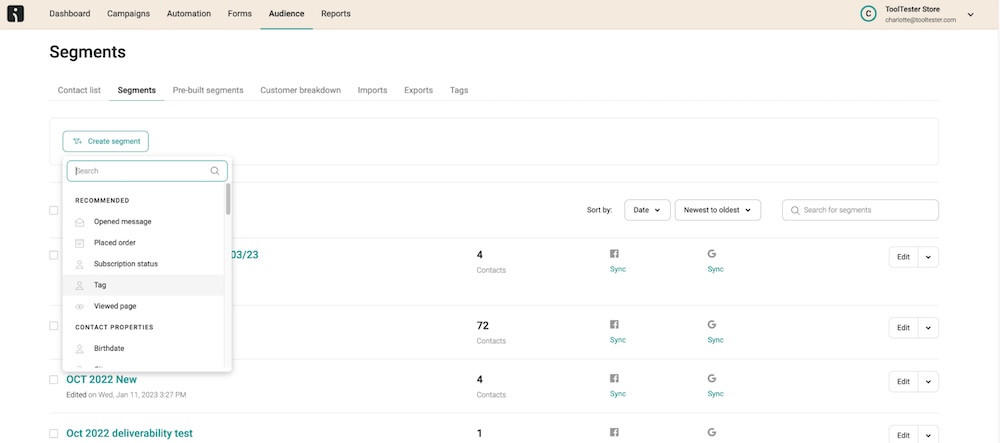
Email subject lines for sales must be relevant. Messages tied to actions like viewing a product often outperform broad emails.
Fortunately, many platforms support this level of segmentation. For instance, Omnisend allows targeting by behavior, order data, engagement patterns, and more, as shown below:
Quick sign up | No credit card required
Align the subject line with the message
Your subject lines must match the email content and tone. For example, if they promise an update or offer, the email should clearly show that. Always test and refine based on performance data to ensure consistency.
Conclusion
The best subject line for sales is the one that gets your email noticed. However, what works today may not work tomorrow. You have to keep tweaking it as buyer behavior continues to change.
The best way to do this is through constant testing. It works because there is a tendency to observe a pattern when testing multiple variations.
Omnisend offers the opportunity to segment further, test subject lines, and more. Start testing out your subject lines with the examples we’ve given.
Quick sign up | No credit card required
FAQs
A good subject title is clear and relevant to the subscriber’s needs. It shows what the email contains and why it matters now.
The 60-40 rule means success depends more on audience targeting than creative wording. About 60% comes from sending to the right people, while 40% comes from the message itself.
Subject lines that state clear value and context often perform best. Also, those that mention a benefit, timing, or known topic tend to get better open rates.
Catchy email subject lines for sales focus on a subscriber’s problem and address it directly in the subject and opening line. Use plain language and a clear purpose. Ensure that the message feels relevant without being pushy.