
 Omnisend AI


 OFFER
OFFER







Drive sales on autopilot with ecommerce-focused features
See FeaturesKey takeaways 
Out-of-stock email campaigns are essential for creating urgency and keeping customers informed about product availability, ultimately driving quicker purchases.
These emails can recover lost revenue by recommending alternative products and capturing demand signals through waitlist requests.
Personalization is key; referencing specific products and offering tailored recommendations can keep customers engaged even when their desired item is unavailable.
Automating out-of-stock notifications across email and SMS channels maximizes customer reach and ensures timely communication, turning missed sales opportunities into revenue.
Reveal key takeaways
An out-of-stock email campaign is necessary when a product is running low or has sold out completely.
When stock is low, an out-of-stock email creates urgency, nudging people to buy before stock runs out. You can also send an out-of-stock email when a product sells out. It keeps interested shoppers in the loop so they’re the first to know when you’ve restocked.
In this guide, we’ll look at seven out-of-stock email examples. You’ll learn how brands use urgency to drive quick purchases when stock is limited.
You’ll also know how to re-engage waitlisted shoppers the moment a product is back in stock.
Turn out-of-stock moments into revenue with Omnisend’s automated workflows
Quick sign up | No credit card required
Why out-of-stock emails matter for ecommerce
When a product is out of stock, it may appear to be a missed sales opportunity. However, you can use the situation to your own advantage. Here’s why an out-of-stock email is important for ecommerce brands:
- Recover lost revenue: When a product sells out, customers usually leave without buying. An out-of-stock email can recommend other products to help them complete the transaction.
- Capture demand signals: You can ask customers to submit a back-in-stock email request. The data reveals what customers want the most, so you can prioritize inventory.
- Create urgency at restock: When a product sells out quickly, customers rush to buy it. An out-of-stock email reminds customers of this urgency by highlighting limited availability at restock.
7 best out-of-stock email examples
Ecommerce brands use out-of-stock emails to notify customers when a product is nearly out of stock or finally back in stock. These messages build anticipation and drive faster purchases.
For example, CA Design, a furniture retailer, uses low-stock alerts in its email marketing strategy.
The brand highlights items that are almost sold out or back in stock and ready to ship. This strategy encourages customers to place their orders quickly.
Below, you’ll find seven out-of-stock email examples and what makes them work. This should inspire your own campaigns.
1. Pearly
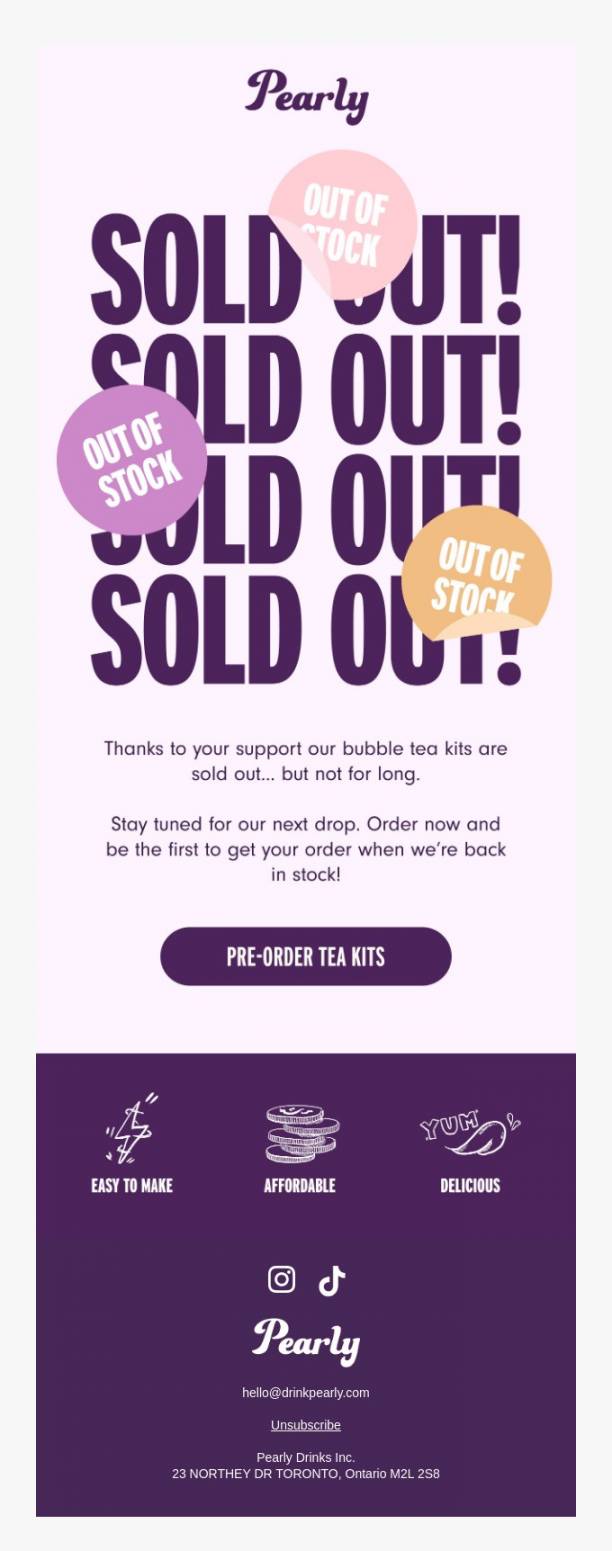
Pearly is a bubble tea kit brand that offers cafe-quality boba you can make at home. Its out-of-stock email template builds hype with a bold, layered “sold out” typography.
Instead of the usual “we’re out of stock” verbiage, the email focuses on thanking customers for their support. This makes customers feel like a part of a successful business.
Pearly’s CTA uses a contrasting color, making it hard to miss. It urges customers to pre-order tea kits, so they won’t miss out when the product is in stock again:
2. Brewbike
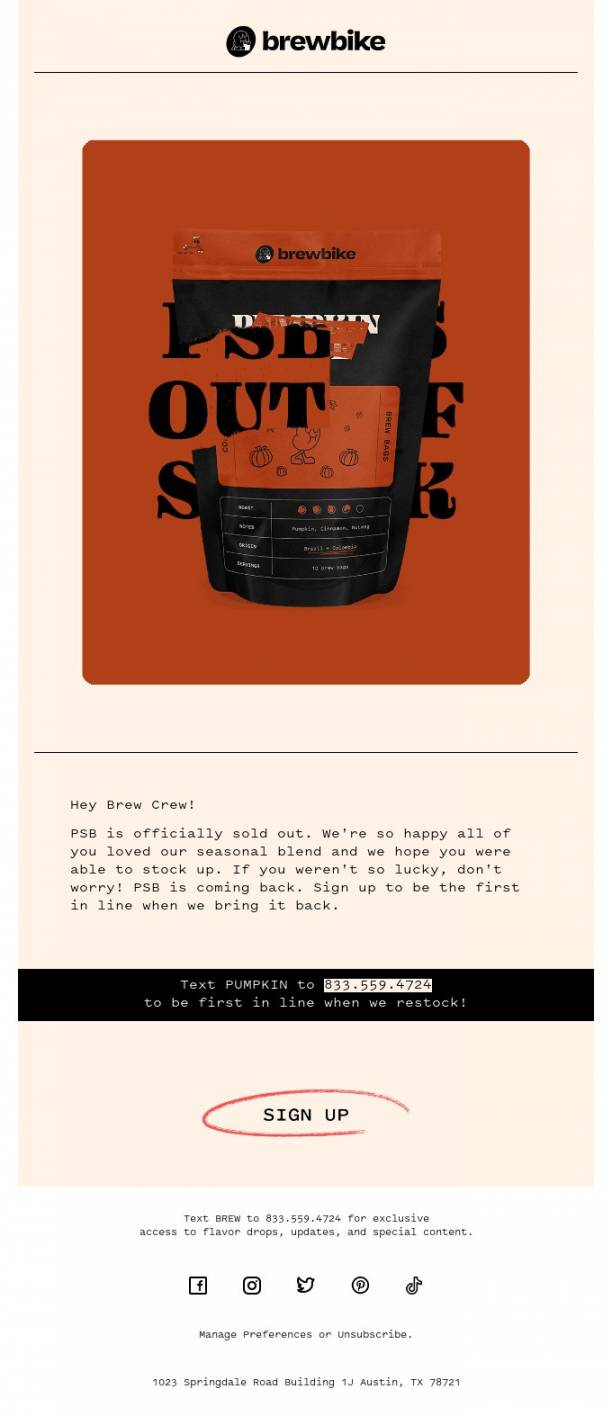
Brewbike is a student-led coffee brand, specializing in cold brews. It addresses its customers as the “brew crew” in its out-of-stock message. This creates a sense of belonging, making customers feel part of a community rather than just a list of customers.
The disappearing product graphic is a brilliant way to communicate scarcity without using a sold-out banner.
We love how it switched from the traditional email signup to SMS marketing. Asking customers to text “PUMPKIN” is a smart move. It builds a more direct communication line with customers:
3. Adidas
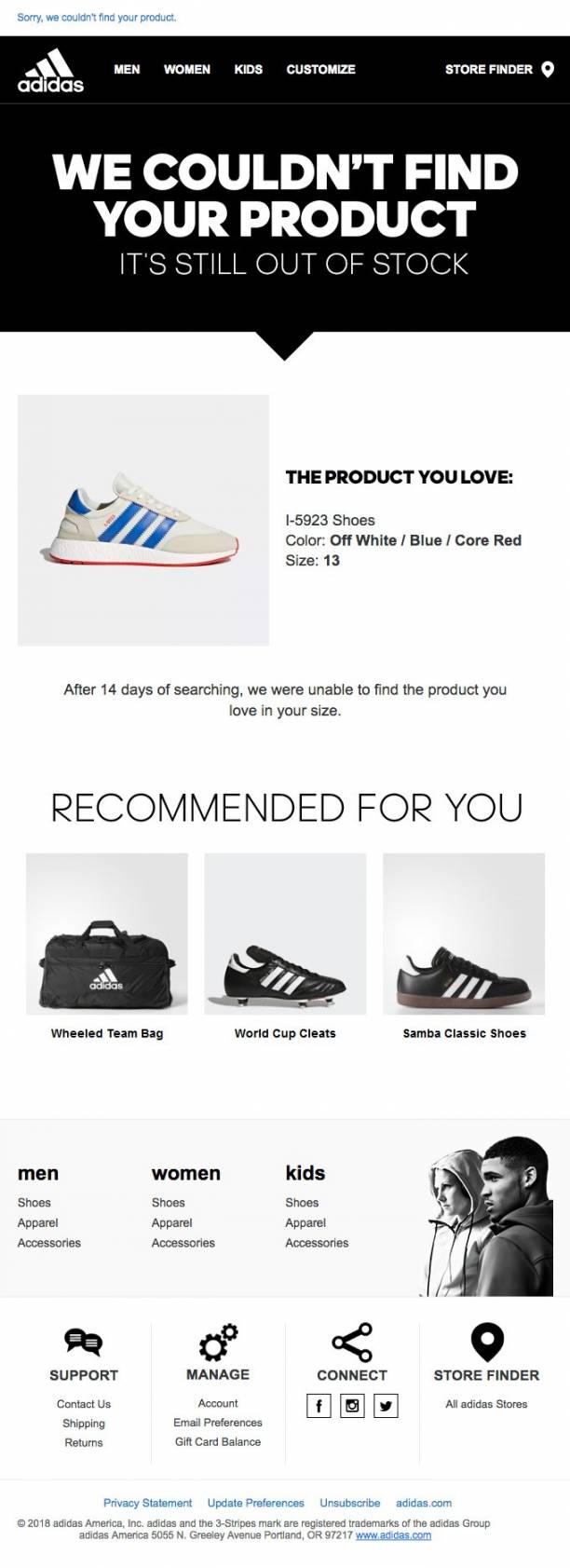
The global sportswear giant Adidas uses this out-of-stock email to demonstrate attentiveness. The brand maintains an authoritative feel by sticking to its iconic black and white aesthetic.
We love that the email is highly personalized. It mentions a “14-day search” for size 13 footwear. This shows that their preferences are being tracked.
Instead of losing that sale, the brand recommends other products based on the customer’s shopping history.
The email doesn’t have a specific CTA button. Instead, it includes links to different product categories: men, women, and kids. It also links to its store finder, where customers can locate a physical Adidas store:
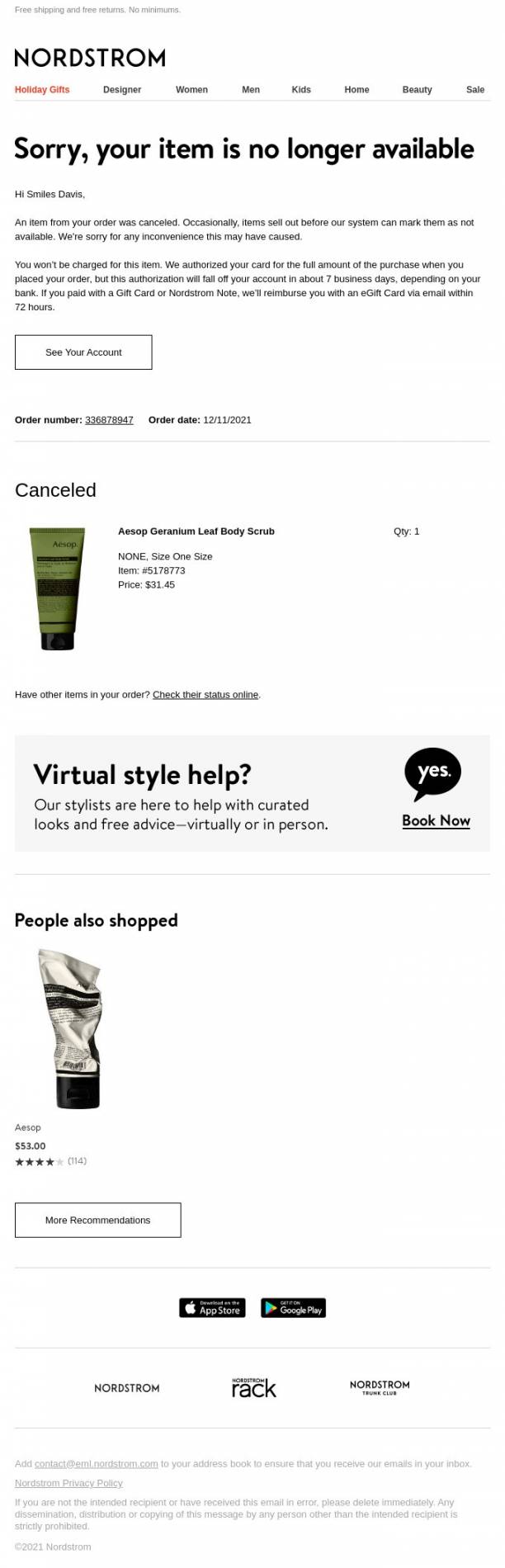
4. Nordstrom
Luxury department store Nordstrom offers an extensive collection of clothing, jewelry, and makeup. In this out-of-stock email, an inventory glitch occurred after a sale.
One product in a customer’s order wasn’t available, so that item was canceled. The brand clearly explained the refund process. It also includes timelines to answer the customer’s question: “Where is my money?”
The email uses an order confirmation email template. It displays the order number, date, and canceled product. This ensures the customer knows exactly which item is missing.
The “Virtual style help?” and “People also shopped” sections turn a disappointing situation into an opportunity to recover sales. With these sections, the customer may find a suitable replacement for the unavailable item:
5. Public Rec
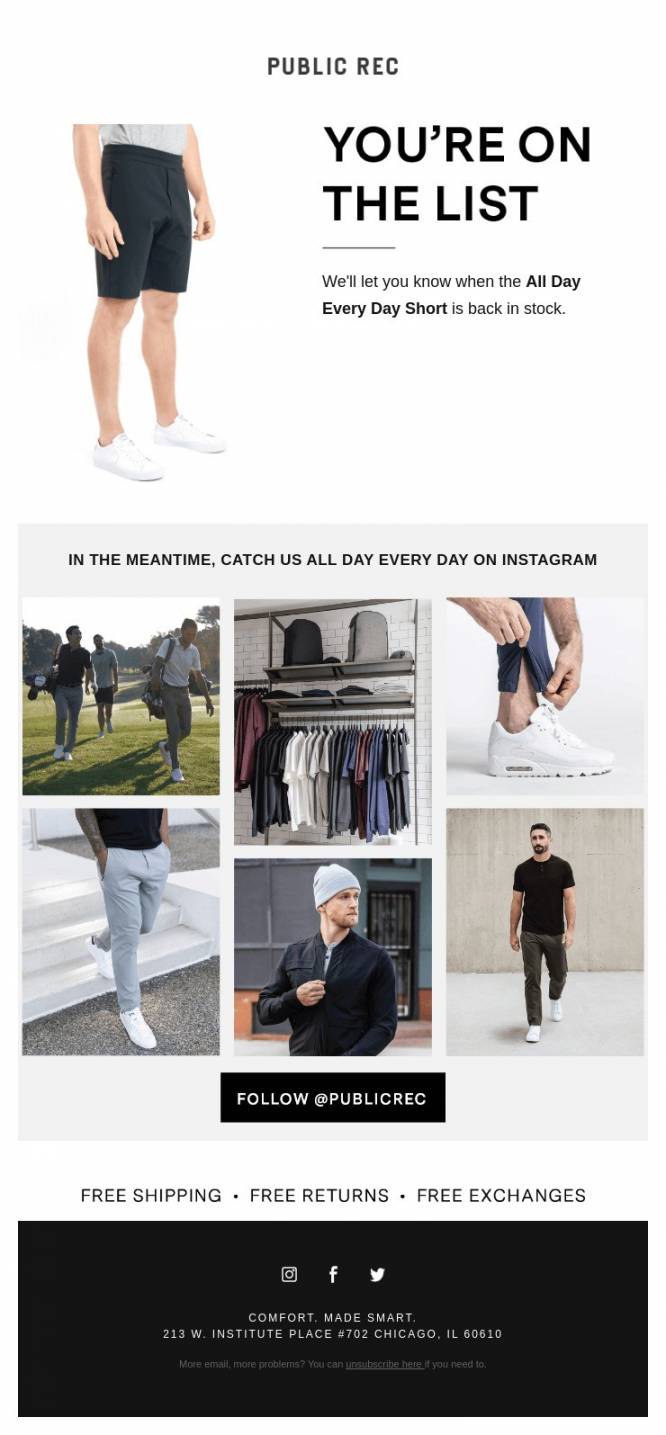
Public Rec is a leisurewear brand focused on making comfortable clothing, from pants and polos to footwear. Its out-of-stock email strategy uses a waitlist to build exclusivity.
By using the headline, “You’re on the list,” the brand makes customers feel prioritized rather than disappointed.
Its “Follow @publicrec” CTA shifts the customer journey from a transactional relationship to a social one. This way, customers can engage with the brand’s lifestyle content while they wait for a restock.
The email also includes an Instagram gallery to serve as a visual lookbook, reminding customers why the “All Day Every Day Short” is worth the wait:
6. Alo Yoga
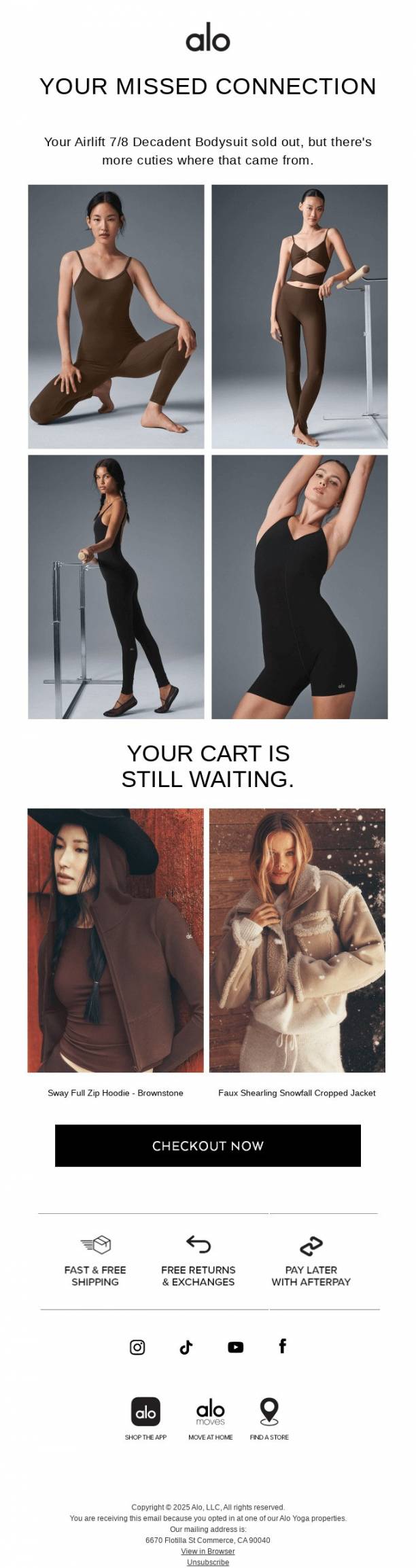
Alo Yoga is a premium yoga wear and accessories brand. Its out-of-stock email keeps the shopping spirit alive even when the product is no longer available.
The headline “Your Missed Connection” and the reference to other products as “cuties” add a lighthearted tone to the message. It also showcases alternative products using professional images that sell the look.
Instead of letting the customer walk away, the brand uses a “Your Cart is Still Waiting” section to remind them of other items they liked. It keeps one sold-out item from blocking the entire sale.
The CTA button, “Checkout Now,” encourages the customer to click and complete their purchase:
7. Magic Spoon Cereal
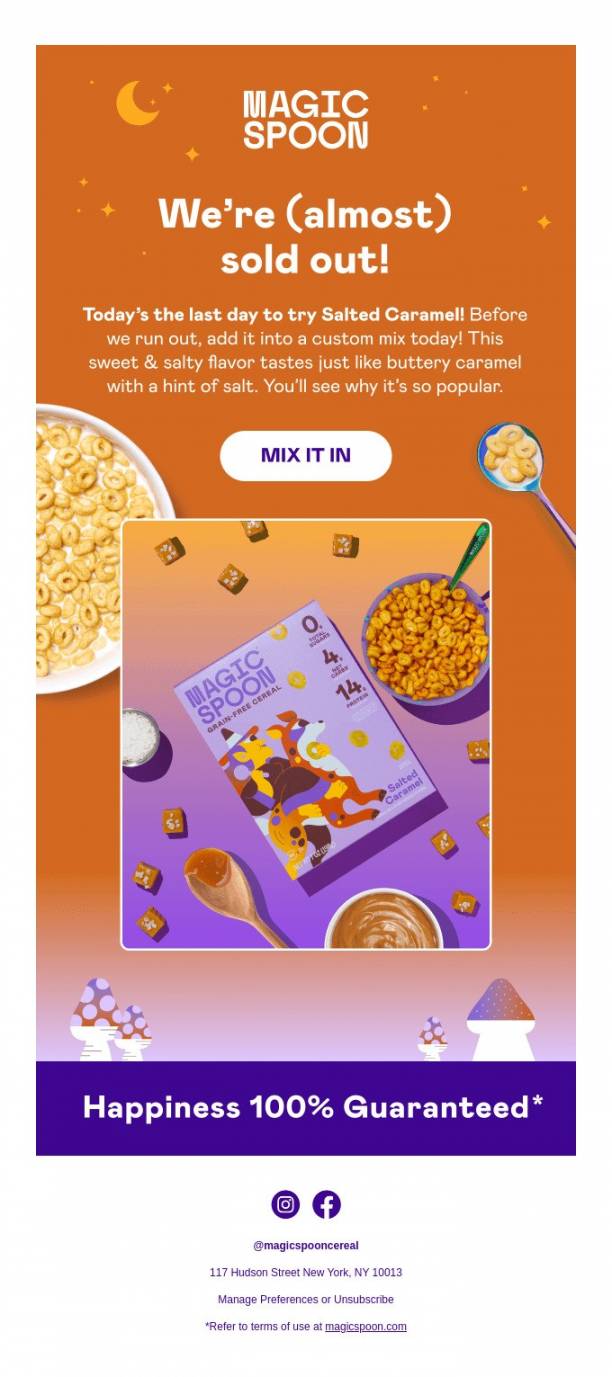
Made for modern wellness lifestyles, Magic Spoon Cereal is a high-protein, keto-friendly cereal. It has a proactive approach to inventory management.
The brand doesn’t wait for an item to go out of stock. Instead, it reminds customers that their favorite cereal flavor, Salted Caramel, is almost sold out.
This message triggers the fear of missing out (FOMO), encouraging immediate action. We love that it doesn’t use the regular “Buy now” CTA.
It invites customers to “Mix it in,” shifting the experience from purchasing to actually enjoying the product:
Out-of-stock email best practices
Use these tips to create an effective out-of-stock email template:
- Send the email promptly: A sold-out product is already a disappointment, but a slow response makes it worse. Reaching out quickly shows customers that you value their interest. This protects your brand reputation before frustration sets in.
- Be specific about where things stand: Let shoppers know exactly what’s happening, whether the product is running low, completely sold out, or back in stock. Also, add clear timelines for when stock runs out or when it’s expected back. This sets proper expectations, helping customers act fast.
- Make the CTA action-oriented: Even when a product is out of stock, the email should guide shoppers to join a waitlist, browse similar products, or set a restock alert. Providing a clear next step ensures the relationship doesn’t stall.
- Personalize where you can: Reference the specific product the shopper viewed or added to their cart. You can also include tailored product recommendations, giving them something to act on right away, even if the original item isn’t available yet.
- Send a back-in-stock email: When a sold-out product returns, don’t bury the news in a newsletter. Use email segmentation to send an email to everyone who showed interest, maximizing the chance of converting waitlisted shoppers.
- Take an omnichannel approach: Don’t rely on email alone. Some customers are more likely to act on an SMS alert or a push notification. Allowing customers to choose how they want to hear back from your brand increases their chances of returning.
Ready to automate your out-of-stock emails?
Every out-of-stock moment is a revenue opportunity, but only if you act on it right away. Customers who were close to buying don’t disappear forever. They need the right nudge at the right time.
However, you need the proper system in place to capture that revenue. That’s where email automation comes in.
With an email marketing automation platform like Omnisend, you can set up low-stock alerts, back-in-stock notifications, and waitlist emails that trigger automatically.
It also includes automation workflows for SMS marketing, enabling you to reach customers across multiple channels.
Instead of manually tracking inventory and messaging customers, your brand can automatically reconnect with interested shoppers. You can also create urgency when products return and recover sales that might otherwise be lost.
Bring shoppers back with Omnisend’s stock alert email automation
Quick sign up | No credit card required
Out-of-stock email FAQ
What’s the difference between out-of-stock and back-in-stock emails?
An out-of-stock email informs customers that a product is currently unavailable. It may encourage waitlist signups or suggest alternative products.
On the other hand, a back-in-stock email notifies customers when the product becomes available again. It prompts them to return and complete their purchase.
Should I automate out-of-stock emails?
Yes, you should automate your out-of-stock email. This helps you notify customers immediately when stock levels change. This saves time, prevents missed opportunities, and helps you recover sales by reaching interested shoppers while their purchase intent is still high.
Should I send SMS for out-of-stock alerts?
Yes, SMS can be very effective for out-of-stock alerts because people open text messages sooner than emails. Sending a short message when an item is restocked helps capture attention fast and encourages customers to act before the product sells out again.
What’s the best time to send an out-of-stock email?
The best time to send an out-of-stock email is immediately when the product becomes unavailable or when inventory runs low. Timely notifications let customers join a waitlist, explore alternatives, or stay informed about restocks while their interest in the product is still high.

TABLE OF CONTENTS
TABLE OF CONTENTS


Subscribe and don’t miss any updates!
No fluff, no spam, no corporate filler. Just a friendly letter, twice a month.