
 Omnisend AI


 OFFER
OFFER







Drive sales on autopilot with ecommerce-focused features
See FeaturesKey takeaways 
Dropship fulfillment simplifies e-commerce by allowing brands to sell products without holding inventory, but it requires excellent communication and timely updates to maintain customer trust.
The success of dropshipping relies heavily on choosing reliable suppliers and fulfillment partners, as any misstep can lead to delays and dissatisfied customers.
Implementing automation tools like Omnisend can streamline order confirmations, shipping updates, and customer communications, significantly enhancing the overall customer experience.
Monitoring key performance indicators (KPIs) such as fulfillment time and customer satisfaction is essential for optimizing dropship fulfillment processes and driving repeat purchases.
Reveal key takeaways
Dropship fulfillment is where ecommerce brands either earn trust or quietly lose it. Your ads can hit, your product pages can convert, but one missed delivery window is enough to turn a first-time buyer into a refund request.
At its core, dropship fulfillment is simple: you sell the product, a third party ships it. In practice, it’s where delivery speed, communication, and expectations collide — especially as your store grows and order volume stops being forgiving.
This guide breaks down how dropship fulfillment actually works day to day, how it compares to direct fulfillment, and where brands tend to get burned. We’ll cover the real advantages, the unavoidable tradeoffs, and the mistakes that hurt retention long after the sale.
You’ll also see how fulfillment partners and order management tools influence delivery timelines, customer communication, and repeat purchases — and why automation matters when you don’t control the warehouse.
That’s where tools like Omnisend come in, helping brands stay proactive and customer-centric even when fulfillment happens elsewhere.
Let’s get into it.
Automate your dropship fulfillment with Omnisend and grow your business faster today
Quick sign up | No credit card required
What is dropship fulfillment?
Dropship fulfillment is the process of sending products directly from a supplier to your customer without holding or storing inventory.
In other words, you sell products in your store, but you don’t physically handle them. Orders are automatically passed from your supplier, who ships the items straight to your buyers.
Dropshipping vs traditional ecommerce
Traditional ecommerce means you, the merchant, hold inventory in a warehouse. You’re responsible for storing, packing, and shipping every order. This gives you full control, but it also requires upfront investment, space, and constant management.
Dropshipping flips this model. You don’t store products yourself. Instead, when a customer places an order, your supplier or fulfillment provider ships directly to them.
That reduces risk, lowers upfront costs, and allows you to offer a wider range of products.
Key players in the dropshipping fulfillment model
To make dropshipping work, every party in the supply chain plays an important role. Here’s how responsibility is typically divided in a fulfillment dropshipping model:
Retailer / Store owner
Your role focuses on sales, marketing, and customer satisfaction. You handle the following:
- Product selection and pricing
- Managing the online store and listings
- Taking orders
- Responding to customer inquiries
- Shopping experience
Supplier / Wholesaler / Manufacturer
This is where the products come from. The supplier focuses on order fulfillment. This includes:
- Holding and managing inventory
- Processing orders
- Packaging products
- Shipping
- Product quality
- Stock updates
Dropship fulfillment warehouse/center
A dropship fulfillment center is mainly used for storage. These centers bridge the gap between suppliers and customers for efficient order processing, tracking, and shipping.
Some retailers also use a dropship fulfillment company or dropship fulfillment provider. These are third-party logistics (3PL) services that handle the logistics of dropshipping on behalf of retailers.
Customer
Customers place orders and expect accurate products, timely delivery, and clear communication. Their satisfaction depends on how well the retailer, supplier, and fulfillment partners coordinate.
Every link in this chain matters. Miss a step, and you risk delays, errors, and frustrated buyers.
“Dropshipping is a fulfillment method in which the merchant doesn’t stock or ship the products it sells. Instead, the supplier controls the entire supply chain and ships directly to the buyer.” — ShipBob
How dropship fulfillment works step by step
Here’s how to fulfill dropshipping orders efficiently by breaking the process into actionable steps:
1. Customer places an order
Here’s where dropshipping order fulfillment officially begins. A customer buys your product or service and completes checkout at your store.
From the operational side:
- The order is logged in your ecommerce platform
- Payment is confirmed
- Order data syncs with your management system
After the order, your customer expects:
- Instant confirmation that their order went through
- Clarity on next steps
- Reassurance via email or SMS to reduce post-checkout anxiety
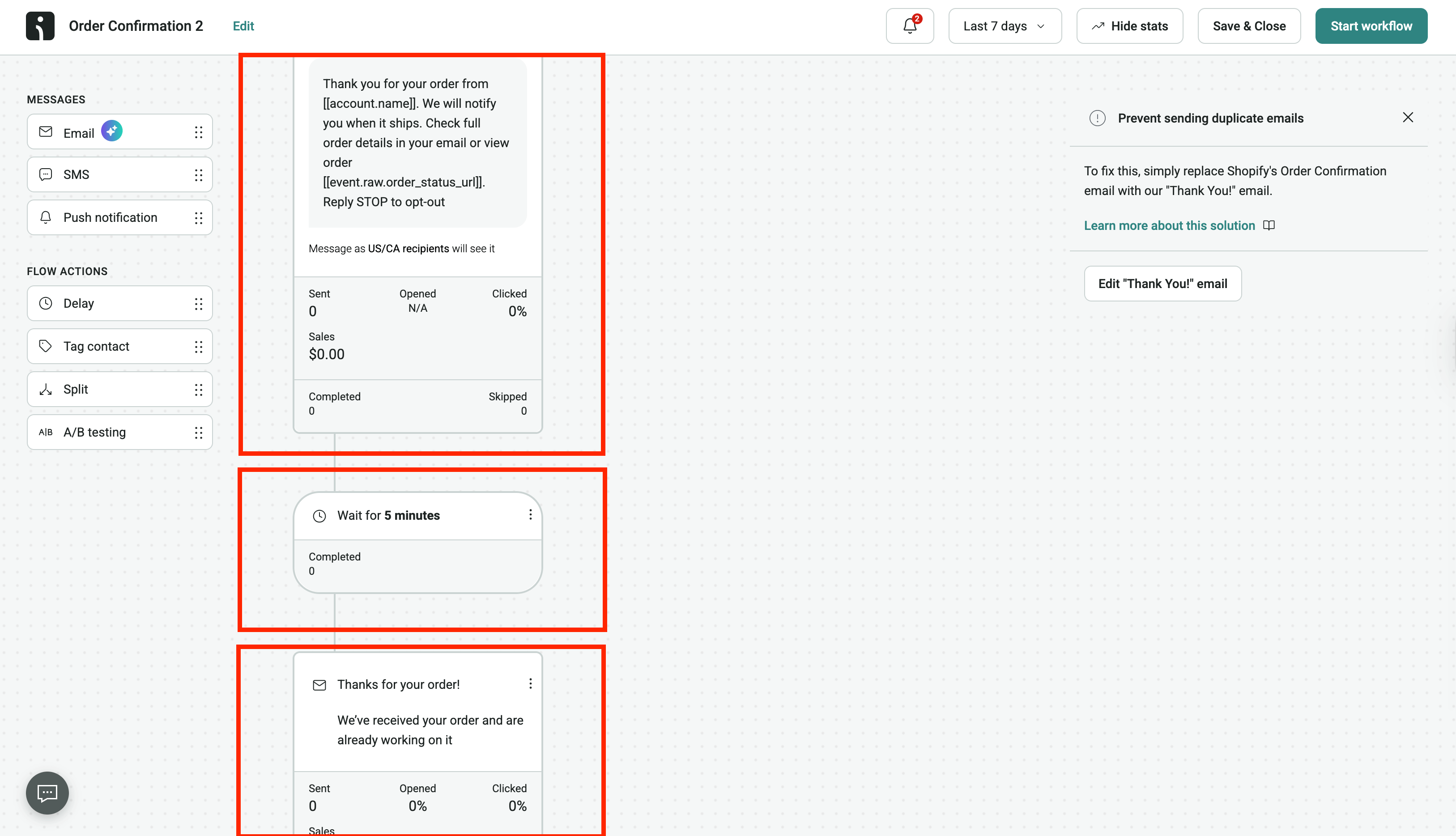
This is where automation matters. Marketing automation tools like Omnisend can send confirmation emails almost immediately. Here’s what the automation workflow for order confirmation looks like on Omnisend:
2. Order is routed to your supplier/dropship fulfillment center
Once the order is confirmed, your system automatically routes it to your supplier. Operationally, your supplier will:
- Pass product quantities and shipping addresses through
- Confirm inventory availability
- Queue the order for fulfillment
From the customer’s perspective, this step should feel invisible, but communication still matters. You can send a confirmation email or SMS to reassure them that their order is being processed.
3. Supplier picks, packs, and ships
This is where fulfillment becomes physical, and yes, this step matters more than most retailers think.
Operationally, this step looks like this:
- Products are picked and quality-checked
- Items are packed and branded
- A shipping label is created
From the customer’s side, timing and transparency are everything. Use order management tools to trigger status updates, emails, or SMS when fulfillment starts.
Clear communication here prevents anxiety and reduces support tickets. Get this right, and the rest feels easy.
4. Shipping, tracking, and customer notifications
At this stage, your product is on the move, and your customer needs proof. Once the supplier ships the order, tracking data is generated.
Operationally, this step includes:
- Carrier pickup and shipment confirmation
- Tracking details synced to your store
- Delivery timelines updated in your system
From the customer’s perspective, this step should feel effortless. Communicate with them by sending:
- Shipping confirmation email or SMS
- Visible tracking link
- Expected delivery date
When customers are informed about what’s happening, they wait patiently and are more likely to make a repeat purchase.
5. Returns, refunds, and customer support
Even with smooth fulfillment, issues can still arise, and sometimes your customer may demand a refund. What matters is how you handle them.
Operationally:
- Customer support responds to inquiries and resolves problems
- Returns go to the supplier
- Refunds are processed according to your store policy
From the customer’s side, clarity is everything. Give:
- Clear return instructions
- Automated refund or return updates
- Fast support response
Remember, good communication can turn a potential negative into future sales. When you keep your customers informed at every step, they stay satisfied and are more likely to patronize you again.
Dropship vs direct fulfillment: which is right for you?
Your fulfillment model affects both operations and customer satisfaction.
Direct fulfillment means you hold inventory yourself, either in-house or through a 3PL provider. This gives you more control over shipping, packaging, and customer experience.
Dropship fulfillment, in contrast, relies on suppliers to store and ship products on your behalf, reducing upfront costs and operational complexity.
The table below is a comparison to show you the bigger picture:
| Criteria | Dropship fulfillment | Direct fulfillment |
|---|---|---|
| Startup cost | Low upfront investment | Higher inventory and warehousing costs |
| Profit margins | Lower per unit | Higher per unit |
| Inventory risk | Minimal | Full responsibility for stock |
| Flexibility | Can test products quickly | Slower to add new SKUs |
| Shipping speed and control | Limited | Full control over speed and carriers |
| Branding and packaging | Limited options | Fully customizable |
| Customer experience | Relies on the supplier | Fully controlled, consistent experience |
| Scalability and complexity | Easier to start, and can be complex with multiple suppliers | Requires careful inventory management and scaling needs capital |
Here’s when to use each model:
- Dropship fulfillment works best for:
- Low upfront investment
- Flexible product testing
- Limited cash flow
- Offering a wide range of SKUs without managing inventory
- Direct fulfillment works best for:
- Faster shipping
- Predictable delivery
- Maintaining a strong brand identity
- Maximizing profit margins per order
You can also try out the hybrid fulfillment model. This is when you stock bestsellers in-house or with 3PLs while dropshipping experimental or niche products.
Some brands also explore reverse dropshipping. It’s a dropshipping model focused on premium products, not low-cost items. You sell higher-priced goods, invest more in branding, and target quality-first buyers.
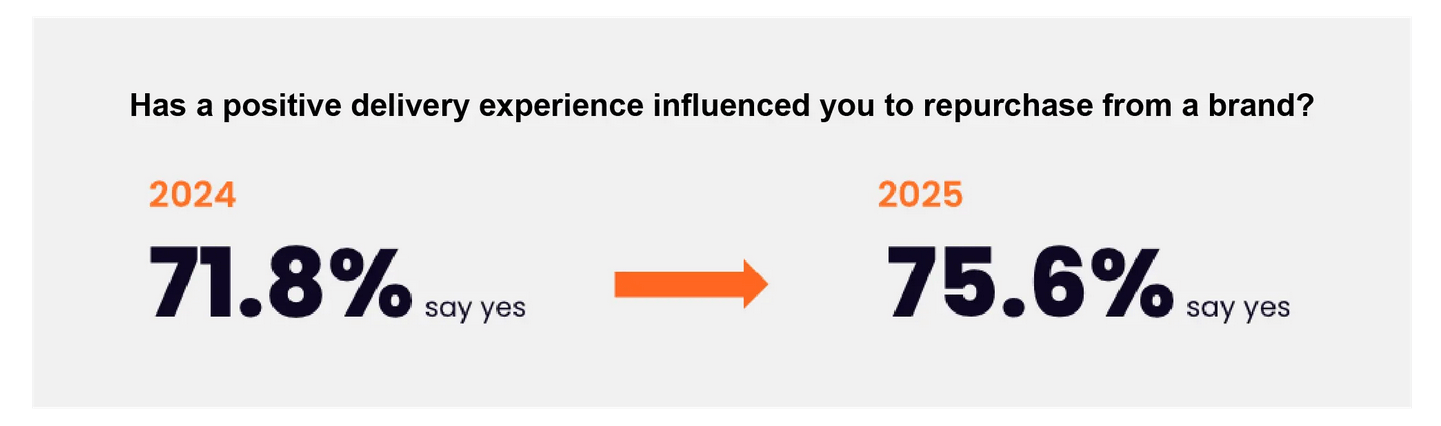
Additionally, in a 2025 consumer survey, Sifted found that 76 % of shoppers say a positive delivery experience influences whether they will buy again from the same brand. This highlights the important link between delivery experience and customer retention:
Some businesses struggle to keep customers informed across the different fulfillment steps, especially when using dropshipping or hybrid models. Delays or lack of updates can lead to confusion and dissatisfaction, even if the fulfillment itself is on time.
This is where Omnisend comes in. As an automation platform, Omnisend integrates seamlessly with any fulfillment model.
Benefits and challenges of dropship fulfillment
Dropship fulfillment offers a low-risk way to enter ecommerce, but it comes with tradeoffs. Knowing both sides helps you choose the right setup and protect the customer experience.
Advantages of dropship fulfillment
- Lower upfront investment: With dropship fulfillment, there’s no need to purchase large inventory
- Faster product testing and catalog expansion: You can quickly add or remove SKUs without financial risk
- Operational flexibility: It’s easy to run your business without managing your own warehouse
- Wider range of SKUs: You get to offer more products than you could realistically store in-house
Common challenges and how to avoid them
- Longer shipping times and limited carrier control: Supplier-led shipping often means slower delivery. Set clear expectations upfront and send tracking updates so customers know what to expect.
- Quality control inconsistencies: Quality can vary by supplier or batch. Vet suppliers carefully and order samples before listing products.
- Stockouts due to lack of real-time inventory: Inventory may run out without notice. Use tools that sync your supplier stock levels and notify customers proactively.
- Complicated returns: Return processes can be confusing for customers. Set clear return policies and offer automated guidance for handling returns.
- Communication gaps between supplier, merchant, and customer: Misalignment can create delays. Establish regular updates and use automated messaging to keep customers informed.
When dropship fulfillment is paired with honest, timely messaging, dropshipping remains a viable strategy for many businesses. Automating order and delivery updates with tools like Omnisend helps maintain trust, even when you don’t control the warehouse.
How to choose dropship fulfillment partners and services
Choosing the right partner is critical in dropshipping. Wrong dropship fulfillment services create delays, confusion, and unhappy customers. The right one supports growth, consistency, and long-term retention.
Use the checklist below to evaluate whether a tool or service qualifies as the best dropshipping app for your business:
Capabilities to look for in a dropship fulfillment provider
A reliable dropship fulfillment provider should meet these non-negotiable criteria:
- Reliable shipping times with clearly defined SLAs
- Real-time or frequent inventory updates
- Ecommerce platform integration, like WooCommerce dropshipping, Wix, Shopify dropshipping, and similar platforms
- Transparent dropship fulfillment pricing
- Branding options such as custom packaging and inserts
- Responsive support and consistent service quality
Omnisend integrates with the major ecommerce platforms most dropshippers use, making fulfillment data accessible for automated communication across many dropship fulfillment models.
Questions to ask potential dropship fulfillment partners
Prioritizing marketing integration and data access, including order status, tracking, and inventory, is non-negotiable for powering automated flows.
To evaluate a dropship fulfillment service’s capability, use this checklist during vendor calls or trials:
- How often is inventory updated
- Is the data accessible in real time?
- What are your average shipping times by region?
- How are delays, backorders, and stockouts handled?
- Which ecommerce platforms and tools do you integrate with?
- Can you pass order status, tracking, and inventory data automatically?
- How do returns work, and who handles customer issues?
- What fees apply beyond base fulfillment costs?
If a dropship fulfillment company can confidently answer these questions, it’s a strong signal that they’re equipped to support your business at scale.
Dropship fulfillment pricing explained
Dropship fulfillment pricing usually includes the following components:
- Storage or account fees
- Pick-and-pack costs per order
- Shipping fees by weight, size, or destination
- Extra charges for returns, branded packaging, or oversized items
As a merchant, you should always request a full pricing breakdown before committing to a dropship fulfillment company.
“Marketing integration is a critical evaluation factor. If a fulfillment partner can’t reliably pass order and tracking data, you lose the ability to automate updates and protect your customer experience.” — Marty Bauer, Ecommerce Expert at Omnisend
Essential tools for dropshipping order management
Efficient dropshipping requires a connected tech stack that handles orders, inventory, and customer communication. Below are the dropshipping websites you need, organized by category, with their main features highlighted:
Ecommerce platform with marketplace integrations
Shopify
With Shopify, you can:
- Capture orders, payments, and customer data in one dashboard
- Connect with popular dropship suppliers
- Sell across multiple channels and run automated win-back campaigns
WooCommerce

With WooCommerce, you can:
- Capture orders and customer data on a flexible WordPress-based platform
- Sync with multiple marketplaces and suppliers
- Extend functionality with plugins for inventory tracking, payments, and order management
Order and inventory management tools
ShipStation

With ShipStation, you can:
- Automate fulfillment and shipping label creation
- Track orders across multiple suppliers and carriers
- Set up batch processing and automate custom shipping rules
DSers
With DSers, you can:
- Automate order import and routing for AliExpress and other suppliers
- Sync inventory to prevent overselling
- Manage bulk orders and supplier relationships
Marketing automation and customer communication
Omnisend

With Omnisend, you can:
- Automate email and SMS tied to order and shipping events to decrease the response time
- Pull real-time order, tracking, and delivery data from ecommerce platforms
- Drive revenue with high ROI, earning an average of $79 for every $1 spent
- Trigger flows for order confirmations, shipping updates, delivery notifications, review requests, and win-back campaigns
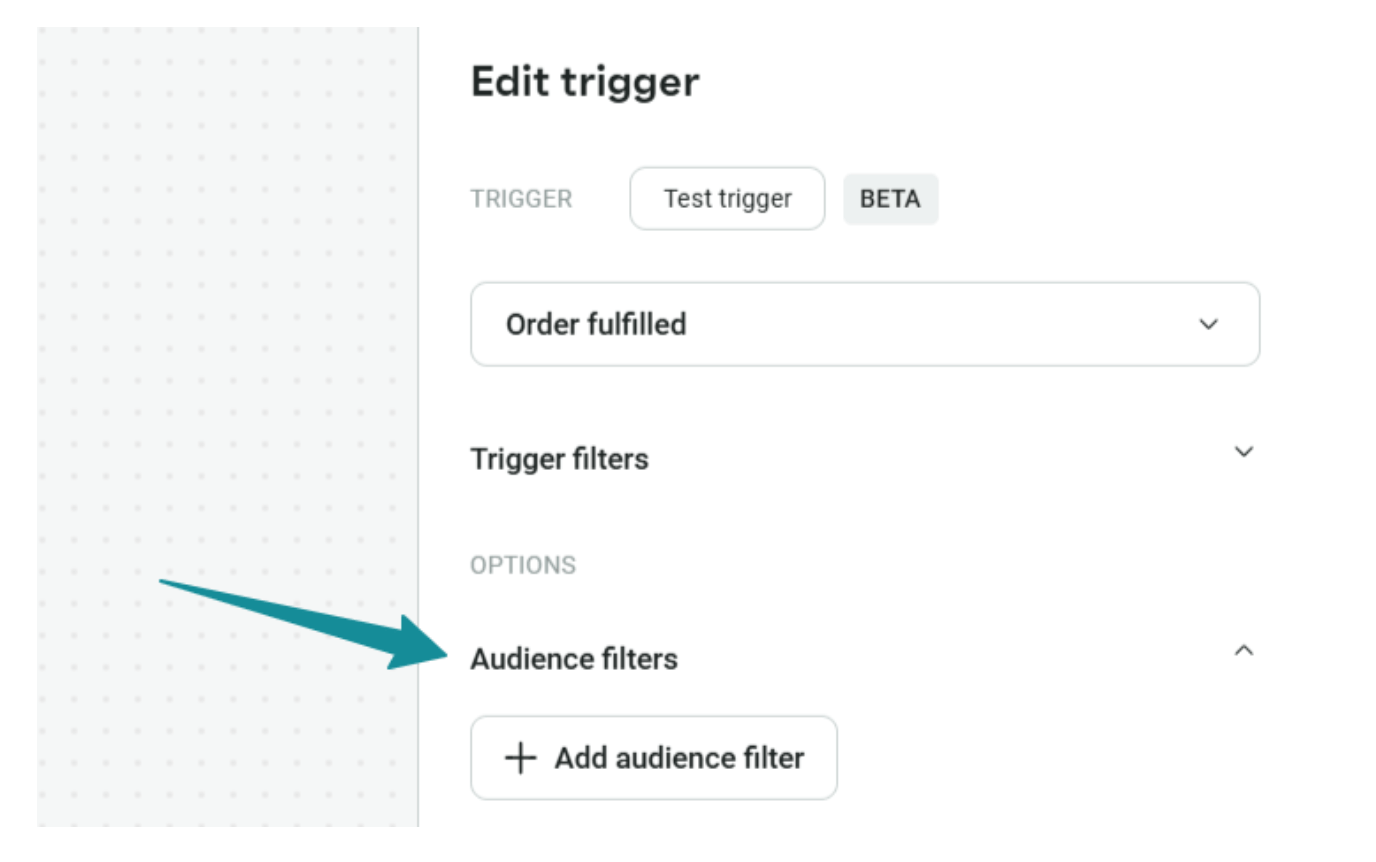
The screenshot below shows Omnisends’ automation workflow for editing trigger and audience filter:
Zendesk

Zendesk lets you:
- Manage customer inquiries about orders, returns, and delays
- Centralize communication for faster resolution
- Track and analyze service performance to improve customer care
With these tools in place, orders flow seamlessly from your store to suppliers.
Note that while communication is important, doing it individually for every customer takes time. This is why marketing automation bridges the gap, and the impact is measurable.
Omnisend’s 2025 ecommerce marketing report shows that automated emails accounted for 37% of all sales while making up just 2% of total email volume. This demonstrates the power of marketing automation.
Best practices to run dropship fulfillment smoothly
Running dropship fulfillment requires clear communication, automation, and proactive handling of potential issues. Follow these best practices to keep your customers informed, reduce errors, and strengthen trust:
- Align shipping expectations with your marketing
- Be transparent about shipping times on your product pages, in carts, and in post-purchase emails
- Use location-based messaging to set accurate expectations for international vs. domestic deliveries
- Highlight estimated delivery windows and any potential delays upfront
- Provide FAQs or shipping info pages explaining your fulfillment process
- Highlight supplier or warehouse locations to set realistic delivery expectations
- Automating communication
- Set up automated order confirmation emails and SMS immediately after purchase
- Trigger shipping notifications and in-transit updates when the supplier ships the order
- Automate delivery confirmations, review requests, and post-purchase win-back campaigns
- Send reorder reminders or replenishment suggestions based on past purchase behavior
- Use tools like Omnisend to manage email and SMS workflows for all post-purchase communications
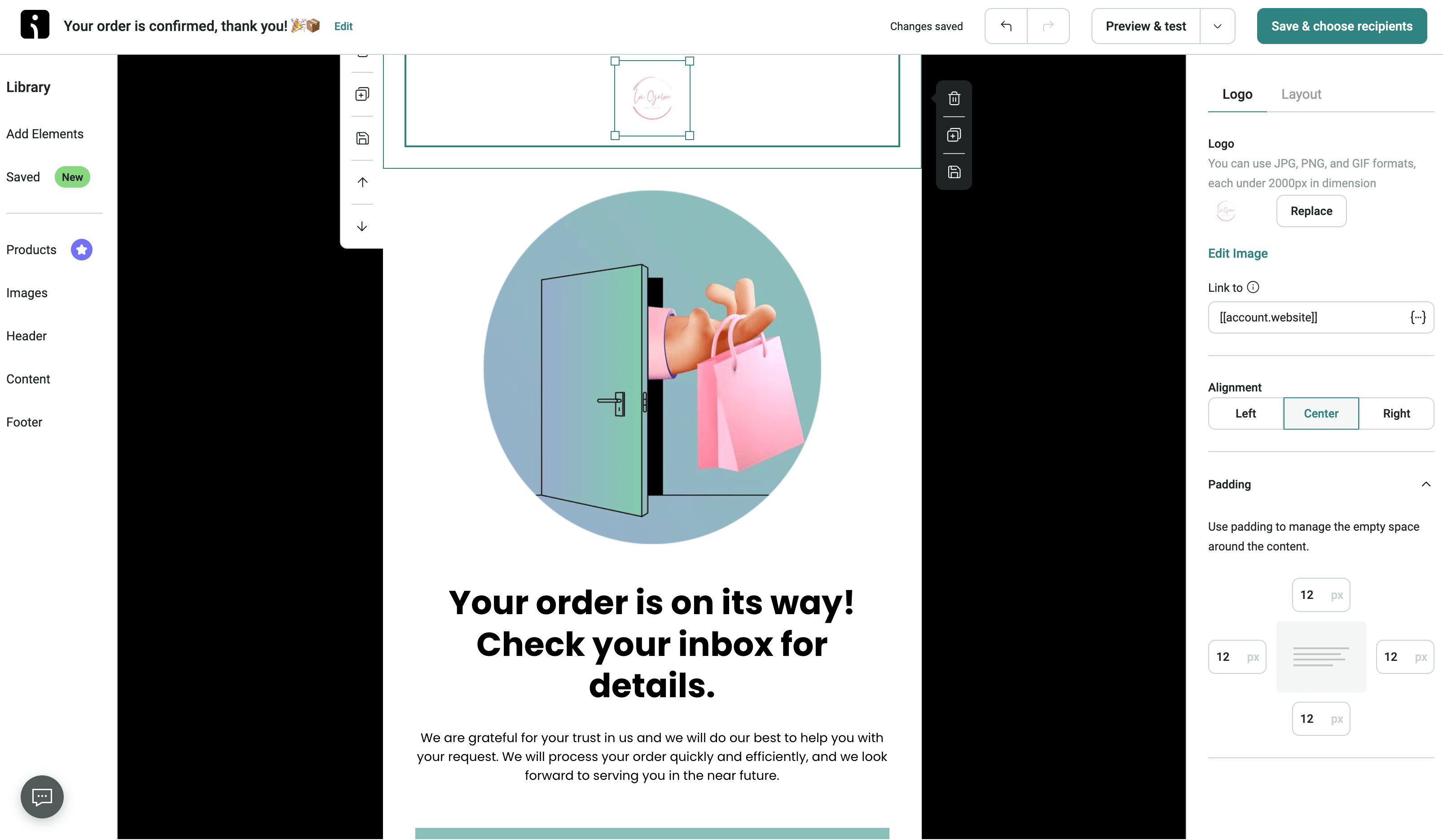
The screenshot below shows how you can use Omnisend’s email builder for your shipping update template:
- Handling delays, stockouts, and unhappy customers
- Send proactive notifications for delays with clear timelines and alternatives
- Offer alternative product recommendations when items are out of stock
- Provide discount codes or coupons where appropriate to maintain goodwill
- Include apology messages and personalized responses for negative experiences
- Monitor and respond quickly to customer inquiries to prevent escalation
”Proactive, automated messaging around fulfillment reduces customer support load and improves reviews.” — Marty Bauer, Ecommerce Expert at Omnisend
For example, a fashion dropshipping store used Omnisend to automatically send order confirmations, shipping updates, and delivery notifications.
As a result, her customer questions about order status dropped significantly, and repeat purchases increased because buyers always knew when to expect their items.
This shows that when you implement these practices, even if you dropship furniture or other items, you can be sure of a smoother fulfillment process.
Measuring and optimizing your dropship fulfillment
Monitoring key metrics and continuously optimizing your process helps ensure dropship fulfillment runs smoothly, encouraging repeat purchases even without direct warehouse control.
KPIs to track for dropship fulfillment
- Average fulfillment time: Time from order placement to shipping and delivery
- Order accuracy/error rate: Mistakes in items, quantities, or addresses
- Return rate and reasons: Identify recurring issues and prevent them
- On-time delivery rate: Ensure orders arrive within promised timelines
- Customer satisfaction metrics: CSAT, NPS, and product reviews reveal buyer experience
- Support ticket volume: Monitor inquiries related to shipping or fulfillment problems
- Impact on repeat purchase rate and CLV: Connect fulfillment quality to customer lifetime value
Timely, accurate fulfillment improves engagement with post-purchase emails, drives repeat orders, and strengthens loyalty campaigns.
The screenshot below shows an Omnisend automation flow dashboard highlighting key performance metrics across different workflows:
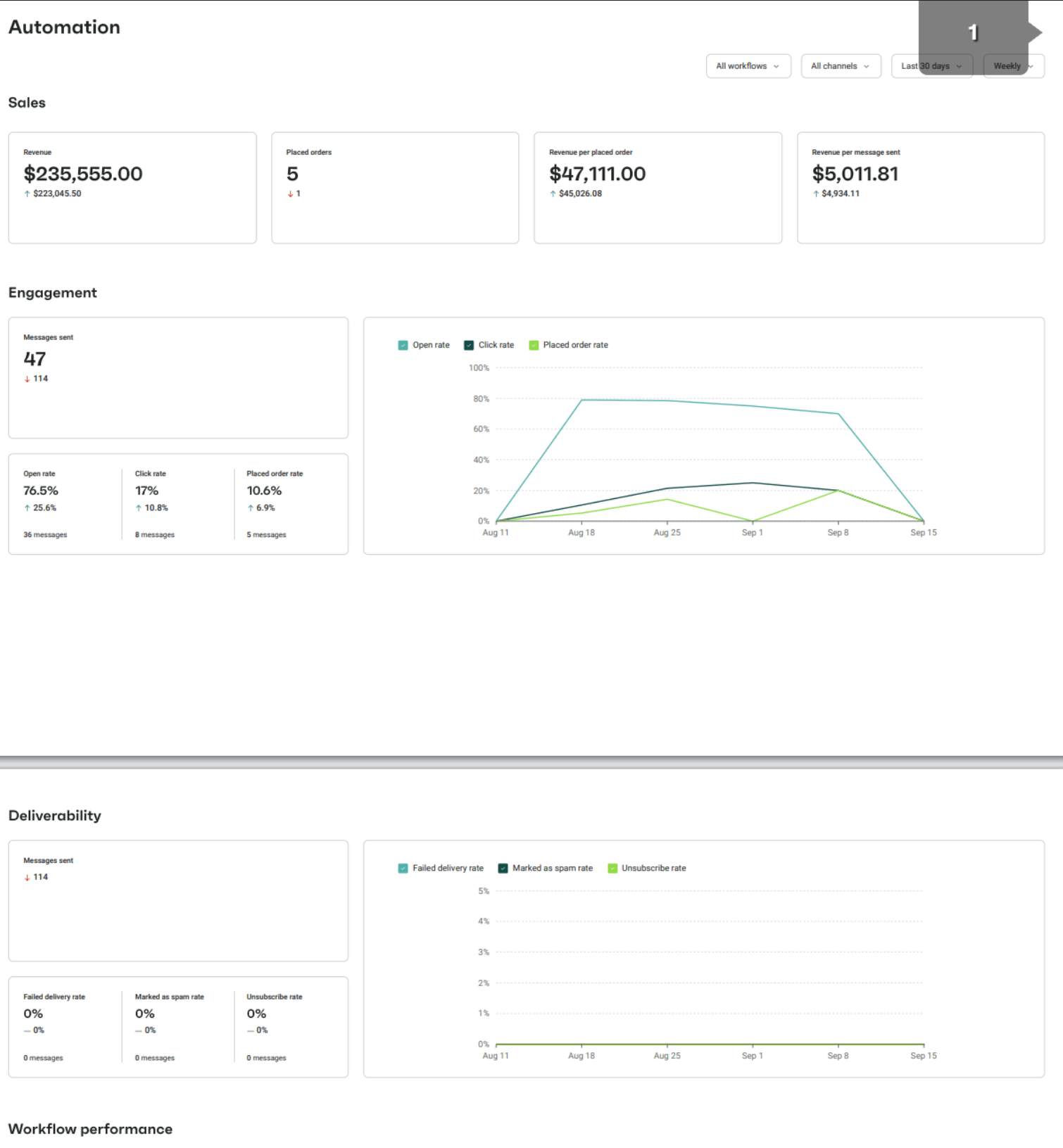
By monitoring these KPIs, you can optimize both fulfillment and marketing strategies for stronger customer retention and revenue growth.
Using data to improve customer experience and retention
Tracking KPIs is only valuable if you use the insights to improve customer experience and retention. Here’s a flowchart you can follow:
- Measure: Collect KPIs consistently across suppliers and internal systems
- Identify bottlenecks: Look for recurring delays, errors, or stock issues
- Test improvements: Adjust fulfillment processes and optimize your customer communication
- Review results: Monitor changes in metrics and iterate continuously
How Omnisend supports dropshipping fulfillment success
With Omnisend as a dropshipper, you can turn fulfillment from a potential weak point into a competitive advantage by automating your customer communication across every stage of the order journey.
Omnisend workflows tailored for dropship fulfillment
Omnisend can automate the following in your dropship fulfillment to ensure your customers stay informed and engaged:
- Order confirmation: Sends immediate reassurance that the order is successfully placed
- Shipping and tracking update: Provides real-time notifications as packages move toward the customer
- Delivery confirmation: Alerts customers when their order arrives, reducing uncertainty and support inquiries
- Review and UGC requests: Collect feedback and user-generated content after delivery
- Win-back flows: Re-engage satisfied customers with relevant offers
- Recovery flows: Address negative experiences or delayed orders with apology messages and personalized offers
Omnisend integrates with Shopify, WooCommerce, Wix, BigCommerce, and other major platforms.
Its global SMS and email capabilities, combined with advanced features like A/B testing and product recommendations, give you complete control over messaging across any dropshipping fulfillment model.
Example: Post-purchase and shipping-delay flows
A book dropshipper used Omnisend to create this 5-step post-purchase sequence:
- Order confirmation email and SMS
- Shipping notification with tracking link
- In-transit update for longer dropship timelines
- Delivery confirmation and review request
- Follow-up win-back offer for repeat purchase
The result he got was clear:
- Support tickets dropped
- Customer satisfaction improved
- Repeat purchases increased
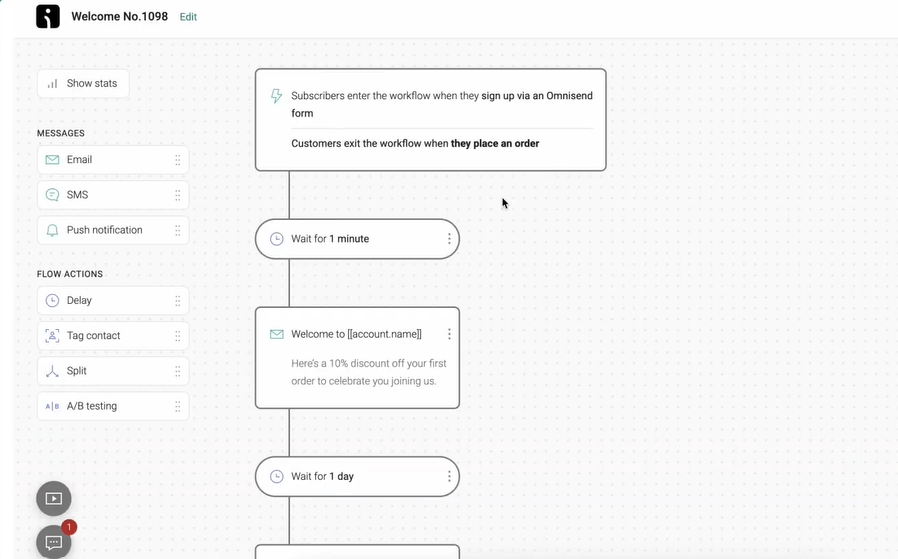
You can even add a split condition to your workflows.
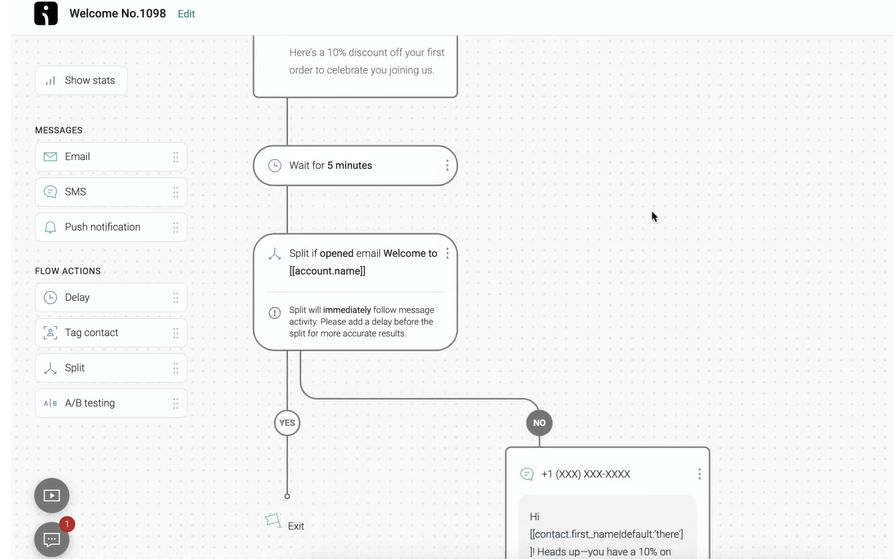
You can apply the same structure to your dropship fulfillment to attain the same result.
Beyond workflows, Omnisend delivers measurable value. You average $79 in return for every $1 spent, outperforming tools that cost more without driving similar results.
Its free plan includes essential ecommerce automations, while paid plans provide access to dedicated customer success managers.
Compared to alternatives like Klaviyo, which can cost nearly twice as much for comparable features, Omnisend focuses on ROI.
Users benefit from 24/7 award-winning support, an intuitive interface, global SMS capabilities, product recommendations, and full email A/B testing. For dropshipping brands, this means automated communication, actionable insights, and measurable growth without unnecessary complexity or high costs.
Conclusion
Dropship fulfillment lets you sell a wide range of products without holding inventory. Your supplier stores, packs, and ships orders after each sale.
Compared to direct fulfillment, the trade-off is control versus flexibility. You give up speed, but you gain lower risk and faster scaling. Remember, the right choice between the two fulfillment models depends on your margins, brand promise, and growth goals.
After choosing the right fulfillment model, success relies on strong suppliers, reliable tools, and clear processes.
Best practices matter, but communication matters even more. When shipping takes longer, consistent automated updates reduce anxiety and build trust.
With the right partners and a great tech stack, especially marketing automation platforms like Omnisend, your dropship fulfillment solution becomes scalable and customer-friendly.
Sign up with Omnisend to automate dropship fulfillment updates and keep customers engaged
Quick sign up | No credit card required

TABLE OF CONTENTS
TABLE OF CONTENTS


Subscribe and don’t miss any updates!
No fluff, no spam, no corporate filler. Just a friendly letter, twice a month.