
 Omnisend AI


 OFFER
OFFER







Drive sales on autopilot with ecommerce-focused features
See FeaturesWith Easter 2026 on April 5, the season presents ecommerce businesses a real opportunity to boost sales not only for candy and toys but also for gifts, food, home goods, fashion, beauty, and family-oriented products. According to the latest NRF data, 79% of consumers in the USA said they planned to celebrate Easter in 2025. Projected spending is expected to reach $23.6 billion, averaging $189.26 per person. Just as importantly for online brands, 36% of Easter shoppers said they planned to shop online.
That makes Easter more than a nice seasonal moment. It’s a real revenue window for brands that show up with the right offer, message, and timing. In this guide, we’ll break down the latest statistics, practical channel-specific tactics, and real campaign examples to help you plan smarter Easter marketing strategies. Below, we’ll also share exclusive data from over 100,000 Omnisend merchants to show what actually drives Easter sales.
Easter marketing statistics you need to know
Before you plan your Easter promotions, it helps to look at the bigger shopping picture first. The latest global Easter benchmarks show that demand remains strong, and the 2025 charts provide a clearer view of how shoppers responded to both email campaigns and automated emails during Easter week.
Consumer spending trends
Easter is still an important shopping season. Demand goes beyond candy and novelty items. Shoppers look for food, gifts, clothing, decorations, and products for families. This makes Easter important for many ecommerce brands. For marketers, the real takeaway is that this is a timely buying window, and shoppers are ready to convert when the offer, timing, and message line up.
Easter email and SMS performance data
The 2025 Easter-week charts we created for you make two clear points. First, the click-to-conversion rate rose the most near the end of the holiday period. This suggests that people’s intent to buy peaked right before Easter.
Second, the total number of email orders increased during the main shopping days. This shows that better results came from maintaining visibility throughout the week instead of relying on one single email.
These charts highlight a simple lesson: Easter success comes from building early momentum and consistently engaging during the days with the highest intent.
When to launch your Easter marketing campaigns
For Easter 2026, the important dates are Good Friday, April 3, Easter Sunday, April 5, and Easter Monday, April 6. The best way to prepare is to build momentum instead of waiting until the last minute.
Key dates:
March 8: Start planning → March 22: First teaser → March 30–April 3: Peak send window → April 5: Easter Sunday → April 6: Easter Monday flash sale
Don’t wait until Easter week to start. Get your campaign and creative in place in early to mid-March, about three to four weeks ahead. Two weeks before Easter, start warming up your audience with teaser emails or early-access offers. Then, during the week of March 30, go into full campaign mode with your strongest deals, product bundles, gift guides, and reminders that nudge people to buy before time runs out.
Our historical Omnisend benchmark shows that Good Friday had the highest sales, while conversion rates peaked on Good Friday and Easter Monday, so those are the best days for your biggest sends. With Omnisend, you can schedule your entire Easter email and SMS sequence in advance, including timed delays and automated sends at peak moments.
Easter email marketing ideas
Email remains one of the best channels for Easter campaigns because it allows you to do more than just announce a sale. You can create excitement, customize offers for different audiences, and maintain a seasonal brand presence without making every message a simple discount offer. The key is to ensure each email feels timely, relevant, and easy to respond to.
Easter-themed email content
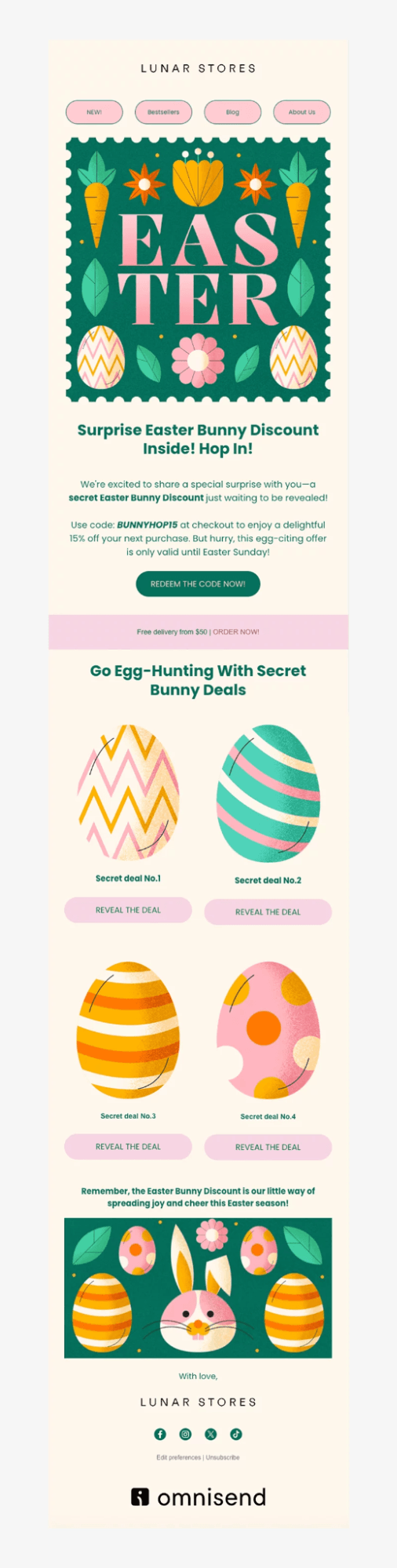
Your Easter emails should feel seasonal right away, starting with the subject line. Use clear Easter references, but keep them tied to the offer so the message does not feel gimmicky. A few examples: Hop into Easter savings, Your Easter weekend offer is here, and Egg-stra treats, just in time for Easter. If you want more inspiration, this list of Easter email subject lines can help, and a subject line tester is useful for checking tone and clarity before you send.
Inside the email, keep the design simple and seasonal. Think spring colors, subtle Easter imagery, and one clear CTA. Omnisend’s drag-and-drop builder and email templates make it easier to put together Easter-ready campaigns without having to start from scratch.
Segmentation and personalization
A generic Easter campaign can still work, but a targeted one usually works better. Instead of sending the same message to everyone, segment your lists based on purchase history, browsing behavior, or engagement level. Then personalize emails so the offer matches what each group is most likely to care about.
If someone has shopped with you recently, an Easter bundle might be enough. If they have gone quiet, a stronger win-back offer will probably work better. VIP shoppers may react better to early access or a gift-with-purchase email instead of a simple discount. This is also a good opportunity to improve your existing workflows. You can add Easter-themed messages to your welcome series or cart recovery emails during the holiday season.
Exclusive offers and flash sales
Easter campaigns work best when the offer feels specific to the moment. That could mean a BOGO deal on seasonal items, an Easter egg hunt discount code, or a flash sale running from Good Friday through Easter Monday. The point is to give people a reason to buy now, not later.
This is where automation plays a role. Instead of depending only on scheduled sends, you can create behavior-based reminders for shoppers who looked at Easter products, clicked on them but didn’t buy, or left items in their cart. This approach gives your promotion a longer runway without making it seem repetitive.
Easter newsletter content
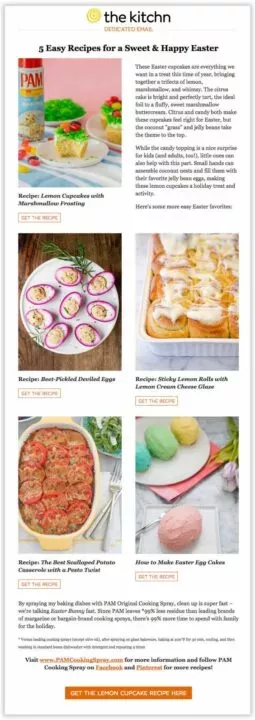
Not every Easter email has to be sales-first. A themed newsletter can keep your brand relevant while giving subscribers something more useful or enjoyable to open. Recipes, hosting tips, gift ideas, spring picks, or family activity ideas can all work well, depending on your brand.
The best versions still connect to products in a natural way. This is what makes The Kitchn example effective. What works here is the flow. It begins with useful seasonal content and only then introduces the product. This approach makes the email feel less pushy and much more effective.
Easter SMS marketing ideas
SMS is a robust Easter channel because it works best for timely, action-focused messages. Industry benchmarks often place SMS open rates in the 90%–98% range, even if open-rate tracking itself is imperfect, which is why text is especially useful for flash sales, reminders, and last-chance nudges. If you’re using both email and SMS marketing, the smartest approach is to coordinate them rather than treat them as separate campaigns. With Omnisend, you can combine Easter email and SMS into a single automation workflow, so shoppers who ignore an email can still receive a follow-up text at the right moment.
Flash sale alerts
Use SMS for your shortest, highest-urgency offer. A Good Friday or Easter Monday text can work especially well when the discount is clear, and the deadline is tight. The message would be best if it was short, quite specific, and easy to act upon.
“🐣 Easter Flash Sale! 24 hours only — get 30% off sitewide. Use code EASTER30 at checkout: [link]”
So, use this type of messaging as a follow-up to an Eastern campaign, not a replacement.
Interactive Easter egg hunt via SMS
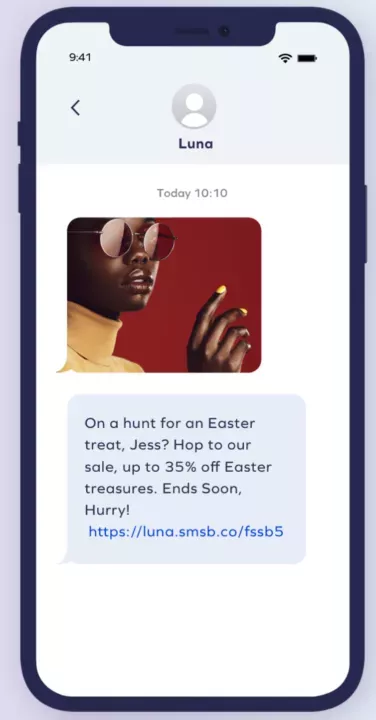
SMS also works well for simple interactive campaigns. An Easter egg hunt is a good example because it gives shoppers a reason to click, browse, and stay engaged a little longer.
“🐰 Easter Egg Hunt! Clue #1: Find the hidden bunny on our New Arrivals page to unlock a special discount: [link]”
This format turns a promo into a small experience, making it feel more fun than a standard discount text.
Easter social media ideas
Social is most useful at Easter when it gives people something to do, share, or save. Keep the content light, visual, and easy to join in, then use it to drive traffic to your Easter landing page or an email signup form you can nurture later with welcome automation.
Photo contests and user-generated content
Photo contests are still one of the easiest ways to encourage participation. Keep the prompt simple and seasonal. Ideas include decorating Easter eggs, setting up family Easter tables, taking photos of spring outfits, or creating Easter recipes. Ask people to post with a branded hashtag. Then, share the best entries in Stories or Reels. Short videos are important as well. Instagram recommends that Reels shown to non-followers should be 3 minutes or less, so keep entries and recap content brief.
User-generated content works best when the prompt naturally fits your product. A baking brand can ask customers to share Easter cakes or brunch bakes. A home brand can ask for spring table styling. A beauty brand can turn Easter into a pastel makeup challenge. The goal is not polished content — it is content that feels real enough to earn trust.
Influencer collaborations
Influencer partnerships work best when the creator can actually demonstrate something useful. One example from Omnisend’s earlier roundup was Paper Mart, which partnered with an influencer to showcase Easter party bag ideas using craft materials such as washi tape and ribbon. That kind of seasonal how-to content usually lands better than a generic sponsored post.
Easter website and ecommerce ideas
Your site should make Easter feel visible the second someone lands on it. That does not mean a full redesign. A few seasonal updates on your homepage, product pages, and sign-up areas can make the campaign feel relevant. These kinds of updates do more than make your site feel seasonal — they can keep people engaged long enough to subscribe or buy.
Easter-themed design and popups
A simple Easter refresh can go a long way. Add soft spring colors, subtle seasonal graphics, and Easter messaging to your homepage or a dedicated landing page so the campaign feels intentional from the start. This works especially well for bundles, gift edits, or limited-time collections.
Popups are useful here too, especially if you want to grow your list before the holiday weekend. Omnisend’s forms builder includes popup templates you can customize for Easter promotions, sign-up incentives, or early-access offers without needing a developer.
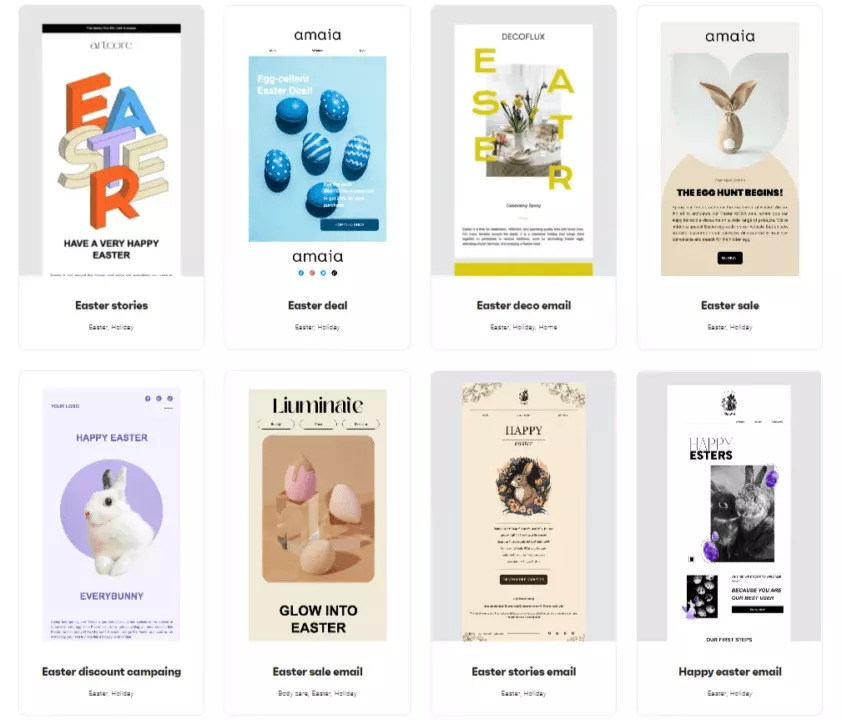
Virtual Easter egg hunts and gamification
If you want people to spend a little longer on your site, give them something to interact with. A virtual Easter egg hunt is an easy one to pull off: place hidden eggs or discount codes on key pages and offer a reward when shoppers find them. A short quiz or Easter-themed trivia can work too. Done right, these ideas make the shopping experience feel lighter and more engaging, not gimmicky.
5 Easter marketing campaign examples
Looking at real campaigns is useful because it shows how Easter ideas work outside a brainstorm doc. Not every strong example has to be brand new, either. Some older campaigns still hold up because the tactic is what matters: make the offer seasonal, keep the execution simple, and give people a reason to click, share, or buy.
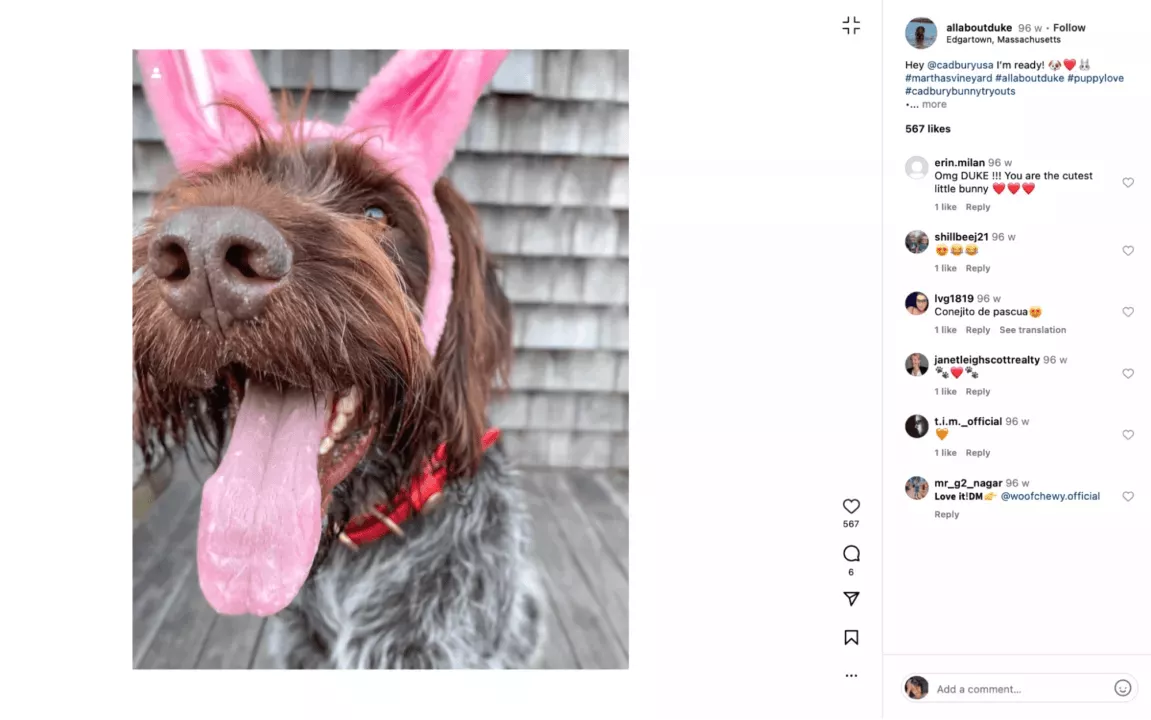
Cadbury’s #CadburyBunnyTryouts
Cadbury’s Bunny Tryouts remains a standout Easter UGC campaign, and the brand continued it in 2024. Asking people to nominate their pets as the next Cadbury Bunny made the whole thing feel more like a fun event than a traditional ad, which is a big part of why it spread so easily.
Key takeaway: UGC contests work best when they are fun, easy to join, and emotionally on-brand.
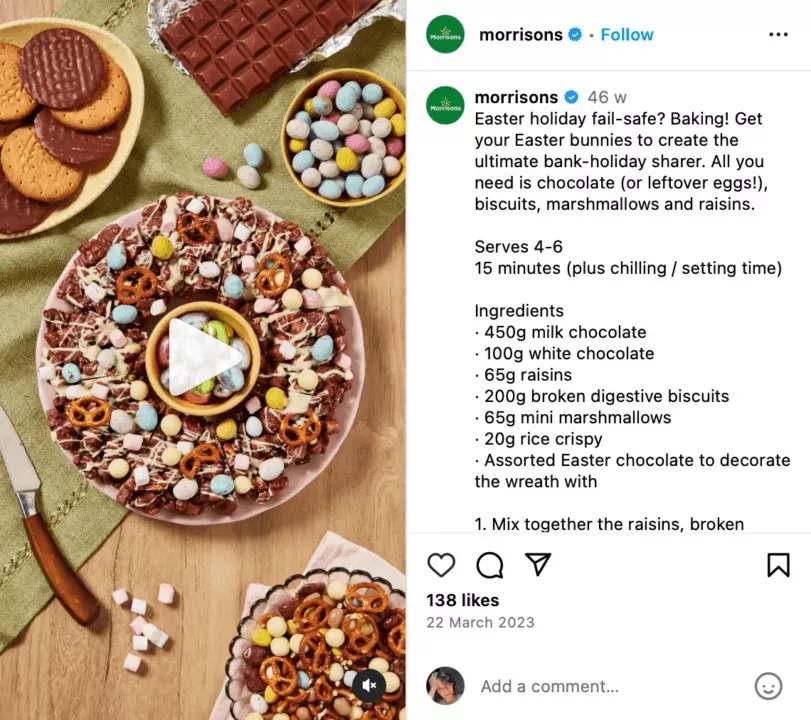
Morrison’s Easter recipes
This worked because Morrisons gave people something genuinely useful before asking for anything in return. Easter recipes are the kind of content people might actually save, share, or come back to, especially around a holiday built around food. By building its seasonal products into those recipes, the brand stayed visible without falling into the usual trap of sounding like every other holiday promotion.
Key takeaway: recipe, hosting, or how-to content is often a better sales driver than a straight product post.
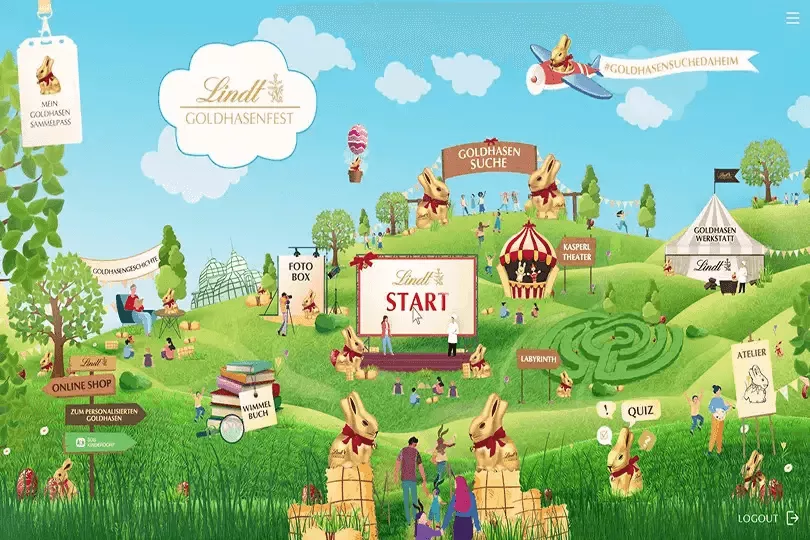
Lindt gold bunny hunt
Lindt engaged in website gamification by hosting a virtual bunny hunt. This event encouraged visitors to explore the site in return for rewards, discounts, or prizes. It suited the brand well since it felt playful, high-end, and clearly tied to Easter.
Key takeaway: gamified browsing works when it adds momentum to shopping instead of distracting from it.
Tattly’s Easter email
Tattly handled this really well. Instead of trying to shove its product into Easter in an obvious way, it came up with a use for it that felt fun and surprisingly natural: decorating eggs with temporary tattoos. That gave people something interesting to look at and maybe even try themselves, which made the email feel more inspiring than promotional.
Key takeaway: content-led Easter emails can sell without sounding salesy. You can create similar Easter email examples with Omnisend’s drag-and-drop editor and holiday-ready templates.

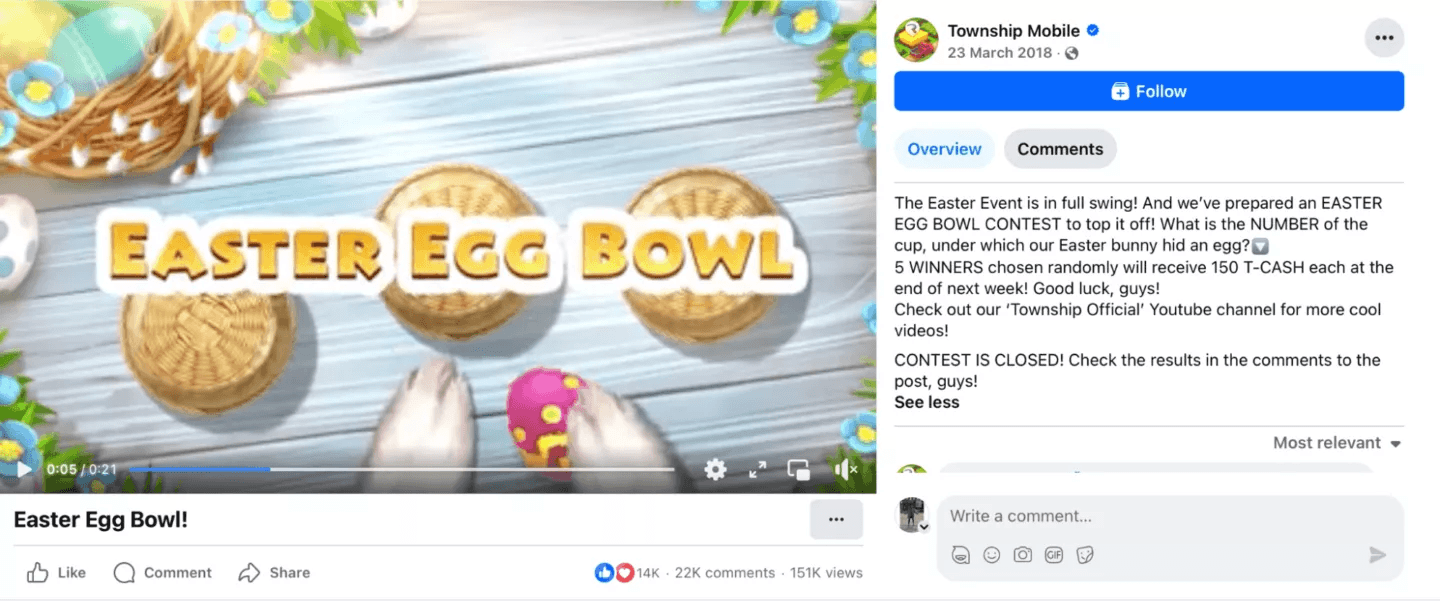
Township mobile game’s Easter contest
Township showed how low-friction social contests can still perform well. Its Easter-themed Facebook game was simple, playful, and easy to join, which helped drive participation without asking much from the audience.
Key takeaway: the easier the mechanic, the easier it is for people to take part and share.
How to maximize ROI on your Easter campaigns
A strong Easter campaign is not just about sending more messages. It is about learning what works early, tracking the numbers that matter, and using automation to keep revenue coming in throughout the holiday window.
A/B test your campaigns
Before your biggest Easter send, test the parts most likely to affect opens and clicks. That usually means subject lines, sender names, offers, and creative layout. Even a small lift can make a big difference when your main promotion goes out. Omnisend lets you run A/B testing on key email elements so you can make decisions based on actual customer behavior rather than guesswork.
Track the right KPIs
Do not judge Easter performance by the open alone. Focus on the numbers tied to revenue: conversion rate, click-through rate, average order value, revenue per message, and total sales generated by each channel. That gives you a clearer picture of what is worth repeating next year. Omnisend’s real-time reporting makes it easier to see which Easter emails and texts actually drove purchases.
Use automation to scale results
Your best-performing Easter campaigns should not depend entirely on manual sends. With pre-built automation workflows, you can keep welcome emails, abandoned cart reminders, and post-purchase follow-ups running in the background while you focus on strategy. That matters even more during Easter, when automated emails can keep converting between your scheduled campaign drops.
Omnisend merchants earn $79 for every $1 spent — one of the highest ROIs in marketing.
Wrap up
With $23.6 billion in Easter spending on the table, this is not a holiday most ecommerce brands can afford to treat as an afterthought. Easter is still a serious sales moment for ecommerce brands, not something to leave until the last minute. The brands that usually do well are the ones that start early, build offers around the season, and keep their message consistent across email, SMS, and their website. The good part is that none of this has to be overly complex to work.
So start with Omnisend today and build your Easter email and SMS campaigns, turn on automation workflows, and keep your spring marketing moving with less manual work.
Start free with Omnisend today — set up your Easter email and SMS campaigns, activate automation workflows, and let your marketing run on autopilot this spring.
Quick sign up | No credit card required
FAQ
When should I start my Easter marketing campaigns?
For Easter 2026, Easter Sunday falls on April 5, with Good Friday on April 3 and Easter Monday on April 6. A practical timeline is to start building creative and offers three to four weeks early, send teasers about two weeks out, and push your strongest promotions in the week of March 30, with your biggest sends around Good Friday and Easter Monday.
How much do consumers spend on Easter?
In the USA, the latest NRF forecast puts 2026 Easter spending at $24.9 billion. That makes Easter a serious seasonal revenue opportunity, not just a minor holiday promo window.
What are the best Easter email subject lines?
The best Easter subject lines usually do one of three things well: make the offer clear, add seasonal language, or create urgency. Think lines like Hop into Easter savings, Your Easter weekend offer is here, or Last chance: Easter deals end tonight. Omnisend’s guide to Easter email subject lines and its free subject line tester are both useful here.
Do Easter marketing campaigns work for non-food brands?
Yes. Easter shopping is not limited to candy or groceries. NRF’s 2025 breakdown included spending on gifts, clothing, decorations, and food, and Omnisend’s earlier roundup also highlighted non-food examples such as Tattly’s Easter email campaign.
What channels work best for Easter marketing?
Email should do the heavy lifting, while SMS works best for reminders, flash sales, and last-chance pushes. The strongest setup is to combine email and SMS marketing into a single workflow, then use automation to send follow-ups based on clicks, cart activity, or timing.
How can small businesses market for Easter on a budget?
Keep it simple: one Easter landing page, one core offer, one email campaign, one SMS reminder, and one themed popup or signup form. Small brands usually get the best return by reusing existing products, repackaging them seasonally, and letting automation handle welcome emails, cart recovery, and follow-ups without extra manual work.

TABLE OF CONTENTS
TABLE OF CONTENTS


Subscribe and don’t miss any updates!
No fluff, no spam, no corporate filler. Just a friendly letter, twice a month.