Omnisend AI


 OFFER
OFFER









A limited-time offer is one of the fastest ways to motivate shoppers into taking action. People are less likely to delay a decision when time is running out.
That’s what makes limited time offers so effective in marketing. They give shoppers a reason to buy immediately in ecommerce, which can be the difference between winning a sale and losing it.
To make this strategy work, urgency alone is not enough. You also need the right message, timing, and channel.
Email and SMS give ecommerce businesses a direct way to reach shoppers. You can send an offer immediately, highlight the deadline, and encourage faster decisions.
In this guide, you’ll learn how a limited time offer works, the different types you can use, and real examples that actually convert.
Quick answer: What is a limited time offer
A limited time offer is a deal that runs for a short, fixed period. Once the deadline passes, the offer is no longer available.
It gives shoppers a clear reason to act now rather than wait. A clear deadline reduces hesitation and encourages faster decisions.
Why limited time offers work in email marketing
Limited time offers work because they change how people make buying decisions. According to Zippia, emails that create urgency can increase open rates by around 22%.
People don’t like missing out on a good deal. That simple fear drives faster action, especially in ecommerce.
The psychology behind urgency
Urgency works because of two things: scarcity and fear of missing out. When an offer is only available for a short time, the product feels more valuable. Here is how this appears in real situations:
- A shopper opens an email and sees “Ends tonight”
- They pause instead of saving the email for later
- They make a quick purchase to avoid missing out
This is scarcity in action. It is one of the strongest reasons limited time offers work so well.
How urgency impacts conversions
A clear deadline gives people less time to overthink the purchase. Instead of leaving the product in their cart or planning to come back later, they are more likely to buy while the offer is still available.
Countdown timers and last-chance reminders make that deadline harder to ignore. When shoppers can see exactly how much time remains, they are more likely to act before the offer expires.
A limited time offer is not only about discounts. It is also about timing, customer psychology, and streamlining the buying process.
| Type of urgency | Example | Best used for | Risk to avoid |
|---|---|---|---|
| Time-based urgency | “20% off until midnight” | Flash sales, seasonal promotions | Extending the deadline after saying it’s final |
| Quantity-based urgency | “Only 5 left in stock” | Low-stock or limited-edition products | Using fake or inaccurate stock claims |
| Exclusive urgency | “Subscriber-only sale ends today” | Loyalty and VIP campaigns | Making “exclusive” offers widely available |
| Event-based urgency | “Order by December 18 for Christmas delivery” | Holidays, launches, seasonal events | Creating arbitrary deadlines that don’t matter to customers |
Types of limited time offers you can use
A limited time offer can take different forms depending on your goal. Some are designed to drive quick sales, while others focus on new customer growth or seasonal demand.
Different offer types work better at different stages of the buying journey. When the offer matches what shoppers already want, conversions are more likely.
Flash sales
A flash sale is a limited-time offer that only lasts a few hours or days. It’s designed to help your customers decide quickly rather than put off the decision.
Typical duration:
- 24 to 72 hours
- Sometimes under 24 hours for big product launches
Use cases:
- Clearing slow-moving inventory
- Driving quick traffic spikes
- Testing demand for new products
A flash sale works because the short time window forces quick action before customers compare options or delay decisions. According to Salsify, 62% of shoppers say flash sales and other limited-time discounts are a major reason they complete an online purchase.
Seasonal and holiday promotions
Seasonal promotions tap into busy shopping moments, such as holidays or major sales events. They work well because your customers are already in the mood to buy.
Common examples include:
- Black Friday and Cyber Monday campaigns
- Christmas and New Year shopping periods
- Back-to-school or summer sales
For example, during Black Friday, you might provide email subscribers with early access or offer special bundles for a short time.
These campaigns also work well because shoppers expect deals during major events. Data from the same Salsify report indicates that 58% of shoppers wait for events like Amazon Prime Day to make special purchases.
First-time buyer offers
A first-time buyer offer is designed to turn new subscribers into customers shortly after they sign up.
New subscribers pay the most attention in their first few days. Offering them a limited-time offer during this period can help convert their interest into a purchase before they lose momentum.
Common first-time buyer offers include:
- A discount that’s good for 24 to 72 hours after signup
- A welcome offer with a clear end date
- A one-time incentive for a first order
Shoppers respond well to introductory deals. According to the same Salsify report, 32% of shoppers say new customer discounts influence their buying decisions.
Limited-time offer examples that convert
A limited time offer is most effective when it’s simple, specific, and easy to act on. Shoppers should understand the value immediately and know exactly when the offer ends.
Below are real examples that show how timing, structure, and messaging work together to drive action.
1. Limited time flash sale email
This is a classic example of a limited-time offer designed for quick results. In the matcha flash sale, the discount is the first thing people see, which helps grab attention fast:
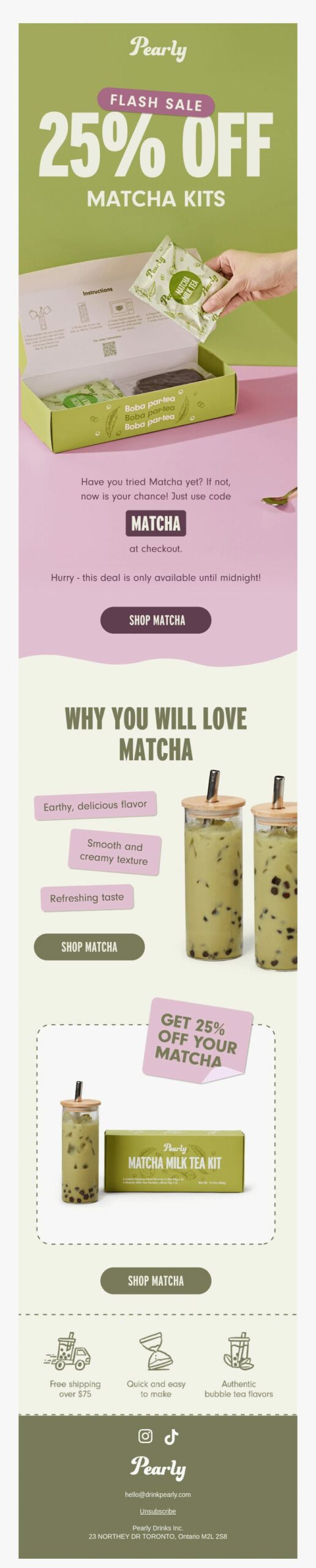
Typical subject line:
- “Flash Sale: 25% off matcha”
Offer structure:
- Discount first
- Product second
- Deadline clearly implied
Timing:
- Sent at the start of the limited time sales window
- Followed by a reminder before the deadline
This type of limited-time offer works well in paid campaigns because it encourages fast decisions without overthinking.
2. Countdown timer campaign
A countdown timer in a limited-time offer adds a sense of urgency. In this Ferrari private sale example, the countdown timer makes it obvious how much time is left, so you know exactly when the offer expires:
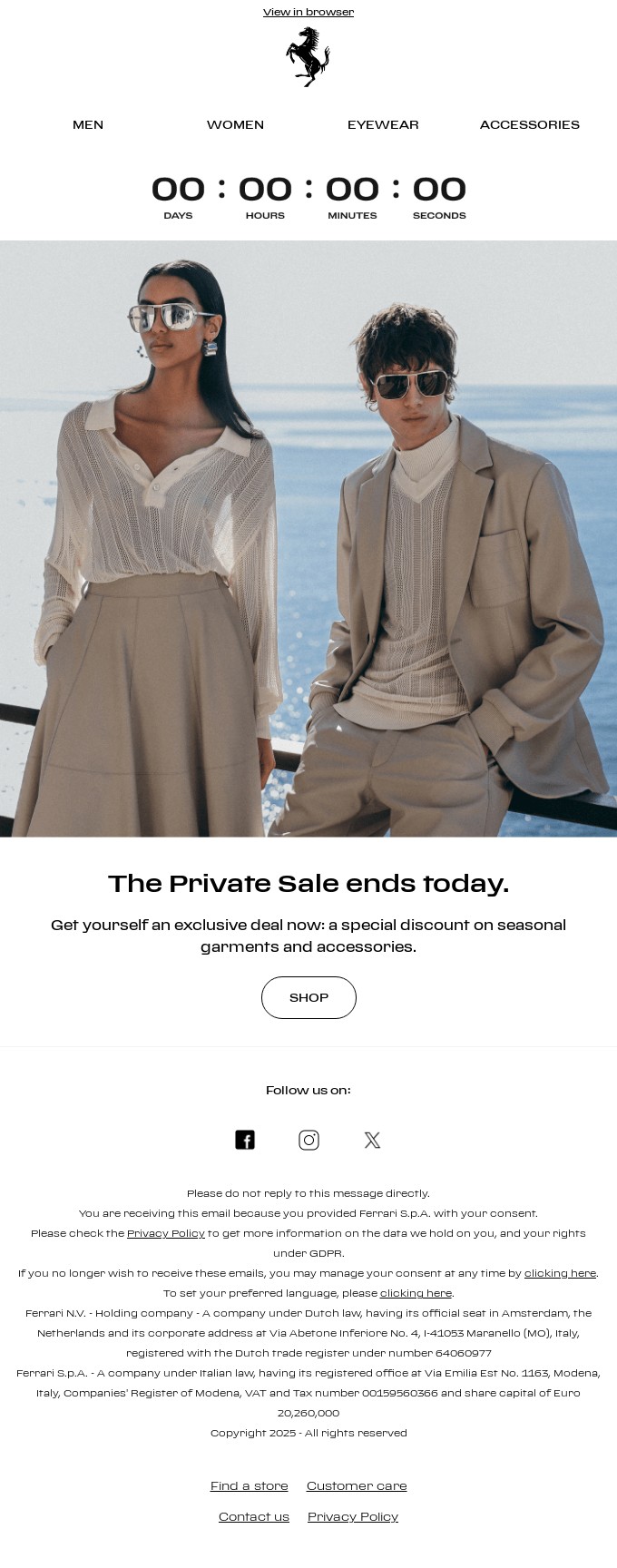
Typical subject line:
- “Last chance — sale ends in hours”
Offer structure:
- Headline with urgency
- Timer placed above the fold
- A clear primary CTA positioned for immediate action
Timing:
- Sent 24 to 48 hours before expiry
- Follow-up emails increase intensity
A countdown timer makes the deadline feel real, not optional. It’s one of the most effective ways to drive quick conversions with a limited-time offer.
3. Exclusive subscriber-only limited time offer
This version of a limited-time offer focuses on exclusivity. Only subscribers get access, which increases perceived value and makes the offer feel more personal.
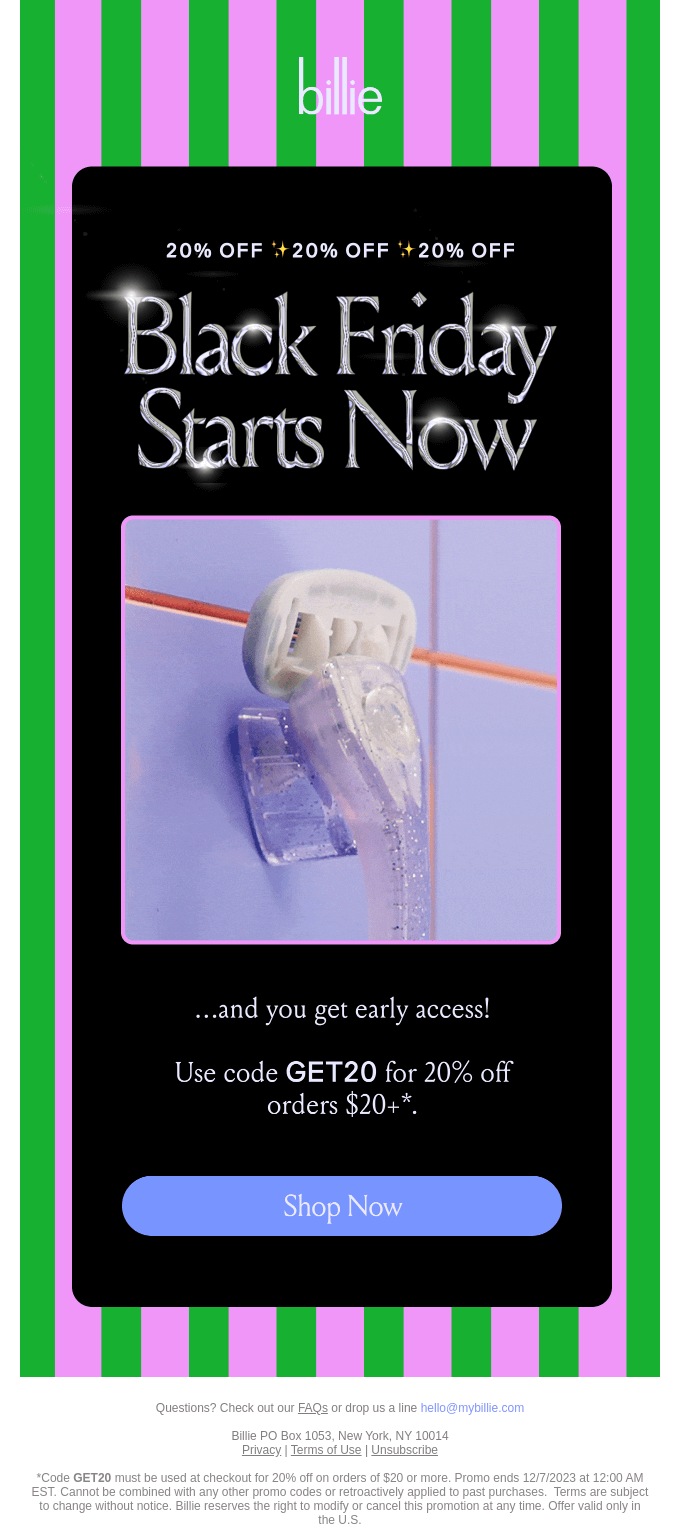
Typical subject line:
- “You’re invited — exclusive sale starts now”
Offer structure:
- Access first
- Offer second
- Deadline clearly stated
Timing:
- Sent to engaged subscribers first
- Expanded later if needed
Exclusive offers like this build loyalty by making subscribers feel rewarded for being part of your list.
4. Seasonal limited time promotion
Seasonal campaigns bring together timing and purpose. A 4th of July sale, for example, connects the limited-time offer to a specific event. Customers expect deals during this time, so the message feels timely and relevant:
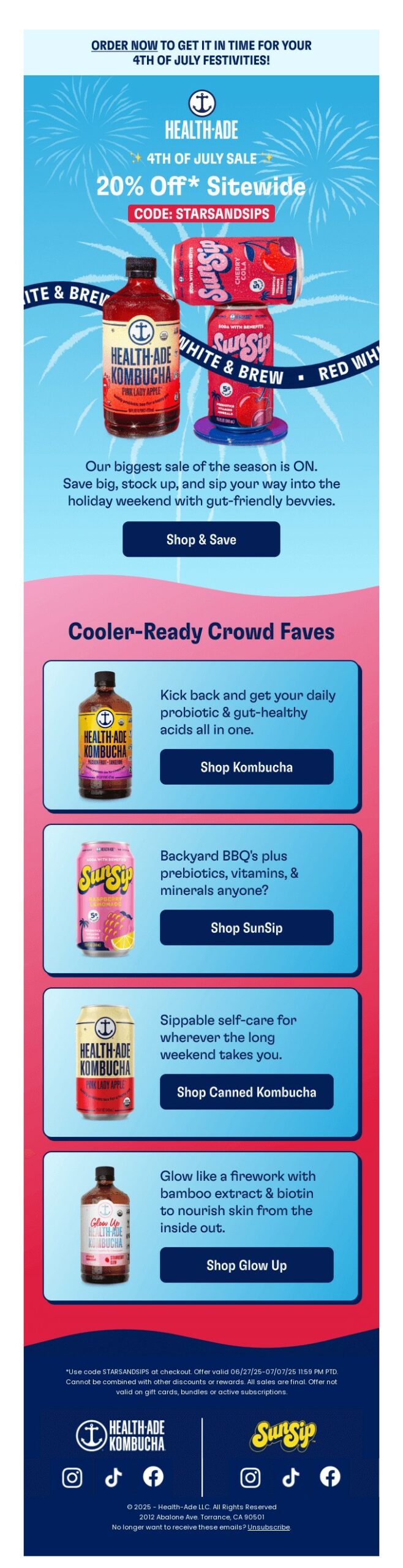
Typical subject line:
- “4th of July sale — 20% off sitewide”
Offer structure:
- Event first
- Discount second
- Deadline clearly defined
Timing:
- Launched a few days before the event
- Peaks during the holiday period
A limited time promotion like this works because it meets existing demand. Customers are already ready to buy. The limited-time offers simply speed up the decision.
5. Last chance reminder email
This email leans into that “last chance” feeling while still showing what’s in it for you. Instead of just pushing urgency, it highlights the free wellness bundle with hydration drops, giving you a real reason to act before it’s gone:
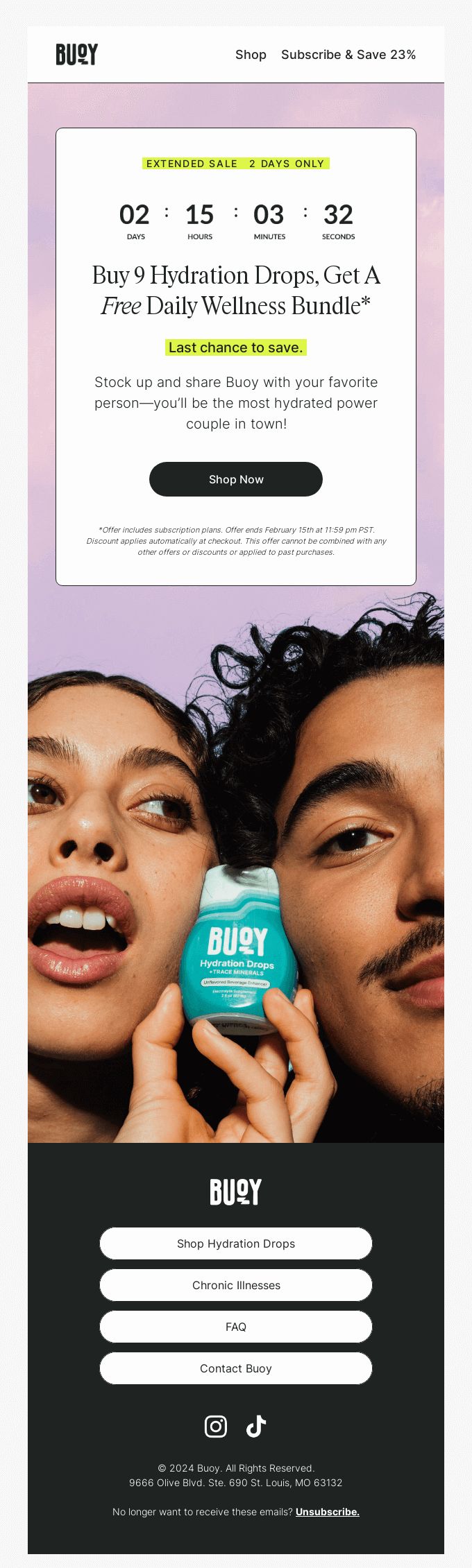
Typical subject line:
- “Last chance — ends tonight”
Offer structure:
- Reminder of the offer
- Clear deadline
- Strong CTA
Timing:
- Sent a few hours before expiry
- Often, the highest converting email
A last-chance, limited time offer email captures buyers who were still considering the deal. It reinforces urgency and drives final conversions before the window closes.
How to write a high-converting limited time offer email
A limited time offer email works best when your message is clear and simple to act on. If readers have to pause and figure things out, you risk losing the sale.
Use clear email subject lines, show the deadline, and include a strong call to action.
Let’s break this down into steps.
Craft a clear and urgent subject line
Your subject line determines if your email gets opened. So, be direct: show the value and the deadline up front.
What works:
- Use numbers to make the offer concrete
- Add a clear time limit
- Keep it short and specific
Examples:
- “20% off — ends tonight”
- “Flash sale: 30% off for 24 hours”
- “Last chance — offer ends today”
If the urgency is not clear in the email subject line, your limited time promotion loses impact before the email is opened.
Highlight the deadline clearly
As soon as someone opens your email, they should see the urgency. Don’t make them hunt for the deadline.
Make it visible:
- Place it at the top of the email
- Use bold text for the end time
- Add a countdown timer where possible
For example:
- “Ends in six hours”
- “Offer expires tonight at midnight”
When the deadline is easy to see, your offer feels real. It removes doubt and encourages people to decide faster. This is a big reason why top-performing ecommerce offers work.
Use strong CTAs
Your call to action should leave no doubt about what to do next. Weak CTAs slow things down. Use action words that encourage people to click.
Here’s what works:
- Keep it short and direct
- Focus on action
- Reinforce urgency
Examples:
- “Shop now before it ends”
- “Get your discount now”
- “Claim your deal today”
A strong call to action turns interest into action. It’s the final nudge that moves someone from thinking about your offer to making a purchase.
Keep the message simple
A limited time offer should be easy to understand. If your email has too many details, people may get distracted and put off making a decision.
Here’s how to keep it simple:
- Focus on one offer
- Remove unnecessary details
- Avoid multiple competing CTAs
If your offer is simple to understand, people are more likely to take action.
Common mistakes to avoid
A limited time offer can bring quick results, but it only works if you use it correctly. Many brands focus only on urgency and forget to be clear or show real value.
If your email feels forced or is unclear, people will ignore it. Even worse, they may stop trusting your emails.
Here are the most common mistakes and how to avoid them.
Overusing urgency
When every email is a limited time offer, customers stop taking it seriously. They notice the pattern and assume the deadline is not real.
This is where the problem starts:
- Your limited-time offers feel routine instead of urgent
- Customers delay because they expect the same limited time promotion again
- Engagement drops because the message loses credibility
Once trust drops, your limited time offer ads and emails lose effectiveness. People open less, click less, and buy less.
How to fix it:
- Use a limited time offer only when there is a real deadline
- Avoid repeating the same urgency message every week
- Mix in value-driven emails without pressure
A limited time offering works because it feels rare. If it becomes predictable, it stops working.
Unclear deadlines
A limited time offer without a clear deadline creates confusion. When people are unsure about timing, they tend to delay action.
This is what happens:
- “Ends soon” feels unclear and easy to ignore
- Customers postpone instead of acting on the limited time offer
- The urgency behind your promotion disappears
Without a clear deadline, your limited-time offers lose their main advantage. People wait, compare options, and often never return.
How to fix it:
- State the exact end time clearly
- Place the deadline at the top of the email
- Reinforce it across your limited time offer ads and messages
A clear deadline turns a basic deal into a strong, limited time special offer. It gives people a reason to act now, not later.
Weak value proposition
A limited time offer cannot succeed on urgency alone. If the offer is not meaningful, people will not feel motivated to act.
This is what it looks like:
- Discounts that feel too small to matter
- Generic deals with no clear benefit
- Offers that do not match customer needs
Even strong, limited time sales campaigns will underperform if the value is weak.
How to fix it:
- Make the benefit clear and easy to understand
- Focus on what the customer gets
- Test different formats using proven limited time offer examples
A strong limited time offering combines urgency with real value. Without both, your results will always fall short.
Ready to turn urgency into sales
A limited time offer works best when it is planned, timed, and delivered through the right channels.
Email and SMS give you direct access to your audience. They make it easier to launch a limited time offer, control timing, and drive faster decisions without guesswork.
With Omnisend, you can trigger limited time offers based on real customer behavior, like product views, cart abandonment, or first signup. You can segment your audience to send the right offer to the right group, instead of sending the same message to everyone.
You can also use pre-built workflows to schedule reminder SMS and emails before the deadline, add countdown timers inside emails, and track results in real time to see which offers drive the most sales.
A well-executed offer becomes easier when everything runs through one connected system.
FAQs
What is a limited time offer in marketing?
A limited time offer is a promotion available for a short period. It uses urgency to encourage quick decisions before the deal expires.
How long should a limited time offer last?
A limited time offer usually lasts between 24 hours and seven days. Shorter durations create stronger urgency and faster conversions.
Do limited time offers really increase sales?
Yes. A limited time offer increases urgency, reduces hesitation, and encourages faster buying decisions, which often leads to higher conversion rates.
How do you promote a limited time offer effectively?
Promote a limited-time offer via email, SMS, and ads. Use clear deadlines, strong subject lines, and consistent reminders to reinforce urgency.
Can SMS improve limited time offer performance?
Yes. SMS improves a limited time offer by delivering instant messages. It reaches customers quickly and increases response rates during short campaigns.