Omnisend AI


 OFFER
OFFER










The best Shopify furniture stores in 2026 win by solving two of the most difficult challenges faced by furniture stores. First, they help shoppers picture a particular furniture piece in their own home. Second, they build enough trust for customers to buy high-value items.
Each store uses different strategies and mechanics to solve those challenges. Some use augmented reality (AR) and 3D visualization, while others offer customer-centric loyalty programs shoppers want to be a part of.
We’ve compiled a list of 15 of the best Shopify furniture stores in 2026 based on their sales tactics, strategies, and uniqueness. Follow this guide to learn the tactics each furniture shop uses, what makes it different, and how to copy the best of them.
Quick sign up | No credit card required
15 best Shopify furniture stores: Detailed list
Every store here met four criteria: it runs on Shopify, it’s live and trading today, it has at least one distinct and replicable sales tactic, and no two stores repeat the same lesson. Here are the 15:
- Arhaus, 3D room planner and swatches
- Leon’s, AR-powered virtual showroom
- McGee & Co., designer-curated loyalty program
- Lulu and Georgia, trade program and designer collabs
- Floyd, modular add-ons plus paid membership
- Albany Park, free swatches and white-glove delivery
- Maiden Home, made-to-order plus flagship showrooms
- Sixpenny, washable slipcovers and swatch kits
- Industry West, B2B trade catalogs
- Inside Weather, build-your-own configurator
- CA Design, competitions and influencer giveaways
- Fyrn, patented flat-pack hardware
- Jungalow, brand-owned loyalty club
- Oakywood, AR visualization
- Transformer Table, expandable smart tables
| Store | Founded | HQ/Country | Est. annual revenue | Standout feature | |
|---|---|---|---|---|---|
| 1. | Arhaus | 1986 | United States | $1.38 billion | 3D room planner plus free color swatches |
| 2. | Leon’s | 1909 | Canada | $2.57 billion CAD | AR virtual showroom plus BNPL financing |
| 3. | McGee & Co. | 2014 | United States | $6.6 million | Designer-curated, points-based loyalty program |
| 4. | Lulu and Georgia | 2012 | United States | $100 million–$250 million | Trade program plus designer collaborations |
| 5. | Floyd | 2013 | United States | $25 million–$50 million | Modular add-ons paired with a paid membership |
| 6. | Albany Park | 2019 | United States | Not publicly disclosed | Free swatches plus white-glove delivery |
| 7. | Maiden Home | 2015 | United States | $32.6 million | Made-to-order pieces plus flagship showrooms |
| 8. | Sixpenny | 2017 | United States | $1 million–$10 million | Washable slipcovers plus low-cost swatch kits |
| 9. | Industry West | 2011 | United States | $7.6 million | B2B trade catalogs with company accounts |
| 10. | Inside Weather | 2018 | United States | $2.9 million | Build-your-own configurator |
| 11. | CA Design | 2012 | Ireland | Not publicly disclosed | Competitions and influencer giveaways for list growth |
| 12. | Fyrn | 2012 | United States | Not publicly disclosed | Patented flat-pack hardware (Stemn bracket) |
| 13. | Jungalow | 2009 | United States | Not publicly disclosed | Brand-owned loyalty club (JungaLoco) |
| 14. | Oakywood | 2017 | Poland | $30.4 million | AR visualization via 3D-scanning partner |
| 15. | Transformer Table | 2016 | Canada | $100 million | Hero product (expandable smart table) |
Note: Revenue for the privately held stores in this table is estimated by third-party tools like RocketReach, LeadIQ, GrowJo, and Grips, not pulled from audited financials, so figures may vary elsewhere. Arhaus and Leon’s numbers come straight from public investor filings. All figures are accurate as of September 25, 2026.
1. Arhaus, 3D room planner and swatches
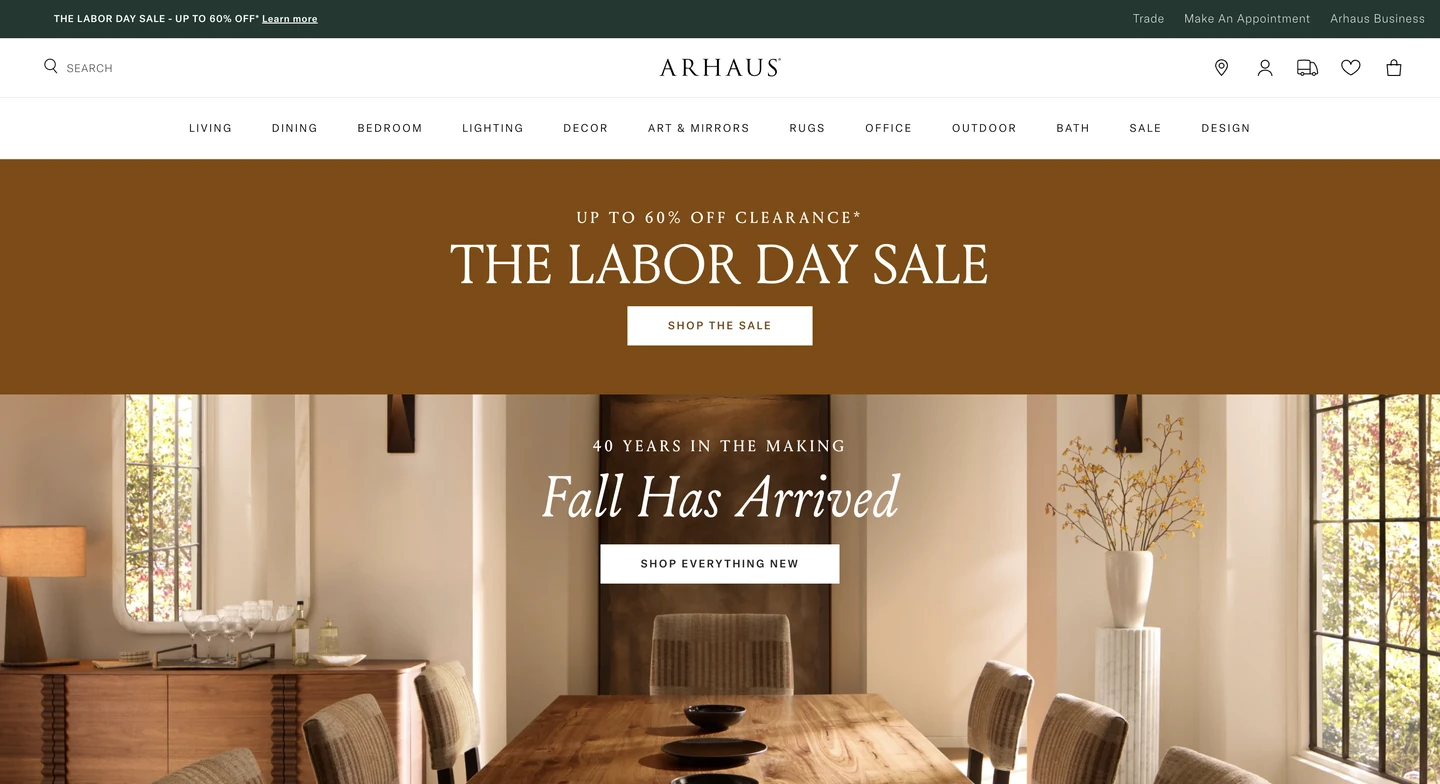
Location: United States · Estimated revenue: $1.38 billion, 2025 reported (Arhaus investor relations).
Why this Shopify store stands out
Arhaus sells upscale living, dining, and outdoor furniture, and it backs that positioning with more than 100 physical showrooms across the United States. The online store carries the same premium feel, displaying full wood-finish boards, upholstery swatches, and a room planner that lets shoppers lay out furniture to scale before buying.
How this furniture store drives sales
This brand uses a Room Planner tool that allows customers to test layouts digitally by arranging furniture to scale instead of drawing a room on their own. Plus, it includes a free color swatch feature for customers to see how different combinations can look.
What to copy
Let shoppers visualize furniture in their own space with a 3D room planner, and offer free swatches to reduce uncertainty about materials and finishes.
2. Leon’s, AR-powered virtual showroom
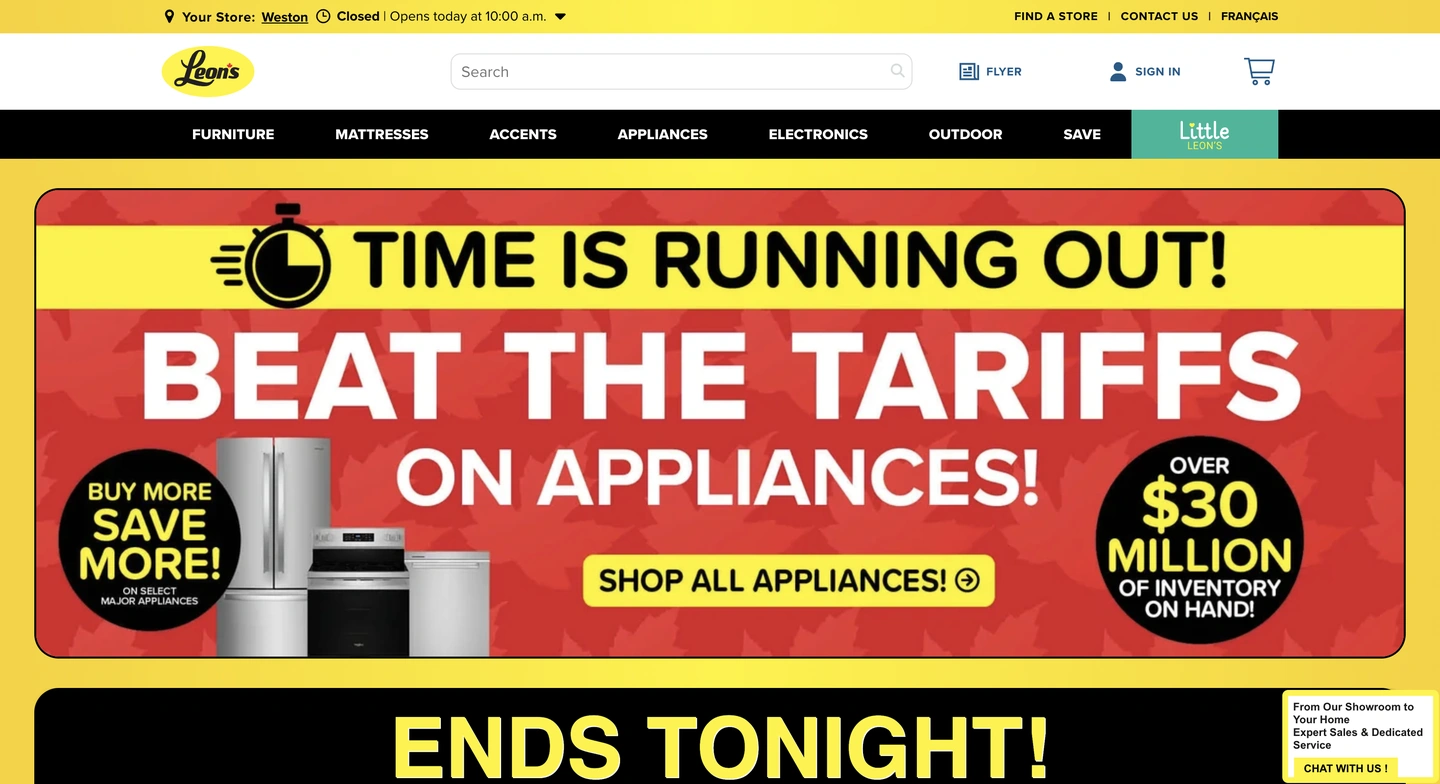
Location: Canada · Estimated revenue: Around $2.57 billion CAD in 2025 (Investing data)
Why this Shopify store stands out
Leon’s is one of Canada’s largest furniture and appliance retailers. The brand sells a wide range of furniture, appliances, and electronics, and provides different showrooms to help customers visualize design concepts.
How this furniture store drives sales
Leon’s AR tools let shoppers place furniture in their own space through a phone camera before committing, which matters most for large, expensive pieces that are hard to return. Financing handles the other half of a high-ticket decision — buy now, pay later drove $1.03 billion on Cyber Monday 2025, with furniture named a top financing category (Adobe Analytics).
What to copy
Use AR and virtual room-planning tools to help customers see how large purchases will look in their own homes before buying.
3. McGee & Co., designer-curated loyalty program
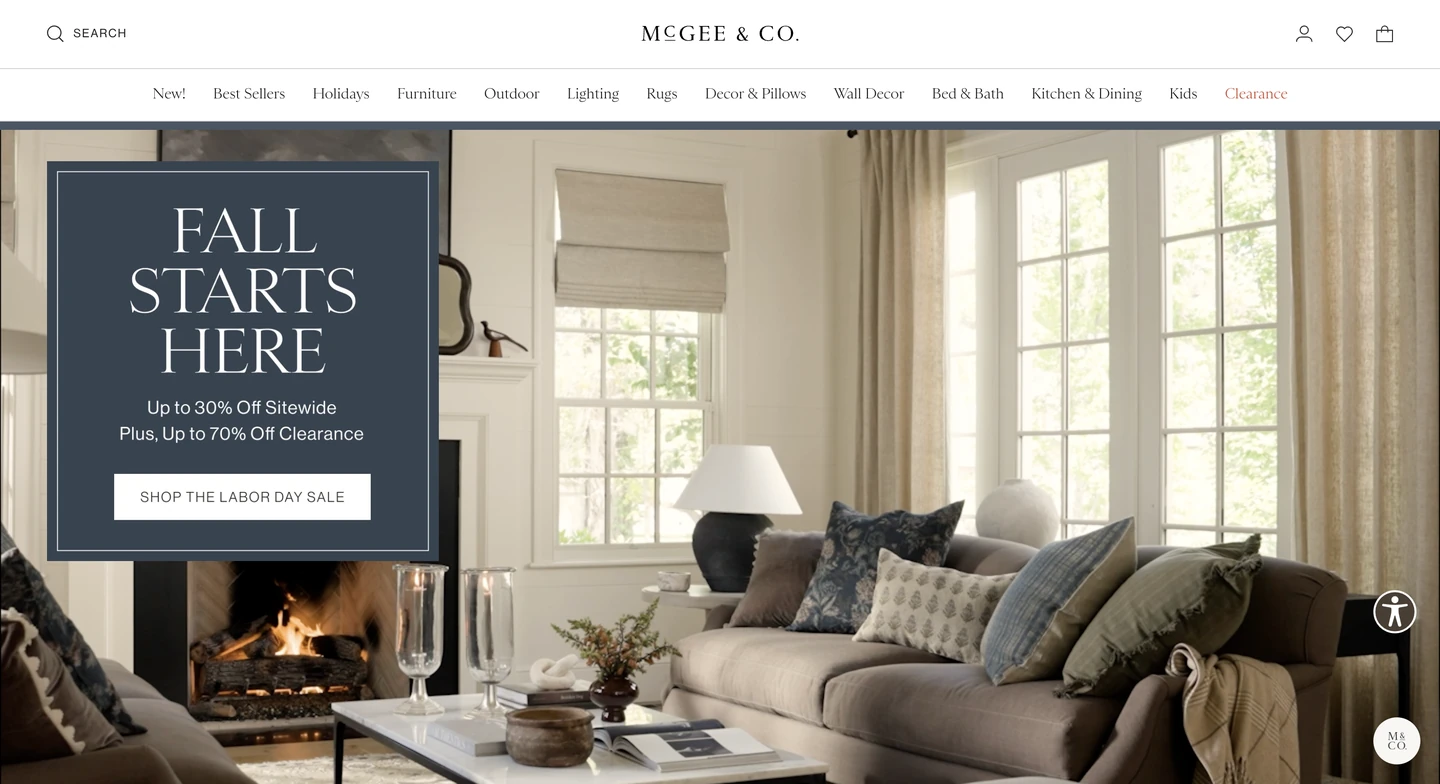
Location: United States · Estimated revenue: Around $6.6 million (RocketReach data)
Why this Shopify store stands out
McGee & Co. is the product and ecommerce arm of Studio McGee, the interior design studio built by Shea and Syd McGee. Shea McGee selects or designs every item in the catalog, turning a furniture catalog into an extension of a design point of view shoppers already follow on social media and in two New York Times bestselling books.
How this furniture store drives sales
This brand runs a free points-based loyalty program that rewards every purchase, so someone who buys a sofa this year has a reason to come back for the dining table next year rather than starting the search over. As an added bonus, McGee & Co also offers up to 10 upholstery and wallpaper swatches for free.
What to copy
Build loyalty around a distinctive design point of view and reward customers for purchases even when the natural repurchase cycle is long.
4. Lulu and Georgia, trade program and designer collabs
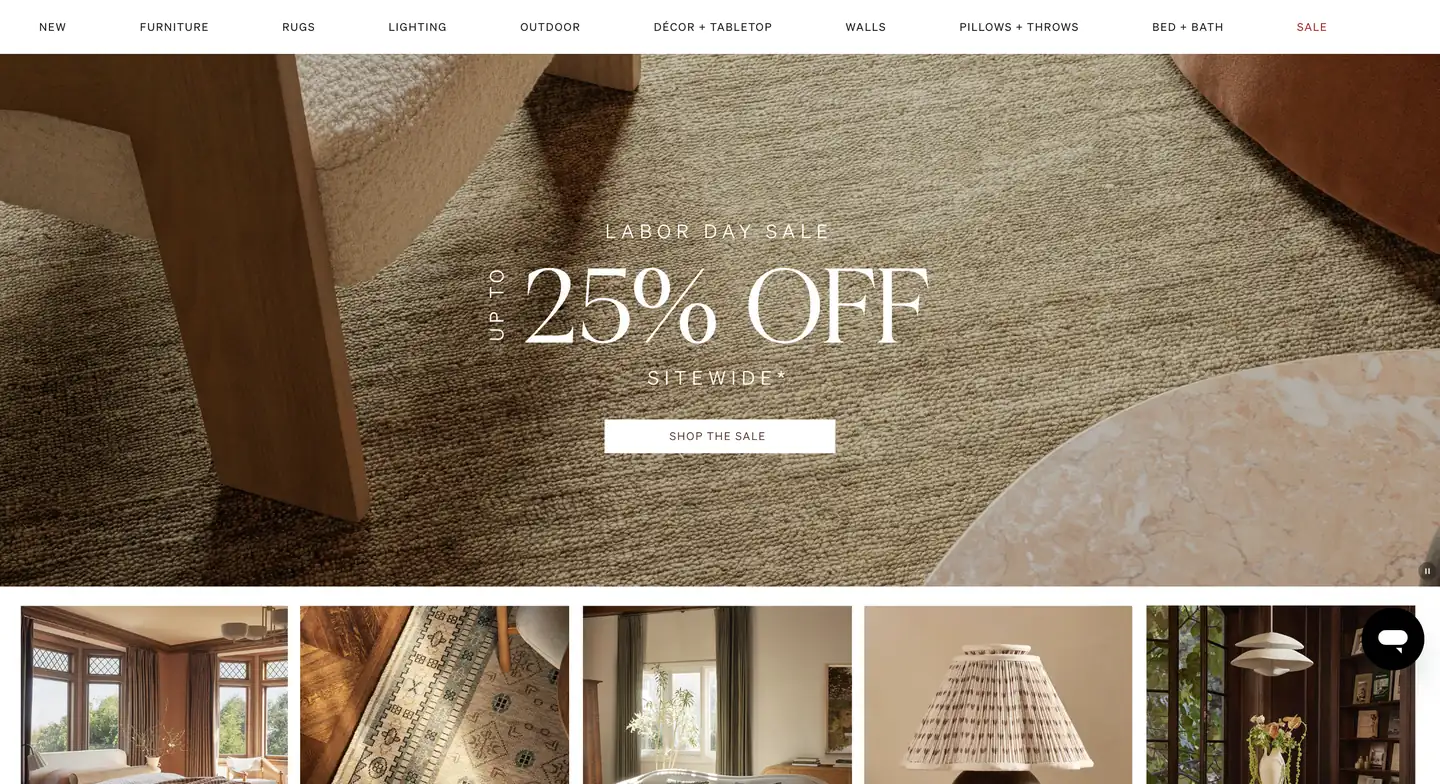
Location: United States · Estimated revenue: Around $100 million–$250 million (LeadIQ data)
Why this Shopify store stands out
Lulu and Georgia sells rugs, furniture, lighting, and home accents using a design-forward catalog. The brand often leads with designer collaborations, including pieces credited directly to individual designers on product pages.
How this furniture store drives sales
Lulu and Georgia’s dedicated trade program gives interior designers direct access to bulk pricing and support, turning design professionals into a recurring B2B revenue channel on top of regular direct-to-consumer (DTC) sales.
What to copy
Turn designer collaborations and a dedicated trade program into recurring reasons for both consumers and design professionals to shop with you.
5. Floyd, modular add-ons plus paid membership
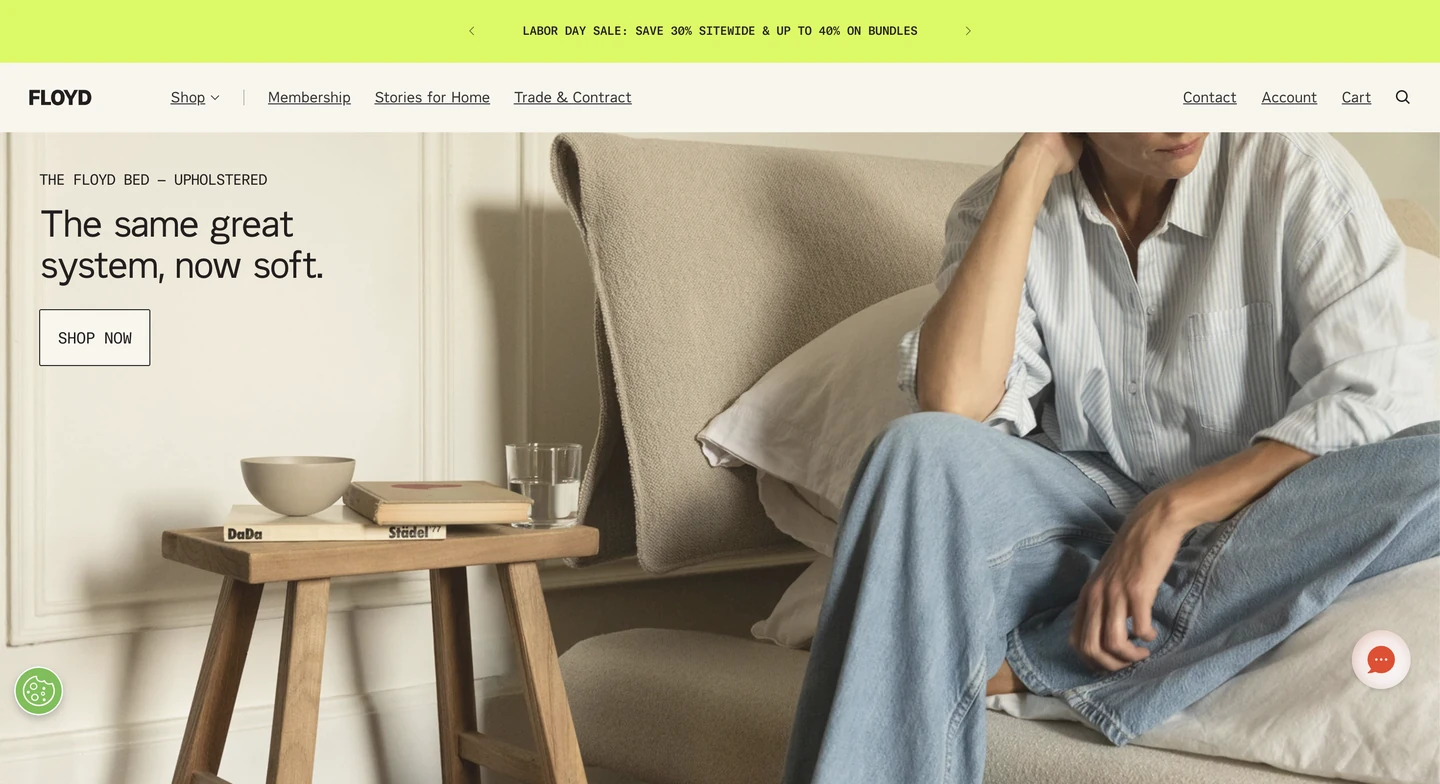
Location: United States · Estimated revenue: Around $25 million–$50 million (LeadiQ data)
Why this Shopify store stands out
Floyd builds modular furniture designed to be added onto rather than replaced. Its Bed System, first launched a decade ago, still accepts new add-ons today, including a recently launched upholstered conversion kit that turns the original wood frame soft without buying a new bed. Although the company was acquired by Rize Home, a Cleveland-based company, Floyd continues to operate as a separate brand.
How this furniture store drives sales
This DTC furniture brand uses a paid membership program offering 20–30% off sitewide and free add-on shipping to encourage existing owners to keep expanding their original purchase instead of shopping a competitor for their next piece.
What to copy
Design products with modular add-ons and pair them with membership perks to encourage customers to expand their original purchase instead of switching brands.
6. Albany Park, free swatches and white-glove delivery
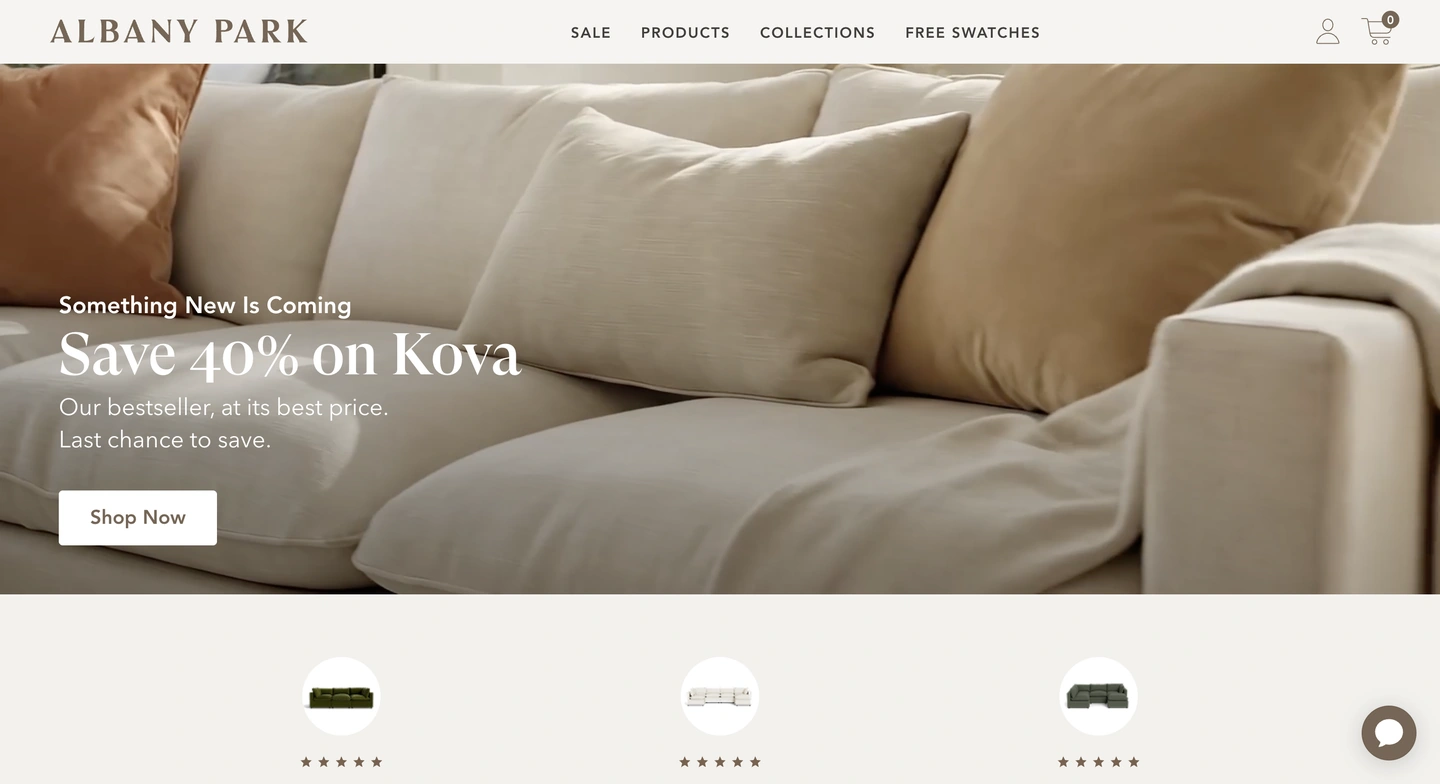
Location: United States · Estimated revenue: Not publicly disclosed
Why this Shopify store stands out
Albany Park focuses on a tight, collection-led catalog of sofas, sectionals, and armchairs, all made to order in performance fabrics. This furniture shop focuses on a narrow selection rather than a multi-category catalog, allowing Albany Park to offer customers a high level of customization.
How this furniture store drives sales
Albany Park sends free fabric swatches and includes complimentary fabric upgrades, so buyers commit to a made-to-order sofa only after handling the material. They can test different fabrics to find the one they like and benefit from a free white-glove delivery.
What to copy
Remove purchase friction by offering free material samples and complimentary white-glove delivery rather than making customers pay extra to reduce uncertainty.
7. Maiden Home, made-to-order plus flagship showrooms
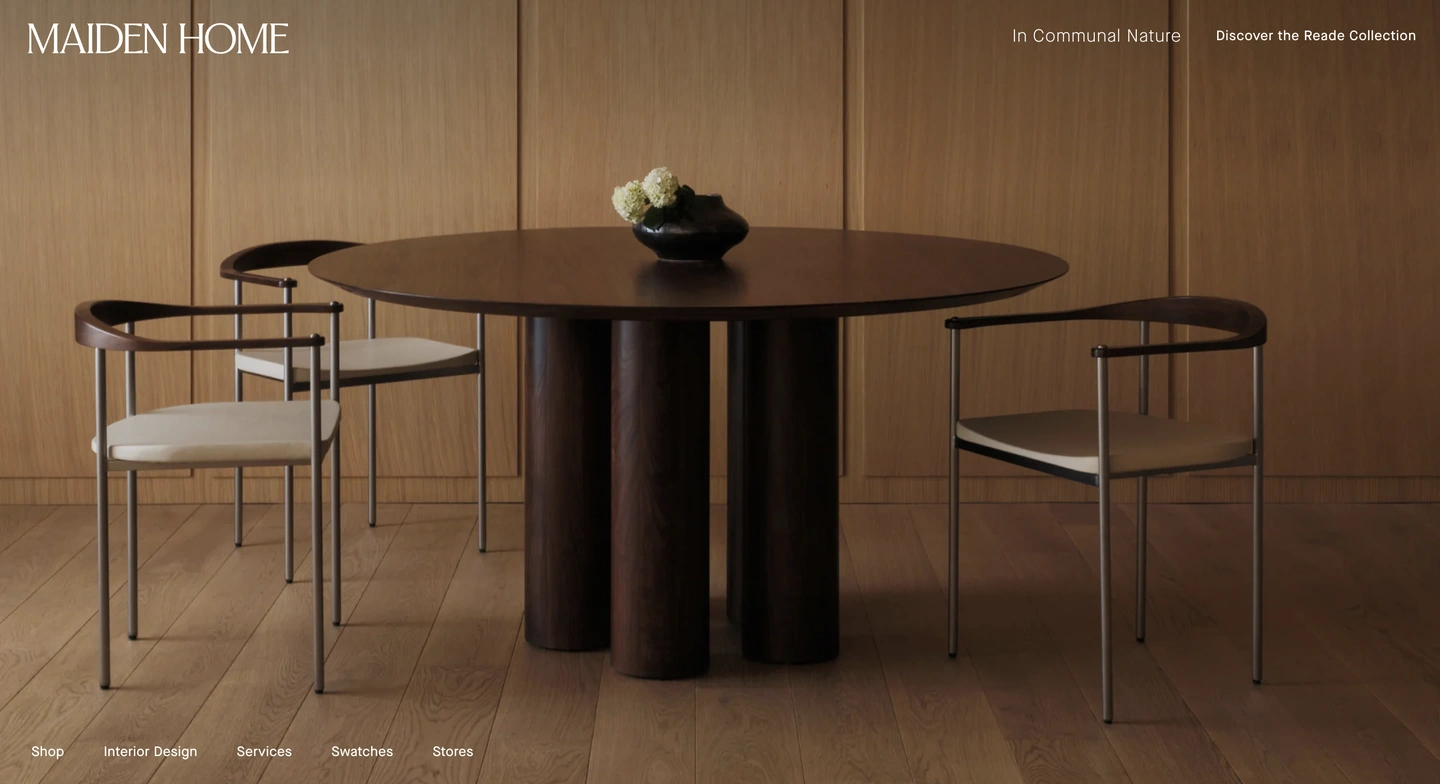
Location: United States · Estimated revenue: Around $32.6 million (Prospeo data)
Why this Shopify store stands out
Maiden Home makes each piece to order, working with North Carolina artisans on heritage upholstery techniques. The brand has two physical flagships in New York and Miami, giving customers the opportunity to check fabrics and finishes in person before ordering online.
How this furniture store drives sales
This Shopify furniture store has a dedicated trade and contract program for interior designers and architects, and offers free fabric and finish sampling for shoppers interested in Maiden Home furniture.
What to copy
Combine made-to-order products with physical showrooms, free samples, and a trade program to give online shoppers multiple ways to build confidence before purchasing.
8. Sixpenny, washable slipcovers and swatch kits
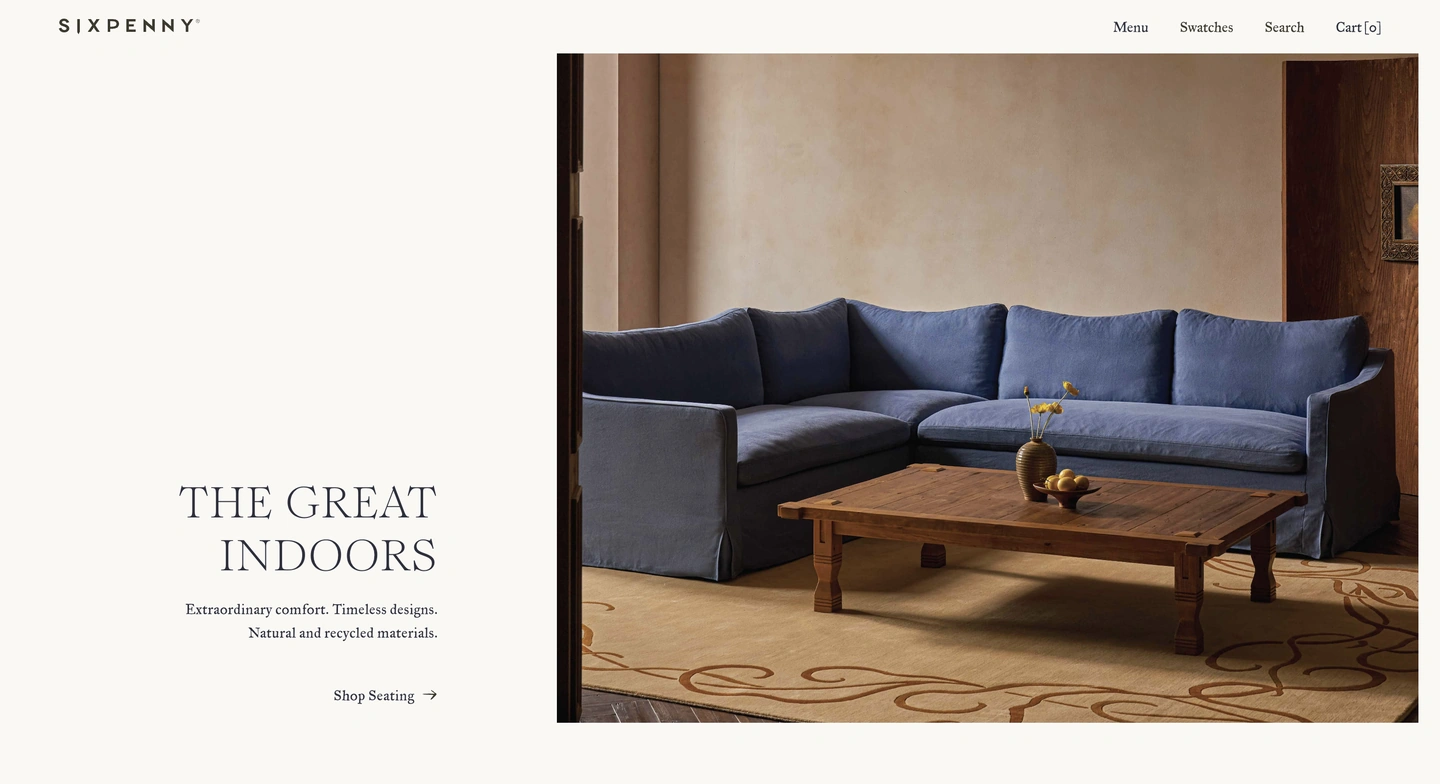
Location: United States · Estimated revenue: Around $1 million–$10 million (LeadiQ data)
Why this Shopify store stands out
Sixpenny built its name on slipcover-led living room furniture with washable, natural fabric covers, aimed at buyers who want comfort without sacrificing easy cleaning. The brand recently expanded from a living-room specialty into a whole-home catalog.
How this furniture store drives sales
Every Sixpenny sofa ships with removable, machine-washable covers, and the store sells a low-cost swatch kit so shoppers can handle the linen before ordering. Sixpenny appeals to everyday customers by offering direct-to-consumer (DTC) prices.
What to copy
A washable cover will answer the durability question before the customer asks it. Send physical samples to your customers and build your product around their objections.
9. Industry West, B2B trade catalogs
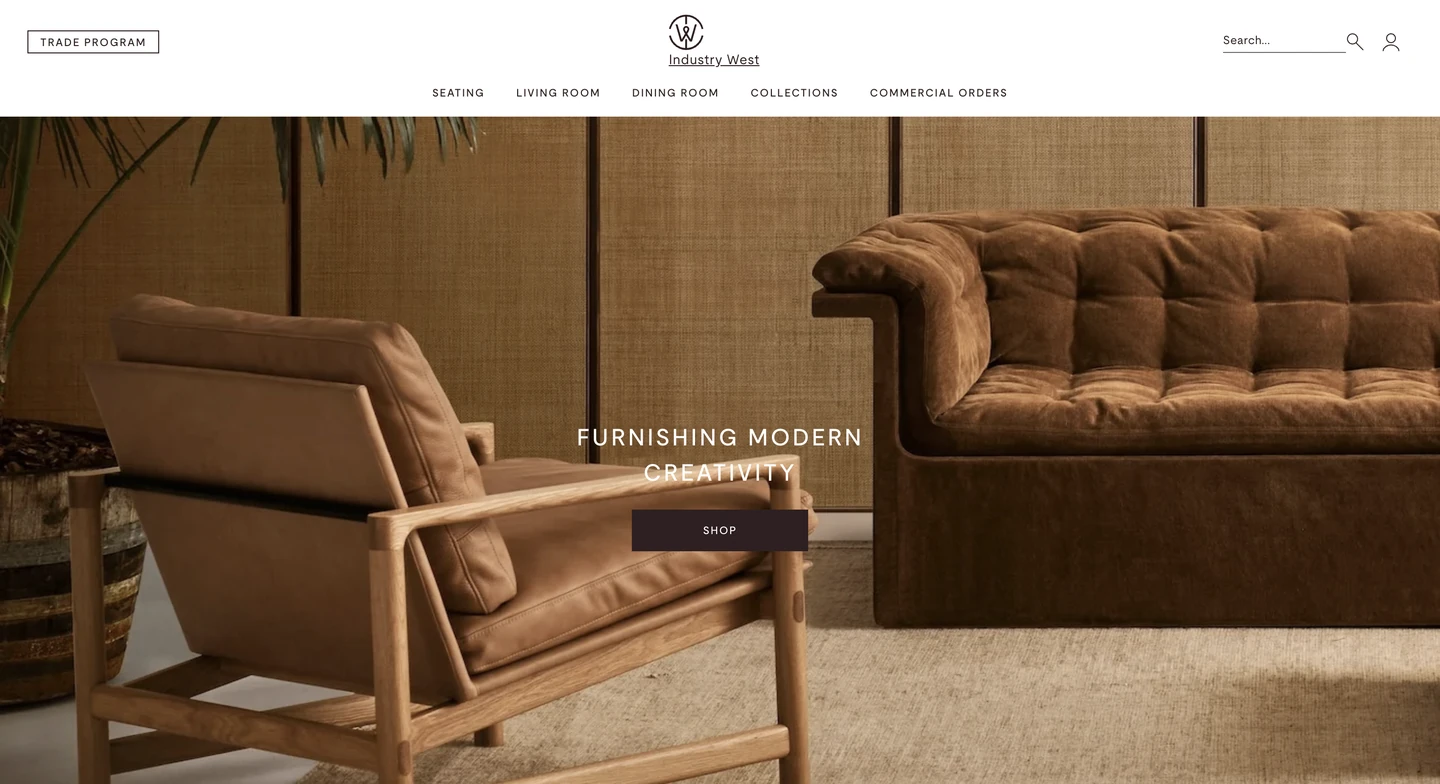
Location: United States · Estimated revenue: Around $7.6 million (GrowJo data)
Why this Shopify store stands out
Industry West moved from Magento to Shopify specifically to modernize its B2B trade business, which serves designers and franchisees who order the same products repeatedly. Additionally, the brand offers fabric swatches directly through Shopify’s product customization tools.
How this furniture store drives sales
According to Shopify’s own case study, the B2B suite enabled Industry West to group multiple buyers under one company account, resulting in a 90% increase in revenue from web orders for B2B companies.
What to copy
Make repeat B2B purchases easier with company accounts and pre-set pricing that removes the need to renegotiate or re-quote every order.
10. Inside Weather, build-your-own configurator
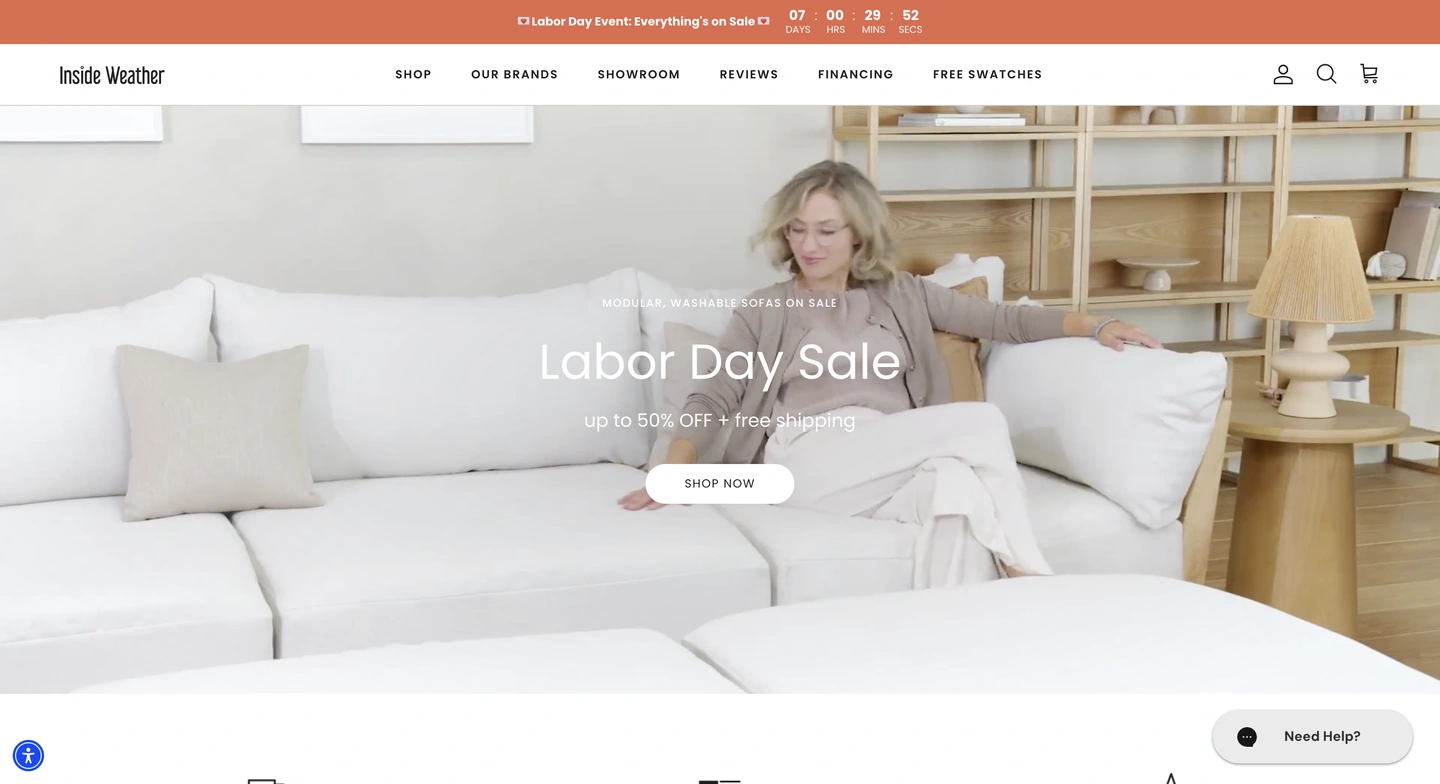
Location: United States · Estimated revenue: Around $2.9 million (GrowJo data)
Why this Shopify store stands out
Inside Weather lets shoppers choose the design, materials, finish, and structural details of a piece before it’s built, offering deeper customization than most made-to-order competitors. Everything ships from California rather than overseas, which shortens delivery windows for a custom product.
How this furniture store drives sales
Inside Weather’s build-your-own configurator turns a static product page into an interactive decision to keep shoppers engaged with a single product for longer.
What to copy
Turn product customization into an interactive shopping experience that lets customers build a piece around their exact preferences and space.
11. CA Design, competitions and influencer giveaways
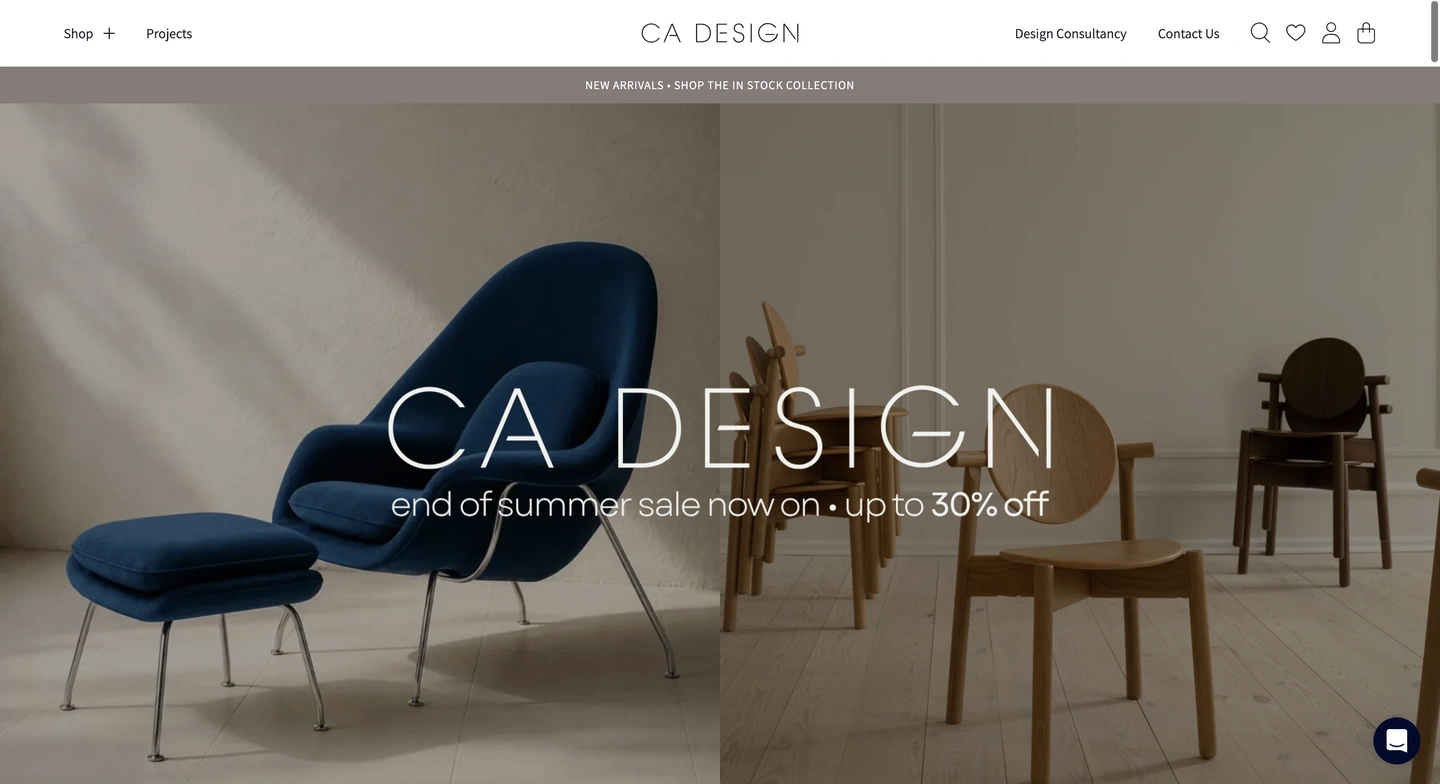
Location: Ireland · Estimated revenue: Not publicly disclosed
Why this Shopify store stands out
CA Design is a Dublin-based mid-century and Scandinavian furniture retailer, now in its second showroom location on Long Mile Road after outgrowing its original Portobello space. The catalog blends an in-house mid-century collection with European brands like Ethnicraft, Hübsch, and Umage.
How this furniture store drives sales
CA Design runs competitions and influencer giveaways that route social attention into its email list, then follows up with a free one-to-one design consultancy. During one competition campaign, CA Design collected 2,000 leads, and influencer giveaways grew the list for the company by 10–15%.
What to copy
Use competitions and influencer-led giveaways to turn social engagement into measurable email-list growth and new marketing leads.

CA Design is a premium Irish furniture retailer in Dublin. After starting to work with Omnisend, the brand saw a 5%+ click-through rate, 2,000+ leads from a single competition campaign, and 10–15% email list growth from influencer giveaways.
12. Fyrn, patented flat-pack hardware
Location: United States · Estimated revenue: Not publicly disclosed
Why this Shopify store stands out
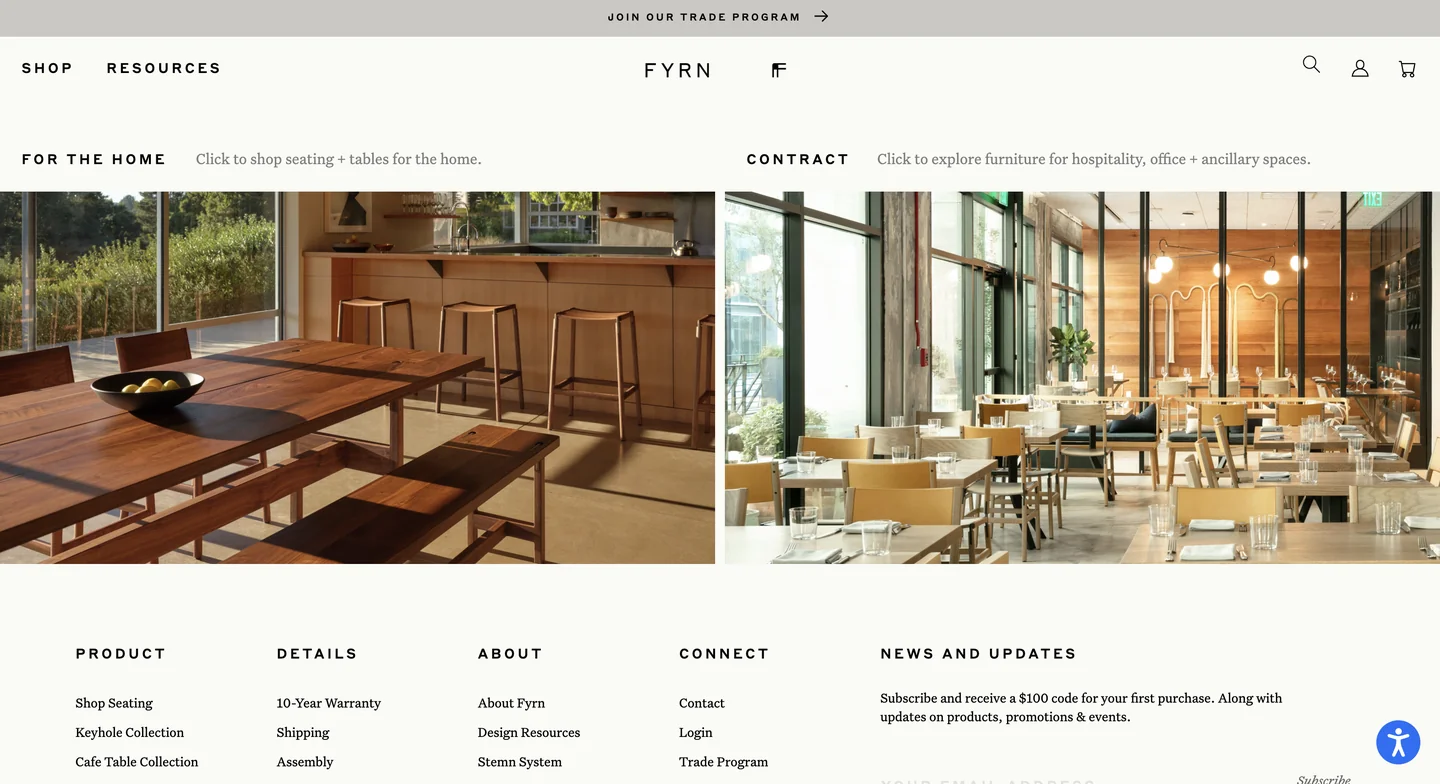
Fyrn builds chairs, stools, and tables around Stemn, a patented bracket system designed by co-founder Ros Broughton that keeps the joinery exposed as part of the design rather than hidden. The brand draws on four generations of family woodworking craft, setting it apart from other home furnishings stores.
How this furniture store drives sales
Because the patented Stemn bracket holds the frame without glue, the same chair ships flat for home assembly or arrives fully built for a fee — one product at two price points, with no separate SKU to manufacture.
What to copy
Offer the same product in DIY and fully assembled versions so customers can choose between a lower price and greater convenience without changing the core product.
13. Jungalow, brand-owned loyalty club
Location: United States · Estimated revenue: Not publicly disclosed
Why this Shopify store stands out
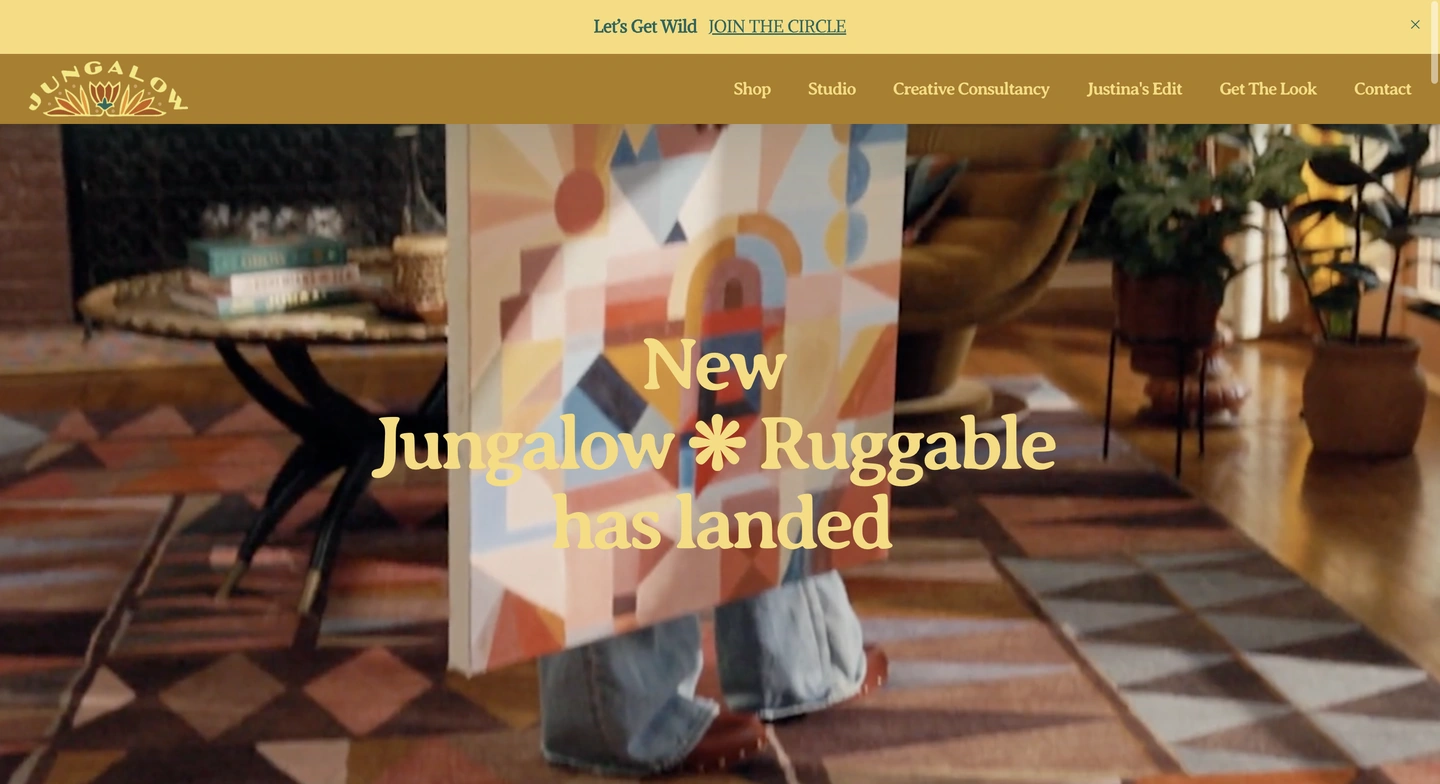
Jungalow is a bohemian-modern home and furniture brand, built around bold color and pattern, created by designer Justina Blakeney. The brand spent years selling primarily through wholesale partners like Anthropologie before opening its own Shopify Plus store to control its own customer relationships directly.
How this furniture store drives sales
The JungaLoco loyalty club rewards repeat purchases and reviews, which, according to Shopify’s case study, helped increase the brand’s returning-customer rate by 26.5% year over year after migrating to Shopify Plus.
What to copy
Create a brand-owned loyalty club that rewards both purchases and reviews to strengthen retention and encourage customers to return.
14. Oakywood, AR visualization
Location: Poland · Estimated revenue: Around $30.4 million (Grips data)
Why this Shopify store stands out
Oakywood is a Polish office furniture and accessories manufacturer that uses wood specifically. It was founded by Mateusz Haberny in the Tatra highlands, where his family’s woodworking tradition began. The brand moved from an Etsy storefront to Shopify Plus to support custom orders at scale.
How this furniture store drives sales
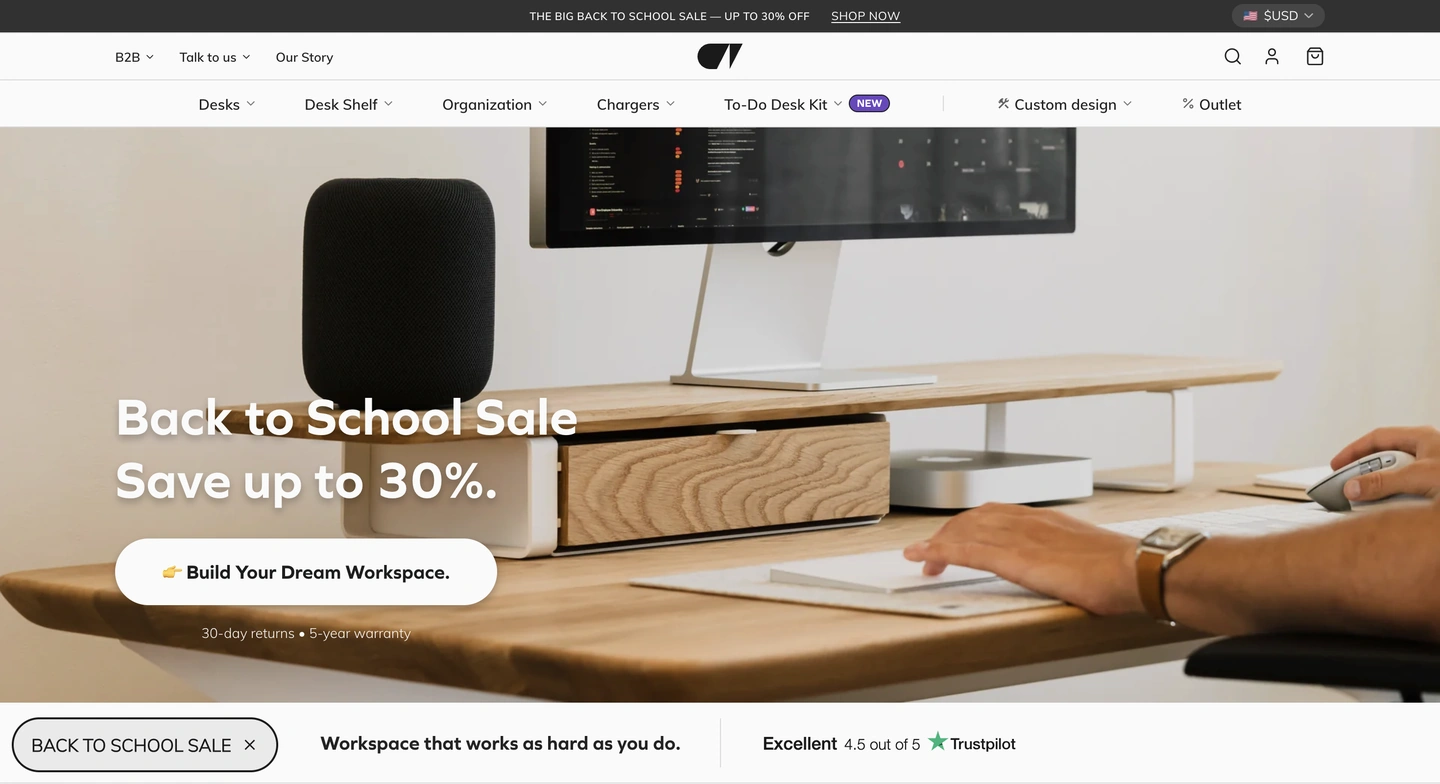
With its 3D-scanning partner Precismo, Oakywood lets shoppers generate an AR model of a fully customized piece and place it in their own room before ordering. After the move, average order value rose 458% in Germany, 232% in Switzerland, and 84% in the UK.
What to copy
Create a virtual furniture showroom in the customer’s own room, reducing uncertainty while giving the customer a sense of the finished product.
15. Transformer Table, expandable smart tables
Location: Canada · Estimated revenue: Over $100 million (Shopify data)
Why this Shopify store stands out
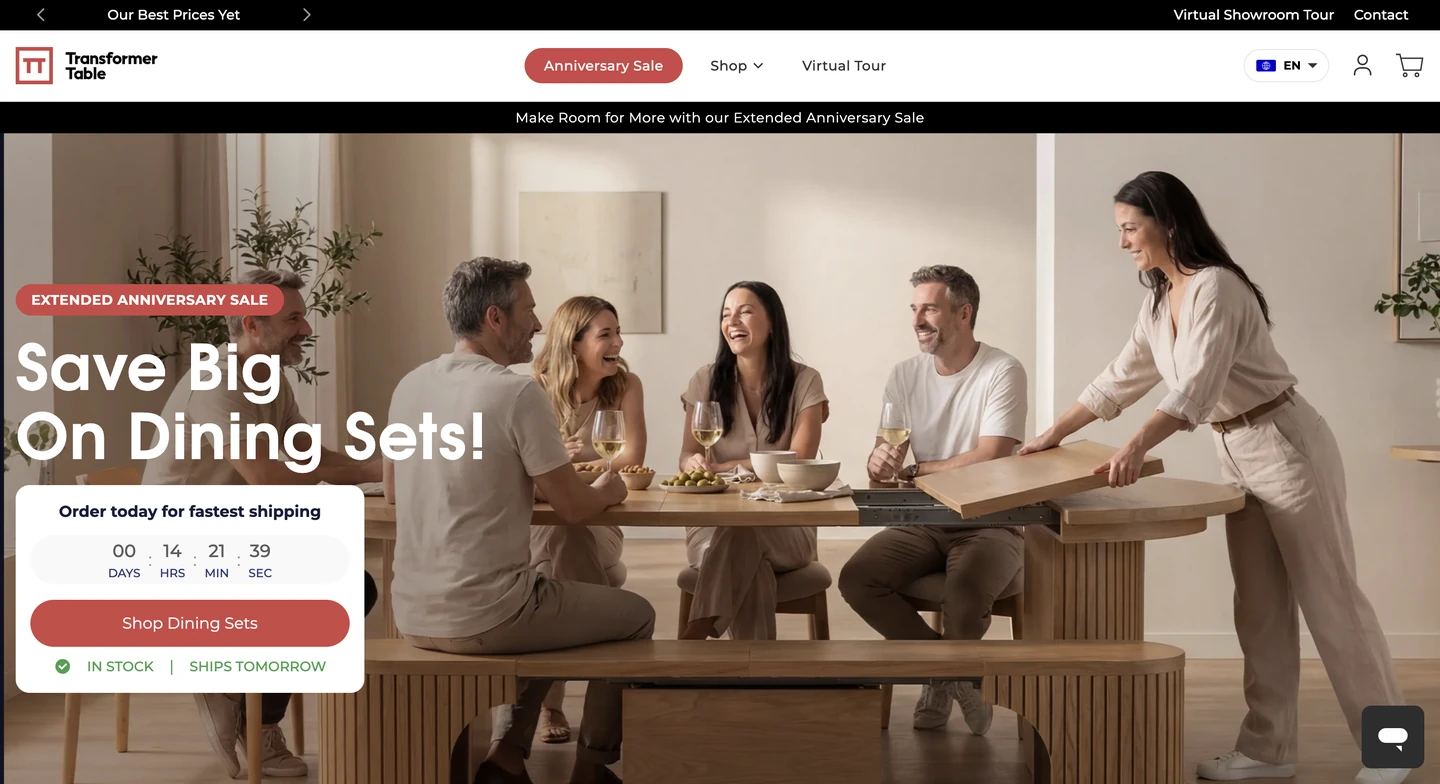
Transformer Table sells expandable, multifunctional dining tables that seat up to 12 people. Seven friends launched it from Montreal in 2016 with Facebook ads pointing at a simple Wix store, and it now ships internationally.
How this furniture store drives sales
One viral video launched the brand in 2016, and one hero product still carries the catalog. After moving to Shopify Plus, Transformer Table opened localized storefronts in over 35 countries, and international sales grew from 3% to roughly 20% of annual revenue.
What to copy
Focus your marketing around a distinctive hero product and use localized content and pricing to make it easier to sell that product across international markets.
Why these Shopify furniture stores succeed
These 15 Shopify furniture stores succeed by removing two doubts: can I picture this in my room, and can I trust this brand with a large purchase? Each one uses a different tactic, but they can be summed up into these four categories:
- Visualization tools: 62% of shoppers say it’s a challenge to picture furniture in their home, and in-store shoppers who use a 3D tool with a salesperson are 67% more likely to spend over $2,500
- Samples and swatches: Seven of the 15 stores, Arhaus, McGee & Co., Albany Park, Maiden Home, Industry West, Sixpenny, and Fyrn, offer fabric or wood swatches, letting buyers verify color and texture without gambling on a full-price purchase
- Loyalty and membership programs: Furniture doesn’t sell as often as apparel or beauty, so McGee & Co.’s points program, Floyd’s paid membership, and Jungalow’s JungaLoco club all give returning customers a reason to buy again instead of shopping around
- Trade and B2B programs: On top of direct-to-consumer sales, Lulu and Georgia, Maiden Home, and Industry West all have trade programs that target interior designers and architects
Must-have emails for furniture stores: automations vs. campaigns
According to Omnisend’s 2026 ecommerce marketing report, the home & garden category campaigns convert at 0.04%. This is one of the lowest conversion rates compared to all other categories.
Our research shows that home & garden shoppers typically need more time to compare products and prices, which is why well-timed and personalized browse, cart, and product-based automations outperform one-off campaigns for this category.
In the same ecommerce marketing report, we found that in 2025, automated emails earned $2.87 per send, while scheduled campaigns earned $0.18, showing a 16x higher value per message.
This gap between targeted automations and campaigns is the main reason why furniture shops on Shopify should consider building automations first and treating campaigns more like a supporting channel.
Cart abandonment and welcome emails
In 2025, abandoned cart and welcome flows drive 76% of all automation-driven orders, more than any other flow combined. Both email sequences have a straightforward focus, or hook, which furniture stores can provide by leading with product-specific details.
For example, if a shopper browsed through your website and stopped on a particular furniture item, your cart abandonment email should open with a visual of that item. Additionally, welcome series work best when there’s a strong brand story or philosophy, so make sure to start your emails with something that’s unique to your brand to build trust.
Browse abandonment
The usually long purchase consideration window associated with furniture shopping can be a significant bottleneck, but it can also be an opportunity to build meaningful customer relationships with browse abandonment automation.
When your shoppers or web visitors scroll through your product categories and keep stopping at one specific furniture piece, that signals real interest that can be used as a trigger for a relevant follow-up email.
One thing to note here is that swatches and samples can work better than a generic discount code and also provide helpful information for potential customers. Plus, you can always use the initial follow-up email as a way to offer suggestions on how to style rooms with the furniture shoppers are browsing for.
Restock and back-in-stock alerts
For many furniture shops, their appeal lies in customization options, which is why restock or back-in-stock alerts can be used as your conversion engine. If you notice shoppers dropping orders on items with sold-out fabrics and colors, send a restock email with the exact same furniture piece they browsed.
If you don’t have this kind of detailed behavior information, segmentation and analytics can step in and improve your restock automations. Start by segmenting your audience by room type, budget tier, or other category like “sample requested”, so bedroom, kitchen, and office room shoppers get tailored flows.
Finally, use analytics to track metrics like time-to-purchase and revenue-per-email to analyze your average purchase consideration windows and improve your automations based on whether or not they’re generating revenue.
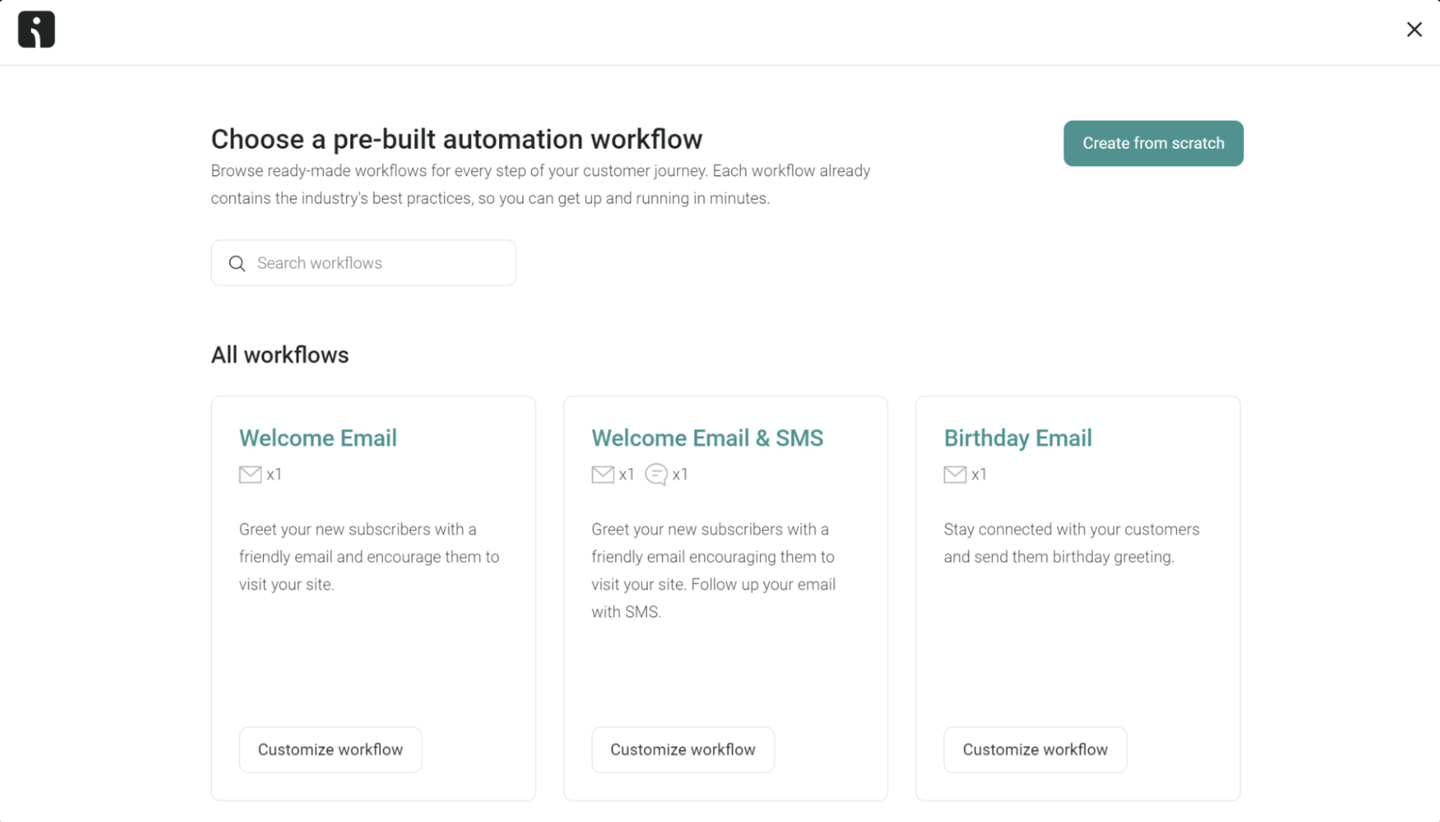
Omnisend is an all-in-one email, push, and SMS platform designed for ecommerce brands like Shopify furniture stores, offering advanced automations and email customizations. Furniture stores can choose to build entire automation flows manually, or choose from a list of pre-built automation workflows to start using automated flows sooner.
Quick sign up | No credit card required