
 Omnisend AI


 OFFER
OFFER







Drive sales on autopilot with ecommerce-focused features
See FeaturesKey takeaways 
SMS marketing boasts one of the highest ROIs in digital marketing, with Omnisend customers averaging $79 for every $1 spent, particularly benefiting from automated messages.
Automated SMS campaigns significantly outperform traditional campaigns, generating $0.74 per send compared to just $0.15 for one-off messages, highlighting the power of automation.
To accurately measure SMS marketing ROI, focus on revenue generated rather than engagement metrics, using unique codes, UTM parameters, or dedicated landing pages for tracking.
Combining SMS and email in marketing strategies enhances overall performance, as SMS drives immediate action while email nurtures long-term customer relationships.
Reveal key takeaways
SMS marketing ROI is often claimed to be one of the highest among digital channels.
Yet many marketers struggle to measure it correctly or even know which benchmarks to compare against. They struggle to separate hype from reality and fail to tell if their campaigns are actually working.
Without clarity, it’s easy to miss opportunities or misjudge performance. This guide clears things up.
Here, you’ll learn the average ROI for SMS marketing and what drives it. We’ll also show how to calculate it, track it, and improve it over time. Finally, we’ll cover what to look for when choosing an SMS platform focused on ROI.
Automate and track high-ROI SMS and email campaigns with Omnisend
Quick sign up | No credit card required
What kind of ROI can you realistically expect from SMS marketing?
SMS marketing ROI can be exceptional. In fact, SMS consistently ranks among the highest-return marketing channels across ecommerce.
Omnisend customers earn $79 back for every $1 spent. That figure covers the full omnichannel mix, not SMS alone. But SMS plays a disproportionate role. In our latest research — an analysis of 717 agencies managing nearly 3,000 ecommerce brands on Omnisend — agencies using SMS as a revenue channel generated 202% more revenue on average than those that didn’t.
The data from our 2025 and 2026 Ecommerce Marketing Reports backs this up:
- SMS volume continues to grow quickly. After rising 31% in 2024, it increased another 40% in 2025.
- Automated SMS messages earned $0.74 per send, compared to $0.15 for campaign messages. That’s almost five times more revenue per message.
- Globally, automated SMS achieved a 20.32% click-to-sent rate and a 0.77% conversion rate in 2025. At the same time, standard campaigns delivered 12.38% clicks and 0.12% conversions during the same period.
- In the United Kingdom, SMS campaigns achieved a 5.1% click-to-conversion rate. This is far above the global 0.97% average.
The big takeaway is simple: Automation drives the highest SMS ROI.
Campaigns saw modest improvements from 2024 to 2025 (click rates jumped from 5.05% to 12.38%). But automations dominated with 20.32% click rates and significantly higher revenue per send.
Of course, SMS marketing results vary widely.
Industry type, campaign design, list quality, and attribution rules can affect performance. For example, retailers with high repeat purchase rates often see stronger SMS ROI than those with lower rates.
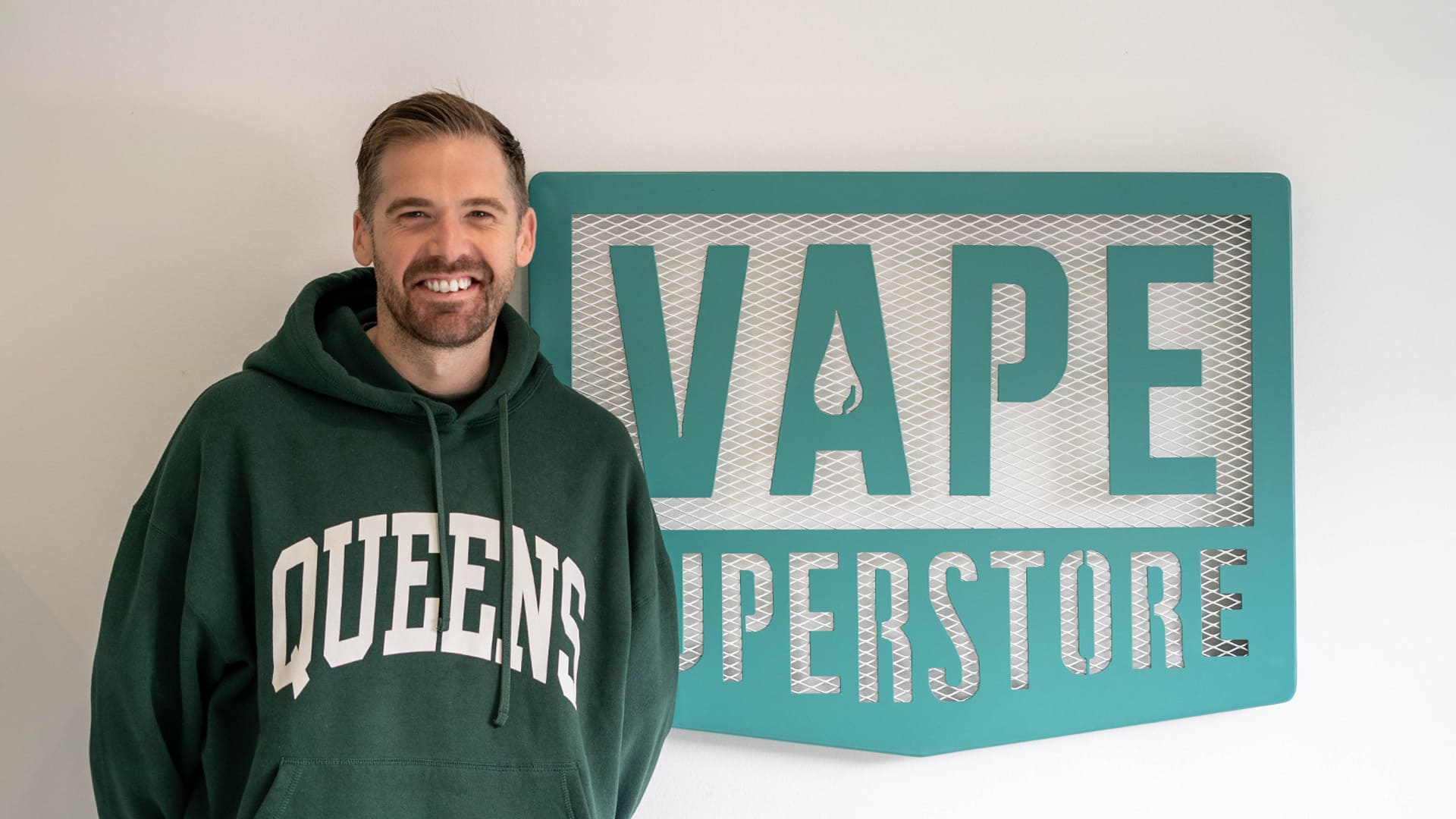 | Vape Superstore’s SMS Success Vape Superstore combined email and SMS to reach mobile shoppers more effectively. With 80% of its visitors on mobile, adding instant messaging was a natural fit. After switching to Omnisend’s multi-step forms to collect both emails and phone numbers, signup rates jumped from 18% to 32% — a 77% increase. Check out the Vape Superstore case study to see how the brand uses SMS campaigns. |
How to calculate your SMS marketing ROI
Calculating SMS marketing ROI doesn’t have to be complicated. At its core, it’s about comparing the revenue generated from SMS against the costs of sending those messages.
Here’s how to measure the ROI of SMS marketing:
SMS ROI = [(Revenue from SMS − Cost of SMS) ÷ Cost of SMS] x 100
This formula shows how much return you get for every dollar spent on SMS marketing.
A quick example:
Let’s say your store spends $500 on SMS marketing promoting a weekend sale. This includes platform fees, messaging costs, and any setup expenses. Your automated SMS campaigns generate $4,000 in tracked revenue. Here’s the math:
- Revenue from SMS: $4,000
- Cost of SMS: $500
- ROI calculation: [($4,000 − $500) ÷ $500] × 100 = 700%
For every dollar spent, you earned $7 back. That’s a 700% return.
All this seems simple enough, right? But there’s a catch.
Understanding your costs:
Many businesses underestimate the real cost of SMS marketing. Pricing depends on message volume, destination countries, and platform fees.
To get a more accurate estimate, try the Omnisend SMS pricing calculator. It helps you understand how much you’ll spend and what kind of returns to expect. You can project and adjust SMS ROI based on list size, message length, and destination country.
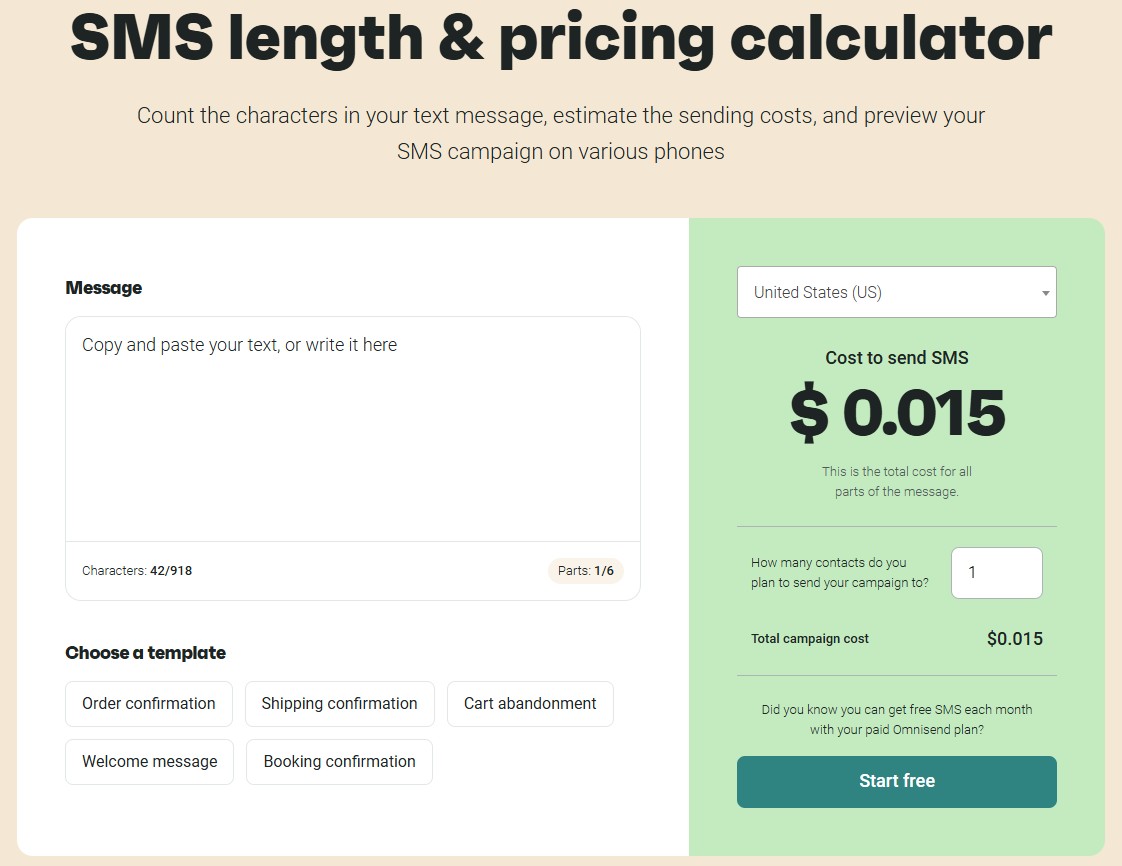
The takeaway? SMS marketing ROI is easy to measure once you know the formula. And with the right tools, you can forecast costs and revenue before launching your campaigns.
Next, we’ll discuss how to accurately attribute revenue to SMS.
How to track SMS marketing ROI (and what most businesses get wrong)
Most businesses send SMS campaigns, check open rates, and call it a day. But opens don’t pay bills, revenue does. To measure SMS marketing ROI properly, you need to close the loop between engagement and sales.
So if you’re wondering how to track ROI from SMS marketing, start by connecting every message to measurable revenue. Here are the most reliable tracking methods:
- Unique discount/promo codes: Assign a unique discount code to each SMS campaign. For example, FLASH20 or WKND15 can be tied to a specific campaign, making it easy to attribute revenue once redeemed.
- UTM parameters on links: Add UTM tags to SMS links. These tags pass campaign data into your analytics tools, so you can see which messages generated traffic and conversions.
- Dedicated landing pages: Create pages only accessible via text links with SMS marketing software like Omnisend. With traffic to those URLs only coming from text campaigns, you can isolate revenue without guesswork.
- Platform-level revenue attribution: Advanced SMS platforms track revenue automatically. For instance, Omnisend’s reporting tools connect messages to purchases, showing exactly what each campaign earned.
- Revenue window comparison: Not every customer buys instantly, so define a revenue attribution window. This can be 24 hours, 48 hours, or 3 days after an SMS is sent. It ensures delayed purchases still count toward SMS marketing ROI.
Metrics that predict SMS marketing ROI
You don’t always have to wait for final revenue reports to judge performance. Several early indicators can hint at your potential SMS marketing ROI. These include:
- Opt-in conversion rate: How good are you at converting website visitors to SMS subscribers? The better your opt-in conversion rate, the better your list. A low opt-in conversion rate may imply that your value proposition is poor or that you have incorrectly placed the opt-in form.
- Click-to-sent rate: This measures the number of clicks received by the number of people who received the message. The higher the click rate, the higher the conversion rate. This is a sign that your targeting and message relevance are spot on.
- Conversion rate: This measures the number of SMS clicks that convert to sales. If the conversion rate is low and the click rate is high, it may imply that there is a problem with the landing page.
- Revenue per SMS: This metric connects engagement with revenue. Use it to compare automated flows and campaigns. Also, understand that a declining rate could mean list fatigue, poor segmentation, or message overload.
- Opt-out rate: This shows the number of customers who unsubscribe from your list. It signals over-messaging, poor targeting, or irrelevant content. It will also hurt your future SMS marketing ROI as you lose subscribers who’d have converted.
Common SMS ROI tracking mistakes
Get tracking right, and you’ll know exactly which messages drive results. But as you track SMS marketing ROI, avoid these errors:
- Tracking open or click rates instead of revenue: High engagement means nothing if it doesn’t convert. A 15% click rate that generates $200 loses to a 3% click rate that generates $2,000.
- Not separating campaigns from automations: Broadcasts and automations have different purposes. Always track them separately. Also, automations always perform better than campaigns. If you track them together, you will not be able to identify which one is working better.
- Mixing transactional and promotional messages: Order confirmation and shipping updates do not belong in promotions. Avoid including them in the ROI calculation, as it will artificially inflate the performance.
“Our customers have received SMS really well. They appreciate its directness and immediacy, especially for clearance sales, product recommendations, and product launches. Anyone who has concerns with SMS, at least try it out. I think you’ll be surprised by the results.”
— Dan Judd, Head of Digital, Vape Superstore
SMS marketing ROI vs. email marketing ROI
Marketers constantly ask which channel, between email and SMS, delivers better returns. The answer isn’t either/or. It’s both.
SMS usually wins on speed and engagement. Email wins on scale and long-term nurturing. The highest-performing brands use both.
Check out this video exploring key email and SMS marketing insights, ranging from engagement and conversion rates to best use cases.
Here’s how SMS marketing ROI compares to email across key metrics:
| Metric | SMS | |
|---|---|---|
| Average open rate | ~98% | ~30% |
| Average CTR | ~21-35% | ~3.25% |
| Average conversion rate | ~21-30% | ~12.04% |
| Average response time | ~90 seconds | ~90 minutes |
| Cost per message | Higher | Lower |
| Best for | Time-sensitive, high-intent messages | Nurturing, storytelling, long-form content |
| Revenue per send | Higher per message | Higher in total volume |
| ROI per $1 spent | ~$21-$71 | ~$36-$42 |
What does this mean?
SMS delivers unmatched immediacy and engagement. With open rates near 98% and CTRs far above email, it’s ideal for urgent offers, abandoned cart reminders, and flash sales.
Email, on the other hand, wins on scale. Lower costs and higher send volumes make it better for nurturing, content distribution, and long-term engagement. You can also send more frequently without annoying subscribers.
So the real winner isn’t SMS or email. It’s both, working together.
Brands that combine the channels in an omnichannel workflow often outperform single-channel campaigns. SMS drives immediate action, while email builds long-term relationships.
For example, you might send a detailed email promotion, then follow up with a conversational SMS reminder to drive last-minute conversions.
Strategies to improve your SMS marketing ROI
If you’re already running campaigns, the next step is improving SMS marketing ROI. Several key changes and smarter execution can dramatically increase revenue per message.
Here are some of the best SMS marketing strategies for higher ROI:
- Prioritize automation: Automated SMS messages consistently outperform one-off campaigns. Omnisend data reveals that automated text messages generate about $0.74 per send, compared to $0.15 for campaigns. With workflows for abandoned carts, welcome series, and post-purchase follow-ups, you can reach customers at high-intent moments.
- Segment your list: Stop sending the same message to everyone. Targeted messages reduce waste and drive conversion, so segment by purchase history, behavior, interests, or location. For example, offer a loyal customer who spends $500 monthly VIP offers, and provide product recommendations to someone who signed up recently.
- Optimize send timing: Timing has a big impact on engagement. Texting during peak shopping hours often leads to higher click rates, so test different windows to find your sweet spot. For most ecommerce brands, the best time to send SMS is usually late mornings and early evenings, and usually from Thursday to Saturday.
- Reduce opt-out rates: Your list is your asset, and high unsubscribe rates quickly damage SMS marketing ROI. As such, avoid over-messaging and focus on clear value, relevant offers, and reasonable frequency. Also, remove disengaged subscribers to avoid damaging your sender reputation and burning money texting them. Clean lists convert better.
“SMS works best when every message feels valuable to the customer. If subscribers expect helpful updates or exclusive offers, they’re far more likely to stay engaged and convert.”
— Greg Zakowicz, Senior Ecommerce Expert, Omnisend
- Use SMS for high-intent moments: SMS performs best when urgency is involved. Reserve it for time-sensitive messages like flash sales, cart reminders, or shipping updates, and save storytelling and education for email. For broader promotions, consider sending an email first, then follow up with a short reminder using bulk text message campaigns.
- A/B test message copy and CTAs: Testing is one of the most effective SMS marketing ROI improvement strategies. It helps you see how and which tweaks in wording, calls to action, message length, tone, and more increase clicks. Test one variable at a time, on small segments first, and then roll winners out to larger audiences.
- Clean your list regularly: Check for and remove invalid or inactive numbers every few months. Bad numbers and subscribers who never engage inflate costs, distort performance metrics, and tank delivery rates. A smaller but active audience outperforms a bloated list every time, so purge duplicates and use validation tools to catch fake entries at signup.
- Combine SMS and email in automated workflows: SMS alone is powerful, but pairing it with email multiplies results. For example, an abandoned cart email followed by an SMS reminder a few hours later often recovers more carts than either channel alone. This layered approach improves reach and reinforces urgency.
“SMS works best when every message feels valuable to the customer. If subscribers expect helpful updates or exclusive offers, they’re far more likely to stay engaged and convert.”
— Karolina Petraškienė, Marketing Project Lead, Omnisend
Which factors affect SMS marketing ROI the most?
If your SMS marketing ROI is lower than benchmarks, don’t panic. Several factors influence results, and understanding them can help you apply the right SMS marketing ROI best practices. Here are a few:
- List quality and opt-in recency: The quality of your subscriber list has a direct impact on performance. Fresh subscribers usually engage more than older contacts. If most of your list is inactive or joined months or years ago, engagement and SMS ROI may decline.
- Campaign type: Not all messages perform equally. Automated flows, such as welcome series, post-purchase, and abandoned cart reminders, typically generate far more revenue per send than broadcast campaigns. Many SMS marketing campaigns that increased ROI have relied heavily on automation.
- Industry and average order value (AOV): Retailers with frequent repeat purchases often see stronger SMS ROI than industries with long buying cycles. AOV also matters, as higher-ticket items can make each text more profitable. Lower-priced products require higher volume to achieve similar returns.
- Attribution model used: The attribution window you choose affects reported revenue. A short window might miss delayed purchases, while a longer one captures more conversions. If the attribution model is too strict, your SMS marketing ROI statistics may appear lower than they actually are.
- Platform capabilities: Your technology stack matters more than many marketers realize. The best SMS marketing tool offers built-in automation, segmentation, and analytics, making it easier to optimize campaigns. Choosing the right SMS marketing software solutions can significantly improve results.
- Send frequency and timing: Sending too often risks burning out subscribers and increasing opt-outs. But send too rarely, and you reduce engagement and revenue opportunities. Find the right cadence and capitalize on high-intent moments like sales events and abandoned carts to protect list quality and ROI.
- Message relevance and personalization: Generic blasts underperform. But texting tailored offers based on purchase history or location drives stronger engagement. Relevance is foundational, so segment your list by behavior, purchase history, and engagement level.
- Cost structure: SMS pricing varies by country, message volume, type (SMS or MMS), and platform fees. Understanding your cost structure helps you estimate ROI more accurately. Review common SMS marketing pricing models to help your business forecast its spending and expected returns.
SMS marketing ROI best practices checklist
Here’s a quick, skimmable checklist you can use to improve SMS ROI immediately. These are the core SMS marketing ROI best practices that top-performing brands follow every day:
- Use double opt-in to ensure quality subscribers
- Keep messages short, clear, and tied to high‑intent moments
- Segment by purchase history, engagement level, and behavior
- Clean your list monthly to remove invalid numbers and inactive contacts
- Limit message frequency to avoid subscriber fatigue and high opt-out rates
- Use trackable links, promo codes, or dedicated landing pages in your campaigns
- Combine SMS with email in unified workflows for stronger omnichannel results
- Extend attribution windows to 48-72 hours for higher-ticket items
- Test message copy, CTAs, and send times regularly
Choosing an SMS marketing platform with ROI in mind
To find out which SMS marketing platform offers the best ROI, you must look into features rather than brand names.
The best SMS marketing tool supports automation, segmentation, clear attribution, and both email and SMS in one place. Omnisend does this well.
It includes pre‑built ecommerce workflows, shows revenue per campaign and per flow, and makes ROI tracking simple. Its customers also average $79 back for every $1 spent, proving how strong results can be when the right features work together.
Start driving measurable revenue with Omnisend’s SMS and email automation
Quick sign up | No credit card required
FAQs
What is a good ROI for SMS marketing?
A good SMS marketing ROI typically ranges between 500% and 2,500%, though top-performing campaigns can exceed 7,000% ($71 for every $1). Some benchmarks suggest brands can earn between $21 and $71 for every dollar spent.
Omnisend customers average about $79 for every $1 spent across all channels, showing how powerful mobile messaging can be when used strategically.
How do I calculate SMS marketing ROI?
To calculate SMS marketing ROI, use the formula: [(Revenue − Cost) ÷ Cost] × 100.
For example, if SMS generates $10,000 in revenue and costs $1,500, your ROI is 566%.
Tools like the Omnisend SMS calculator make it easy to estimate costs and forecast returns before launching campaigns.
Is SMS marketing better than email for ROI?
Both channels deliver strong returns, but they serve different purposes. SMS has higher open and click rates, making it strong for urgent, high-intent campaigns. Email is cheaper per send and scales better for nurturing.
The best ROI comes from combining both in omnichannel workflows, where they complement each other instead of competing.
How often should I send SMS to maintain a good ROI?
Frequency depends on your audience. Too many texts lead to opt-outs, while too few miss opportunities. A common best practice is two to six promotional SMS per month, plus automated flows like abandoned cart or post-purchase.
Automated flows don’t count toward your broadcast limit — they’re triggered by behavior, not calendar schedules. Always monitor opt-out rates to protect list quality and ROI.
Which SMS marketing platform offers the best ROI?
The best SMS marketing tool is one that offers segmentation, automation workflows, detailed analytics, and clear revenue attribution.
A platform like Omnisend provides these features, helping you track ROI accurately and run campaigns that outperform benchmarks. It also provides seamless Shopify integration, transparent pricing, and results-driven omnichannel marketing capabilities.

TABLE OF CONTENTS
TABLE OF CONTENTS


Subscribe and don’t miss any updates!
No fluff, no spam, no corporate filler. Just a friendly letter, twice a month.