
 Omnisend AI


 OFFER
OFFER







Drive sales on autopilot with ecommerce-focused features
See FeaturesKey takeaways 
WooCommerce product recommendations significantly boost conversion rates and average order values by providing tailored suggestions that enhance the shopping experience.
Utilizing plugins for product recommendations, such as WooCommerce's official extension or third-party tools, allows for advanced customization and automation of upsells and cross-sells.
Integrating product recommendations with email marketing through platforms like Omnisend can optimize customer engagement and drive sales by delivering personalized offers based on browsing history and purchase patterns.
Implementing best practices, such as strategic placement and A/B testing of recommendations, is essential for maximizing their effectiveness and ensuring a seamless customer journey.
Reveal key takeaways
Those frequently bought together, similar items, recently viewed, and other WooCommerce product recommendations you see have the incredible knack of increasing conversion rates.
The psychology behind them is easy enough to grasp. Your customers move through their purchase with some idea of what they need, but don’t always find the product or pairing that makes them buy. A contextual recommendation provides what they need, and you win the sale.
WooCommerce has plugins for rule-based product recommendations that you set, and AI recommendations that analyze your products and recommend for you. Additionally, there are off-site product recommendations via email, with a tool such as Omnisend.
This article provides a comprehensive guide to product recommendations for WooCommerce, including the best official and third-party plugins, setup instructions, and best practices.
Recommend products in your email campaigns and automations with Omnisend’s Product Recommender Item
Quick sign up | No credit card required
What are WooCommerce product recommendations?
A portion of your customers will need help beyond mega menus and real-time search to discover the most suitable products for them. Product recommendations fill the gap, appearing at optimal moments on-site and off-site across marketing channels.
What is a product recommendation?
A product recommendation suggests items customers might want based on their activity or filters you configure in your store settings. It can appear as a front-end widget or element on your WooCommerce store or in your marketing channels, such as email.
Types of product recommendations in WooCommerce
Product recommendation types in WooCommerce include:
- Best-sellers reveal the items with the highest sales volume over a period you define
- Recently added showcases the newest products in your catalog for repeat visitors
- Most viewed, highlights products with the highest traffic and browsing activity
- Similar to past purchases, pulls items from matching categories based on order history, excluding products bought within the last year
- Recently viewed shows what a customer looked at during recent sessions, useful for browse abandonment campaigns
- Frequently bought together, identifies items commonly purchased in the same order for natural cross-sells and “Customers who bought X also bought Y” sections
How recommendations impact conversions and average order value
Product recommendations positively impact conversion rates and AOV because they deliver personalized, high-quality shopping experiences.
Customers who land on your WooCommerce store do so because they are looking to buy something. However, there’s no guarantee that the page they are on is the perfect product, nor that your customer is willing to keep searching for it.
A product recommendation delivered on the page your customer is viewing can shorten their discovery and path to purchase. Depending on your recommendation widget, you could bundle, cross-sell, or upsell and create a higher order value.
The personalization factor extends to your marketing channels as well. Omnisend’s 2025 Ecommerce Marketing Report shows that cross-sell emails had 21.12% click-to-conversion rates, higher even than browse and product abandonment emails.
Official WooCommerce product recommendation tools and documentation
WooCommerce installations typically include upsells and cross-sells, although they often have significant design and personalization limitations.
To set up an upsell or cross-sell:
- Log in to WordPress
- Head to Products in the sidebar
- Click Edit on the product you want to add an upsell or cross-sell to
- Head down to the Product data tab
- Click Linked Products and search for a product to add it:
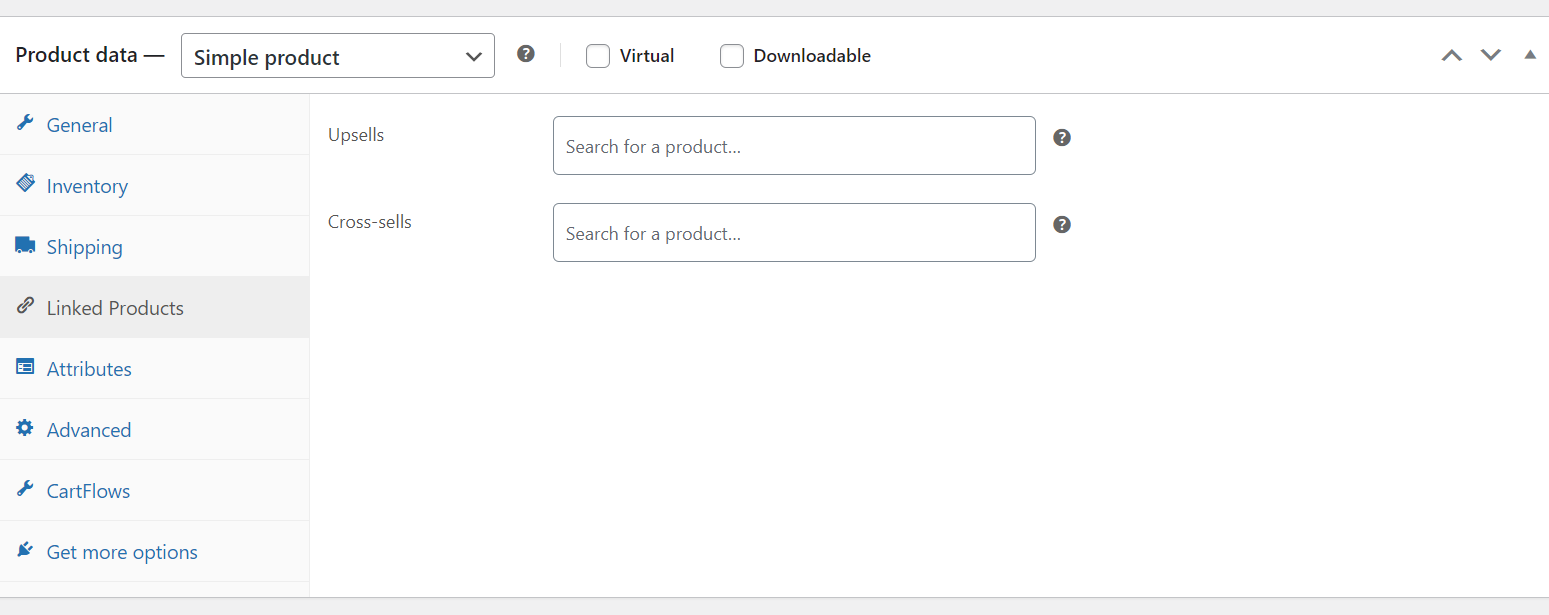
Here’s how native cross-sells and product recommendations appear by default:

If you want to create more advanced product recommendations, you can install the official Product Recommendations for WooCommerce by Woo extension.
Native extensions developed by Woo provide one-click installation, and unlike third-party tools, do not ask you to create new accounts or log in to an external dashboard. Additionally, they have extensive documentation and community notes.
There are two native WooCommerce extensions to consider:
1. WooCommerce Product Recommendations extension
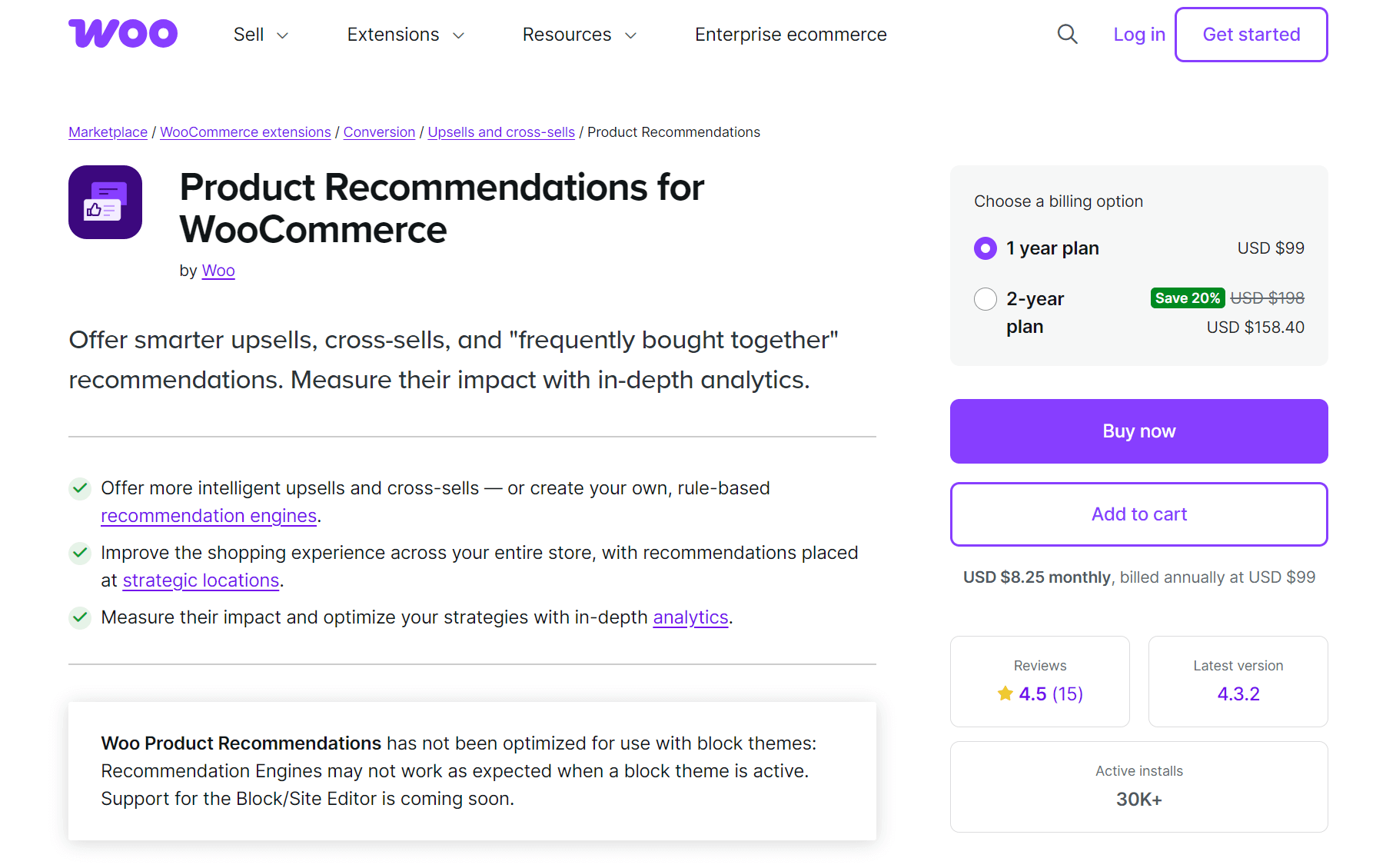
Rating: 4.5/5 based on 15 reviews
Product Recommendations for WooCommerce lets you build recommendation engines with context-aware rules. For instance, you can display products from the currently viewed category or limit recommendations to items priced higher than what your customer is viewing:
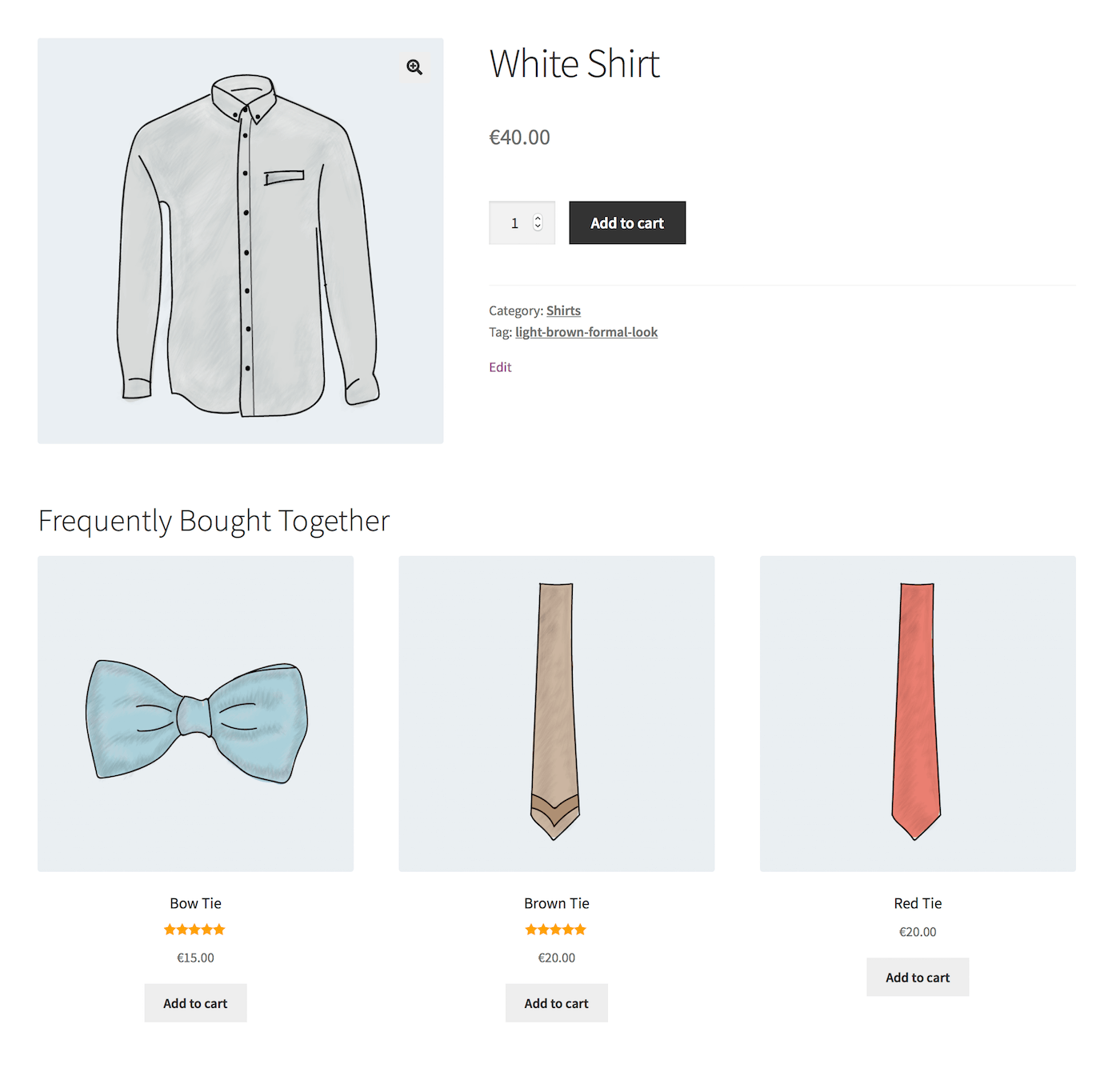
You can use it to create upsells, cross-sells, and frequently bought together suggestions using order history to identify product relationships and generate recommendations.
20+ theme locations are supported across product pages, cart, checkout, and post-purchase pages, with each customizable by category, tags, attributes, and price. The priority adjusts based on popularity, ratings, or conversion rates.
Pros
- Automates suggestions without manual product selection
- Tracks performance with revenue and conversion analytics
- Builds WooCommerce recommendation engines in bulk with context-aware rules
Cons
- Limited design customization, theme-dependent
- Broken functionality reported with “Bought together” and “Also bought” recommendations not generating
When to use it
Consider this option if you have a small SKU store (fewer than 50) and want to automate cross-sells and upsells based on purchase patterns. It also lets you display recently viewed items, and track which suggestions convert using built-in analytics.
Pro tip
With Product Recommendations for WooCommerce taking care of your on-site cross-sells and upsells, Omnisend can handle the same in your email campaigns and automations. It syncs your products, orders, and customer information, and can recommend up to 12 products in an email via the Product Recommender Item.
Find out more: Add and configure the Product Recommender Item
2. Product Bundles for WooCommerce extension
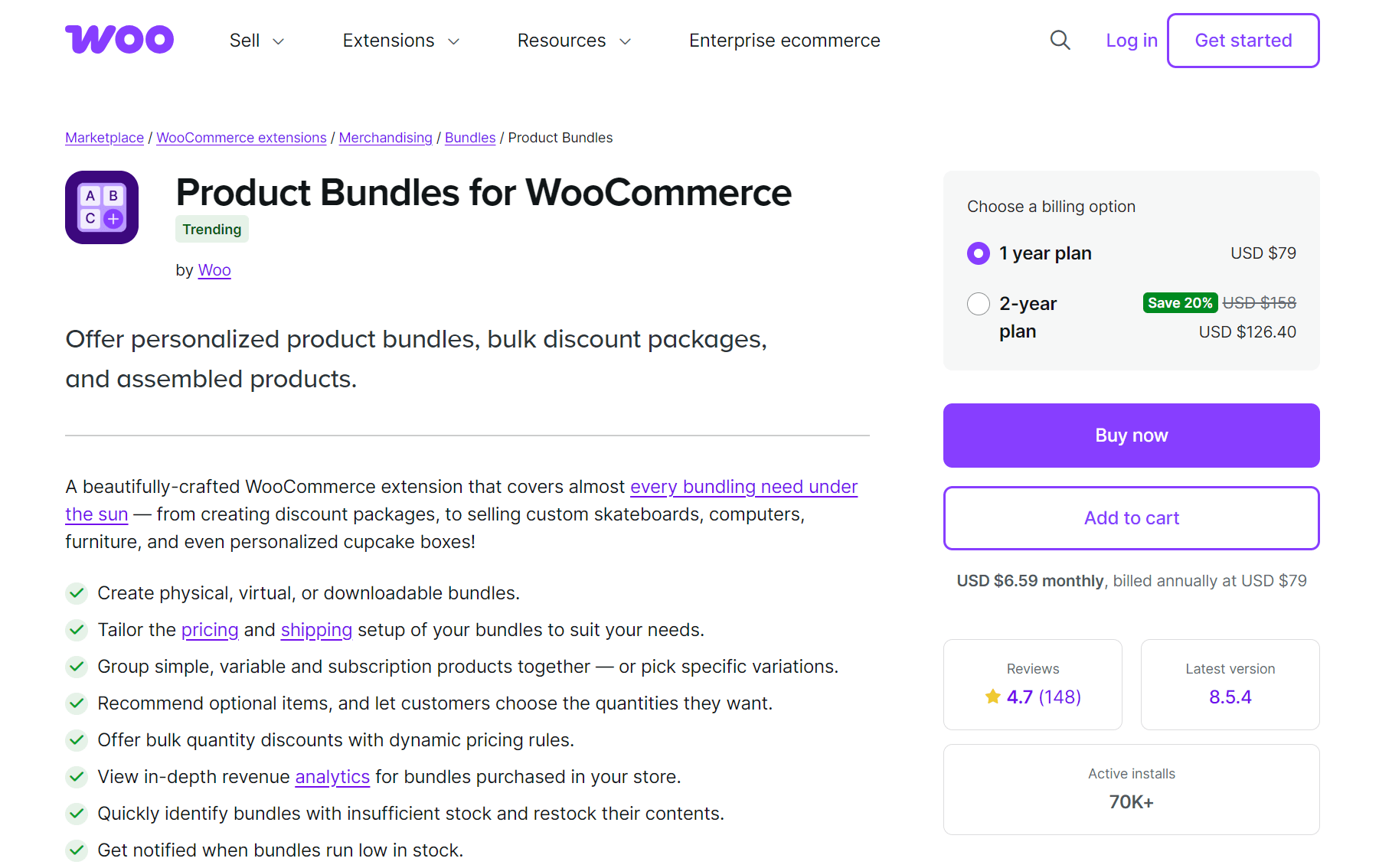
Rating: 4.7/5 based on 148 reviews
Product Bundles for WooCommerce integrates with Product Recommendations, letting you automatically display every bundle that includes a product when customers view that item:
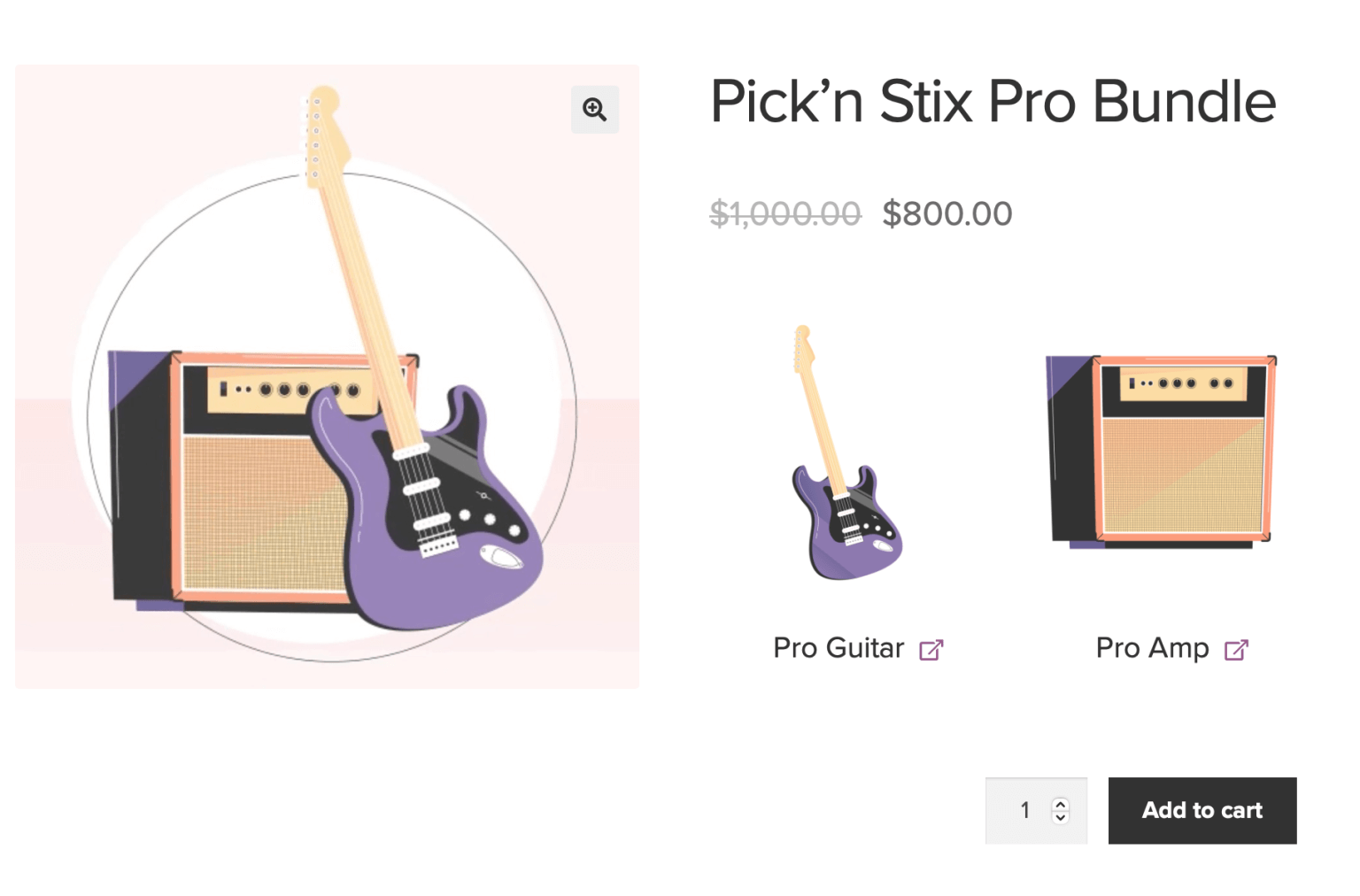
Group simple, variable, and subscription products into packages, select variations or entire lines, and apply discounts to individual items or the whole bundle, and adjust pricing accordingly.
It manages assembled products using inventory-tracked components, whether parts are sold separately or in bundles, and updates stock across both.
Your customers can build pick-and-mix boxes within the minimum and maximum quantity limits you set, with recommended products cross-sold throughout.
Pros
- Manages inventory across bundled and individual product sales
- Supports dynamic bulk discounts at quantity thresholds
- Integrates with Product Recommendations for automatic cross-promotion
Cons
- Doesn’t let you add one product bundle to another bundle, so only supports simple bundles and product combinations
- Some users report indexing issues that prevent the extension from analyzing orders properly
When to use it
It’s a worthwhile addition to the Product Recommendations for WooCommerce extension when you want to discount packages, offer pick-and-mix boxes, and recommend bundles containing items that customers are viewing.
Additional reading:
35+ best WooCommerce plugins in 2025 (free & paid)
Best third-party WooCommerce product recommendation plugins
Should WooCommerce’s extensions for product recommendations prove too basic for your customer journey, you can install third-party WooCommerce product recommendations plugins.
How to evaluate a WooCommerce product recommendations plugin
Follow these steps to narrow down your plugin list:
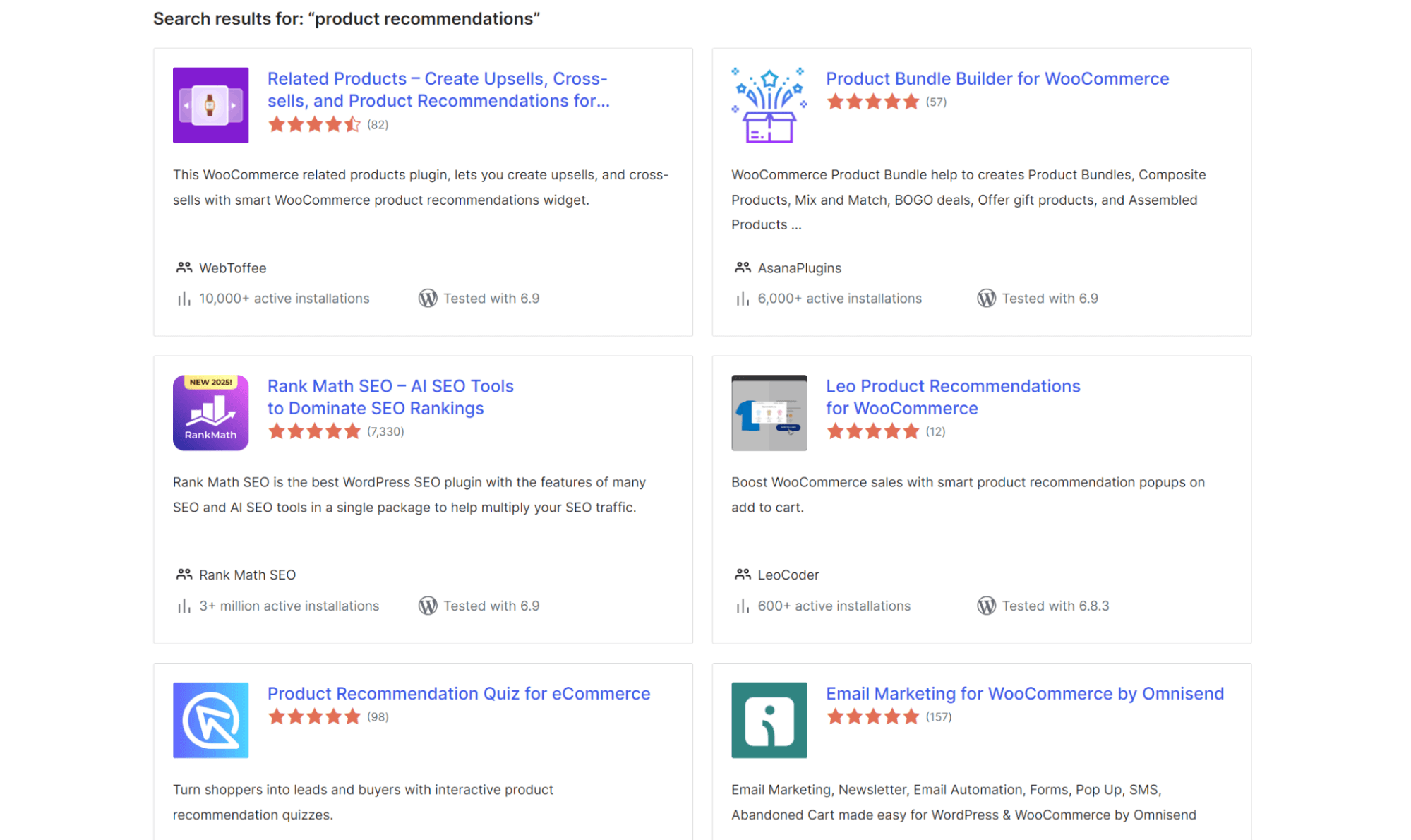
- Search the right places: The WooCommerce Marketplace, followed by the WordPress Plugin Directory, and then Google. Search all these with the term “product recommendations.” The best results are actually via the WordPress Plugin Directory:
- Reviews and positive discussion: Most WooCommerce product recommendations plugins have multiple reviews, but in their absence, you can usually find Reddit, Quora, and forum discussions, as well as YouTube videos and LinkedIn posts.
- Pricing checks: Free forever plans should ideally provide access to all features. Otherwise, you should subscribe to a paid trial for a premium plan. Review all the plans available for affordability at scale.
- Recommendation scope: Your plugin should be able to recommend products in the format your customers need, such as frequently bought together, recently viewed, and similar items based on category and price
Overview of top plugins, features, and comparison
Check out these third-party WooCommerce product recommendation plugins:
1. Related Products – Create Upsells, Cross-sells, and Product Recommendations for WooCommerce
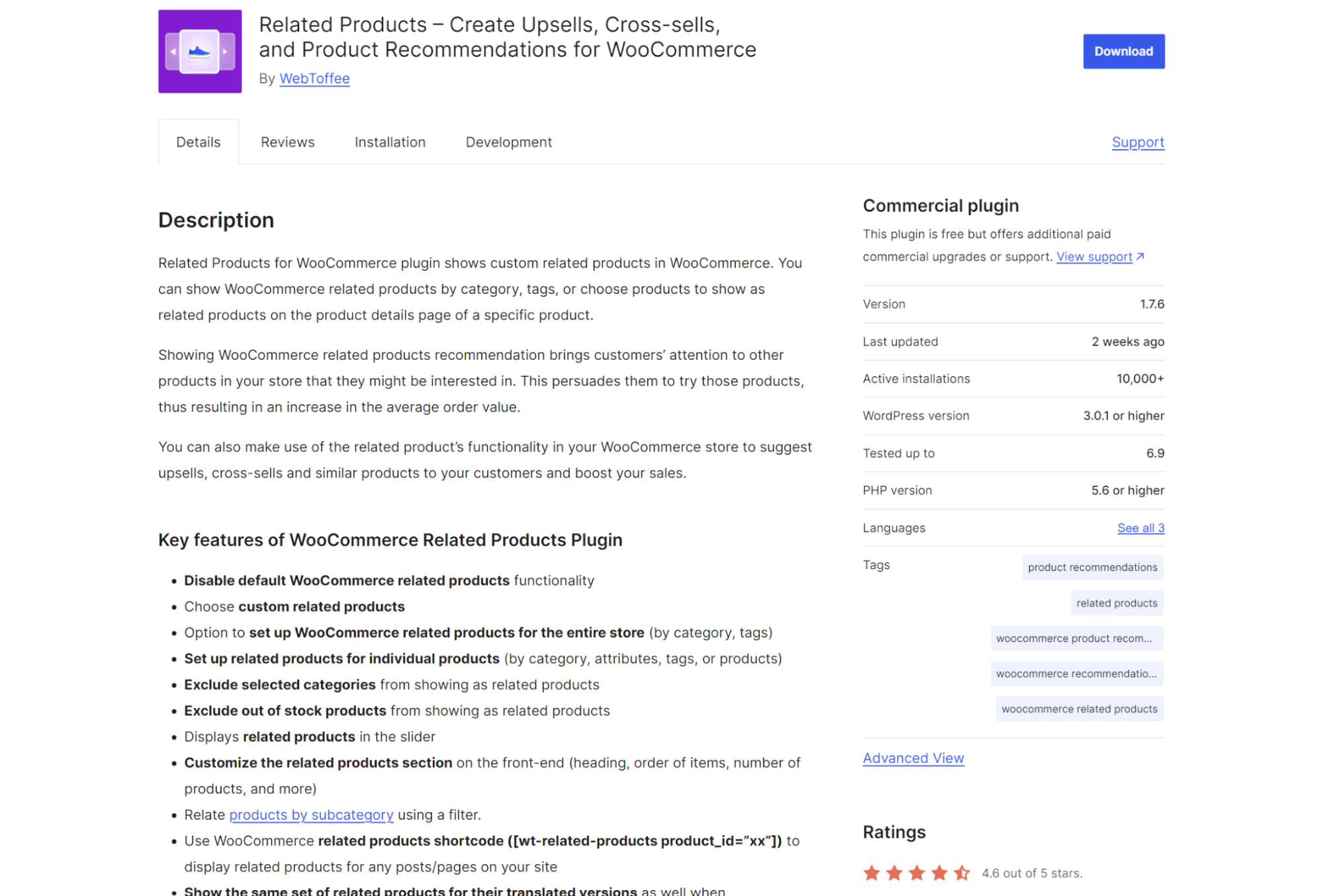
Related Products by WebToffee disables the default WooCommerce related products feature and replaces it with templates and the ability to show products by category, tags, and filters for subcategories, improving the quality of your suggestions.
2. Leo Product Recommendations for WooCommerce
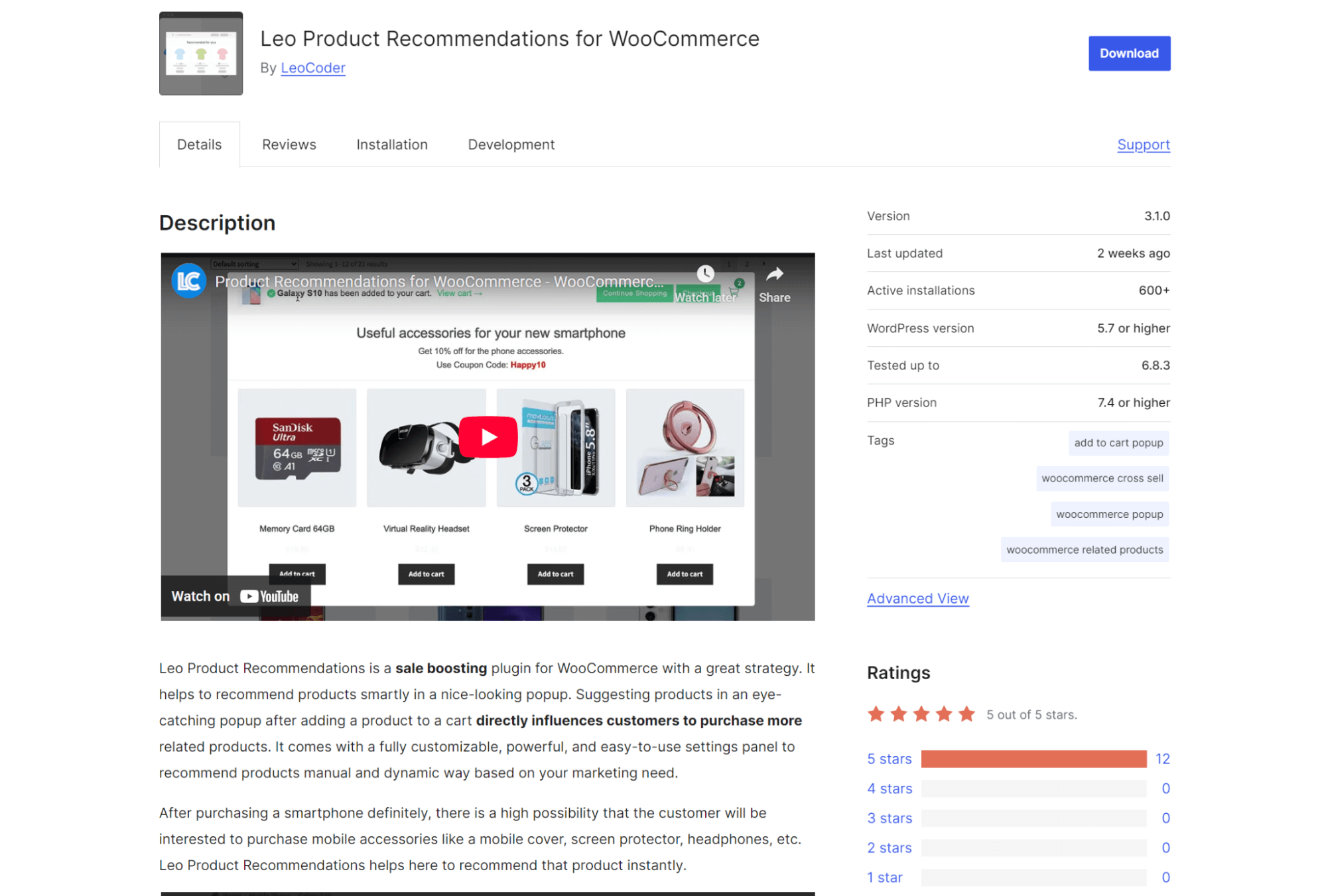
Leo Product Recommendations for WooCommerce provides a unique Ajax add-to-cart feature within your recommendations and lets you recommend products in grids in addition to sliders with support for the Gutenberg editor, Elementor, Divi, and WPBakery page builders.
3. Product Recommendation Quiz for eCommerce
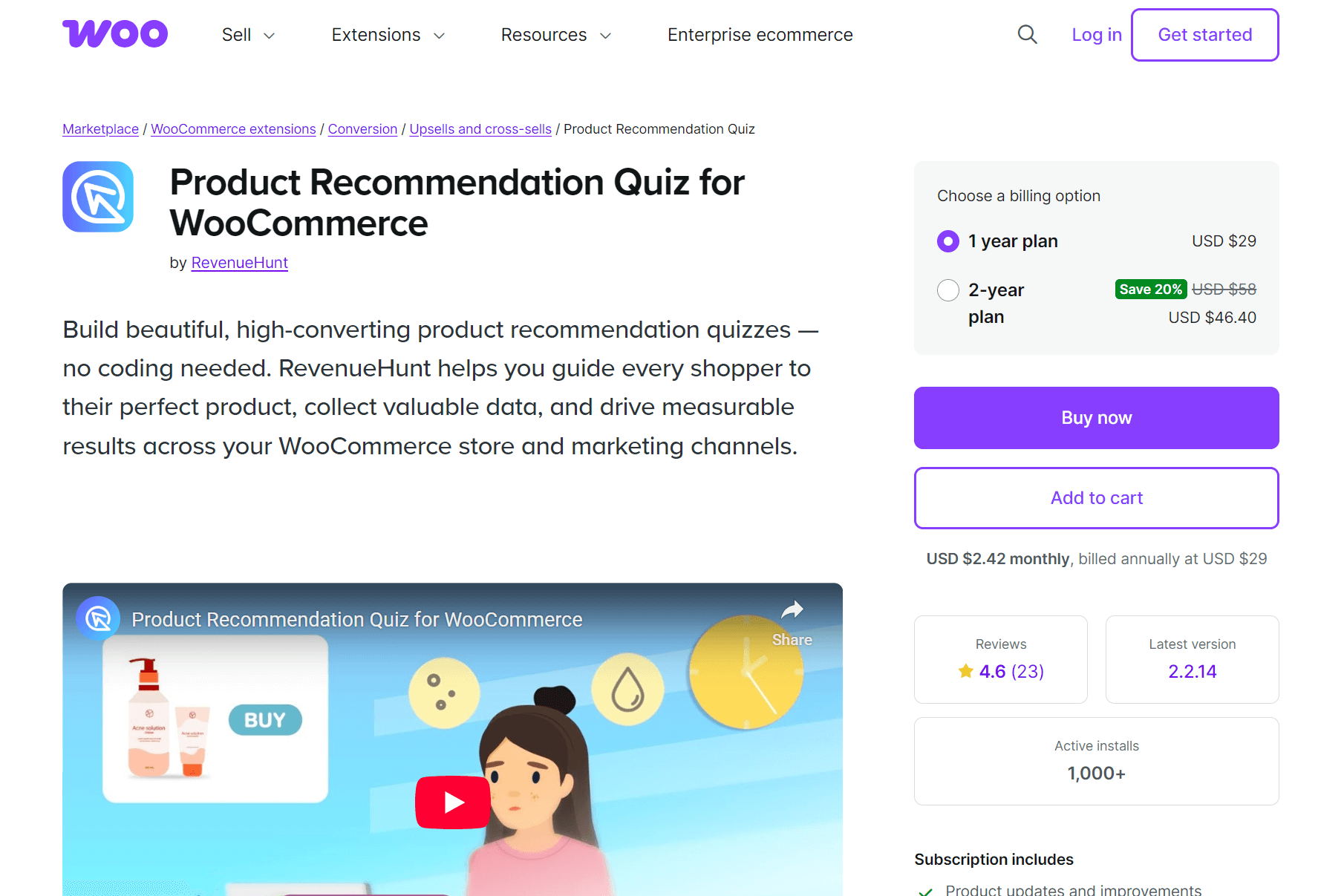
Product Recommendation Quiz for eCommerce lets you build quizzes that recommend products to customers based on their answers. Its AI quiz builder creates professional templates, and you can integrate them into your site with popups, inline blocks, and embeds.
4. UpsellWP
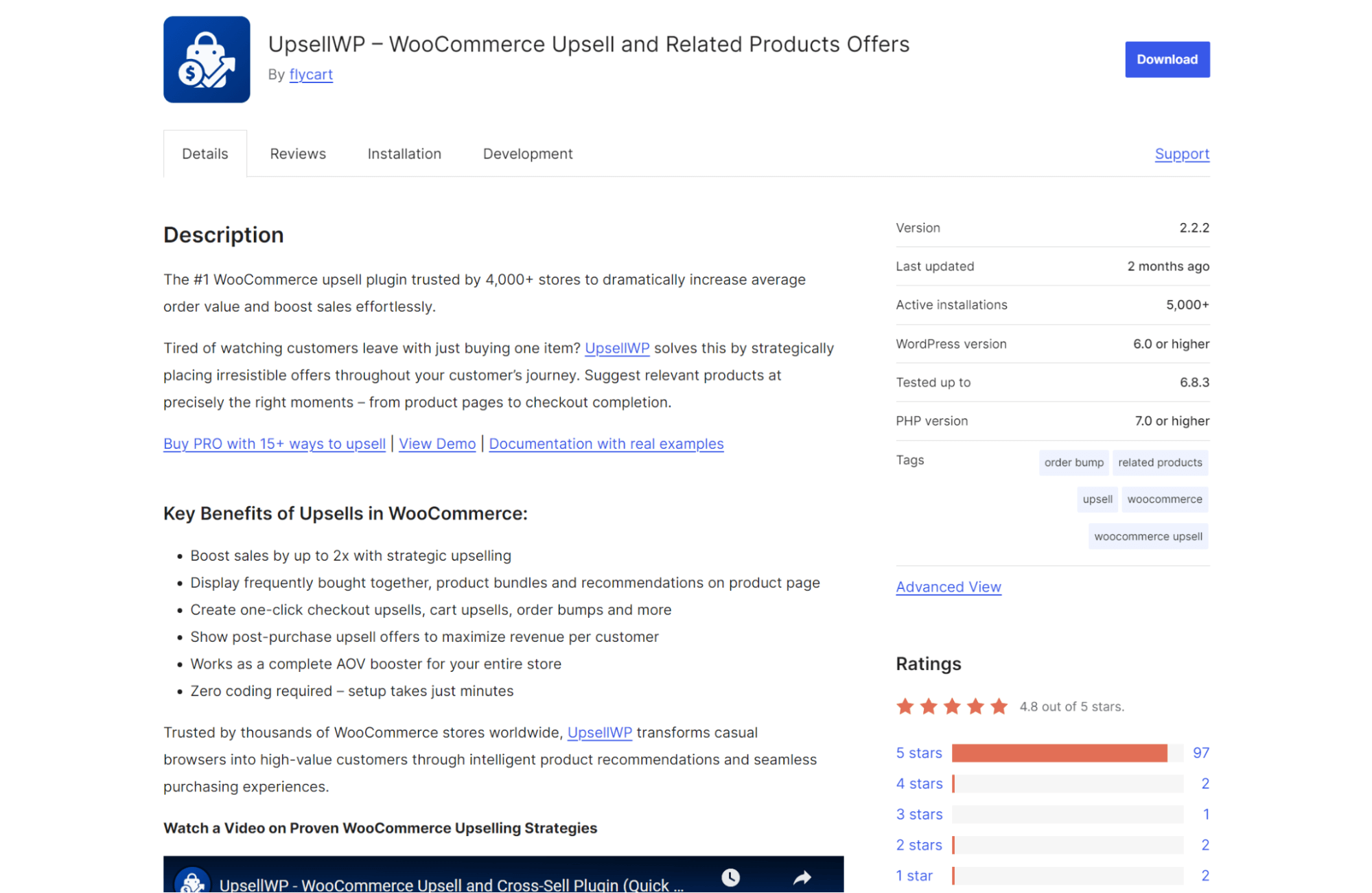
UpsellWP covers the entire purchase journey with checkout order bumps, cart cross-sells, frequently bought bundles, and post-purchase offers. One-click acceptance lets customers add recommendations without requiring page refreshes.
5. Related Products for WooCommerce
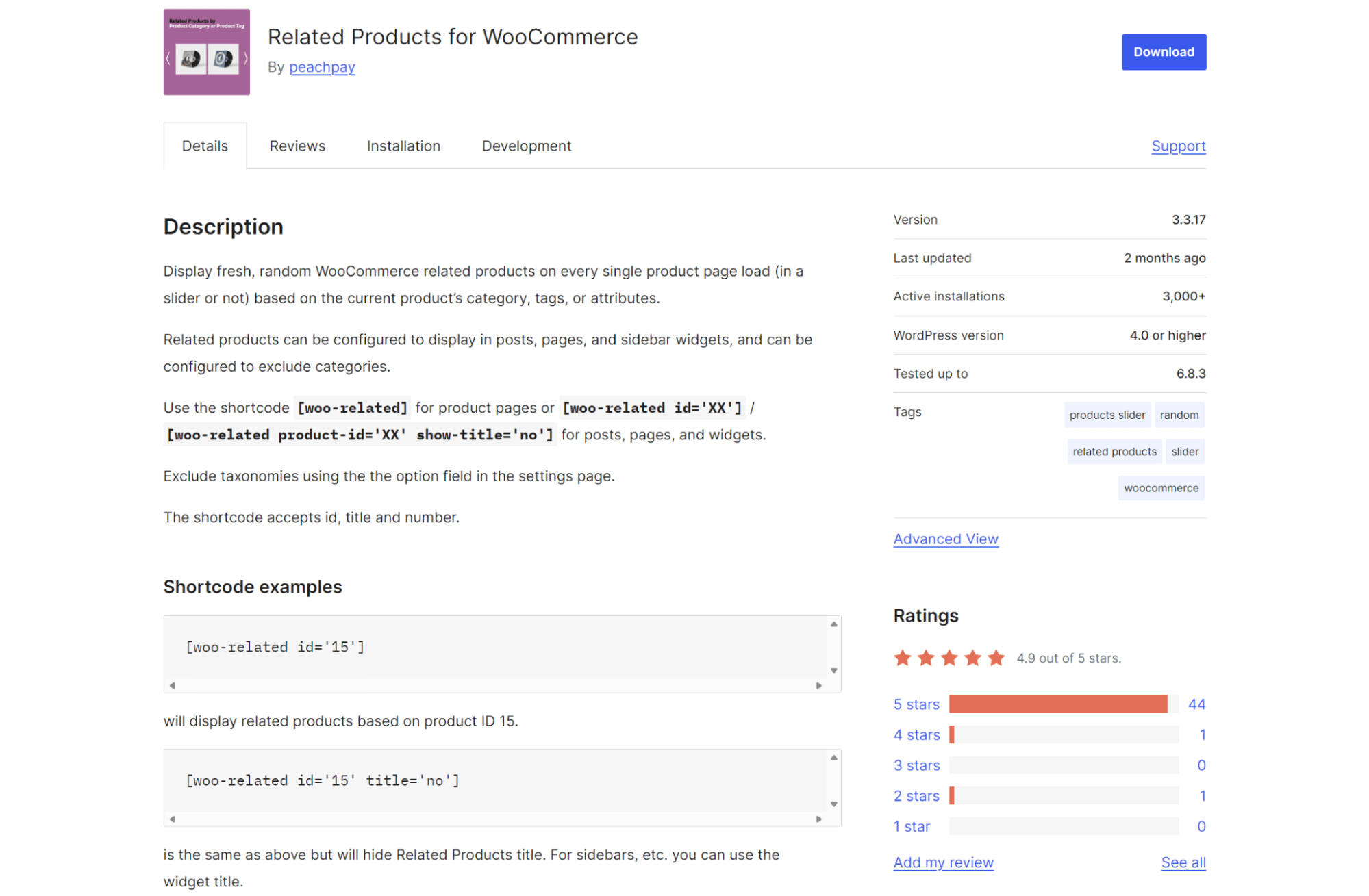
Related Products by peachpay randomizes suggestions on every page load, pulling from categories, tags, or attributes to keep recommendations fresh. The shortcode system lets you embed recommendations in posts, pages, and widgets beyond standard product pages.
6. CartFlows
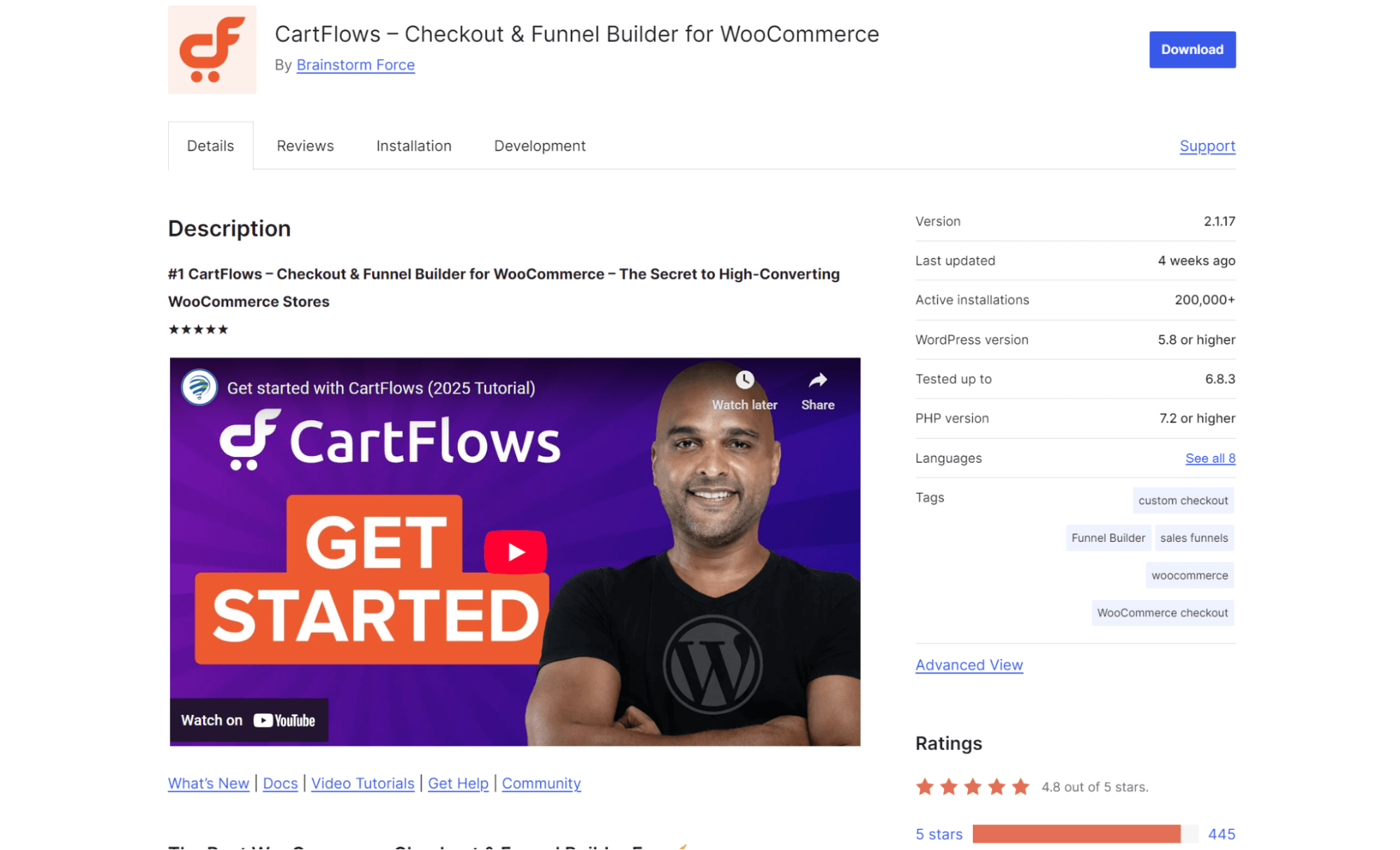
CartFlows creates multi-step sales funnels with distraction-free checkout pages optimized for conversions. Import pre-made templates to start selling immediately or customize every element to match your branding.
7. WPB Related Products Slider for WooCommerce
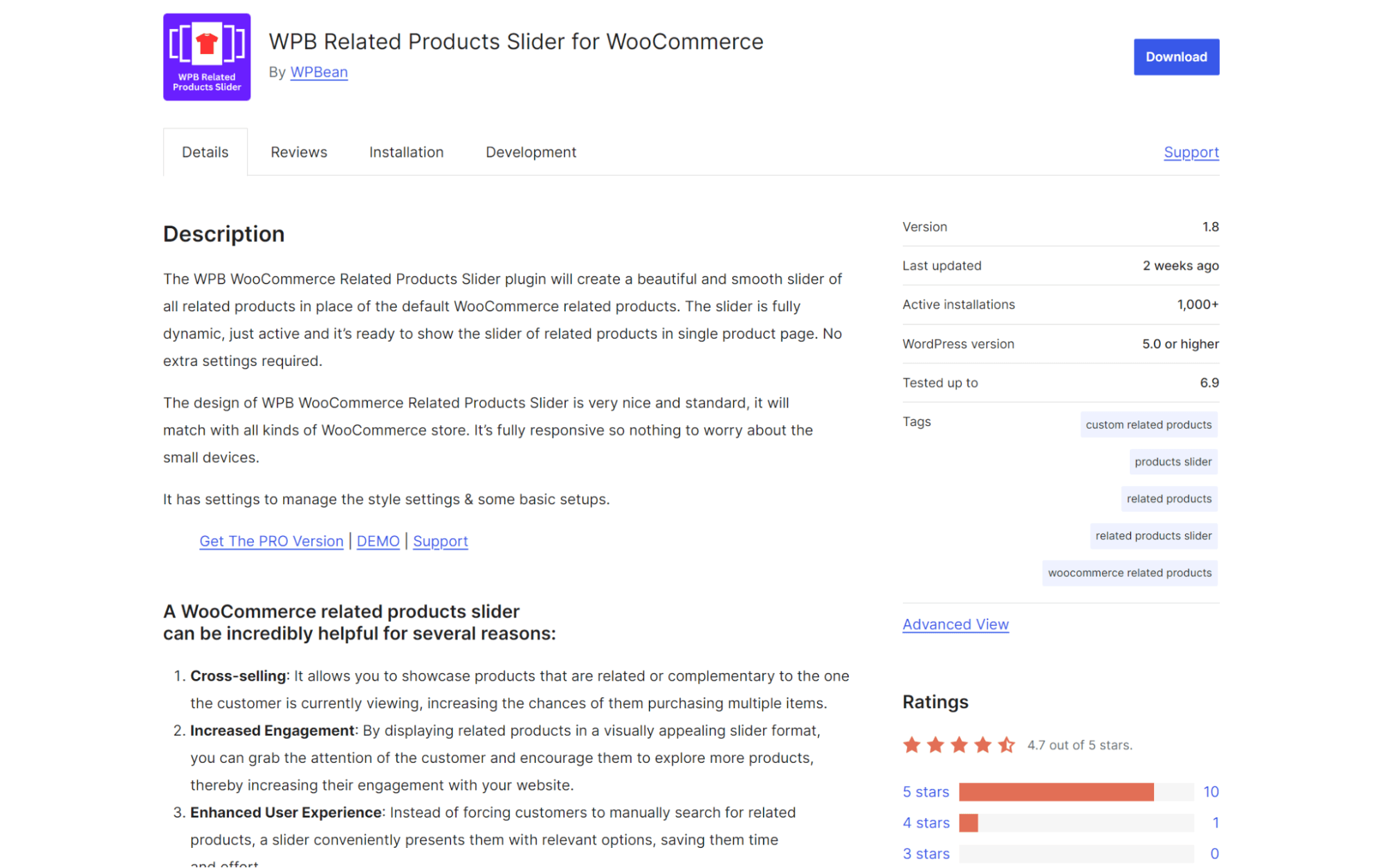
WPB Related Products Slider replaces default WooCommerce recommendations with an animated slider. Two design themes are included, both of which are responsive. The Pro version adds custom product selection, upsell sliders, and style customization options.
8. Upsell Funnel Builder for WooCommerce
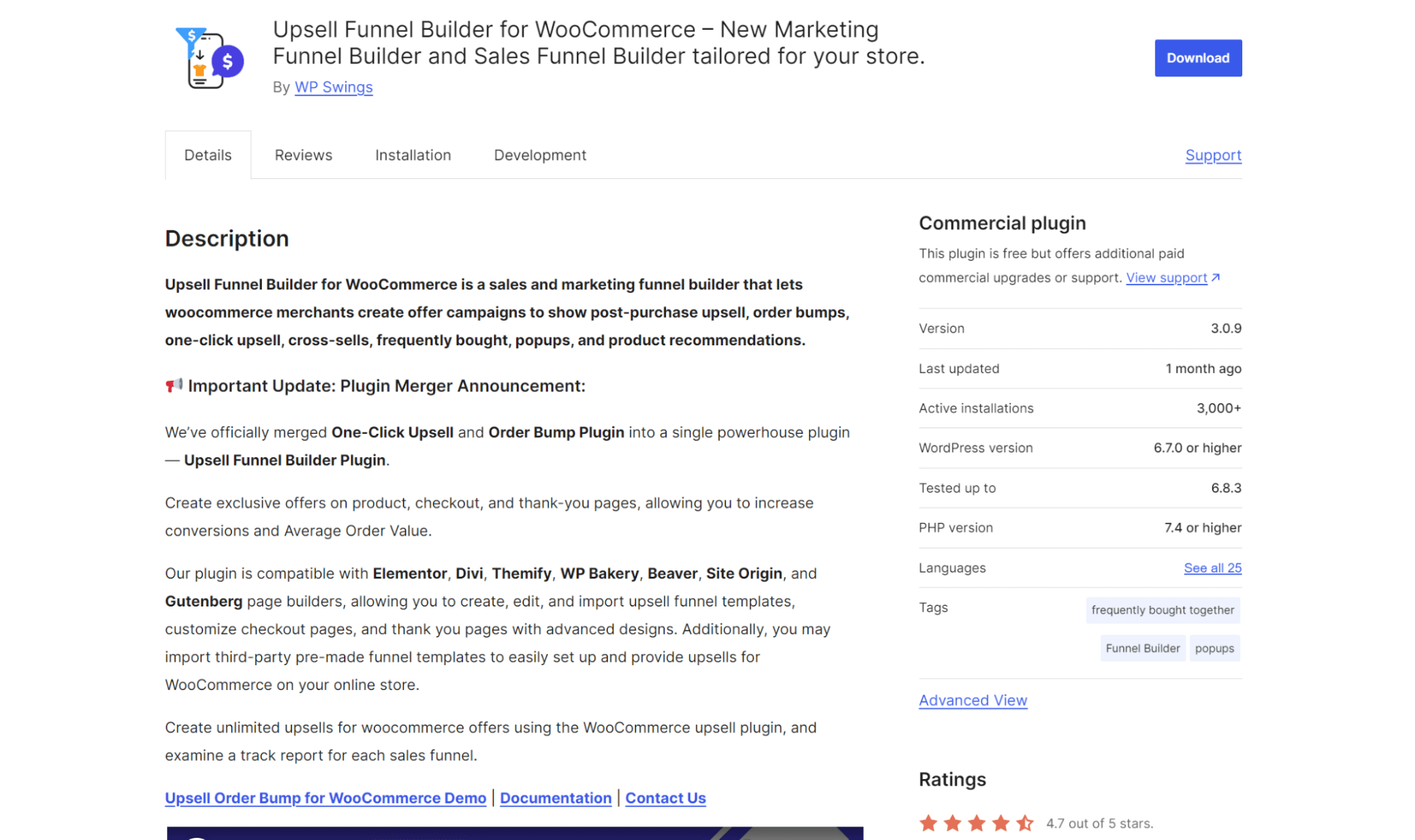
Upsell Funnel Builder creates post-purchase offers, order bumps, and frequently bought together recommendations across product, checkout, and thank you pages. Uses shortcodes and provides a sandbox for editing before publication.
The table below provides a complete feature comparison between these plugins:
| Plugin | Features | AI support | Quiz support | Free/paid | Ideal store size/use case |
|---|---|---|---|---|---|
| Related Products by WebToffee | Curated suggestions by category, tags, subcategory filters, disables default recommendations, customizable front-end display | No | No | Free | Small to medium stores want manual control |
| Leo Product Recommendations | Ajax-powered popups after cart additions, grid and slider layouts, support Gutenberg, Elementor, Divi, WPBakery | No | Yes | Free/Pro | Accessory-heavy stores needing instant suggestions |
| Product Recommendation Quiz | Interactive quizzes with AI template builder, popup, inline, embed integration, email capture, CRM syncing | Yes | Yes | Free/Pro | Complex catalogs requiring customer guidance |
| UpsellWP | Checkout bumps, cart cross-sells, frequently bought bundles, post-purchase offers, one-click acceptance, and an intelligent recommendations engine | No | No | Free/Pro | Medium to large stores maximizing AOV |
| Related Products by peachpay | Randomizes suggestions on page load, shortcode system for posts, pages, widgets, categories, tags, attribute filtering | No | No | Free | Small stores want an automated variety |
| CartFlows | Multi-step sales funnels, pre-made templates, A/B testing, advanced analytics, automated coupon application, and SureTriggers integration | No | No | Free/Pro | Any size replacing the default checkout |
| WPB Related Products Slider | Animated slider with two responsive themes, custom product selection (Pro), upsell sliders (Pro), and style customization (Pro) | No | No | Free/Pro | Visual-focused stores prefer sliders |
| Upsell Funnel Builder | Post-purchase offers, order bumps, frequently bought together, shortcodes, sandbox editing, behavioral, and sales reporting | No | No | Free/Pro | Stores running multi-page campaigns |
AI product recommendations for WooCommerce
WooCommerce doesn’t have AI product recommendation features by default, so if you want AI, an extension with such features is necessary. For instance, Product Recommendation Quiz uses AI to suggest questions and create quiz templates.
Some extensions have features that sound like AI, such as UpsellWP’s Smart Product Recommendations, but these utilize rules defined in software rather than AI.
Additionally, several plugins promise AI but have very few reviews to verify their claims. AI Product Recommendations by Azent Labs and Smart Related Products by sharkthemes are two examples that warrant additional research.
How AI recommendation engines work for WooCommerce
Our research shows that 38% of consumers appreciate AI’s ability to tailor recommendations, and 31% say they like how it speeds up the shopping process.
AI engines achieve this by analyzing your products, orders, and customer segments, then using ChatGPT or similar logic to predict which items individual shoppers are likely to purchase based on their browsing patterns and purchase history.
An AI’s step-by-step process looks like this:
- Collects data on products, orders, and customer behavior
- Identifies patterns in purchase combinations and browsing habits
- Predicts which items appeal to individual shoppers
- Generates personalized recommendations in real-time
- Learns from acceptance and rejection to refine future suggestions
AI vs. rule-based product recommendations
Rule-based recommendations follow fixed criteria that you set, such as showing products from the same category or price range. In contrast, AI recommendations display products based on customer behavior and patterns across your entire store’s transaction history.
When AI product suggestions make sense
AI recommendations justify their cost when you have a substantial order history for the algorithm to learn from. You can then personalize at scale, produce better recommendations over time, and enhance customer satisfaction.
For instance, if you have a busy dropshipping store, you’re a top candidate for AI product recommendations for WooCommerce, which can improve the relevance of your offerings.
However, your store ideally needs hundreds of products and varied customer purchasing patterns to see meaningful returns. If you have a smaller catalog with obvious pairings, then rule-based product recommendations work fine.
Step-by-step: How to set up product recommendations in WooCommerce
You don’t need an extensive guide on setting up product recommendations within WooCommerce because the steps are straightforward:
1. Log in to WordPress
2. Head to Products > All Products in the sidebar
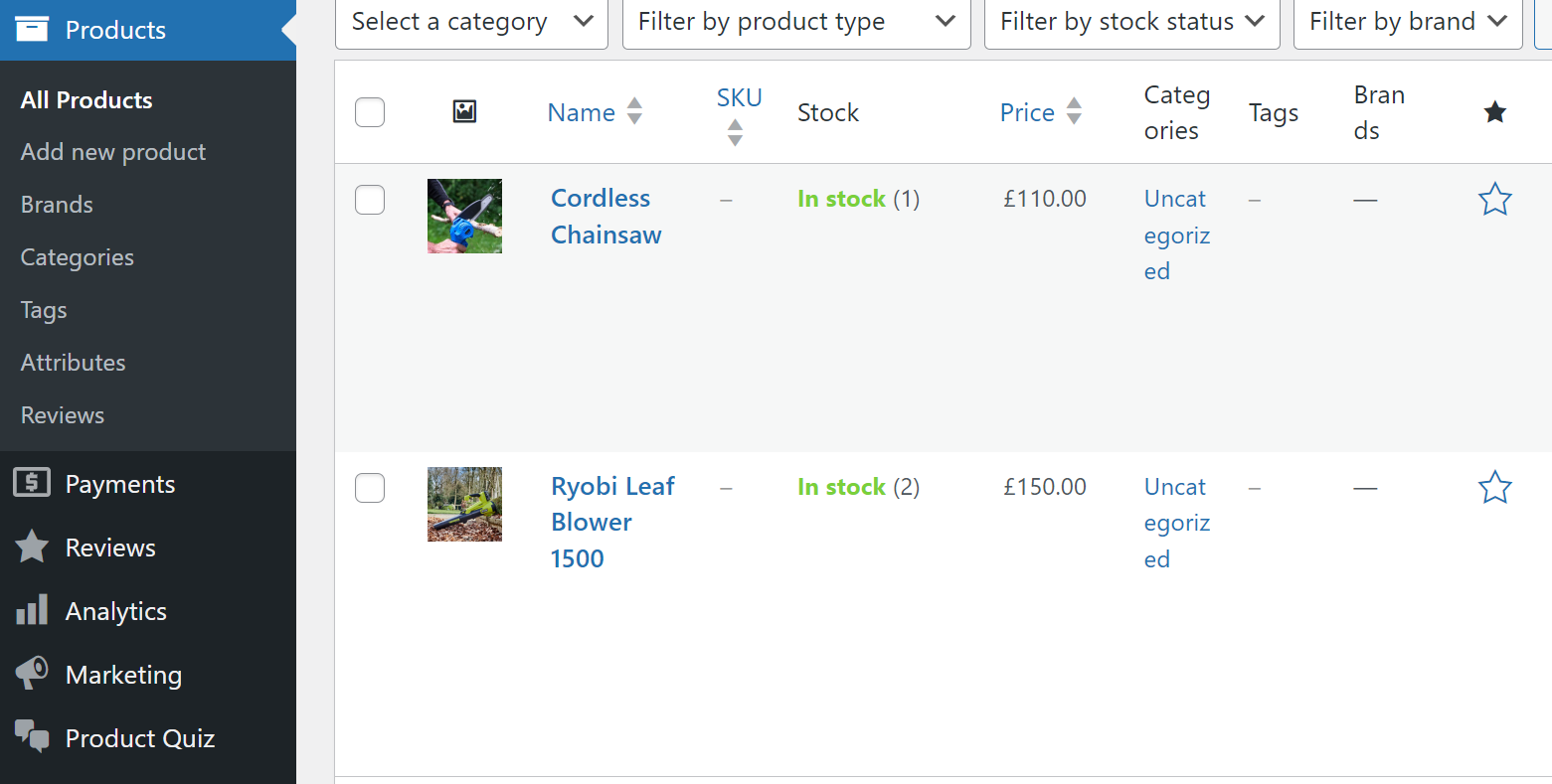
3. Click Edit on the product you want to add an upsell or cross-sell to
4. Head down to the Product data tab
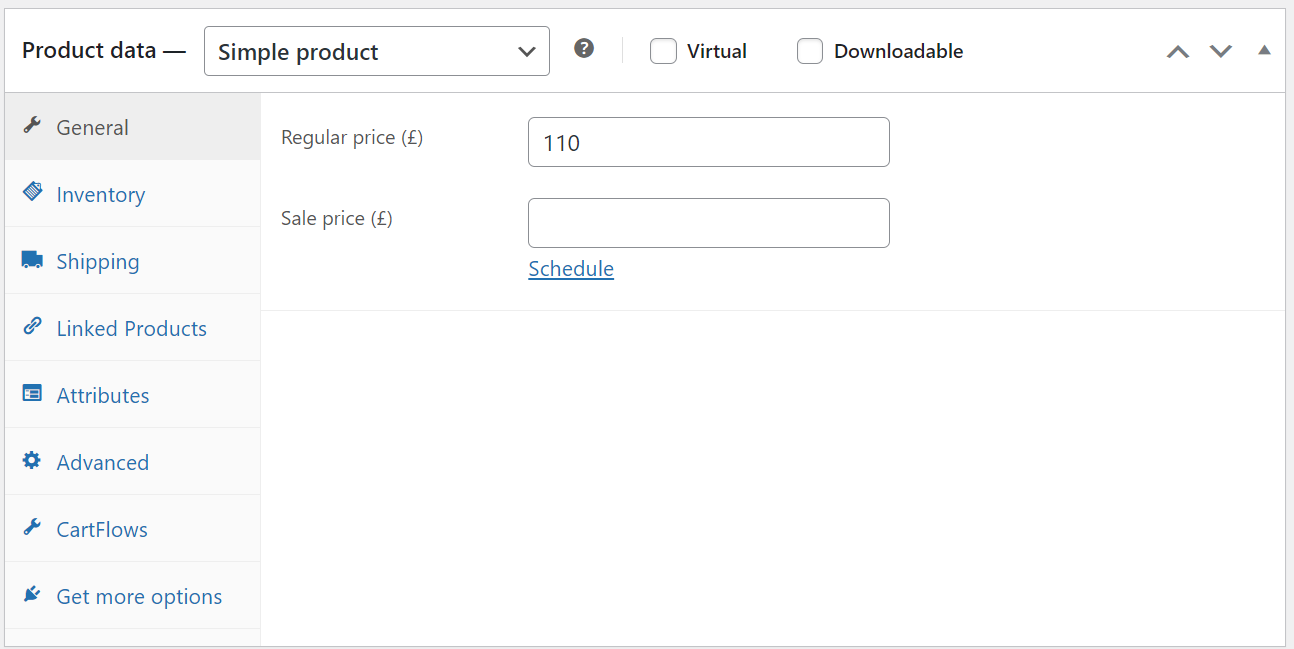
5. Click Linked Products and search for a product to add it
6. Add your product, Update the page, and check it to ensure it’s pulling through
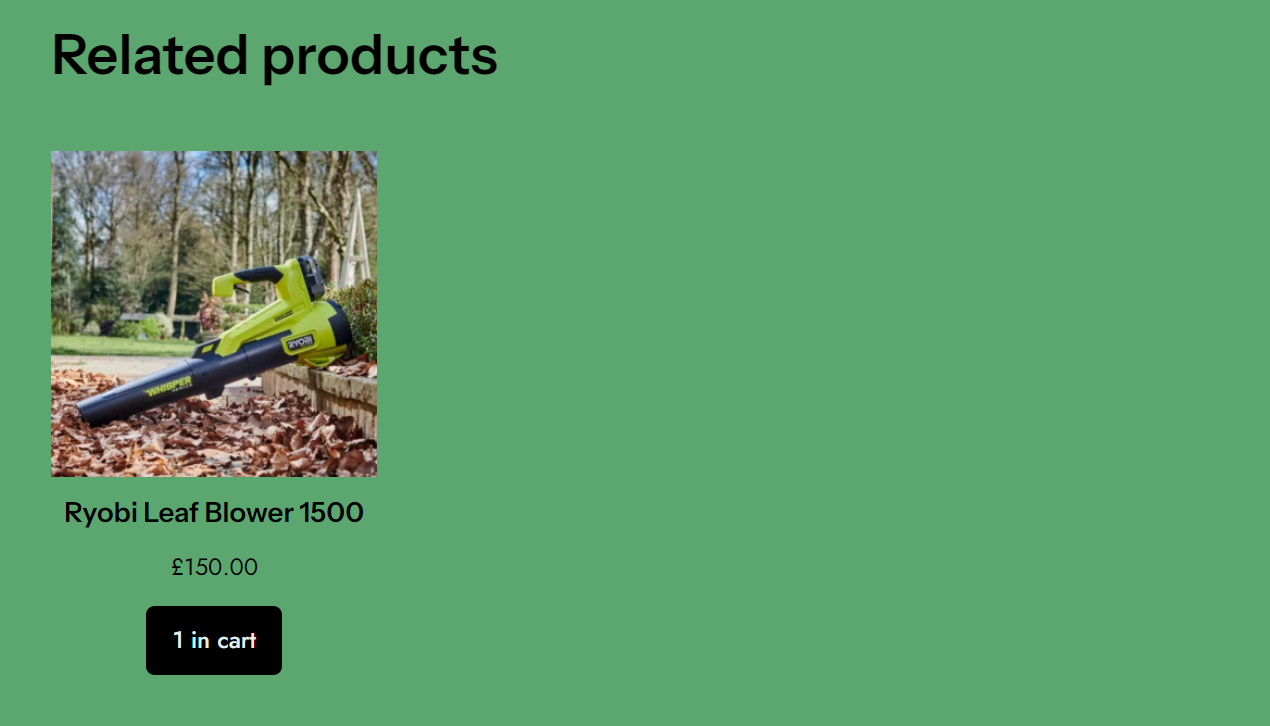
The only prerequisite is having more than one product uploaded to your store. If you have that, you can create a native cross-sell/upsell within a few minutes.
Setting up product recommendations with a third-party plugin
Make a backup of your site and update your WordPress configuration and WooCommerce plugin to the latest version if they aren’t already. Then follow these steps:
1. Log in to WordPress
2. Download the .zip file for your product recommendation plugin
3. Navigate to Plugins > Add Plugin in the sidebar
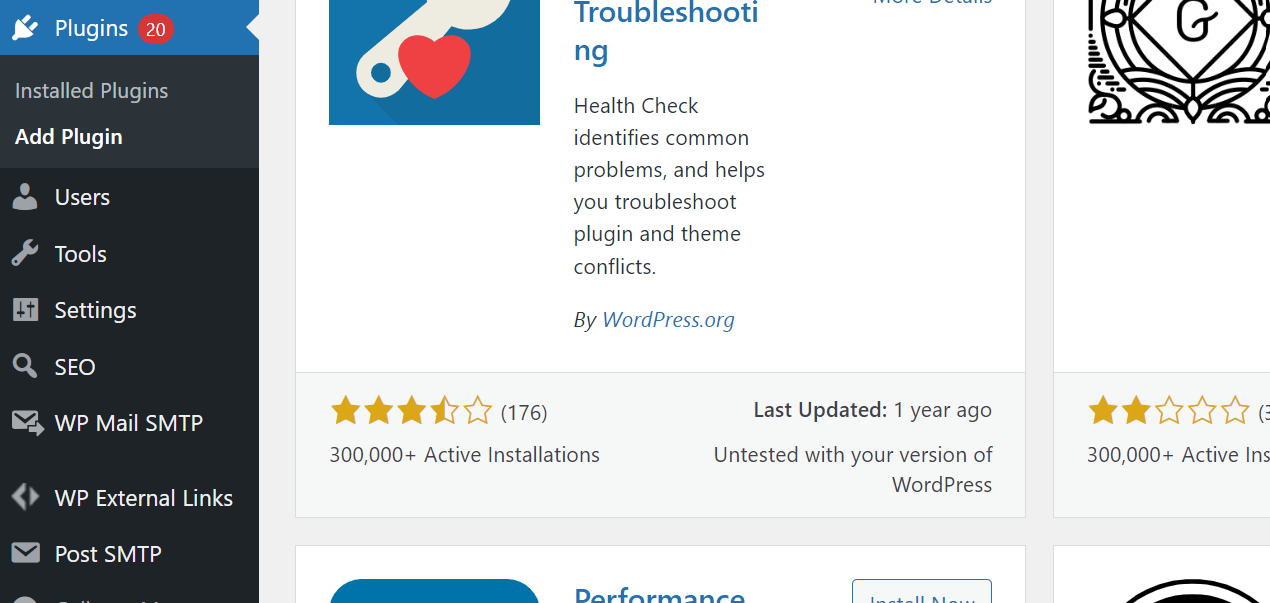
4. Select Upload Plugin
5. Click Choose File or drag-and-drop the plugin .zip into the uploader
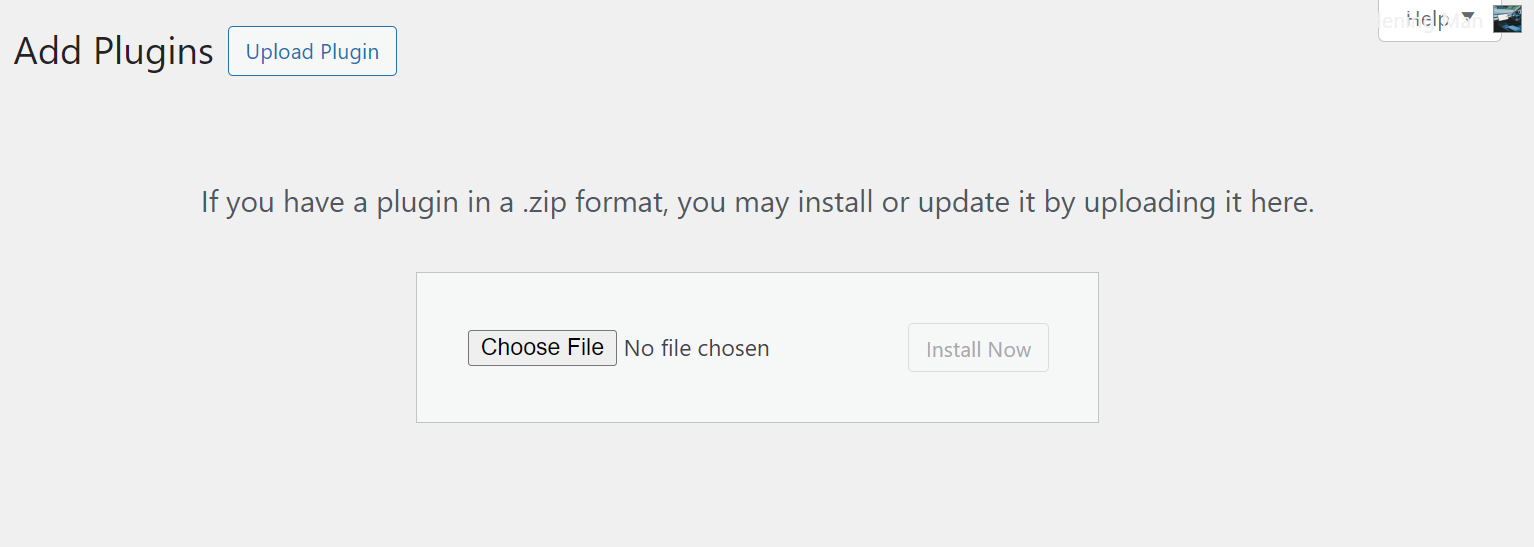
6. Select Install Now
Alternatively, if your plugin is available within the WordPress Plugin Directory:
1. Log in to WordPress
2. Navigate to Plugins > Add Plugin in the sidebar
3. Locate the Search plugins search box and search for your plugin by name, or perform a generic search to find options:
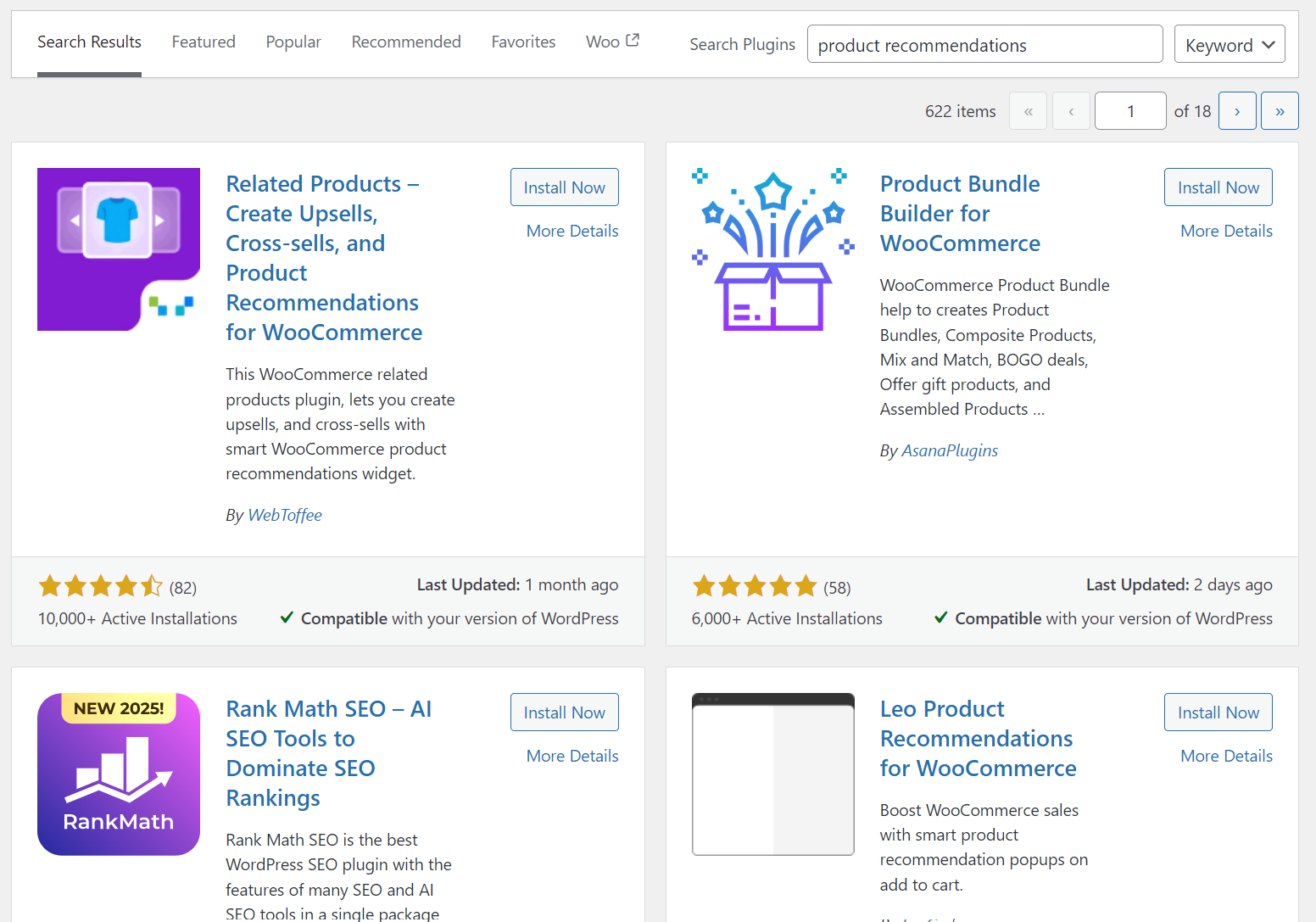
Find your plugin and click Install Now
Depending on your plugin’s capabilities, you can then:
- Create sliders and grids to showcase your products
- Create quizzes and other interactive elements
- Define rules for recommendations
- Copy and paste shortcodes or configure page location settings
Adding product recommendations to product, cart, and checkout pages
Some WooCommerce recommendations plugins have Gutenberg, Elementor, Divi, or other page-builder blocks for easy additions to your site. Some also have shortcodes that let you quickly add your product recommendations to any page.
Provided you have control over where your product recommendations appear, we recommend testing these different types:
- Upsells: Where you recommend the more expensive version of an item, or a bundle that increases the average order value. Works best when your customer expects a specific outcome, such as moisturizing dry skin, and is willing to pay more for a better result.
- Cross-sells: These increase the quantity of items in your customer baskets and help shift products in multiple categories, such as coasters when people are looking at mugs. They work great for relatively low-cost items.
- Related products: You aren’t trying to cross-sell or upsell here, but rather, improve the quality of your navigation and help customers find more relevant products.
- People also buy (frequently bought together): Similar to related products, only this time you’re using other people’s purchases to influence new customers. Add social proof, and these recommendations become sales winners.
Testing, measuring performance, and ongoing optimization
Measuring the performance of your product recommendations requires a plugin with analytics:
- UpsellWP tracks conversion rates and revenue per campaign in the free version, with the Pro version adding detailed performance metrics across customer segments
- CartFlows Pro provides advanced analytics monitoring conversions, revenue, and customer behavior throughout funnels
- Upsell Funnel Builder includes behavioral reporting showing how many times offers were viewed, accepted, or removed, plus sales reports tracking product performance over time and by category
Click-through rate on recommendations, conversion rate for suggested products, average order value, revenue per visitor, and acceptance rate for upsell offers matter most.
WooCommerce product recommendation quizzes
If you have hundreds of SKUs or complex customer journeys, then a WooCommerce product recommendation quiz plugin will help them find suitable products.
Why quizzes work so well for product discovery
Quizzes are fantastic for product discovery because they use the customers’ own answers, rather than rules and AI, to suggest items. The quality of suggestions is higher, and you have more control over which products get displayed.
Consider these factors:
- Questions narrow the catalog based on customer answers rather than forcing them to browse categories
- Customers learn what matters in your product category while the quiz filters options
- Someone unfamiliar with specifications still reaches the right product with guided questions
- Preference data and contact information captured during the quiz can sync with Omnisend, helping you segment your audience and send personalized recommendation flows and campaigns
How to create a WooCommerce product recommendation quiz
Install the Product Recommendation Quiz for WooCommerce plugin on your WooCommerce store. It’s free plan supports 100 quiz responses/month, and paid plans start from $29/year:
This plugin has an AI-powered quiz builder and lets you create quizzes with multiple options to help customers discover products on their own terms. It also integrates with Omnisend, syncing answers and contact information for targeted email campaigns.
After installation, follow these steps:
1. Head to Product Quiz in your WordPress sidebar and select Grant Access
2. Click Approve when the dialogue popup appears:
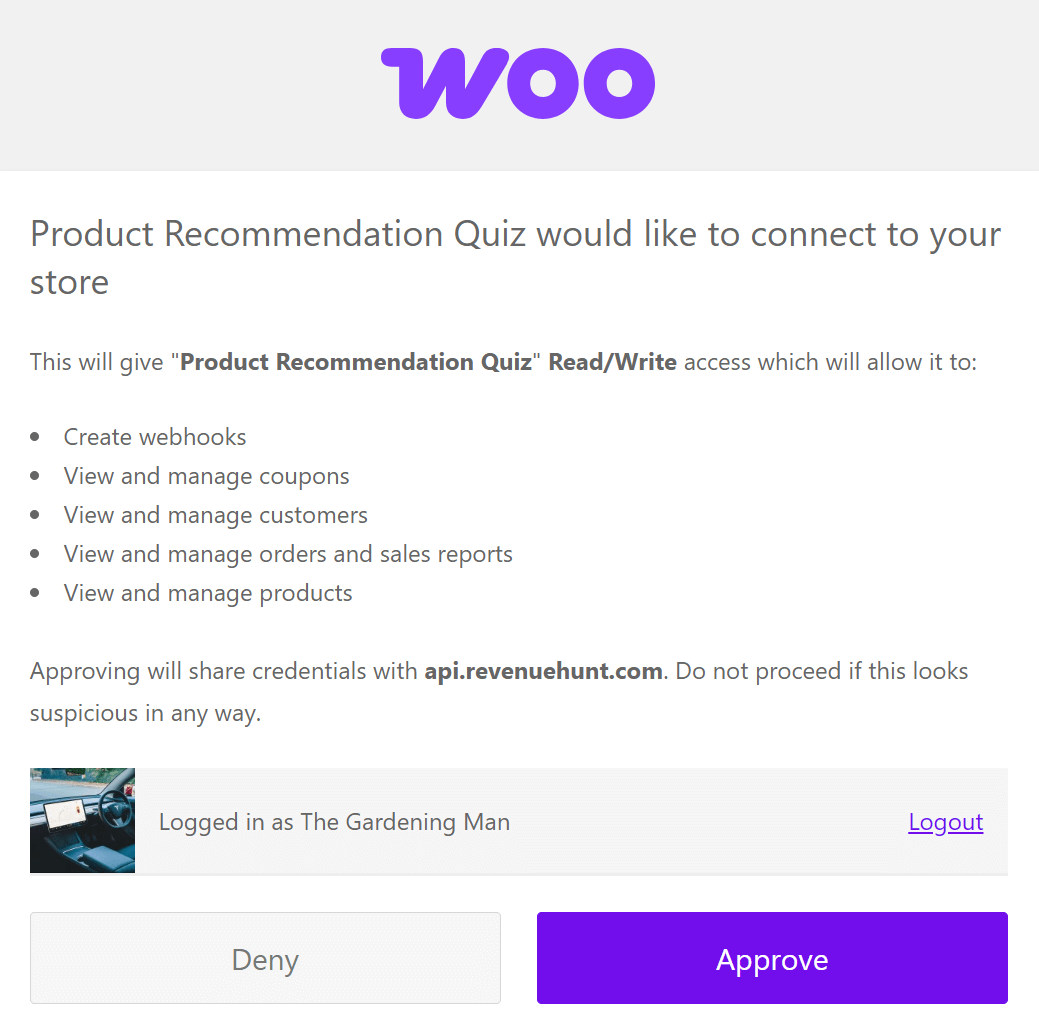
3. Select + new quiz
4. Browse the template library and select Use this template:
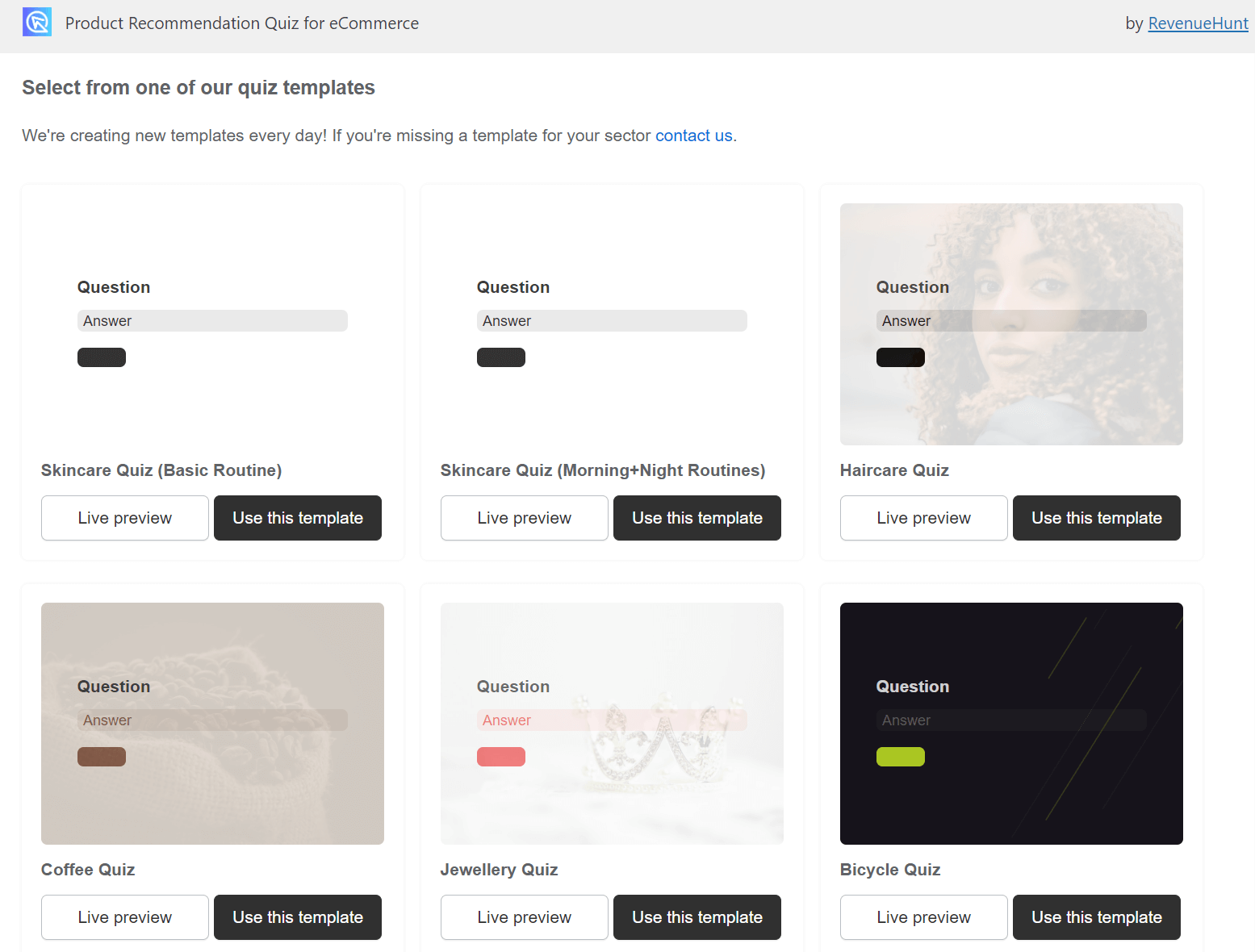
5. Follow the steps in the Quiz Builder to create your quiz:
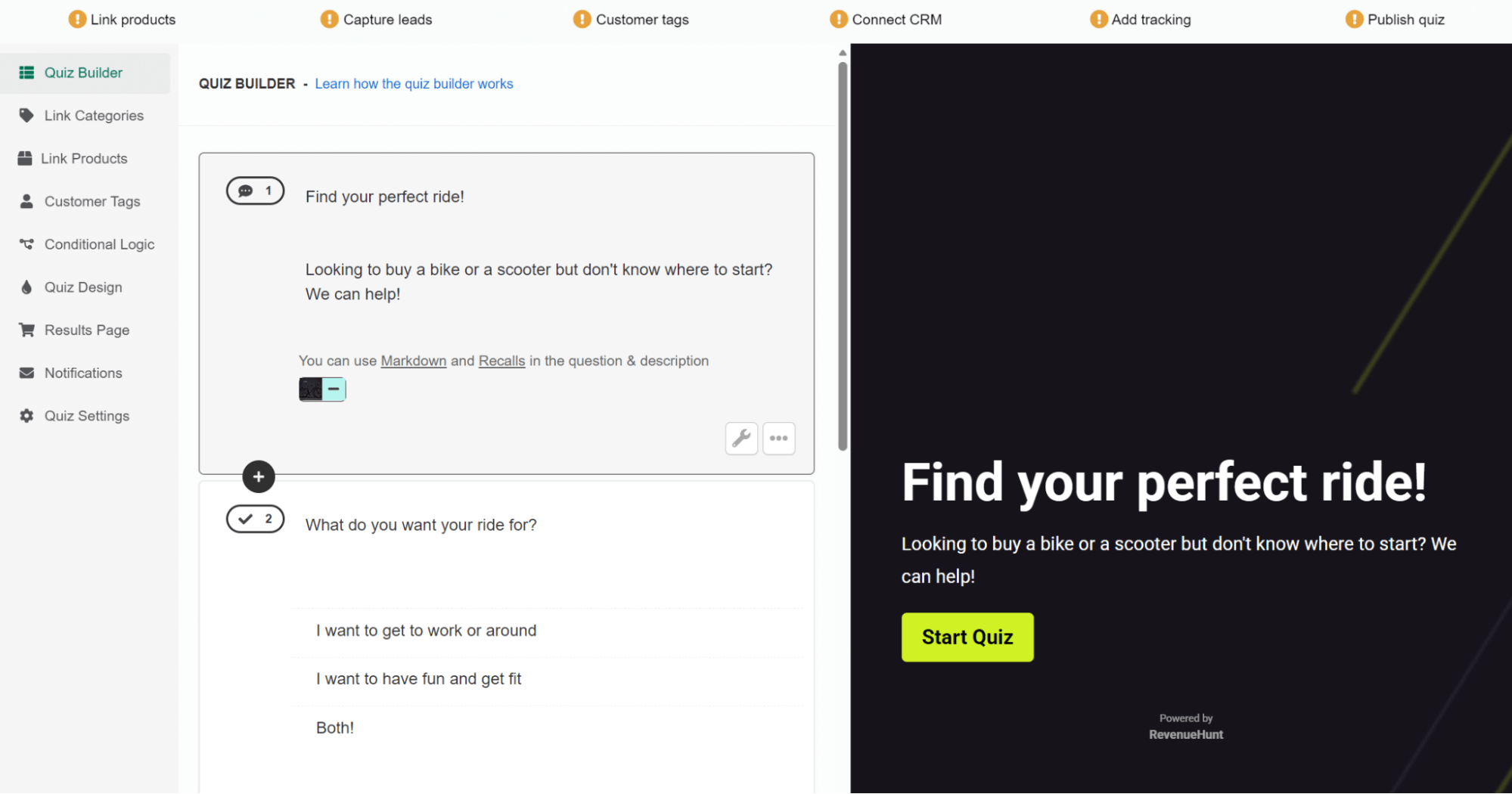
6. Optionally, connect to Omnisend. In Omnisend, go to > Apps > search for Product Recommendation Quiz > click on Connect Now > copy an API Key. Then add that API key to your Product Recommendation Quiz account.
Connecting WooCommerce product recommendations with Omnisend automation
Product recommendations convert best when you connect what happens on your site with what customers see in their inbox.
A quiz on your store captures preferences. Email automations and campaigns then use those answers alongside browsing patterns and purchase history to suggest products that match what someone wants.
Omnisend plays a crucial role across both channels:
- First, it integrates with your store and can sync preferences and customer data collected via quizzes and forms
- Second, it automates the cross-sell, follow-up, and additional flows that win sales
Here’s how to create the connection and make the most of Omnisend:
Syncing WooCommerce products and customer behavior to Omnisend
Install the Omnisend Connect plugin and perform a one-time historical sync, pulling your products, contacts, and orders into the tool:
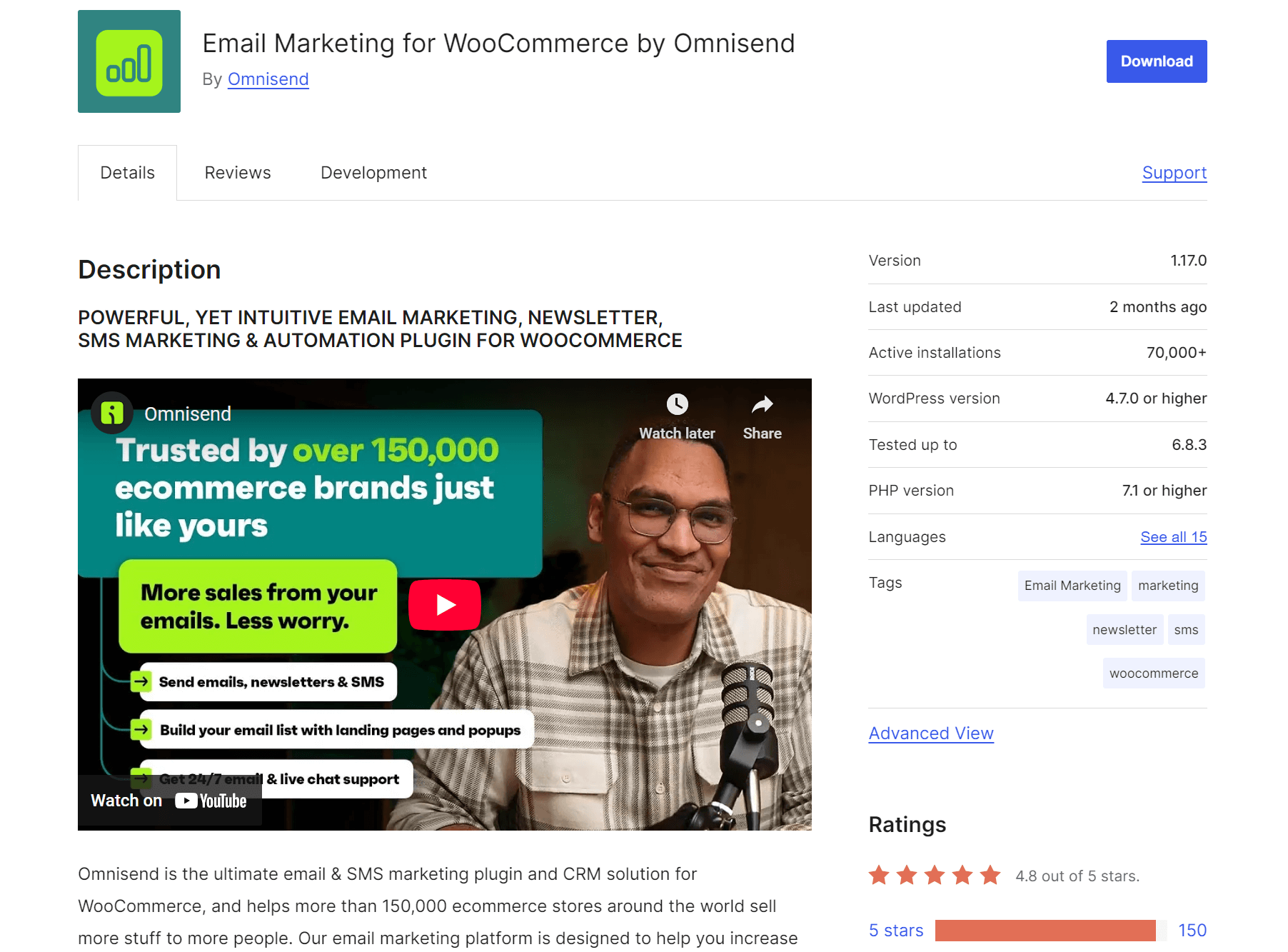
Every customer action is transmitted directly to Omnisend as it occurs. Product details, including pricing, descriptions, images, and stock levels, stay current with continuous sync, ensuring your email product recommendations stay up to date.
If you haven’t created an Omnisend account yet, its free forever plan provides access to all standard features, including 24/7 support.
Email product recommendations for WooCommerce
You can add the Product Recommender Item to campaigns and automations, automatically pulling up to 12 products with current pricing, images, and descriptions refreshed at send time.
The image below shows the different types of product recommenders in Omnisend:
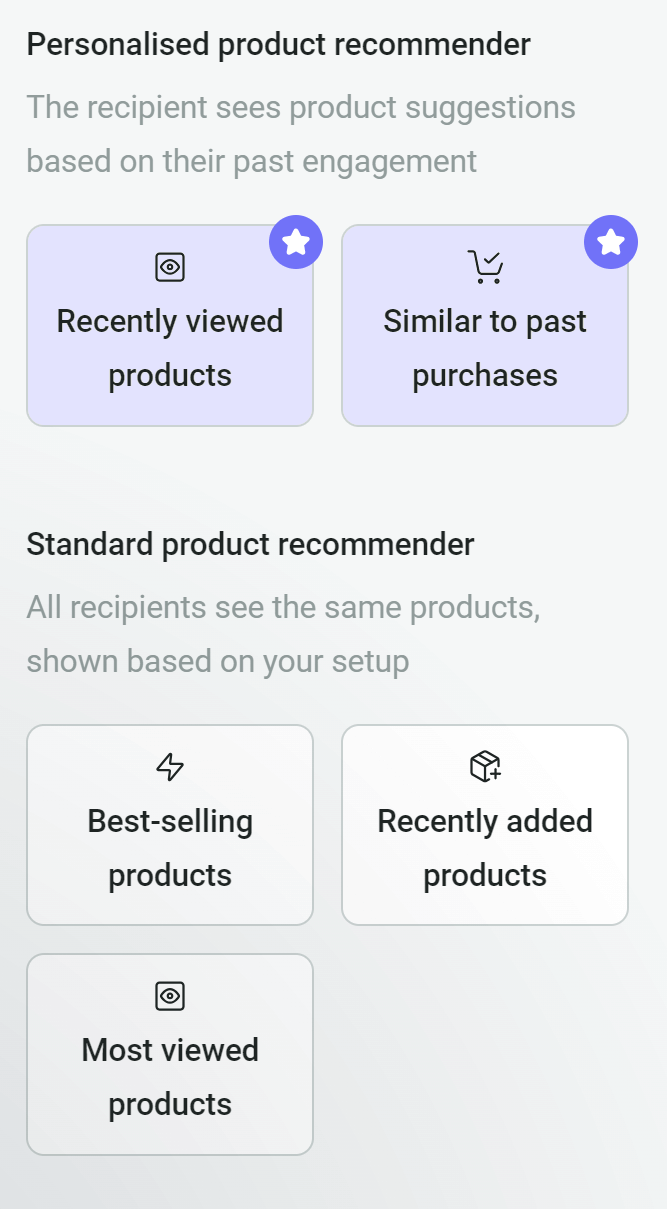
Use cases include:
- Welcome series, shows best-sellers or new arrivals to introduce your catalog
- Browse/cart abandonment emails with product reminders to aid revenue recovery from hesitant and distracted customers
- Post-purchase flows, recommending complementary products and cross-sells that increase customer lifetime value
Product recommendations are one of the core reasons behind Omnisend’s impressive customer results, with stores seeing an average $76 ROI for every $1 spent.
SMS and omnichannel recommendation campaigns
Email handles detailed product showcases with multiple recommendations and images. SMS follows with time-sensitive triggers when someone abandons their cart or hasn’t responded to the email campaign. The flow example below shows this in action:
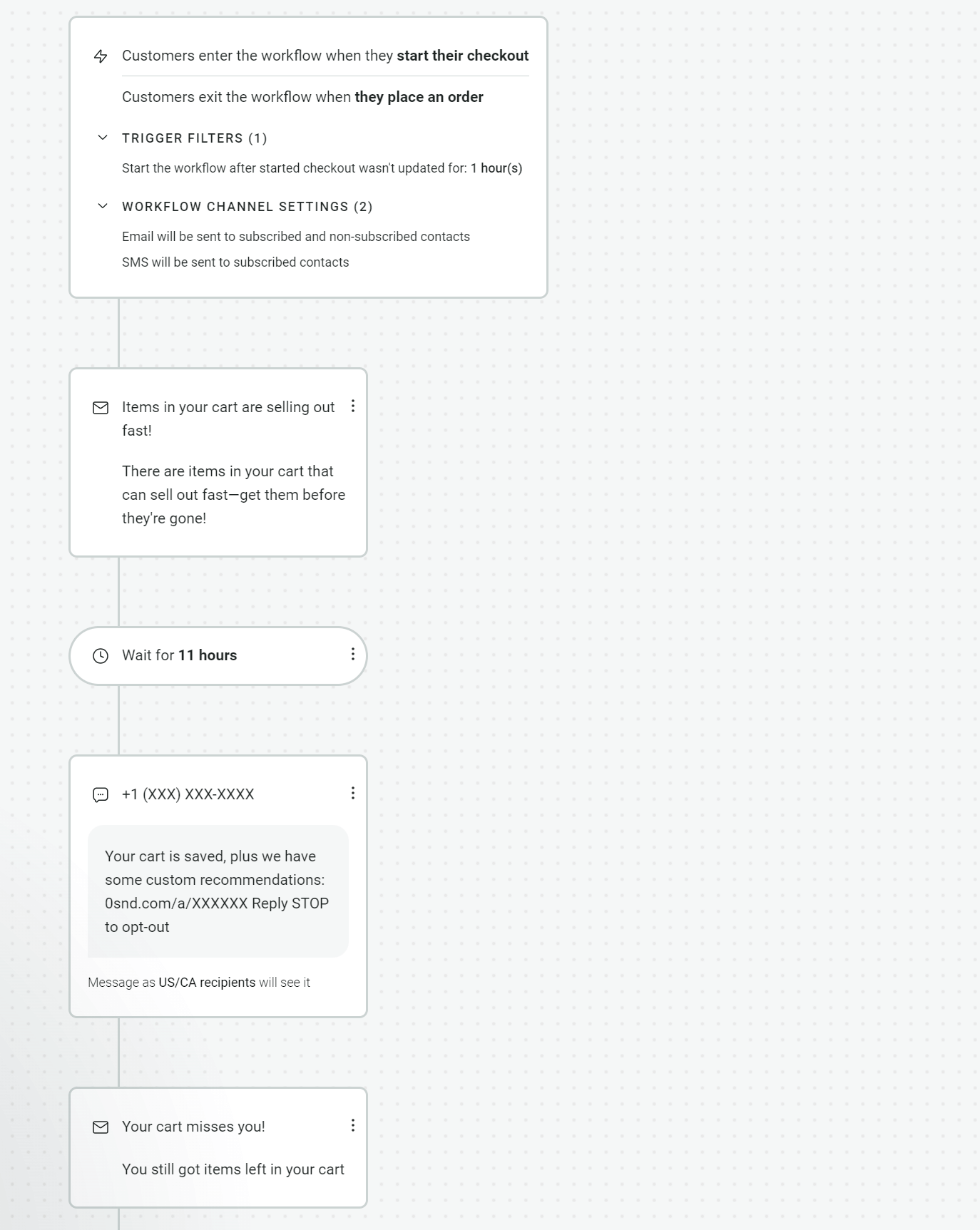
Character limitations mean that SMS works best when linking to a personalized landing page, product showcase, or single product recommendation, rather than multiple items. The text increases urgency while the destination page delivers the full selection.
Example workflows for browse, cart, and post-purchase recommendations
Building automation flows in Omnisend is an intuitive process, whether starting from scratch or using one of its pre-built templates. We recommend starting with these omnichannel workflows:
Browse abandonment
- Email at two hours showing recently viewed products plus similar items
- SMS at 24 hours with a discount code linking to a personalized page
Cart abandonment
- Email at one hour displaying cart contents and frequently bought together items
- Email at 24 hours, adding an urgency timer, and alternative products
- SMS at 48 hours with a limited-time offer
Post-purchase
- Email at order confirmation with complementary products
- Email at seven days showing items similar to the purchase
- SMS at 30 days with a replenishment reminder for consumables
Best practices to optimize WooCommerce product recommendations
Follow these best practices to maximize engagement with your product recommendations:
Placement, design, and mobile optimization
Position related products and other recommendations above the fold on product pages where attention peaks. Cart and checkout pages work better with suggestions and upsells placed below the main action to minimize distractions.
Desktop displays can handle three to four products in a row. Mobile applications require horizontal carousels with a limited number of items visible at once, accompanied by clear swipe indicators.
Section headings matter more than most people realize. “Frequently bought together” or “Customers also purchased” signals social proof, while vague labels like “You might like” say nothing. Add star ratings to complete the recommendation.
Segmentation and personalization tactics
Behavioral data determines which recommendations to show. Without browsing history, best-sellers give new visitors a safe starting point.
Once someone returns, their viewed products and purchase patterns guide suggestions. Premium items are reserved for VIP segments who’ve proven they’ll spend more.
Omnisend’s segmentation connects these strategies across email and SMS. A few examples:
- Cart abandonment, your email shows abandoned running shoes plus moisture-wicking socks, followed by an SMS at 24 hours with a cart link
- Winback campaigns, customers who bought skincare three months ago, see new products from the same brand
- VIP segments, your high spenders receive early access to premium collections and upsells before general release
- Browse abandonment, those viewing cameras get an email with that camera, plus memory cards and lens recommendations
A/B testing recommendations and tracking ROI
Test placement first, then headline copy, product quantity, and whether discounts improve acceptance rates. Run tests for a minimum of two weeks to gather statistically significant data covering click-through rates and sales.
Revenue attribution in Omnisend connects your emails and SMS to income. Its reporting breaks down performance by campaign and automation workflow, showing where recommendation revenue comes from and which strategies deserve more budget.
Pro tip
Omnisend’s A/B testing calculator helps you calculate the statistical significance of your conversion tests across email, forms, landing pages, and more.
Use the tool for free: A/B testing calculator
Mistakes that kill recommendation performance
- Recommending products that are too similar to what’s already in the cart
- Showing out-of-stock items without noting availability
- Overloading pages with multiple recommendation blocks that compete for attention
- Using identical recommendations across all customer segments
- Failing to exclude recently purchased items from suggestions
- Ignoring mobile performance when recommendation carousels slow page load
Conclusion
Product recommendations increase revenue when they appear at the moment a customer’s already considering what else they might need. Done well, the next purchase feels like a natural next step.
WooCommerce provides cross-sell and upsell placements on product and cart pages by default. However, you will outgrow these quickly.
The official Product Recommendations extension opens up behavioral triggers, advanced filtering, and placement across 20+ locations, including checkout and post-purchase pages.
Third-party plugins solve narrower problems, such as building interactive quizzes or deploying Ajax popups that suggest products without forcing page reloads.
Omnisend unifies these efforts across every customer touchpoint:
- Product catalogs and inventory levels sync in real time
- Browsing behavior on your site powers personalized email campaigns
- Quiz submissions feed directly into SMS and email audience segments
You can then track which recommendations convert, and continuously refine what gets shown to whom and when.
Join Omnisend to recommend products in your emails based on customer preferences and activity
Quick sign up | No credit card required
FAQ: WooCommerce product recommendations
What is a product recommendation?
A product recommendation suggests additional items customers might want. It appears on your website based on browsing history, past purchases, or filters you configure in WooCommerce settings.
What is the WooCommerce product recommendation plugin?
Developed by Woo, this plugin adds product recommendation functionality to your store, including frequently bought together recommendations based on your customers’ order history.
What is a WooCommerce recommendation engine?
It’s the name given to the technology that provides product recommendations. Sounds more purposeful than “product recommendation code” and matches the machine learning aspect.
How do AI product recommendations for WooCommerce work?
AI tracks customer behavior to suggest relevant products. If someone views or adds sunglasses to their cart, they may see flip-flops recommended. You’ll need a plugin with AI or machine learning capabilities installed on your site.
What is the best WooCommerce product recommendations plugin?
Leo Product Recommendations from LeoCoder leads with a perfect 5/5 stars across 12 reviews. Product Recommendations for WooCommerce by Woo trails slightly at 4.5/5 from 15 reviewers. Either plugin offers solid performance.
How can I use Omnisend with WooCommerce product recommendations?
Omnisend’s Product Recommender Item can automatically display up to 12 items with live pricing and inventory in your email campaigns and automations. It uses your customers’ past behavior and what similar shoppers tend to buy to recommend products.

TABLE OF CONTENTS
TABLE OF CONTENTS


Subscribe and don’t miss any updates!
No fluff, no spam, no corporate filler. Just a friendly letter, twice a month.