
 Omnisend AI


 OFFER
OFFER








5 best Shopify abandoned cart apps for recovering sales (2025)
With over 130+ pre-built integrations and flexible APIs, you can easily centralize data from across your tech stack
Make the most out of your data and unlock powerful growth marketing possibilities with these other top marketing tools.
Build any custom integration with our open, flexible APIs that are simple to use and implement.
Check out apps that have been stealing all the spotlight.
Email and SMS marketing insights, ecommerce resources, and the latest Omnisend news
Expert-led sessions covering email, SMS, and ecommerce marketing strategies.
Educational video and live training to help you make the most out of Omnisend.
Drive sales on autopilot with ecommerce-focused features
See FeaturesCart abandonment costs ecommerce brands millions in lost revenue every day. Abandoned cart SMS messages are one of the most effective ways to recover this loss. They reach shoppers directly on their most personal device when they leave items behind.
Text messages solve this problem better than any other channel because SMS gets read faster than email, and people check their phones constantly throughout the day. When done right, abandoned cart SMS can bring customers back to complete their purchase.
In this article, you’ll find 40+ proven abandoned cart SMS templates that work. We’ll cover both cart abandonment and browse abandonment scenarios. You’ll also discover optimization tips to make every message count and recover even more sales.
These templates and strategies are designed to help you reclaim revenue that’s slipping away and turn lost shoppers into loyal customers.
Quick sign up | No credit card required
An abandoned cart SMS is a text message that reminds shoppers to complete their purchase. You send it when someone adds items to their cart but leaves without making a purchase. It’s your digital tap on the shoulder saying, “Hey, you forgot something.”
Think of it as a helpful reminder. Your customers can get busy or distracted and forget to complete a purchase. The abandoned cart SMS brings them back to finish what they started.
Here’s why this matters for your business. Cart abandonment hurts your bottom line, as every abandoned cart represents lost revenue and a missed conversion opportunity.
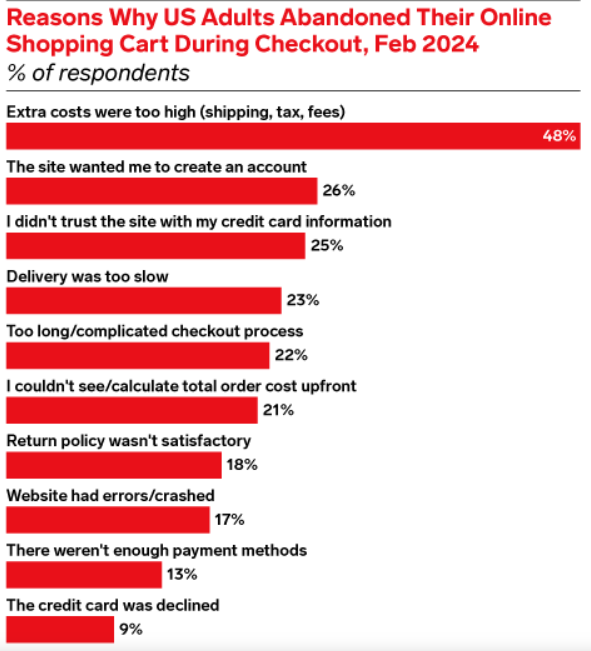
Since the majority of shopping carts get abandoned before checkout, several ecommerce stores face this challenge daily. eMarketer reports that 73.9% of all shopping carts get abandoned. And this happens for several reasons, especially shipping-related complaints:
This happens across all industries and business sizes. It’s a widespread problem that costs businesses everywhere.
You can calculate your abandonment rate with this simple formula:
Abandonment Rate = (Carts Created – Purchases Completed) / Carts Created × 100
Let’s say you had 1,000 carts created last month. Only 300 people actually bought something. Your abandonment rate would be 70%, which means 700 potential sales walked away.
An abandoned cart SMS helps you reduce shopping cart abandonment. It reaches customers where they are and works fast to bring them back.
Understanding how abandoned cart SMS works helps you set them up the right way. The process follows a simple trigger-delay-message flow that runs automatically in the background on platforms like Omnisend.
Here’s how the system works step by step:
Setting up these workflows in Omnisend takes just a few minutes. You can set conditions, such as a minimum cart value, to trigger abandoned cart SMS messages only for orders above a certain threshold.
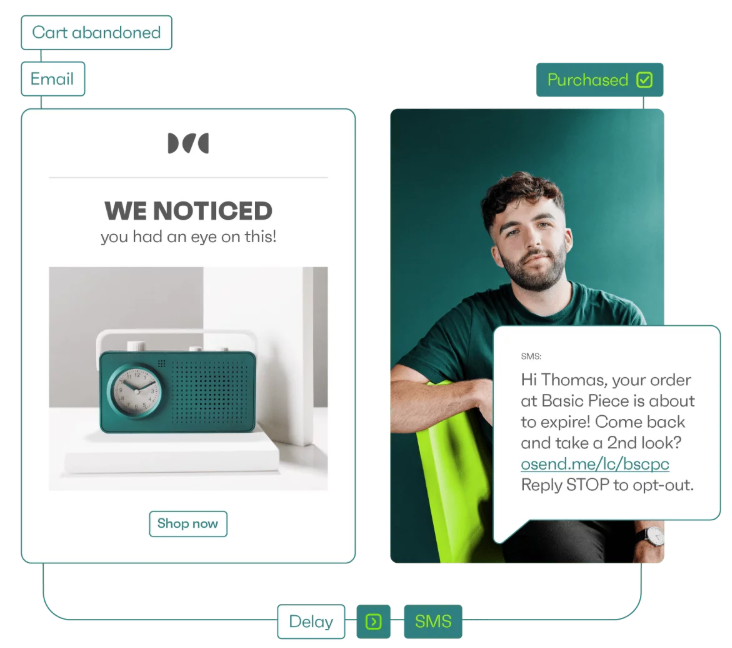
To put things into context, here’s a snapshot of an Omnisend SMS flow, from initial cart abandonment to purchase:
Writing an abandoned cart SMS requires specific elements to drive conversions. Every detail matters when you have limited characters to work with. The right components make the difference between ignored texts and recovered sales.
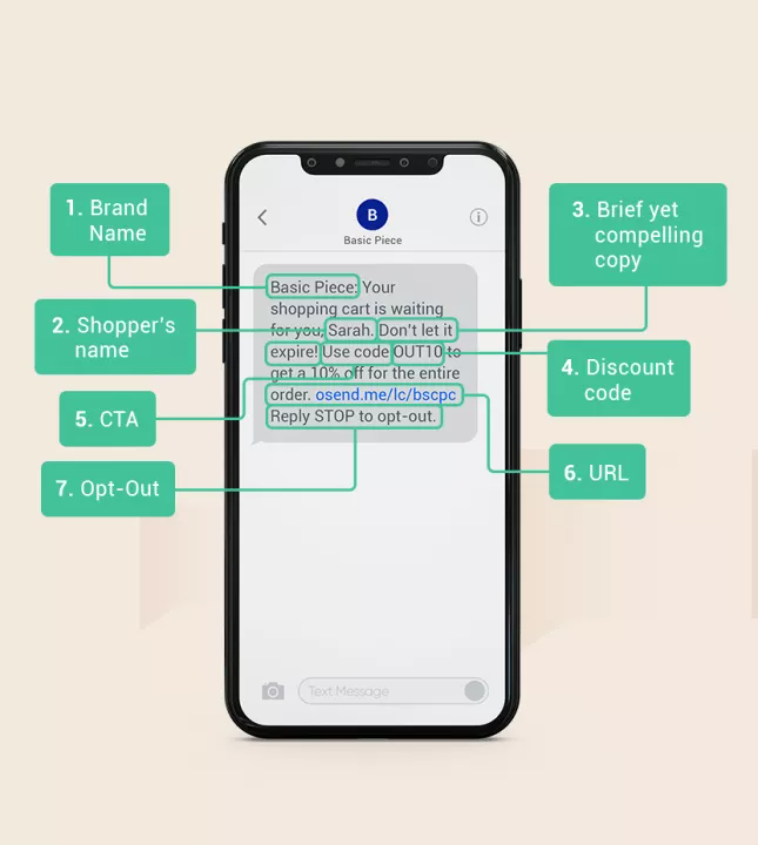
Don’t be an anonymous sender — put your brand name upfront or in the copy to get instant recognition.
Why it works: People scan texts quickly. Your brand name helps them identify the message faster, builds trust, and reduces the chance they’ll mark it as spam.
Example: “Hi Sarah, Jamie from Basic Piece here! Your cart is waiting…”
Include your customer’s name to make the message more personal.
Why it works: Personalization catches attention immediately. People notice their names even when they’re busy, making the message feel like a personal reminder rather than mass marketing.
Example: “Hi Marcus, your items are still available…”
Keep your abandoned cart SMS under 160 characters. Use emotional triggers like urgency or scarcity to motivate action.
Why it works: People read short messages to the end. Infusing emotional triggers into abandoned cart SMS messages can motivate readers to act instantly, rather than later. Plus, clear, direct language removes confusion about what to do next.
Example: “Only two left in stock! Complete your order before they’re gone.”
Offering discounts depends on your strategy. If you choose to include one, make it clear and valuable.
Why it works: Discounts provide extra motivation for hesitant buyers. This creates a desire to cash in on a good deal.
Example: “Use code SAVE20 for 20% off your order.”
Every abandoned cart SMS should have a specific action you want the customer to take.
Why it works: Clear CTAs remove guesswork and show customers exactly what to do next. Specific language, such as “Complete your order,” works better than vague phrases like “click here.”
Examples:
Always include a link that takes customers straight to their abandoned cart.
Why it works: Convenience drives conversions — the easier you make it to complete the purchase, the more likely people are to follow through. Direct links remove friction from the buying process.
Include an unsubscribe option in every promotional text message.
Why it works: It’s legally required in most places, and it also builds trust by giving customers control. People feel more comfortable engaging when they know they can easily opt out.
Example: “Reply STOP to opt out.”
The order of these elements also matters for conversion. Lead with personalization (name + brand), follow with the value proposition or urgency, then include your CTA and link. Finally, end with the opt-out prompt.
This sequence mirrors how people scan texts from top to bottom while keeping the most persuasive parts upfront.
These elements convert simple abandoned cart SMS messages into sales recovery tools. When combined properly, they create urgent, personal, and actionable reminders that bring customers back to complete their purchases and ultimately maximize conversion rates.
Here’s an anatomy of a well-structured abandoned cart SMS:
SMS outperforms other channels when it comes to abandoned cart recovery. The mobile-first world amplifies this power since people shop on their phones during breaks and commutes, adding items but getting distracted before checking out.
Understanding why SMS works helps you appreciate the power of this marketing approach. The data tells a compelling story about SMS effectiveness.
Here are the key reasons abandoned cart SMS delivers results:
Automated abandoned cart SMS messages outperform manual campaigns. According to Omnisend’s 2025 Ecommerce Marketing Report, automated SMS achieved an 18% order rate compared to just 0.24% for campaigns.
No surprise here, as we see that click rates for SMS automations were 147% higher than campaigns, and conversion rates were 118% better.
Abandoned cart SMS case study

“At this point, I can’t imagine a world without SMS marketing. It’s really taken off. Our SMS subscribers are growing much faster than email subscribers. SMS is becoming increasingly important for us and is definitely not going anywhere.”
Rob Lin,
Owner and Founder of Divatress
How Divatress’ embrace of SMS is accelerating sales – Omnisend
Ready-to-use templates save time and give you proven copy that converts. These abandoned cart SMS examples are templates that can inspire you to create successful campaigns. You can copy them directly or adapt them to match your brand voice.
Each template comes with placeholders you can customize:
Test different variations to see what resonates with your specific audience.
These gentle reminders nudge customers to finish their purchase without using discounts or creating urgency. They’re ideal for loyal customers who trust your brand. They focus on convenience rather than pressure, and the tone stays helpful and friendly throughout.
Template 1:
“Hi [Name], you left something in your cart at [Company].
Complete your order: [Link]
Reply STOP to opt out.”
Template 2:
“[Name], your cart is waiting!
Finish your purchase: [Link]
Reply STOP to opt out.”
Template 3:
“Still thinking about [Product]? Your cart expires soon.
Complete your order: [Link]
Reply STOP to opt out.”
Template 4:
“Hi [Name], [Company] here.
Your cart is saved and ready to checkout: [Link]
Reply STOP to opt out.”
Template 5:
“Don’t lose your items, [Name].
Complete your purchase before your cart expires: [Link]
Reply STOP to opt out.”
Template 6:
“[Name], your [Product] is waiting. Finish your order: [Link]
Reply STOP to opt out.”
Template 7:
“Quick reminder [Name]: Your items are still available.
Complete your purchase: [Link]
Reply STOP to opt out.”
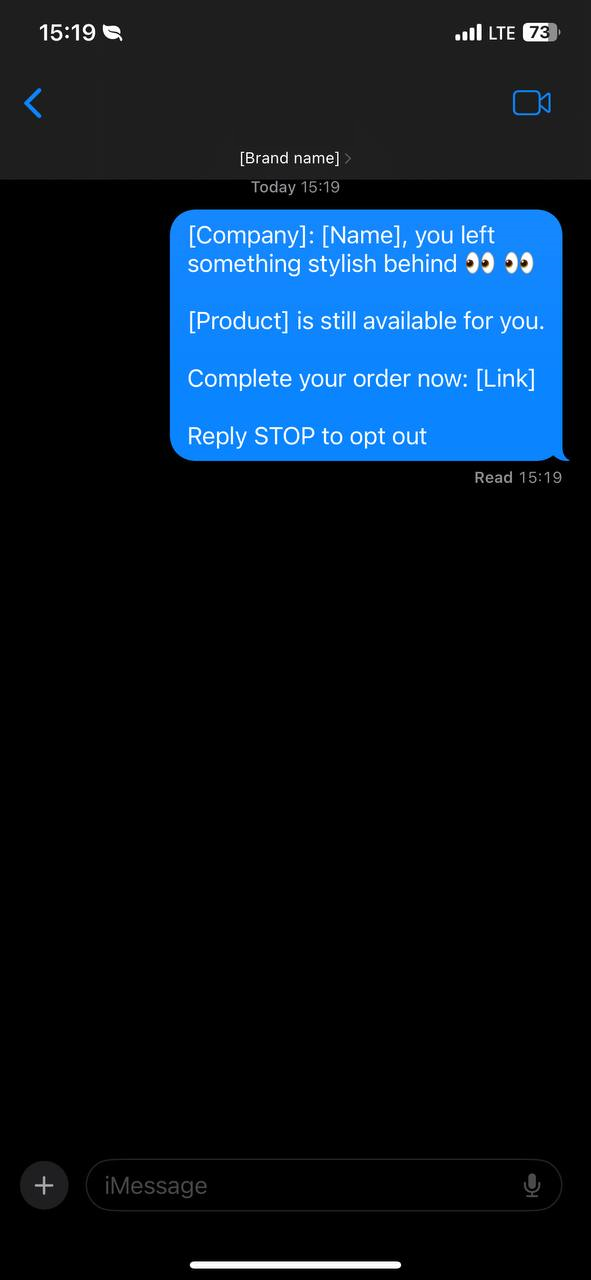
Here’s an abandoned cart text message example on a smartphone:
These abandoned cart SMS templates add value without discounting your products. Free shipping removes a common barrier to purchase and makes customers feel they’re getting a deal.
Free shipping works because it removes the surprise cost that often causes cart abandonment.
As we’ve seen previously, shipping-related issues are the biggest cause of cart abandonment. Many customers abandon carts when they see unexpected shipping charges at checkout. These abandoned cart SMS eliminate that concern.
Template 1:
“Good news, [Name]!
Free shipping on your cart. Complete your order: [Link]
Reply STOP to opt out.”
Template 2:
“[Name], we’re covering shipping on your order.
Checkout now: [Link]
Reply STOP to opt out.”
Template 3:
“Free shipping surprise for [Name]! Your cart qualifies. Complete your purchase: [Link]
Reply STOP to opt out.”
Template 4:
“[Name], shipping is on us! Finish your order: [Link]
Reply STOP to opt out.”
Template 5:
“[Name], you’re $15 away from free shipping!
Complete your order: [Link]
Reply STOP to opt out.
Template 6:
“[Company]: Free shipping activated for [Name].
Checkout now: [Link]
Reply STOP to opt out.”
Template 7:
“[Name], complimentary shipping on your cart.
Complete your order: [Link]
Reply STOP to opt out.”
Use promo codes to motivate hesitant buyers. These work well for higher-value carts or price-sensitive customers who need extra motivation to complete their purchase. The key is making the discount feel exclusive rather than desperate.
Template 1:
“[Name], take 15% off with code SAVE15.
Complete your order: [Link]
Reply STOP to opt out.”
Template 2:
“Special discount for [Name]: 20% off with SAVE20.
Checkout now: [Link] Reply
STOP to opt out.”
Template 3:
“Your 10% discount is waiting, [Name].
Use code SAVE10: [Link]
Reply STOP to opt out.”
Template 4:
“[Name], here’s 25% off your cart. Code: CART25 [Link]
Reply STOP to opt out.”
Template 5:
“Exclusive for [Name]: $10 off your order.
Code: OFF10 [Link] Reply STOP to opt out.”
Template 6:
“[Company]: 30% off just for you, [Name]. Code: VIP30 [Link]
Reply STOP to opt out.”
Template 7:
“[Name], enjoy 18% off your cart. Code: SAVE18 [Link]
Reply STOP to opt out.”
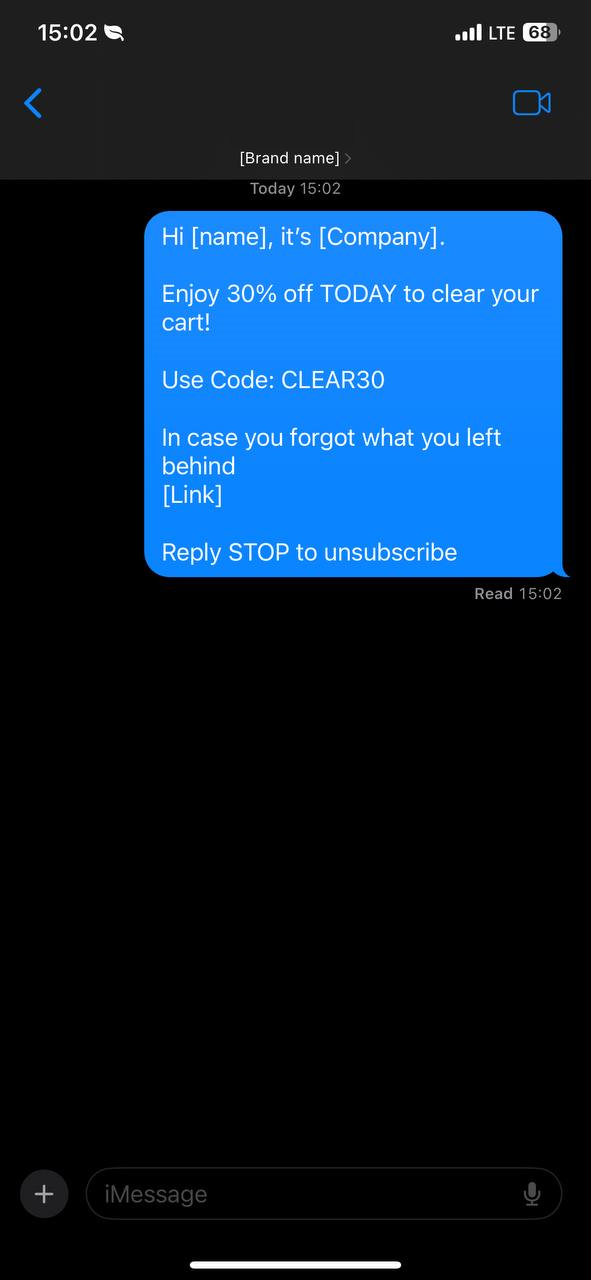
Here’s what a discount-based cart abandonment SMS could look like:
Urgency abandoned cart SMS messages tap into the fear of missing out (FOMO). They’re effective because people don’t like losing opportunities. This abandoned cart SMS campaign works best when the urgency is real and based on actual inventory or time constraints.
Template 1:
“Only 2 [Product] left, [Name]!
Secure yours now: [Link]
Reply STOP to opt out.”
Template 2:
“[Name], your cart expires in 2 hours.
Complete your purchase: [Link]
Reply STOP to opt out.”
Template 3:
“Last chance, [Name]!
[Product] is selling fast.
Order now: [Link]
Reply STOP to opt out.”
Template 4:
“[Name], sale ends tonight! Complete your order: [Link]
Reply STOP to opt out.”
Template 5:
“Almost sold out! [Name], secure your [Product]: [Link]
Reply STOP to opt out.”
Template 6:
“48 hours left, [Name]. Your cart expires soon: [Link]
Reply STOP to opt out.”
Template 7:
“[Name], limited stock alert!
Only a few [Product] remaining: [Link]
Reply STOP to opt out.”
Follow-up abandoned cart SMS messages are perfect for customers who need more time to decide. They also work as gentle second-touch reminders for customers who didn’t respond to your first message. With this abandoned cart SMS campaign, keep the tone gentle and helpful.
Template 1:
“Hi [Name], just checking — still interested in [Product]? [Link]
Reply STOP to opt out.”
Template 2:
“[Name], we saved your cart for one more day.
Complete your order: [Link]
Reply STOP to opt out.”
Template 3:
“Final reminder [Name]. Your [Product] is still available: [Link]
Reply STOP to opt out.”
Template 4:
“[Name], need help with your order?
Complete your purchase: [Link]
Reply STOP to opt out.”
Template 5:
“Still deciding, [Name]?
Your cart is waiting: [Link]
Reply STOP to opt out.”
Template 6:
“[Name], this is your last chance to get [Product]: [Link]
Reply STOP to opt out.”
Template 7:
“[Name], your items are selling fast.
Secure them now: [Link] Reply STOP to opt out.”
Remember to A/B test different templates to see what works best for your audience. Keep messages under 160 characters, always include a working opt-out option, and double-check your links for accuracy.
Browse abandonment is another powerful sales recovery technique, but it works differently from cart abandonment. These shoppers showed interest by viewing products but never added them to their cart. That means they’re earlier in the buying journey and need a softer approach.
The goal of browse abandonment SMS is to nurture interest, not push for immediate sales. These customers need value and encouragement rather than aggressive sales tactics. Your messaging should guide them closer to making a purchase decision.
Understanding browse abandonment helps you write better messages. The right message can move visitors from interest to action.
Social proof works because people trust other customers’ experiences. When browsers see that others love a product, it reduces their purchase anxiety. Reviews and ratings provide the confidence they need to move forward.
These messages work particularly well for expensive items or new products. Customers need reassurance before making bigger purchases, and social proof provides that validation from real users.
Template 1:
“Hi [Name], that [Product] you viewed has 500+ five-star reviews.
See why customers love it: [Link]
Reply STOP to opt out.”
Template 2:
“[Name], [Product] is our best-seller this month.
Discover why: [Link] Reply STOP to opt out.”
Template 3:
“Customers rave about [Product], [Name]. Read the reviews: [Link]
Reply STOP to opt out.”
Template 4:
“[Name], 95% of customers recommend [Product].
See what they’re saying: [Link]
Reply STOP to opt out.”
Value propositions address common concerns and remind browsers why they were interested in the first place. These messages highlight key benefits or unique features that make your product special. This could be free returns, warranties, or guarantees to reduce the perceived risk of buying.
Focus on benefits that matter most to your audience. For example, eco-conscious customers care about sustainability, while busy professionals want fast shipping and easy returns. Match your message to customer values.
Template 1:
“[Name], remember [Product]?
It offers free returns and a lifetime warranty: [Link]
Reply STOP to opt out.”
Template 2:
“Hi [Name], [Product] ships same-day and comes with 24/7 support: [Link]
Reply STOP to opt out.”
Template 3:
“[Name], [Product] is eco-friendly and made from sustainable materials: [Link]
Reply STOP to opt out.”
Template 4:
“That [Product] you viewed offers a 60-day money-back guarantee, [Name]: [Link]
Reply STOP to opt out.”
Back-in-stock alerts are highly effective for browse abandonment because they solve a real problem. Customers who browsed out-of-stock items clearly had interest. When the product returns, they’re often ready to buy immediately.
These messages have some of the highest conversion rates in browse abandonment campaigns. The timing creates natural urgency without feeling manipulative.
Template 1:
“Good news, [Name]! [Product] is back in stock.
Get yours now: [Link]
Reply STOP to opt out.”
Template 2:
“[Name], the [Product] you viewed is available again.
Limited quantity: [Link]
Reply STOP to opt out.”
Template 3:
“Back in stock alert! [Name], [Product] is ready to ship: [Link]
Reply STOP to opt out.”
Template 4:
“[Name], [Product] was restocked today.
Don’t miss out this time: [Link] Reply STOP to opt out.”
Great templates are certainly useful, but they’re just the foundation of a strong SMS abandoned cart recovery strategy. The results come from optimizing your strategy with smart testing and advanced techniques.
These tactics help you maximize conversions and get better returns from every abandoned cart SMS message you send.
Strategic optimization separates successful abandoned cart SMS campaigns from mediocre ones. You need data-driven approaches that go beyond basic messaging. The following methods will help you build campaigns that consistently drive revenue.
Quick sign up | No credit card required
Timing is very important for your abandoned cart SMS recovery campaigns. Test different send times to find what works best for your customers.
Start with basic timing tests before moving to complex sequences. Omnisend’s built-in A/B testing lets you test send times, message copy, and offers automatically to find winning combinations. Document your results carefully to build a knowledge base for future campaigns.
Test one variable at a time for better results. For instance, if you change both timing and copy simultaneously, you won’t know which drove performance changes.
Start with timing tests since they often yield the biggest improvements. Once you identify optimal send times, move to testing discount amounts or message angles. Omnisend’s analytics dashboard shows you exactly which variation won and by what margin.
Combining abandoned cart SMS with email creates more touchpoints without overwhelming customers. This omnichannel marketing approach increases your chances of recovery significantly.
Platforms like Omnisend make managing browsing-based automations across multiple channels accessible to even beginners. Without a steep learning curve, you can create complex workflows that feel seamless to customers. The key is maintaining consistency while leveraging each channel’s strengths.
Not all customers respond the same way to abandoned cart SMS messages. Customer lifecycle segmentation helps you send more relevant texts that drive better results.
Furthermore, advanced segmentation ideas include seasonal purchasing patterns and engagement levels. The more specific your segments, the more personalized your messaging becomes.
Learning from common mistakes helps you avoid costly errors that hurt your conversion rates and customer relationships.
Meanwhile, monitor your unsubscribe rates closely. High opt-out rates signal problems with your messaging frequency or content quality. Address these issues quickly to maintain a healthy SMS list.
These optimization strategies work together to create successful abandoned cart SMS marketing campaigns. Start with timing tests, then add omnichannel integration and segmentation as you get more sophisticated.
Yes, an abandoned cart SMS is legal when you follow proper consent rules. You need explicit permission before sending promotional text messages. Collect consent through signup forms, checkout processes, or keyword opt-ins. Always keep records of how customers gave permission.
Most brands wait 30 minutes to 24 hours after cart abandonment. Sending too quickly feels pushy, but waiting too long means customers forget or buy elsewhere. Test different delay periods and consider customer time zones when scheduling messages to ensure optimal delivery.
Send one to three messages maximum over several days. Start with a single message and add more if conversion rates are low. Monitor opt-out rates closely — if more than two to three percent of people unsubscribe after each message, you’re sending too many.
Yes, you always need explicit permission for promotional SMS messages. Having a phone number for shipping doesn’t count as marketing consent. Abandoned cart messages are promotional content that requires specific marketing permission from customers before sending.
Browse abandonment occurs when visitors view products but leave without adding them to their cart. These customers showed interest but need gentler messaging focused on value rather than immediate sales pressure.

TABLE OF CONTENTS
TABLE OF CONTENTS

What’s next



No fluff, no spam, no corporate filler. Just a friendly letter, twice a month.