
 Omnisend AI


 OFFER
OFFER






Drive sales on autopilot with ecommerce-focused features
See FeaturesKey takeaways 
Ecommerce customer acquisition means turning new website visitors into first-time buyers for your brand
Acquisition ends at the first purchase, while customer retention starts after — you need both to grow
Your ecommerce CAC (customer acquisition cost) shows how much you pay to get each new customer
LTV (customer lifetime value) measures how much a customer spends throughout their relationship with your brand
Tracking your LTV:CAC ratio helps you evaluate long-term customer acquisition profitability — a healthy benchmark is 3:1, meaning you earn $3 for every $1 you spend
Email and SMS capture is one of the most effective ways to lower your ecommerce customer acquisition costs
Paid advertising works best when paired with email and SMS capture, not as a standalone ecommerce customer acquisition channel
Tracking your ecommerce customer acquisition cost (CAC) by channel helps you know which strategies attract the most customers at the lowest cost
Most visitors don’t convert on the first visit — a well-structured automated welcome email and SMS sequence helps you nurture and convert them into customers
Reveal key takeaways
Ecommerce customer acquisition is no longer as simple as running ads and waiting for sales. Paid ads cost more, third-party cookies are disappearing, and most ad platforms now rely on AI-driven automation rather than manual targeting. This means you may have less control over targeting and tracking than you had before.
Traditional paid advertising tactics have also become less predictable and scalable. Successful brands in 2026 aren’t increasing their ad spend or relying on one channel. They’re using acquisition systems that help them capture, nurture, and convert leads across multiple owned and earned channels. These include email and SMS marketing, SEO, and referral programs.
In this guide, you’ll learn practical ecommerce customer acquisition strategies, cost calculation formulas, and real examples to inspire your campaigns.
Turn visitors into loyal customers with Omnisend’s multichannel email and SMS workflows
Quick sign up | No credit card required
What is ecommerce customer acquisition?
Ecommerce customer acquisition is the process of attracting and converting new customers who’ve never bought from your store. Acquisition ends the moment a customer makes their first purchase from your Shopify store. Everything else that happens after that, like repeat purchases or follow-up campaigns, falls under retention.
The most effective acquisition strategies combine paid and owned channels to lower CAC and maximize conversions.
Customer acquisition cost (CAC): What it is and how to track it
Your ecommerce customer acquisition cost (CAC) is how much you spend to acquire one new customer. This number helps you see if your marketing strategies are helping you acquire customers profitably or draining your budget.
Here’s the CAC calculation formula:
- CAC = Total marketing spend ÷ new customers acquired
For example, if you spend $5,000 on ads, content, and tools, and you gain 100 new customers, your CAC is $50.
However, monitoring CAC alone isn’t enough. You also need to track LTV (customer lifetime value). This is the total amount a customer spends on your brand over time. When you compare the two metrics, you get a clearer picture of your ecommerce customer acquisition performance.
A strong benchmark is an LTV:CAC ratio of 3:1. This means you earn $3 for every $1 you spend to acquire a new customer.
Additionally, track CAC by channel, not just overall. Each channel, like paid ads, email, SEO, or social media, performs differently. When you break it down, you can identify your best-performing ecommerce acquisition channels and refocus your efforts and resources.
Here are various tools you can use to track the cost of customer acquisition in ecommerce:
| Category | CAC tools | Best for | Cost |
|---|---|---|---|
| Native platform analytics | Shopify, BigCommerce and WooCommerce analytics + Google Analytics 4 (GA4) | Any store size (basic CAC by channel) | Free |
| Ad platform reports | Meta Ads Manager, Google Ads, TikTok Ads Manager | Monitoring CAC for specific paid channels | Free |
| Multi-touch attribution (small/mid market) | Triple Whale, ThoughtMetric, Polar Analytics | Stores running a few (two to four) paid channels | $50–$300+/month |
| Multi-touch attribution (enterprise) | Northbeam, Rockerbox | High-revenue stores making 300K/month, with complex multi-channel tracking | $500–$1,000+/month |
| Owned channel (email/SMS/push) reporting | Omnisend | Tracking CAC from email and SMS campaigns (revenue per send, automation performance, and subscriber-to-buyer conversion rates) | Free |
| UTM tracking + GA4 | Google Analytics 4 | Smaller stores that want free, basic CAC tracking before upgrading to paid tools | Free |
Customer acquisition cost strategies
Here are some ecommerce customer acquisition strategies that help you convert visitors into customers profitably:
1. Turn site visitors into subscribers before they leave
2. Convert subscribers into first-time buyers with a welcome automation
3. Make paid social spend work harder with email capture
4. Turn TikTok Shop into a first-purchase engine
5. Get found in search — and in AI answers
6. Build a referral program that turns buyers into recruiters
7. Use quizzes to segment and convert from the first interaction
1. Turn site visitors into subscribers before they leave
Most people who visit your store may not buy right away. However, if they leave without sharing their email or phone number, you lose the chance to bring them back.
By collecting contact details, you turn anonymous traffic into leads you can market to later. This makes email and SMS capture one of the lowest-cost ecommerce customer acquisition strategies.
Here are some popup formats you can use to convert visitors into subscribers:
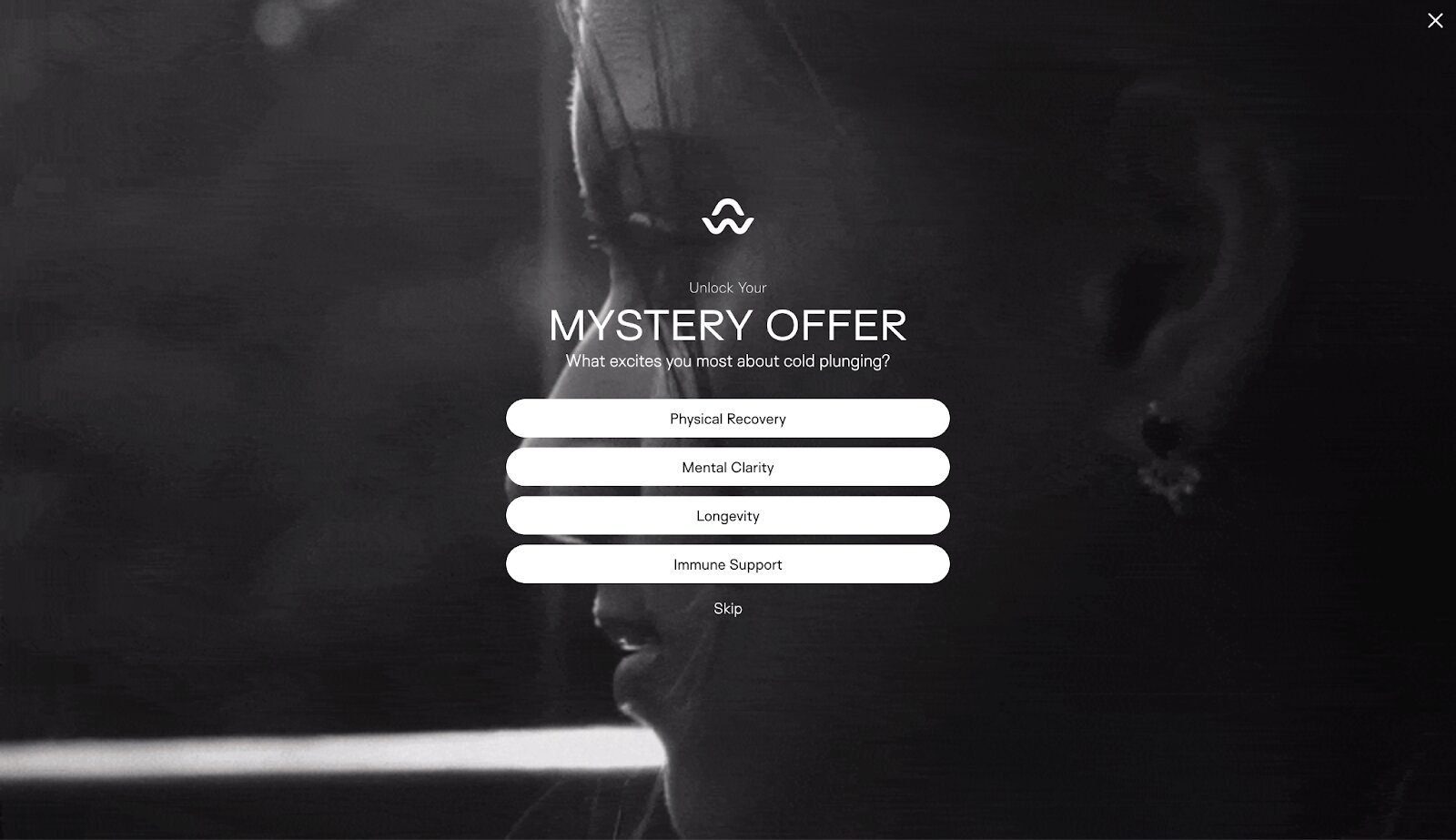
- Multi-step popups and welcome quizzes: Instead of asking for an email address up front, ask a simple preference question first, such as “What are you shopping for?” This helps you segment subscribers from the start and personalize welcome emails.
Here’s a great welcome quiz popup example from Nordic Wave:
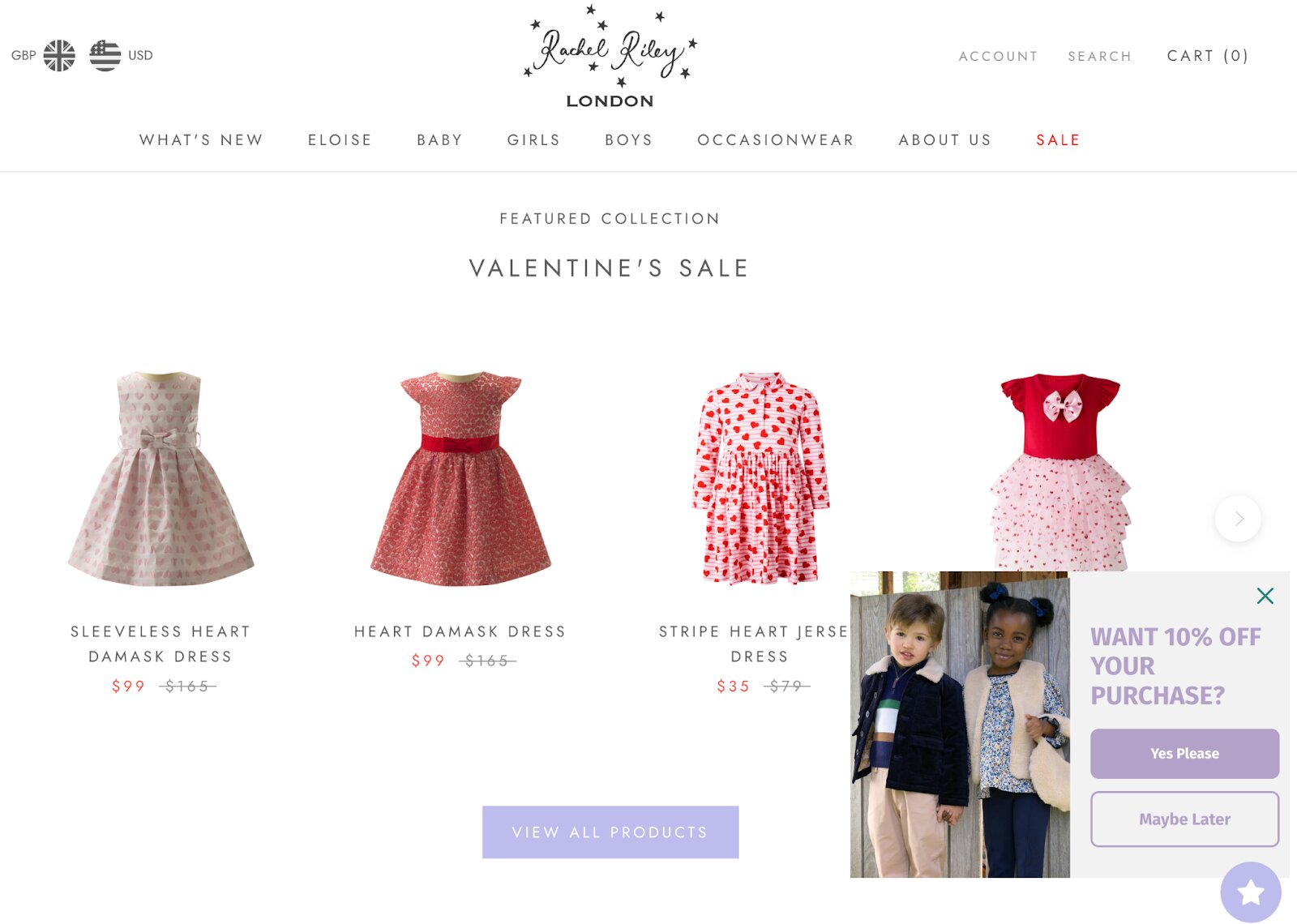
Omnisend’s data shows that multi-step welcome popups often outperform single-step forms, with 2.3% and 2.0% conversion rates, respectively. Here’s a multi-step popup from Rachel Riley, created using Omnisend:
You can display your popups on your homepage after a short delay (a few seconds) to make them less intrusive.
- Exit-intent popups: These trigger when a user is about to leave your site. Use exit-intent popups on product or cart pages to catch customers at the last second. They also work well for cart recovery, with a 1.8% conversion rate when used strategically.
- Gamified popups (Wheel of Fortune): These popups often perform better than standard forms because they turn signup into an interactive experience. They shift the visitor’s perspective from sharing their email to winning a reward.
Our data show that the Wheel of Fortune popups achieve a 3.5% conversion rate, compared to 2% for static forms.
See how OddBalls uses a spin-to-win popup to drive email and SMS signups:
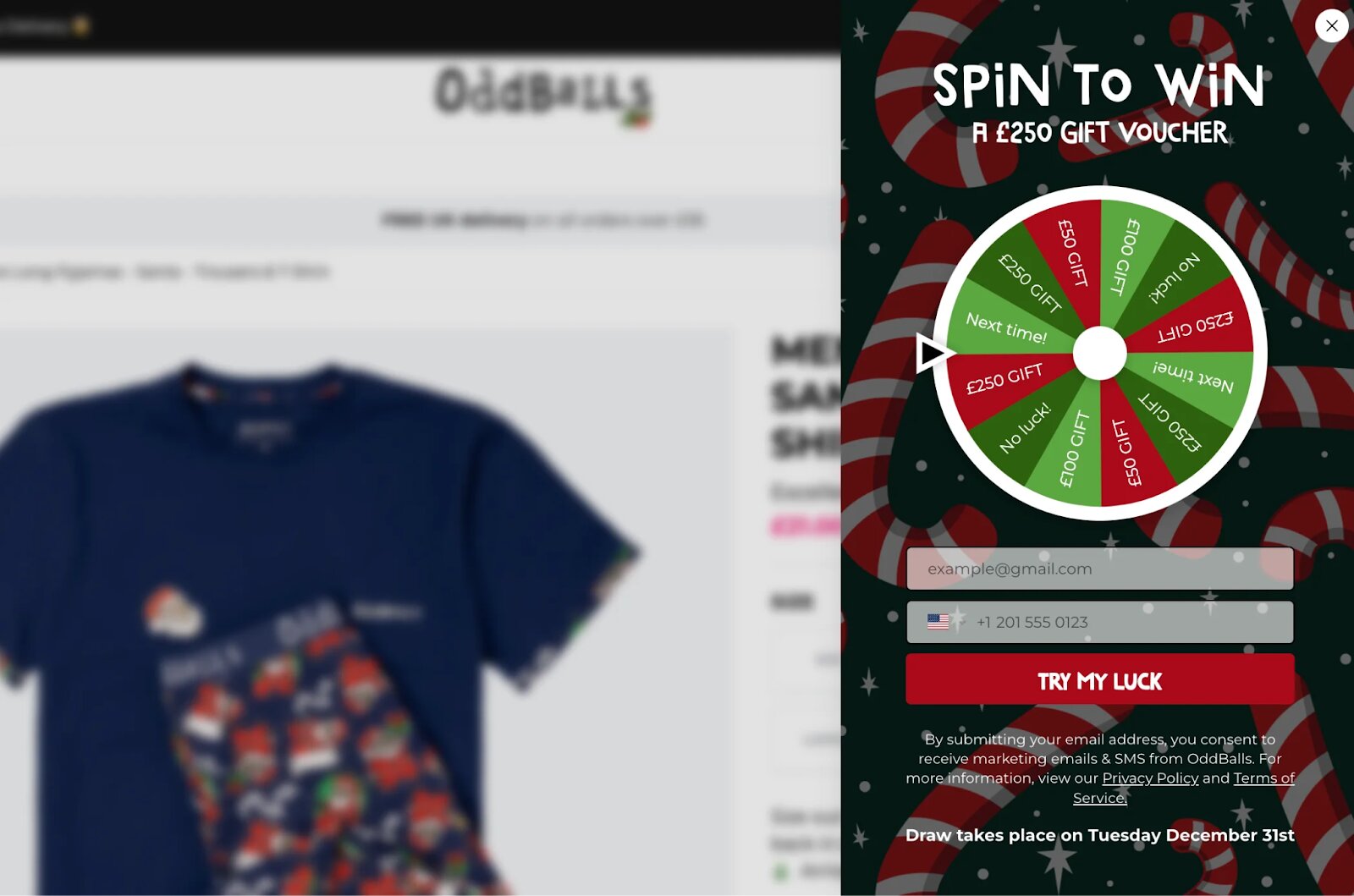
Also, target your popups by page. A visitor on a product page has higher intent than someone browsing your homepage. Based on our data, popups displayed on specific pages convert at 2.4%, compared to 2.0% for sitewide popups.
Expert tip: Enable revenue attribution in your email tool, such as Omnisend. This helps you track how much revenue each popup generates and measure its impact on ecommerce customer acquisition.
2. Convert subscribers into first-time buyers with a welcome email automation
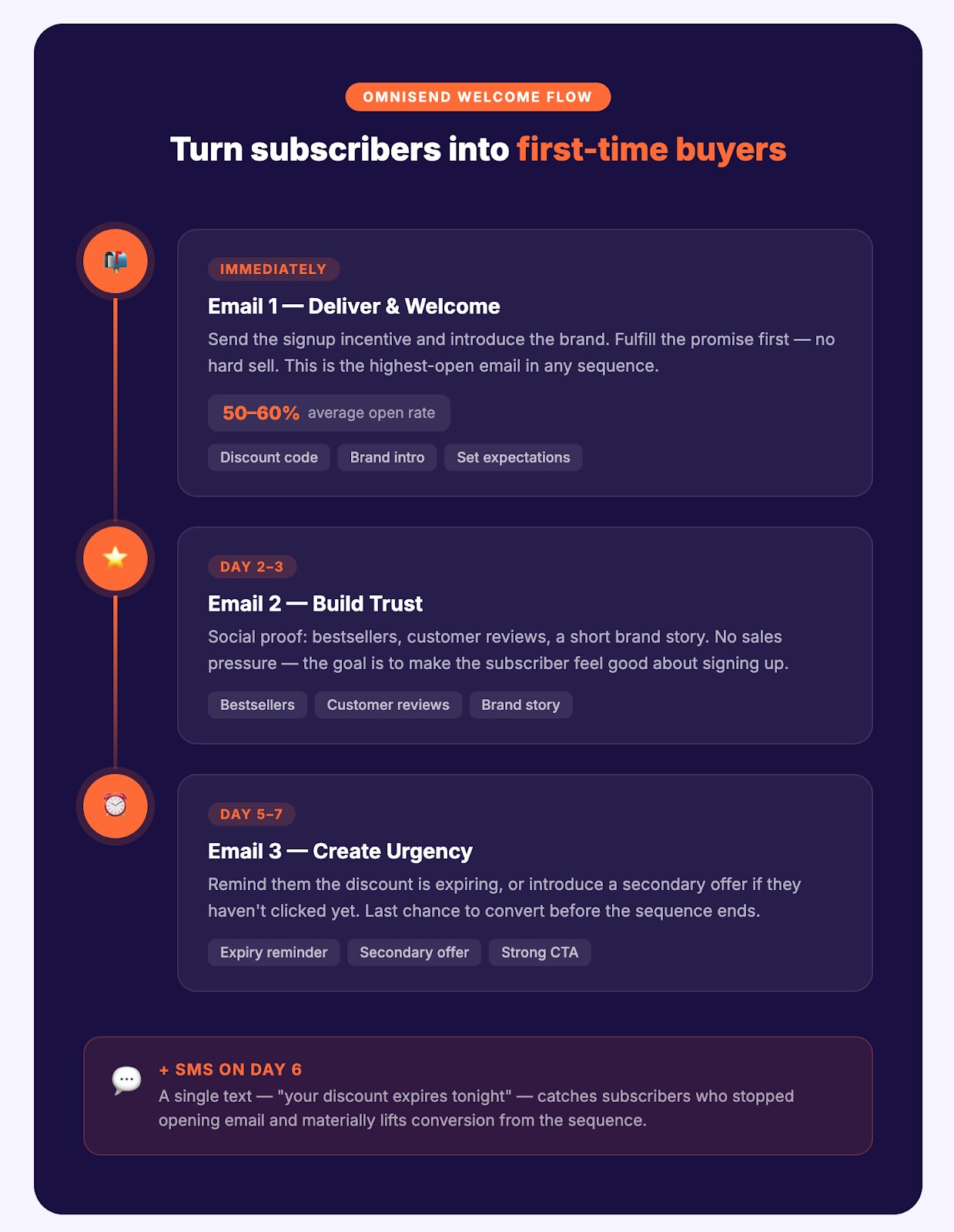
Capturing a signup is only half the job. Your welcome series flow is what converts subscribers into paying customers. Without it, your ecommerce customer acquisition efforts, including popups and paid ads, are incomplete.
A well-timed welcome email sequence with relevant messaging and offers gives subscribers a reason to trust you and take action.
According to Omnisend’s data, automated welcome messages had a 37.49% open rate and a 2.91% conversion rate in 2025. Every automated email in 2026 generated $2.87 per send, compared to just $0.18 for regular campaigns.
Use this welcome flow structure to convert subscribers into buyers:
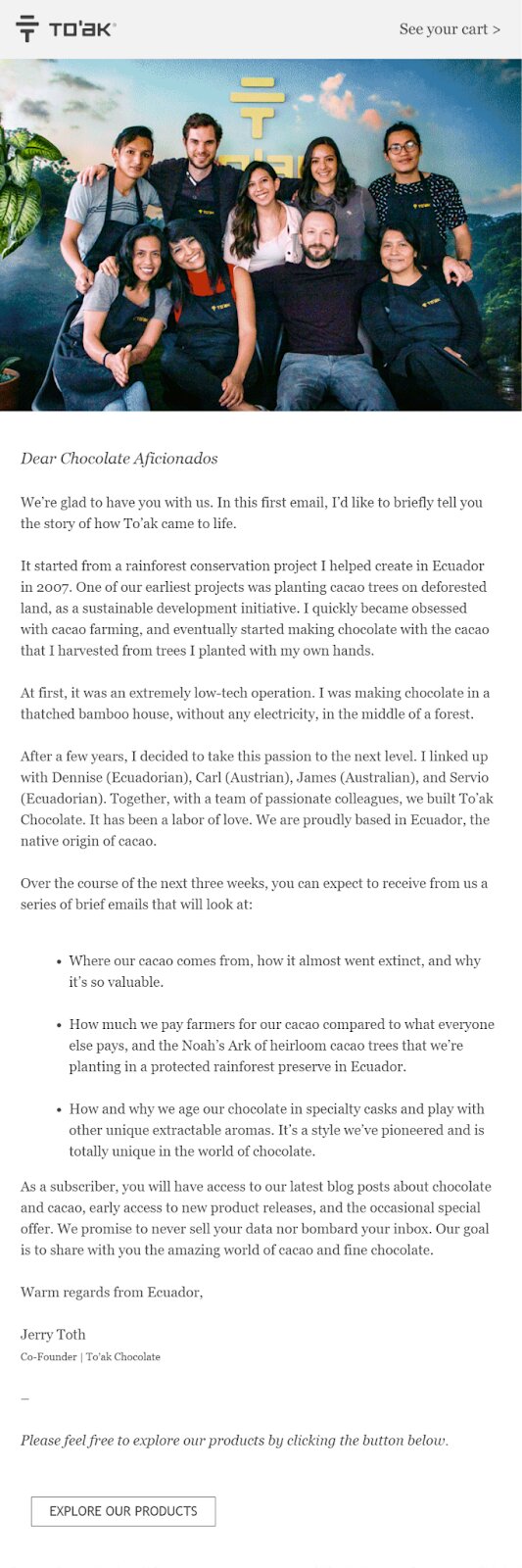
- Email 1 (send immediately): Deliver the promised signup discount, introduce your brand, and set expectations. This welcome email often has an average open rate of 50-60%, the highest in any flow. The goal is to make a strong first impression without overselling.
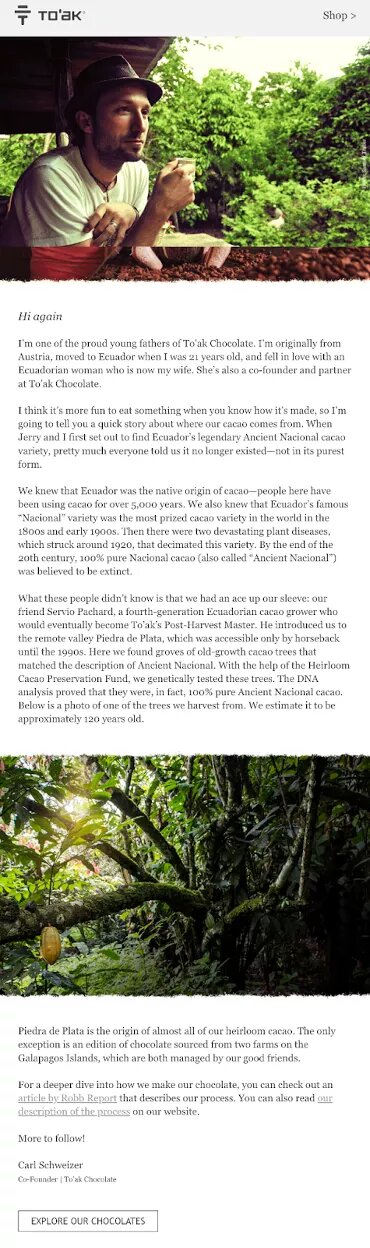
This email from To’ak Chocolate uses storytelling to engage subscribers and introduce the brand:
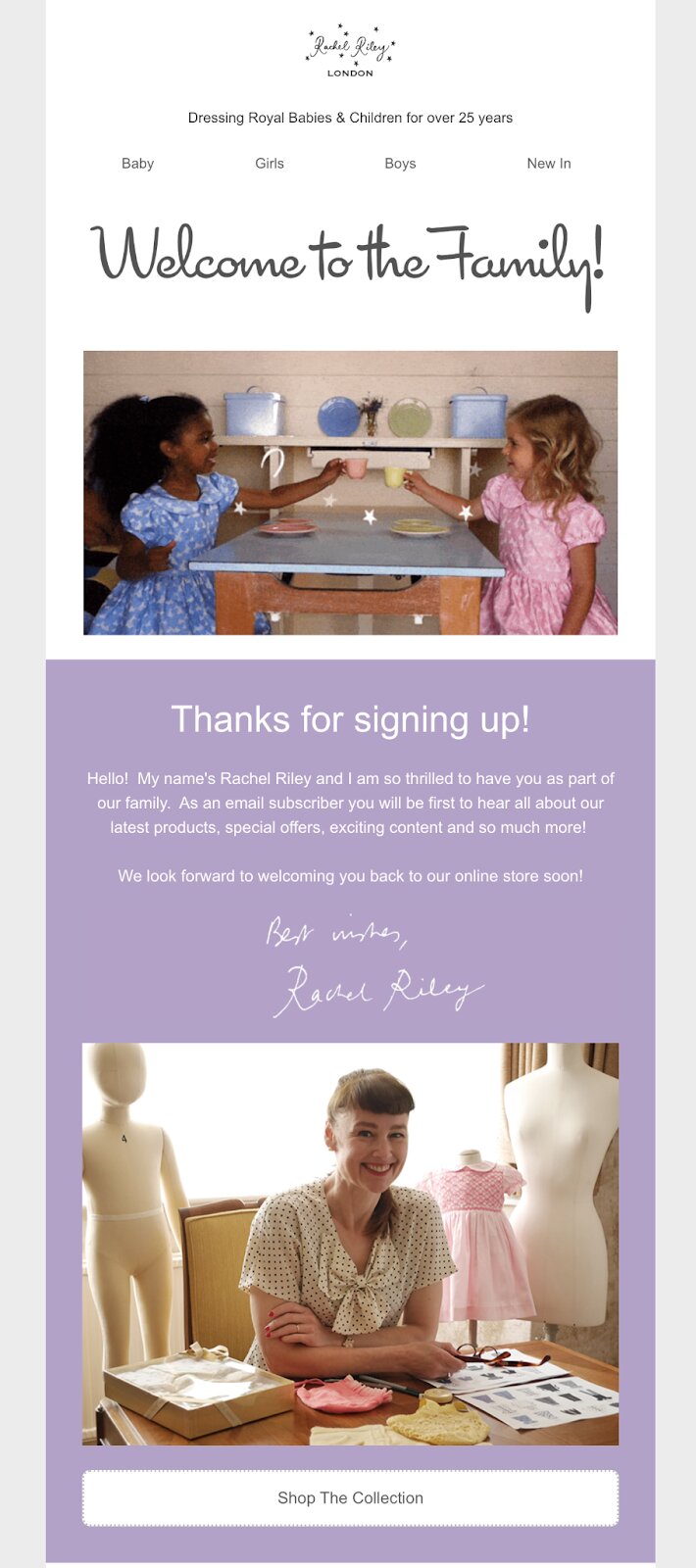
Rachel Riley’s founder also sends a welcome email immediately after signup, thanking subscribers and telling them what to expect:
- Email 2 (day two or three): Share your brand story and highlight your bestsellers. Back up your welcome message with social proof, such as customer reviews, ratings, or user-generated content (UGC). This helps you earn customers’ trust and increase their confidence in your products.
To’ak Chocolate’s email builds trust by introducing the founders and telling the brand’s story:
- Email 3 (day five to seven): Create urgency by reminding subscribers that their welcome offer is about to expire. You can also add a second incentive to nudge them toward their first purchase. It could be something like, “Your 15% discount expires tonight. Shop now and get a gift with your order.”
Pro tip: Combine email with SMS campaigns. A simple SMS message like “Your discount code expires tonight” can catch subscribers who missed your emails and improve conversions. Our report shows that automated SMS drove 18% of orders despite being just 9% of all sends.
Check out this video for more tips and welcome email best practices:
3. Make paid social spend work harder with email capture
Platforms like Meta Ads Manager now function more as discovery channels than direct sales drivers. That means a prospect who clicks on your ad might not purchase right away.
Instead of expecting instant sales, focus on expanding your reach and capturing visitors’ emails before they leave your site. This way, your ad budget doesn’t go to waste, and you secure leads you can reach later.
Here is how to improve your paid social ecommerce customer acquisition strategy:
- Pair ads with targeted popups: Every paid campaign should connect to an on-site popup that captures email and SMS. If a visitor clicks your ad but doesn’t buy, you still win if they subscribe. Your welcome flow can convert them later at a much lower cost than the original ad click.
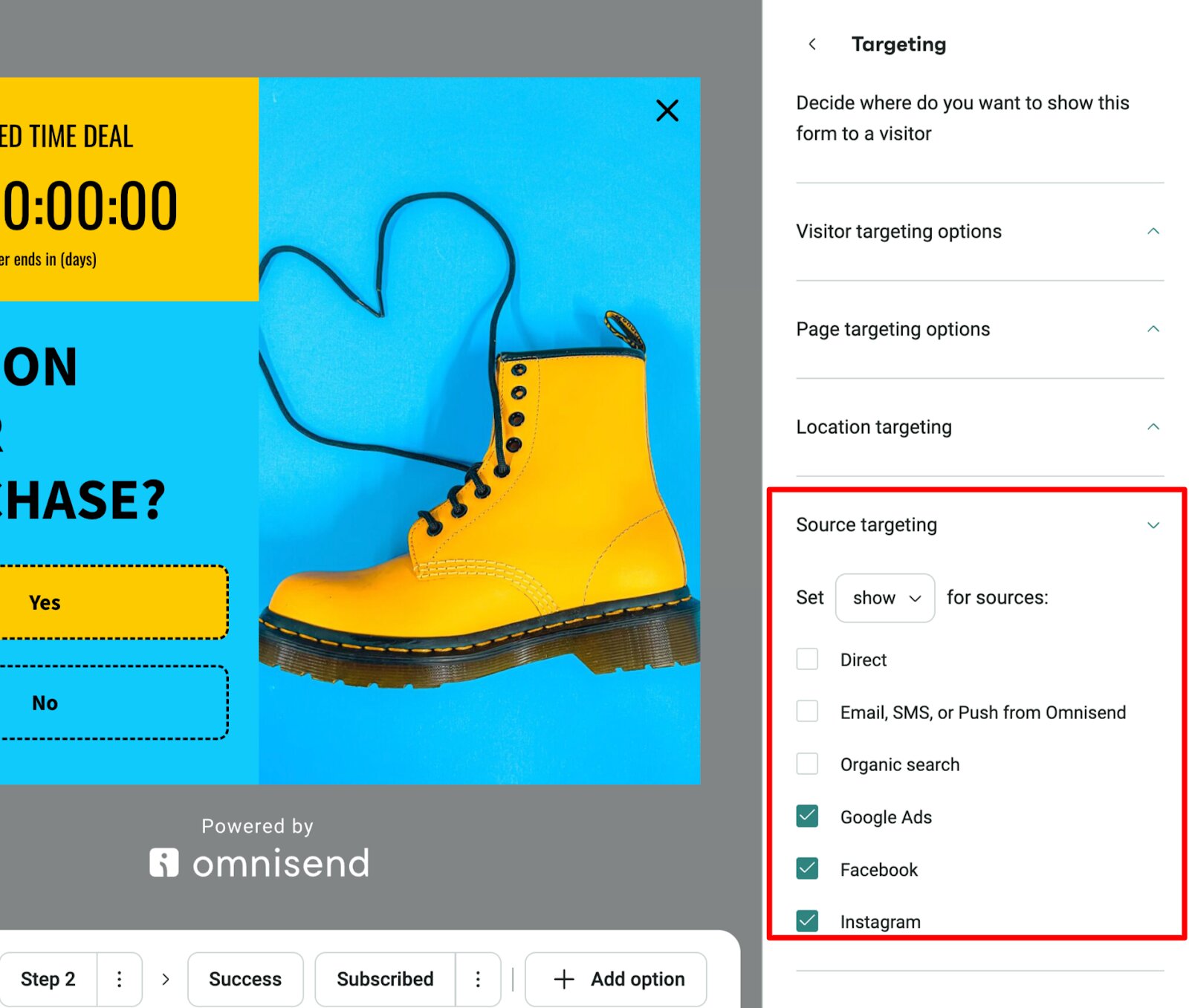
- Use traffic-based targeting: Tools like Omnisend let you create signup forms that target website visitors based on traffic source. You can show a special offer specifically to paid ad visitors, while organic visitors see your standard welcome incentive. This improves relevance, leading to higher conversion rates:
4. Turn TikTok Shop into a first-purchase engine
TikTok Shop provides a direct ecommerce customer acquisition channel. Unlike standard ads that send people to your website, TikTok Shop lets users buy your products without leaving the app. This results in less friction and a shorter path to conversion.
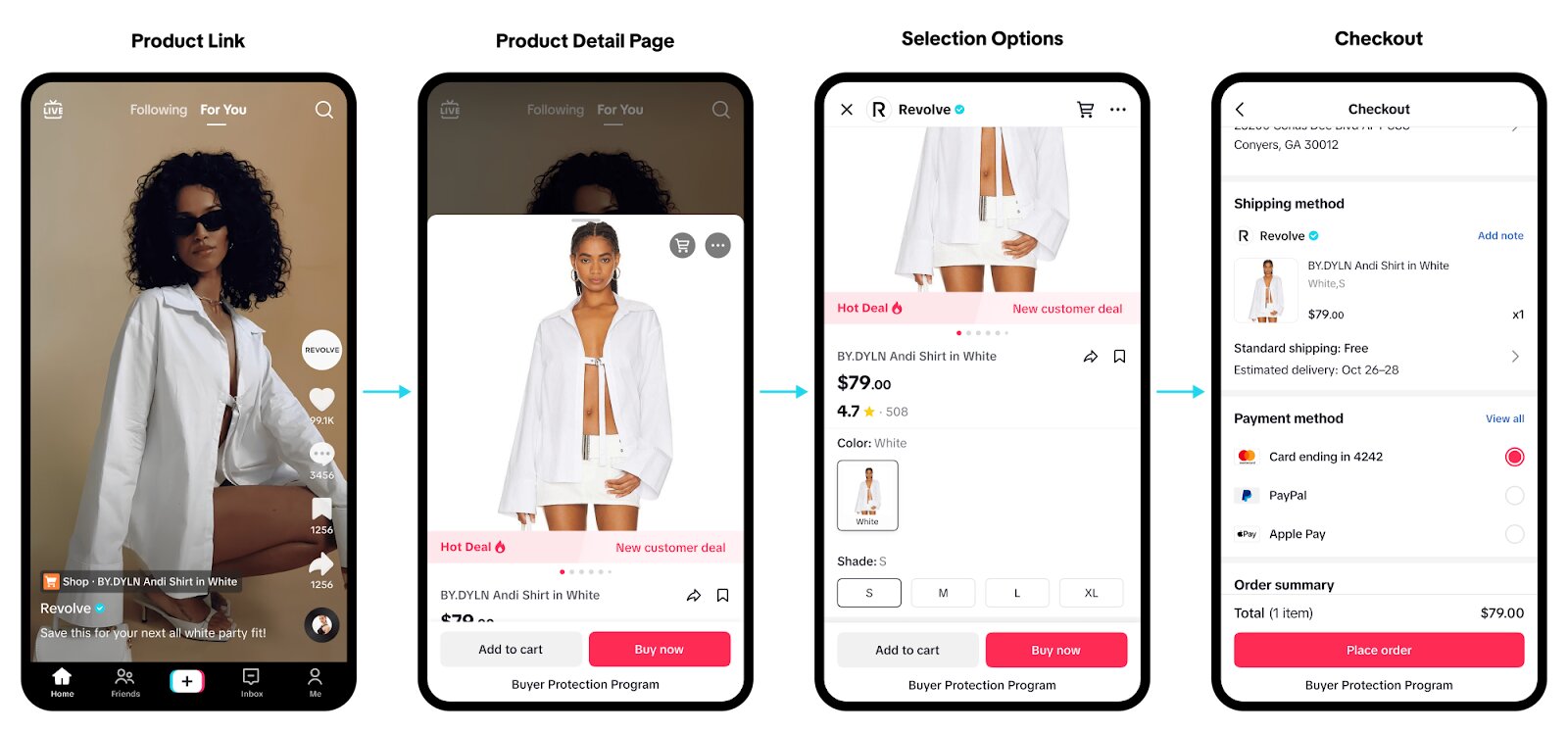
Here’s how you can use TikTok Shop for ecommerce customer acquisition:
- Check product fit first: TikTok Shop works best for products you can record on camera in under 15 seconds. Share quick demos, before-and-after results, or simple unboxings. Categories like beauty, wellness, accessories, and home products perform well.
If your product requires long explanations, use TikTok for brand awareness and redirect traffic to your ecommerce store.
- Use TikTok Shop as a loss-leader: List a hero product at a very low or break-even profit margin. While you won’t make a large profit on the first sale, you’ll acquire a new buyer at a lower cost than you would on paid ads.
For instance, your usual CAC from paid ads may be $45. If you sell a product on TikTok Shop for $30 at break-even, you just acquired that customer at $0 in ad spend.
Once they make a purchase, the order syncs with Shopify via your TikTok Shop setup. Now, the buyer is on your email list. You can then use Omnisend to send Shopify post-purchase email follow-ups that drive repeat purchases at full margin.
- Work with creators on commission: Rather than paying for ads, you can partner with creators in your niche through TikTok’s affiliate marketplace. You set a commission, and they create content promoting your product. Then, you pay them when a sale is complete.
For a Shopify store without an influencer budget, this approach helps keep costs under control. You also get performance-based UGC content you can reuse in ads, emails, and product pages.
5. Get found in search and in AI answers
While paid ads are great for reach and discovery, organic search provides long-term value. It’s one of the ecommerce acquisition channels where your costs remain constant as traffic increases.
In 2026, your brand needs to be visible on both traditional search and AI-driven results. Both shape how customers discover ecommerce products.
AI tools like ChatGPT, Perplexity, and Gemini pull product answers from customer reviews, Reddit discussions, and trusted articles. If people aren’t talking about your brand online, you remain invisible in these answers.
In addition to brand and product discovery, AI tools are shaping how people buy. OpenAI introduced Instant Checkout in late 2025. This feature lets users buy from Shopify stores directly inside ChatGPT.
To increase your chances of appearing on search and AI answers, prioritize these content types:
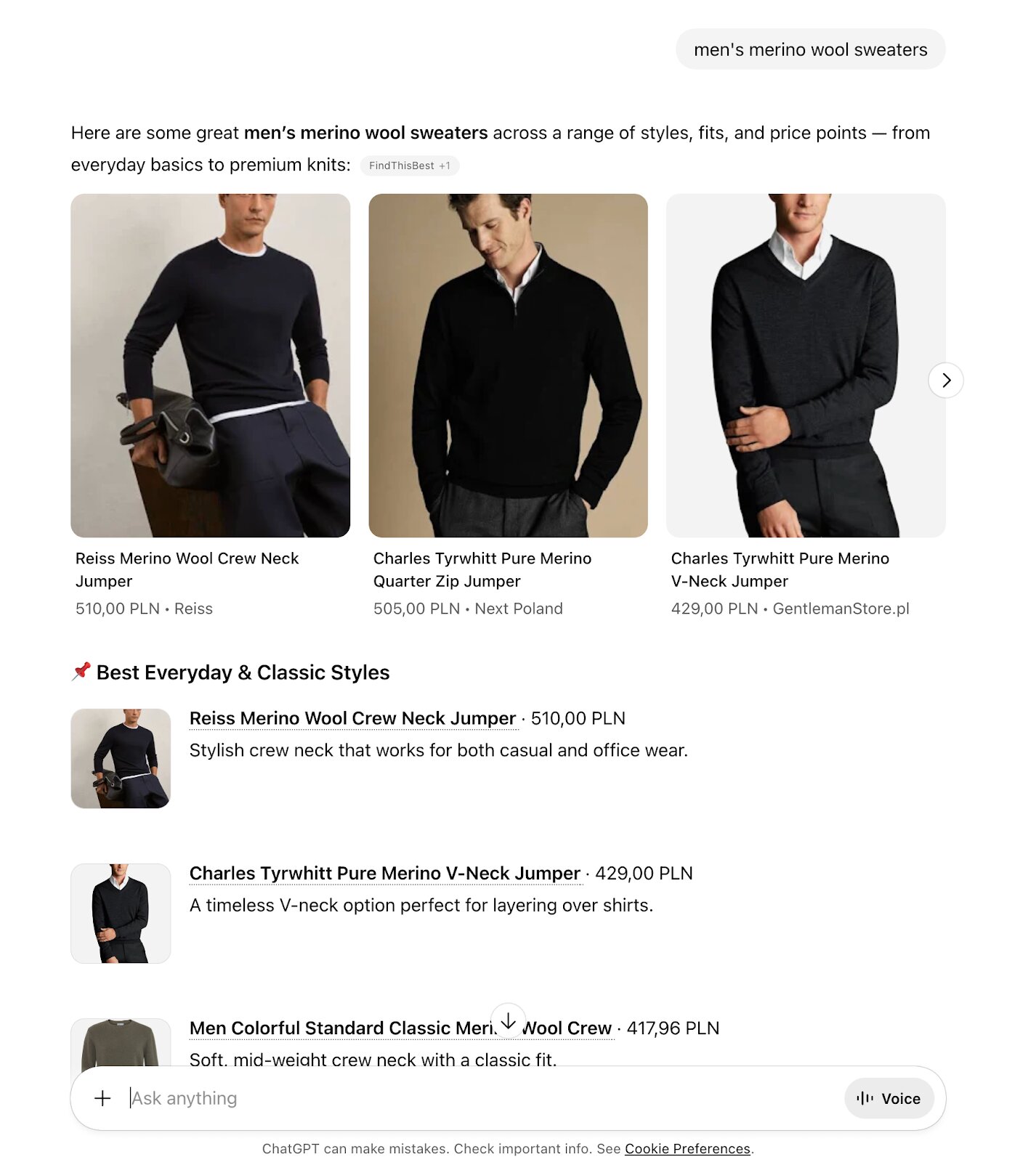
- Commercial pages: Optimize your product and collection pages for clear, high-intent searches like “men’s merino wool sweaters.” These pages convert quickly because the shopper already knows what they want.
See how ChatGPT displays curated product listings for the keyword “men’s merino wool sweaters.”
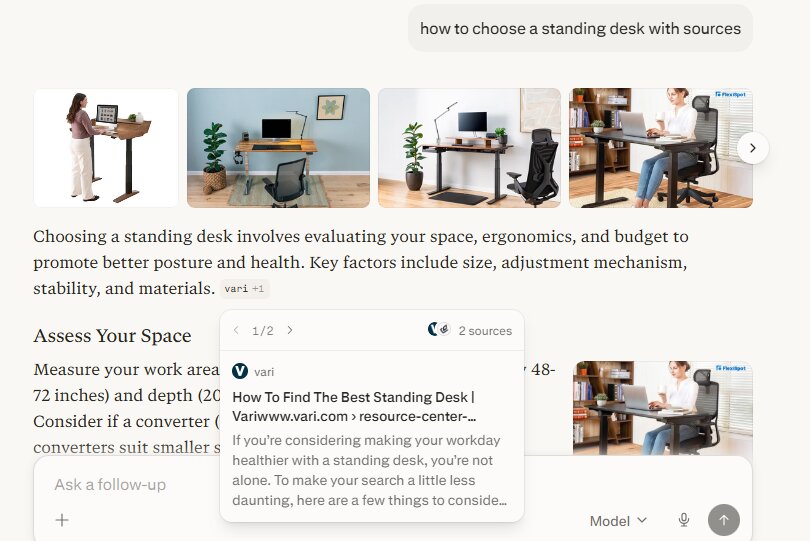
- Informational content: This includes blog posts and guides, such as “how to choose a standing desk,” that target buyers in the research phase. Combine them with popups to capture visitors’ emails and guide them into a welcome flow.
Here’s an example of an article that appears in Perplexity AI for the query “how to choose a standing desk.”
6. Build a referral program that turns buyers into recruiters
A referral program is one of the lowest-cost ecommerce customer acquisition channels for many online stores. You don’t pay for clicks or impressions. Instead, your cost is the reward you offer, like a $10 discount.
Even better, referred customers already trust your brand. That’s because someone close to them has already tried and approved your product. This leads to repeat purchases and a higher lifetime value (LTV).
Follow these tips to ensure your referral program drives ecommerce customer acquisition:
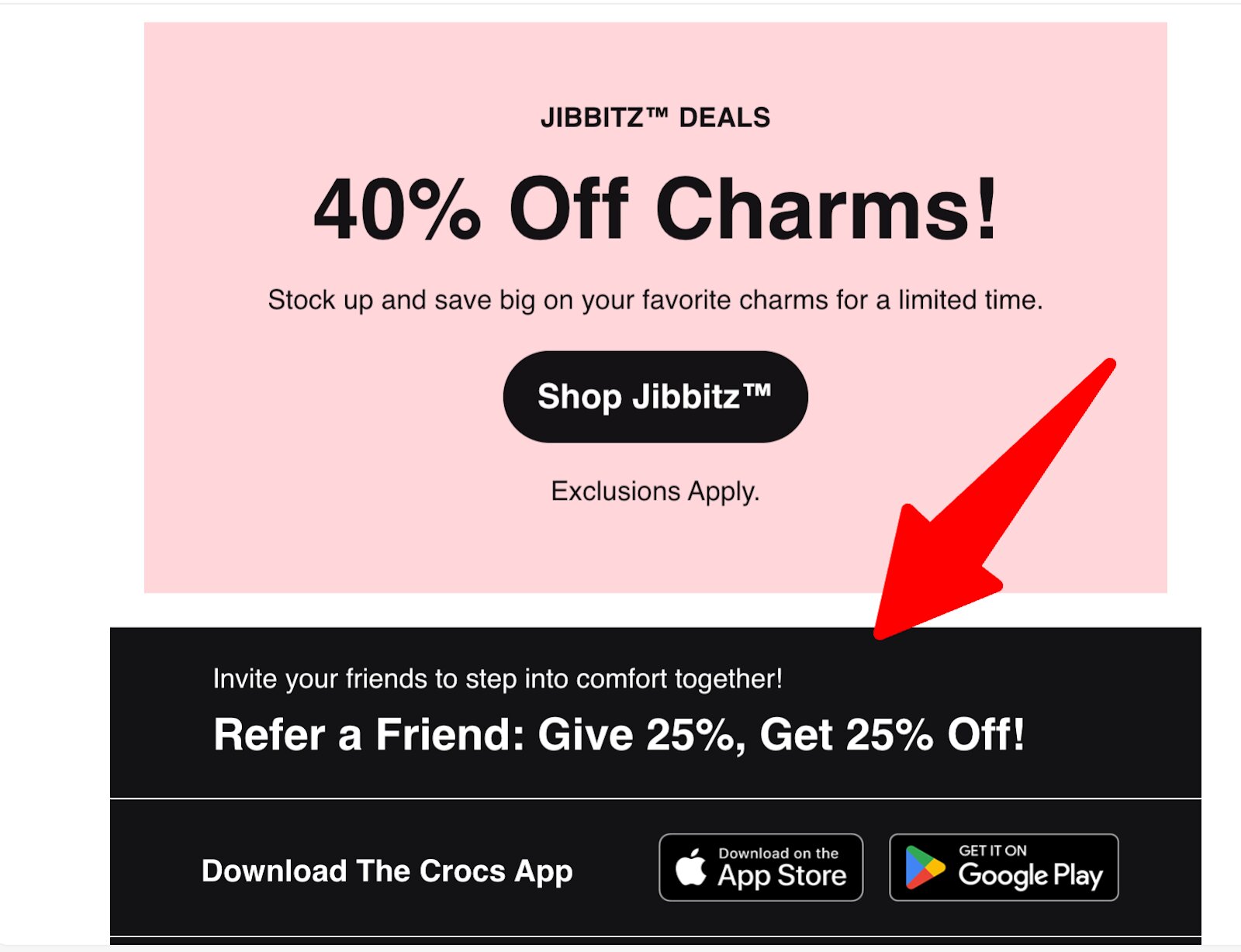
- Optimize your timing: Share your referral email immediately after a great purchase experience. This could be after sending a delivery confirmation or product review email. Customer satisfaction is usually highest during these moments.
Here’s a great referral email example from Crocs:
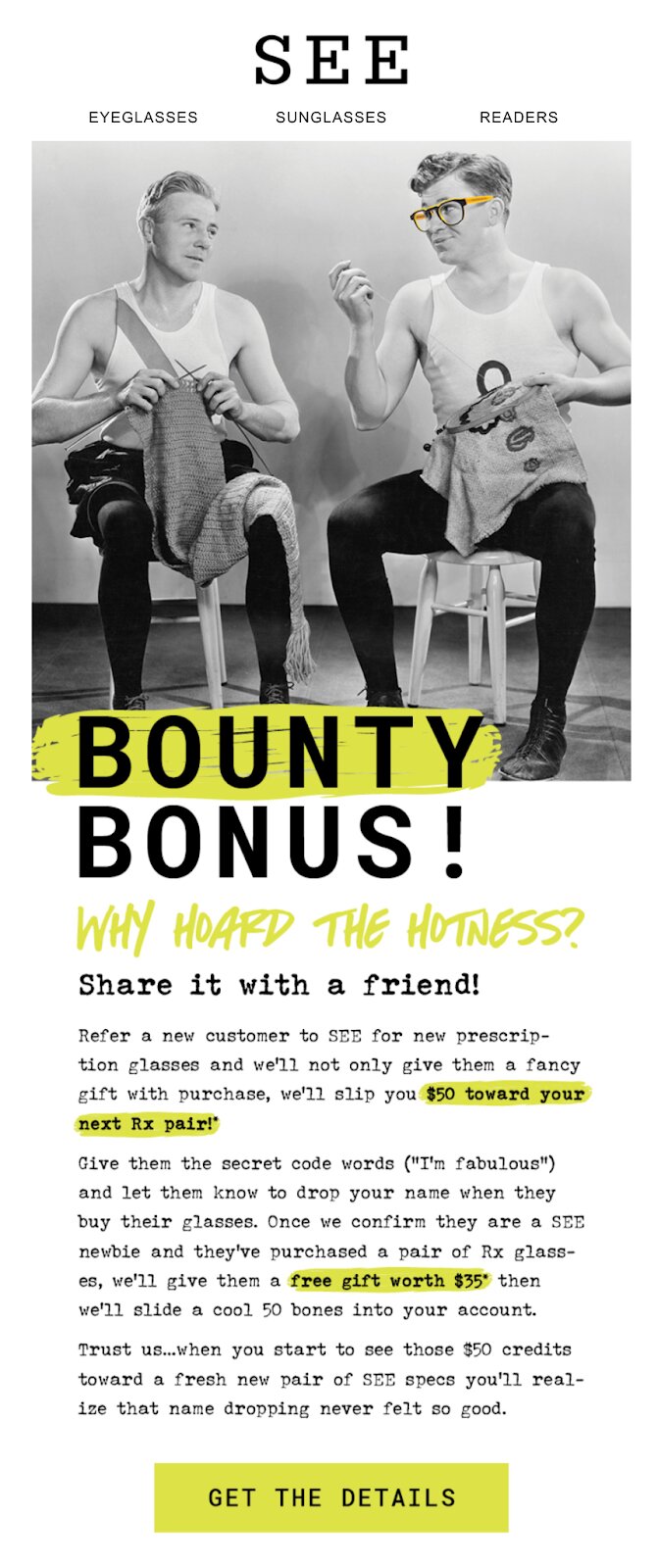
- Avoid generic offers: Referral programs fail because they use vague offers, lack urgency messaging, and remain hidden in loyalty tabs. To make yours work, offer a relevant reward at the right time, with a deadline and a single, clear CTA.
This email from SEE Eyewear prominently highlights the offer and CTA:
- Choose the right tools: Use referral apps like ReferralCandy or Friendbuy to generate links and track referrals and rewards. Then, send the referral message through email or SMS immediately after the Shopify delivery confirmation.
7. Use product quizzes to segment and convert from the first interaction
Quizzes flip the usual ecommerce customer acquisition process. Instead of asking for an email immediately, you first learn what the customer needs.
This ecommerce customer acquisition strategy helps you generate qualified leads who already show buying intent. You can then segment these subscribers based on their specific interests and preferences. This lets you send relevant welcome emails from the start.
- Why conversion rates are higher: A visitor who enters their email just to get 10% off has low purchase intent. But a customer who completes a quiz and submits their email to see results is already more invested and closer to making a purchase.
- What good quiz funnels look like: Your quiz should be short and focused to maximize conversions and improve ecommerce customer acquisition. Here’s what to include:
- Three to five simple, concise questions that collect personalization data
- Email capture screen with a clear promise, such as “Get your personalized skincare routine.”
- A results page with specific product recommendations
- The data advantage: Quiz responses give you zero-party data. This is information customers choose to share with you willingly, so it’s accurate and remains useful over time. You can use it to personalize your welcome flow from the first email.
For example, a customer “shopping for a gift” should get a different email than someone “shopping for themselves.” You don’t need to wait months to identify preferences or segment your list.
Expert tip: With tools like Omnisend, quiz responses can automatically sync to contact profiles. You can then trigger different welcome emails based on those answers. This helps you send more relevant messages that increase conversions.
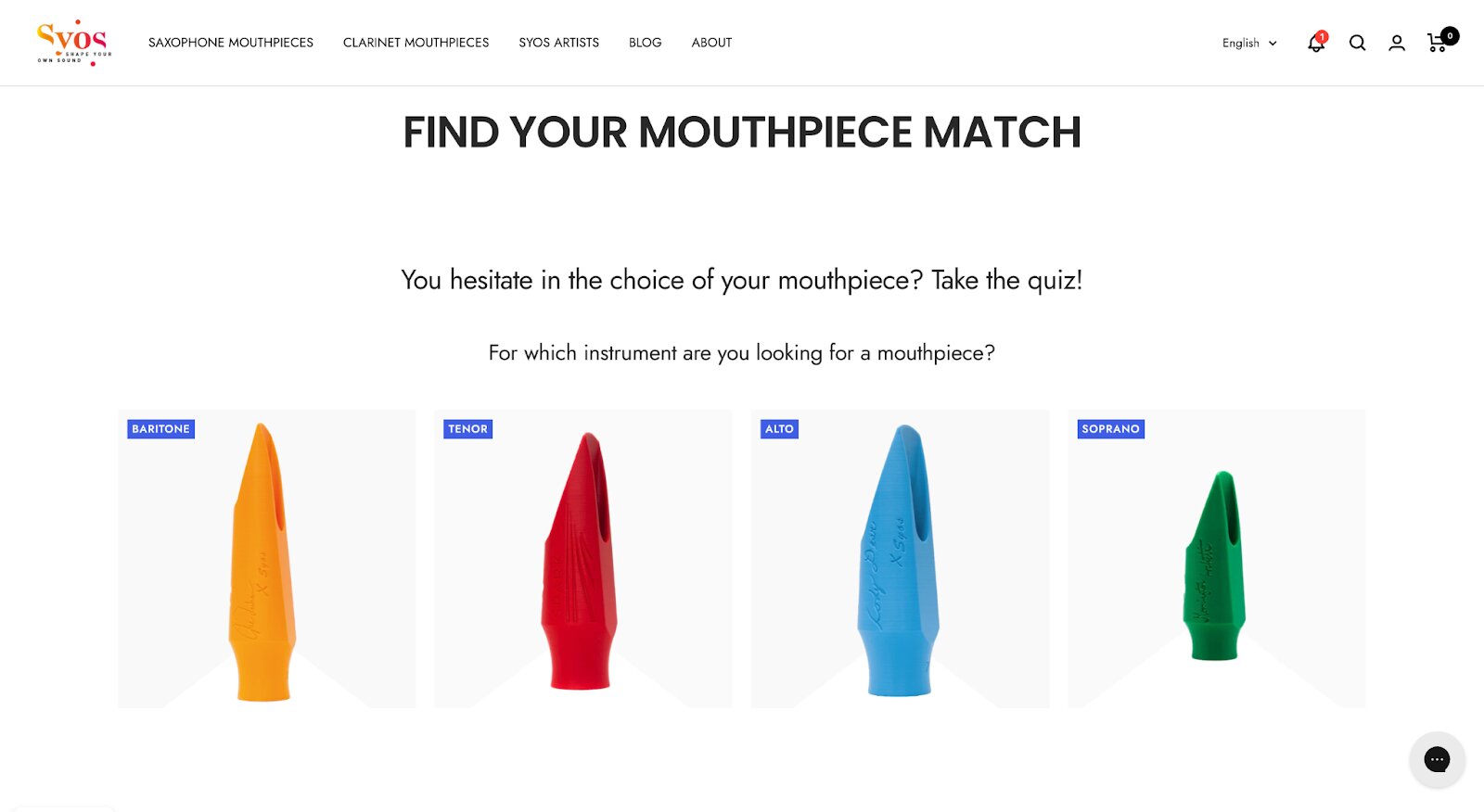
This quiz from Syos appears only on product pages, making it highly relevant to shoppers:
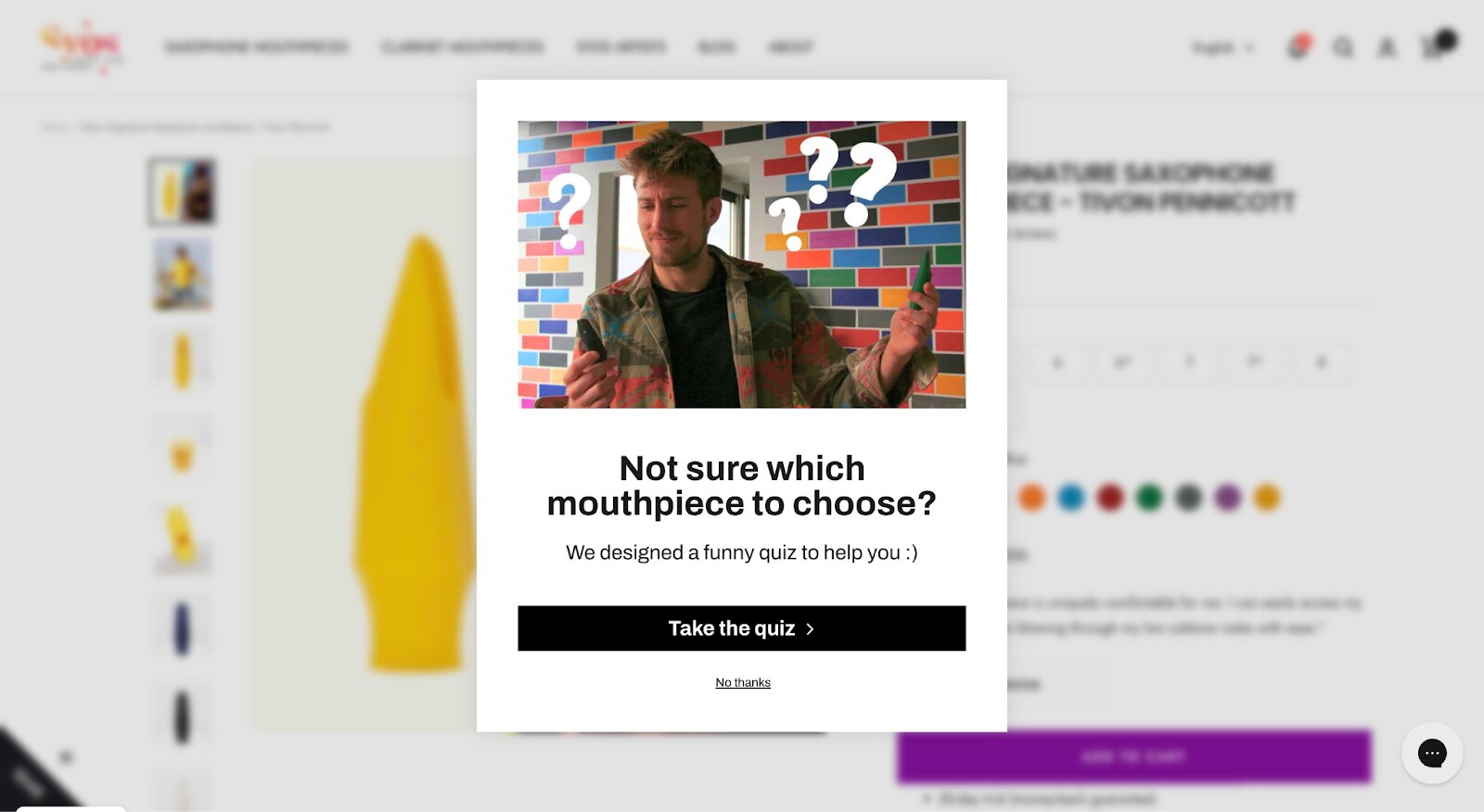
Once visitors click, they answer preference questions to help them find the right mouthpiece:
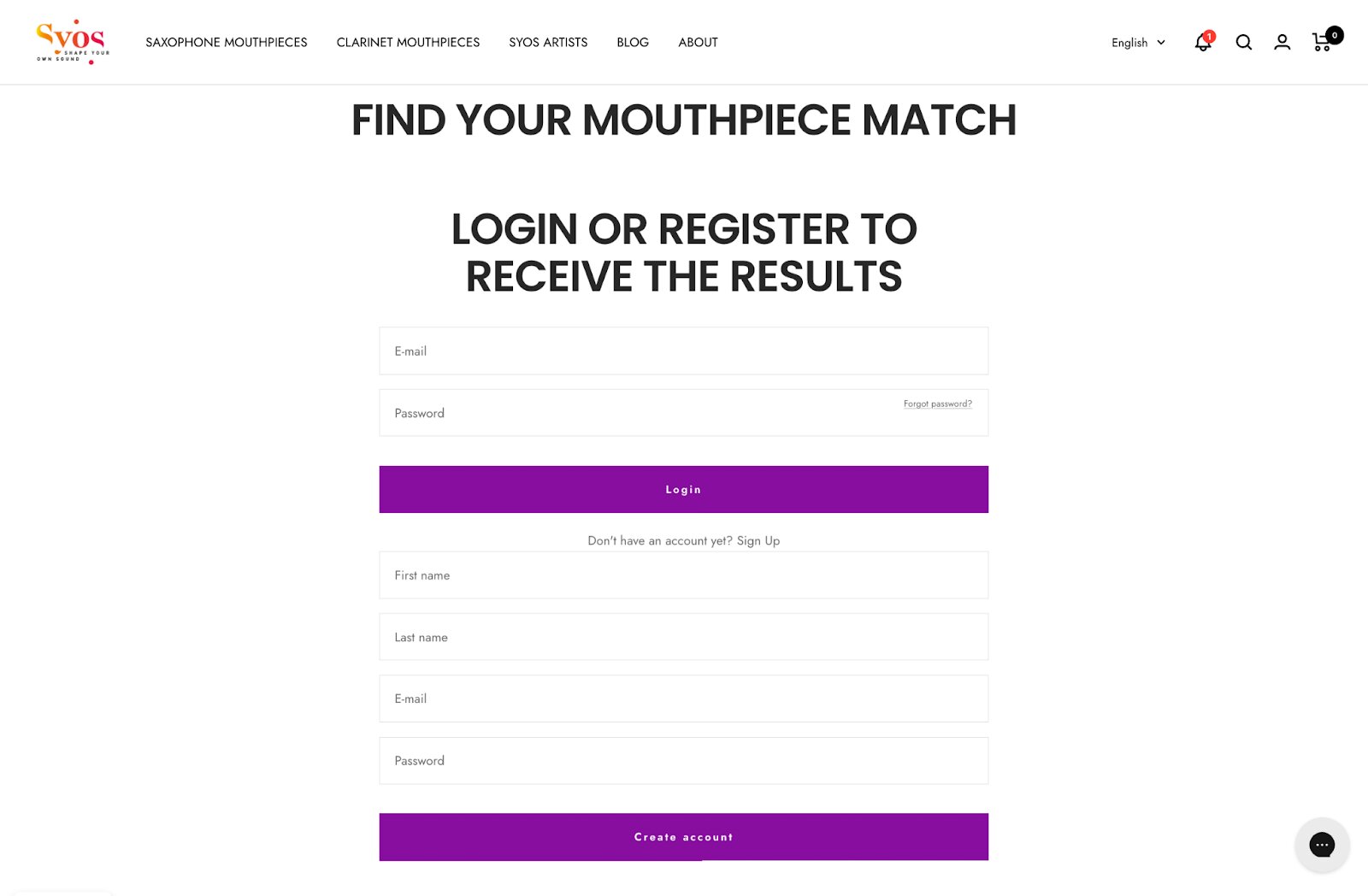
Finally, the quiz asks for shoppers’ emails to deliver results:
FAQs
What are the most effective ecommerce customer acquisition strategies?
The best ecommerce customer acquisition strategies combine multiple owned and earned channels. Some of the most effective tactics include:
— Capturing emails and SMS with popups and quizzes
— Sending high-converting welcome email and SMS flows
— Running paid social campaigns on Meta and TikTok
— Setting up a TikTok shop for direct purchases
— Investing in SEO and AI search
— Building referral programs
What is a good customer acquisition cost for ecommerce?
The ideal ecommerce customer acquisition cost depends on your product category, profit margins, and average order value (AOV). Generally, your customer lifetime value (LTV) should be at least 3 times your ecommerce CAC.
What is the cheapest way to acquire ecommerce customers?
The lowest-cost ecommerce customer acquisition channels are referrals and organic search. Referrals rely on incentives, not ad spend. On the other hand, SEO brings steady traffic with low ongoing content and maintenance costs.
Summary
Successful ecommerce customer acquisition in 2026 no longer relies on paid advertising alone. To convert more customers and grow your business profitably, you need to combine owned, paid, and earned channels.
Focus on turning visitors into subscribers, then use welcome emails and SMS to convert them into buyers. Support this with paid social, search engine visibility, referral programs, and product quizzes.
The key is to collect data early and follow up with relevant messages. Start small, test which ecommerce customer acquisition strategies work, and invest more in those that deliver the best results.
Launch your first welcome flow with Omnisend and watch your ecommerce acquisition costs drop
Quick sign up | No credit card required

TABLE OF CONTENTS
TABLE OF CONTENTS


Subscribe and don’t miss any updates!
No fluff, no spam, no corporate filler. Just a friendly letter, twice a month.