Omnisend AI


 OFFER
OFFER










Chances are, your ecommerce store already has a mailing list. On the surface, it’s simply a collection of names and email addresses used to reach multiple recipients at once. Yet, growing your mailing list quickly takes a bit more than getting consent and sending bulk emails.
To get the most out of your mailing lists, it’ll help to understand the different types of mailing lists, choose the one that’s appropriate for your project, and leverage the most effective email marketing platforms. We’ll cover all you need to know about creating and growing a mailing list for your site and ecommerce stores specifically.
Quick sign up | No credit card required
What is a mailing list?
Dictionaries define a mailing list as a collection of contact information used to send messages to multiple recipients simultaneously. Historically, mailing lists (or postal lists) predate the invention of email by at least a few centuries. Today, however, we almost exclusively associate mailing lists with email addresses.
That’s largely due to email gaining mainstream adoption in the 90s and the first mass email marketing campaigns proving to be a huge success. As a digital permission-based database of subscribers, mailing lists remain a crucial part of targeted communications for most companies.
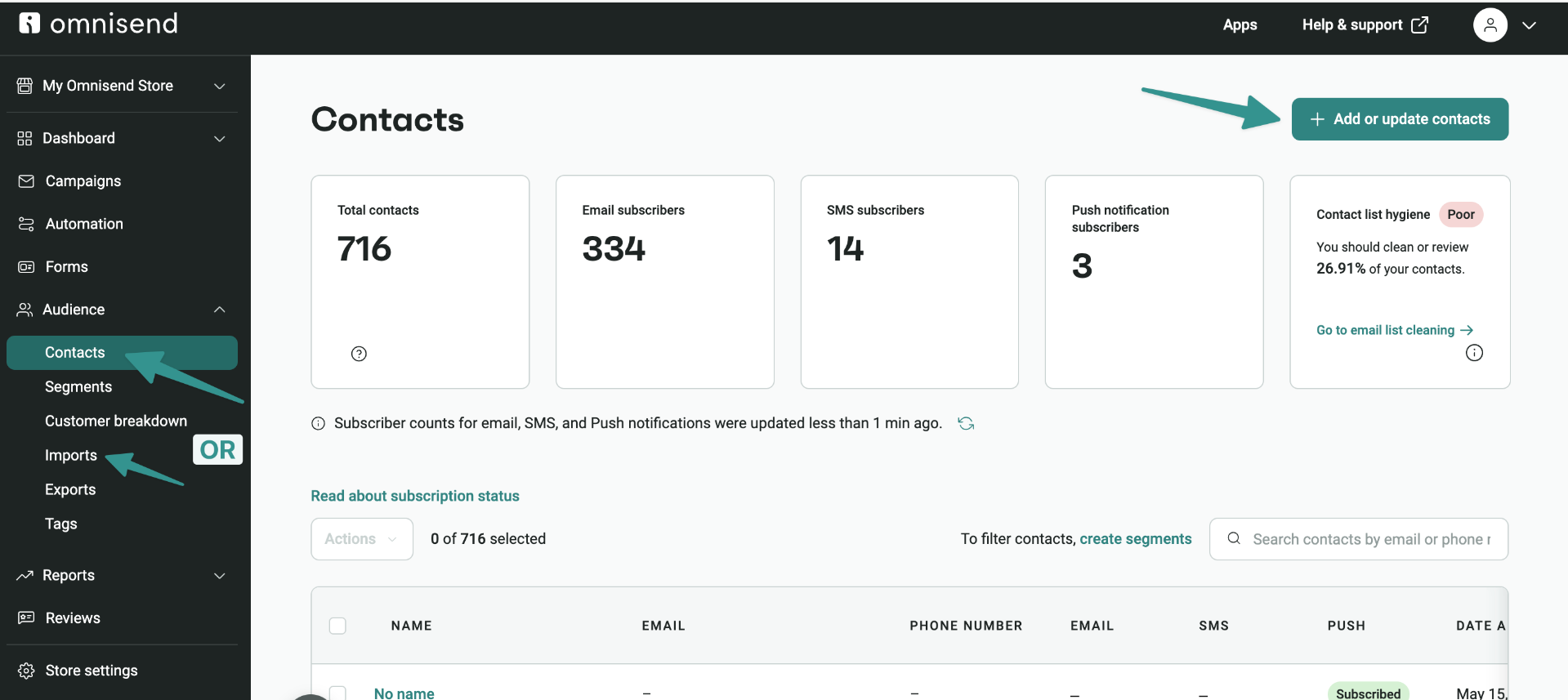
A mailing list is much more than an announcement tool used to reach your entire audience. It can take the form of carefully segmented promotions, interactive newsletters, or even boards for community discussion. Email marketing tools like Omnisend enable such uses through powerful mailing list features.
How does a mailing list work?
The technical details of email distribution are managed by your marketing platform or an email service provider (ESP), leaving you with a straightforward workflow. You compose a message, send it through the platform, and it gets delivered to every subscriber or a selected segment.
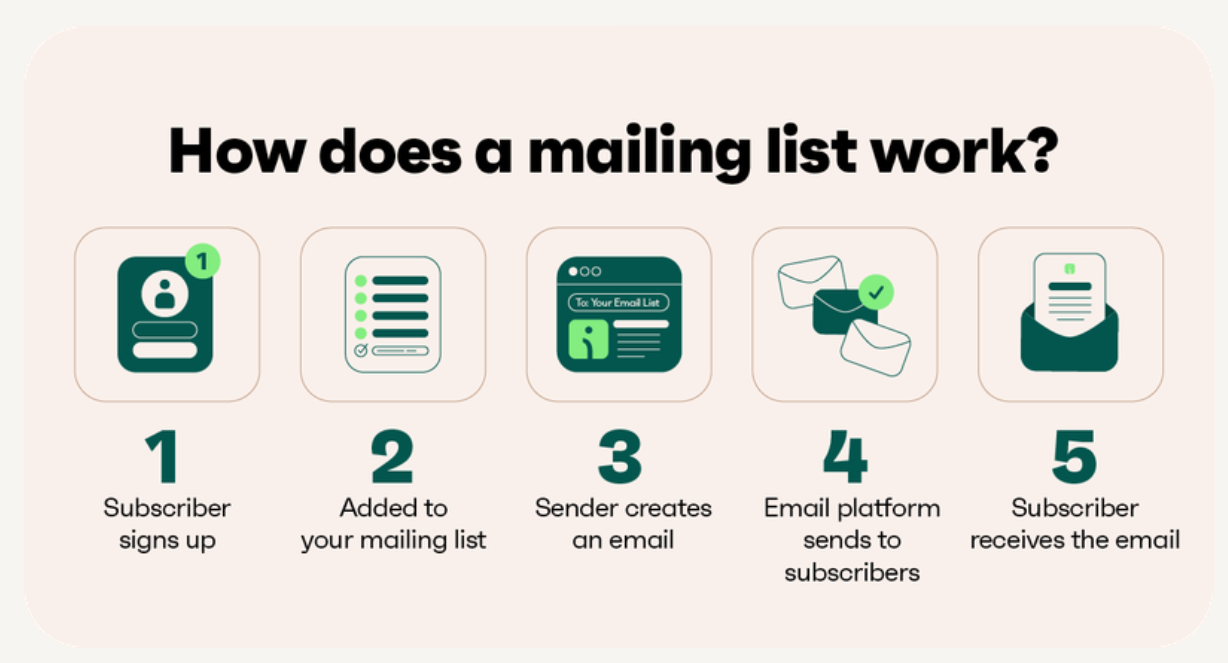
All the complex steps of managing the mailing list happen under the hood. Tracking who received your message, flagging bounced addresses, removing subscribers who opted out, and many other tasks are automated. Whether you have 100 or 100,000 subscribers on your mailing list, the process remains the same.
As such, it’s easy to forget that the first few steps must be voluntary. A subscriber must sign up and agree to be added to your mailing list. Consent is what separates a legitimate mailing list from spam.
Mailing list vs email list: Is there a difference?
Both terms are used almost interchangeably in marketing content and, for practical purposes, mean the same thing. Technically, the difference is that “mailing list” has roots in physical postal address usage, whereas “email list” is the modern digital equivalent.
Marketing professionals have adopted the term “mailing list” and use it equally often to note a permission-based group of subscribers reached via email. You’ll encounter both terms when learning about email marketing tactics.
| Key difference | |
|---|---|
| Mailing list | Carries postal address usage roots, now with a fully digital meaning |
| Email list | Digital email address meaning, no postal history associations |
Somewhat confusingly, certain platforms introduce their own terminology, but whether it’s “audience,” “contacts,” or “subscribers,” the concept of a mailing list remains the same. For practical ecommerce purposes, we can treat these terms as synonymous.
Types of mailing lists
There can be many types of mailing lists depending on who’s categorizing and for what purpose or audience. Rather than exhausting every classification, it’s important to understand at least a few of the main types.
Your choice will affect how you segment contacts with Omnisend or other tools.
Broadcast (one-way) mailing lists
The most common mailing list type is the broadcast one-way communication, where you send an email to subscribers without expecting a reply.
Newsletters, promotional campaigns, product announcements, and other similar campaigns use the broadcast model. Broadcasts fit most ecommerce store communication campaigns as they fully control the message, timing, and audience.
Discussion (two-way) mailing lists
Every reply in a discussion mailing list is sent to the whole group, not just the sender. These are more common in academic, professional, or hobby communities. Discussion mailing lists can still be handy for ecommerce brands building customer communities.
However, consider using a moderated discussion mailing list where each reply must be approved in advance.
Ecommerce mailing lists (segmented by behavior)
Segmented ecommerce lists are subsets of your general mailing list grouped by subscriber behavior, status, or other factors. Usually, segments are created with some specific ecommerce goal in mind. It’s a common tactic for engaging new subscribers, catering to VIP customers, fighting abandoned carts, finding win-back candidates, or leveraging waitlists and promotion signups.
Each customer gets a tailored message based on their relationship with your store. They can be effective vessels of revenue growth, but it’s important to approach segmentation and message timing strategically.
What is a mailing list in business — and in ecommerce specifically?
For many businesses, mailing lists are the backbone of direct communication. A well-targeted email can nurture leads, make important announcements, advertise promotions, and run other campaigns. It’s crucial for retention, as it’s a direct line to people who already expressed interest in what you’re selling.
Ecommerce platforms often use mailing lists as part of their infrastructure, onboarding flow, and as upselling tools.
- Welcome emails introduce your brand to new subscribers and drive first purchases.
- Post-purchase follow-ups confirm orders, provide instructions, and gather feedback.
- Seasonal promotions, like Black Friday and holiday sales, re-engage customers.
- VIP campaigns reward high-value customers and encourage repeat purchases.
- Behavior-triggered emails help fight issues like abandoned carts.
But the value of mailing lists exceeds their function. It’s one of the only channels that ecommerce truly owns. Your Shopify subscribers or WooCommerce customer lists belong to you. Unlike social media followers or ad campaigns, a mailing list is an asset.
Making use of mailing lists with tools like Omnisend almost directly translates into revenue. Mailing lists constitute the bulk of ROI for online marketing spend, with reports indicating up to $79 back for every $1 spent. Coupled with other marketing tools, the ROI of your marketing grows even more.
“With powerful tools like automation, segmentation, reporting, push notifications, and product reviews, Omnisend merchants generate $79 for every $1 spent.”
— Omnisend’s 2026 Ecommerce Marketing Report
How to create a mailing list for your ecommerce store
The best practices for mailing list creation start with the right setup. It’s not just about collecting emails; it also involves building incentives for users to give their consent. Ecommerce platforms can leverage various effective tactics on a step-by-step basis.
1. Choose an email marketing platform
An effective email marketing platform is crucial for maximizing ROI from your email campaigns. It’s a specialized software that automates email delivery and connects directly to your store data.
Omnisend integrates with Shopify, WooCommerce, Wix, and BigCommerce out of the box, leveraging the needed data effortlessly. Our free plan includes full access to all ecommerce-focused features.
2. Set up your signup form
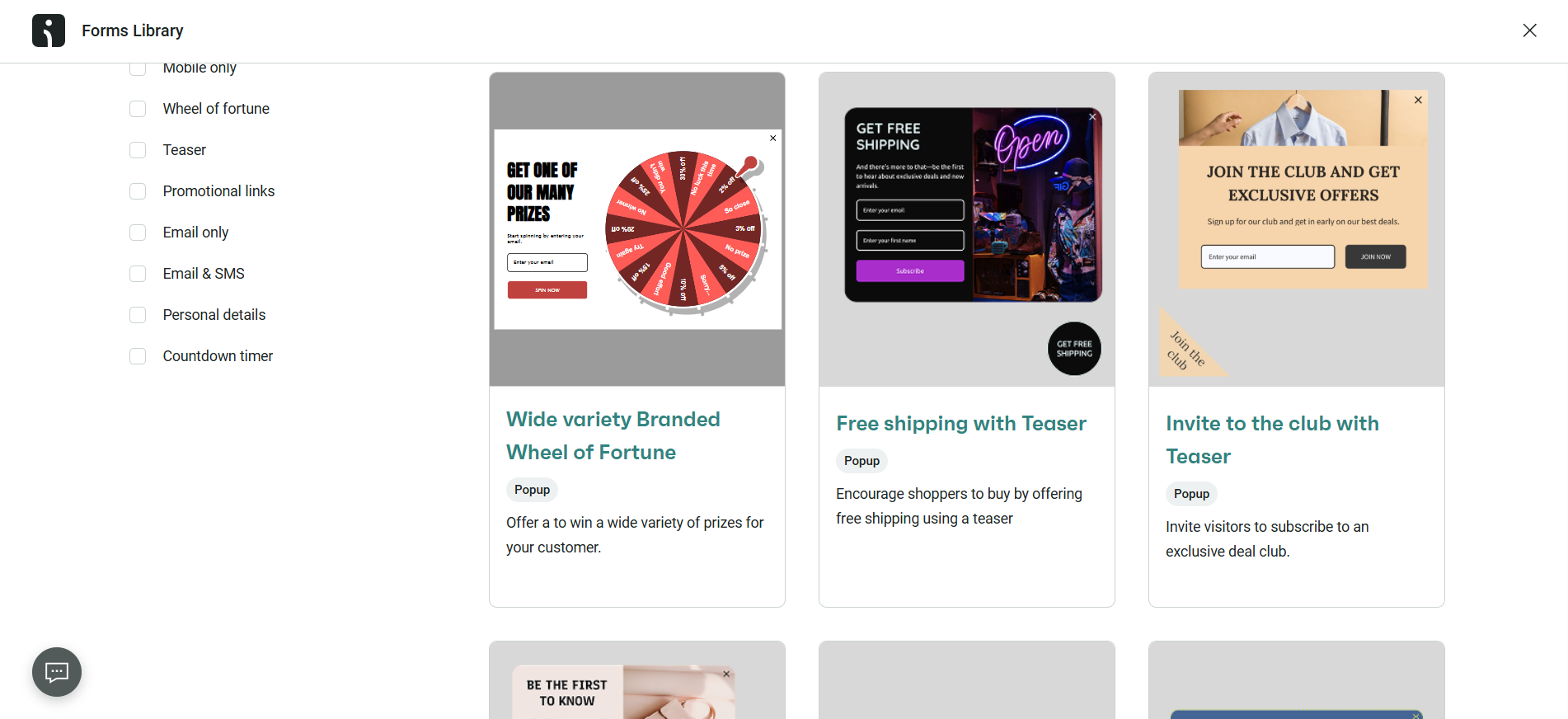
The signup form is where your mailing list starts. Popup and embedded forms are best for visibility, but certain channels, such as social media campaigns, might require dedicated landing pages. Ecommerce platforms frequently use exit-intent popups and checkout opt-ins to capture abandoned carts and high-intent buyers.
Omnisend can save you the trouble of building forms yourself with various pre-built, mobile-ready templates optimized for conversions and a professional look. In addition, you can use Omnisend AI to describe a form you want, and it’ll create it for you. You just review, edit if needed, and set it live.
3. Define your list segments
Don’t wait until your mailing list grows to start audience segmentation. By defining your segments early, you can ensure your messages are relevant to all target audiences. The segments of new subscribers, existing customers, and VIP customers are always included.
The basis of segmentation for ecommerce brands is usually customer behavior and lifecycle stage, which tools like Omnisend can leverage from your store data and update as you grow. With Omnisend AI, you can describe the segment you want in plain language, and it builds the rules for you to review. Or you can use prebuilt Customer Breakdown groups like Champions or customers about to lapse.
4. Import or migrate existing contacts
Most likely, your store already has customer data from previous orders, promotions, or loyalty programs. You can import these contacts to kickstart your mailing list. However, consent is non-negotiable to stay compliant with regulations like GDPR and CAN-SPAM.
Do not import contacts that haven’t explicitly opted in, and avoid third-party lists you don’t trust.
5. Connect to your ecommerce platform
Connecting the mailing list to your store data is the final and most critical step. Good integration is what separates a revenue engine from a basic communication tool.
Omnisend integrates with Shopify, WooCommerce, or other platforms automatically and syncs customer data points like purchase history and browsing behavior. Everything is available for automation from day one without lengthy data cleaning tasks.
“Omnisend worked with Organic Aromas to complete a four-week experiment in building their contact list. With only one hour invested (and zero financial input), this online store captured 661 new leads and ended up with 40 extra orders.”
Learn how Organic Aromas increased signups to their mailing list with Omnisend
Conclusion
Mailing lists can be much more than simple databases of email addresses used to send campaigns. Building one requires careful incentivizing and segmentation, but many tasks can be automated. With the right tools, mailing lists can drive revenue and solve various crucial ecommerce issues, such as abandoned carts.
Even more importantly, your mailing list is an asset no algorithm can take away. You’re missing out on returns if your business, especially an ecommerce one, doesn’t leverage the benefits of mailing lists.
FAQ
What is the difference between an email list and a mailing list?
These terms are used interchangeably in most practical contexts to mean a permission-based group of subscribers to whom you send campaigns. Strictly speaking, the term “mailing list” has roots in physical mail delivery, and “email list” is fully digital.
Do mailing lists still exist?
Yes, mailing lists are more active than ever, and one of the few marketing assets you actually own. Automated newsletters, promotional campaigns, ecommerce announcements, and other email marketing channels are bringing some of the best ROI for online businesses.
What is a mailing list server?
A mailing list server is the software that manages subscriptions and distributes messages to your subscribers automatically. All the technical details of email delivery are run by the mailing list server, which you control through your email marketing platform.
What is the best way to create a mailing list?
Start by choosing a powerful email marketing platform, such as Omnisend, that will suit your needs. Then create a signup form with an incentive, define segments, manage contacts and their consent while keeping everything connected to your ecommerce platform.
What is the best way to organize a mailing list?
It’s best to implement segmentation from the start when you organize a mailing list. Utilize tags and filters in your email marketing platform to define subscriber groups. Then, keep segments updated regularly to keep your mailing list well-organized.