Omnisend AI

 OFFER
OFFER









The best ecommerce personalization software helps you show each shopper more relevant products, offers, and messages across the channels you already use, from email and SMS to on-site recommendations and search.
But not all tools personalize the same elements, and only some will match your customer journey. In this article, we explore 10 top ecommerce personalization tools and review their channel coverage, AI features, ease of use, and pricing.
Quick sign up | No credit card required
Best ecommerce personalization software: Quick overview
- Best for email and SMS personalization > Omnisend
- Best for on-site product recommendations > Nosto
- Best for enterprise personalization > Bloomreach
- Best for AI-driven personalization > Dynamic Yield
- Best for Shopify stores > LimeSpot
- Best for behavioral segmentation > Insider One
10 best ecommerce personalization software tools
The tools below will help you create personalized customer experiences. Each entry covers what it does, who it’s for, and what it costs.
1. Omnisend
Best for
Email and SMS personalization, AI marketing automation. Building customer profiles and reaching them at high-intent moments.
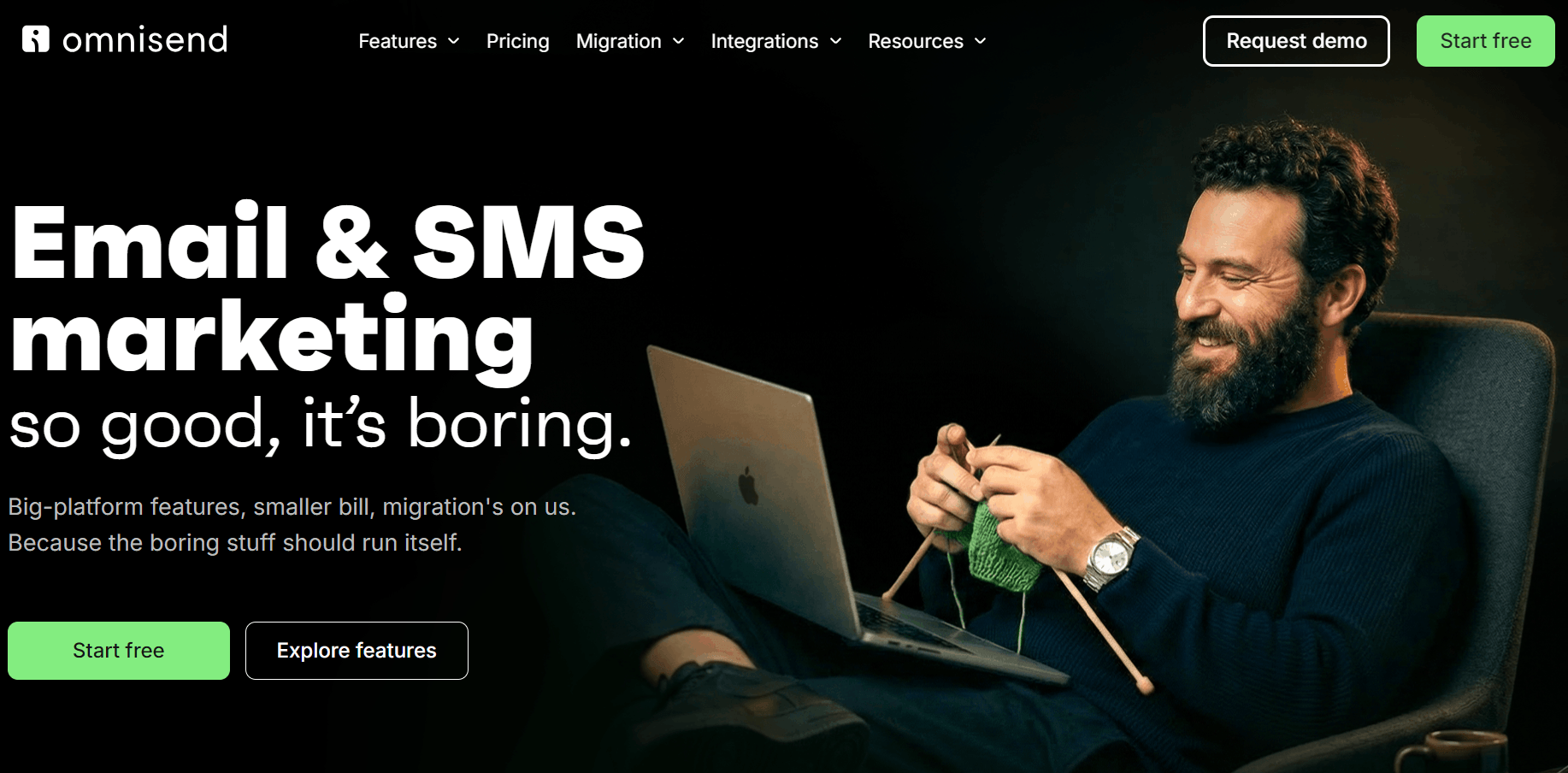
Omnisend is an omnichannel marketing tool that integrates with your ecommerce store to deliver personalized email, SMS, and web push notifications across your customer lifecycle.
It allows you to create standalone campaigns and automations that combine all channels. In 2026, automated emails were only 2% of sends but generated 30% of revenue, a feat you can replicate with pre-built flows, segments, email templates, and AI assistance.
Key features
- Personalization for all channels: SMS, email, and web push notifications support personalization data.
- Liquid syntax: Use double square brackets, such as [[contact.first_name]], anywhere in content to add personalization. Omnisend also provides a dropdown menu for tags.
- Forms: Build forms and popups that collect names, phone numbers, emails, and more across single- and multi-step layouts. All data syncs into contact profiles, which you can then use for personalization across channels.
- Advanced segmentation: pre-built segments let you group customers quickly. You can also build them from scratch and edit any templates. Filters allow you to segment people based on profile data, behavior, and purchase history.
- A/B testing: For your email campaigns, signup forms, and flows. Create two versions to compare and see which performs best.
- AI features: All plans include the AI segment builder, AI subject line, and content assistant. Standard plans add Forms AI, and Pro plans have personalized product recommendation AI.
Pricing
- Free: The starting point for small stores with up to 250 contacts. Provides 500 emails/month and 500 web push notifications.
- Standard: $16/month, increases your email send limit to 6,000 emails for up to 500 contacts, and provides unlimited web push notifications.
- Pro: The plan you need to send SMS. $59/month gets you unlimited monthly emails and a 2,500-contact quota. SMS credits are priced in bundles from $10/month, with per-credit prices from $0.007–$0.009.
Additional reading:
Ecommerce personalization: A beginner’s guide [10+ examples]
2. Dynamic Yield
Best for
Data-rich brands and enterprise ecommerce. Creating unique personalization experiences across on-site and apps.
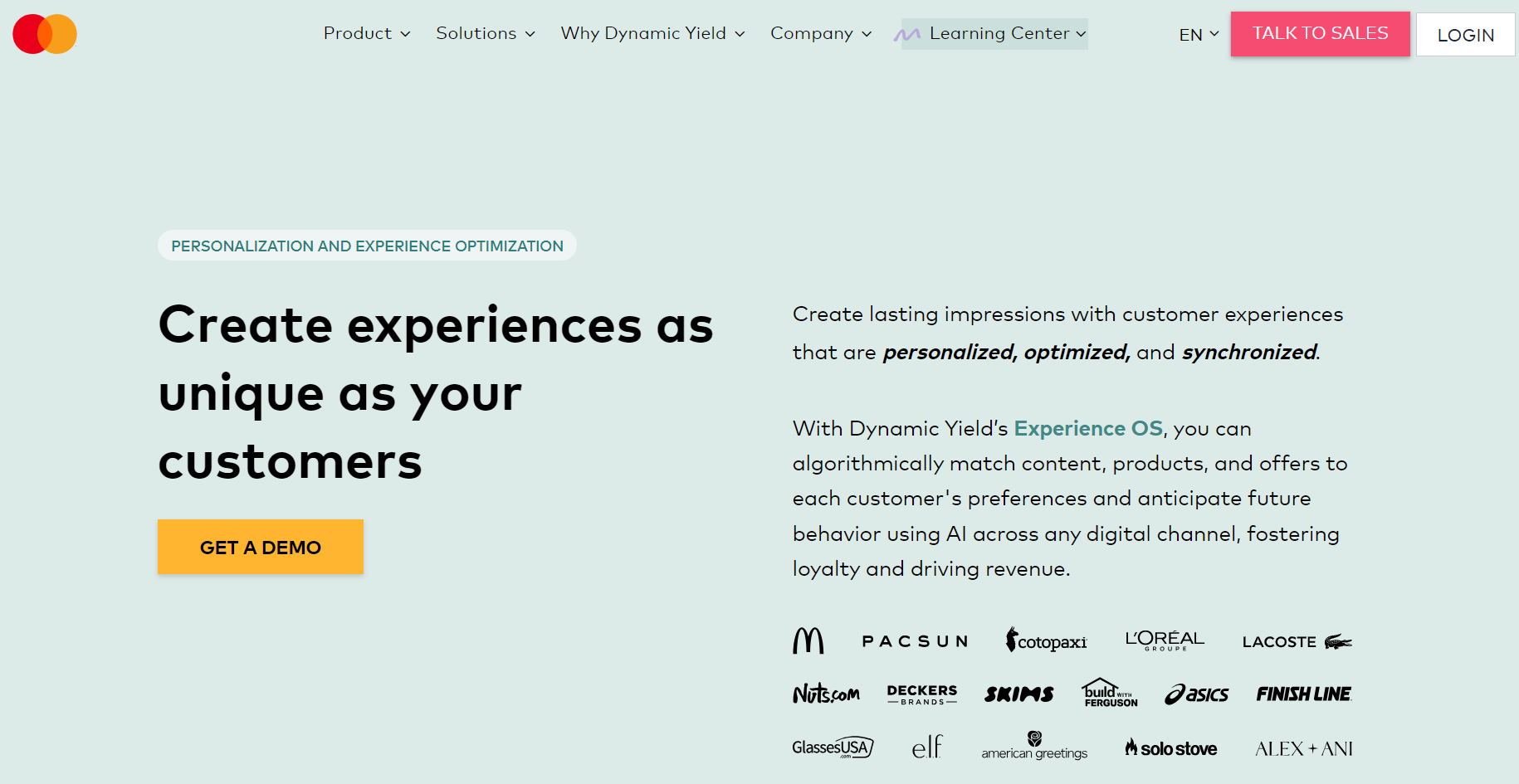
Dynamic Yield, a Mastercard company, is an enterprise-grade solution that personalizes your on-site experience, including the layout, product order page, and content, in real time.
Its primary product is Experience OS with the AdaptML engine, which changes what visitors see on-site based on their activity and behavior. Another is the Reconnect app, which triggers email, SMS, web, and app push notifications.
Key features
- Product recommendations. The ecommerce personalization platform tracks customer behavior and predicts their next product based on what others do, surfacing it to increase conversions across on-site and marketing channels.
- Segmentation. The Audience Hub groups customers from any data source using their behavior, affinity, and predicted intent.
- A/B and server-side testing. Test layouts, content, and recommendations. Changes apply before the page loads for instantaneous viewing.
- Channel prioritization. Customers who opt in to multiple channels receive messages on the channel most likely to engage them, determined by Reconnect via pre-built re-engagement strategies.
- Integrations: Provides a native Shopify app, an open API, and integrations with Klaviyo, Salesforce Commerce Cloud, Adobe Analytics, and more.
- AI features: AdaptML is a decision engine that predicts customer interests. There’s also Shopping Muse, a generative-AI conversational shopping assistant, AI Insights, and generative AI for creative.
Pricing
- Custom: it requires a sales call. Online estimates suggest a starting price of around $35,000/year, with some quotes over $100,000.
3. Nosto
Best for
Mid-market and enterprise on-site personalization. Creating custom experiences in search, recommendations, and product displays.
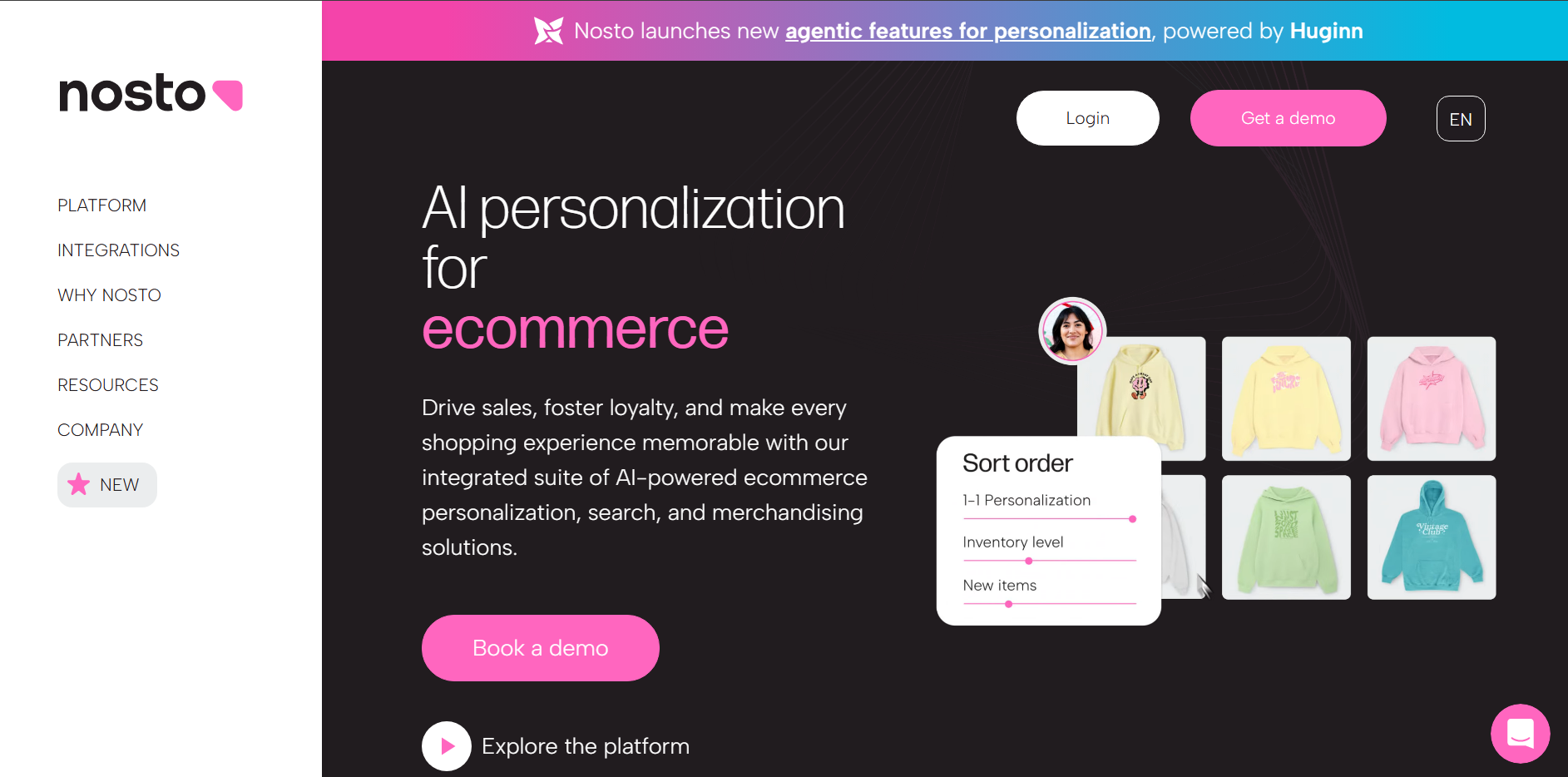
Nosto is among the best ecommerce personalization tools for on-site experiences, tracking how each shopper behaves on your site, then using that to change what they see.
It creates a profile from your customers’ clicks, searches, cart activity, and purchases. Then it recommends products, orders, prioritizes search results, and arranges category pages around what each person is most likely to buy.
Key features
- Personalized search: Results are shown based on what your customers previously browsed and what others purchase, rather than items with similar names and category listings.
- Category merchandising: Category pages automatically sort themselves per shopper as stock changes based on the rules you set.
- Product recommendations engine: It ranks your catalog by how likely customers are to purchase an item, and also by how much revenue each product is likely to generate.
- Visual AI: Nosto reads product images in addition to their tags so that it can recommend a visually similar dress to customers.
- Upsells and bundles: Can display one-click product offers after checkout on Shopify and group products into bundles automatically.
- A/B testing: Supports every element of your website, from hero banners and search results to popups.
- Shopify and Magento integration: It has native apps for these platforms, providing deep syncing of customer behavior and activity for personalized products.
Pricing
- Custom only. No public pricing or free plan. Its pricing model includes a base platform fee, plus a fixed fee based on GMV turnover and traffic.
4. Insider One
Best for
Mid-market and large brands that want to consolidate data, personalization, and messaging into one ecommerce personalization platform.
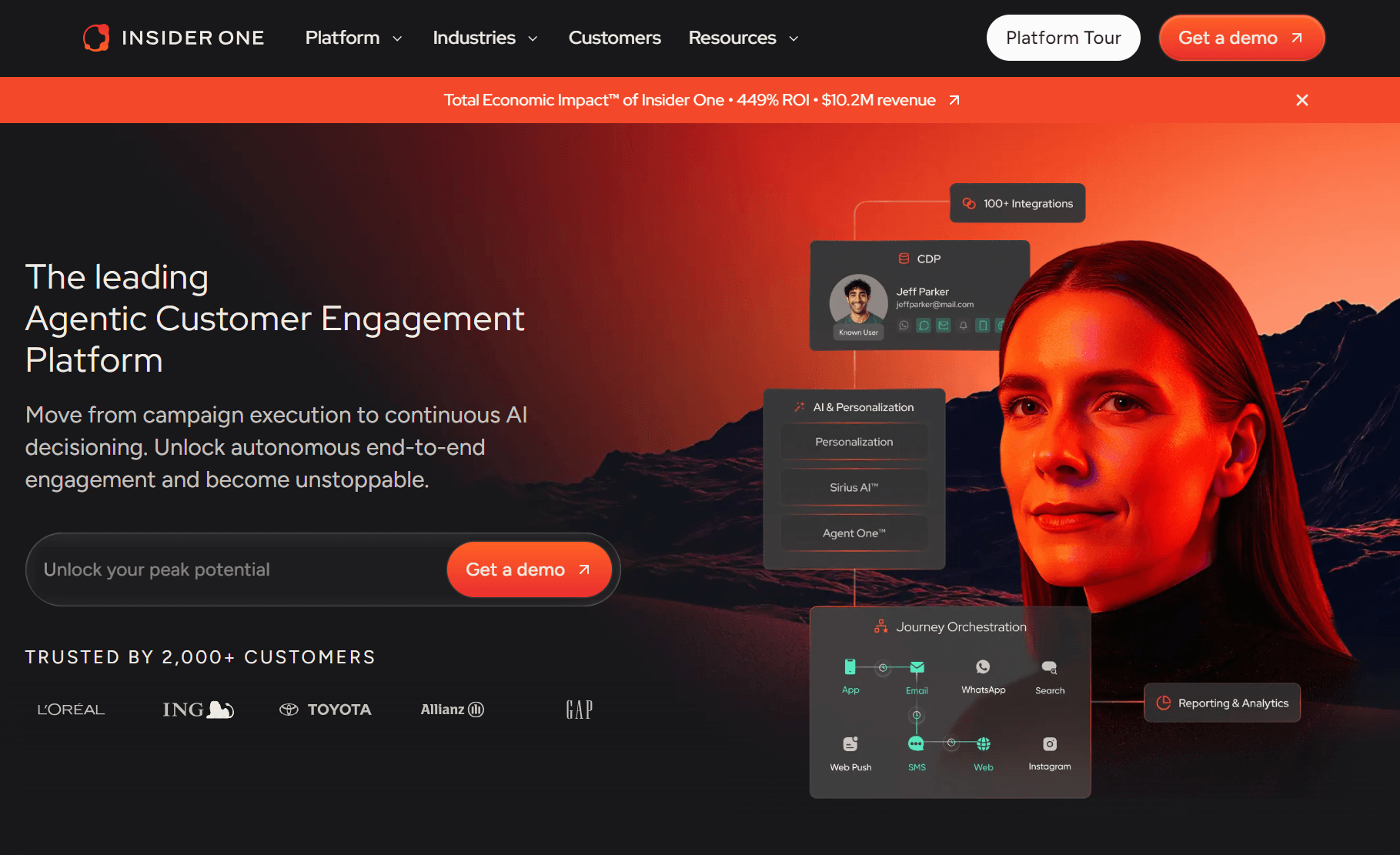
Insider One combines a customer data platform with on-site personalization and messaging across email, SMS, WhatsApp, web, and app.
It builds one profile per shopper from your connected data, then uses that to personalize what each person sees and receives across every channel.
Key features
- Customer data platform: It brings data across from your ecommerce store, CRM, and additional apps. One customer profile is the result, which you can then filter using 120+ attributes and build segments from.
- Product recommendations: Show tailored product suggestions on your site, in emails, and in-app, with the platform picking which products to surface for each shopper. There are 20+ recommendation strategies.
- Cross-channel journeys: The journeys you build can spread across email, SMS, WhatsApp, web, and apps together. You only need to build the journey once for all channels.
- AI capabilities: There’s an AI Shopping Agent that can chat to customers and steer them towards the products most likely to sell. Internal AI features include a generator for segments, journeys, and campaign copy.
- Cookieless personalization: Use signals such as location, device, and referral source in place of stored cookies that expire to personalize content.
Pricing
- Custom only. No public pricing, no free plan. You get a quote, and setup typically takes four to six weeks. It’s enterprise-focused, with the scope only making sense if you have the data, team, and budget to use it.
5. Barilliance
Best for
On-site personalization and product recommendations for small to mid-sized ecommerce stores.
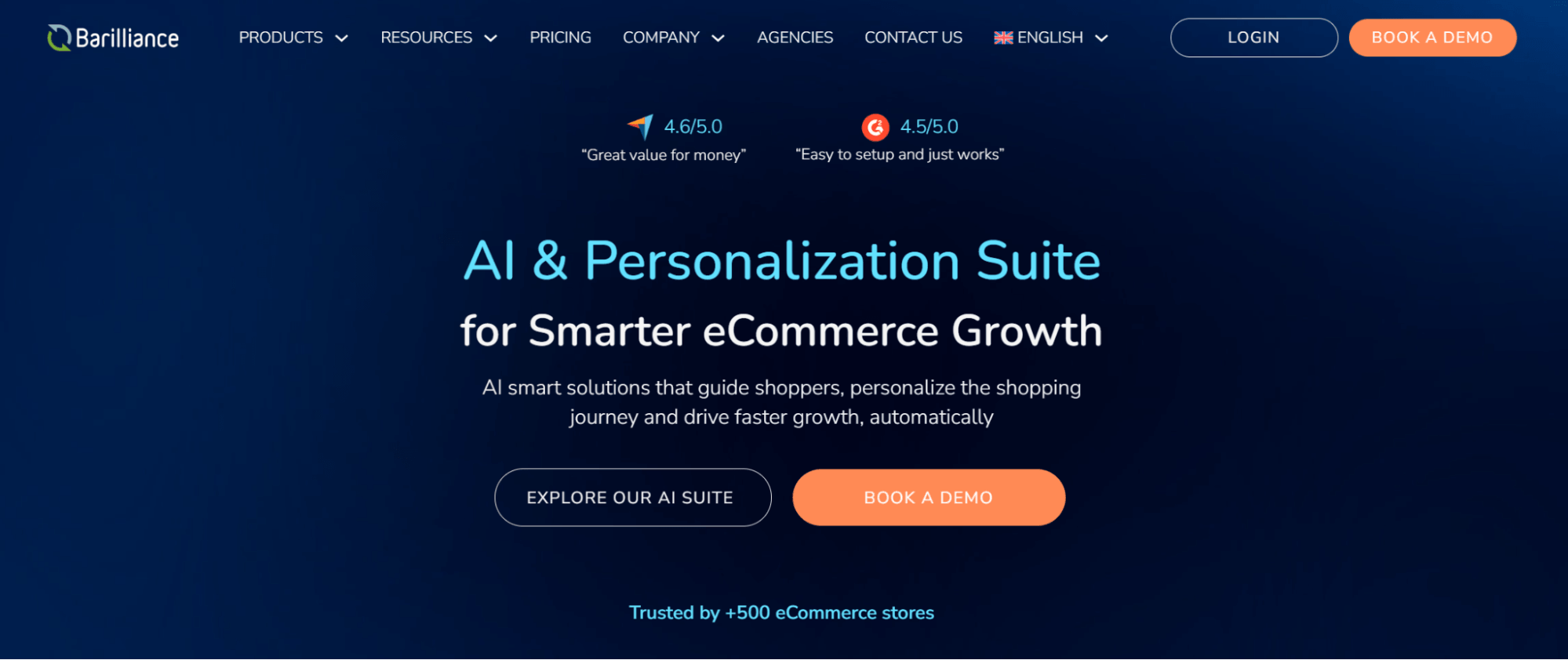
Barilliance is an on-site personalization suite built around product discovery. As an ecommerce personalization software, it stands out with tools that include an AI quiz that guides shoppers to the right product and a monitored AI assistant that answers their product questions.
It doesn’t replace your email or SMS marketing platform, but it does more than on-site work, triggering personalized cart-abandonment emails when shoppers leave without buying.
Key features
- Upsells and cross-sells: These display across your site and use browsing behavior. If you have a physical store, you can also use in-store purchase data.
- Website personalization: Barilliance can adapt banners, offers, and messages for customers based on what they’re browsing, their behavior, and the time of day.
- AI product finder: This is a quiz that asks shoppers a few questions about their visit and then points them to contextual products.
- Social proof notifications: Popups that show recent purchases and live view counters, based on accurate data rather than thresholds you set.
- Cart abandonment recovery: Trigger personalized emails when a shopper leaves items behind, pulling in the products they abandoned to bring them back.
- A/B testing: Run multivariate tests on your product recommendation widgets and additional on-site campaigns.
Pricing
- From $250/month per tool with no long-term contract. Barilliance charges separately for each tool, and pricing scales with your traffic or sales. The AI Finder and Expert are priced by tier on request.
6. Bloomreach
Best for
Large ecommerce brands that need a CDP and personalization tool in one. It pairs marketing and web personalization with AI.
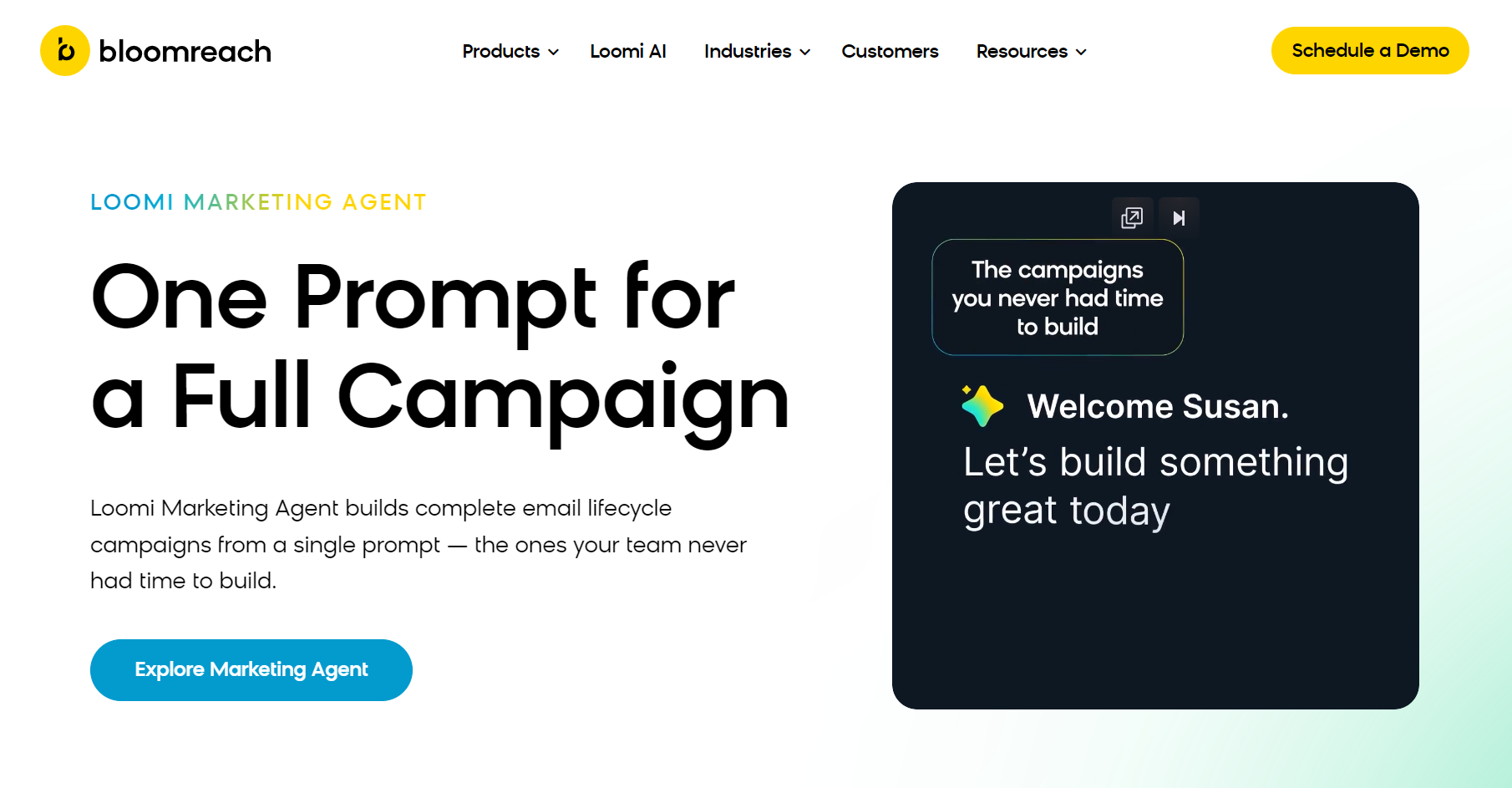
Bloomreach pairs two things most tools keep separate: on-site search and product discovery, and marketing automation across email, SMS, and more.
Both run on their AI, Loomi, which unifies your customer data and decides what to show or send each shopper. The upshot is that your search data and marketing run off the same customer profiles, so what someone searches for on-site can shape offers in emails.
Key features
- Ecommerce search: It uses AI to analyze intent rather than keywords, helping to surface the most relevant products and upsells.
- Marketing automation: Lets you send email, SMS, and WhatsApp to customers, plus it shares data from on-site search with your marketing channels.
- Email marketing capabilities: These include AI product recommendations per recipient and send-time optimization to increase engagement.
- Web personalization: Your emails and SMS can influence the banners, popups, and content visitors see after clicking through.
- Conversational shopping agent: It can be configured for any page. It’ll then answer questions and move customers closer to purchase.
- CDP capabilities: It’s a CDP + marketing automation platform, but can also operate as a standalone CDP and unify your customer data from all sources.
Pricing
- Custom pricing, with no free plan to test out. This ecommerce personalization platform is entirely quote-based and enterprise-focused, with demos and a formal onboarding rather than a self-serve signup.
7. Recombee
Best for
Ecommerce developers and large stores that need an API-first product recommendation engine.
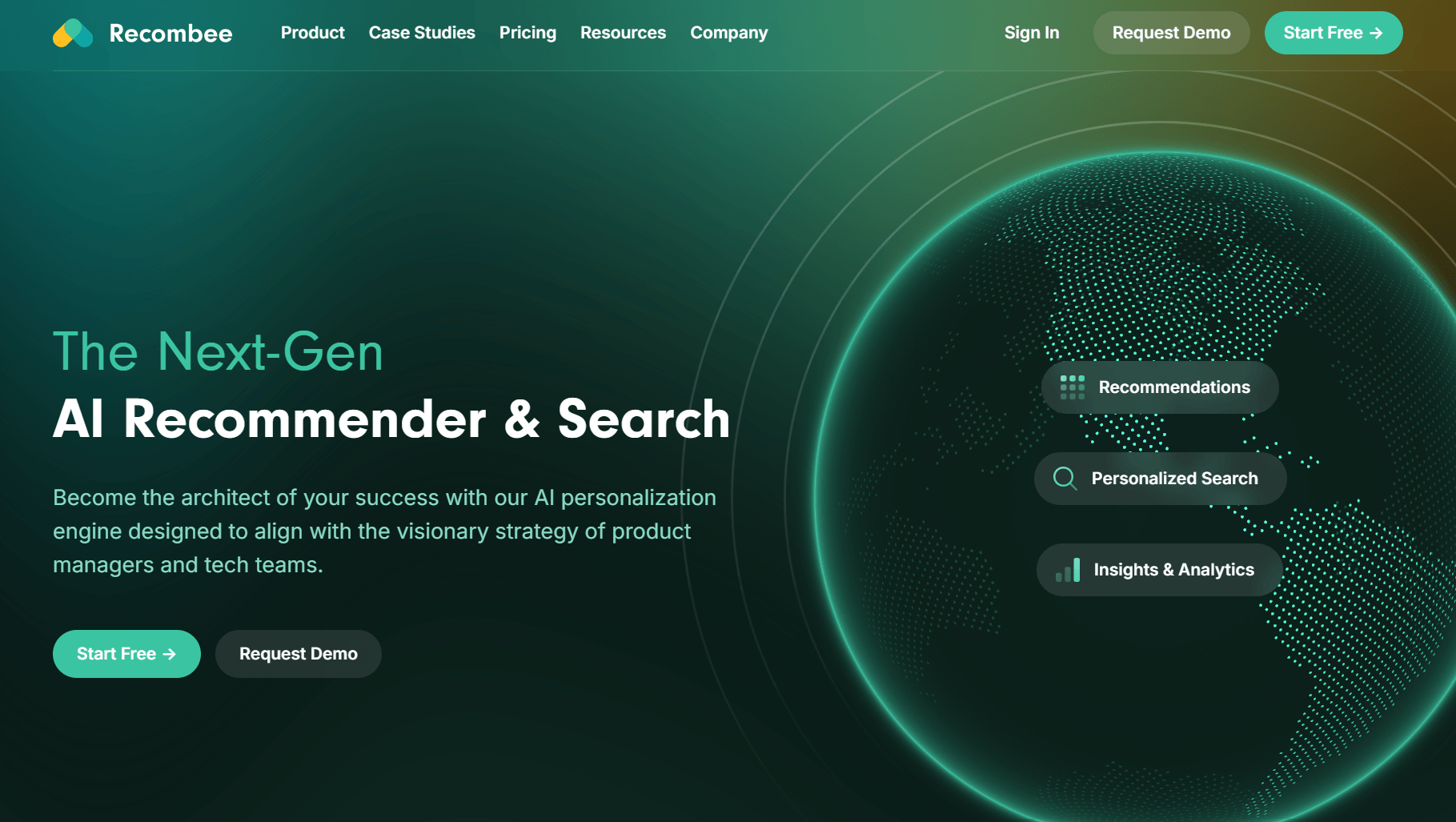
Recombee is a recommendation and search engine that you connect to your site using code, rather than a point-and-click marketing tool.
You feed it your product catalog and user activity through its API, and it returns personalized recommendations you place wherever you want.
Key features
- Product recommendations: Displayable across your website, app, and emails. They dynamically generate based on what your customers view and add to their carts, trends, and popularity using sales data. Uses no-code widgets.
- Content recommendations: Separate models for recommending news, blog posts, podcasts, and other formats.
- Business rules (ReQL). Use Recombee’s query language to control what gets recommended, promoting your higher-margin products or a chosen brand and hiding items you don’t want shown.
- Cold-start for anonymous users. Recommend to first-time visitors from their very first clicks, before you have any history with them.
- A/B testing and analytics. Built-in testing optimizes the recommendation models automatically, with real-time reports on what’s converting.
Pricing
- Free: For a catalog size under 20,000 items and fewer than 20,000 active users, but it doesn’t include any customer support or availability guarantees.
- Standard: $99/month, adds that much-needed email support and a 99.9% uptime guarantee. It’s suitable for up to 20,000 active users and catalog items.
- Pro: $1,699/month for one million products and active users/month. Includes an account manager, video calls, and a Slack channel.
- Premium: $4,499/month for advanced integration support and add-on capabilities for semantic search and segmentation. Supports four million monthly users.
8. LimeSpot
Best for
Small to mid-sized Shopify and Shopify Plus that need one tool for personalized multichannel messaging, product recommendations, and discounts.
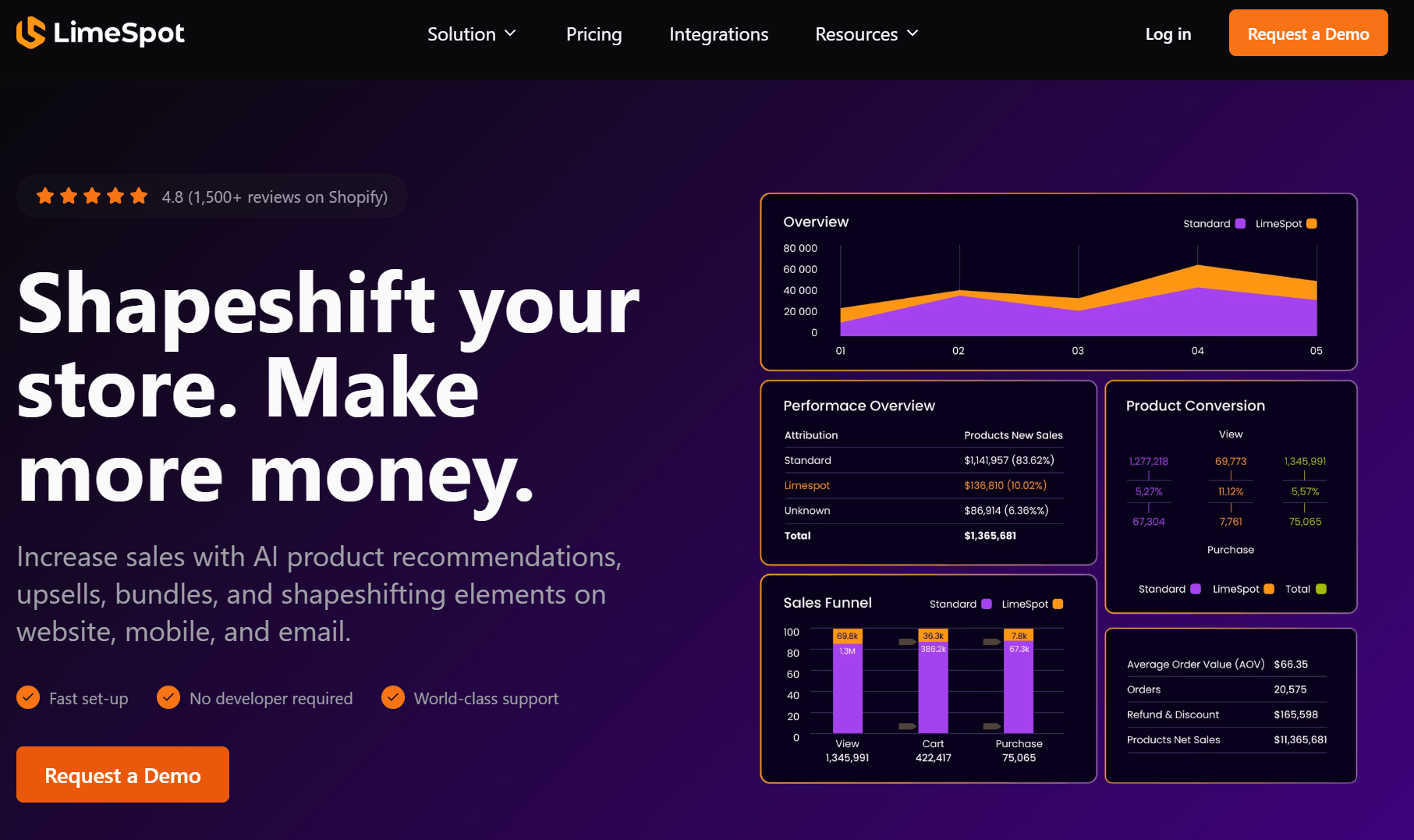
LimeSpot uses AI to change what each shopper sees, from the products it recommends to the images, collections, and copy on the page. It also personalizes email and SMS content and runs discount offers.
Key features
- Product recommendations. These include AI-picked upsells, cross-sells, and bundles for your product pages, cart, and checkout.
- Content personalization. Your visitor segments see different collections, images, and headlines based on what performs best. For example, a returning customer and a first-timer can land on what looks like two different homepages.
- Customer segmentation. Group shoppers automatically by behavior, preferences, and lifecycle stage to target them differently.
- Email and SMS personalization. Add personalized product recommendations and content into your existing email and SMS tools, like Klaviyo, rather than replacing them.
- Personalized discounts. Trigger bundle discounts and post-purchase offers that adjust to customer segments and purchase history.
- A/B testing. Run multivariate tests on recommendations and content to see what converts.
Pricing
- LimeSpot Max: This is the only plan, starting at $50/month for stores with up to $15,000 in revenue in 30 days.
9. Segmentify
Best for
Creating real-time customer experiences for your small to mid-size store.
Segmentify bundles product recommendations and on-site search with popups and ad retargeting features – all with personalization options.
It’s an all-rounder that creates unique experiences primarily on-site while customers browse. We say primarily because Segmentify also lets you recover abandoned carts with email and use push notifications to retarget customers.
Key features
- Gamified popups: These include interactive spin-to-win templates, which can trigger based on your customers’ scroll depth, clicks, and exit intent.
- Search and discovery: On-site searches are personalized based on what customers browse. Plus, it has merchandising controls to pin, exclude, and promote items.
- Ad retargeting: The data Segmentify collects can feed into Facebook Custom Audiences and assist you in reaching more relevant shoppers.
- Product recommendations: Suggestions are dynamic based on what your customers browse and add to their carts.
- Live performance data: You can see how your products, categories, and campaigns are doing for sales and engagement without waiting.
Pricing
- Custom pricing: There are three plans – Growth, Search & Discovery, and Cross-Channel Marketing – priced on request. All plans include onboarding and a success manager.
10. Yotpo
Best for
Adding a top-tier personalized reviews strategy and loyalty program to your ecommerce store.
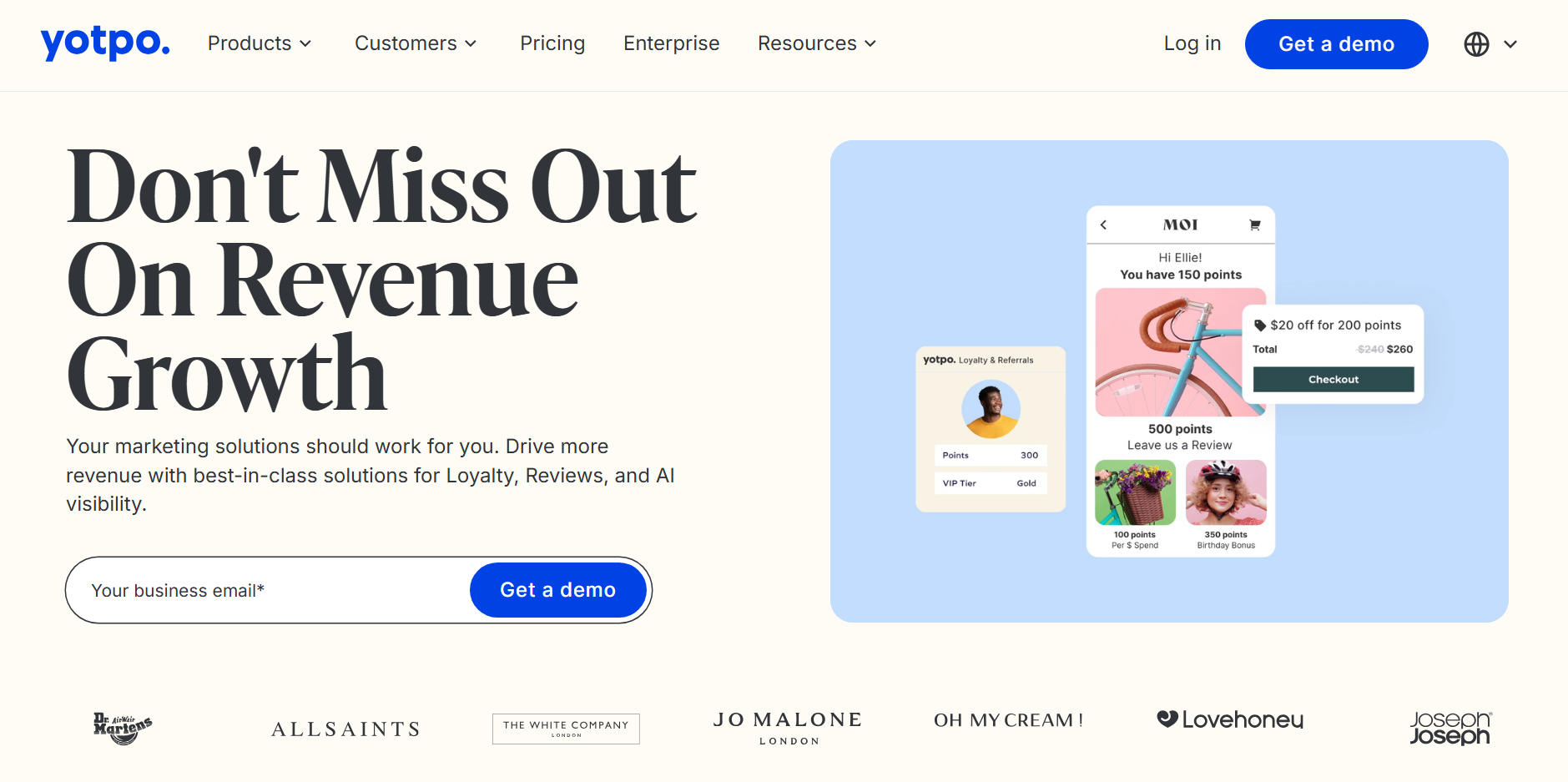
Yotpo is an adjacent app for ecommerce personalization platforms, bringing ratings and rewards programs to your store. It doesn’t reshape your on-site experience, but it does personalize what customers see and earn.
Key features
- Build a post-purchase feedback strategy: Mention customers by name in your automated review request emails. Responses feed into the Yotpo platform, letting you aggregate them and reply.
- Display your social proof: Across widgets for reviews, star ratings, review carousels, Q&A widgets, and visual UGC.
- Loyalty and rewards: Your customers can earn based on what they buy and by leaving reviews, making referrals, and reaching milestones.
- Referrals: You can reward customers for sending additional buyers your way. Get people to recommend friends with personalized emails.
- AI review tools. AI summarizes hundreds of reviews into points at the top of each product page and nudges customers toward writing more useful reviews.
Pricing
- Free: For <50 orders/month – restricts access to collecting photos, videos, and widgets
- Starter: $15/month for up to 50 orders/month
- Pro: $169/month for up to 500 orders/month
- Premium: A custom plan that requires contacting Yotpo
How to choose the best ecommerce personalization software
The best ecommerce personalization software depends on your store size and what opportunities will have the most significant impact on your revenue. We’ll briefly run through four scenarios with expert advice:
- You’re a small Shopify or other ecommerce store. Then you can’t justify paying developers and need apps. Big personalization wins include using customer names in emails and SMS, and providing personalized product recommendations.
- You’re a mid-market ecommerce brand. Multichannel personalization and automations come first. Customers will have relatively complex journeys that require a higher level of nurturing and retention tactics.
- Enterprise ecommerce. Look for AI depth, on-site optimization, API access, CDP capabilities, and CRM integrations to cover your complete stack.
- SaaS and subscription ecommerce. Lifecycle automation is where personalization makes sense. Software that can increase retention and customer lifetime value via personalization will provide your ROI.
Now, with those scenarios in mind, here’s what to look for in software:
- Channel coverage. Some tools specialize in one thing, such as Yotpo for reviews. Others cover multiple channels, such as Omnisend for ecommerce email marketing, SMS, and web push automation.
- AI features. AI in ecommerce personalization software can assist you in creating content and interactive website elements, planning a strategy, and more. MCP integration connects AI to your data sources and tools.
- Segmentation depth. You need segments for your subscribers based on their profile data, behavior, and purchase history. For instance, you can have segments for customers in the U.S. and Europe.
- Platform integrations. Your ecommerce store almost certainly has multiple apps, so do you need any of those to communicate with your personalization software? If the answer is yes, review their native integrations and API steps.
- Implementation requirements. Some ecommerce personalization tools are apps that you install on your Shopify store or other platform. Others require code to be added to your files and development time.
- Pricing models and costs at scale. Free, freemium, and paid plans – you need to know what each includes and the costs of exceeding any tier’s limits.
- A/B testing and optimization. Plenty of tools offer personalization, but don’t let you refine your efforts. You need split testing capabilities and reports that detail your efforts.
You might also be interested:
Tips for building great ecommerce websites
Best ecommerce personalization software: Comparison
The table below shows how our top personalization software for ecommerce stacks up:
| Tool | Best for | Channel coverage | Pricing |
|---|---|---|---|
| Omnisend | Growing stores of any size | Email, SMS, web push | Free, then from $16/month |
| Dynamic Yield | Enterprise with a technical team | On-site, app, email, SMS, push | Custom (~$35k/year+) |
| Nosto | Mid-market and enterprise retailers | On-site, email | Custom only |
| Insider One | Brands replacing several tools at once | Email, SMS, WhatsApp, web, app | Custom only |
| Barilliance | Smaller stores wanting product discovery | On-site, email | From $250/month per tool |
| Bloomreach | Large brands wanting search + a CDP | Search, email, SMS, WhatsApp, web | Custom only |
| Recombee | Developers building custom recs | On-site, app, email | Free, then from $99/month |
| LimeSpot | Small to mid Shopify stores | On-site, email, SMS | From $50/month |
| Segmentify | Smaller stores wanting real-time on-site | On-site, email, push, ads | Custom only |
| Yotpo | Reviews and loyalty programs | On-site, email, SMS | Free, then from $15/month |
Your next step with ecommerce personalization software
The best ecommerce personalization software depends on which channels generate your revenue and influence retention.
Start with your biggest wins first, such as SMS personalization for time-sensitive alerts and form personalization to capture more emails.
Consider tools that consolidate multiple requirements to cut complexity. Omnisend, for instance, is one platform for email, SMS, and web push automation. It integrates with your store and builds customer profiles you can use for segmentation and personalization.
Quick sign up | No credit card required
FAQs
What is ecommerce personalization software?
Ecommerce personalization software uses your customers’ information, such as their names and purchase activity, to customize what they see. Your emails, SMS, forms, and other on-site content will adapt to different customers.
Which ecommerce personalization tool is best for Shopify?
Email and SMS personalization is well-covered by Omnisend. It syncs customer information from your ecommerce store and lets you use event-based personalization in automations, such as product recommendations in abandoned cart emails.
What is the difference between ecommerce personalization software and a CDP?
CDPs collect and store your customer data in one place. They don’t market to your customers or create experiences on their own. Personalization software uses the data your CDP collects or its own data to create custom experiences.
How much does ecommerce personalization software cost?
Many apps have free or freemium tiers suitable for small Shopify stores. Once you’re a mid-market brand, expect to pay from around $60 to several hundred dollars a month for software, based on your demand and how many customers you reach.