Omnisend AI

 OFFER







The best AI email marketing tools in 2026 are Omnisend, Klaviyo, ActiveCampaign, HubSpot, Brevo, Mailchimp, and Bento. Instead of copying vendor feature lists, we signed up for five free plans (Omnisend, Klaviyo, HubSpot, Brevo, and Mailchimp) and two free trials (ActiveCampaign and Bento) and gave each a sample task.
AI email marketing tools use machine learning or generative AI to do work you’d otherwise do by hand, such as writing copy, building segments, or picking send times. A template library or a fixed automation rule doesn’t count as AI.
We checked every tool against eight capabilities, including content generation, segment building, and send-time optimization, and each entry ends with a review of its AI.
Quick sign up | No credit card required
What does AI actually do in email marketing?
AI in email marketing does eight jobs. Omnisend covers all eight across its plans, though no tool on this list includes all eight on its free plan. Content generation, segment building, predictive analytics, and send-time optimization are the core four, while the other four are where the tools differ most:
- Content generation: Writes subject lines, preheaders, and email copy from a short description, like Omnisend’s free AI subject line generator.
- Segment building: Turns a plain sentence into segment conditions without manual filters.
- Predictive analytics: Forecasts customer lifetime value (CLV), churn risk, and when shoppers are likely to buy again.
- Send-time optimization: Picks a delivery time for each contact instead of one time for the whole list.
- Product recommendations: Chooses which products each recipient sees, based on what they viewed or bought.
- Brand and design automation: Applies your logo, colors, and fonts to email templates.
- Form and capture AI: Builds sign-up forms and pop-ups from a description, in your brand style.
- Access from outside the platform: Answers questions about your account in ChatGPT or Claude through a Model Context Protocol (MCP) connection.
We compared all eight capabilities, but free-plan and trial restrictions meant we couldn’t test every feature firsthand.
The one feature every tool offers is content generation. Predictive analytics and per-contact send times, on the other hand, depend on order or engagement history and, for these seven tools, need a paid plan. Our guide to AI email marketing explains how each job works.
The best AI email marketing tools
Omnisend includes the most AI on a free plan, Klaviyo focuses on predictive analytics, and ActiveCampaign and Bento build automations from a prompt. The table compares each tool’s strongest AI feature, free plan access, and starting price.
| Tool | What the AI does best | AI on free plan | Starting price |
|---|---|---|---|
| Omnisend | Segments, copy, and product recommendations for stores | Yes | $16/month (Pro from $59/month) |
| Klaviyo | Predicting lifetime value and churn risk | Limited | $20/month (+$20/month for more Composer) |
| ActiveCampaign | Generating automation workflows from a prompt | No free plan, only a free trial | $19/month |
| HubSpot | Drafting campaigns from customer data | Limited | $20/month per seat |
| Brevo | Copy help and per-contact send times | Limited | $9/month |
| Mailchimp | Copy generation and plain-language insights | Limited | $13/month (AI from $20/month) |
| Bento | Building event-driven flows from a description | No free plan, only a free trial | $29/month |
Prices were checked in October 2026 and show each tool’s cheapest paid plan on monthly billing.
1. Omnisend
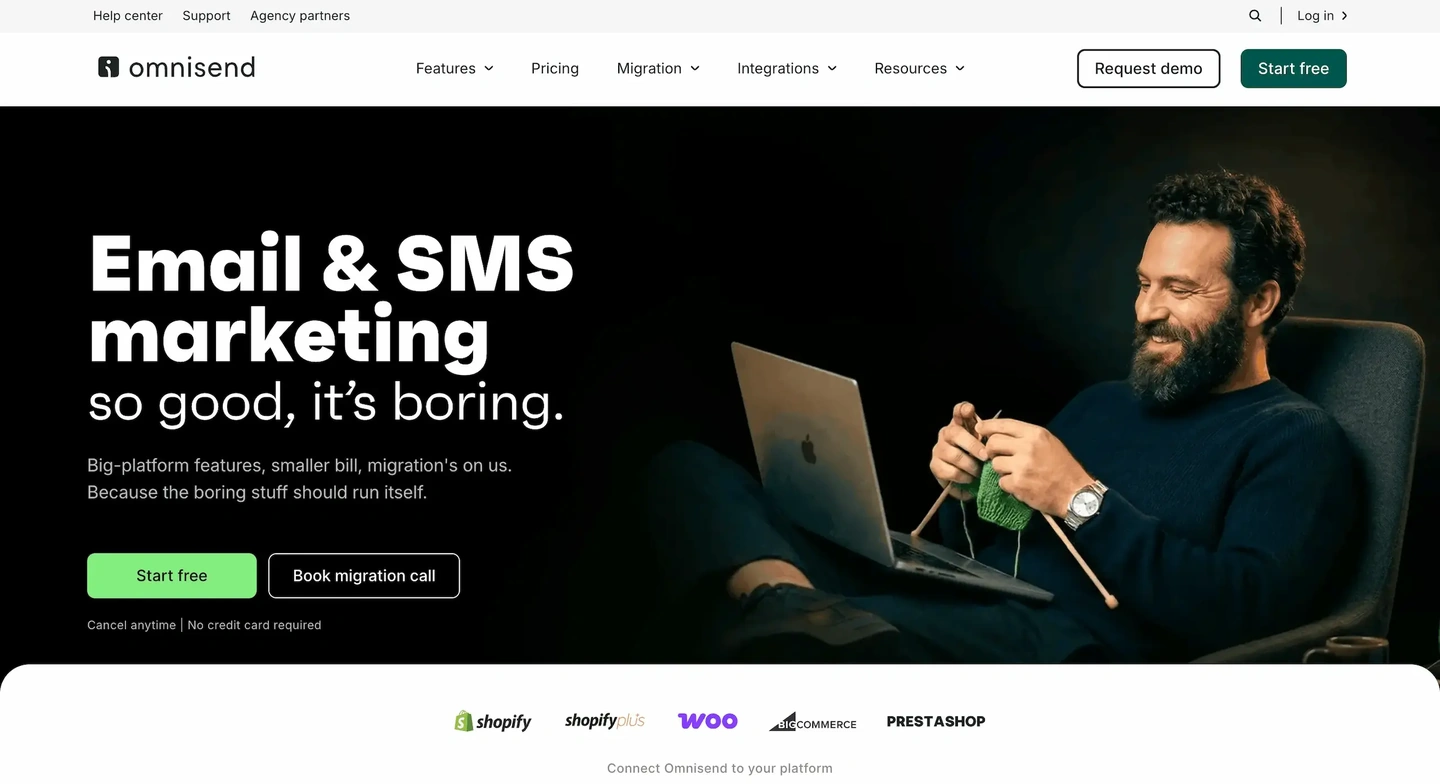
Omnisend is an email and SMS marketing platform built specifically for ecommerce stores. Most of Omnisend’s AI is free, and Forms AI stands out because it uses AI to grow your list, not only to email the subscribers you already have. Here’s what each plan includes:
- Free plan: AI subject line generator, AI copywriting in the email builder, the AI segment builder, Brand Assets AI, customer lifecycle stages, RFM analysis and churn prediction in Customer Breakdown, and the Omnisend MCP connection to ChatGPT and Claude
- Standard (from $16/month): Adds Forms AI, which builds pop-up and flyout sign-up forms from a prompt, and Reports AI
- Pro (from $59/month): Provides personalized product recommendations, dynamic content, and personalized send-time suggestions
Standard plan users can buy personalized product recommendations and send-time optimization as add-ons.
Omnisend review
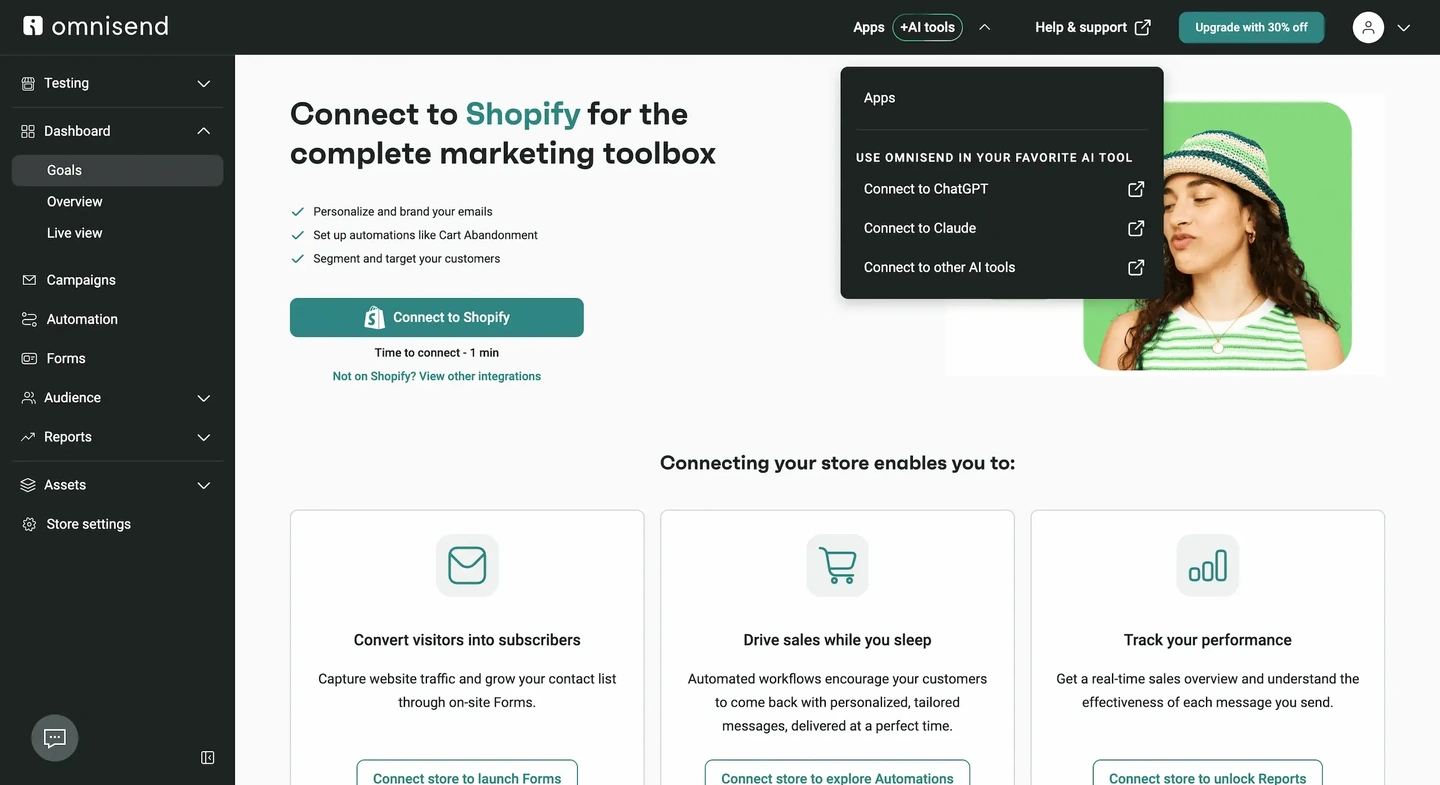
Omnisend has an MCP connection with popular AI tools. Claude or ChatGPT can communicate directly with the Omnisend MCP, allowing you to create campaigns, monitor performance, and get answers without having to copy-paste or switch between tools.
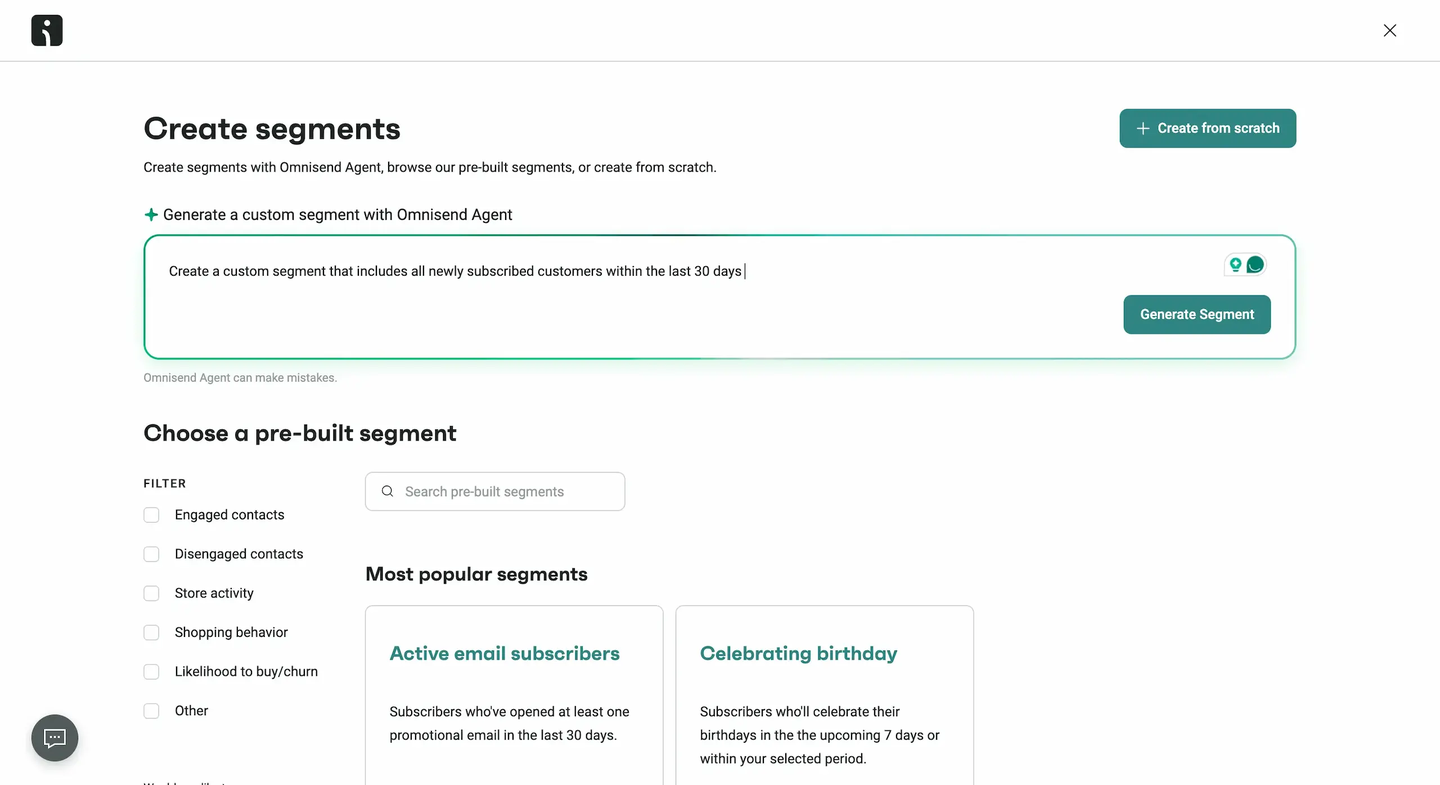
For segments, Omnisend lets you start from a library of pre-built segments filtered by customer behavior, or describe the segment you want in a sentence. Omnisend Agent, the app’s AI, then builds the rules and asks a clarifying question if your description is ambiguous.
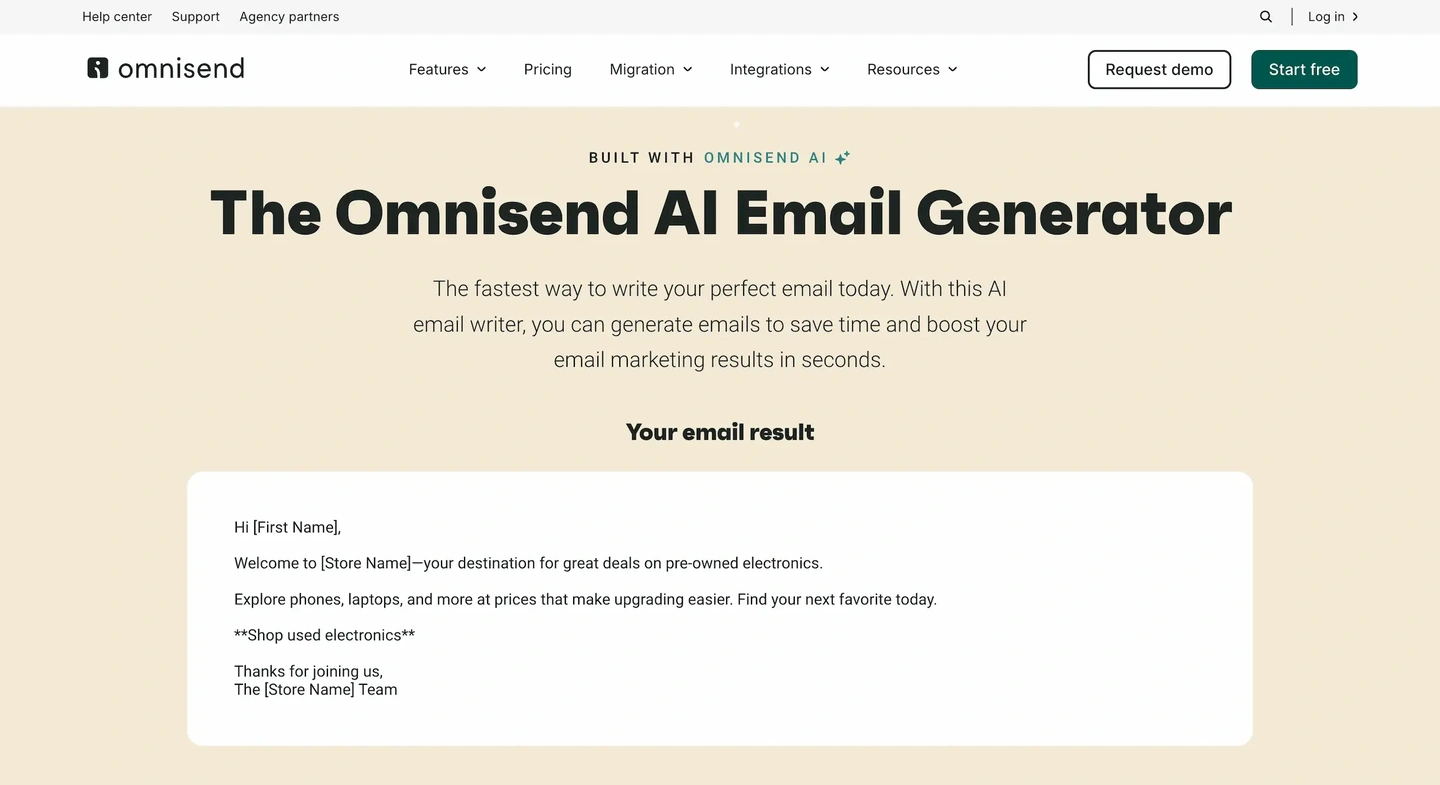
The AI email generator drafts copy based on email type, tone, length, and emoji preferences, then asks for a short description of the email. Omnisend says to allow about 45 seconds, but our example came back in three seconds. The AI subject line and email generators work without an Omnisend account.
Con: Reports AI is still in beta, and the AI segment builder can’t build anything until your account has contact data.
2. Klaviyo
Klaviyo is an ecommerce marketing platform that also includes customer relationship management (CRM). Its strongest AI feature is predictive analytics, and each plan includes a different share of its AI:
- Free plan: Includes the AI subject line generator, Composer with $5 of usage a month, and personalized product recommendations
- Email plan (from $20/month for 500 profiles): Adds predictive analytics, AI-generated segments, content, and images, and higher contact limits, with SMS, MMS, WhatsApp, and rich communication services (RCS) billed separately by usage
- Composer plan (+$20/month): Four times the free Composer usage
- Enterprise plan (custom pricing): Adds Data Warehouse Sync with Snowflake, BigQuery, Databricks, and Redshift, plus paid support packages with faster response times
Predictive analytics only works once at least 500 customers have placed an order, you have 180 days of order history with orders in the last 30 days, and some customers have ordered three or more times.
Klaviyo review
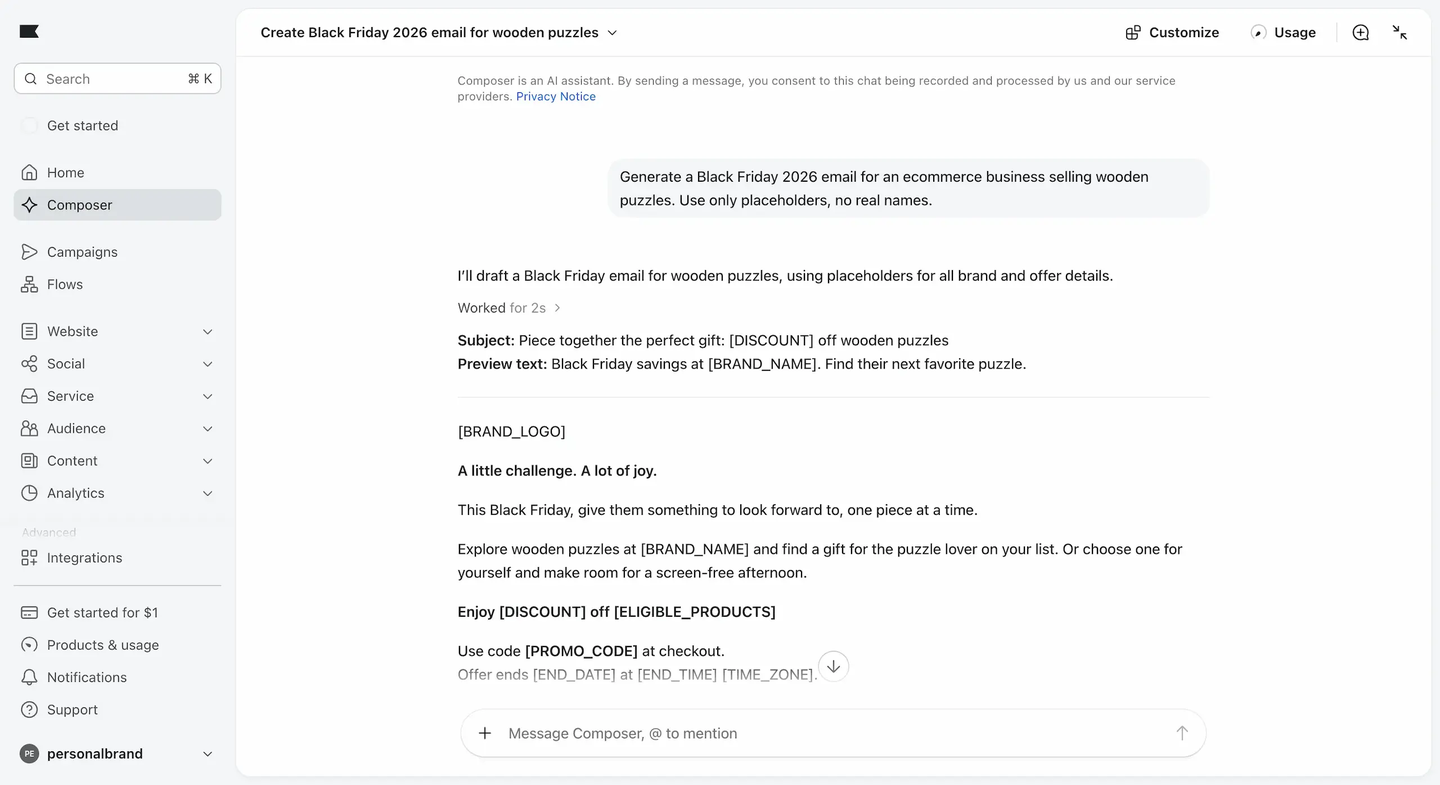
To test Klaviyo, we focused on the Composer feature to see how well it performed and answered queries. We asked Composer to generate a Black Friday 2026 email for an example store profile, like an ecommerce store selling wooden puzzles.
Composer then returned with:
- A subject line with a twist on a puzzle pun
- Preview text
- A full email body copy that included placeholders for the brand, logo, discount, eligible products, promo code, and an offer deadline
Composer returned the draft in about two seconds, with placeholders for every brand and offer detail, as asked. It didn’t produce a fully designed email.
Con: Klaviyo says Composer can build full campaigns on the free plan, but one campaign can use $0.10–$10 of the $5 monthly allowance, so regular use needs the $20/month Composer plan, which adds $10 top-ups when it runs out.
3. ActiveCampaign
ActiveCampaign is a marketing automation platform with a built-in CRM. Its AI, Active Intelligence, is strongest at building working automations from a single description, and each plan includes a different amount of it:
- Starter plan ($19/month for 1,000 contacts): Includes limited Active Intelligence, AI campaign and automation building, AI-suggested segments, and one AI brand kit (Starter is $15/month if billed annually)
- Plus plan ($59/month): Adds AI content and image generation, five brand kits, and send times based on your account data
- Pro plan ($89/month billed annually): Adds unlimited Active Intelligence, per-contact predictive sending, and predictive content
- Enterprise ($159/month billed annually): Adds a higher sending limit, five users, premium segmentation, and a dedicated account team
ActiveCampaign doesn’t include a free plan, but it does offer a free trial, allowing you to test the platform and its AI features for 14 days.
ActiveCampaign review
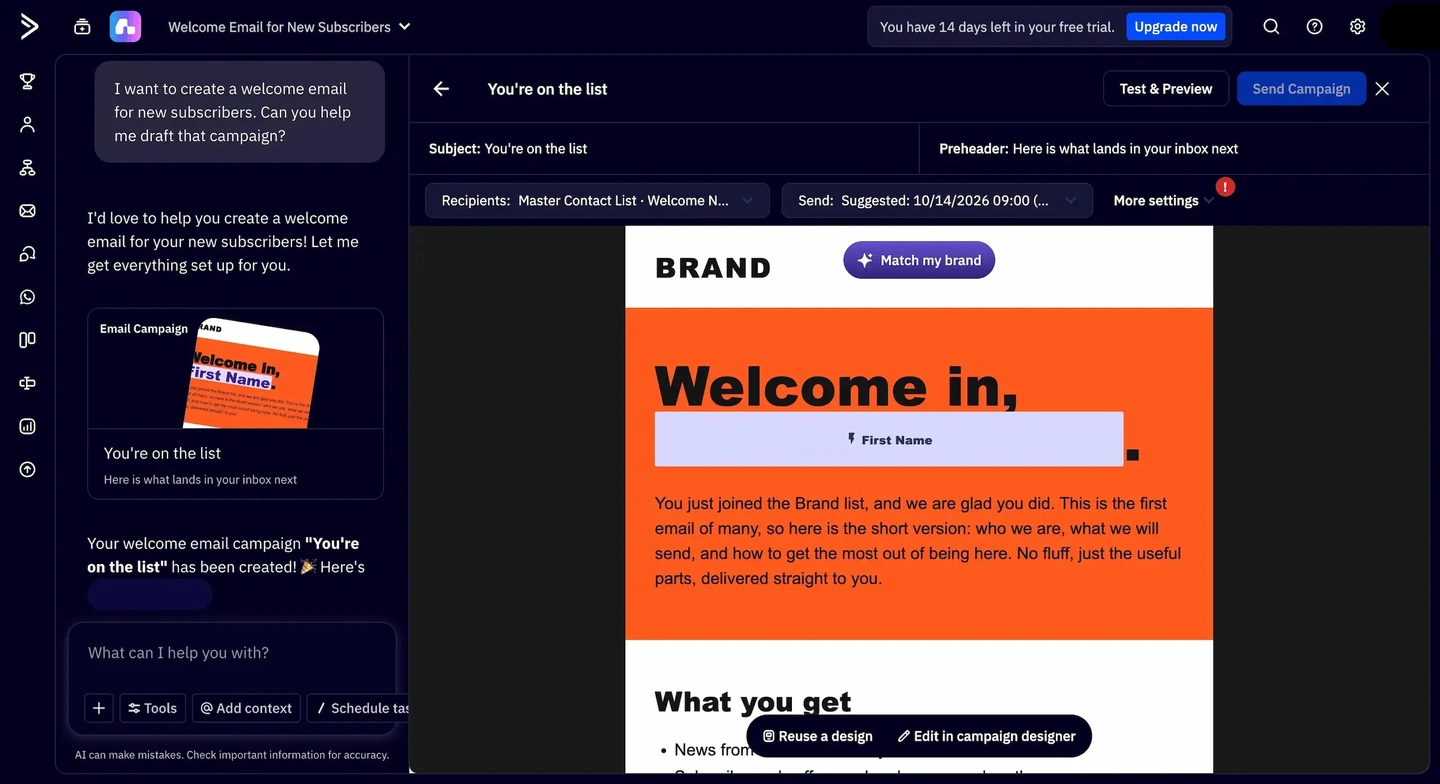
We asked Active Intelligence to create a welcome email for new subscribers, and it came back with an entire scheduled campaign that included a design concept. What surprised us was the level of detail presented by Active Intelligence despite the short prompt we wrote.
The copy followed a standard welcome-email structure and was clear and relevant to the prompt.
Con: Active Intelligence acted without asking: from one prompt, it scheduled the welcome email for the next morning and chose the recipients itself, so review the campaign before it sends.
4. HubSpot
HubSpot is a CRM used across industries and best known for its B2B sales pipelines. Its AI, Breeze, includes Breeze Assistant, and each plan adds more of it:
- Free tools ($0/month, up to two users): Breeze Assistant, which drafts emails, summarizes records, and answers questions, plus AI help with subject lines, preview text, and email copy
- Marketing Hub Starter plan (from $20/month per seat): Includes Breeze Assistant, but without AI email creation
- Marketing Hub Professional plan (from $890/month, three seats): Adds AI email creation, which builds a full marketing email from a prompt, and Pro-level agents such as the campaign agent (beta) and the Social Media Agent (beta)
- Marketing Hub Enterprise plan (from $3,600/month, five seats): Adds per-contact send-time optimization (beta), lookalike segments (beta), and AI-assisted lead scoring
HubSpot review
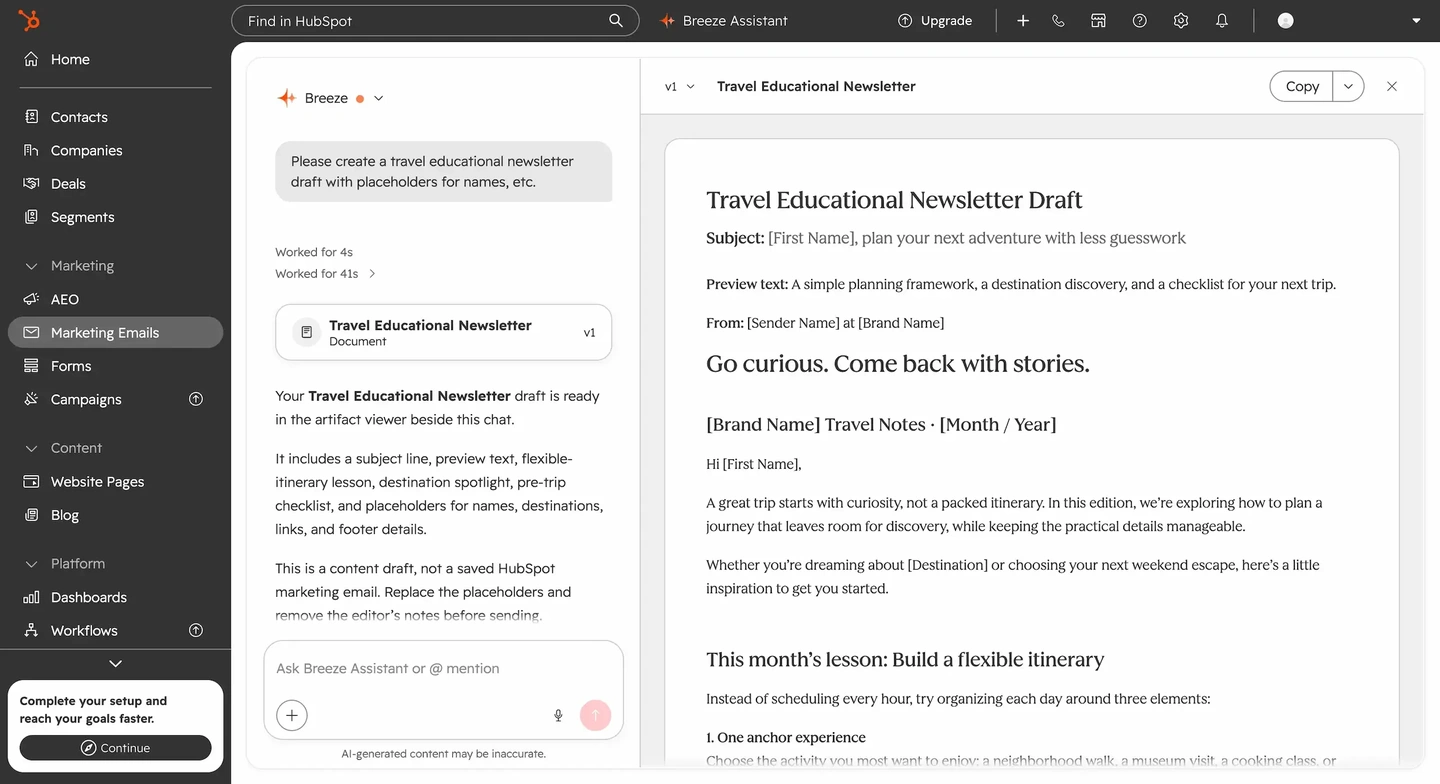
HubSpot’s Breeze Assistant is positioned right at the top of the dashboard, so it’s the first thing you see. Breeze is offered with the free plan, and it can process queries similar to the popular AI tools like Claude or ChatGPT.
When we asked Breeze to create a travel newsletter with placeholders, it returned a document with a subject line, preview text, sender line, headline, a lesson on flexible itineraries, a destination spotlight, and a pre-trip checklist.
The output gave us a good starting draft, but it wasn’t a marketing email built directly inside the email editor. We couldn’t test HubSpot’s paid campaign agents or their ability to generate campaigns using CRM data.
Con: Breeze took more than 40 seconds to produce a document rather than an email ready to send. The draft still had to be transferred into the email editor.
5. Brevo
Brevo is a multichannel platform that includes email, SMS, WhatsApp, and push notifications, and prices plans based on email volume. Brevo’s AI assistant is called Aura. Its AI writes copy on every plan and picks per-contact send times from the Standard plan, with more AI on higher tiers:
- Free plan ($0/month, 300 emails a day): Includes the Aura assistant, the AI content generator, and MCP for ChatGPT and Claude
- Starter plan ($9/month for 5,000 emails): Removes the 300-a-day sending cap, with no new AI features
- Standard plan ($18/month): Adds AI send-time optimization for every contact on your list
- Professional plan ($499/month for 150,000 emails): Adds AI segmentation, AI product recommendations, contact scoring with recency, frequency, and monetary value (RFM) and CLV, the AI Data Analyst, and AI translation
- Enterprise (custom pricing): Has everything that the Professional plan has plus custom features for businesses
Brevo review
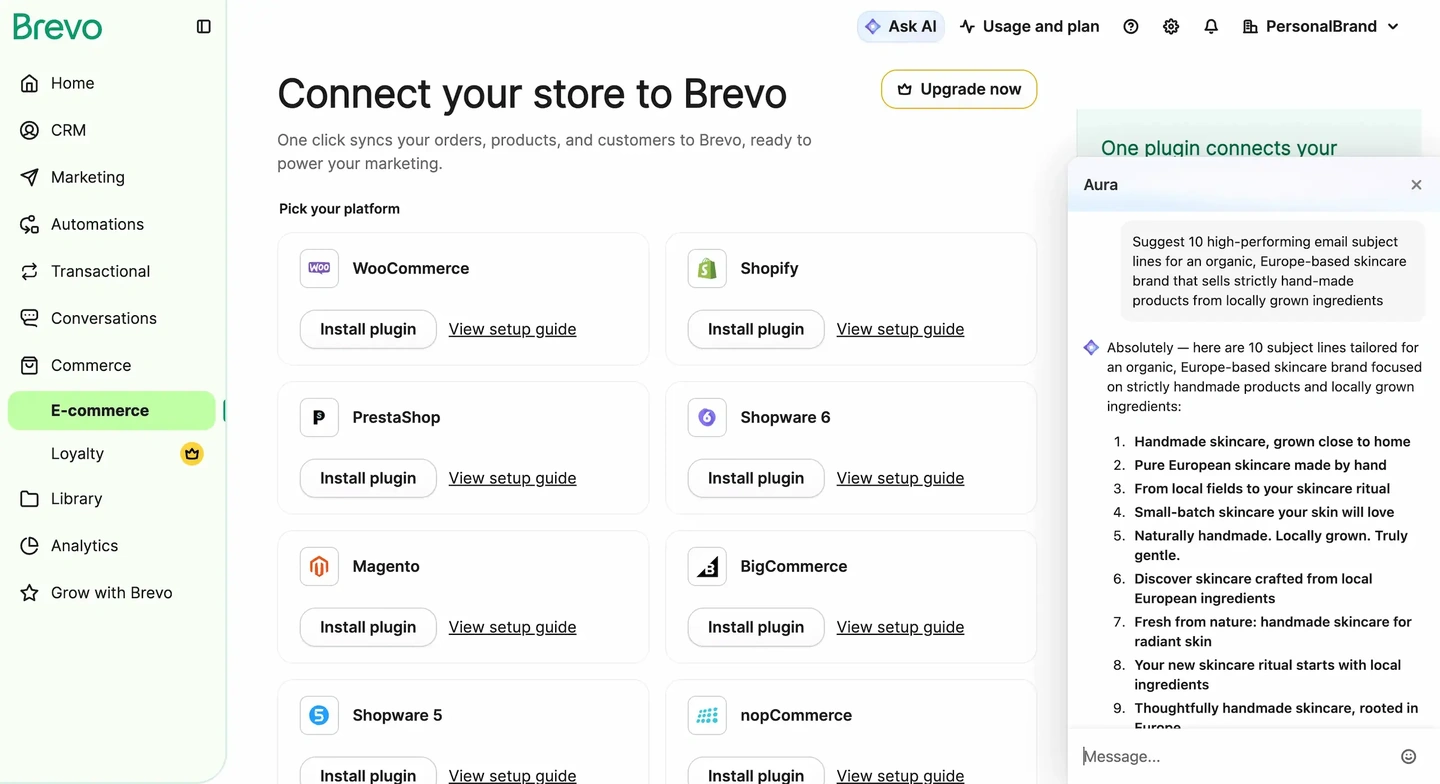
We asked Brevo’s Aura to generate 10 high-performing subject lines for an organic, Europe-based skincare brand. Aura replied almost immediately, and every subject line used the keywords we gave it. However, for more detailed, brand-specific copy, we had to add more information to the prompt.
Con: The 10 subject lines mostly repeated the same idea, leaving little worth A/B testing.
6. Mailchimp
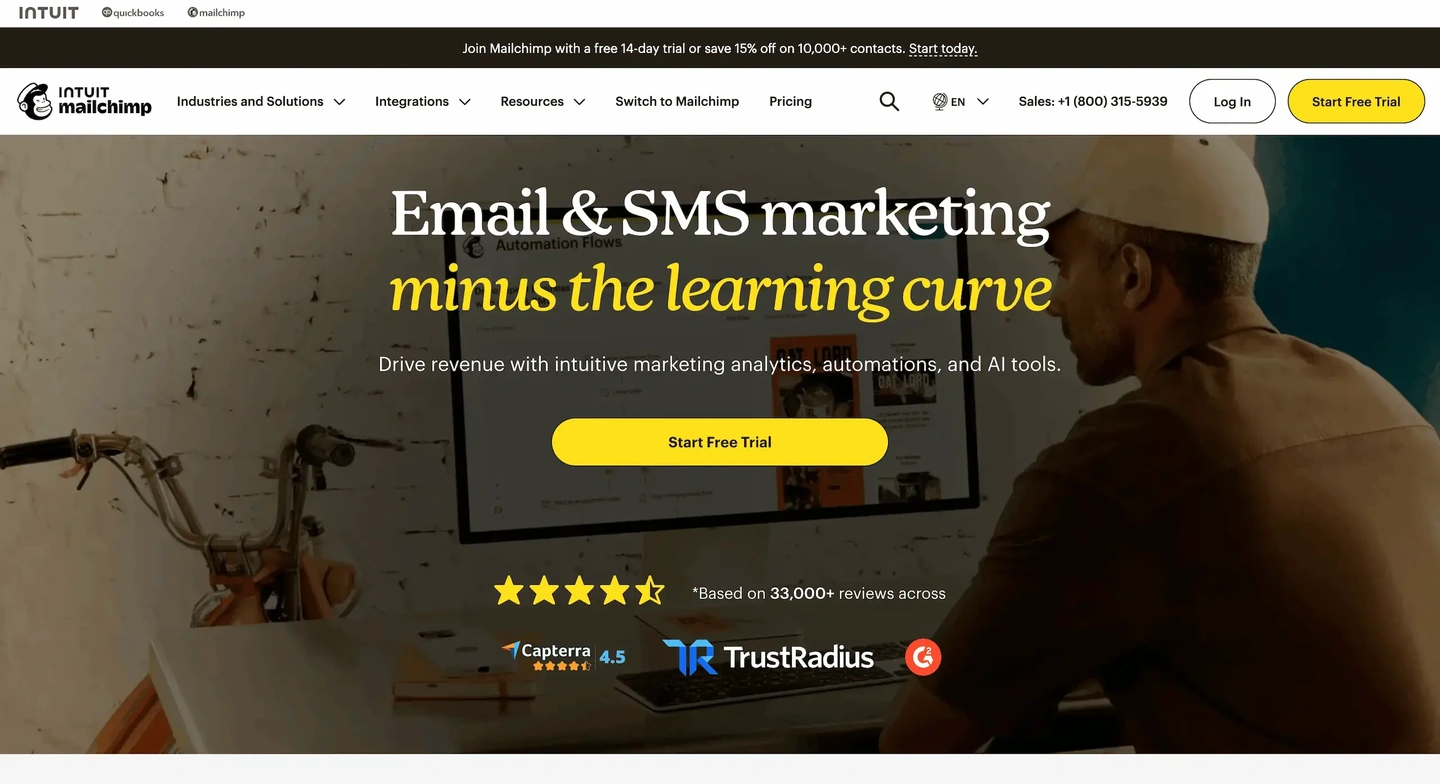
Mailchimp is an email marketing platform that was acquired by Intuit Inc. in 2021. As a result, Mailchimp’s AI now comes from Intuit: a generative AI marketing assistant branded Intuit Intelligence (formerly Intuit Assist).
Its AI ranges from content generation to automation, and it includes copy generation, send-time optimization, and predictive segments. Most of it starts on the Standard plan:
- Free plan: Up to 250 contacts and 500 emails a month, with the Subject Line Helper and personalized product recommendations, but no generative AI
- Essentials plan (from $13/month): Adds higher sending limits, but no generative AI or send-time optimization
- Standard plan (from $20/month): Adds generative AI, Intuit Intelligence (beta), send-time optimization, predictive segmentation, CLV and purchase likelihood predictions, and dynamic content
- Premium plan (from $350/month for 10,000 contacts): Has the same AI features as the Standard plan, plus unlimited users and audiences
Mailchimp also offers a 14-day free trial of the Standard or Essentials plan. Predictive analytics also needs a connected online store and at least one sent campaign.
Mailchimp review
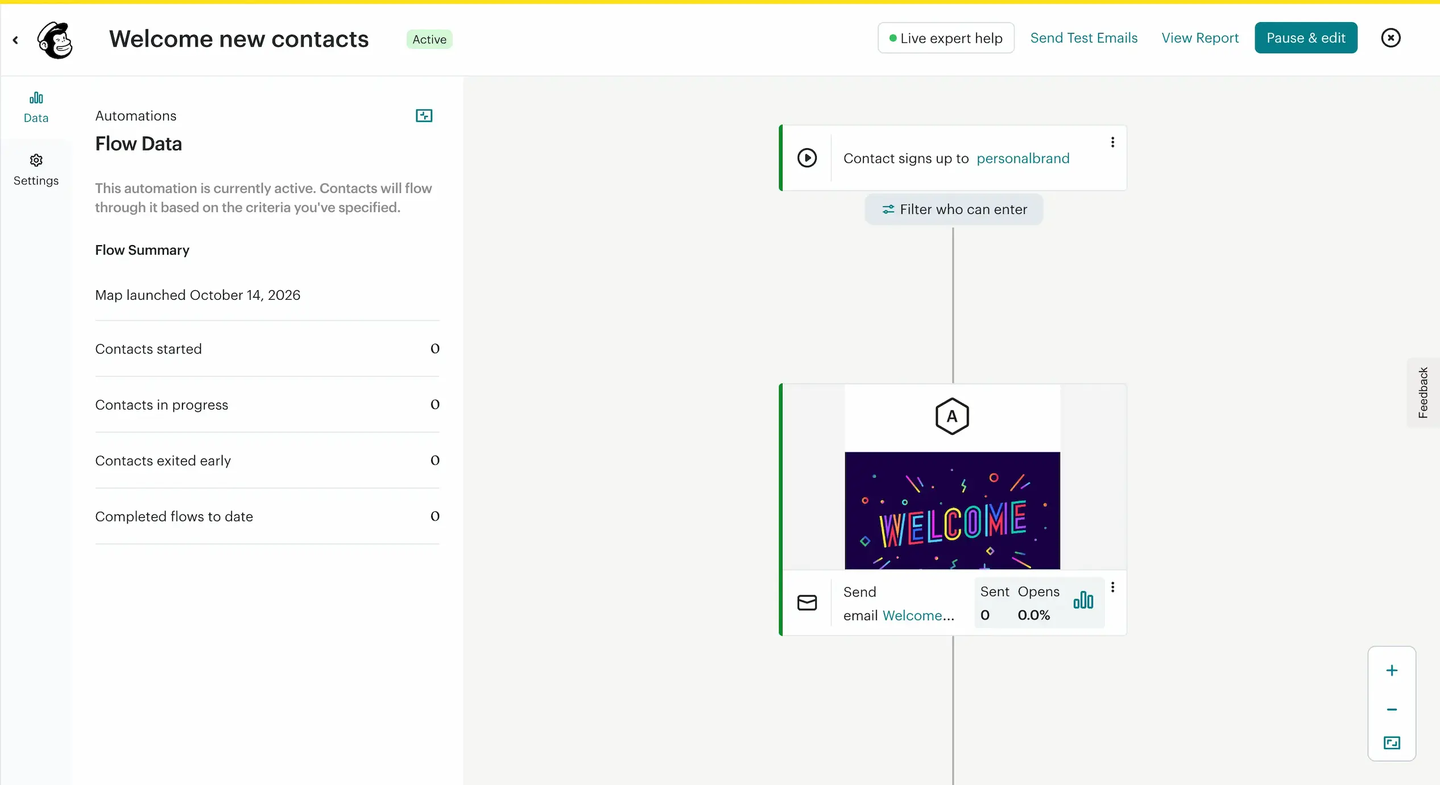
Mailchimp doesn’t make its AI tools particularly prominent in the dashboard. Because generative AI isn’t included on the free plan, we tested how much its Flows section could do without it.
Mailchimp created a single-email welcome flow using a pre-made template. We still had to add the branding and copy ourselves.
Con: Mailchimp doesn’t include generative AI in its free plan, so we were unable to test it.
7. Bento
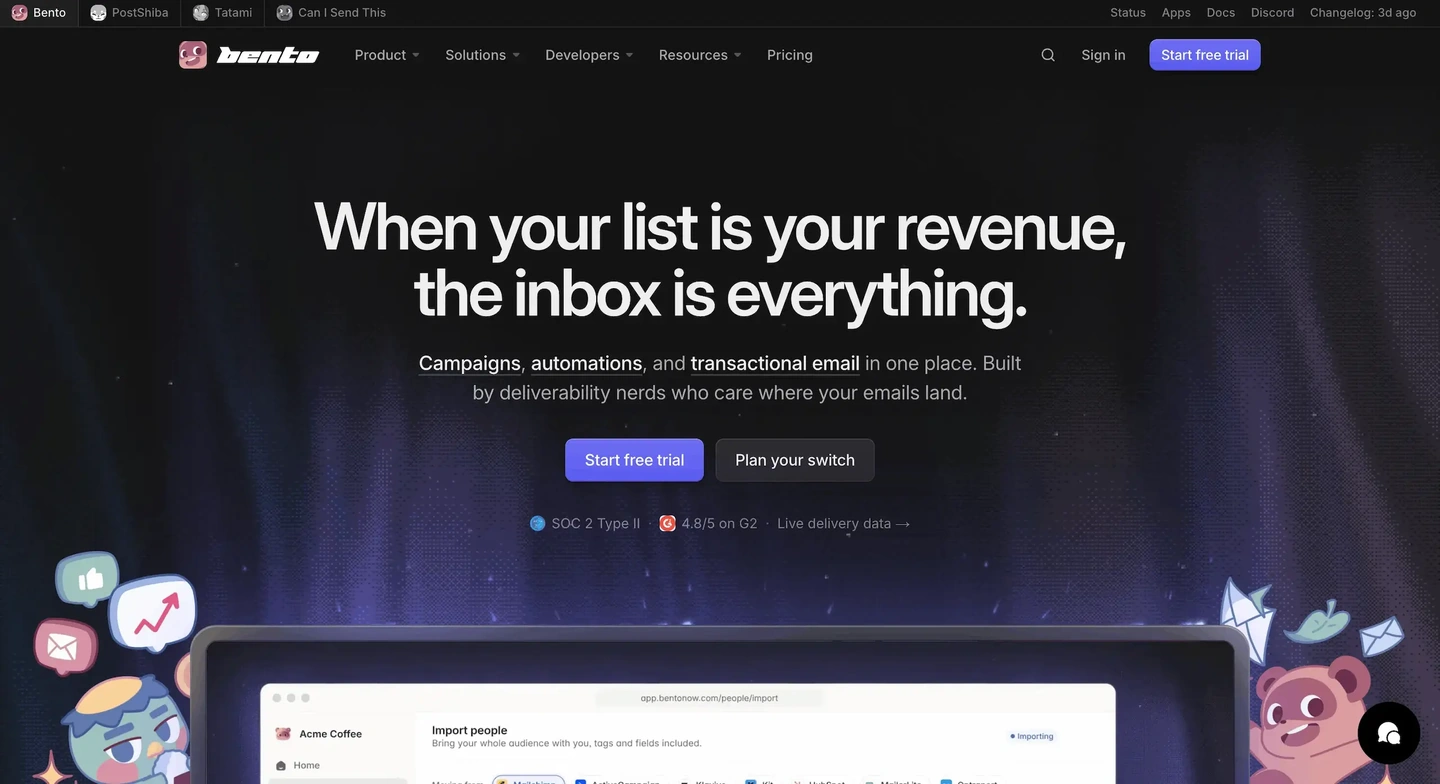
Bento is an email and automation platform for businesses that sell to their own list, with developer tools for teams that send custom events from their app or store. Its AI is strongest at building detailed event-driven flows from a description you provide, and it comes with the base plan:
- Marketing Platform plan (from $29/month for up to 5,000 active users): Tanuki, the AI assistant, can draft flows with triggers, delays, conditions, branches, emails, and tags, and edit selected elements in the visual, plain-text, or HTML editor
- Bento Chat add-on (+$30/month): Adds AI replies and knowledge-base answers in a shared inbox
Bento has no free plan, but it offers a 30-day free trial that requires a payment card. New accounts are also reviewed manually before they can send email, which usually takes a few hours.
Bento review
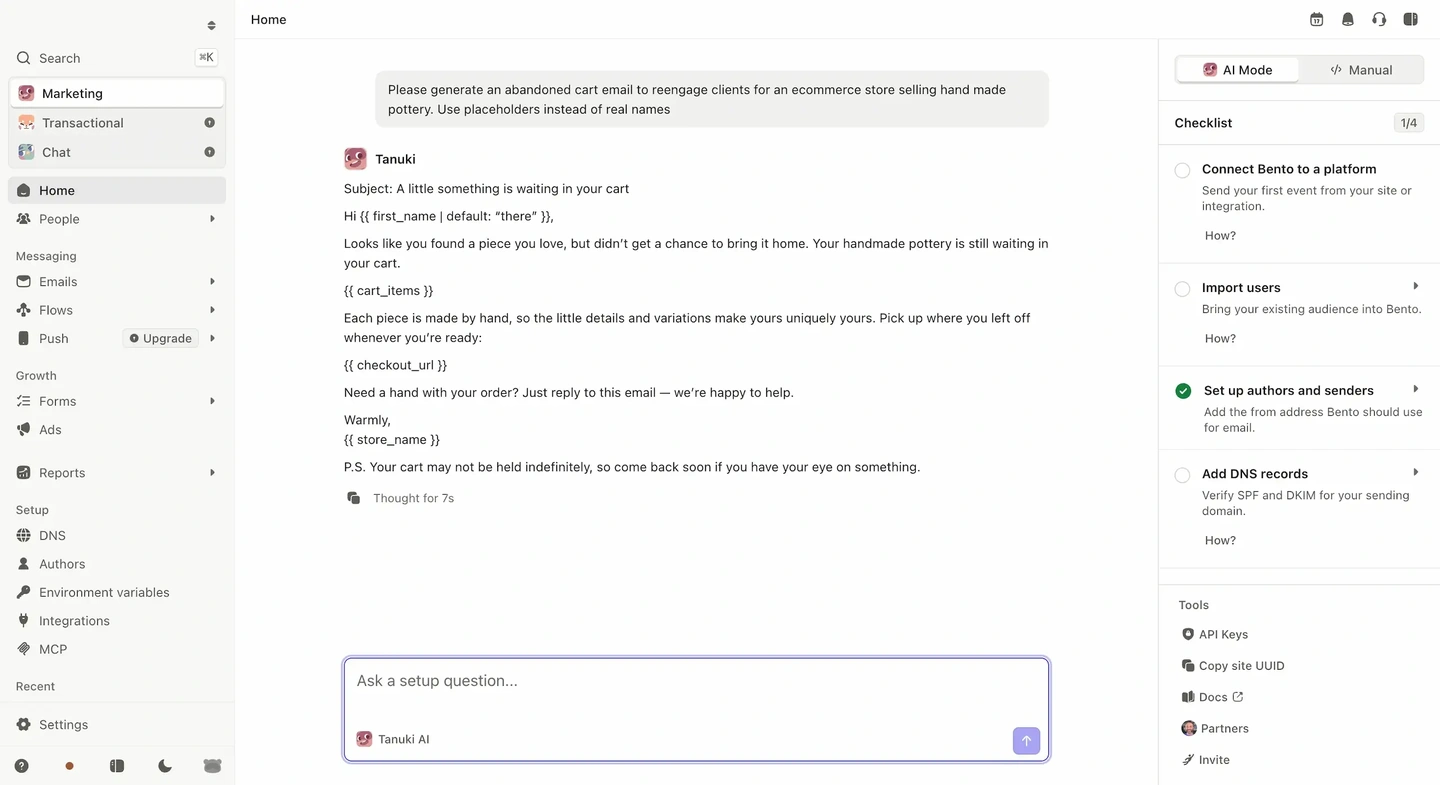
Tanuki AI is built into the dashboard. When we first logged in, the assistant was already open and offered to help with integrations to make the onboarding process quicker. In the same chatbox, we asked it to generate an abandoned cart email for a store selling pottery.
In just seven seconds, Tanuki AI returned full copy that was relevant to the brief and included usable merge tags.
Con: Bento is focused on technical, detailed flows, and Tanuki returned plain copy rather than a designed email, so image-heavy ecommerce layouts still have to be built by hand.
How we tested these tools
To find the best AI email marketing tools, we signed up for the free plan or free trial of all seven tools. Where AI was accessible, we gave it one hands-on task, such as drafting a welcome email or generating a set of subject lines. We assessed the output and any limitations we encountered.
We compared each platform against eight capabilities: content generation, segment building, predictive analytics, send-time optimization, product recommendations, brand and design automation, form and capture AI, and access from outside the platform.
Having fewer AI capabilities doesn’t necessarily make a tool less useful. A platform that excels at one task may be a better fit than one offering several AI features you won’t use.
What wasn’t tested: We couldn’t test every paid AI feature. We used official documentation to establish their availability and plan requirements, while the hands-on reviews reflect the features we accessed.
How to choose an AI email marketing tool
To choose AI email marketing software for you, start by identifying what you need AI for and then compare which email marketing tools offer those AI features and how they’re priced. If you’re running an ecommerce store, check whether the tool connects to your store platform and how much order history its predictive analytics needs.
| If your main job is | Start with |
|---|---|
| Segmenting and personalizing for a growing store | Omnisend |
| Predicting churn and lifetime value with 500+ paying customers | Klaviyo |
| Building complex automations from a prompt | ActiveCampaign or Bento |
| Running email alongside a B2B sales pipeline | HubSpot |
| Writing help, priced by email volume | HubSpot |
| Writing and scheduling for a general small business | Mailchimp |
If you want to compare entire email platforms rather than their AI alone, see our roundup of the best email marketing software. Conversely, if you’re more interested in how AI can assist ecommerce efforts, view our list of AI tools for ecommerce.
Quick sign up | No credit card required