Omnisend AI


 OFFER
OFFER










You want to market a clothing brand without wasting time and money on the chase. It isn’t as far-fetched a goal as some say it is.
There are several channels proven to capture, nurture, convert, and retain, which you can master standalone and in a cross-channel approach when appropriate. The question is, how to prioritize them and mix them in the best way for your store.
This article reveals the best way to market a clothing brand across 10 channels. We’ll cover owned, earned, and paid channels, with practical advice and insights to get off to the best start.
Quick sign up | No credit card required
How to market a clothing brand: the 10 best channels
Build a high-quality website and then install an email and SMS marketing app to nail down owned channels. These will help you grow your list, automate customer experiences, and work towards retention and increasing customer lifetime value.
Your clothing brand needs additional earned and paid marketing channels for maximum reach and to cover all the different stages in your customers’ lifecycle.
As your customers move from awareness to consideration, then through to conversion and retention, different channels are better suited than others.
The 10 channels below are the best to market a clothing brand. Click any of the links to jump to our descriptions and advice:
| Channel | Type | Best for | Stage |
|---|---|---|---|
| Owned | Nurturing, converting, and retaining customers | All stages | |
| SMS | Owned | Time-sensitive sends: drops, restocks, sales | Conversion |
| Web push | Owned | Re-engaging browsers who haven't shared contact details | Consideration |
| Owned channels as one | Owned | Running email, SMS, and push as a single campaign | All stages |
| Blog content | Owned | Pulling in search traffic with styling and product content | Awareness |
| Social media | Earned | Building community, brand presence | Awareness |
| Influencer marketing | Paid | Borrowing a creator's audience and trust | Awareness |
| User-generated content | Earned | Social proof from customers | Consideration |
| Popup shops | Owned | Face-to-face selling, local discovery | Awareness |
| Paid ads | Paid | Buying reach, retargeting warm visitors | Awareness/retargeting |
Start with the channels you own
Your primary owned marketing channels include email, SMS, and web push notifications, plus all three working together in a multichannel or omnichannel approach.
The value is simple: you control who receives messages and when they go out, without any algorithms dictating it. You own your audience, along with all messaging and content, so you have control over customer lifecycle management.
1. Nurture customers with email marketing
Not only is email the most customizable channel in terms of who you target and what your messaging says and does, but your customers expect to receive emails. They are receptive to opening and clicking on them.
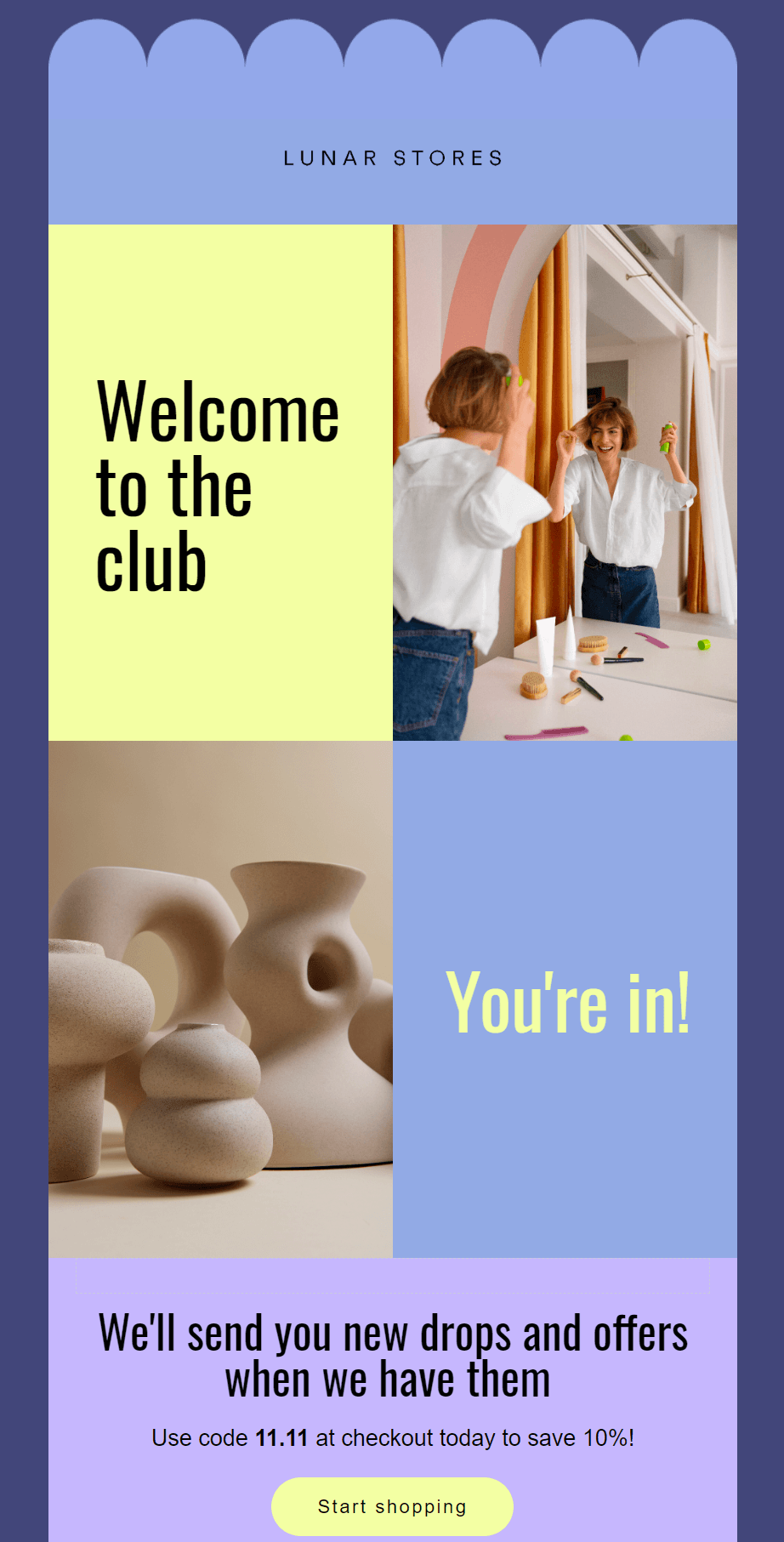
A welcome email is a prime example of one that your customers expect. The template below, created in Omnisend, builds anticipation for future messages and delivers immediate value with a discount code:
There are two email marketing approaches, both with a place in your strategy:
- Automations. Examples include a welcome series, abandoned cart email, cross-sell, birthday, and back-in-stock alert. Only 2% of email sends were automations in 2025, yet they accounted for 30% of email revenue.
- Campaigns. One-time and scheduled sends, usually for newsletters and company announcements.
Your email list updates with new addresses with every paying customer and form signup, including abandoned carts, provided the email field is complete. You can also run competitions, quizzes, and collect emails at the point of sale.
The video below shows how to convert abandoned carts into revenue:
Email marketing is, initially, a nurturing channel that delivers your first customer experience, regardless of the message type. Over time, it covers your complete buyer journey, reaching your loyalists, at-risk, high potential, and other customer groups.
2. Create urgency with SMS marketing
SMS is a much more direct and personal channel than email. Most people’s SMS inboxes are much emptier than their email ones. That gives you prime real estate, but also puts the onus on you to deliver value and earn your place.
Once you have customer numbers, automated messages, such as shipping confirmations and back-in-stock alerts, make a positive contribution to your customer experience:
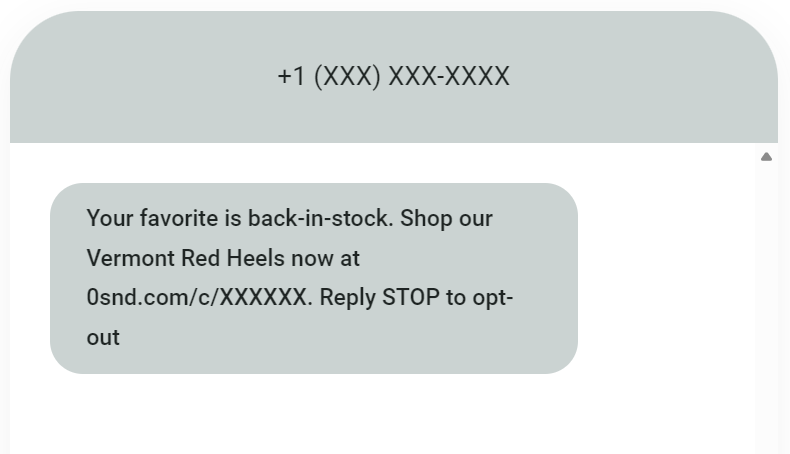
Such automated messages earned an average of $0.74/send compared to $0.15 for campaigns in 2025, as per Omnisend’s 2026 Ecommerce Marketing Report.
Text messaging as a channel also complements email. You could use SMS to follow up, or send a text message to ask customers to check their email.
So, how do you get people to give you their phone numbers in the first place? Your clothing store will have natural opportunities to collect phone numbers at checkout and via forms for competition entries, rewards, loyalty programs, and welcome discounts.
Some customers might be less inclined to complete forms if you ask for too much upfront. A multi-step form will assist in overcoming that, letting your customer enter their email address, and then their phone number in a second step if they want to.
3. Re-engage browsers with web push notifications
Web push notifications reach subscribers who don’t want to hand over their email or phone number, but are happy clicking “Allow” on a browser prompt to opt into device-based alerts. You can then message them without any contact details.
For your clothing brand, web push notifications are suitable for time-sensitive alerts, such as product drops and flash sales.
Omnisend’s 2026 Ecommerce Marketing Report shows that automated notifications, such as back-in-stock alerts, deliver outsized results compared to campaigns. A nearly 10× higher conversion rate, 7× higher ROI, and 37% higher open rate make automation worth it.
The web push notification below, created in Omnisend, is for cart recovery:
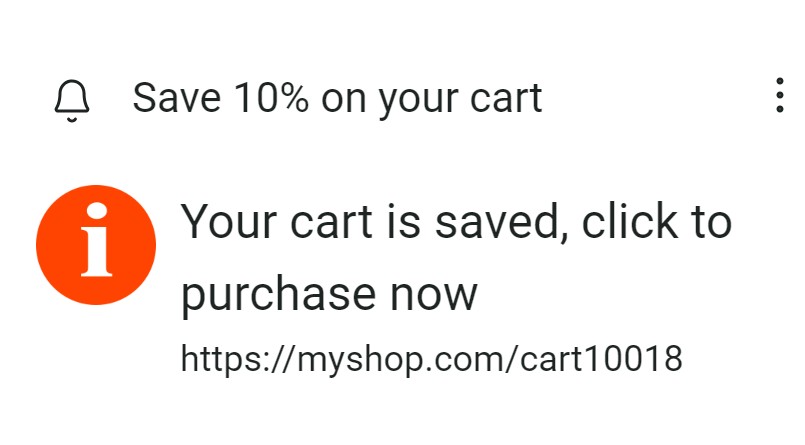
The catch to web push notifications is that they don’t work on iPhone; it’s an Android and desktop channel only. However, it still earns its place as a standalone channel for the portion of subscribers who want the latest alerts but not in an inbox.
4. Connect them: email, SMS, and push notifications together
Standalone email, SMS, and web push notifications reach your customers just fine. But they won’t move your customer through their journey in series, reevaluate and redeliver value, and connect to all points in your strategy.
In practice, connecting your owned channels requires building multichannel flows in a marketing tool that supports all channels, such as Omnisend:
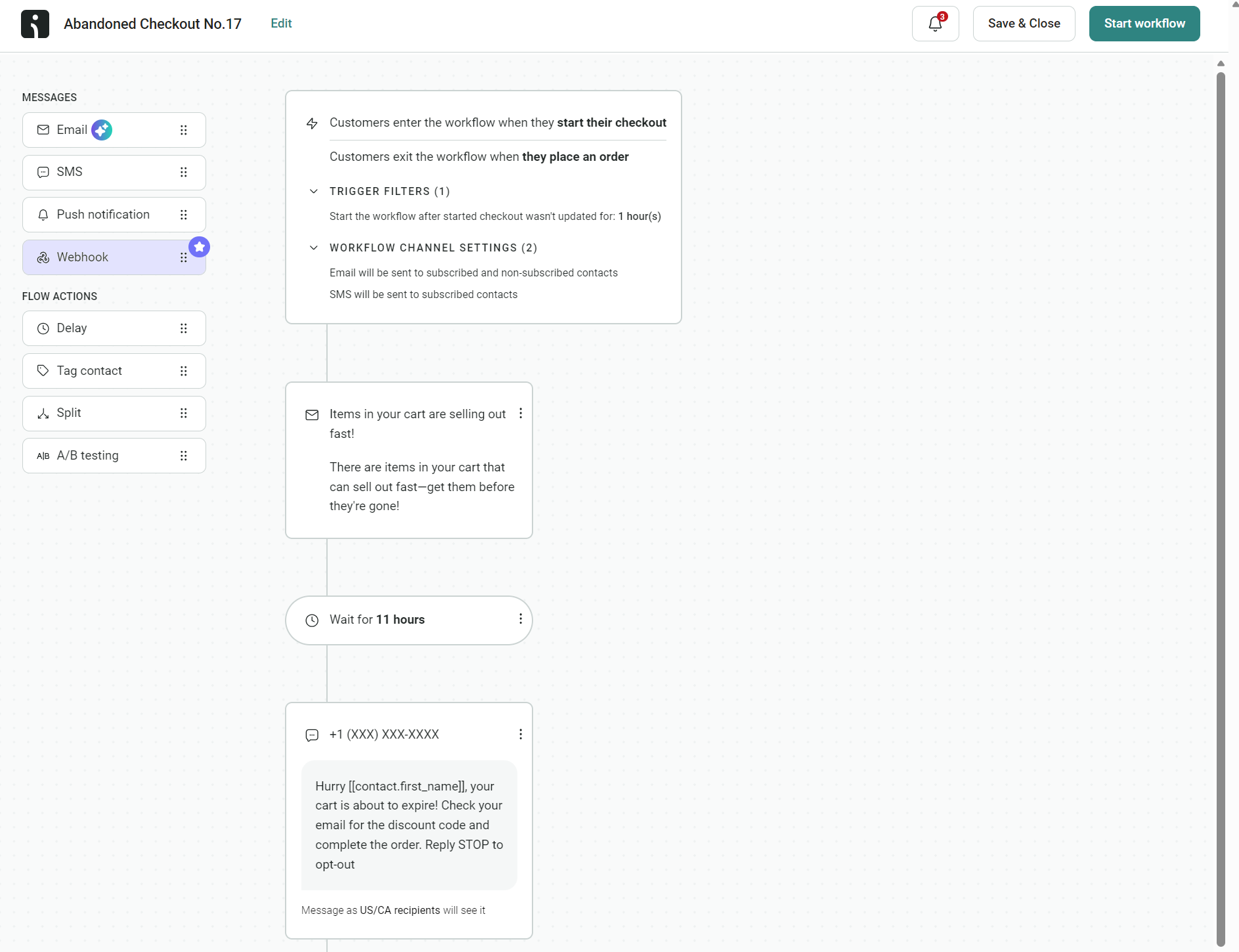
Omnisend’s Free and Standard plans support email and web push notifications in flows. The Pro plan adds SMS as a channel. Customers achieved a $79 ROI for every $1 spent across email, SMS, and web push notifications in 2025.
The connection comes from a combination of those multichannel flows, segmentation, and reports for all three channels. Your ecommerce platform, such as Shopify, syncs customer and order data into Omnisend, so your flows trigger based on what people do.
Watch this video to learn more about automation in Omnisend:
Then expand your reach with additional channels
Most clothing brands have a blog, social media profiles, and collect reviews. What’s working for others can also work for you, but balance is key, as there’s more room for wasting time and spending with earned and paid channels.
The right mix of earned and paid channels depends on who your audience is, and also, where they spend time. The owned channels you master will also feed into your additional channels via signups, promotions, outreach, and so on.
5. Grow traffic with blog content
Blogging is also an owned channel. It gives you a good reason to create a newsletter, update your socials, participate in forums, and point people to your own advice instead of others.
The Chubbies Shorts blog is a decent example. It publishes content about new launches, styling advice, and collaborations:
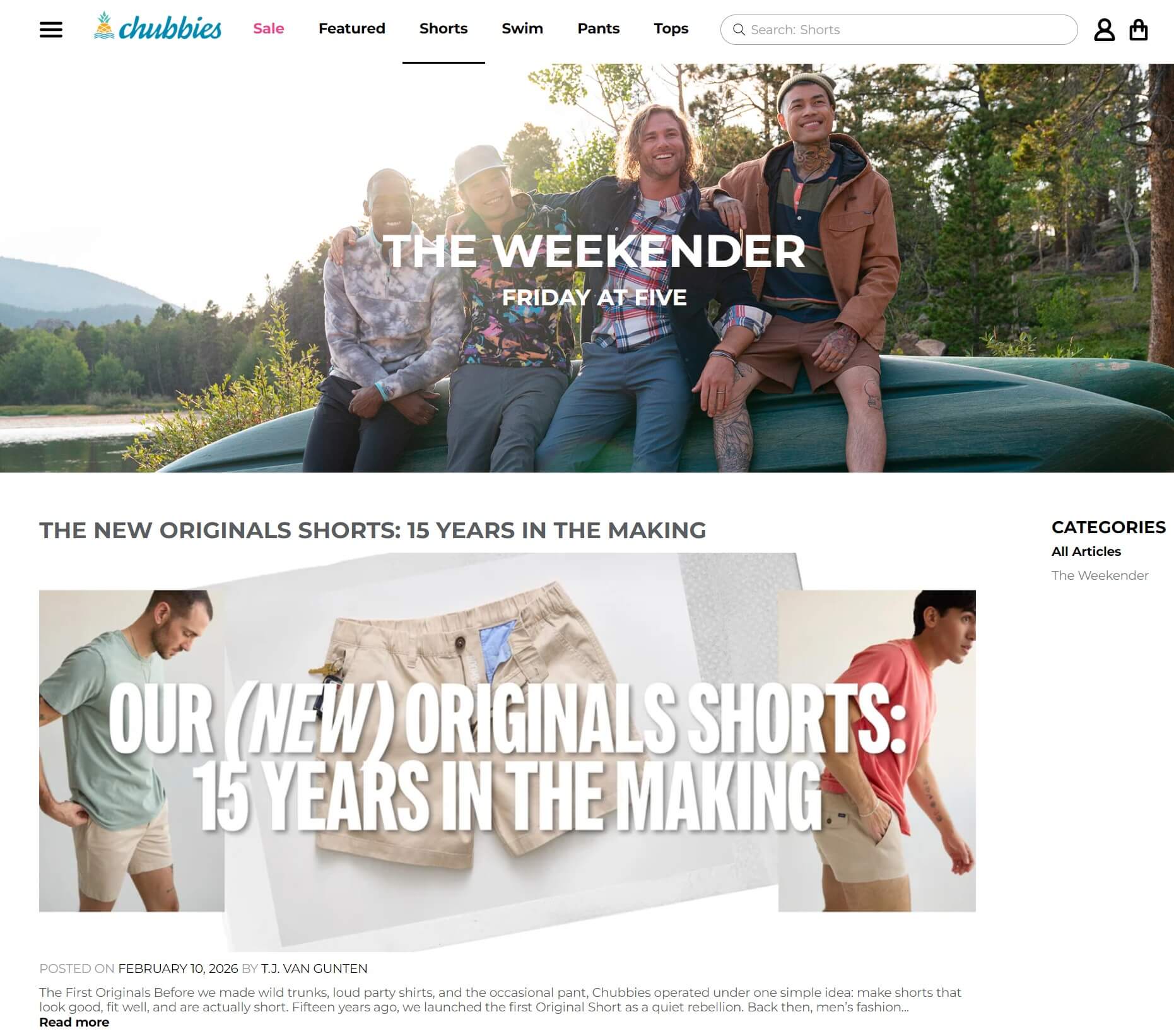
The most notable benefit to blog content, however, is increasing your organic search visibility in Google and in AI search tools, such as ChatGPT.
Articles that satisfy search intent and target long-tail keywords without big competition have a decent shot at ranking in Google once your website has some authority.
Authority comes with time, the consistent publication of quality articles, and from collecting external links from websites that themselves have authority.
Before you start blogging, sign up for Google Search Console and integrate your store, so that you gain visibility over your appearance in search. You can track your visibility in Google, those external links we mentioned, and monitor your web vitals.
6. Build a social media strategy
The simplest social media strategy is building profiles on the platforms where your audience lives, adding links to those profiles on your website, and posting your products, promotions, and blog posts to keep your profile up to date. Fashion Nova is a great example:
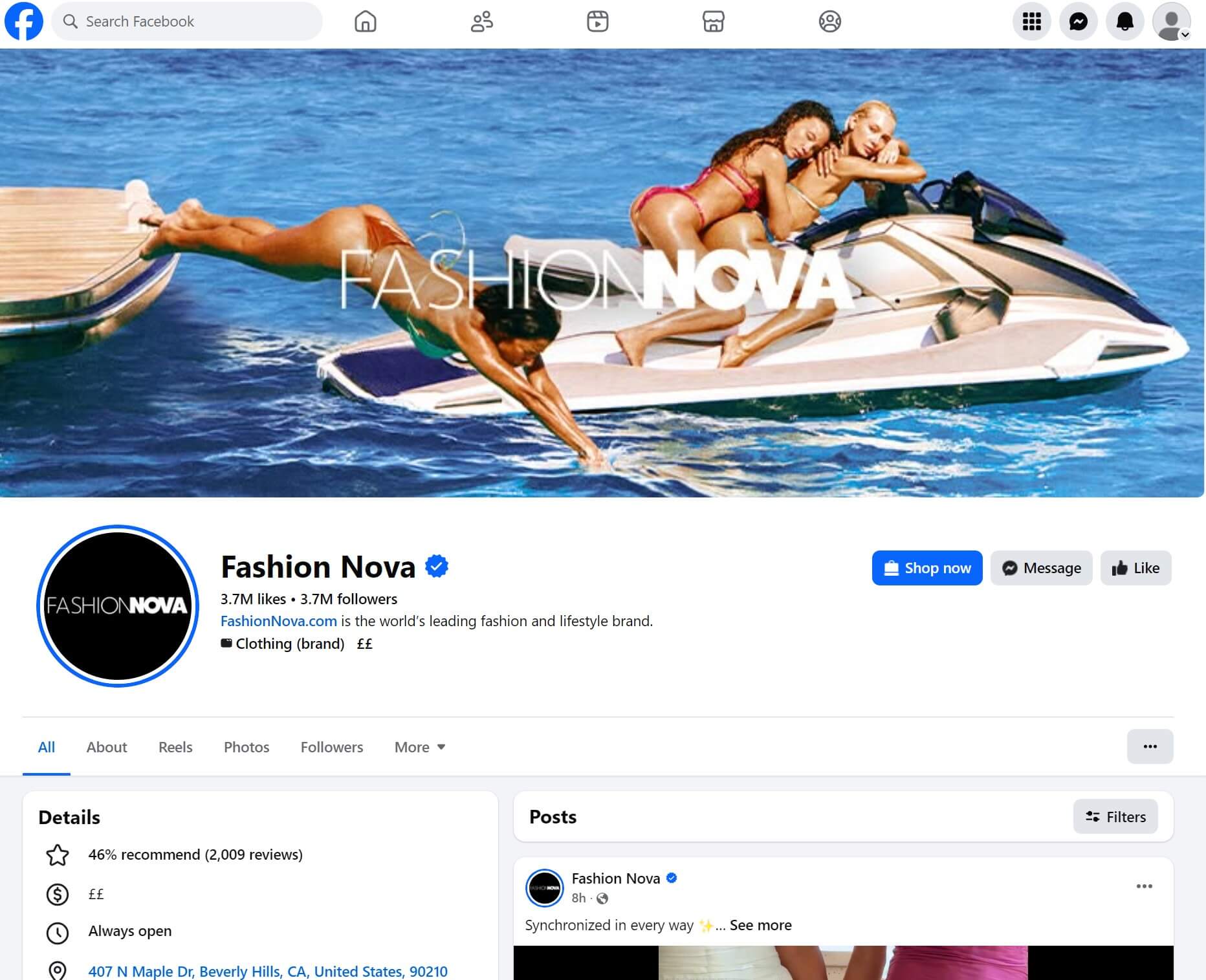
That’s a basic organic approach to market a clothing brand, but you won’t grow your audience as fast as if you also joined community groups, pages, and actively commented in threads.
Being active on social media and taking part in threads and discussions around clothing and fashion will get your profiles gathering subscribers quickly. You can then post and create your own discussion spot for fashion branding and marketing.
Another approach to social media is paid social. Paid social sees you pay for exposure to audiences in ads. You’ll link to your products or landing pages, and use the comment section in ads (when available) to nurture would-be customers.
7. Use influencer marketing
Influencers on TikTok, Instagram, YouTube, and other creative platforms can help to raise awareness and generate sales for your clothing brand.
A quick search for influencers on TikTok, Instagram, and other social media platforms usually yields good results. Our quick search for “fashion influencer” on TikTok gave us these:
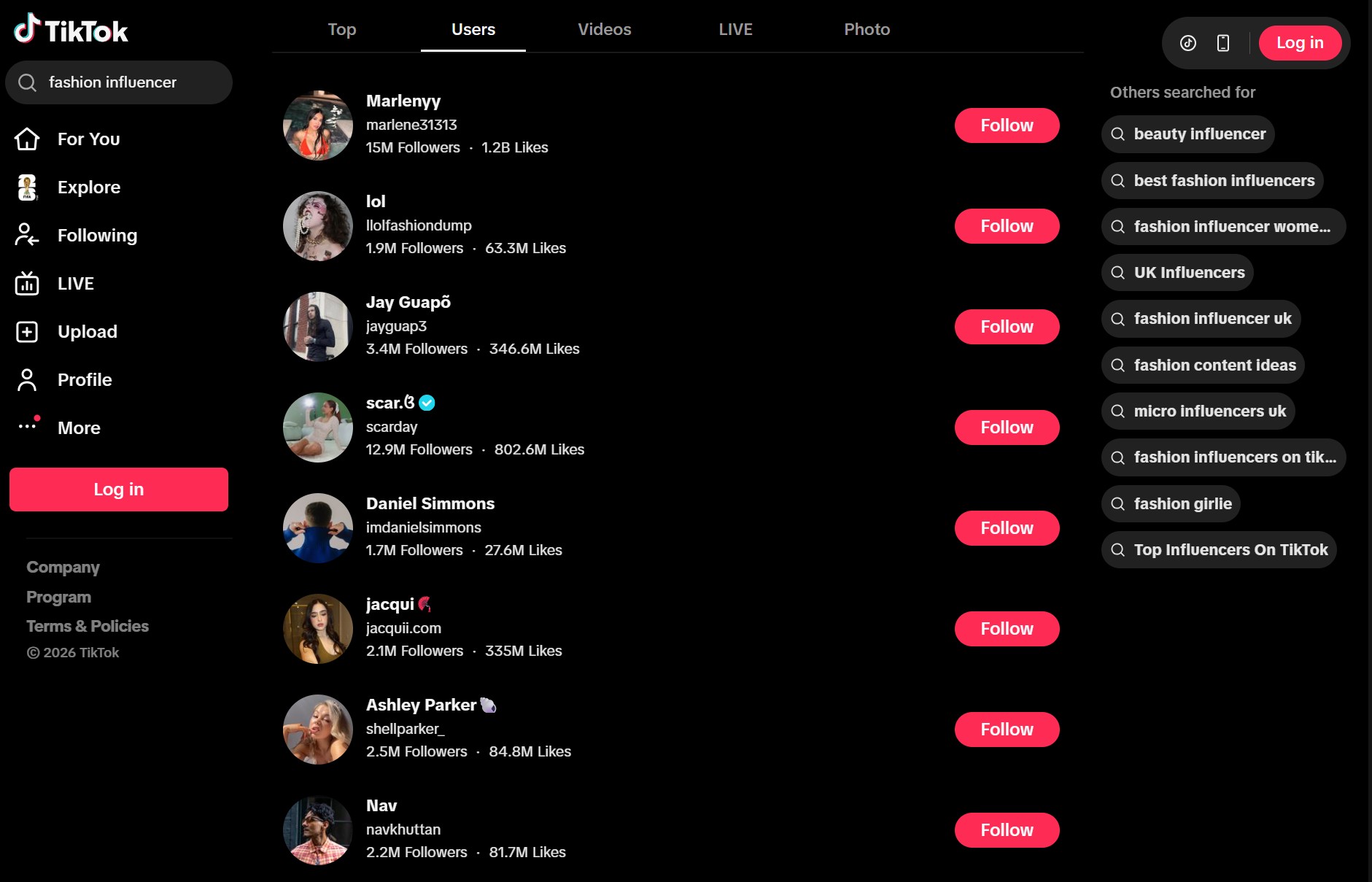
Omnisend’s survey of 2,007 US social media users in 2025 found that 45% are more likely to buy something when it’s trending online.
Paid collabs could include product review segments, try-ons, haul reels, sponsor links in the bio, or something as simple as them wearing your t-shirt.
Another opportunity is interviews, photo shoots, and blog posts, which move the collaboration onto your website and provide content ownership.
The challenge with influencers is knowing which will generate an ROI or achieve your goals. You can measure success on sales and revenue, engagement, or both.
A unique discount code or link per influencer and campaign is best, so you know which creators are contributing to traffic, signups, and sales.
8. Encourage user-generated content
The UGC you collect can feed into your emails, landing pages, product galleries, and social media campaigns for social proof and branding purposes.
Add product review blocks to your product pages and contact customers via a post-purchase email asking them to leave feedback.
Your review request email should go out at least three days after delivery, and make it as easy as possible for customers to generate content.
Apps such as Judge.me are extremely useful to automate review request emails. Alternatively, you can automate a review request email in your marketing tool, such as Omnisend, and point people to review pages for them to complete:
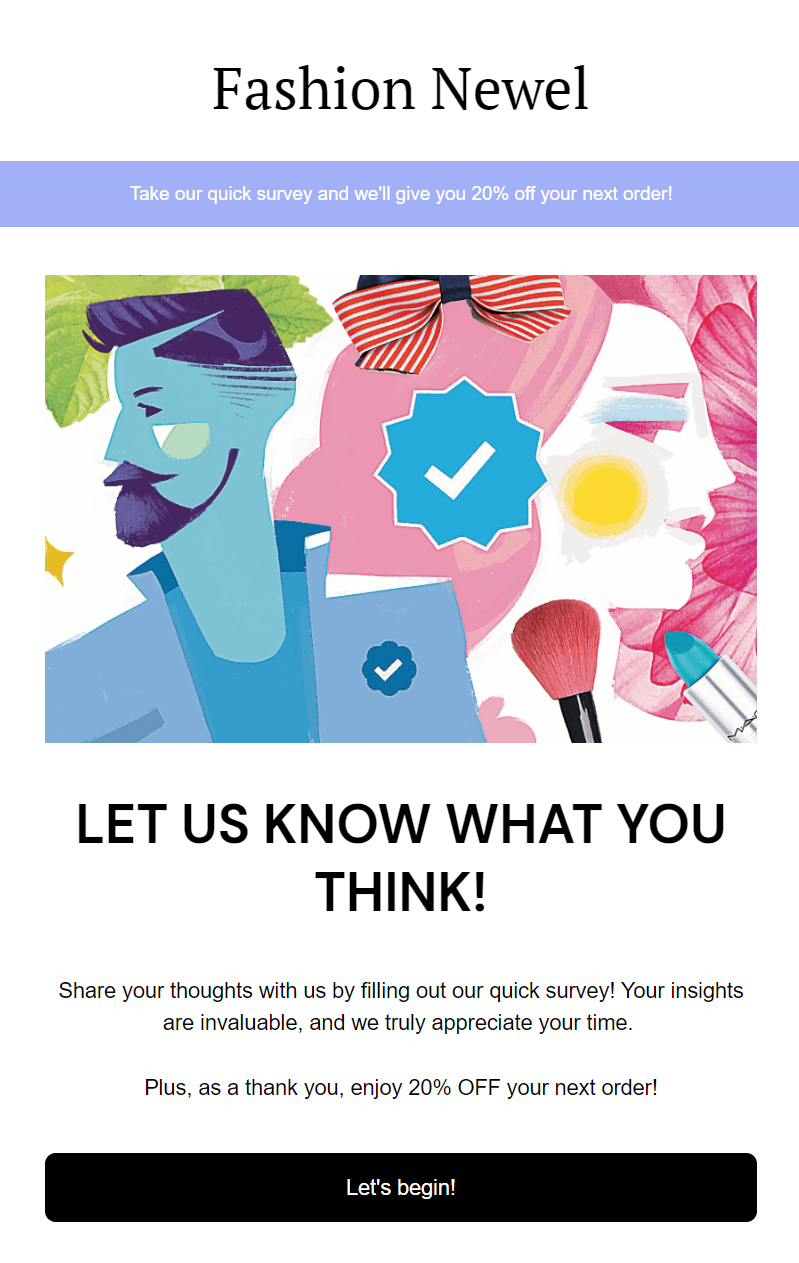
Other ways to encourage user-generated content include photo upload widgets on your website for gallery showcases and social media hashtags.
9. Set up popup shops
Popup shops provide daily takings and are invaluable for early sales of new products and shifting old and out-of-season wares. Your clothing brand can also use the sales numbers to assess demand and pivot into new lines.
But sales aren’t the only power of popup shops. You can add QR codes to your stalls, stickers, and receipts to collect email signups and generate website traffic, get feedback in-person, and collaborate with other businesses to expand your reach.
A popup shop is also a cross-channel clothes marketing opportunity. Invite customers via email, add the location to your social media profile, and post about it on your blog.
10. Use paid ads
The reason clothing brands use pay-per-click (PPC) is to push traffic that converts to sales or to build brand awareness.
Paid ads are a quick way to get people to a product’s sale page. The fundamental here is to know what profit you make on a sale. Once you know that, you can set up a campaign, set the spend, and monitor conversions.
The math is simple. If a product makes $15 profit per sale and the average cost per visitor is $0.70, then you need a sale every 21 visitors from paid ads to break even.
With Google and Microsoft Ads, you bid on keywords and can add negative keywords when using a broad match to narrow down visibility.
Another option is Google Shopping and Microsoft Shopping campaigns. These can have a lower cost-per-click (CPC) than traditional PPC and will get your clothing brand into the scrollable/swipable product listings in search engines:
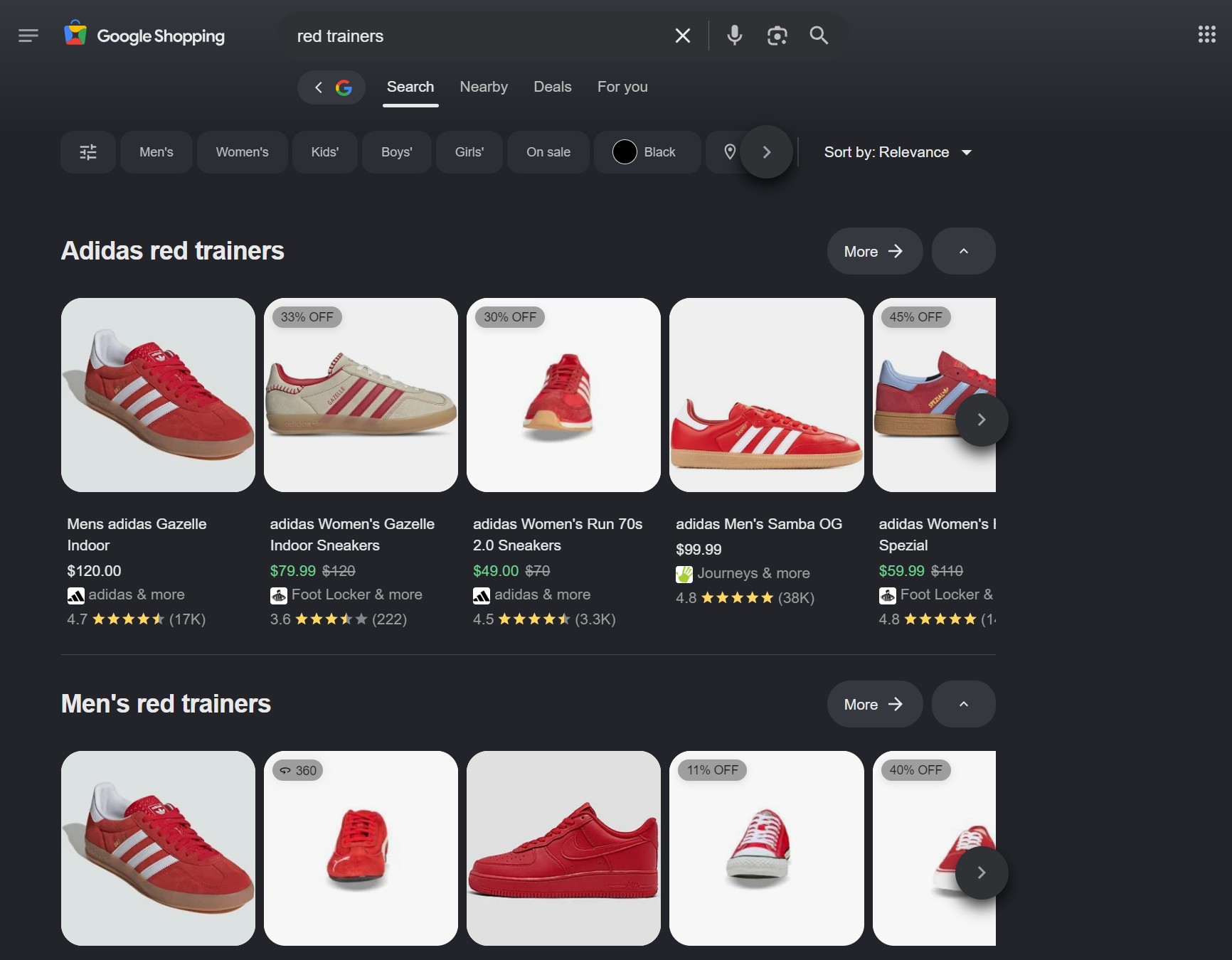
For your clothing brand marketing, a Shopping campaign is more visual than PPC, but you don’t bid on keywords. The control you have is over your product feed and listings, negative keywords, and campaign settings, such as the maximum CPC.
How to choose the right mix for your brand
Some of the channels above are optional, such as popup stores. Others are defaults, such as email, and some are helpful for reaching customers across their lifecycle, such as SMS.
Email is the most naturally occurring channel, as your list grows with every sale. You can also collect marketing opt-ins without a sale with popups, flyout forms, and landing pages:
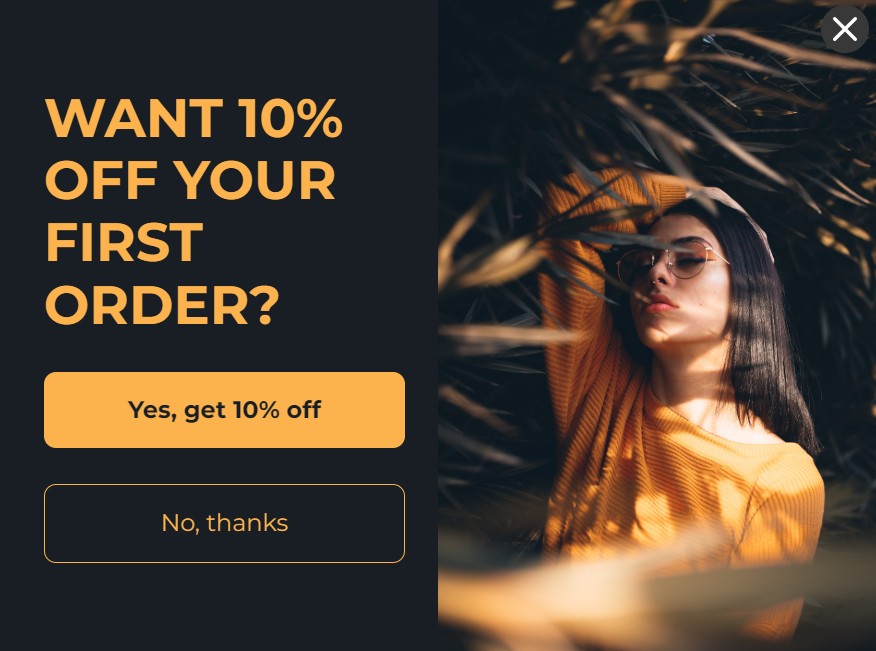
Add SMS as a signup option, and your marketing efforts can reach customers according to their contact preferences, based on their behavior and activity.
With email and SMS cemented into your channel mix, move on to the channels where your audience spends the most time. That’s going to be social media, where your own profiles and influencers can build your community.
Assign your budget based on channel performance. Some will sap more money than time, such as paid ads versus email. Calculate your ROI from all channels and cut the losers, or at least strip some budget away from them to prioritize your performers.
Conclusion
Your individual channels have roles across your customer journey, but your biggest wins will come from connecting them into one experience.
For instance, you could run an ad for a jacket, collect an email address with a popup on your product page, and then link to your latest articles in your welcome email.
Email, SMS, and push notifications provide the necessary audience ownership to retain customers long-term without being subjected to what search and social algorithms dictate.
Additional earned and paid channels, including ads and social media, complement your stack across awareness and conversion.
For all the channels that collect metrics, such as email, ads, and even blogging, track sales and look for ways to use them together for better results.
Quick sign up | No credit card required