Omnisend AI

 OFFER
OFFER









Digital marketing platforms are software tools that help businesses plan, run, and measure their marketing across channels like email, SMS, social media, search, and analytics. As the number of marketing channels keeps growing, managing every campaign by hand has become almost impossible, and that’s where the right platform earns its place.
The best digital marketing platforms in 2026 lean heavily on automation, AI-powered features, built-in analytics, and reporting tools. They handle repetitive work, personalize messages at scale, and strengthen customer engagement. They also show you what’s actually driving revenue, so your team spends more time on strategy and less on busywork.
No single tool does everything well, though. This guide covers 10 platforms across different categories, from email and SMS to marketing automation, SEO, social media, design, analytics, and landing pages.
Whether you’re focused on email, SEO, social media, or analytics, the best marketing platforms are the ones that align with your goals and support your long-term growth.
Quick sign up | No credit card required
What is a digital marketing platform?
A digital marketing platform is software that helps you manage and optimize your marketing from one place, instead of juggling separate tools for every channel.
Most combine automation, analytics, and audience management, helping you run campaigns, track results, and optimize performance over time.
These platforms exist because marketing now happens across many marketing channels at once – email, SMS, social media, search, and your website. They help businesses create consistent customer engagement across every touchpoint.
A good platform automates repetitive tasks, like sending a welcome series or scheduling social posts. It then reports on what’s working, so you can make better decisions.
In 2026, AI and personalization sit at the center of most platforms. They can draft copy, predict which customers are likely to buy, and tailor messages to individual behavior.
Different platforms serve different purposes, though.
Some focus on email and SMS, others on SEO, social media, design, or analytics — so the right choice depends on the work you need to do.
Best digital marketing platforms summary
Email and SMS remain among the highest-return channels in recent digital marketing statistics, but the right platform depends on your channels and budget.
The table below compares the top digital marketing platforms. Many are considered among the best digital marketing websites for managing campaigns, automation, analytics, and customer engagement.
| Tool | Best for | Trial info | Starting price |
|---|---|---|---|
| Omnisend | Email and SMS marketing | Free plan | From $16/mo |
| HubSpot | Marketing automation and CRM | Free tools | From $9/seat/mo |
| ChatGPT | AI marketing assistant | Free tools | From $8/user/mo |
| Google Marketing Platform | Analytics and advertising | Free (GA4 and Tag Manager) | Free / 360 by quote |
| Sprout Social | Social media management | 30-day trial | From $79/seat/mo |
| Ahrefs | SEO and content research | Free tools | From $29/mo |
| Canva | Graphic design | Free plan | From ~$15/mo |
| Google Search Console | Search visibility | Free | Free |
| Hotjar | User behavior analytics | Free plan | From $39/mo |
| Unbounce | Landing pages and CRO | 14-day trial | From $29/mo |
10 best digital marketing platforms — detailed list
Here’s a closer look at our top 10 digital marketing platforms. These tools are often included among the top 10 digital marketing websites businesses use to manage campaigns, analytics, and customer engagement.
For each one, we cover what it’s best for, its standout features, the upsides and trade-offs, and current pricing as of June 2026.
That way, you can compare them on the details that matter most.
1. Omnisend — email & SMS marketing
Best for
Ecommerce and DTC brands that want email, SMS, and web push in one tool with a genuinely usable free plan.
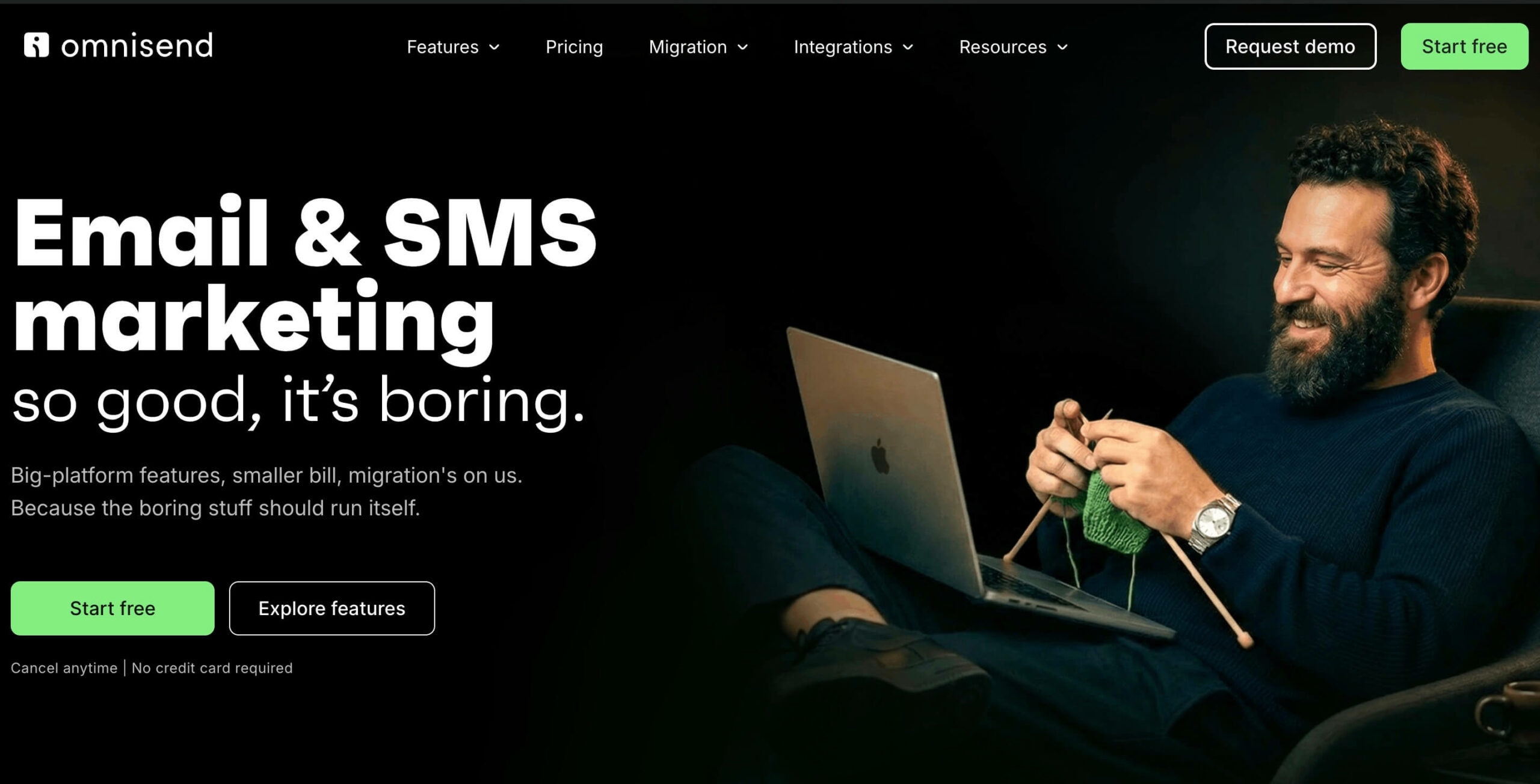
Omnisend is an ecommerce-focused email marketing platform that combines email, SMS, and web push, plus a full set of ecommerce marketing features, in a single dashboard.
It centers on pre-built automations, segmentation, and signup forms, and bills only on the contacts you actively market to.
Key features
• Email, SMS, and web push from one place
• Pre-built automation workflows like cart abandonment and welcome series
• Advanced segmentation by behavior and lifecycle stage
• Signup forms and popups to grow your list
• AI features built that help create content and improve the campaign’s performance
Pros
• Generous free plan with most core features
• Native SMS and web push, no separate vendor
• 24/7 support on every plan
• Free done-for-you migration
Cons
• Purpose-built for ecommerce, a weaker fit for B2B
• Costs rise as your list grows
Pricing
• Free: up to 250 contacts and 500 emails a month
• Standard: from $16/month for higher limits
• Pro: from $59/month for unlimited emails plus bonus SMS credits (pricing)
2. HubSpot — marketing automation
Best for
Growing teams that want marketing automation tied directly to a full CRM, sales, and service stack.
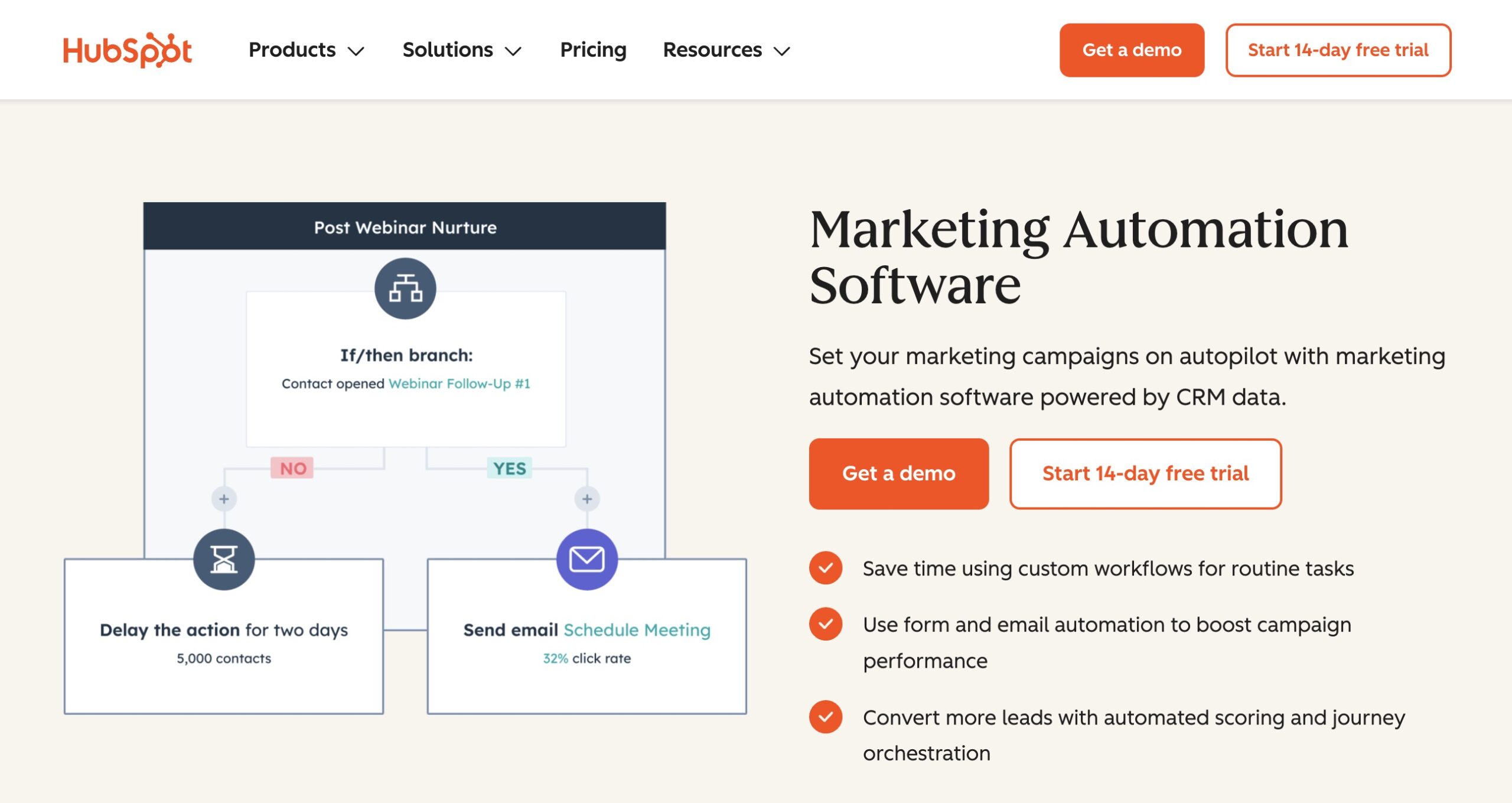
HubSpot is a customer platform that combines CRM, marketing automation, sales, and service tools in one ecosystem.
Its Marketing Hub includes email, landing pages, forms, ads, workflows, and analytics, and it scales with plans ranging from free tools up to enterprise plans.
Key features
• Marketing automation and workflows with lead scoring
• CRM and contact management
• Email marketing, landing pages, and forms
• SEO and social tools on higher tiers
• Analytics and revenue attribution
Pros
• Free CRM and marketing tools to start
• Deep, native integration across marketing, sales, and service
• Powerful automation as you scale
• Large app and integration marketplace
Cons
• Professional and Enterprise pricing climbs steeply
• Onboarding fees apply on higher tiers
• Some tools have a learning curve
Pricing
• Free tools: $0 for up to two users
• Marketing Hub Starter: from $9 per seat a month, billed annually
• Professional: from $800/month plus onboarding
• Enterprise: from $3,600/month
3. ChatGPT — AI marketing assistant
Best for
Marketers who want a flexible AI assistant for content, ideation, research, and data analysis.
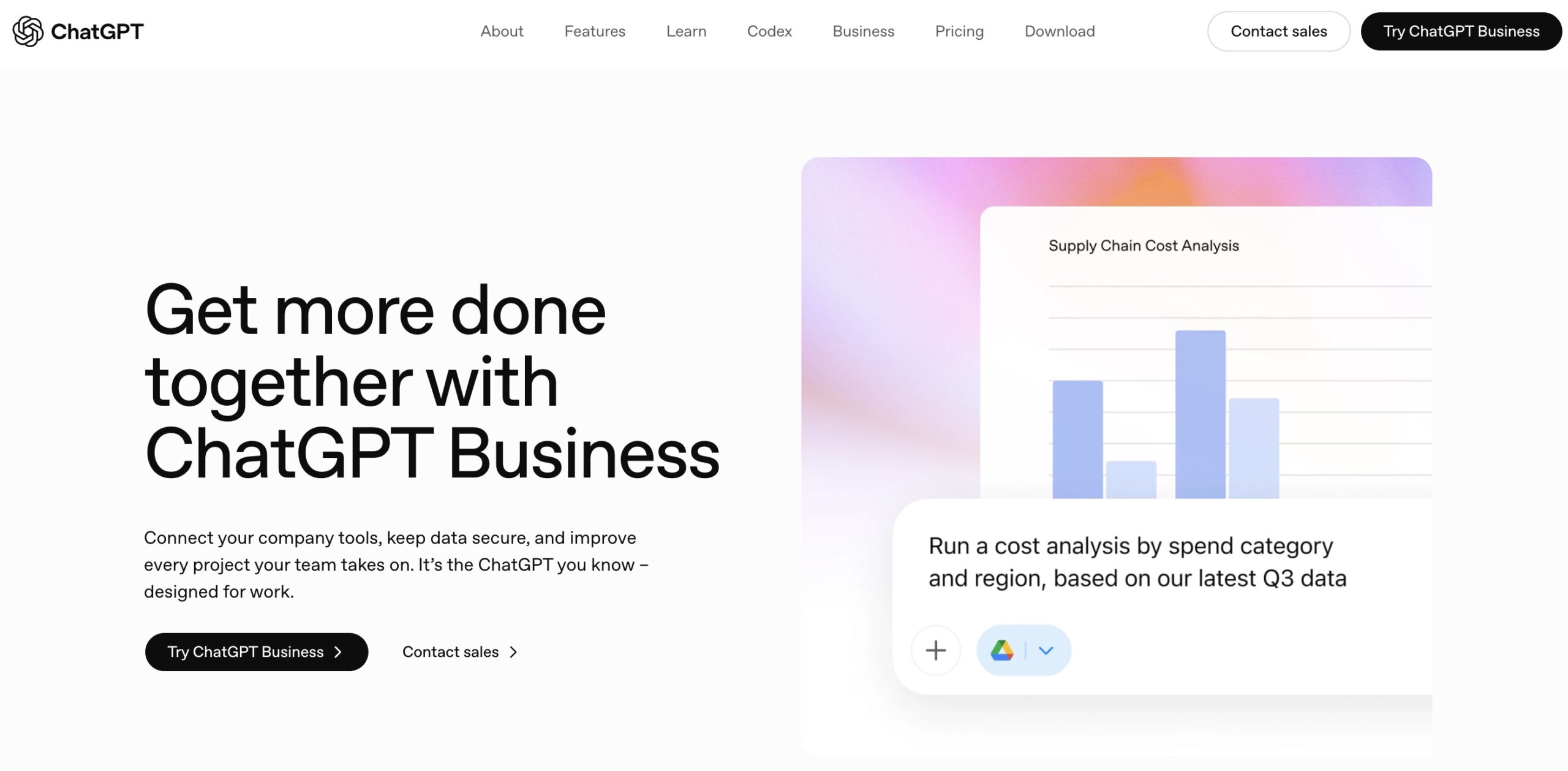
ChatGPT is OpenAI’s AI assistant, widely used in marketing to draft copy, brainstorm campaigns, summarize research, and analyze data.
It runs on OpenAI’s latest models and connects to tools like Slack and Google Drive.
Marketers using Omnisend can even connect it to ChatGPT to ask about campaign performance.
Key features
• Content drafting, brainstorming, and summarization
• Data analysis and research
• App connectors for Slack, Google Drive, and more
• Custom GPTs you can build and share
• Business and Enterprise workspaces with admin controls
Pros
• Free plan is useful for everyday marketing tasks
• Flat, transparent per-user pricing
• Large ecosystem of connectors and custom GPTs
Cons
• Not a marketing-specific tool, with no native campaign delivery
• The best models and features sit behind paid tiers
Pricing
• Free: $0 for individuals
• Go from $8/month
• Plus from $20/month
• Business from $100/month
• Enterprise by quote
4. Google Marketing Platform — analytics & advertising
Best for
Businesses that want analytics and advertising tools that work together, with free options for smaller teams.
Google Marketing Platform brings Google’s analytics and advertising products into one place.
It pairs free tools like Google Analytics and Tag Manager with an enterprise “360” suite for larger advertisers who need higher limits and support.
Key features
• Google Analytics (GA4) for website and app analytics
• Tag Manager for managing tags without code
• Campaign Manager 360 and Display & Video 360 for cross-channel ads
• Search Ads 360 for managing search campaigns at scale
Pros
• Powerful core analytics and tag management at no cost
• Tight integration across Google’s ad and analytics products
• Scales to very large data volumes with the 360 tier
Cons
• The paid 360 products aren’t priced publicly
• Advertising tools are aimed at agencies and large advertisers
Pricing
• Google Analytics and Tag Manager: free
• 360 suite, including Analytics 360 and Search Ads 360: paid, by quote
5. Sprout Social — social media management
Best for
Mid-market and enterprise teams that want publishing, engagement, and analytics in one polished platform.
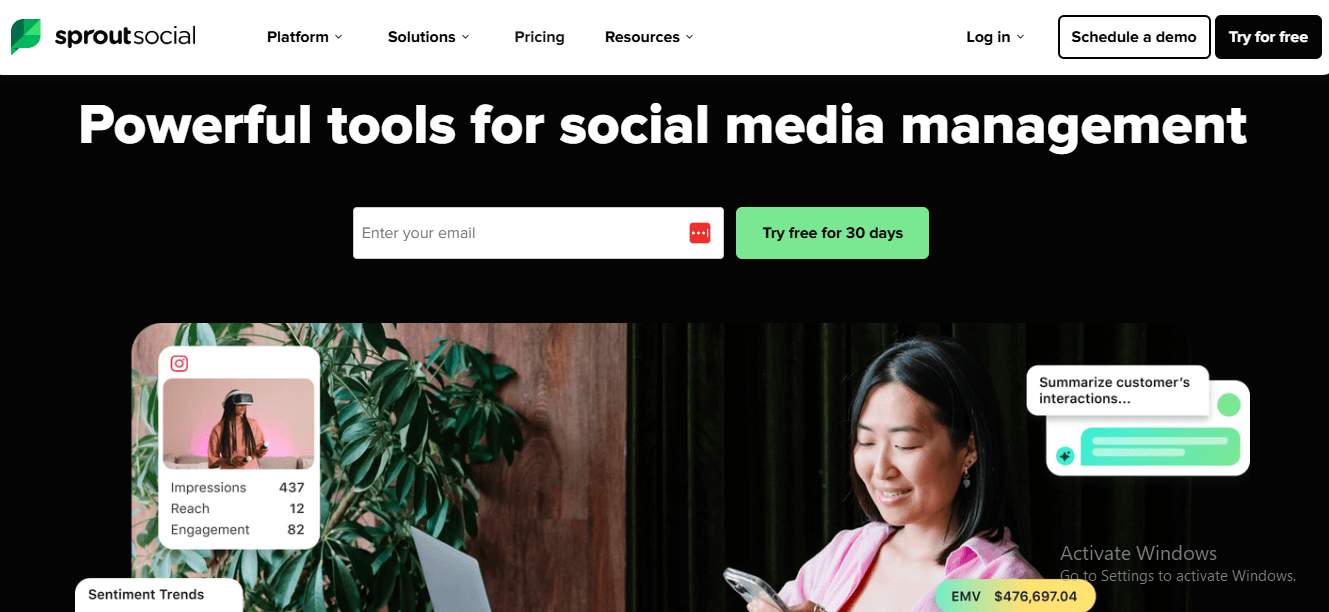
Sprout Social is an all-in-one social media management platform covering scheduling, a unified inbox, analytics, and review management.
Social listening and employee advocacy are available as add-ons.
Key features
• Unified Smart Inbox for engagement across networks
• Publishing with optimal send-time scheduling
• Profile- and post-level analytics and reporting
• AI Assist for composing and replying
• Review management and keyword monitoring
Pros
• Strong, unified inbox and reporting suite
• AI features built into everyday workflows
• Scales from a single user to enterprise
Cons
• Per-seat pricing gets expensive for teams
• Listening and premium analytics cost extra
Pricing
• Essentials: from $79/per seat/month
• Standard: from $199/per seat/month
• Professional: $299
• Advanced: $399/per seat/month
6. Ahrefs — SEO & content research
Best for
SEO professionals and agencies that want deep backlink and keyword data in one toolset.
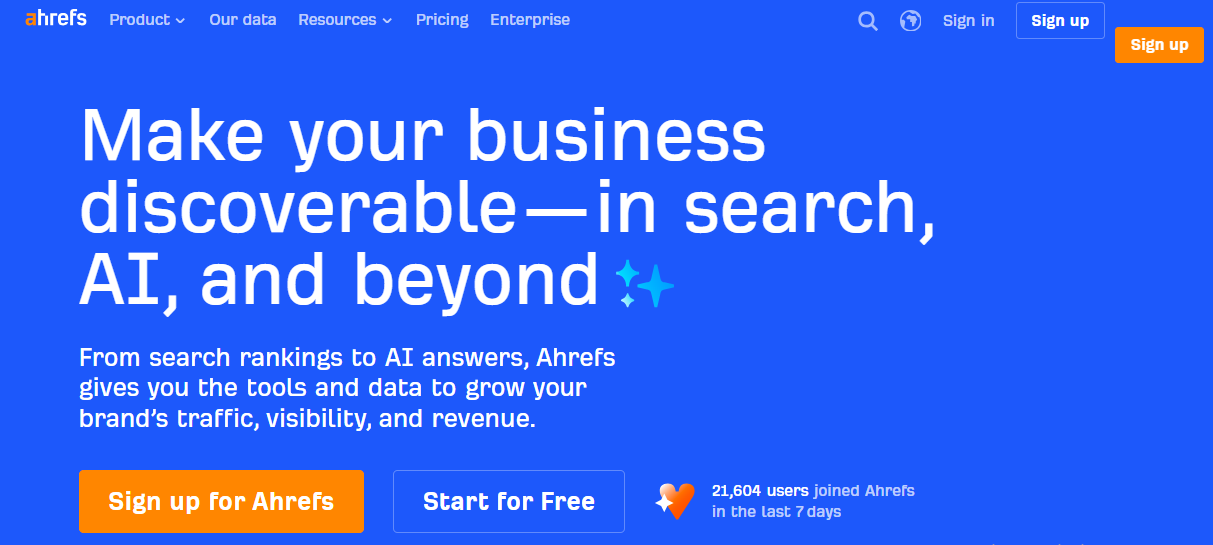
Ahrefs is a comprehensive SEO platform built on one of the web’s largest crawlers.
It handles backlink analysis, keyword research, rank tracking, site audits, and content research, plus tools for tracking visibility in AI search.
Key features
• Site Explorer for backlink and competitor analysis
• Keywords Explorer for keyword research
• Rank Tracker for monitoring positions
• Site Audit for technical SEO issues
• Brand Radar for AI-search visibility
Pros
• Deep backlink data and crawler depth
• Fast-growing AI-search features
• Access to extensive backlink and keyword data across plans
• Free tools and a free tier for site owners
Cons
• Expensive across most tiers
• A steep learning curve for new users
Pricing
• Starter: from $29/month
• Lite: $129
• Standard: $249/month
• Advanced: $449/month
• Enterprise: from $1,499/month
7. Canva — graphic design
Best for
Marketers and non-designers who need fast, on-brand visuals without design software.
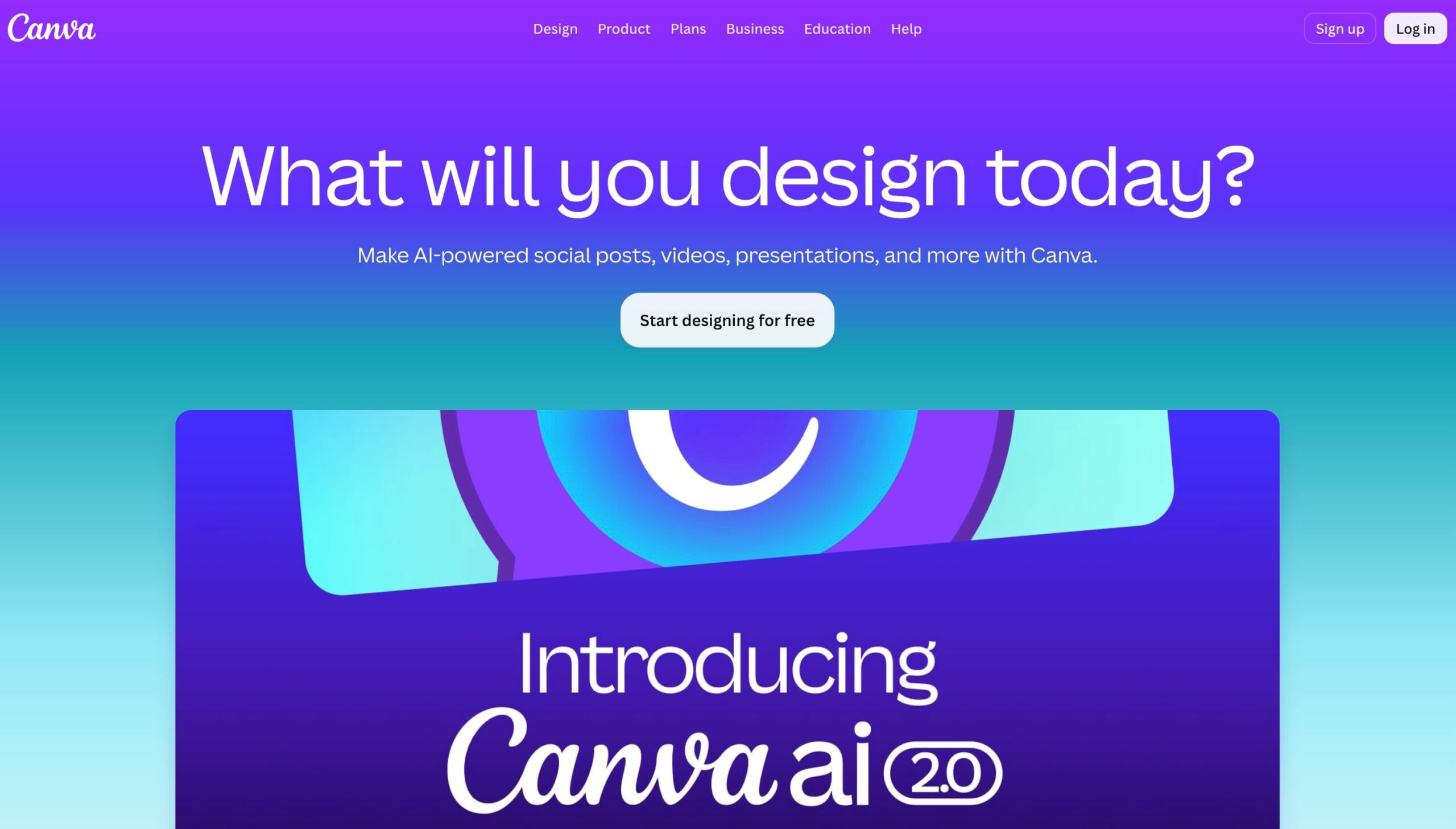
Canva is a drag-and-drop design platform with millions of templates for social posts, ads, presentations, and print.
It pairs an easy editor with a deep library of stock assets and a growing set of AI design tools.
Key features
• Drag-and-drop editor with millions of templates
• Brand Kits to keep designs on-brand
• Premium tools like Background Remover and Magic Resize
• Content scheduling and team collaboration
• AI design tools for images and copy
Pros
• Easy enough for complete non-designers
• Huge template and asset library
• Strong free plan
• Built-in AI tools across paid plans
Cons
• Heavy AI use is capped by an allowance
• Less pixel-level control than pro design tools
Pricing
• Free plan available
• Pro: from about $18/month/per person
• Business: at $25/month/per person
• Enterprise: Custom pricing
8. Google Search Console — search visibility
Best for
Any site owner or marketer who wants to see how their site performs in Google Search, for free.
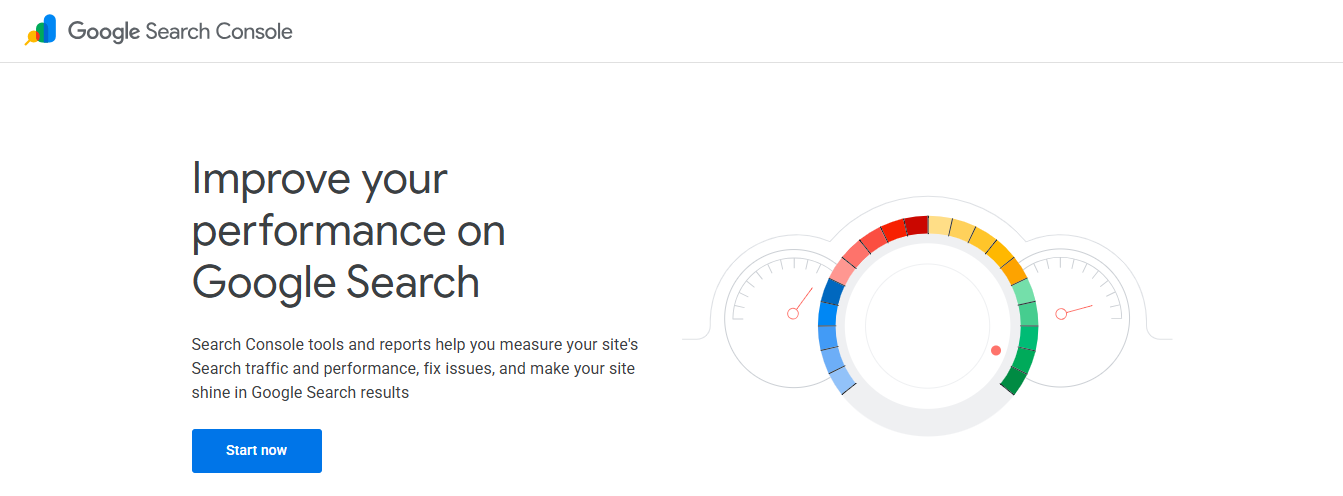
Google Search Console is a free Google tool that shows how your site performs in search.
It reports the queries, pages, and clicks driving your traffic, flags indexing problems, and lets you submit sitemaps and inspect individual URLs.
Key features
• Performance report for clicks, impressions, and position
• URL Inspection for index status and indexing requests
• Page indexing report for crawl and index issues
• Sitemap submission and monitoring
• Core Web Vitals and structured-data reports
Pros
• Completely free, straight from Google
• First-party search data no other tool fully replicates
• Useful for diagnosing indexing problems
Cons
• Covers only Google, and only sites you verify
• About 16 months of history, with sampled query data
Pricing
• Free, with no paid tiers
9. Hotjar — user behavior analytics
Best for
Teams that want to see how visitors actually behave on their site through heatmaps and recordings.
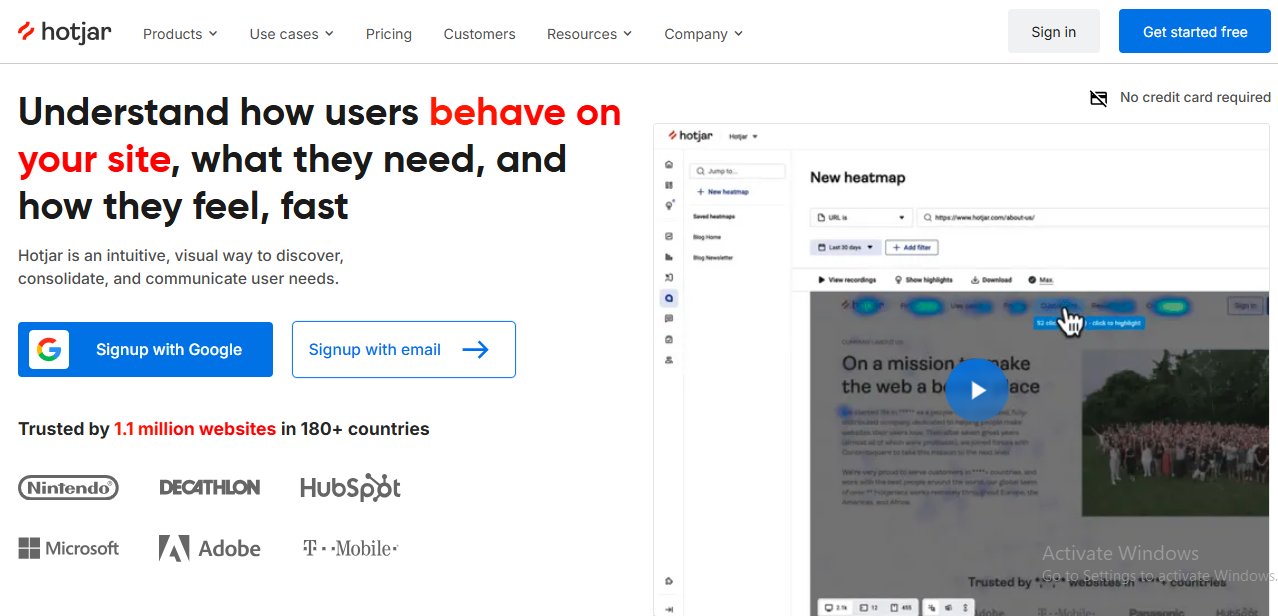
Hotjar is a behavior-analytics tool known for heatmaps, session recordings, and on-site surveys that show where users click, scroll, and drop off.
Hotjar is a user behavior analytics platform owned by Contentsquare. It combines heatmaps, session recordings, and feedback tools to show where visitors engage, hesitate, or leave your site.
Key features
• Heatmaps showing clicks, taps, and scroll depth
• Session recordings of real user journeys
• Surveys and feedback widgets
• Funnels and error tracking
• AI-assisted analysis of sessions and feedback
Pros
• Generous free plan with up to 200,000 monthly sessions
• Heatmaps, recordings, and surveys on every plan
• Now backed by Contentsquare’s deeper analytics
Cons
• The brand and platform are mid-transition to Contentsquare
• Higher tiers are quote-only
Pricing
• Free: $0 for up to 200,000 monthly sessions
• Growth: from $39/month, billed yearly
• Pro: Custom pricing
• Enterprise: Custom pricing
10. Unbounce — landing pages & CRO
Best for
Marketers and agencies running paid campaigns who need high-converting landing pages without a developer.
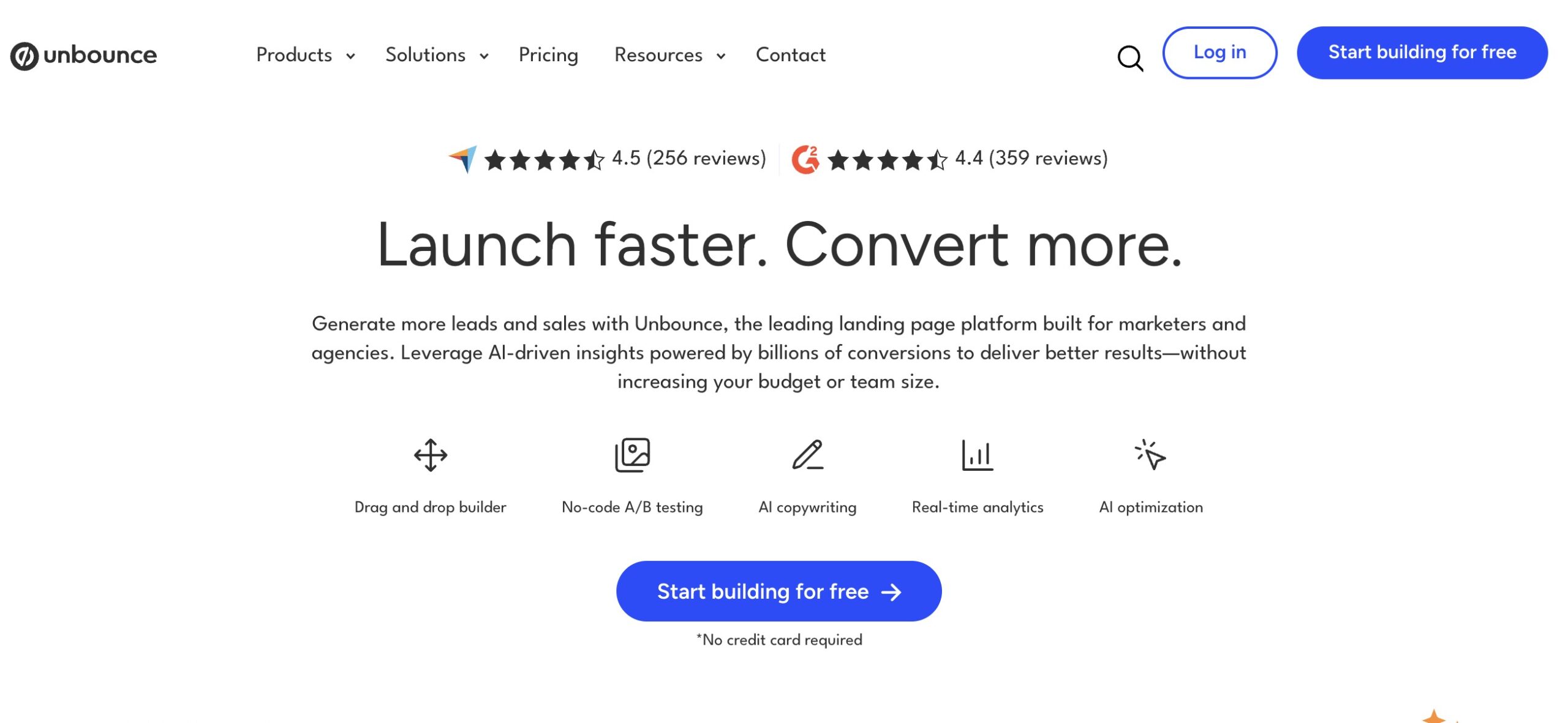
Unbounce is a landing-page builder with drag-and-drop design, A/B testing, and AI features for copy and traffic routing.
It’s aimed at marketers who want to lift conversion rates on paid, lead-gen, and ecommerce campaigns.
Key features
• Drag-and-drop landing-page builder with templates
• Unlimited A/B testing on higher plans
• Smart Traffic to route visitors to their best-match page
• Smart Copy AI for writing page copy
• Popups, sticky bars, and 1,000+ integrations
Pros
• Purpose-built for conversion and testing
• Unlimited conversions on every plan
• AI-powered tools for copy creation and visitor routing
• 14-day trial with no credit card
Cons
• Plans are capped by monthly traffic limits
• Lower tiers limit users and domains
Pricing
• 14-day trial, no credit card
• Starter: from $29/month
• Build: from $99/month
• Experiment: from $149/month
• Optimize: from $249/month
• Agency: Custom pricing
How we tested digital marketing platforms
We built this list by evaluating platforms across the marketing functions businesses actually use, not a single category.
Our goal was to find tools that help you manage, automate, and optimize digital marketing work, and that hold up in real use. You can read more about how we review tools.
We weighed each platform on:
• Usability: setup, learning curve, and overall experience
• Features: depth of functionality, automation, and AI-powered tools
• Integrations: how well it connects with ecommerce, CRM, analytics, and social tools
• Scalability: whether it suits small teams and keeps up as demands grow
• Reporting and analytics: performance tracking and the quality of insights
• Pricing and value: free plans, trials, and overall value for money
• Reputation: market presence, user reviews, and industry adoption
We didn’t score platforms or rank them head-to-head, because the best tool depends on your goals.
Instead, we focused on where each one stands out, so you can match it to your own priorities and channels.
The result is our shortlist of the top marketing platforms for growing a business, balanced for features, ease of use, and value.
How to choose the best digital marketing platform
No single platform is best for every business.
The right choice depends on your goals, your main channels, your budget, and what your team can realistically manage.
The best marketing platforms align with all four, and the best platform for digital marketing is simply the one that fits how you work. Work through these six factors before you commit.
1. Your marketing goals — Decide what you want to achieve first: lead generation, retention, brand awareness, or sales growth. Some platforms specialize in email marketing campaigns and retention, while others focus on SEO, social, or analytics.
2. Primary marketing channels — Think about where you spend most of your effort, like email, social media, SEO, paid advertising, or SMS. The right platform should support the channels that matter most.
3. Integrations — Check how well a platform connects with your CRM, ecommerce platform, analytics, and social networks. Strong integrations save hours of manual work and keep your data in sync.
4. Ease of use — Consider the learning curve, setup process, and interface. A tool your team finds confusing won’t get used, however powerful it is.
5. Automation and AI capabilities — Look for workflow automation, AI content creation, audience segmentation, and predictive insights. These features do the heavy lifting as you scale.
6. Pricing and scalability — Compare free plans, trials, and how pricing grows with you, so the platform fits your budget today and tomorrow.
Conclusion
Digital marketing platforms pull your campaigns, data, and channels into one place, so you can market more efficiently and spend less time switching between tools.
As this list shows, different platforms serve different purposes — email and SMS, automation, SEO, social media, design, and analytics.
The best choice depends on your goals, channels, budget, and the size of your business.
Most businesses end up using more than one platform together, pairing, say, an email and SMS tool with an SEO suite and a design app.
In 2026, automation and AI are quickly becoming the features that separate a good platform from a great one. The strongest options use both, but the right choice is the one that aligns with your goals, channels, budget, and business needs.
Start with the channels that drive the most value for you, then build your stack from there.
Quick sign up | No credit card required
Frequently asked questions
What is a digital marketing platform?
A digital marketing platform is software for managing and measuring marketing across channels like email, SMS, social, and search, with automation and analytics built into one place.
What is the difference between a digital marketing platform and a digital marketing tool?
A tool usually does one job, like design or keyword research. A platform combines several functions — campaigns, automation, and analytics — so you can run more of your marketing from one system.
What is the best digital marketing platform for small businesses?
It depends on your main channel. Omnisend suits ecommerce brands using email and SMS, Canva fits visual content, and Google Search Console and GA4 cover search and analytics at no cost.
How much do digital marketing platforms cost?
Pricing ranges from free to several hundred dollars a month. Google Search Console is free, Omnisend starts at $16 a month, and Sprout Social costs $399 per seat as of June 2026.