Omnisend AI


 OFFER
OFFER










If you’re researching Drip alternatives, you’re probably looking for a platform with better pricing, easier workflows, or more advanced features. Many ecommerce brands start with Drip but eventually need a tool that better fits their growth stage and marketing goals.
Since its launch in 2013, Drip has been known for its automation, segmentation, and customer journey features. Today, it remains popular with ecommerce brands, DTC companies, and online stores that rely on lifecycle marketing.
This guide breaks down 10 noteworthy Drip alternatives. We tested each tool by setting up accounts, building workflows, and running campaigns.
You’ll see how they compare in features, pricing, and who they’re best suited for. These insights are based on first-hand testing and current platform performance in 2026.
Quick sign up | No credit card required
Why users are switching away from Drip
Drip is still a capable platform, especially for ecommerce automation. However, several limitations, including pricing, usability, and missing features, have prompted users to explore alternatives to Drip. These concerns show up consistently across G2, Capterra, and other top review platforms.
Pricing feels high with no free plan
This is mainly why users start looking for Drip alternatives. Drip doesn’t offer a free plan, which makes it harder for small businesses to try the platform without committing. This becomes a barrier for early-stage brands or teams with limited budgets.
One G2 reviewer noted: “No free version available, and the starting price might be too high for small businesses.”
As contact lists grow, monthly costs rise quickly. For smaller brands, this often becomes the tipping point to explore cheaper Drip alternatives.
Steep learning curve for new users
Drip’s automation builder is powerful, but it can feel overwhelming for beginners. Users often need extra time to understand workflows and campaign setup.
This is especially true for beginners without prior experience in automation tools.
One G2 reviewer noted: “The learning curve (and finding where stuff lives) can be steep.”
This makes onboarding slower than simpler Drip alternatives designed for ease of use.
Limited access to customer support
Support access is restricted based on account size, which can frustrate smaller teams. Live chat isn’t always available unless certain contact thresholds are met. There are also mentions of support being slow, not responsive.
One G2 reviewer noted: “Contacted support and still hasn’t received any support. It’s appalling considering the nature of the business. Waiting for a day or two to get a response means we lose money.”
For growing businesses, all of this creates a gap when support is needed most.
Interface can feel confusing or complex
Drip offers many features, but not everyone finds its interface easy to use. Users often point out that it feels confusing, especially when managing campaigns and automations.
One Capterra reviewer noted: “Wasn’t really a fan of the marketing and sales portion of Drip, and the user interface was kind of confusing.”
This becomes a significant obstacle for fast-moving teams, as there’s no way to move ahead without learning the system.
Missing features and limited integrations
Drip lacks some built-in features that users expect, such as landing pages or broader native integrations. This often forces users to rely on external tools.
One Capterra reviewer noted: “It was overly complicated on one hand, but also lacked certain features and integrations.”
Another user added: “It offers limited native integrations with platforms such as WordPress or Wix.”
This often leads users to consider Drip alternatives that offer more all-in-one capabilities.
Occasional issues with automation reliability
Automation is one of Drip’s core features, but some users report errors that affect campaign performance.
One G2 reviewer noted: “Sometimes, automations fail, which can be a little frustrating.”
For teams relying heavily on automation, this becomes a key concern.
10 best Drip alternatives: Quick comparison
The table below compares the 10 best Drip alternatives side by side so you can see the key differences in seconds.
| Tool | Best for | Pricing starts at | G2 rating | Free plan |
|---|---|---|---|---|
| Omnisend | Ecommerce businesses that need email + SMS automation | $16/month | 4.6 | Yes |
| Brevo | Budget-conscious businesses needing email + SMS tools | $9/month | 4.5 | Yes |
| Mailercloud | Small businesses that want core email marketing without Drip's ecommerce-specific automation and price tag | $10/month | 4.5 | Yes |
| Maestra | Scaling and mid-market brands that have outgrown Drip | $2,990/month | 4.7 | No |
| Mailchimp | Beginners and small businesses starting with email marketing | $13/month | 4.4 | Yes |
| Hubspot | Teams needing full CRM + marketing automation in one platform | $20/month | 4.4 | Yes |
| Kit | Content creators and newsletter-driven businesses | $39/month | 4.4 | Yes |
| Getresponse | Marketers running funnels, webinars, and email campaigns | $19/month | 4.3 | Yes |
| AWeber | Small businesses and creators who need simple email marketing + automation | $15/month | 4.2 | Yes |
| Constant Contact | Small local businesses needing basic email marketing | $12/month | 4.2 | No |
Pricing, features, and ratings are based on publicly available data as of April 2026 across official pricing pages and review platforms.
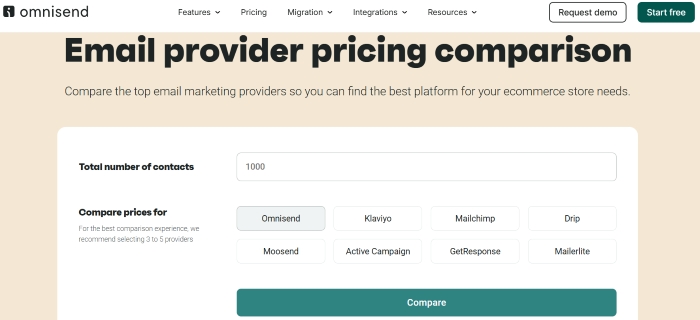
Use Omnisend’s email provider pricing comparison tool below to compare pricing and features across top Drip alternatives. Enter your number of contacts, select between three and five providers, and see how they compare against each other.
How we chose and tested these tools
We tested each platform by setting up accounts, building automation workflows, and using the email builders to see how easy they were to use. We also reviewed pricing pages to compare costs across plans.
To validate real-world feedback, we checked user reviews on G2, Trustpilot, and Capterra. This helped confirm which Drip alternatives work well for ecommerce teams and which ones don’t.
The 10 best Drip alternatives (reviewed)
All tools in this list were personally tested in April 2026. We set up accounts and built email and SMS workflows. We also tested automation builders, explored reporting dashboards, and evaluated usability in real ecommerce scenarios.
This helped us understand how each tool performs beyond its marketing claims.
Now, let’s break them down.
1. Omnisend — Best for ecommerce
G2 rating: 4.6
Omnisend is an ecommerce-focused email and SMS marketing platform built for online stores that want simple automation.
During testing, setup was fast, and workflows were straightforward to build, even for first-time users. It combines email, SMS, and push notifications into a single system. This way, you don’t need multiple tools.
Key features
- Pre-built ecommerce automation workflows
- Email and SMS marketing in one platform
- Visual workflow builder for campaigns
- Segmentation based on shopping behavior
- Built-in performance reporting dashboard
Pricing
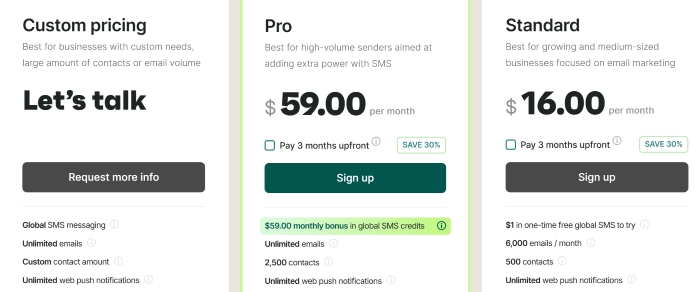
Omnisend offers a free plan with access to core features like email automation and SMS. Paid plans start at $16/month and are based on the number of contacts. Higher plans offer more sending capacity, advanced reporting, and bonus SMS credits.
Why we recommend it as a Drip alternative
Omnisend removes several friction points users often face when working with Drip, especially around setup and multichannel execution. Its customer support is available 24/7 on all plans, including the free plan, while Drip limits support access based on account size.
Omnisend is a stronger Drip alternative for ecommerce teams that want simpler scaling and fewer moving parts.
Here are the key areas where Omnisend outperforms Drip:
- Setup is faster than Drip, with ready-made ecommerce workflows that reduce time spent building automations from scratch
- Email and SMS are managed in one system, while Drip often requires more separate setup and workflow management
- Prebuilt ecommerce journeys make it easier to launch campaigns quickly compared to Drip’s more manual automation builder
- Omnisend provides easy-to-understand tutorials and walkthrough demos, posted on YouTube, created by its team of experts
2. Brevo — Best for small businesses on a budget
G2 rating: 4.5
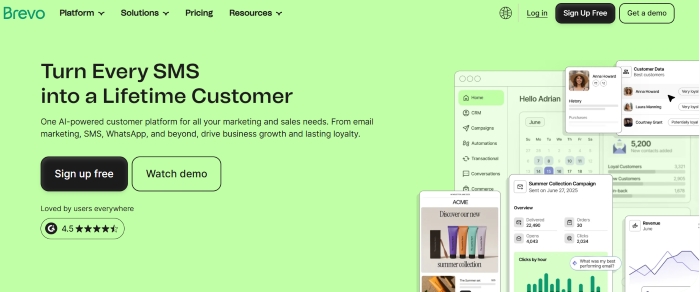
Brevo is an email and SMS marketing platform designed for small businesses that want simple tools at a lower cost.
During testing, setup was fast, and the interface was easy to navigate. It also includes email, SMS, and basic CRM features on a single platform. This way, you don’t have to switch between tools.
Key features
- Email and SMS campaigns in one platform
- Simple automation workflows
- Built-in CRM for contact management
- Transactional email support
- Drag-and-drop email builder
Pricing
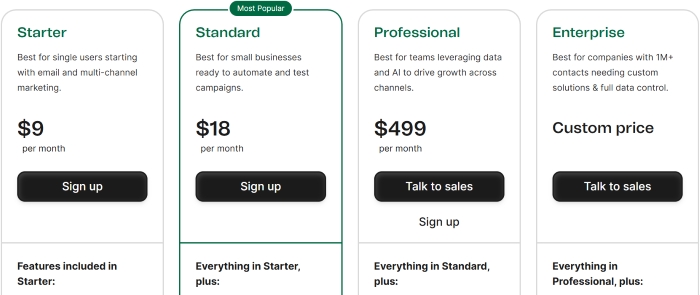
Brevo offers a free plan that includes core features like email campaigns, automation, CRM, and SMS. However, it comes with limits, such as a daily spending cap of 300 emails and email branding.
Paid plans start at $9/month for the Starter plan. Pricing increases based on email volume, with higher plans unlocking advanced automation, A/B testing, and detailed reporting.
Why we recommend it as a Drip alternative
Brevo stands out for teams that want lower costs without losing essential marketing tools. It replaces some of Drip’s complexity with a more straightforward setup. Here are the key reasons why:
- Brevo uses email volume pricing, unlike Drip’s contact-based model, which helps control costs as your list grows
- It includes basic CRM features, while Drip relies on integrations to manage customer data and relationships
- The interface is simpler than Drip’s workflow builder, making it easier for small teams to launch campaigns quickly
3. Mailercloud— Best for affordable email marketing with high deliverability
G2 rating: 4.5
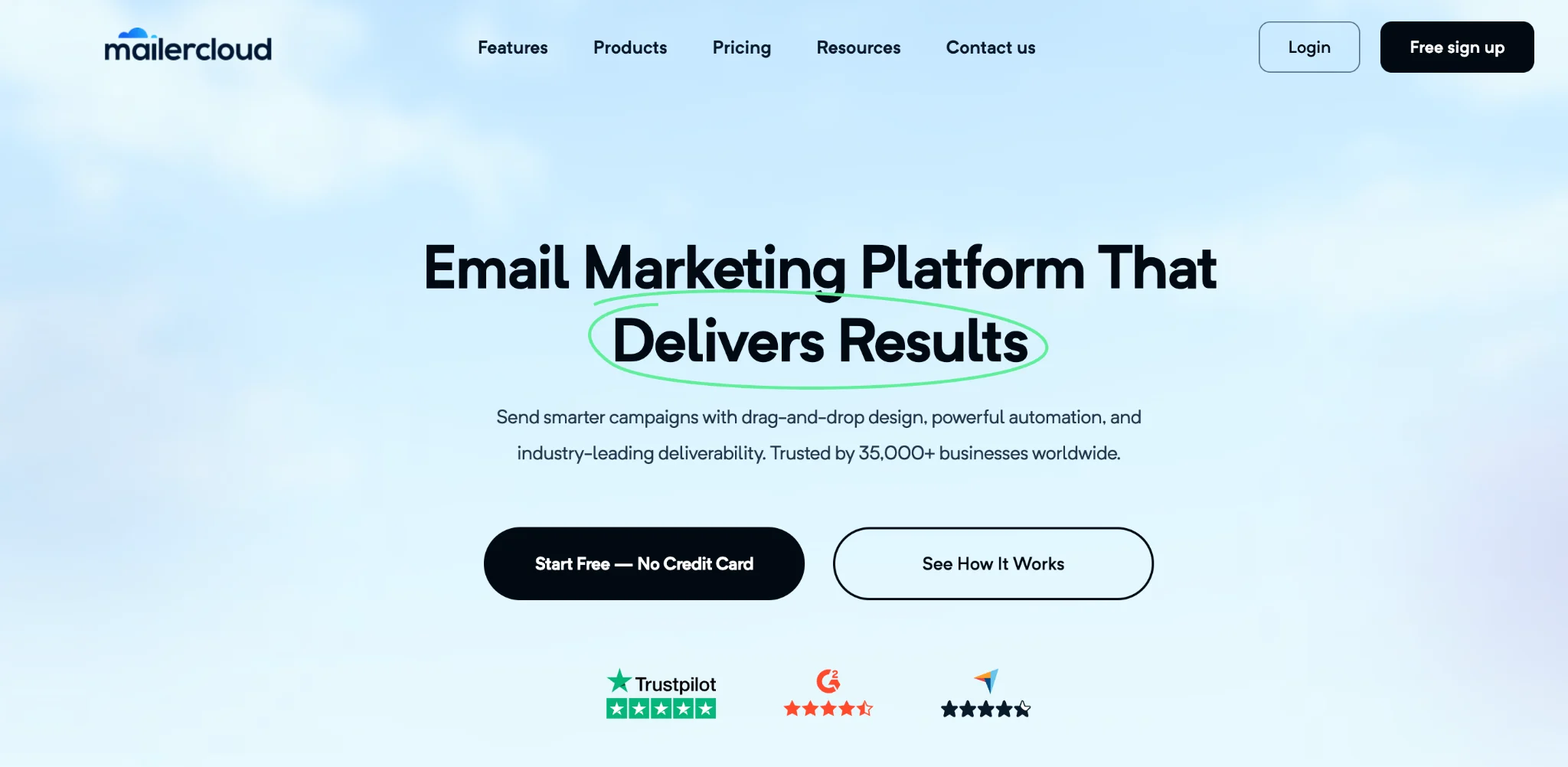
Mailercloud is an email marketing platform built for small and mid-sized businesses that want strong deliverability without enterprise pricing.
The drag-and-drop editor, pre-built automation workflows, and clean reporting dashboard make it easy to launch campaigns quickly, while features like AMP interactive emails and advanced list cleaning are rare to find at this price point.
Key features
- Drag-and-drop email builder with a large responsive template library
- Unlimited automation workflows on all paid plans
- AMP interactive emails (forms, carousels, and surveys inside the inbox)
- Built-in email verification and list cleaning
- Advanced segmentation and A/B testing
- 99.4% deliverability rate backed by dedicated IP options
Pricing
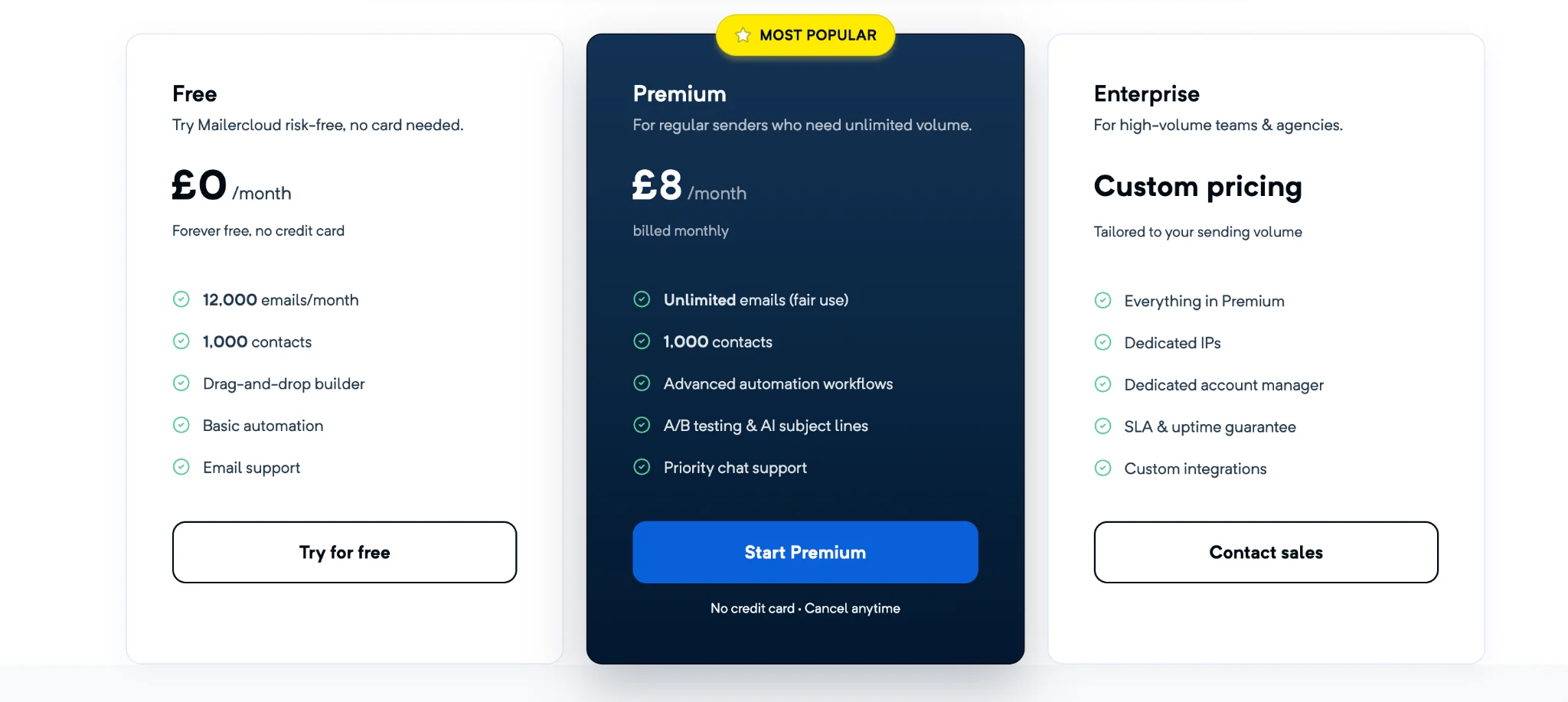
Free plan for up to 1,000 contacts and 12,000 emails/month. Paid plans start at $10/month, with pricing based on contacts and custom high-volume plans available.
Why we recommend it as a Drip alternative
Drip is built for ecommerce and starts at $39/month with no free plan, which is hard to justify for smaller lists or non-ecommerce senders. Mailercloud starts at a quarter of that price, includes a genuinely usable free tier, and doesn’t gate automation behind higher plans. For businesses that mainly need reliable email campaigns, automation, and clean lists — rather than deep ecommerce integrations — Mailercloud delivers the essentials at one of the lowest costs per subscriber in the category.
4. Maestra — Best for scaling DTC brands that have outgrown Drip
G2 rating: 4.7
EVS rating 78/100
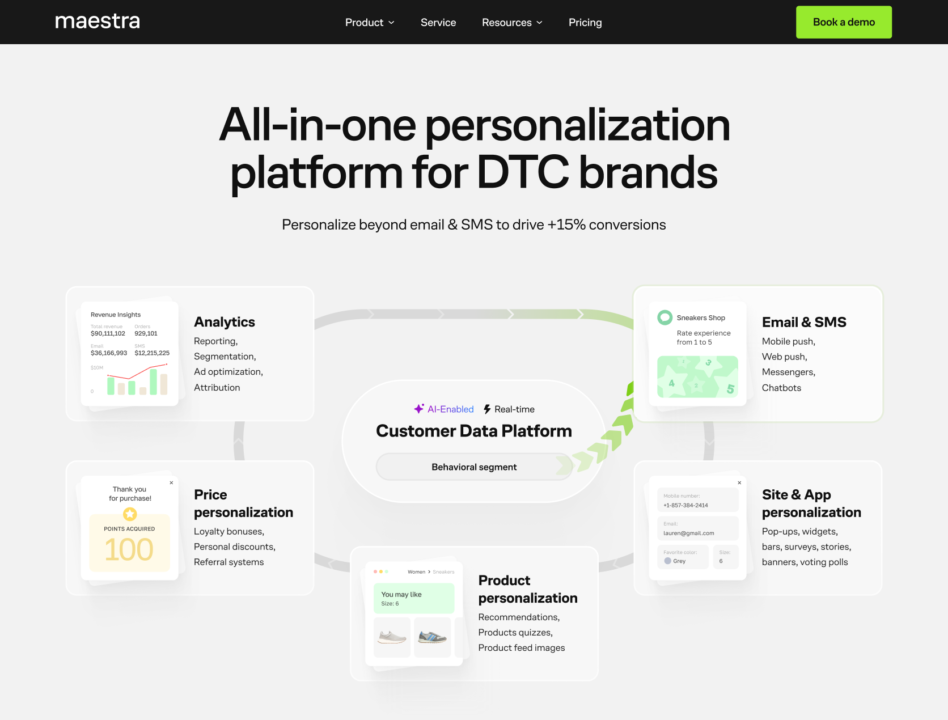
Maestra is a unified marketing platform for DTC brands, and the strongest fit for lean teams. Every account comes with a dedicated forward-deployed marketer who takes on the heavy lifting rather than leaving you to figure it out alone, so your team can focus on strategy.
The platform covers everything Drip does — behavior-based email, on-site personalization, product recommendations, and segmentation — then adds SMS, push, paid-media audiences, and a loyalty program. Underneath all of it is a real-time CDP that pulls every customer interaction into one live profile, so your segments and triggers always fire on current behavior.
It’s a step up in scale rather than a like-for-like swap. Maestra is built for growing and mid-market ecommerce brands that want an omnichannel system with unified customer profiles and hands-on support as they scale beyond an email-first platform.
Key features
- Advanced segmentation – RFM, lifecycle, computed and custom fields, nested and real-time segments
- Visual omnichannel flow builder – email, SMS/MMS/RCS, push, and more
- On-site personalization – pop-ups, quizzes, embedded blocks, and more
- 14 AI algorithms for product recommendations
- Native loyalty and promotion engines
- Reporting with detailed dashboards and revenue attribution
- Dedicated forward-deployed marketer included
Pricing
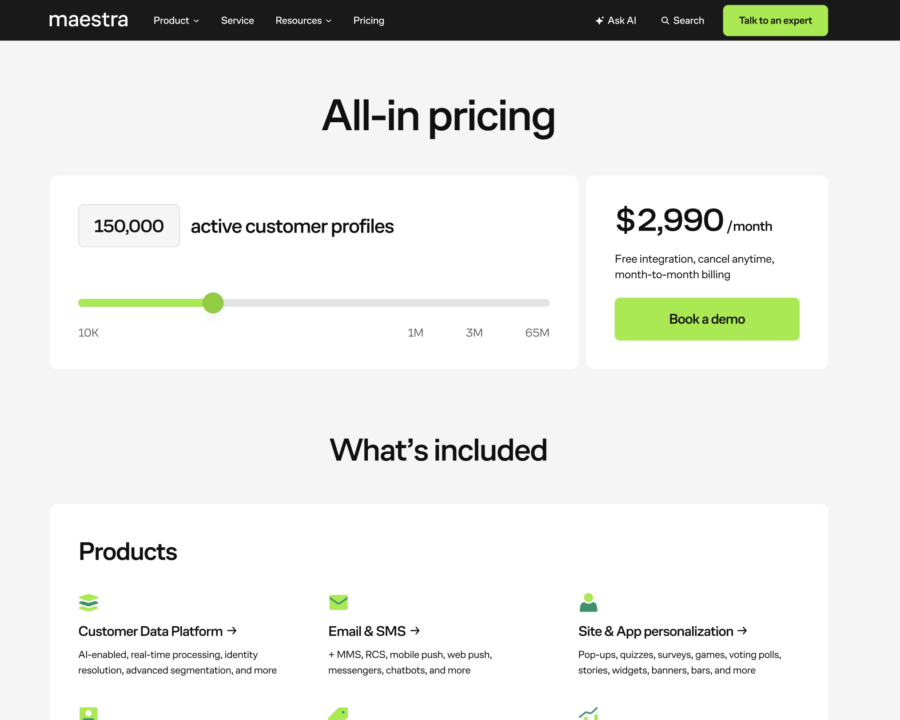
Maestra starts at $2,990/month for up to 150,000 active profiles, with full feature access — no tiered gating, no add-ons. Managed migration and hands-on support are included. Billing is month-to-month with no annual lock-in and starts only after go-live.
Why we recommend it as a Drip alternative
Maestra suits brands that have outgrown Drip and want one system instead of email plus a stack of add-ons. The main reasons:
- A real-time CDP unifies data from every channel — including ones that Drip doesn’t collect — and adds RFM, lifecycle, and computed-field segmentation on top, so audiences are richer and update the moment a customer acts
- Email, SMS, push, paid media, and loyalty programs live in one platform — Drip covers email and on-site pop-ups, so adding SMS, push, or loyalty means bolting on separate tools
- A dedicated forward-deployed marketer handles setup and keeps optimizing flows and segments with you after launch, at no extra cost — the kind of service Drip doesn’t offer
5. Mailchimp — Best for beginners and small businesses
G2 rating: 4.4
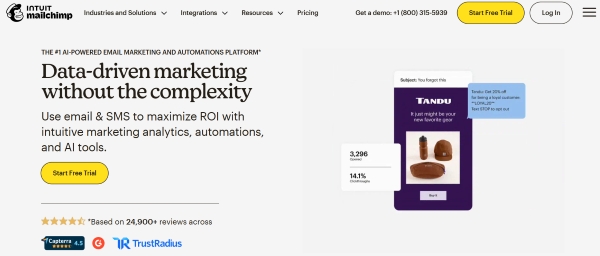
Mailchimp is an email marketing platform designed for beginners and small businesses that want a simple way to create and send campaigns. During testing, the interface felt simple, and the email builder was easy to use even for those without prior experience.
It includes ready-made templates and step-by-step instructions that help users launch campaigns quickly without technical skills. This makes it a practical option for small teams that want to get started quickly and avoid complex configuration.
Key features
- Drag-and-drop email builder
- Pre-designed email templates
- Basic automation workflows
- Audience segmentation tools
- Campaign performance reports
Pricing
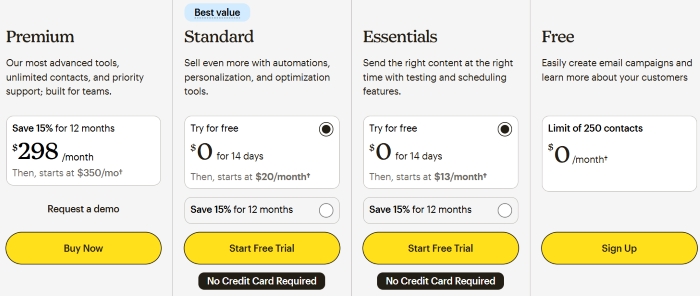
Mailchimp offers a free plan that includes basic email marketing tools. You get templates, reporting, and simple campaigns. However, it limits the number of contacts, monthly sends, and advanced automation features.
Paid plans start at $13/month and unlock higher sending limits and more automation options. Mailchimp is currently offering a 14-day free trial for its Essentials and Standard plans.
Why we recommend it as a Drip alternative
Mailchimp is one of the most popular Drip alternatives for users who want a simpler starting point compared to Drip. It reduces setup time and removes technical complexity. Here’s why it’s better:
- Mailchimp is easier to use compared to Drip, making it a better choice for beginners who want a simple setup
- It offers ready-made templates, while Drip requires more manual setup, allowing faster campaign creation for small teams
- The free plan allows users to test the platform before upgrading, which reduces risk for small or new businesses
6. HubSpot — Best for growing teams needing an all-in-one platform
G2 rating: 4.4
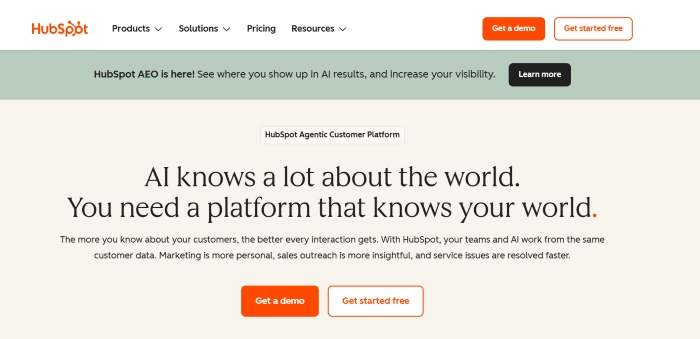
HubSpot is one of the most comprehensive Drip alternatives, combining email marketing, CRM, and sales tools in a single platform. It’s built for teams that want to manage marketing and customer relationships without switching between tools. During testing, the platform felt structured, but the setup took longer than with other tools.
Key features
- Built-in CRM for contact and deal management
- Email marketing with automation workflows
- Landing page and form builder
- Reporting dashboard across marketing and sales
- Integration with multiple business tools
Pricing
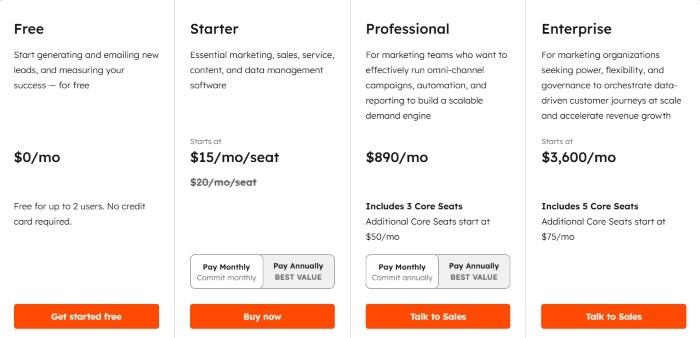
HubSpot offers a free plan with basic tools like email marketing, forms, and CRM features, but it limits automation, reporting, and advanced functionality. Paid plans start at $15/month and unlock more automation, higher sending limits, and reporting features.
Why we recommend it as a Drip alternative
HubSpot is a strong Drip alternative for teams that want their marketing, sales, and customer data connected on a single platform. On the other hand, Drip focuses more narrowly on email automation. Here’s where HubSpot performs better:
- HubSpot includes a built-in CRM, while Drip relies on integrations to manage sales and customer data
- It offers landing pages and forms natively, unlike Drip, which requires additional tools for these functions
- Reporting covers the full customer journey, while Drip focuses mainly on campaign performance and email marketing metrics
7. Kit — Best for creators and newsletter businesses
G2 rating: 4.4
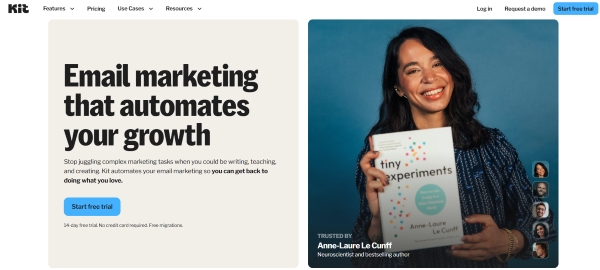
Kit is an email marketing platform built for creators, bloggers, and newsletter-focused businesses. During testing, the platform felt simple, which is perfect for those looking for Drip alternatives. The tool has a clear focus on audience building and content delivery rather than complex ecommerce workflows.
It prioritizes email sequences and subscriber growth. You can easily manage newsletters without setting up advanced automation. This makes it a strong fit for creators who prioritize simple Drip alternatives over ecommerce-focused features.
Key features
- Simple automation builder for email sequences
- Subscriber tagging and segmentation
- Landing pages and signup forms
- Email broadcasts and newsletters
- Creator-focused monetization tools
Pricing
Kit offers a free plan with basic email marketing features, including landing pages, forms, and email broadcasts. However, advanced automation and monetization tools are limited on the free plan.
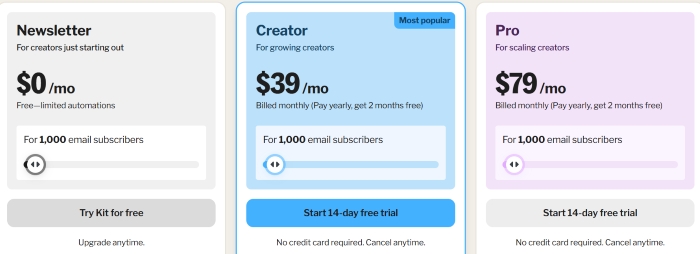
Paid plans start at $39/month and increase as your subscriber list grows. Higher tiers unlock more automation features, email segmentation options, and advanced creator tools.
Why we recommend it as a Drip alternative
Kit is one of the simpler Drip alternatives built for creators who prioritize audience growth over complex ecommerce automation. Here are the key reasons why:
- Kit is easier to use for creators than Drip’s ecommerce setup, making it easier to manage email sequences and newsletters
- It focuses on email sequences and audience growth, rather than complex automation workflows, which are required in Drip
- Setup is faster compared to Drip’s workflow builder, allowing creators to launch campaigns without technical effort
8. GetResponse — Best for marketers running funnels and webinars
G2 rating: 4.3
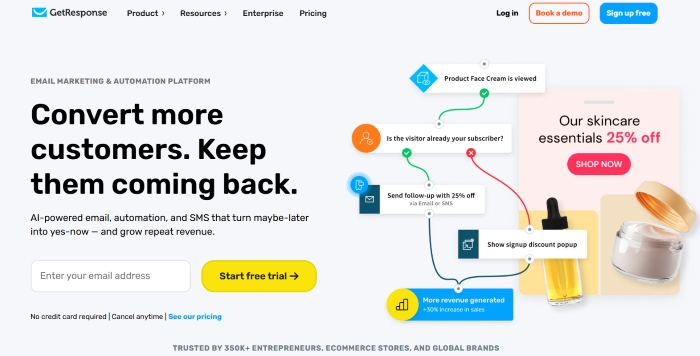
GetResponse is an email marketing platform built for marketers who want to run campaigns, sales funnels, and webinars in one place. During testing, the funnel builder stood out, especially for lead generation and product promotions.
Unlike other top Drip alternatives, it includes built-in funnel and webinar tools. This way, you don’t need separate platforms for these functions. You can easily manage campaigns and conversions from one dashboard without extra setup.
Key features
- Email marketing and automation workflows
- Sales funnel and landing page builder
- Built-in webinar hosting
- List segmentation tools
- Campaign performance tracking
Pricing
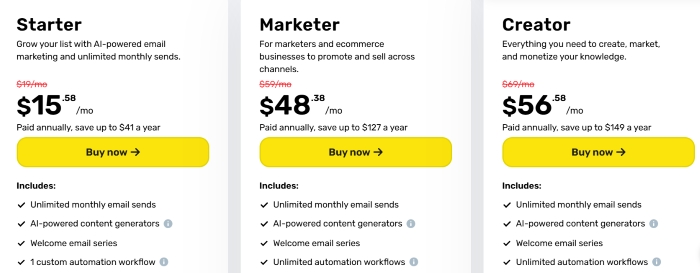
GetResponse offers a free plan with basic email marketing tools. However, it restricts features such as webinars, automation depth, and landing page traffic. Paid plans start at $19/month and unlock advanced tools, including webinars, funnels, and full automation.
Why we recommend it as a Drip alternative
GetResponse is a versatile Drip alternative for marketers who want funnels and webinars built into one system. Drip doesn’t offer this level of built-in structure. Here’s why it’s a good fit:
- GetResponse includes a funnel builder that allows users to build campaigns without extra tools, while Drip lacks this feature
- It supports webinars within the platform, unlike Drip, which requires third-party tools for hosting and promotion
- Campaign setup is more guided than Drip’s workflows, making it easier for marketers to launch campaigns quickly
9. AWeber — Best for small businesses and beginners
G2 rating: 4.2
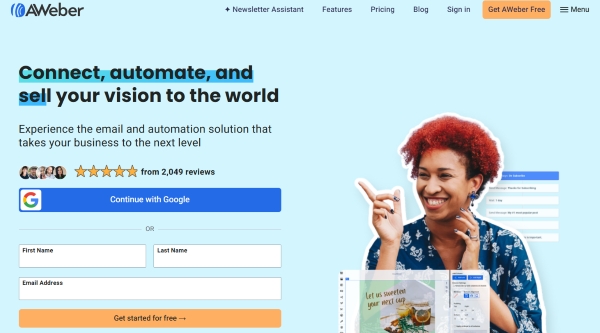
AWeber is an email marketing platform that’s perfect for small businesses and beginners seeking simple Drip alternatives for managing campaigns. During testing, setup was quick, and the interface was easy to navigate without much learning time.
It offers ready-made templates and straightforward tools that help users create and send campaigns faster, even without technical skills. This makes it easier to get started and maintain consistent email marketing without a steep learning curve.
Key features
- Drag-and-drop email builder
- Pre-built email templates
- Basic automation workflows
- Subscriber tagging and segmentation
- Landing pages and signup forms
Pricing
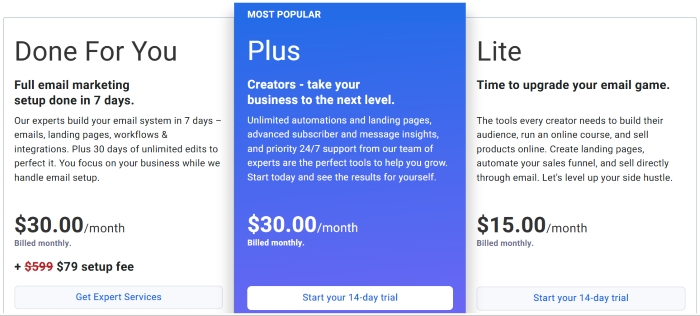
AWeber doesn’t offer a free plan, but it provides a 14-day free trial on its Lite and Plus plans. These plans provide access to core email marketing features, including templates and basic automation.
After the trial, paid plans start at $15/month and increase based on subscriber count, with full functionality unlocked on paid tiers.
Why we recommend it as a Drip alternative
AWeber is a beginner-friendly Drip alternative for users who want a simpler setup than Drip’s automation-heavy one. Here’s why it works better:
- Unlike Drip’s automation-heavy interface, AWeber is easier to use, making it more suitable for beginners and small teams
- It allows faster campaign setup with simpler tools, while Drip often requires more time to configure workflows
- AWeber offers a 14-day free trial, while Drip doesn’t provide any free plan, making it easier to test before committing
10. Constant Contact — Best for small local businesses
G2 rating: 4.2
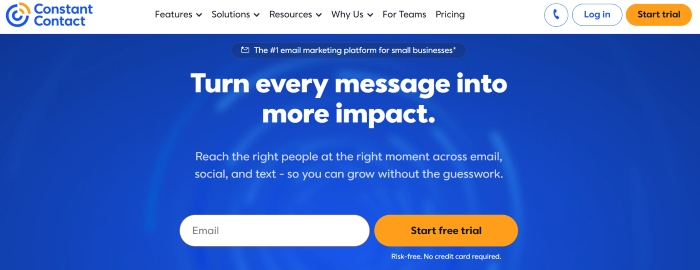
Constant Contact is an excellent email marketing platform and a great choice for small local businesses looking for Drip alternatives. During testing, the platform felt easy to use, especially for users with little to no experience in email marketing.
It offers ready-made templates and guided tools that help users launch campaigns quickly without needing advanced setup. This makes it a practical choice for businesses that want to stay consistent without spending time learning complex systems.
Key features
- Drag-and-drop email builder
- Pre-designed templates
- Basic automation workflows
- Contact list management
- Event and promotion tools
Pricing
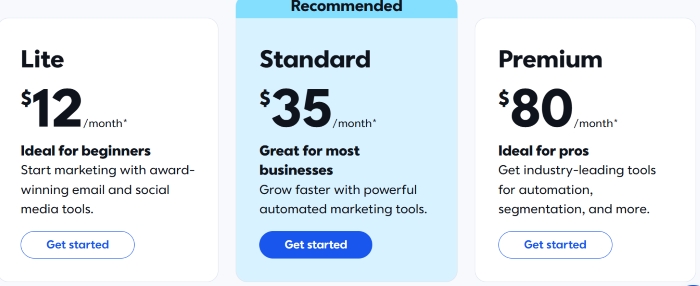
Constant Contact doesn’t offer a free plan. Paid plans start at $12/month and increase based on your contact list size. The entry plan includes core email marketing features, but advanced automation and reporting tools are only available on higher tiers.
Why we recommend it as a Drip alternative
Constant Contact is a straightforward Drip alternative for small businesses that need simple email marketing without complex automation. Here’s what it does differently:
- Constant Contact is easier to use than Drip, making it more accessible for beginners with minimal email marketing experience
- It offers ready-made templates for faster campaign setup, while Drip requires more manual configuration and setup time
- It focuses on simple email marketing rather than advanced automation, which suits small businesses with basic campaign needs
Which Drip alternative is right for you?
Drip is still a strong platform, especially for ecommerce automation and customer journeys. However, as your business grows, it’s common to outgrow it due to rising costs and limited access to customer support.
There’s no single “best” tool. The right fit is based on your goals, budget, list size, and the level of functionality you require. For example, some Drip alternatives work better for small teams, while others suit data-driven brands or creators.
For ecommerce platforms, Omnisend stands out among Drip alternatives. It offers a free plan with access to core ecommerce features and combines email and SMS on a single platform. It also provides 24/7 customer support across all plans, even the free one.
In addition, Omnisend reports an average ROI of $79 for every $1 spent. This is why it’s a strong option for brands focused on growth and efficiency.
Quick sign up | No credit card required