Omnisend AI


 OFFER
OFFER









Funny emails are your tool to entertain and connect with readers while still staying true to your goal of promoting your business.
Inboxes are full of brands competing for attention in 2026, so breaking a pattern with a quick joke makes your business feel human and sets you apart from the rest. A funny message is also more memorable. People will read your emails when the humor fits their expectations.
Of course, not every email needs to be funny. The goal is to use humor only where it strengthens your message rather than distracts from it.
In this guide, you’ll see real examples of effective funny emails to send. We’ll also share practical tips and best practices for using humor in your campaigns.
Quick sign up | No credit card required
Funny email examples and techniques for inspiration
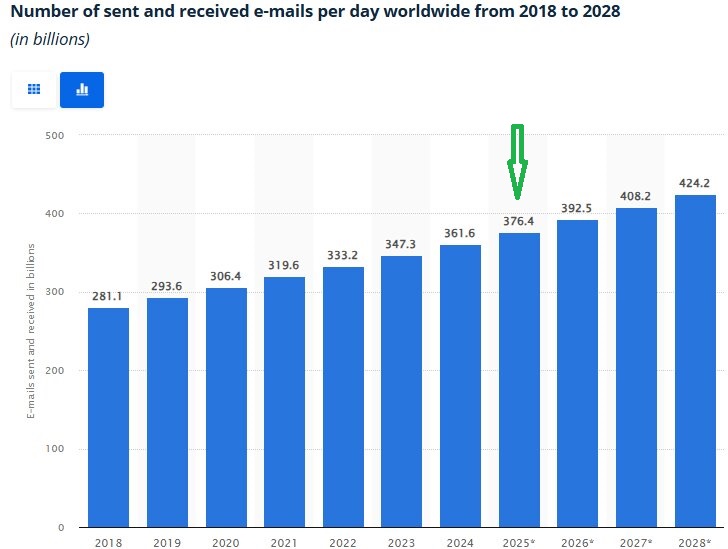
More than 376 billion emails were sent and received every day in 2025, according to Statista. A little humor goes a long way to standing out in customers’ crowded inboxes.
Humor in marketing has actually become rarer. It fell from 53% of ads in 2000 to 34% by 2024, even though Kantar’s research shows that it still drives engagement and recall. That gap is your chance.
The nine techniques below show how real brands use humor across different email types, with a quick note on why each one works.
Jump to a technique:
- Funny email subject lines
- Creative CTA buttons
- Puns and wordplay
- Funny greetings and opening lines
- Funny email designs and visuals
- Funny cart abandonment emails
- Funny promotional emails
- Funny re-engagement emails
- Funny apology emails
Funny email subject lines
The secret to grabbing attention before readers even open your email is the subject line. A funny subject line can spark curiosity and evoke positive emotions. It gives subscribers a clear reason to click.
Ecommerce marketers achieve this using puns, unexpected comparisons, or a little playful exaggeration. While the goal is to make subscribers laugh, the best subject lines still signal value.
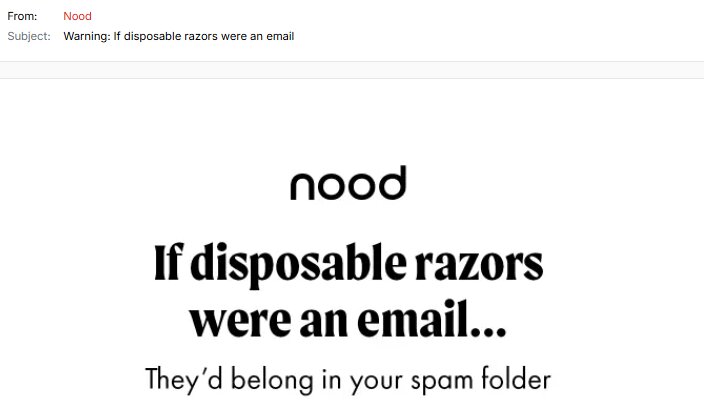
Skincare brand Nood turns a product comparison into a mock warning label. It uses the subject line “WARNING: If disposable razors were an email.”
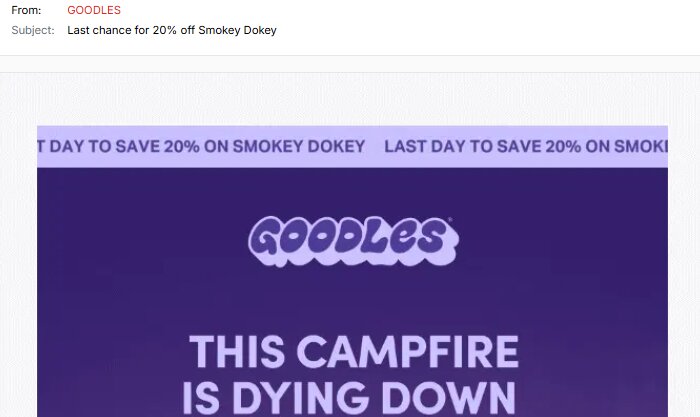
Mac and cheese brand Goodles leans on product-name wordplay. The subject line “Last chance for 20% off Smokey Dokey” ties the joke straight to the offer.
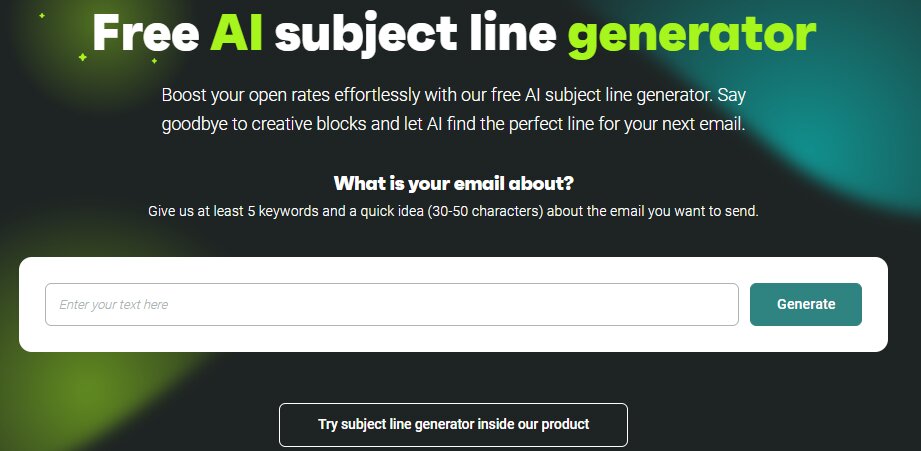
You can brainstorm and test your own campaigns with Omnisend’s subject line generator:
Why it works:
- Sparks curiosity with an unexpected comparison
- Ties the humor directly to the offer
- Matches a casual, self-aware brand voice
- Earns the open without resorting to clickbait
Creative CTA buttons
Your button copy can carry the joke too, turning a routine click into part of the fun.
Buttons don’t have to read “Shop now” or “Learn more.” You can swap in playful options like “Take my money” or “Count me in.”
A line that fits your brand voice keeps the personality going, right up to the moment of action. Just ensure the reader still knows what happens next.
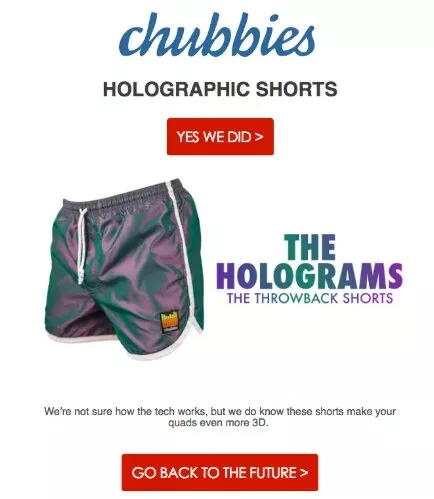
Apparel brand Chubbies uses in-character button copy and playful sends. In its “Hologram Shorts” campaign, even the calls to action stay in on the joke:
Why it works:
- Adds personality without sacrificing clarity
- Feels more conversational than a standard button
- Reinforces the brand’s tone through to the click
- Makes the action more memorable
Puns and wordplay
A well-placed pun lets brands show personality with clever language.
Industry puns, product wordplay, and seasonal twists work when the joke feels natural. Forced ones usually fall flat and distract from the offer.
The trick is keeping the pun tied to your product or offer. A pun that’s clever but unrelated just confuses the reader and buries the point.
It helps to brainstorm funny emails to send to coworkers or friends, then tweak them to your offers.
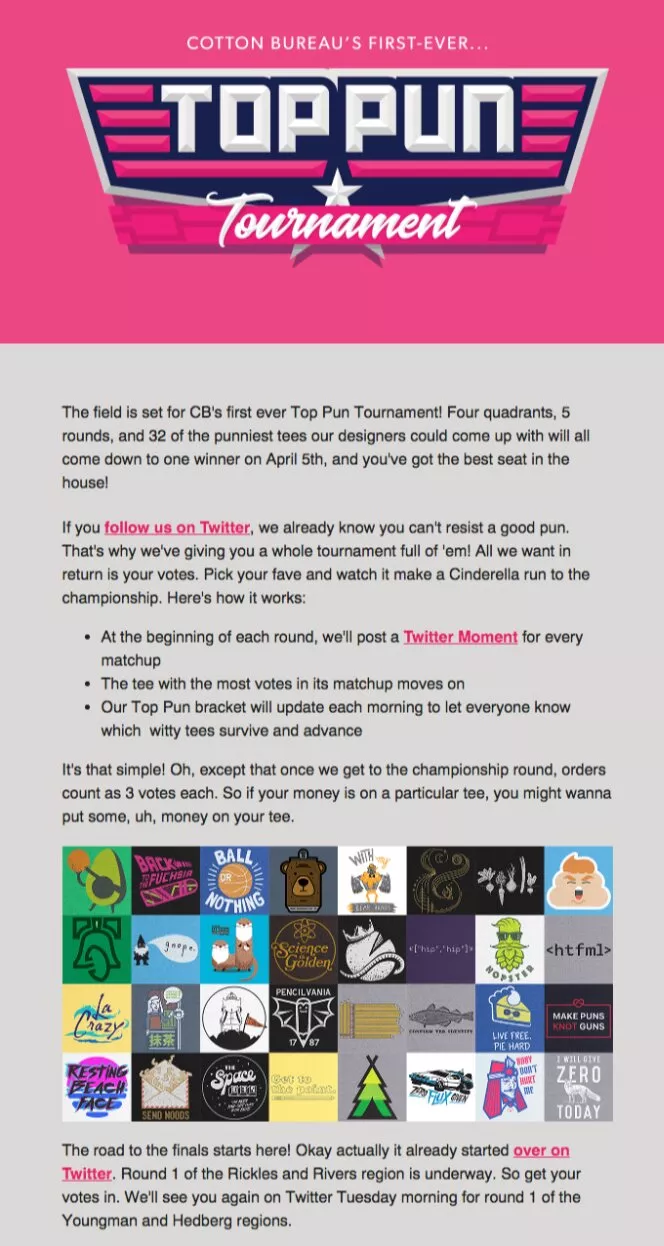
Apparel brand Cotton Bureau built an entire campaign around the gag with its “Welcome to the first ever CB Top Pun Tournament.” It turned wordplay itself into the event.
Why it works:
- Ties the wordplay directly to the campaign
- Makes brand messaging more memorable
- Keeps the tone light without burying the message
Funny greetings and opening lines
Open with warmth instead of a stiff “Dear customer,” to set a friendly tone from the first word.
A playful greeting makes the reader more receptive to everything that follows. It’s among the funny ways to start an email that makes your business sound human.
Funny email greetings work because they replace a stiff salutation with warm, conversational language.
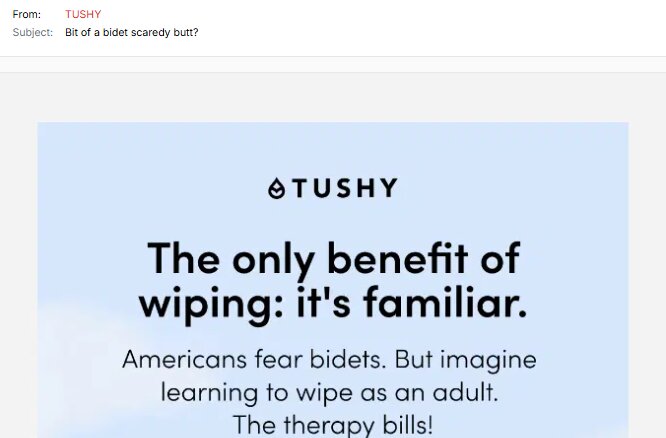
Bath brand TUSHY opens its welcome email with the cheeky line, “Bit of a bidet scaredy butt?” The greeting eases a nervous new customer with a pun instead of a formal hello. Just think of funny emails to send to friends and adapt them to your campaigns.
Why it works:
- Replaces a formal, corporate salutation with a friendly one
- Signals shared identity with the audience
- Sets an approachable tone for the rest of the email
Funny email designs and visuals
Humor doesn’t have to live in the copy at all.
Illustrations, GIFs, memes, product photos, and unexpected layouts can all carry a joke. Visual humor often lands faster than written jokes because the human brain processes images quickly. The design should still support the message and match your brand.
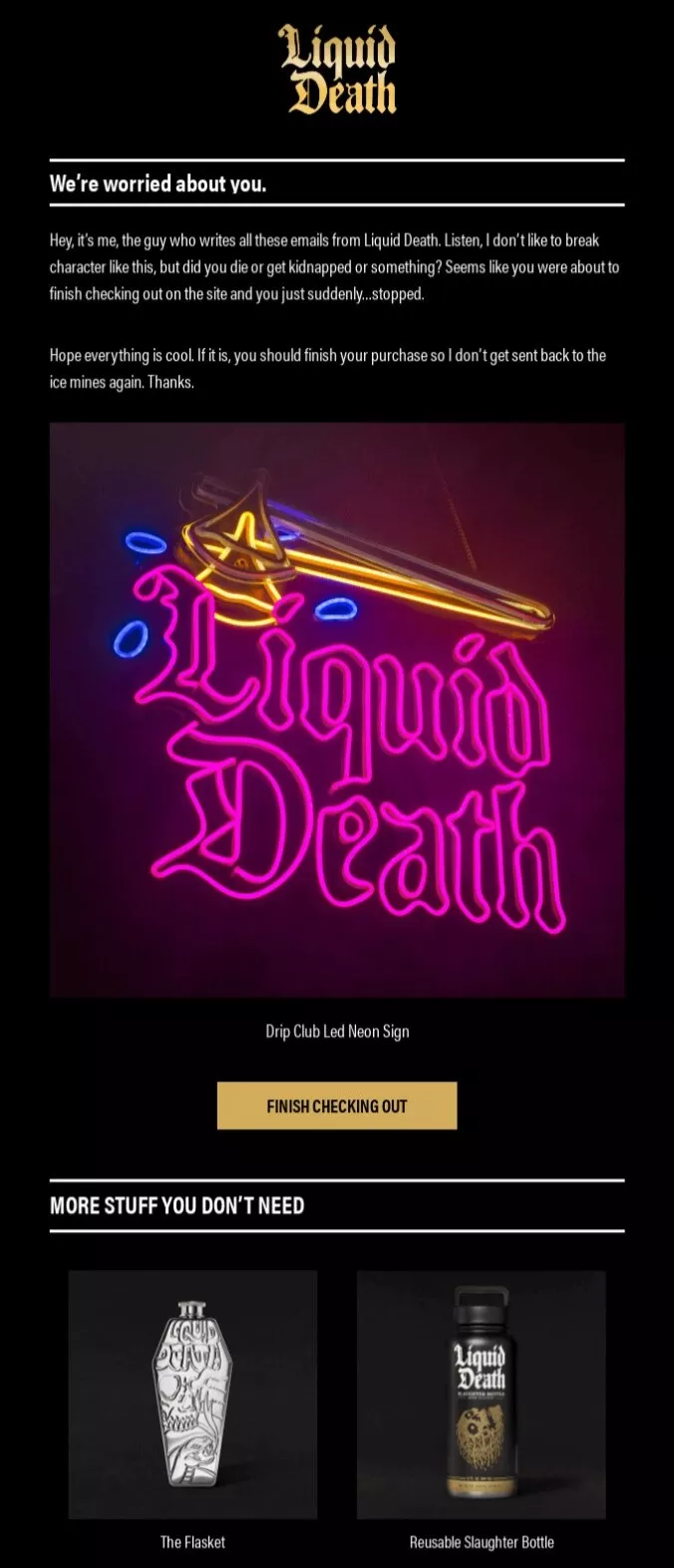
For example, canned-water brand Liquid Death uses dark humor really well. It wraps its cans in wild horror-movie artwork and hits you with spooky subject lines like “Maybe you died?” This fun visual gag fits the whole brand personality.
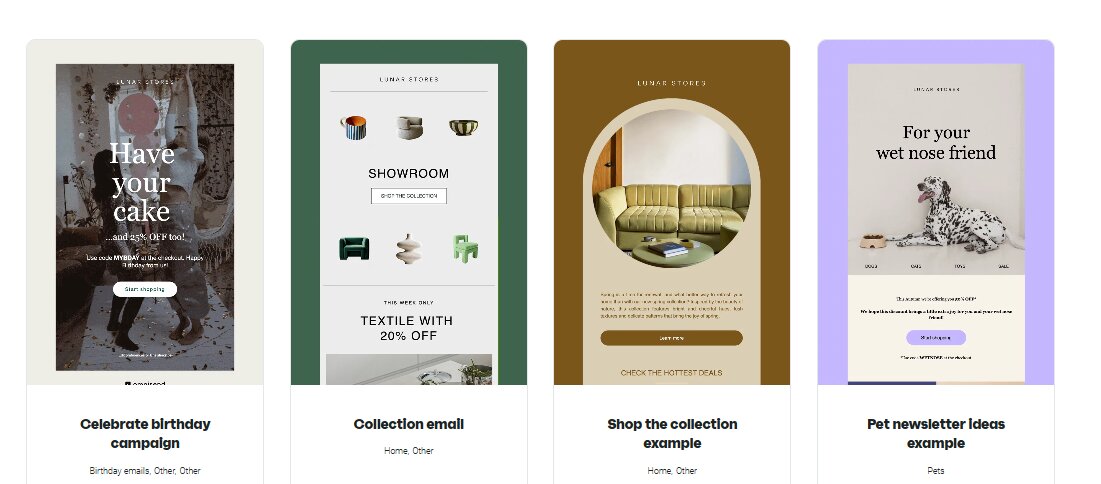
You can apply similar funny email ideas to your own campaigns with Omnisend’s email templates.
Why it works:
- Turns the entire design into the punchline
- Makes a plain product instantly recognizable
- Carries the joke faster than copy alone
Funny cart abandonment emails
A lighter touch is what makes cart recovery emails work, easing the pressure to buy.
Playful guilt, FOMO, and product personification give an abandoned cart email charm while still nudging the shopper back. A lighter tone can lift open rates for a message that people usually ignore.
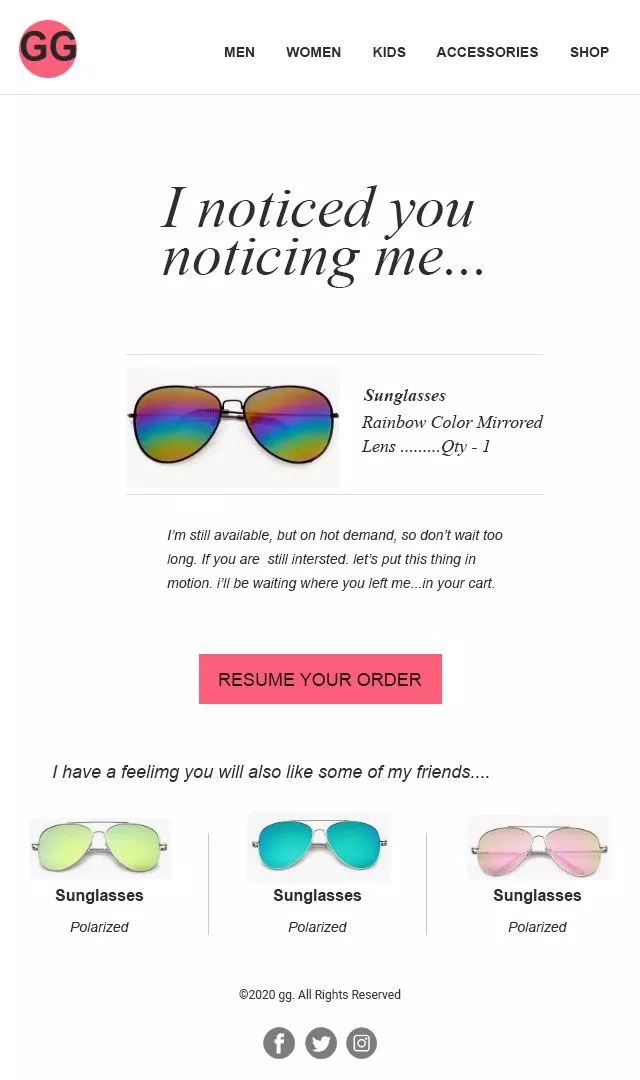
Target Bay personifies the product, with the heading “I noticed you noticing me.” This turns a guilt-trip reminder into an on-brand joke that feels like one of the funny things to email your friends.
Why it works:
- Personifies the cart to create a gentle nudge
- Uses FOMO without nagging the shopper
- Keeps the path back to checkout clear
Funny promotional emails
Humor is one way to make a promotional email feel less salesy.
Many funny emails use storytelling, relatable situations, and exaggerated scenarios to naturally introduce offers. The pitch lands softer, so the promotion feels like a conversation or a funny email to send to friends.
Done right, a funny promo also gets forwarded, because people share emails that made them laugh. It reaches more people than a straight discount ever could.
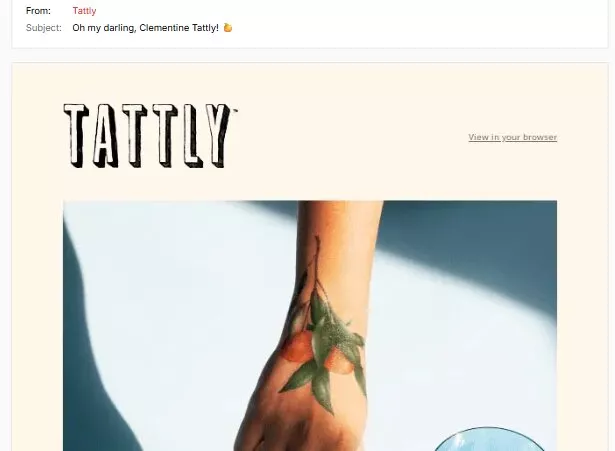
Temporary-tattoo brand Tattly sent a product launch email with the subject line, “Oh my darling, Clementine Tattly.” The little joke made the promo feel like a friendly wink rather than a pitch.
Why it works:
- Uses a relatable scenario to introduce the product
- * Keeps the copy conversational, concise, and benefit-focused
- Makes a promotion feel like entertainment
Funny re-engagement emails
Winning back a quiet subscriber is easier with a light touch than a discount.
Playful “we miss you” messaging and a frank nod to the subscriber’s inactivity help the email feel friendly rather than desperate. Self-aware jokes also take the edge off the request.
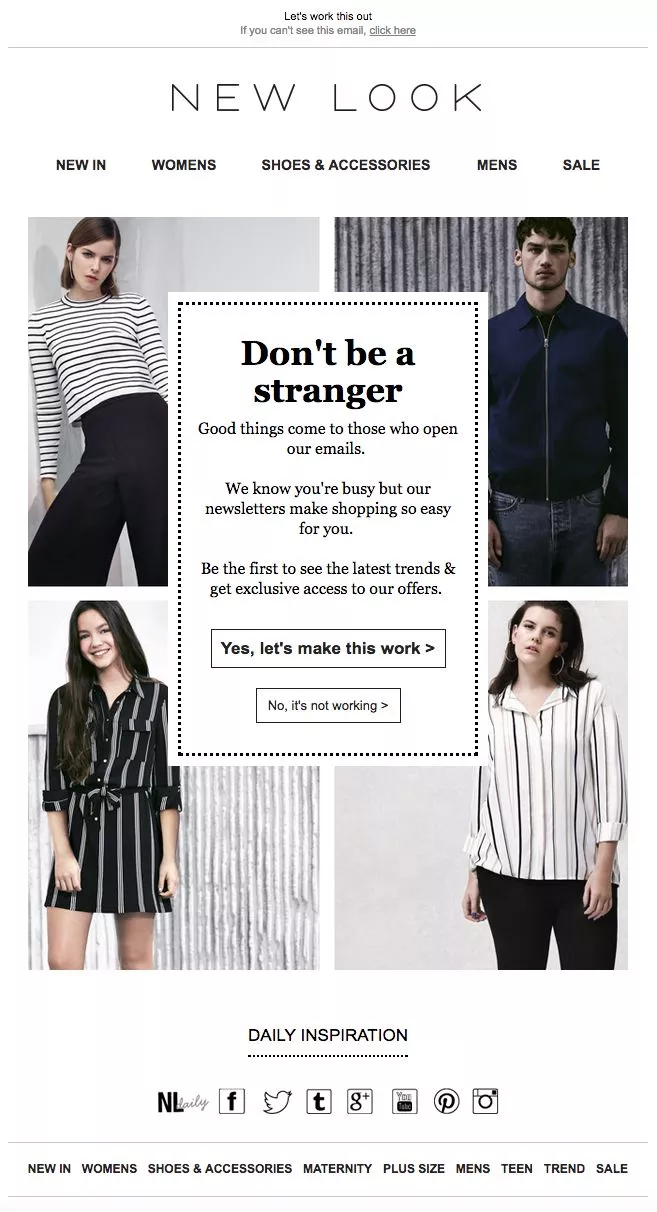
New Look uses light humor in its email with the heading “Don’t be a stranger.” It’s a low-key, funny nudge to win back lapsed subscribers.
These campaigns run best on autopilot, so set them up inside a wider email marketing automation strategy. A reactivation emails guide can help you map the sequence.
Why it works:
- Acknowledges the lapse with self-aware humor
- Feels warm rather than needy
- Gives a quiet reason to re-engage
Funny apology emails
When you mess up, you can use light humor to patch things up with your audience.
Funny emails can humanize a mistake, without minimizing the problem. Always take responsibility for the error first, and use humor second.
Save the humor for low-stakes slip-ups, like a broken link or a typo. For anything that affects a customer’s money or data, drop the jokes entirely.
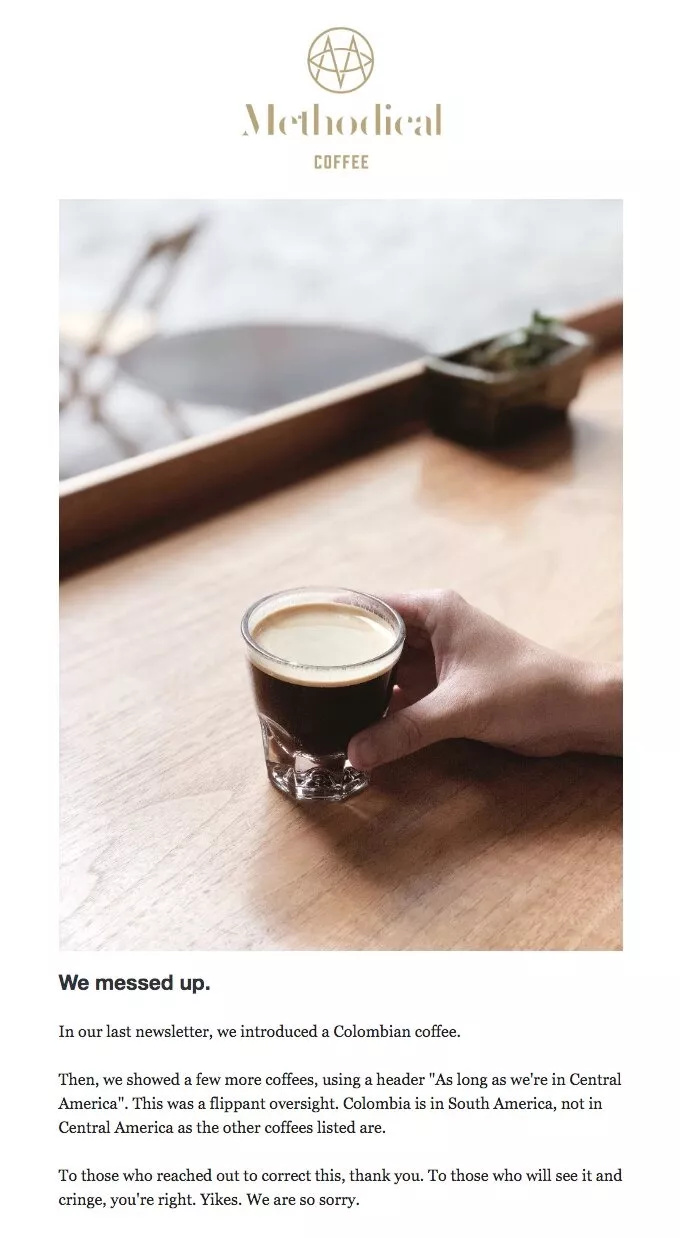
Methodical Coffee does this with a retraction email that corrects an earlier mistake. The brand takes full responsibility while maintaining a warm, human tone.
Why it works:
- Owns the mistake before anything else
- Keeps the tone respectful, not flippant
- Shows the human side of the brand
Best practices for writing funny emails
Getting the joke to land consistently comes down to a handful of habits. Know your audience, match your brand voice, keep it simple, tie it to the message, and test before you send.
These five practices keep your humor working for the campaign rather than against it.
Know your audience
Not everyone laughs at the same things. A joke that lands with one audience can feel confusing or even offensive to another.
A playful ecommerce brand can get away with memes and cheeky subject lines. For example, a pet brand line can use a subject line like, “Your dog asked us to remind you about this.”
A bank would skip the gag and send a plain “Important update about your account.”
Before you hit send, check how each segment has reacted to humor in the past. A playful tone that works for new subscribers can annoy long-time buyers.
When you’re unsure, a small test tells you more than a guess.
Why it matters:
- Different audiences have varying expectations
- Industry norms dictate what feels appropriate vs unprofessional
- Demographics and cultural backgrounds affect how audiences interpret jokes
- Matching funny emails to your audience helps you increase engagement rather than confusion
Match funny emails to your brand voice
Funny emails should feel like a natural part of your brand’s personality.
If your website, social media posts, and marketing materials use a friendly and playful tone, funny emails will feel authentic. However, a business that’s usually formal will feel off if a single email suddenly cracks jokes.
The goal is humor that sounds like you on a good day, not a different brand entirely.
Consistency also builds trust. Your subscribers should recognize your brand across different channels.
Take a luxury skincare brand, for example. A professional email about tired skin after a long week fits its voice. An all-caps meme would clash with the premium feel customers expect.
Why it matters:
- Consistent humor reinforces brand identity
- Authenticity prevents your funny emails from feeling fake or forced
- A clear personality meets the expectations customers already hold
- A steady voice keeps trust intact
Keep funny emails simple
When crafting funny emails, simple jokes often work best. Avoid overexplaining your punchline or forcing humor into places where it doesn’t fit naturally.
You must prioritize readability so your readers can scan the text and catch the joke instantly. If they need to stop and figure out what you mean, the humor loses its impact.
A line like “Our prices are dropping faster than your New Year’s resolutions” works because it’s clear and supports the promotion.
Compare that to a multi-layered joke that references three shows and an inside meme. A few readers will love it, but most will skim past the offer.
Why it matters:
- Simple jokes reach a wider audience
- Clear messaging keeps the focus on the campaign
- Easy-to-grasp humor is more memorable
- Funny emails support the message instead of burying it
Use funny emails to support the message
Humor should always serve a purpose. The goal isn’t to make people laugh for no reason. Funny emails should make your message more engaging, while serving campaign objectives.
You can add humor in many places, including subject lines, CTA buttons, and promotional campaigns. Just make sure your joke helps readers understand the offer, remember the message, or take action.
A line like “Your cart is getting lonely” supports a cart recovery campaign and encourages action. A random joke with no connection to the email offer leaves readers confused about the purpose of your message.
Humor should guide the customer toward taking action instead of delaying it.
Why it matters:
- Humor should advance the campaign goal
- A joke that obscures the offer works against you
- The funniest email still needs a clear next step
- Engagement only counts when the message lands
Test funny emails before sending
Humor is subjective, so test funny emails before you send them to the whole list.
Running email A/B testing on subject lines and CTAs shows you which jokes actually increase open and click rates, rather than guessing.
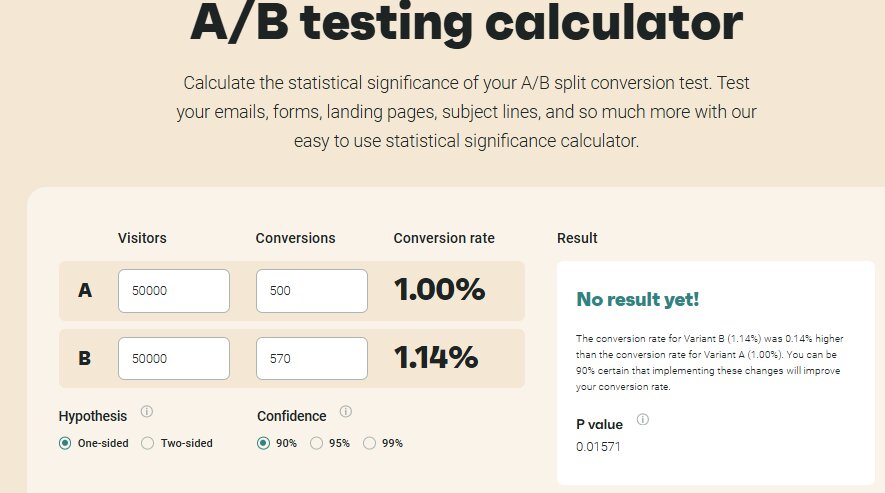
Omnisend’s free A/B testing calculator tells you whether the difference between two versions is impactful. Testing funny emails on a small segment first also protects you from sending a joke that misses the mark.
You can test a humorous version against a more traditional one and review the results. Pay attention to open rates, click-through rates, conversions, and other engagement metrics.
For example, compare “Your 20% discount is packing its bags” against “Last chance to save 20%.”
Why it matters:
- Testing shows which funny emails resonate
- Small experiments allow you to safely perfect your tone
- Real data beats guesswork on tone
- Audience feedback sharpens your next campaign
When funny emails aren’t the right choice
Humor isn’t always the right fit for every message. The test is simple. If the reader needs clarity, reassurance, or a fast answer, lead with that and save the jokes for another send.
Skip the humor in these situations:
- Transactional emails: Customers expect clear, accurate details, so jokes can confuse or distract them from the purpose. Examples include order confirmations, shipping notifications, and password reset emails.
- Customer service emails: People reaching out with a problem want a fast, sincere response, not a punchline. This applies to support tickets, complaint responses, and refund requests.
- Sensitive business announcements: Difficult news needs a straight, respectful tone. Funny emails make it seem like you’re not taking the issue seriously. Examples include messages on price increases, product recalls, and service interruptions.
- Serious company or global events: During a crisis or tragedy, funny emails can feel insensitive and backfire. Some examples include emergencies, major world events, and public crises.
- Highly regulated communications: Legal and compliance messages must be precise and unambiguous. These include legal notices, compliance updates, and financial disclosures.
When in doubt, send the clear version. You can always add personality next time, but you can’t retract a joke that landed wrong on a serious message.
Conclusion
Funny emails can lighten the mood, make your campaigns more memorable, and build stronger connections with subscribers.
The examples and techniques above show that the best humor feels natural, fits the brand, and still moves the reader toward a clear next step.
Not every email should be funny, though. Success depends on your audience, the context, and your brand voice. The strongest campaigns balance humor with clarity and a real goal.
Get that balance right and funny emails become one of the most human tools in your kit.
Pick one technique from this guide and try it on your next send. Let the results guide the campaigns that follow. Omnisend gives ecommerce brands an easy way to create, test, and send funny emails that land.
Quick sign up | No credit card required