
 Omnisend AI


 OFFER
OFFER







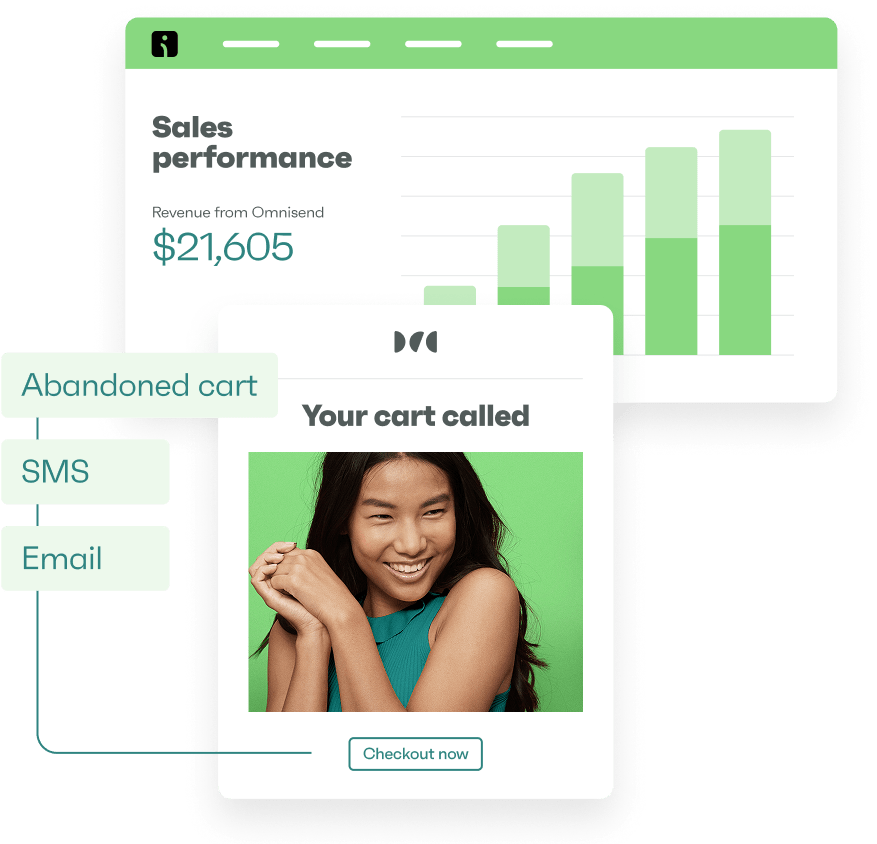
Drive sales on autopilot with ecommerce-focused features
See Features
A Shopify funnel builder enhances the customer journey by guiding shoppers from initial awareness to purchase, effectively increasing conversions and revenue without additional ad spend.
The most significant conversion leaks often occur between product consideration and purchase, making it crucial to implement follow-up strategies post-checkout.
Choosing the right funnel builder depends on your store's specific goals, whether that's driving first-time purchases, optimizing for upsells, or focusing on customer retention.
Integrating marketing automation tools like Omnisend with your funnel builder can significantly enhance customer engagement and retention through automated follow-ups and personalized messaging.
A Shopify funnel builder helps solve one of the most common challenges ecommerce brands face: steady traffic, but not enough conversions.
Shoppers land on product pages, browse, sometimes add items to cart, then leave, driving up acquisition costs and cart abandonment rates.
The right Shopify funnel builder guides customers from their first visit through purchase, increasing revenue per visitor without relying on higher ad spend. This article explains how ecommerce funnels work on Shopify and provides a list of leading Shopify funnel builder apps.
You will also get a step-by-step guide to creating a Shopify funnel, and see where email and SMS automation platforms fit in.
Quick sign up | No credit card required
What is a Shopify funnel builder, and why it matters
Definition: A Shopify funnel builder helps guide shoppers through your store, from their first click to purchase. Instead of visitors figuring things out on their own, a funnel helps turn traffic into customers, increases revenue per visitor, and creates predictable sales.
A typical Shopify funnel includes four core stages:
- Awareness: Shoppers discover your brand via ads, social media, search, or content
- Consideration: They browse products, compare options, and read reviews before deciding
- Purchase: The shopper completes checkout
- Retention: Email/SMS and loyalty programs drive repeat purchases
For many Shopify stores, the biggest conversion leaks happen between consideration and purchase, and after checkout, if there’s no follow-up in place.
A Shopify funnel builder turns isolated pages into a guided shopping experience. At the top of the funnel, it creates landing pages or product flows aligned with intent, ready for traffic from ads, social, or other channels, while highlighting promoted products or offers.
In the middle, it reduces hesitation using upsells, cross-sells, and product recommendations. During checkout, complementary items can be promoted, emails captured, and follow-up automated through email automation tools like Omnisend.
Shopify remains dominant in 2026. In Q1 2025, its GMV reached $87.8 billion, a 42% increase from the same quarter in 2023.
However, while Shopify supports basic funnel elements like store setup and product pages natively, it is limited when shaping a full customer journey.
But not all Shopify funnel builder tools serve the same purpose. Some focus on high-converting landing pages, while other automation tools like Omnisend are functional in full customer journeys with upsells and optimized checkout paths.
Funnels help merchants stand out, which is why it’s important to understand where they’re built. Here is a quick comparison table to help you understand:
| Shopify (native) | Shopify apps | Automation tools |
|---|---|---|
| Core ecommerce: Store setup, checkout, payments, basic product management | Adds extended features: Reviews, loyalty, SEO, advanced inventory, product bundles | Marketing automation: Email, SMS, push, AI segmentation |
| Automations: Simple rules via Shopify Flow | Workflow extensions: App-specific automation triggers | Advanced workflows: Pre-built welcome, abandoned cart, browse |
| Design: Storefront layouts and mobile-responsive themes | UX enhancement: Page builders, popups, forms | Builder tools: Drag-and-drop pages, forms, popups |
| Best for: Starting out | Best for: Optimizing specific funnel steps | Best for: Retention and revenue beyond checkout |
“A strong Shopify funnel doesn’t just end at checkout. Email/SMS automation after purchase is what turns funnels into long-term revenue systems.” — Marty Bauer, Ecommerce Expert at Omnisend
Quick comparison: Best Shopify funnel builder tools in 2026
Choosing the right Shopify funnel builder depends on your primary goal, whether that’s upsells, automation, CRO, or a combination.
Below is a quick, scannable overview of popular Shopify funnel solutions and their respective strengths.
Comparison table: Top Shopify funnel builder options
Here’s an overview of the top Shopify funnel builder tools:
| Tool | Type | Best for | Starting price | Funnel scope |
|---|---|---|---|---|
| Omnisend | Email/SMS marketing automation | Orchestrates customer journeys across the entire lifecycle | Free for up to 250 contacts | Full customer journey, including email/SMS |
| PageFly | Page builder | Simple landing/product pages | Free | Landing and store pages |
| GemPages | Page builder | High-converting pages + post-purchase upsells | Free | Landing pages + on-site upsells |
| Lightfunnels | Funnel builder | Paid traffic funnels, upsells, cross-sells, and checkout optimization | $9.99/month | Full on-site funnels with upsells |
| Funnelish | Funnel builder | High-converting funnels, one-click upsells, paid traffic optimization | $49/month | Full funnel: landing, upsells, checkout |
| Zipify | Page/funnel builder | High-converting funnels, landing pages, and upsells | Free | Full on-site funnels |
How they differ: Standalone Shopify funnel apps, such as PageFly or Funnelish, focus on creating pages, upsells, and checkout flows, thereby shaping the on-site shopping experience.
Marketing automation platforms like Omnisend extend the funnel beyond checkout by connecting each stage to email and SMS campaigns that re-engage customers and drive repeat revenue.
Which funnel builder is best for which type of store?
Here’s what to consider:
- New or small stores: Page builders like PageFly work best for quick launches without complex setup
- Scaling brands: GemPages or Funnelish optimize the click-to-checkout path as traffic and ad spend grow
- Growth and retention-focused stores: Automation tools like Omnisend work alongside funnels to drive repeat purchases after the first conversion
Deep dive: Top Shopify funnel builder apps and platforms
Let’s compare some of the best funnel builder options based on features, pricing, and ideal use cases.
1. PageFly – landing pages and funnels for Shopify
PageFly is a drag-and-drop builder that integrates directly with Shopify. It allows merchants to create custom landing pages and funnel steps without touching code.
Key features
- Visual drag-and-drop editor
- Conversion elements (countdowns and bundles)
- SEO optimized pages
- Integrates with Shopify apps
Pricing
- Free plan
- Pay as you go: $18/month
- Unlimited: $99/month
Pros
- Extends Shopify’s native page-building capabilities
- Beginner-friendly interface
Cons
- Learning curve with advanced features
- Complex designs may slow page load time
Best for
Merchants who need a flexible page builder for campaign and promotional pages
Limitations
The free plan allows only one published page
User reviews
One G2 user notes, “The customer service [team] is great and very quick to respond”. Another user says “There are so many features that it can feel a bit overwhelming at first.”
2. GemPages – drag-and-drop funnel and page builder
GemPages is a CRO-focused Shopify page builder designed for creating, optimizing, and testing on-site funnels. It supports animations and advanced layouts without requiring code.
Key features
- Build and customize landing, sales, advertorial, and collection pages
- GemAI for AI-assisted page creation
- Post-purchase upsell/downsell support
- 400+ strategic templates and sections
Pricing
- Free
- Build: $29/month
- Optimize: $59/month
- Enterprise: $199/month
Pros
- High-conversion focus with built-in tools that help increase AOV
- Has a sales funnel builder
Cons
- Advanced plans can become expensive
- Customizing templates requires learning
Best for
Merchants who want on-site funnels with upsells and testing
Limitations
Interactive elements may not transfer when duplicating or exporting pages
User reviews
A satisfied customer mentions in a Trustpilot review that the team “resolved the issue promptly and even provided the video to guide”. A disappointed review mentions, “due to a critical error on Gempage’s part, my shopping cart button is completely missing, which means no one can place orders.”
3. ConvertFlow – on-site funnels and personalization
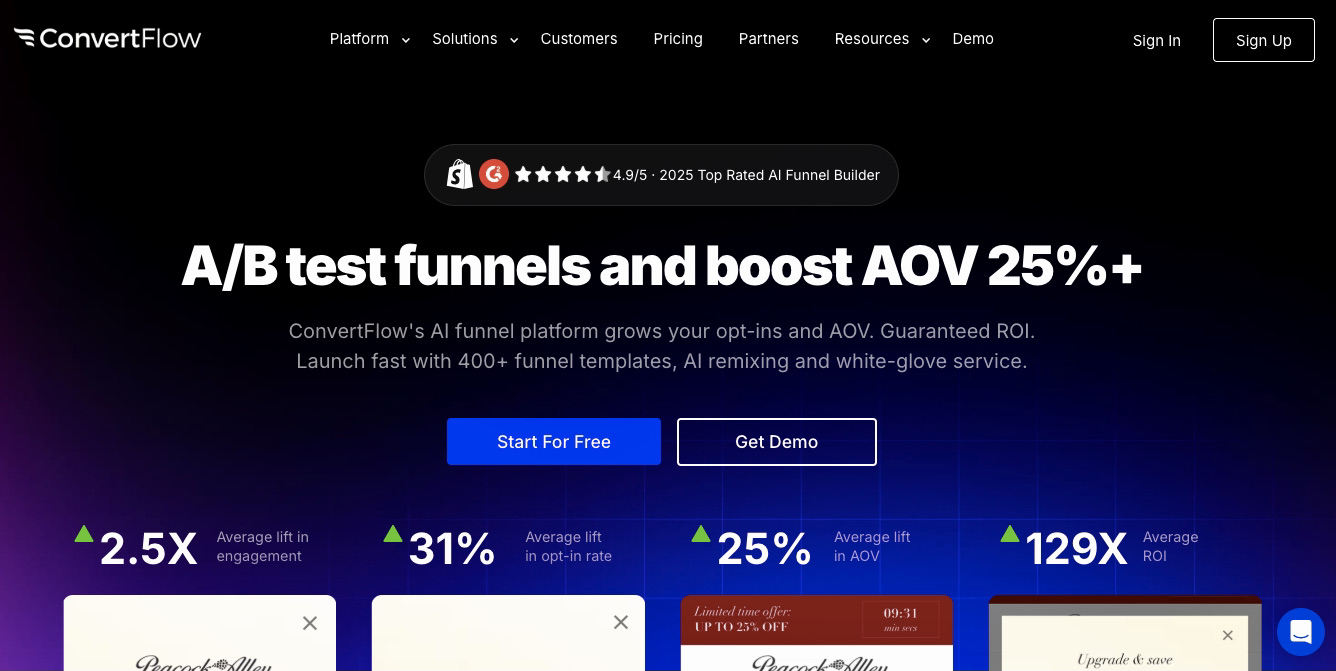
ConvertFlow is an all-in-one funnel builder focused on on-site personalization, lead capture, and conversion paths. The platform claims an average 2.5x increase in engagement and a 129x ROI.
Key features
- Landing pages, forms, popups, quizzes, surveys with 400+ templates
- Personalization based on visitor behavior
- A/B and multivariate testing
- CRM integration and segmentation
Pricing
- Free
- Pro: $299/month
- Plus: $999/month
- Custom: Contact sales team
Pros
- Highly flexible, personalized funnel paths
- Easy setup
Cons
- Users report slow loading times
- Complex features can lag
Best for
Stores that want multi‑step, personalized on‑site conversion paths
Limitations
Third-party data syncing can delay personalization for new visitors
User reviews
A G2 reviewer notes that “building out landing pages for our digital ad agency has been a game-changer”. Another user wrote, “I don’t like how very limited the free plan is… a startup business won’t be able to afford [other plans].”
4. Lightfunnels – dedicated ecommerce funnel builder
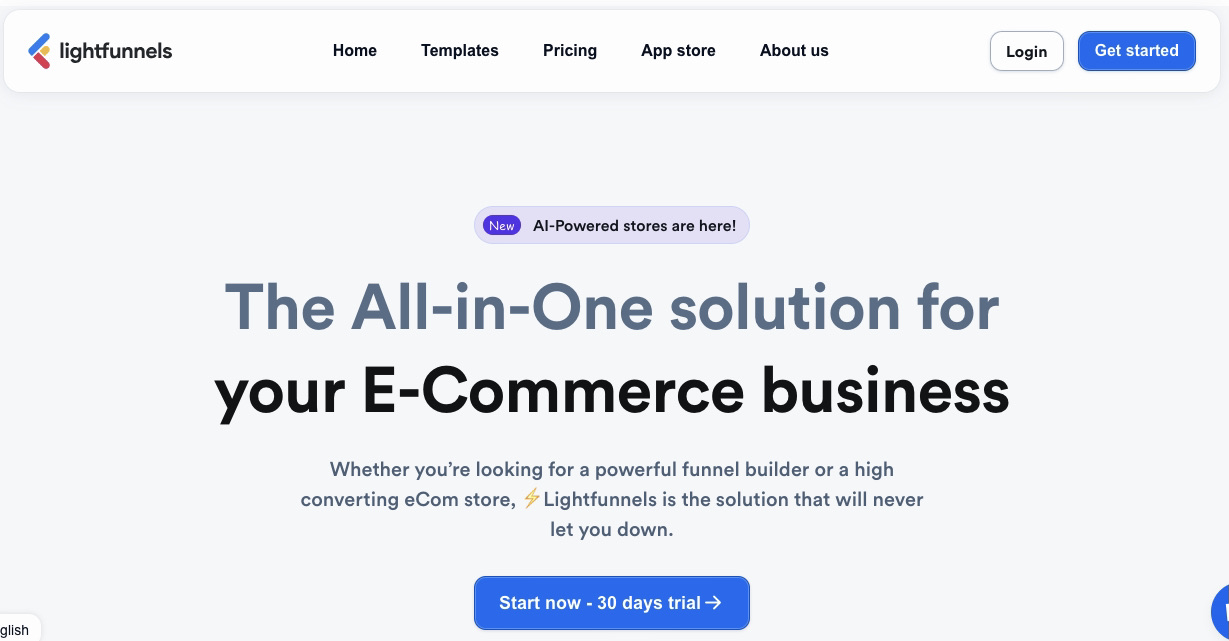
Lightfunnels is designed to replace separate apps for cross-sells, imports, email/SMS automation, and Shopify funnel builder tools. It offers themes in 75+ languages for global reach.
Key features
- Cloud-hosted funnel pages with global CDN delivery
- One-click upsells, custom checkouts, and split testing
- Built-in AI tools on all plans
- Abandoned cart recovery automation
Pricing
- Newbie: $9.99/month
- Standard: $49.99/month
- COD: $99.99/month
Pros
- Fast page load speeds
- More cost-effective than using multiple separate apps
Cons
- Occasional builder bugs reported
- Initial learning curve
Best for
Merchants who want no-code funnels for scaling ads for dropshipping, or education-heavy offers needing lead nurturing.
Limitations
Email and SMS automation are basic compared to dedicated lifecycle platforms
User reviews
A Trustpilot reviewer said that “Lightfunnels support is the best,” while another user says that “they promise more than what they can offer. Very limited when it comes to adding team members.”
5. Funnelish – funnels focused on conversion and upsells
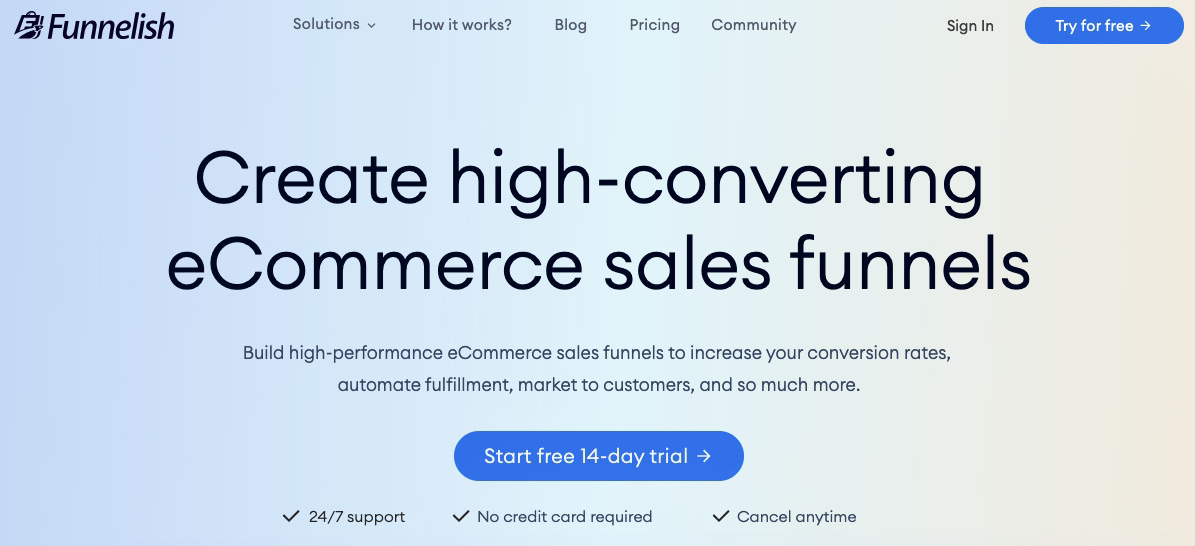
This Shopify funnel builder helps create high-performance sales funnels to increase conversions and automate fulfillment via Shopify and ShipStation. It also offers geo-funnels for location-based targeting.
Key features
- Optimized checkout with order bumps and one-click upsells
- Mobile-optimized pages with fast load times (<1s)
- Advanced analytics and A/B testing
- Multiple payment gateways and bundling support
Pricing
- Basic: $49/month
- Pro: $79/month
- Advanced: $199/month
- Enterprise: Contact sales team
Pros
- Reusable funnel components
- One-on-one training and free migration
Cons
- No full marketing automation suite
- Expensive for startups
Best for
Ad-driven businesses focused on increasing conversion rates and average order value
Limitations
Requires separate email/SMS automation
User reviews
One user notes that the “price is absolutely on fire for what they offer.” Another Trustpilot review was rather disappointed and said, “All servers were down. No one took the time to notify you that servers were down.”
6. Zipify – sales funnel and high-conversion templates
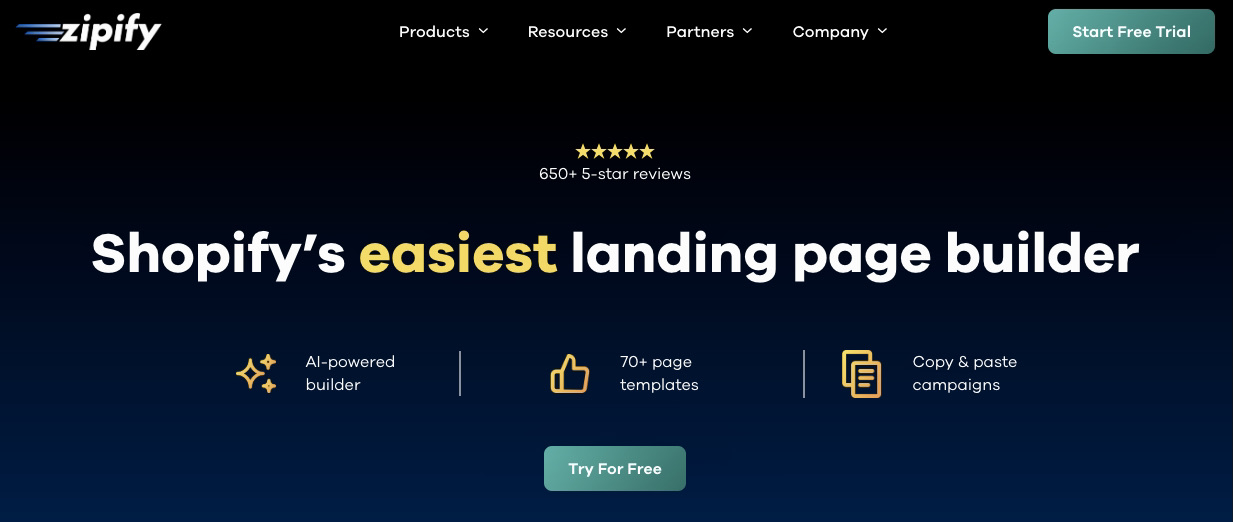
Zipfy is a Shopify funnel builder trusted by 50k+ brands and lets you create any page needed for an effective ecommerce funnel.
Key features
- Native Shopify integration
- Support from experts who run eight to nine-figure stores
- Proven direct response templates tested by nine-figure stores
- A/B testing and an AI copywriter
Pricing
- Free
- Starter: $19/month
- Basic: $39/month
- Advanced: $99/month
Pros
- Beginner-friendly interface
- Responsive and knowledgeable support team
Cons
- User report analytics lack depth
- Template library could be broader
Best for
Merchants building high-converting landing pages and sales funnels quickly
Limitations
Pages cannot be easily exported or migrated if you leave the platform
User reviews
A Shopify reviewer says that an “issue was resolved in less than 24 hours, which is very impressive”. However, another Zipfy user says, “I tried contacting support to find out how I can arrange one-on-one support, but only got bot responses.”
7. Quiz-based funnels with Shopify quiz apps
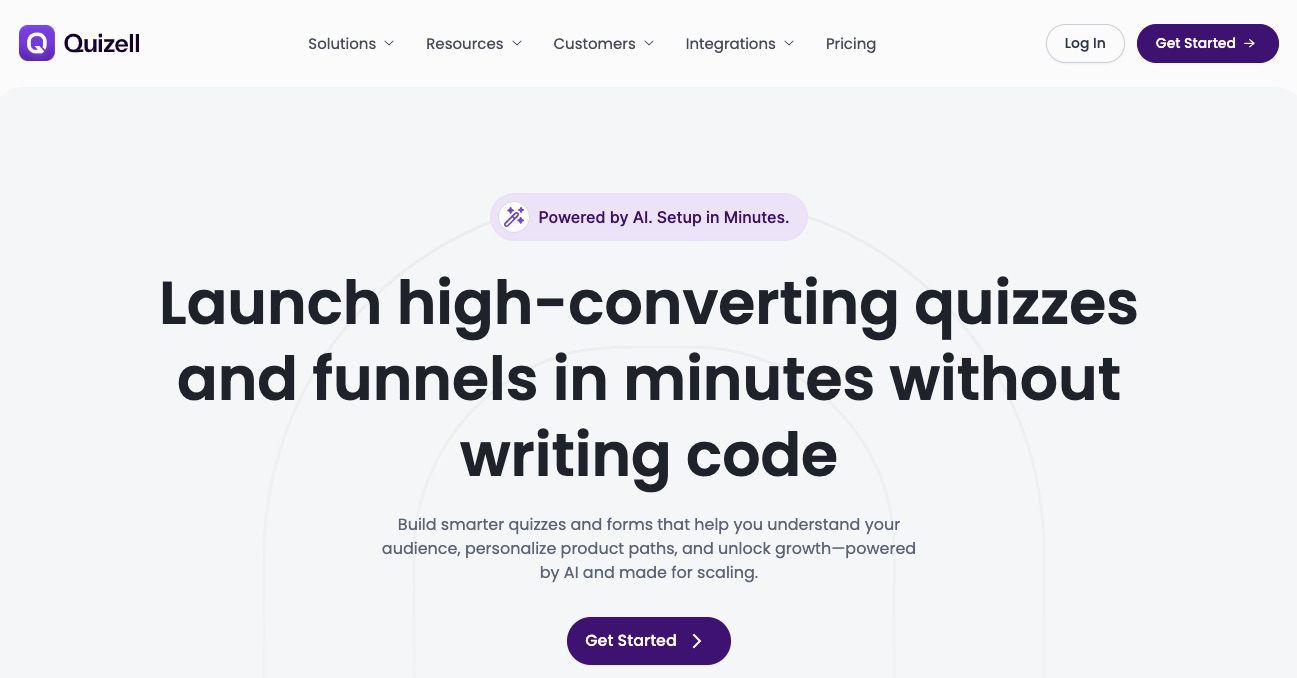
A Shopify quiz app like Quizell adds quizzes to your store to collect preferences, recommend products, and pass answers to email/SMS tools. It isn’t a Shopify funnel builder, but it supports early decision-making.
Key features
- AI-powered quiz creation
- Product recommendation and lead capture quizzes
- Built-in performance insights
- Lead-gen quizzer for knowing customers better
Pricing
- Free
- Lite: $15/month
- Plus: $49/month
- Pro: $199/month
Pros
- Easy to set up and navigate
- Integrates with ecommerce/marketing platforms
Cons
- Lacks advanced features for larger stores
- Learning curve for beginners
Best for
Store owners using quizzes to capture qualified leads early
Limitations
Guides product selection but can’t complete the full funnel, requiring other Shopify funnel builder tools
User reviews
A user in G2 review says, “Quizell makes it incredibly easy to create quizzes and assessments”. Another user says, “It lacks design flexibility, in terms of customizing font choices and text sizes.”
When standalone Shopify sales funnel apps make sense
Standalone Shopify funnel builder apps excel for campaign-specific funnels that go beyond standard Shopify pages. They let you rapidly assemble and test funnel steps without custom development.
However, they don’t replace post-purchase automation, so use them for high-converting ecommerce pages that integrate with, but don’t replace, your broader marketing stack.
The marketing automation alternative: Building funnels with Omnisend
Some tools are only good for building pages, but others cover the entire customer lifecycle for a powerful Shopify funnel engine.
Sounds like something you’d go for?
Let’s explore how marketing automation tools like Omnisend support Shopify stores by managing end-to-end funnels.
Funnels beyond pages: Why automation matters
A full ecommerce funnel includes acquisition, conversion, retention, and repeat purchase.
Omnisend connects Shopify customer behaviors like views, carts, and orders to email and SMS workflows, reducing lost sales and offering long-term value.
How Omnisend connects Shopify funnels with email and SMS
Omnisend integrates directly with Shopify via the app store or dashboard. Once connected:
- Unified data sync: Contacts, products, and order histories are transferred to Omnisend and kept up to date automatically
- Event triggers from Shopify actions: Shopify actions, such as signups, purchases, or abandoned carts, feed automation triggers
- Automation trigger settings: Once these events feed into Omnisend’s automation triggers, you can customize workflows that send email/SMS and push notifications based on those actions
Omnisend then powers message sequences essential to lifecycle funnels:
- Acquisition funnels: Shopify signup events from popups or checkout trigger welcome automations
- Cart and browse abandonment: Cart and product-view events trigger reminder automations
- Post-purchase and upsell: Order events trigger confirmations, follow-ups, and cross-sells
- Win-back funnels: Purchase and engagement data feed segmentation rules that trigger reactivation campaigns for inactive customers
- Performance and reporting: With everything running, Omnisend shows funnel performance tracking and reporting for continuous improvements
Omnisend funnel workflows for Shopify stores
Omnisend’s Shopify integration lets you automate key customer stages with ease, backed by a free plan and 24/7 support. Here’s how:
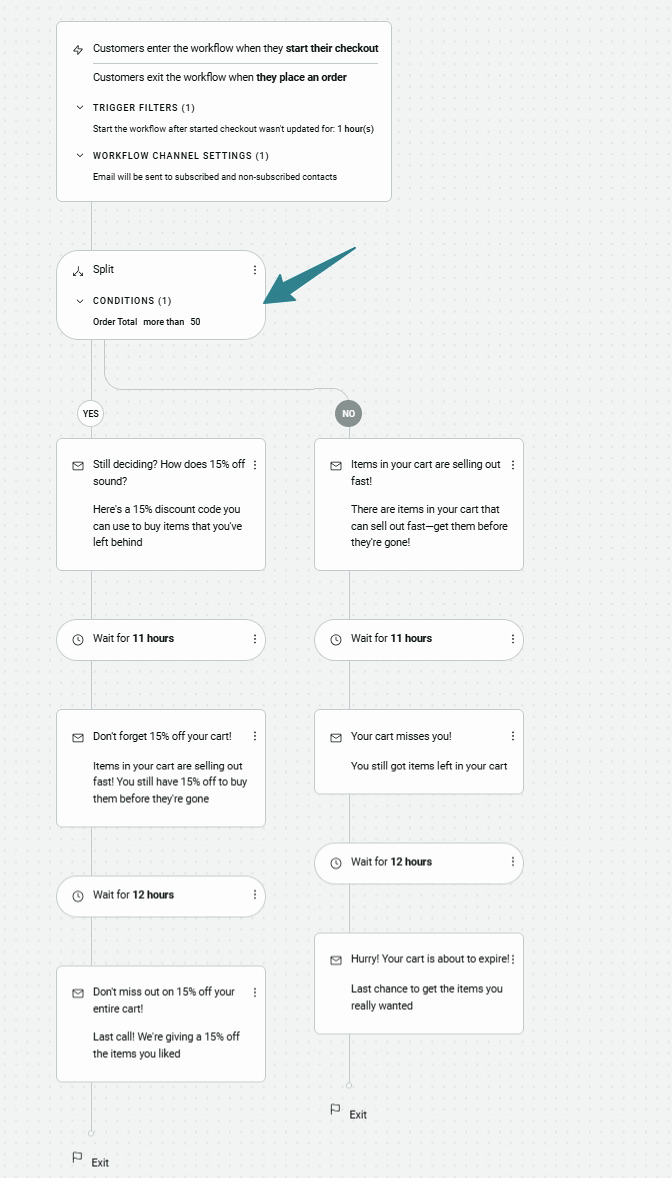
Abandoned cart recovery
- Visitor adds items — email one triggers after 30 minutes
- Reminder at 12 hours if no purchase
- Follow up the next day with product recommendations
Example workflow with split settings:
Post‑purchase engagement
- Send order confirmation
- Trigger cross-sell SMS 48 hours after purchase
- Request review or repeat purchase incentive on day seven
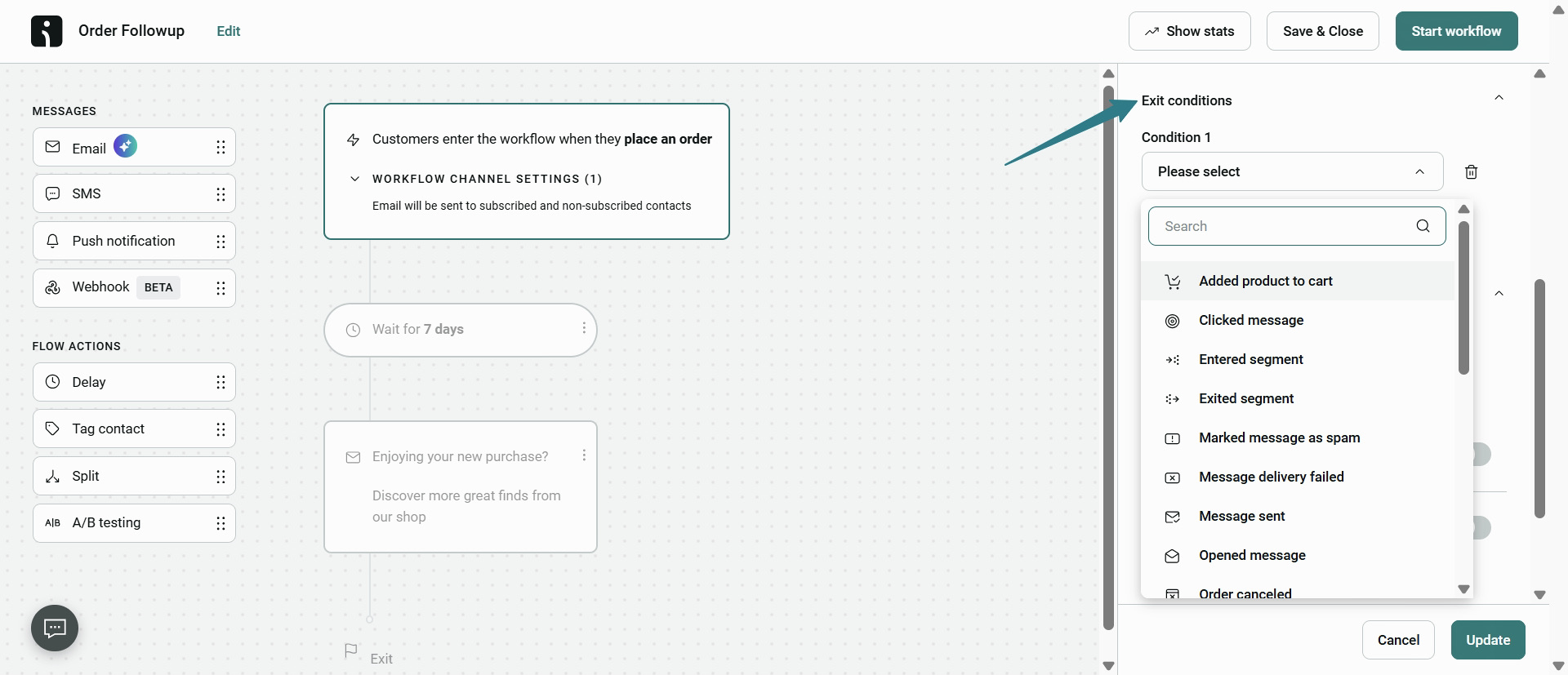
Add exit conditions so customers who have acted don’t get repeated messages:
Reactivation funnel
- Segment dormant customers
- Send targeted email series with personalized offers
- Follow up with SMS reminders
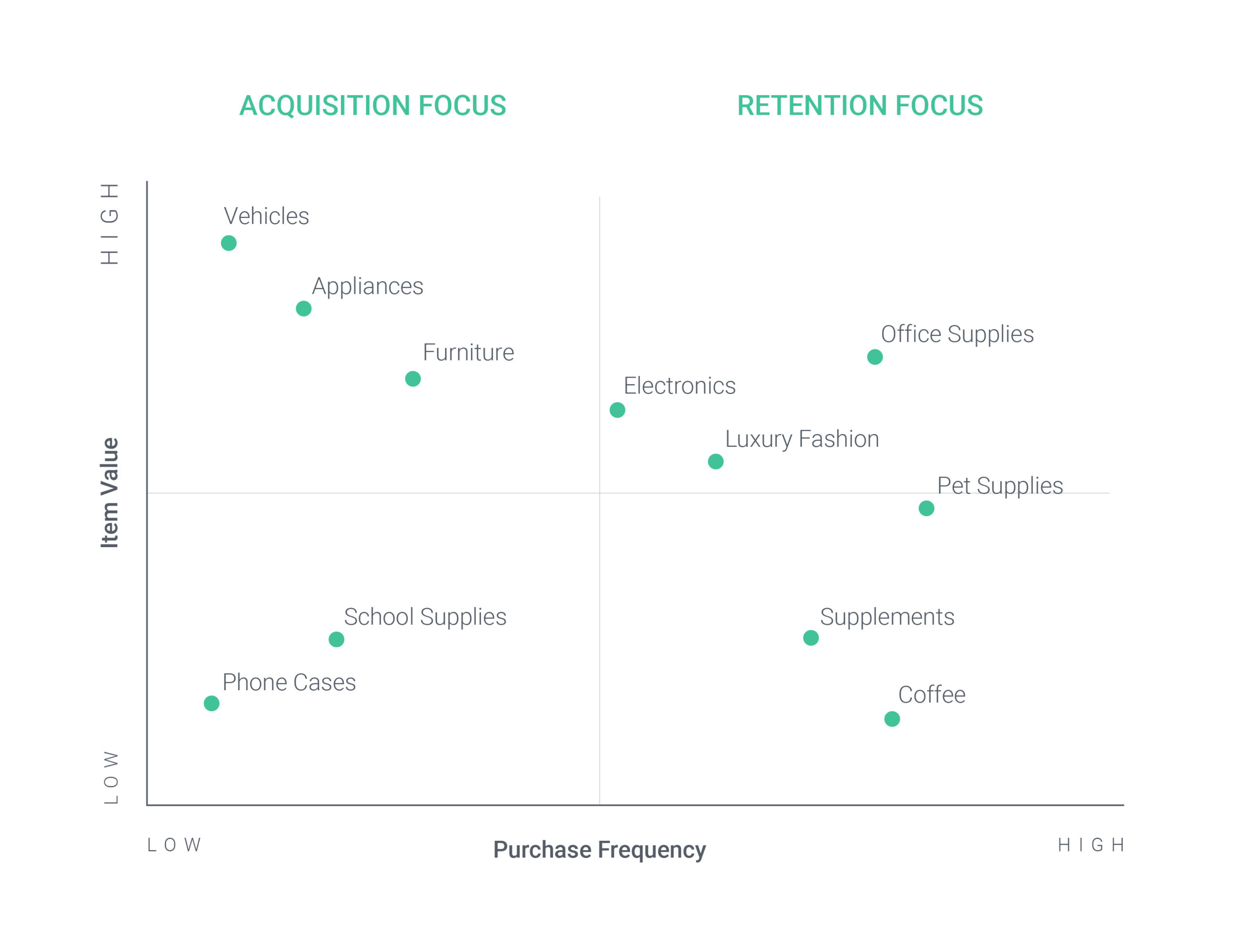
For high-value products, focus on new customer acquisition. For frequently bought items, use reactivation and loyalty tactics.
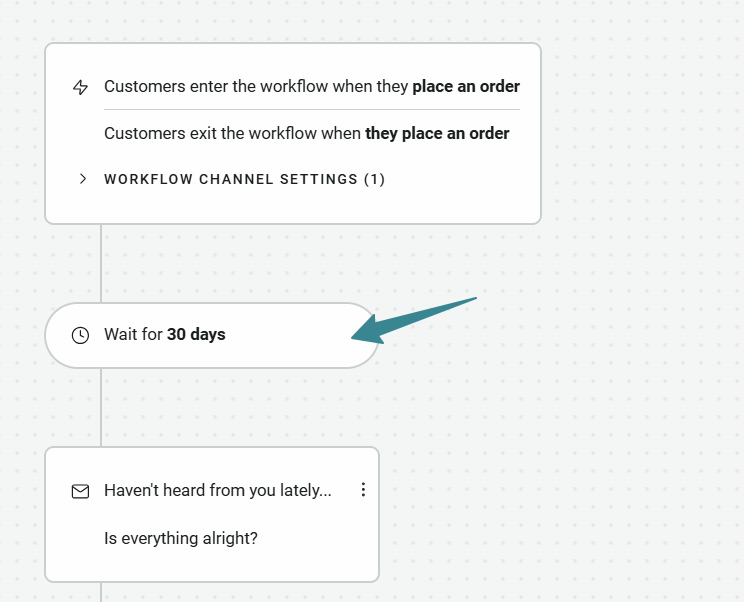
Additionally, keep a 30-day delay so only customers who haven’t purchased again receive reactivation messages:
Watch this video to learn how behavior-based automation works with real customer data and build better email marketing strategies:
Omnisend vs dedicated Shopify funnel builders
Omnisend is an email/SMS marketing platform that integrates Shopify data to run campaigns across acquisition, cart recovery, post-purchase, and reactivation funnels. Omnisend’s US customers show $79 back for every $1 spent, with A/B testing for entire emails, subject lines, sender names, and more.
Shopify funnel builder tools, on the other hand, focus on creating high-converting pages and checkout sequences. Both are important. However, to maximize revenue and lifetime value, use them together.
How to build a high-converting sales funnel on Shopify (step by step)
This guide will help you learn how to map customer journeys, build funnel pages, connect automations, and track conversions.
1. Map your customer journey and funnel goals
Before using a Shopify funnel builder, plan what happens when traffic lands and when visitors hesitate. You can break this into practical stages:
- Lead capture (top of funnel): Use landing pages or popups to collect emails from paid ads, SEO, or social traffic
- First purchase (middle of funnel): Product pages, cart, and checkout will focus on converting intent into sales
- Retention (bottom of funnel): Post-purchase and win-back automations will turn one-time buyers into repeat customers
Triggers from on-site behavior, like product views or abandoned carts, feed automation workflows in Omnisend.
For example, Organic Aromas increased newsletter signups by 150% using popups, then converted those leads through automated email flows.
2. Choose your funnel builder approach
First, choose your approach. Use existing Shopify theme pages, AI store builders, or other Shopify funnel builder tools for drag-and-drop design.
Here’s a quick comparison to help you choose faster:
| Criteria | Page builder app | Existing theme pages + Omnisend |
|---|---|---|
| Setup style | Custom landing pages and funnel steps built outside your theme | Uses native Shopify pages |
| Best for | Conversion-focused sales pages and upsell-heavy funnels | Lifecycle funnels driven by email and SMS automation |
| Design flexibility | High | Moderate |
| Post-purchase flows | Often limited or add-on based | Strong post-purchase, retention, and repeat purchase automation |
| Cost efficiency | Higher | More cost-effective |
3. Build funnel pages and offers in Shopify
Map each funnel stage to a page:
- Landing page: Highlight one offer and capture attention
- Product page: Use persuasive copy, images, reviews, and FAQs
- Cart and checkout: Add trust signals, guarantees, and incentives
- Thank you and upsell: Suggest related products or upgrades
Add lead capture forms at peak interest (scroll, exit intent, or time on page) and connect them to Omnisend, so leads immediately enter automated email/SMS flows.
4. Connect and set up email/SMS automations
Install Omnisend from the Shopify App Store and connect your store with Omnisend.
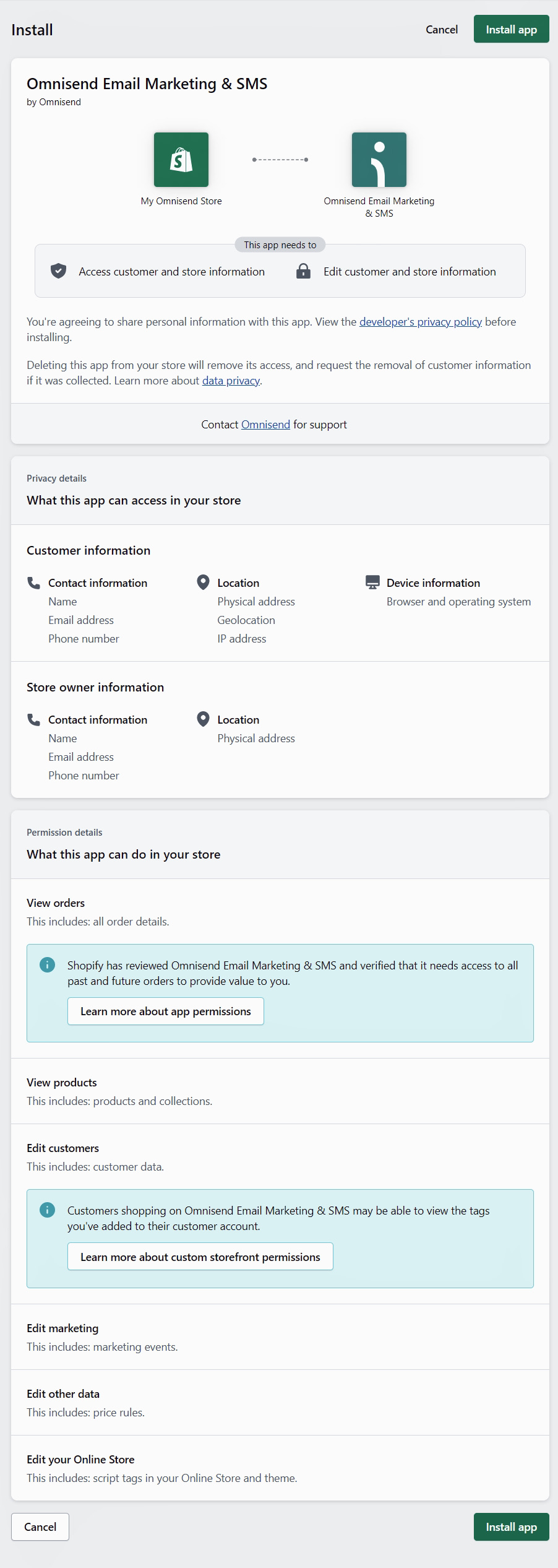
Wait at least 24 hours for your store’s historical data to sync, then create automation workflows:
- Welcome series: Triggered on signup
- Abandoned cart: Sends timed reminders and exits customers who purchase
- Post-purchase and reactivation: Confirms orders, cross-sells, or re-engages dormant customers
To customize these flows, go to the Automations tab, select a preset, and adjust as needed:
For example, Shopify store Snatcher recovered over $120,000 in automated sales by connecting Omnisend’s cart recovery automation.
5. Track performance and optimize conversions
Monitor key funnel KPIs using Shopify analytics and Omnisend reports:
- Conversion rates at each stage (landing, signup, purchase)
- Revenue recovery from abandoned carts
- Engagement with email/SMS flows
Use these insights to tweak offers, timing, and messaging.
Run A/B tests on landing page headlines, CTAs, email subject lines, sender names, content, and timing between funnel stages. Omnisend supports A/B testing throughout automations, so you can refine what resonates.
How to choose the best Shopify funnel builder for your store
Choosing the right Shopify funnel builder starts with understanding your goals and resources. Ask yourself:
- What type of funnels do you need?: Are you aiming for first-time buyers, increasing AOV with upsells, driving repeat purchases, or reactivating dormant customers?
- Which channels matter most?: Do you only need on-site funnels, or should email and SMS work together to move customers through the journey?
- What resources do you have?: Can you design custom pages, or do you prefer something that works with your existing Shopify theme?
- What do you think about ROI?: Are you looking for quick campaign results, or long-term revenue growth from repeat customers?
- How well does it integrate?: Does the tool connect with Shopify, customer data, and your other apps?
When to use a dedicated funnel builder vs marketing automation
If you mainly need custom landing pages, campaign funnels, or one-off offers, a Shopify funnel builder is ideal.
For long-term growth, including retention, abandoned cart recovery, repeat purchases, and personalized follow-ups, marketing automation solutions, such as those provided by Omnisend, add more value. It’s also a good choice for store owners looking for global SMS capabilities and maintaining long-term customer relationships.
If your budget is tight, consider Shopify funnel builder tools with built-in automation rather than standalone page builders.
30 – 90 day roadmap to launch and optimize your Shopify funnels
This roadmap provides a realistic timeline to launch and refine Shopify funnels for increased revenue.
First 30 days
Here’s what to focus on first:
- Install and connect core tools: Sync products, contacts, and order history
- Build and launch foundational funnels: Direct traffic from ads or SEO to landing pages with lead magnets and set up abandoned cart workflows
- Configure basic triggers and messaging: Enable welcome emails, follow-ups, and basic automation based on customer actions
Days 31 – 60
Once core funnels are set up with a Shopify funnel builder:
- Add post-purchase and win-back funnels: Engage customers after purchase (cross-sells/reviews) and re-activate lapsed buyers
- Start A/B testing: Experiment with landing page headlines, form prompts, and automated messages
- Refine triggers and segments: Use tools like Omnisend to personalize flows, separating high-AOV buyers from first-time shoppers
Days 61 – 90
Focus on optimization and scaling:
- Introduce VIP and loyalty funnels: Reward repeat customers with exclusive offers to drive LTV
- Advanced testing and scaling: Try new ad creatives, audiences, and checkout optimizations
- Full-funnel review and planning: Analyze TOFU, MOFU, and BOFU performance
Common Shopify funnel mistakes and how to fix them
High-demand products can still fail if funnels are incomplete or poorly optimized. These common Shopify funnel mistakes can hurt revenue if ignored:
Relying on pages without automated follow-up
Mistake: Using a Shopify funnel builder alone to drive traffic to pages without automated follow-up for browsing, abandoned carts, or exits.
Fix: Connect your Shopify funnel builder to an automation tool like Omnisend. Set up triggered email and SMS flows so every visitor enters a follow-up sequence instead of leaving without converting.
Ignoring post-purchase and retention funnels
Mistake: Assuming the funnel is complete once checkout and order confirmations are live. This limits lifetime value and over-relies on new buyers.
Fix: Map post-purchase journeys in your Shopify funnel builder (order confirmations, reviews, cross-sells, replenishment). Use Omnisend automation to trigger these based on purchase timing and product type.
Not testing offers, layouts, and messaging
Mistake: Launching funnels and assuming they’ll improve on their own without testing.
Fix: Test headlines, offers, form placements, and follow-ups:
- Use your Shopify funnel builder to run variations of landing pages, product pages, or popups
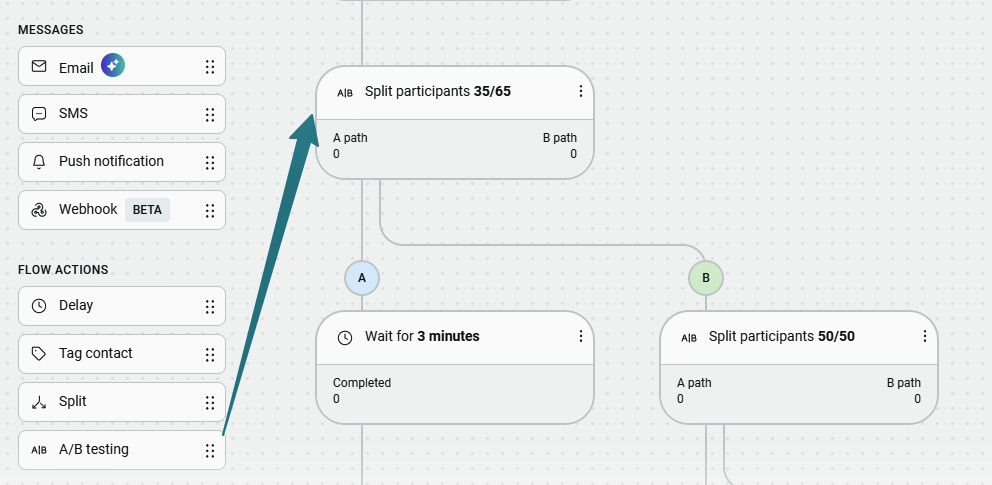
- In Omnisend, add an A/B test block to your automation workflow, set different message variants or timing, split the audience (50/50), and track opens, clicks, and sales
Conclusion
A Shopify funnel builder helps you design and optimize the customer journey on your store, from landing pages to checkout and upsells. Popular options include PageFly, GemPages, ConvertFlow, Lightfunnels, Funnelish, and Zipify.
Pairing these funnels with marketing automation extends their impact by triggering follow-ups, retention flows, and personalized messaging that drives conversions and customer lifetime value. Platforms like Omnisend make this seamless, offering Shopify integration, omnichannel support (email/SMS), and 24/7 support to help you scale.
The right approach depends on your store’s goals and resources, but combining funnels with automation consistently drives stronger long-term results.
Quick sign up | No credit card required
FAQs
There isn’t a single best ecommerce funnel builder for Shopify 2026. It depends on your needs. Popular options include PageFly, GemPages, ConvertFlow, Funnelish, and Lightfunnels.
Pick a Shopify funnel builder and create landing pages, product pages, and checkout flows. Attract visitors via ads/SEO, engage them with content, and drive conversions with clear CTAs and incentives. Nurture loyalty through post-purchase offers or emails.
You don’t always need a separate Shopify funnel builder with automation platforms. However, dedicated builders excel at landing pages and visual funnel design, making them a complementary tool for more complex funnels, not replacements.
Use Plug in SEO or Booster for meta tags, links, and alt text. SearchPie provides AI-powered bulk optimization. Page builders like GemPages and PageFly also include built-in SEO features.
Funnels complement your Shopify website, not replace it. The store site gives full product and brand info, while a Shopify funnel builder creates targeted paths to guide visitors toward conversions.

TABLE OF CONTENTS
TABLE OF CONTENTS


No fluff, no spam, no corporate filler. Just a friendly letter, twice a month.