Omnisend AI


 OFFER
OFFER









Social media platforms are full of content creators and business owners talking about the best new business ideas in 2026. And while there’s an abundance of business ventures, finding a comprehensive list of clearly defined ideas, business setup costs, key requirements, and realistic earnings is often challenging.
In this extensive overview guide, we’ll talk about the best 40 small business ideas you can use to kick-start your entrepreneurial journey and achieve your personal goals, regardless of your background and skillset.
Quick sign up | No credit card required
Best small business ideas for 2026
Online and digital business ideas
1. Freelance writing and copywriting
AI tools have only increased the need for high-quality writing that incorporates AI efficiency and human editing. Multiple companies across different industries are looking to hire writers for blogs, email campaigns, and ads without hiring in-house writers.
- Startup cost: $0. All you really need is a laptop and an internet connection.
- Earning potential: $15/hr for beginners and around $150/hr for highly specialized writers.
- Best for: Strong writers, journalists, marketers, or anyone with a passion for writing. Anyone interested can take free online courses to get started.
2. Virtual assistant
You’d be surprised how many companies and entrepreneurs are looking for people to help out with various administrative support tasks. This could be anything from business inbox management to scheduling, data entry, research, and customer service.
- Startup cost: $0 to $100+, depending on the tools you choose to find clients.
- Earning potential: $15–$100/hr. Specialist VAs, like bookkeepers or social media managers, typically earn more.
- Best for: Organized, detail-oriented people who are comfortable working remotely with multiple clients.
3. Social media management
Social media has grown to a point where even small businesses and solopreneurs are looking for people who know their way around social media platforms, which ones to use, and how to analyze key metrics for success.
- Startup cost: You can often get started for $0, but paid tools like Buffer and others are required, so the costs can go up to roughly $200.
- Earning potential: $500–$3,000/month per client. Most managers handle 3–5 clients.
- Best for: People who already spend time on social media and understand what performs on each platform.
4. Website development
A good website serves as a modern business card, whether it’s a business or an individual specialist looking for freelance gigs. If you have any knowledge of building websites with popular tools like WordPress, Webflow, Shopify, or custom-coded solutions, you could consider building websites as your main business.
- Startup cost: $15–$500+ for hosting, domain, and software licenses.
- Earning potential: $500–$10,000+ per project. You can offer maintenance as an add-on to generate recurring revenue.
- Best for: Developers or designers comfortable with at least one content management system (CMS) and basic HTML/CSS.
5. App development
AI tools have opened the door for many to expand their learning online. A lot of people get into app development without specialized experience, bridging the gap between trends dictated by big corporations and the real daily needs of users.
- Startup cost: $15–$1,000 for AI and developer tools and app store fees.
- Earning potential: $1,000–$50,000+ per client project, depending on whether you sell to a business or create and monetize apps yourself.
- Best for: Software developers with experience in iOS, Android, or web app frameworks.
6. SEO/AEO and digital marketing consulting
Virtually every business operating online needs a proper SEO strategy. But the reality is that hiring an in-house team can be a significant financial burden for smaller companies, so they look for extra hands to improve search rankings, paid ad performance, and overall digital marketing strategy.
- Startup cost: $0–$300 for SEO tools such as Ahrefs or Lovable.
- Earning potential: $50–$200+/hr or $1,000–$5,000+/month per retainer client.
- Best for: Marketers and SEO specialists with hands-on SEO, PPC, or content strategy experience.
7. Graphic design
Creating visual assets for businesses is a great opportunity to earn additional funds on the side and turn it into a full-time business. Many companies, startups, influencers, and solopreneurs need help with logos, brand identities, social graphics, packaging, and marketing materials.
- Startup cost: $12–$600 for Adobe Creative Cloud ~$55/month. Alternatively, you can get started for free with Figma.
- Earning potential: $25–$100+/hr, while brand identity projects run $500–$5,000+.
- Best for: Designers with a clear portfolio and familiarity with industry-standard tools.
8. Online course creation
Education has become more accessible than ever, with people around the world sharing their real-world experiences for free. If you have a specific experience, you can try going on Teachable, Kajabi, or Udemy to share your knowledge and help others achieve their goals without spending thousands on a university education.
- Startup cost: $100–$500 for recording equipment and platform fees.
- Earning potential: $500–$50,000+/year, depending on the niche you choose.
- Best for: Specialists and experts in any field willing to structure their knowledge into a structured and reusable format.
9. Digital products
Digital products are one of the hottest topics online right now. And while it may seem too far-fetched, the reality is – a lot of people have successfully made considerable money selling trending and useful products on Etsy and Gumroad. The most popular digital products include templates, presets, ebooks, spreadsheets, and Notion dashboards.
- Startup cost: $12–$200. You can get started with free tools, but a Canva Pro subscription can really help make better products.
- Earning potential: $200–$10,000+/month depending on product and marketing, with near-100% margin.
- Best for: Designers, writers, or educators with a repeatable process others would pay to shortcut.
10. Bookkeeping
If you have experience with finances, you can easily start your own business helping small businesses with managing their financial records, categorizing transactions, reconciling accounts, and preparing reports.
- Startup cost: $0–$500 for popular tools like QuickBooks or Xero subscription.
- Earning potential: $30–$80/+hr or $300–$800+/month per retainer client.
- Best for: Detail-oriented people with dedicated experience and licenses (depending on local laws) with a head for numbers.
11. Podcast editing
Podcasts are on the rise, and not just amongst major corporations, CEOs, or news platforms. Many solopreneurs and small-to-medium-sized businesses are looking for podcast opportunities to expand their reach by working with editors to edit scripts, level audio, add intros/outros, and deliver thoroughly edited files.
- Startup cost: Can range from $0 to $300. Audacity is free, but tools with more features, like Descript, run at around $24/month.
- Earning potential: $50–$300+ per episode. A small roster of weekly clients generates $1,500–$5,000/month.
- Best for: Audio and video editing specialists with patience for repetitive editing.
12. Freelance video editing
Helping video content creators, influencers, brands, and businesses with short and long-form video for TikTok, Instagram, and YouTube is a real opportunity for anyone interested in starting their own business.
- Startup cost: $50–$800.
- Earning potential: $25–$100+/hr or $50–$500+ per video, depending on length, complexity, niche, and demand.
- Best for: Creatively minded people comfortable with pacing, music selection, and visual storytelling.
13. AI consulting and workflow automation
Many businesses are researching ways to implement AI into their business workflows. Specialists who can identify business areas for improvement with AI and create automated workflows with Zapier, Make, or n8n.
- Startup cost: $50–$200.
- Earning potential: $80–$300+/hr and $500–$3,000+ for project engagements.
- Best for: Tech-savvy specialists with experience tying together workflows.
14. AI prompt engineering
There are multiple AI tools, and new ones keep appearing almost every day. But knowing how to use them requires knowing how to engineer the right prompts with ChatGPT, Claude, or Midjourney — both services and packaged prompt libraries.
- Startup cost: $0–$100, may require API access.
- Earning potential: $35–$60+/hr entry-level on Upwork and around $200–$400/hr for specialists on complex AI agent systems.
- Best for: People who understand how LLMs work and can translate that into reliable outputs for non-technical clients.
15. AI content and creative services
AI tools have indeed opened up new possibilities, but there’s still a learning curve. You can offer businesses copy creation services, social content, ad creatives, and visuals with AI tools that are good quality and include human polishing.
- Startup cost: $50–$200/month for Claude, ChatGPT Plus, Midjourney, or similar.
- Earning potential: $500–$5,000+/month per client.
- Best for: Digital marketing specialists who understand what good content looks like and can use AI to produce it faster and at scale.
16. No-code app and website building
Support businesses and individuals who don’t want to invest in tech-heavy projects by building functional web pages, apps, tools, and MVPs with AI-powered and no-code platforms like Lovable, Bubble, or Webflow.
- Startup cost: $50–$300/month for platform subscriptions.
- Earning potential: $1,000–$8,000+ per project.
- Best for: Systems-focused people comfortable with AI tools who can translate ideas into a working product.
Local and service-based business ideas
17. Cleaning services
Cleaning is an everyday task, but many don’t have the time to do it, let alone dedicate enough time to a proper deep clean. You can take this opportunity to offer residential or commercial cleaning services locally, either as an independent contractor or as part of a team.
- Startup cost: $200–$1,000 for supplies, insurance, and basic marketing.
- Earning potential: $25–$50+/hr per cleaner. Realistic monthly earnings range from $2,500 to $4,000.
- Best for: Anyone willing to do physical work reliably and consistently.
18. Lawn care and landscaping
Similar to cleaning services, lawn care, mowing, edging, leaf removal, and basic landscaping are great business ideas with stable and seasonal project possibilities for both residential and commercial clients.
- Startup cost: $500–$3,000 for equipment.
- Earning potential: $30–$80+/hr, but can vary drastically during peak seasons.
- Best for: People comfortable with outdoor physical work.
19. Handyman services
YouTube can teach a lot, but not everything. People still need reliable specialists for home repair and maintenance services, including furniture assembly, painting, plumbing, and various gadget or system installations.
- Startup cost: $500–$2,000 for tools, transport, and insurance.
- Earning potential: $40–$100+/hr depending on job and location.
- Best for: Practically skilled people who know their way around basic home maintenance.
20. Pet sitting and dog walking
Many pet owners need help caring for their pets due to a lack of time or a busy work schedule – but they still want to give their pets the love and attention they deserve. That’s why caring for pets while their owners are away is a pretty lucrative gig, with platforms like Rover making it easier to find clients.
- Startup cost: $0. However, this could add up to $200 in insurance and platform setup costs.
- Earning potential: $15–$30/walk, $50–$100/night for boarding.
- Best for: Animal lovers with flexible schedules, especially those living in dense urban areas.
21. Personal training
Fitness is on the rise, and while the fitness influencer industry has gained controversial attention, at the end of the day, more and more people want to live healthier now. Fitness coaching in person can be a great opportunity to do something you’re passionate about.
- Startup cost: $500–$2,000 for certification.
- Earning potential: $40–$150+/h for in-person sessions. Online coaching programs can earn $2,000–$ 10,000+ per month.
- Best for: Fitness-focused individuals with a genuine interest in helping others reach physical goals.
22. Tutoring and coaching
This may sound similar to creating courses, but tutoring is different. It offers a way to connect with real people, in person and online, to help them develop their language, music, or professional skills.
- Startup cost: $0–$200 for video call software and specific material preparation.
- Earning potential: $25–$150+/hr. Test-preparation tutors who help with the SAT, GMAT, and LSAT typically earn more.
- Best for: People with strong expertise in a specific subject who can explain it well.
23. Photography
Real photography is incredibly sought after for portraits, events, real estate, product photography, and commercial campaigns.
- Startup cost: $1,000–$5,000 for cameras, lenses, and editing software.
- Earning potential: $500–$5,000+ per shoot, depending highly on your chosen niche.
- Best for: Visually creative people with experience in professional photography.
24. Event planning
Event organizing and planning might be popular, but there aren’t many specialists to rely on if companies and individuals don’t want to rely on big service providers. Think weddings, birthday parties, conferences, and unique corporate events – there’s a real need for unique planning with a personal touch.
- Startup cost: $200–$1,000 for website, contracts, and basic marketing.
- Earning potential: $1,500–$10,000+ per event.
- Best for: Highly organized people who know how to plan and manage multiple activities.
25. Catering and meal prep
Good food can make anyone’s day, so if you’re a skilled chef or an enthusiastic home baker, you might want to consider preparing food for events, household weekly meals, or running a home-based food business.
- Startup cost: $500–$3,000 for equipment, training, and licenses.
- Earning potential: $500–$5,000+/month.
- Best for: Skilled cooks who enjoy making food at scale and can handle food-safe logistics.
26. Translation services
Google Translate may do the main job, but exact translation is still a required skill for translating documents, websites, services, products, or marketing materials.
- Startup cost: $0 to $200 for CAT tools for professional work.
- Earning potential: $0.05–$0.25 per word or $30–$80/hr. Legal and medical translators typically earn more due to their combined skills.
- Best for: Fluent bilingual or multilingual speakers.
27. Interior decorating
If you’re an artistic person with an eye for style, you can help homeowners and businesses style their spaces by offering furniture, color, and decor suggestions. Best of all, you don’t need to have an official license.
- Startup cost: $100–$1,000 for a well-designed portfolio, website, and design software.
- Earning potential: $50–$150+/hr or $500–$5,000+ per full-room refreshers.
- Best for: Visually creative people with a strong sense of space and current design trends.
Retail and ecommerce business ideas
28. Dropshipping
Dropshipping may have been a trend quite a few years back, but there’s a reason why so many people still talk about it. Selling products online without managing inventory is an attractive business prospect.
- Startup cost: $100–$500 for a Shopify plan, domain, and initial marketing.
- Earning potential: $500–$5,000+/month, depending on the niche you select, especially since margins are thin, around 10–30%.
- Best for: People comfortable with digital marketing and willing to invest time in product research and customer service.
29. Print-on-demand
Similar to dropshipping, print-on-demand (POD) allows you to design graphics for t-shirts, mugs, phone cases, and other accessories. At the same time, a third-party provider handles the production and shipping.
- Startup cost: $0–$200 for design software and mockup tools.
- Earning potential: $200–$3,000+/month for a well-run store. Margins typically range between 20 to 40% per item.
- Best for: Designers or people with a niche following.
30. Beauty and skincare products
The beauty sector is a major industry. But more and more people are now looking for healthier and more organic options that rely on minimalistic ingredients and focus on sustainability.
- Startup cost: $500–$5,000 for formulation, packaging, labeling, and regulatory compliance.
- Earning potential: $1,000–$20,000+/month for established brands.
- Best for: Those passionate about beauty and interested in brand building.
31. Subscription boxes
Everyone likes getting presents, which is why subscription boxes have become such a hit. Plus, you can literally create whatever box you want, from monthly beauty product boxes to hobby starters, DIY kits, top books, and more.
- Startup cost: $1,000–$5,000 for initial inventory, packaging, fulfillment, and subscription platform.
- Earning potential: Recurring revenue model. For example, 100 subscribers at $30/month could equal $3,000 monthly recurring revenue (MRR) before costs.
- Best for: Creatives with a talent for sourcing products people are excited to discover.
32. Furniture restoration and resale
We mentioned sustainability once in this article, and furniture restoration falls directly into this category. You can buy, even rescue, secondhand furniture, restore it, and resell it on Facebook Marketplace, Etsy, or local showrooms.
- Startup cost: $300–$1,500 for tools, paint, sandpaper, and initial furniture pieces.
- Earning potential: $500–$4,000+/month.
- Best for: Hands-on, creative people who can spot valuable pieces and have the skills to restore them.
33. Plants and garden products
Much like sustainability and handmade products, gardening is also on the rise. If you’re interested in houseplants, gardening, and maybe have a hobby of collecting seeds, you can turn this into a full physical and online business.
- Startup cost: $100–$800 for starter plants, pots, soil, and packaging.
- Earning potential: $500–$3,000+/month for active sellers.
- Best for: Gardening enthusiasts with space to grow and the patience to propagate consistently.
34. Food products
On the topic of offering catering services, you can sell ready-made food products as an alternative to entering the catering business. Many home cooks and hobbyists look for homemade jams, hot sauces, baked goods, and spice blends locally.
- Startup cost: $300–$2,000 for commercial kitchen rental or cottage food license, and packaging.
- Earning potential: $500–$5,000+/month. Just note that cottage food laws vary by state, so make sure to check your local regulations.
- Best for: Home cooks with a signature product and an interest in food branding.
35. Clothing and accessories
With the global onslaught of fast fashion, people are looking for more sustainable and original pieces. That’s why launching a fashion brand can be a great business idea, particularly if you’re into fashion.
- Startup cost: $500–$5,000, depending on the mode you choose: physical shop vs. webstore or both.
- Earning potential: $500 to $50,000+/month.
- Best for: Fashion-interested entrepreneurs with a clear target audience and strong aesthetic.
Consulting and specialized business ideas
36. Business consulting
Another valid and up-and-coming business idea is to advise small- to medium-sized businesses on strategy, operations, marketing, or growth, depending on your professional background.
- Startup cost: $0–$500 for website, contracts, and LLC registration.
- Earning potential: $75–$300+/hr or $2,000–$10,000+/month on retainer.
- Best for: Experienced professionals with 5–10 years in a specific area.
37. IT consulting and support
If you’re a technical specialist who’s looking to get out of corporate, why not offer your services as a third-party provider? You could help small businesses to set up, manage, and troubleshoot their networks, software, and cybersecurity.
- Startup cost: $0–$500 for tools and, if needed, certifications.
- Earning potential: $50–$150+/hr. Managed service contracts generally go for $500–$2,000+/month per client.
- Best for: IT professionals comfortable explaining technology to non-technical business owners.
38. Accounting and tax consulting
Bookkeeping is one thing, but accounting services and tax consultation are key services that nearly everyone needs, from business owners to independent contractors.
- Startup cost: $200–$2,000 for certification, accounting software, and liability insurance.
- Earning potential: $35–$250+/hr. Expect spikes during tax season.
- Best for: Qualified accountants or finance professionals building their own client base.
39. Recruitment and headhunting
While major businesses have in-house HR teams, they’re not necessary for small teams. That’s where HR outsourcing comes into play, where HR specialists and generalists find candidates on behalf of other companies.
- Startup cost: $0–$500 for LinkedIn Recruiter subscription and ATS software.
- Earning potential: Usually around 15–25% of a placed candidate’s first-year salary.
- Best for: HR specialists with experience and strong networks in specific industries.
40. Legal document preparation
Finally, if you’re a legal advisor, advocate, or connected to the legal field and know how to prepare documents, you could help small businesses and entrepreneurs draft contracts, LLCs, and lease agreements without providing full legal advice.
- Startup cost: $200–$1,000 for document software, and Errors and Omissions (E&O) insurance.
- Earning potential: $30–$100+/document or $500–$2,000+/month for small business clients.
- Best for: Paralegals familiar with standard legal document formats.
How to choose a good small business idea?
The Small Business Administration defines small businesses as entities with fewer than 500 employees. Based on this definition, there are close to 33.2 million small businesses in the USA, accounting for 99.9% of all businesses in the country.
Despite being labeled small, these businesses have a significant impact on the economy. More than 6 million small businesses, or 18.3%, identify as employer firms, meaning they provide employment to members of the community.
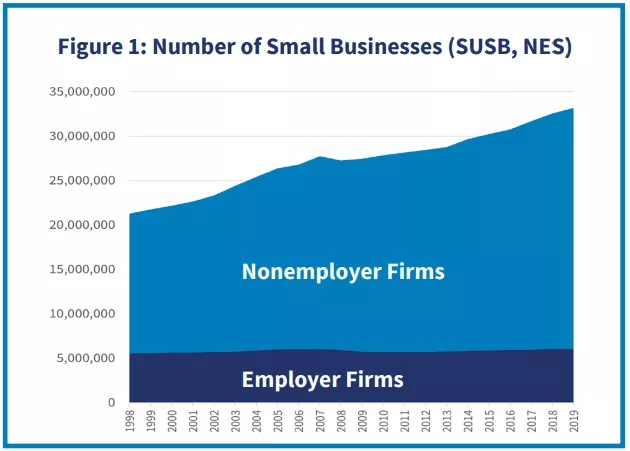
The rest of the businesses – referred to as non-employer firms – don’t have employees but still play an active role in the country’s development through the payment of taxes and the provision of essential goods and services.
What’s unique about all these businesses is that they started with an idea. The business owner examined the market, identified a gap, and created a solution that resonated with their ideal customers.
So, if you plan to start your business, you also need to find a business idea worth pursuing.
There are many businesses you can start, but you will only succeed when you choose an idea that aligns with your skills and interests and is profitable — meaning there’s enough interest in whatever your business is offering.
That said, let’s take a detailed look at what makes a good business idea.
Solves a problem
A good small business idea addresses a problem or pain point that consumers face. To start, check if there’s a particular problem that affects you or your friends.
You can also take the convenience route when looking for an idea for your small business. Identify a common inconvenience people face and create a product that addresses it.
If your product can improve your target customers’ lives, it will be easy to convince them to pay for it.
Unique value proposition
Besides addressing a problem consumers face, a good idea for a small business must also offer a unique way to address it. By providing a unique solution to customers’ problems, your small business will stand out from the competition and attract more customers.
Profitable
If you cannot make enough money to sustain your operations from the sale of your products or services, then you’ll soon be out of business. Before you launch your business or side hustle, conduct market research to ensure enough people are willing to pay for your products or services. You should also be in a position to generate a healthy profit after you sell your products.
Scalable
The business idea you choose should not only be profitable but also have the potential to grow and expand over time. This could involve expanding your product line, growing your customer base, or opening more retail locations.
To assess the scalability of a small business idea, check whether you can replicate the product or service multiple times. Also, determine if you can innovate your offering as consumer needs change.
Passion and expertise
Are you passionate about the business you’re about to start? Your business will take up most of your time, so your business idea should be something you care about.
You also need to ensure you have enough expertise in the business you’re about to start.
By combining passion and expertise, it becomes easier to build a successful business, as you will have the skills to deliver top-quality products to your target audience and the resilience to overcome emerging challenges.
Realistic
As you work on your business plan, ensure you set realistic goals for your new venture. Otherwise, you’ll be frustrated when things don’t go your way, and this could signal the end of your entrepreneurial journey.
Timely
It’s important to follow trends and adapt your business model to what customers want at a particular time. In short, your business idea should solve a problem, have a unique value proposition, be profitable and scalable, align with your passion and expertise, and be realistic and achievable.
Start your small business
Starting a business comes with many benefits. You do what you love and make money in the process. Use the above ideas for inspiration and start working on your small business. When you start your business, you will need a platform that will help you maximize sales and improve your relationship with customers.
Omnisend offers superior email and SMS marketing features to help you sell more and build stronger customer relationships. This will help you achieve your goals faster and accelerate your growth.
Quick sign up | No credit card required
Frequently asked questions
What are the best small businesses to start?
The best small business to start depends on your skills and passions. For example, if you’re passionate about social media and know how to create catchy posts, you can start a small business that offers social media management services.
Other viable small business ideas include providing consulting services, working as a virtual assistant, and starting a dropshipping business.
What are the easy small business ideas?
Easy business ideas include selling unwanted items online or through consignment shops, dog walking, house sitting, and social media management.
What are the types of small businesses?
There are four types of small businesses, which include:
- Sole proprietorship
- Partnership
- Limited liability company
- Corporation
- Start your small business