
 Omnisend AI


 OFFER
OFFER






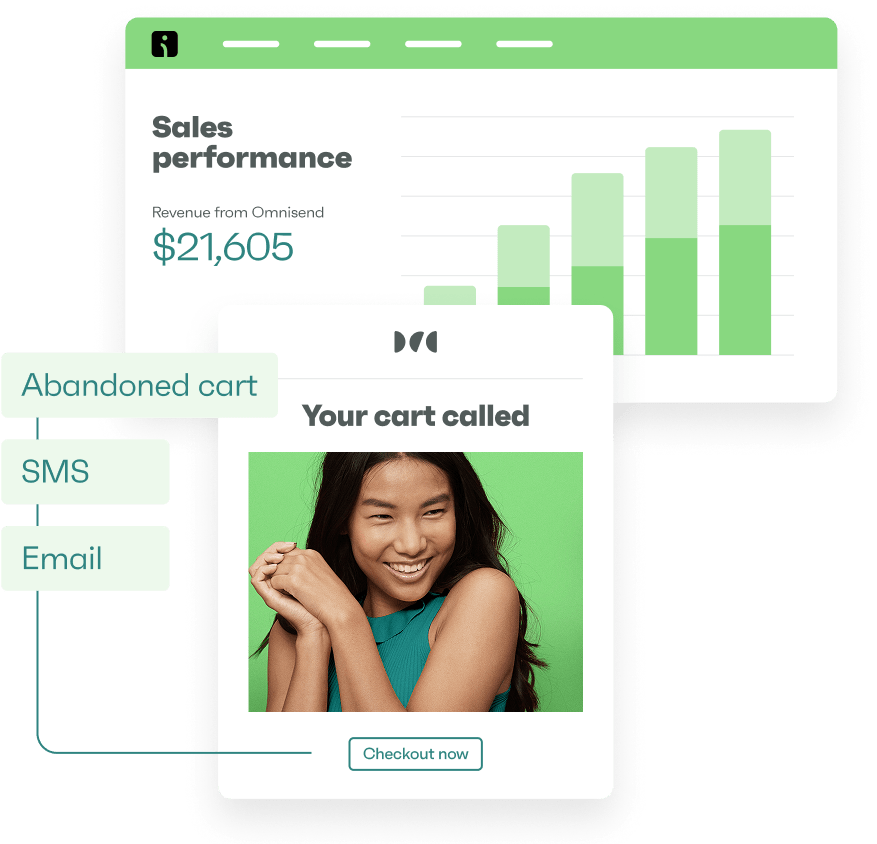
Drive sales on autopilot with ecommerce-focused features
See FeaturesKey takeaways 
Data-driven email marketing tailors messages to individual customer behaviors, significantly enhancing engagement and revenue compared to generic batch-and-blast approaches.
By leveraging customer data throughout the buying lifecycle, ecommerce brands can create personalized experiences that guide customers toward making informed purchasing decisions.
Integrating email and SMS marketing allows brands to reach customers on their preferred channels, maximizing conversion rates and customer lifetime value.
Tracking metrics like revenue per email and customer lifetime value is crucial for measuring the success of data-driven campaigns and optimizing future strategies.
Reveal key takeaways
Data-driven email marketing enables ecommerce brands to increase sales by leveraging customer data. That’s where generic batch-and-blast emails fail. They treat every subscriber the same, ignoring their specific stage in the buying journey.
With data-driven email marketing, every message is carefully crafted and intentional. It considers what customers view, abandon, or buy over time. This data is critical to lifecycle-based automation across both email and SMS.
This results in a significant impact on revenue. Research shows that Omnisend customers generate an average of $79 for every $1 spent.
This data-driven email marketing guide is made explicitly for ecommerce brands. You’ll learn what data to collect, how to use it at each lifecycle stage, which tools to leverage, and how to track ROI.
Convert customer data into revenue with Omnisend’s email and SMS campaigns
Quick sign up | No credit card required
What is data-driven email marketing for ecommerce?
Data-driven email marketing is a key aspect of an ecommerce email marketing strategy. To personalize messages, it uses behavioral and transactional customer data, including information they’ve shared with you directly. It helps you decide who receives a message, when they receive it, what message to send, and which channel is best to use for sending it.
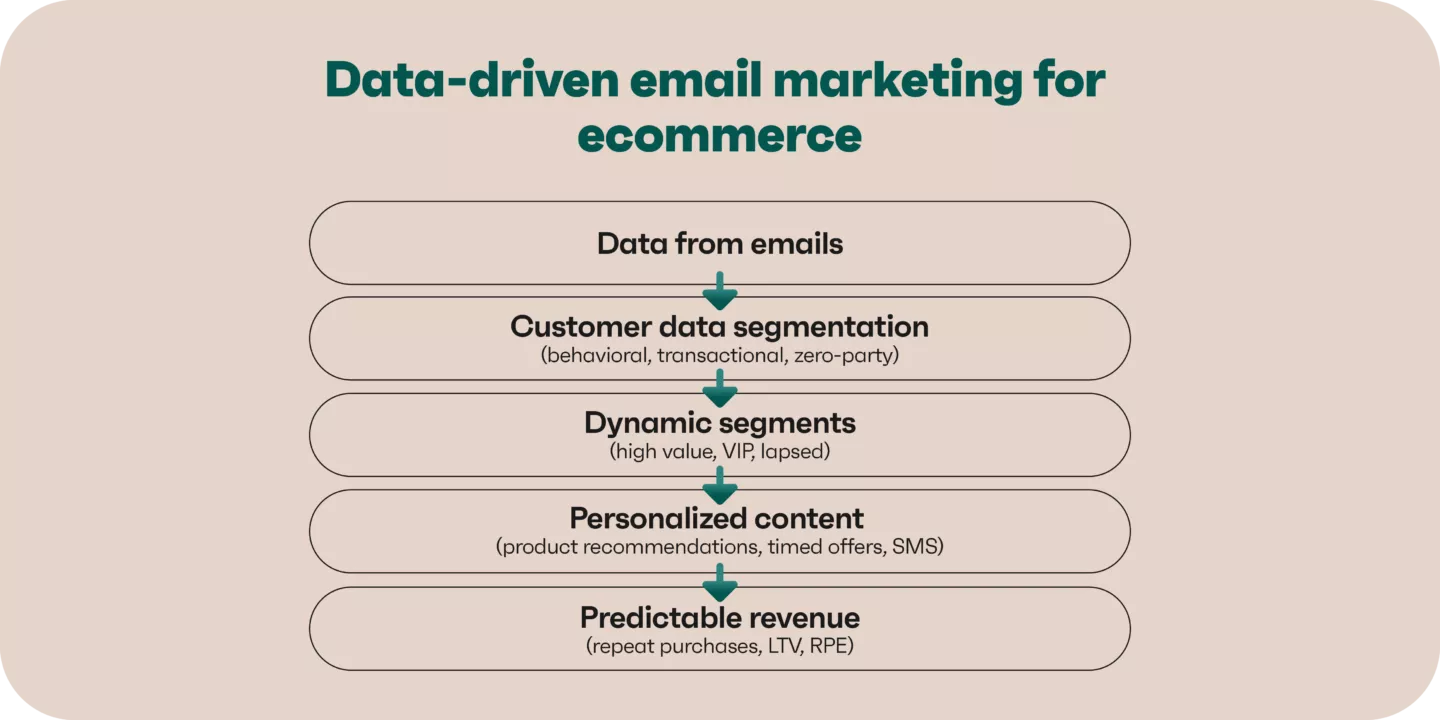
How data-driven email marketing differs from batch-and-blast
Here’s how a data-driven email marketing strategy delivers higher revenue and engagement compared to a generic approach:
- Targeting: Batch-and-blast sends to everyone, while data-driven emails use dynamic segments based on purchase history
- Timing: While blasts follow a rigid calendar, data-driven messages are triggered in real time by actions like cart abandonment
- Content: Instead of one-size-fits-all promotions, data-driven emails personalize product recommendations
- Channels: Batch-and-blasts are typically email-only, but a data-driven marketing strategy integrates email and SMS through specialized platforms like Omnisend
- Impact: While email blasts rely on volume and discounts, data-driven email marketing focuses on higher revenue per email and long-term customer lifetime value (LTV)
Benefits for ecommerce brands (beyond open rates)
When messages are thoughtful and relevant, they feel helpful rather than pushy, allowing customers the freedom to explore, compare, and make decisions at their own pace. This is why data-driven emails play a direct role in driving revenue by supporting longer, more natural buying journeys.
They let ecommerce store owners guide customers with product education, timely reminders, and relevant offers that bring them back exactly when they’re ready to buy.
Over time, this builds trust, encourages repeat purchases, and increases lifetime value, positioning email as a proper growth channel, not just a performance metric.
The ecommerce customer data lifecycle framework
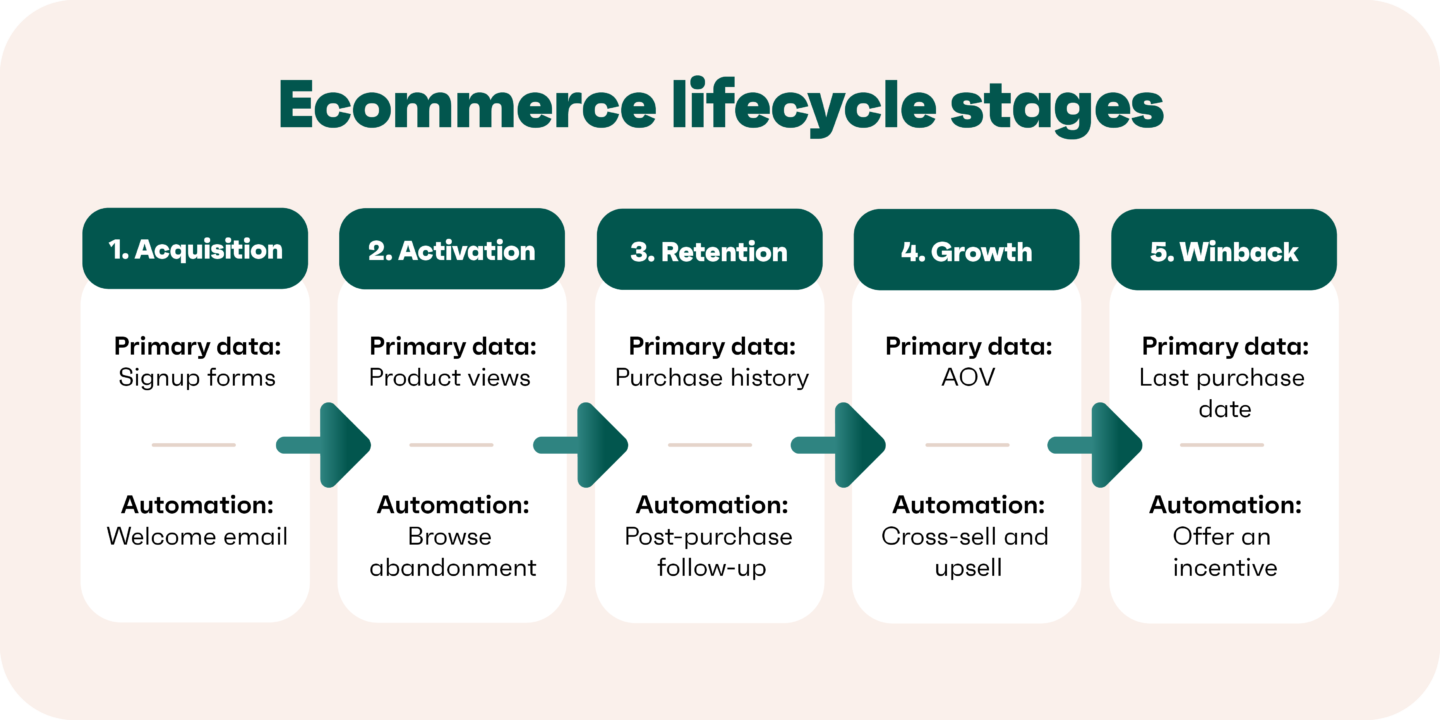
A data-driven email marketing strategy focuses on the customer lifecycle. Below is the ecommerce customer data lifecycle and the role each stage plays in increasing revenue.
Overview of the five lifecycle stages
The ecommerce lifecycle stages are acquisition, activation, retention, growth, and winback.
| Stage | Business goal | Data type | Core automations |
|---|---|---|---|
| Acquisition | Build the list | Signup forms, zero-party email marketing data (preferences, message frequency) | Welcome email series, SMS opt-in confirmation |
| Activation | Drive first purchase | Product views, cart additions | Browse abandonment, cart abandonment |
| Retention | Motivate repeat purchase | Purchase history, order frequency | Post-purchase follow-up, restock reminders |
| Growth | Increase order value and frequency | Average order value (AOV), referral data | Cross-sell and upsell, loyalty campaigns |
| Winback | Re-engage inactive customers | Last purchase date, last email open | Show what’s new, offer an incentive or send a feedback survey |
Types of email marketing data at each stage
At every lifecycle stage, a practical data-driven marketing approach combines the following data types:
- Behavioral data (browsing, clicks)
- Transactional data (orders, spend)
- Zero/first-party data (preferences, channel opt-ins)
Ecommerce platforms like Omnisend are built around this lifecycle framework. This way, it’s easier to connect customer data to email and SMS marketing automations.
“Customers don’t experience brands in campaigns. They experience them in moments. Hence, ecommerce lifecycle data ensures email and SMS match the customer’s current reality instead of interrupting them.” — Marty Bauer, Director of Sales & Partnerships at Omnisend
Stage 1 — Acquisition: Capture the right data from new visitors
In a data-driven marketing approach, this stage is the first opportunity to build your email list.
Essential data to collect on signup (and how)
Collecting key email marketing data early provides enough context for a relevant welcome email series. Here’s the information to focus on:
- Email address and first name
- Country or region for correct currency and shipping
- Explicit marketing consent for email and SMS
Consider optional fields like product categories, budget range, or style preferences. Platforms like Omnisend make it easy to enrich profiles without overwhelming new visitors progressively.
Zero-party data and preference centers
Zero-party data refers to information customers intentionally share. You can collect it using quizzes or preference checkboxes. Example questions include:
- How often would you like to hear from us? (Weekly/monthly)
- What is your skin type or style preference?
With a preference center, subscribers can also update their interests over time. This keeps data fresh while reducing the number of unsubscribes.
Privacy-first data collection and compliance
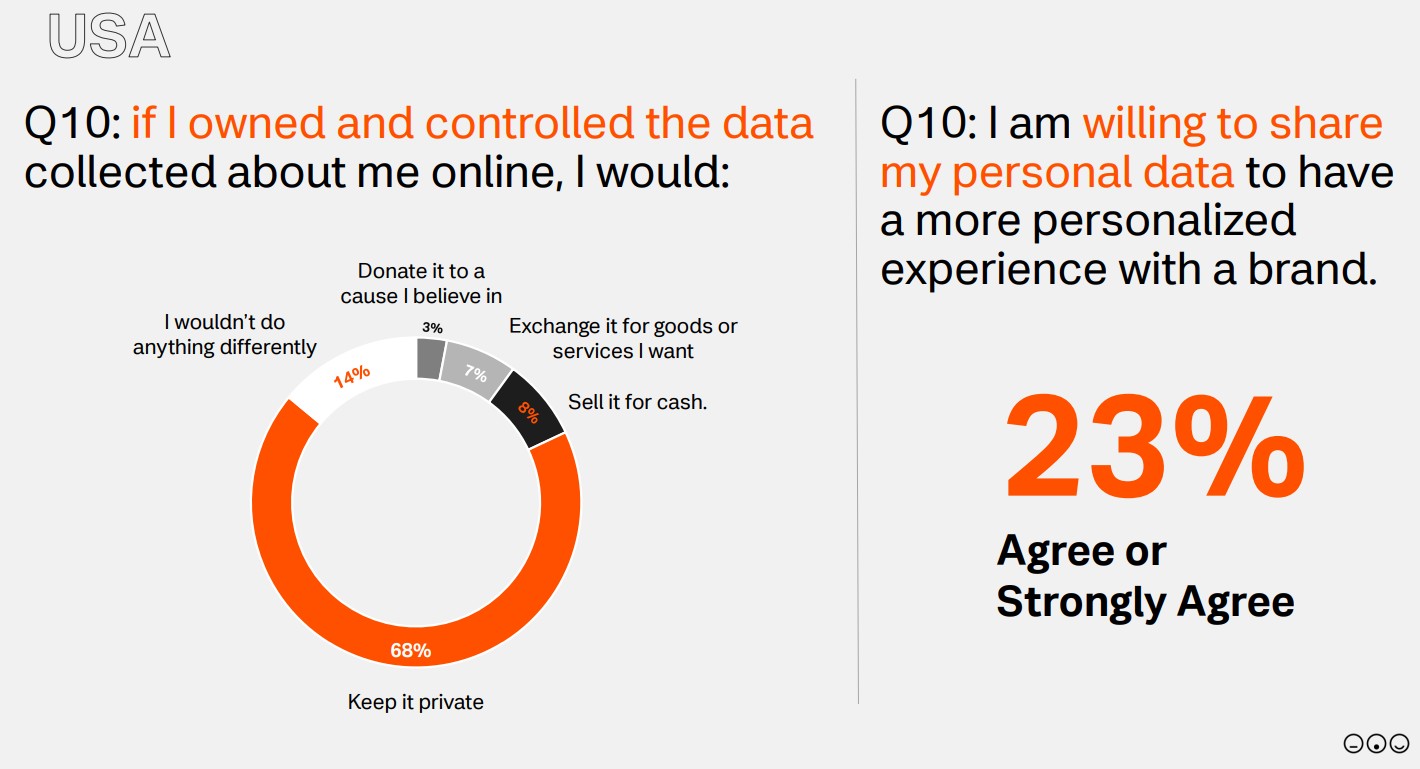
As third-party cookies phase out, privacy-first data collection builds trust. Research indicates that 23% of US customers are willing to share their data for a more personalized experience. This is why businesses must be transparent about their use of customer data.
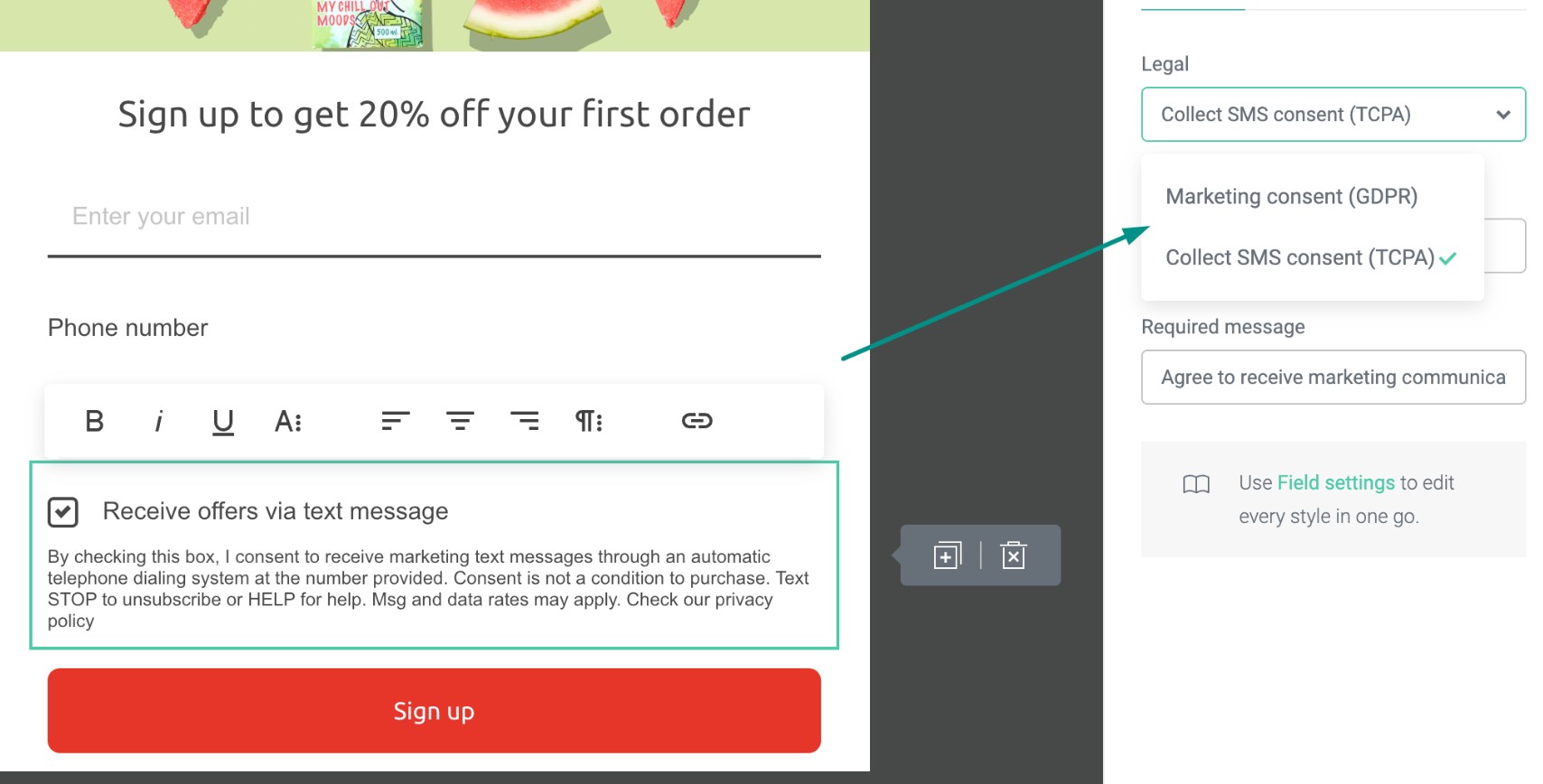
Here’s how to ensure your forms are compliant with GDPR and CCPA:
- Clear consent language
- Visible opt-in checkboxes
- Double opt-in where required
Omnisend includes built-in compliance blocks and customizable preference fields in its signup forms and popups to support this approach.
Stage 2 — Activation: Turn first-time buyers into engaged customers
Once you’ve captured the initial email marketing data, the next step is maintaining momentum. Here, we explain how to use behavioral and transactional signals to ensure your brand stays top-of-mind.
Using behavioral data to optimize welcome and post-purchase flows
Behavioral data shows the customer’s real-time intent, making it ideal for drip marketing automations. Here are example triggers for a beauty brand:
- Browse behavior: If a shopper views a hydrating serum, trigger a welcome series featuring beauty tutorials or category bestsellers
- Abandoned cart: Send a “Complete your routine” reminder featuring the specific item left behind
- First-order data: Use the purchase category to send tailored “How-to” guides or usage tips
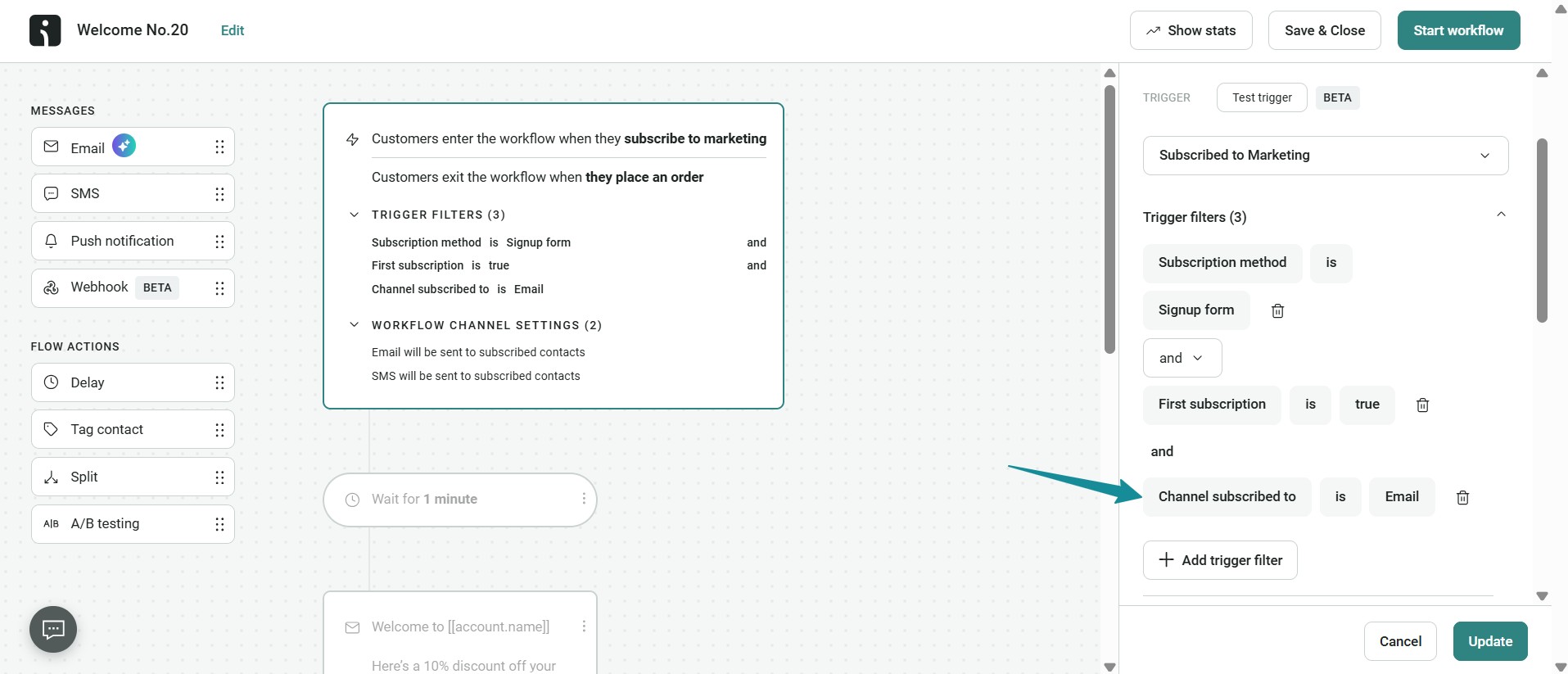
Ecommerce marketing automation platforms like Omnisend offer pre-built welcome and post-purchase workflows. They send emails and SMS instantly, so you never miss a chance to engage.
Data-driven content strategy for first-purchase campaigns
A data-driven marketing approach ensures your email content changes based on the shopper’s value and intent. Consider these ecommerce strategies:
- High vs. low AOV: Offer an exclusive VIP guide to luxury shoppers while offering a “bundle and save” discount to lower spenders
- Category-based upsells: If a customer buys a foundation, follow up with related items like complementary primers or sponges
- Educational content: Send a “How to layer your products” guide post-delivery to increase satisfaction and faster restocking.
Time-saving email automation that elevates your brand
“Omnisend’s automation flows are simple to set up and have helped me nurture customer relationships without needing advanced technical knowledge…”
Soul Crystals, G2 review
Stage 3 — Retention: Drive repeat purchases with purchase history
While acquisition gets customers through the door, your data-driven email marketing approach is what keeps them coming back. Here are some strategies for the retention stage:
RFM-based segments and triggers
RFM stands for Recency, Frequency, and Monetary value. It’s a simple way to understand how recently a customer made a purchase, how often they buy, and how much they spend.
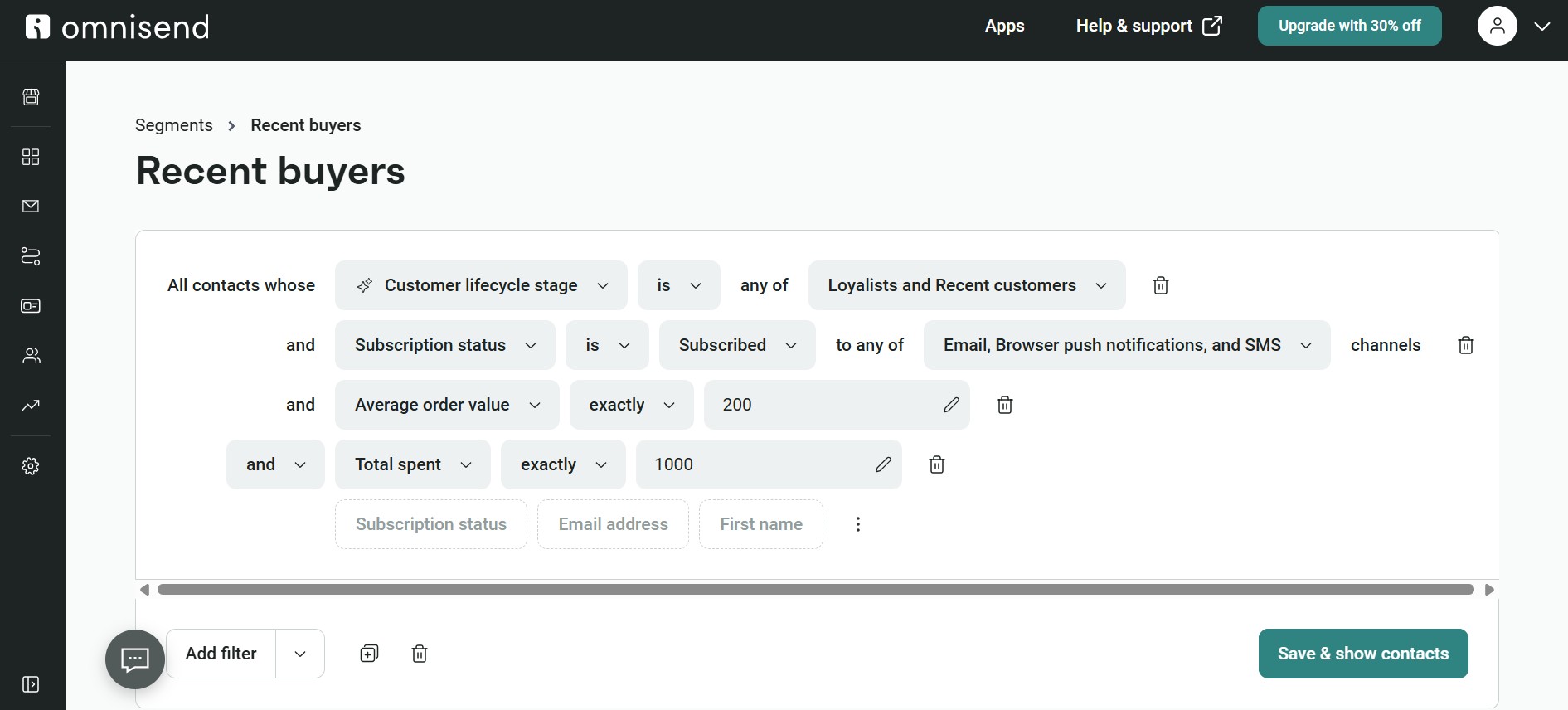
Examples of RFM segments are recent one-time buyers, frequent buyers, high spenders, and discount-only shoppers. Here’s how Omnisend allows you to build segments based on these purchase-based filters:
Email content for different customer segments
A successful data-driven content strategy aligns purchase data with targeted messaging, product recommendations, and relevant offers to drive sales. Use the following email content for different customer segments:
- Recent one-time buyers: Education, social proof, second-purchase incentives
- Frequent buyers: Early access, loyalty rewards, exclusive drops, thank-you notes
- High spenders: VIP perks, concierge-style messaging
- Discount-only shoppers: Targeted promotions during clearance or seasonal sales
Product recommendations and replenishment flows
Retention turns one-time buyers into lifelong fans. Recent data shows this is where the money is. According to Business Insider, 60% of sales came from Starbucks Rewards members.
This proves that even a small group of repeat customers can make up the majority of your revenue. However, you must give them a reason to keep coming back. In data-driven email marketing, that “reason” is timing.
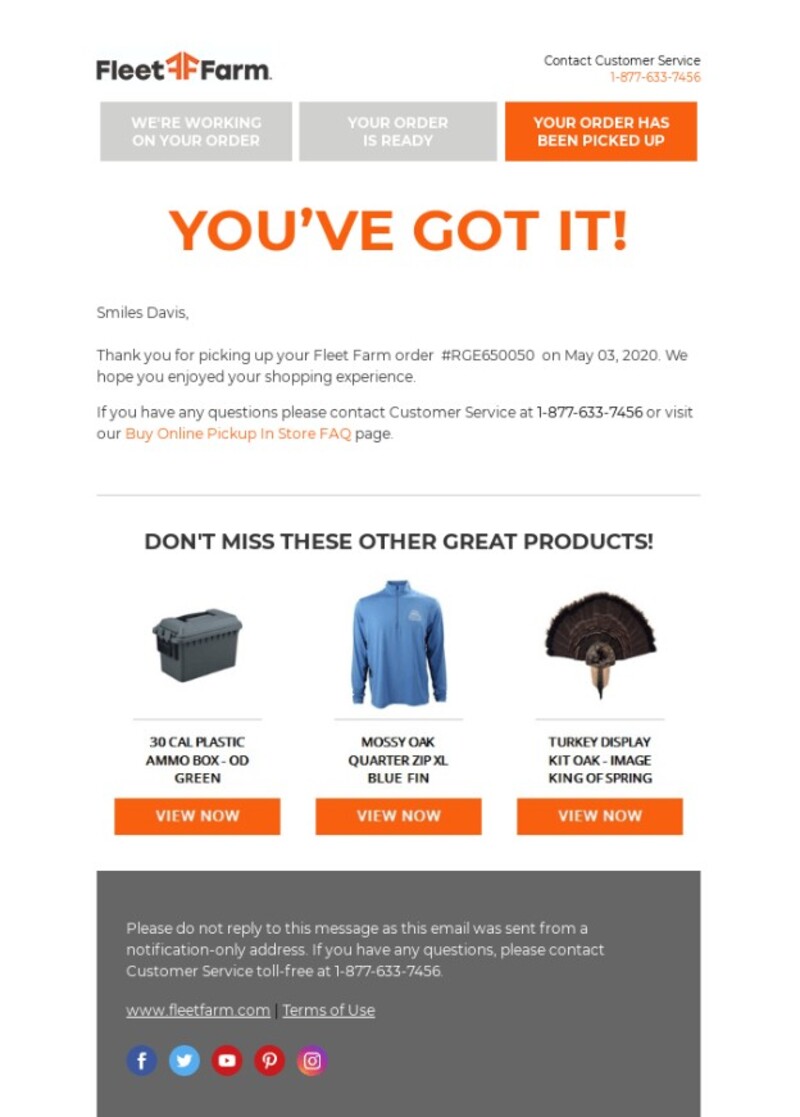
With a “time-to-reorder” logic, you can send automated reminders when a customer’s supply is likely running low. Also, leverage customers’ order history to set up dynamic emails for product recommendations. Here’s an example:
Stage 4 — Growth: Identify and reward VIP customers
Here, you focus on the total value a customer brings over their entire relationship, also known as customer lifetime value (CLV).
Building VIP and high-LTV segments
You can identify VIPs through purchase patterns and engagement data, such as:
- Remarkable RFM scores (recent, frequent, high-spend customers)
- Consistently high AOV
- Multiple purchases within a timeframe
- High email and SMS engagement
With ecommerce segmentation, you can create dynamic VIP segments. They update automatically as customer behavior changes.
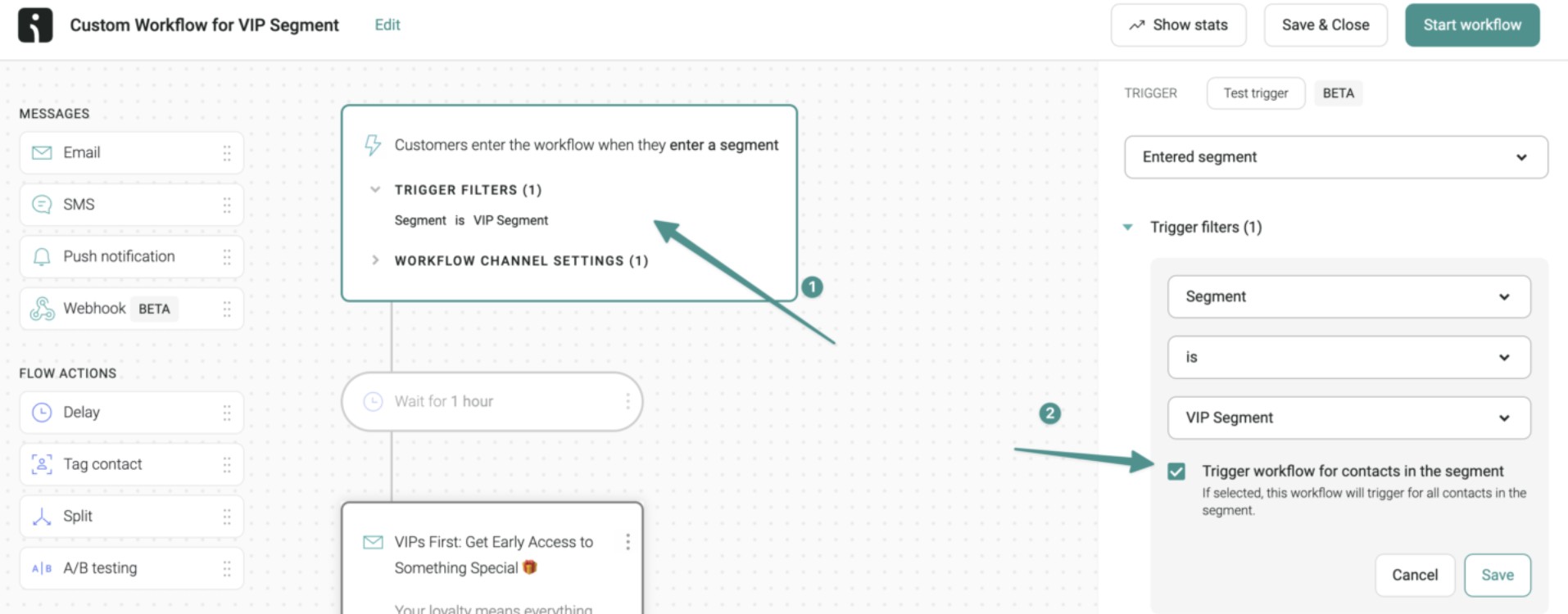
This is where Omnisend stands as the best choice for ecommerce businesses. It allows you to maintain accurate high-LTV audiences without managing lists. Here’s an example of Omnisend’s custom workflow for a VIP segment:
Multi-channel perks for top customers (email + SMS)
A multi-channel approach ensures your best customers never miss an update. While email enables deep storytelling, SMS provides the immediacy VIPs expect. Consider these campaign ideas:
- Early access: Use SMS to give VIPs a head start on new product drops
- Exclusive drops: Offer limited-edition collections available only to your top-tier segment
- Loyalty milestones: Use Omnisend’s integrations with tools like Yotpo or LoyaltyLion to automate reward notifications
- Special bundles: Send emails with curated product pairings at a unique VIP price point
With Omnisend’s global SMS marketing and ecommerce integrations, you can trigger coordinated email and SMS campaigns from a single workflow.
Easy automation
“We like the segmentation Omnisend offers, as it’s accurate and reliable, making our campaigns easier and cleaner.”
Elaine, G2 review
Stage 5 — Winback: Re-engage at-risk and lapsed customers
Every ecommerce business loses customers over time. However, a data-driven marketing approach allows you to spot declining engagement, such as fewer site visits and lower open rates. This way, you can recover revenue before customers churn.
Detecting churn risk with data
You can categorize churn risk by defining segments based on the time since their last purchase or email open. These segments include:
- At-risk shoppers: Customers who haven’t purchased in 60 days
- Lapsed high-value customers: Former VIPs who haven’t placed an order in 90+ days
- Inactive abandoners: Subscribers with zero activity for 30+ days
Winback sequences and offer testing
Acquiring new customers is more expensive than retaining existing ones. Use these winback sequence ideas to recover this revenue profitably:
- Reminder email: A “We miss you” message featuring new arrivals or bestsellers tailored to their previous interests
- Incentive test: A message featuring a specific offer, such as free shipping or a discount
- Final, last chance message: A high-urgency message stating that their offer is expiring
A/B testing is a must at this stage. Test subject lines, send timing, and incentive types. It determines which offers recover revenue without eroding margins.
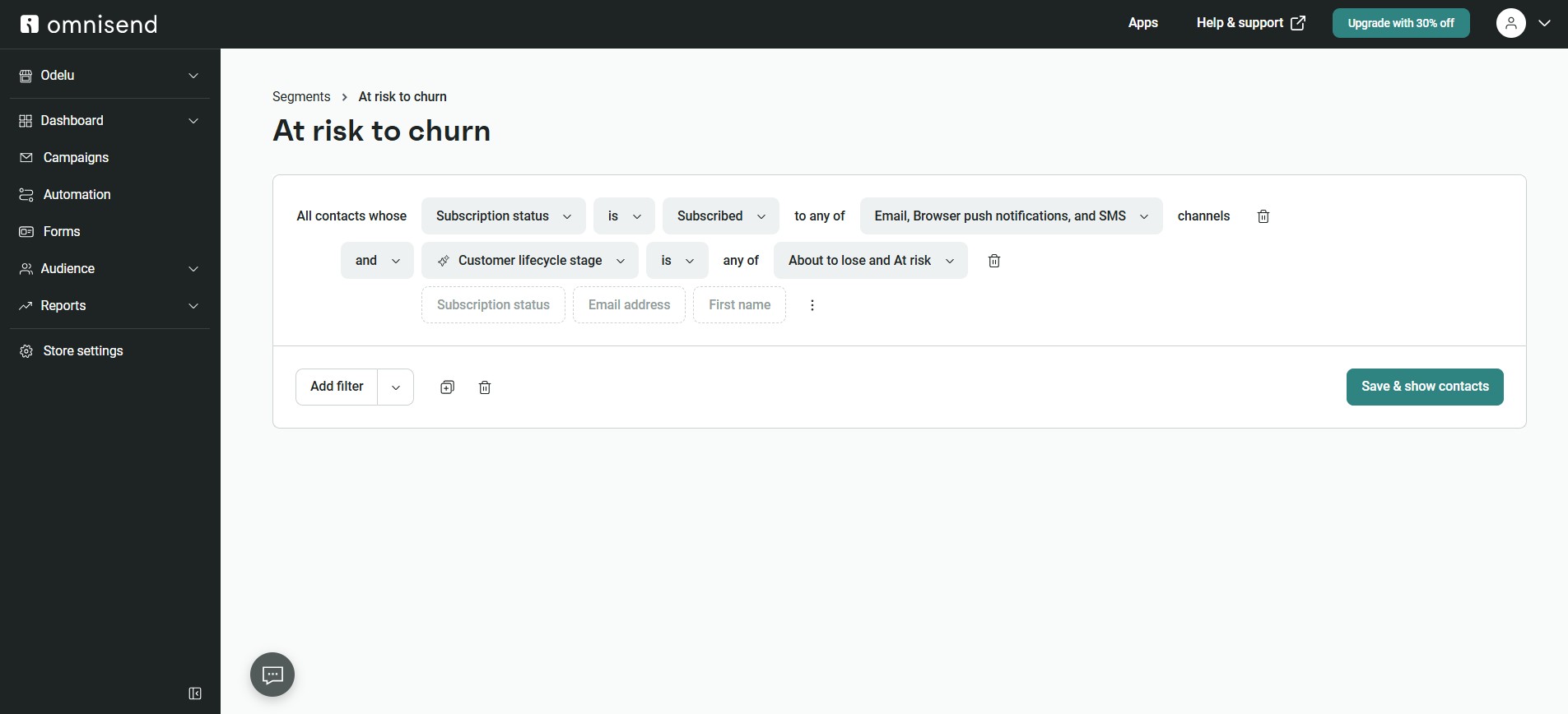
With Omnisend’s automation and testing features, you can compare winback offers. This allows you to use incentives to win back customers. Below is a screenshot of Omnisend’s at-risk segment.
Multi-channel data orchestration with email and SMS
Ecommerce customers interact through multiple channels. As such, your data-driven email marketing strategy should involve SMS marketing. It helps your brand reach customers faster without flooding a single channel.
Why email-only strategies leave revenue on the table
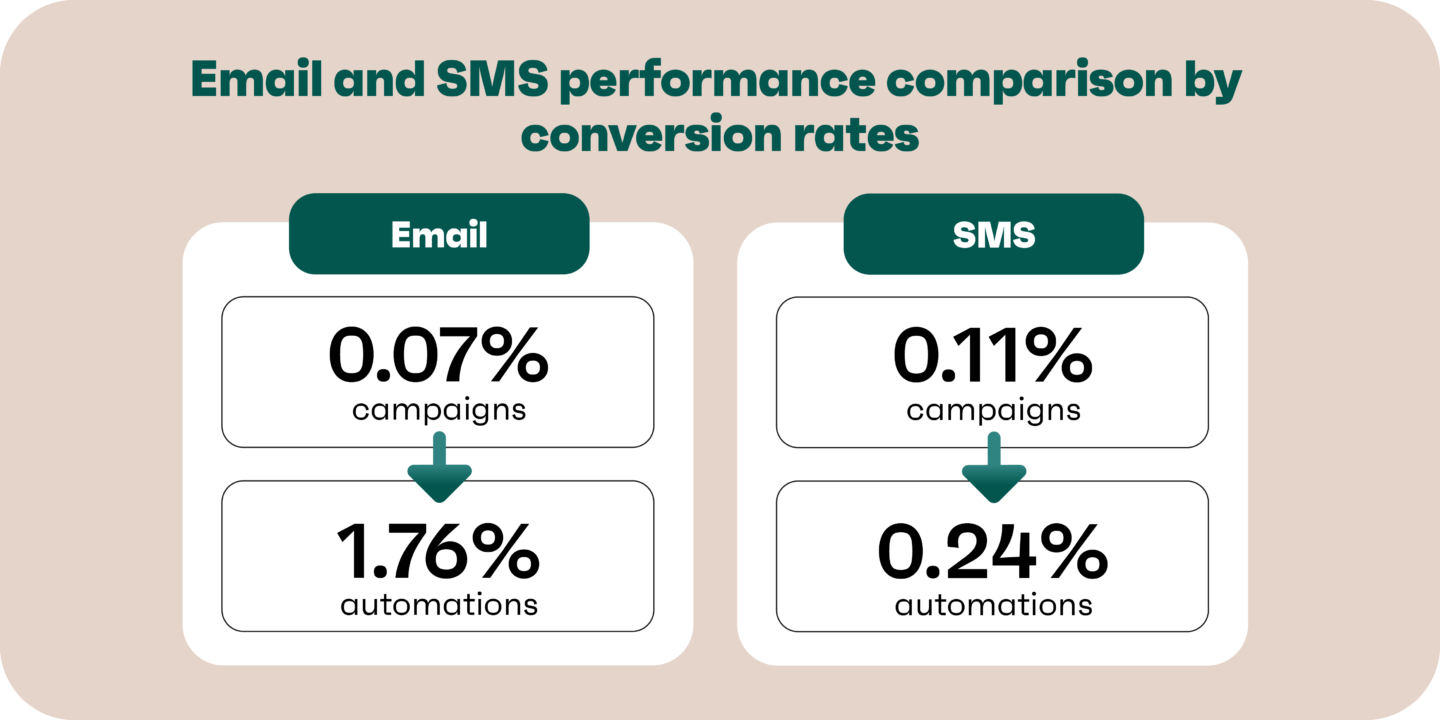
Email is perfect for storytelling, but its performance improves when paired with the urgency of SMS. According to Omnisend’s ecommerce report, the average conversion rate for email campaigns and automations in 2024 was 0.07% and 1.76%, respectively.
For SMS campaigns and automations, conversion rates were 0.11% and 0.24%, respectively. This data reveals that combining both channels can make your data-driven email marketing strategy more effective.
When email and SMS flows share your customer data, it’s easy to switch from educational emails to high-urgency SMS reminders automatically. It also ensures you reach customers on their preferred channel without duplicating messages.
Example workflows combining email and SMS
Multi-channel automation is most effective during high-intent moments:
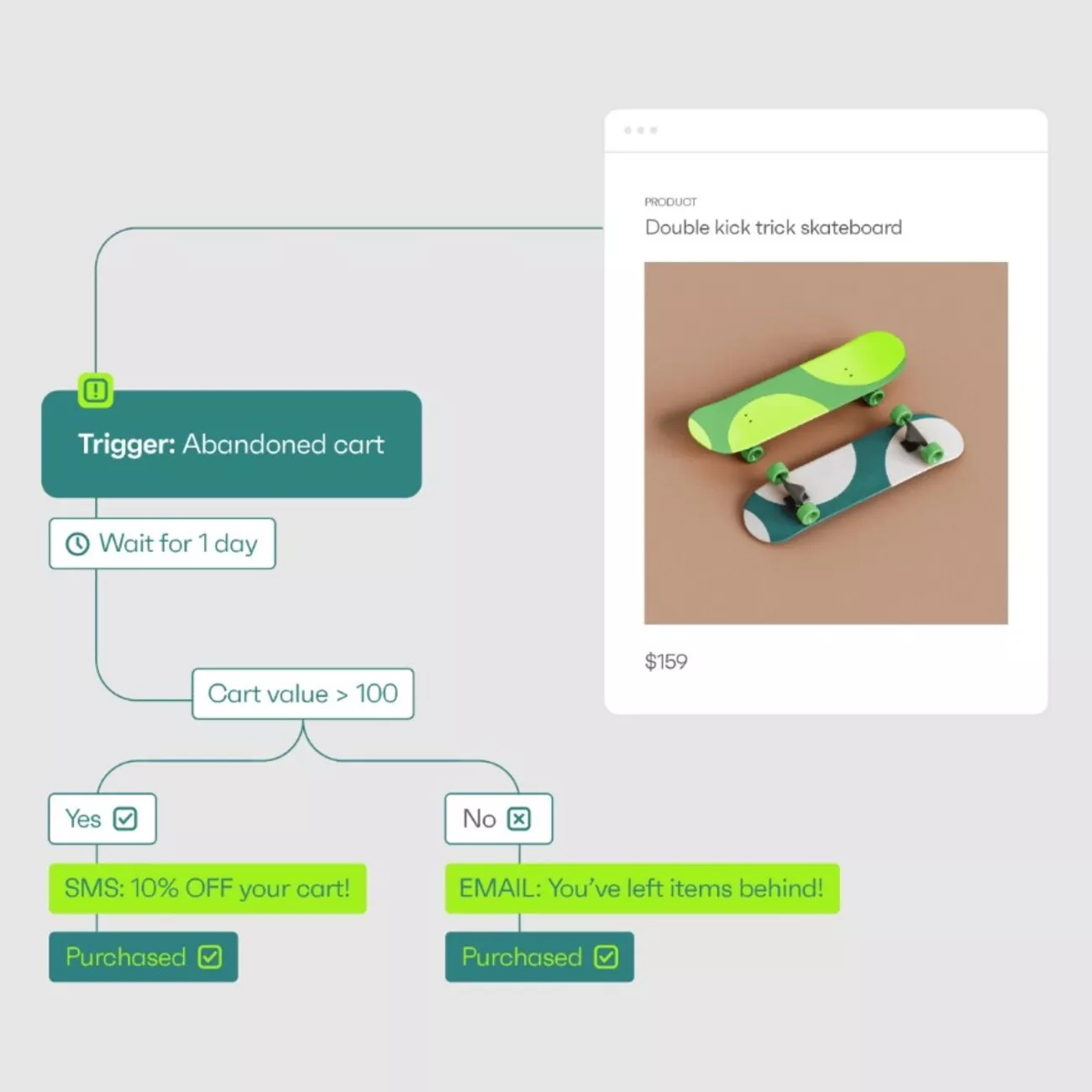
- Welcome series: Deliver your brand story via email. If no purchase occurs within 24 hours, trigger an SMS with a unique offer.
- Cart abandonment: Send an email reminder one hour after a session ends. If the cart remains full 24 hours later, send a “Don’t miss out” SMS alert.
- Browse abandonment: Use email for personalized product recommendations. Follow up with an SMS alert that shows urgency.
Here’s an example of a combined email and SMS workflow:
Measuring combined impact across channels
You shouldn’t measure the success of a data-driven email marketing campaign by open rates alone. Instead, consider the conversions and revenue per customer for email and SMS channels.
Omnisend’s global SMS coverage allows you to track these metrics across international markets.
“There’s no reason not to bring SMS to work alongside email campaigns. Eight percent of our SMS subscribers click through to our website more than email users (three percent). Over the first year, SMS campaigns drove $123,000 in sales.”— Divatress case study
Revenue attribution and the metrics that matter
The effectiveness of data-driven email marketing is typically measured by its impact on revenue. You must look beyond vanity metrics, such as opens and clicks. Let’s discuss the KPIs you should start tracking.
From vanity metrics to revenue per email
The primary metric to track is revenue per email (RPE). It shows how much revenue each delivered email generates. Here’s the formula:
Revenue per email = Total revenue ÷ Emails sent
Alongside RPE, you should track:
- Revenue per subscriber to understand list quality
- Repeat purchase rate to measure lifecycle performance
- Customer lifetime value (LTV) to evaluate long-term impact
Attribution models for ecommerce email
Attribution explains how revenue is assigned to messages across the customer journey. The three standard attribution models are:
- First-touch attribution: Credits the first email or SMS interaction
- Last-touch attribution: Credits the final message before purchase
- Multi-touch attribution: Distributes credit across multiple interactions
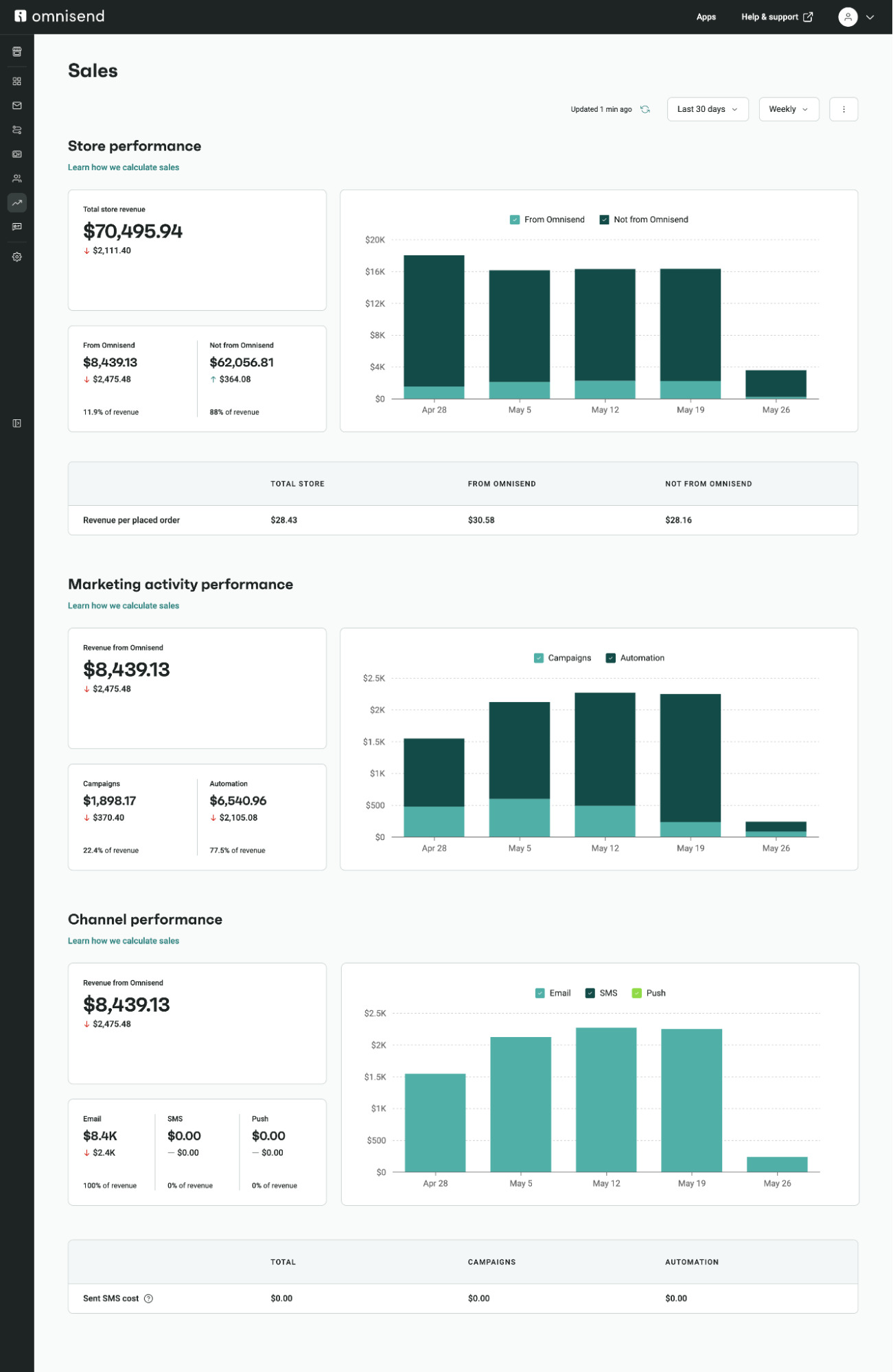
Multi-touch attribution is an excellent approach for ecommerce. It shows how each email and SMS contributes to sales over time. See how Omnisend tracks revenue generated, helping you understand which channel drives more sales:
Benchmarks and how to set realistic goals
Email marketing benchmarks vary by industry and the maturity of the list. However, Omnisend reports that customers generate an average of $79 in revenue for every $1 spent on the platform, according to aggregated customer data.
Instead of chasing your industry’s average, use your own historical data as a benchmark. Consider using an interactive email ROI calculator. Input your send volume, campaign cost, and total sales to see your profit per campaign.
Pre-built vs. custom: Implementing data-driven email in Omnisend
Data-driven email marketing isn’t as technical as it seems, especially if you have the right tools. With a done-for-you platform like Omnisend, sophisticated features are balanced with an intuitive user experience. Here’s how it works.
Omnisend’s pre-built segments and workflows
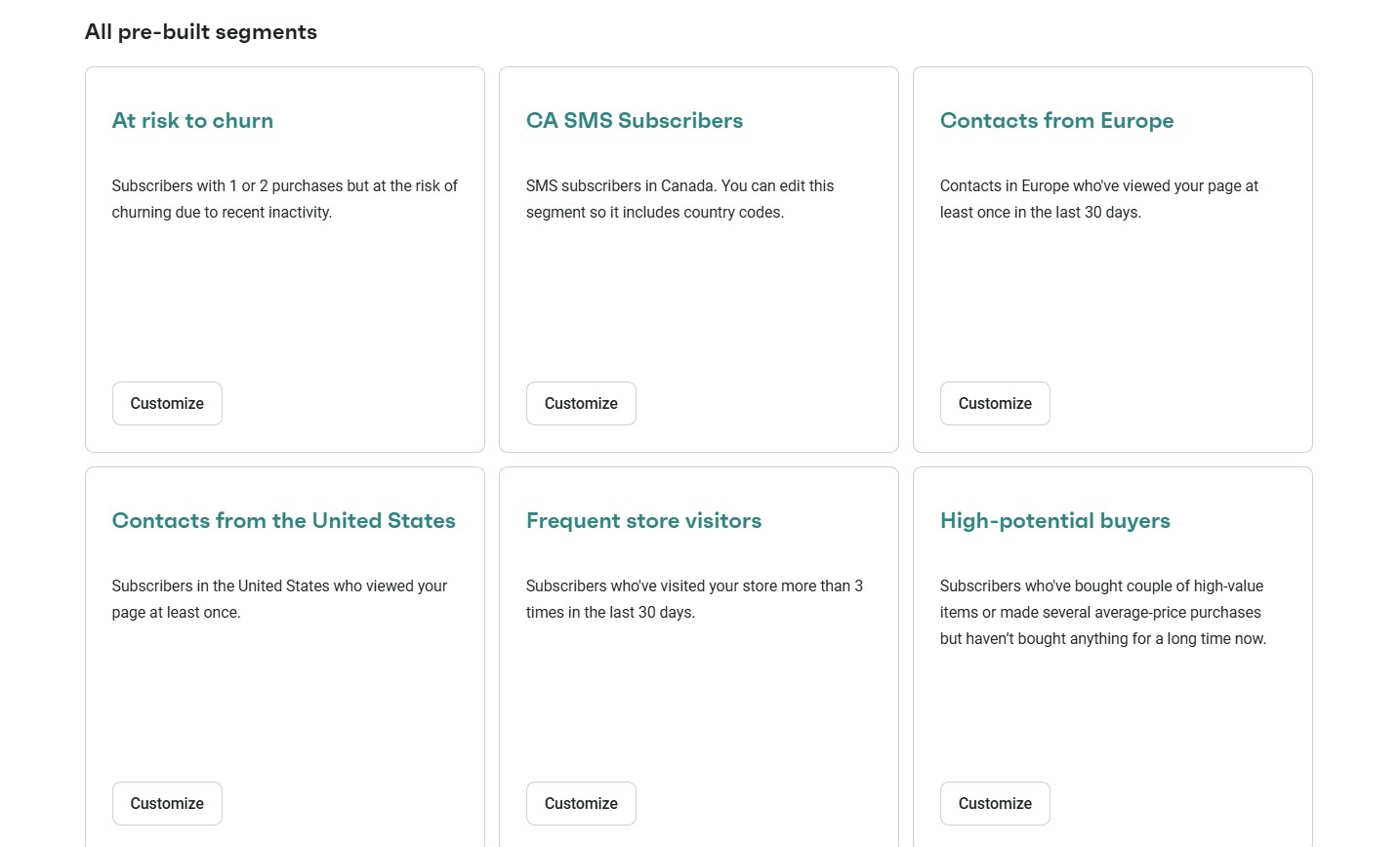
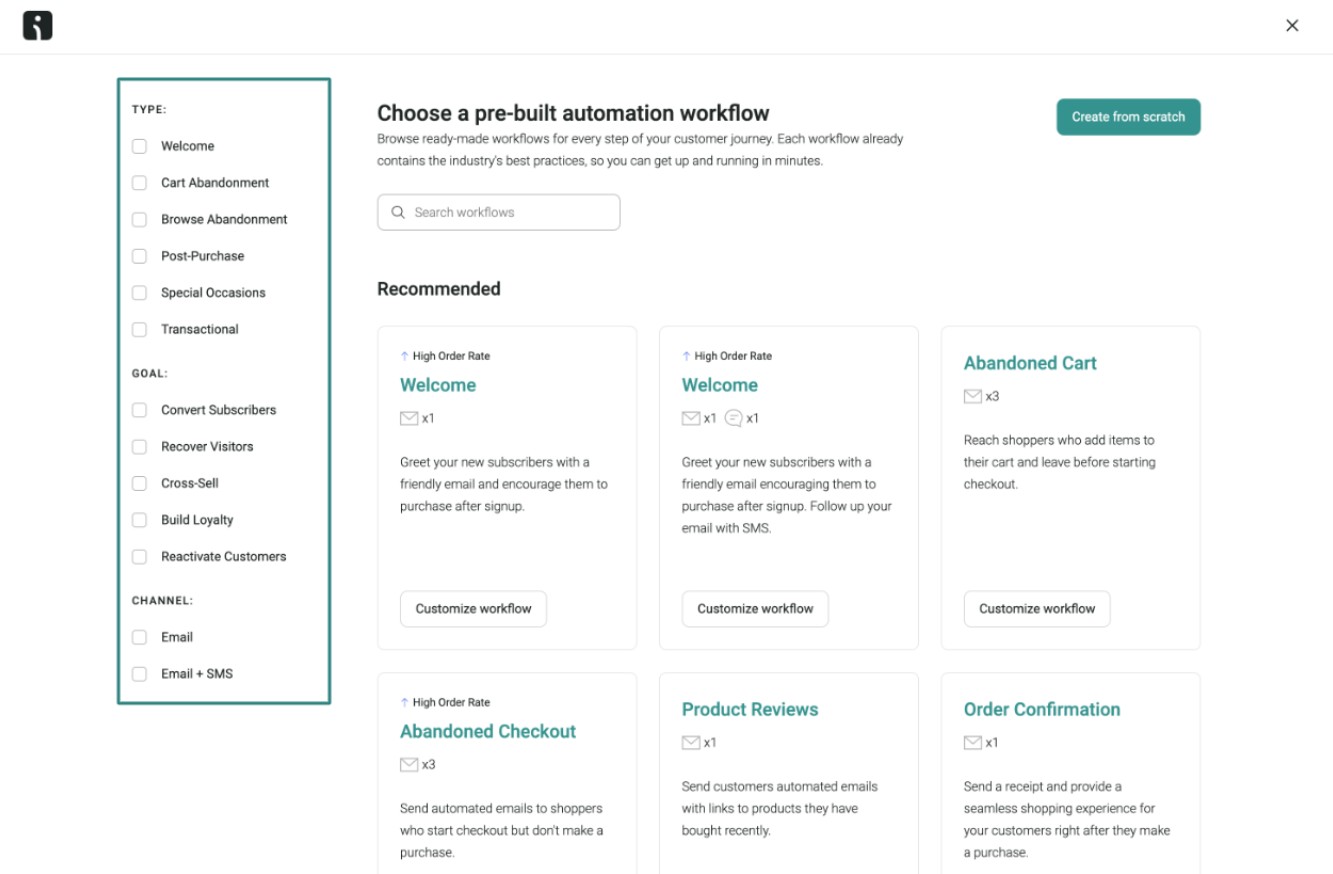
The best marketing automation tools handle customer logic and list cleaning, saving you productive hours. Platforms, such as Omnisend, offer pre-built segments and workflows that you can activate in minutes. There’s a template for every stage in the ecommerce lifecycle.
Examples of pre-built segments include:
- Recent buyers
- At risk of churn
- High-potential buyers
Examples of Omnisend’s pre-built workflows include:
- Welcome and onboarding series
- Cart abandonment
- Post-purchase and winback flows
Product recommendation and dynamic emails
Personalizing bulk email is achievable through automation. With dynamic emails, you can tweak email content to suit varying customers.
You can do this with Omnisend’s product recommender. It uses your store’s data to automatically display to shoppers the items they may be interested in. Here’s a visual of how it works:
Integration ecosystem and unified customer profiles
With 160+ integrations, Omnisend brings your ecommerce tools together. While some platforms restrict these advanced capabilities to their top-tier plans, Omnisend includes them in its free plan to help you maximize ROI.
It brings your reviews, SMS, and support data into one place. This allows you to launch multi-channel strategies without a dedicated developer.
Intuitive email marketing
“What I like most is how intuitive it is and the drag-and-drop feature that makes the design process super quick.”
Sarah, G2 review
Your 90-day data-driven email marketing roadmap
You might be wondering how to implement these data-driven email marketing strategies. The process is grouped into three phases.
Omnisend’s free plan offers key ecommerce features to help you get started. It allows you to follow this roadmap without encountering paywalls or requiring additional tools.
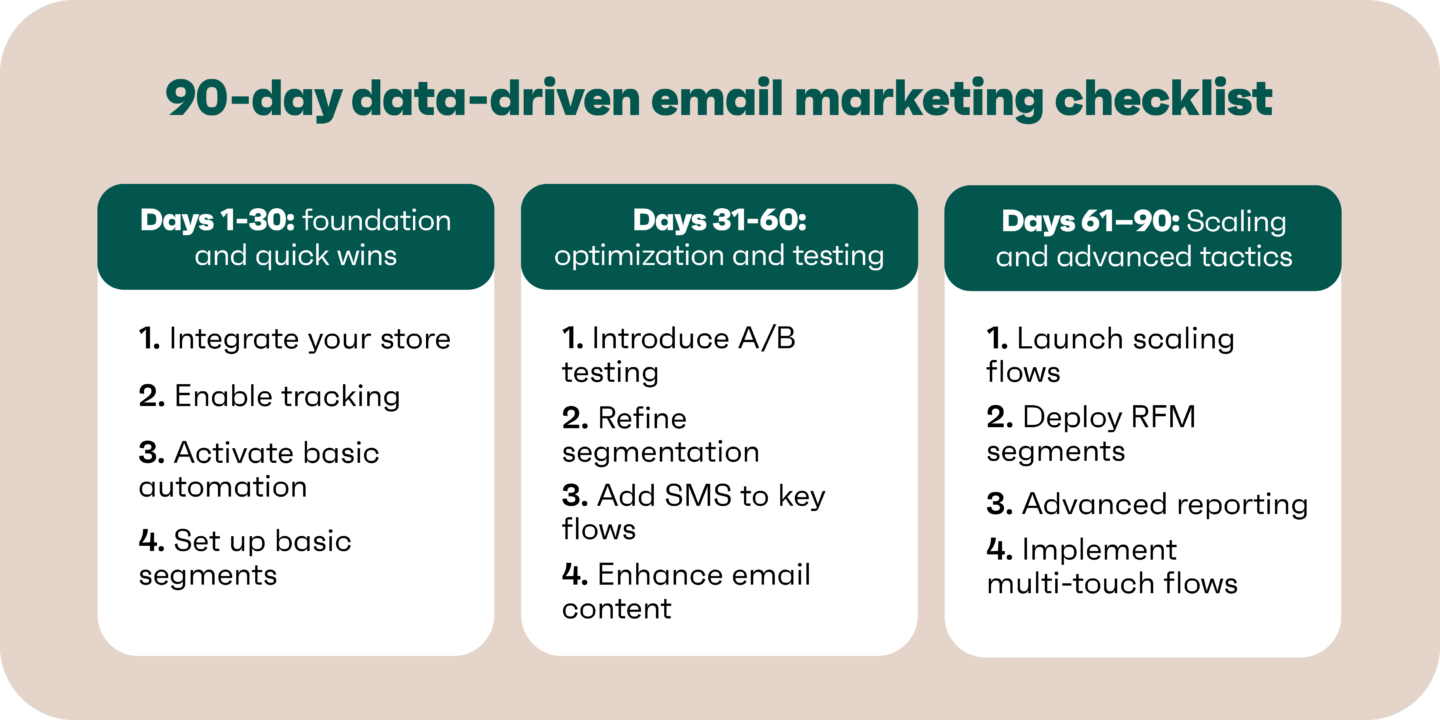
Days 1–30: Foundation and quick wins
The first month is all about launching simple automations to help generate revenue.
- Integrate your store: Connect your ecommerce platform to Omnisend to sync customer data
- Enable tracking: Ensure your snippet is active to track customer activities, such as viewed pages
- Activate basic automation: Launch a basic welcome series, abandoned cart flow, and a one-step winback automation
- Set up basic segments: Create segments for new subscribers and recent customers
Quick wins:
- Proper segmentation ensures a well-executed drip marketing strategy, allowing you to send highly engaging messages
Days 31–60: Optimization and testing
Now, it’s time to move from “standard” to “personalized” messaging for better performance.
- Introduce A/B testing: Start testing subject lines and offers in your welcome series to increase open rates, clicks, and conversions
- Refine segmentation: Divide your customers into “One-time” and “Repeat” buyers and tailor your content accordingly
- Add SMS to key flows: Insert an SMS “final nudge” into your cart and browse abandonment sequences
- Improve email content: Use product recommendation blocks to show trending items to each segment dynamically
Days 61–90: Scaling and advanced tactics
In this phase, you’ll implement automations for segments like inactive and VIP customers to help increase your CLV over time.
- Launch scaling flows: Add replenishment flows for consumables and birthday rewards
- Deploy RFM segments: Group customers by how recently or frequently they buy to trigger tailored offers or incentives
- Advanced reporting: Use Omnisend’s sales attribution to see which specific channels and segments drive the most ROI
- Implement multi-touch flows: Build cross-channel journeys that adapt based on whether a customer clicks an email or ignores it
“We’ve seen customers consistently increase revenue by starting small. They prioritize abandoned-cart and welcome flows and then let the data dictate where to optimize next.” — Marty Bauer, Director of Sales & Partnerships at Omnisend
Real ecommerce success snapshots
Here’s how ecommerce brands use Omnisend to transform their customer data into measurable growth.
Fashion brand: Browse abandonment to revenue growth
- Challenge
Bowy Made needed automated workflows to build relationships at scale.
- Data-driven tactic
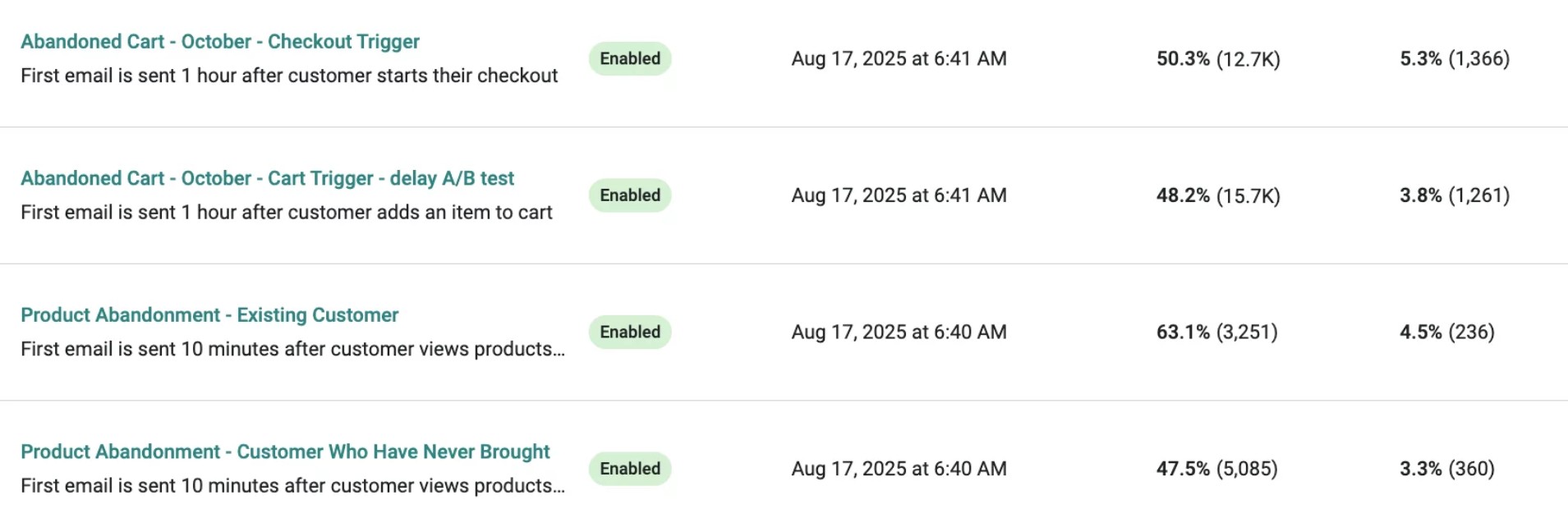
Since its customers shopped for newborns, the brand used pre-purchase flows to engage expectant parents. It also implemented product abandonment, browse abandonment, and cart abandonment flows.
- Result
These data-driven flows became a five-figure revenue engine. They generated over 70% of Bowy Made’s total revenue.
Beauty brand: Replenishment and retention
- Challenge
INGLOT Cosmetics needed to deliver value to its diverse customer base.
- Data-driven tactic
It leveraged email automation to send timely messages to subscribers. This kept the brand top of mind when customers ran out of products. It also included SMS in cart abandonment flows.
- Result
With SMS and email, INGLOT saw a staggering 2,130% increase in revenue per message compared to promotional emails.
Pet brand: VIP and winback performance
- Challenge
Madrid-based brand Dukier was sending the same message to everyone. This resulted in manual effort, low relevance, and lost revenue.
- Data-driven tactic
It used Omnisend’s automation and segmentation features to deliver relevant messaging. It also adapted its catalog into five local languages and optimized send times according to customers’ locations.
- Result
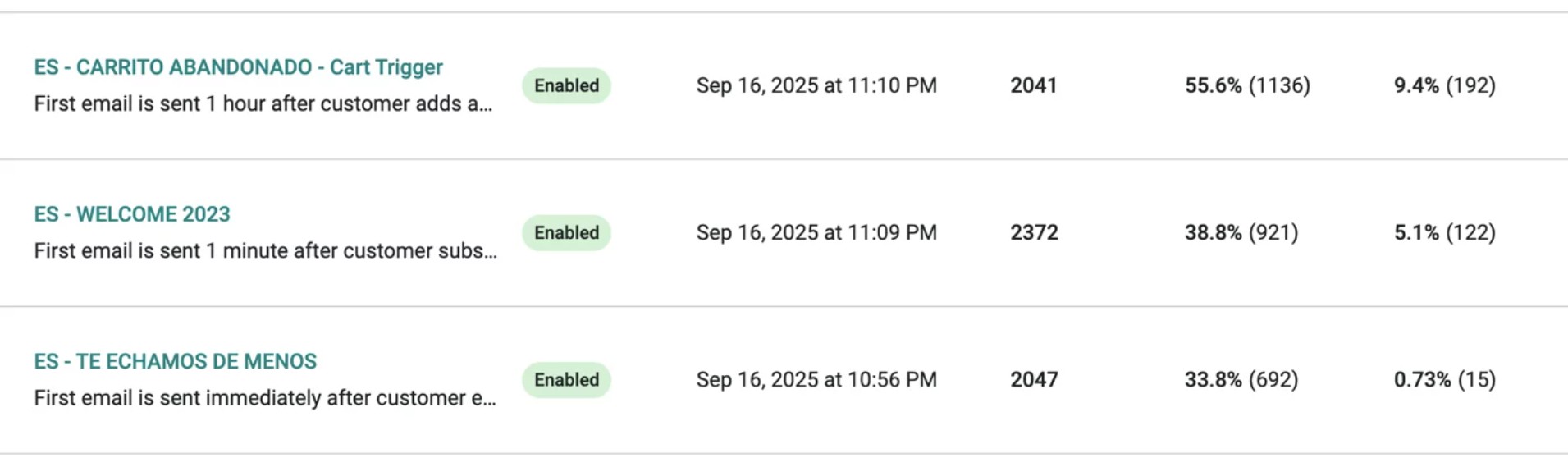
Dukier grew its revenue from Omnisend by 525%, and 45% came from segmented campaigns. Here’s a screenshot of its best-performing automations:
Common pitfalls in data-driven email marketing (and how to avoid them)
The first step in data-driven marketing is clarifying your business goals and data needs before building complex segments. Skipping this means you’re gathering irrelevant data, which creates noise rather than revenue.
Data quality, over-segmentation, and analysis paralysis
Some common pitfalls include:
- Over-segmentation: Creating too many micro-segments
- How to avoid it: Start with broad lifecycle stages (new vs. VIP) and get more granular when there’s a distinct behavioral difference
- Poor data quality: Relying on outdated or incomplete email marketing data
- How to avoid it: Connect Omnisend with your ecommerce platform to ensure segments update automatically
- Analysis paralysis: Obsessing over vanity metrics like opens without looking at revenue per email (RPE)
- How to avoid it: Use Omnisend’s reporting and analytics to monitor the metrics that actually impact your bottom line
“The goal of data is to make your marketing more human. If your segmentation is so complex that you lose sight of the customer experience, you’ve gone too far.” — Karolina Petraškienė, Marketing Projects Lead at Omnisend
Compliance missteps and how Omnisend helps prevent them
Privacy is a legal hurdle in the ecommerce business and a pillar of trust for customers. Here are some compliance problems and solutions:
- Non-compliant collection: Adding users without explicit consent
- Solution: Use Omnisend’s built-in double opt-in and consent-first signup forms, proving that you’ve collected explicit permission
- Ignoring unsubscribes: Failing to honor opt-outs across all channels
- Solution: Omnisend automates unsubscribe management across email and SMS
- Lack of transparency: Not letting users control the kind of messages they receive
- Solution: Use custom preference centers so customers can choose message frequency
Conclusion
By using a lifecycle approach, data-driven email marketing can drive predictable ecommerce revenue. You need to connect each stage: acquisition, activation, retention, growth, and winback. By doing so, you’ll stop sending irrelevant campaigns and start responding to real customer behavior.
When taking a data-driven approach, your focus should be on revenue metrics. These include revenue per email, repeat purchase rate, and customer lifetime value.
Ecommerce marketing automation platforms like Omnisend make this approach practical. It offers pre-built segments and workflows, dynamic product recommendations, global SMS, deep integrations, and built-in compliance tools.
You don’t need to launch everything at once. Start with one or two high-impact lifecycle automations, such as welcome and cart abandonment workflows. Once you see revenue impact, you can expand your workflow.
Sign up with Omnisend to build data-driven email and SMS automations designed for the entire customer lifecycle
Quick sign up | No credit card required
FAQs
What is data-driven marketing?
Data-driven marketing uses customer and behavioral data to guide targeting, timing, and message content. In ecommerce, data-driven email marketing leverages data to create personalized lifecycle campaigns. This improves revenue per email and customer lifetime value.
What is the first step in data-driven marketing?
The first step is defining your revenue goal. Then, identify which email marketing data supports it. A strong data-driven marketing strategy starts with clear goals, not tools.
What is the 60/40 rule in email?
The 60/40 rule in email marketing suggests that 60% of email performance is attributed to the audience and relevance. However, 40% comes from creativity. A data-driven email marketing approach prioritizes segmentation and timing over design optimization.
What is the rule of seven in email marketing?
The rule of seven means that customers typically require several touchpoints before converting. A data-driven content strategy spaces relevant emails across the lifecycle. It doesn’t rely on one campaign to drive results.
How much is a 1,000 email list worth?
The cost of a 1,000 email list depends on engagement and purchase behavior. A well-segmented list using dynamic email content can generate far more revenue than a larger, untargeted list.
What are the five C’s of email?
The five C’s of email are contact, consent, content, consistency, and conversion. Email marketing data ensures each “C” supports relevance, compliance, and revenue across the customer lifecycle.
What is the 3-3-3 rule in marketing?
The 3-3-3 rule in marketing suggests capturing attention in three seconds, delivering value in three minutes, and prompting action within three clicks. Data-driven email marketing helps optimize each step with real-time behavioral insights.

TABLE OF CONTENTS
TABLE OF CONTENTS


Subscribe and don’t miss any updates!
No fluff, no spam, no corporate filler. Just a friendly letter, twice a month.