
 Omnisend AI


 OFFER
OFFER






Drive sales on autopilot with ecommerce-focused features
See FeaturesKey takeaways 
Retaining existing ecommerce customers is significantly cheaper than acquiring new ones, making effective customer relationship management essential for brand loyalty.
Today's consumers expect personalized experiences, and leveraging ecommerce CRM software can help brands anticipate needs and enhance customer interactions.
The right ecommerce CRM centralizes customer data, automates marketing efforts, and proactively manages relationships to prevent churn and boost retention.
Investing in CRM tools tailored for ecommerce can lead to improved customer lifetime value and more effective marketing campaigns through data-driven insights.
Reveal key takeaways
Acquiring a new ecommerce customer costs more than retaining an existing one. Yet many brands still lose customers due to unorganized data, bad reviews, and impersonal experiences.
Today’s shoppers expect brands to remember their preferences, anticipate their needs, and respond instantly. Every personalized interaction can build loyalty, while a bad conversation can lead to churn.
Ecommerce CRM software helps solve this problem by centralizing customer data, personalizing communication, and managing customer relationships proactively, long before issues turn into public complaints.
In this guide, we explore the 10 best ecommerce CRM software tools for 2026 to help you retain your customers and build long-lasting connections.
What is an ecommerce CRM?
An ecommerce CRM (Customer Relationship Management) is a specialized software designed to aggregate and analyze customer data for online retailers. It integrates with storefronts to track purchase history and browsing behavior, enabling automated, data-driven marketing and retention.
Unlike B2B CRMs that manage long sales cycles and contracts, ecommerce CRM solutions handle high volumes of rapid, individual transactions. They segment shoppers based on real-time behavior rather than relying on a traditional sales pipeline.
Additionally, B2B CRMs prioritize lead scoring and nurturing, sales pipelines, and deal stages. Ecommerce CRMs, by contrast, are optimized for repeat purchases, abandoned carts, and post-purchase engagement without direct human intervention.
Where B2B CRMs support multi-stakeholder relationships and organizational hierarchies, a CRM for ecommerce business drives retention, loyalty, and customer lifetime value.
Best ecommerce CRM software
Here’s a quick comparison of the top ecommerce CRM software, covering what they’re best for and the starting price:
1. Omnisend — Best for growing ecommerce brands
Omnisend is a complete email marketing automation platform that has everything you need to take your business to the next level. This includes a powerful CRM solution that automatically collects, analyzes, and leverages all of your customer data.
One of the key strengths of Omnisend is its seamless integration capabilities with various ecommerce platforms and other tools. Whether you use Shopify, WooCommerce, or Magento, Omnisend can easily integrate with your existing tech stack, streamlining your marketing efforts.
Our experience with Omnisend
Omnisend is one of the best CRM tools for ecommerce businesses, featuring robust email marketing automation and customer engagement features.
The drag-and-drop email builder with pre-designed templates makes crafting professional-looking emails effortless.
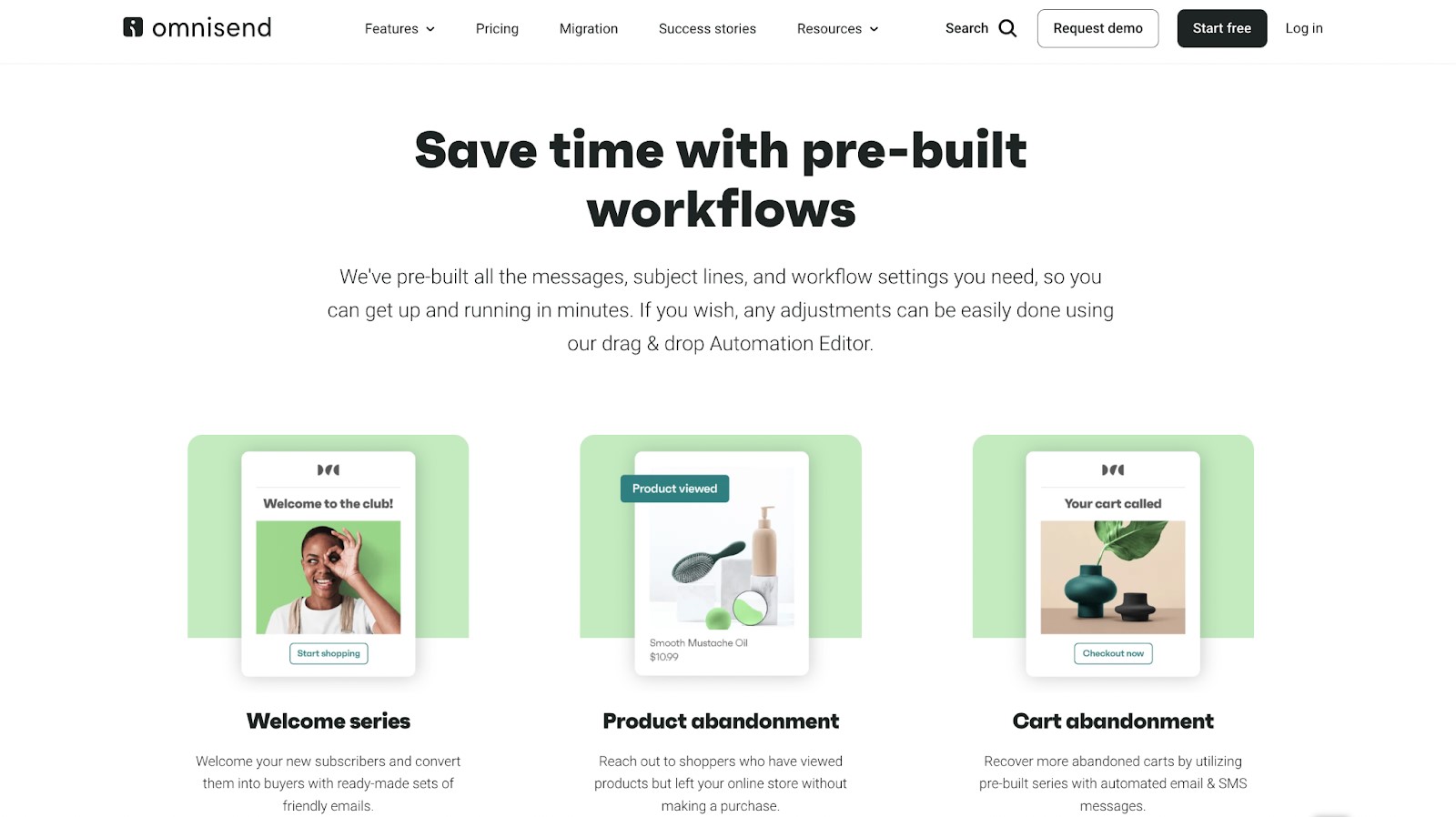
Additionally, Omnisend offers pre-built automation workflows, which simplifies the creation of targeted campaigns without needing any technical expertise.
The segmentation tools are impressive, providing options to personalize emails based on purchase history, browsing behavior, and more.
You can integrate SMS marketing and push notifications into your automation workflows, creating an intuitive omnichannel customer journey. This will help you nurture leads and drive sales through your online store.
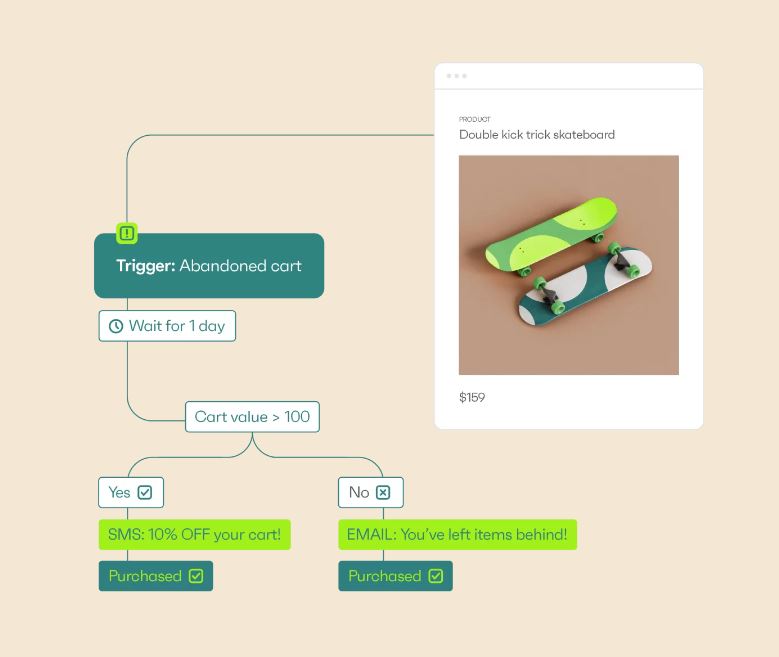
Take a look at this pre-built automation workflow on Omnisend, which automatically sends emails or SMS messages based on specific triggers.
Key CRM features for ecommerce:
- Email & SMS marketing automation
- Customer segmentation
- Contact profiles
- Pre-made popups & forms
- Customer lifecycle stages
- Analytics and reporting
- Audience targeting
- Dynamic discount codes
- Omnichannel marketing
Who uses Omnisend?
Omnisend is used by over 100,000 ecommerce brands. This includes small and large businesses across diverse industries, such as retail, beauty and cosmetics, sports and leisure, and more.
Omnisend has helped clients boost customer retention and sales through its robust email and SMS automation capabilities.
Curious to learn how businesses have used Omnisend to achieve phenomenal success? Check out the customer success story below.
 | B-Wear drives 40% of its sales with Omnisend Read case study |
Pricing
Omnisend offers a free plan with access to unlimited features. Premium plans start at $16/month.
“A good and inexpensive CRM with lots of easy to use features.”
“Omnisend has helped us grow our mailing list and has made it easy for me to make engaging and good looking email newsletters. Our open rate is around 45% which has been way better than expected. Also, some of the automation (which I need to work more on) has brought in significant extra revenue which we wouldn’t have had otherwise.
Plus, compared to some other CRM providers the cost is reasonable, especially for the functionality provided.”
Iain, Capterra review
Effortlessly manage and nurture your customer relationships with Omnisend
Quick sign up | No credit card required
2. Zoho CRM — Best for automating your sales processes
Helping more than 250,000 businesses in 180 countries build their customer relationships, Zoho is recognized for its exceptional sales automation capabilities, which include AI and machine learning features.
Beyond automation, Zoho offers extensive customization options, allowing businesses to tailor the platform to their needs and scale into more advanced functionality as they grow.
Our experience with Zoho
We found Zoho to be a feature-rich platform for managing ecommerce business operations.
It offers several CRM functionalities, from workflow automation to contact management, with flexible customization options.
These help streamline marketing workflows and improve overall efficiency. The interface is relatively user-friendly, even for teams without strong technical backgrounds.
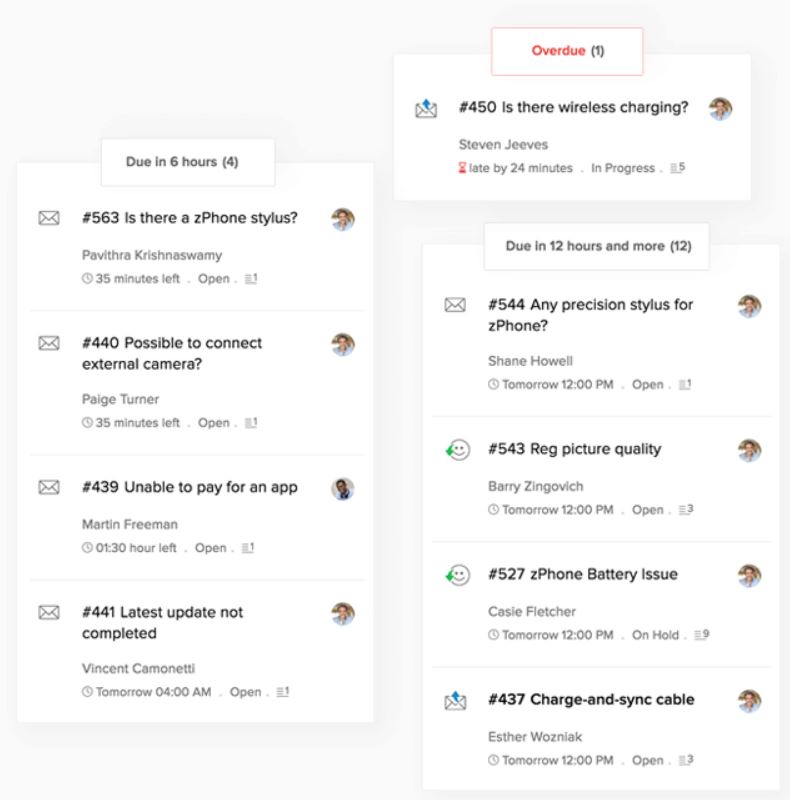
Zoho’s built-in ticketing system is also helpful for efficiently tracking and resolving customer inquiries. You can easily track conversations, assign tickets to the right specialist, and automate repetitive tasks.
The image below shows how the system works in practice.
That said, the sheer number of features can feel overwhelming at first. New users should expect a learning curve before fully unlocking the platform’s potential.
Key features for ecommerce
- Sales process automation
- Automated lead scoring & management
- Real-time customer insights
- Built-in tools for inventory, project & customer support management
Pricing
The free version supports up to three users. Paid plans are scaled according to your needs, starting at $20/month, with more advanced features added with each upgrade.
“Zoho CRM Boosts Sales and Retention…”
“Zoho CRM stands out for its robust sales automation capabilities, flexible customization options, and intuitive user interface. It has helped us increase sales by efficiently identifying and nurturing high-quality leads, streamlining both sales and marketing workflows, and supporting informed decision-making with its advanced analytics.
Additionally, it has improved our customer satisfaction by providing comprehensive customer histories, which allows for quicker issue resolution and, as a result, it has contributed to higher retention rates and increased revenue.”
Anshu, G2 review
3. Salesforce Customer 360 — Best for scaling your business
Salesforce is a powerful ecommerce CRM that simplifies lead distribution across teams and delivers deep tracking and reporting capabilities. Additionally, Salesforce offers ample customization options, allowing you to tailor it to the specific needs of your online store.
Our experience with Salesforce
Salesforce offers a robust set of features that streamline ecommerce sales reporting and data visualization.
Its pre-built templates and report builder for B2C, D2C, and B2B sales are a fantastic starting point. They also save you a lot of time.
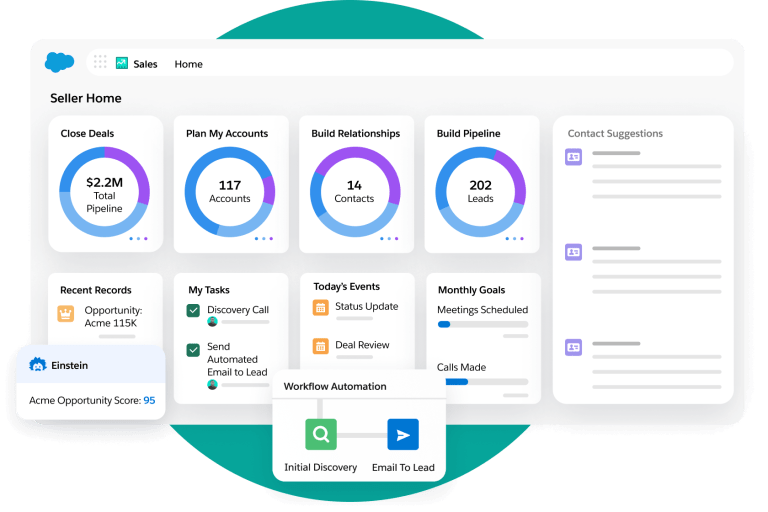
We were impressed with its customization capabilities, as it allowed us to configure orders, reports, and dashboards to match our needs.
Salesforce is designed with user experience in mind, making it easy to navigate the platform and locate necessary information.
That said, it may take some time for users to understand and use all its features.
Key features for ecommerce
- Email marketing
- Quote management
- Sales forecasting
- Partner and Channel management
- Contract management
Pricing
Plans start at $25/user/month, with the highest-tier plan priced at $500/month.
“How to mature a young sales team”
“If it weren’t for Salesforce Cloud, my team would have taken months longer to ramp up and mature. From the get-go, we used the pipeline tools to see and manage our efforts and quickly saw which efforts had the most impact. This gave us the ability to be more dynamic from campaign to campaign, making strategic decisions on the fly and in allocating budget.”
Verified reviewer, Capterra review
4. Pipedrive — Best for small online businesses
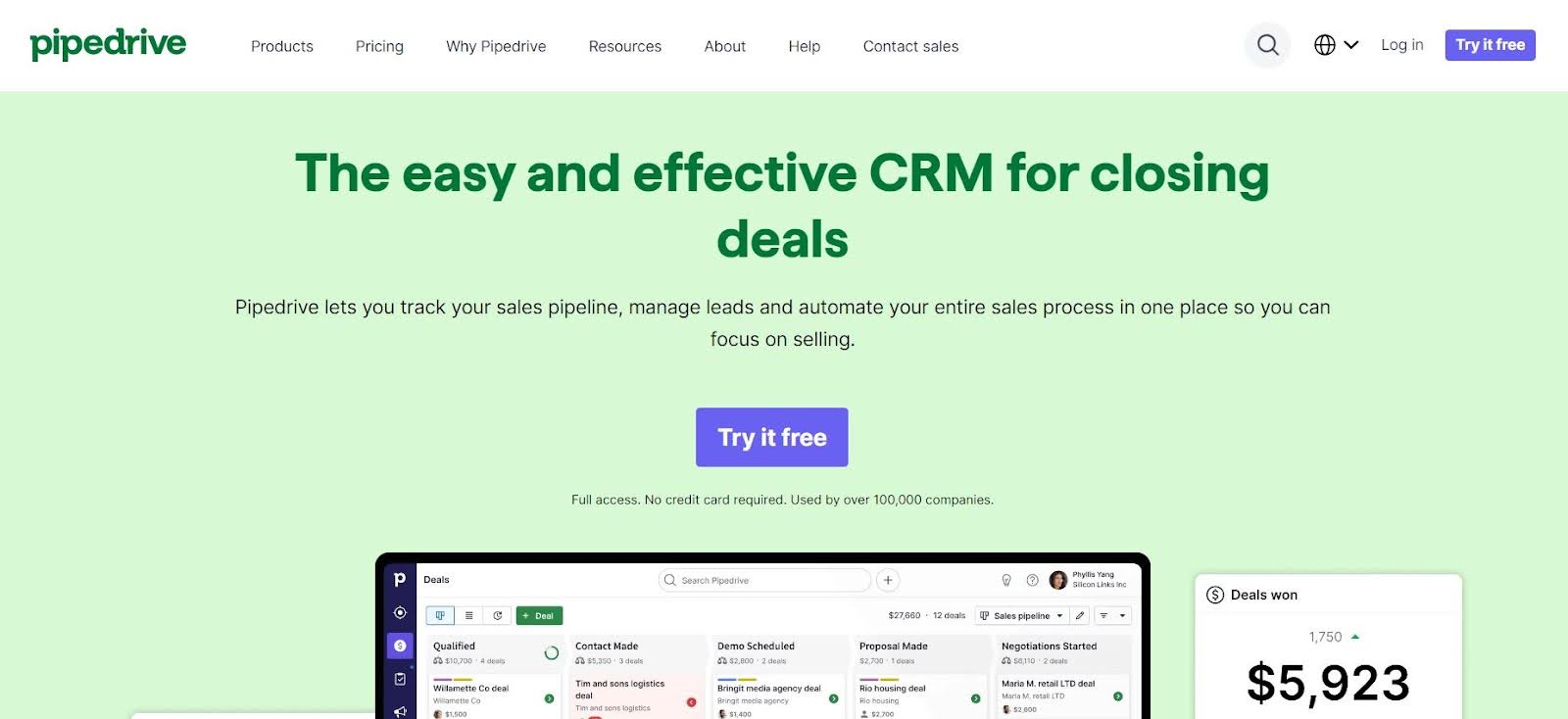
Pipedrive is a sales-focused CRM solution with an intuitive interface that makes it easy for you and your team to access actionable insights and deliver personalized messaging. This makes it especially suitable for small ecommerce businesses that need simplicity without sacrificing visibility.
Our experience with Pipedrive
Pipedrive is a central hub for managing a company’s entire sales lifecycle.
One of its standout features is the visual sales pipeline, which provides a clear overview of deals at every stage of the process. This makes it easier to spot bottlenecks and prioritize follow-ups.
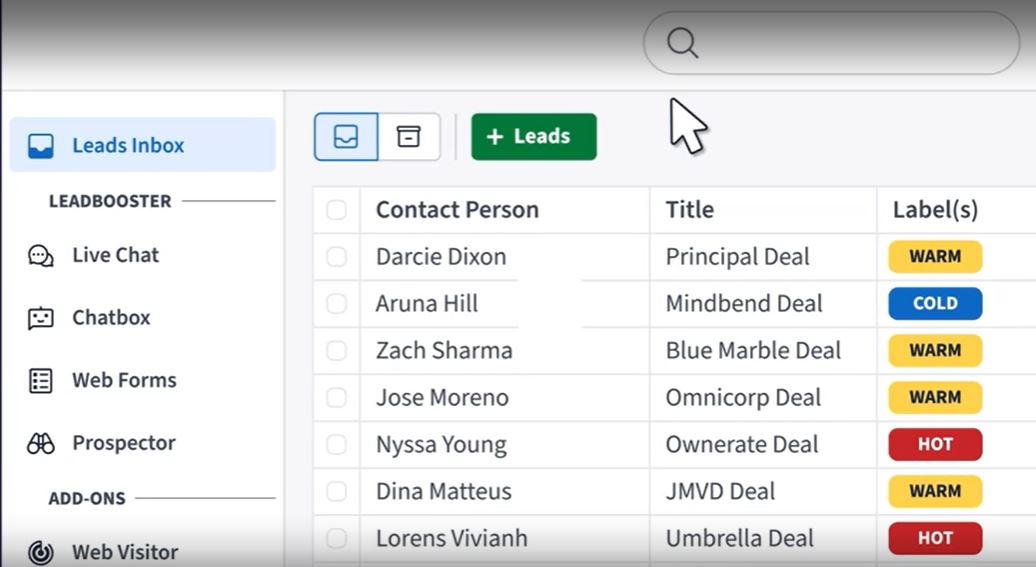
The drag-and-drop interface makes it easy to move leads through the pipeline. The colored cues, as seen in the image below, help you to focus on leads at risk of going cold.
On the downside, Pipedrive lacks advanced built-in marketing automation features. If you need a robust marketing solution, you will need to integrate Pipedrive with another tool.
Key features for ecommerce
- Email marketing
- Customer contract management
- Sales forecasting
- Product and pricing management
- Quote and order management
Pricing
Pipedrive does not offer a free plan, but it includes a 14-day full-access free trial. Paid plans start at $14 per user per month, with additional features available in higher tiers.
“Pipedrive for our small business”
“We love the automations. It keeps our business running so smoothly and ensures that we never miss anything for our clients.”
Kira, Capterra review
5. HubSpot — Best free ecommerce CRM
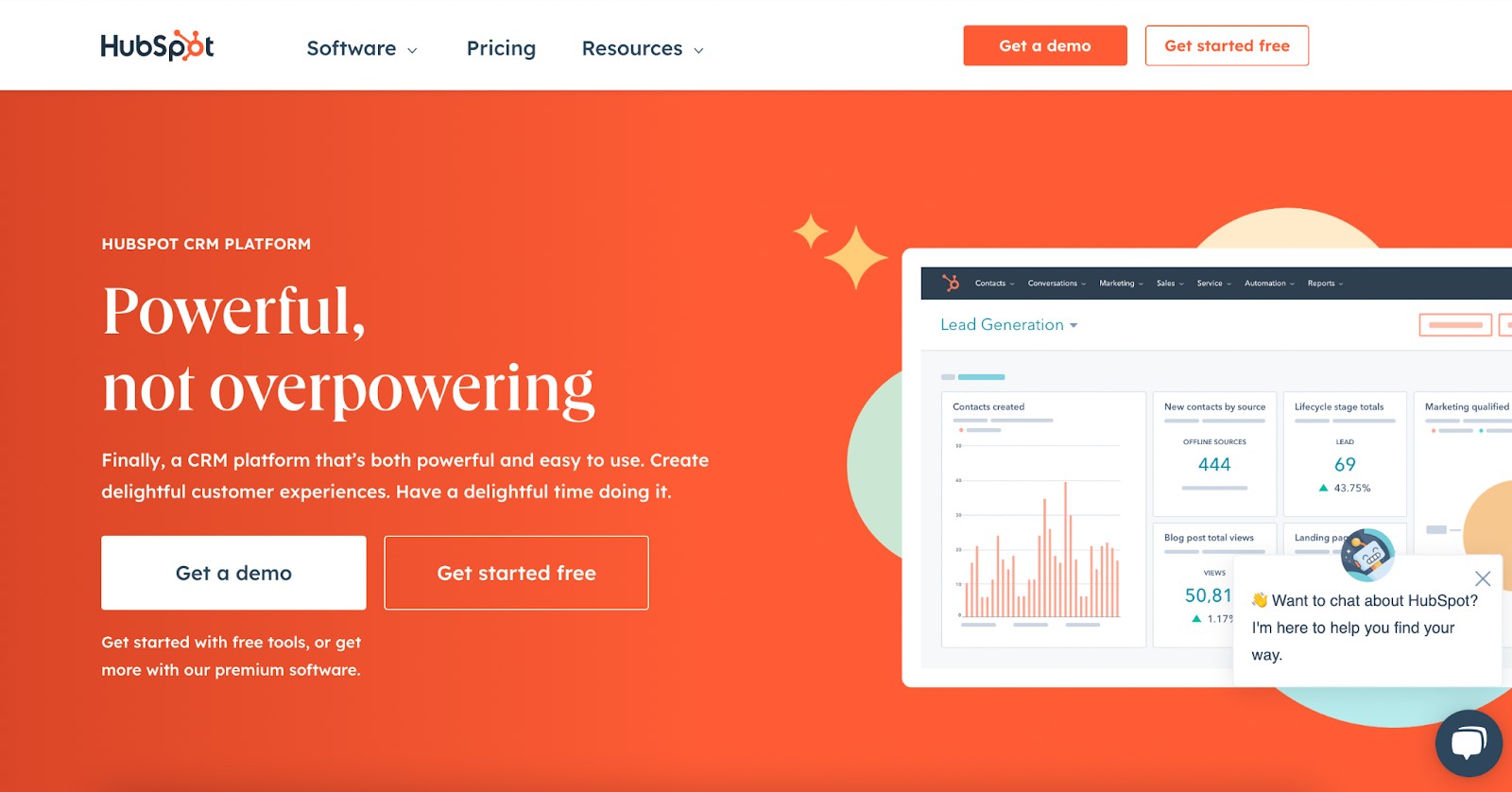
HubSpot is among the best CRM solutions for ecommerce businesses. It’s a major player in the ecommerce and marketing field.
It offers a whole suite of free CRM software and tools that cover almost everything you need to grow your business. Its premium plans unlock advanced features designed for larger ecommerce brands ready to scale.
Our experience with HubSpot
HubSpot is one of the top all-in-one CRM software for ecommerce. Its features include lead management, project management, forecasting, contact tracking, scheduling, and financial CRM.
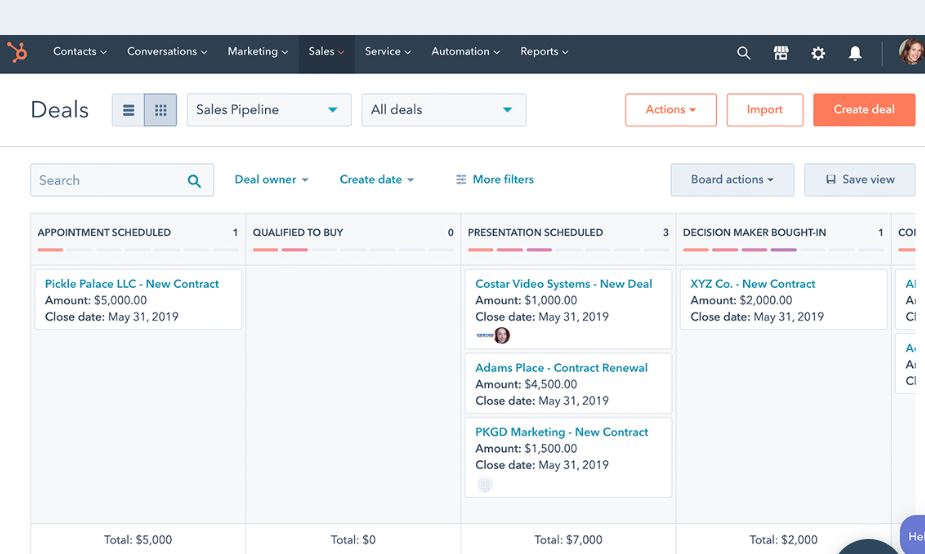
As shown in the image below, it lets users track deals and top prospects from a simple, visual dashboard.
The integration between the different Hubs is seamless. It offers us a unified view of the entire customer journey across marketing, sales, and support.
However, we believe the pricing is somewhat steep, especially for small businesses. While HubSpot offers a free plan with some valuable features, most advanced features are only available with the paid plans.
Additionally, the cost of adding extra users or features can quickly accumulate. This makes Hubspot a more suitable ecommerce CRM for businesses with a substantial budget.
Key features for ecommerce
- Email marketing
- Contact management
- In-depth reports and analytics
- Project management
- Customer segmentation
Pricing
There’s a free version with limited features, as well as a free trial. Paid plans with premium features start at $20/seat/month.
“Great CRM, especially the free plan to start a business”
“I used Hubspot for two years when I created my start-up. It was great for us to manage our prospects, our clients, our contacts & our opportunities.”
Gabriel, Capterra review
6. Freshworks — Best all-in-one CRM
As an all-in-one platform, Freshworks CRM is an excellent choice for ecommerce businesses that want to manage their customer relationships and marketing from a single command post. It lets you stay on top of customer conversations, generate contact databases, and deliver more personalized experiences.
Our experience with Freshworks
What makes Freshworks stand out among other CRM for ecommerce businesses is its all-in-one, omnichannel customer management solution. With this, all customer service channels can be managed in one place.
As seen in the image below, you can get a unified view across various channels to keep everyone on track.
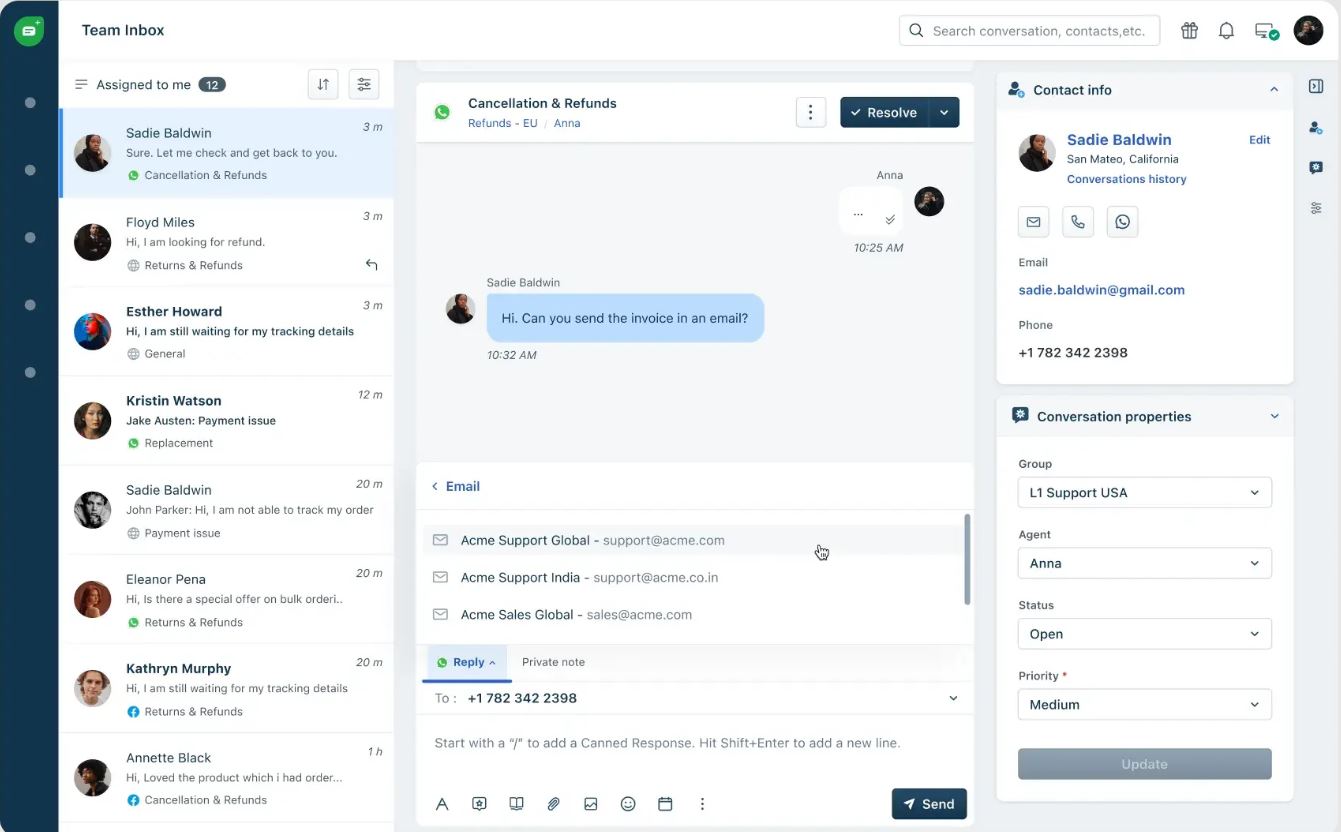
We found Freshworks particularly useful for advanced ticketing support across web, email, and social channels. It makes it easy to track and respond to customer inquiries in a timely and efficient manner.
While we had a positive experience with Freshworks overall, there are a few drawbacks to consider. One of the main issues we encountered was the complexity of the platform.
We found that some advanced features, such as generative AI, can be challenging for beginners to set up and configure.
Key features for ecommerce
- Email marketing
- Market segmentation
- AI Chatbots
- Sales forecasting
- Autoresponders
- Behavioral analytics
Pricing
Freshworks offers a free plan for up to three users. The paid plans start at $11/month.
“An Excellent All-In-One CRM and EDM Platform”
“Freshsales consolidates virtually every CRM and EDM function that my business needs… I will probably continue cancelling some of my other subscriptions as Freshsales adds more features. The ease of use, capabilities, and value for money are, overall, excellent. I mostly use Freshsales for contact management, collecting self-reported attribution, and email marketing.”
Duncan, Capterra review
7. Metrilo — Best for businesses that need advanced analytics
Metrilo is designed with ecommerce teams in mind, which makes it an excellent fit for merchants who need more sophisticated data analytics on customers and sales. Its standout feature, the Intelligence Growth Assistant, helps teams turn raw data into actionable insights by highlighting opportunities to improve store performance.
Our experience with Metrilo
We found Metrilo particularly effective for ecommerce analytics and customer insights.
With its real-time analytics dashboard, you get a clear, at-a-glance view of key metrics. These include new customer acquisition, top-selling products, and current revenue.
You can also monitor individual customer journeys and add notes or tags to every customer profile. This is shown in the image below.
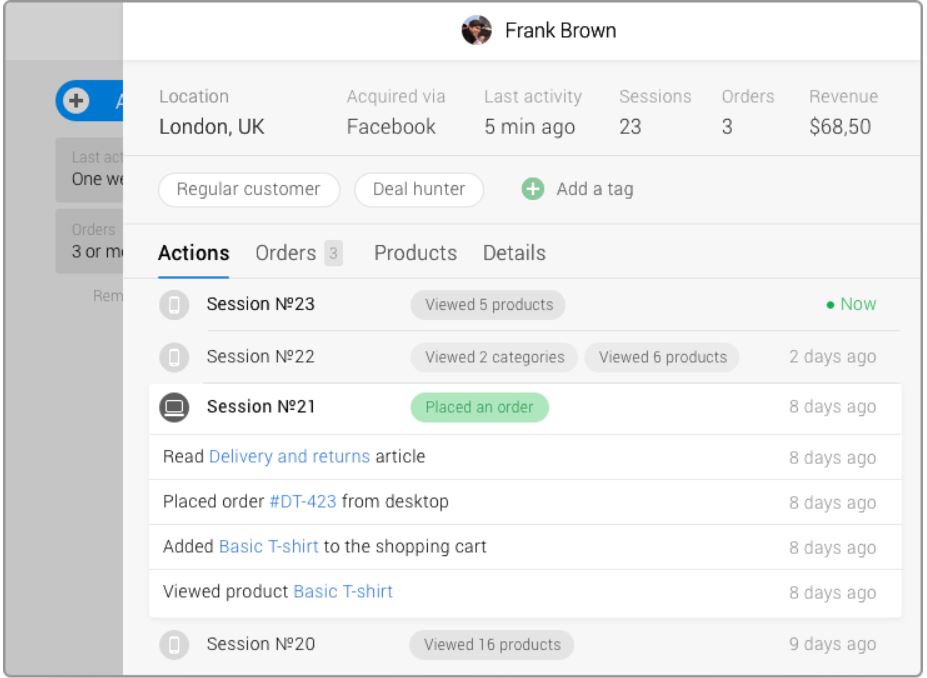
This helps you gain valuable insights and make data-driven decisions quickly. Even advanced metrics, such as sales attribution, are presented in clear, digestible breakdowns.
However, Metrilo is not an all-in-one platform. If you’re looking for features like inventory and order management, you’ll need to add Shopify, Magento, or WooCommerce plugins.
Key features for ecommerce
- Intelligence Growth Assistant
- Email automation
- Customer profiles
- Segmentation
- Customer retention analytics
Pricing
No free version. Paid plans start at $119/month with a 14-day free trial.
“Very advanced ecommerce analytics tool!”
“Extremely detailed analytics around the ecommerce conversion funnel and CAC. It would be a lot of work for us to set it up ourselves using GA and similar web analytics tools.”
Verified user in retail, G2 review
8. Capsule — Best for medium-sized online businesses
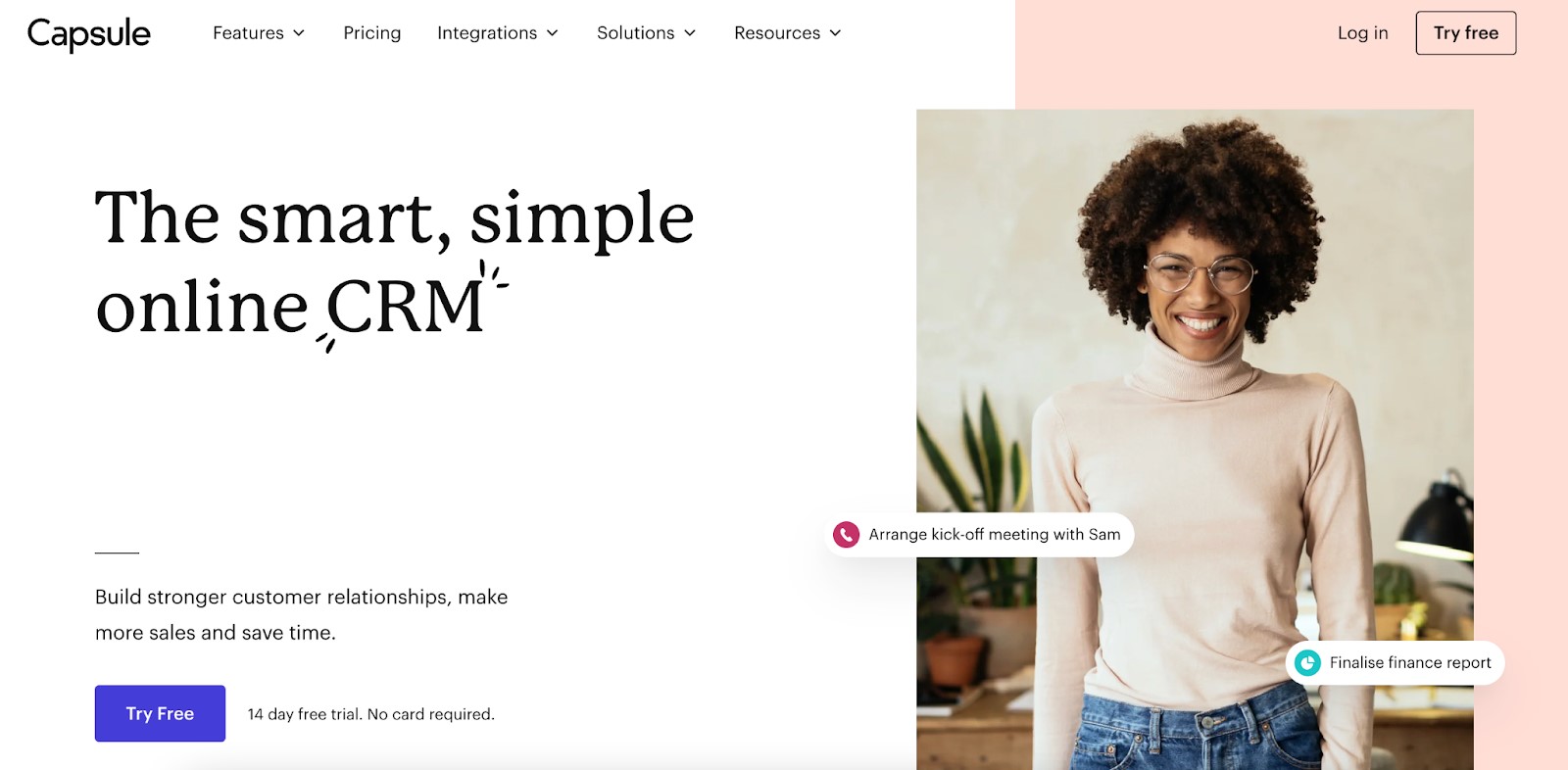
Offering a range of valuable features that help you to forecast your sales pipeline value based on probability and total opportunity value, Capsule is perfect for medium-sized ecommerce businesses that need a CRM that is simple yet powerful.
Our experience with Capsule
Capsule CRM is a user-friendly ecommerce CRM for small businesses. We appreciate the easy-to-use interface and the wide range of integrations.
It’s easy to connect Capsule with the tools you already use, such as Gmail and Google Workspace. This reduces the need for manual data entry and helps keep customer records current.
Additional features, such as opportunity filtering and multiple pipeline creation for different products or markets, are also valuable.
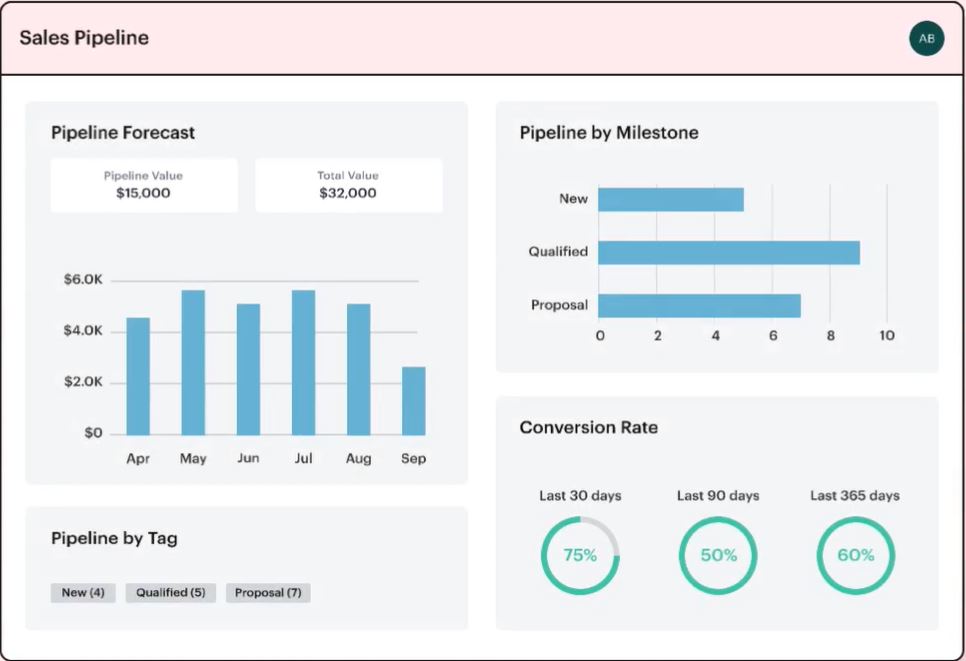
It’s easy to unify vital sales pipeline statistics and summaries in one dashboard for a comprehensive view, as seen in the image below.
On the downside, task management felt fairly limited.
We could create tasks and set reminders, but more advanced automation features were only available in the higher-priced Growth plan.
Key features for ecommerce
- Email marketing
- Sales forecasting & analytics
- Quote generator
- Territory management
Pricing
Capsule offers a free ‘starter’ CRM with basic features for two users and 250 contacts. Paid plans start at $21.
“Efficient, Customizable CRM with Easy Setup”
“I appreciate how Capsule CRM has significantly improved our efficiency by centralizing all our client information and sales data, making it much easier to navigate than our previous Excel spreadsheets. The reporting functions are especially valuable as they integrate seamlessly with Google Data Studio, enhancing our data analysis capabilities.”
Rob, G2 review
9. Instantly CRM — Best for automating outreaches
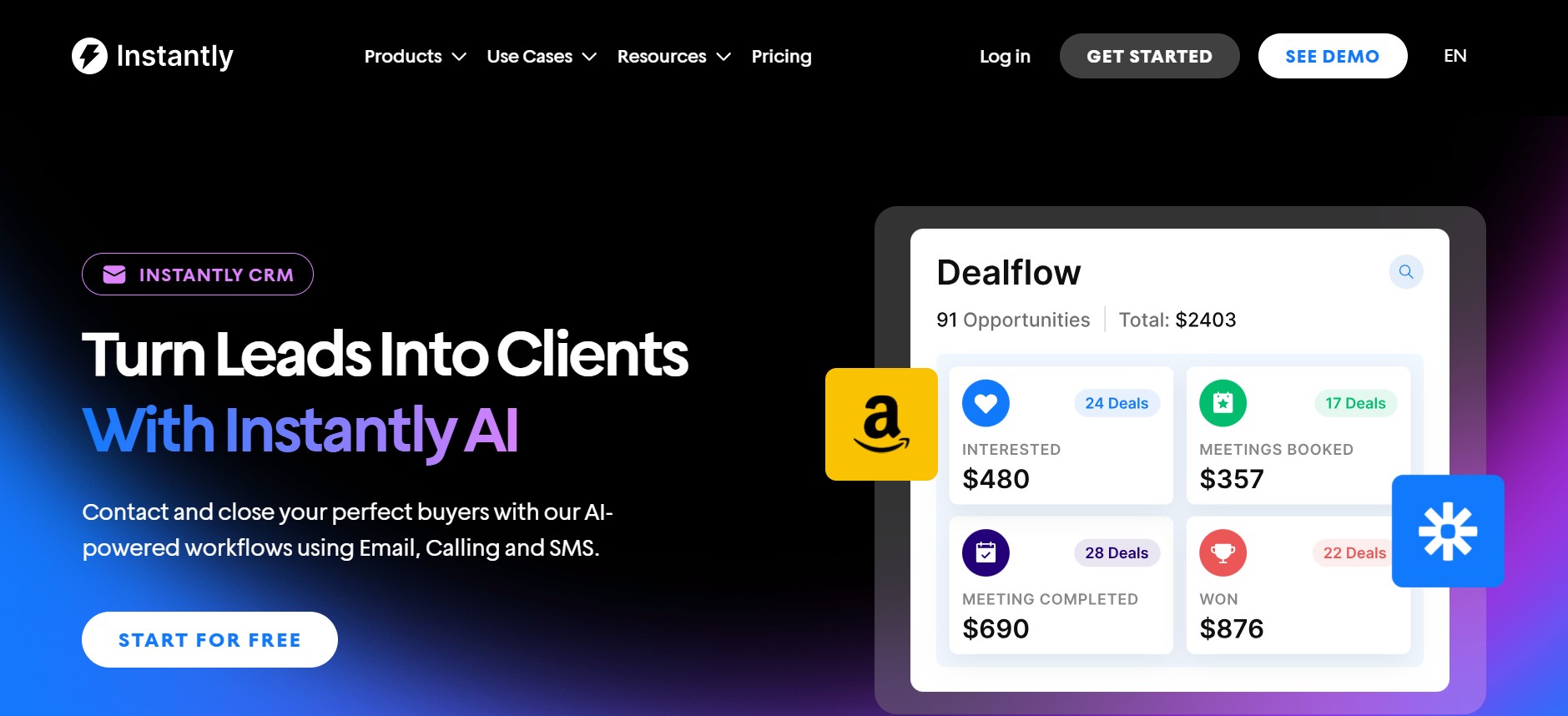
Instantly, CRM is primarily known as a cold email outreach tool, but it also provides a lightweight CRM for ecommerce brands that rely on high-volume email campaigns. Its AI-driven approach helps businesses set up multiple variants of subject lines and email copy to identify the best performer.
Our experience with Instantly CRM
We found Instantly CRM to be user-friendly and particularly effective for launching personalized email campaigns without extensive manual setup. It includes a step-by-step tutorial for those new to email outreach.
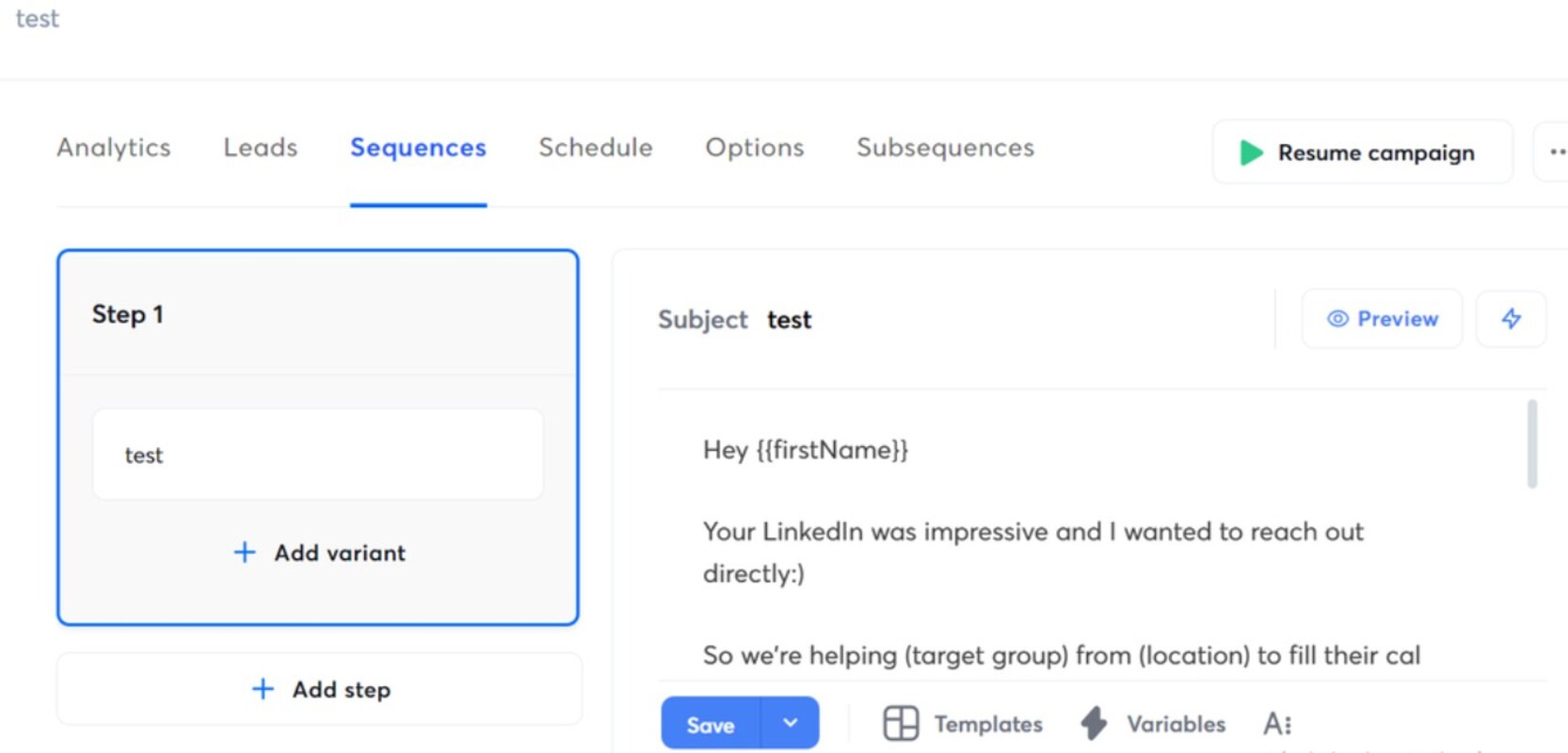
You don’t need to learn prompt engineering, as Instantly CRM has email templates and AI reply features. The best part is that you can create email sequences with custom variables, as seen below:
You can schedule emails to send when your customers are most likely to engage. After creating a campaign, Instantly CRM optimizes every part of the campaign, including follow-up messages.
Another thing we love about Instantly CRM is its unified inbox. Once you add a contact to the CRM, you can track and manage all interactions, whether email, call, or SMS.
However, most advanced features are locked in the highest-tier plan, Hyper CRM.
Key features for ecommerce
- Email sequencing
- Tasks and follow-up
- Account reporting and analytics
- Master inbox
- A/Z testing
Pricing
Instantly doesn’t offer a free plan. Paid plans start at $47/month with a 14-day free trial.
“Smart AI-Driven Outreach”
“I appreciate that Instantly is our go-to sales tool for outreach, list building, lead management, and sales activities. The AI features are top-notch, making it an all-in-one tool that addresses our bulk and targeted outreach needs effectively.
The smart AI features and campaign management stand out, and the ability to automate email generation really helps us come up with ideas.
I also like how we don’t miss emails anymore as we can track our sequences in one place, which helps with optimizing spam, bounce rates, and open rates, thus enhancing our sequences.”
Sohaib, G2 review
10. Close CRM — Best for streamlining customer communication
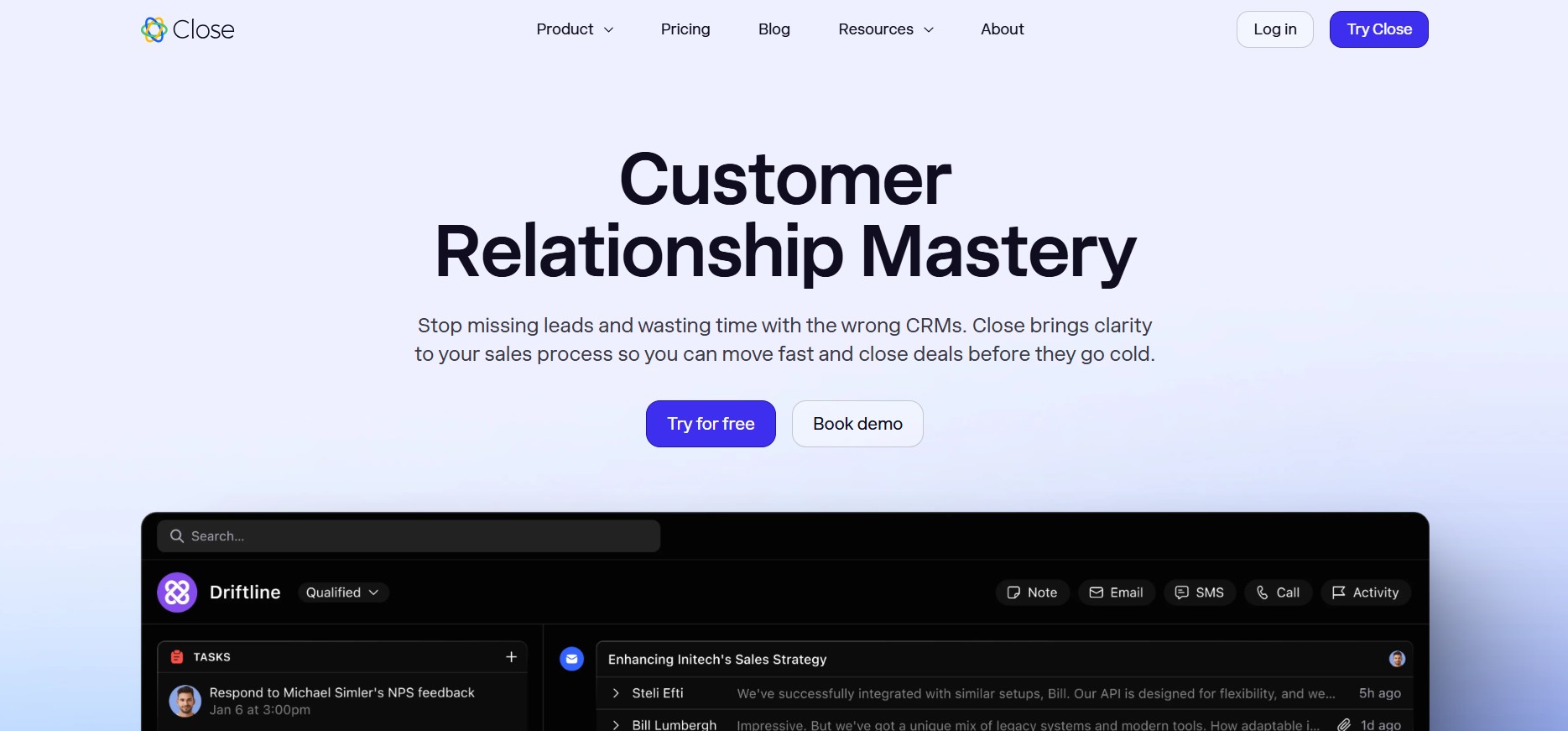
Close CRM is designed for teams that rely on speed, volume, and direct customer communication. The platform combines calling, email, and SMS into one place, enabling ecommerce teams to engage with leads and customers without switching tools.
Our experience with Close CRM
Close CRM impressed us with its all-in-one communication feature. Built-in calling allows you to make and receive calls directly within the platform, and each interaction is automatically logged in the CRM.
With the SMS feature, you can add automated SMS steps to your workflow to reach customers faster. You can also schedule meetings, and its AI will record, transcribe, and send meeting notes to you.
Close CRM provides inbox clarity, helping you see every task, deal, and conversation in a centralized view. Compared to other CRMs, Close focuses on performance and maintains a minimal, cluttered interface.
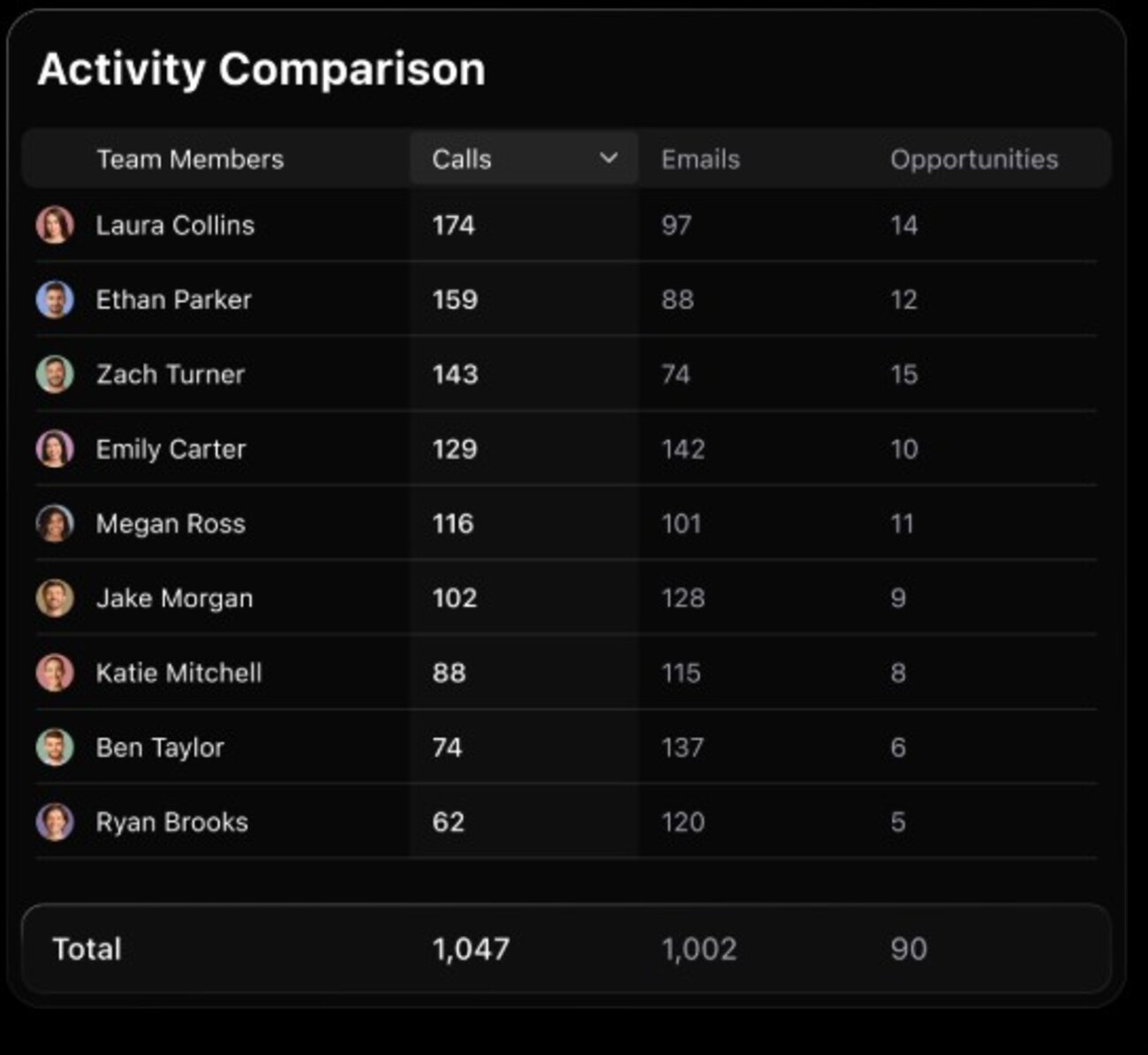
Built-in reporting tracks sales reps’ activity, so you can see whose messaging is more successful and who needs more support. Here’s what the activity comparison page looks like:
Close CRM displays your inactive contacts, allowing you to re-engage them before they churn. It’s worth noting that Close CRM has a learning curve, which requires assistance from the support team.
Key features for ecommerce
- Unlimited contacts and leads
- Automated workflows
- Built-in email, calling, and SMS
- AI email assistant
- Centralized inbox and task lists
Pricing
There is no free version, but you can use the 14-day free trial. Paid plans start from $19/seat/month.
“Streamlines communication with easy setup”
“I love using Close because it provides the ability to see all communication and notes on any lead or client, which is incredibly valuable for managing interactions efficiently. I also enjoy the availability of communication templates, which makes reaching out to clients and leads much easier and more streamlined.
This functionality simplifies the process of maintaining consistent and high-quality communication without much manual effort. Overall, these features significantly contribute to the ease and effectiveness of managing client interactions.”
Katie, G2 review
How we curated this list of best ecommerce CRM software
We extensively tested a range of ecommerce CRM software to assess ease of use, pricing structure, and functionality. Additionally, we looked at user ratings and reviews to understand the user experience each tool offers.
Through this multi-step selection process, we shortlisted the 10 best CRMs for ecommerce businesses of different sizes.
How ecommerce CRM can help grow your business
An ecommerce CRM turns raw customer data into actionable growth opportunities. Here’s how it can help grow your business:
1. Segment customers based on behavior and lifecycle
Ecommerce CRM platforms allow you to group customers based on where they are in their lifecycle. They can be first-time buyers, repeat customers, high-value shoppers, or lapsed users.
These lifecycle-based segments are constructed using data such as purchase history, average order value, browsing behavior, and the time since the last order. The data allows you to tailor messaging, offers, and product recommendations to match each customer’s intent.
2. Track and improve customer lifetime value
The best CRM for ecommerce business makes it easier to identify your most valuable customer segments. From its reports and analytics, you’ll understand what drives long-term revenue.
The software analyzes repeat purchases, order frequency, and lifetime value. This way, you can focus your ecommerce CRM strategy on customers most likely to deliver sustained growth.
Additionally, you can deploy customer lifecycle marketing tactics. These include tailored offers, loyalty programs, and content designed to encourage repeat buying and increased spending over time. Instead of treating all customers equally, you invest in relationships that matter most.
3. Use customer data to optimize marketing campaigns
With CRM software for ecommerce, you can sync customer data directly with your email, advertising, and social media tools. This enables the creation of highly targeted campaigns based on product interest, purchase behavior, or engagement level.
For example, you can promote complementary products to recent buyers or re-target highly engaged users with exclusive offers. You can also launch win-back campaigns for customers who viewed a product multiple times but never completed their purchase.
Marketing becomes more relevant, efficient, and conversion-based across every channel when you align campaigns with real customer data.
4. Identify churn risks and re-engage inactive customers
The best ecommerce CRM helps you spot early signs of churn. It tracks inactivity, declining engagement, or long periods of inactivity between purchases.
You can automatically build segments for “at-risk” or dormant customers and trigger targeted re-engagement campaigns. These may include time-sensitive discounts, feedback surveys, or personalized reactivation emails designed to win customers back.
Implementing strategic measures against churn protects your revenue and strengthens long-term customer relationships.
Ready to grow with an ecommerce CRM?
An ecommerce CRM provides the foundation for sustainable growth. It centralizes customer data, enables advanced segmentation, automates workflows, and personalizes marketing.
These ecommerce CRM capabilities can help you increase retention, enhance lifetime value, and drive more revenue from every customer relationship. Instead of experimenting unquestioningly, you can clearly identify your highs and lows and make data-driven decisions with confidence.
If you’re getting started, it’s best to choose a CRM built specifically for ecommerce. Platforms like Omnisend is designed to connect customer data with marketing automation. You can start with a free account, making it easier to turn insights into action and build long-term, profitable growth.
Streamline your customer interactions and boost your ecommerce sales with Omnisend.
Quick sign up | No credit card required
FAQs
What’s the difference between a regular CRM and an ecommerce CRM?
A regular CRM manages B2B sales cycles and relationships. It tracks leads as they move through sales funnels via outreaches and task management.
In contrast, an ecommerce CRM is built for online stores. It tracks high-volume behavioral data like purchase history, clicks, and cart abandonment.
An ecommerce CRM can also automate personalized marketing campaigns and integrate with ecommerce platforms like Shopify.
How much does an ecommerce CRM cost?
Ecommerce CRM pricing typically ranges from free or basic plans to premium plans that cost over $100/month. The pricing depends on features, contact volume, automation, and integrations with ecommerce and marketing platforms.
What kind of data does an ecommerce CRM store?
An ecommerce CRM stores the following data types:
— Customer profiles
— Purchase history
— Browsing behavior
— Average order value
— Engagement data
— Support interactions
— Lifecycle status
These data enable personalization and workflow automation within the ecommerce CRM.
What’s the best ecommerce CRM for Shopify?
Omnisend is the best ecommerce CRM for Shopify stores. Thanks to its native Shopify integration and free account with advanced features. These include unlimited segmentation, pre-built workflows, email templates, email and SMS marketing automation, and A/B testing.

TABLE OF CONTENTS
TABLE OF CONTENTS


Subscribe and don’t miss any updates!
No fluff, no spam, no corporate filler. Just a friendly letter, twice a month.