Omnisend AI

 OFFER


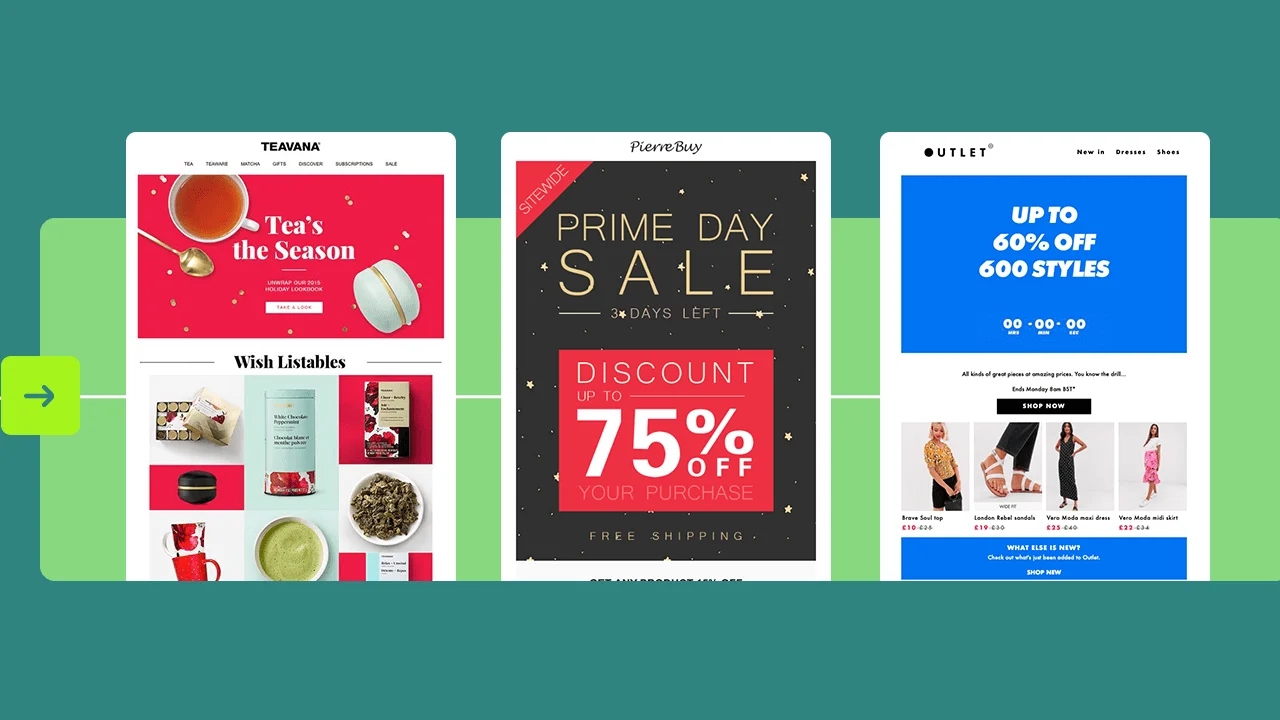

A holiday newsletter is used to turn seasonal demand into revenue. Shoppers often ignore inboxes filled with generic discount blasts unless the discount is highly relevant to them. Therefore, you need to come up with an email that solves a specific problem. That could be a gift guide sorted by price or fast shipping for those who arrived a little too late.
This guide gives you 15 concrete holiday newsletter ideas and real ecommerce examples you can copy for your own November and December sends.
Quick sign up | No credit card required
What the data says about holiday email
During Black Friday Cyber Monday week, average order value hit $235.94, up 55% year-on-year from $152.54, and the highest returns came from automated messages.
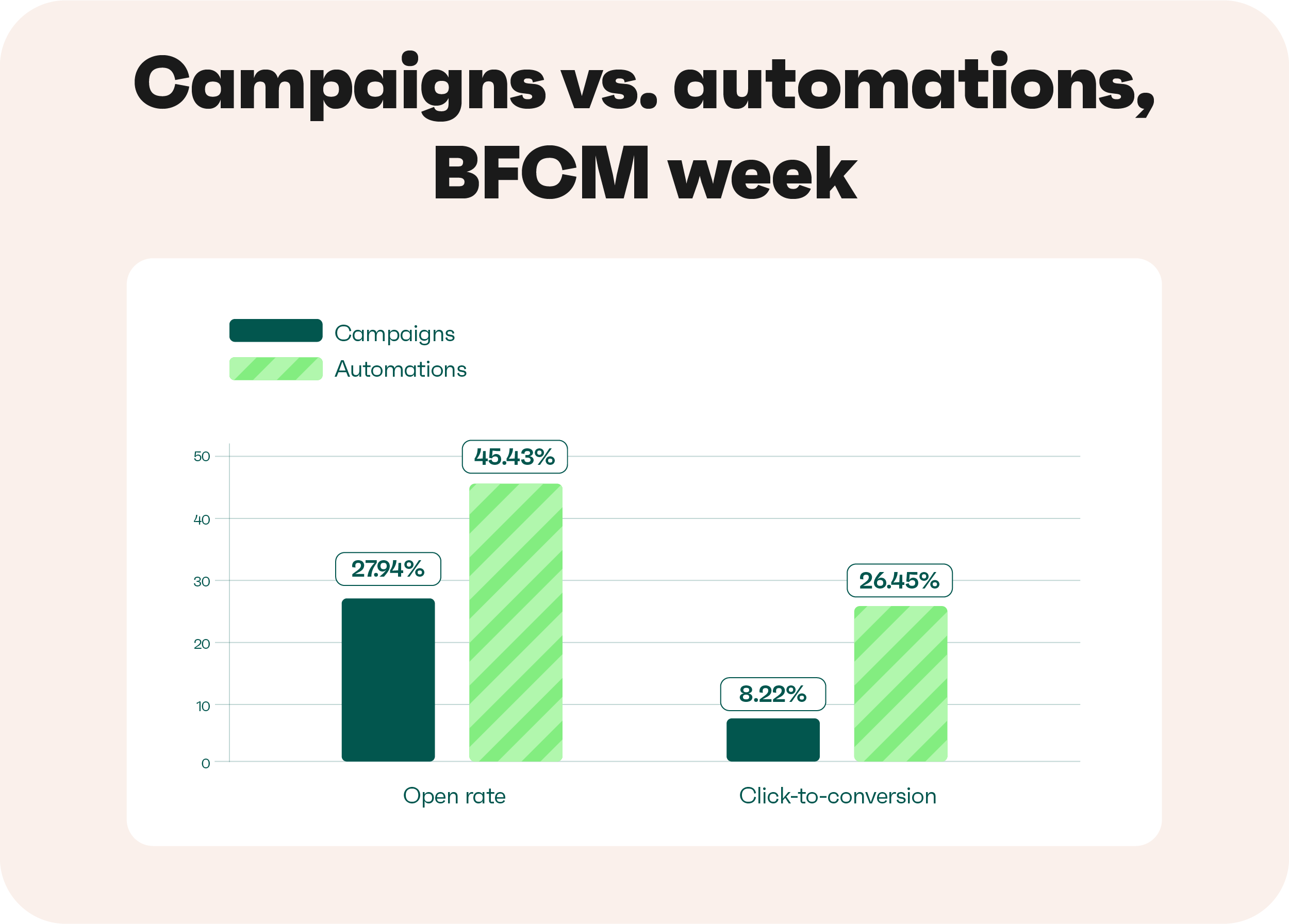
In November of 2024, automations accounted for just 3% of total email sends but drove 30% of all email orders. As shown in our early BFCM sales analysis, automated workflows (compared with manual sends) significantly increase the open rate (45.43% vs 27.94%) and triple the conversion rate (26.45% vs 8.22%).
Holiday email templates you can start from
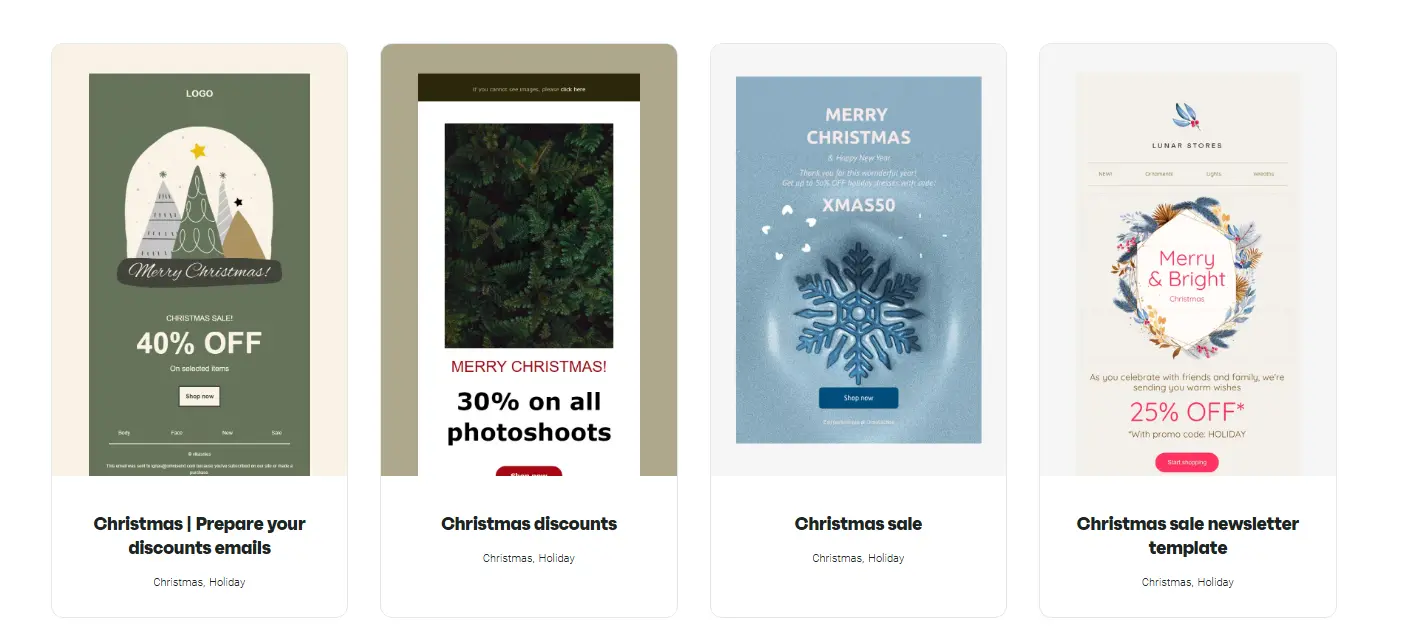
A pre-built holiday template can save you hours of formatting and mobile optimization. Winter holidays are already the busiest time of the year for ecommerce stores, so we’re here to give you what you need to get started immediately. You can edit those templates to your liking without writing code or starting from scratch.
Holiday newsletter ideas and examples
Check out these holiday newsletters to inspire your holiday email campaigns:
1. Holiday gift guide and bundles
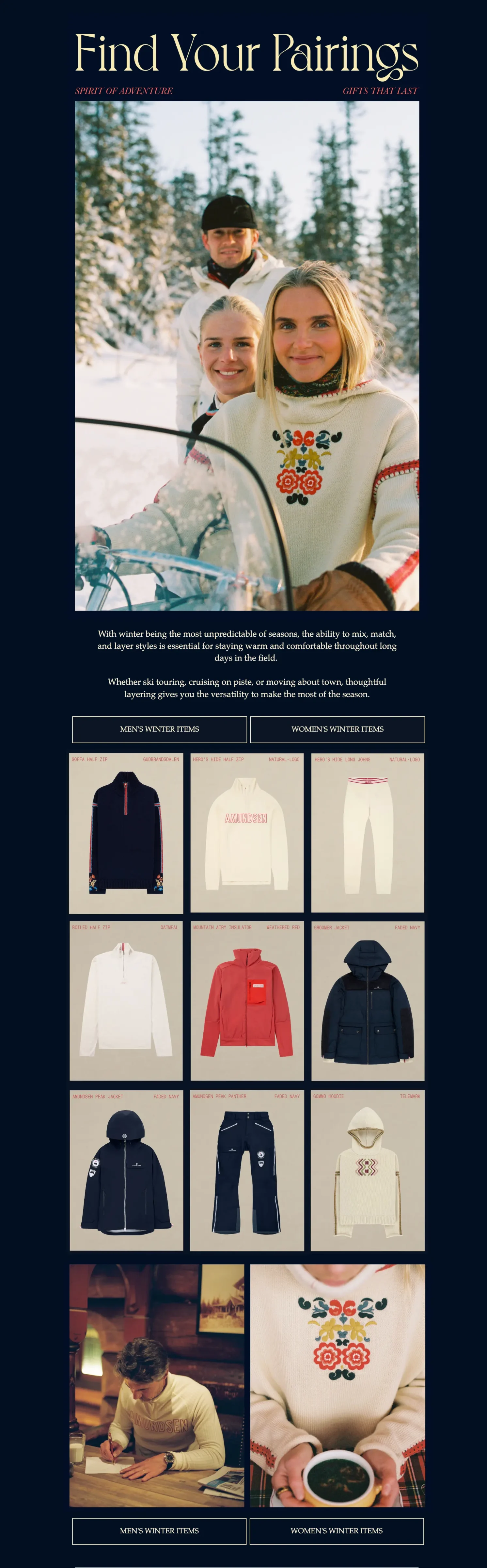
A curated gift guide or product bundle reduces shopping friction for buyers overwhelmed by choice, otherwise known as analysis paralysis. You can structure your items as pairings instead of selling them as single products to drive higher order values.
What to take from it:
- “Find Your Pairings” sells the logic of layering, which is grouping complementary items as a bundle without a discount
- Men’s and women’s winter item buttons sit above and below the grid, which both separates the grid visually and gives more options
- This approach helped Amundsen Sports increase email-attributed revenue by 106% and lift automation revenue by 1010%
2. Exclusive holiday discounts and promos
A holiday discount converts best when paired with a seasonal greeting. If you only use the occasion to send yet another promotional blast, you’re less likely to make the most of it. Combine the two to build trust and connection before asking for the sale.
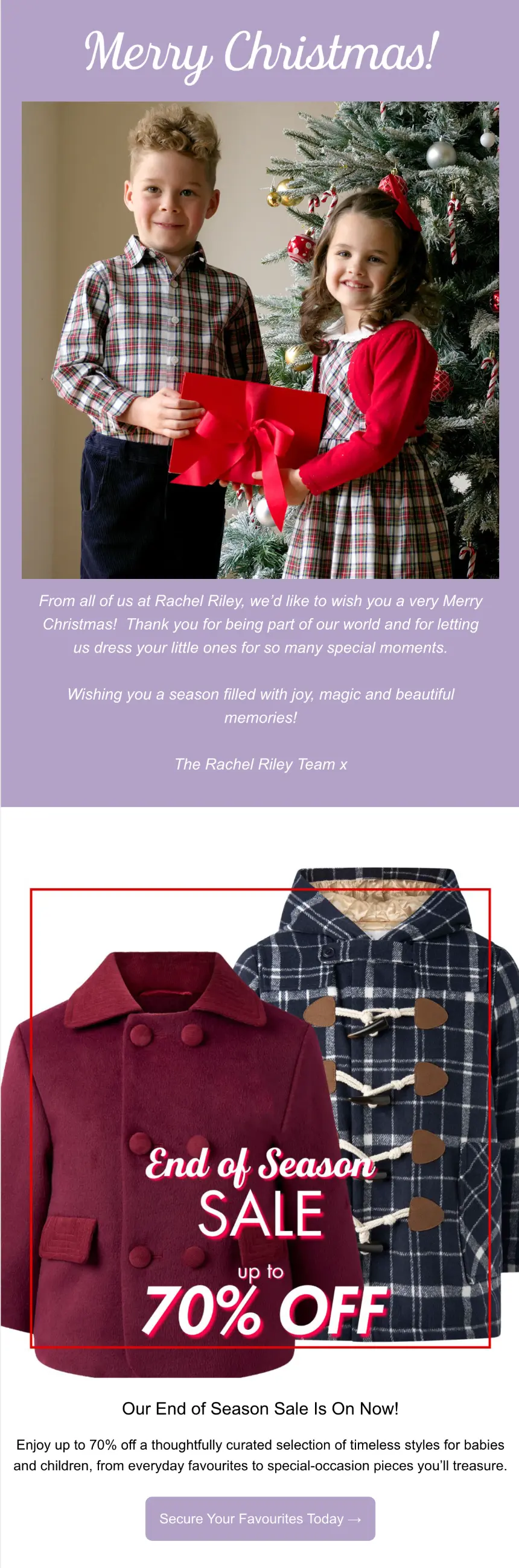
What to take from it:
- The top half shows a family photograph and a “Merry Christmas” message to deliver the social expectation
- The bottom half delivers up to a 70% discount for the end-of-season sale to encourage sales
- Rachel Riley has seen a 77.33% year-over-year BFCM revenue growth, and 48.1% of total store revenue came from Omnisend during the period
3. Festive giveaways
A holiday giveaway is a great way to capture email addresses and build an audience list before the buying spree begins. You should run this giveaway early in November to ensure you have the time to collect the emails and a larger segment ready for holiday sends.
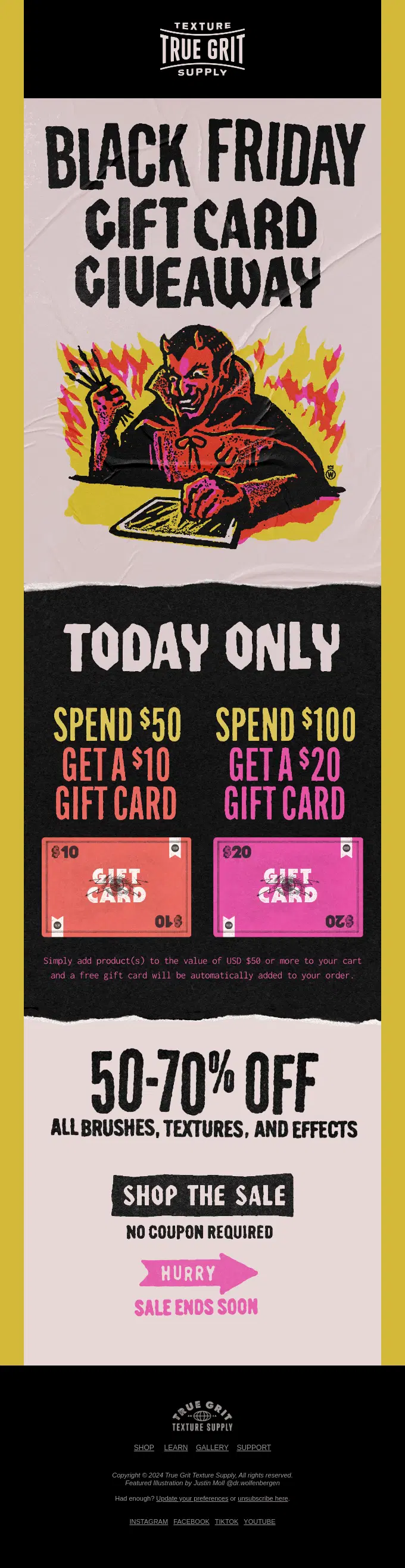
What to take from it:
- Don’t overstuff the email with extra information aside from the main item
- Put the prize and its conditions in the primary spotlight
- Keep the layout and design clean and fitting to your brand personality
4. Thank-you emails for your customers
A dedicated thank-you email is great for customer loyalty and retention. It removes pressure to buy and feels like a nice gesture to the customer. Send a message with zero product links or offers to stand out in an inbox filled with holiday promotions.
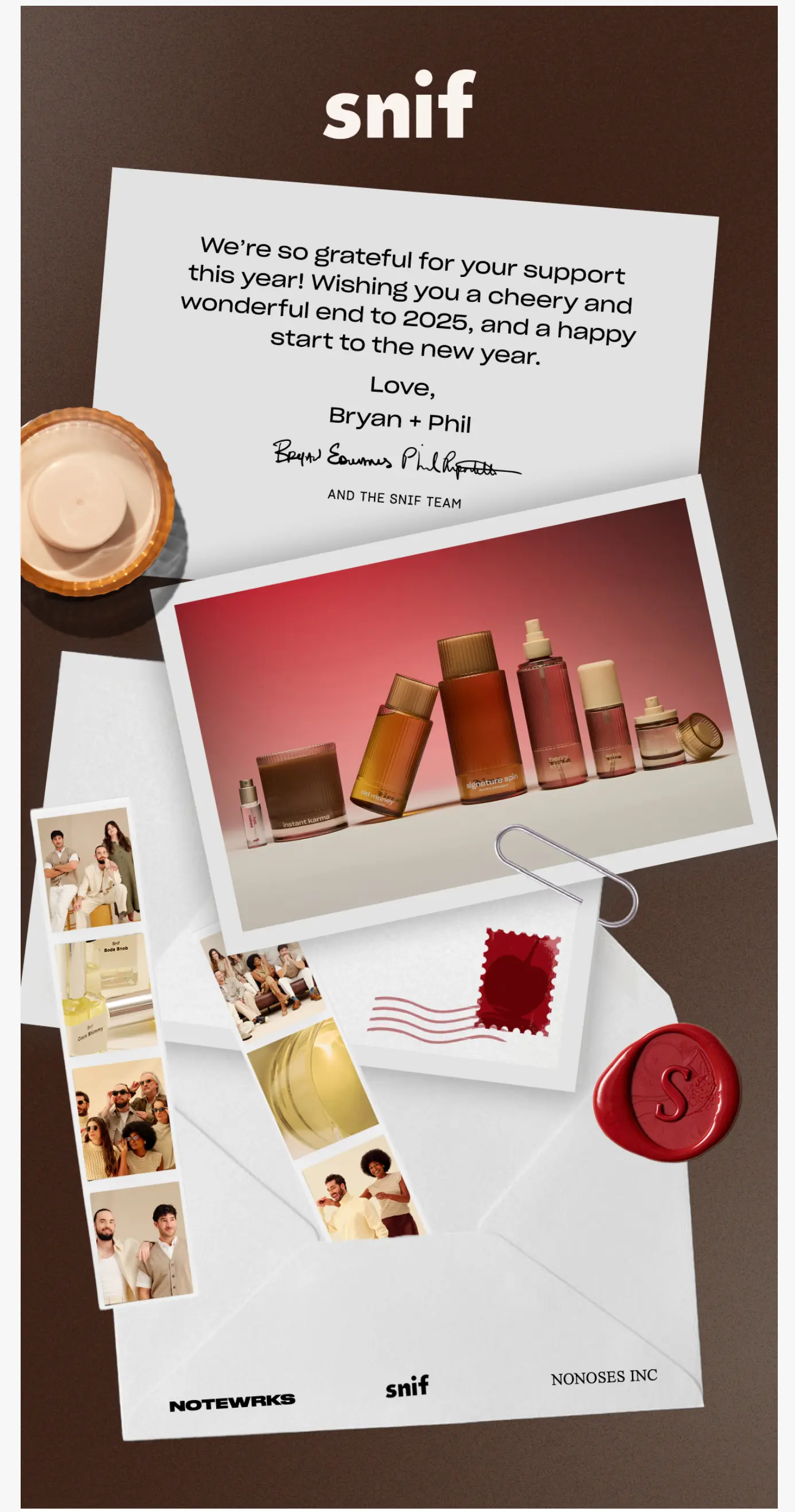
What to take from it:
- There’s no CTA, which allows the reader to focus entirely on the appreciation message without worrying about a hidden sales pitch
- A photographed thank-you card signed by the founders provides a human touch that’s difficult to convey via regular body text
- Scattered polaroids of the team and products make the recipient feel connected with the brand
5. Top picks from your team
Highlight favorite products from your staff to kick your social proof up a notch and allow the customer to feel more connected with your brand. Shoppers tend to trust employee recommendations because it’s like asking an expert about the best buy for their needs.
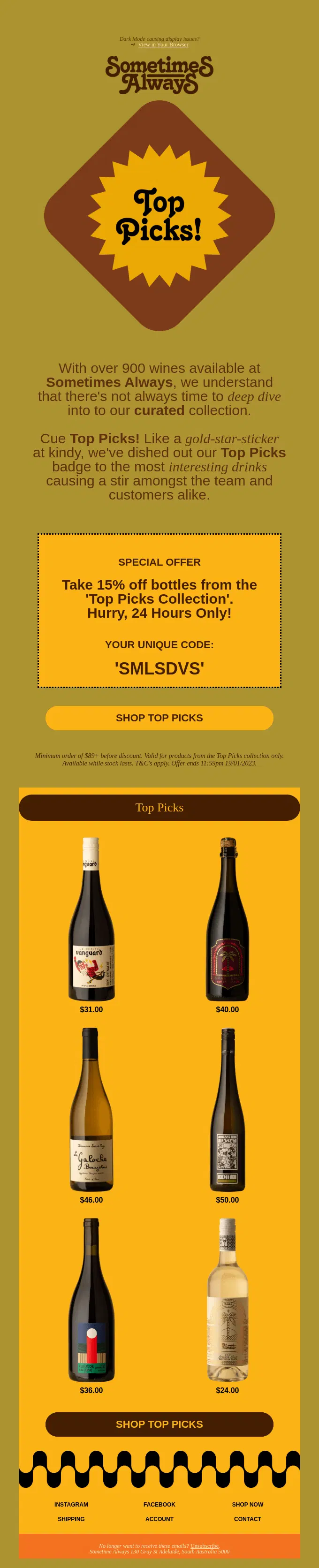
What to take from it:
- The email features a specific category (most interesting drinks) by which they’ve selected the items
- It plays the “900 wines available” card that quietly conveys the customer would need to choose from way too many products otherwise
- A dedicated discount code is given that applies only to the selected items
6. Holiday sale countdown and sneak peeks
Building anticipation before the holiday chaos starts is a great way to grab your subscribers’ attention and put your brand in front of them. You can use a visual countdown timer, spark their curiosity with a sneak peek, or just share your excitement about the upcoming holiday season.

What to take from it:
- Share genuine excitement about the holiday season without a hard pitch to buy your product
- Share relevant information or fun facts about the holiday that the recipients may be interested in learning
- Put a subtle CTA that doesn’t overpower your core message when the purpose is not to get direct sales
7. Holiday recipes or DIY ideas
Sending content like recipes or DIY guides keeps your brand top-of-mind without burning out your list with constant discounts. It works best when the activity indirectly requires or complements your products.

What to take from it:
- Genuine and warm copy that encourages you to spend time with your loved ones and create something together
- Several recipes with a general overview for each and a link that takes the reader to the website for the full recipe
- Subtle CTA at the very bottom that invites the reader to check their Christmas Collection
8. Support a holiday charity
A charity initiative aligns your store with your customers’ values during a season focused on giving. You can build community trust by dedicating a send entirely to a donation event instead of trying to sell your product.
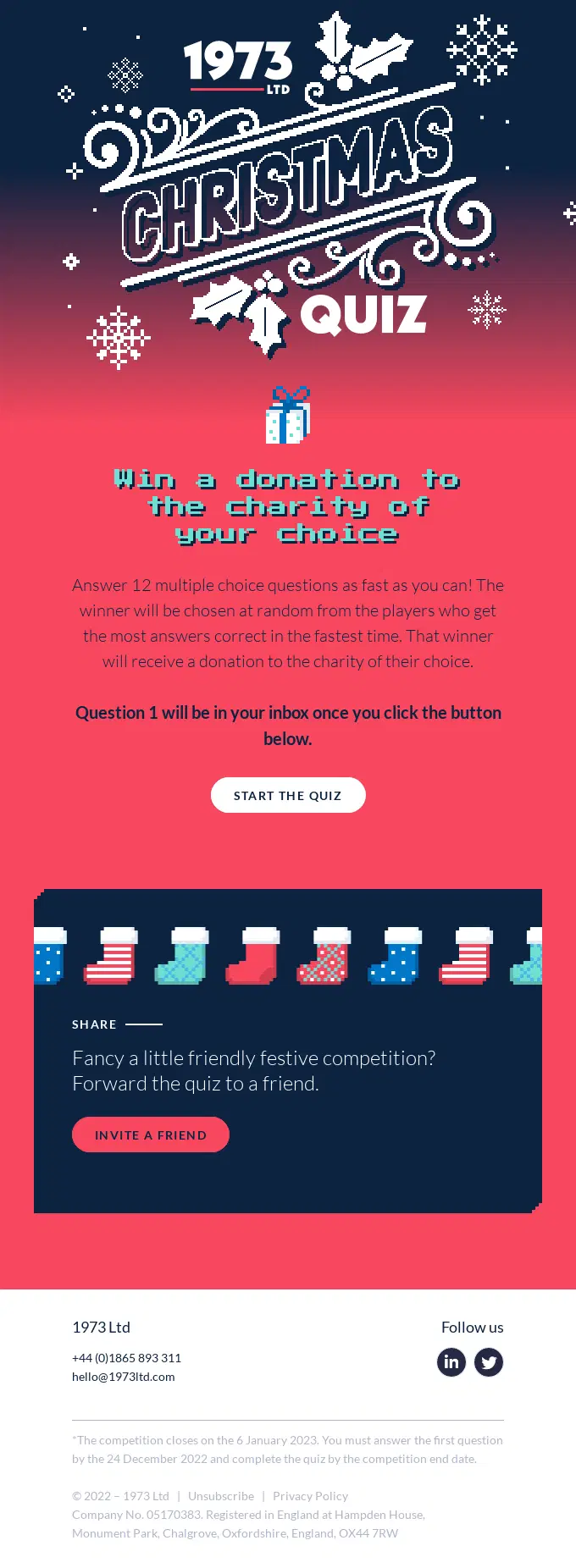
What to take from it:
- Gamify the experience so the subscriber not only does a good deed but has fun doing it
- Add an option to invite more people to the quiz
- Make the layout and design easy to read and dress it in relevant colors (if appropriate for your brand)
9. An Advent or 12-day campaign
An Advent calendar or 12-day series campaign is a habit-forming strategy that trains the subscriber to look for your brand in their email inbox on a daily basis. Reveal one new offer or piece of content every 24 hours to keep them engaged and interested in your messages.

What to take from it:
- Send an initial email that explains what’s going to happen and sets expectations for recipients
- Limit each daily send to 24 hours to create a natural flow and an expected email arrival date
- Keep the email layout identical every day and change only the main content
10. Feature customer reviews or photos
User-generated content removes some of the purchase anxiety for gift buyers who are unfamiliar with your brand. Add pictures of real people using your items and reviews to prove it’s a good item buyers like.

What to take from it:
- Add star ratings and a name next to the quote so it’s more trustworthy and effective
- Select the reviews that represent the season to make it more relevant and reduce purchase anxiety
- Include the product link so the reader can click it and buy without navigating the website
11. Last-minute gift ideas
A digital gift card campaign is the perfect last-minute rescue for the people who got lost in the holiday chaos and forgot to buy a gift on time. Lead with the stressful situation immediately to capture interest and then pivot to your life-saving offer.
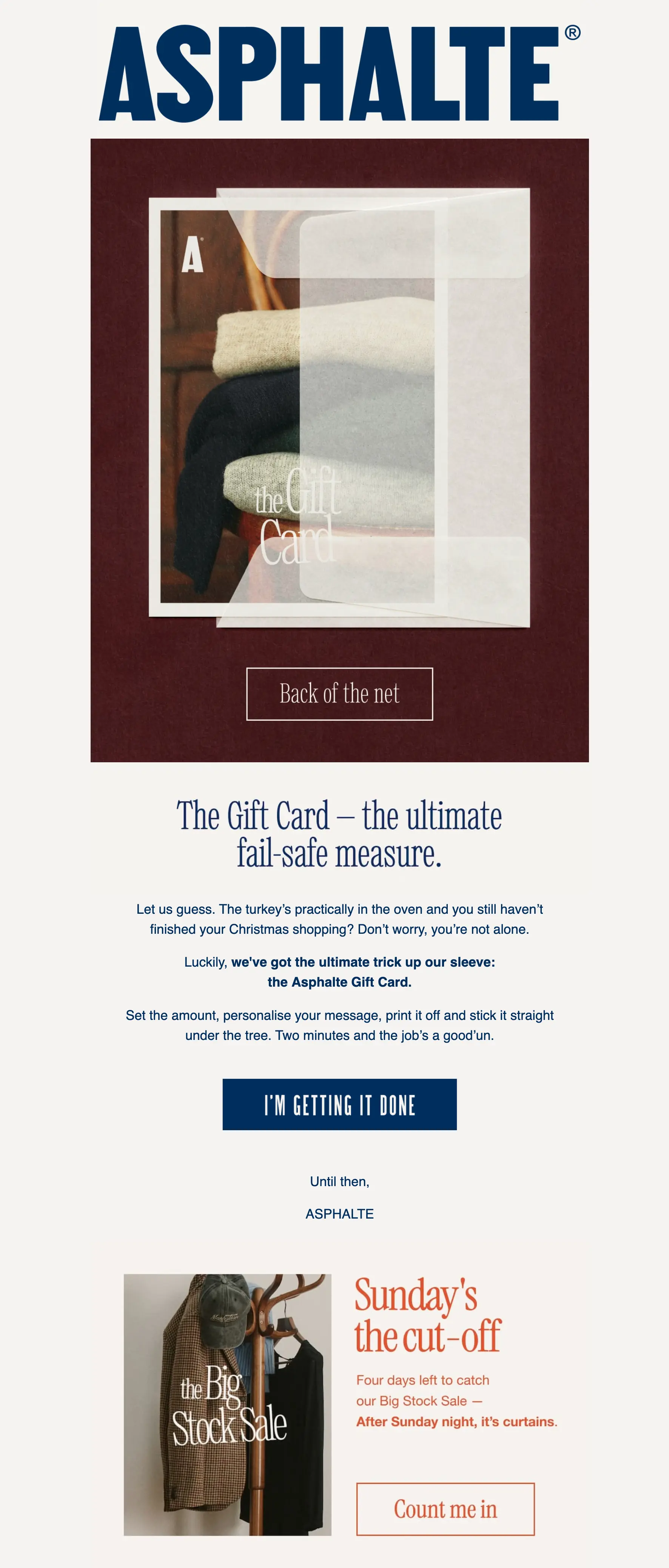
What to take from it:
- Name the bad situation in the copy, like the turkey being in the oven and the shopping remaining unfinished
- Clearly explain how you can help solve the problem: set the amount, print the card at home, and put it under the tree
- Write the CTA in the reader’s voice, such as “I’m getting it done” instead of using a generic “Buy now”
12. Limited-edition holiday products
A seasonal product that disappears in January gives you a reason to send an email that doesn’t depend on a discount. The scarcity is real, so you can state it plainly rather than create a fake FOMO story for urgency.
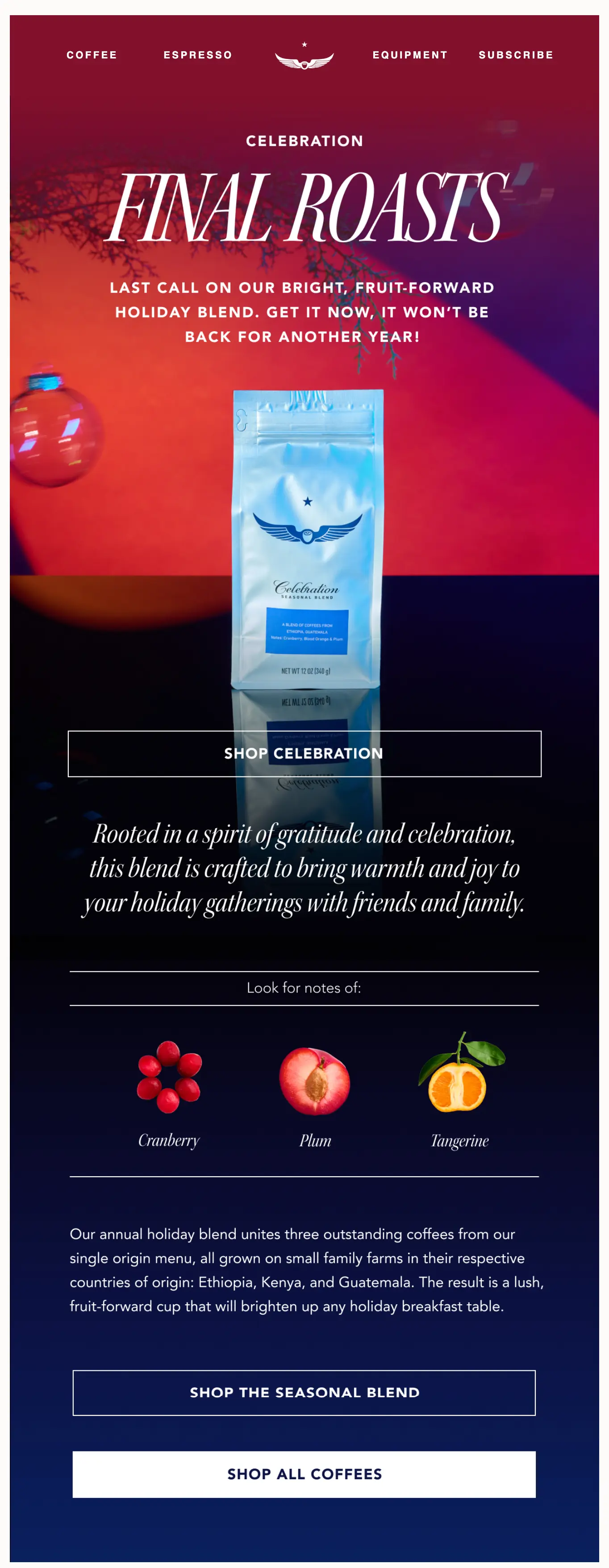
What to take from it:
- The deadline is the subject of the email, not the product itself. Use labels like “Last call” and “it won’t be back for another year” to convey urgency
- Three tasting-note icons replace a paragraph of description, which keeps the email short enough to read quickly
- Two buttons, one for the blend and one for all coffees, catch readers who are interested in coffee generally but not this specific blend
13. Promote holiday sustainability
A sustainability update appeals to consumers who are conscious about it and are always looking for ways to offset their holiday consumption. Use this opportunity to highlight your environmental commitments to build brand trust without relying on a discount code.
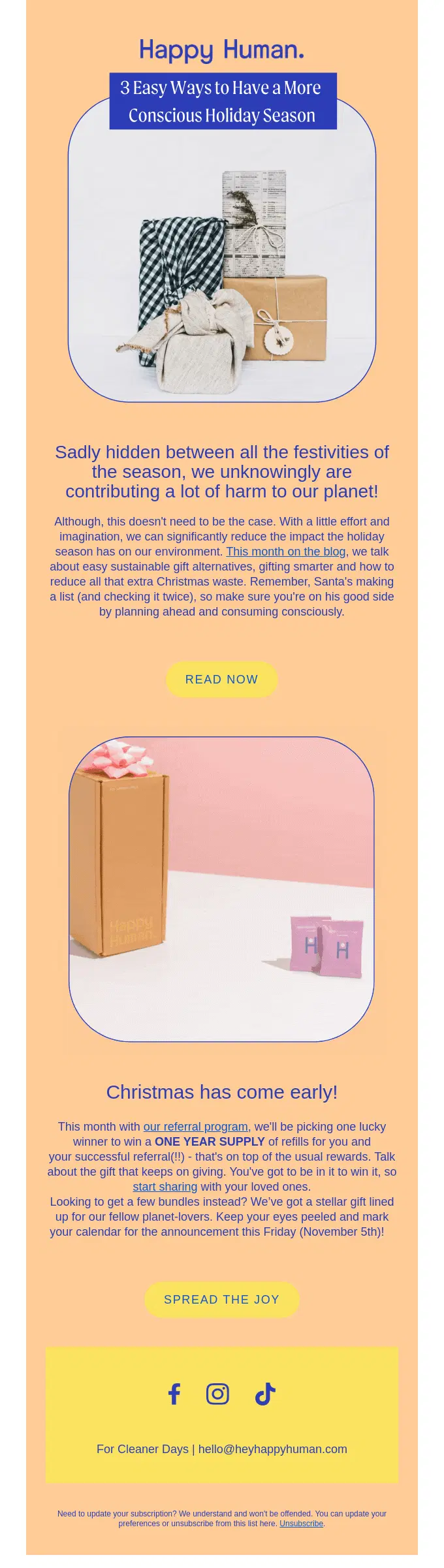
What to take from it:
- Give tips on how people can make their holidays more sustainable without putting in much effort
- Promote a relevant giveaway or a product to highlight in the second part of the email
- Break the text into more paragraphs to avoid walls of text that make the email more difficult to scan (which is the opposite of what this email did)
14. A year-in-review send
A year-in-review email shows popular items that everyone else bought throughout the year. Combine top-selling items with social proof to create a highly converting send right before the year is over.

What to take from it:
- Rank the products sequentially to give the email a clear structure
- Pair each featured item with a real customer quote to provide social proof
- Combine a year-in-review reflection with the conversion angle of customer reviews
15. An interactive quiz
An interactive quiz asks subscribers to participate instead of just reading the email passively. Categorize the shoppers by mood or style to provide them with personalized recommendations while segmenting your list for future sends at the same time.

What to take from it:
- Frame the questions around the customer’s mood or lifestyle rather than asking direct product-preference questions
- Remove all prices and discounts to focus entirely on the interactive experience
- Place a dedicated CTA under each of the three quiz outcomes so readers can go directly into their category
How to make your holiday newsletters stand out
1. Create personal subject lines
Encourage your subscribers to open emails with holiday subject lines that feel personal, using their name, recent purchases, or browsing history.
“Sarah, your holiday gifts are here” works better than “Holiday sale inside!” to make your newsletter feel handpicked rather than mass-sent.
You can also use emojis to ensure your holiday newsletters stand out. For example, “🎅 Holiday sale — 20% off” stands out more than the plain text version.
Generate subject lines with Omnisend’s free subject line generator and use our subject line tester to optimize them and see previews.
2. Use professional templates
Starting with a tested structural foundation prevents formatting errors from ruining your campaign. As highlighted in the template gallery above, pre-built newslwtter design layouts are already structurally optimized for mobile devices and dark mode.
Just drop your items into the placeholders rather than writing your own HTML from scratch. It will free you up to focus on your campaign strategy instead.
3. Add value to every email
Focus on delivering tangible benefits, regardless of whether you’re offering early access to sales, exclusive holiday bundles, or curated gift guides.
That problem-solving approach naturally drives opens and conversions by giving subscribers what they need during the busy season.
4. Instill urgency
You can use FOMO with time-limited offers and stock or sale countdowns to encourage open rates. For instance, if your subscriber has a wish list, you could offer 10% off their next wish list purchase.
Other urgent email ideas include free shipping deadlines, VIP preview hours, and “only X left” notifications for popular holiday items.
5. Send when people actually buy
During Black Friday, email orders peaked between 7 AM and 12 PM, with the 8 AM hour generating a third more orders than the next best hour. You need to send your campaigns during the hours when your subscribers are the most active to achieve the best results.
Shopper behavior changes by the day, as Cyber Monday purchases shifted to a lunchtime window of 12 PM to 3 PM, and SMS conversions peaked between 10 AM and 12 PM.
You can find the scheduling data in our early BFCM sales analysis to pinpoint the best time to send email for your store.
Conclusion
A holiday newsletter generates direct revenue when it solves a specific shopping problem instead of adding to the chaos. Deliver specific solutions to their pain points, like gift guides, digital gifts, or clear shipping deadlines. This way, you’ll be able to reach the customer when they need you most.
Your next step is to choose one format from this list, drop your items into a pre-built template, check the best sending time, and schedule the campaign.
Quick sign up | No credit card required