
 Omnisend AI


 OFFER
OFFER






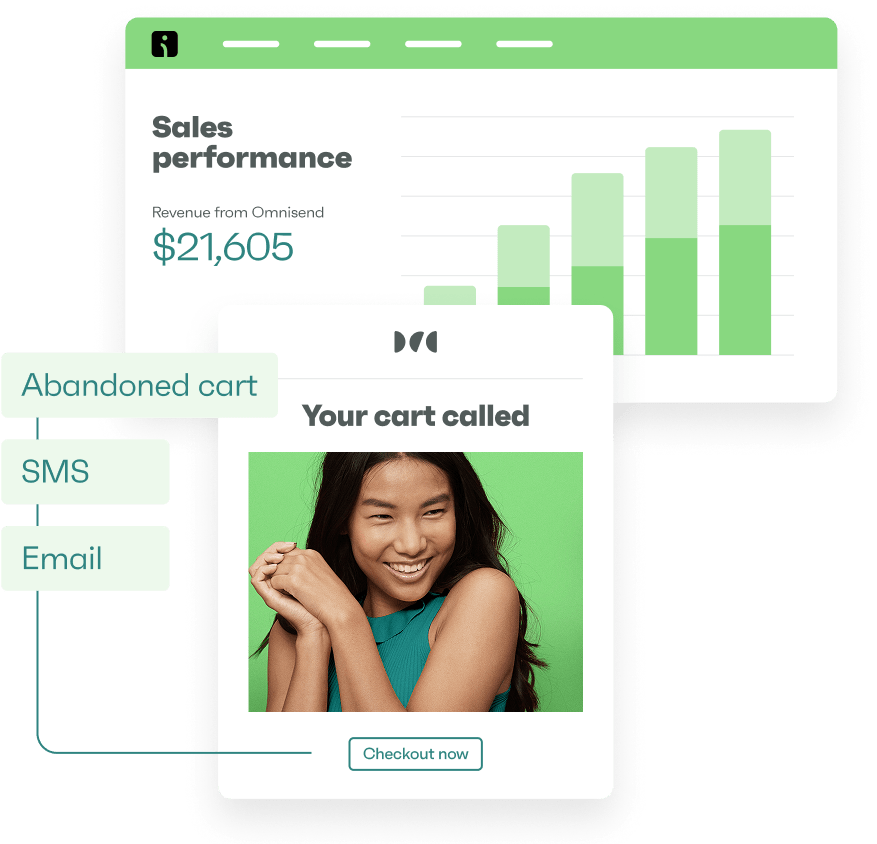
Drive sales on autopilot with ecommerce-focused features
See FeaturesKey takeaways 
Lunar New Year marketing is a prime opportunity for ecommerce brands to drive revenue and build customer loyalty by planning culturally relevant campaigns well in advance.
A structured 90-day planning framework helps brands prepare their inventory, creative assets, and automation to capture peak demand without last-minute stress.
Successful campaigns balance cultural authenticity with promotional goals, ensuring messaging resonates with shoppers who value respect for their traditions.
Utilizing integrated channels like email, SMS, and website enhancements creates a seamless shopping experience that effectively converts seasonal interest into sales.
Reveal key takeaways
Lunar New Year marketing involves planning culturally aware, high-impact campaigns around one of the world’s biggest shopping holidays. In ecommerce, it’s essential as people spend heavily on gifts, creating a strong opportunity to drive revenue while building long-term customer loyalty.
Celebrated across Chinese, Korean, Vietnamese, and other Asian cultures — both in Asia and across global diaspora communities — the Lunar New Year represents significant purchasing power. During this period, $1 shoppers actively seek brands that acknowledge the holiday with respect and relevance.
In 2026, the Year of the Horse brings themes like momentum, progress, and resilience, offering natural storytelling opportunities for online stores. This article provides more than ideas and outlines a 90-day planning system, along with channel-specific tactics for email, SMS, social, and on-site experiences.
The examples are designed for ecommerce, email, and SMS teams looking to combine cultural relevance with automation-driven growth.
Plan and automate your Lunar New Year campaigns in minutes with Omnisend
Quick sign up | No credit card required
Lunar New Year marketing strategy: 90-day launch system
This 90-day framework helps brands plan, launch, and extend Lunar New Year marketing through a structured set of phases. Instead of scrambling at the last minute, teams use a structured timeline to lock inventory, refine creative, and set up automation in advance.
Why plan early? Early preparation reduces stock issues and ensures email and SMS flows are tested and ready to handle peak demand.
When automation is planned and tested in advance, brands can capture peak demand without manual effort or rushed decisions. Omnisend’s customers earn an average of $79 for every $1 spent, essentially because automated email and SMS campaigns are ready to engage shoppers at the moments that matter.
Lunar New Year is a significant ecommerce moment, driven by strong seasonal demand and rising online shopping.
According to China’s Ministry of Commerce, national online retail sales grew 5.8% year-over-year during the 2025 Lunar New Year, with daily average sales up 6.2%. Demand surged for traditional items like lanterns and themed handicrafts, while health-focused gifts gained popularity in 2025 LNY.
However, success during LNY depends on balancing authenticity with revenue goals. Shoppers respond better to campaigns that respect cultural meaning rather than feeling overly promotional.
Nielsen’s 2025 report shows that 59% of Asian American, Native Hawaiian, and Pacific Islander (AANHPI) consumers expect brands to support causes they care about
This means brands should drive revenue through gift bundles, limited editions, and timely offers, supported by personalization and value.
Automation tools like Omnisend make this possible by segmenting VIPs, past seasonal buyers, and Lunar New Year audiences, then delivering culturally appropriate pre- and post-purchase messaging that builds trust while driving performance.
“When inventory, creative, and automation are set up in advance, teams can focus on optimizing performance instead of fixing last-minute issues. Automation ensures the right message reaches the right audience at the right moment.”
— Karolina Petraškienė, Marketing Projects Lead at Omnisend
Phase 1 (90–60 days out): Strategy and setup
Lunar New Year creates a short, high-pressure buying window, making early planning essential. Key objectives in this phase include:
- Defining who you’re targeting and how they’ll hear from you
- Setting up automation early to avoid last-minute sends
Create Lunar New Year segments in your email automation tool, such as Omnisend, including:
- VIP or high-value customers
- Past Lunar New Year or seasonal gift buyers
- Customers in regions with large Lunar New Year audiences (including diaspora markets)
- SMS opt-in subscribers
- Dormant but previously high-value customers
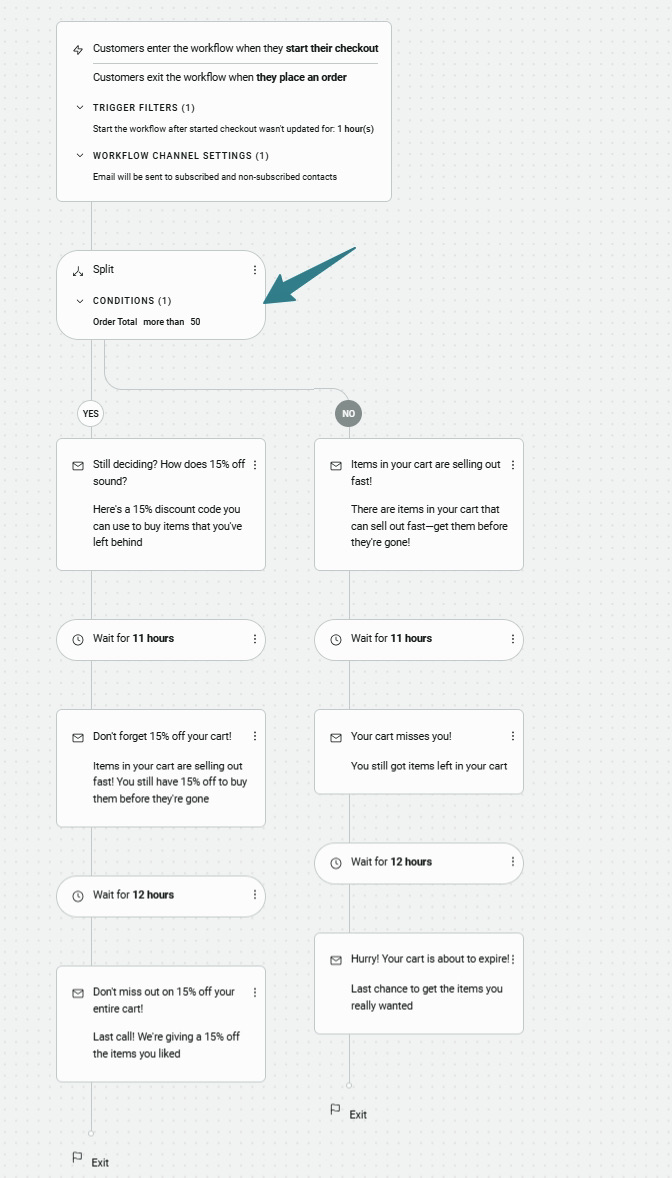
Next, set up automated flows with Lunar New Year messaging, including browse abandonment, cart recovery, and post-purchase upsells. For example, an abandoned cart workflow can use split logic to target customers by order value and send tailored reminders:
Finally, set your delivery date and trigger automated reminders to ensure shoppers don’t miss shipping cutoffs.
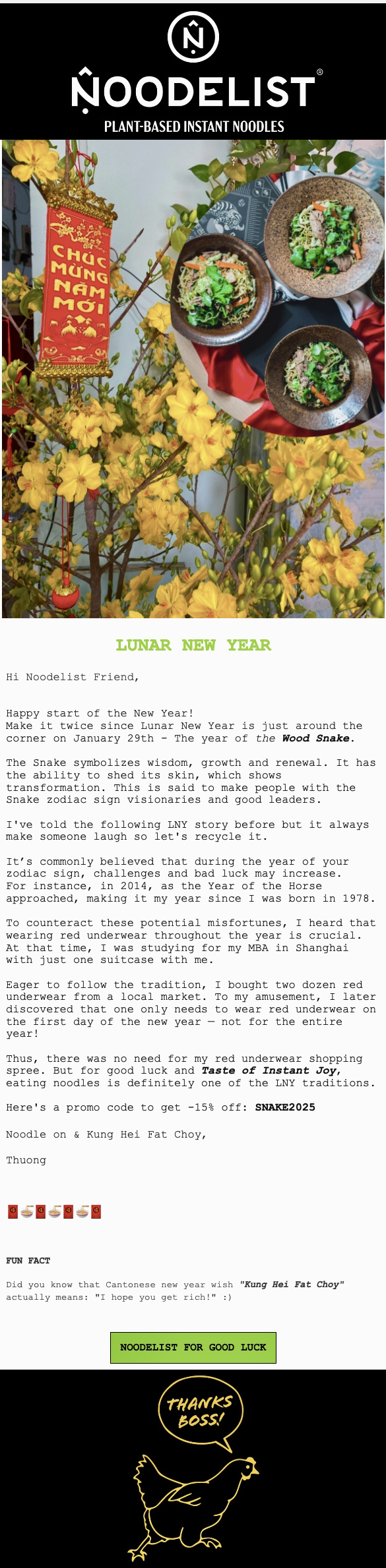
For example, you can take inspiration from how Noodelist’s pre-holiday promotional email combines a greeting and promo code:
Moreover, if you’re building your Lunar New Year plan as part of a bigger Q1 push, it helps to zoom out and map the entire season around it. Omnisend’s 2026 marketing events calendar is a valuable reference for planning key dates and campaign windows — so Lunar New Year doesn’t compete with your other promos, but complements them.
Phase 2 (60–30 days out): Content and testing
This phase focuses on testing Lunar New Year marketing content before high-volume sends.
- Draft Lunar New Year email and SMS messages (gift-, product-, or value-led)
- Use the A/B testing feature offered by automation tools like Omnisend to trial subject lines, content blocks, send times, CTA, and more on smaller segments
- Check visuals, links, and mobile layouts
- Save and duplicate winning versions for fast execution
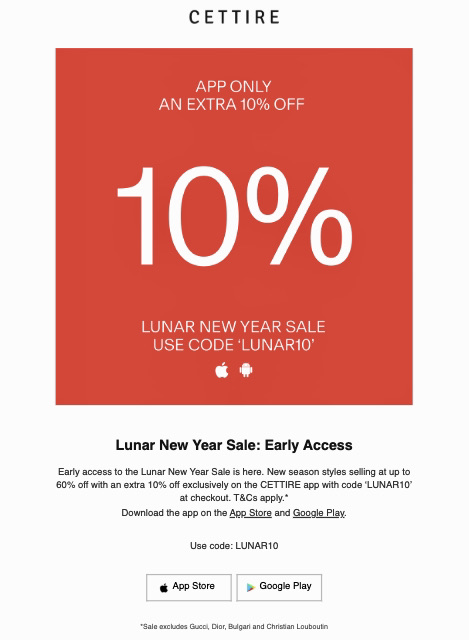
For inspiration, Cettire’s early-access Lunar New Year email prioritizes the offer over heavy product visuals—a format worth testing to create urgency and encourage early engagement:
Phase 3 (30 days to New Year): Execution and optimization
With one month remaining, the focus shifts to running and optimizing live Lunar New Year marketing campaigns. When launching to key segments like VIPs or past gift buyers, space out email and SMS messages to avoid fatigue.
With Omnisend, you can monitor performance in the analytics dashboard, track open rates, clicks, and revenue per campaign. Use these insights to:
- Adjust subject lines or send times in real time
- Pause underperforming campaigns and scale top performers
- Apply conditional splits (for example, different follow-ups for cart abandoners who opened vs. didn’t)
- Trigger automated shipping deadline nudges for late-stage buyers
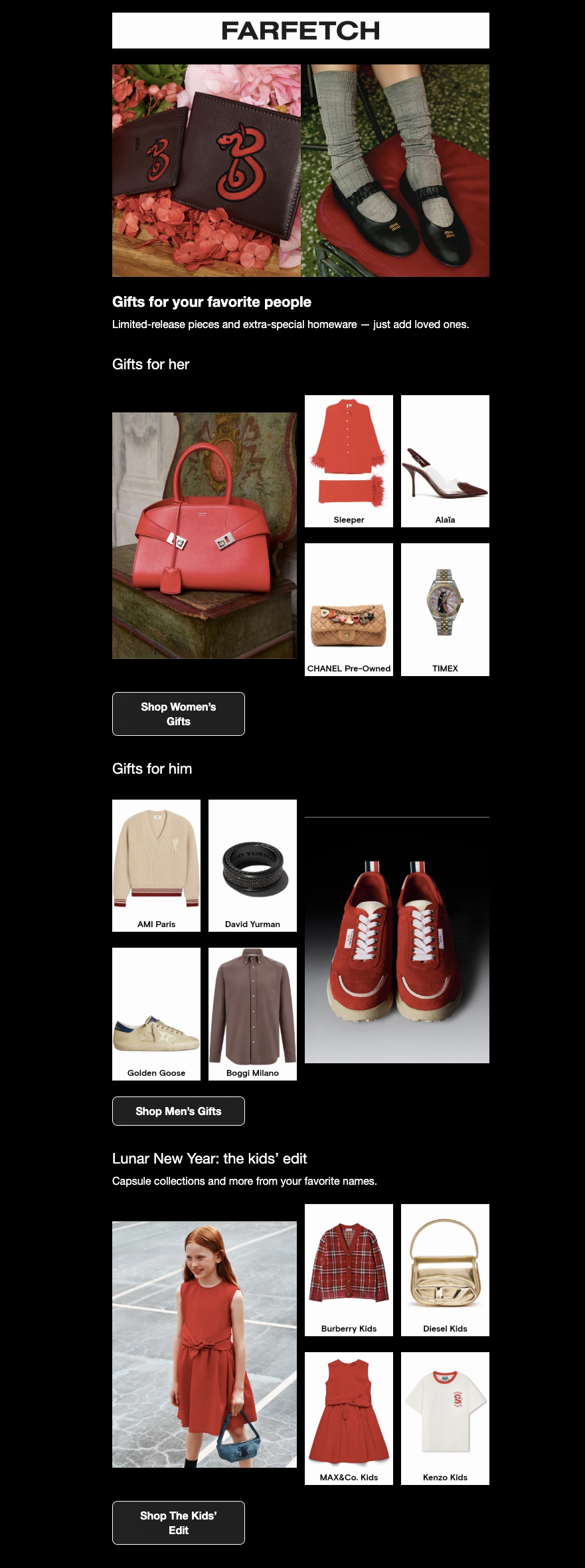
Shoppers often begin purchasing gifts two to four weeks before the Lunar New Year. During this window, send curated gift-edit emails, such as Farfetch’s, to inspire purchases and simplify decision-making for gift buyers:
Lunar New Year can also affect timelines behind the scenes — mainly if you rely on suppliers or fulfillment routes tied to Asia. Many businesses plan for temporary production slowdowns and shipping delays during the period, which is why your shipping cutoff messaging and “order early” nudges matter so much. Alibaba, from their end, breaks down how the Chinese New Year impacts global business operations and logistics.
Phase 4 (Post – New Year): Analysis and retention
After Lunar New Year, shift focus to retention to extend campaign value. Key actions include:
- Reviewing which messages, products, and segments performed best
- Tagging top Lunar New Year buyers and creating retention segments using tools like Omnisend
- Building post-purchase and winback automations with gratitude messaging or product tips
- Sending follow-ups that move one-time buyers toward loyalty
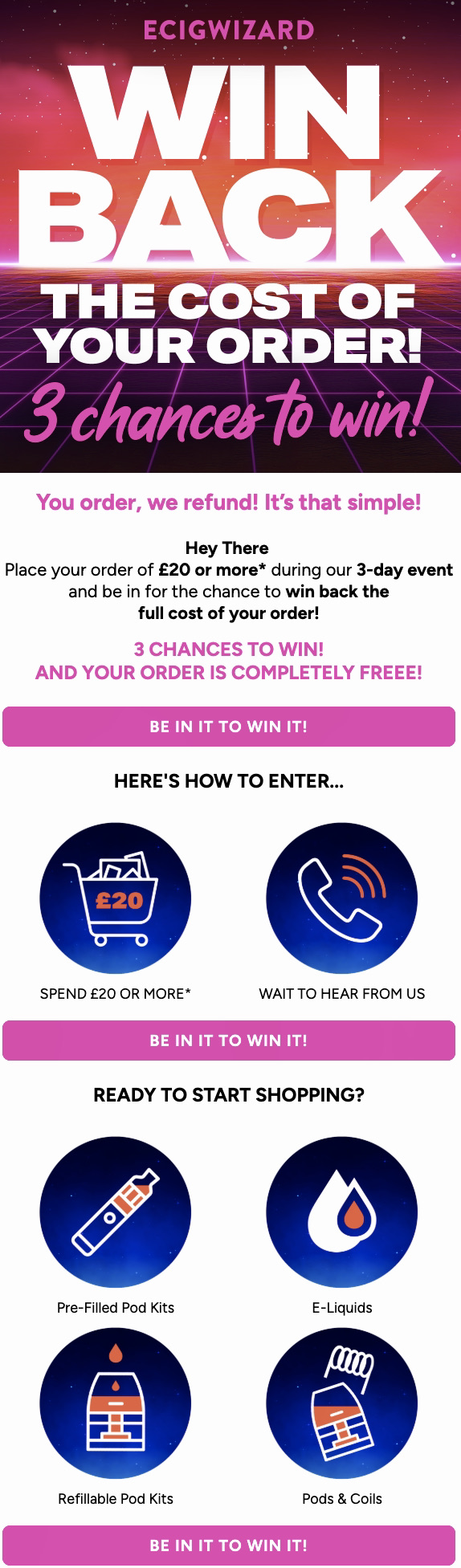
Lunar New Year marketing shouldn’t stop at conversion. The most effective campaigns transition smoothly into long-term engagement. For inspiration, Ecigwizard’s post-holiday email targets previous buyers with urgency-driven incentives to encourage repeat purchases.
Channel-specific Lunar New Year marketing tactics
Email, SMS, and your website are the strongest channels for Lunar New Year marketing because they capture high-intent shoppers and drive conversions.
Email builds anticipation and explains offers, SMS creates urgency at key moments, and your website reinforces both with a seamless buying experience.
Together, they help ecommerce brands convert seasonal demand without relying heavily on paid ads. Let’s discuss them in detail here:
Email marketing playbook
Holiday emails see higher open rates of over 35% and a 1.5% click rate compared to other emails, according to Omnisend. Timing and relevance are key, so consider using this sequence:
- Teaser: Build anticipation
- Launch: Announce sale or collection
- Gift guide: Curate products by price, category, or recipient
- Shipping cutoff: Communicate last delivery dates
- Appreciation and gratitude: Thank customers and send offers without pushing sales
To execute this in Omnisend:
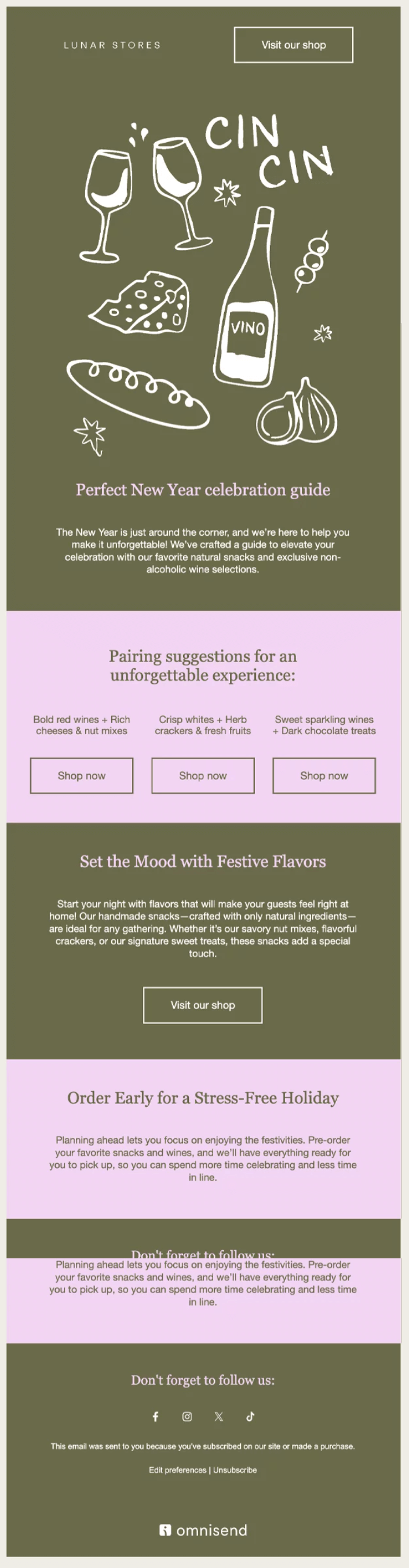
- Use prebuilt seasonal templates and customize them to speed up design. Take a look at this template New Year celebration email that recommends product pairing for shoppers and encourages them to buy:
- Create catchy subject lines with LNY themes and emojis for each email, manually or with Omnisend’s AI subject line generator.
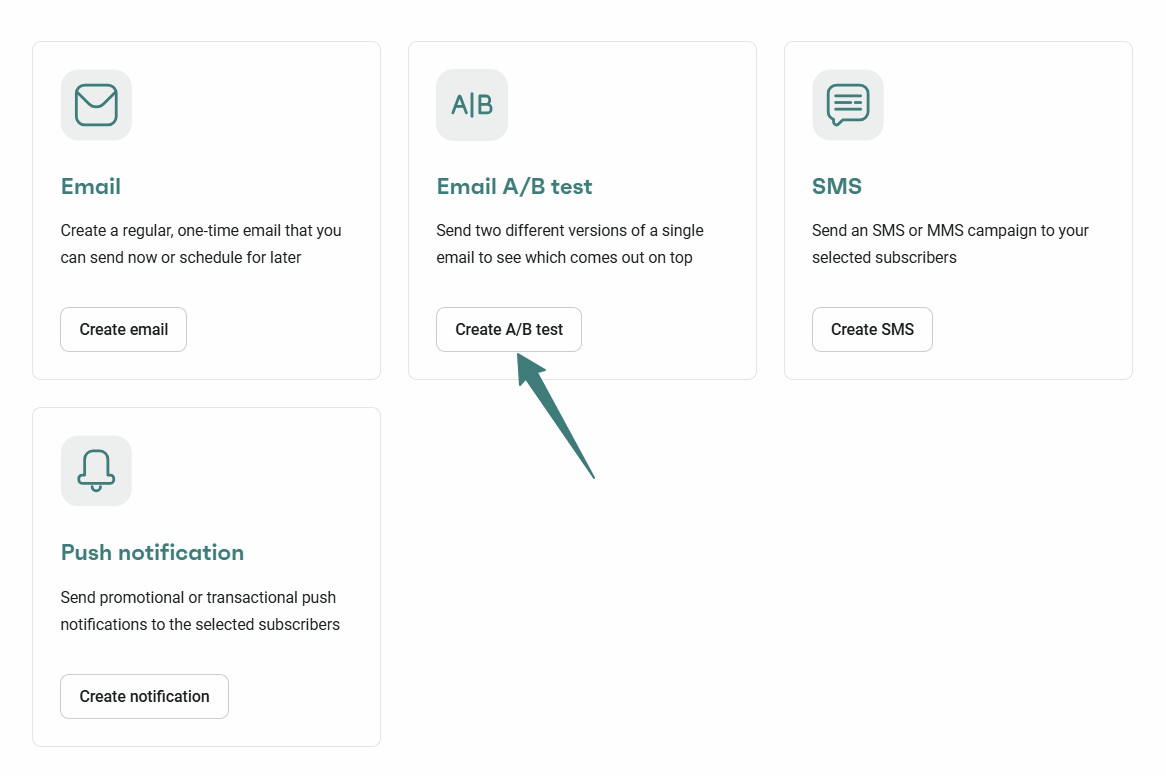
- Test your subject lines and emails by heading over to the Campaigns tab, clicking on New campaign, locating the A/B test, and clicking Create:
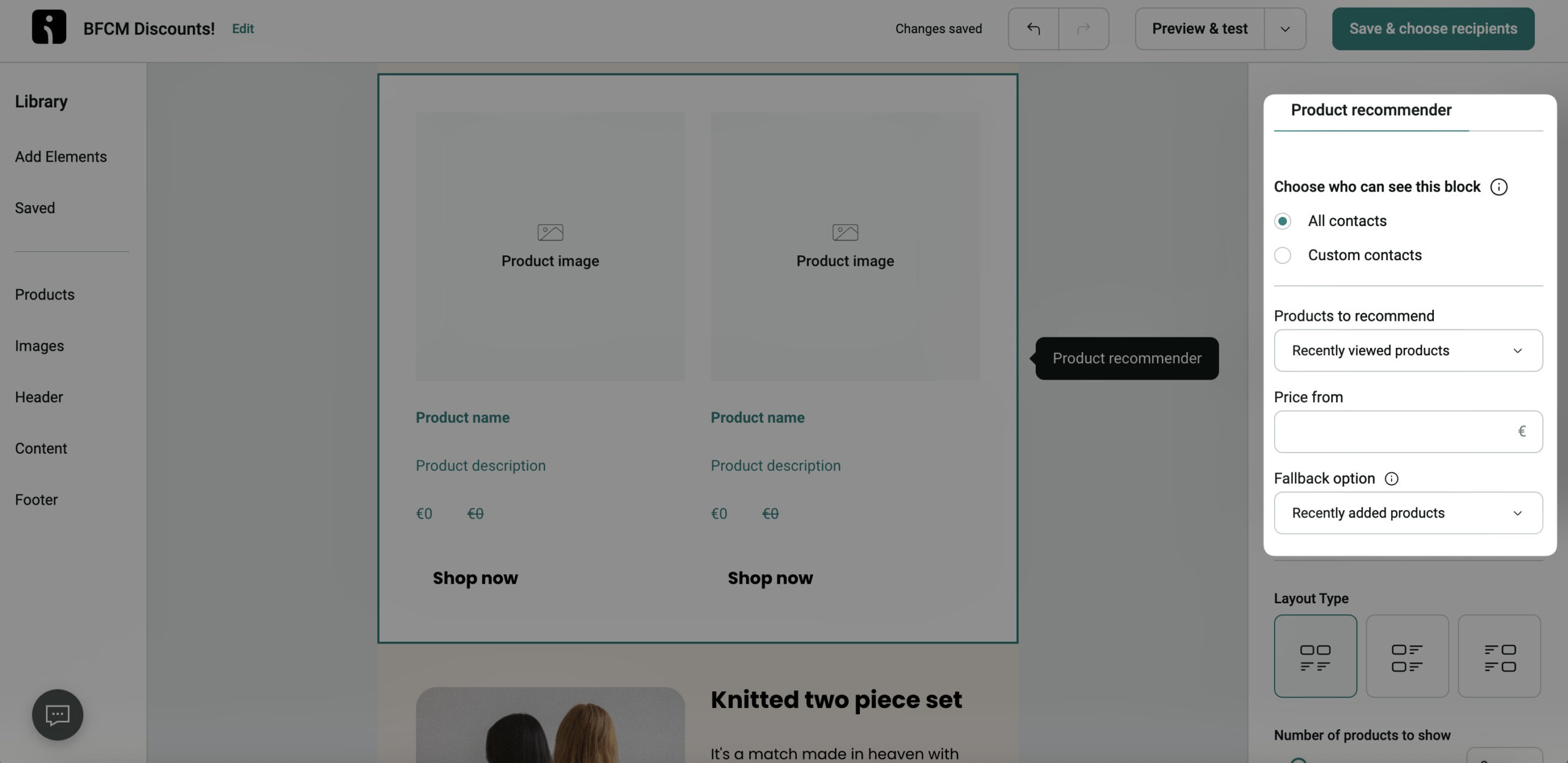
- To increase conversions and click-through rates, add product recommendation blocks with Omnisend AI
- Organize your contacts with segmentation. In Omnisend, go to the Audience tab, click Segments, and then Create segments:
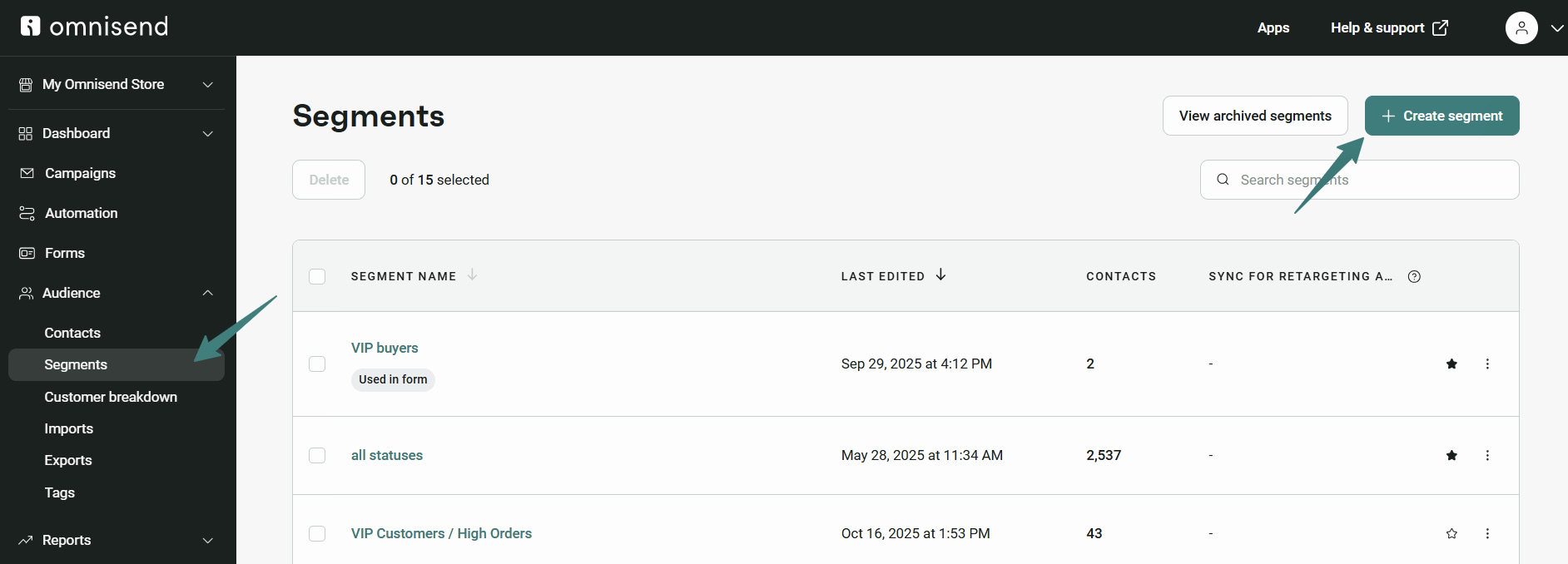
You can choose pre-built segments, use the AI segment builder, or start from scratch.
Omnisend pro tip: Enable send‑time email personalization by using subscriber attributes (like first name, past purchase category, or location) in your Lunar New Year subject lines and email content.
SMS strategy and global messaging
Before sending campaigns, set up global SMS access. Generate your SMS number and add credits. Tools like Omnisend support global SMS to 200+ countries with country-specific pricing.
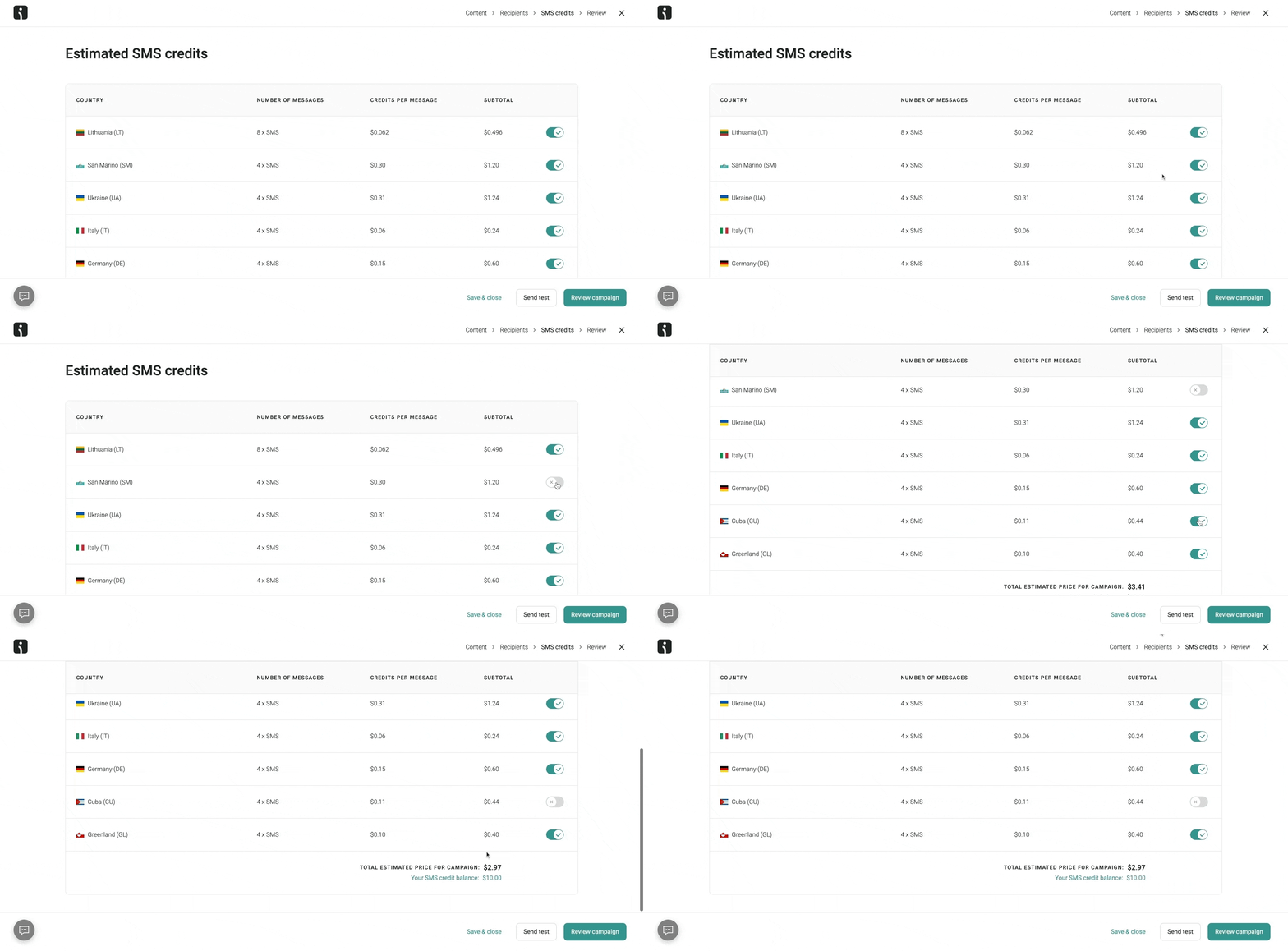
Focus on timing and relevance. Schedules are sent during local waking hours (morning or early evening). Take a look at these example SMS templates you can choose from:
- Early access: “BRAND: Early access to Lunar New Year deals ends tonight! [link] STOP to opt-out.”
- Last chance: “BRAND: Last hours for LNY discounts! Tap to shop: [link] STOP.”
- Day-of greetings: “BRAND: Happy Lunar New Year — thanks for celebrating with us! [link]”
Always include unsubscribe options:
![Lunar New Year marketing: Screenshot showing unsubscribe instructions. For US/CA recipients: Reply STOP to opt-out. For non-US/CA recipients: Unsubscribe [[unsubscribe_link]]. A note says SMS must include unsubscribe instructions for US/CA recipients.](https://www.omnisend.com/blog/wp-content/uploads/2026/01/10-Omnisend-sms-unsubscribe-option.jpeg)
Omnisend pro tip: You can view SMS costs across countries in one place, based on the number of messages and credits used, to save time on comparisons.
Website and onsite experience
A strong onsite experience guides shoppers, captures emails for follow-ups, and converts seasonal interest into Lunar New Year sales. Here are key onsite elements to include:
- Lunar New Year banners and curated gift collections in your store theme to direct visitors to categories
- Themed countdown timers and shipping cutoff notices to reduce cart abandonment
On-site behavior feeds directly into email personalization. For example, using this data, you can choose contacts, and Omnisend’s Product Recommender can automatically insert product blocks like “Best Sellers” or “Recently Viewed” into emails, increasing relevance and clicks.
Omnisend pro tip: Connect third-party product quiz tools via API to send quiz responses into Omnisend. Use them to:
- Create segments
- Trigger automated emails/SMS
- Personalize messages based on preferences
Social and paid media support
Social/paid media support Lunar New Year marketing by reaching new shoppers and driving them to owned channels like email/SMS. Use this to build early interest and capture leads:
- Run quizzes or polls tied to LNY traditions to capture leads and offer early access to deals
- Retarget website visitors via Facebook/Instagram ads based on viewed products
Cultural imagery tip: Use culturally accurate visuals and copy. Mistakes here can reduce trust or alienate shoppers.
Integrated omnichannel campaign blueprint
Effective Lunar New Year marketing coordinates all channels so every touchpoint reinforces the same message and next step. For example:
- Social/paid media can create first contact and drive traffic to signups
- Email explains offers, showcases gift ideas, and guides decisions over time
- SMS supports email with timely nudges, reminders, and last-chance updates
- Your website closes the loop with popups, shipping cutoffs, and product recommendations
This works because all channels share data, and Lunar New Year marketing becomes a coordinated buying experience that increases conversions without overwhelming shoppers.
Ecommerce-focused Lunar New Year campaign ideas and examples
Here are proven Lunar New Year marketing ideas and structures, buttressed by real-world examples to inspire your Lunar New Year campaigns:
Product strategy: Bundles, limited editions, and gifting
How you package, present, and prioritize products matters in Lunar New Year marketing. For example, you can create gift bundles — like skincare trios, home sets, or packs of eight “lucky” items. Limited-edition products also create urgency, and gift-ready wrapping increases perceived value at checkout.
Once you’ve defined which products to push, Omnisend can help surface them automatically in emails/flows via dynamic product recommendation blocks.
You can display best-selling, new, or personalized products, so each email populates with relevant or trending items automatically at send time.
One user notes, “Omnisend is intuitive, and automation flows are simple to set up, helping me nurture customer relationships without advanced technical knowledge.”
For example, a fashion brand featured limited-edition items in email, reinforced them with an SMS reminder, and displayed the same products in onsite banners for cross-channel discovery.
Ganni’s “Exclusive Lunar New Year Capsule” is a strong example, with shoppable product blocks, subtle festive visuals, and a clear CTA:

Promotion structures and discount ideas
Effective Lunar New Year marketing starts with cultural relevance in mind.
For example, using “Lunar New Year” instead of “Chinese New Year” (for Chinese New Year marketing) ensures inclusivity of all communities that celebrate this holiday, not just those of Chinese heritage, unless you’re targeting cultures separately.
You can then run promotions that drive urgency, loyalty, and higher AOV. For example:
- VIP and early access: Reward loyal customers first to create FOMO
See how HBX ran a private sale with up to 50% off for “Pro” members, motivating non-members to join:
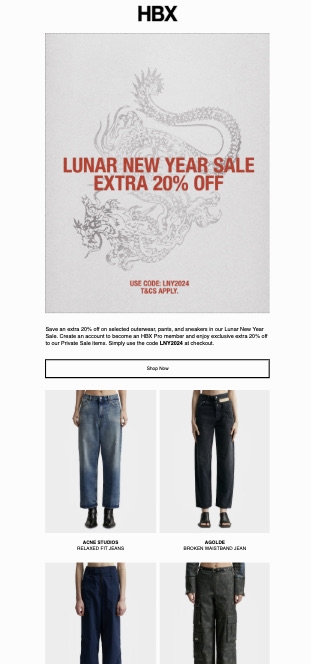
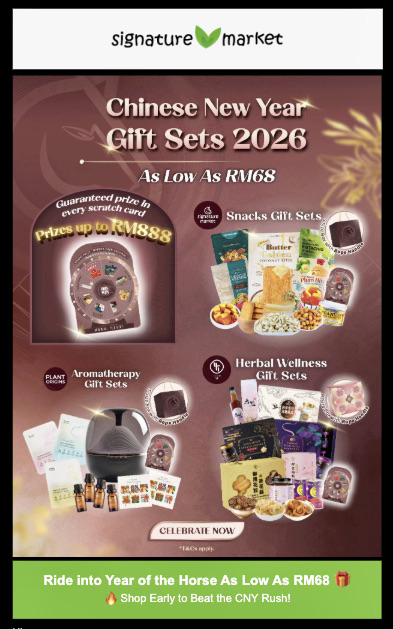
- Bundle and themed sets: Signature Market promotes curated gift sets with scratch-card prizes, nudging shoppers before deals expire:
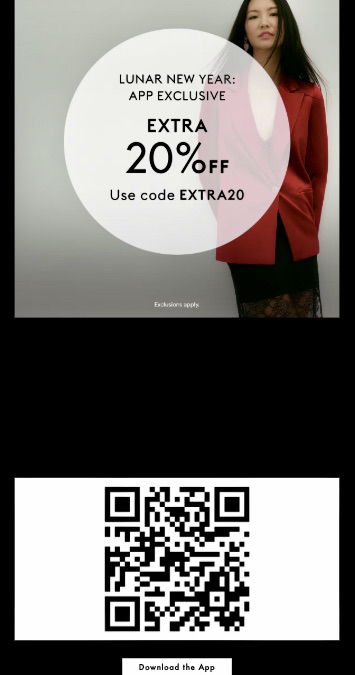
- Layered discounts: The Outnet offered 20% off plus an app-only bonus, encouraging purchases and app downloads:
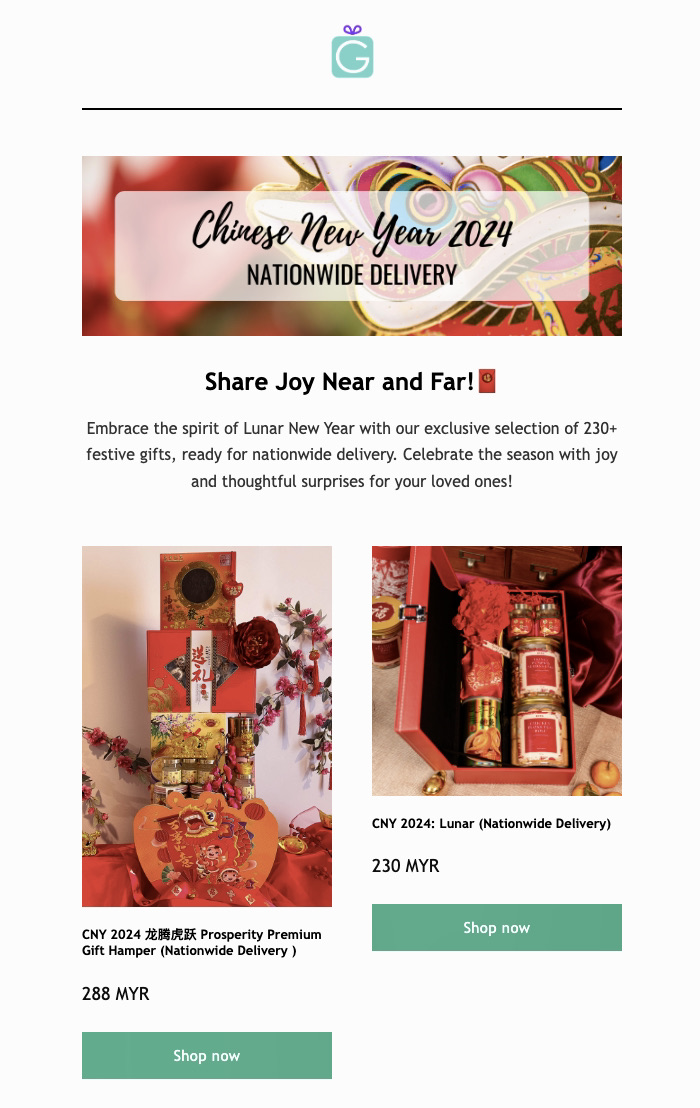
- Last-chance urgency: Giftr emphasizes delivery deadlines, combining product selection with FOMO to prompt immediate action:
For example, a fashion brand combined emails, SMS, and website promotion for its Lunar New Year sale. It sent emails to VIP customers announcing early access to its Lunar New Year sale, followed by an SMS reminder, and reinforced exclusivity with a locked-on-site banner. This creates FOMO and nudges non-members to join.
Industry-specific playbooks (fashion, beauty, food, home, jewelry)
Let’s explore Lunar New Year marketing by industry, with practical tips to drive engagement, conversions, and order value.
Fashion
- Offer limited-edition outfit or accessory bundles
- Highlight bundles in email, SMS, and onsite as “gift-ready”
Example: A fashion brand emails VIPs a bundle, follows up with SMS 48 hours before stock runs out, and uses onsite countdown banners to create urgency.
Beauty & Cosmetics
- Create gift sets with best-selling SKUs plus mini extras
- Reward early buyers with loyalty points or bonus products
Example: A beauty brand emails a “Build Your Lunar Glow Set” promotion, then displays onsite recommendations to increase cart value.
Food & Beverages
- Launch limited-edition flavors or tasting kits
- Send emails with free recipes/pairing content to drive clicks
Example: A specialty tea shop emails a “Lunar Flavor Discovery” guide, follows up via SMS for restocked teas, and recommends complementary snacks onsite.
Home & Decor
- Promote small décor items for quick seasonal refresh
- Use countdowns and themed collections to drive urgency
Example: A home décor brand emails a Lunar New Year tabletop edit, sends SMS reminders before last delivery dates, and highlights “ready for the holiday” items onsite.
Jewelry & Accessories
- Focus on themed, meaningful pieces
- Offer personalization or engraving
Example: A jewelry brand emails a “Lucky Charms” collection, follows up with SMS for free engraving within 48 hours, and shows themed product recommendations onsite for shoppers who click through or browse related items.
Standout Lunar New Year marketing examples
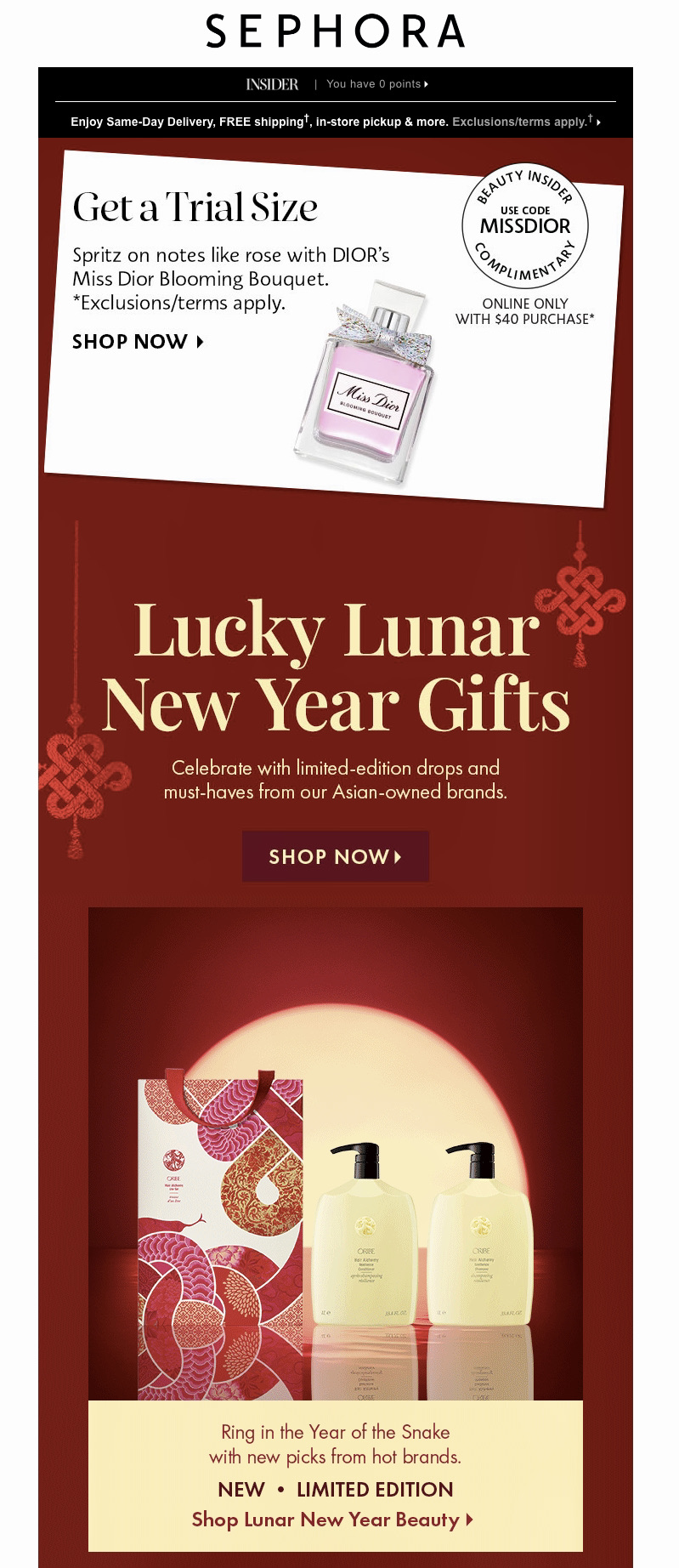
In early 2025, Sephora launched a Lunar New Year email promoting limited-edition beauty collections from top Asian brands. Multiple product blocks, native CTAs, and varied price tiers appealed to different buyers.
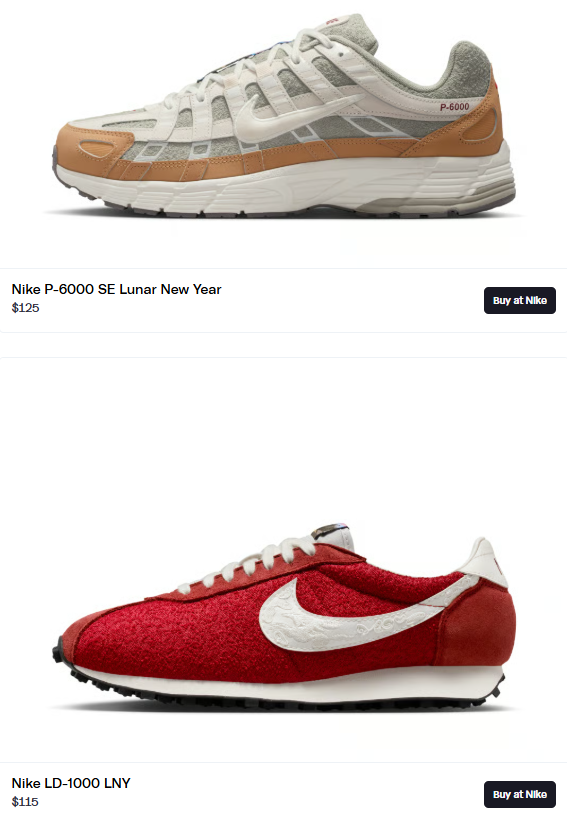
Another example is Nike’s 2025 “Year of the Snake” line, which included Air Force 1, Dunks, and Air Jordan 1 Retro Low sneakers with snake-inspired motifs and festive colors, released via ecommerce channels (Nike.com + app). The collection was released for the holiday season only, leveraging scarcity and cultural relevance.
Nike also released a short film, “Lunar New Year: The Great Chase,” engaging viewers and strengthening brand connection:
Lastly, Lululemon’s 2025 Lunar New Year holiday marketing campaign combined activewear with the short film “Back to Spring,” highlighting movement, renewal, and multi-generational storytelling. This narrative made the collection feel meaningful, high social buzz, and created urgency around limited pieces.

Cultural context and sensitivity for Lunar New Year marketing
Respectful campaigns start with understanding cultural context and knowing which language, imagery, and symbols are safe to use.
Key cultural insights ecommerce marketers must know
LNY marks the start of a new lunar calendar and is celebrated across multiple cultures, including Chinese (Chūn Jié), Vietnamese (Tết), and Korean (Seollal).
Treating Lunar New Year as a single, universal celebration can make campaigns feel less personal and reduce engagement.
Here’s why:
- Chinese traditions: Chūn Jié lasts 15 days and centers on family reunions, red envelopes, dragon dances, and lantern festivals in Chinese New Year advertising
- Korean traditions: Seollal spans three days, featuring ancestral rites, gift-giving, and traditional games like Yut
- Vietnamese traditions: Tết is a three-day celebration focused on honoring ancestors and foods like bánh chưng
Green, yellow, and red-light tactics
Use this framework to decide what to include, approach cautiously, or avoid in LNY campaigns.
Green (safe and respectful)
- Acknowledge the holiday with greetings and cultural context
- Promote gift bundles or tradition-adjacent products (hongbao-ready items)
Yellow (use carefully)
- Zodiac or idiom references only after proper research
- Limited-edition cultural imagery vetted by knowledgeable sources
Red (avoid)
- Clichéd or caricatured motifs without meaning
- Sacred symbols used purely as decoration
Cultural sensitivity check
Do’s
- Test visuals and messaging with local or diaspora communities
- Highlight positive values like family and hope
- Offer practical support like easy returns or gifting options
- Incorporate translation or local language support when relevant
Do n’ts
- Use stereotypes or humor that could be seen as mocking traditions
- Treat sacred objects or rituals as decoration
- Apply zodiac or “year-of” references without context
- Send Lunar New Year campaigns to audiences unlikely to celebrate
Language, imagery, and localization guidelines
Choose naming carefully. “Lunar New Year” works broadly, while “Chinese New Year” may suit Chinese New Year promotion when culturally appropriate. Adapt tone, symbols, dates, and phrasing for different cultures, including diaspora audiences.
Avoid generic holiday visuals. Use culturally aligned imagery when confident, or keep visuals neutral and product-focused when accuracy can’t be guaranteed.
Be selective with targeting. Send automated emails, with tools like Omnisend, only to audiences for whom the Lunar New Year is relevant. Avoid random mass broadcasts.
Partner with cultural experts when campaigns go beyond basic greetings — such as zodiac themes, translated copy, cultural symbols, or brand storytelling.
As Sunny Johar, Managing Director SEA, explains: “Appreciation starts with co-creation, not imitation… You can’t claim to celebrate a culture if you won’t invest in the people who carry it.”
Budget allocation and ROI for Lunar New Year campaigns
Start by assessing your audience size, seasonal product fit, and past campaign performance.
Budget decisions should tie directly to measurable goals:
- Driving email/SMS revenue
- Increasing AOV through bundles
- Acquiring new customers with timely offers
If past holiday campaigns performed well, consider allocating a larger budget. If not, start small with targeted offers or gift bundles, and scale based on engagement.
Take a look at these estimated budget allocations to help guide your Lunar New Year marketing planning:
| Brand tier | Total budget | Creative/design | Email/SMS | Paid ads | Website updates |
|---|---|---|---|---|---|
| Small | $5,000 | ~25% ($1,250) | 10-15% ($500) | 35-40% ($2,000) | 20-25% ($1,250) |
| Growing | $25,000 | ~25% ($6,250) | 10-15% ($2,500) | 35-40% ($10,000) | 20-25% ($6,250) |
| Established | $100,000+ | ~25% ($25,000) | 10-15% ($10,000) | 35-40% ($40,000) | 20-25% ($25,000) |
Allocate the budget strategically: prioritize high-ROI channels and use others for reach.
For ecommerce, email marketing delivers a strong ROI — $36 per $1. However, Omnisend users see an average return of $79 for every dollar spent.
Automated flows such as cart recovery, welcome series, and post-purchase campaigns efficiently capture revenue. Omnisend integrates email/SMS, tracks ROI in real time, and offers core automation features even on its free plan, so that you can start Lunar New Year marketing campaigns from now.
Measurement, optimization, and long-term retention
Think of this as the “what now?” section — how to tell if your Lunar New Year marketing worked, tweak campaigns while live, and turn seasonal buyers into loyal customers.
KPIs to track
Track key metrics inside email tools like Omnisend. Go to Reports → Campaigns/Automations → Select campaign. You’ll see an overview page of where you can access all the data:
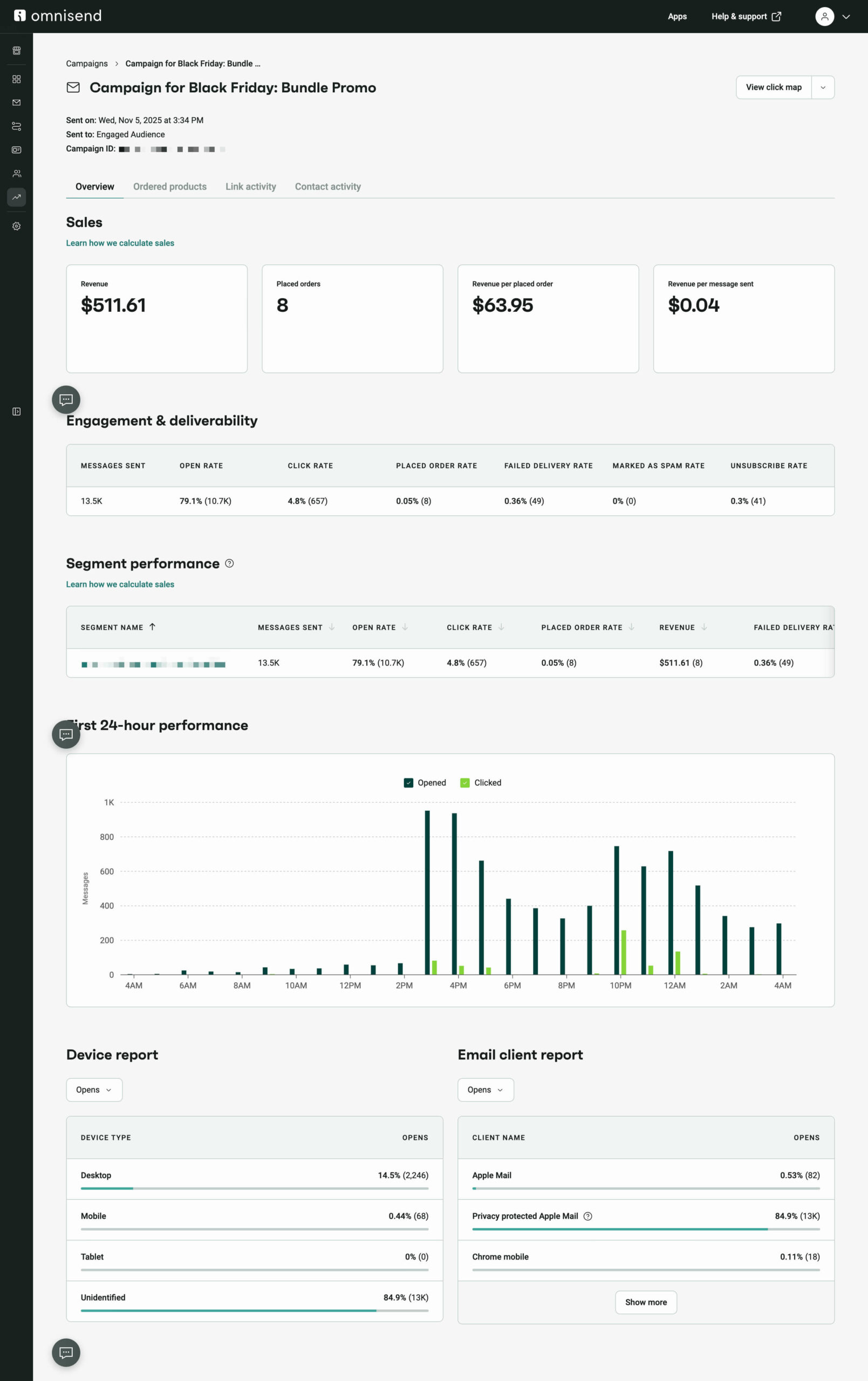
Monitor the following:
- Revenue per recipient (RPR): Average earnings per message
- Conversion rate: % clicks leading to purchases
- Average order value (AOV): Measures upsell or bundle success
- List growth: Seasonal signups expanding your audience list
- Unsubscribe rate: Opt-outs from emails/SMS
- Repeat purchase rate: seasonal buyers returning
Testing and optimization
Run tests before and during Lunar New Year marketing campaigns to improve results in real time:
- Subject lines: Personalization vs. straightforward
- Send times: Morning vs. evening
- Creative intensity: Rich visuals vs. minimalistic
- Offer framing: Tiered bundle vs. single discount
Customer retention
After Lunar New Year marketing, focus on turning one-time buyers into repeat customers:
- Thank you/recap email: Show gratitude and purchased items
- Follow-up recommendations: Suggest complementary products
- Add to nurture flows: Welcome or loyalty sequences
Treat Lunar New Year campaigns as part of a broader cultural calendar, not a one-off sales spike. Brands that plan LNY alongside other moments can reuse insights, segments, and automations to improve results over time.
Omnisend excels at year-round planning, making it easy to run multiple seasonal campaigns from a single email, SMS, and automation foundation without starting from scratch each time.
Conclusion
Lunar New Year marketing isn’t about one-off seasonal promotions. It combines strategy, cultural understanding, and automation to create campaigns that connect with your audience.
By following a 90-day framework, leveraging integrated channels such as email, SMS, website, and social media, and applying ecommerce-specific ideas, you can create campaigns that resonate and deliver measurable results in 2026.
Cultural sensitivity is essential, not only for performance but for building trust and long-term loyalty. You can collaborate with a culture expert, but factor this into your budget before starting campaigns.
Track metrics, run A/B tests, and optimize campaigns along the way. With Omnisend’s automation and analytics, you can run respectful, high-impact campaigns that grow revenue and lasting relationships
Automate Lunar New Year campaigns that actually increase revenue and repeat buyers with Omnisend
Quick sign up | No credit card required
FAQs
What are the best channels for Lunar New Year marketing?
Email, SMS, and your website should lead. They’re owned channels, ideal for gifting reminders, bundles, and timing-based messages, while social and paid ads work best as support to drive signups and traffic during Lunar New Year marketing campaigns.
When should I start my Lunar New Year marketing campaign?
Plan eight to 12 weeks before the holiday to segment audiences, prepare inventory, set up automations, and test messaging before attention peaks.
How long should a Lunar New Year campaign last?
Campaigns can start two to three weeks before the holiday, with lighter post-holiday follow-ups. This window captures purchasing behavior, shipping cutoffs, and celebration timing without fatiguing audiences or overextending Lunar New Year marketing messaging.
Is the Lunar New Year the same as the Chinese New Year?
Chinese New Year is one celebration within the Lunar New Year, which also includes Vietnamese (Tết) and Korean (Seollal) traditions.
How do you localize campaigns for Lunar New Year?
Start by tailoring offers, visuals, and timing to each market — Vietnam, Korea, China, and Southeast Asia all celebrate differently. Localize language, gift preferences, and symbols, then segment by region so Lunar New Year marketing feels relevant.

TABLE OF CONTENTS
TABLE OF CONTENTS


Subscribe and don’t miss any updates!
No fluff, no spam, no corporate filler. Just a friendly letter, twice a month.