Omnisend AI


 OFFER
OFFER









Email marketing mistakes can damage the performance of your campaigns. They lower open rates, tank your revenue, and hurt your sender reputation.
For ecommerce businesses, even a small mistake can lead to lost sales, fewer subscribers, and a breakdown in customer trust. Minor mistakes, such as sending to the wrong people or using inadequate subject lines, can also cause your messages to be buried in spam folders.
Having said that, most common email marketing mistakes are completely avoidable. You just need to know what to watch out for.
In this article, we cover 15 of the worst email marketing mistakes marketers make. Avoid these, and you’ll see stronger engagement, better deliverability, and more conversions.
Quick sign up | No credit card required
TL;DR: What are the most common email marketing mistakes?
Most email marketing mistakes come down to sending the wrong message to the wrong person at the wrong time. Here are the most common offenses to watch out for:
- Poor segmentation: Sending the same email to your entire list ignores individual needs and leads to low relevance, high unsubscribes, and missed conversions
- Weak subject lines: If your subject line is unclear or feels misleading, people are less likely to open your email, and it can slowly erode trust in your brand before your message even has a chance to be seen
- Over-emailing or under-emailing: Too many messages annoy subscribers, while too few can make them forget about your brand
- Ignoring mobile optimization: Emails that don’t display well on phones frustrate users and lead to quick drop-offs — no matter how good the offer is
- Skipping personalization and automation: Generic, manually sent campaigns miss the timely, relevant moments that drive real ecommerce results
Why email marketing mistakes hurt your results
Small missteps in your email strategy rarely stay small. They compound, dragging down your metrics, shrinking your reach, and quietly eating into your revenue. Understanding how and where the damage happens is the first step to stopping it.
Impact on deliverability and inbox placement
Email providers pay close attention to how people interact with your messages. If users ignore, delete, or mark your emails as spam, your email sender reputation drops. A domain that’s marked as risky makes it harder for future campaigns to reach the inbox.
Issues like weak subject lines, poor targeting, or sending without permission can trigger spam filters. Over time, your email deliverability declines, and emails either land in the spam folder or get blocked entirely.
Poor targeting is especially risky because customers expect personalization. A Forbes study found that 81% of consumers prefer brands that offer personalized experiences. When emails don’t take that context into account, subscribers are more likely to lose interest.
Lost engagement and revenue opportunities
When emails fail to connect with your audience, you lose valuable chances to drive sales and ROI. Bad timing, messy layouts, or irrelevant content can quickly kill email engagement and drive customers away.
For example, sending winter gear promotions to tropical customers wastes effort and damages trust. Similarly, a customer who abandoned a cart might need a reminder, not a generic discount email. Without the right message, that sale is lost.
Low email engagement also hurts long-term performance. It tells email providers that your messages aren’t useful. This may make them more likely to send your future emails straight to the spam folder.
15 common email marketing mistakes to avoid
These common mistakes in email marketing weaken campaigns, lower engagement, and hurt conversions. We’ve attached effective fixes to each mistake, so you can avoid lost engagement and revenue.
1. Sending emails without proper segmentation
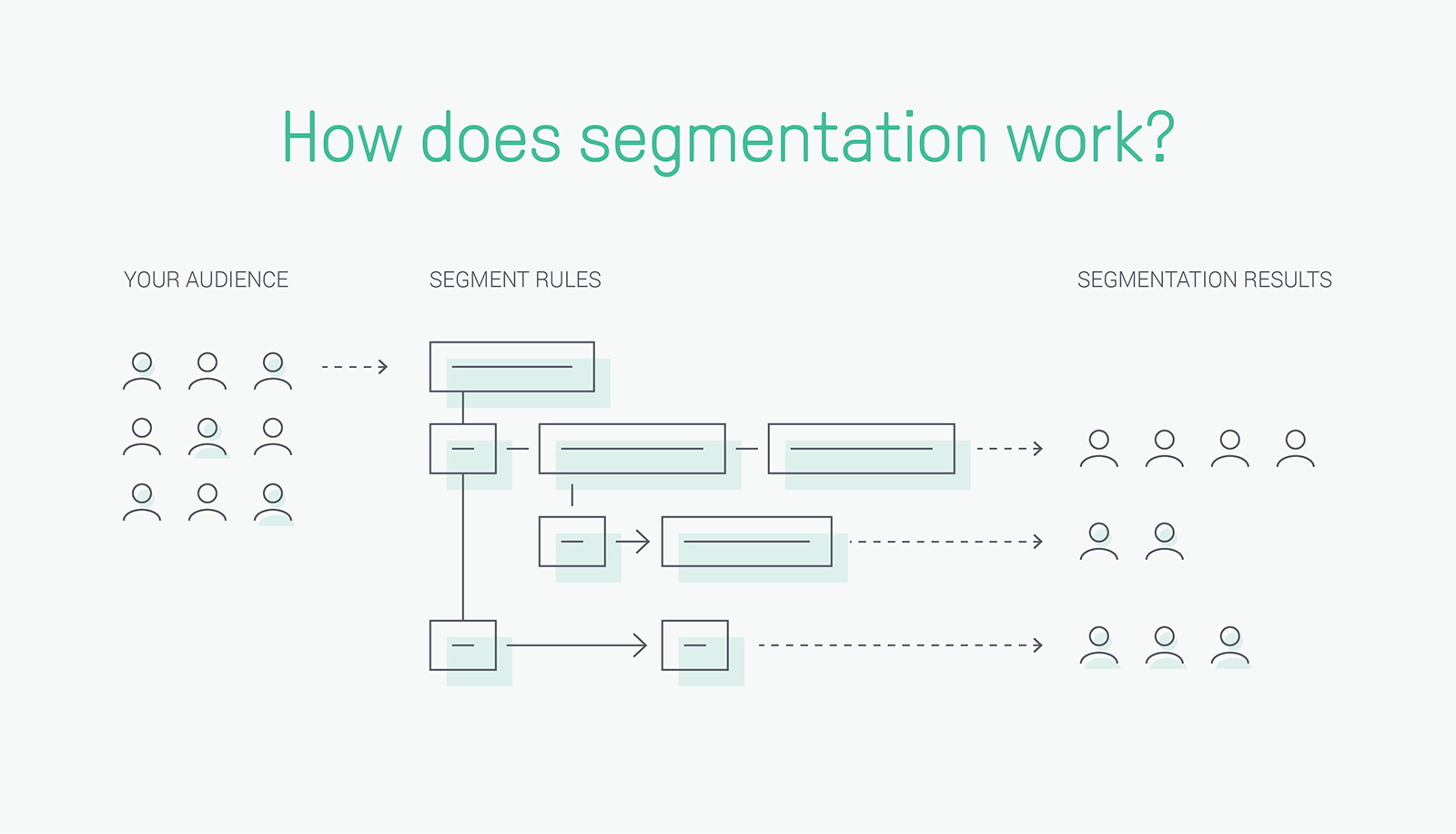
Generic emails don’t perform well as they treat your subscribers the same. Since they ignore the stages people are in the buying journey, recipients either disengage or unsubscribe.
To fix this, use email segmentation to group contacts by behavior, purchase history, or engagement level. Then, tailor your messaging accordingly.

Omnisend success story
Enflow Digital introduced dynamic segmentation for a stagnant ecommerce client. Within months, monthly revenue grew from $150k to $250k, proving segmentation can deliver rapid, measurable ROI.
Read the case study.
2. Weak or misleading subject lines
Using vague or unclear subject lines can be a costly email marketing mistake. A subject line like “You’ve been selected!” that leads to a generic promotional email will frustrate recipients and erode trust.
You want to be specific, urgent, and honest. For instance, “20% off ends tonight — your cart is waiting” outperforms “A special offer just for you” every time.
Avoid clickbait and focus on value. Strong subject lines improve engagement, so keep testing and refining to prevent your emails from being ignored.
3. Ignoring mobile optimization
Most subscribers read emails on their phones. If your design isn’t mobile‑friendly, text may appear cramped or misaligned. These mistakes in email marketing frustrate readers and lead to quick deletions.
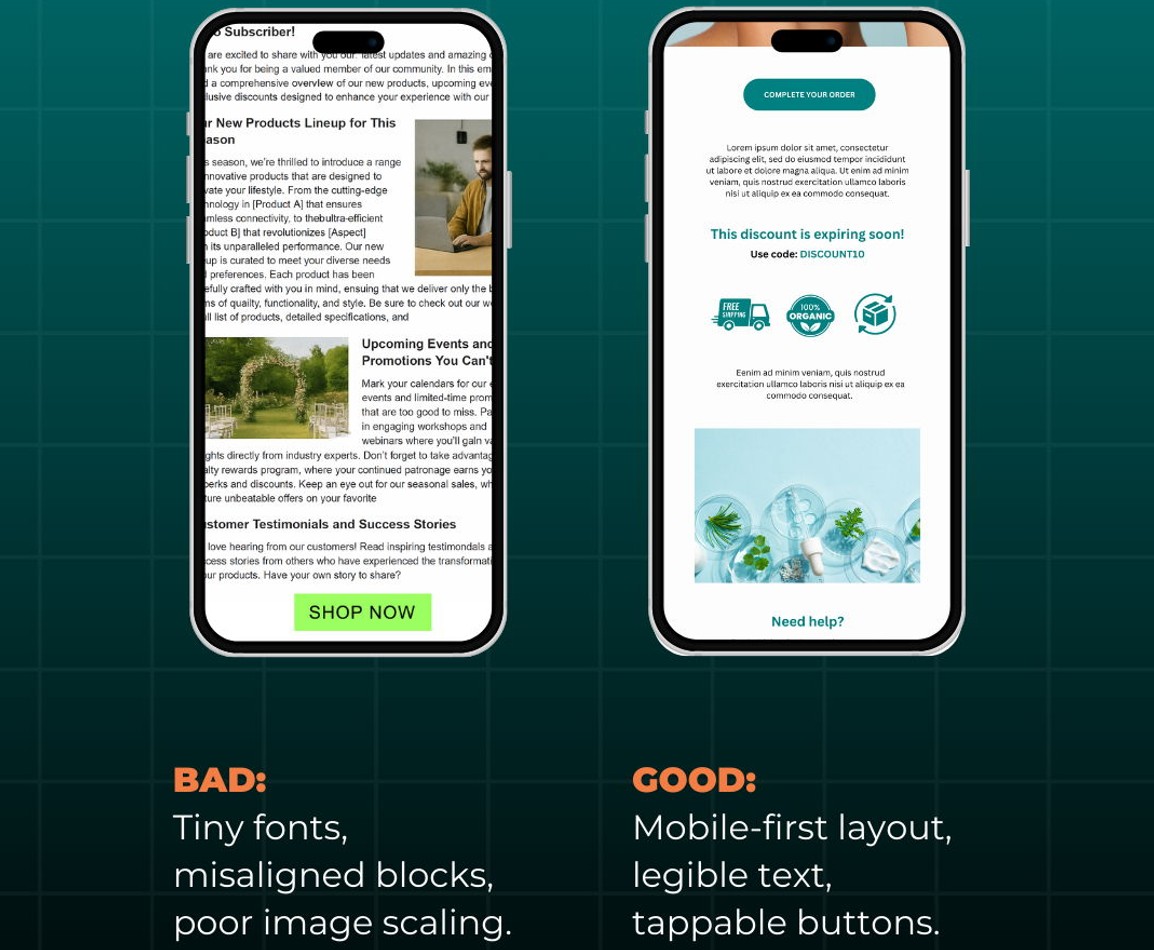
Always preview and test your campaigns on mobile devices. Use single‑column layouts, and keep CTAs easy to tap. Optimizing for mobile ensures your message looks great everywhere and supports higher conversions.
4. Sending too many (or too few) emails
Finding the right email frequency is a balancing act. Sending too many emails can annoy subscribers and lead to unsubscribes. But sending too few risks losing momentum and brand recall.
Both are common mistakes in ecommerce email marketing that directly affect unsubscribe rates and sales. This is why consistency matters. You want enough touchpoints to stay relevant without overwhelming your audience.
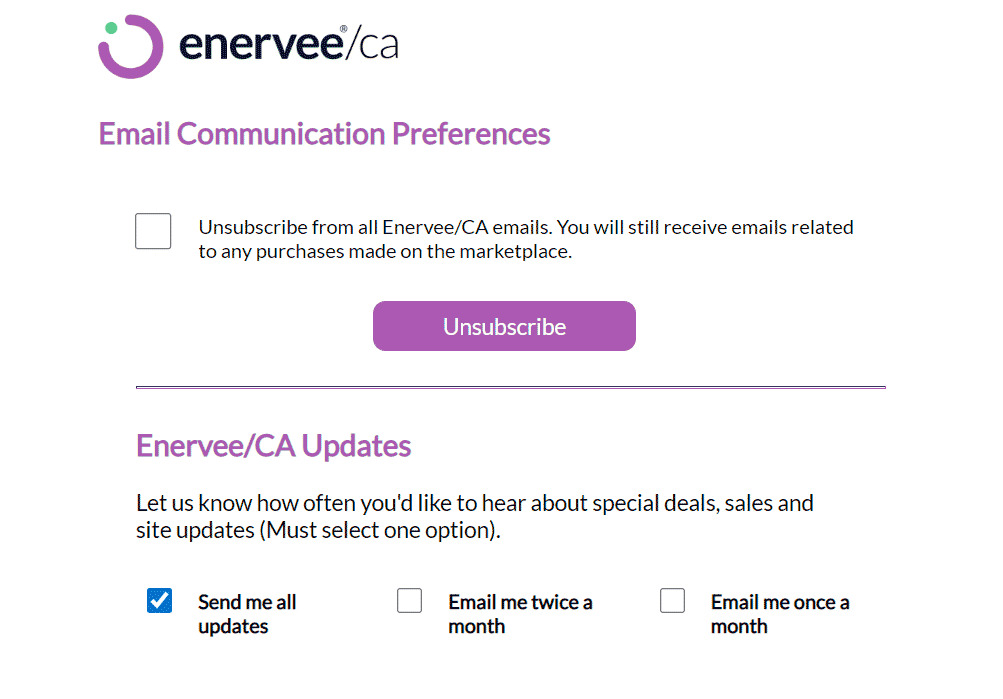
Regular testing and segmentation help you identify the sweet spot for your list. Use email automation to send messages at the right time based on user behavior. Alternatively, consider letting subscribers choose their preferred frequency where possible.
5. Not personalizing email content
Audiences aren’t receptive to emails that treat everyone the same. When content feels irrelevant, they ignore it, unsubscribe, or mark it as spam.
But personalization isn’t just about using a first name. It means tailoring offers to behavior, preferences, and the stage in the buying journey.
Personalized recommendations and dynamic content can dramatically improve open and click-through rates. In fact, customers who receive personalized emails are 3.1 times more likely to convert, compared to those who receive generic emails.
6. Poor email design and layout
Even the best message can fail if the design doesn’t support readability. Therefore, you want to avoid common mistakes in ecommerce email marketing like cluttered layouts, tiny fonts, and broken images.
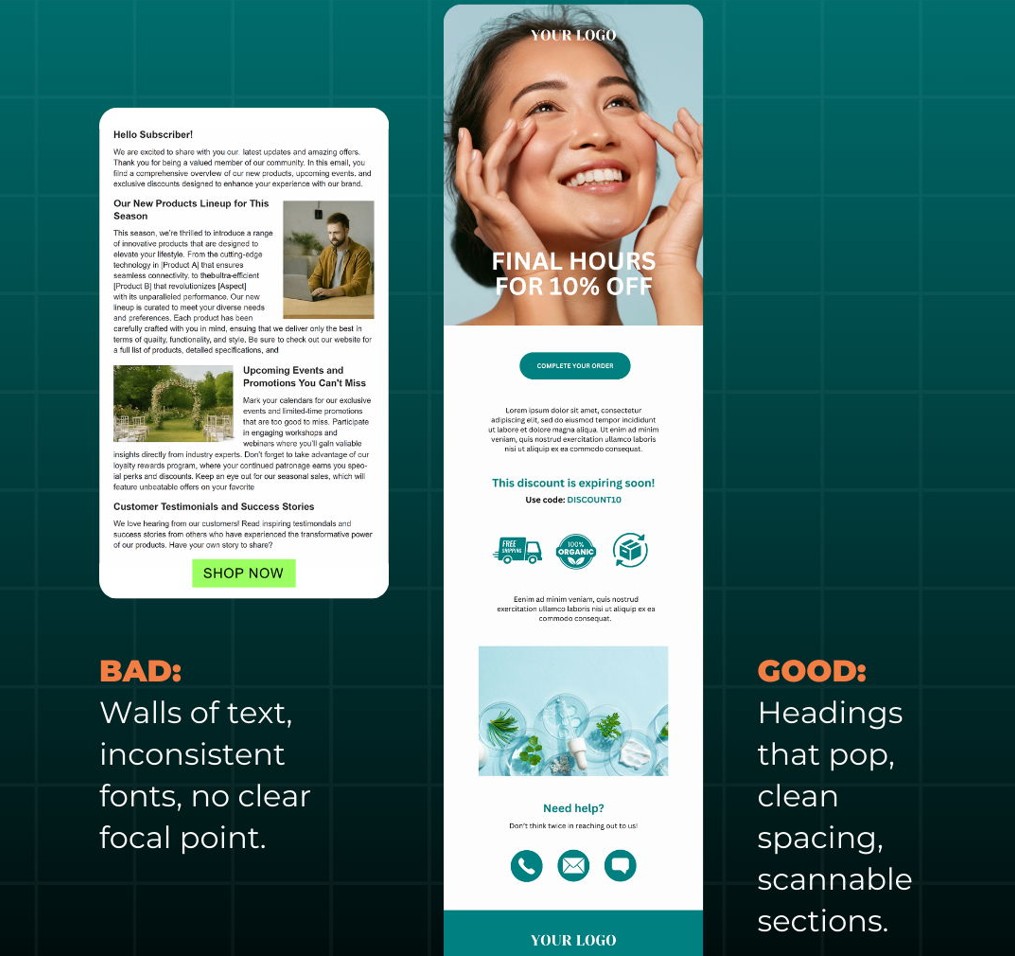
Use clear headings, short paragraphs, and enough spacing to guide the reader. Start with your most important message right at the top, and make sure your buttons are easy to spot and tap.
A clean layout with clear hierarchy guides the reader’s eye from headline to CTA. Remember, strong design reinforces trust and professionalism. In turn, that credibility fuels conversions and brand loyalty.
7. No clear call-to-action (CTA)
Every email should direct the recipient towards a particular action. This could be making a purchase, signing up, or learning more.
If you include too many CTAs, or none at all, readers don’t know what to do next. This leads to missed opportunities and lower conversions.
Place your CTA prominently, use action-oriented language, and make it visually distinct. Simple, direct phrases like “Shop now” or “Claim your discount” that resonate can increase engagement.
8. Ignoring A/B testing
If you’re not testing, you’re guessing, and guessing is one of the costliest mistakes in email marketing. Skipping A/B testing means missing the chance to improve subject lines, content, CTAs, and timing.
Small changes can lead to big gains in performance. So, test different campaign elements like subject lines, layout, or CTAs one variable at a time to learn what drives better results.

Omnisend success story
Kerrits switched to Omnisend and began regular A/B testing In just four months, revenue per email increased by 50%.
Read the case study
9. Sending without permission (or weak opt-ins)
Sending emails to people who didn’t explicitly sign up is one of the worst email marketing mistakes you can make. It’s an ethical and strategic miss that leads to spam complaints and high unsubscribe rates.
It can also violate compliance regulations like GDPR and CAN-SPAM, which require clear consent and a visible unsubscribe option in every email. Even weak opt-ins, like pre-checked boxes or vague sign-up copy, attract low-quality contacts who disengage quickly.
To avoid these, build your email list from scratch using clear, value-driven sign-up forms that set honest expectations. Having a small group of truly interested subscribers is much better than a huge list of people who didn’t really agree to hear from you.
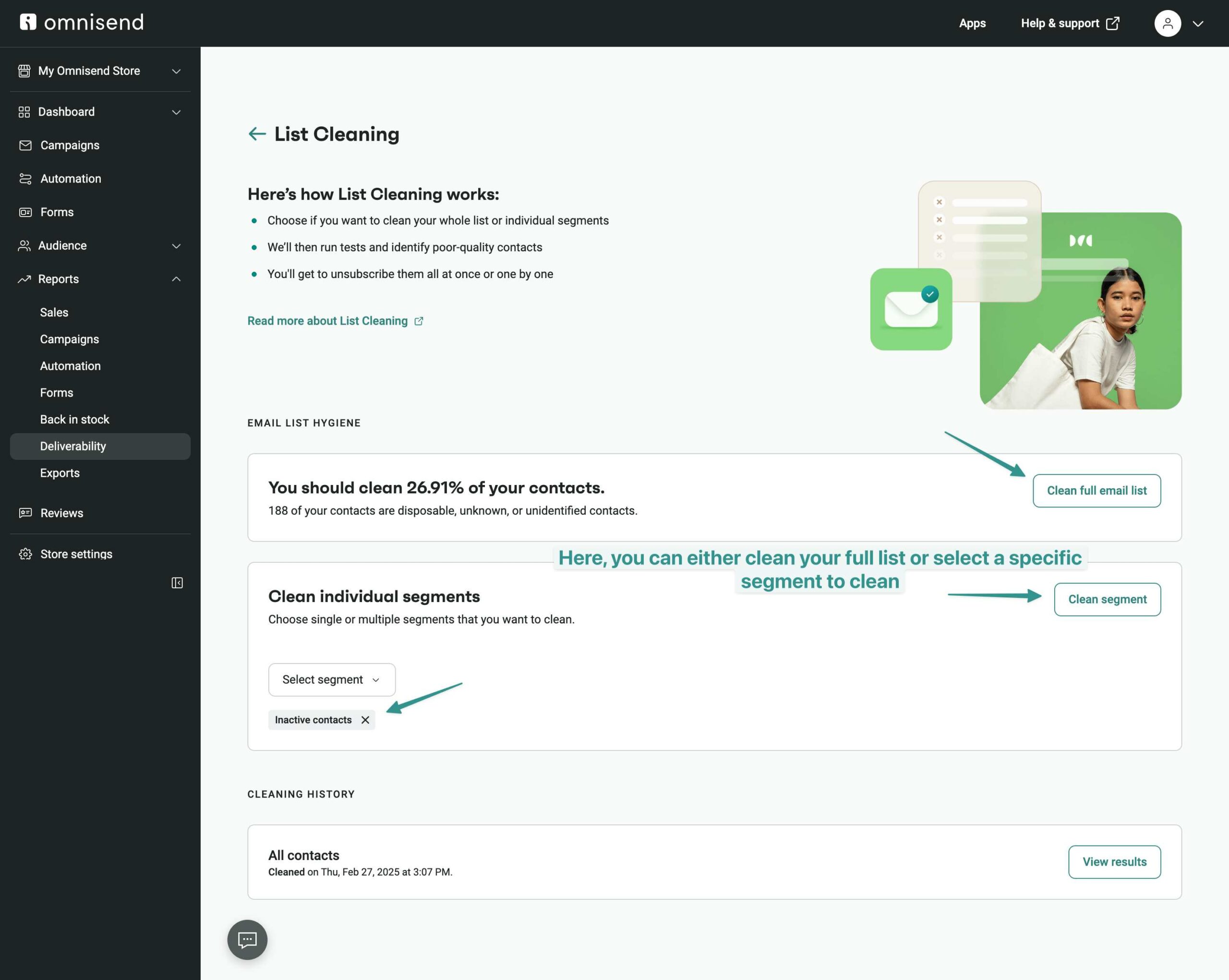
10. Not cleaning your email list
A bloated list full of inactive or invalid contacts is a deliverability disaster waiting to happen. High bounce rates and low engagement signal to inbox providers that your emails aren’t worth showing.
Removing bounced or unresponsive contacts keeps your metrics healthy and ensures your messages reach real people. It also improves sender reputation, helping future campaigns perform better.

Omnisend success story
CLVMaxers cut 10,000 unengaged contacts, reducing the client’s list by 77%. As a result, open rates surged from 20% to 45-47% on key segments.
Read the case study.
11. Poor timing of campaigns
For success in running email campaigns, you must master timing. It affects open and click-through rates, as well as conversions. If you were to send a flash sale email at 3 AM, for instance, it’d likely get buried under other emails by morning.
Audiences also shape timing. A B2C fashion brand targeting Gen Z is unlikely to share its peak engagement window with a gym brand targeting boomers.
Therefore, analyze your audience’s behavior to find optimal send times. Alternatively, use platforms with send-time optimization to remove any guesswork.
12. Ignoring analytics and metrics
Without tracking performance, you’re essentially flying blind. Analytics reveal what’s working and what isn’t, so you can make data-driven decisions that improve engagement and ROI.
Monitor open rates, click-throughs, conversions, and unsubscribe trends to identify patterns and optimize future campaigns. For example, if a campaign has low clicks, you may need a stronger CTA or better targeting.
Ignoring these insights means missing opportunities to refine your strategy and better serve your audience.
13. Overlooking automation opportunities
Manual email management wastes time and limits scalability. Worse, it means missing high-value moments that happen outside business hours, like cart abandonment, browse activity, and post-purchase follow-ups.
Automation sends messages at the right time based on customer actions. These include welcome emails, cart reminders, or re-engagement campaigns. It improves efficiency and drives revenue by keeping communication consistent.

Omnisend success story
Luxury baby brand Bowy Made achieves an average 52% open rate on automated emails. These flows generate over 70% of total revenue, making automation the brand’s most powerful growth engine.
Read the case study.
14. Failing to align email with customer journey
Emails ought to reflect where a subscriber is in their relationship with your brand. The messaging that works for one stage, whether that’s discovery, consideration, purchase, or retention, rarely works for another.
A new subscriber needs to understand your brand and build trust. Meanwhile, a returning customer needs reasons to come back, not an introduction. As such, map your email content to each lifecycle stage.
When you do, each email feels timely and purposeful. Messaging that’s aligned with the customer journey ensures engagement and loyalty naturally follow.
15. Not integrating SMS with email campaigns
Since many people check texts far more often than their emails, it’d be a big email marketing mistake to ignore this channel.
Combine email and SMS marketing to enjoy the compounding effect of omnichannel messaging. You can use email to announce a sale, then push a notification and SMS reminder hours later.
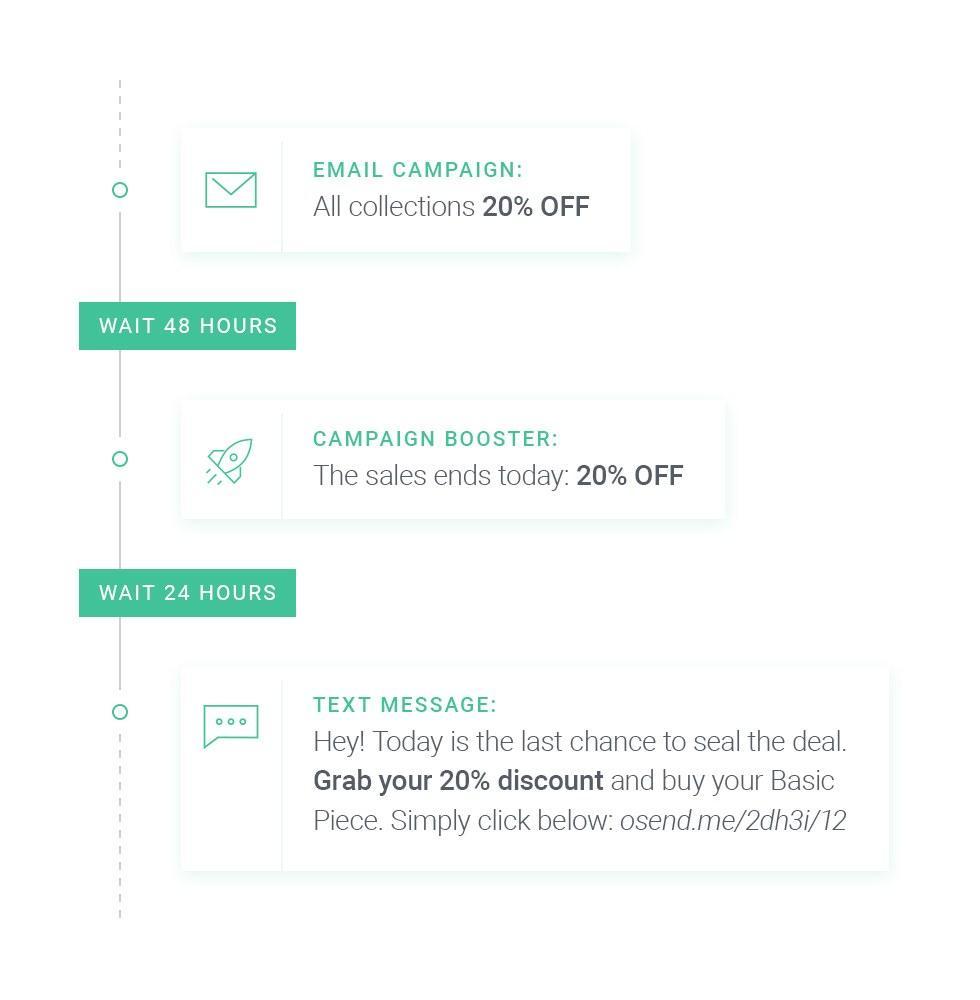
Omnisend makes this integration seamless. It lets you manage these channels from a single workflow.
How to avoid email marketing mistakes (best practices)
Avoiding email marketing mistakes comes down to building smart habits and using the right tools. Here’s what that looks like in practice:
- Use analytics after every send: Track open rates, clicks, and conversions. Let data, not gut feeling, drive your next decision.
- Personalize your content: Use your customers’ names, preferences, and past behavior to make your emails feel more personal. People are more likely to open, read, and engage with emails when they feel relevant.
- Focus on customer experience: Ask whether each email adds value. Helpful, clear, and timely emails match what your audience actually needs.
- Segment your list consistently: Group subscribers by behavior, purchase history, or engagement level. Relevant emails always outperform generic ones.
- Leverage automation: Set up emails to send automatically when someone takes an action, like signing up or leaving items in their cart. Tools like Omnisend make it easier to do this at scale without adding extra work.
- Clean your list regularly: Remove inactive contacts every few months. List hygiene protects deliverability and keeps engagement rates healthy.
- Test before you scale: A/B test subject lines, CTAs, and send times. Small wins compound into significant performance gains.
Ready to fix your email marketing mistakes?
These common mistakes in email marketing are avoidable. You just need the right tools and the right habits in place.
Omnisend gives you everything to do both. You get smart segmentation, powerful automation, A/B testing, and seamless email and SMS workflows, all in one platform. This helps you increase open rates, recover lost sales, and improve conversions and ROI.
Don’t let fixable mistakes cost you revenue.
Quick sign up | No credit card required
FAQs: Email marketing mistakes
What are the most common email marketing mistakes?
Common mistakes include poor segmentation, weak subject lines and CTAs, ignoring mobile optimization, and not cleaning your list. Each one directly reduces open rates, clicks, and revenue.
How can I avoid email marketing mistakes?
Start with clean data, consistent segmentation, and automated flows for key touchpoints. Review your analytics regularly and test one variable at a time to improve steadily.
How do email marketing mistakes affect deliverability?
Mistakes like high bounce rates, spam complaints, and emailing unengaged contacts damage your sender reputation. This causes emails to land in spam folders instead of in inboxes.
What is the biggest mistake in ecommerce email marketing?
Treating every subscriber the same. Knowing what email marketing mistakes should be avoided often comes down to relevance. That’s the right message, to the right person, at the right time.