
 Omnisend AI


 OFFER
OFFER








Email automation: What it is, how it works & best tools
With over 130+ pre-built integrations and flexible APIs, you can easily centralize data from across your tech stack
Make the most out of your data and unlock powerful growth marketing possibilities with these other top marketing tools.
Build any custom integration with our open, flexible APIs that are simple to use and implement.
Check out apps that have been stealing all the spotlight.
Email and SMS marketing insights, ecommerce resources, and the latest Omnisend news
Expert-led sessions covering email, SMS, and ecommerce marketing strategies.
Educational video and live training to help you make the most out of Omnisend.
Drive sales on autopilot with ecommerce-focused features
See Features
Email list segmentation enhances targeting by categorizing subscribers based on demographics, behaviors, and engagement, allowing for personalized content delivery.
Intent-driven segmentation is crucial as customer behavior evolves, leading to higher click-to-conversion rates and more effective email campaigns.
Utilizing AI for segmentation can streamline the process, enabling marketers to create targeted segments that reflect customer journeys and preferences.
Implementing specific segmentation strategies, such as purchase behavior and lifecycle stage, can significantly boost engagement and revenue generation.
What is email list segmentation?
Email segmentation categorizes your email subscribers based on criteria like demographics, behaviors, purchase history, and engagement levels. You can then send personalized content to each group rather than sending the same message to everyone.
Ecommerce customers became more intentional in 2025, making intent a KPI in its own right. Email segmentation has shifted with them. It’s no longer just about grouping contacts, but also matching content to where a subscriber is in their journey.
The data backs this up. Click-to-conversion rates surged 53% YoY from 5.9% to 9%, and although fewer people are clicking, those who do are more likely to buy.
With Gmail rolling out AI features that prioritize emails based on engagement and relationships, unsegmented sends are more likely to get buried.
Rens Robroek, Founder of La Machine Cycle Club, has built segmentation around intent and achieved extremely high open rates. “Our goal is to know our audience so well that our campaigns feel like a natural extension of their lifestyle,” he adds.
Your campaigns can do just that. This article provides seven email segmentation strategies you can use in 2026 and industry advice to get started.
Quick sign up | No credit card required
Prefer to watch instead of read? This short video breaks down why irrelevant emails cost you engagement (and sometimes unsubscribes), plus the most practical segmentation approaches — behavior, engagement, purchase history, lifecycle stage, and how to combine segments without overdoing it.
Segments let you target customer groups in campaigns, trigger automations, and exclude contacts from irrelevant messages. Omnisend automatically updates your segments based on customer and store activity, but you still need to set them up first.
These are the four main email segments for ecommerce:
If you want to see what segmentation looks like inside Omnisend (and what data you can segment by), here’s a quick overview of Omnisend’s segmentation capabilities—from behavior and purchase activity to engagement and more advanced combinations. It’s a helpful reference as you build the segments below.
The seven segmentation strategies below group customers by where they are in their journey, what they’ve done, and what they’re likely to respond to. Each uses data you’re either already collecting or can start collecting with forms.
Customers who purchase leave behind data you can use, such as what they bought, when they purchased it, how often they return, and how much they spend. Use this to segment by:
La Machine Cycle Club’s email segmentation strategy uses behavior and targets customers during Black Friday. It ran a week-long campaign with gradually increasing discounts, but used exclusion logic to keep previous buyers out of the final push emails.
The image below shows one of its emails:
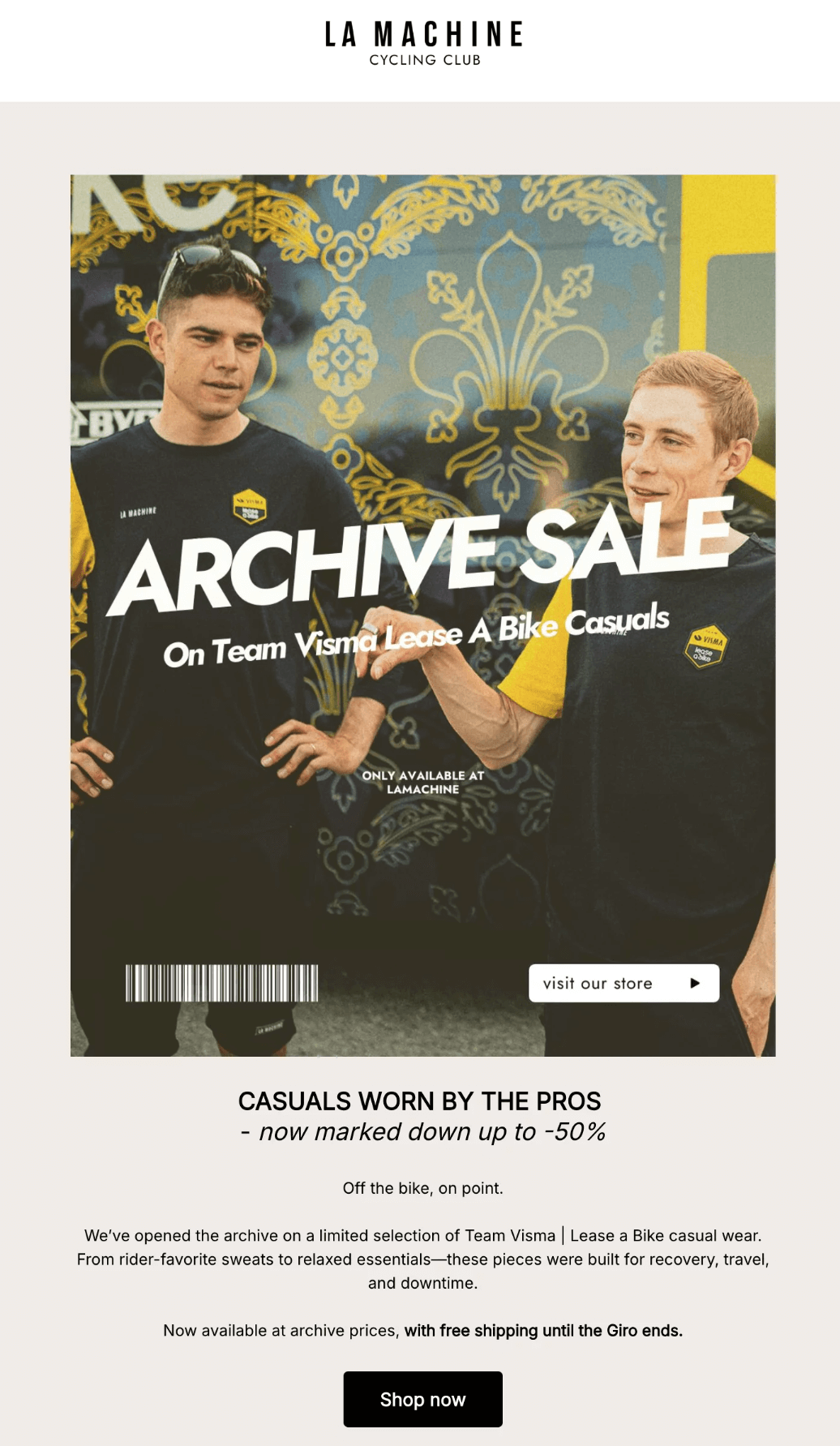
“Our core philosophy is to know our audience so well that our campaigns feel like a natural extension of their lifestyle,” says Rens Robroek, Founder, adding that “We know that cyclists love their Sunday rides. So we set key times for when we send our emails.”
Not every customer cares about every product you sell. Someone browsing ski gear doesn’t need running-shoe promotions even if you sell both. Using interests as a segmentation filter helps you target customers with appropriate emails.
Segment by:
Salomon Japan sells across multiple categories and segments, and its approach achieves a 45% open rate among over 130,000 subscribers.
“We send emails based on categories like ski, snowboard, outdoor, and running,” says Maria Nakazono, CRM/Digital Marketing Specialist at Salomon Japan. “We also have a membership program, so we make use of that segment to send member-only information.”
Shipping costs, delivery times, holidays, and language all vary by location. If you sell internationally, your emails need to account for international time zones and context to ensure appropriate delivery times.
Segment by:
Madrid-based dog accessories brand Dukier offers one of the best examples of email segmentation. It uses geography and language to cover Spain, Germany, France, Italy, and Portugal. It grew Omnisend revenue by 525%, and 45% of that came from segmented campaigns.
For instance, its welcome series arrives in the customer’s native language:
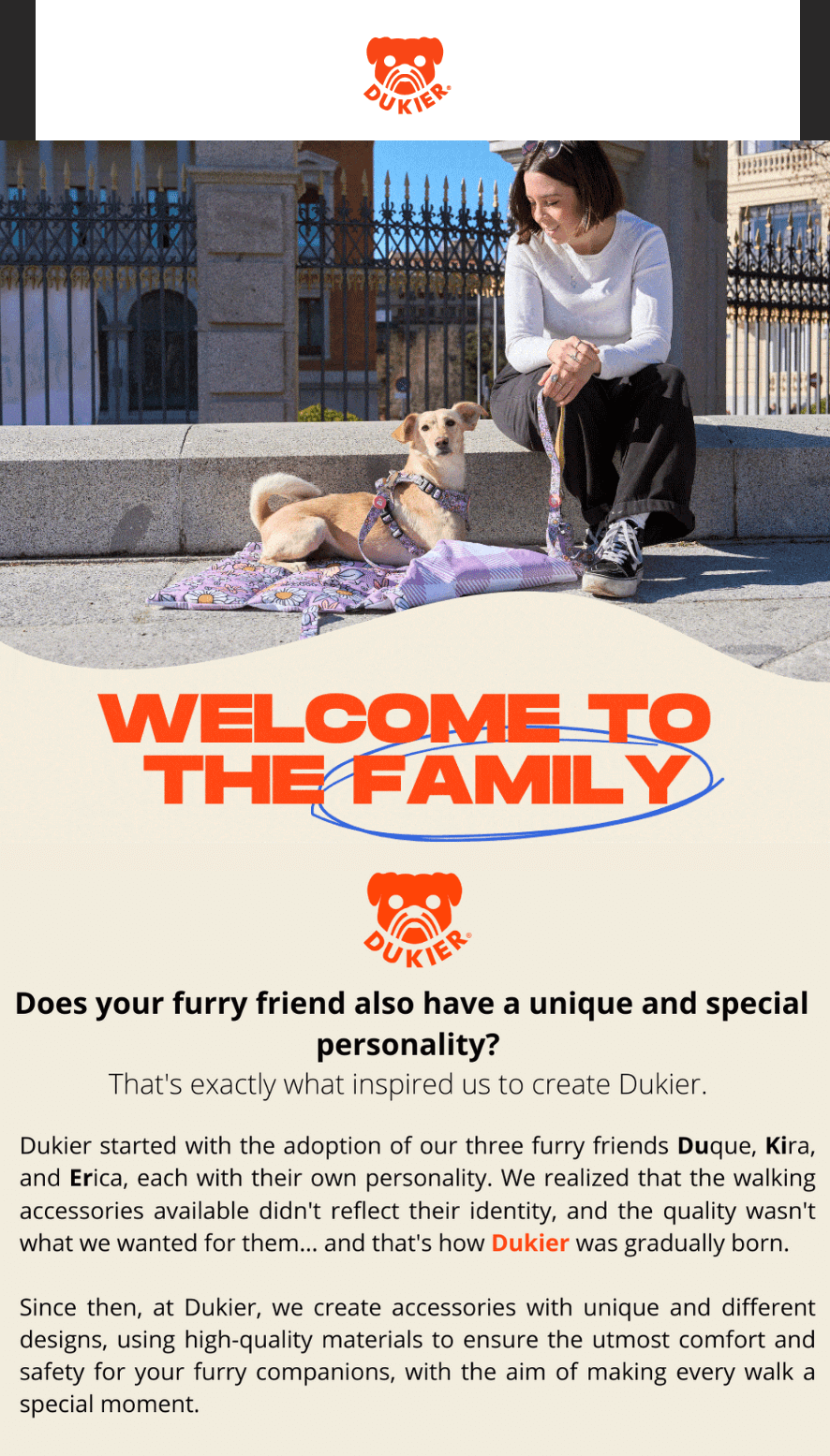
Patricia Jimenez, Ecommerce Manager at Dukier, says the brand was “sending the same message to everyone” before segmentation, adding that “the result was low relevance, high manual effort, and revenue leaking every day.”
Not everyone on your list is equally interested. Some open every email. Others haven’t clicked in months. Treating them the same sends the wrong signal to people who’ve tuned out and risks annoying those who haven’t.
Segment by:
Kate Backdrop, a global photography backdrop brand, uses segmentation to manage resources across channels. It excludes engaged email subscribers from SMS campaigns, optimizing costs without sacrificing reach.
An impressive 1:300 ROI, a 87% open rate on post-purchase automations, and a 62% view rate on push notifications demonstrate that an engagement-based email segmentation strategy works.
Birthdays, purchase anniversaries, and seasonal events are triggers you can build revenue-generating email automations around. Even a signup anniversary date is a good enough reason to reach out with a discount.
Segment by:
The Cake Store, a UK family bakery, segments customers who ordered within the last 360 days but haven’t purchased in the previous 355. It triggers a reminder automation just before their special occasion comes around again:
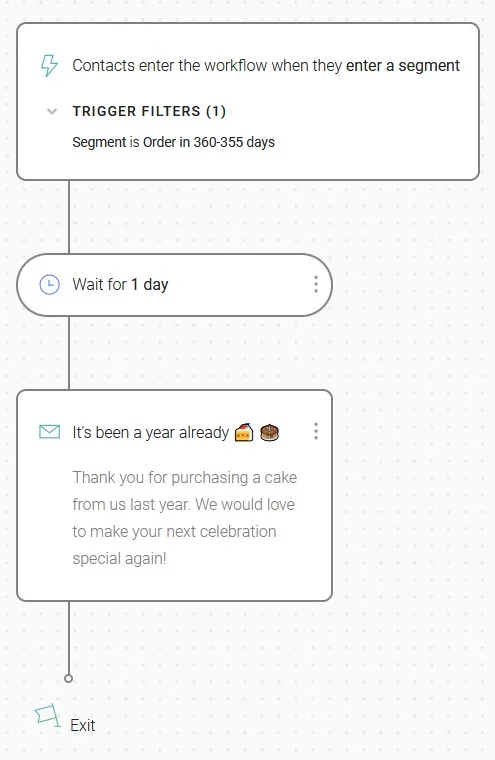
The aim is to target customers likely to make a seasonal purchase without pestering frequent buyers. A 43% open rate and 4.73% click rate prove the timing works, and it generated $37,000 in sales over two years, with conversion rates 32x higher than regular promotional emails.
Some customers signed up recently, and others purchased weeks ago. Between those, you have previous buyers who aren’t spending any more, and repeat ones who are always spending. Your segments should reflect those lifecycles so customers receive appropriate emails.
Segment by:
Bowy Made, a luxury baby apparel brand, segments by lifecycle stage and builds automations around them, which now generate over 70% of its total email marketing revenue. The image below shows one of its abandoned cart emails:
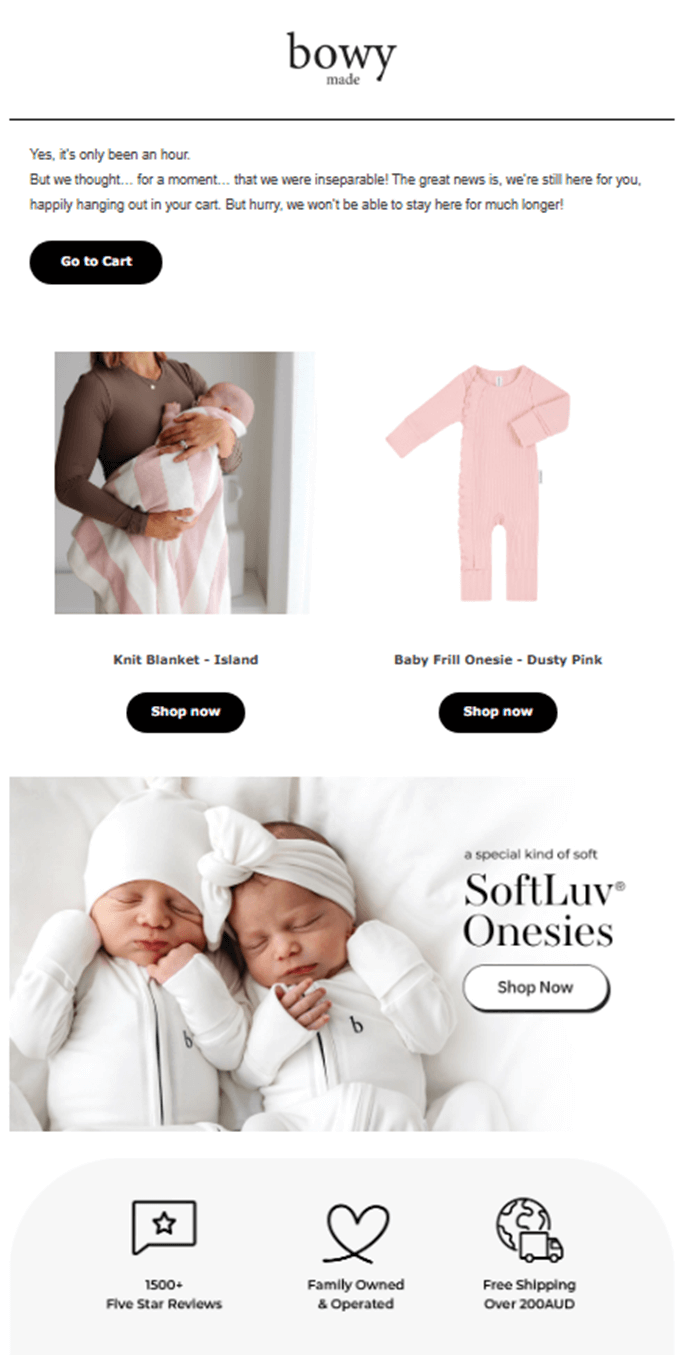
“We didn’t even realize some of these were possible at first,” says Dallas Singer, Co-Founder. “We saw five figures of additional revenue in a single month from those flows alone.” You could see similar success following Bowy Made’s email segmentation best practices.
All your customers bought from you, but that isn’t to say they purchased for the very same reasons and will respond to identical emails. A segment that groups them by B2B, B2C, value, and other types will improve your campaign targeting.
Segment by:
SAVY, a peer-to-peer lending platform, shows how this works outside ecommerce. It segments by customer type and sends completely different emails to borrowers and investors. Borrowers receive educational content, whereas investors receive updates on opportunities.
“We’ve noticed that short, direct offer emails often lead to disengagement, even when the offer itself is strong,” says Justina Kelminskė, Head of Marketing at SAVY. “What has worked well is offering valuable information. This kind of content has helped us double loan conversions.”
No customer group is the same across industries. They exhibit distinct behaviors, purchase cycles, demographics, and interests that you need to address through unique segments. These email segmentation strategies will get you started:
Customers shopping for fashion and apparel expect emails that match their size, fit, color, category, and payment preferences. These segments work:
The email below, sent by women’s and children’s clothing retailer Boden, goes out to customers whose style preferences are dresses and jumpsuits:
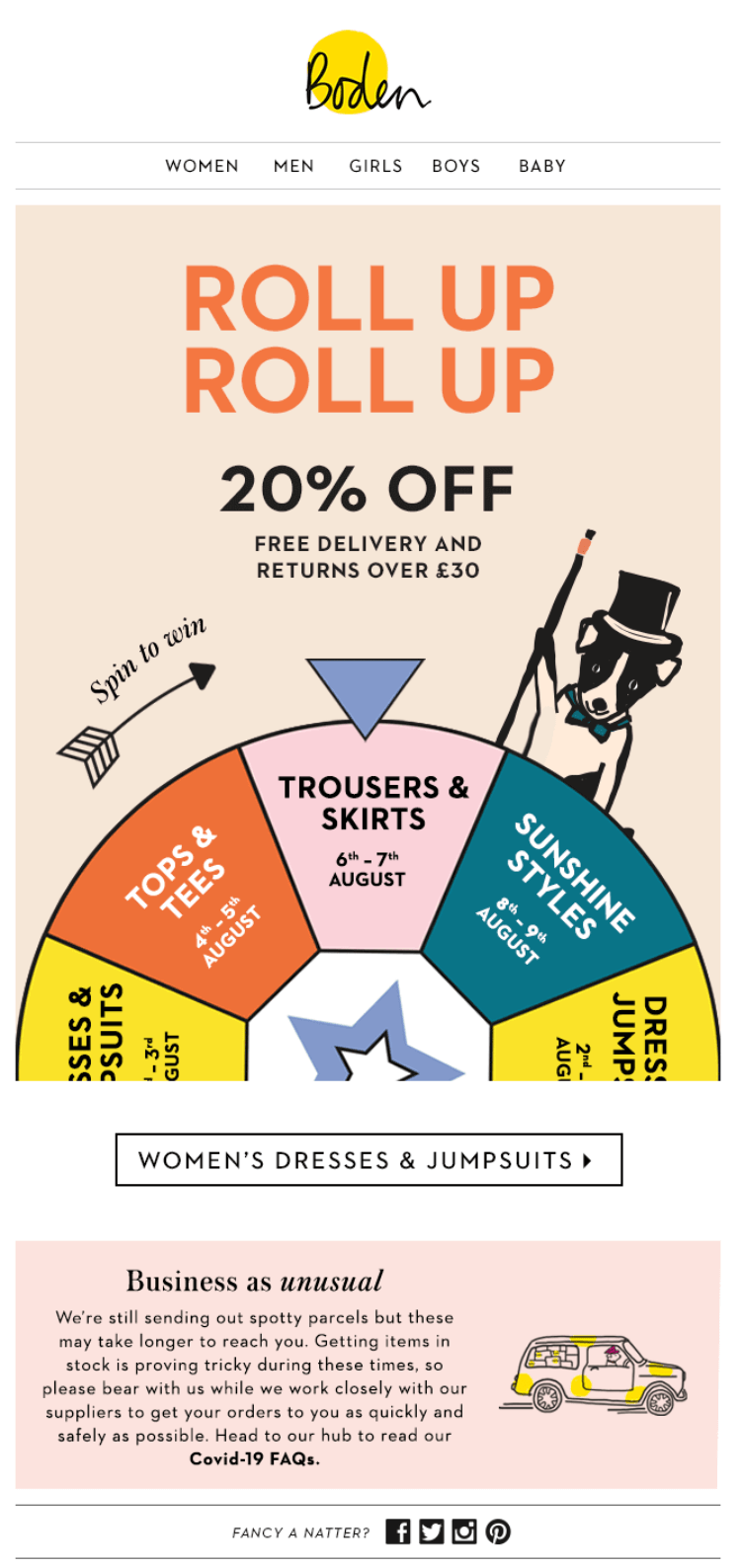
Its email encourages engagement with a spin-to-win wheel in return for 20% off, and links to the customer’s favorite category for immediate shopping.
Your beauty customers have concerns, routines, and ingredient requirements that your emails can satisfy. Consider segmenting by:
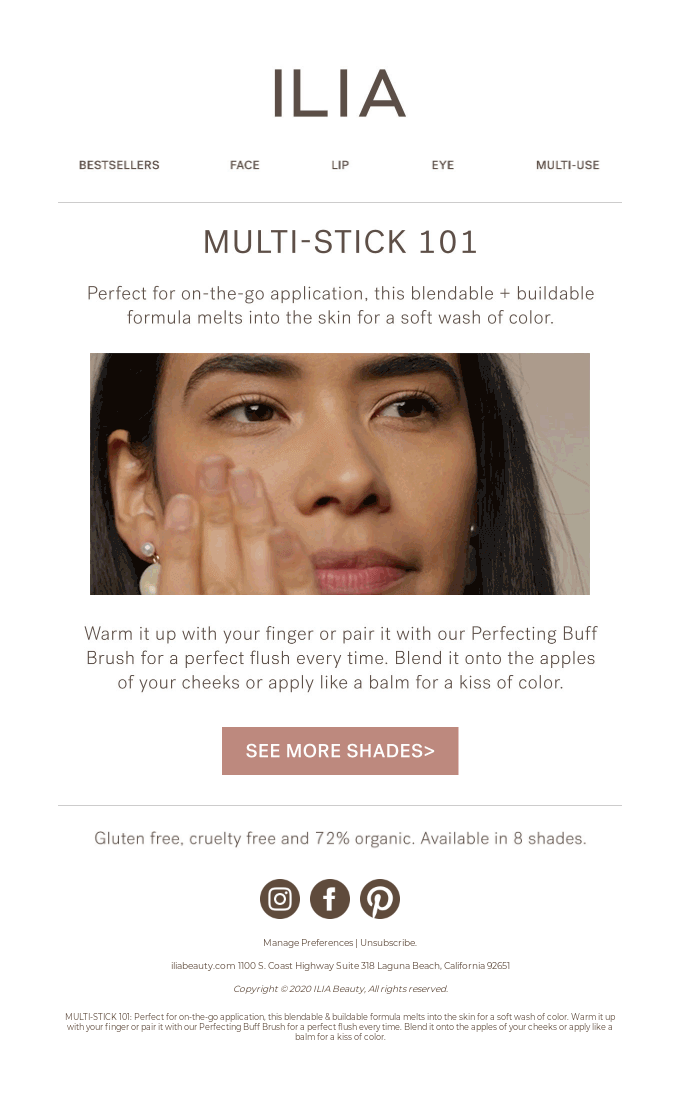
The campaign example below shows how Skincare retailer ILIA sends educational emails to help customers find suitable products. The customer probably viewed the product but didn’t buy, so they’re educating to build confidence:
Your food and drink brand will benefit most from segments related to diet, flavor preferences, and the consumable nature of your products.
Consider using these segmentation strategies:
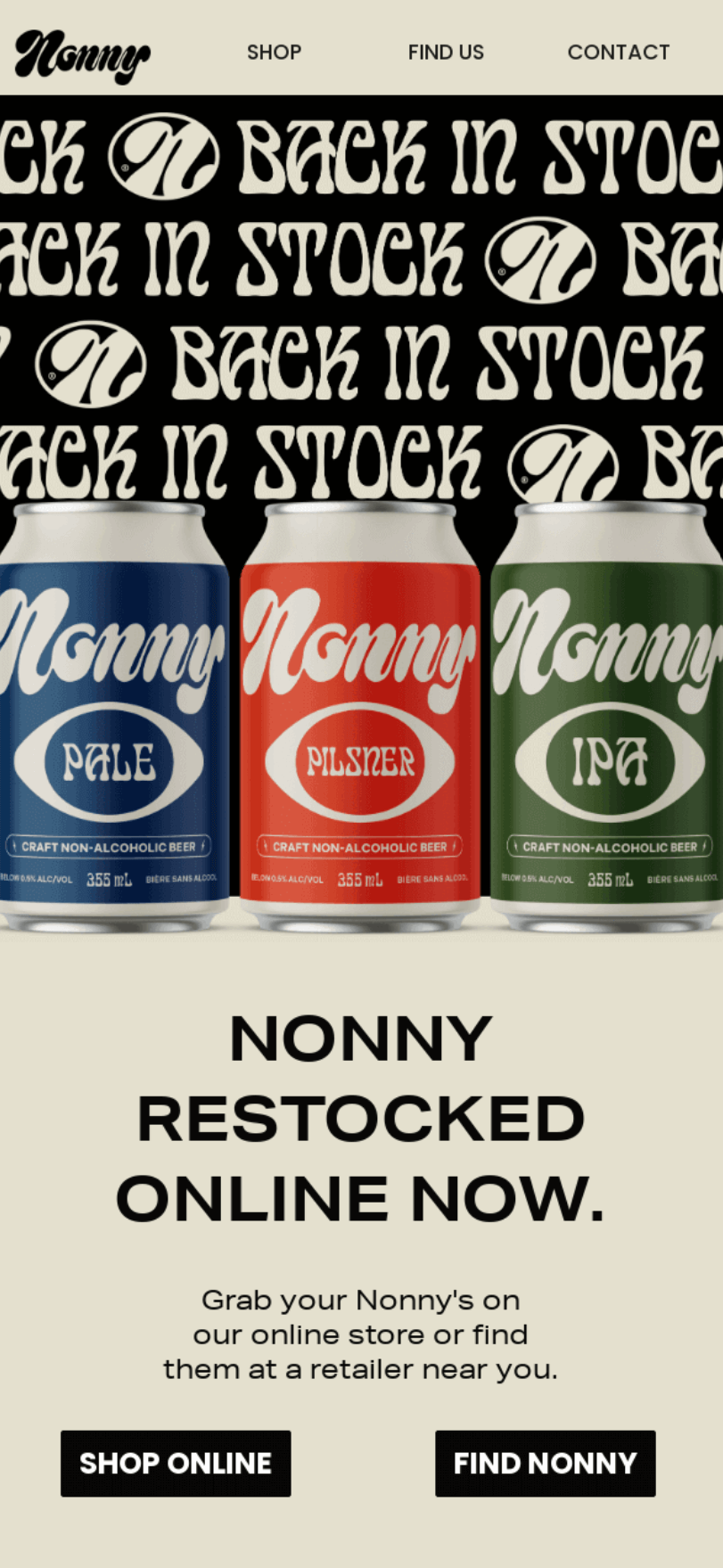
Non-alcoholic beverage brand Nonny Beer capitalizes on its consumables, with a segment for customers who subscribe to back-in-stock alerts. Its email presents the products with an image and includes two CTA buttons for the customer to click:
A runner and a climber have nothing in common except being active. Your segments need to reflect what customers do, not lump them into generic fitness categories.
These segmentation strategies work:
Sports retailer Altitude Sports uses seasonal segments for campaign targeting. It sent the email below in February 2025 in anticipation of spring:
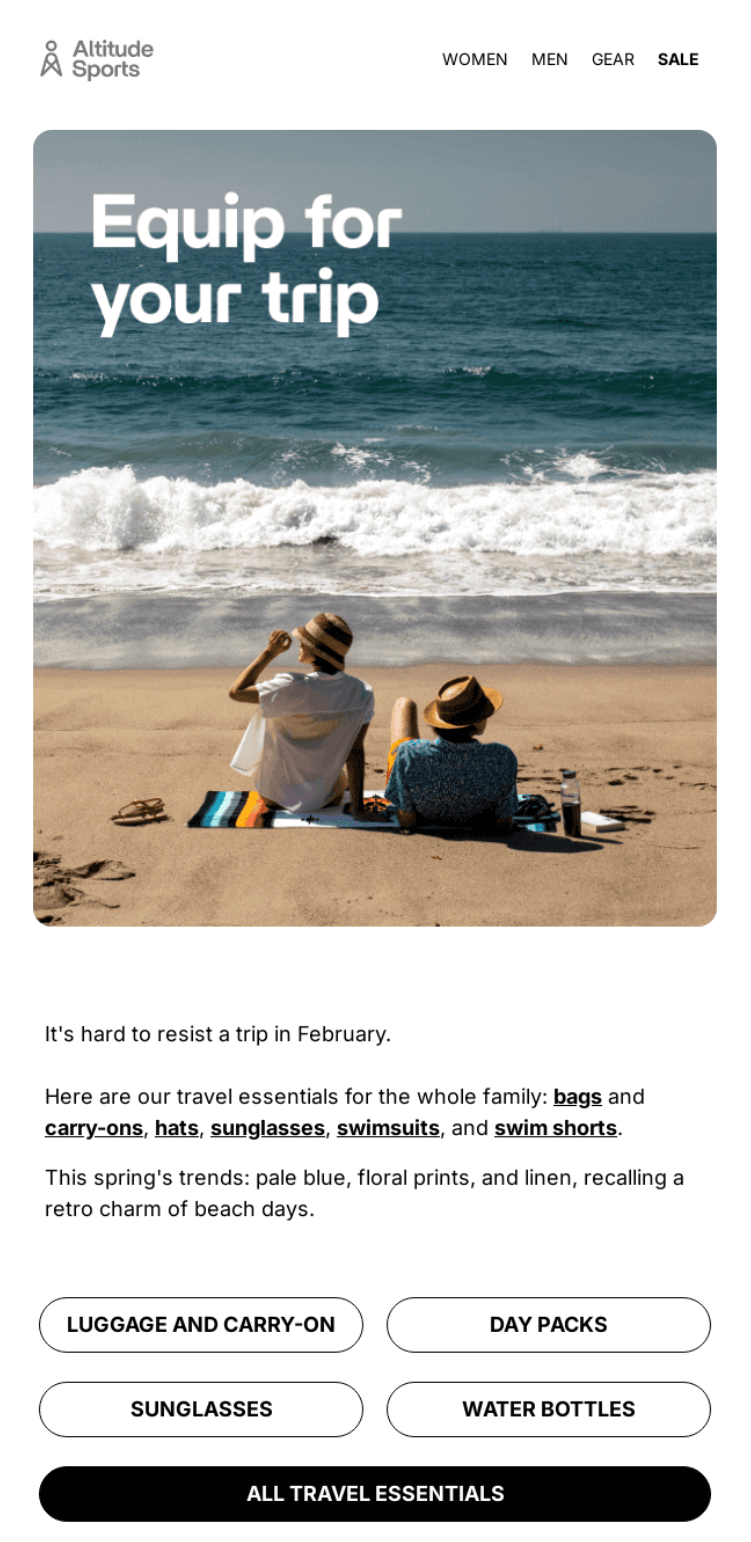
Multiple category links let customers jump straight to what they need, and the trend callout gives them a reason to buy now rather than later.
People buying pet products aren’t doing it for themselves. Your email segmentation strategy should focus on animal attributes, such as color, breed, and age, to improve campaign targeting.
A few segmentation strategies that work include:
Dog supplement retailer Wuffes sends educational emails to customers who previously purchased joint health products. The campaign below explains how each product works at a biological level, giving customers a reason to trust the science rather than just the brand:
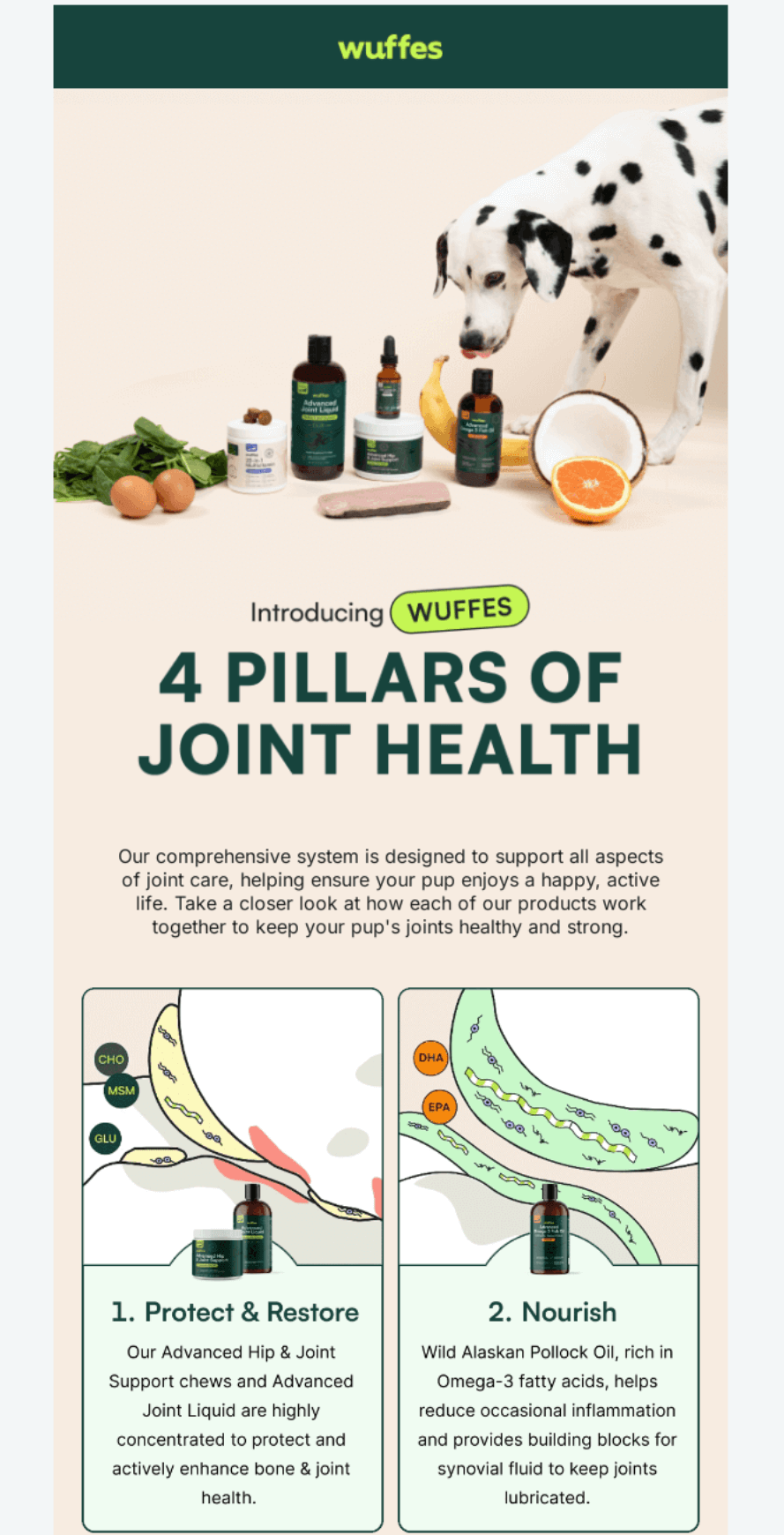
Campaigns become targeted sends instead of blasts, and flows can trigger when customers enter/exit segments when you build them.
However, not every prebuilt segment library covers your customer journey, and building multiple segments from scratch with a segment builder can take hours.
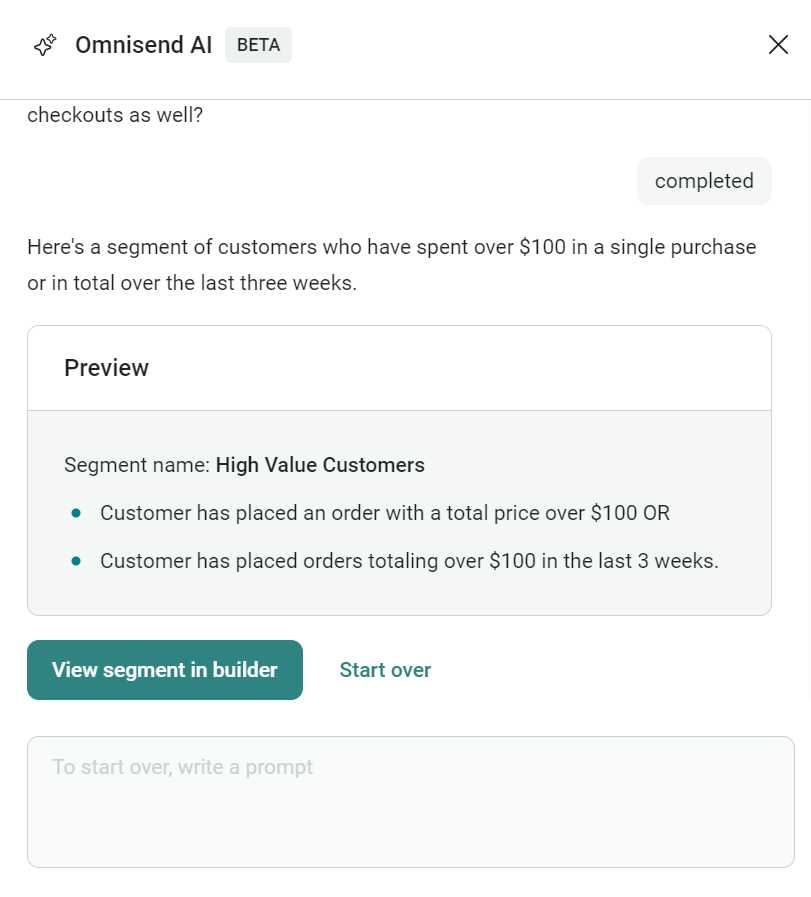
Omnisend’s AI segment builder solves both challenges and helps you refine your target audience in new ways based on your available data. With one prompt and, if necessary, refining instructions, it builds unique segments for you.
Check out the image below. It shows a segment request for customers who’ve spent over $100 in a single purchase or in total over the last three weeks:
Clicking View segment in the builder opens the segment builder, where you can edit the rules and add new filters for appropriate grouping:
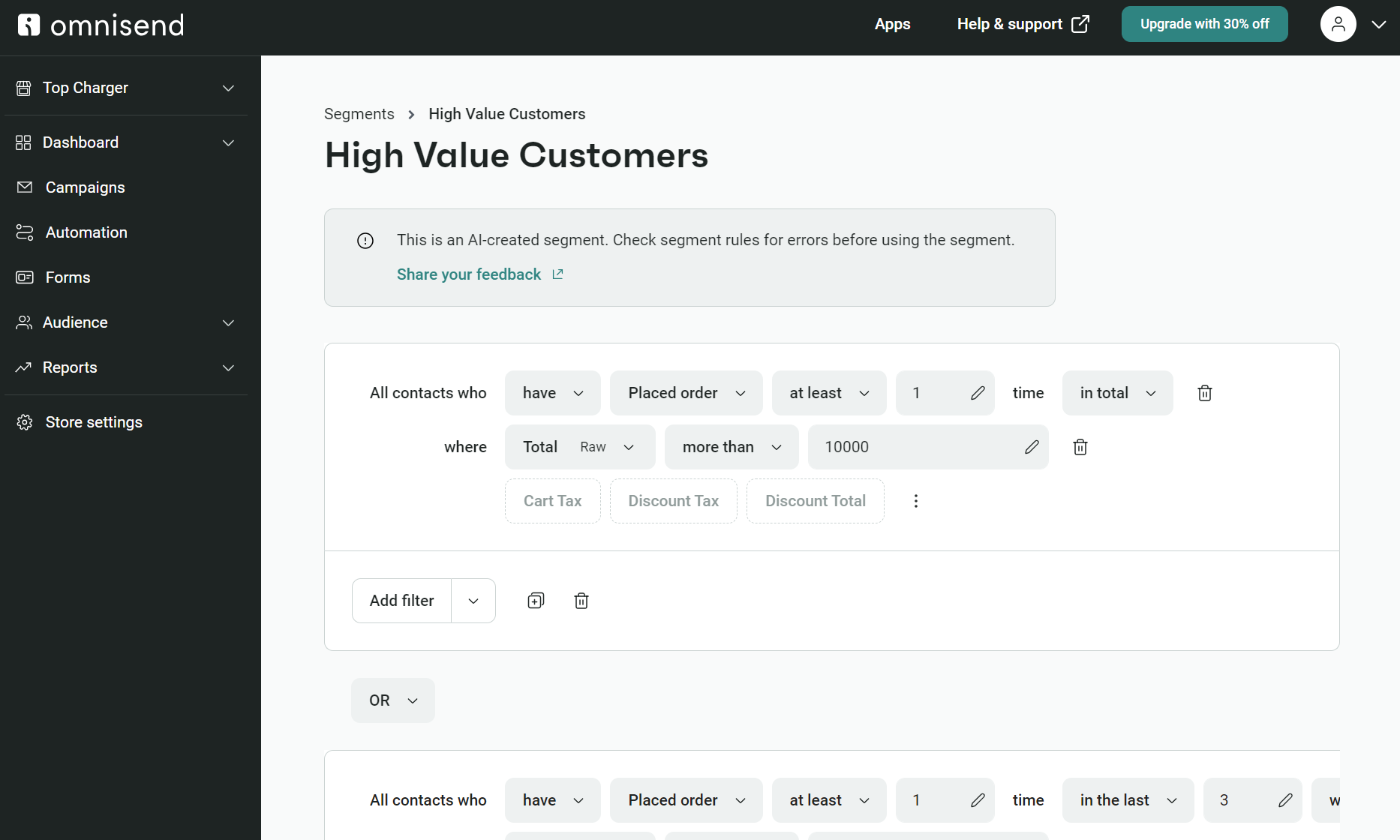
All Omnisend plans let you build unlimited segments, and its AI doesn’t have any restrictions, so you can use it every time you have email segmentation ideas.
Join Omnisend to segment your customers with AI and maximize your email marketing ROI
Want to go deeper than templates? Omnisend Academy’s Mastering Email Segmentation and Personalization essential webinar series walks through real segmentation logic, personalization tactics, and practical examples you can adapt to your store. It’s a great next step if you want to level up from “segments I should have” to “segments that consistently drive revenue.”
Also, Omnisend’s help guide on creating and using segments walks you through the exact steps — how segment rules work, how to build them, and how to apply them to campaigns and automations. Keep it open while you set up your first few segments so you can move faster and avoid filter mistakes.
Yes, and the more granular your segments go into behavior and preferences, the more revenue you can expect as you reach customers at high-intent moments. For instance, back-in-stock emails had the highest conversion rates in 2025 at 6.46%.
Five segments provide a decent starting point to target your audience with appropriate emails:
1. Active email subscribers: People who’ve opened at least one email in the last 30 days. Send your campaigns here first.
2. Inactive contacts: Those who haven’t engaged with your emails for a set time period. You can exclude them from your marketing.
3. Window shoppers: Great candidates for first-time offers because they have visited your store at least twice without buying.
4. Cart abandoners: Non-buyers who got really close to purchase. They probably got distracted. A reminder could win the sale.
5. Recent buyers: For post-purchase upsells, cross-sells, and review requests. You could also set a minimum purchase value.
It helps. Your segments should contain only active and engaged contacts, so your campaigns never reach the unengaged, inactive, and unsubscribed email addresses that reduce your open rates and deliverability score.
Email segmentation filters contacts into and out of groups based on criteria you define, such as location, behavior, and preferences. Personalization takes the data you hold for segments and customers and modifies emails to suit, with names, recent purchases, and so on.

TABLE OF CONTENTS
TABLE OF CONTENTS

What’s next



No fluff, no spam, no corporate filler. Just a friendly letter, twice a month.