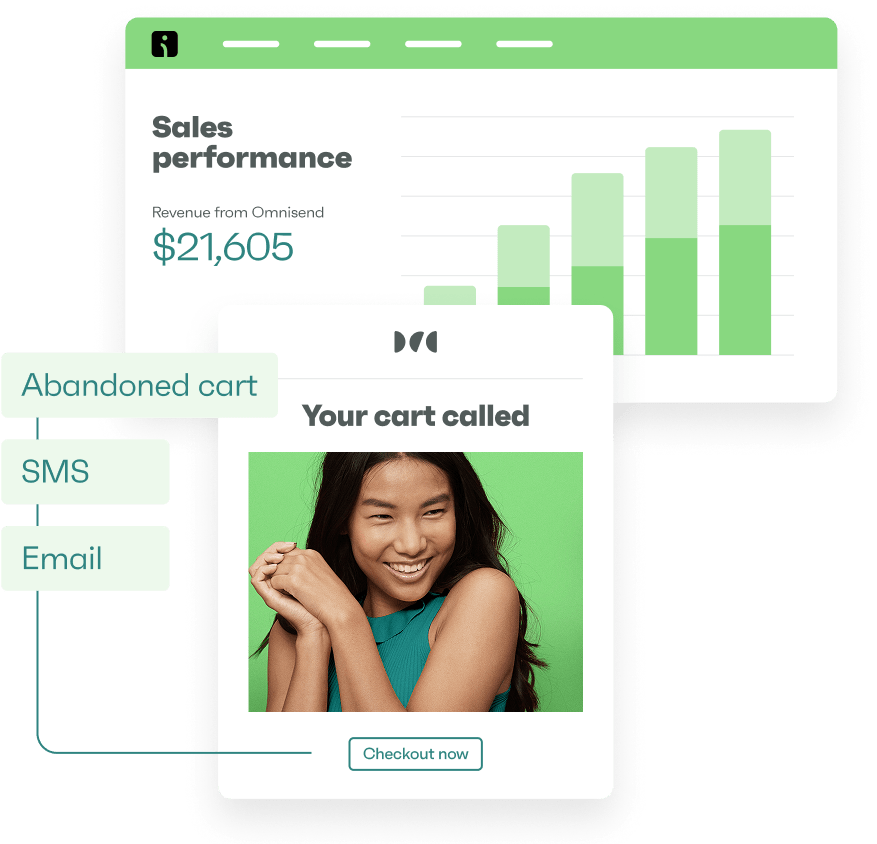
Drive sales on autopilot with ecommerce-focused features
See FeaturesEmail sign-offs significantly influence how recipients perceive your message and can enhance engagement when aligned with your brand voice.

The effectiveness of a sign-off depends on the relationship with the recipient, the email's purpose, and the desired action you want them to take.
Ecommerce brands should tailor their sign-offs to different stages of the customer journey to foster connection, urgency, and loyalty.
A/B testing your email sign-offs can reveal which closings resonate best with your audience and drive higher click-through rates.
Email sign-offs often shape how people remember your email.
Looking at different email sign-off examples, you can see how they can evoke different emotional responses and impact action rates. For ecommerce brands, sign-offs can reinforce brand voice and drive clicks when used strategically.
The challenge is knowing which signing-off message to use in each situation. You must know when to stick to a formal tone or keep it friendly, professional, or playful. The answer depends on your relationship with the recipient, the purpose of your email, and the action you want them to take. It also depends on how you want the reader to feel about your brand.
This guide shows you exactly how to end an email in any situation. You’ll find over 70 email ending examples organized by context — from professional business emails to casual team messages.
We’ll also give you a decision-making framework to help you choose the right closing every time.
Quick sign up | No credit card required
What makes an email sign-off effective?
An email sign-off is the closing phrase you use before your name or signature at the end of an email. It creates digital closure while reinforcing your message’s tone and preparing recipients for what comes next.
The anatomy of a great email sign-off
Your closing salutations need to match your relationship with the recipient and align with your email’s purpose. All the best email sign-offs have three core components:
- The closing phrase — words like “Best regards” or “Thanks”
- Punctuation (usually a comma)
- Your name or signature block
Three functions every sign-off must serve
Your email sign-off needs to accomplish three things simultaneously:
- Closure: Your sign-off is the part of the email that marks the end of your message. Without it, emails feel abrupt or incomplete. This follows basic email etiquette to help recipients understand that your message is over.
- Tone reinforcement: The sign-off should match your email body’s formality. For example, a formal proposal ending with “Later!” undermines your professionalism.
- Action primer: Sign-offs subtly prepare recipients for the next step. Research from Preply found that the way you close an email significantly impacts how recipients respond. For instance, “Looking forward to your feedback” prompts a reply, and “Let me know if you have questions” opens dialogue.
The psychology of reciprocity matters with email marketing. When you express gratitude, recipients feel inclined to reciprocate by responding or taking your requested action.
Sign-offs in the customer journey
For ecommerce brands, sign-offs are based on the customer journey:
- Welcome emails need warmth and engagement: “Excited to have you here” builds connection because these email flows set the foundation for your relationship
- Cart recovery emails require urgency balanced with support: “Your items are waiting” creates gentle pressure, while “Questions? We’re here” removes purchase barriers
- Promotional emails drive immediate action: “Shop the sale now” works for time-sensitive offers
- Customer service emails emphasize availability: “We’re always here to help” builds trust and encourages continued communication
- Post-purchase messages focus on loyalty: “Thanks for your order,” with a P.S. about referrals, can drive additional value
Pro tip:
A/B test your email sign-offs with Omnisend to discover which drives the highest click-through rates for your specific audience
How to end a professional email
Professional email sign-offs build credibility and trust. Whether you’re learning how to end an email professionally or refining your existing approach, these examples cover every business scenario.
Ultra-formal sign-offs
Below are some ways to end an email professionally, especially when making contact with executives, in legal correspondence, or when writing to government officials:
1. Respectfully or Respectfully yours: Conveys deep respect and deference. This sign-off works when addressing senior officials, judges, or anyone in a position of significant authority.
- Best for: Situations where formality is non-negotiable
2. Yours faithfully: Traditional British closing used when you don’t know the recipient’s name (starting with “Dear Sir or Madam”). In US business communication, this can feel outdated, but it remains appropriate for highly formal legal correspondence.
- Best for: Official letters to institutions or unknown recipients
3. Yours sincerely: Classic formal closing used when you know the recipient’s name. This works well for business proposals, job applications, and any situation requiring traditional professionalism. It’s widely recognized across industries.
- Best for: First-time professional contact where you know the recipient’s name
Standard professional sign-offs
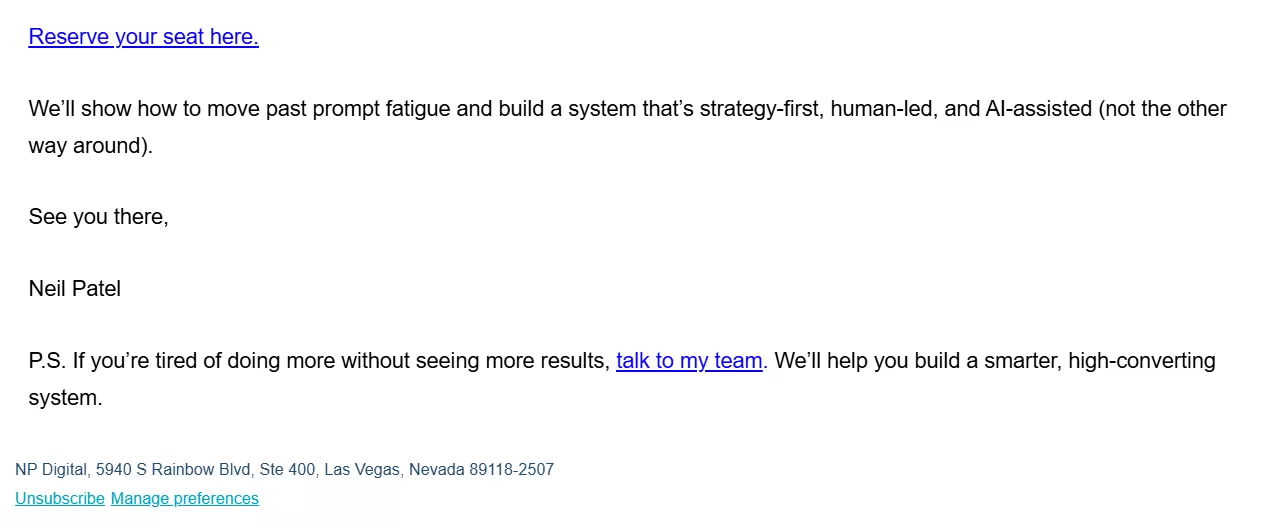
4. Best regards: The gold standard of professional email closings. It’s warm enough to feel personable but formal enough for any business situation. This sign-off works across industries, seniority levels, and relationship stages.
- Best for: Nearly any professional email context where you want a safe closing
5. Kind regards: Slightly warmer than “Best regards” while maintaining professionalism. This closing works well for ongoing business relationships where you want to show appreciation without being overly casual.
- Best for: Customer service contexts and emails to clients you’ve worked with before
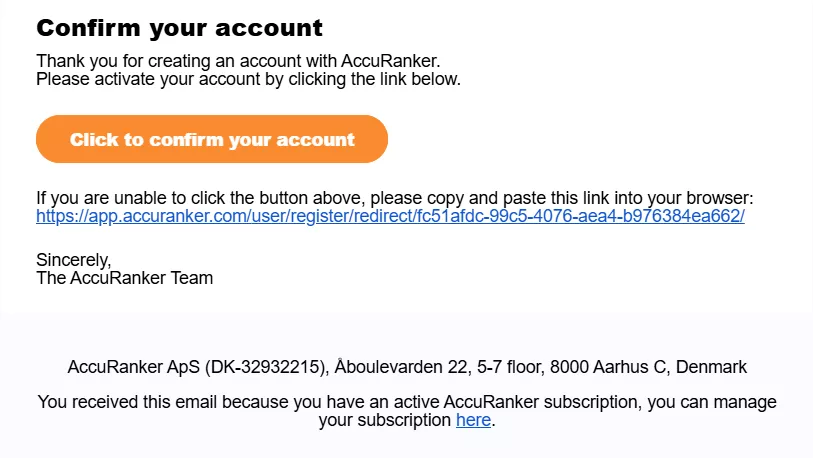
6. Sincerely: Straightforward and professional without being stiff. This closing conveys genuine intent, which makes it particularly effective when making requests or offering apologies. It feels honest and direct. Here’s an email from Brooks Brothers using this sign-off:

- Best for: Emails where you’re asking for something or addressing a problem
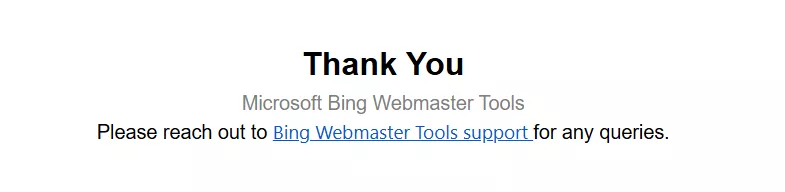
7. Thank you: Versatile and widely accepted across professional contexts. This works when you’re actually thanking someone for their time, consideration, or action. The key is not to overuse it. Save it for situations where gratitude is genuinely appropriate. Here’s an email example from the American Red Cross:

- Best for: Follow-up emails after interviews, meetings, or when someone has provided assistance
8. With gratitude: More emphatic than “Thank you” and appropriate when someone has gone significantly above and beyond. This closing works when standard gratitude doesn’t quite capture how much you appreciate the recipient’s effort.
- Best for: Situations involving major favors or exceptional service
9. Cordially: Polite and formal without being overly stiff. This closing has a slightly old-fashioned feel that can work well in certain industries like law, finance, or academia. It conveys respect and professionalism.
- Best for: Business emails where you want formality with a touch of warmth
Warm professional sign-offs
10. Warm regards: Strikes a balance between professional and personable. This closing suggests genuine warmth without crossing into casual territory. It works when you want to strengthen relationships while maintaining professional boundaries.
- Best for: Clients you’ve worked with multiple times or colleagues you know well
11. Looking forward to connecting: Forward-looking and optimistic. This closing works well in email marketing campaigns and networking contexts because it suggests enthusiasm for future interaction without adding pressure.
- Best for: Follow-ups after meetings or networking events where you want to continue the conversation
12. All the best: Friendly yet professional. This closing feels genuine, but it’s not too casual for professional settings. It works particularly well when you want to end on a positive note without formal stiffness.
- Best for: Colleagues and business contacts with whom you have an established relationship
13. Best wishes: Similar to “All the best” but slightly more formal. This closing conveys goodwill naturally and works across various professional contexts.
- Best for: Seasonal emails, congratulatory messages, or when signing off after offering assistance
14. Warmly: Brief and personable. This one-word closing feels approachable but still maintains professional boundaries. It works especially well when you want to convey empathy or support. Here’s an email with this sign-off:

- Best for: Customer support emails or when writing to clients you’ve built rapport with over time
Omnisend insight
Our most successful B2B customers typically use “Best regards” for cold outreach and “Looking forward to connecting” for warm follow-ups. Monitor which sign-offs in your email templates drive the highest response rates and optimize performance over time.
Casual email sign-offs for friendly communication
Casual email sign-offs help you connect with colleagues, team members, and customers in a more relaxed way. It’s also how to end an email to a friend.
The rise of casual business communication reflects broader workplace culture shifts, particularly in tech and creative industries, where traditional formality feels outdated.
When casual sign-offs work best
Casual email sign-offs work in situations where formality would feel out of place, such as:
- Internal team communication where everyone knows each other well
- Follow-up emails with clients you’ve built rapport with
- Brand communications that emphasize personality and approachability
- Customer emails from DTC brands with conversational voices
- Messages to colleagues you interact with daily
Avoid casual sign-offs in first-contact emails, when addressing senior executives outside your immediate team, when handling sensitive issues like complaints, or anytime the recipient expects formal communication.
Friendly sign-offs for team communication
15. Thanks: Simple and versatile. This works for quick requests, acknowledging help, or wrapping up routine exchanges.
- Best for: Day-to-day team emails where you’re coordinating work
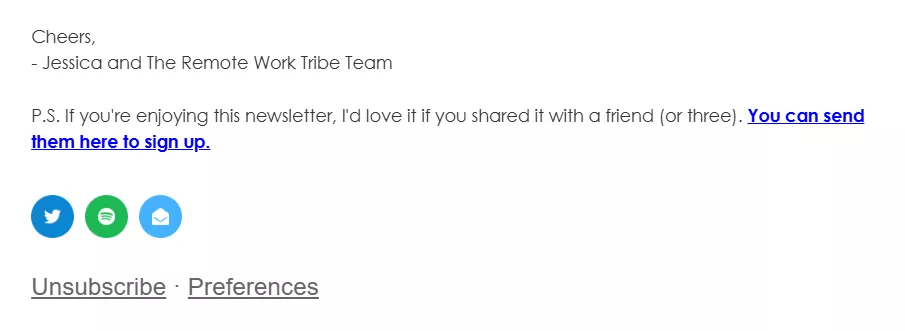
16. Cheers: Popular in UK and Australian business culture, increasingly common in US tech companies. This closing strikes a friendly tone without being too casual. Here’s a great example of this sign-off in use by Australian wine brand Sometimes Always:

- Best for: Team updates and informal check-ins
17. Talk soon: Creates expectation for continued conversation. This works when you know you’ll be following up with the recipient.
- Best for: Emails that are part of an ongoing dialogue
18. Have a great day or Have a great weekend: Friendly and considerate. These show you’re thinking about the recipient’s well-being.
- Best for: Wrapping up the week or ending on a positive note
19. Take care: Warm and personal. This works when you have a good relationship with the recipient and want to show genuine care.
- Best for: Colleagues you’re close with
Brand-voice casual sign-offs for customer emails
20. Happy shopping: Cheerful and retail-focused. This closing works for ecommerce brands that want to emphasize the joy of browsing and buying.
- Best for: Promotional emails and product announcements
21. Until next time: Creates continuity. This suggests an ongoing relationship rather than a one-time transaction.
- Best for: Subscription services and repeat-purchase brands
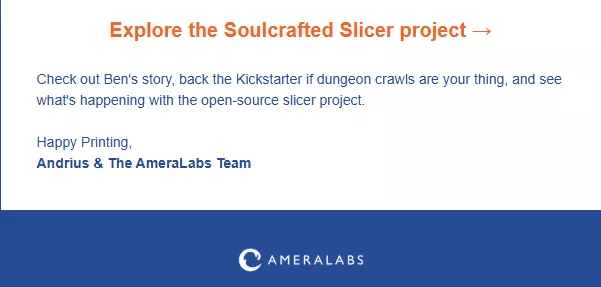
22. Enjoy: Simple and positive. This works when you’ve just helped a customer or sent them something valuable. You can also infuse humor the way Juicy Marbles did here:

- Best for: Order confirmations and content delivery
23. Keep in touch: Invites ongoing communication. This works when you want customers to feel comfortable reaching out.
- Best for: Welcome series and customer service follow-ups
Avoid these common mistakes
— Using “Cheers” with upset customers creates tone-deaf communication
— TTYL with executives outside your immediate team appears unprofessional
— Overly casual sign-offs in first-contact emails can damage credibility before you’ve established rapport
Omnisend allows you to personalize email sign-offs based on customer segments. You can use casual closings for engaged customers while maintaining formality for new subscribers. This segmentation helps you automatically match tone to the relationship stage.
Creative email sign-offs that make you memorable
Creative email sign-offs help your brand stand out in crowded inboxes. They work when your company culture values personality or when you want to leave a lasting impression that goes beyond standard business communication.
Clever and witty sign-offs
Clever and witty closings add personality without seeming unprofessional. While a funny email sign-off works well with close colleagues or friends, the examples below strike the right balance for broader professional use.
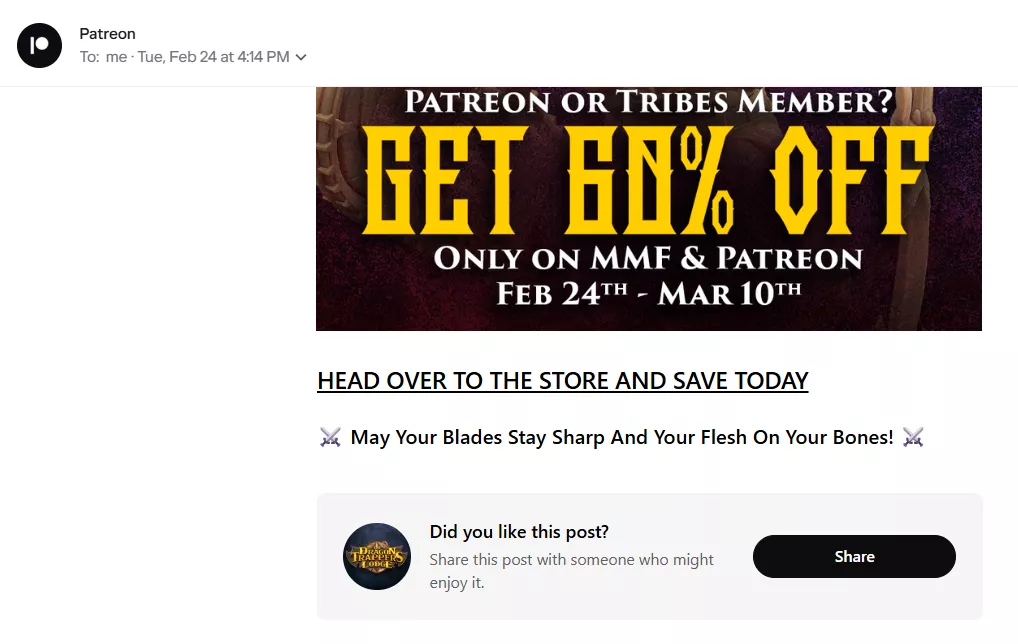
24. May the force be with you: Works for tech companies, gaming brands, or any business with a playful culture. This Star Wars reference creates an instant connection with pop culture fans.
- Best for: Internal team emails in creative industries or customer emails from entertainment brands
25. Stay curious: Encourages ongoing learning and exploration. This closing works for educational brands or any business that values knowledge.
- Best for: Online courses, publishing companies, and content-focused brands
26. Keep creating: Affirming and action-oriented. This works for brands serving creative professionals. It acknowledges the recipient’s creative work while encouraging more. “Happy creating” also works as a great alternative:

- Best for: Design tools, craft supplies, and maker communities
27. Onwards and upwards: Optimistic and forward-looking. This suggests progress without being pushy.
- Best for: Career coaching services and professional development platforms
28. Make it so: A Star Trek reference that doubles as a call to action. This works when you want recipients to take decisive action.
- Best for: Project management tools and productivity apps
29. Stay gold: A literary reference to “The Outsiders.” It feels nostalgic and encouraging.
- Best for: Lifestyle brands and companies targeting millennials
Pop culture and reference-based sign-offs
30. To infinity and beyond: A Toy Story reference everyone recognizes. This works for brands with optimistic, ambitious messaging.
- Best for: Innovation-focused companies and adventure travel brands
31. May your coffee be strong and your Monday be short: Relatable and humorous. This creates a connection through shared workplace experience. You can also use this alternative sign-off from Cometeer:

- Best for: Productivity tools and workplace software
32. That’s all, folks: Classic Looney Tunes closing. It signals the end with nostalgia.
- Best for: Entertainment brands and toy companies
33. Winter is coming: Game of Thrones reference that works seasonally. This creates a cultural connection with dramatic flair. You could also use culturally significant references like this:

- Best for: Fashion brands during fall campaigns
Industry-specific playful sign-offs
34. Happy coding: Direct and encouraging for developer-focused brands. This acknowledges the work recipients do. Alternatively, here’s how Sendspark uses this sign-off format:

- Best for: Developer tools and coding bootcamps
35. Stay stylish: Fashion-forward and affirming. This reinforces the aspirational quality of your products.
- Best for: Clothing retailers and beauty brands
36. Bon appétit: Perfect for food and beverage brands. This French phrase creates an appetite appeal.
- Best for: Restaurants, meal kit services, and food delivery apps
37. Keep growing: Nurturing and positive. This works for gardening brands or businesses focused on personal development.
- Best for: Plant retailers and personal growth platforms
38. Happy trails: Outdoor-focused and adventurous. This suggests exploration and freedom.
- Best for: Outdoor gear retailers and adventure travel companies
39. Lights, camera, action: Entertainment-focused and energetic. This creates excitement and momentum.
- Best for: Video editing software and content creation tools
40. Pedal on: Cycling-focused and motivational. It’s designed for cycling enthusiasts.
- Best for: Bicycle retailers and fitness tracking platforms
41. Keep swimming: Finding Nemo reference that suggests persistence. This works for fitness brands and swimming-related businesses.
- Best for: Swim gear companies and aquatic centers
Test before scaling
Use Omnisend’s A/B testing to monitor creative sign-offs with small audience segments before rolling out broadly. Creative closings can increase engagement when they resonate, but they can also fall flat with the wrong audience.
How to end ecommerce emails that drive conversions
Ecommerce email sign-offs drive revenue. Omnisend’s 2025 ecommerce report shows exactly how much is at stake.
Automated emails, which account for just two percent of total email volume, drove 37% of all email sales in 2024. Also, one in three people who click on an automated message make a purchase, compared to one in 18 for campaign messages.
You can easily create conversion-optimized emails in Omnisend, with each email tailored to the specific stage of the customer journey to maximize conversions.
Welcome series sign-offs
Your welcome email series sets the tone for your entire customer relationship. Omnisend data shows automated welcome emails have a 42.1% open rate and convert one in two people who click.
Your email sign-off should emphasize connection over conversion at this stage.
42. Excited to have you here: Warm and welcoming without being pushy. This creates a positive association with your brand from the first interaction.
- Best for: The first email in your welcome series
43. Can’t wait to show you around: Forward-looking and enthusiastic. This builds anticipation for future emails while suggesting value to come.
- Best for: The second email in a welcome series to introduce product categories
Cart recovery sign-offs that encourage action
Cart abandonment emails need urgency balanced with helpfulness. With a 1.9% conversion rate for automated emails versus just 0.08% for regular campaigns, these emails are 24x more effective when automated.
Your email sign-off should remove purchase barriers while creating gentle momentum.
44. Your cart is waiting: Creates a gentle nudge without desperation. This reminds customers of incomplete action while staying friendly.
- Best for: First abandoned cart recovery email sent one to two hours after abandonment
45. Questions? We’re here to help: Removes barriers by offering support. This works when customers might have concerns that prevent purchase.
- Best for: Second cart recovery email addressing potential objections
Post-purchase thank-you sign-offs
Post-purchase emails build loyalty that drives repeat purchases in email marketing campaigns. With email click-to-conversion rates up 27.6% year-over-year, engaged customers are becoming more ready to buy again.
46. Thanks for choosing us: Direct gratitude that acknowledges their decision. This reinforces that they made a good choice.
- Best for: Order confirmation emails
47. We can’t wait to hear what you think: Invites engagement through reviews. This primes customers to share feedback.
- Best for: Post-delivery emails requesting reviews
Win-back campaign sign-offs
Win-back emails reignite dormant relationships. Browse abandonment emails show a 59.19% open rate and 5.34% conversion rate.
48. We’ve missed you: Personal and honest. This acknowledges a customer’s absence without guilt-tripping.
- Best for: The first win-back email to dormant customers
49. Come see what’s new: Curiosity-driven and forward-looking. This focuses on fresh offerings rather than past inactivity.
- Best for: Win-back emails highlighting new products or features
![]() | Success story Pasignia, a jewelry brand, saw significant improvements after optimizing its email campaigns with Omnisend. By refining its email strategy, including strategic sign-offs that match customer journey stages, it achieved better engagement and stronger customer relationships. Read the full study here |
Promotional email sign-offs
Promotional emails drive immediate action. In 2024, US brands generated over $25 million through automated SMS alone. This shows the importance of mastering message execution, including your email sign-off.
50. Shop now: Direct and action-oriented. This works when you have strong offers and clear calls to action.
- Best for: Flash sales and limited-time promotions
51. Don’t miss out: Creates FOMO effectively. This works for exclusive drops or trending products.
- Best for: Product launch emails and seasonal sales
Customer service sign-offs
Customer service emails build trust that fuels lifetime value. Omnisend’s 24/7 support for all plan levels reflects this philosophy — availability matters.
52. We’re always here to help: Emphasizes ongoing availability. This reassures customers that support doesn’t end with this email.
- Best for: All customer service responses
53. Let us know if you need anything else: Opens the door for follow-up questions. This shows willingness to continue assisting.
- Best for: Problem resolution emails
Omnisend pro tip:
Our highest-converting customers personalize email sign-offs based on customer segment. For VIP customers, use “Your dedicated account manager.” Meanwhile, first-time buyers get a “We’re here to help!”
Warm email sign-offs that feel truly sincere
Warm email sign-offs reduce the social distance between you and your recipient. The challenge is striking the right balance — too formal feels distant, too casual undermines professionalism, and too wordy triggers skepticism.
Match warmth to your existing relationship. A warm email sign-off with an established client strengthens bonds. That same closing in a cold outreach email can feel too forward.
If you’re managing a large email list, consider segmenting your audience by relationship stage. Tools like Omnisend let you personalize email sign-offs automatically. They ensure that your closing aligns with where each recipient is in their journey with your brand.
Warm, professional sign-offs that feel safe and reliable
These unique email sign-offs work across most professional contexts without crossing into excessive familiarity.
54. Appreciate your time: Shows respect for the recipient’s schedule and attention. Ideal for client communications, follow-ups, or requests where you want to acknowledge effort without sounding overly formal.
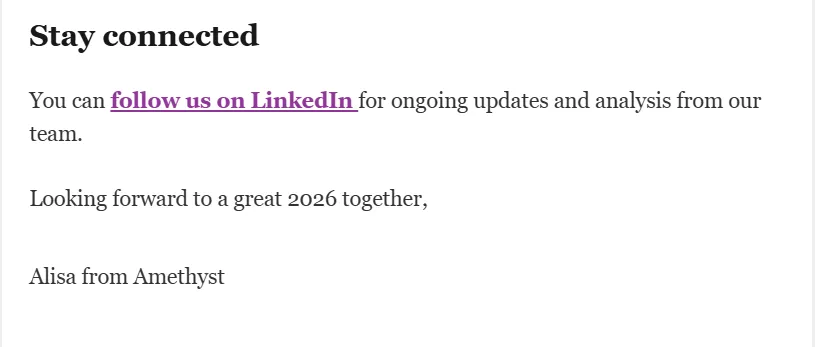
55. All the best: Offers genuine well wishes without formality. Use it to end positively with colleagues, clients, or business partners you’ve worked with before. Check out this “all the best” email sign-off from Clay:

56. Respectfully: Conveys professionalism, seriousness, and deference. Best suited for formal communications, sensitive topics, or when addressing senior stakeholders or official matters.
57. Thanks for your patience: Acknowledges delays or inconvenience while maintaining a calm, service-oriented tone. Works well for support emails, project updates, or situations where you’re resolving an issue.
Relationship-driven email sign-offs that build trust and loyalty
These email sign-offs emphasize ongoing relationships and shared goals after you’ve established rapport.
58. Looking forward to connecting: Creates anticipation for future interaction. Use after networking events, informational interviews, or when proposing collaboration.
59. Looking forward to your feedback: Invites dialogue while showing that you value their input. Works for project updates, proposal submissions, and situations where you genuinely want the recipient’s perspective.
60. Hope to connect soon: Suggests mutual benefit from continued contact. Leaves the door open for future conversations without creating obligation.
61. With appreciation: Emphasizes gratitude for the relationship itself, not just specific actions. Works for long-term clients, mentors, or anyone who’s consistently supported your work.
Complimentary sign-offs that show appreciation
Gratitude and recognition create powerful psychological effects in professional communication. When you acknowledge someone’s contributions, you trigger reciprocity — the subtle obligation to return positive gestures.
Research by Quantum Workplace found that when employees believe they’ll be recognized, they’re 2.7 times more likely to be highly engaged at work.
The challenge with complimentary email sign-offs is sincerity. Overuse dilutes impact, turning genuine appreciation into empty corporate speak.
The key is specificity and appropriate frequency — save complimentary closings for moments when you genuinely want to acknowledge effort or achievement.
Complimentary sign-offs from managers that show appreciation
62. Excellent work: Direct recognition of quality output. Use after receiving work that genuinely exceeded expectations, not as routine praise for standard performance.
63. Thank you for your dedication: Acknowledges sustained effort over time rather than a single task. Works after intense project periods or when someone consistently goes beyond their role.
64. Grateful for your expertise: Recognizes specific skills or knowledge someone brought to a situation. Use when someone’s particular competency made a real difference to outcomes.
65. Appreciate your leadership on this: Acknowledges someone stepping up to guide others or drive initiatives. Works when recognizing both formal and informal leadership contributions.
66. Impressed by your initiative: Highlights proactive behavior and independent thinking. Use when someone identified and solved problems without being asked.
Appreciative sign-offs between teammates and peers
67. Thanks for having my back: Acknowledges support during challenging situations. Works when a colleague helped you meet a deadline, covered for you, or defended your work.
68. Couldn’t have done this without you: Recognizes collaborative contribution and shared success. Use after completing projects where their involvement was genuinely essential.
69. Your insight made all the difference: Highlights how someone’s specific contribution improved outcomes. Works when feedback, advice, or perspective meaningfully changed your approach.
70. Really appreciate your help: Straightforward gratitude for assistance. Use when someone took time from their own work to support yours.
71. Great collaborating with you: Celebrates positive teamwork experiences. Works on project conclusions or after particularly productive working sessions.
Sign-offs that show genuine customer appreciation
These email sign-offs work in ecommerce contexts where you want customers to feel valued without seeming transactional.
72. Thank you for your business: Classic but effective for order confirmations and post-purchase communications. Works because it’s expected and appreciated in commercial contexts.
73. Grateful you chose us: Acknowledges the competitive landscape and the customer’s decision to select your brand. Use in welcome emails and first-purchase confirmations.
74. We appreciate your trust: Emphasizes the relationship aspect of the transaction. Works particularly well for service-based businesses or high-consideration purchases.
75. Thanks for being part of our community: Frames customers as members rather than transactions. Use in loyalty program communications and customer anniversary emails.
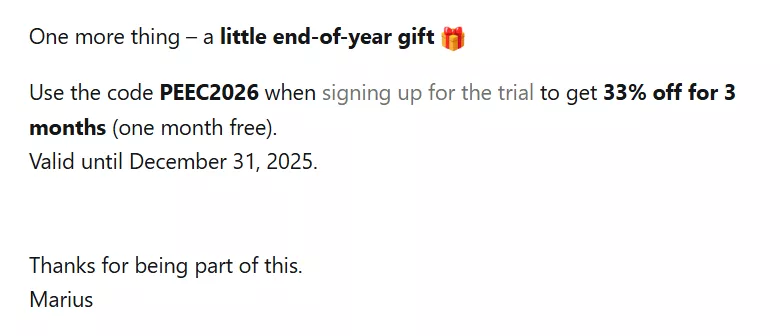
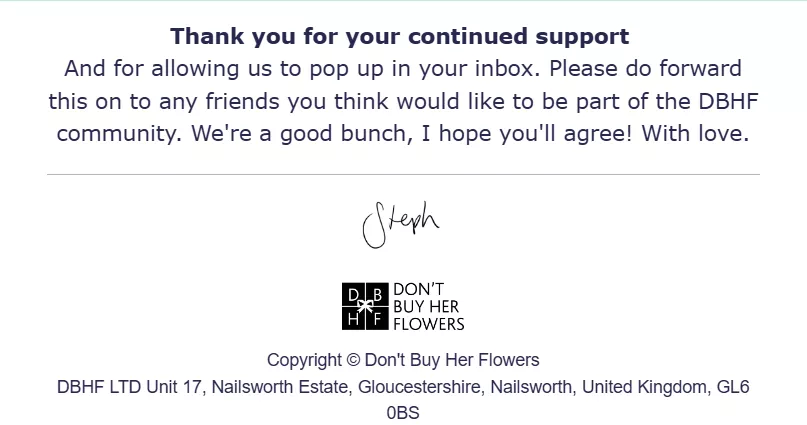
Here’s a customer appreciation email with a gentle thank-you sign-off:

Tips for writing effective email sign-offs
Knowing how to sign off on an email requires understanding context, relationship dynamics, and communication goals. The best sign-off depends on who you’re writing to, what you’re asking for, and what kind of relationship you want to build.

The four-step decision framework
Before typing your email sign-off, run through these four steps and questions:
- Analyze the relationship: Are you writing to someone new or established? First-contact emails typically call for more formal closings like “Best regards.” Meanwhile, ongoing relationships call for warmer options like “Talk soon.”
- Define the purpose: What are you asking the recipient to do? Request emails work well with appreciative sign-offs like “Thank you for your time.” Informational emails can use neutral closings like “Best.”
- Align with brand voice: Your email sign-off should match your organization’s personality. A playful DTC brand can use “Happy shopping!” while a law firm should stick with “Respectfully yours.”
- Consider cultural norms: Different cultures have different communication expectations. Some prefer directness, while others value formality. When emailing internationally, err on the side of professionalism until you establish rapport.
Email sign-off best practice checklist
Keep these guidelines in mind to ensure your email sign-offs look polished:
- Capitalize correctly: Only the first word of your email sign-off gets capitalized. Follow it with a comma. “Warm regards” is correct — “Warm Regards” is not.
- Add contact information: Your signature should include your name, job title, and contact details. Make it easy for recipients to contact you.
- Vary your closings: Don’t use the same email sign-off in every email. Rotating between several options makes your messages feel personal instead of templated.
- Spell everything out: Abbreviations like “Rgds” or “Thx” look lazy and sloppy. They suggest you couldn’t spare a few extra seconds to show basic professionalism.
- Maintain tonal consistency: A cheerful “Cheers!” doesn’t belong at the end of bad news. Likewise, a formal “Respectfully” feels weird after a casual update. Your email sign-off should match the message that precedes it.
How the “sent from mobile” trick changes email tone
When you send emails from your phone, add a custom mobile signature that sets expectations. Something like “Sent from my iPhone — please excuse any typos” tells recipients you’re away from your desk.
This small addition makes rushed messages more acceptable. It prevents misunderstandings about tone or thoroughness.
Email signatures vs sign-offs: What you need
People often confuse email sign-offs with email signatures, but they serve different purposes.
A sign-off is the closing phrase before your name — “Best regards,” “Thanks,” or “Sincerely.” A signature is the block of contact information that appears below your name. You need both, and each has its own best practices.
Essential email signature components
A professional email signature should include these elements:
- Full name: Use the name you go by professionally. If your legal name is different from what people call you, you can include both.
- Job title and company: Tell recipients what you do and where you work. This helps them understand your authority and expertise.
- Contact information: Include your phone number and email address. Add other channels relevant to your role — LinkedIn for recruiters or scheduling links for sales teams.
- Company website: Make it easy for recipients to learn more about your organization. Use a clean, shortened URL if possible.
- Optional additions: Some signatures benefit from headshots, company logos, social media links, or legal disclaimers. Add these only if they serve a clear purpose for your role.
How to design email signatures that look professional
Here are some principles to help you create professional email signatures across different recipient bases:
- Keep your signature clean and scannable: Use no more than four to five lines of text. Separate elements with vertical bars or line breaks, not elaborate graphics. Choose a simple, readable font that matches your email client’s default.
- Left-align your signature for consistency: Centered or right-aligned signatures often break when forwarded or viewed on mobile devices. Test your signature in multiple email clients before finalizing it.
- Include only working links: Broken links in your signature look unprofessional and may frustrate recipients trying to reach you. Check quarterly to ensure all URLs still work.
- Keep file sizes small: Large signature images slow down email loading and may get blocked by recipient email clients. Compress logos and headshots to under 50 KB.
Avoid these email signature pitfalls
Here are a few pitfalls to steer clear of when creating your email signatures:
- Inspirational quotes: Skip motivational sayings unless they directly relate to your brand
- Animated GIFs: Moving elements distract and may not render across all email clients
- Mobile signatures for desk emails: “Sent from my iPhone” looks lazy when you’re at your computer — reserve it for actual mobile use
- Excessive credentials: List only your most relevant qualifications
- Promotional banners: Keep sales pitches separate from contact information
- Legal disclaimers on every email: Long confidentiality notices clutter personal exchanges — reserve them for truly sensitive communications
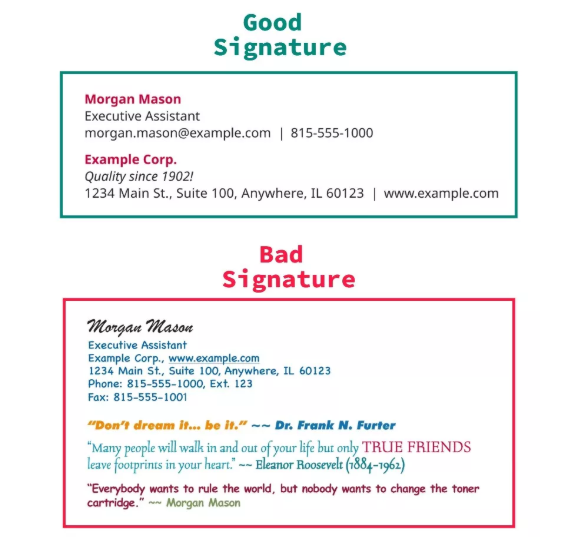
Here’s a great visualization of a good vs. bad email signature:

It’s time to send better emails
Email sign-offs are just one aspect of effective email communication, but they’re the piece your recipients remember most. The right closing reinforces your message, strengthens relationships, and encourages the response you need.
Omnisend makes it easy to create professional emails with consistent, on-brand sign-offs across your campaigns and automations.
You’ll have access to pre-built templates for welcome series, cart recovery, and promotional emails. Sign-offs are optimized for specific customer journey stages. You can also segment your audience and personalize closings based on the customer lifecycle.
Quick sign up | No credit card required
Email sign-off FAQs
Use “Best regards,” “Thank you,” or “Sincerely” for professional emails. Match formality to your relationship with the recipient. New contacts need more formal closings than established colleagues.
There’s no single best sign-off. Context matters most. “Best regards” works for most professional situations. “Thanks” suits requests for help. “Warmly” fits ongoing relationships.
Try “Looking forward to connecting,” “Thank you for your time,” or “Talk soon.” Choose email sign-offs that feel natural to you and appropriate for the recipient.
Polite email endings include “Kind regards,” “With appreciation,” “Thank you for your consideration,” and “Respectfully.” These show courtesy without being too formal.
“Best regards” remains the safest professional choice. It’s appropriate for nearly all business contexts. Alternatives include “Sincerely,” “Kind regards,” and “Thank you.”
Gen Z professionals typically use “Thanks,” “Best,” or “Cheers” for casual work emails. They prefer brevity over formality but still use “Best regards” for external or senior communication.
TABLE OF CONTENTS
TABLE OF CONTENTS
What’s next

No fluff, no spam, no corporate filler. Just a friendly letter, twice a month.

OFFER