
 Omnisend AI


 OFFER
OFFER





11 Amazing Welcome Email Examples (+ tips to write your own)
With over 130+ pre-built integrations and flexible APIs, you can easily centralize data from across your tech stack
Make the most out of your data and unlock powerful growth marketing possibilities with these other top marketing tools.
Build any custom integration with our open, flexible APIs that are simple to use and implement.
Check out apps that have been stealing all the spotlight.
Email and SMS marketing insights, ecommerce resources, and the latest Omnisend news
Expert-led sessions covering email, SMS, and ecommerce marketing strategies.
Educational video and live training to help you make the most out of Omnisend.
Drive sales on autopilot with ecommerce-focused features
See Features
Skincare emails must address specific customer needs and provide valuable content to drive engagement and build trust.
Utilize various email types, such as welcome messages, product launches, and educational content, to cater to different audience segments and enhance overall engagement.
Incorporate social proof, like customer testimonials and before-and-after photos, to bolster credibility and encourage conversions.
Prioritize mobile-friendly design and personalized content to ensure your emails stand out and resonate with your audience effectively.
Are your skincare email messages barely getting any opens, clicks, or conversions? Emails fail to drive engagement often because they’re too generic and don’t solve specific problems.
Your message needs to give customers a clear reason to engage and take action. When you consistently share helpful tips and relevant offers, you show readers that you understand their needs. With this connection, you gradually build trust and drive sales.
In this guide, we’ll explore the best skincare email examples and what makes each one work. You’ll also find ideas for welcome emails, product launches, promotions, and reminders. Lastly, we’ll cover proven best practices to improve every skincare email you send.
Quick sign up | No credit card required
Effective skincare email campaigns balance value, education, and promotion. By sending different types of content, you can improve engagement by tailoring emails to the needs of various audience segments.
Here are some skincare email ideas for various campaign types:
By sending these skincare email types strategically, you create a balanced strategy that covers every stage of the customer journey.
The best way to improve your skincare email marketing campaigns is by learning from successful brands. Here are 10 great examples from top brands, showing strategies you can adapt for your next campaign:
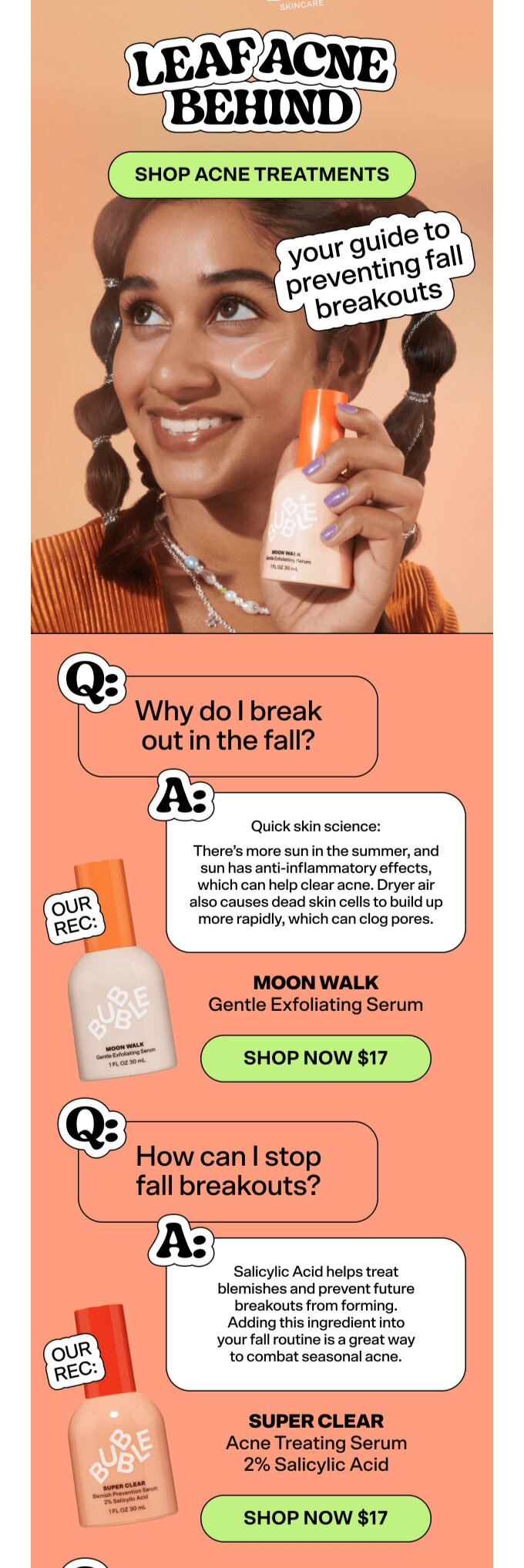
Bubble addresses common seasonal skincare questions in a simple, relatable way. Instead of overselling, the skincare email uses a Q&A format to explain seasonal breakouts. It then suggests specific products as the solution.
You can adopt this approach by leading with value, then selling naturally. It’s a great way to establish authority and trust while still driving sales. The bright visuals, clear headings, and short paragraphs also make the email easy to scan:
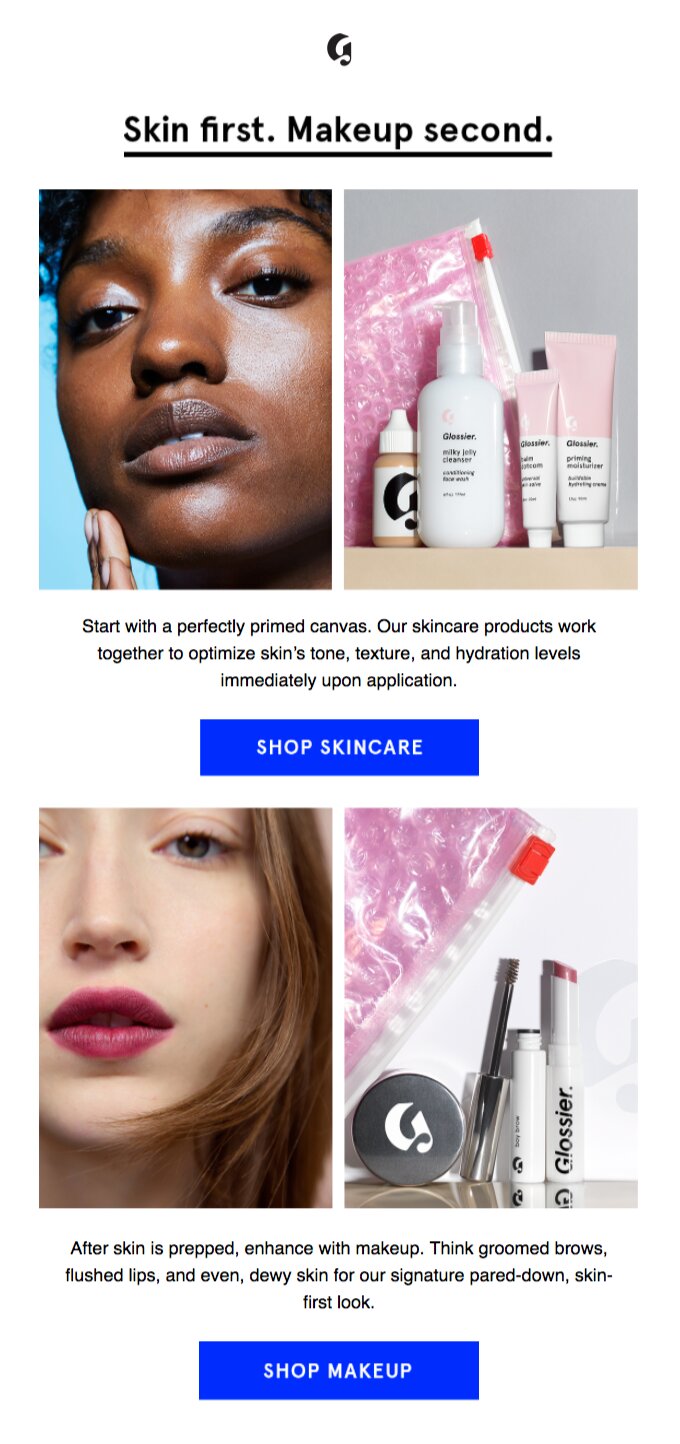
This Glossier skincare email proves that sometimes, less is more. Its design is clean and simple with stunning visuals, contrasting colors, and concise copy.
A neat grid layout guides the reader’s eye naturally from the skincare prep routine to the final makeup results.
The side-by-side close-up product and lifestyle photos show results on diverse skin tones. Lastly, prominent CTA buttons tell the reader what to do next:
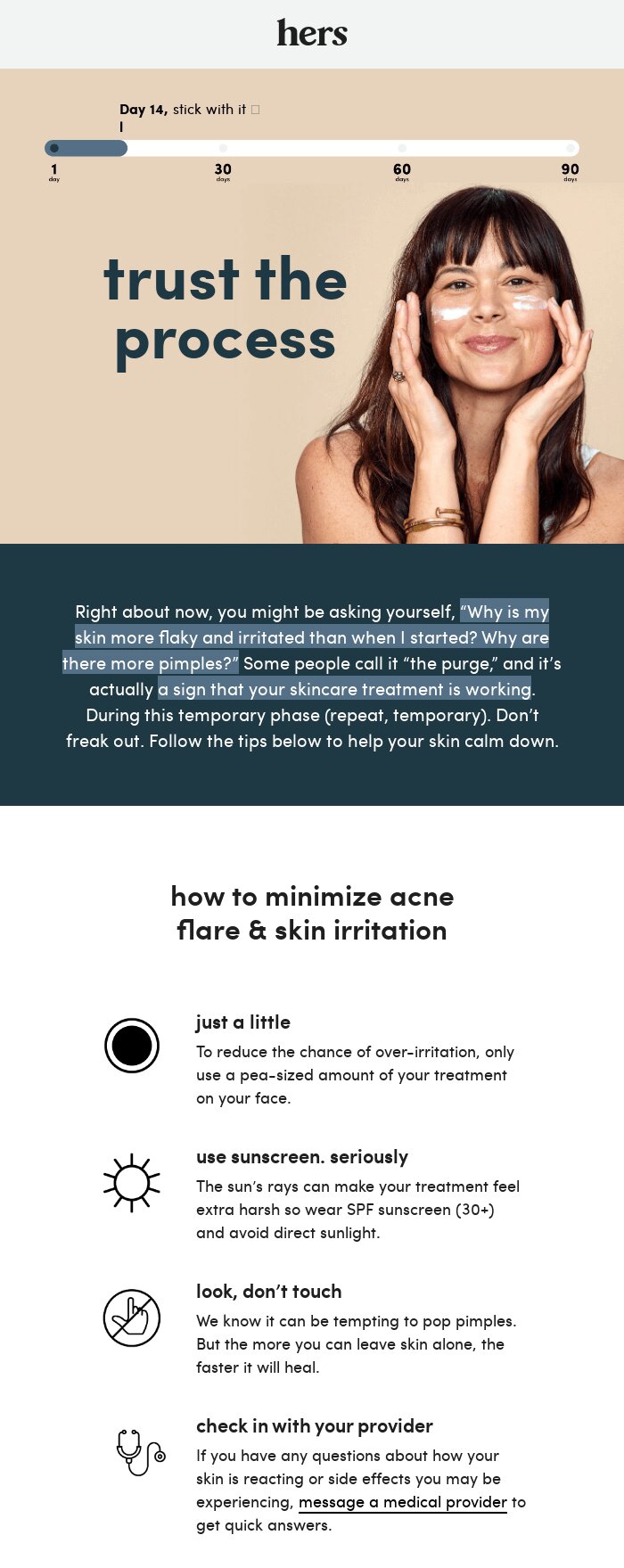
Instead of ignoring customers’ concerns, Hers addresses them directly. The skincare email starts by explaining why sometimes the skin gets worse before it improves.
It then encourages customers to trust the process, which helps prevent them from quitting early. This honesty makes the buyer feel supported and valued, increasing trust and credibility.
The 90-day timeline also provides a clear visual roadmap for results. Plus, simple tips offer clear next steps for readers to follow:
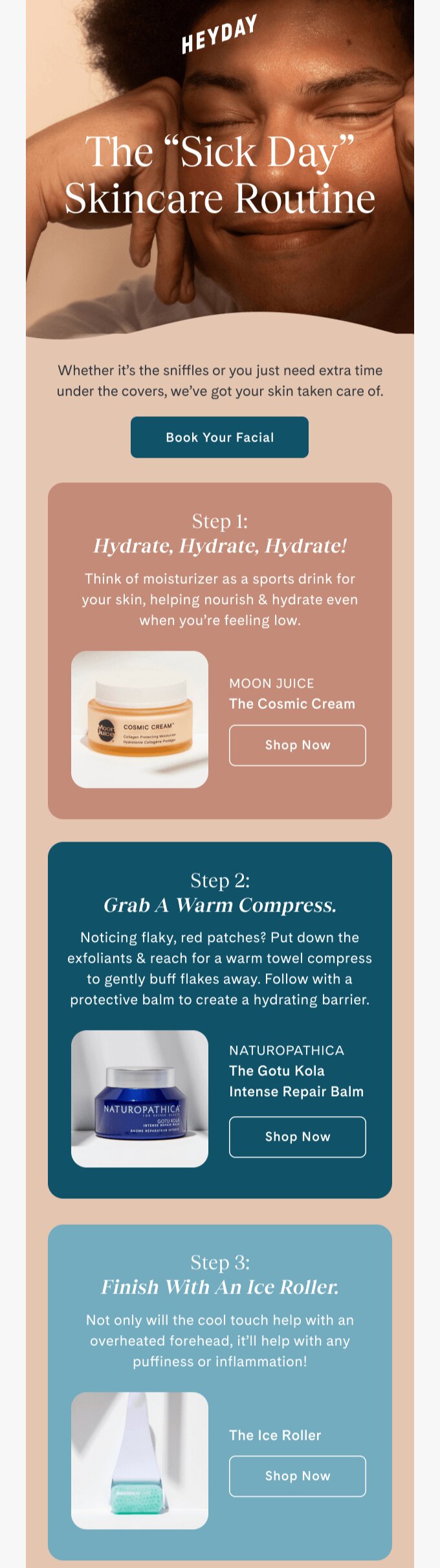
This Heyday email marketing example uses a relatable “Sick Day” theme to share a routine for stressed skin. It breaks down the process into clear, numbered steps that are easy to follow.
Each step includes a recommended product and a “Shop Now” CTA button. This makes it easy for customers to purchase what they need directly.
It’s among the best skincare newsletter ideas because it gives practical advice while gently guiding customers to purchase:
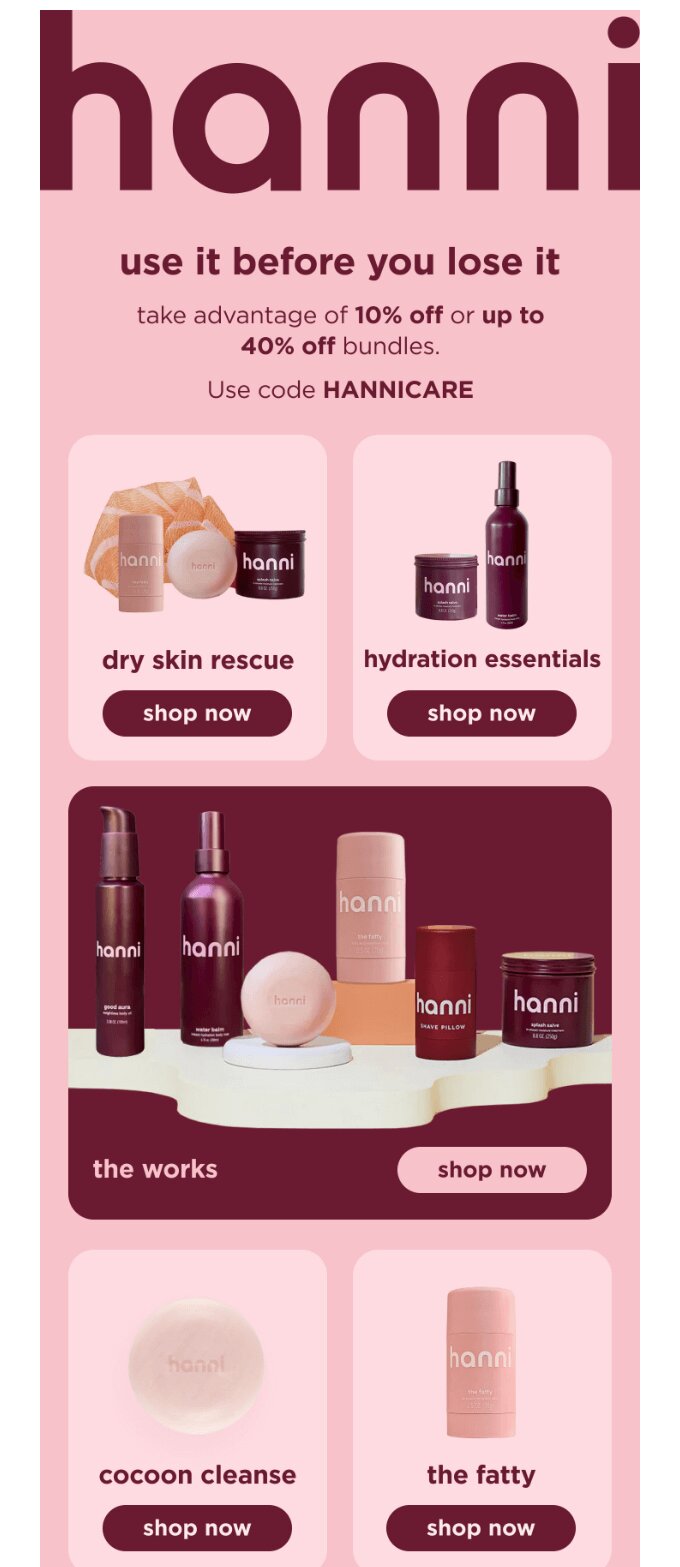
Hanni’s promotional email grabs the reader’s attention instantly with clear, time-sensitive 10% off and 40% off discounts on bundles. The phrase “use it before you lose it” urges customers to act immediately.
The skincare email also groups products into separate categories. This makes it easy for shoppers to find solutions for their specific needs. Bold “shop now” buttons guide customers to the next step:
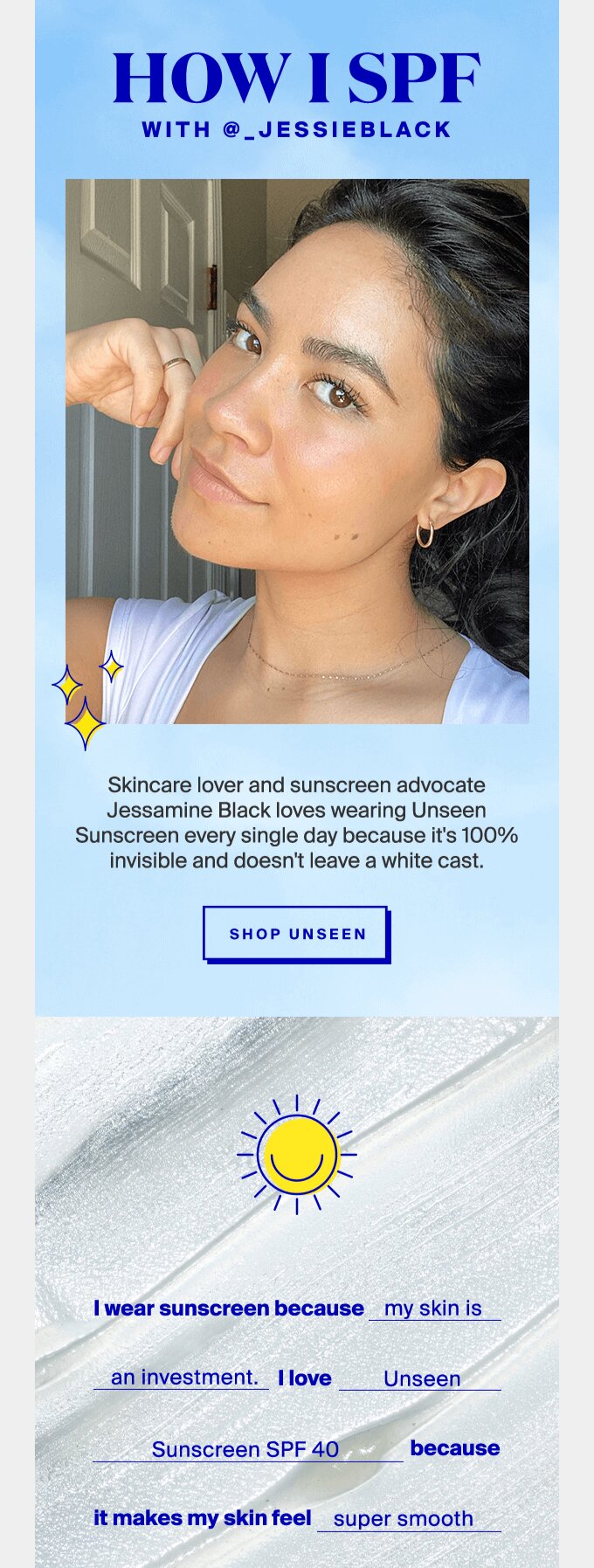
Supergoop proves that nothing sells skincare better than happy customers. The skincare email features UGC from Jessamine Black, a real customer and sunscreen advocate. A clear customer photo showcasing glowing skin provides social proof and builds authenticity.
Highlighting key product benefits, such as being “100% invisible” and “leaving no white cast,” eliminates common sunscreen concerns. The “Shop Unseen” CTA button stands out, making it easy for readers to take action:
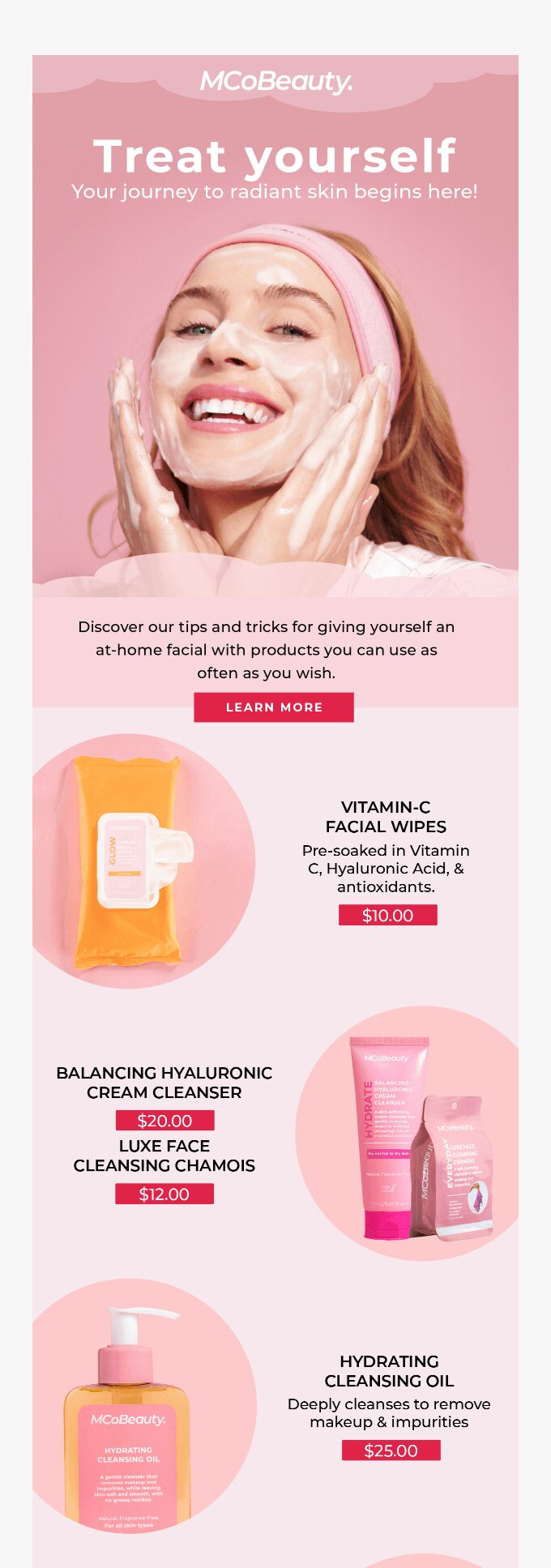
MCoBeauty takes the mystery out of shopping by sharing a complete routine along with clear product pricing. This transparency enhances trust and helps customers make quick buying decisions based on their budget.
Presenting the routine as an “at-home facial” makes the products feel like an accessible luxury of self-care. The email’s organized structure also makes it easy to scan:
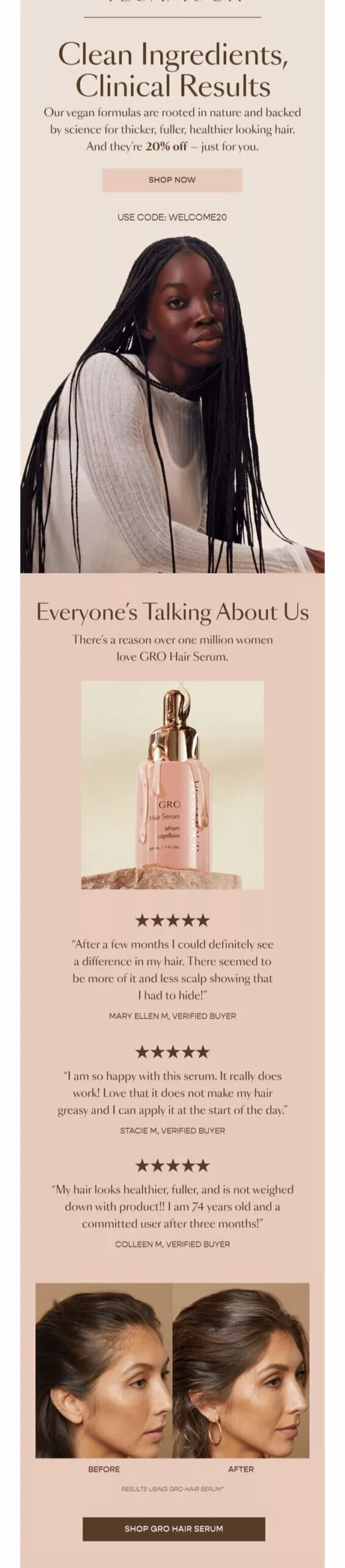
This Vegamour skincare email leads with a clear promise of clean ingredients and real clinical results. To back up the claims, Vegamour shares five-star ratings and customer reviews. Finally, the “before and after” photos provide visual evidence that the product really works.
By including social proof, the email reduces hesitation and reinforces the product’s value. The attractive 20% off discount also effectively drives sales:
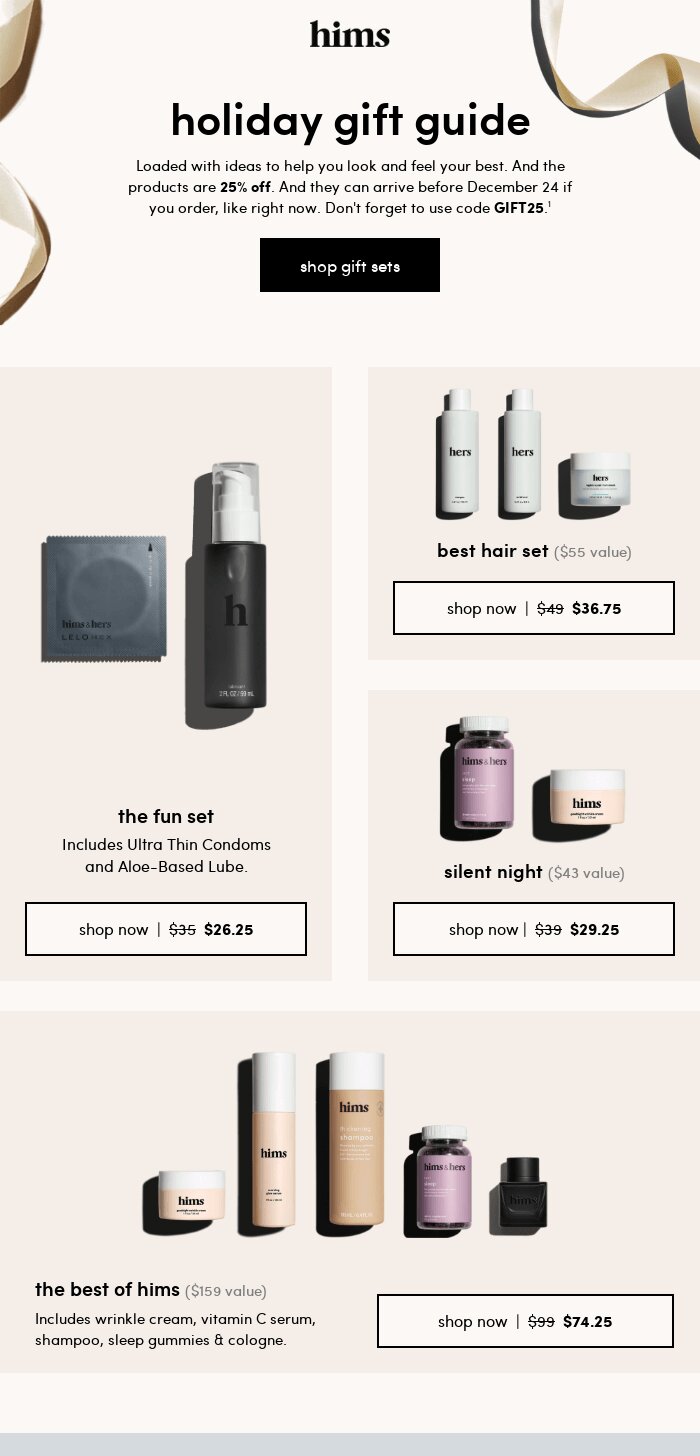
Hims’ holiday newsletter email focuses on seasonal demand with a 25% discount. Promising delivery before December 24 encourages last-minute shoppers to act quickly.
The skincare email also taps into gift-buying behavior, with curated product bundles like the “best hair set.” Each set shows the original value alongside the discounted price to highlight the savings.
This skincare email is a perfect example of how aligning promotions with popular events can help drive sales:
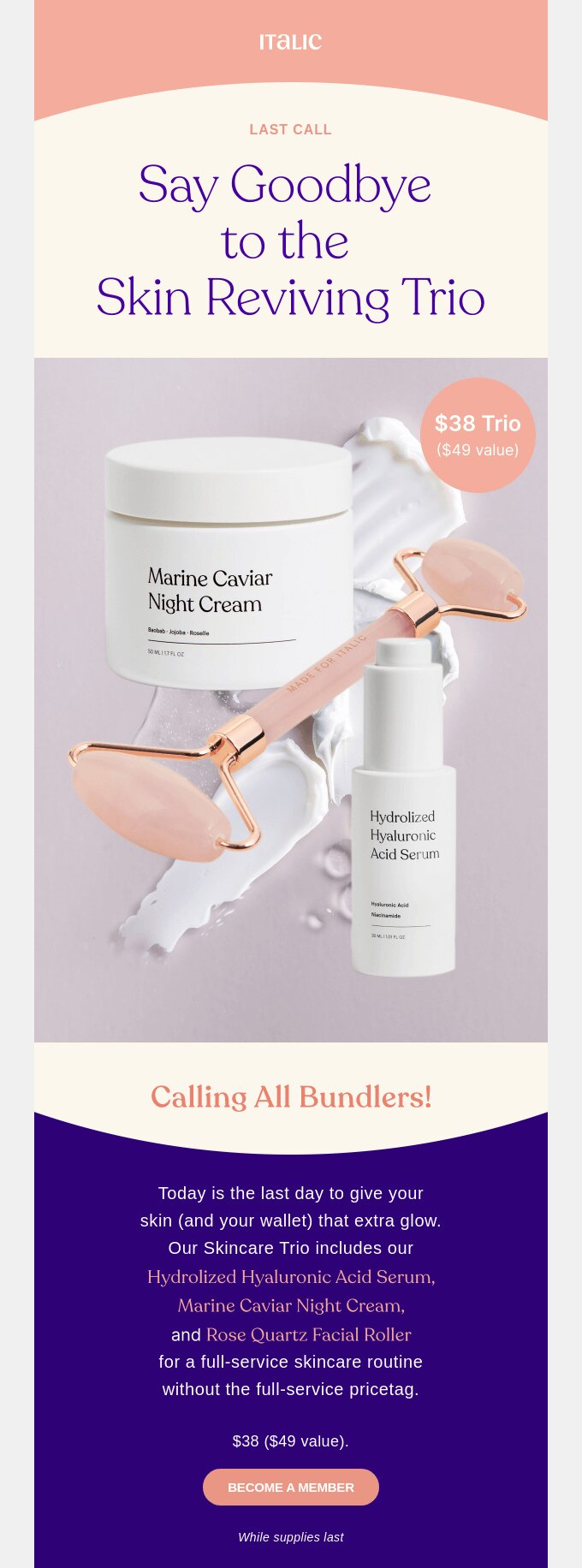
Italic’s skincare email communicates urgency instantly with phrases like “Last call” and “Say Goodbye.” By stating that today is the final day to grab the bundle, it encourages customers to act quickly so they won’t miss out.
The email also explains exactly what the customer will get in the trio package, helping them understand the full routine. Highlighting the $38 price point relative to its $49 value clearly communicates cost savings. Meanwhile, the “Become a Member” CTA button guides the reader’s next action:
Successful skincare email marketing relies on great design, relevant messaging, and a smooth customer experience. Follow these best practices to create skincare email messages that stand out in crowded inboxes:
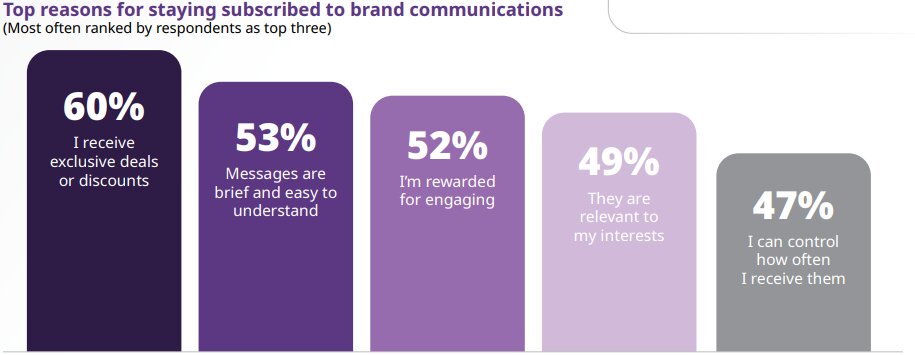
A 2026 CSGI report reveals that 49% of customers remain subscribed to brand communications if they receive messages relevant to their interests:
The best skincare email examples find the perfect balance of education, social proof, attractive offers, intuitive design, and the right timing. They effectively increase trust and drive sales.
Whether you’re launching a new product, promoting a limited-time offer, or welcoming first-time subscribers, these strategies can refine your campaigns. The key is delivering value consistently in every skincare email you send.
If you’re ready to put these ideas into action, Omnisend’s ready-made email templates and intuitive email automation builder help create personalized campaigns in minutes.
Quick sign up | No credit card required
A great skincare welcome email should thank the subscriber for signing up, deliver any promised discount, and introduce your brand. It should also explain what makes your brand unique and set expectations for future communications.
For most brands, sending a skincare email two to four times per month works well. This balance helps you consistently engage subscribers without overwhelming them. Test your frequency and observe open rates, clicks, and unsubscribes to find the sweet spot.
Yes, and you should. Segment your list by skin type, concerns, or past purchases. Then, tailor each skincare email to match the recipient’s needs. For example, you can suggest acne care products or dry skin routines. Personalized content feels more relevant and increases sales.
Yes, SMS works well alongside your skincare email campaigns. You can use email to nurture and guide subscribers, and SMS for quick reminders or flash sales. Omnisend lets you combine both channels in unified workflows to maximize reach and conversions.

TABLE OF CONTENTS
TABLE OF CONTENTS

What’s next



No fluff, no spam, no corporate filler. Just a friendly letter, twice a month.