Omnisend AI

 OFFER
OFFER










A shopper signs up for your welcome series because of the customer quote and star rating in your popup, then spends their discount on a first order. That’s testimonial advertising working.
Testimonial advertising uses the reviews and other positive coverage you collect across your marketing. There’s a trust factor to ratings, reviews, endorsements, and case studies that your customers weigh over what you say or claim.
This article is a complete guide to testimonial advertising. We’ll cover what it is, the differences between it and other marketing types, how it works, 15 real-world examples, and a playbook for collecting testimonials with email and SMS.
Updated: June 2026. First published September 2024.
What is testimonial advertising?
Testimonial advertising definition
Testimonial advertising uses user-generated content (UGC), paid endorsements, and influencer reviews in your marketing. What people say about your products, service, and brand is what you share to attract and retain customers. It can span the paid, earned, and owned channels your brand uses, such as email and SMS.
Testimonial vs. endorsement vs. influencer reviews
The difference between testimonial, endorsement, and influencer reviews: endorsements see you pay a recognizable figure to back your products. Influencer reviews work similarly, but at scale, to reach their followers.
Endorsements and influencer reviews require paying and collaborating with others, whereas testimonials are UGC, so you don’t pay for the privilege. The table below shows the differences:
| Testimonial | Endorsement | Influencer review | |
|---|---|---|---|
| Who speaks? | A customer | A known figure/entity | A creator |
| Paid? | No | Yes | Usually |
| Genuine experience? | Yes | Sometimes, if they use the product | Sometimes, if the review isn’t paid for |
What testimonial advertising means for ecommerce
You’ll use testimonial advertising across your customer journey to improve brand recall and credibility. A customer’s first experience of it could be your welcome popup with a review quote or seeing that same quote in a Google ad.
Product reviews app Judge.me asked shoppers what makes a store feel trustworthy at first glance in May 2026. 19% said customer reviews, behind only secure payment options.
BrightLocal’s Local Consumer Review Survey 2026 found that 85% of people who read positive reviews are likely to use that business. For ecommerce, the interesting stat is that 54% of consumers check a business’s website after seeing positive reviews.
The basic way of using testimonials is to add them to your store. But that single approach neglects most of the customer lifecycle. You can aid product discovery, research, purchasing, and retention with the right testimonial advertising strategy.
Why testimonial advertising works
Shopify asked 500 merchants what generated their first year of growth in 2025. 53% said word-of-mouth and customer testimonials.
Let’s give that statistic some additional color. Yotpo found that shoppers who interact with reviews convert 161% higher than those who don’t.
Together, those statistics tell us that testimonials move people closer to purchase. The answer as to why is one you’ll know as a consumer yourself. It’s because people trust what others say more than what brands say.
There’s an element of bias to the claims you make about your products, regardless of how eloquently you make them. The same could be said for paid endorsements, but the trust factor holds because your audience believes them.
Here’s a working example: Omnisend customer Amundsen Sports achieved a 57% conversion rate using social proof elements in its abandoned cart email.
Another Omnisend customer, To’ak Chocolate, includes customer testimonials at the bottom of its checkout recovery emails:
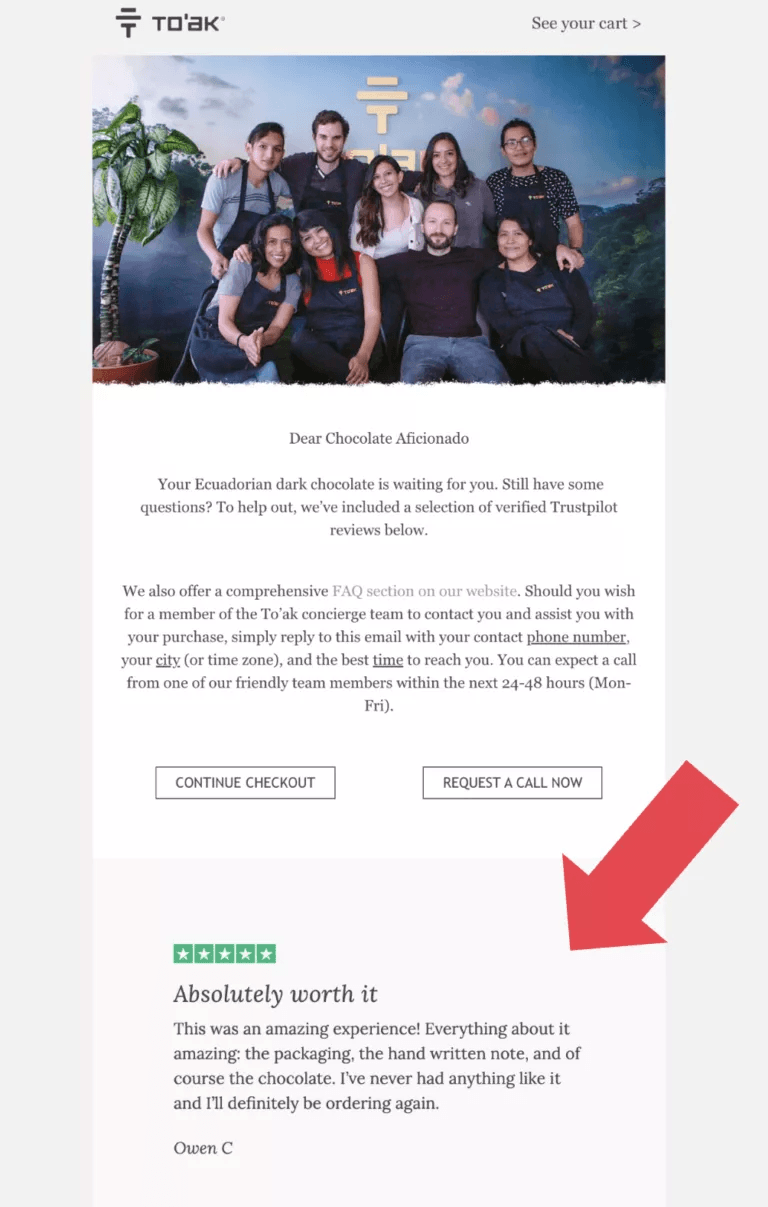
The beauty of testimonial advertising is that you can use it across your channels to build credibility in your brand. For instance, Google Ads has Google Seller Ratings, and your emails can request testimonials, which you can then use in other messages.
Our next section will go into the types of testimonial advertising in more detail.
Types of testimonial advertising
| Type | What it is | Best channel to use it on | Ease of collection/creation | Example |
|---|---|---|---|---|
| Written | A short quote or star review from a customer | Product pages, email, landing pages | Easy | Parry Soap Co’s text reviews with star ratings on product pages |
| Video | A brand-produced video featuring customers | YouTube, social, landing pages | Hard | Beardbrand’s YouTube channel |
| UGC | Customer-created photos or clips, often from social | Instagram, TikTok, product pages | Medium | ShoeNami’s social video reel, present on its homepage and product pages |
| Celebrity/influencer | A known figure or creator endorsing the product | Social, paid ads, video | Hard | Nike’s Kylian Mbappé quote on the Superfly product page |
| Case study | A detailed story with results | Website, sales pages, email | Hard | Pulsetto’s personal story reviews |
| Audio | A spoken testimonial, such as a podcast mention | Podcasts, audio ads | Hard | Cocunat’s podcast, which interviews industry experts |
| Expert/third-party | Endorsement from a specialist or review body | Packaging, ads, store pages | Medium | Huel’s "Recommended by top performers & nutrition experts" section on its homepage |
| Before-and-after | Paired visuals showing a customer's result | Social, product pages, ads | Medium | The Beauty Crop’s product application videos |
What are testimonial ads?
A testimonial ad is a paid placement that uses your customer’s words or their ratings to build credibility. Your Google Ad, Facebook ad, or other format puts customer opinion in front of people on the channels they search.
That’s different from an organic testimonial, which sits on your earned and owned channels, such as a product page, social feed, meta description, or email.
Your testimonial ads can take a few creative forms:
- Text. Such as a customer quote in your Google Ad description. For example, your PPC campaign might pull the sentence “My skin is glowing!” into its copy.
- Static quote overlay. A customer quote or star rating over a product image, such as in one of your Google Shopping listings. You could add “The quality is superb” or a similar quote to one of your high-end products.
- Video. Your customer speaks on camera about their experience, and you run the ad on TikTok or YouTube. Rather than using an influencer, you run the ad for an audience segment you define.
- Carousel. Multiple customer testimonials in series. Facebook, Instagram, and Messenger allow these. A good use case is before and after results, such as customers washing their car or applying makeup.
The Federal Trade Commission (FTC) has disclosure rules you must follow when a customer is paid, gifted, or incentivized for their testimonial.
15 testimonial advertising examples by channel
Use the real-world testimonial advertising examples below to inspire your efforts:
Facebook & Instagram paid ads
1. True Nutra Pure
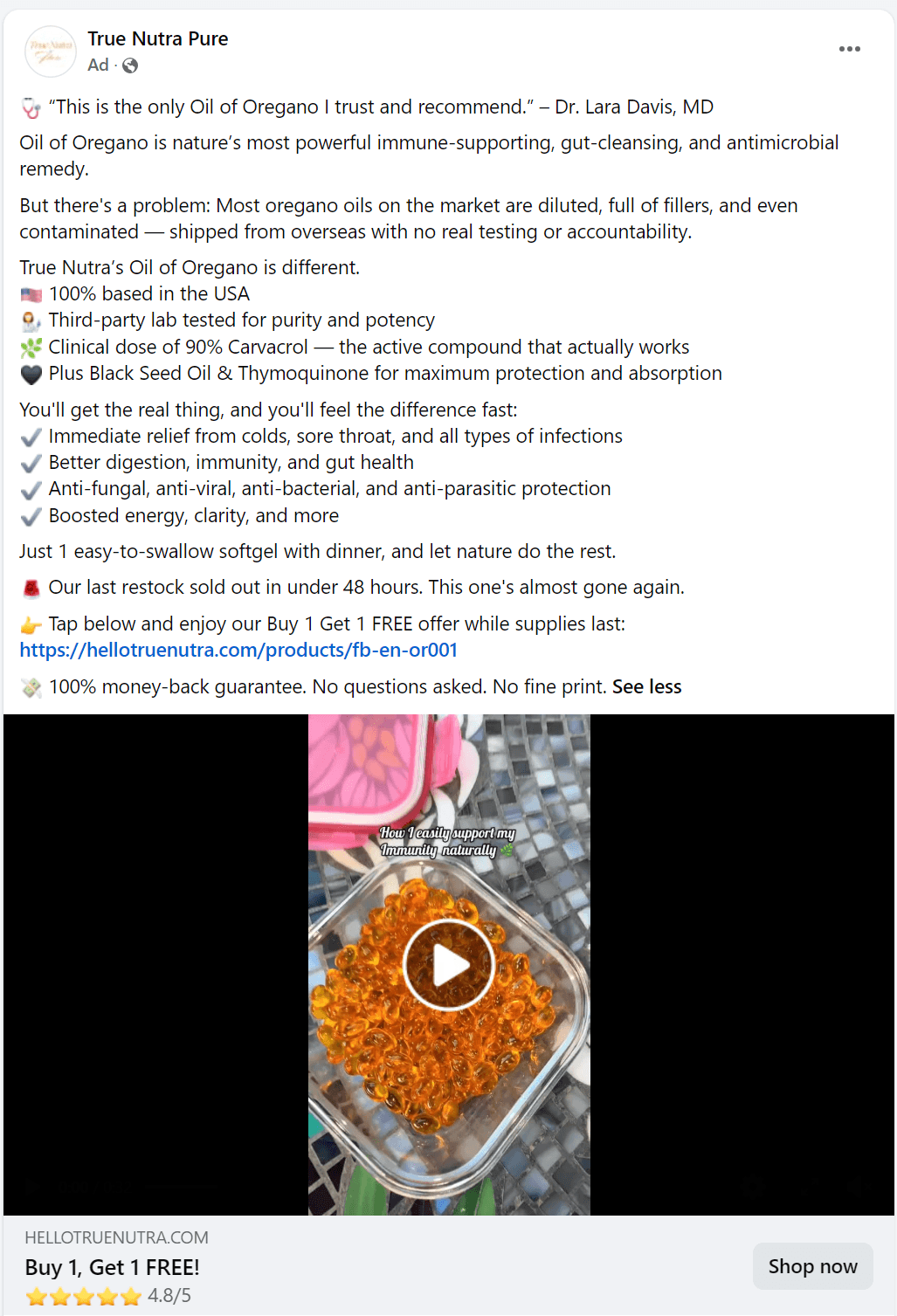
Dietary supplement brand True Nutra Pure uses the testimonial “This is the only Oil of Oregano I recommend.” – Dr. Lara Davis, MD, at the top of its Facebook ad.
Leading with the expert testimonial rather than the product description, features, and benefits in its ad provides an immediate outcome and creates intrigue. There’s also an educational video at the bottom of the ad for those who want to learn more.
The tactic to copy
Publish your customer testimonial as the first words in your ad and then build the features and content around what it says.
2. sad miles club
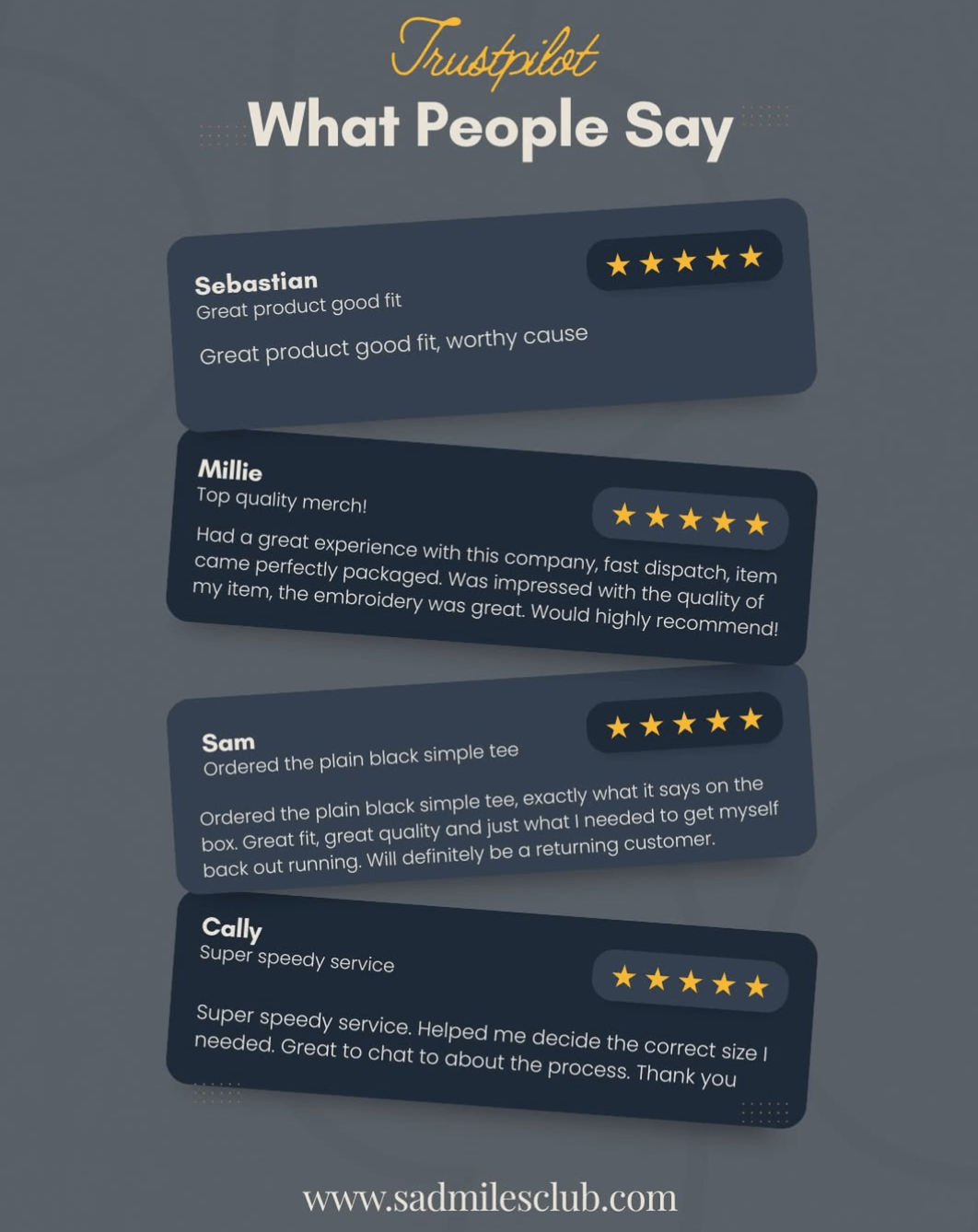
Running and activewear retailer sad miles club publishes customer review images on its Instagram page. The example above compiles three reviews from Trustpilot and includes a written URL at the bottom for people to type into their browser.
It’s a top testimonial advertising example as far as displaying multiple reviews goes. The post also uses hashtags to spread its reach, including #activewear for the product category and #trustpilot for the platform.
The tactic to copy
Include more than one review in the images you share on Instagram, Facebook, and visual platforms like Pinterest to cover multiple selling points.
3. Happy Mammoth EU
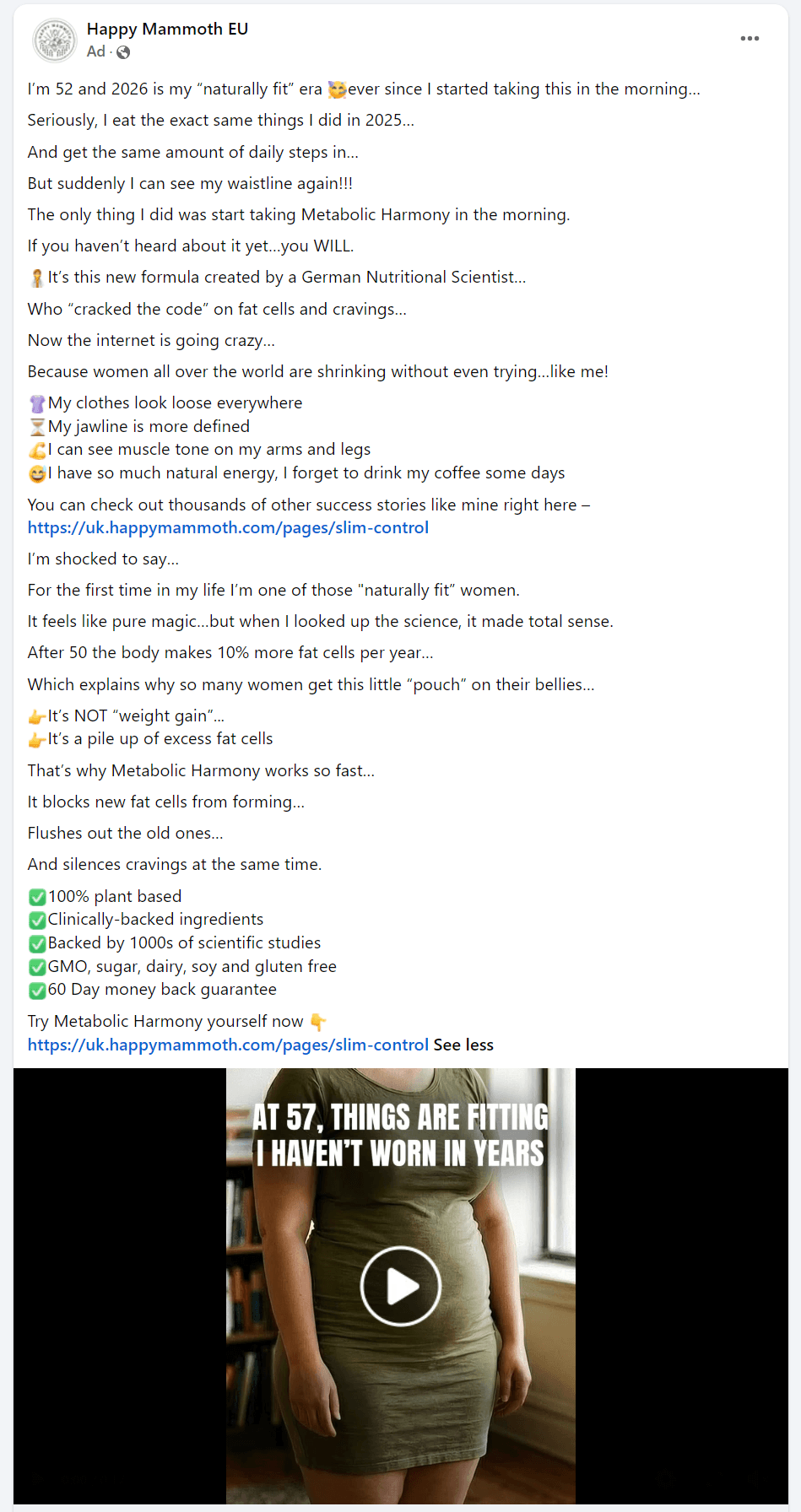
Gut and hormone health brand Happy Mammoth EU uses customer stories as the primary subject matter in its testimonial ads on Facebook.
The ad above is a highly personal one, detailing the customer’s age and insecurities. She provides insight into cracking the health code and all points to Happy Mammoth’s slim control range as a solution others can use just like her.
A combination of text and video provides a compelling case for potential customers to click and find out more. You could use the same combo in your own ads.
The tactic to copy
Take on your customer’s story as the lead and don’t overly promote your brand. Let their story do the talking and connect with your audience.
Google Search & Display
4. Noom
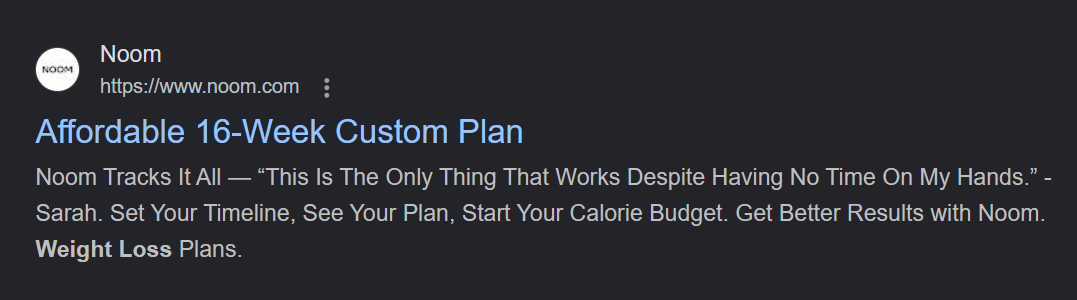
Noom’s weight loss ad appears in Google search with a short testimonial, “This Is The Only Thing That Works Despite Having No Time On My Hands” – Sarah.
What works is the shortness and placement of the testimonial on the first line. There are no site links or visual extras, which puts all focus on the primary link.
The tactic to copy
Use an outcome as the lead and then provide a quote to back it up. Noom’s approach led with tracking it all, and then the quote solidified it.
5. Orthofeet Inc.
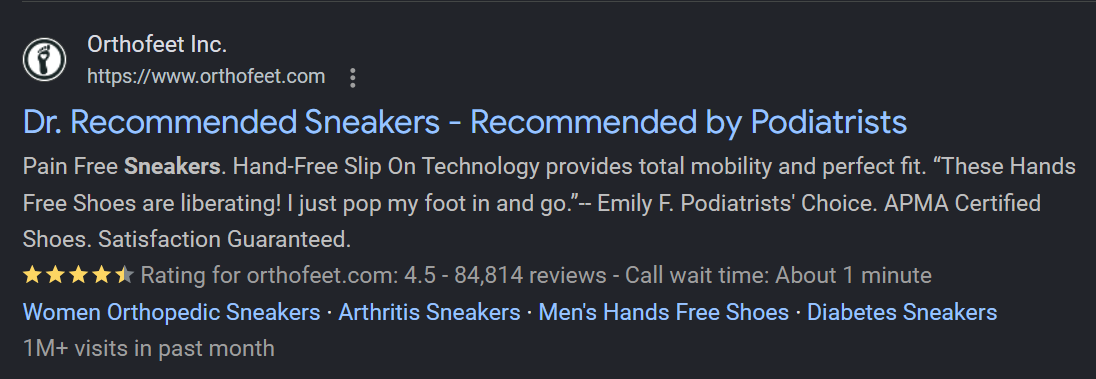
Orthofeet Inc.’s Google search ad goes further than Noom’s with a written testimonial and a star rating for the brand. It also contains multiple site links.
One of the reasons for the result’s richness is that Google serves it mid-page, so there are more elements in the ad to highlight it above organic results.
The tactic to copy
Combine your customer testimonial with a certification and guarantee information. Orthofeet Inc builds credibility with APMA Certified and a satisfaction guarantee.
6. IPSY
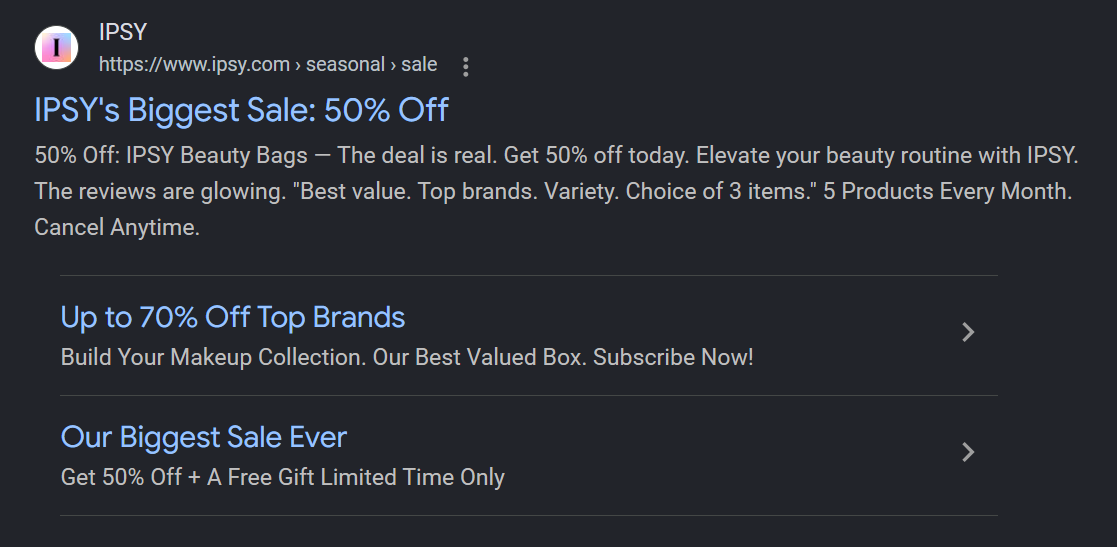
IPSY’s Google ad pulls several customer reviews into one testimonial quote, “Best value. Top brands. Variety. Choice of 3 items.” These cover different customer requirements, plus there are contextual site links below the ad.
There’s a heavy discounting strategy in IPSY’s testimonial ad. The social proof works with the discount to hit home the idea of value and quality.
The tactic to copy
Pull soundbites from your reviews to create a custom quote. IPSY’s testimonial ad mentions value, top brands, variety, and choice.
Email & SMS
7. Shift Robotics
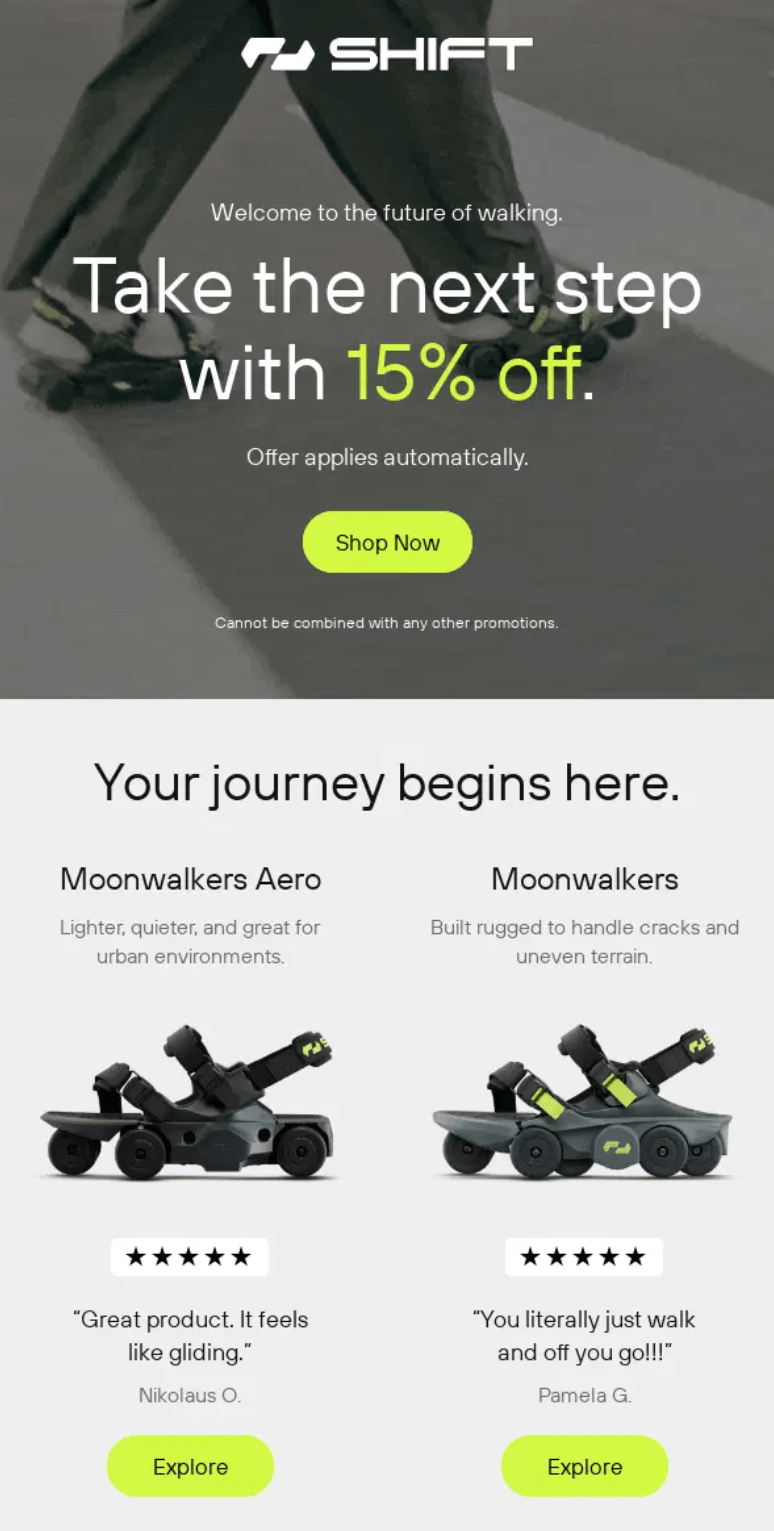
Mobility device retailer Shift Robotics uses testimonial advertising in its welcome email to increase click-through rates. Star ratings and customer quotes sit below product images, with a green “Explore” CTA button encouraging action.
The email delivers a discount early to satisfy the customer. We then have that small product grid, which uses high-quality photos and reviews to move customers closer to purchase.
The tactic to copy
Add short quotes to your product grid rather than just providing a description. Star ratings above written quotes are also helpful visually.
8. Bite
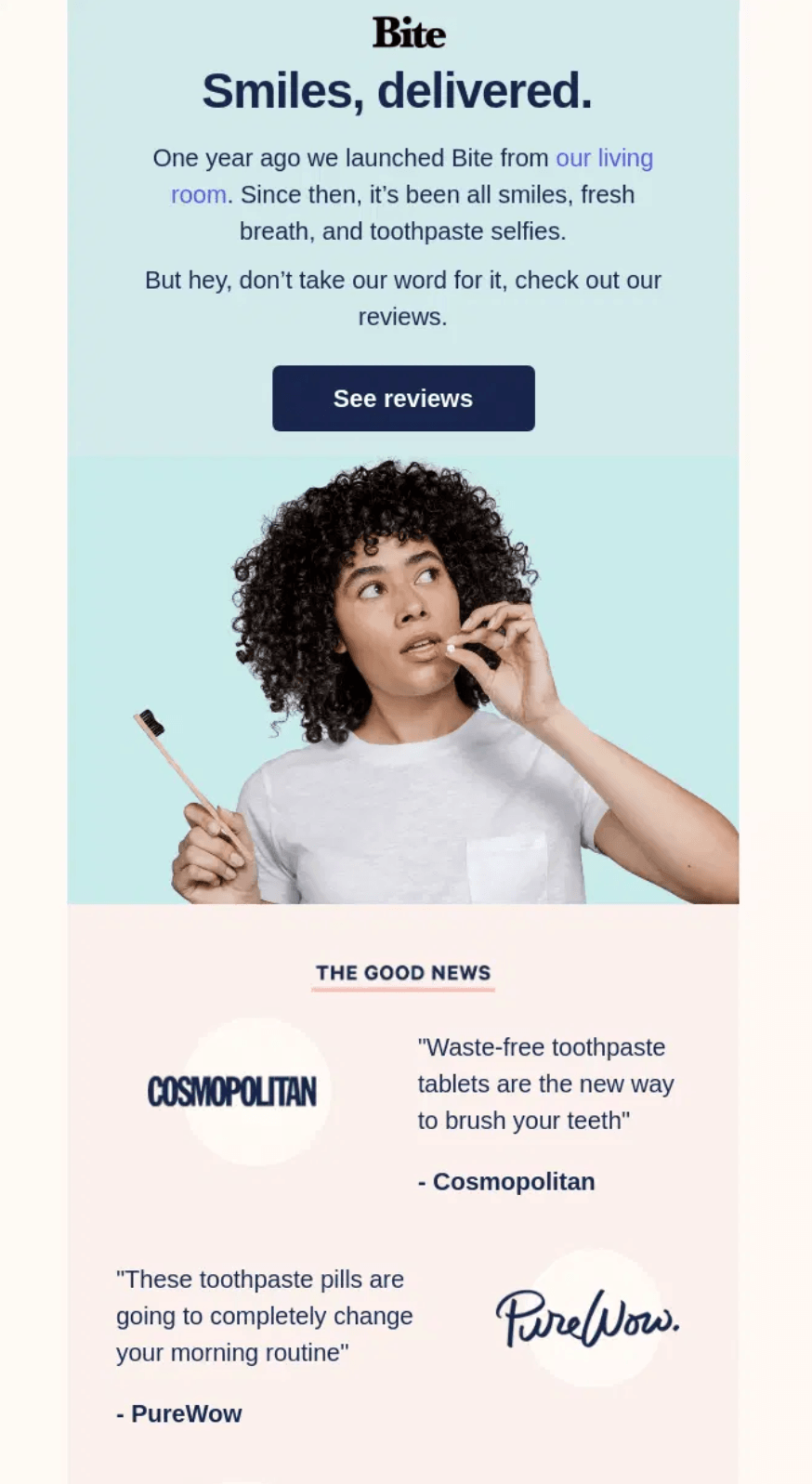
Oral hygiene retailer Bite has a social proof email campaign that compiles all its feedback, testimonials, and UGC into one message.
The email leads with magazine endorsements from Cosmopolitan, PureWow, and Healthline. It then has written testimonials, with a large quote box for the most impressive one.
Moving people closer to purchase is the goal here, which is why, after all that social proof, the email has a “Subscribe now, get $5 off” heading and a “Shop now” CTA button.
The tactic to copy
Compile as much feedback as you can from customers and endorsements, and maximize their placement in your emails to demonstrate your quality.
9. MasterClass

Online classes provider MasterClass adds testimonials to its course promotion email campaigns. The example above has a “What learners are saying:” section with two quotes from a product marketing manager and a regional director.
We like that the testimonial boxes include an image of the contributors. The pill-type element for their names and positions also creates a professional appearance.
There are three CTA buttons in this email encouraging people to click. The buttons in this case do valuable work in separating the heading, intro paragraph, and testimonial sections.
The tactic to copy
Create an email series around what your customer groups are doing. Segment your audience and create new email templates for those groups with testimonials that are relevant to them.
Celebrity & influencer
10. Macy’s
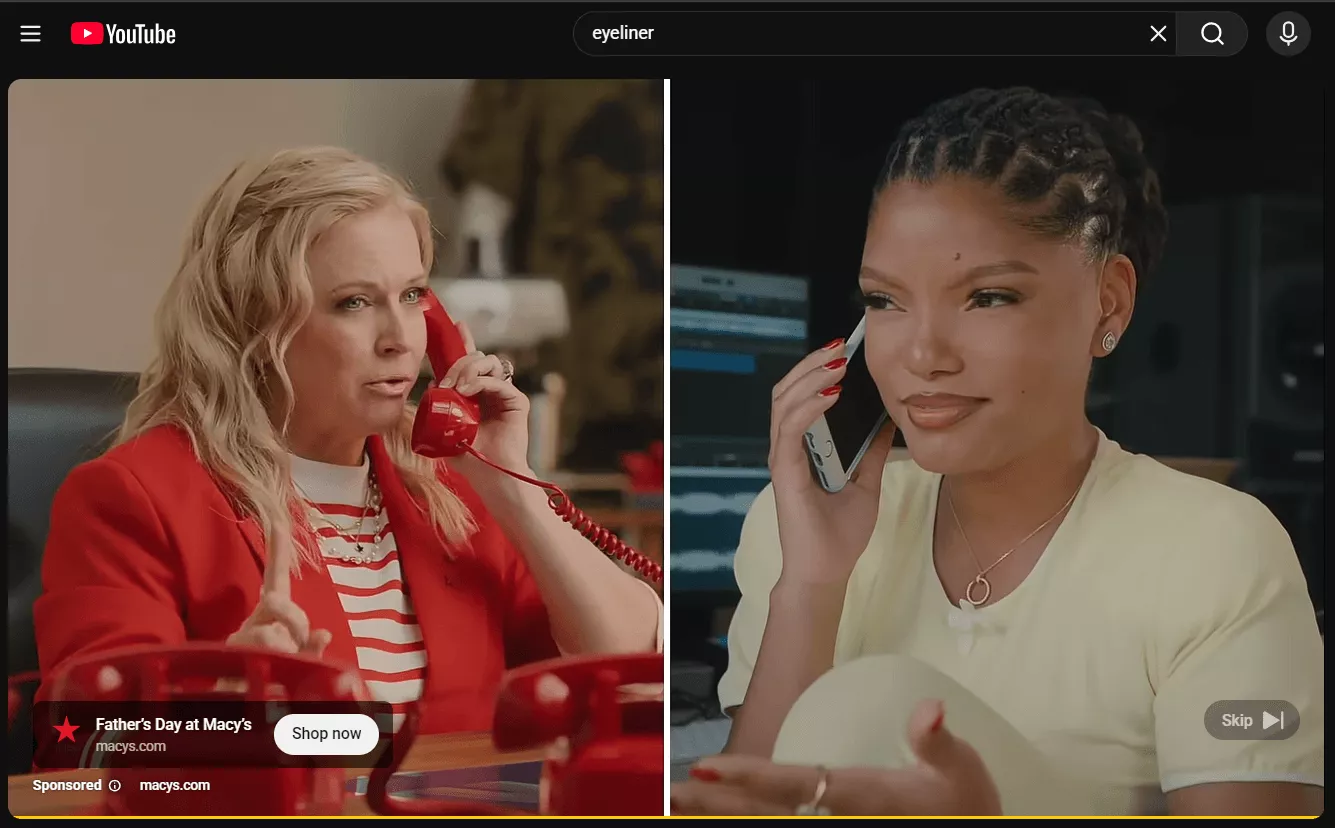
Macy’s collaborates with celebrities for seasonal sales events. The YouTube ad above is a 30-second video with shopping advice from Macy’s hotline for actress and singer-songwriter Halle Bailey, who needs to find some gifts for Father’s Day.
It’s one of our favorite recent celebrity testimonial advertising examples. It appeared at the beginning of a video covering eyeliner tricks, but it’s also available as a Short, maximizing the company’s reach.
The tactic to copy
Create advice and tips-based videos with celebrities when you’re in ecommerce. You can then recommend products and link to them in the bio.
11. VKTRY
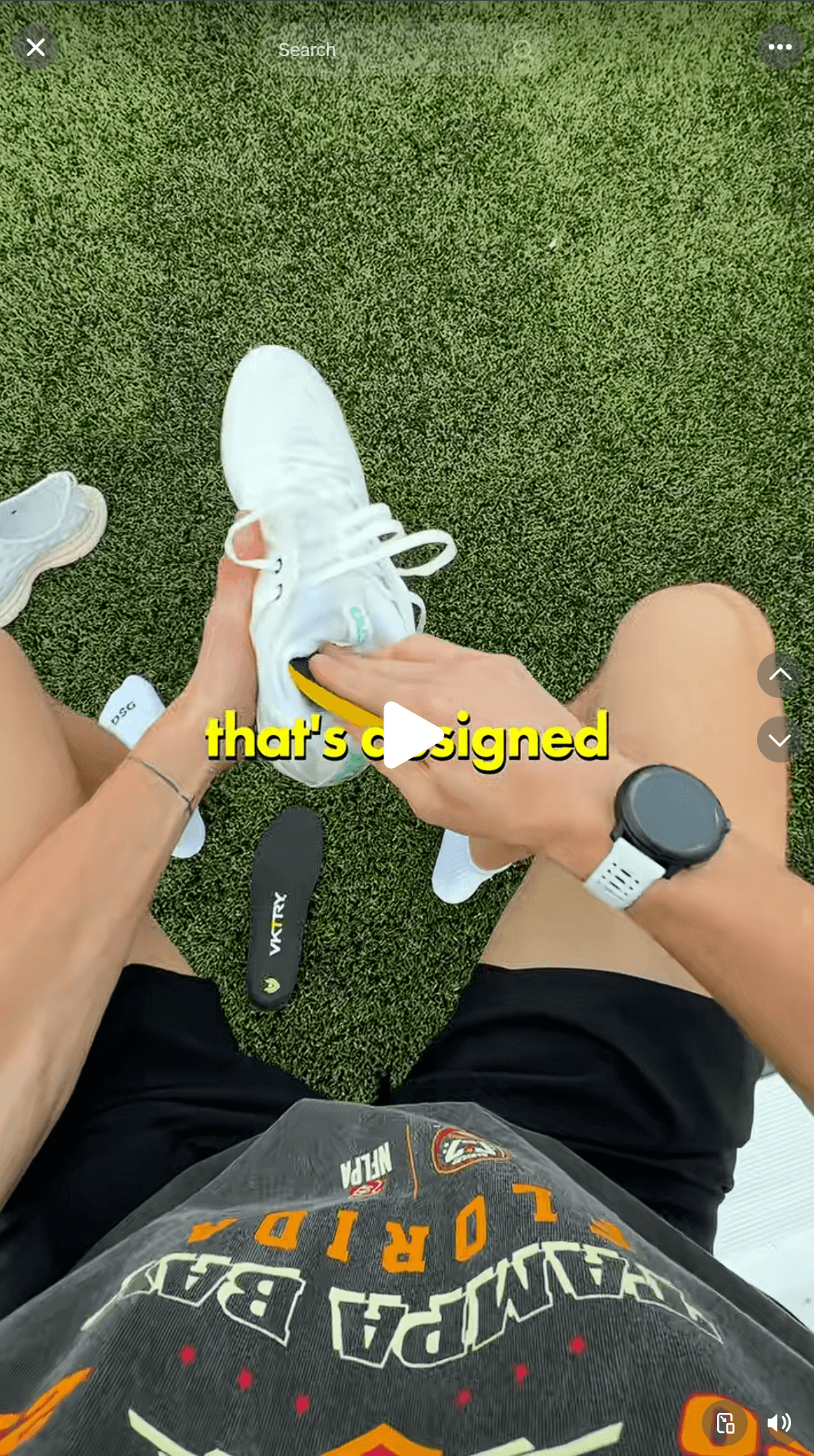
Carbon fiber insole brand VKTRY collaborated with TikTok influencer Sidelinedevon to cover its latest insole with a full carbon fiber plate.
The paid collaboration works well, with Sidelinedevon’s video introducing the product, showing why it’s different, and then his thoughts on it. The ad is only 31 seconds long and ends with “It’s hard to go back once you try it,” creating desire for the product.
The tactic to copy
Collaborate with influencers who match your niche and let them test your products. Don’t force coverage when your product is clearly superior.
12. L’Oréal Paris USA
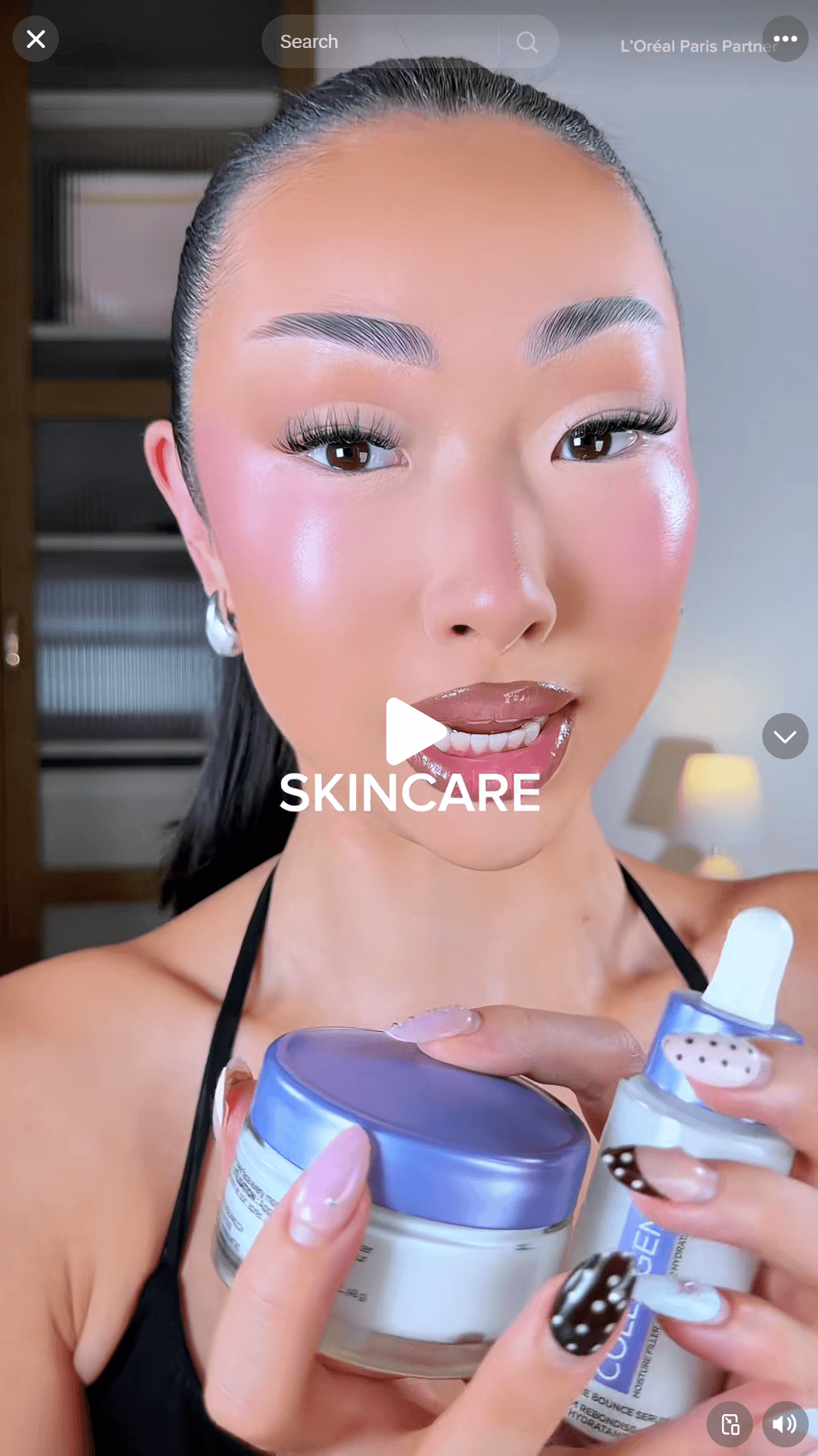
L’Oréal Paris USA is one of the best-known beauty brands in the country, yet it still leans on testimonial advertising to educate and promote products.
Its TikTok ad above is a collaboration with influencer itsbabykelz. She promotes L’Oréal’s $13 skincare products, sharing her thoughts, product information, and real-world application. It’s 49 seconds long, with the last shot showing what it looks like with makeup layered on top.
The tactic to copy
Pick your influencer platforms with care to ensure you reach the right audience with testimonial ads. L’Oréal wants to reach younger people, hence TikTok.
Website & landing pages
13. Huel
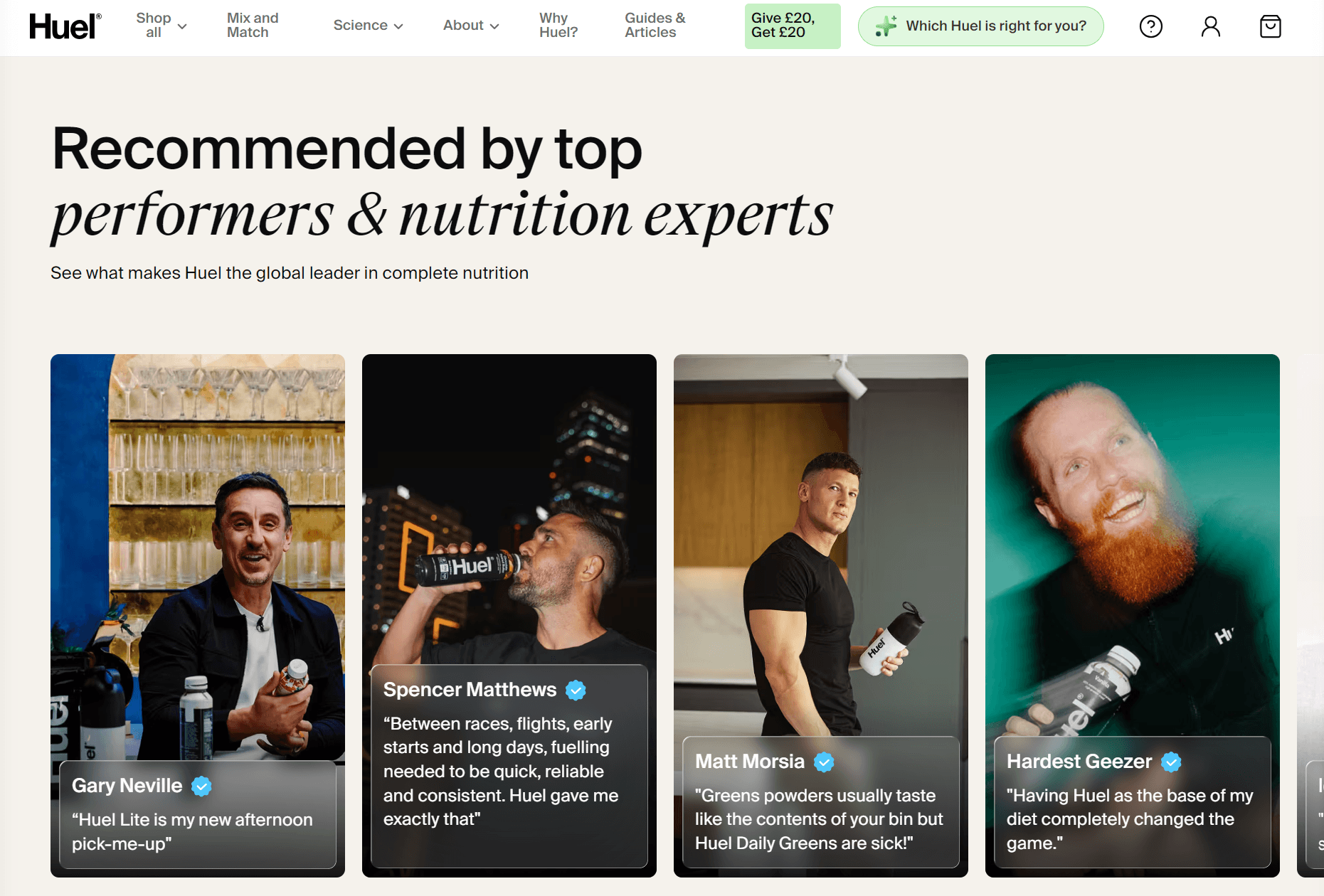
Huel provides our favorite on-site testimonial advertising example with a reel of images showing top performers and nutrition experts with text overlays.
The overlays are part of the image and feature the likes of Abbey Clancy, Matt Morsia, Hardest Geezer, Gary Neville, Idris Elba, and Kristen Holmes. Of course, all the quotes are about Huel and how wonderful it is. Who can argue with that?
The tactic to copy
Get endorsements from more than one expert or known person and create dedicated sections on your store to show them off. Huel stands out because few other stores in the industry have so many recommendations.
14. Parry Soap
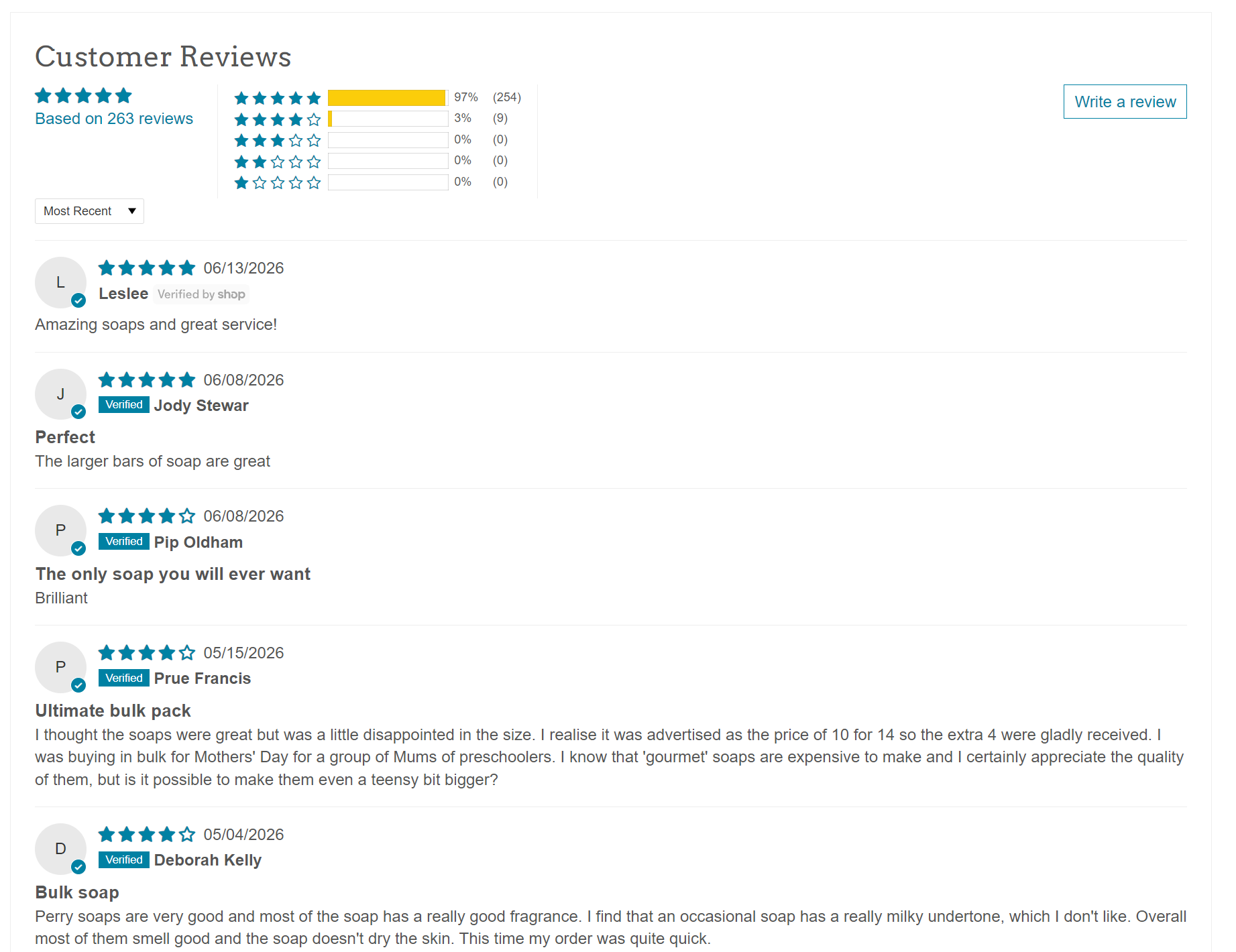
Parry Soap is a New Zealand-based soap brand. It displays written customer testimonials on all product pages, directly below the product entry. It uses Judge.me to display reviews, which also automates the post-purchase review request email.
The Shopify template Parry Soap uses is minimalist and fast-loading, so the written reviews look like they belong there, rather than as a random app embed.
The tactic to copy
Automate review request emails and display widgets on your store. Use an app that handles it all and can integrate with your email tool for follow-ups.
15. ShoeNami
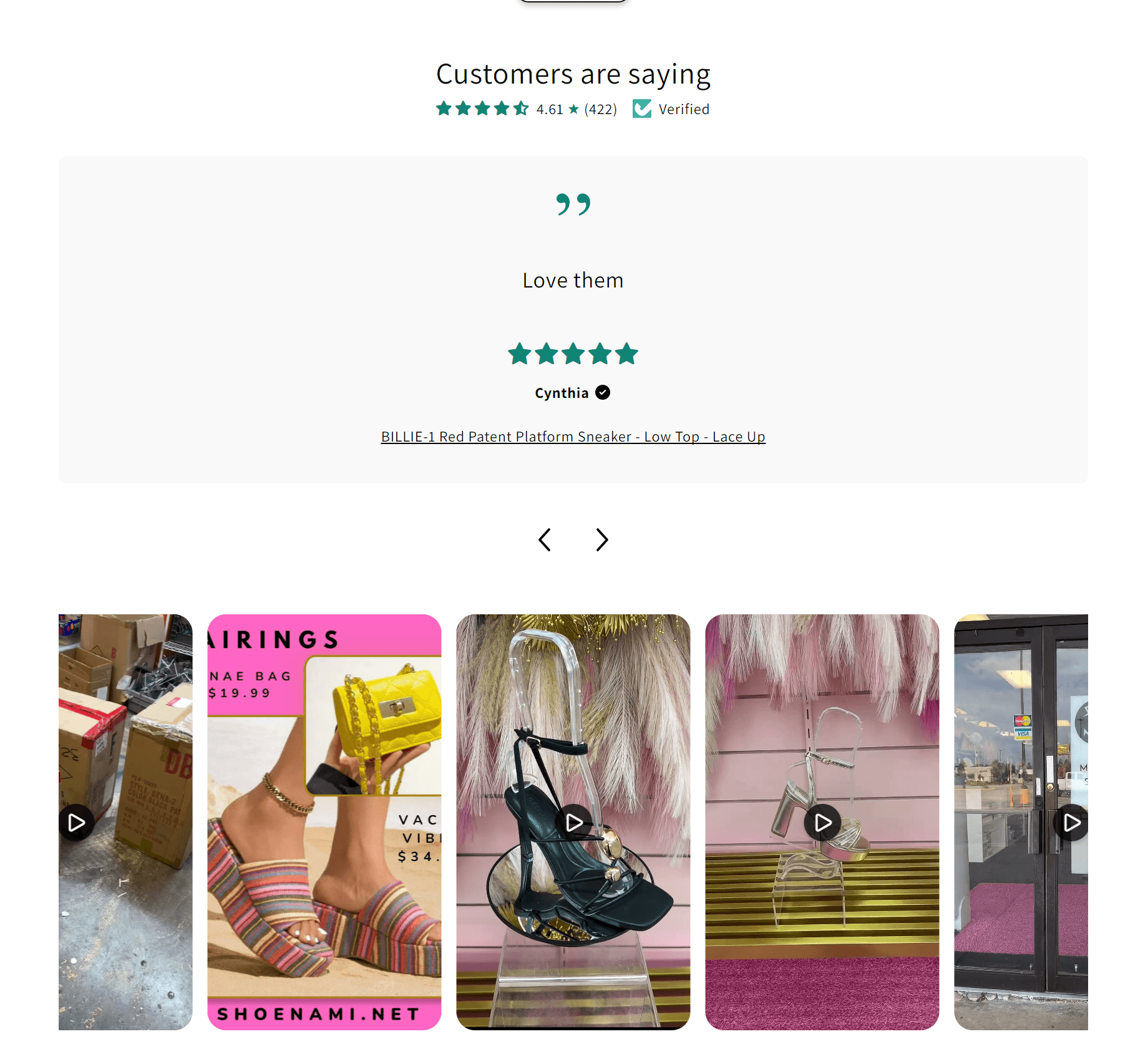
ShoeNami uses testimonial advertising in two main ways on its site. The first is written testimonials with star ratings, and the second, a more interesting format, is a video carousel, containing brand-produced videos.
Judge.me is the app of choice for review display and collection, as with Parry Soap. Taking a visual approach with videos suits brands with younger audiences, and you can produce videos with the feel of UGC in place of genuine submissions.
The tactic to copy
Combine written testimonials with branded videos. That combination does double-duty to increase credibility in your products.
Best practices for effective testimonial ads
These expert tips will help you make the most of our testimonial examples in advertising:
- Maximize new review collection. Create a post-purchase email series asking for reviews. Omnisend has a pre-built flow for it. You can also integrate several review collection apps, such as Yotpo and Judge.me, for your stack.
- Lead with the result instead of a vague point. Instead of “Works great,” say “I’m feeling healthier than ever,” or “I saved $60 switching.”
- Include your customer’s information in your ads. Including their name, position, age, and a photo, when appropriate and available. The more human your testimonials, the more credible they are, which helps to increase conversions.
- Use FTC-compliant disclosures when necessary. These are for paid ads, sponsorships, endorsements, and other formats. The disclosure is to avoid misleading people. The fine per violation is up to $53,088.
- Match the format to the channel. You’ll sometimes be forced into it by what the ad channel supports. But if you have a choice, research what works best on the channel and follow their lead.
- A/B test headlines and copy. Create at least two versions of any paid ad, email, and social media post. The open, click, and conversion rates are directly comparable, letting you see if a change in content or review type improves results.
- Produce short videos. Few will watch your five-minute case study or user review. You have around three seconds to grab their attention. A maximum length of three minutes is what YouTube Shorts allows, but we’d go shorter at 60 seconds max.
Do
- Create an outreach strategy for new UGC for use in your testimonial ads
- Provide upfront value with customer results
- Read up on the latest FTC rules around paid advertisements
- Test your ads and research what formats suit your various marketing channels
Don’t
- Limit your review collection to only text feedback
- Assume that what you created is the best possible version
- Mislead your customers with fake reviews or undisclosed paid placements
- Stagnate and continue reusing old reviews
How to collect testimonials with email and SMS
Here’s your playbook for collecting testimonials across your owned channels:
1. Trigger a post-purchase review-request email
Customers should receive a review request email within one week of delivery. The typical range is five to seven days to give them enough time to use your product and collect their thoughts.
Omnisend has a pre-built post-purchase email for product reviews that triggers on the order-fulfilled event. You can set a custom delay to suit the usage patterns of your customers.
2. Ask a guiding question
Instead of a generic “Leave a review” request, ask your customer how your product tastes, fits, feels, improves their performance, makes life easier, and so on.
The more contextual your reviews, the better they’ll fit your testimonial ads. Uniqueness also makes your testimonials stand out from blander brands.
3. Send one SMS follow-up for non-responders
Customers who opted into SMS marketing might prefer receiving a text to leave a review. There’s also the possibility that they don’t monitor their email.
One text message is best to avoid overload. SMS inboxes are much more personal than email ones, so there’s a higher likelihood of opt-outs from fatigue.
Omnisend’s global SMS capabilities, available in the Pro plan, let you add text messages to your flows for multichannel reach.
4. Collect testimonials on your connected app
The answer to how to collect testimonials is simple: with an app. Loox, Judge.me, and several others handle basic review request email automations and additional collection features, such as QR codes, which you can add to your packing slips.
These are not complete email marketing tools, though. They’re for reviews only. Omnisend syncs with these apps and brings data back into your account, so you can automate follow-ups and segment by who’s reviewed.
5. Curate and deploy across your channels
All the testimonials, reviews, and feedback you collect are usable in your marketing channels, from paid ads to email and social media.
Decide how you want to display reviews, and where. Emails are perfect for ratings, written reviews, and static quote overlays. Google Search ads suit text, and social ads offer much more, such as carousels and videos.
Recency is key regardless of the above. Use the latest reviews, provided within the last week or two, in your ad rotation. Another essential is quality. Typos and grammatical mistakes will be plentiful, and you’ll need to do some touch-ups.
Testimonial advertising: Wrap up
Testimonial advertising puts your best reviews and endorsements in front of your customers across owned, earned, and paid channels.
Formats for testimonial ads include text, video, case studies, image overlays, and more, each suiting different channels and potentially audiences, too. The format follows the channel, and your efforts should go into those that you can prove get results.
Social proof is the factor behind testimonial ads. You need to collect and curate it. The best way to do that is with a post-purchase email and an SMS.
Your ecommerce store can automate these requests with Omnisend, which has a pre-built review request flow and integrates with apps such as Yotpo.
Quick sign up | No credit card required
FAQs
What is testimonial advertising?
Testimonial advertising is the use of social proof and endorsements in your marketing across owned, earned, and paid channels. A cross-channel strategy sees you use multiple testimonial formats to appeal to customers at different lifecycle stages.
What is the difference between a testimonial and an endorsement?
A testimonial is feedback from a paying customer, whereas an endorsement is a paid or otherwise incentivized recommendation from a figure or expert. A customer who buys your product and leaves a review about the fast delivery left a testimonial; the podiatrist you asked to recommend your insole provided an endorsement.
What are the types of testimonial advertising?
The formats are written, video, UGC, influencer recommendations, case studies, audio, endorsements, and before-and-after results. Where you use them is channel dependent, and some audience groups will respond better to certain types.
What are the FTC rules for testimonial advertising?
FTC rules require your ads to be truthful and non-deceptive. Transparent, in other words. It requires disclosing when your testimonials involve payment or incentives. No fake testimonials are allowed, and there are penalties for civil violations.
Does testimonial advertising increase conversions?
Yes. Yotpo, a reviews app, found that shoppers who interact with reviews/UGC content convert 161% higher. Omnisend has also seen conversion rate increases in campaign and automated emails when they contain testimonials and other social proof.
What is celebrity testimonial advertising?
Celebrity testimonial advertising involves using famous people’s words, videos, and audio in your marketing. These are paid collaborations. They can also fall into the remit of endorsements when they involve famous sportspeople and experts.
How do you collect customer testimonials?
A post-purchase review request email is the best approach for your customers, sent around seven days after delivery. If they’re opted into SMS, a single text message can improve response rates for your campaign.