Omnisend AI


 OFFER
OFFER








Klaviyo SMS vs. Omnisend SMS: Functionality & pricing comparison for 2025
With over 130+ pre-built integrations and flexible APIs, you can easily centralize data from across your tech stack
Make the most out of your data and unlock powerful growth marketing possibilities with these other top marketing tools.
Build any custom integration with our open, flexible APIs that are simple to use and implement.
Check out apps that have been stealing all the spotlight.
Email and SMS marketing insights, ecommerce resources, and the latest Omnisend news
Expert-led sessions covering email, SMS, and ecommerce marketing strategies.
Educational video and live training to help you make the most out of Omnisend.
Drive sales on autopilot with ecommerce-focused features
See Features
Many ecommerce brands are seeking Klaviyo alternatives due to rising costs, complex setups, and slow support, with Omnisend emerging as a top choice for Shopify and WooCommerce users.
Omnisend stands out for its ecommerce-focused features, offering a user-friendly interface, robust automation, and multichannel capabilities at a lower cost than Klaviyo.
Pricing models vary significantly among alternatives, with options like Brevo focusing on send-volume pricing, making it ideal for brands with large contact lists but less frequent sends.
When selecting a Klaviyo alternative, consider your business size, team capabilities, and specific marketing needs to find the best fit for your ecommerce strategy.
Klaviyo alternatives are a common search for ecommerce brands that want effective email and SMS marketing. Such brands seek options that avoid the high costs, complicated setup, and slow support often found with more complex platforms.
This guide is for ecommerce merchants — especially teams running stores on Shopify, WooCommerce, and BigCommerce — who are comparing options before switching platforms or choosing their first serious email marketing tool.
Inside, you’ll find what to expect from the best Klaviyo alternatives for ecommerce in 2026. This includes pricing differences, key features, ideal use cases, limitations, and tips for choosing the right fit for your store.
To create this list, we signed up for each platform and tested them. We combined our hands-on review with pricing research and user feedback to assess real-world ecommerce fit.
This article was researched and written by our experts following a precise process.
See the processThis guide compares Klaviyo (benchmark), Omnisend, Brevo, ActiveCampaign, Mailchimp, Constant Contact, MailerLite, AWeber, GetResponse, Drip, and Moosend. For most Shopify and WooCommerce stores, Omnisend offers the best overall ecommerce value; ActiveCampaign is best for advanced automation, Brevo for send-volume pricing, MailerLite for beginners, and Drip for DTC retention-focused teams.
| Tool | Best for | Free plan? | Starting price | G2 rating |
|---|---|---|---|---|
| Klaviyo (benchmark) | Advanced ecommerce segmentation, and retention teams | Yes | $20/mo | 4.6/5 |
| Omnisend | Most ecommerce stores (best overall value) | Yes | $16/mo | 4.6/5 |
| Moosend | Budget-friendly email automation | No (trial) | $9/mo | 4.7/5 |
| Brevo | All-in-one suite + send-volume pricing | Yes | $9/mo | 4.5/5 |
| ActiveCampaign | Deep automation + CRM-style workflows | No | $15/mo | 4.5/5 |
| Mailchimp | Small businesses / easy starting point | Yes | $13/mo | 4.4/5 |
| Constant Contact | Event-based marketing | No (trial) | $12/mo | 4.1/5 |
| MailerLite | Beginners, creators, micro-brands | Yes | $10/mo | 4.6/5 |
| AWeber | List management + beginner-friendly support | Yes | $15/mo | 4.2/5 |
| GetResponse | Webinars + lead nurturing | Yes (limited) | $19/mo | 4.3/5 |
| Drip | DTC lifecycle retention | No (trial) | $39/mo | 4.4/5 |
Quick sign up | No credit card required
Klaviyo is a robust platform, especially for brands with advanced retention teams. But many ecommerce merchants start looking for alternatives when the tradeoff between power, cost, and usability no longer feels right. The pattern across review sites, such as G2, is consistent: users often praise Klaviyo’s capabilities, while recurring complaints focus on pricing, complexity, and support responsiveness.
Pricing is one of the biggest drivers of research into alternatives. On G2’s pros/cons page, the platform’s AI summary notes that users find Klaviyo “too expensive for smaller businesses,” with pricing/value concerns appearing repeatedly in review mentions. On Trustpilot, one reviewer wrote that Klaviyo “keeps changing its pricing policies” and criticized the move toward paying for inactive profiles. Capterra reviews show the same theme in a more balanced way: one reviewer called Klaviyo “Powerful and advanced… if you’ve got the budget,” while adding that it is “VERY expensive.”
Klaviyo’s pricing page confirms the platform uses profile-based pricing plus SMS credits, which is exactly where many smaller brands feel cost pressure as lists grow.
Mini comparison table:
| Patform/Contacts | 1,000 | 10,000 | 25,000 |
|---|---|---|---|
| Klaviyo | $30 | $150 | $400 |
| Omnisend | $20 | $132 | $282 |
For lean ecommerce teams (roughly 2–10 people), Klaviyo’s depth can be a real setup burden. G2’s review summary flags a recurring “steep” learning curve and notes that users can find initial setup and navigation challenging. Capterra includes similar feedback from a positive reviewer who still noted a “steep learning curve, especially for beginners.” This usually isn’t a dealbreaker for larger teams with dedicated retention marketers — but it can slow smaller teams down.
Support is another recurring friction point. G2 highlights repeated complaints about “lengthy response times” in its review summary. Trustpilot reviews also include direct complaints about “slow support,” with one reviewer saying they “lost revenue and wasted hours” dealing with issues. For comparison, Omnisend publicly states 24/7 live chat and email support.
For some brands, the issue is channel coverage. Klaviyo’s SMS availability page confirms SMS is only supported in select countries (the current list totals 17 countries). If your store needs broader regional coverage or additional owned channels, that can become another reason to compare alternatives.
| Platform/Contacts | Up to 250 | 500 | 1,000 | 2,500 | 5,000 | 10,000 | 25,000 |
|---|---|---|---|---|---|---|---|
| Klaviyo | Free | $20 | $30 | $60 | $100 | $150 | $400 |
| Omnisend | Free | $16 | $20 | $44 | $81 | $132 | $282 |
| Moosend | $9 | $9 | $16 | $32 | $48 | $88 | $160 |
| Brevo | Free | $9 | $17 | $29 | $29 | $29 | $39 |
| ActiveCampaign | $15 | $15 | $15 | $39 | $79 | $149 | $391 |
| Mailchimp | Free | Free | $26.50 | $45 | $75 | $110 | $270 |
| Constant Contact | $12 | $12 | $30 | $50 | $80 | $120 | $280 |
| MailerLite | Free | Free | $15 | $25 | $39 | $73 | $159 |
| AWeber | $12.50 | $12.50 | $20.83 | $29.17 | $50 | $83.33 | $175 |
| GetResponse | Free | Free | $13.12 | $22.14 | $39.36 | $56.58 | $122.18 |
| Drip | $39 | $39 | $39 | $39 | $89 | $154 | $369 |
For most ecommerce teams, pricing is the first filter: what will this actually cost as your list grows? This table gives you a side-by-side view of the top Klaviyo alternatives across key contact tiers (250 to 25,000), so readers can compare costs before diving into individual tool reviews.
One important note: not every platform prices the same way. Some tools (such as Klaviyo, Omnisend, MailerLite, and many others) use contact-based pricing, while others (such as Brevo) use send-volume pricing. That means the “best value” depends on both your list size and how often you send.
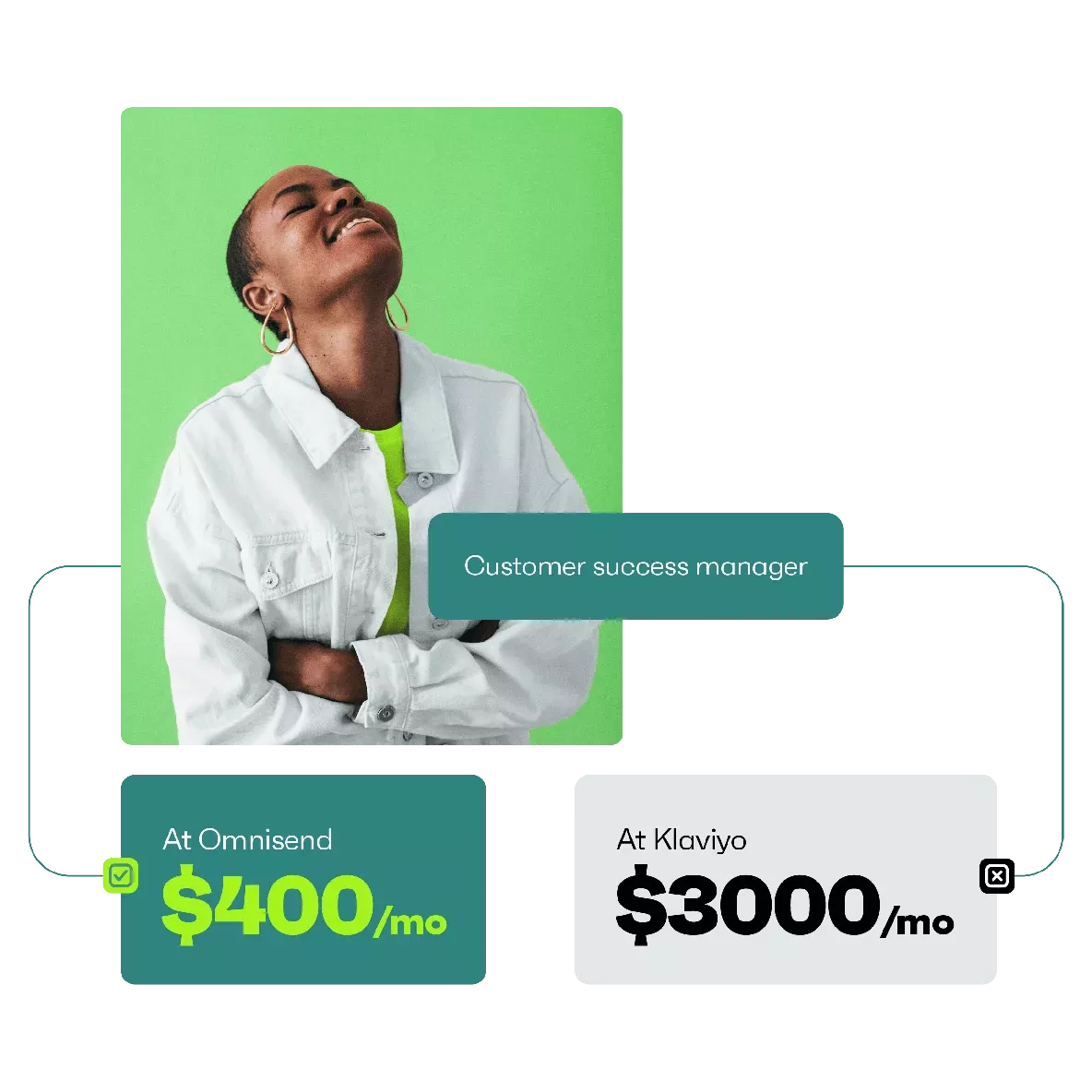
As a general pattern, Omnisend is typically 15–30% lower than Klaviyo at comparable contact tiers while still covering ecommerce-focused channels and workflows — which is why this pricing section should come early in the article.
If readers want a faster estimate based on their own list size, we’d like to offer you this interactive Omnisend pricing comparison calculator:
Quick email provider pricing comparison
Quickly and easily compare the top email marketing providers so you can find the best platform for your ecommerce store needs.
You can compare Omnisend and 2 more providers at once.
You can compare Omnisend and 2 more providers at once.
Select at least one provider.
Try out the full version of this calculator
To help you find the best Klaviyo alternative for your store, we compared each platform based on the criteria that matter most to ecommerce teams. These include pricing transparency, ecommerce features, automation capabilities, support quality, and overall ease of use. We also looked at practical buying factors such as Shopify/WooCommerce/BigCommerce integrations, free plan availability, and real user feedback trends (including G2 ratings and reviews).
The result is a list built for merchants who want strong retention marketing without overpaying or overcomplicating their setup:
G2 rating: 4.6/5 (based on 1000+ reviews)
Omnisend is the strongest Klaviyo alternative for ecommerce brands that want advanced retention marketing without the same setup burden or pricing pressure. It’s especially well-suited to small to mid-sized ecommerce businesses switching from Klaviyo (or comparing tools before they commit), because it combines email, SMS, and web push in one platform with a more ecommerce-native workflow.
Best for: Small to mid-sized ecommerce brands, especially those using Shopify, WooCommerce, and BigCommerce, often seek a Klaviyo-like feature set that is easier to use.
Key features
Omnisend also supports ecommerce-focused SMS execution (campaigns + automations) if you want to compare channel fit in more depth; see Omnisend’s SMS marketing guide.
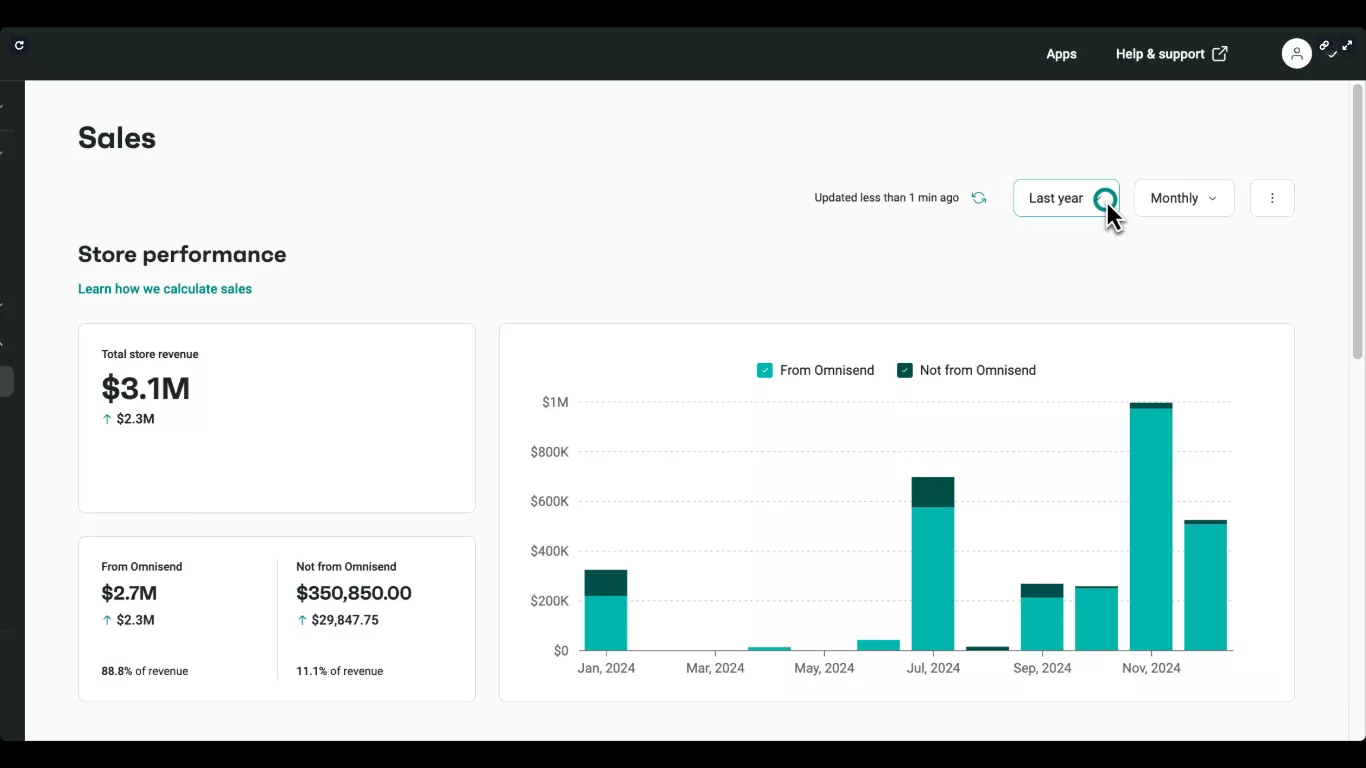
Here’s a sales dashboard that visualizes it:
Pricing
Pros
Cons/limitations
Moreover, a comprehensive comparison between Klaviyo and Omnisend may be viewed in this video:
Real user reviews (in context against Klaviyo)
User feedback often points out ease of use, automation, and Shopify integration as major strengths. G2 review summaries consistently mention Omnisend’s user-friendly interface and simple automation setup. One reviewer noted that customizable automations and templates saved a lot of time compared to more complicated setups.
Watch this video for additional insight into migrating to Omnisend:
 | Vape Superstore success story The Vape Superstore team initially used Klaviyo but felt that the pricing was too high compared to the results. Its signup rate was sitting at 18%. This jumped to 32% after switching to Omnisend, including 80% website traffic on mobile. The brand noted that Omnisend’s exceptional support, features, and pricing prompted the switch. |
Verdict: Omnisend is the closest like-for-like Klaviyo alternative for ecommerce stores, combining email, SMS, and web push in a single platform — often at a lower cost than Klaviyo (see also the Omnisend vs. Klaviyo comparison).
G2 rating: 4.7/5 (based on 700+ reviews)
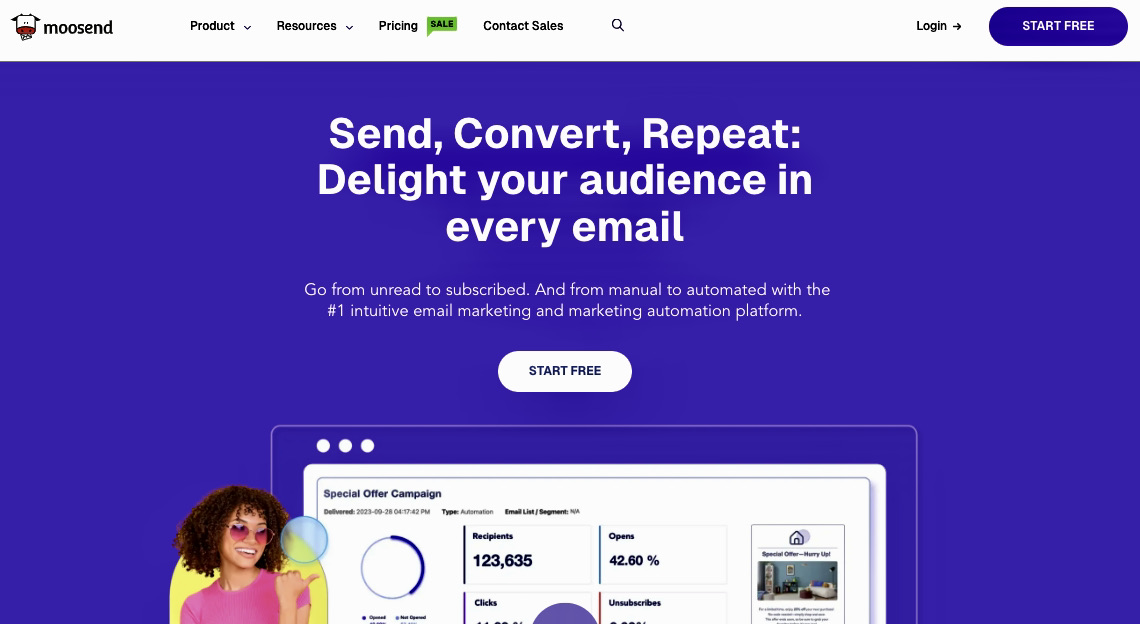
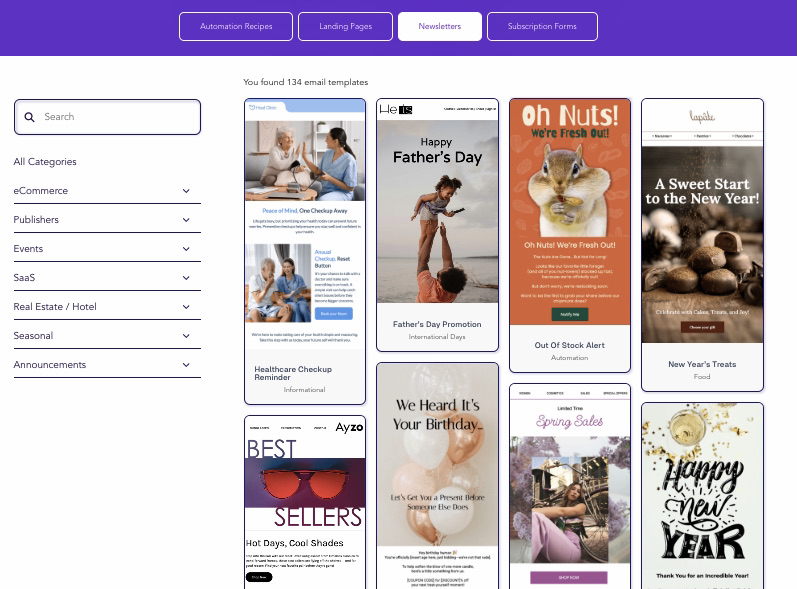
Moosend is a good alternative to Klaviyo for brands that need affordable email automation and an easy-to-use interface, especially if SMS is not a priority. Smaller teams often prefer it because they can access automation, landing pages, and unlimited email sending without the high costs associated with Klaviyo.
Best for: Budget-conscious small to mid-sized ecommerce businesses focused mainly on email (not multichannel)
Key features
Pricing
Pros
Cons/limitations
Verdict: Moosend is a strong low-cost email automation alternative to Klaviyo, but it’s a better fit for email-first teams than stores that need advanced multichannel ecommerce retention.
G2 rating: 4.5/5 (based on 2,400+ reviews)
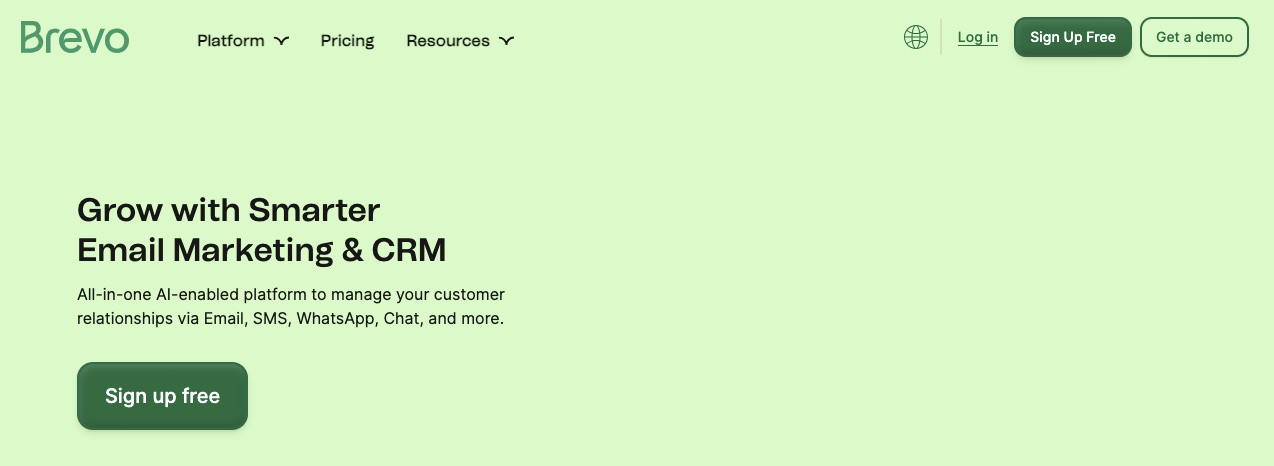
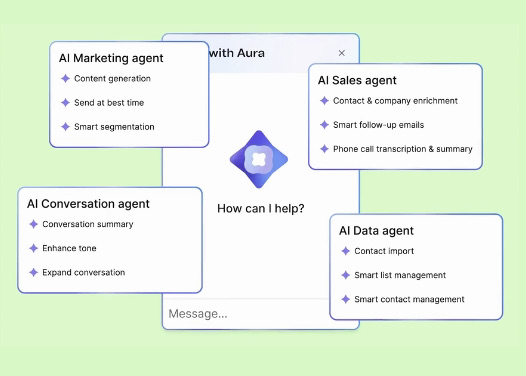
Brevo is a good Klaviyo alternative for teams that want a broader marketing + CRM suite in one platform, not just ecommerce email automation. It combines email, SMS, WhatsApp, CRM, and transactional messaging, which can reduce tool sprawl for smaller teams managing both marketing and customer communication. Brevo is also often compared on value because its pricing is primarily send-volume-based, rather than contact-count-based.
Best for: Small to mid-sized businesses that want email + CRM + multichannel messaging in one tool (including some ecommerce use cases)
Key features
Pricing
Pros
Cons/limitations
Verdict: Brevo is a great Klaviyo alternative if you want an affordable all-in-one marketing suite, but ecommerce-first brands usually need to compare its automation depth against more specialized tools like Omnisend (see Omnisend vs. Brevo) or browse other Brevo alternatives.
G2 rating: 4.5/5 (based on 14,500+ reviews)
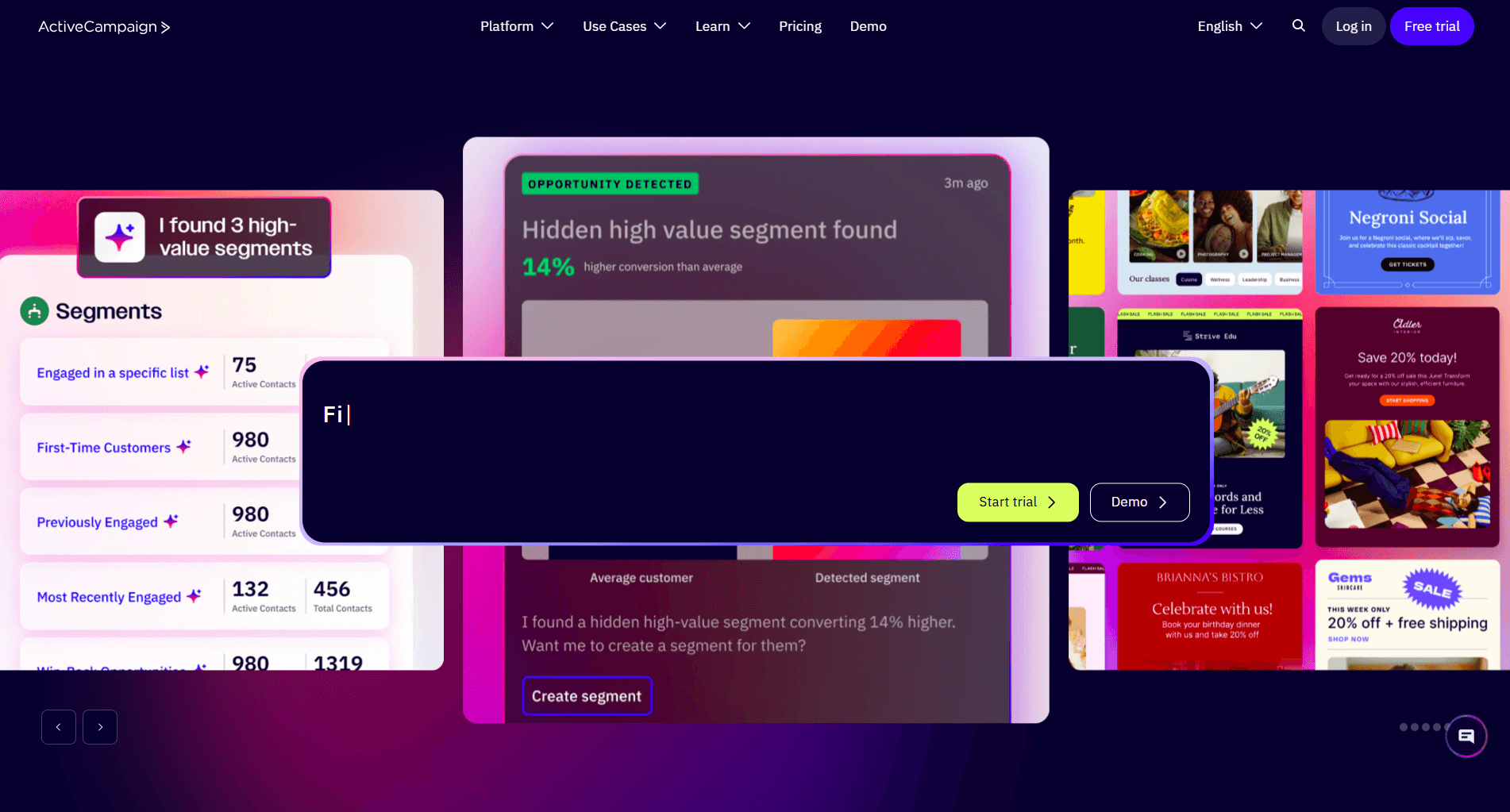
ActiveCampaign is one of the better Klaviyo alternatives for businesses that want advanced automation beyond standard ecommerce flows. It’s a good fit for teams scaling into more complex lifecycle marketing, especially if they also want CRM and sales automation options within the same ecosystem.
Best for: Growing SMBs, ecommerce brands, and agencies that need advanced automation and broader marketing orchestration
Key features
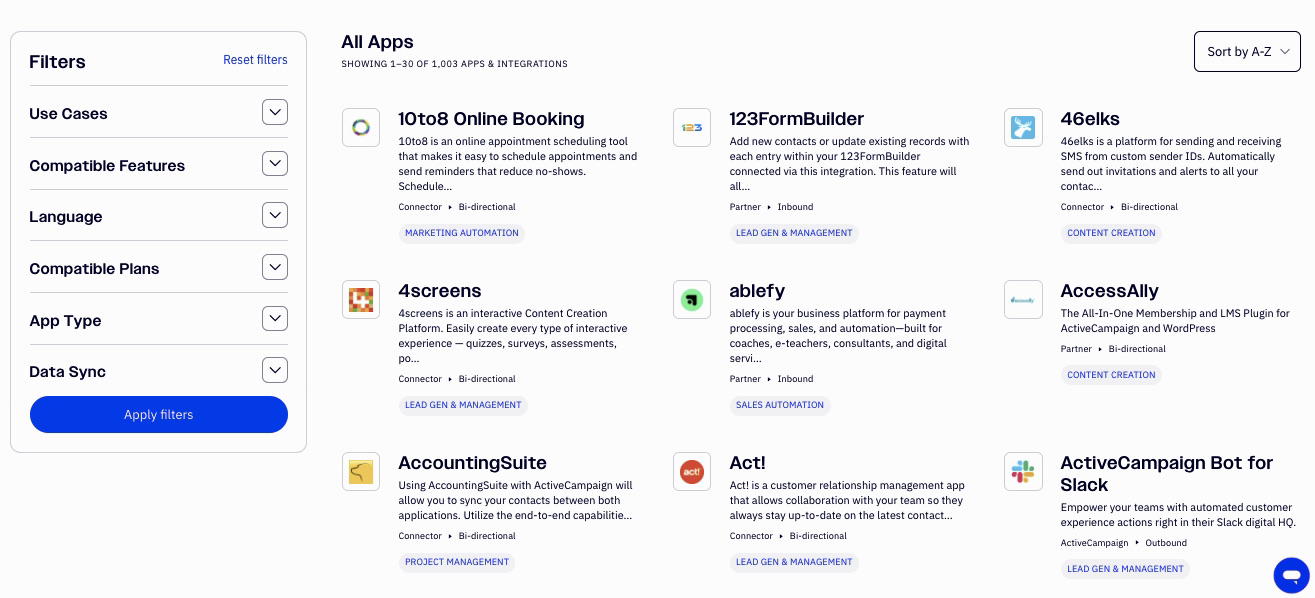
Pricing
Pros
Cons/limitations
Verdict: ActiveCampaign is the Klaviyo alternative for scaling teams that want advanced automation depth, but it’s usually a better fit for experienced marketers than lean ecommerce teams looking for fast, ecommerce-first execution.
G2 rating: 4.4/5 (based on 5,300+ reviews)
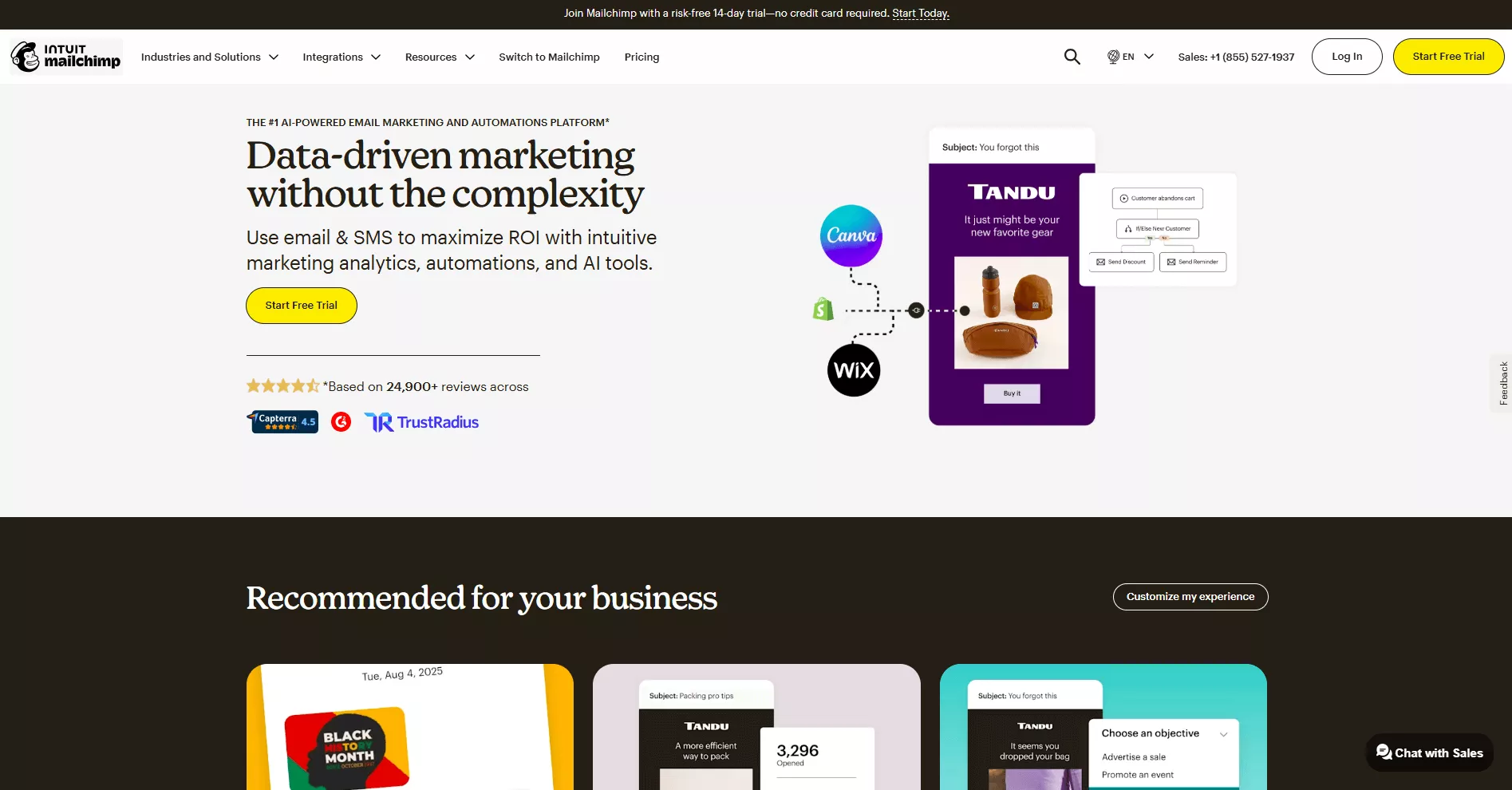
Mailchimp is a popular Klaviyo alternative for small businesses that want a familiar interface, broad brand recognition, and a relatively easy way to start with email marketing. It’s often a better fit for general SMB marketing than deep ecommerce retention, but it can still work well for stores with simpler automation needs.
Best for: Small businesses and early-stage ecommerce brands that want an easy-to-use email platform with a free plan
Key features
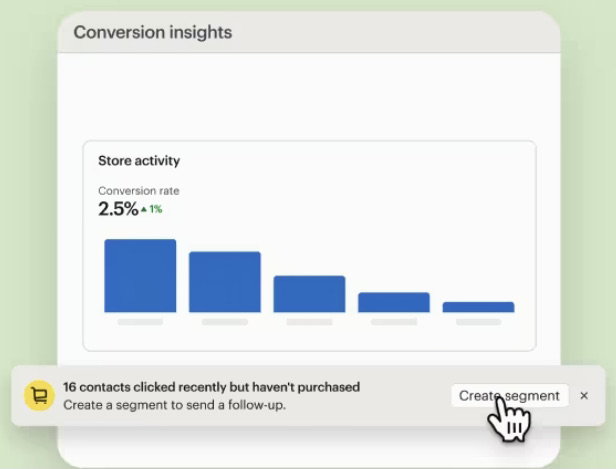
Pricing
Pros
Cons/limitations
Verdict: Mailchimp is a solid option for small businesses that want a simpler starting point than Klaviyo, but ecommerce brands focused on advanced retention typically outgrow it faster.
For deeper comparisons, we recommend Omnisend vs. Mailchimp and alternatives to Mailchimp.
G2 rating: 4.1/5 (based on 7,200+ reviews)
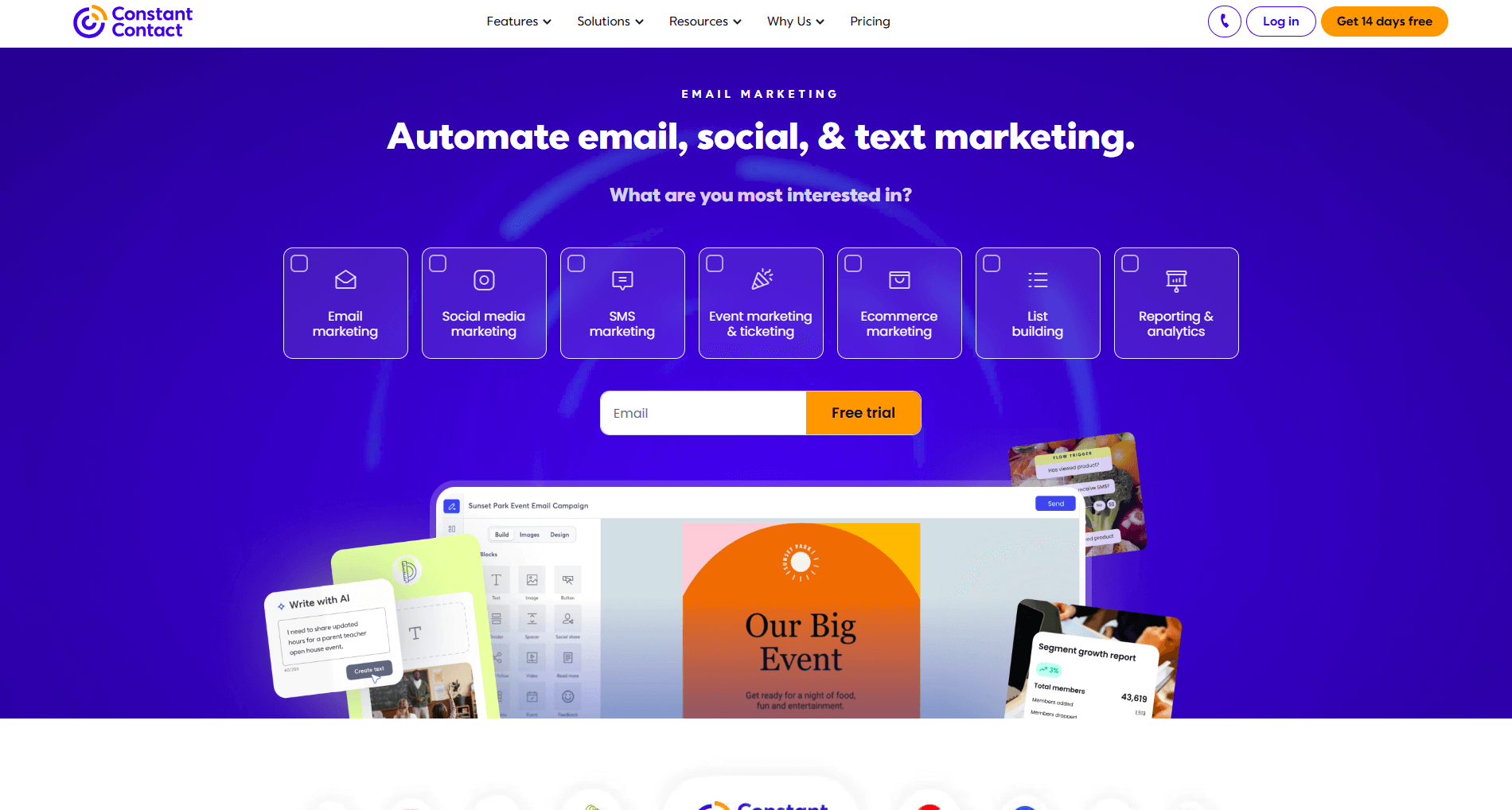
Constant Contact is a reasonable Klaviyo alternative for small businesses and nonprofits that prioritize email campaigns, event promotion, and audience engagement over deep ecommerce retention automation. Its strongest angle is ease of use plus event-related features (registrations, RSVPs, surveys), which Klaviyo doesn’t prioritize.
Best for: Small businesses and nonprofits running events, registrations, and email campaigns
Key features
Pricing
Pros
Cons/limitations
Verdict: Constant Contact is a good Klaviyo alternative for event-driven SMBs and nonprofits, but ecommerce brands focused on advanced automation, segmentation, and retention will usually find better-fit options elsewhere.
G2 rating: 4.6/5 (based on 1,000+ reviews)
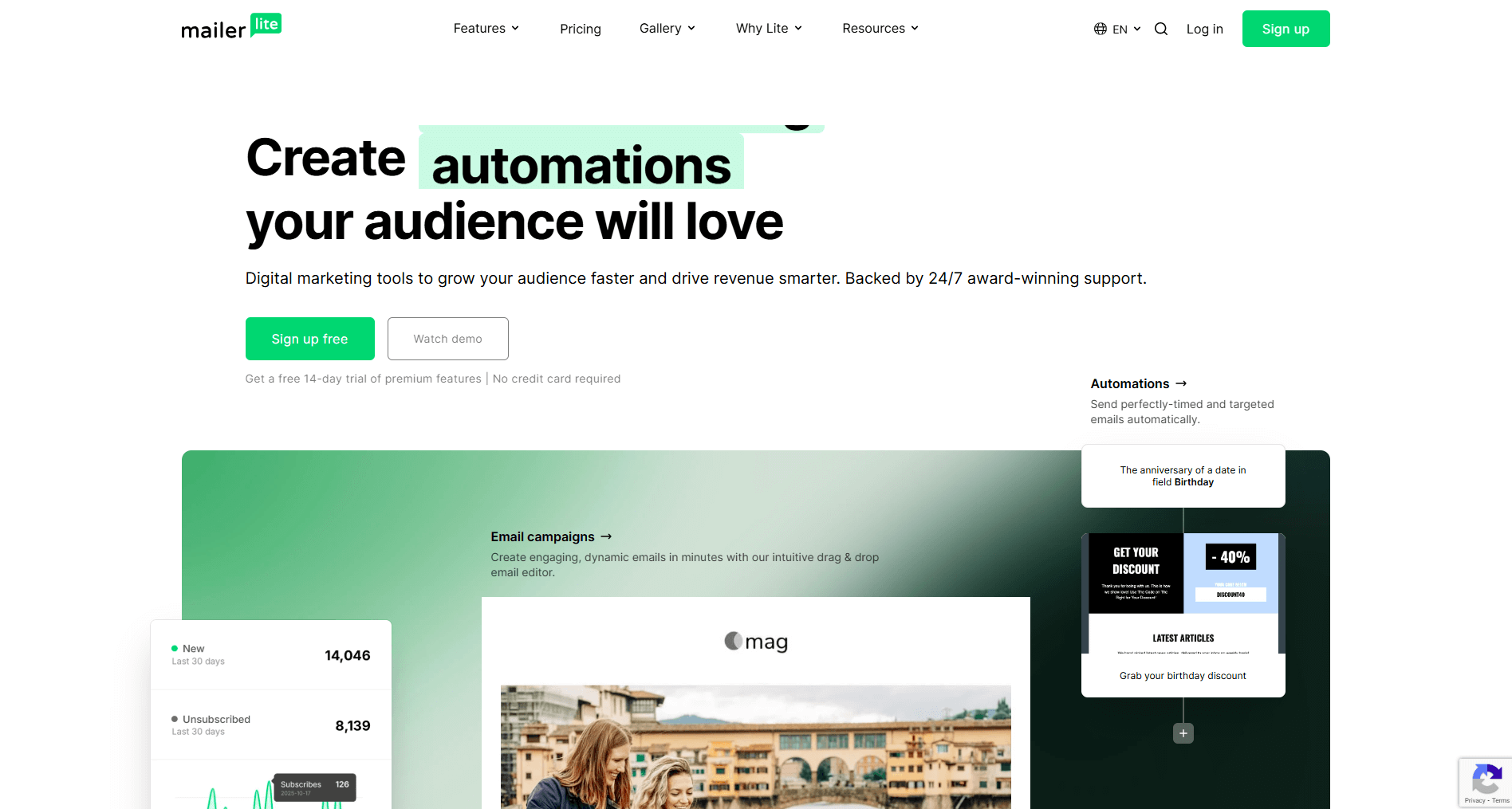
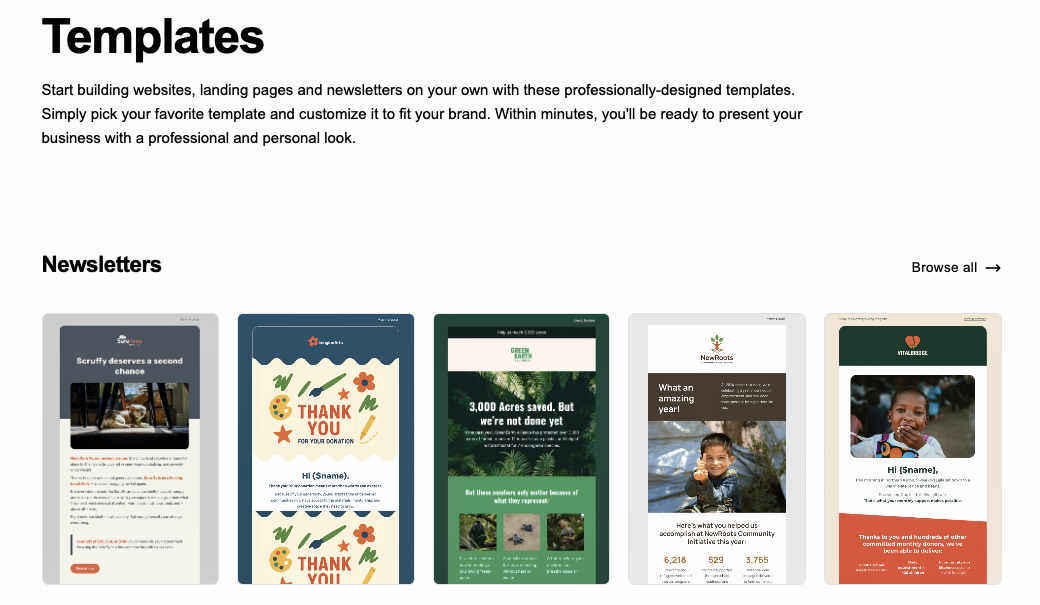
MailerLite is one of the easiest Klaviyo alternatives to start with, especially for beginners, creators, and small teams that want simple email marketing, landing pages, and forms without a heavy setup process. It’s often chosen for usability and value, not for advanced ecommerce retention depth.
Best for: Beginners, creators, and small teams that need an easy email platform with landing pages/forms
Key features
Pricing
Pros
Cons/limitations
Verdict: MailerLite is an excellent low-friction option for simple email marketing, but ecommerce stores that need serious automation + SMS will usually outgrow it.
For comparison readers, browse Omnisend vs. MailerLite and a broader guide to MailerLite alternatives.
G2 rating: 4.2/5 (based on 640+ reviews)
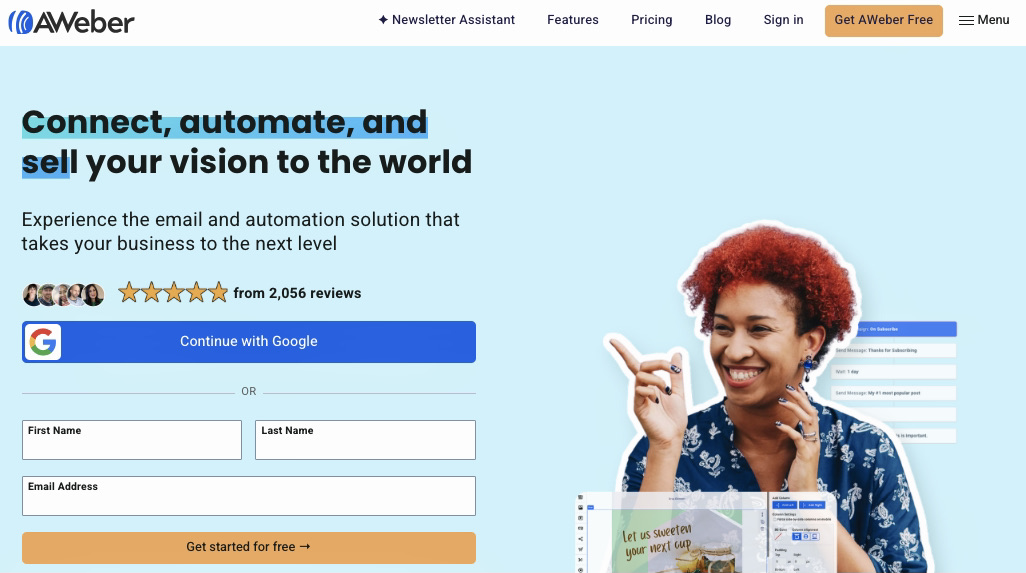
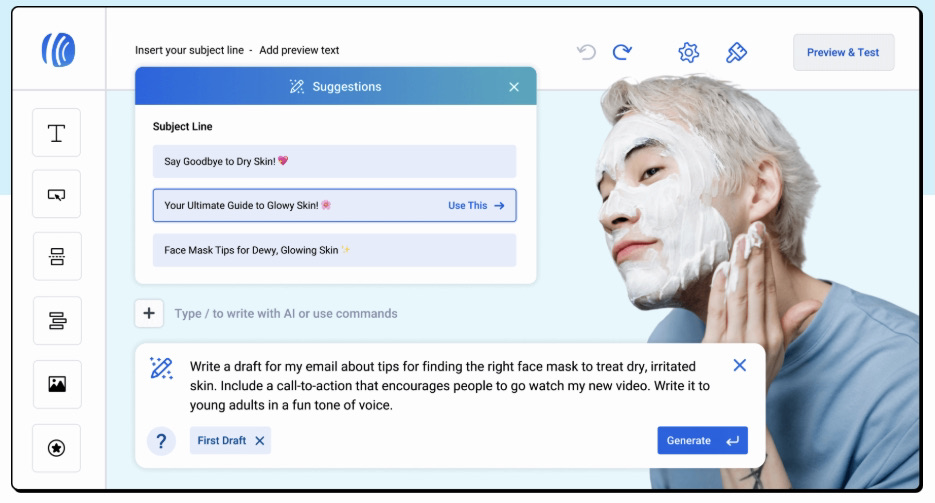
AWeber is a practical Klaviyo alternative for smaller businesses that prioritize list building, tagging, and subscriber management over advanced ecommerce automation. It’s easy to get started, includes landing pages and forms, and is often chosen by coaches, creators, and small online businesses that want straightforward email marketing with solid support.
Best for: Small businesses, creators, coaches, and affiliate marketers who prioritize list management and simple automation
Key features
Pricing
Pros
Cons/limitations
Verdict: AWeber is a dependable option for list-focused email marketing and beginner-friendly support, but ecommerce brands needing advanced retention automation will likely outgrow it.
G2 rating: 4.3/5 (based on 820+ reviews)
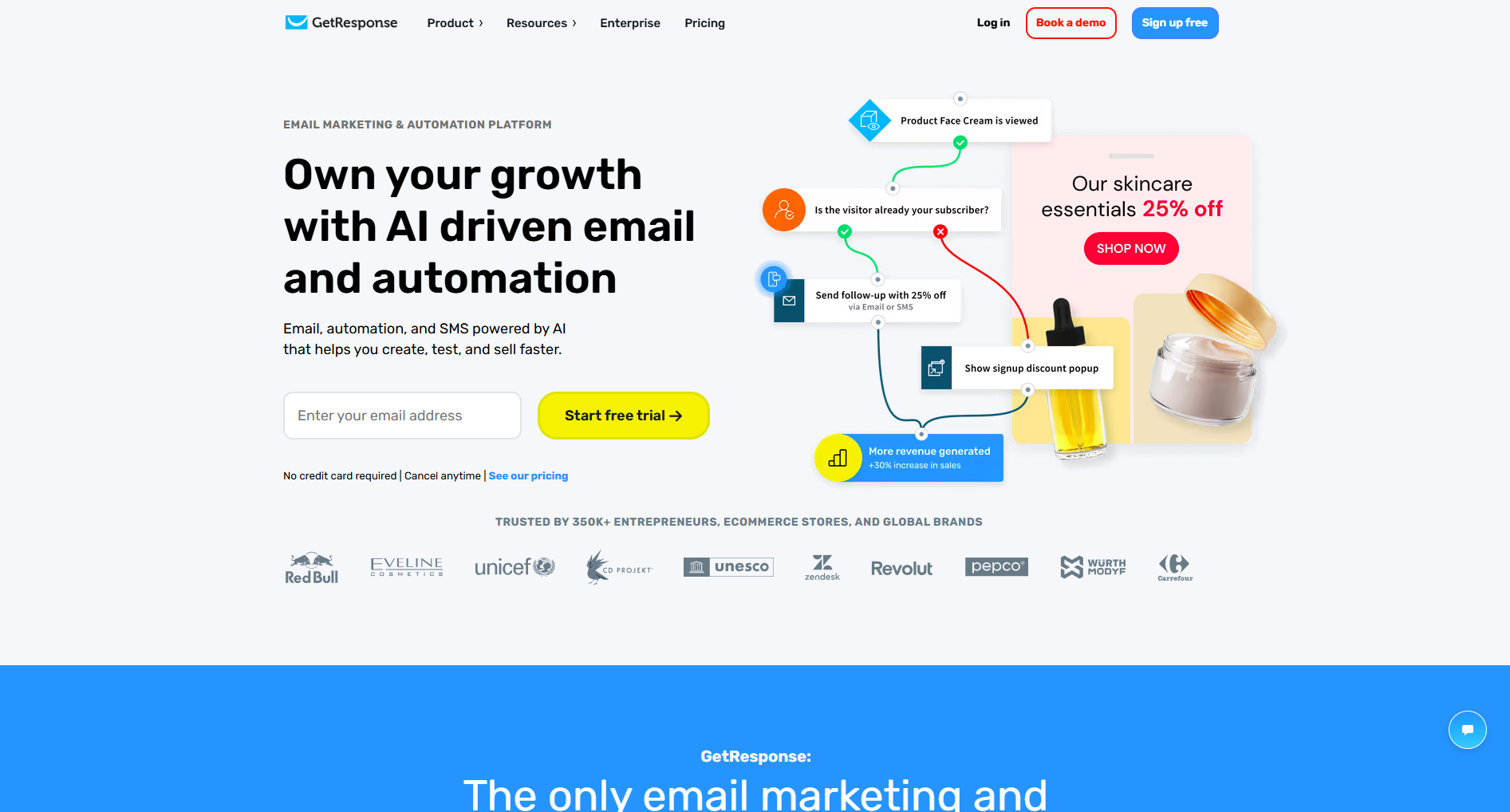
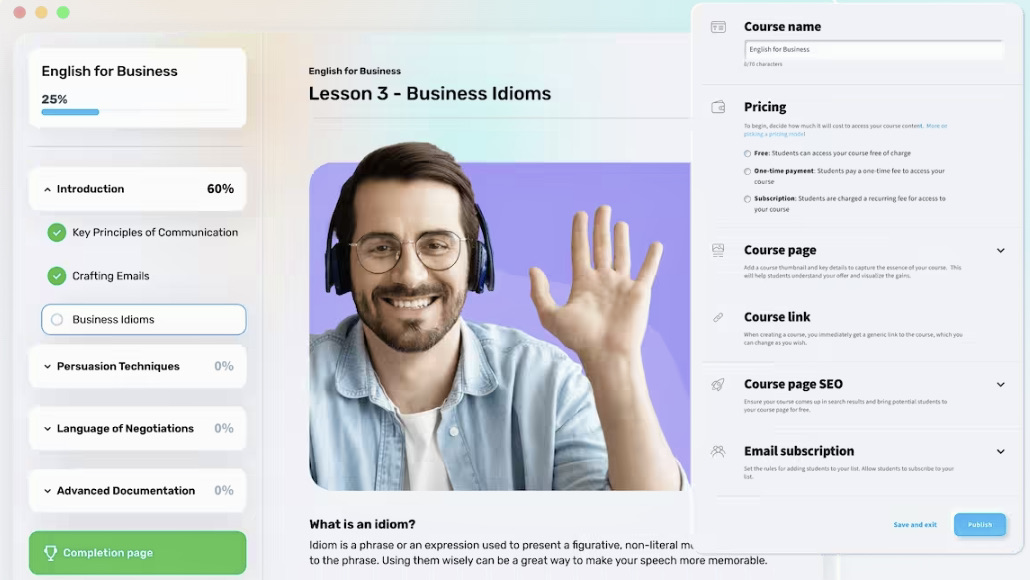
GetResponse is a useful Klaviyo alternative for businesses that want more than email marketing — especially if webinars, lead nurturing, and educational funnels are part of the strategy. It combines email automation with landing pages, webinars, website tools, and creator-focused features, making it appealing to SMBs selling products and content/services.
Best for: SMBs, creators, and ecommerce brands that need webinars + lead nurturing in the same platform
Key features
Pricing
Pros
Cons/limitations
Verdict: GetResponse is a strong alternative if your strategy relies on webinars and lead funnels, but pure ecommerce retention teams usually get more specialized value from ecommerce-first platforms.
G2 rating: 4.4/5 (based on 470+ reviews)
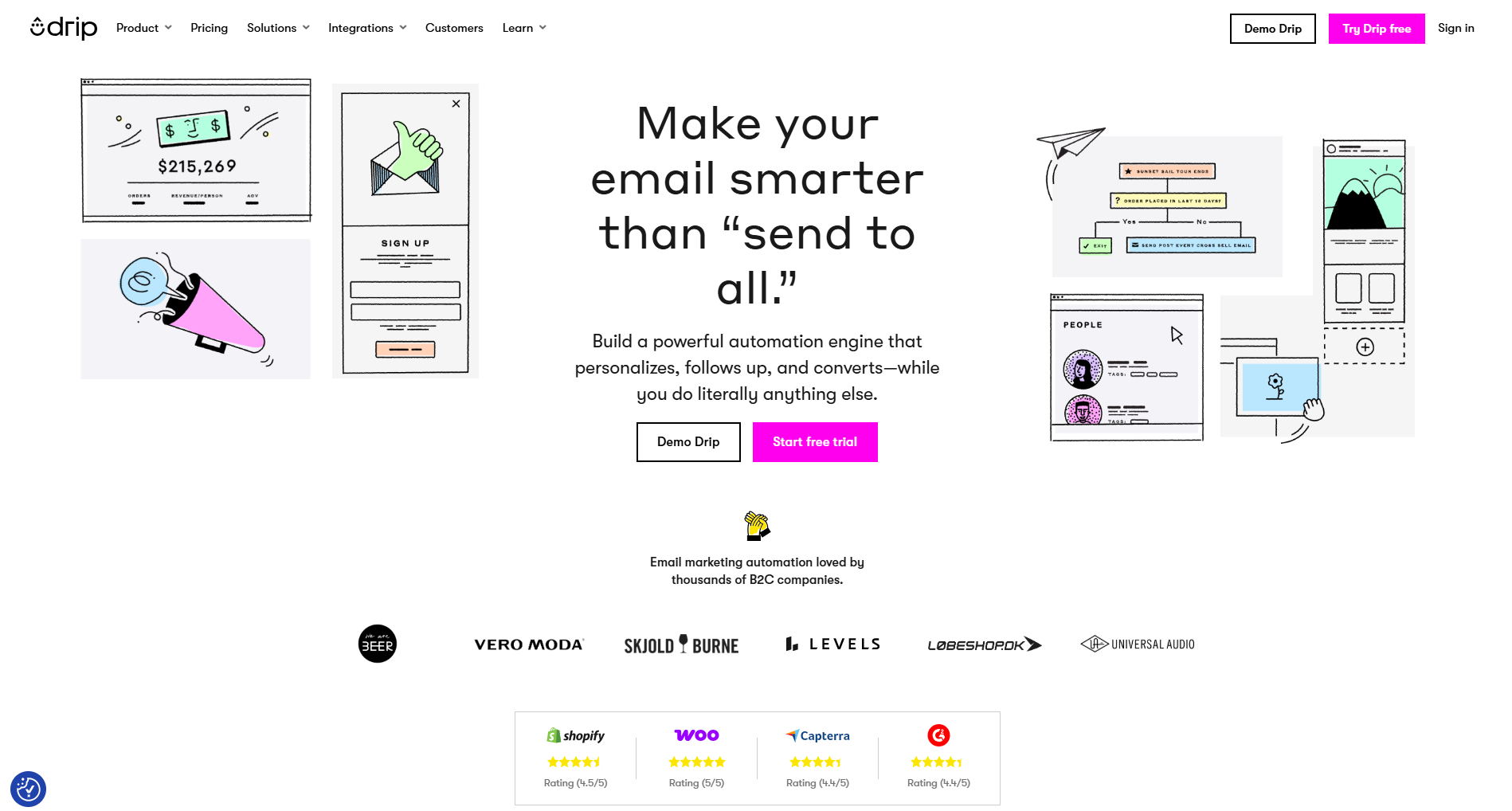
Drip is one of the closest Klaviyo alternatives for DTC-focused ecommerce brands focused on customer lifecycle automation, segmentation, and repeat-purchase growth. It’s built around ecommerce marketing workflows, so it tends to feel more specialized than general SMB email tools — especially for stores running retention campaigns across the customer journey.
Best for: DTC ecommerce brands focused on repeat purchases, segmentation, and lifecycle marketing
Key features
Pricing
Pros
Cons/limitations
Verdict: Drip is a strong Klaviyo alternative for DTC ecommerce brands seeking specialized retention marketing features, but budget-sensitive teams should carefully compare long-term contact-based pricing.
| Features | Migration support | Email automation | SMS | Ecommerce focus | Pre-built workflows | Segmentation | Analytics |
|---|---|---|---|---|---|---|---|
| Klaviyo | N/A | Advanced | Built-in | Strong | Comprehensive | Advanced | Advanced |
| Omnisend | Yes, managed | Advanced | Built-in | Strong | Comprehensive | Advanced | Advanced |
| Moosend | No | Basic | No | Moderate | Limited | Basic | Basic |
| Brevo | Documentation only | Advanced | Built-in | Moderate to strong | Comprehensive | Advanced | Advanced |
| ActiveCampaign | Yes, managed or assisted | Advanced | Built-in | Strong | Comprehensive | Advanced | Advanced |
| Mailchimp | Documentation only | Basic to moderate | Add-on | Basic to moderate | Limited | Basic | Basic to moderate |
| Constant Contact | No managed migration (1:1 onboarding available) | Basic | Add-on | Basic | Limited | Basic | Basic |
| MailerLite | Documentation only | Basic | No | Moderate | Limited | Basic | Basic |
| AWeber | Yes, managed (varies by plan/use case) | Basic | No | Basic | Limited | Basic | Basic |
| GetResponse | Yes, assisted (additional cost on some plans) | Advanced | Built-in | Moderate | Comprehensive | Advanced | Advanced |
| Drip | Yes, assisted (eligibility/threshold may apply) | Advanced | Built-in | Strong | Comprehensive | Advanced | Advanced |
Pricing gets people to compare tools, but features decide whether a platform will actually work for your team. This table provides a quick snapshot of feature parity across the top Klaviyo alternatives before you dive into the individual reviews.
The goal here isn’t to declare one “winner” in every category — it’s to help readers quickly filter by what matters most for ecommerce: migration support, automation depth, SMS, segmentation, and reporting. If you’re switching from Klaviyo, pay special attention to managed migration in the first column, since that can dramatically reduce setup time and risk.
Omnisend’s clearest differentiator in this comparison is managed migration support + strong ecommerce-native functionality in one platform, which is exactly why it’s often the closest fit for brands replacing Klaviyo.
The best Klaviyo alternative depends less on “which tool has the most features” and more on what kind of business you run, how your team works, and what you need to launch quickly. Use the scenarios below to self-select the best fit based on your setup, budget, and marketing goals.
You’re using Shopify or WooCommerce and want a quick setup. If your main goal is to launch ecommerce automations without needing a developer, Omnisend is often the best choice. It is designed for ecommerce first, so the setup process, product syncing, and pre-built workflows — like welcome series, cart recovery, and browse abandonment — work right away for typical store configurations.
If your team wants advanced automation logic and more complex journey building, ActiveCampaign is the stronger choice. Its automation builder is one of the most powerful on this list and works well for brands that need detailed branching, scoring, and multi-step lifecycle orchestration. The tradeoff is setup time: it’s more powerful, but it usually requires more configuration and ongoing management.
If you keep a large contact database but don’t send constantly, Brevo can be a smart pick because its pricing model is based on email send volume rather than just the number of contacts. This would mean you may avoid paying more because you have inactive contacts sitting in your database. For those budget-sensitive teams, that pricing model can be easier to manage as the list grows.
If you want something that’s easy to learn and fairly quick to use, MailerLite is a great option. It has a simple interface, a generous free plan, and enough email and landing page features for early growth without overwhelming you with complex tools. It’s a good choice when simplicity is more important than advanced retention automation.
If your top priority is understanding what drives repeat purchases and revenue, Drip is a strong option for DTC-focused brands. It’s built around ecommerce lifecycle marketing, so segmentation, customer journeys, and campaign performance are geared toward retention and purchase behavior. This makes it especially useful for stores that make decisions based on ROI visibility, not just opens and clicks.
If your business model includes education, lead generation, or event-based marketing alongside product sales, GetResponse or Mailchimp may be a better fit than a strictly ecommerce-focused platform. GetResponse is especially useful if webinars and funnels are core to your strategy, while Mailchimp works well for simpler omnichannel SMB marketing needs. Both can support ecommerce, but their strengths extend beyond it.
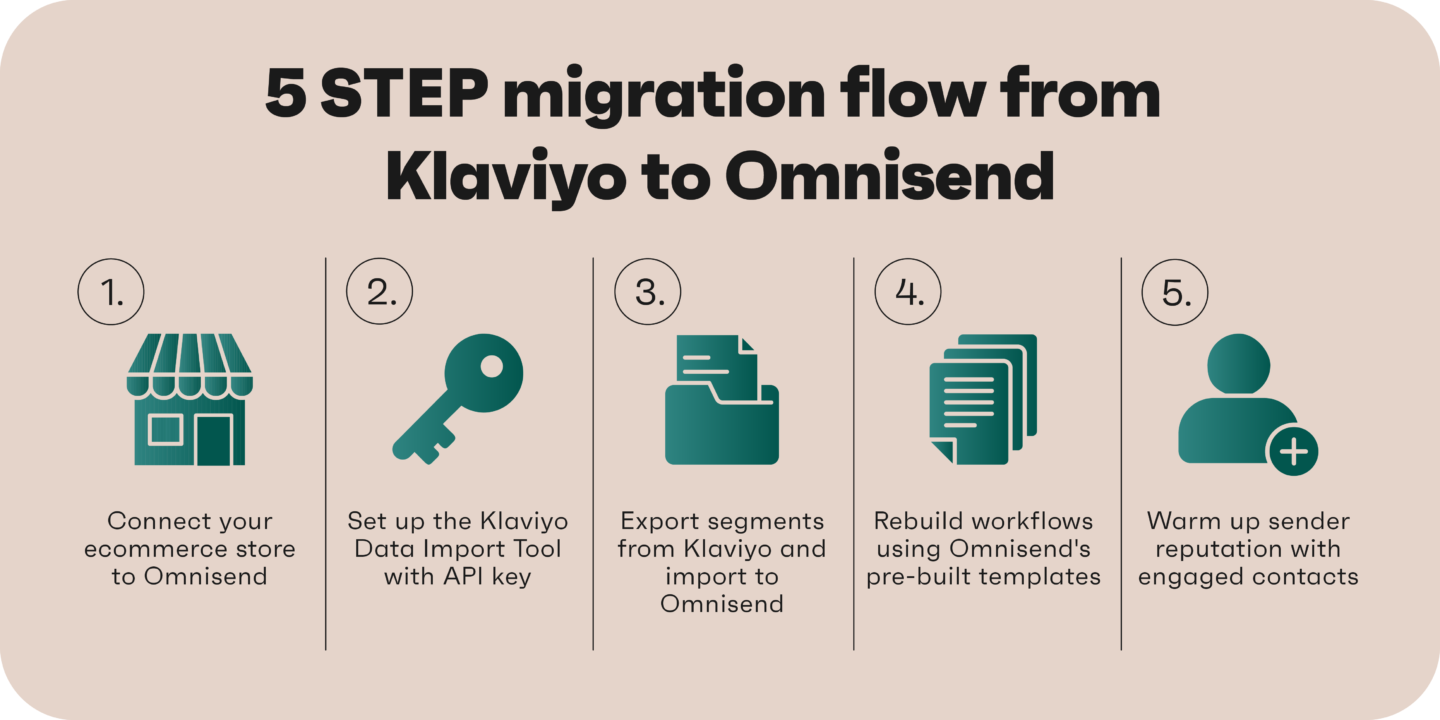
Switching platforms often keeps ecommerce teams tied to a tool longer than they want. Even if pricing, support, or usability prompt you to look for alternatives, the process can feel risky. This is especially true when your automations already generate revenue.
That’s why this matters: Omnisend provides a clear migration plan from Klaviyo. This plan is meant to ease setup for ecommerce teams that wish to avoid starting over. If you are weighing options and find migration effort to be your top concern, this is one of Omnisend’s biggest benefits.
Omnisend’s managed migration takes under 30 minutes and includes contact transfer, segment import, and template setup.
Here’s the practical 5-step version of the process:
1. Connect your store to Omnisend (keep Klaviyo active) — ~5 min
Start by connecting your Shopify, WooCommerce, or BigCommerce store to Omnisend. Keep Klaviyo running during setup so your live campaigns and automations continue working while you migrate.
2. Generate a Klaviyo Private API key and paste it into Omnisend’s Data Import Tool — ~5 min
In Klaviyo, generate your Private API key, then paste it into Omnisend’s Data Import Tool. This is the core connection that lets Omnisend pull over contacts and key subscription data.
3. Export Klaviyo segments as CSVs and import them into Omnisend with tags — ~5 min
Export your important Klaviyo segments as CSV files, then import them into Omnisend and apply tags to keep them organized. This helps preserve campaign targeting logic when you rebuild or map automations.
4. Move templates by copying HTML (remove DOCTYPE/head tags first) — ~5 min
Copy the HTML from your Klaviyo templates, remove the DOCTYPE and <head> tags, and paste the cleaned code into Omnisend’s editor. This gives you a fast starting point instead of recreating designs from scratch.
5. Launch a server warm-up campaign to engaged subscribers — Day 1
Before fully switching over, send a warm-up campaign to your most engaged subscribers. This helps protect deliverability and gives you a clean testing phase before you migrate all campaign traffic.
Migrate from Klaviyo to Omnisend EASILY with These 5 Steps:
The best Klaviyo alternative depends on your store size, team capacity, channel mix, and budget. Some brands need advanced automation depth, others need simpler setup, and many just want more predictable pricing as their list grows. That’s why there isn’t one “best” choice for every business.
That said, for most ecommerce stores — especially Shopify and WooCommerce brands — Omnisend offers the strongest mix of ecommerce-focused automation, multichannel marketing (email, SMS, and web push), and pricing value.
Omnisend offers a free plan with no credit card required. If you’re running a Shopify or WooCommerce store and want to see how it compares to your current Klaviyo setup, start for free or book a demo.
For most ecommerce brands, Omnisend is one of the best free Klaviyo alternatives because its free plan includes core ecommerce features, pre-built automations, and multi-channel capabilities that are useful for real store growth. If you’re a solo creator or very early-stage brand, MailerLite or Mailchimp can also work — but they’re less ecommerce-focused.
In many contact tiers, yes — Omnisend is often less costly than Klaviyo while still offering ecommerce-focused automation and multichannel marketing. The exact difference depends on your contact count, SMS usage, and plan tier. That’s why it’s best to compare pricing at your actual list size, not just the entry plan.
Yes, in most cases you can migrate from Klaviyo without losing core data, including contacts, consent status, and segments — as long as you export/import correctly and test before switching fully. Templates and automations may need some rebuilding or formatting adjustments, but the migration itself is very manageable with a structured process.
For most Shopify stores, Omnisend is the best Klaviyo alternative because it’s built for ecommerce and offers fast setup, pre-built workflows, email + SMS + web push, and strong Shopify integration. If you need deeper cross-channel automation with CRM logic, ActiveCampaign is another option — but it usually takes more setup time.
Migration difficulty depends on how complex your current setup is. A basic store with standard flows can usually move relatively quickly, while a brand with many segments, custom templates, and advanced automations will need more planning and testing. The biggest risks are workflow gaps and deliverability issues, which is why a staged migration is recommended.
Klaviyo itself is not generally known as a platform with universal deliverability problems. Deliverability usually depends more on list quality, sending practices, engagement, authentication setup, and domain reputation. That said, some users report deliverability concerns in reviews — which is why it’s important to monitor inbox placement and warm up properly during any migration.
This article was researched and written by our experts following a precise process.
See the process
TABLE OF CONTENTS
TABLE OF CONTENTS

What’s next


No fluff, no spam, no corporate filler. Just a friendly letter, twice a month.