
 Omnisend AI


 OFFER
OFFER







Drive sales on autopilot with ecommerce-focused features
See FeaturesKey takeaways 
Focus on increasing Customer Lifetime Value (CLV) by nurturing relationships with existing customers rather than solely acquiring new ones, as loyal buyers contribute significantly to revenue.
Implement a post-purchase email sequence to capitalize on high-intent moments, driving repeat purchases and engagement through timely follow-ups and product recommendations.
Utilize SMS and push notifications alongside email marketing to enhance customer retention, ensuring messages are targeted and relevant based on customer behavior.
Create a loyalty program that incentivizes repeat purchases and keeps customers engaged by celebrating milestones and providing exclusive rewards tailored to their shopping habits.
Reveal key takeaways
Take two ecommerce business plans, one from launch day, and one from six months in. They’ll look different in a hundred ways, but one goal always appears in the second plan that wasn’t in the first: increase customer lifetime value, written in all caps, and highlighted in red.
Acquiring new customers is getting more expensive every day due to rising ad costs and heavy competition. Meanwhile, most of your revenue likely comes from a small base of loyal repeat buyers.
In this article, we’ll share 10 proven, low-cost strategies to help you nurture those relationships and predictably grow your customer lifetime value.
What is Customer Lifetime Value?
Customer lifetime value (CLV) is the total net revenue you can expect from a single customer over their entire relationship with your brand. It gives you a clear picture of how much long-term value each shopper brings to your business.
To understand your CLV, you need to look at three main components: average order value (AOV), purchase frequency, and customer lifespan. You can replace these components with actual values and calculate the expected CLV:
CLV = Average Order Value x Purchase Frequency x Customer Lifespan
For example’s sake, let’s say that your average customer spends around $60 per order, buys from you four times per year, and stays with your brand for three years. Using the formula above, this makes their CLV = $60 x 4 x 3 = $720. The formula shows you which parts of the customer lifetime value you can improve to increase the final number.
10 Strategies to Increase Customer Lifetime Value
- Set up a post-purchase email sequence that earns the second sale
- Segment customers by lifecycle stage — and market to each group differently
- Add SMS and push notifications to your retention flows
- Win back lapsing customers before they churn
- Use a loyalty program to make repeat purchases the default
- Automate replenishment reminders for consumable products
- Turn existing customers into repeat buyers with targeted popups
- Lock in loyal customers with subscriptions
- Bundle products to increase AOV and create new entry points for repeat purchases
- Recover purchase intent with abandonment emails and exit popups
1. Set up a post-purchase email sequence that earns the second sale
Once a customer completes a purchase, it’s the highest-intent moment in the entire customer journey. Some may expect to receive a thank-you email with a further discount, some may not, but the fact is that you must set one up. It’s grounds for a second purchase, a review, or simply a no-agenda, genuine thank you message with educational content on the purchased item (if applicable).
The data backs it up. According to Omnisend’s 2025 ecommerce marketing report, automated emails drive 37% of all email-generated sales from just 2% of email volume. And order follow-up emails specifically convert 22 times better than other marketing emails.
Here’s how you can make this strategy work for your store:
- Map out the sequence with specific steps and timing. A well-made flow starts with an immediate order confirmation, follows up with a cross-sell 3-5 days after delivery, and sends a review request 14 days after delivery (which is the default setting in Omnisend).
- Let the product recommender do the work. You don’t need a manual creation process for each individual customer. That would drive you insane. Product recommenders automatically select the best products to feature in cross-sell emails based entirely on order history.
Amundsen Sports, for example, used a similar strategy and found that nearly one in three customers who clicked their order confirmation email made another purchase.
You can see exactly how to build these order confirmation emails in our video:
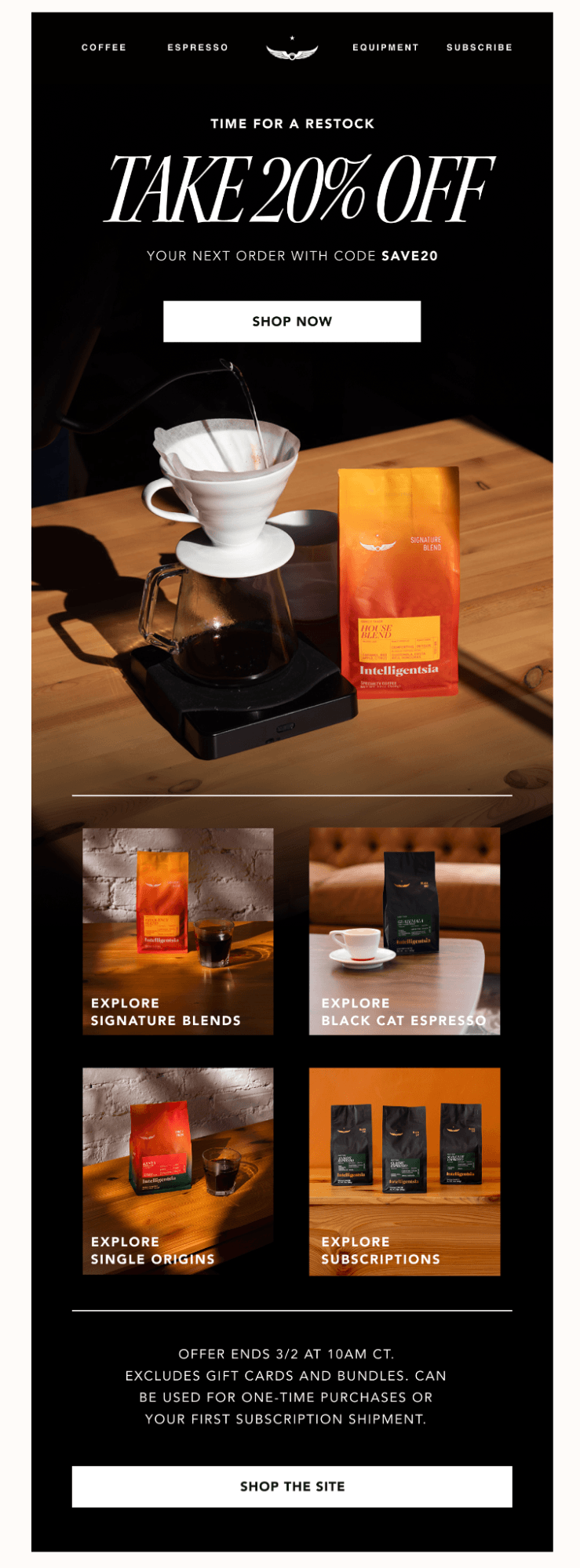
To see how customer lifetime value strategies work in real life, here’s how Intelligentsia Coffee tackles first-time customers to encourage them to buy again with a post-purchase discount:
2. Segment by lifecycle stage and market to each group differently
Sending the exact same campaign to your entire list is a sure way to miss out on a big chunk of revenue. Your VIP customers and your lapsed one-time buyers are not the same audience.
They require different angles of communication, different incentives, and a different tone altogether. Treating them the same way guarantees underwhelming results from both audiences.
Here’s a helpful lifecycle map you can use to see how to treat each group:
| Lifecycle stage | Description | Goal |
|---|---|---|
| Recent customers | Made 1–2 purchases relatively recently | Cherish: Provide a positive post-purchase experience |
| Loyalists | Made 2+ purchases relatively recently | Cherish: Show appreciation and upsell to move them to Champions |
| Champions | Made 2+ purchases relatively recently with high order value | Cherish: Reward with exclusive offers and early access |
| Need nurturing | Made 1–2 purchases further in the past than Recent Customers | Nurture: Keep engaged with new products and deals |
| High potential | Made 2+ purchases or high-value purchases further in the past than Loyalists and Champions | Nurture: Keep informed and re-engage with targeted offers |
| At risk | Made 1–2 purchases further in the past than those who Need Nurturing | Reactivate: Send win-back automation |
| Can't lose | Made 2+ purchases or high-value purchases further in the past than High Potential customers | Reactivate: Go the extra mile to bring them back |
| About to lose | Made their last purchase a very long time ago | Deprioritize: Limit spending on personalized reactivation |
When putting this into practice, keep these tips in mind:
- Match your message to where the customer is in the cycle. Champions and Loyalists want exclusivity (early access, VIP offers, referral asks, etc). “Need nurturing” customers just need a reason to come back. At-risk customers need urgency and a real incentive. Don’t just send one thing to everyone.
- Don’t discount your best customers. Champions and Loyalists respond better to exclusivity than discounts.
- Use a lifecycle stage to decide how much to spend on reactivation, not just what to say. This helps you figure out your budget, not just what to say. “About to lose” customers have low recovery odds, so limit your offer. “Can’t lose” customers are worth a much stronger financial incentive.
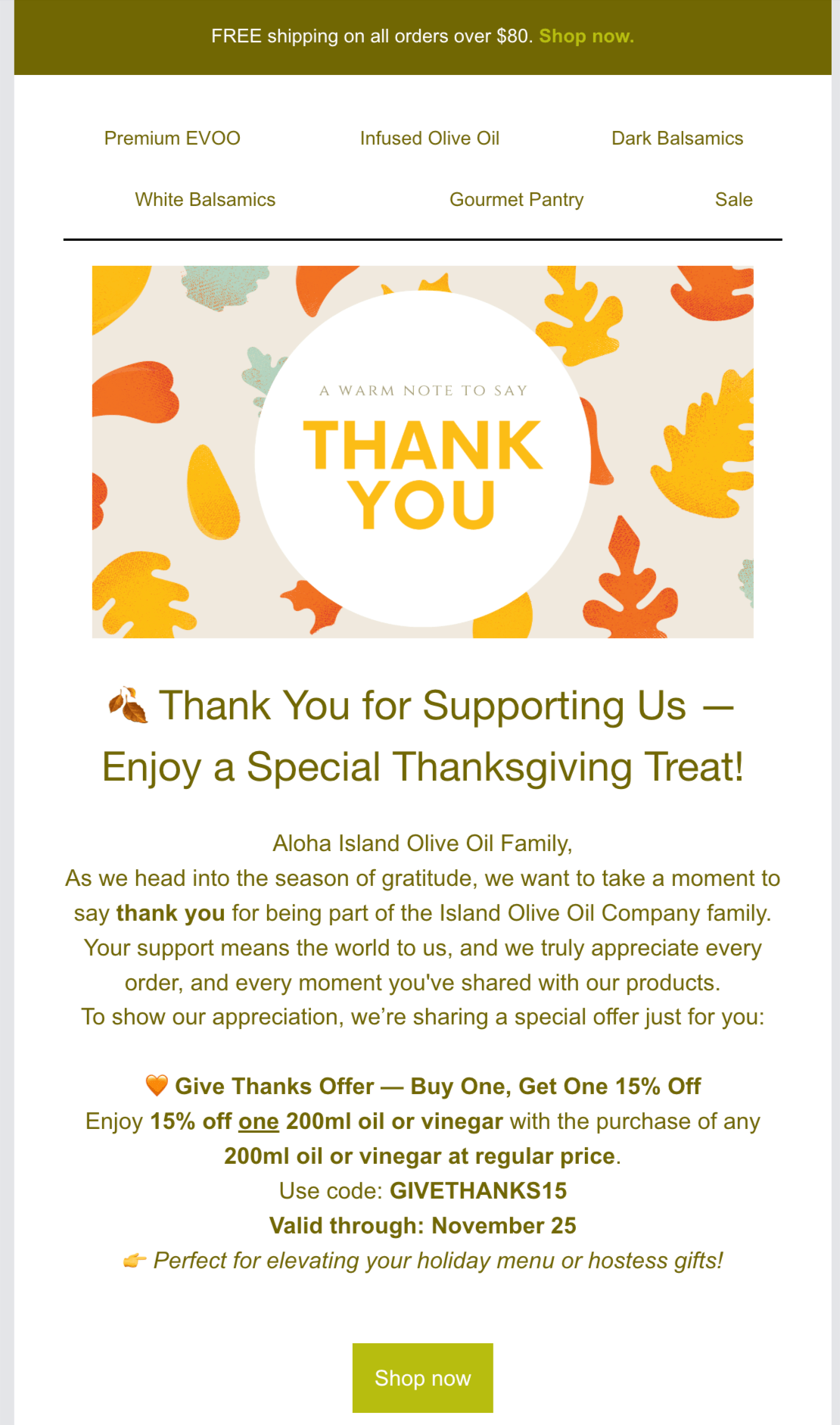
Island Olive Oil shared the email below with their loyal customers to say thank you. But what’s more interesting is that they’ve achieved a 2,710% higher revenue-per-email for “At-risk” lifecycle campaigns, and 39% of email marketing revenue comes from automation.
More tips on lifecycle segmentation:
How to Identify (and Keep) Your VIP Customers
How to Identify High-Risk Customers and Reduce Churn
3. Add SMS and push notifications to your retention flows
Relying on email alone misses a significant portion of your customers. SMS automation click rates are 147% higher than standard SMS campaigns, and conversion rates are 118% better. In fact, automated SMS accounts for 18% of SMS-attributed orders while making up just 9% sends.
To add SMS to your existing retention workflows, use these tips:
- Add SMS as a follow-up to unopened emails, not a parallel send. The best way to do that is to allow your emails to go first, and then, if they remain unopened for 24-48 hours, configure an SMS message to go off. This way, you’ll both save money and won’t annoy your recipients.
- Use SMS for high-urgency moments specifically. Flash sales for lapsed customers, back-in-stock alerts, replenishment nudges, and VIP early access are where SMS earns its cost. Sending generic promotional blasts via SMS will annoy your audience, and you’ll be left with a bunch of preventable unsubscribes.
- Exclude email-engaged customers from SMS sends. If a customer has already opened and clicked your email, they don’t need a text message about the same thing. Segmentation in apps like Omnisend makes this a simple exclusion condition, which also keeps your SMS costs down.
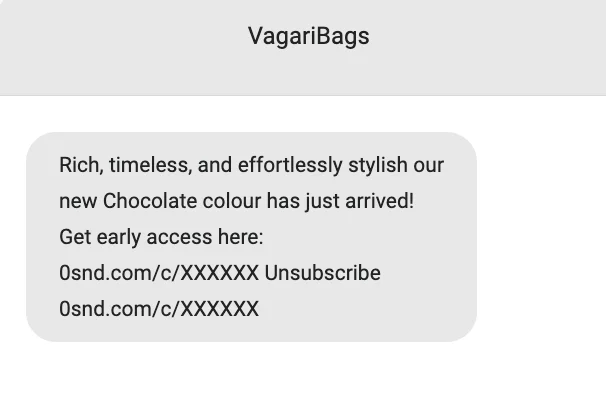
While it does take slightly more effort than just sending a mass campaign to everyone, this strategy ultimately pays off. For example, Vagari Bags sees a 6-7% click-through rate on SMS campaigns, which leads to a 1:121 ROI.
4. Win lapsing customers back before they churn
Every single store in the world has customers who bought once and then went quiet all of a sudden. Customers in the “at risk” stage are recoverable, but those who are “about to lose” are much harder to win back, so you need to consider the resources you want to spend on them.
The window between these two stages is exactly where reactivation automations are absolutely essential. To build a successful win-back strategy, follow these tried-and-tested tips:
- Time the reminder to your product’s actual consumption cycle. A 30-day vitamin supply and a piece of furniture have nothing in common, so you need to look at your average days between orders and set the trigger accordingly. Too early is bound to feel pushy, and too late means they’ve already bought elsewhere.
- Understand that “We miss you” without an offer doesn’t convert. You need to give lapsed customers a real reason to return, like a time-limited discount, new arrivals since their last visit, or a curated “here’s what’s changed” message. Keep in mind that high-value lapsed customers are worth a stronger incentive than low-value ones.
- Start with customers who are already lapsed, not just future ones. When you launch a reactivation flow, don’t just wait for new cases to accumulate. Go after the existing lapsed segment immediately, because that’s where the quick wins may be.
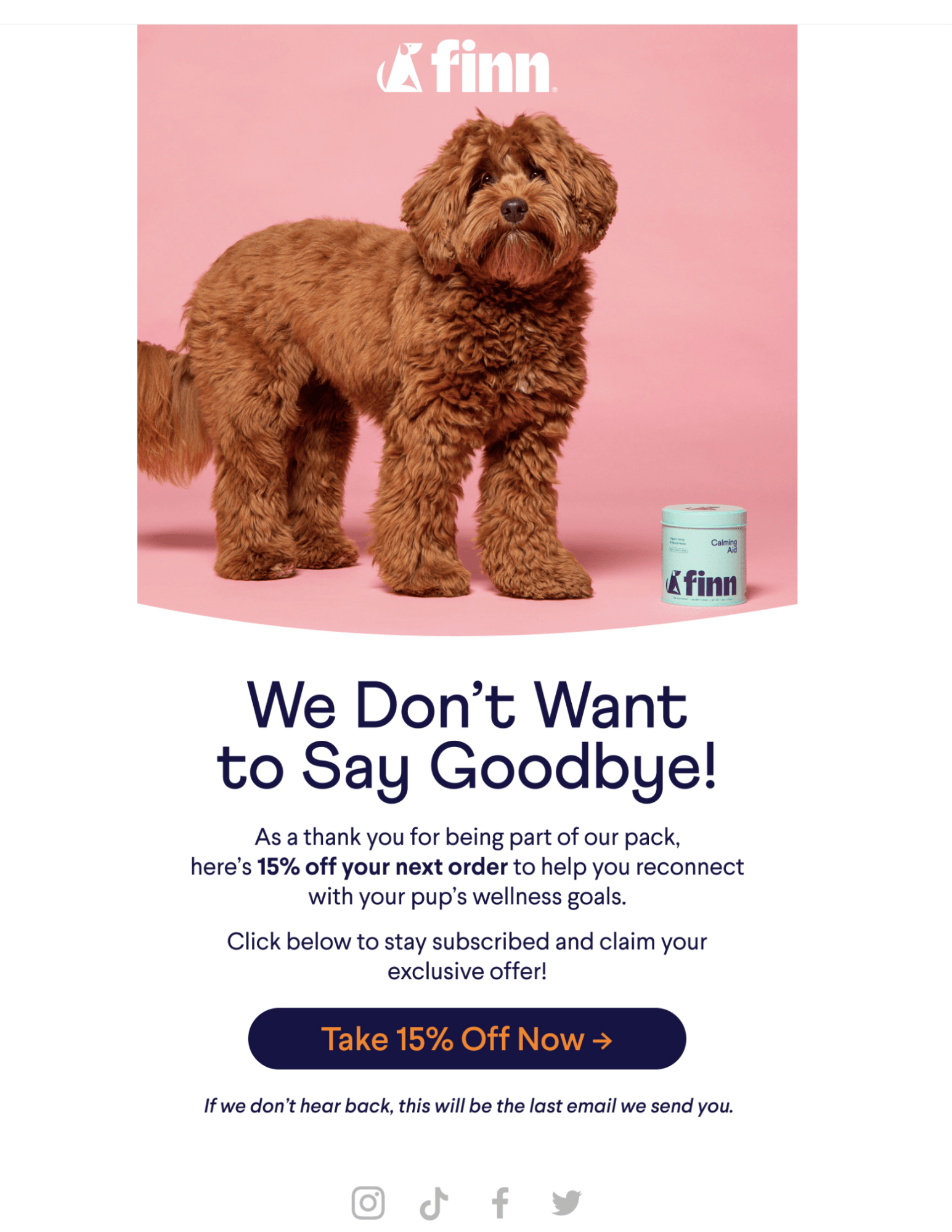
Check out this great example of a win-back email from Finn:
5. Use a loyalty program to make repeat purchases the default behavior
A loyalty program does a lot more than just reward your shoppers. As a matter of fact, it can fundamentally change how the shopper views your store and their purchasing habits. Customers who enroll in a loyalty program have a built-in reason to return to your store that’s completely independent of any seasonal promotion or flash sale you decide to run.
Here’s how you can set up a program that actually keeps people coming back:
- Choose the structure that matches your product. Points-per-purchase work well when customers buy frequently. That means they’re always accumulating toward something. Tiers work better for higher-AOV stores where status matters. For example, customers with “Gold” or “VIP” standing are reluctant to lose it, which drives both frequency and spend.
- Connect loyalty milestones to your messaging. A loyalty program sitting in isolation does little for LTV. The moment a customer earns a reward, reaches a new tier, or is close to one, they should get a triggered message to celebrate that milestone, not a monthly newsletter. “You’re 50 points away from a free product” outperforms any generic campaign.
- Make the program visible between purchases. Most customers forget they’re enrolled. Proactive reminders about points balances, expiring rewards, and tier progress keep the program top of mind without running manual campaigns every time.
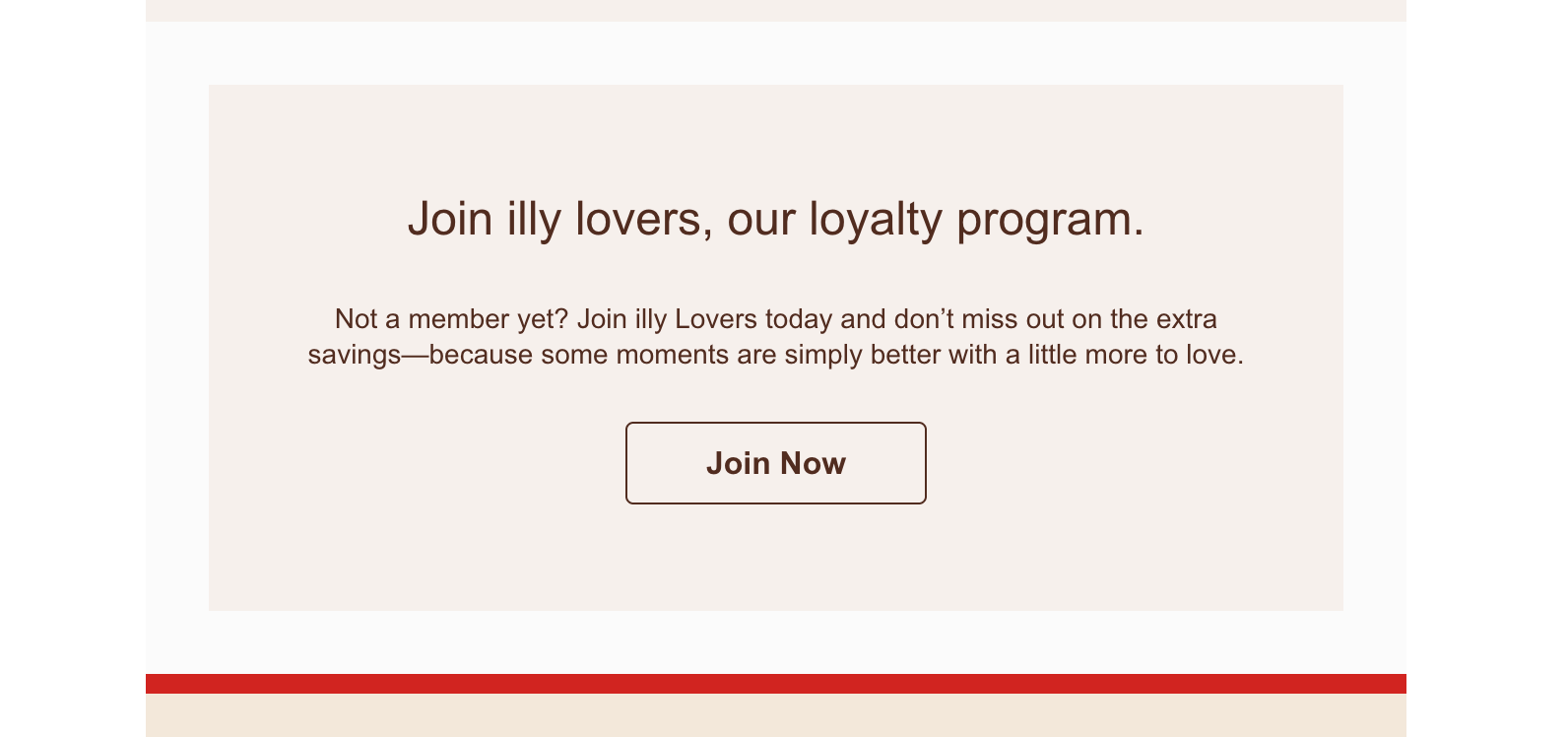
For some visual inspiration, check out how Illy naturally promotes their loyalty program right inside a regular marketing email:
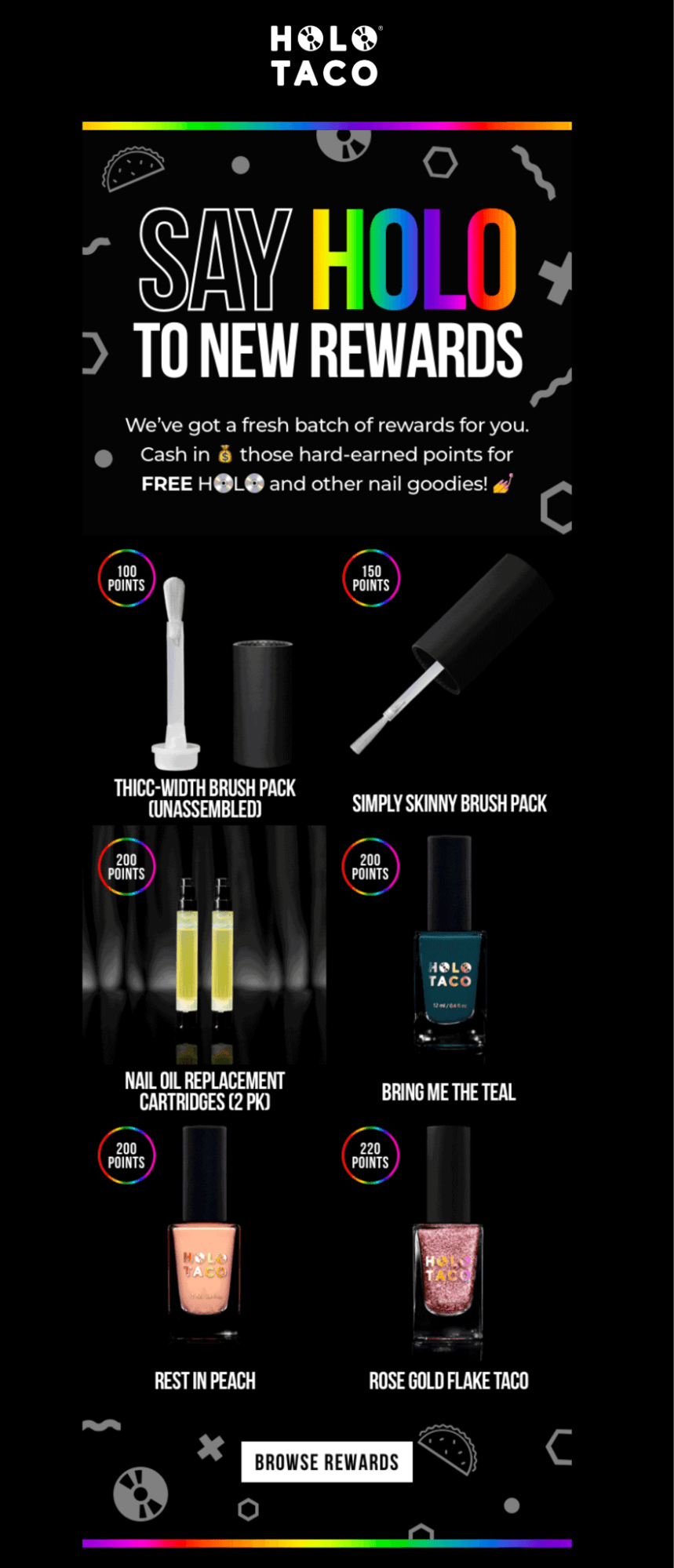
Or, you can look at how Holo Taco announces fresh loyalty perks to its existing customers:
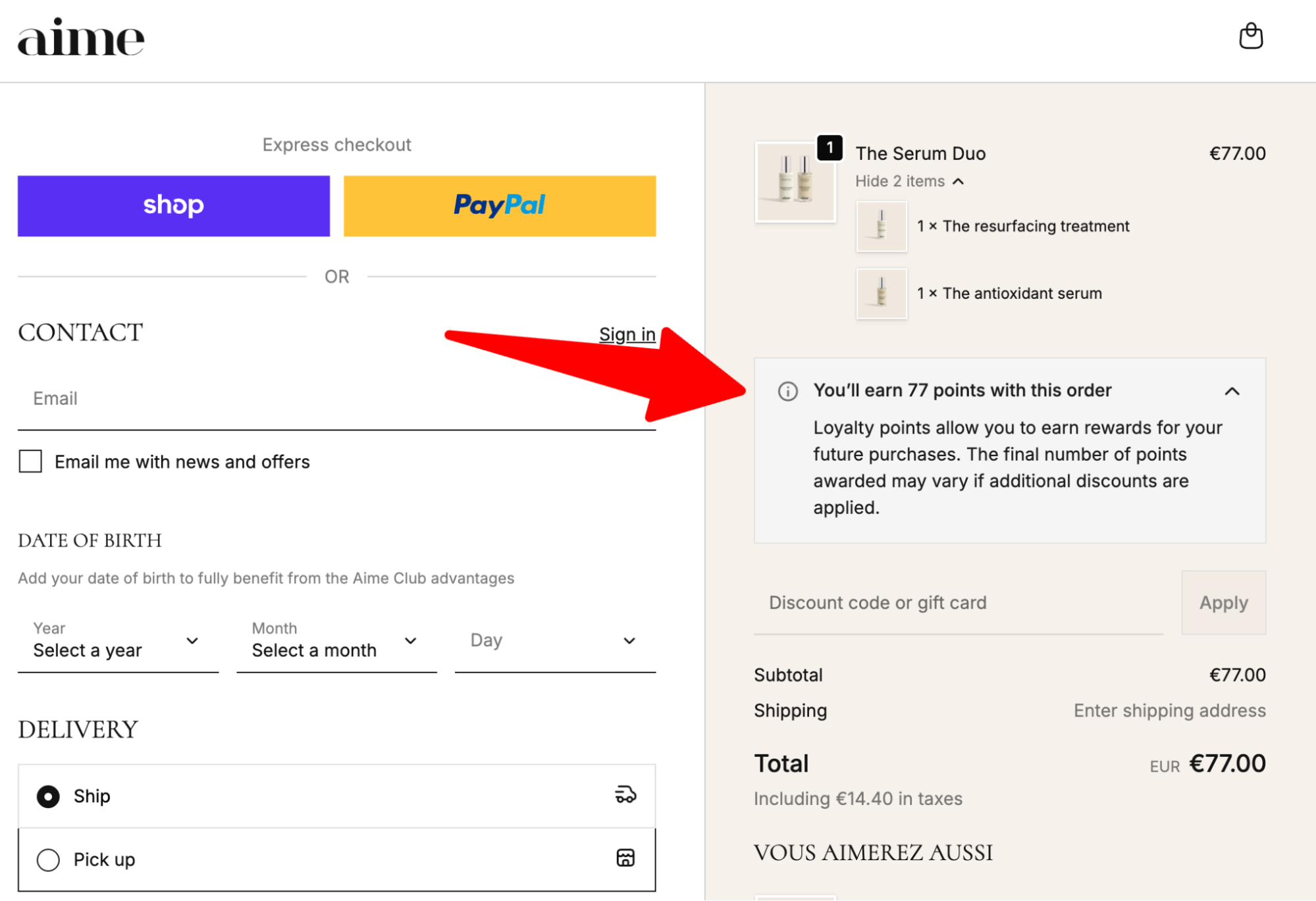
You can even encourage signups right at checkout, like Aime does to capture attention at the point of purchase:
6. Automate replenishment reminders for consumable products
If your store is selling consumables like skin care, supplements, pet food, coffee, tea, or anything else that finishes quite quickly, your biggest LTV leak isn’t necessarily churn. People simply forget to reorder, and customers don’t always return proactively, so you need to fix that. The good news is, it’s not that difficult; all it takes is one simple automation.
To build a lasting and effective replenishment automation, follow these tips:
- Time the reminder to your product’s actual lifespan. A 30-day supplement and a 90-day moisturizer need different triggers. Get this wrong in either direction, and you’ll achieve one of two things – annoy them with untimely messages or let them run out and buy from a competitor.
- Remove every click between the reminder and the reorder. Link directly to the product, not the homepage. If you sell subscriptions, the replenishment email is the natural place to pitch subscribe-and-save since the customer has just proven that they use the product regularly.
- If they don’t reorder after two reminders, hand them off to your win-back email flow. Don’t let them go radio-silent. A lapsed consumables customer is a different problem than a lapsed one-time buyer. They liked the product, but they just may need a stronger nudge to come back again.
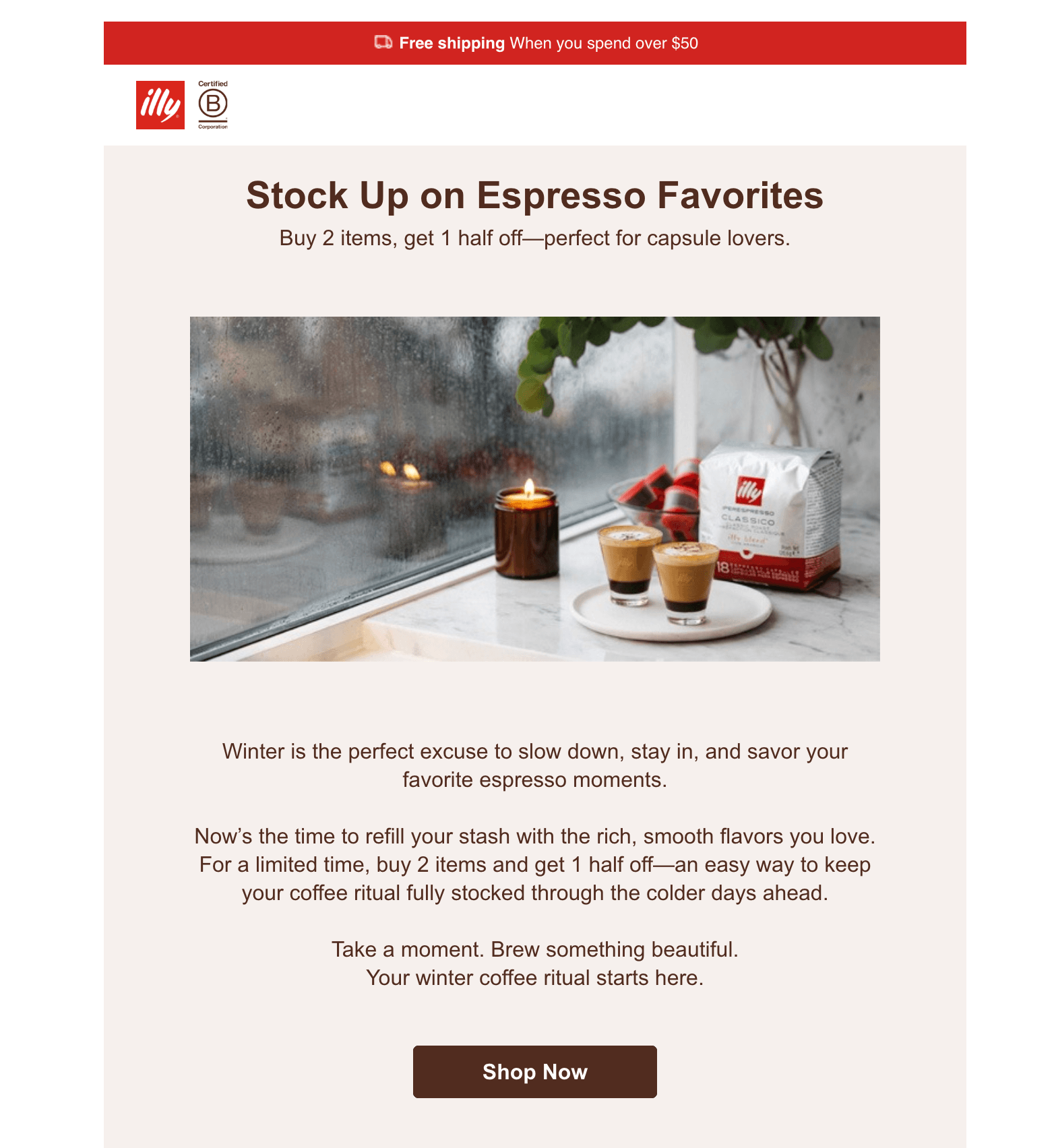
Illy shows a great example of a replenishment reminder email. They send out a campaign that encourages shoppers to stock up on their favorite capsules right away, even if they may not be running low at the time. They don’t go out of date, so it’s smart to stock up when the opportunity arises:
7. Use targeted popups to convert existing customers on-site
Most stores only use popups to capture new subscribers. The exact same infrastructure, however, can be used to provide different offers to your existing customers based on their segment or where they came from. What’s best, you don’t need any extra tools to make this happen.
Here’s how you can optimize your popups for retention:
- Show different offers to different audiences. A popup shown to VIPs should look nothing like the one shown to a first-time visitor. Segment-based targeting lets you show a loyalty reward to Champions, a win-back discount to at-risk customers, and a cross-sell to recent buyers, all from the same popup infrastructure.
- Match the popup to the page. A cross-sell popup on a product page converts. The same popup on the homepage may feel random. Use URL targeting in your popup app to show offers where they are contextually relevant.
- Add product recommendations to popups where relevant. Examples of campaigns include a welcome workflow (showing recommendations in the last window with the discount code) and dedicated campaigns featuring personal picks based on browsing or shopping history.
Here are a few quick popup campaign ideas to increase CLV:
| Customer segment | Audience | Popup offer |
|---|---|---|
| Champions | Customers with 3+ orders, bought within the last 30 days | "Early access: shop the new collection before anyone else" |
| At risk | No purchase in 60–90 days | "We saved something for you — 20% off, this week only" + product recommendations > best sellers |
| First-time buyers | Placed only one order | "Loved your first order? Here's 10% off your next one!” + product recommendations > best sellers |
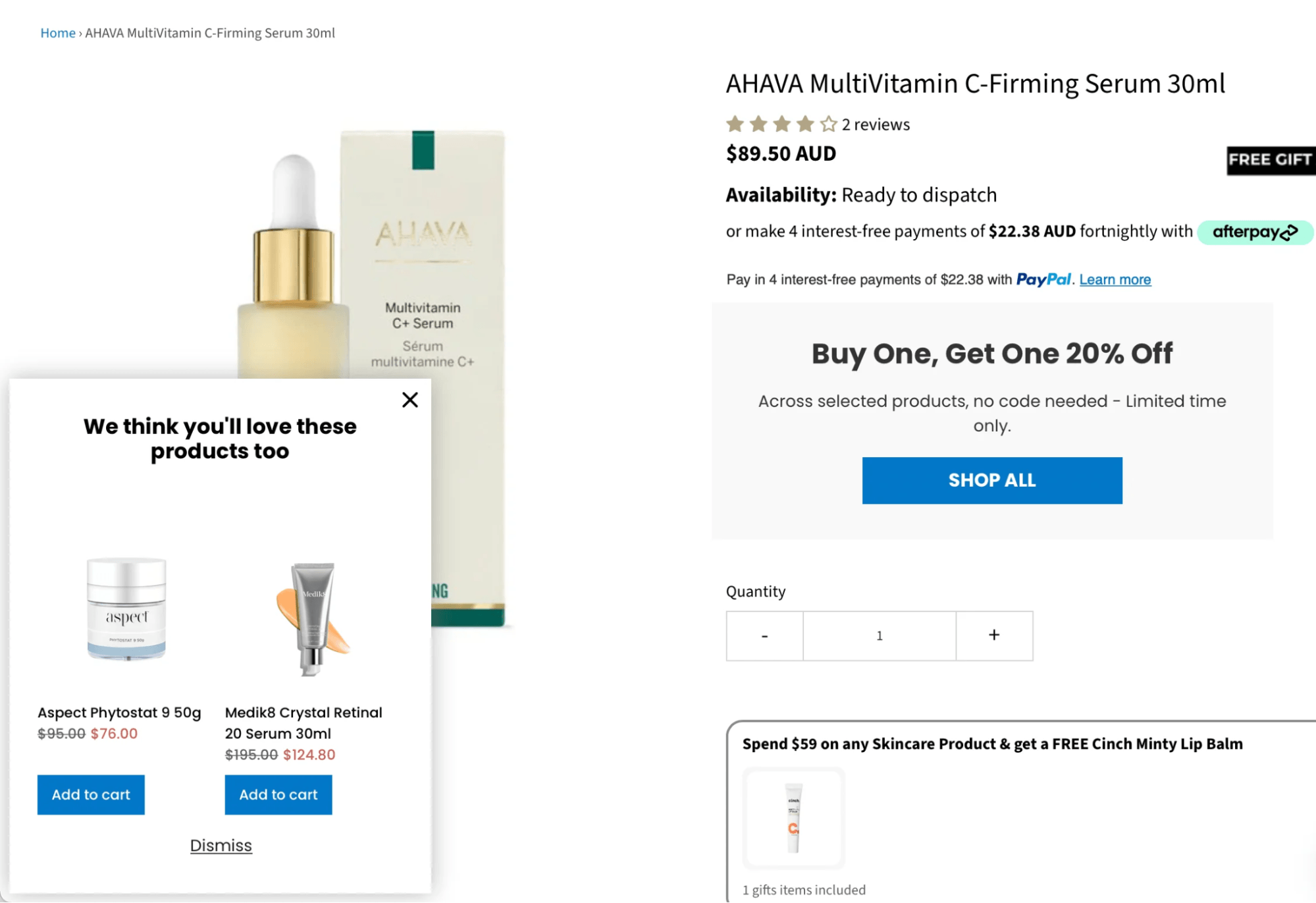
For example, AbsoluteSkin triggers a targeted cross-sell popup right when a customer adds an item to the cart:
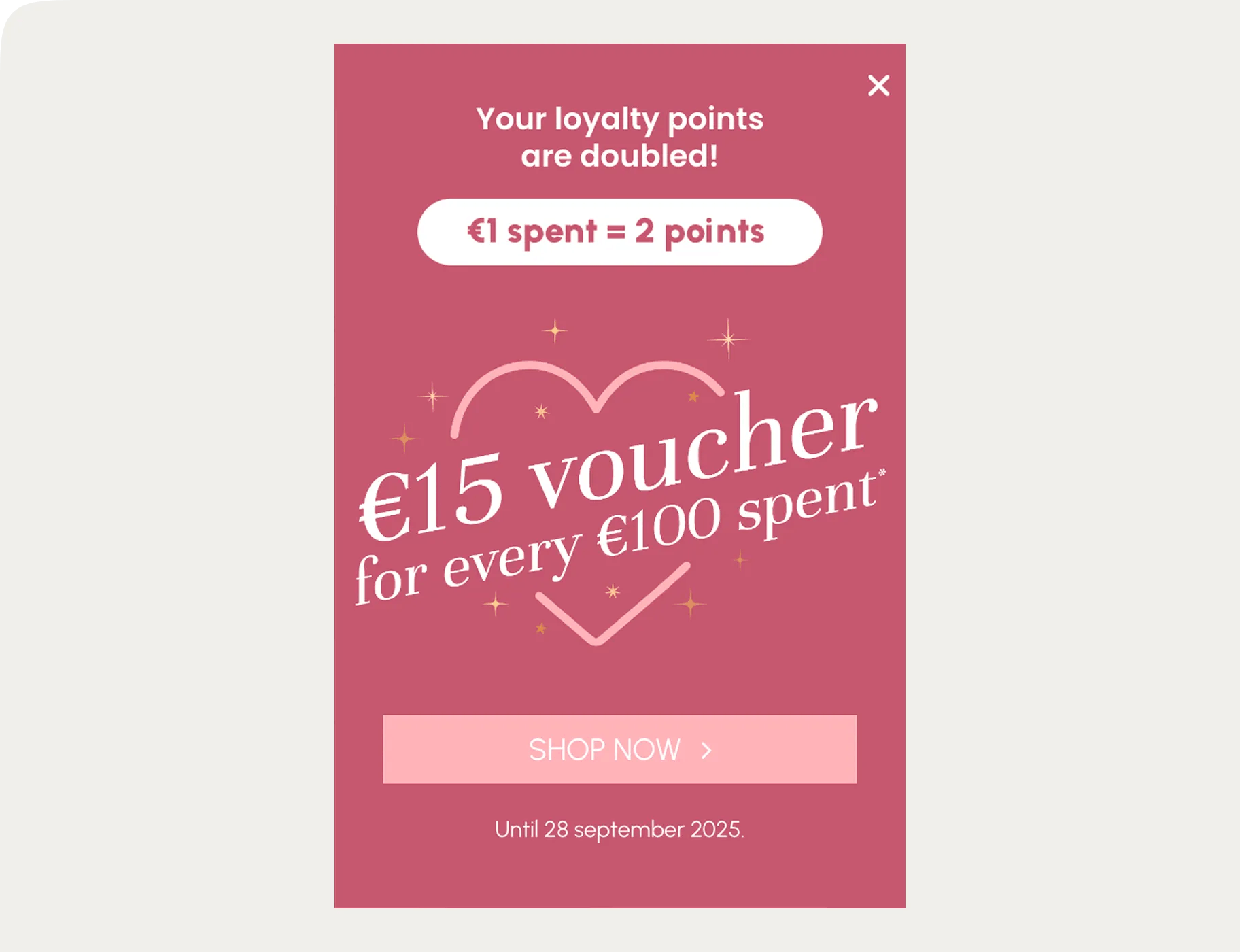
Alternatively, Aime built an announcement popup dedicated only to loyalty program members:
8. Lock in loyal customers with subscriptions
Every customer on a subscription removes one reorder decision and one chance for a competitor to intercept them. For consumable products, subscriptions are the highest-leverage LTV move available.
When building a strong subscription strategy, make sure you consider these points:
- Target the right audience. In your email app, build a segment of customers who’ve ordered the same product twice and make that your subscription acquisition list. This is a higher-converting audience than any broad campaign, as they’ve already proven the repeat purchase behavior.
- Gate a meaningful perk behind the subscription. Offer a lifetime 10%-15% discount, free shipping on every order, or priority access to new stock. The perk needs to be good enough that cancelling feels like a loss.
- Place the subscribe-and-save offer at specific touchpoints. Pitch the subscription inside the second purchase confirmation email or inside the replenishment reminder. You can also show it as soon as a new customer adds a subscription-eligible product to their cart. These are the moments when the value of a subscription is self-evident, no persuasion needed.
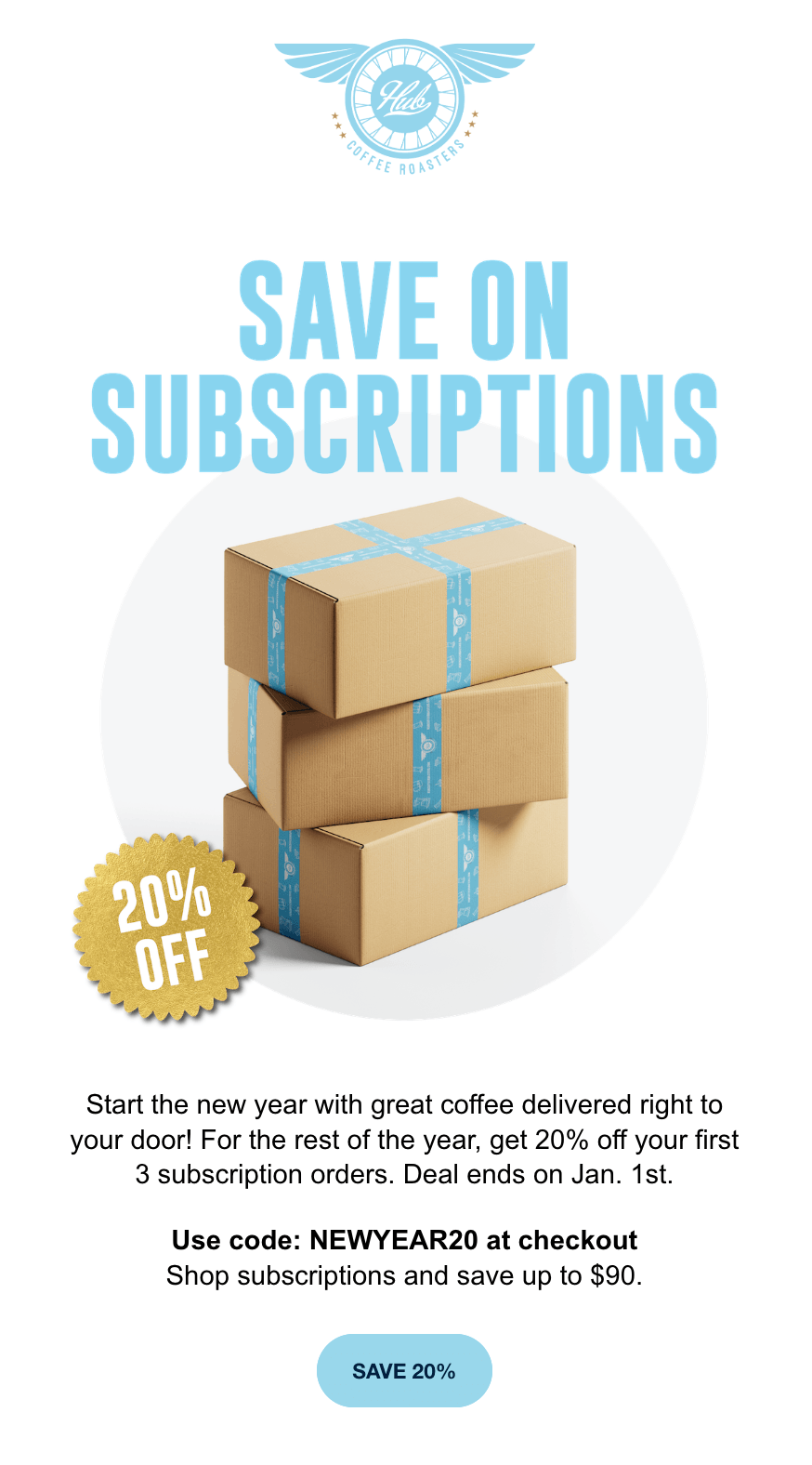
Hub Coffee Roasters, for example, runs a great email campaign offering a discount to start the subscription:
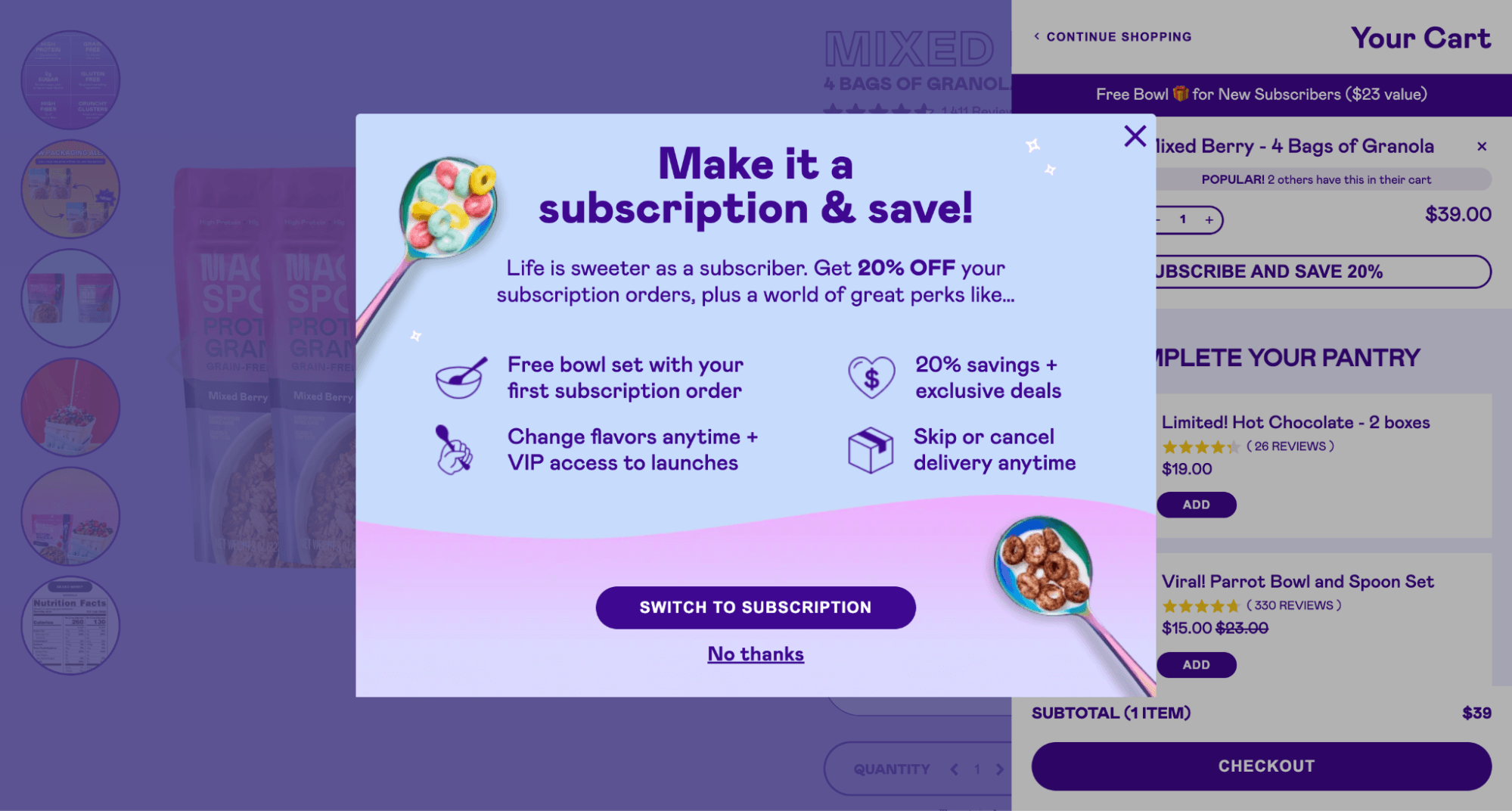
Magic Spoon, on the other hand, uses a targeted popup to present a subscribe-and-save option when a customer is viewing their cart:
9. Use bundling to increase AOV and drive repeat purchases
Product bundles are great for when you want to increase the average order value (AOV) by encouraging the shopper to buy more products in a single purchase. It can be achieved in two main ways: providing a selection of recommended items or introducing a free shipping option upon reaching a certain cart value.
These tips will help you build bundles that convert better:
- Look at orders placed within 14-30 days of each other and find the most common product. Those are your bundles. Most ecommerce platforms and analytics tools surface this in their product reports, so you don’t need to guess.
- Price the bundle below the combined individual price, but above your highest-margin item alone. The goal is to make the bundle feel like a deal while protecting your margin. A 10-15% discount on the combined price is the standard starting point.
- Test bundles as a post-purchase upsell before building a permanent product. Offer the bundle in the order confirmation email to customers who bought one of the component products. If it converts, make it a permanent SKU. If it doesn’t, you’ve lost nothing.
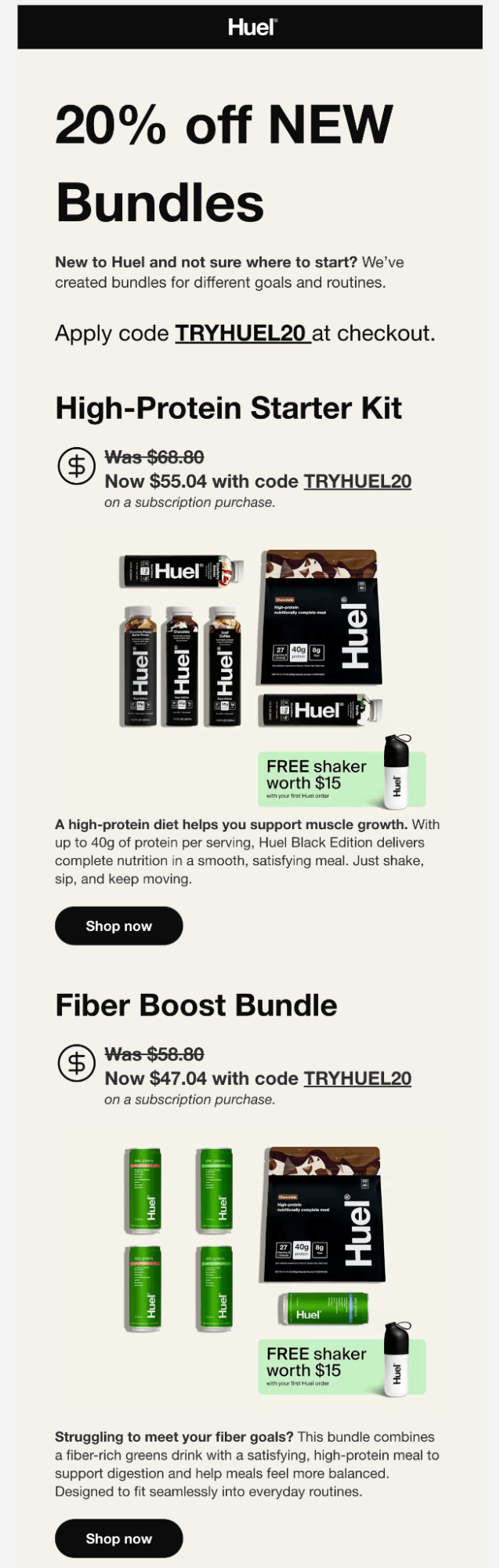
Huel does a perfect job of this by offering goal-oriented bundles at a 20% discount to get new subscribers started:
10. Recover purchase intent from existing subscribers with automated emails and exit popups
Existing subscribers who browse or abandon carts are your highest-intent audience. Abandoned cart, browse abandonment, and welcome emails account for 87% of all automated orders.
Here’s how you can effectively recover that intent:
- Run browse abandonment and cart abandonment emails as different flows. If someone adds a product to their cart, they should exit the browse abandonment sequence and enter the cart abandonment one.
- Lead with the product, not a discount, for browse abandonment. Browse abandonment is lower intent, as the customer just looked at something and left. A discount on the first touch trains them to wait for one every time. Show the product, include a review or two, and link back to it directly.
- Set up an exit-intent popup before the email sequence. If an existing customer is about to leave, a popup can close the session on the spot. If they leave anyway, the email flow takes over. This campaign targets only customers who have bought at least once.
If you prefer learning about browse abandonment in a video format, we’ve prepared a video just for you:
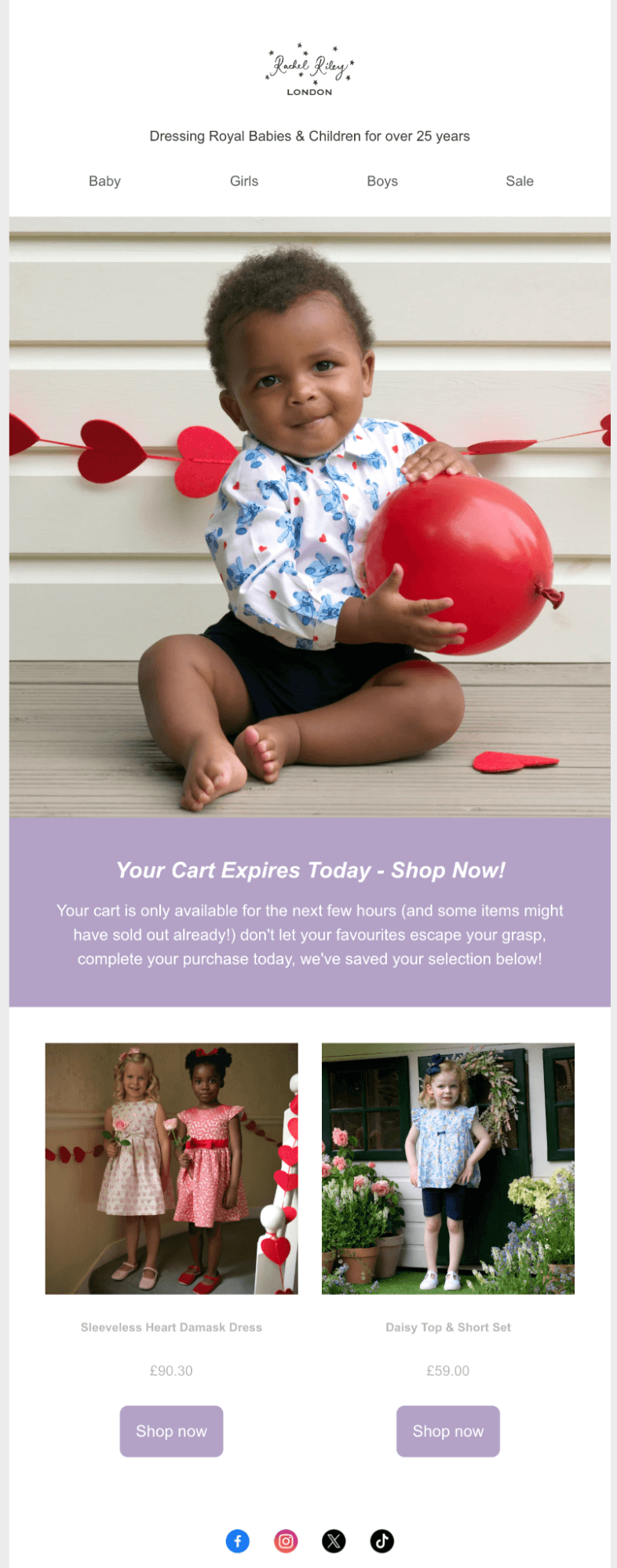
Here’s how Rachel Riley uses their cart recovery email to remind customers that their selection is waiting for them:
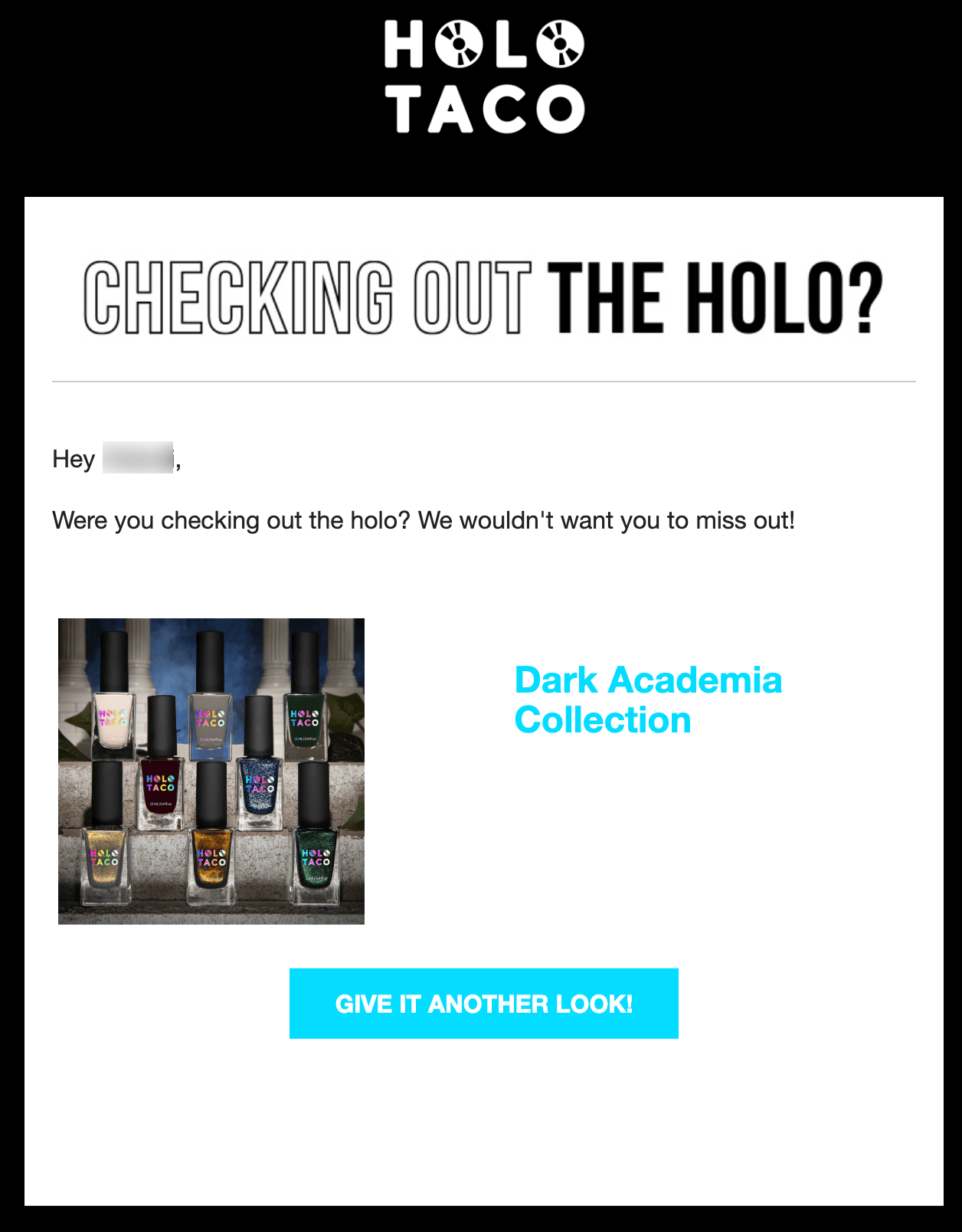
Here’s another example of Holo Taco using a browse abandonment automation to remind customers that they’ve recently checked something out:
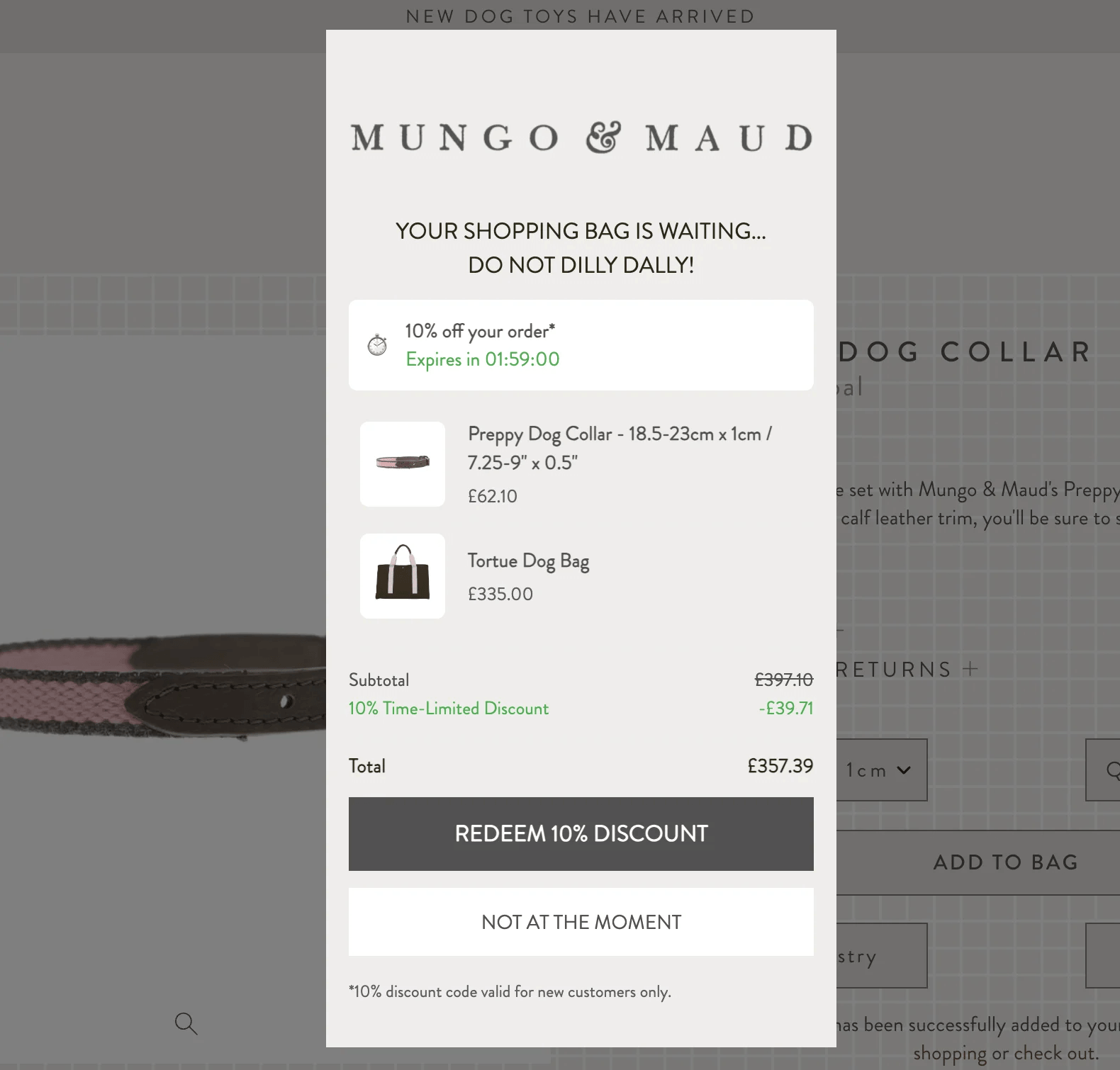
Finally, here’s an exit-intent popup example by Mungo & Maud that encourages shoppers to finalize their purchase before leaving:
Summary
Increasing customer lifetime value is one of the most effective ways to grow your ecommerce business. Instead of constantly paying high acquisition costs for new shoppers, switching focus to the people who already know and trust your brand makes perfect sense.
By setting up automated post-purchase emails, leveraging SMS, creating rewarding loyalty programs, and segmenting your audience, you can build stronger relationships that naturally lead to repeat purchases. The aforementioned strategies are all about delivering the right offer at exactly the right time.
Start small, fine-tune your existing automated flows, and watch your customer lifetime value climb steadily over time.

TABLE OF CONTENTS
TABLE OF CONTENTS


Subscribe and don’t miss any updates!
No fluff, no spam, no corporate filler. Just a friendly letter, twice a month.