Omnisend AI


 OFFER
OFFER








SMS marketing vs. email marketing – which is better?
With over 130+ pre-built integrations and flexible APIs, you can easily centralize data from across your tech stack
Make the most out of your data and unlock powerful growth marketing possibilities with these other top marketing tools.
Build any custom integration with our open, flexible APIs that are simple to use and implement.
Check out apps that have been stealing all the spotlight.
Email and SMS marketing insights, ecommerce resources, and the latest Omnisend news
Expert-led sessions covering email, SMS, and ecommerce marketing strategies.
Educational video and live training to help you make the most out of Omnisend.
Drive sales on autopilot with ecommerce-focused features
See Features
SMS campaigns are gaining popularity, with brands increasing their text message outreach by 31% in 2024, highlighting a consumer preference for direct communication over crowded email inboxes.
Utilizing SMS marketing allows businesses to engage customers at every stage of their journey, from initial contact to post-purchase support, enhancing personalization and relevance.
Successful SMS campaigns require strategic timing, clear calls to action, and personalized messaging to effectively capture attention and drive conversions.
Integrating SMS with other marketing channels, like email, can amplify engagement and improve overall campaign performance, ensuring your messages reach customers when they are most receptive.
Effective SMS campaigns connect with customers instantly, no matter where they are.
According to Omnisend’s marketing report, brands sent 31% more text messages in 2024. This shows that people want to hear from your brand via SMS and not in a cluttered email inbox.
With SMS campaigns, you have a direct line to your target audience. It removes the risk of spam traps and low open rates that often come with email campaigns.
To help you get it right, we created this guide to text message campaigns. We’ll dive deep into the types of SMS campaigns and how to create them. We’ll also walk you through the best practices for SMS marketing campaigns.
Quick sign up | No credit card required
An SMS campaign is a marketing strategy that sends targeted text messages to promote products and services or convey information. It’s cost-effective and allows businesses to reach a broad audience instantly and track the campaign’s success through response rates and conversions.
SMS campaigns have limitations on visuals and length, with a character count of up to 160. Yet this marketing channel is fast and has proven to be effective.
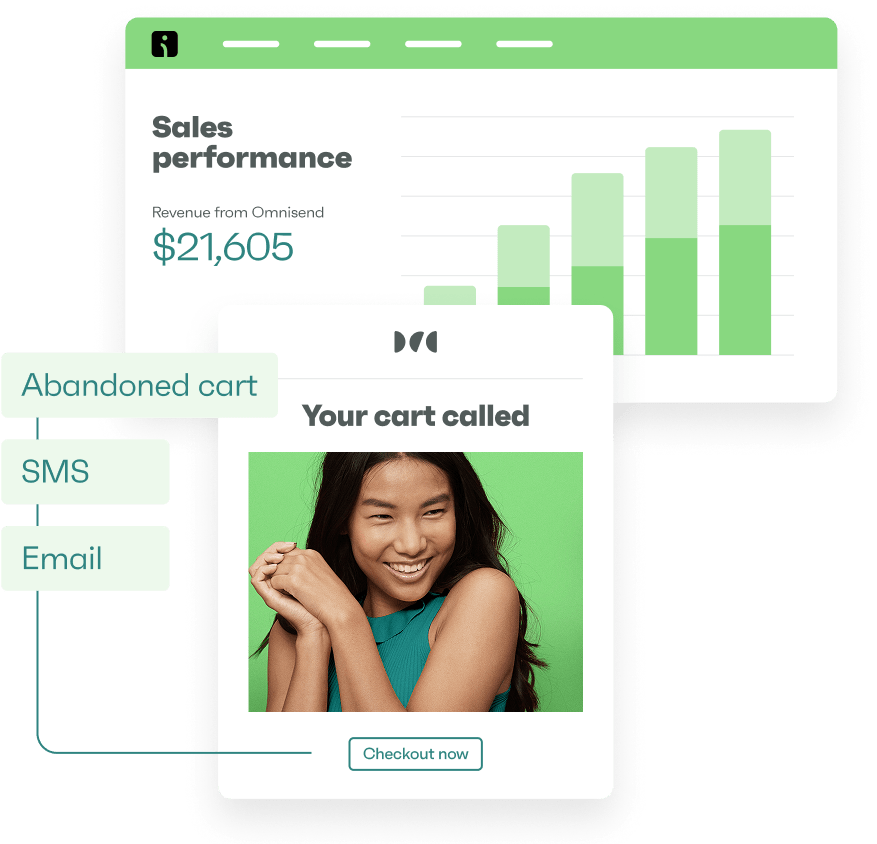
Segmenting your SMS marketing audience allows you to tailor messages to specific groups, ensuring the right people get the right information. For instance, you can set up automated texts to confirm transactions, share shipping updates, or remind customers about abandoned carts. These messages are sent only when triggered by customer actions, keeping your communication both relevant and efficient.
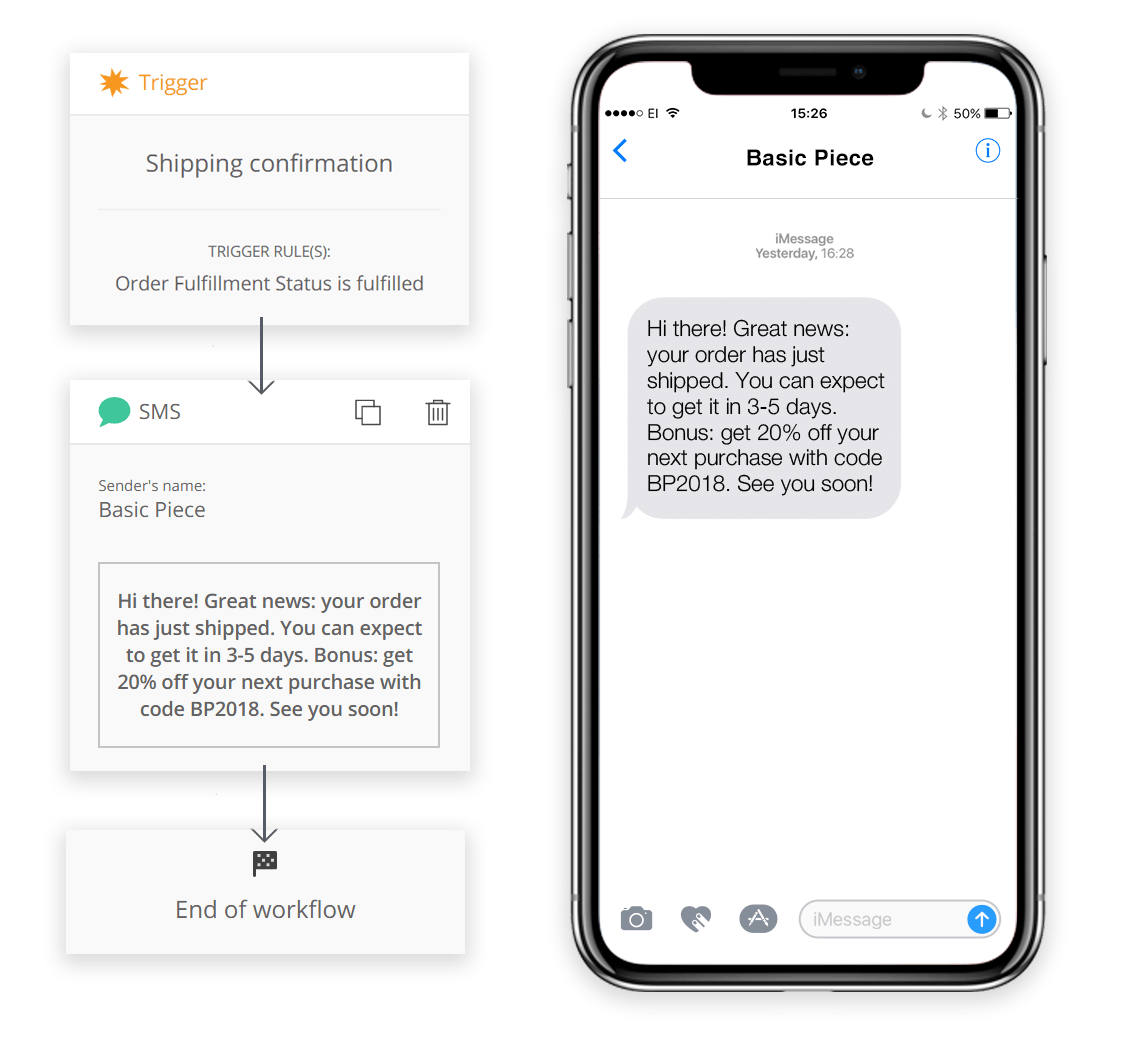
When used strategically, SMS campaigns support every stage of the customer journey, from first interaction to post-purchase support. Because text messaging is inherently personal, it allows you to communicate with customers in ways that email and social media can’t.
The following examples show how real brands use SMS campaigns to drive impactful results:
In ecommerce, messaging is time-sensitive, especially for flash sales or limited-time offers. Reaching customers fast for an SMS promotional campaign is a massive advantage.
However, the challenge is scaling that speed without losing relevance. This is why you need an automation tool that empowers you with speed and connection.
For example, Vape Superstore made the switch to Omnisend and took advantage of the fact that 80% of its audience was already shopping on mobile. This makes SMS campaigns make the most sense. It helped deliver personalized product recommendations.
Whether the customer has just switched to vaping or has been vaping for a long time, they receive timely, relevant SMS campaigns. As a result, Vape Superstore’s signup rates jumped from 18% to 32%. This proves that if you align your text marketing campaigns with your customers’ buying journey, engagement follows naturally.
You can have customer loyalty in many ways. However, when engaging a dedicated fanbase, you should be there for the moments that matter most to that community.
For the “Žalgiris” Kaunas basketball club, SMS became the VIP line for its fans. It used SMS campaigns for high-impact moments like ticket sales, new merch drops, and exclusive offers. These are things that fans are eager to hear about.
In fact, reaching them via SMS and including social proof helped the club create a deep sense of belonging among fans. This strategy also helped “Žalgiris” grow its subscriber list by over 11,000 fans in one year, along with 9,000 SMS subscribers.
It’s worth noting that the club didn’t treat its text message marketing campaign as a standalone strategy. It combined SMS campaigns with a broader omnichannel strategy, which generated around 39% of its ecommerce revenue.
The best SMS marketing campaigns build a reliable system for repeat business. This doesn’t happen simply by sending many messages, but by discovering the best time to send SMS campaigns.
That’s the story of CLVmaxers, a boutique email and SMS marketing agency that uses Omnisend to build lifecycle automations. Its workflows layer email and SMS campaigns, guiding customers from their first purchase to repeat orders and loyalty.
CLVmaxers don’t use SMS for spammy blasts. Rather, it uses it strategically for real-time nudges and urgency around product launches and cross-sells.
This precise targeting ensures that customers only hear from the brand when the message adds the most value. The approach has led to a 52% open rate and a 7.5% conversion rate on the agency’s welcome series.
Some marketers might think that SMS campaigns are too transactional. However, just because text messages are shorter doesn’t mean that you should lose your brand voice.
Vagari Bags proves that SMS campaigns can do more than push promotional content. In addition to product launches and offers, SMS supports your email storytelling. This ensures a consistent brand voice across all customer touchpoints.
This authentic approach is why Vagari Bags sees SMS click rates of between six and seven percent. More importantly, its SMS campaigns deliver a massive ROI of 1:121. This proves that when SMS reflects your brand, not just your offers, it builds an emotional connection that often leads to conversions.
One of the biggest hurdles for growing brands is a lack of time. They’re constantly multitasking and may not have sufficient funds to hire more staff.
This was the case for Pasignia before it partnered with Omnisend and Ecommerce Boost. The brand struggled with slow and fragmented marketing efforts that required excessive manual work. However, after integrating email and SMS into automated flows, its entire marketing stack started working together.
This shift allowed the brand to launch campaigns 50% faster. For a small in-house team like Pasignia, SMS campaigns filled a detrimental gap. It added agility and provided a high-impact channel optimized for conversions.
This shows that when you remove the friction from your tools, your team’s performance can improve, leading to better results.
SMS is easier to use and more cost-effective than ever. Discover the real impact behind SMS marketing and why you should incorporate this valuable channel.
Get my copy
A successful SMS marketing strategy begins with choosing the right campaign type. Whether you’re announcing a sale or gathering customer feedback, there’s a messaging campaign for every goal.
Here are common types of SMS marketing campaigns:
Here are the essential steps to execute a successful SMS campaign:
Watch this quick one-minute video to learn how to set up an SMS campaign:
You can’t send an SMS campaign simply by using your mobile phone. To get maximum reach, you have to have advanced SMS marketing tools to help you do so cost-effectively and efficiently. Omnisend offers automated SMS campaigns that integrate with your emails and include sales-per-campaign reporting.
On top of that, Omnisend boasts an impressive rating of 4.7 with over 2,800 reviews on the Shopify App Store, signifying exceptional performance and a high level of customer satisfaction.
Quick sign up | No credit card required
In Omnisend, navigate to Campaigns, select New Campaign, and choose Create SMS to initiate the process.
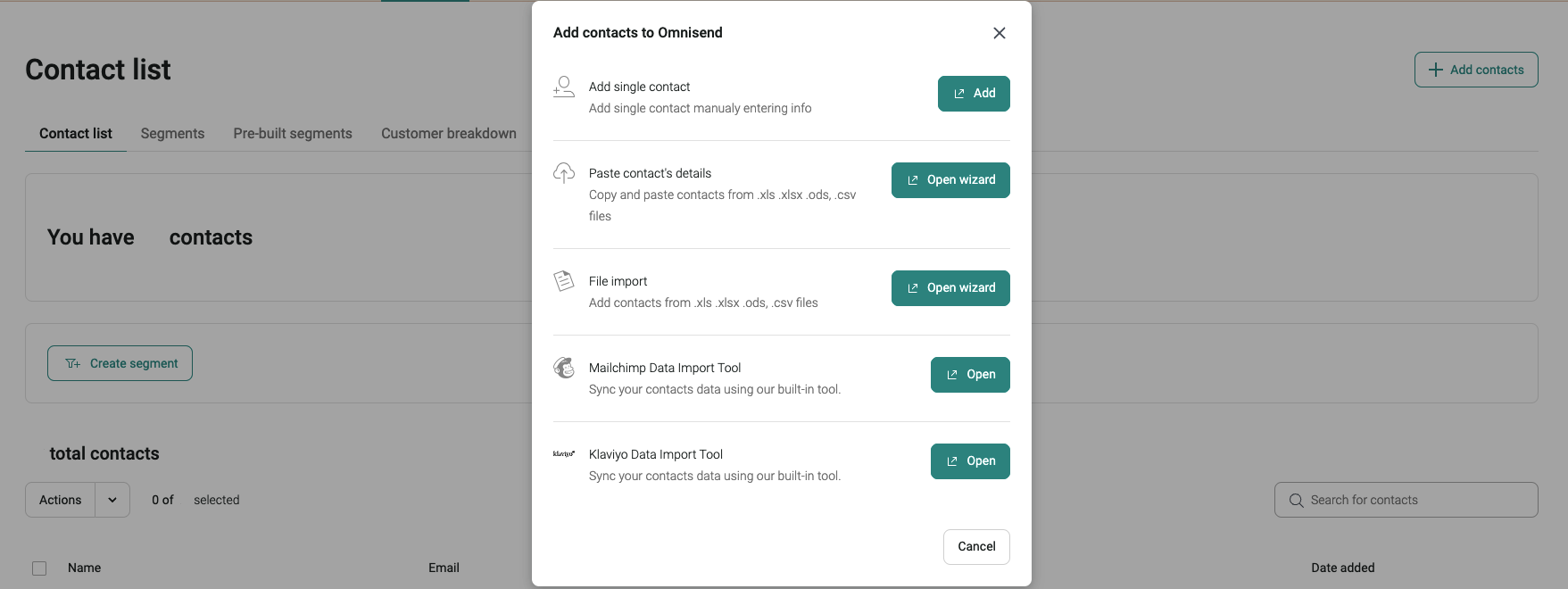
You can easily import your contacts from a file when using Omnisend. To import your contacts from the file, go to the Audience tab, click the Add Contacts button, choose File Import, and select your desired file. Check out this article to learn more about importing contacts.
It’s straightforward to create SMS marketing campaigns, as they’re only text and don’t have any design assets. However, you’ll need to include the following information:
Here’s what creating an SMS campaign with Omnisend looks like:
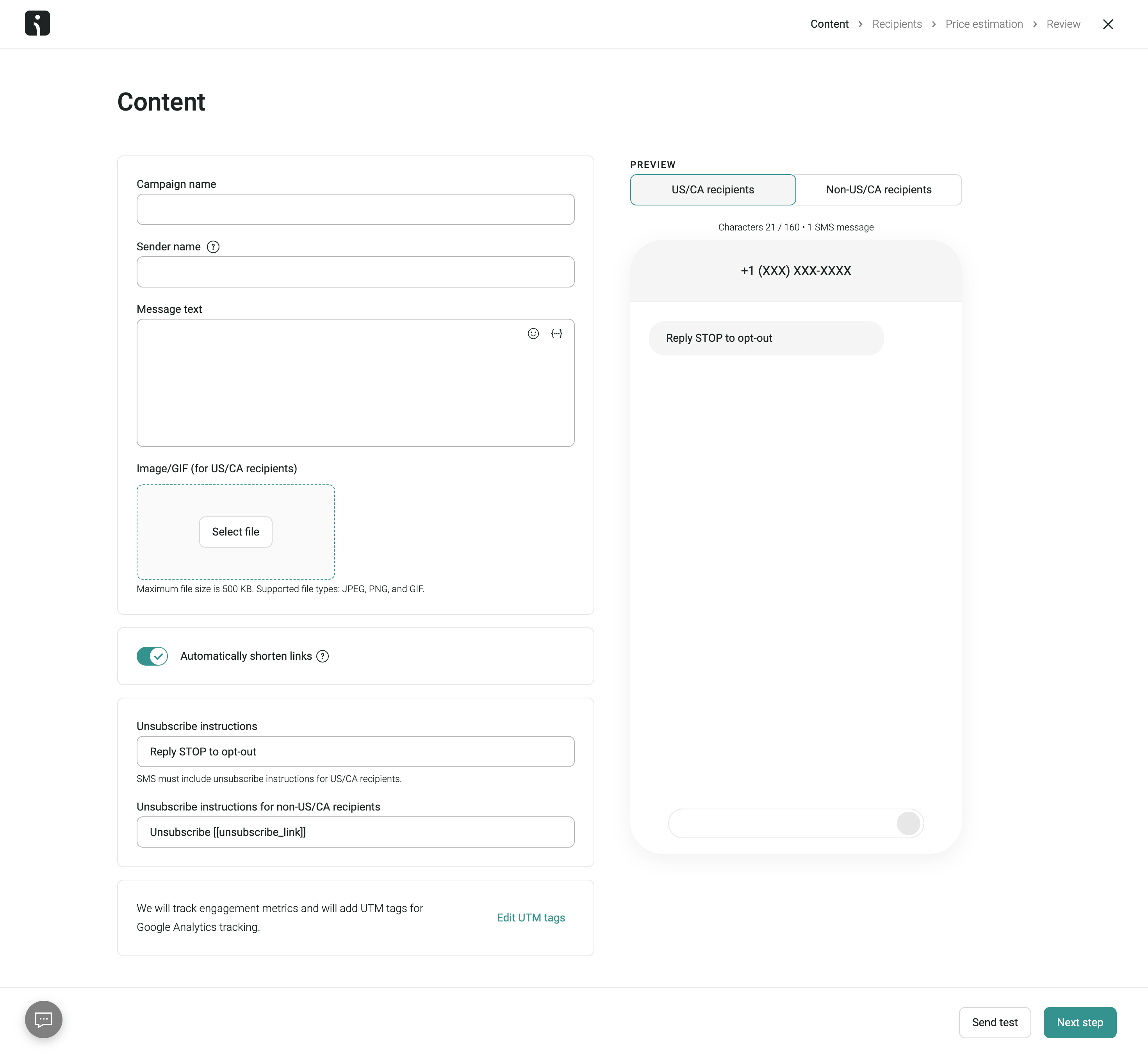
Go ahead and try it for yourself to understand how seamlessly you can create an SMS campaign. These text message templates can be of great help in creating impressive messages.
Expert tip: You can optimize your SMS campaigns by automating them through Omnisend’s advanced workflows. Doing so can elevate engagement and save time while reaching your audience with precision and impact. Check out this article to learn more about SMS automation.
If you already have contacts on your list, they can be added to your campaign easily by selecting the appropriate segments. You can also import users into Omnisend using the steps already mentioned, provided you have their permission to contact them.
The import process involves four steps: uploading files, mapping, organizing, and reviewing.
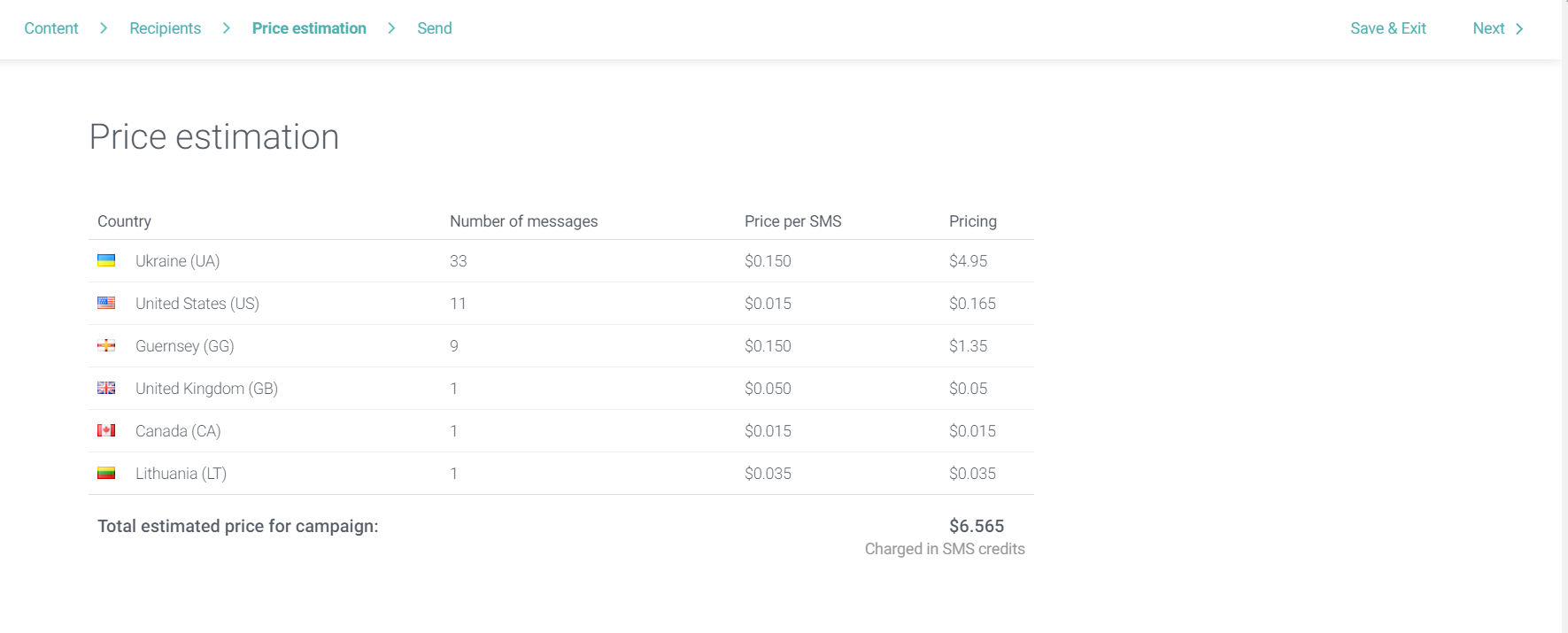
Omnisend’s SMS length calculator will help you estimate the price for your SMS campaigns. As well as price, the calculator lets you see the number of characters in your text message.
You can paste or write the message directly on the calculator, choose the destination country, and instantly view message details, character count, and pricing.
Use the preview feature to ensure your message appears correctly on various devices, including iPhone, Android, and feature phones. The calculator simplifies cost estimation, ensuring transparency and effective budget management for your SMS campaigns.
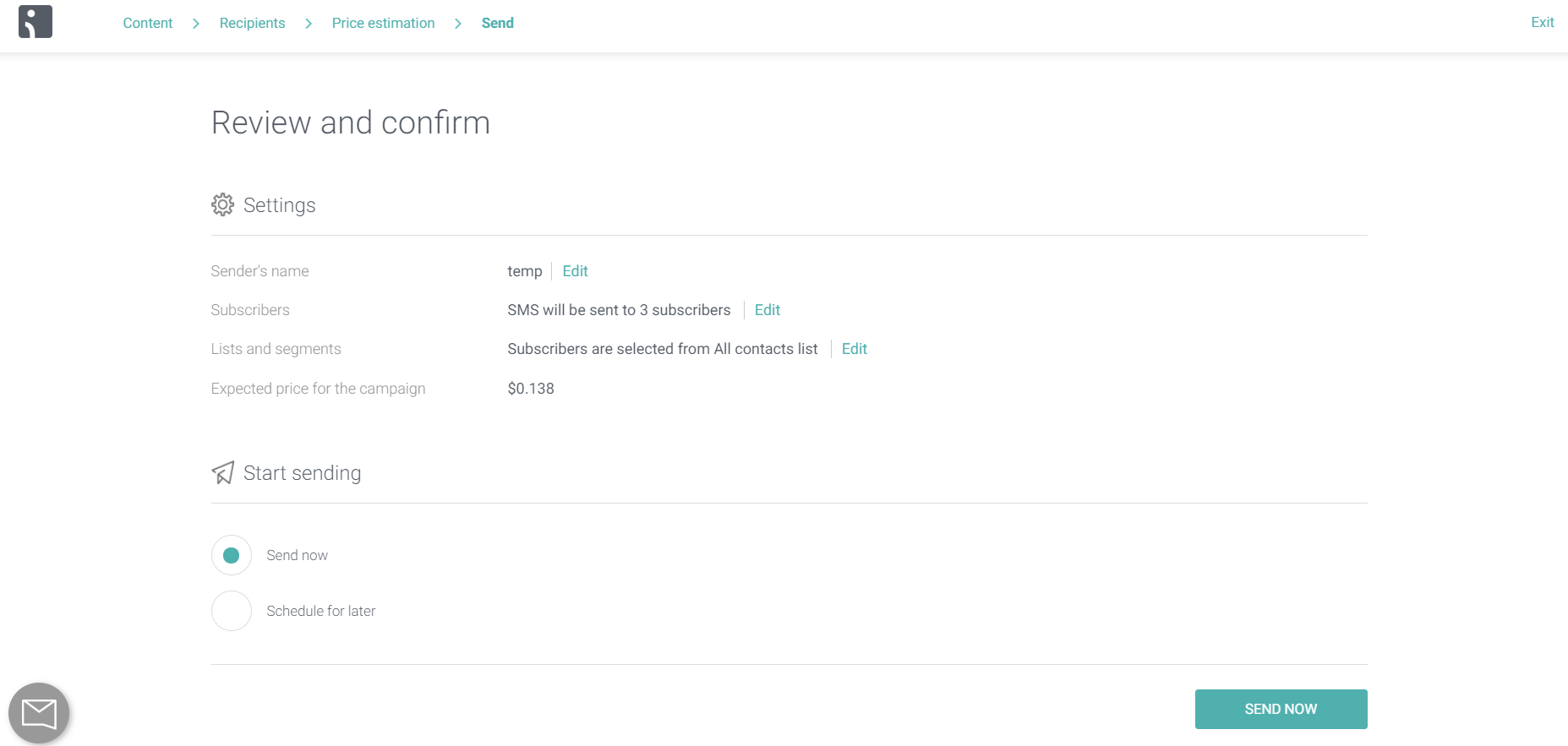
Before sending your SMS campaigns, take a moment to review all the details. Ensure your message is clear, recipients are accurate, and scheduling aligns with your strategy. Once you’re confident in the campaign’s setup, send and connect with your audience seamlessly.
Expert tip: Combine SMS campaigns with other marketing channels
You could use SMS campaigns solely to deliver critical and time-sensitive messages at every step of the customer journey.
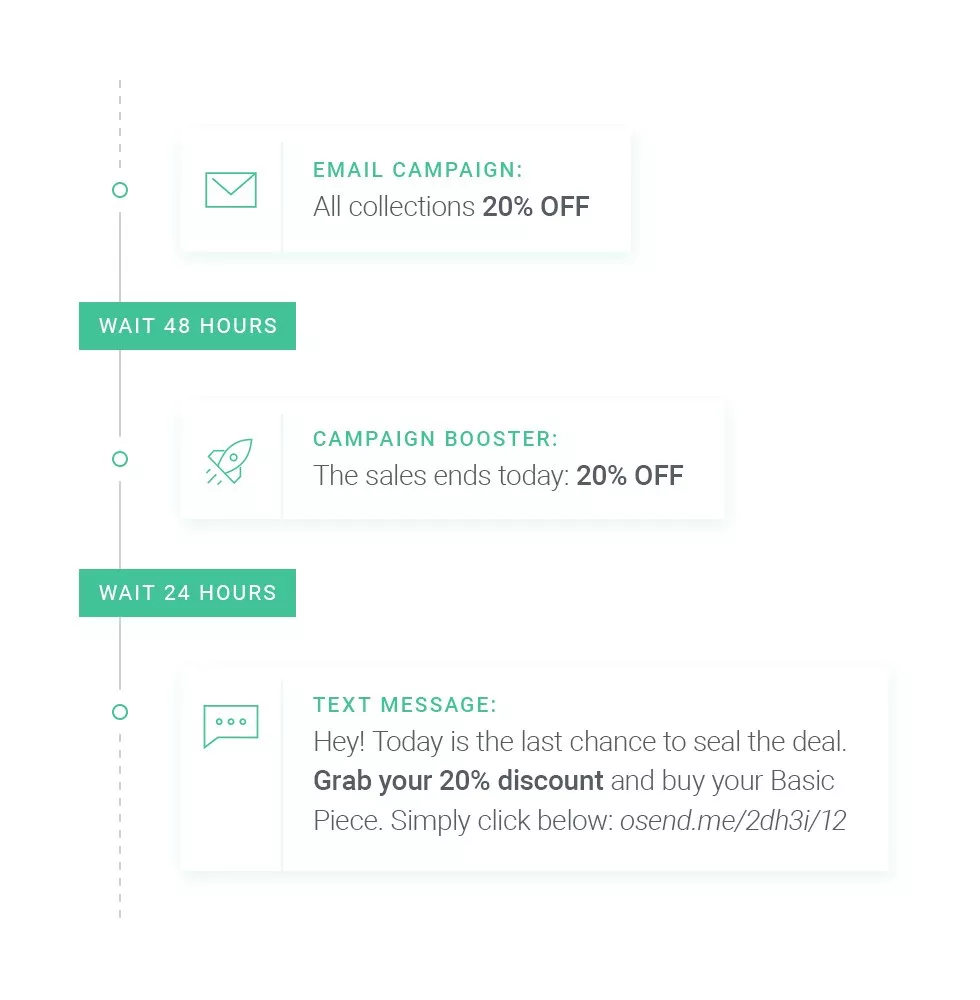
However, best practice shows that short text messages are incredibly effective when combined with other communication channels, like email and Facebook retargeting.
For example, SMS campaigns to non-openers. Firstly, you launch your email campaign, and the next day your text campaign sends an SMS to subscribers who didn’t open your email — which you can do step-by-step with Omnisend.
SMS is a great tool for sending time-sensitive messages, as they’re usually opened quicker than an email if sent at the right time.
Simultaneously, you may also launch Facebook retargeting to the same audience. This way, you’ll get more touchpoints with your customers, and it will be easier to convince them to shop with you — particularly with holiday campaigns.
“We may have a ‘free shipping today only’ email that goes out. Some customers won’t get that email until the following day when the sale ends. We can use SMS as an alternative to reach those customers.”

Jason Slattery, Marketing Director at B-Wear
Here’s the success story.
Creating an SMS campaign involves more than just sending messages. Applying best practices transforms a good strategy into a great one. Follow these proven practices to launch successful SMS campaigns:
Before launching your first SMS campaign, ensure you receive the customer’s consent. Like email permissions, the law requires that your contacts opt in for promotional content via SMS.
You can collect opt-ins in a few different ways:
In compliance with the TCPA (Telephone Consumer Protection Act), consent must be clear, voluntary, and not conditional on a purchase. Also, include an easy way for recipients to unsubscribe from your messages.
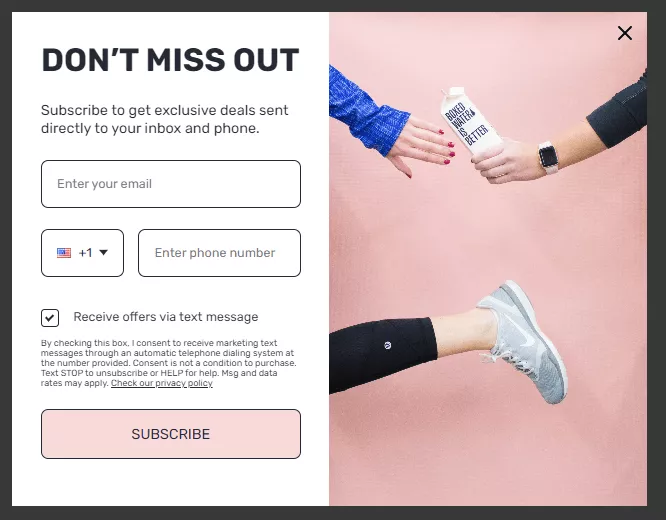
See how Omnisend uses a popup to capture contact details and offer exclusive deals in return:
A well-crafted, personalized SMS communicates to customers that you value and appreciate their needs and preferences. Adding a personal touch, like addressing them by name, referencing past purchases, or highlighting their preferences, makes the reader feel more connected to your brand.
This approach builds trust and boosts engagement. People are far more likely to respond to messages that feel relevant to them.
For example, instead of sending a generic message like “Stock is updated. Shop now: (Link),” consider a personalized alternative like “Hi (Customer Name), your favorite sneakers are back in stock! Enjoy a 10% discount: (Link).”
See the difference?
The personalized message makes the customer feel recognized and appreciated, while the generic one comes off as impersonal.
Personalized messages do more than deliver information — they build relationships. These meaningful connections are what turn one-time customers into loyal ones.
A great SMS grabs attention, but a strong CTA drives results.
Ensure your CTA is direct, easy to understand, and aligns with your goal. Communicate the actions you want customers to take, such as clicking a link, claiming a discount, or confirming an appointment.
For example, a phrase like “Shop the sale before it ends: (Link)” creates urgency and clarifies what actions to take. Compare this to vague instructions like “Check out our website,” which lack context or motivation.
For even better results, pair your CTA with a benefit or incentive. Highlight the value of taking action with messages such as “Use code SAVE20 at checkout to get 20% off your order today: (Link)” or “Buy 1, Get 1 Free — Offer ends tonight: (Link).”
By emphasizing the benefits, you make it harder for your audience to resist. Clear, compelling CTAs encourage them to act quickly.
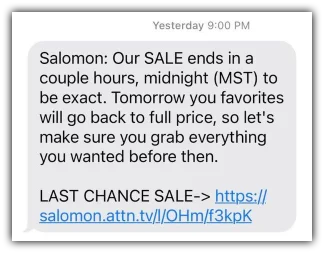
For example, Salomon’s SMS combines all of these best practices to encourage customers to act immediately:
Timing can make or break the success of your SMS campaigns. Even the most engaging message can fall flat if it isn’t well-timed.
To maximize engagement, schedule your texts for mid-morning or early evening, when people are most likely to be receptive. These are moments when most individuals have settled into their routine and are more likely to check their phones.
Avoid sending messages too early, too late, or during holidays unless they’re critical. Nobody likes their dinner interrupted or their peace disturbed by non-urgent texts.
If you’re unsure when your audience is most active, test different times and review the engagement data. Top SMS campaign management tools can help schedule messages at the best times for each segment of your audience.
When it comes to SMS, less is more. With a character limit and a busy audience, it’s important to keep your messages brief and to the point.
The goal is to capture attention quickly, so focus on one main idea per message. Trying to cram too much information into one text can confuse your audience or cause them to lose interest.
For instance, instead of saying, “We have an amazing sale on our entire store right now! Get 20% off everything, and don’t forget about our new arrivals section with tons of great deals, too.” Opt for a concise alternative like, “20% off everything — today only! Shop now: (Link).”
Short, focused messages fit within SMS limitations, increasing the chances that your audience will read and engage.
To fine-tune your SMS campaign, you can track a number of metrics:
At Omnisend, an SMS campaign report looks like this:

SMS campaigns for marketing are effective because they’re simple, direct, and meet customers at a channel where they prefer to communicate. In this guide, we’ve shown how brands use SMS to build loyalty, reinforce brand identity, and increase customer lifetime value.
That said, SMS message campaigns work better when they’re timely, personal, and integrated with your overall marketing strategy.
If you’re ready to put all these lessons into action, start with Omnisend. With email and SMS automation in one place, you can launch high-performing SMS campaigns in minutes.
SMS campaigns remain a highly effective marketing strategy in 2026. While email inboxes are becoming crowded, text messages often gain higher open and engagement rates. They work best for time-sensitive messages, promotions, and transactional updates. That’s because texts reach your audience instantly and directly on their phones, allowing them to be read quickly.
You can measure your return on investment (ROI) from SMS campaigns by comparing the revenue they generated against the marketing cost.
Here’s the formula:
ROI = [(Campaign revenue – Campaign cost) / Campaign cost] x 100
You can track conversions from SMS campaigns using the following strategies:
— UTM tracking: Attach a unique UTM code to the links in your text message. This allows you to see which sales came from which campaign in your Google Analytics dashboard.
— Platform analytics: Advanced automation platforms, such as Omnisend, automatically track clicks and attributed sales. They offer real-time insight into your campaign performance without requiring manual setup.
— Promo codes: You can generate unique codes (e.g., TEXT20) for customers to claim your offer via SMS. These codes allow you to easily attribute sales directly to your SMS promotional campaign.
The cost of running SMS campaigns varies by country and message length. According to Omnisend, sending text messages to the US ranges between $0.015 to $0.03.
A standard text message can take up to 160 characters. However, adding emojis or special characters reduces the character limit to 70. This potentially increases the cost if the message is split.

TABLE OF CONTENTS
TABLE OF CONTENTS

What’s next


No fluff, no spam, no corporate filler. Just a friendly letter, twice a month.