Omnisend AI

 OFFER
OFFER






Black Friday customer segmentation is based on what shoppers buy, how they engage, and how much they spend. They are used to build custom segments fitting the different needs of similar shopper profiles.
When done well, the right Black Friday customer segmentation can raise open rates and revenue per email, while keeping your sender reputation healthy during the most active commerce week of the year.
Quick sign up | No credit card required
What is Black Friday customer segmentation?
Black Friday customer segmentation is dividing your email and SMS list by behavioral signals: last year’s BFCM buyers, cart abandoners, VIPs, price-sensitive shoppers, so each group gets a unique offer that’s most enticing for them.
Brands use data like last year’s purchase history, email engagement, browsing behavior, and cart abandonment to create targeted email campaigns.
The main benefits come from using data for accuracy. When you segment by orders and RFM data (recency, frequency, monetary value), you identify purchasing patterns that predict future behavior.
AOV and CLV metrics show which customers drive the most revenue; categories browsed and carts started help to understand purchase intent, and higher engagement leads to better email marketing ROI.
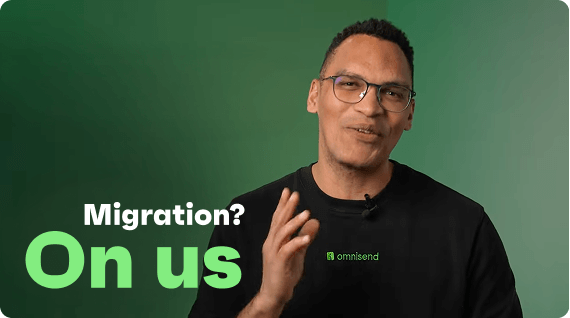
This video shows how to build these segments in Omnisend and walks you through each of the 11 segments step by step:
How to build your own Black Friday segments
Building effective Black Friday customer segmentation requires four key steps that work together: gathering data, setting objectives, turning data into rules, and finally building the segments in your platform.
1. Gather the data
Start gathering information at least a couple of weeks before Black Friday to set aside enough time to identify shopper patterns. If you have data from previous years’ Black Friday, analyze that as well, as it can reveal behavioral patterns that may not be visible pre-season. Focus on these data points to build your segments:
- Orders and RFM data (recency, frequency, monetary value)
- Average order value and customer lifetime value
- Product and category purchase history
- Coupon and discount usage
- Browse and cart events
- Email engagement recency (opens and clicks)
- Location and regional time zones
If you want to get the most impactful insights, make a habit of refreshing your Black Friday metrics, as data constantly changes during peak shopping days, so you can better understand the performance of your Black Friday strategy.
2. Set objectives
Spend time segmenting your audience and defining clear goals for every customer group. Shoppers who regularly respond to deals but abandon carts halfway require a different kind of Black Friday communication than loyal customers who keep buying your products regardless of whether there’s a sale going on.
To take it a step further, you could also consider assigning a single metric per segment goal to create a steady stream of highly accurate and detailed data.
3. Turn data into rules
Once you have enough data to extract workable insights from, you can then convert it into practical segment rules to make the entire Black Friday segmentation process more manageable. For example, you could add segmentation rules like:
- “Top 10% by revenue in the last 365 days” to identify your highest-value customers
- “Added to cart in the last 14 days with no purchase” to find recent cart abandoners
- “Coupon used in 50% or more of past orders” to single out price-sensitive shoppers
It’s important to add exclusion rules to make sure your BFCM messaging stays relevant to new shoppers rather than those who have already purchased something in the last few days. Customer lifecycle segmentation sits underneath all of this, grouping people by their relationship with your brand.
4. Use the segments
Building highly specific customer segments for a Black Friday campaign may seem like a lot of work. In reality, most, if not all, segments will likely be similar for other campaigns as well. If you’re already using Omnisend, you can create segments and then reuse them for later marketing events.
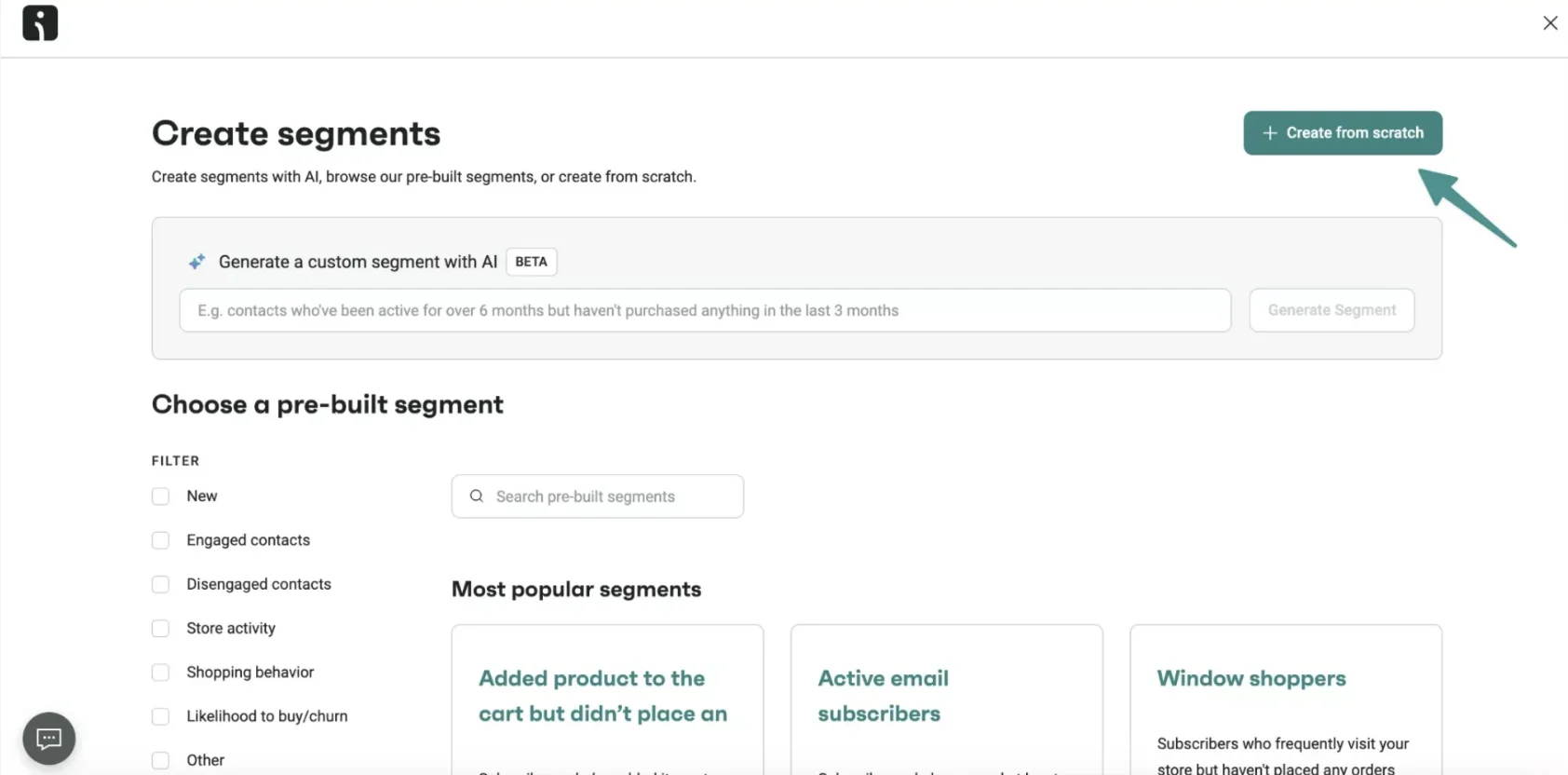
To briefly show how to create segments manually with Omnisend, you need to first go to your Omnisend dashboard, open Audiences, and choose Create from scratch.
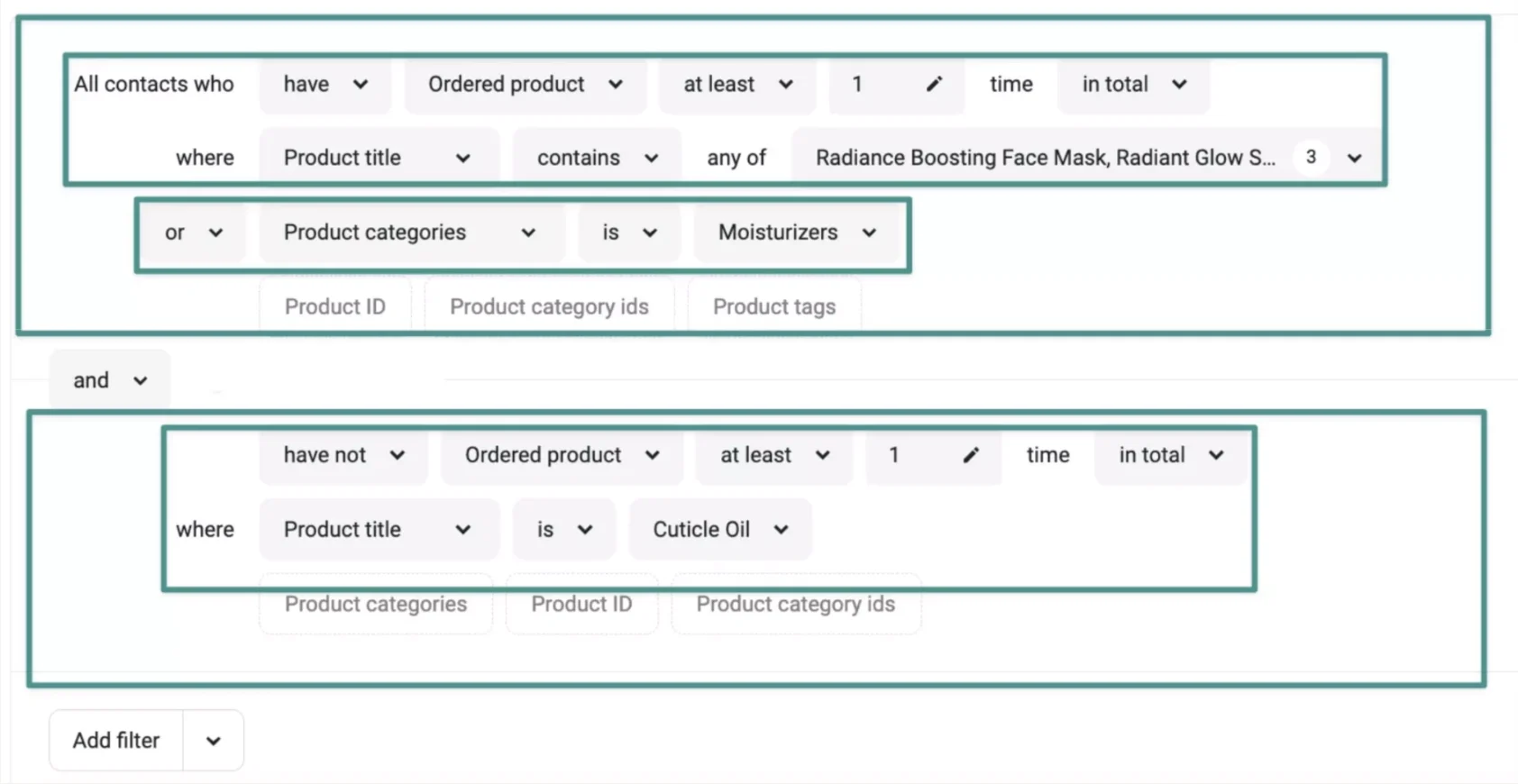
Then add the necessary filters, and then click on Save.
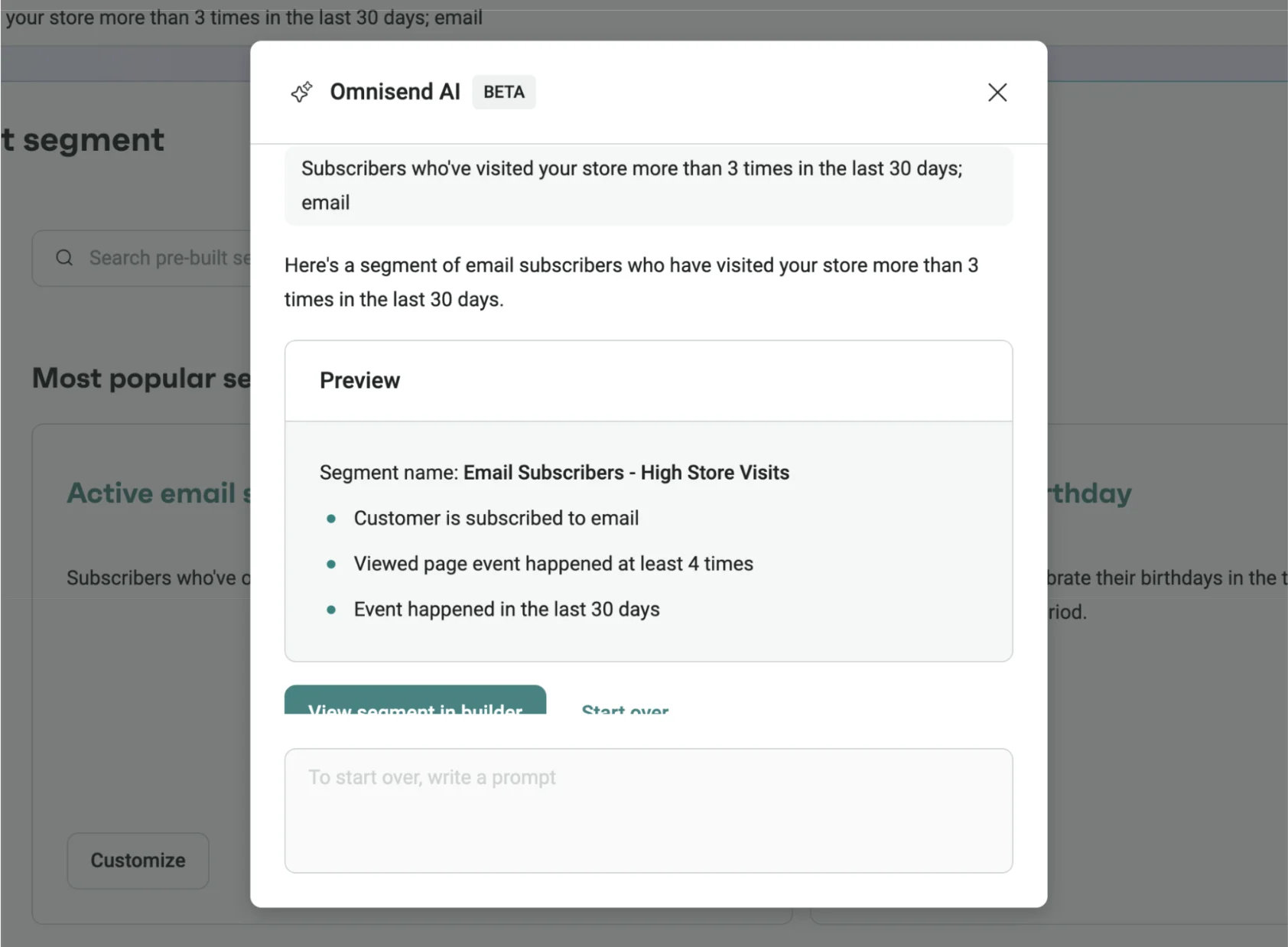
Manually adding all the rules necessary for your Black Friday segments can be taxing. As a way to speed things up, you could try Omnisend’s AI Segment Builder, which does it from a plain-language description.
All you have to do is type what you want, like customers who ordered more than once but didn’t open the last campaign, and the tool will add the right filters that you can review and edit.
11 high-impact Black Friday customer segments
Effective Black Friday segmentation starts with isolating shopper intent and lifecycle stage. These 11 Black Friday email segments target customers based on proven buying behaviors and engagement patterns to deliver the best results.
1. Highest-value customers
Your first segment should focus on identifying the highest-value customers, which are typically the top 5-10% by lifetime value. Another good way to separate this segment, particularly if your business is relatively new, is to look at the customers who’ve purchased more than three times from you in the last year.
Prioritize exclusivity over discounts like early access, priority shipping, or members-only bundles.
Exclude them from generic promos to protect VIP status, and add a post-purchase cool-off period to prevent overselling.
Why it works: Your highest-value buyers bring in the most revenue per email and should be encouraged with special benefits to protect your margins and retain their premium status.
The no-discount, value email: Amundsen Sports
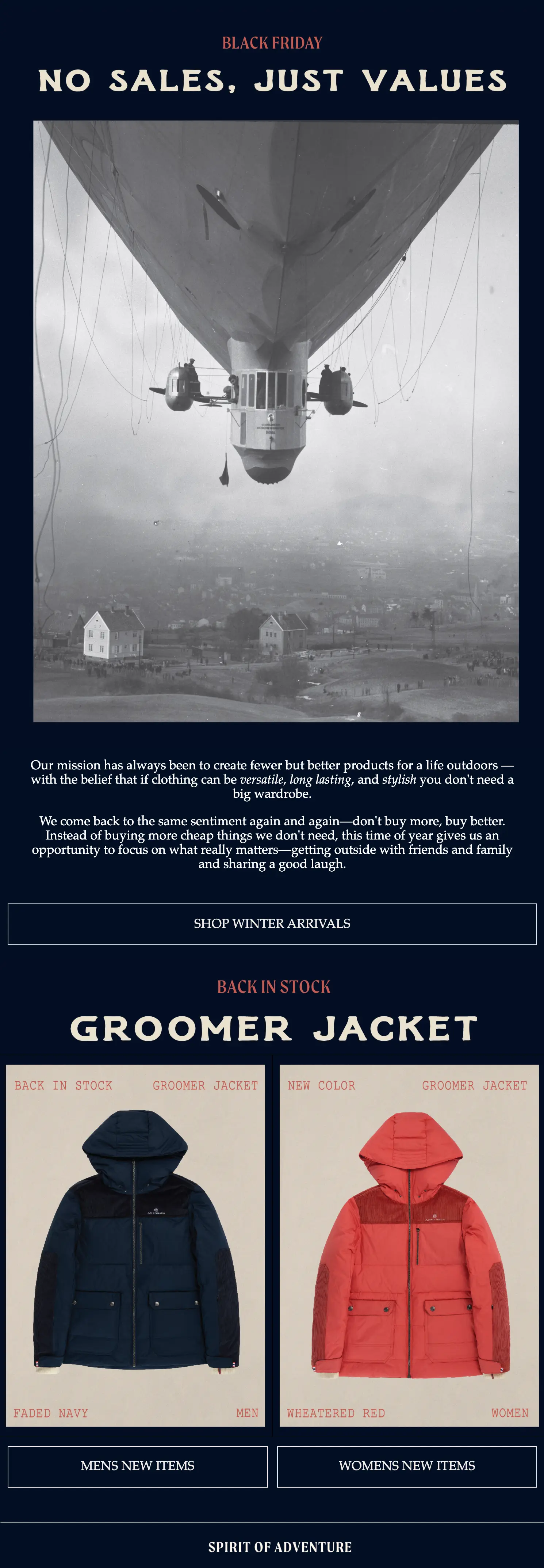
Amundsen built a straightforward email with a sharp black-and-white hero image that tells the company’s story. The email structure shows back-in-stock items and new colors instead of a discount. In short, the entire idea behind this email is the value the company brings through its experience.
How to use it for this segment:
- Send it to your top 5 to 10% by lifetime value, the group that already buys at full price
- Keep it discount-free and reward customers with early access, value, or new arrivals, not a markdown that gives away margin
- Exclude this segment from your sitewide discount blasts so the exclusivity stays real

Inside Amundsen Sports’s email strategy where 30% of revenue comes from automations
The outdoor brand rebuilt its welcome, order-confirmation, and cart-recovery automations after moving from its previous ESP. Its order-confirmation emails alone drive 16.7% of annual email revenue, and nearly one in three clicks lead to another purchase.
2. Cart abandoners
Cart abandonment can be a major opportunity if approached the right way. Even if these shoppers abandoned their carts, they still show clear signs of interest, which can be further encouraged with a targeted Black Friday marketing strategy.
Design highly personalized emails that rely on customer browsing tendencies. Include visuals of the actual browsed products to create a feeling of “picking up where you left off” and combine this with a well-placed CTA to remove doubt and friction.
Why it works: If a customer has already chosen a product, the focus here is to remove doubt, not persuade. Exact items, a clear shipping cutoff, and a return policy can all help answer the last hesitation. Under $50, lead with free shipping. Between $50 and $150, a standard discount. Over $150, a small gift or bundle protects the margin.
The clear sitewide offer: INGLOT Canada
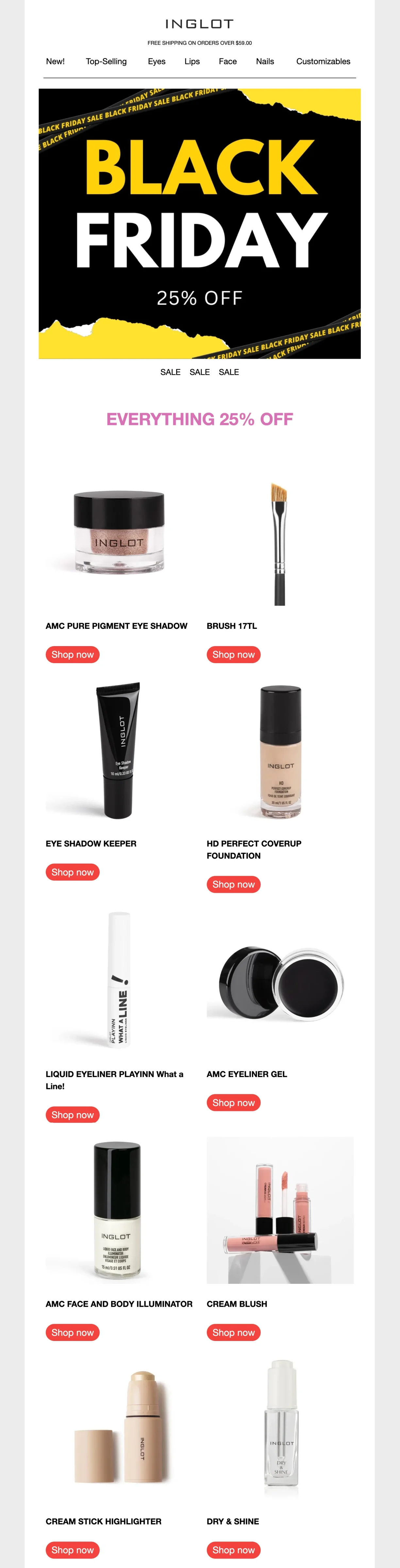
INGLOT takes its main Black Friday offer and supports it with relevant elements like a free-shipping banner up top, one clear 25% off, then a product grid with visible prices. In the end, this email shows a great example of sending a shoppable reminder rather than a plain announcement.
How to use it for this segment:
- Reach out to shoppers who added to cart but didn’t check out
- Mention or showcase the products your shoppers left in their carts to remind them and make the Black Friday offer more personal
- Keep the free-shipping line and a shipping cutoff to clear the barrier that stopped checkout
INGLOT Canada boosted email revenue
The cosmetics retailer INGLOT runs its cart abandonment strategy as one connected flow across email, SMS, and push, to reach shoppers before the urge to buy fades. As a result, a unified email+SMS strategy raised INGLOT’s revenue per message by more than 2,000%. Tying its ESP to its in-store POS lets it segment by what customers bought online or in-store, so offers stay relevant.
3. Black Friday one-time buyers
Target customers who made exactly one purchase during the previous year’s BFCM but never returned to your store. These shoppers proved they’ll buy from you during peak season but need a real reason to come back.
Connect your messaging to their previous purchase category while featuring what’s new. Include social proof and keep urgency messaging light since aggressive tactics might have scared them away.
Why it works: Turning one-time buyers into repeat customers is generally less expensive than acquiring new ones. Build trust by referencing their previous positive experience and showing how your brand has grown or improved.
The early-access email: Timex
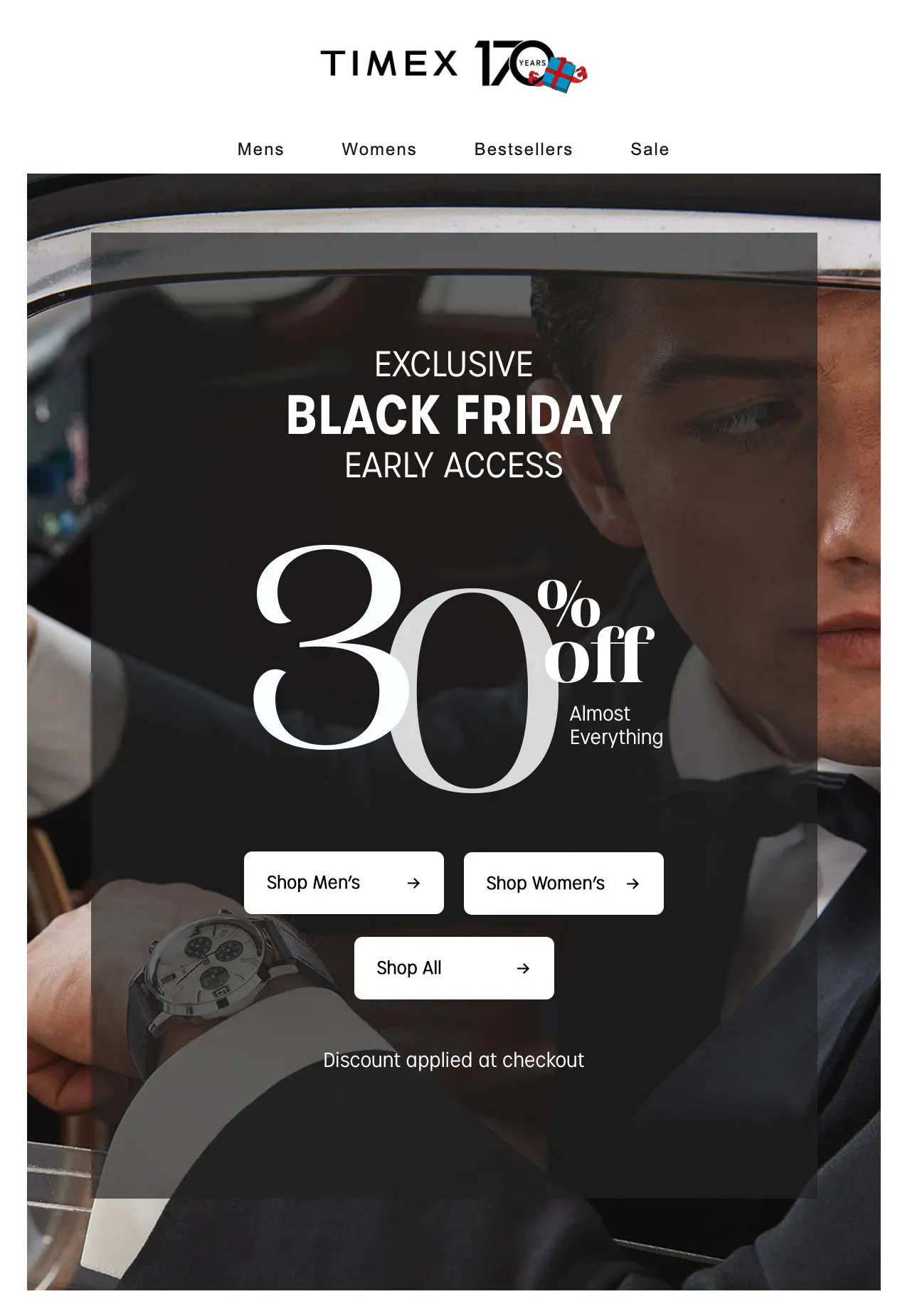
Timex frames its email as exclusive early access, leading the messaging around a clear 30% off almost everything. To keep the email brief, Timex provides three CTAs so customers can easily shop for what they need without extra steps.
How to use it for this segment:
- Send early access to people who bought once during last year’s Black Friday, so the head start feels earned
- Entice subscribers with a “save the date” sneak peek
- Reference what they bought last year and pair it with what’s new, rather than a cold sale blast
- Frame your offers with an exact timeframe before the main sale to give a more exclusive reason to buy from you again
4. Lapsing customers
Lapsed customers have interacted with your brand in the past, but for different reasons have turned away from you. In that sense, they’re similar to cart abandoners. Both segments showed interest at some point, but turned away from your brand some time after.
However, lapsed customers have already purchased something previously, so it’s all about finding the right winback strategy to revive that connection. The key here is to include a high degree of personalization that leans on your inactive customer’s shopping patterns and interests.
Why it works: Lapsed customers already know your brand and products. Regardless of why they chose to stop interacting with your business, you can use historical purchase and browsing data to create personalized offers to reengage these customers.
The thank-you win-back: Rachel Riley
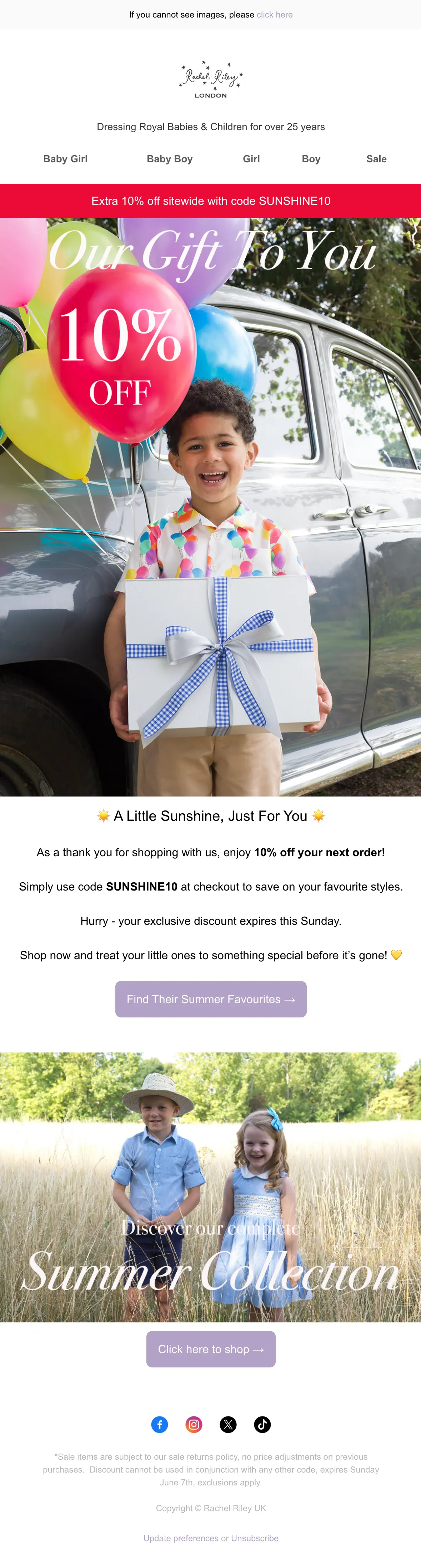
Rachel Riley frames its winback nudge as a gift without relying on a flat-out sale. The language is plain, using expressions like “our gift to you, 10% off,” with a single code and a Sunday deadline. This message gives customers a real reason to come back without training them to wait for discounts.
How to use it for this segment:
- Focus on customers who’ve gone quiet for three to six months
- Lead with a thank-you message and tie in a “token of appreciation” like a small discount or free shipping
- Mention the products your inactive customers have bought in the past to make the return feel personal
Emails drove 77% of Rachel Riley’s YoY BFCM revenue
The brand runs reactivation flows and personalized thank-you messages to bring shoppers back and deepen loyalty. Its order-confirmation automation became a real revenue driver on its own.
SMS and push extended the reach, with SMS proving especially strong in the US.
5. Recent purchasers
Typically, recent buyers are considered to be the ones who’ve purchased from you within the last 30 days. These shoppers don’t need convincing, but they’re an ideal segment with the potential to become loyal customers.
Instead of including these customers in your main Black Friday messaging, build email flows that show appreciation and add value to their recent purchases. This could be anything from complimentary products or accessories to extended return periods, free shipping, etc.
Why it works: Excluding customers who’ve recently purchased from you at full price prevents buyer’s regret and the loss of potentially repeat customers.
The complementary gift with purchase: To’ak Chocolate
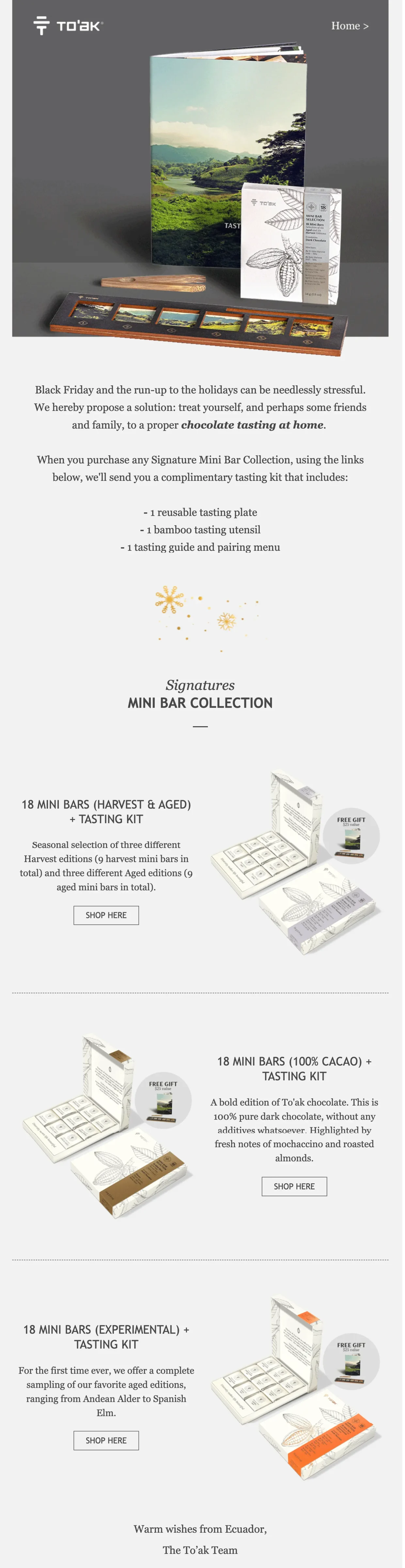
To’ak turns buying into a rewarding process. The company informs customers that if they buy any Signature Mini Bar Collection, To’ak will send a complimentary tasting kit, a reusable plate, a bamboo utensil, and a tasting guide.
How to use it for this segment:
- Remove recent buyers from your main Black Friday sale communication
- Send it to shoppers who bought in the last 30 days as part of your post-purchase automation
- Offer a complementary add-on or gift to keep the value of what they just paid for

To’ak Chocolate increased email-generated revenue by 460%
To’ak Chocolate, the luxury chocolate brand, turned its email marketing strategy into an omnichannel storytelling approach that supports its premium positioning with real value to customers. The company now uses a single message, a basic CTA, and strategically placed discounts. Now, To’ak Chocolate’s automated flows drive 39% of its email revenue, with the welcome series converting at 18%.
6. Price-sensitive buyers
Deal-driven shoppers can add significant revenue during peak season, but you shouldn’t rely on this segment to evaluate the performance of your Black Friday campaigns.
Instead, you could isolate this customer segment by adding filters like those who’ve used coupons in more than half of their orders and send emails with tiered discounts or bundle deals connected to defined spend thresholds to increase order value.
Why it works: Price-sensitive buyers are still spenders, but they need to see the value to make a purchase. Adding tiered discounts and bundle deals is exactly what a price-sensitive customer would be looking for, so you’re answering a particular need.
The scarcity-led sale: Rachel Riley
Subject line: Big Savings In Our Black Friday Sale! 🖤
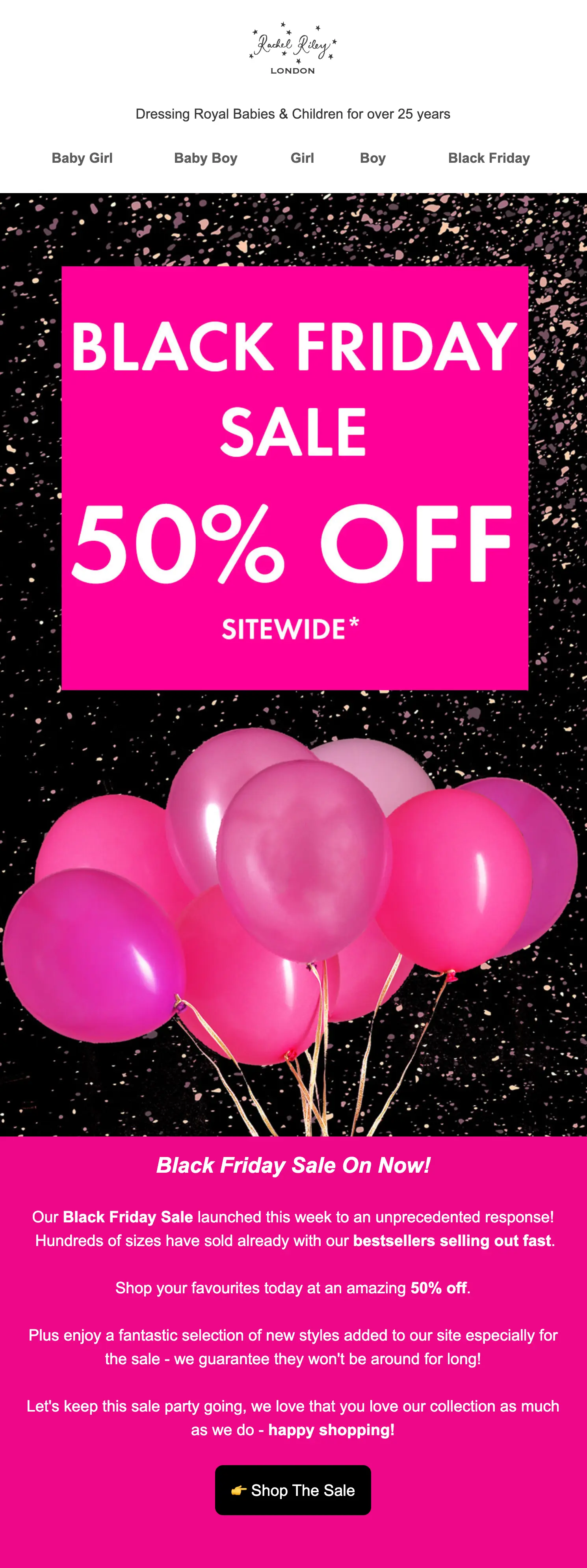
Rachel Riley leads with a bold 50% off sitewide and real scarcity. But beyond just announcing the sale, Rachel Riley also provides additional background like bestsellers, already sold items, and fresh styles.
How to use it for this segment:
- Send your clearest discount to shoppers who used a coupon on half or more of past orders
- Frame your emails around real numbers and real scarcity, since this group buys based on how good they consider your deals to be
- Avoid sending these emails to segments who’ve already bought products or services from you at full price
7. Loyal repeat purchasers
These customers make regular purchases without heavy discounting and often do so repeatedly over time. Loyal customers typically respond quickly to new product releases, so it’s important to highlight recognition and early access opportunities rather than training them to expect deals.
Engaging loyal customers is all about personalization and showing that you as a brand genuinely care about them. To that end, try offering VIP perks or exclusive sneak peeks at upcoming collections while maintaining margins.
Why it works: Recognizing long-term customers makes them feel more valued and closer to the brand. Moreover, a 2026 Deloitte study found that loyalty programs urge 72% of consumers to spend more.
The VIP early-access email: Topsy Turvy
Subject line: Black Friday VIP access: shop before everyone else
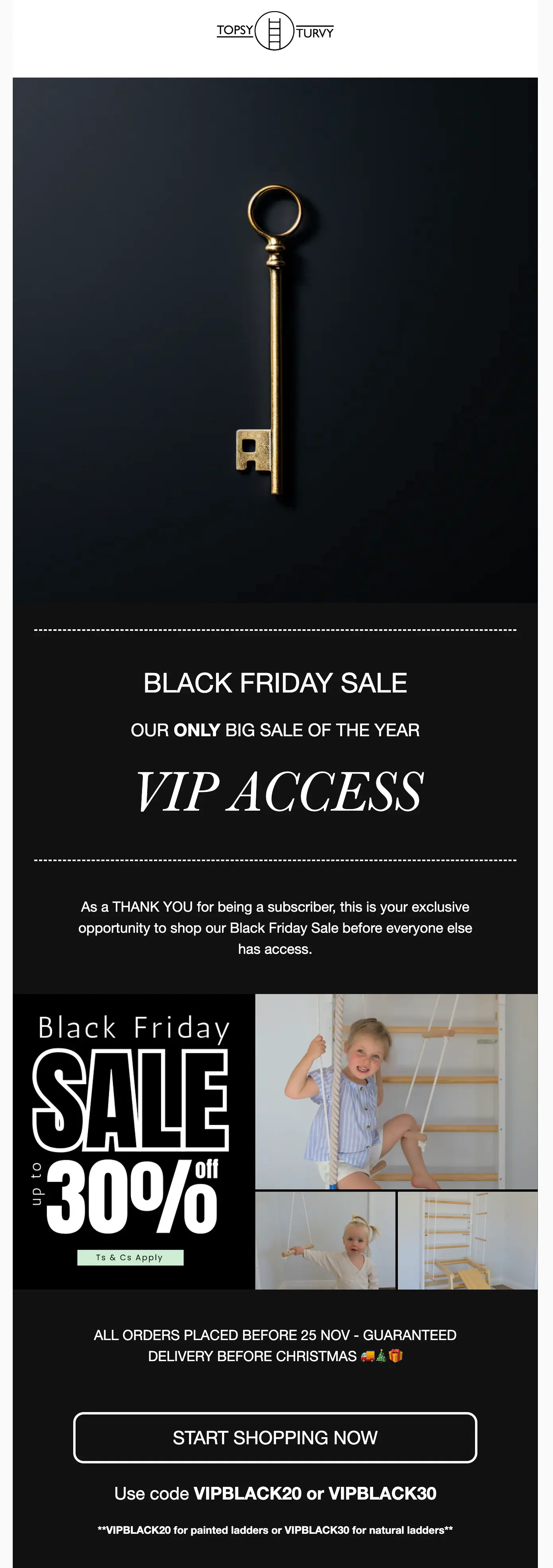
Topsy Turvy opens with a gold-key image and VIP access, then thanks the subscriber directly, prioritizing recognition over a basic discount offer. This immediately creates an emotional connection with customers as they’re offered an exclusive opportunity to shop before everyone else.
How to use it for this segment:
- Send VIP early access to your regular buyers, the ones who purchase without deep discounts
- Lead with recognition and a head start, not a bigger markdown, so you keep the habit and the margin
- Position the code at the end of the email to keep the focus on the early access
8. Engaged non-buyers
Engaged non-buyers may show interest in your brand but not enough to complete their purchase. Your Black Friday marketing ads and messaging might do a great job of attracting shopper attention, but if you don’t support it with real, verifiable customer reviews, some customers could end up prolonging the purchasing process or abandoning it entirely.
Why it works: Interested but hesitant buyers need assurance above all else, so focusing on emphasizing your trust signals can lead to better conversions than major discounts.
The best-sellers, review-led email: Lazartigue

Lazartigue, a French brand, leads with its most-loved best-sellers, or “our most-loved best-sellers.” Every product includes a five-star rating and a real customer review that addresses shoppers’ doubts.
How to use it for this segment:
- Support your emails with customer reviews or metrics to increase trust and provide proof
- Add a few best-sellers and a real review each to answer the doubt holding them back
- Include a first-order incentive to nurture interest
9. Category browsers
Category browsers are a unique segment that continuously goes through the same products without actually buying the items they browse. To identify this segment, start by filtering out customers who’ve browsed your product categories repeatedly in the last 30 days.
Once your list of highly interested browsers is ready, build email flows centered around category-specific comparisons and relevant bundles. When this segment starts to convert, switch to cross-selling.
Why it works: Bringing attention to already-liked or browsed products can shorten the decision time and help customers finalize their purchases.
The tiered category sale: B-Wear
Subject line: Black Friday is here: up to 50% off

B-Wear sets a different discount per category: 50% off tees, 30% off hoodies and decorated goods, all within one bold, on-brand design, with a shop button under each tier that links straight to that collection.
How to use it for this segment:
- Send category-specific tiers to shoppers who’ve actually browsed those categories to match search intent
- Add clear CTA buttons to lead your segments to the collection they view rather than to a generic place like your homepage
- Split your emails by category, so each browser sees the tier that fits what they looked at
B-Wear’s automations convert at 42%, at roughly 50x the revenue per email of its promotions
The sportswear brand switched to Omnisend on BigCommerce to finally see which online sales came from email. It segments by behavior and cart value, pushing harder on a $100 cart than a $10 one, and splitting engaged from about-to-lapse subscribers. Its two-part welcome series alone converts at 66%, at $2.37 revenue per email.
10. Regional customers
If you have more than one region where you operate, you need to prioritize localization as the first step in creating your Black Friday segments. Start by grouping your customers based on their location to immediately eliminate bottlenecks like time zone or cultural differences.
On that note, consider adjusting your product focus based on regional preferences while localizing timing, currency display, and shipping cutoff dates.
Why it works: Different regions have separate preferences when it comes to discounting. While some customers shop only during sales, other customers may associate discounting with lower quality.
The localized Black Friday send: Nutrimuscle
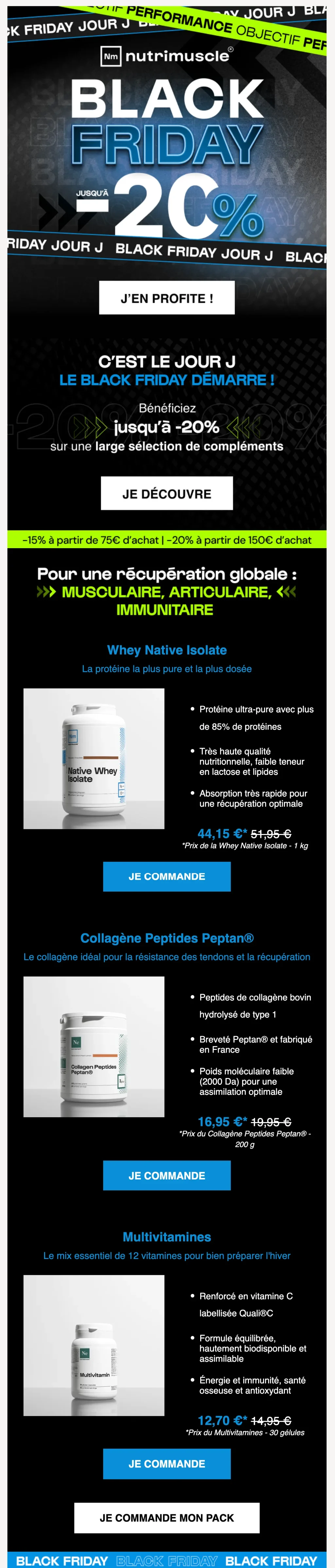
Nutrimuscle, a French brand, runs its whole Black Friday send in French with euro pricing: up to -20%, a tiered threshold (-15% over 75€, -20% over 150€), and a seasonal hook, a 12-vitamin mix to prepare for winter. It reads as a send built for one market: local language, local currency, and timing tied to that region’s season.
How to use it for this segment:
- Localize the essentials, language, currency, and the prices shown, so the send reads as native to the market
- Add a regional or seasonal hook instead of one global message
- Pair it with region-specific shipping cutoffs, so the deadline is accurate for where each group lives
11. Gift shoppers
Gift shoppers commonly have different goals, and one of them is to buy a gift for someone else. Rather than shopping on impulse or being driven by Black Friday sales, gift shoppers actively seek intangible value before comparing prices and discounts.
If you identify these types of shoppers, target subscribers who viewed gift pages or bought a gift card, and send them gift guides, price-point gift ideas, and gift cards instead of a generic sitewide discount.
Why it works: Gift buyers are led by thoughtful intent, so their purchasing intent is motivated by quality and usability rather than discounts. Brands that target this segment present the value their products give and then add a discount as an additional benefit.
The gift-card offer: iRobot (Roomba)
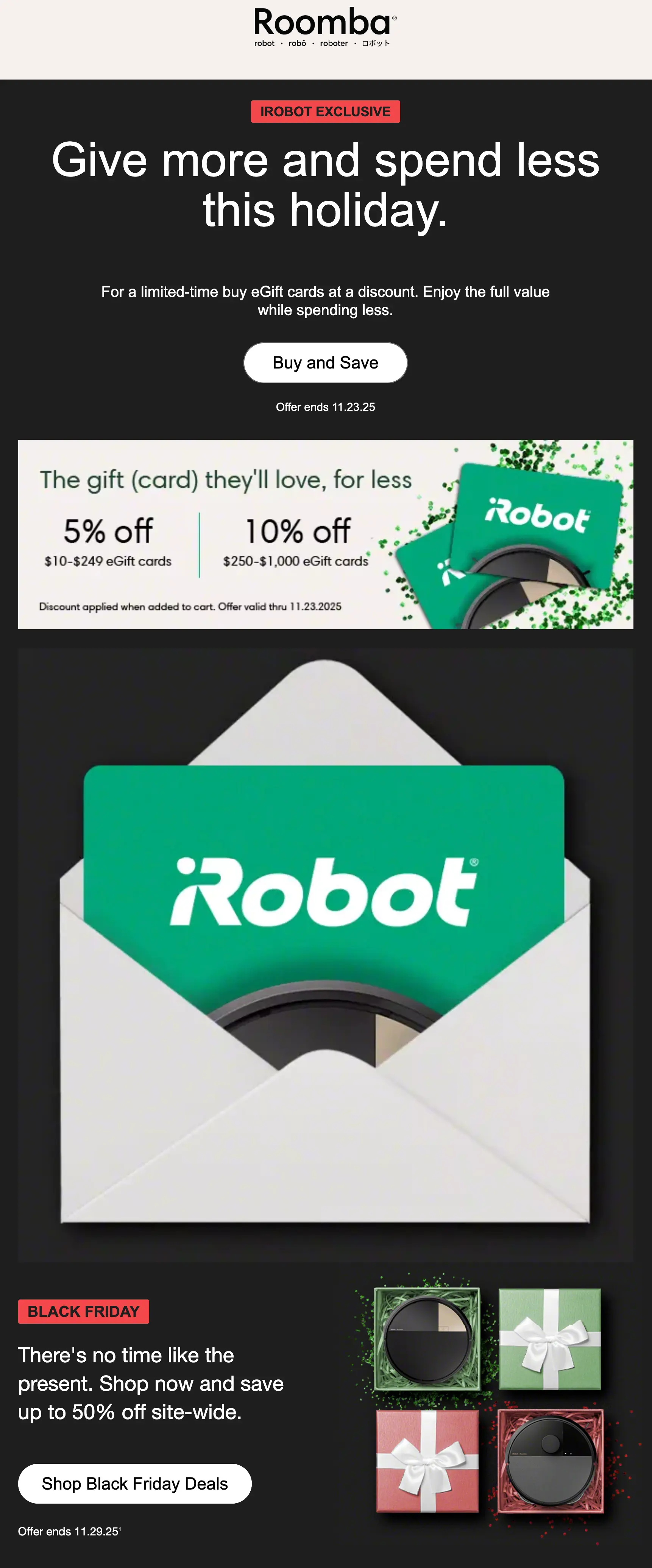
iRobot leads with the gift card as the hero, then a limited-time discount on eGift cards, tiered by amount (5% off $10 to $249, 10% off $250 to $1,000), a Buy and Save button, and a definitive sale end date.
How to use it for this segment:
- Lead with a gift card as the answer for people who can’t make a decision immediately, and tier the incentive by amount
- Use clear gift and holiday visuals to make the email read as a gift solution right away
- Give a clear deadline and pair the gift-card offer with a shop-gifts or sitewide link
EXPERT TIP
To build this in Omnisend, start from email subscribers, then match anyone who viewed a page with “gift” in the URL or bought a gift card. Widen it with your own gifting URLs or SKUs.
→ How to build segments in Omnisend
Channels for Black Friday segments
Your Black Friday consumer segmentation strategy works across multiple channels, with each serving different purposes and timing needs.
You can target your saved segments with detailed product information and compelling visuals. The key is to align your email marketing content with the segment you’re targeting rather than sending generic promotions.
This includes tailoring Black Friday subject lines to each segment’s motivations and interests.
Also, add suppressions at send time to keep messaging relevant:
- Implement recent purchaser cool-offs to avoid overselling
- Remove undeliverable addresses to protect your sender reputation
- Match your dynamic content blocks to each segment’s interests
- Show category affinity products to browsers
- Include social proof for hesitant buyers and highlight exclusive perks for loyal members
SMS
SMS works best for time-sensitive moments when immediate action matters most. Apply your Black Friday customer segmentation from your email campaigns, but focus on urgent communication, such as early-access alerts, last-chance reminders, and cart-recovery messages.
Keep messages concise with one clear call to action per message. Include your brand name and opt-out instructions to maintain compliance when sending messages only to contacts who have consented to SMS marketing.
Push notifications
Push notifications target website visitors who opted in for browser notifications. You can reuse your email segments, but focus on immediate website activity, such as price drops, low-stock alerts, and browse recovery.
Send push notifications during peak moments, such as:
- Drop alerts when new products launch
- Last-chance reminders before sales end
- Cart recovery when someone abandons checkout
- Coordinate timing with email and SMS to avoid overwhelming your customers with multiple touchpoints within a short timeframe.
Ads
Sync your highest-value segments to Meta and Google for retargeting campaigns. Focus on VIP customers, cart abandoners, and engaged non-buyers since these segments are the most likely to convert.
As mentioned earlier, exclude recent purchasers from broad promotional ads to avoid wasting ad spend on people who have just bought. Also, match your ad messaging to corresponding email campaign angles for consistency across touchpoints.
Quick sign up | No credit card required
BFCM segment use timeline
Timing your Black Friday customer segmentation campaigns requires different strategies for each phase of the shopping season.
Your segments remain the same, but messaging angles and urgency levels shift as you move from pre-season preparation through post-Cyber Monday retention.
Pre-season
Clean your Black Friday consumer segmentation data before peak season begins and build consent lists for maximum reach. Run list-cleaning campaigns to remove inactive subscribers who might hurt your deliverability during peak sending volumes.
Focus on these preparation tasks:
- Clean segments and update data criteria
- Encourage SMS opt-ins through email campaigns
- Test different discount levels on small customer groups
- Prepare analytics tracking with UTMs and segment tags
Send small batches to different segments to see which discount levels drive the most revenue per recipient without hurting margins.
Black Friday week
Focus your messaging on priority segments during the main event. VIP customers get exclusive messaging, while price-sensitive shoppers see clear value propositions and tiered spending incentives.
Keep your BFCM marketing campaigns and automations from colliding during high-volume periods. Document purchase-based exit conditions so customers don’t receive conflicting messages, and avoid overlapping touches to the same person within short timeframes.
The best time to send Black Friday emails varies by segment. However, in general, you should send during mid-morning when your audience checks emails.
Cyber Monday
Adjust your Black Friday customer segmentation messaging for sustained momentum. Use real scarcity like actual low stock numbers and real shipping cutoffs. Avoid fake urgency that damages trust.
Watch your list’s health metrics closely during this period. If revenue per recipient drops or unsubscribe rates rise significantly, narrow your targeting to more engaged segments only.
Post-Cyber Monday
Pivot immediately to retention messaging once the main shopping period ends. Send thank-you messages, cross-sell complementary products, and invite customers to join loyalty programs while the positive purchase experience is still fresh in their minds.
Tailor your retention strategy by segment. Recent purchasers need usage guides and complementary suggestions, while returning customers deserve a “welcome back” message with introductions to new product categories.
Turn your Black Friday segments into action
Black Friday customer segmentation is effective in driving revenue and protecting your margins. Start with your three highest-performing segments rather than trying to target everyone from day one.
Pick segments that align with your business goals and available resources. For instance, if you need to clear inventory quickly, target your engaged non-buyers and cart abandoners.
Document what works and what doesn’t during your Black Friday campaigns. Track which segments register the highest performance metrics so you can refine your targeting for future Black Friday consumer segmentation campaigns.
Finally, promote your highest-performing segments into your regular email marketing playbook after BFCM ends. The customer behaviors that drive results during Black Friday often work throughout the year with adjusted messaging and offers.
Quick sign up | No credit card required