Omnisend AI

 OFFER
OFFER







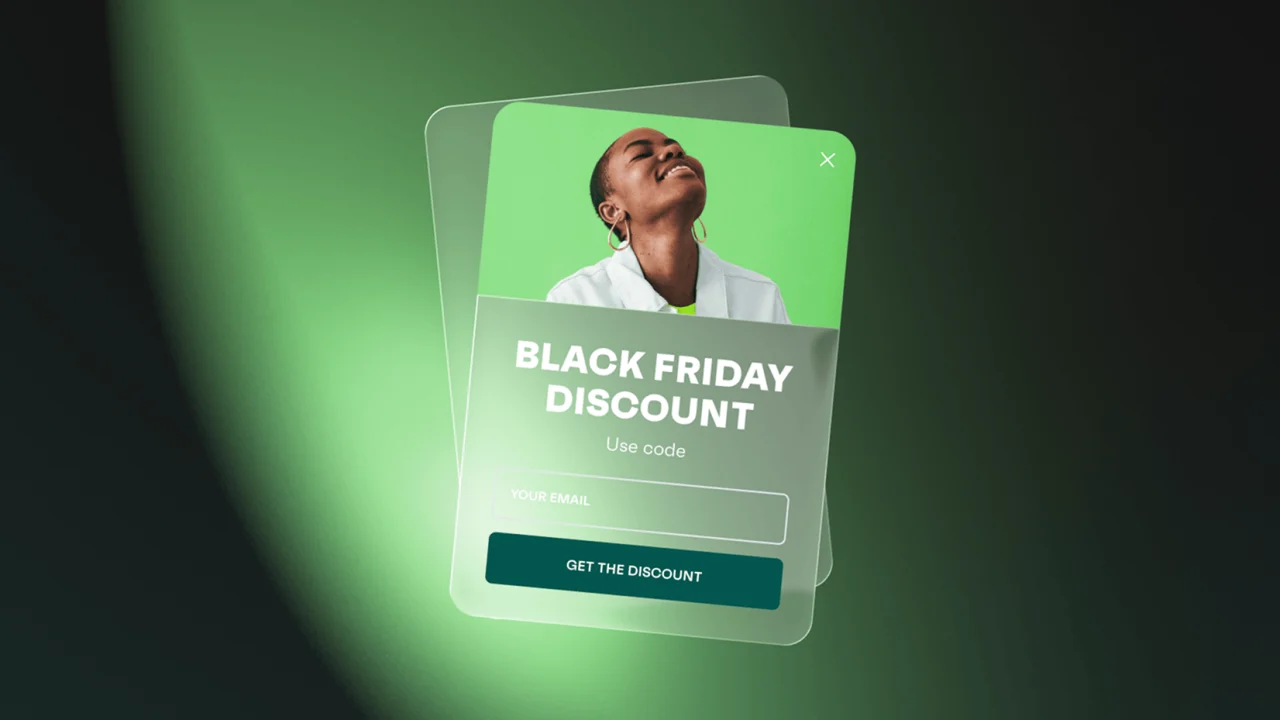

A high-converting Black Friday popup always includes a clear offer and reaches recipients when they’re most likely to open it.
It uses urgency and an enticing offer to promote your sale, capture signups, and increase conversions before the deals end.
Below are the Black Friday popup types and ideas that convert, with a real example for each. Every one shows the offer, the trigger, and the wording you can adapt for your store.
Quick sign up | No credit card required
What is a Black Friday popup?
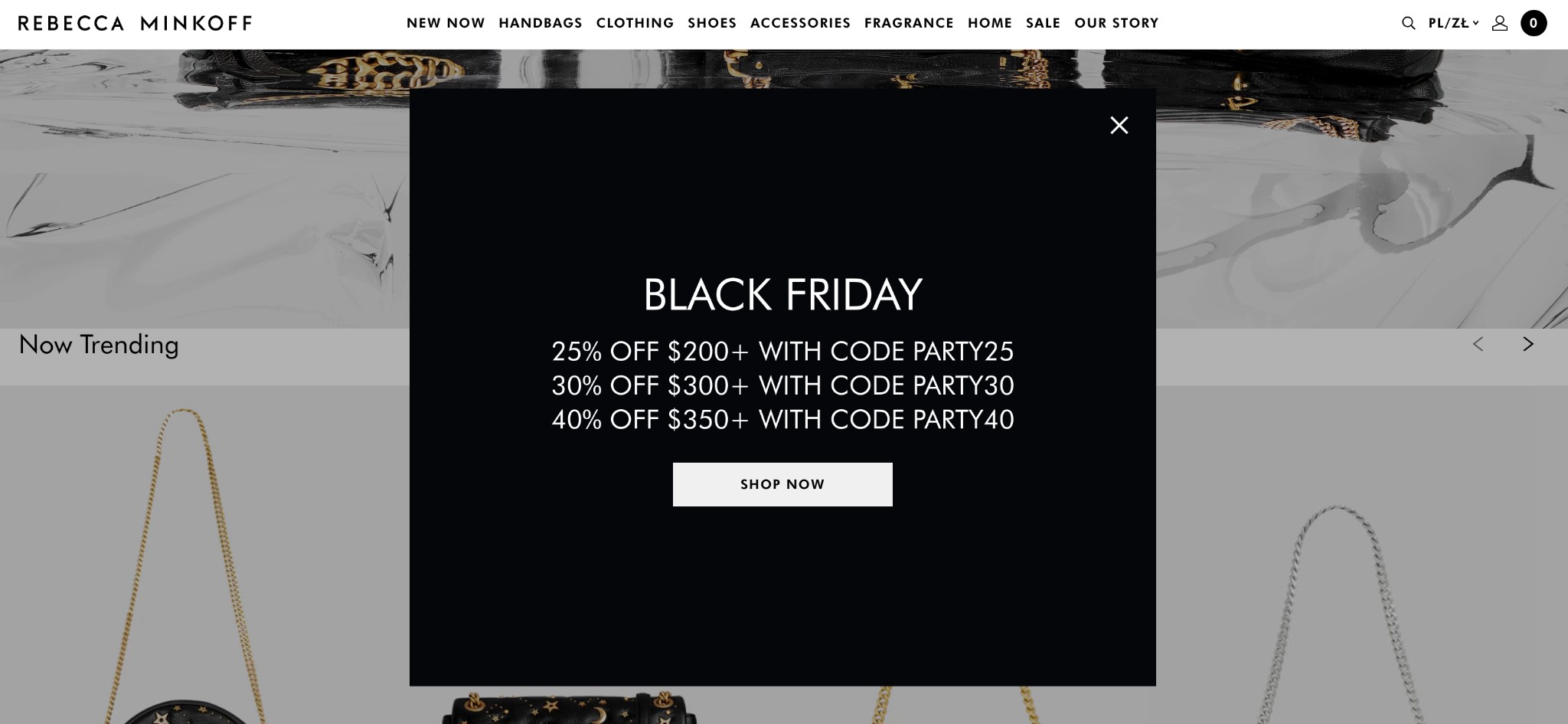
A Black Friday popup is an on-site message that promotes limited-time offers, captures leads, and encourages shoppers to buy before the sale ends. It appears based on shopper behavior, such as time on page, cart value, or exit intent. Because it reaches people who are already browsing with intent to buy, a Black Friday sale popup tends to convert well, reaching up to 11% conversion rates. It also often leverages urgency-driven design elements like countdown timers and persuasive scarcity language, “only a few left.”
What are the key benefits of Black Friday popups?
Black Friday popups help you collect leads during busy shopping times, reduce cart abandonment, raise average order value, and customize offers.
Here are its main benefits:
| Black Friday popup benefits | How to get it? |
|---|---|
| Gather leads during peak traffic | Popups give you the opportunity to collect emails or phone numbers while traffic is high |
| Prevent cart abandonment | Exit-intent popups and countdown timers encourage shoppers to complete purchases before deals disappear |
| Increase average order value (AOV) | Popups can highlight upsells or bundle offers, guiding customers to add more to their carts |
| Catch customer segmentation opportunities | You can show different messages to returning customers, VIPs, or new visitors, making offers feel personal and timely |
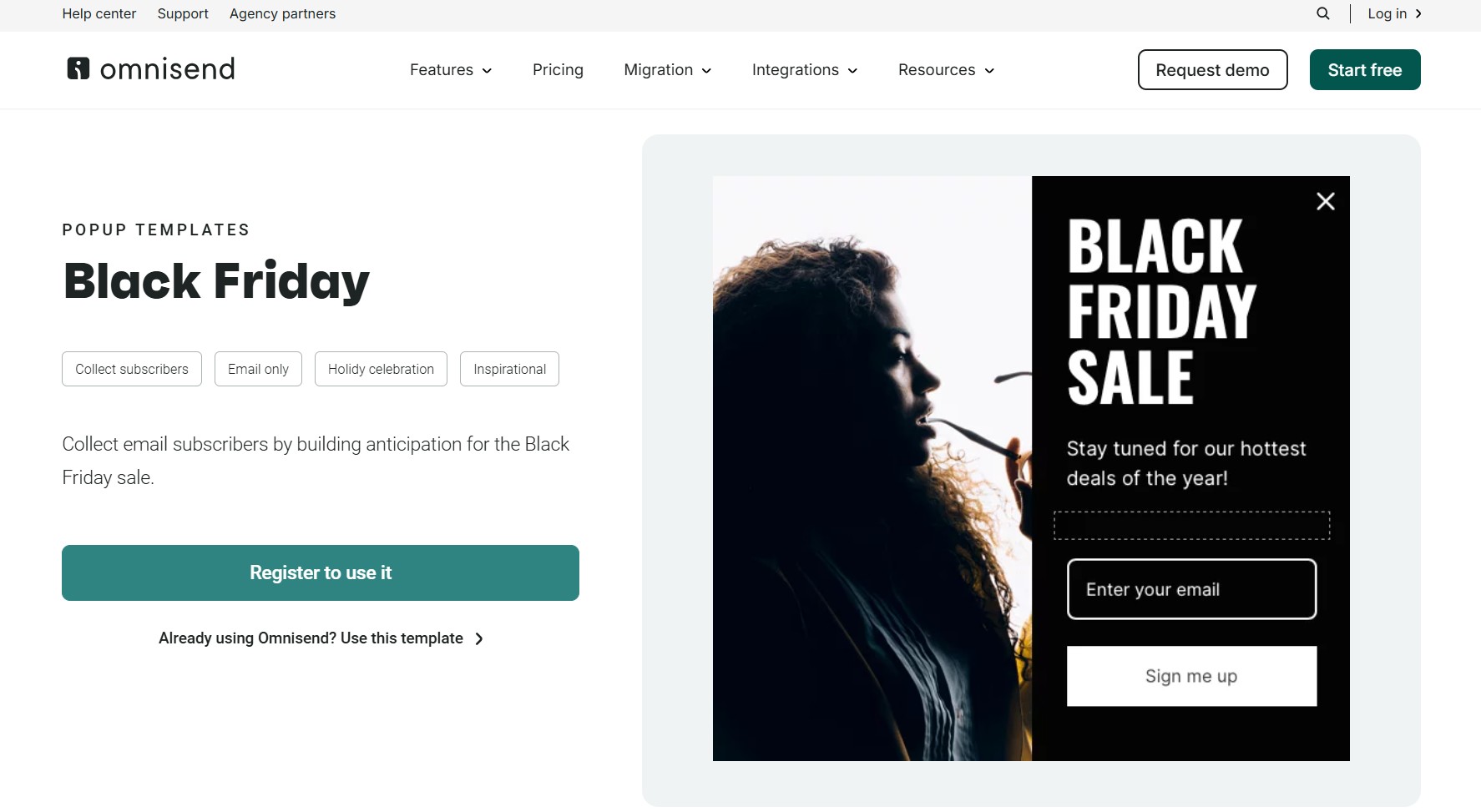
To get all these benefits, you need the right tool. Omnisend’s popup builder comes with Black Friday templates and behavior-based triggers for things like exit intent and timing. It also targets each group of shoppers with the right offer.
When should you launch your Black Friday popup?
The best time to launch your Black Friday popup is usually one to two weeks before the big day. Keep your popup active throughout the entire weekend, too, including Cyber Monday.
However, Deloitte’s 2025 Holiday Retail Survey found that 24% of shoppers’ budgets are spent by the end of October. This means you can start early-bird promotions in October.
Since timing depends on the goal, here’s when to run each type and what it’s built to do.
| Popup type | When to run it | Goal |
|---|---|---|
| Countdown timer | 1–2 weeks before Black Friday, then update it through Cyber Monday | Build anticipation early, then push shoppers to act before time runs out |
| Exit-intent offer | On exit throughout Black Friday and Cyber Monday | Recover abandoning shoppers with a last-chance offer |
| VIP early access | 1–2 weeks before Black Friday | Grow your list ahead of the rush and generate early sales |
| Tiered discount | Throughout Black Friday and Cyber Monday | Increase average order value with spend-based tiers |
| Launch teaser | 1–2 weeks before Black Friday, switching to "live now" at sale launch | Build anticipation, then announce the sale and drive traffic to shop |
| Pre-sale signup | 1–2 weeks before Black Friday | Collect emails or SMS opt-ins before deals drop |
| Deal-alert capture | Before and during the sale | Collect subscribers without leading with a discount |
| Anti-sale stance | Throughout the sale weekend | Stand out with a nontraditional "no discounts" Black Friday message |
| Spin-to-win | Throughout the sale weekend | Increase engagement while capturing new leads through a game |
| Free-gift threshold | Throughout the sale weekend | Encourage larger purchases with a free gift |
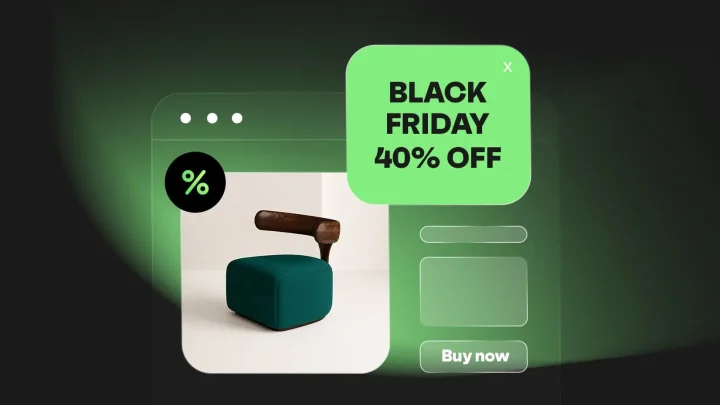
Black Friday popup examples that drive conversions
Each example below pairs a popup type with the design choices that make it work, most drawn from a real brand. They run in the order the answer engines tend to surface, and you can browse more website popup examples once you have the pattern.
Jump to the popup type that fits your campaign, or browse them all for ideas you can adapt to your store:
- The countdown timer
- The exit-intent offer
- The VIP early access
- The tiered discount
- The launch teaser
- The pre-sale signup
- The deal-alert capture
- The anti-sale stance
- The spin-to-win
- The free-gift threshold
The countdown timer
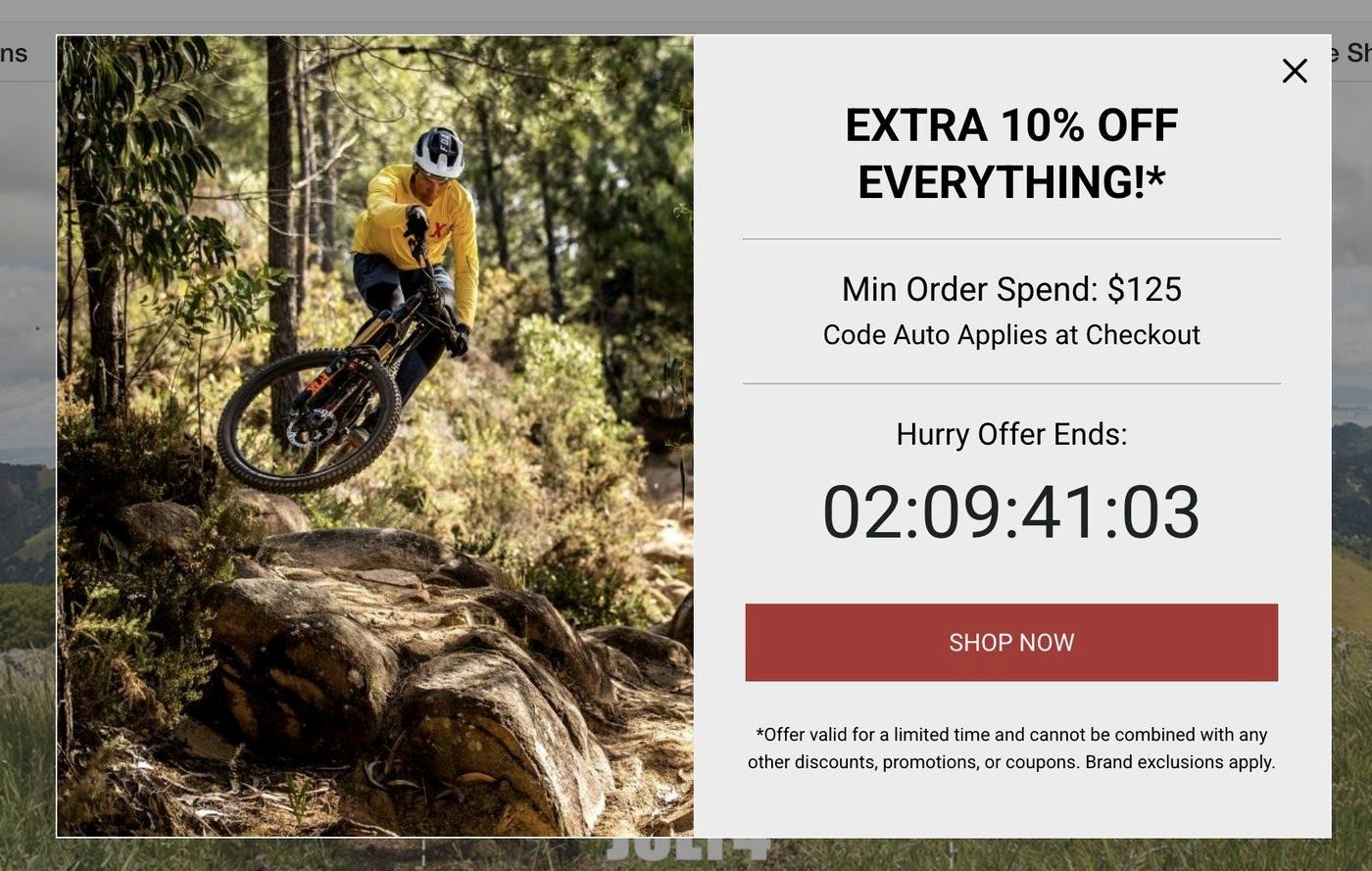
Design and messaging takeaways:
- Put the countdown timer front and center, right alongside the deal. This lets shoppers see exactly what’s at stake (and when it ends) in one glance.
- Apply the discount code automatically at checkout to remove friction. Shoppers can claim the offer without having to copy or remember a code.
- Set a minimum order value for the discount to encourage bigger purchases. This helps raise your average order value and keeps the offer profitable.
The exit-intent offer
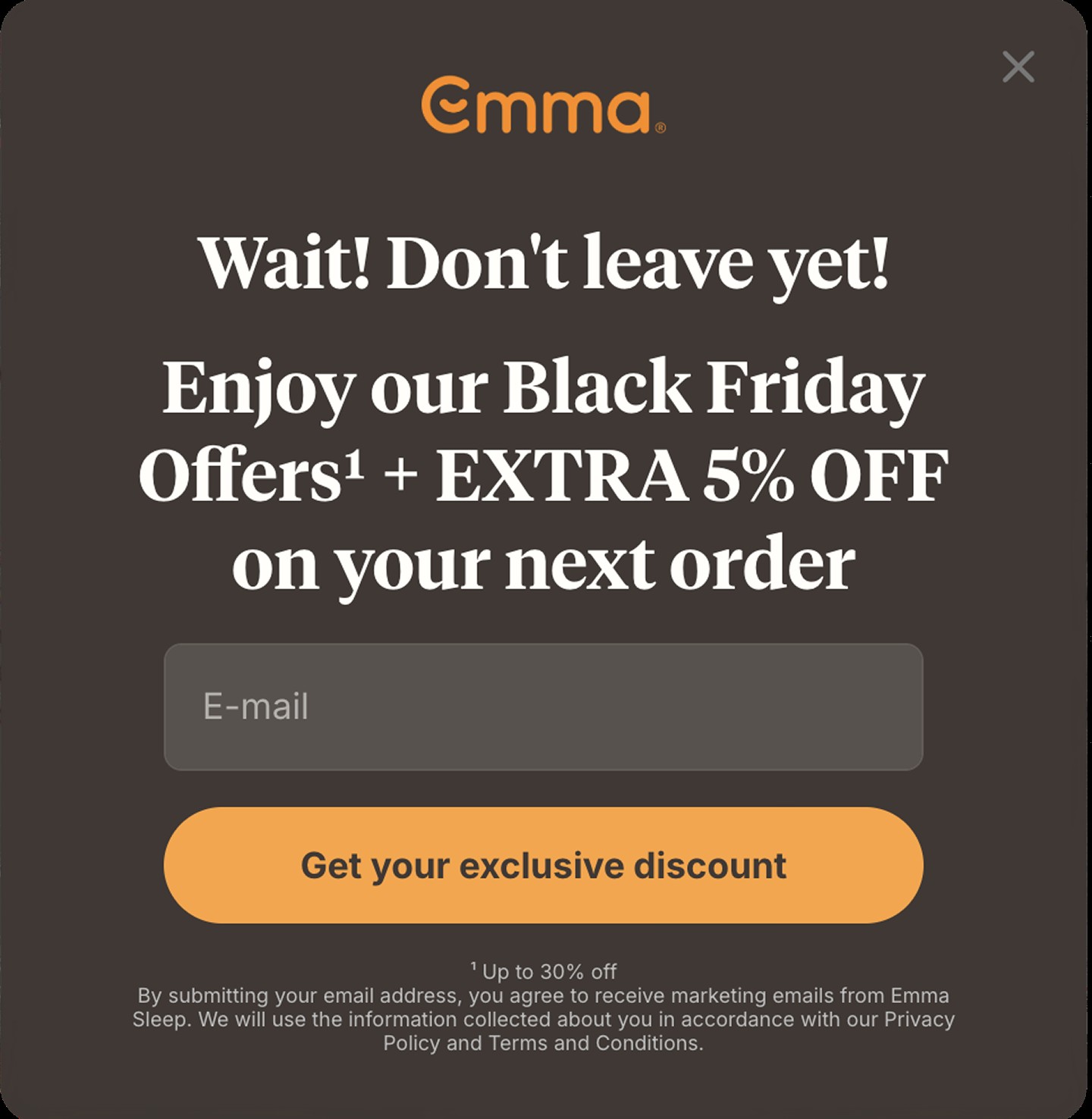
Design and messaging takeaways:
- Emma Sleep’s exit-intent popup stops visitors from leaving with a simple message: “Wait! Don’t leave yet!” It quickly highlights the main Black Friday offer of up to 30% off.
- Offering an extra 5% off the next order gives shoppers another reason to stay. Asking for an email signup also helps you grow your list for future campaigns.
- The main discount gets shoppers’ attention, while the smaller bonus supports the offer without taking over. Keeping the extra incentive small helps increase conversions and protects your profit margins.
The VIP early access
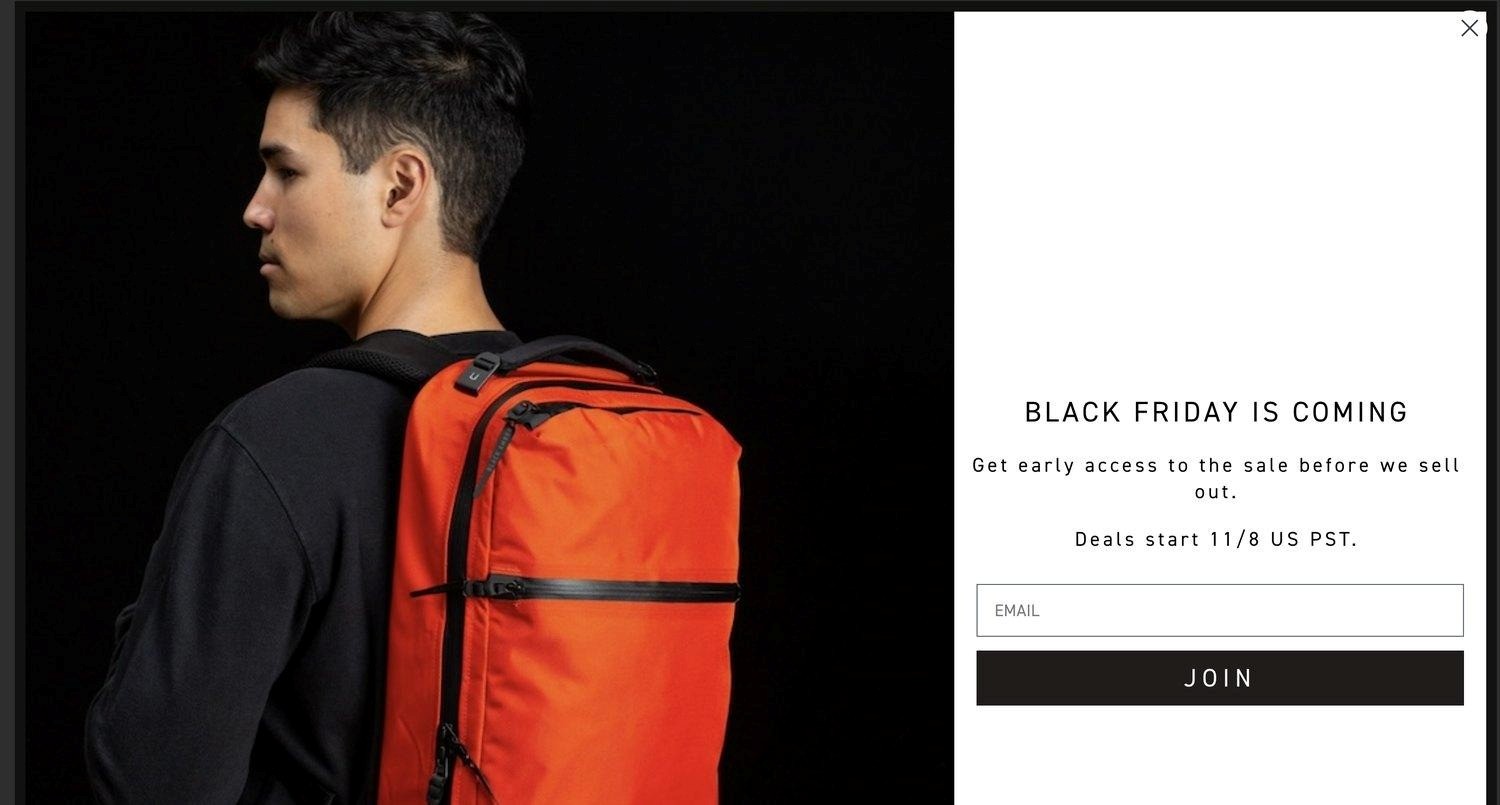
Design and messaging takeaways:
- Black Ember opens a waitlist ahead of the sale with a simple promise: “Get early access.” It also gives a clear start date, “Deals start 11/8,” to make the offer feel real.
- Focus your message on exclusivity, not just savings. Making subscribers feel like early insiders builds excitement and encourages them to sign up before the busiest shopping days.
- Grow your email list before the rush, instead of fighting for attention on Black Friday. This way, you’ll have a ready audience to contact as soon as your sale starts.
The tiered discount
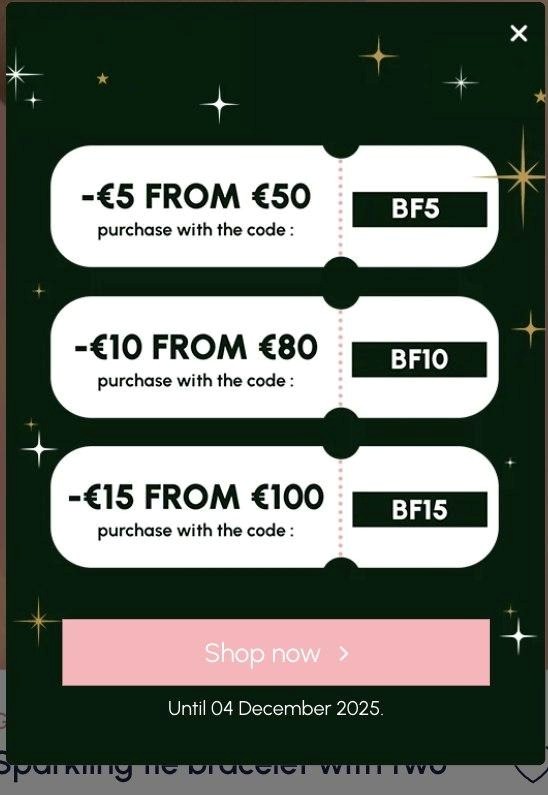
Design and messaging takeaways:
- L’Atelier d’Amaya lays out all the discount options right away. This lets you instantly see what you could save, and what it’ll take to get the highest savings.
- Pair each offer with its own discount code to make redemption simple and memorable. A visible expiration date reinforces that the promotion won’t last.
- The combination of spending thresholds, unique codes, and a deadline makes the offer feel clear and achievable. It’s an effective way for your discount popups to increase average order value.
The launch teaser
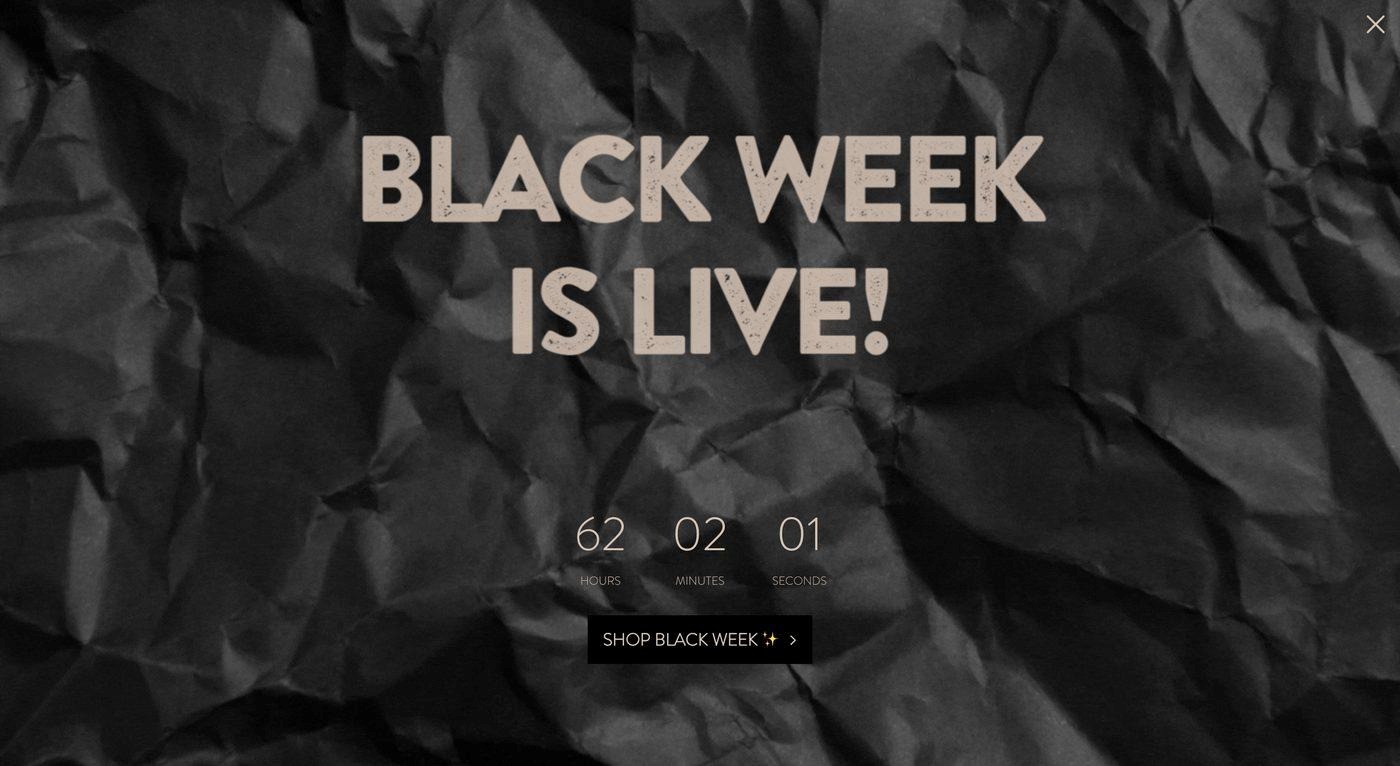
Design and messaging takeaways:
- By Benson leads with a quick announcement, “Black Week is live,” making the sale feel like a special event. Seasonal branding and a countdown timer show that Black Week is happening now.
- Leave out the signup form if you want shoppers to start buying right away. A clear, bold call to action makes it easy for visitors to go straight to the sale.
- Focus your message on one action instead of adding extra offers or details. The simpler your popup, the quicker shoppers can start browsing your Black Friday deals.
The pre-sale signup
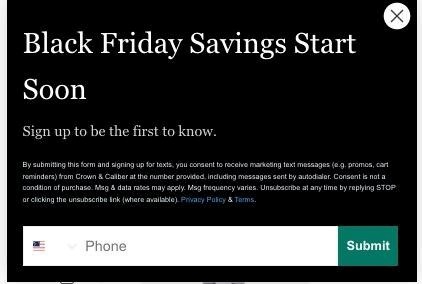
Design and messaging takeaways:
- Like Crown & Caliber, you can offer sale access in exchange for a phone number before Black Friday begins. The value exchange is clear and gives shoppers a reason to subscribe.
- SMS is ideal for time-sensitive promotions. Since messages are delivered instantly, it helps you reach subscribers the moment your Black Friday deals go live.
- Keep the form short by asking only for a phone number. This reduces friction and helps grow a list for your Black Friday SMS campaigns.
The deal-alert capture
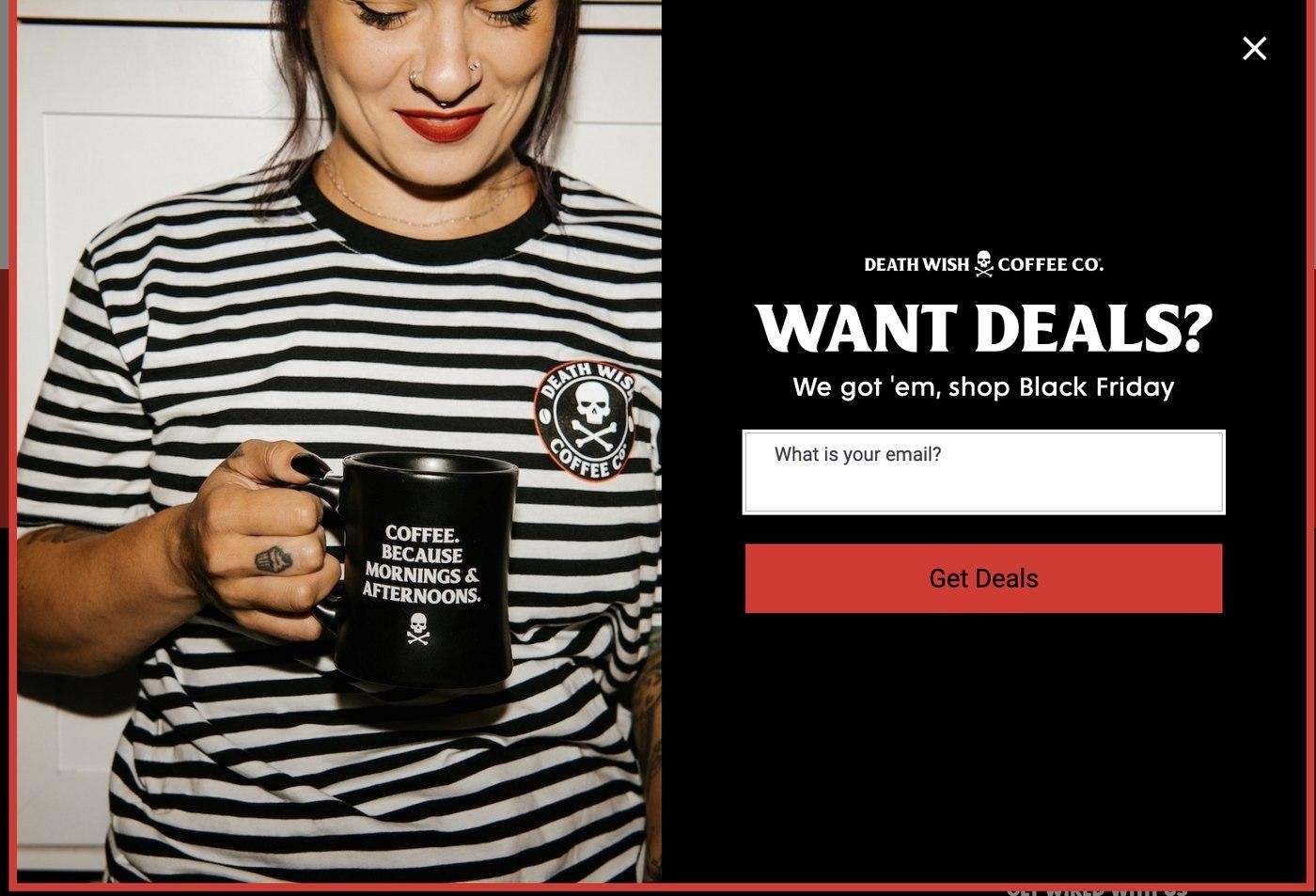
Design and messaging takeaways:
- Try asking a quick, unexpected question to kick off your signup without mentioning discounts just yet. It draws the eye and makes people want to learn more.
- Ask for just one piece of information to keep the signup process quick and effortless. For example, research from Baymard Institute shows that a higher number of fields causes friction and hurts conversions.
- Let your brand voice carry the message when it fits your audience. This approach suits brands that would rather not cut prices.
The anti-sale stance
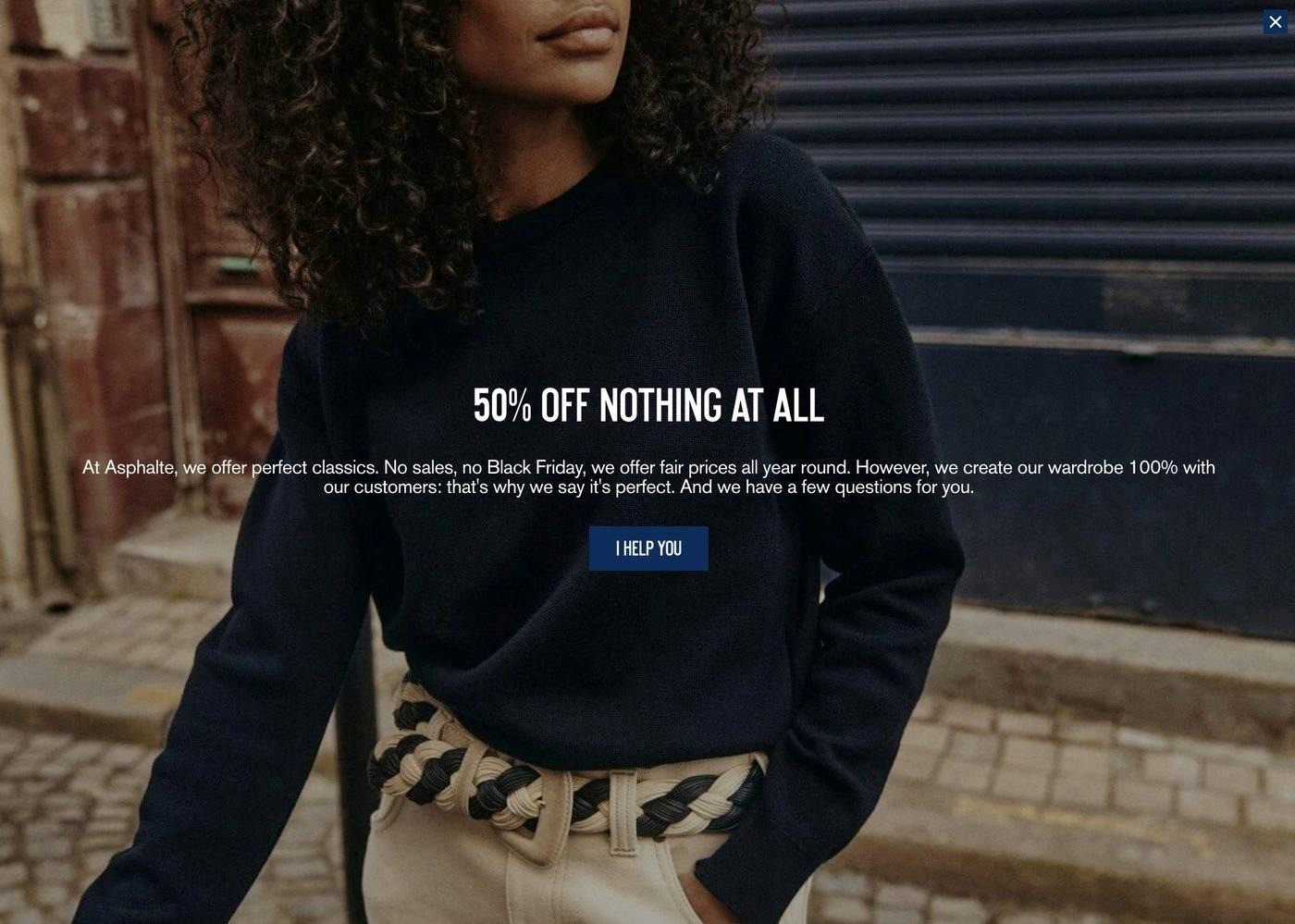
Design and messaging takeaways:
- Lead with your no-discount policy if that matches your brand’s personality. Not every store needs a sale. Sometimes, standing firm on value can be just as memorable as any sale.
- Don’t just assume shoppers know why you’re skipping Black Friday. Provide a clear reason to build trust and make your message credible.
- Swap the usual “shop now” call to action for something low-pressure, like a product quiz. This will keep your visitors engaged while helping you collect quality leads without offering discounts.
The spin-to-win
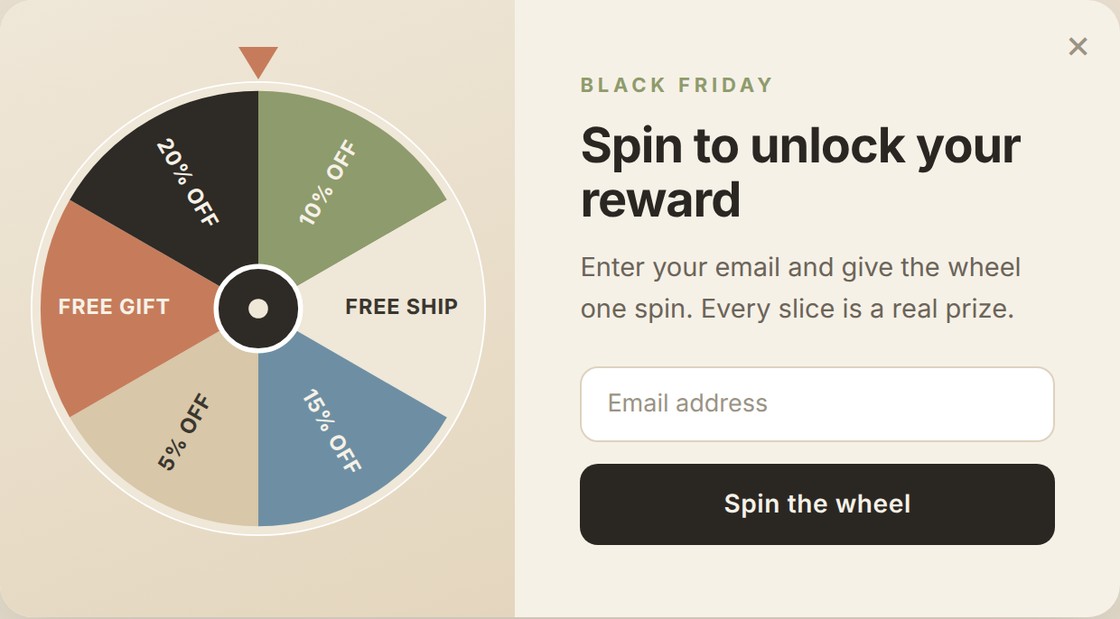
Design and messaging takeaways:
- You can skip the frustrating “try again” spots to ensure every wedge on the wheel has a real reward. When your wheel assures a win, it feels trustworthy, and shoppers are more willing to spin it.
- Deliver the reward by email or SMS after the spin is completed. This captures the lead and gives shoppers a reason to open your next message.
- Keep the top prize limited so the game stays exciting without hurting your margins. Omnisend reports 3.5% conversion rates for spin-to-win forms, compared with 2.0% for standard capture forms.
The free-gift threshold
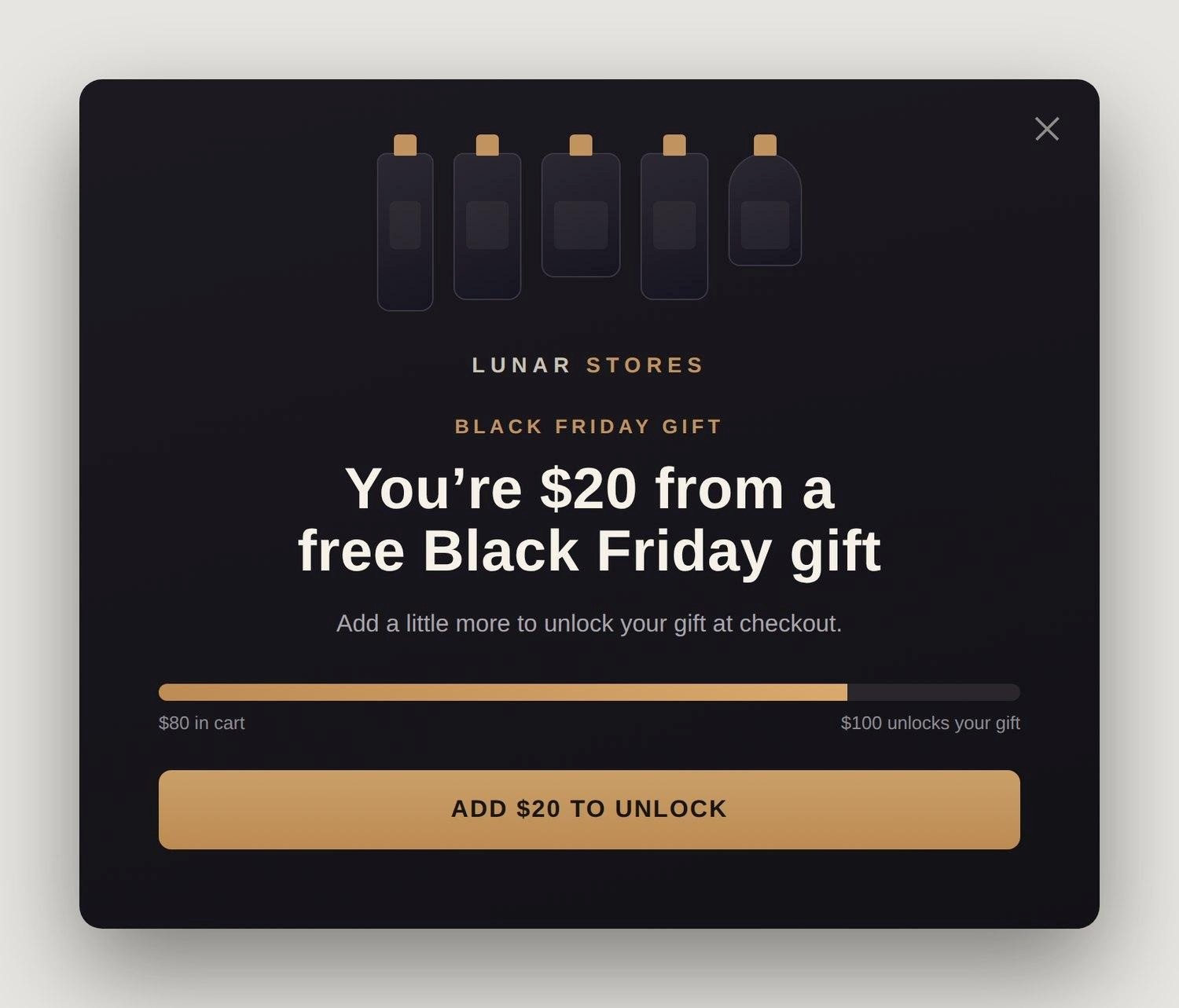
Design and messaging takeaways:
- Use a simple progress bar to show shoppers how close they are to snagging a gift. Letting your shoppers watch their progress builds excitement and nudges them to cross the finish line.
- Trigger the popup only after shoppers have added items to their cart. Keep the gift relevant to their purchase so the reward feels more valuable.
- Set the spending limit just above your average order value to encourage bigger carts. This increases revenue without needing a bigger Black Friday discount, which helps protect your margins.
What are Black Friday popup best practices?
There’s no single perfect popup, so treat these Black Friday popup design tips as a checklist. The figures come from Omnisend’s analysis of 1.24 billion popup displays.
- Time it for engagement. A 5 to 10 second delay converts best, at around 2.4% versus 1.9% for an instant popup. Get the timing right, and mind when to show your popup.
- Match the trigger to the right moment. Use exit intent for exit offers, scroll or time on page for teasers, and cart value for free-gift thresholds.
- Apply the code automatically. Don’t make anyone leave to hunt for it, and keep the minimum spend in view to raise order value.
- Show every tier at once. List each tier with its code, and borrow from these coupon code ideas so shoppers can see the next reward.
- Reassure on big-ticket items. Answer an exit with a guarantee or free returns and social proof, rather than a deeper discount.
- Reach further with gamification. Spin-to-win popups convert at 3.5%, nearly twice the 2.0% for popups without a wheel, per Omnisend’s popup conversion data.
Create high-converting Black Friday popups with Omnisend
To ensure your Black Friday popup performs at its best, automate the process with tools such as Omnisend that help you design, launch, and track your performance.
Omnisend’s pre-built templates give you access to customizable popup templates tailored for Black Friday. Automation workflows help set up targeted responses to user interactions. Performance analytics allow you to monitor and analyze popup performance to refine strategies.
Quick sign up | No credit card required