Omnisend AI


 OFFER
OFFER








A “thank you for your business” message tells a customer that their order meant something to you. This guide gives you 40 you can use right now.
We sorted them by the moment that prompts each one: first orders, repeat orders, referrals, reviews, service jobs, holidays, and small shops each get their own set.
Take any message word for word, or drop your own details into the brackets. Each group includes a quick note on when to use it and which channel fits best.
We put the templates first. The tips on writing your own “thank you for your business” message come further down.
Quick sign up | No credit card required
Why do “thank you for your business” messages matter?
Thank you for your business messages matter because a kind note can turn a one-off purchase into a repeat customer. Plus, the cost of sending this note is minor. Yet it shapes how people see your brand.
Three things tend to happen when you do it well.
First, customers are more likely to stay loyal when they feel valued, and a thank-you is a great way to show appreciation.
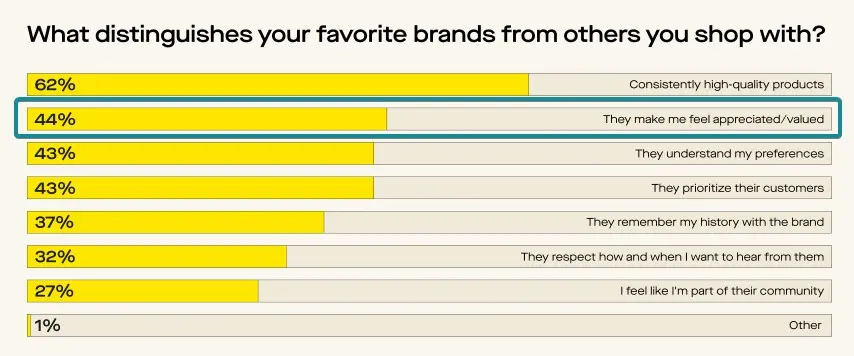
Attentive surveyed 3,300 shoppers and found that 44% name feeling appreciated as what sets their favorite brands apart:
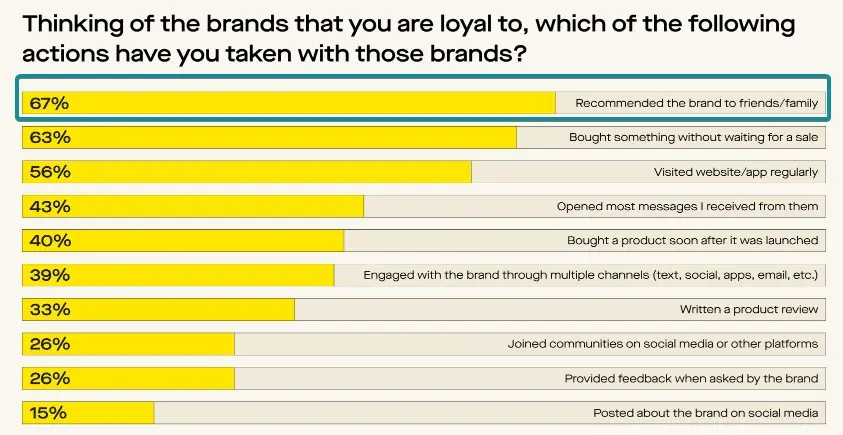
Second, happy customers bring you more customers. In that same Attentive survey, two-thirds of shoppers said they recommend brands they love to friends and family:
That word of mouth reaches people no ad can, and it costs you nothing.
Third, the thank-you note shapes how your brand is perceived. A quick and well-timed thank-you note reads as human.
This is where automation can help. Omnisend’s 2026 email benchmarks show automated emails convert at 1.49%, compared with 0.08% for one-off campaigns. A thank you message runs as an automation, so it lands in that stronger group.
40 “thank you for your business” messages
Here are 40 thank you for your business messages, grouped by the moment that prompts each one. Find the group that matches your situation, copy the message, then swap the brackets for your own details.
Every message works as a “thank you for your business” template you can send as-is. Jump to the group you need:
- Short thank you for your business messages
- First-time customer thank you messages
- Thank you for your continued business messages
- Thank you messages after a big purchase
- Referral thank you messages
- Thank you messages for service businesses
- Customer review and feedback thank you messages
- Special occasion and holiday thank you messages
- Small business thank you message to customers
Short thank you for your business messages
Use these when you want one line instead of a paragraph. They fit an email footer, an SMS, a packing slip, or the bottom of an invoice. Also, they work for any customer at any stage.
- It’s an honor to handle your [Product name] needs, and we hope to work together for years to come.
- Thank you for choosing [Company name] for your [Service]. We’ll work hard to make sure you’re glad you did.
- Your happiness is our priority at [Company name]. Thank you for your support and for being part of our community.
- It’s because of you that we’re still here. As a thank you, enjoy 15% off your next [Product category] order.
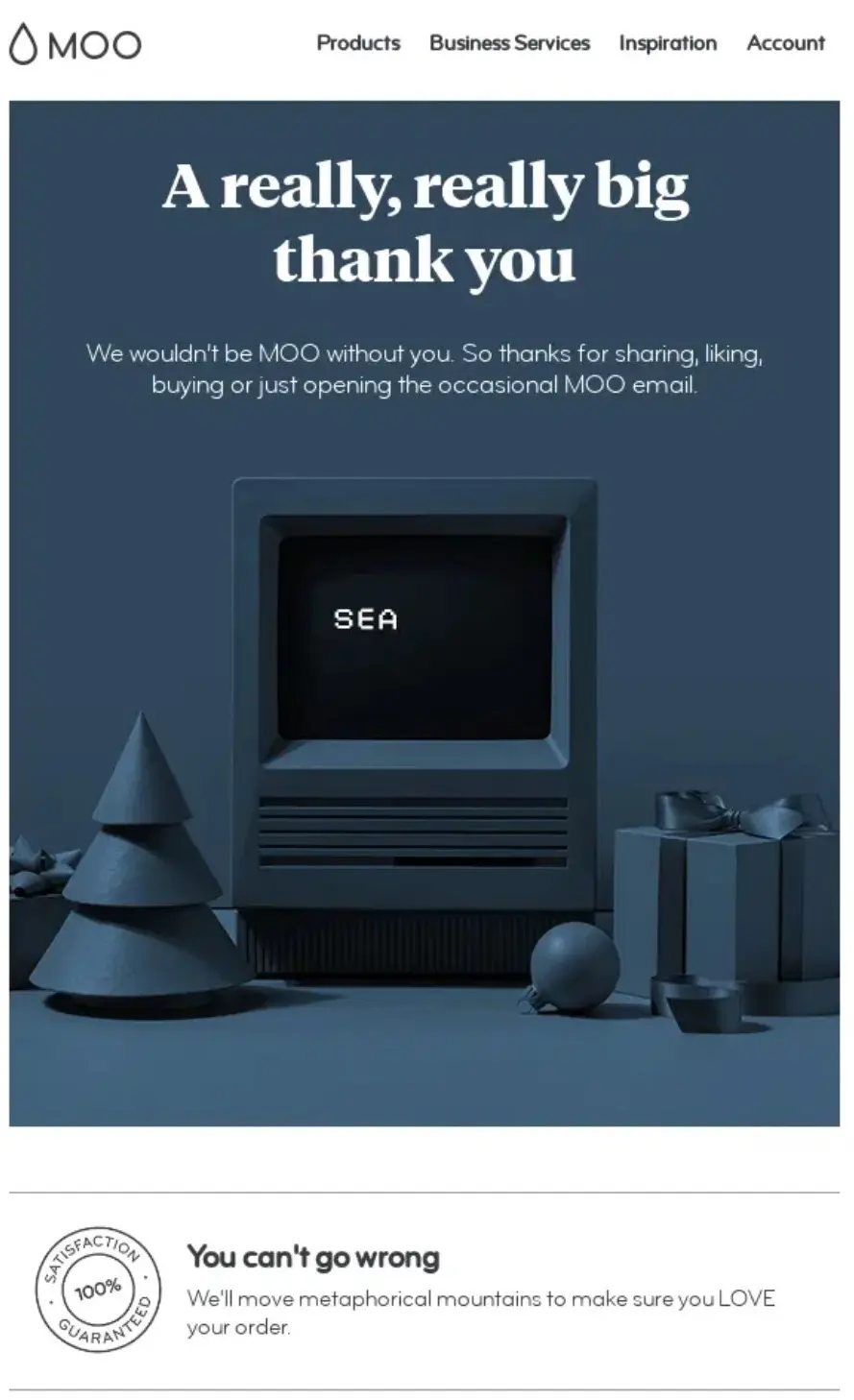
MOO sent a “thank you for your business” email to customers, telling them the brand wouldn’t exist without their patronage and support. It ended with a satisfaction guarantee below the email:
First-time customer thank you messages
Send one of these with a customer’s first order confirmation, while the purchase is still fresh. A first order is when someone decides whether you were worth the risk. So this thank you note is important for securing repeat customers.
- Welcome to [Company name]. Thank you for your first purchase with us, and we hope you enjoy it.
- It’s your first one. Thank you for joining our community, and we hope you love your [Product name].
- Thank you for your first purchase, [Customer name]. As a local shop, we value your trust and won’t take it for granted.
- Welcome aboard, [Customer name]. Thank you for shopping with us, and we look forward to serving you again.
- Thanks for trusting us with your first order. Use the code “Order2” for 25% off your next one.
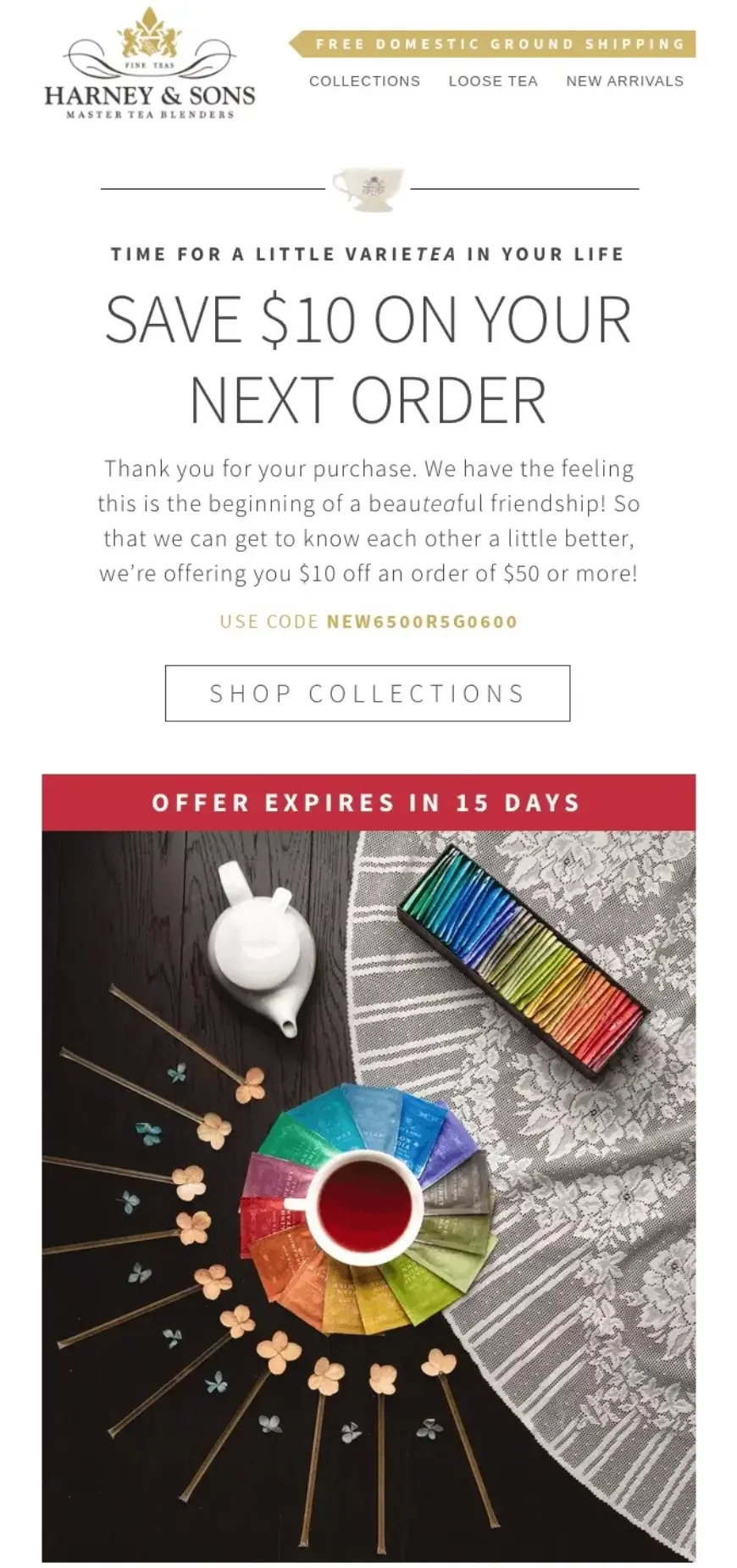
Harney & Sons thanked first-time buyers with this email. It offered $10 off their next order of $50 or more as a welcome to the brand:
Thank you for your continued business messages
Use these for repeat buyers, renewals, and long-running accounts. Highlight the length of the relationship or the number of orders in the thank-you message. That detail distinguishes it from generic engagement sends.
- Thank you again for your business. We value your trust, and we’re glad you choose us time after time.
- Your loyalty means everything to us. Customers like you push us to do our best every day.
- You did it again. That was your [Milestone] order with us, so here’s a [Discount] off your next one.
- We’ve been partners for [Milestone] years now, and we wanted to thank you. We’ve sent a [Gift] to your office.
- Thank you for being a loyal customer, [Customer name]. You just reached [Milestone], and we’re glad to celebrate it with you.
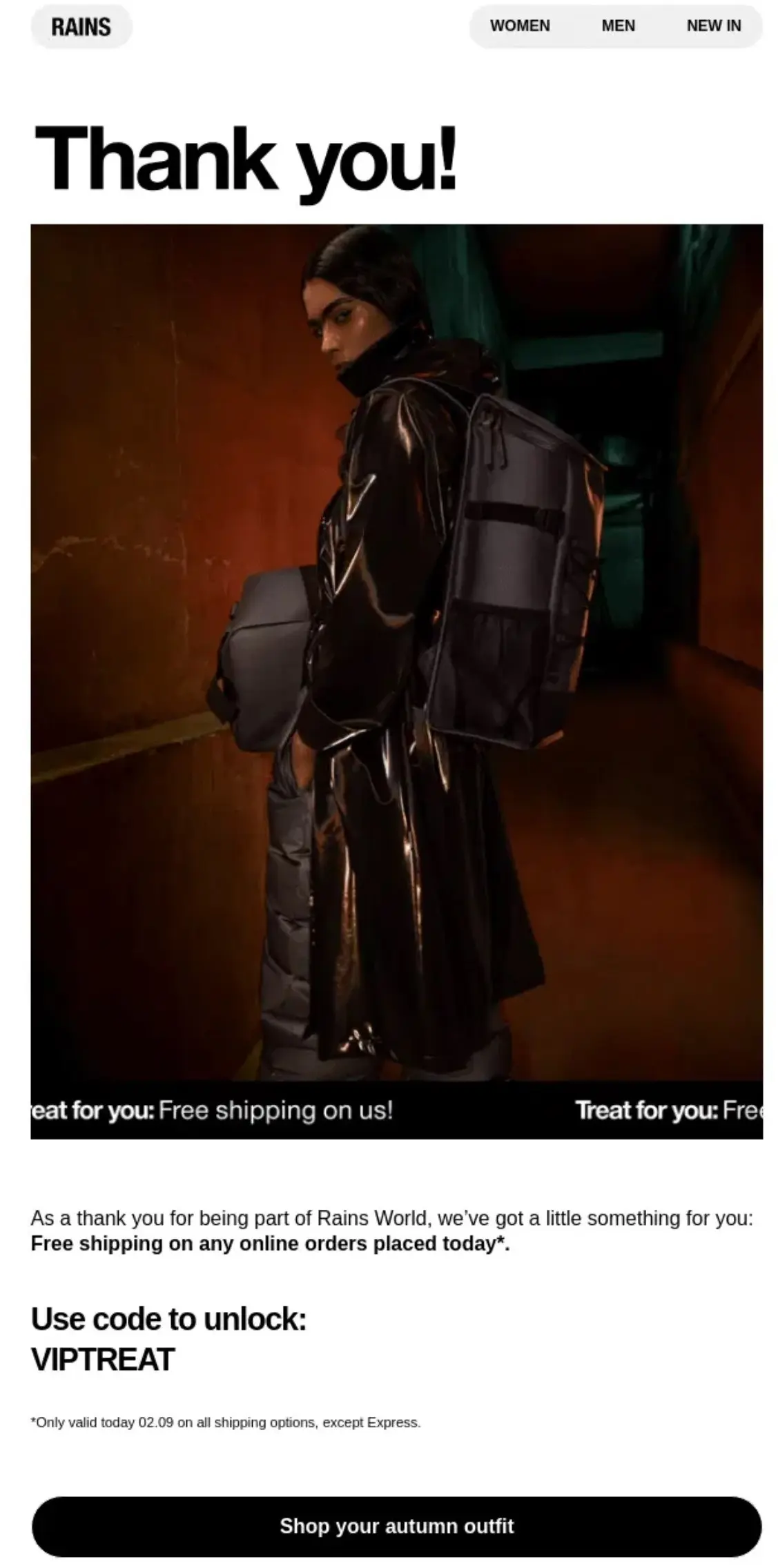
Rains thanked returning members of Rains World with this thank-you email. Customers earned free shipping through a VIP code as a reward for their loyalty:
Thank you messages after a big purchase
Use these for high-value orders, upgrades, and purchases that took the customer a while to decide on. The bigger the spend, the more a customer wants to know they chose well. So speak to that decision.
- This one is sure to turn heads. Thank you for such a big decision, and reach out any time with questions.
- It’s not every day someone buys [Product name]. We know [Service] is a big choice, and we appreciate it.
- We’re honored to have earned your trust with such a big decision. If you have questions about your purchase, we’re here to help.
- Thank you for your purchase and your trust. We’re sure you’ll love your [Product name] for a long time.
- Thank you for such a big investment with us. We’re glad you’re here, and we’ll support you every step of the way.
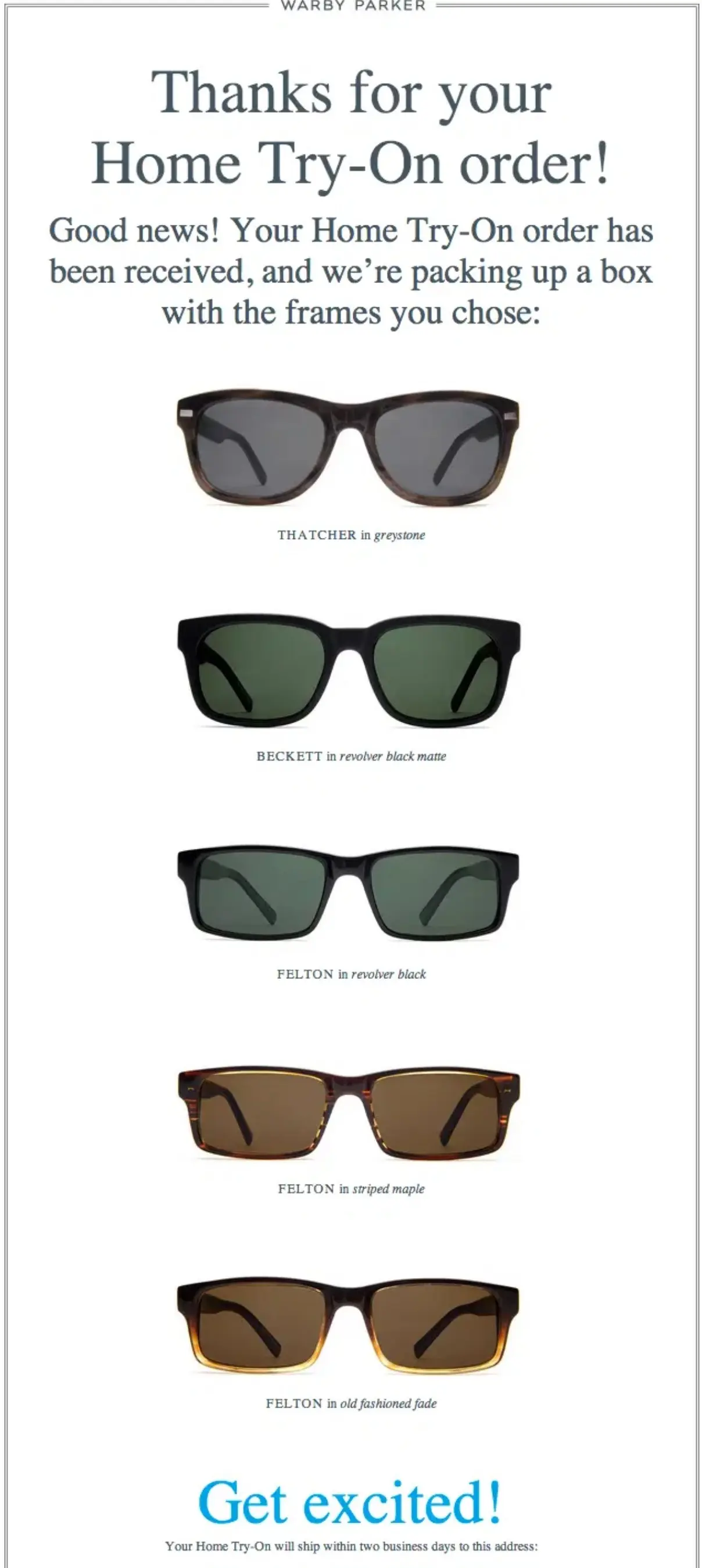
Warby Parker confirmed a Home Try-On order with a “thank you for your business” email. It displayed the exact frames the customer picked while their box got packed:
Referral thank you messages
Send these the day the referred customer places a first order, while the link between the two is clear. A referral is the strongest thing a customer can give you, so it deserves more than a receipt.
- Thank you for spreading the word about us. We loved welcoming [Referral name] to the [Company name] community.
- Your referrals are the highest praise we can get. Thank you for sending friends our way. We’ll take good care of them.
- Warm thanks for your referral. Your support helps us grow, and we’re glad you trust us.
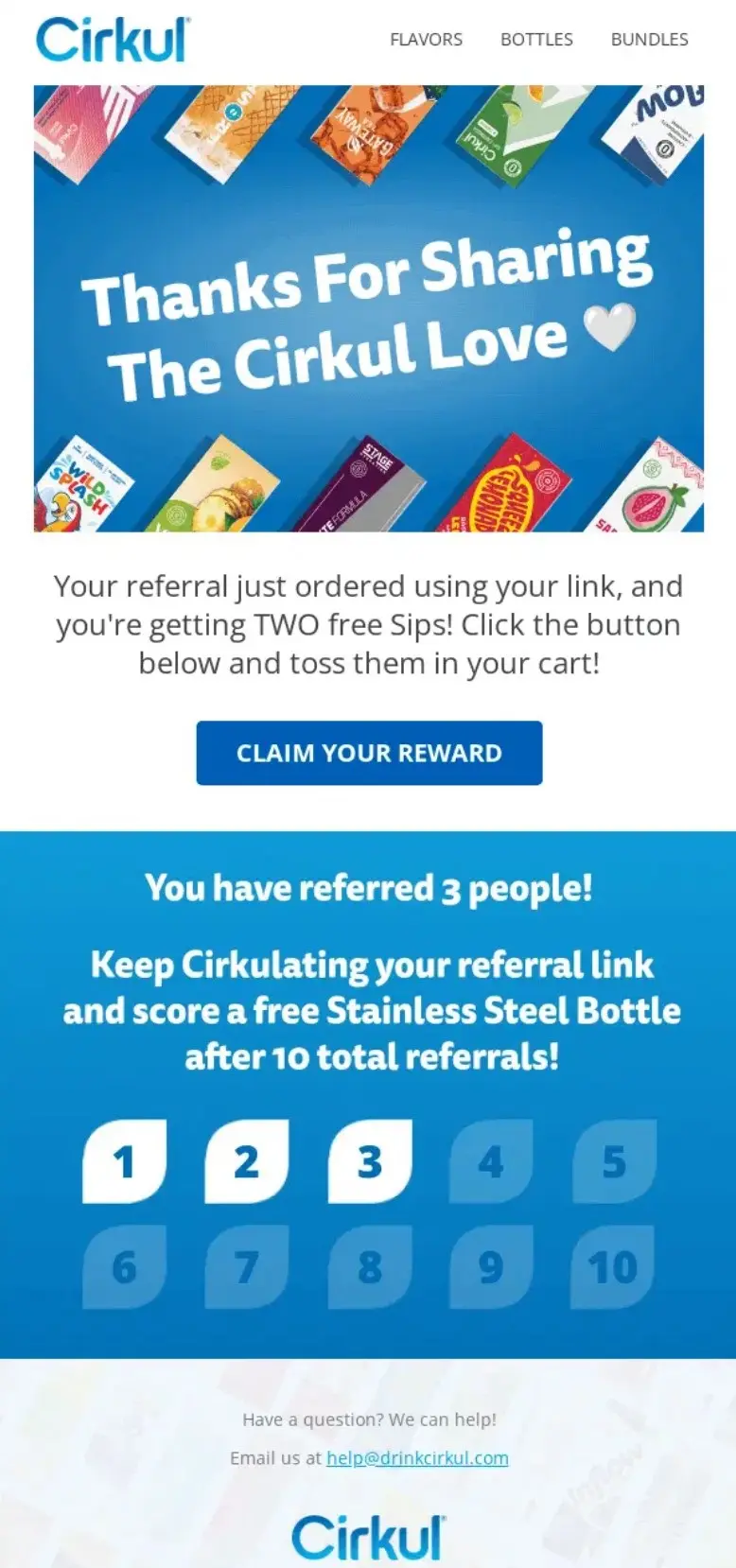
Cirkul thanked referrers with this email, handing them two free Sips and a progress tracker toward a free bottle at 10 referrals:
Thank you messages for service businesses
Use these for appointments, consultations, finished projects, and events rather than shipped orders. Service work ends with a handover, so the thank you doubles as the last thing the client remembers.
- Thank you for joining us at [Event name]. We loved seeing you there, and we hope to see you next time.
- Thank you for coming to [Event name]. We know your schedule is full, so it meant a lot that you made time.
- Thank you for your [Service] appointment today. We enjoyed talking it through, and we’re here when you need us next.
- Thank you for trusting us with your business, [Customer name]. Your [Service] is done, and we were glad to help.
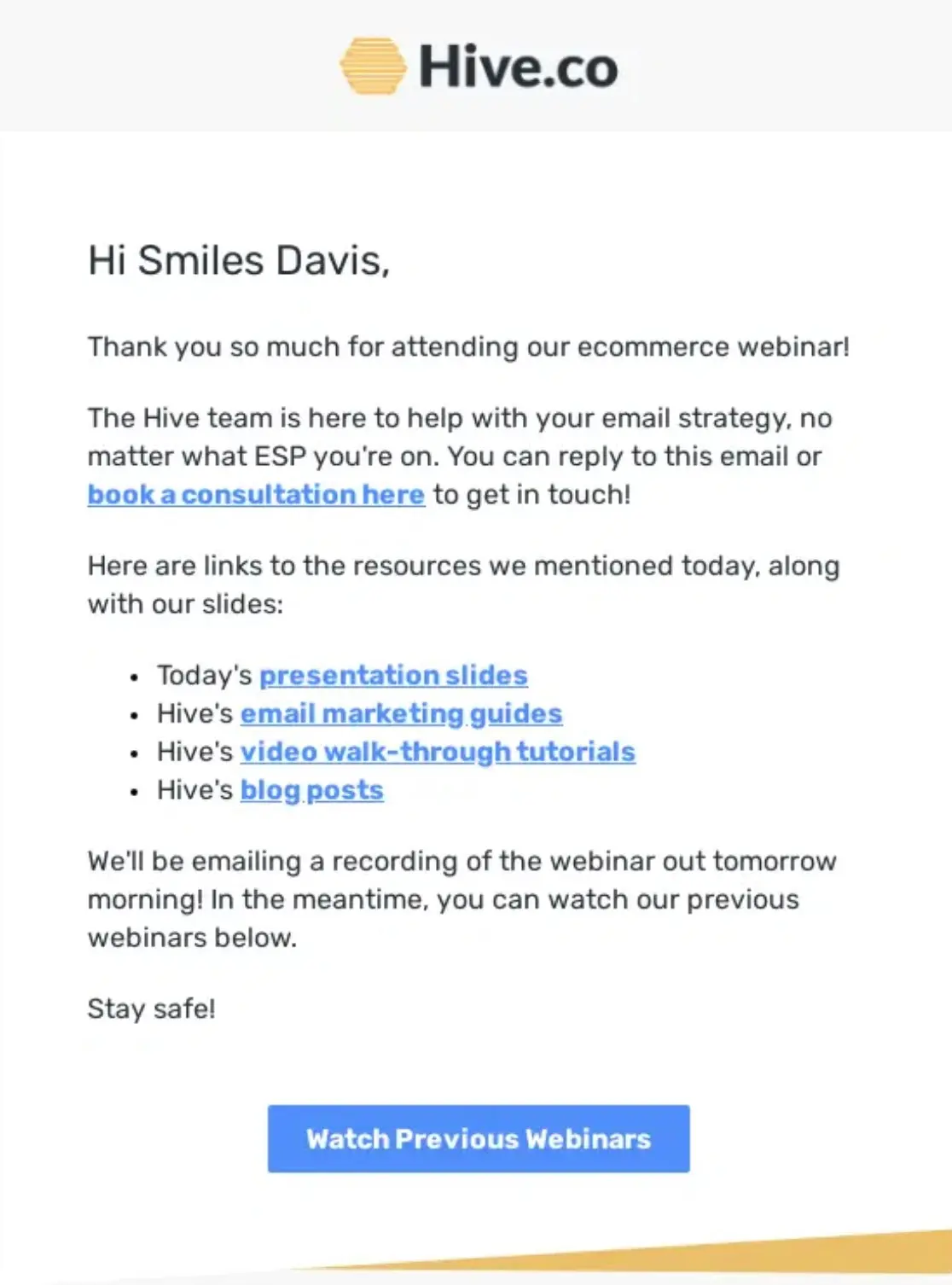
Hive.co followed a webinar with a “thank you for your business email.” It sent attendees the slides, guides, and tutorials mentioned during the session:
Customer review and feedback thank-you messages
Send these notes within a day of a review landing, whether it was favorable or not. Thanking someone for hard feedback turns a complaint into a conversation, and everyone reading the reviews can see it.
- Thank you for sharing your experience. Your feedback really helps, and we’ll use it to improve.
- Your review of [Product name] made our day. We knew the product was good, but you made us smile.
- Thank you for taking the time to write that review, [Customer name]. Feedback like yours helps the next shopper decide.
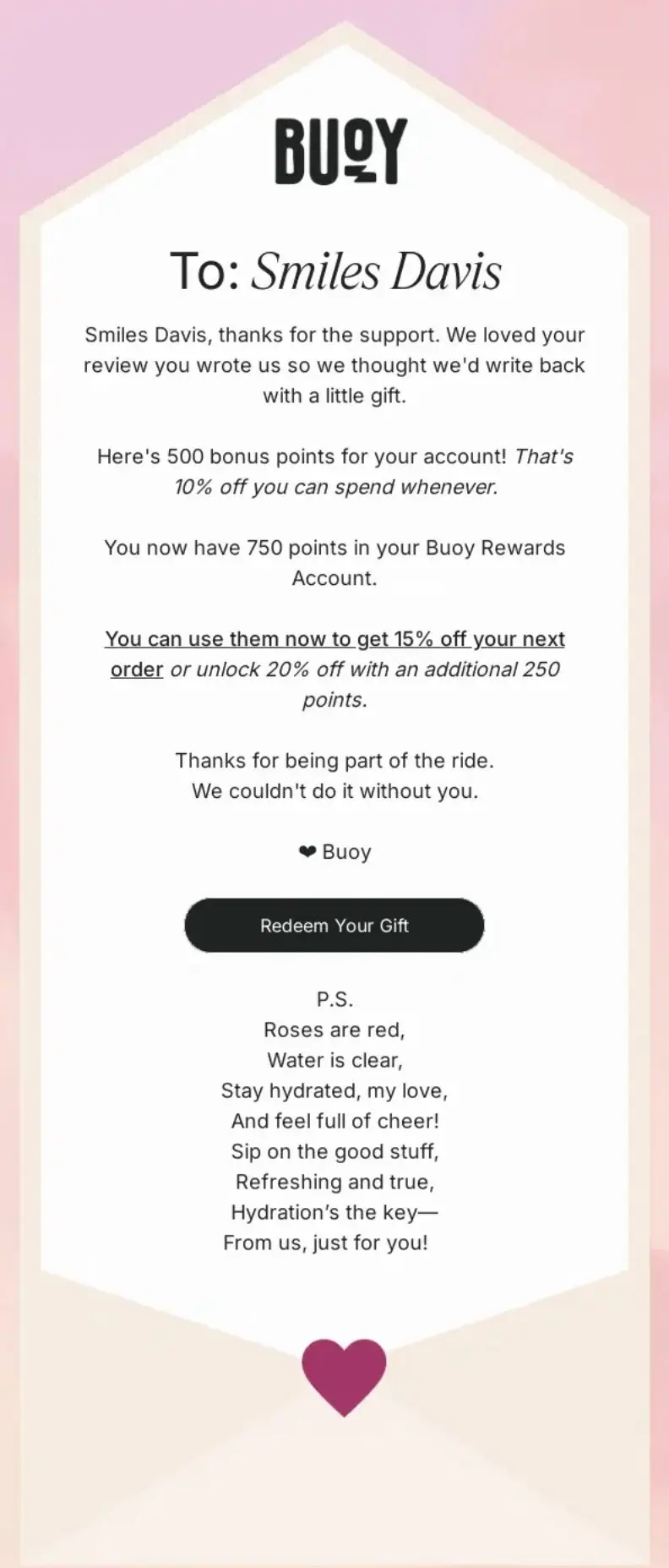
Buoy answered a customer review with this personalized email. It thanked the reviewer by name and added 500 bonus points to their rewards account:
Special occasion and holiday thank you messages
Use these for holidays, birthdays, anniversaries, and the milestones you reach together. Occasional messages carry little to no risk, which is why they work well. So skip the seasonal promotion here.
- Happy holidays from all of us at [Company name]. Thank you for being a valued customer, and see you next year.
- Wishing you joy this season. Thank you for being part of our community, and here’s to many more years together.
- It’s our birthday today, [Customer name]. Thank you for supporting us on the journey, and here’s a gift from us.
- Celebrating another year together brings us joy, [Customer name]. Happy [Anniversary length] anniversary, and here’s to many more.
- Congratulations on reaching this milestone with us. Thank you for your support along the way. We couldn’t have done it without you.
- As we mark this milestone, thank you for being a big part of our story. Here’s to many more years together.
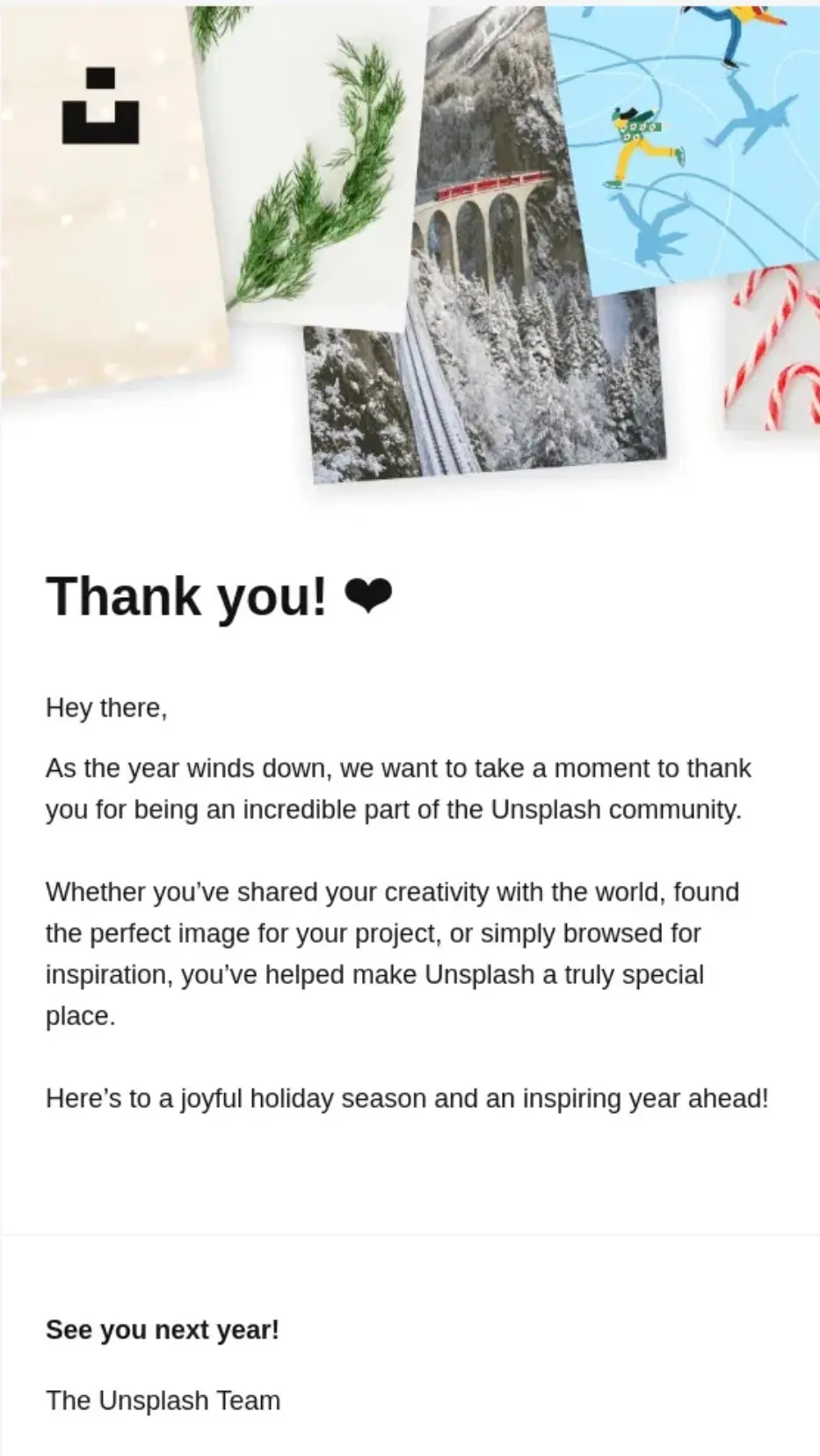
Unsplash marked the end of the year with this holiday thank-you for your business email. It thanked its community for sharing and browsing, with no offer attached:
Small business thank you message to customers
Use these notes for local shops, independent brands, family-run companies, handmade sellers, and small online stores. Customers who choose small want to know a person got the order, not a warehouse. As such, you’ll benefit from saying so plainly.
- Thank you for shopping small. Every order you place helps keep this shop running, and we notice each one.
- Your order made our day, [Customer name]. When you buy from a small business, a real person notices. Today that was us.
- Thank you for your order and for supporting my small business. Choosing us over a big store means more than you know.
- We’re a family-run [Company name], and customers like you are why we’re still here. Thank you for trusting us with your [Product name].
- We pack every piece by hand, and yours was no exception. Thank you for supporting handmade [Product category].
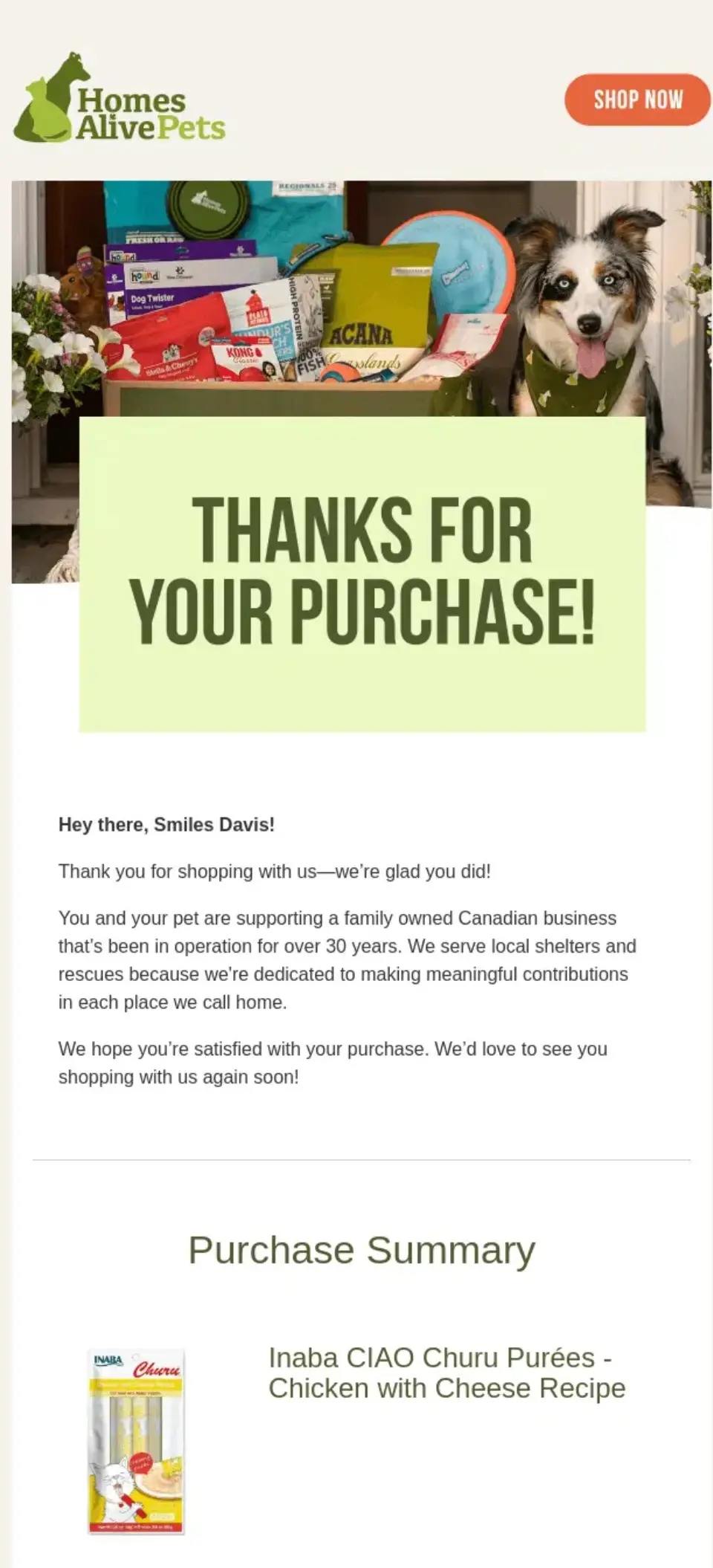
Homes Alive Pets thanked buyers with this email, telling them their order supported a family-run Canadian business that gave back to local shelters:
What are the best practices for “thank you for your business” messages?
Best practices for thank you notes include keeping them short, being specific, and leaving the selling out. A few habits separate a note that lands from one that reads like a receipt. And none of them take long.
Personalize the message
A message that names the person and the purchase reads as though you wrote it for them.
Pull in what you already have. Most email marketing platforms can include names, location, product information, and more in a personalized text message. For example, Omnisend pulls customer information from your store data, so you don’t type it by hand. You simply include a personalization tag like [[contact.first_name]] or [[ order.order_name ]], and the appropriate data appears automatically.
Here’s how that would look in practice:
| Generic | Personalized |
|---|---|
| Thanks for your order. We appreciate your business. | Hi Sarah, thank you for picking up another bag of our dark roast coffee. Your support means a lot to our team. |
| Thanks for the review. | Hey David, we loved your five-star review of the new hiking boots. We're glad they worked out for you. |
Match the tone to your customer and channel
Match the brand voice you already use, then adjust it for who’s reading. A playful shop should sound playful. A supplier writing to a buyer should sound warm but composed. Write the sentence you’d say out loud to that customer, then send that.
Adjust your tone for the relationship too. For instance, B2B and high-ticket services should carry a little more formality. Conversely, ecommerce and small shops read better plain and warm.
Try to vary the phrase itself so the same thanks doesn’t arrive twice in the same words:
- “Thank you for choosing us” works for a first-time buyer or a crowded market
- “Your business means the world to us” suits small shops and independent brands
- “We’re grateful for your trust” fits B2B, agencies, and high-ticket services
- “We couldn’t do this without you” belongs on milestones, launches, and anniversaries
- “Thanks for being a loyal part of our community” is for VIPs, subscribers, and members
Importantly, AI tools like Omnisend’s AI email generator can vary the wording for you when you’re writing thank-you notes at scale.
Keep it short and specific
Say thank you, say what it’s for, and leave it there. Keeping the note under 50 words is a reasonable limit for an email. For SMS, one sentence is usually enough.
Name the item they bought, the service you rendered, the review they left, or the referral they sent. Saying something like, “Thanks for your order” is forgettable. But “Thanks for picking up another bag of the dark roast” isn’t.
Send the message at the right time
Send the message close to the moment that prompted it, not on a fixed schedule. Here are the six triggers that matter most:
- Send it within 24 hours of a purchase
- Send it as soon as a review lands
- Send it the day a service or project wraps up
- Tuck it in the box when you include a card
- Send it right after an event, while it’s fresh
- Send it on the date of a milestone or anniversary
Sending too early reads as automated, and sending too late reads as an afterthought.
Avoid making it too promotional
A “thank you for your business” message with selling elements stops being a thank-you message. Keep any offer out of the way of showing gratitude. It helps to know which of three things you’re sending:
- A pure thank you for your business message carries no offer, no ask, and no product links
- A thank you for your business message with a loyalty reward puts the discount forward as a gift for something the customer already did
- A promotion dressed as a thank you is the one customers notice and the one they resent
If you do include a code, frame it as a reward, not an invitation to spend again.
Do not over-message customers
“Thank you for your business” notes lose meaning when they arrive too often. A customer thanked for every click stops reading any of it.
Pick the moments that warrant one.
How do you choose the channel for “thank you for your business” messages?
Pick the channel to fit the moment. Email is best for communicating details, while SMS is best for a quick, same-day note. Reserve handwritten cards for your top clients and use social media to thank someone publicly.
| Criteria | SMS | Handwritten notes | Social media | |
|---|---|---|---|---|
| Customer stage | New and loyal | Loyal/opt-in | VIP/long-term | Brand advocates |
| Purchase value | All sizes | Small to medium | Large/high-value | N/A |
| Business type | B2B and B2C | Mostly B2C | B2B and high-end B2C | B2C |
| Timing needed | Immediate/scheduled | Immediate | Delayed | Variable |
Email gives you room to thank the customer and confirm what they bought. You can also point them to support and ask for a review later. It also automates well, and automated emails beat one-off campaigns on both clicks and revenue.
The cited 2026 Omnisend benchmark report put automated emails at a 4.66% click-through rate, compared with 0.74% for campaigns. They also earn $3.41 per send, compared with $0.16 per campaign.
If you already send order confirmations, decide which of the two carries the thanks so the customer doesn’t get both. Then measure it like any other email marketing campaign. Watch the opens, clicks, and replies to see which wording lands.
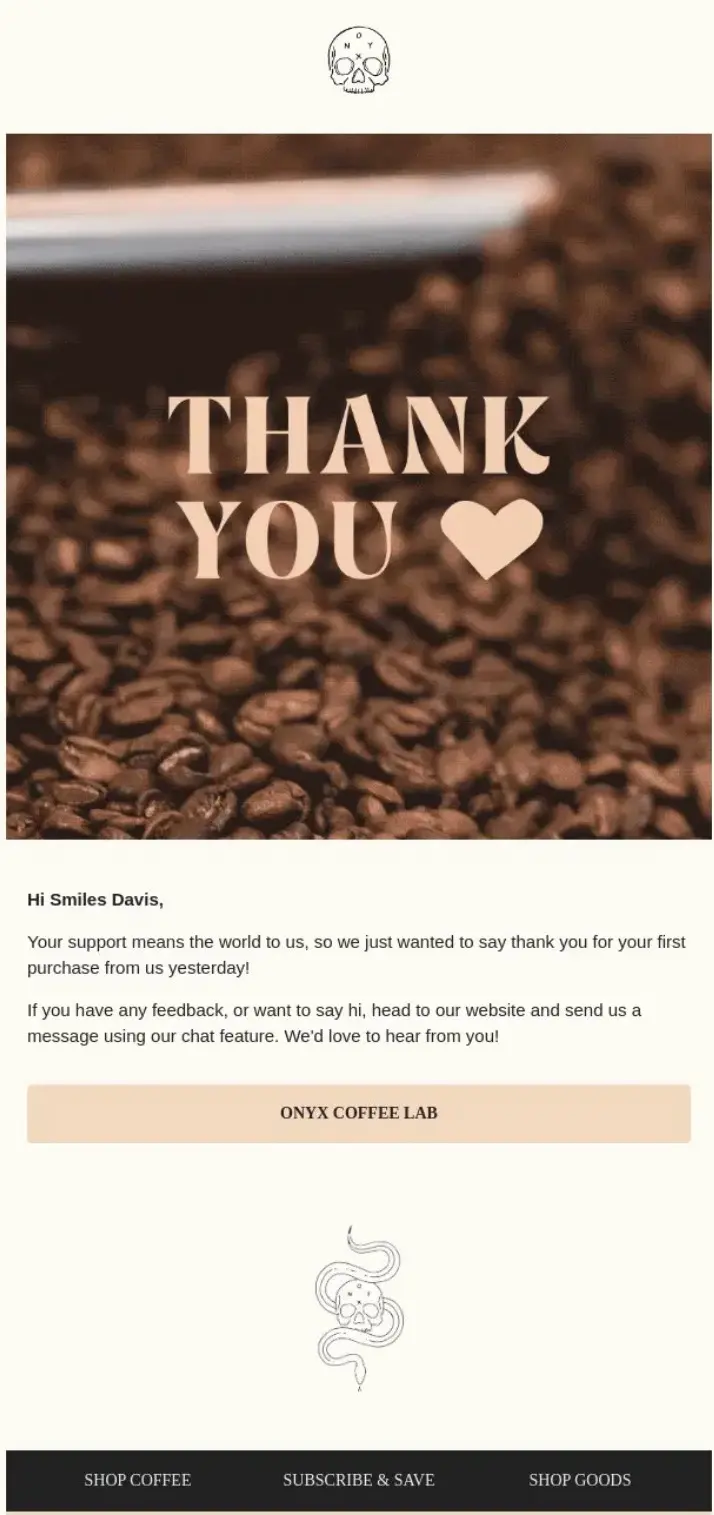
Onyx Coffee Lab thanked first-time buyers with this “thank you for your business” email. It offered a chat with the team for questions instead of pushing another product:
SMS
A quick text suits messages that need to land fast, like those for small shops, local services, and same-day moments. Since texts don’t have an open rate in the traditional sense, clicks show whether they’re working.
Omnisend’s 2026 SMS benchmarks put automated texts at a 20.34% click-through rate, compared with 12.39% for campaigns. They also earn $0.75 per message, compared with $0.15 per campaign.
Get their consent before anything else. In the United States, it’s required that an opt-in is compliant with the Telephone Consumer Protection Act (TCPA) before you text anyone, including a thank-you. Other markets set their own SMS marketing rules, so check local law before you send.
Keep the text under 160 characters, name your brand right away, and keep the wording tight, the way the best text message templates do.
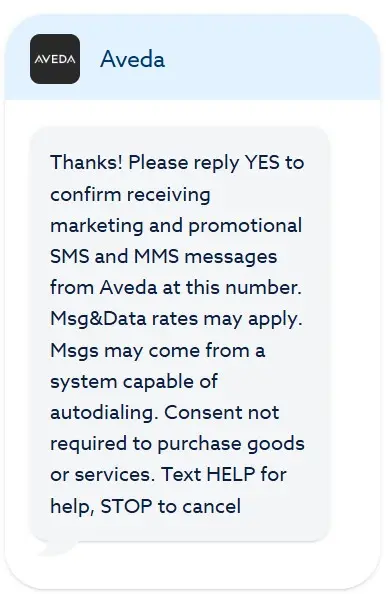
For example, Aveda opened its SMS program with this thank-you text. It confirmed consent and spelled out the message terms before anything else:
Handwritten thank you notes and business cards
A handwritten note is slow, and that’s the point. The same goes for “thank you for your business” cards, which stay on a desk long after an email is gone. Keep both for high-value clients and milestone orders.
Reference something specific, maybe a recent conversation, the item they ordered, or how long you’ve worked together. Tuck a business card in alongside the note, since cards get kept.
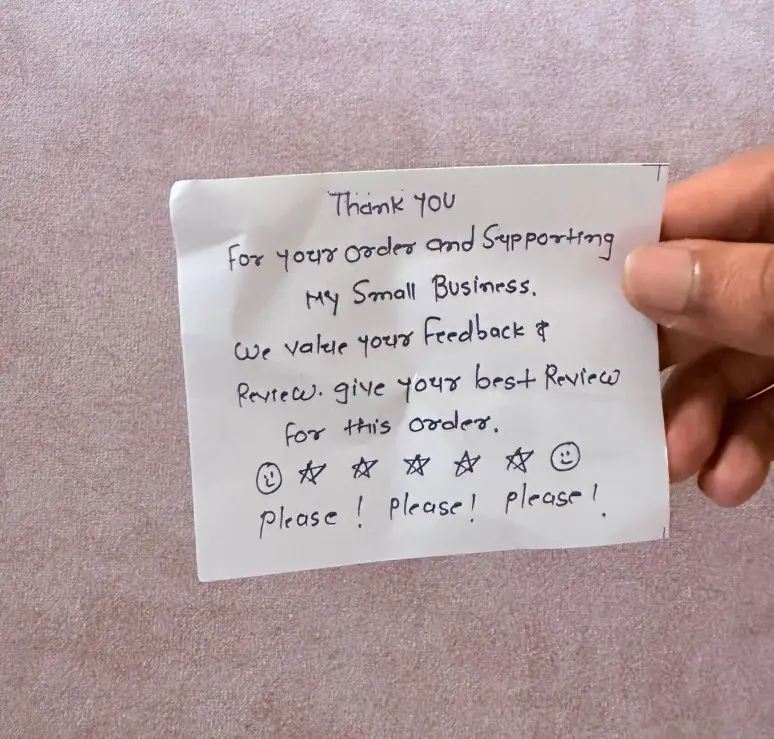
This handwritten note shipped inside a small business order, thanking the buyer and asking for a review with a row of stars:
Social media shout-outs
A public thank you note shows everyone else what buying from you is like. But ask before you post, and only tag public accounts. Also, resharing a customer’s own content is a more effective tactic than sharing yours.
Social media works differently from email and SMS, which are channels you own. So treat it as an amplifier, not a replacement.
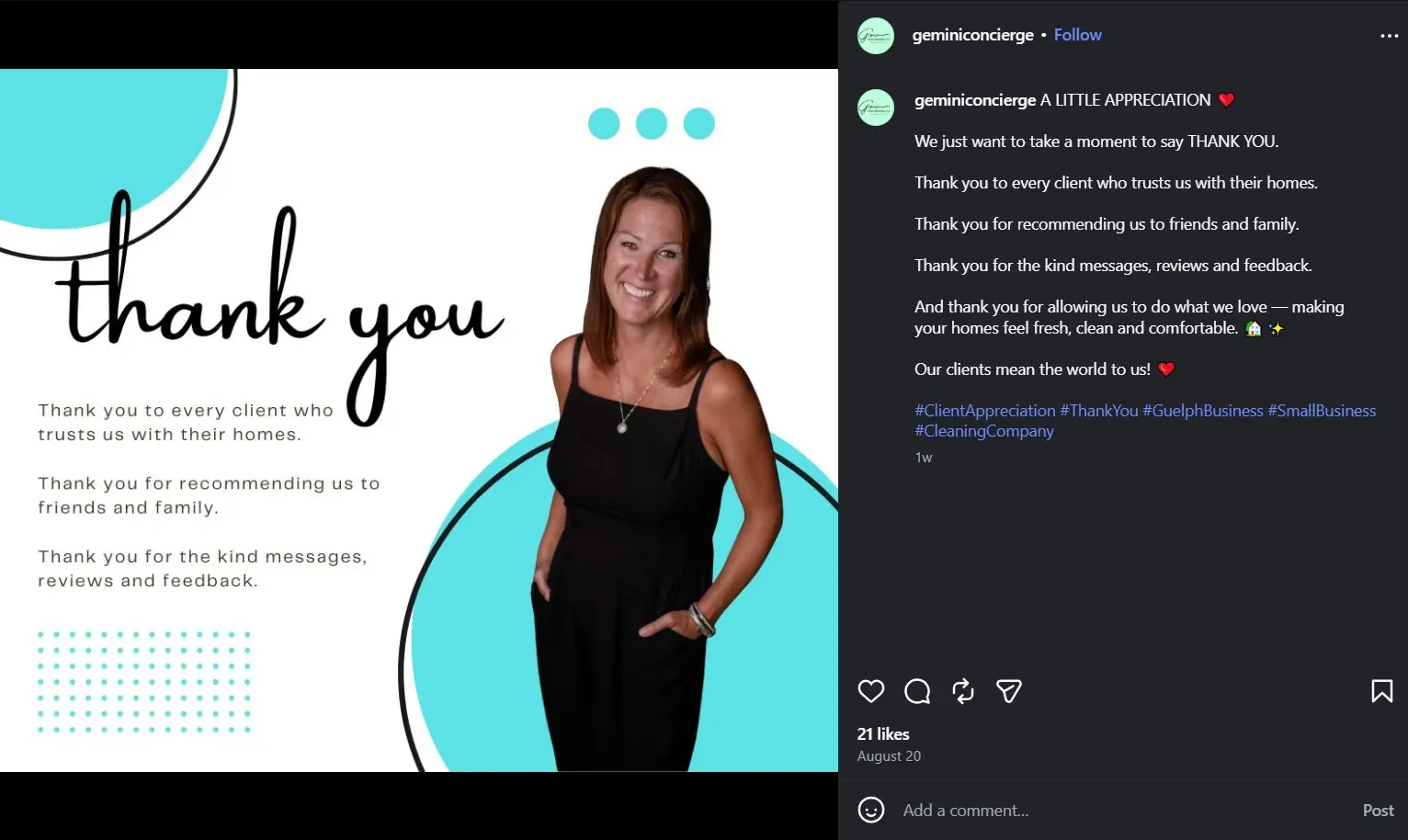
Gemini Concierge posted this public thank-you for your business on Instagram. It thanked clients for trusting the business with their homes and for their referrals:
What are the common mistakes to avoid in business thank you messages?
The most common mistakes are robotic wording, poor timing, generic phrasing, tone mismatch, or overly promotional language.
| Mistake | What it looks like | Fix |
|---|---|---|
| Over-automation without personalization | "Dear Valued Customer, thank you for your order of Item #4492" | Use customer data to include their real name and the specific product they bought |
| Poor timing | A thank-you arriving weeks later, in the middle of the night, or a "thanks for subscribing" email three days late | Set automated triggers to send within 24 hours of the action |
| Generic messaging | "Thanks for shopping with us" | Mention the specific milestone, product category, or how their support impacts the team |
| Tone mismatch | A fun, quirky apparel brand sending "We formally acknowledge your recent transaction" | Match your established brand voice. Read the message aloud to check it sounds natural. |
| Including sales pitches | "Thanks for your order, buy this matching hat now!" | Keep the focus on gratitude; frame any discount as a gift |
Note: Set up automated texts and emails to send messages within 24 hours of the action to maximize impact.
Conclusion
The best thank-you note asks for nothing in return. Keep that in mind, and any of these 40 templates will do its job.
You’ve now got templates for nine moments and four channels, plus notes on timing and tone to help them land. Start with the group that fits your next order, swap in your own details, and send. Plus, you can use Omnisend to run the email and SMS versions from one workflow.
Quick sign up | No credit card required