Omnisend AI

 OFFER
OFFER









A Black Friday checklist helps you prepare your store, marketing, offers, and operations before Black Friday/Cyber Monday traffic peaks.
Follow it early, and you’ll avoid last-minute problems while giving your store the best chance to maximize holiday sales. In 2026, BFCM runs from Friday, November 27 to Monday, November 30.
Adobe Analytics put U.S. online spending across Cyber Week 2025 at $44.2 billion, up 7.7% from 2024. That level of demand rewards brands that plan ahead instead of rushing in the final week.
Use the quick checklist to identify unfinished tasks, check the timeline for deadlines, and follow the six sections below for detailed guidance.
Quick sign up | No credit card required
Black Friday preparation timeline
This Black Friday preparation timeline turns the checklist into a dated sequence, so nothing lands too late. BFCM 2026 runs Friday, November 27 through Monday, November 30, with Thanksgiving on Thursday, November 26. Count back from those dates, and you’ll know what belongs when.
| Timeline | Tasks |
|---|---|
| 2–3 months before BFCM | Set goals, review last year's results, forecast inventory, and define your offer and marketing plan |
| 6–8 weeks before | Lock in promotions, draft email and SMS content, build segments, and update landing pages and banners |
| 3–4 weeks before | Run teaser campaigns, grow your list, test automations, schedule social posts, and start paid ads |
| 1 week before | Test your site, checkout, discount codes, and email flows, then confirm inventory, shipping, and support coverage |
| Black Friday–Cyber Monday | Track performance hourly, reply to customers fast, adjust live campaigns, and watch stock |
| After BFCM | Send follow-up emails, measure results against goals, gather feedback, and record insights for next year |
2026 Black Friday/Cyber Monday checklist
Preparing for Black Friday takes far more than setting up discounts and hoping traffic converts on the day. A successful BFCM campaign needs coordinated planning across marketing, website optimization, operations, and customer experience. This Black Friday guide splits that work into six stages, in the order you should tackle them.
- Plan your Black Friday strategy
- Prepare your Black Friday offers
- Prepare your marketing campaigns
- Optimize your ecommerce store
- Prepare your operations
- Monitor and optimize performance
Work through the stages in sequence, or jump straight to the one you’re furthest behind on. Each stage of this Black Friday checklist covers the tasks that matter most at that point in the run-up.
1. Plan your Black Friday strategy
A solid Black Friday strategy comes down to three decisions, and you need to make them before any discount goes live.
- When does prep start?
- What will you actually measure?
- What did last year’s numbers already tell you?
Nail these down early, and everything else in this checklist will have something to anchor to.
Start planning early for BFCM
One of the biggest problems we see time and time again is ecommerce businesses leaving BFCM campaigns until the very last minute.
So, when exactly should you start preparing for Black Friday?
We suggest forming your Black Friday marketing and operational strategies at least two months beforehand, around mid-to-late September.
In a 2025 survey, the National Retail Federation found that 42% of shoppers start browsing and buying before November. Yet, 63% still plan to do most of their shopping over Thanksgiving weekend itself.
As the saying goes: by failing to prepare, you’re preparing to fail.
Planning ahead helps you avoid last-minute chaos and keep morale high during what can often be quite a stressful time.
Set clear goals for your Black Friday campaign
No Black Friday checklist would be complete without clear objectives. Marketing campaigns never reach their full potential unless shaped by specific, measurable goals.
These goals will depend on your unique offering. Perhaps you dream of increasing email signups or generating interest in a brand-new product or service.
Most companies want to improve sales — but can you elaborate on how?
Here are a few objectives that guide BFCM campaigns:
- Increase brand awareness and interest
- Improve website traffic
- Acquire new customers
- Improve customer loyalty and retention
- Confirm industry authority
Each objective should have a clear metric behind it, or you won’t know if it was met.
Track revenue, conversion rate, new customer acquisition, and average order value (AOV) throughout BFCM. Taken together, these metrics show whether your campaign delivered real results.
Set your targets before the season begins. Having benchmarks makes it much easier to measure performance once BFCM ends and spot what worked.
Analyze last year’s data
Analyzing previous Black Friday data is an essential next step. By examining past successes and challenges, you can gain valuable insights to shape and enhance this year’s campaign.
Did you notice increased engagement with a particular subject line? Perhaps some deals generated more conversions than others.
Our top advice is simple: do more of what worked and less of what didn’t.
At Omnisend, we take data analysis seriously.
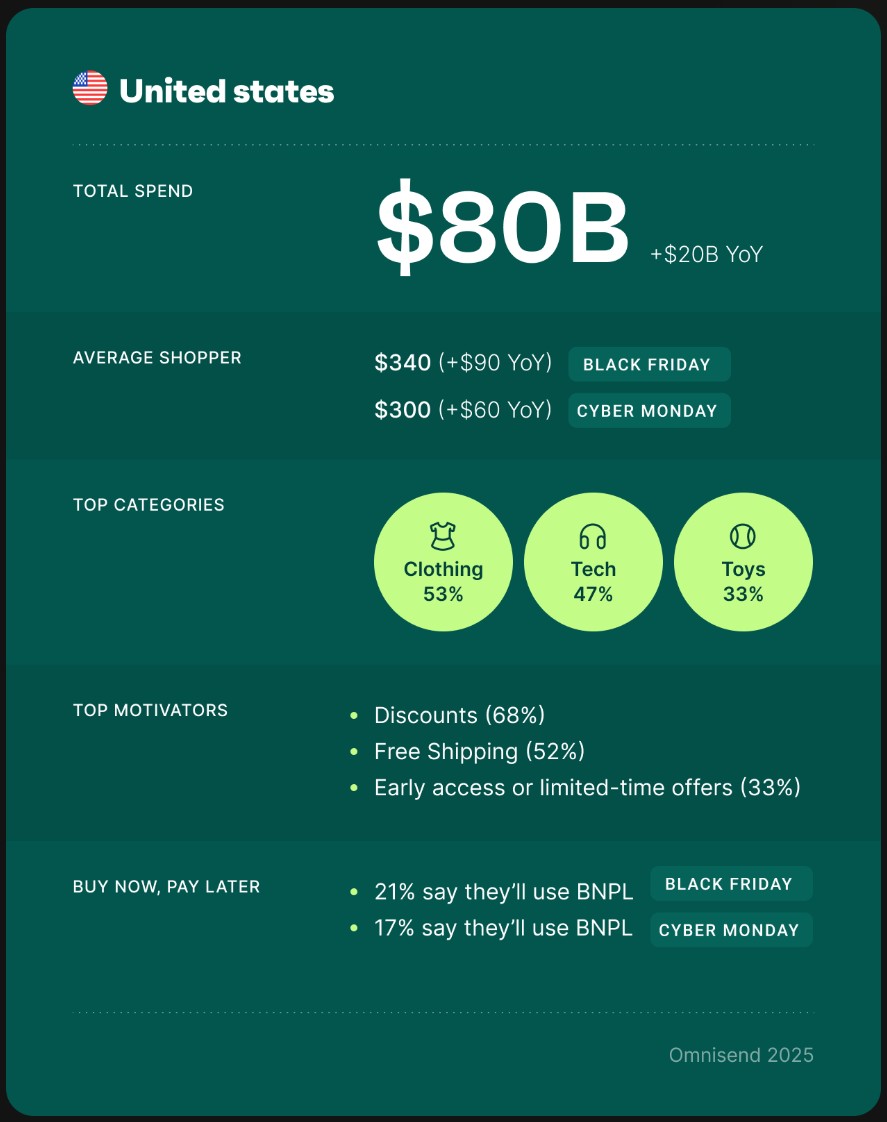
Omnisend’s 2025 BFCM predictions found that the average U.S. shopper planned to spend $340 during Black Friday and $300 over Cyber Monday. Discounts remained the biggest purchase driver for 68% of shoppers, followed by free shipping (52%).
Once you’ve identified what worked, make sure automation does more of the heavy lifting. Omnisend’s 2026 ecommerce marketing report found that automated emails accounted for just 2% of sends in 2025. Yet, they generated 30% of email-driven revenue.
Each automated email also earned $2.87 per send, compared with $0.18 for scheduled campaigns. If your automations were limited last BFCM, that’s an excellent opportunity to improve results this year.

2. Prepare your Black Friday offers
Your Black Friday offers are the part shoppers actually compare, so they get decided before any campaign is built. The headline deal comes first, then what you hold back for existing customers, then how long you run it. Each answers a different question for a shopper deciding where to spend.
Create an irresistible BFCM offer
Thousands of brands compete for consumers’ limited attention, so your deals must stand out.
For some ideas, check out the tried-and-tested methods below:
- Tease shoppers with sneak peeks
- Use countdown timers to spark urgency
- Gamify your campaigns with wheels, quizzes, and calendars
- Offer VIP discounts for early birds
- Give away free gifts with every purchase
- Create referral discounts
- Partner with social media influencers
- Design irresistible Shopify Black Friday Deals
You can also use product bundles to increase average order value without lowering the advertised price. A gift with purchase can add perceived value, but include the gift and its fulfillment costs when checking the offer’s margin.
Tiered discounts are another reliable option when you want customers to spend more per order. For example, offering $10 off $50 and $40 off $150 encourages shoppers to add one more item before checking out.
For historical context, Adobe reported peak 2025 holiday-season discounts of 30.9% on electronics, 29.6% on toys, and 25.1% on apparel. Treat these as category benchmarks, not minimum discounts to match. Set your offers using your own product costs, margins, inventory, and campaign goals.
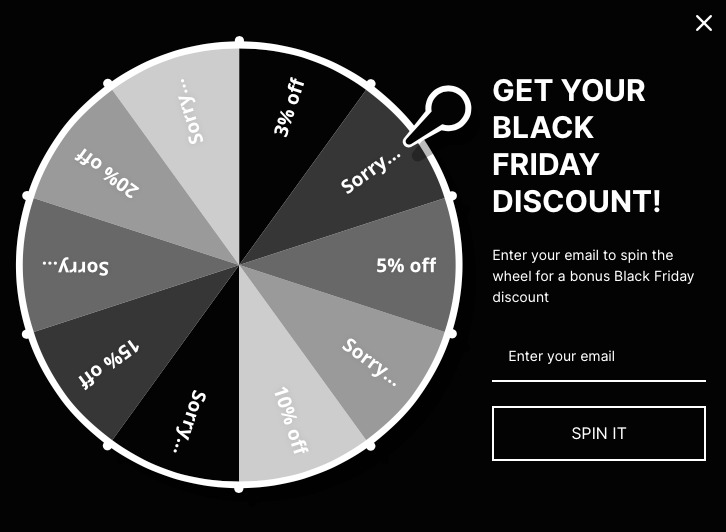
Gamified sign-up forms do double duty, capturing an email while revealing the discount. Our Black Friday Wheel of Fortune template is built for exactly that.
Reward loyal customers
Businesses should never sacrifice their loyal customers for brand-new ones, but it happens frequently. For example, some companies only offer discounts for initial purchases. It’s unfortunate because loyal customers are a lucrative and willing revenue source.
While you don’t want to bombard them with invasive offers, well-timed deals can feel more like a well-deserved reward. These include exclusive early access to BFCM content, extra discounts, and special gifts.
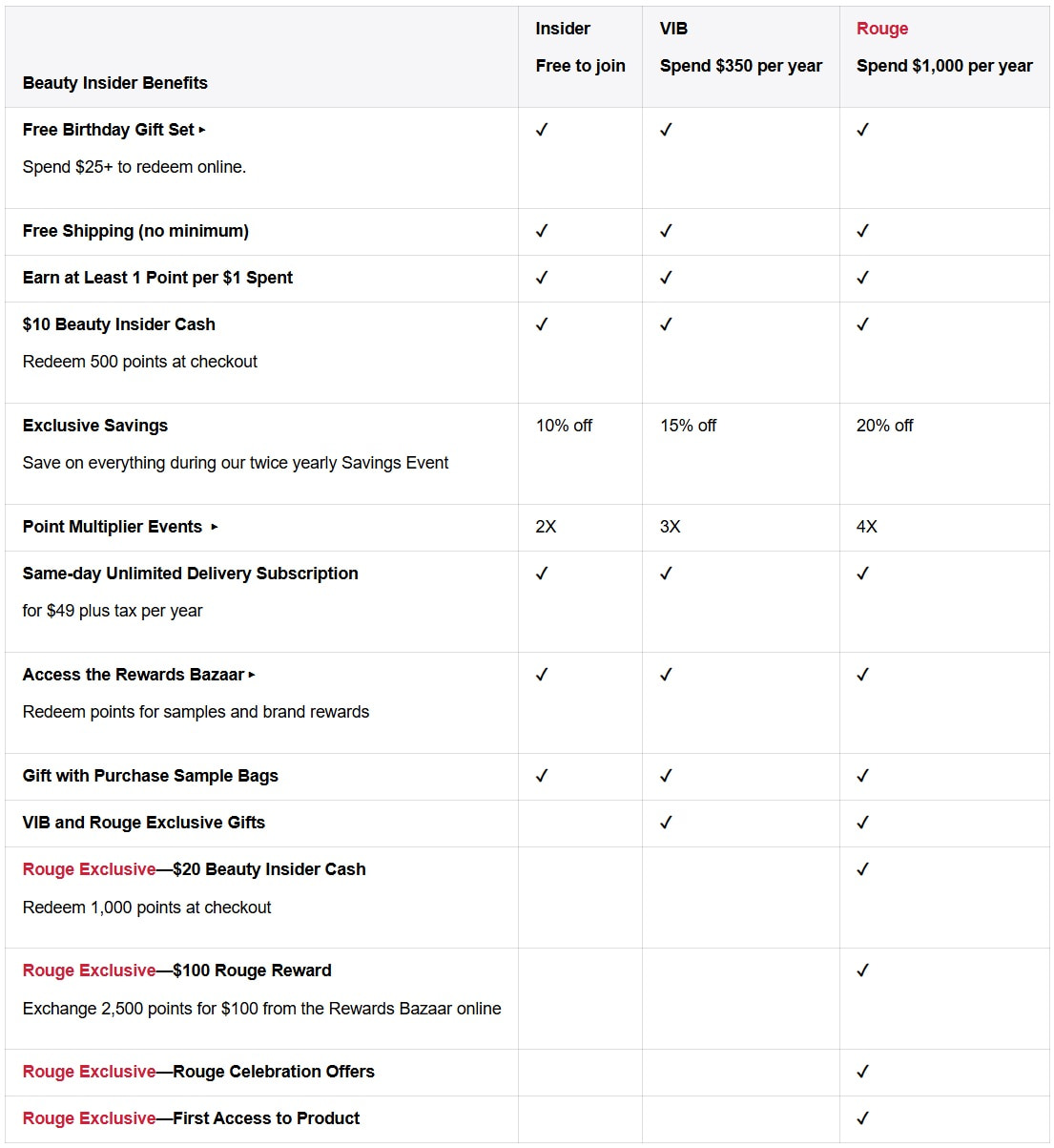
Sephora’s Beauty Insider Program is a fantastic example of how to show consumers you care. It offers seasonal savings and points when you spend over a certain amount:
Extend offers beyond Black Friday
Most businesses already extend their offers beyond Black Friday, as the BFCM period typically lasts four days.
But this doesn’t mean you should keep rehashing the same few deals for a longer period.
For maximum impact, create multiple hero promotions and mini-offers to push at different times to keep consumers on their toes.
Above all else, give people plenty of notice before offers end via email reminders, countdown timers, and last-chance banners. This creates a sense of urgency that should tip undecided shoppers over the edge.

3. Prepare your marketing campaigns
Four channels carry a BFCM sale: email, paid social, on-site capture, and retargeting. Get all four built and proven while there’s still room to fix what breaks.
Start early, and you’ll meet Black Friday with an audience already waiting.
Plan and launch email marketing campaigns early
Alongside content creation, we suggest teasing early access to deals through email and social media campaigns. The ultimate goal is to build anticipation. You want a crowd of excited customers ready to make a purchase before the big weekend.
Don’t rely on scheduled campaigns alone. Automated emails keep working as shoppers browse, leave, and return to your store. These four automations are especially valuable during BFCM:
- Welcome flow: Deliver the promised signup incentive and introduce the brand.
- Browse abandonment: Follow up on viewed products where tracking and subscriber permissions allow.
- Cart abandonment: Remind eligible shoppers about an unfinished purchase and stop after conversion.
- Back-in-stock alerts: Notify subscribers when their requested products become available.
Confused about how to do this?
Use Omnisend’s powerful email marketing tools. We have plenty of BFCM templates that are completely customizable and compatible with the top ecommerce platforms. You could also use our AI email generator to help you populate text.
Quick sign up | No credit card required
Segment your email list
Email segmentation splits your list into groups based on shared traits, like preferences, browsing activity, or purchase history. Segmenting your Black Friday audience means each group gets the offers they’re most likely to buy from, which lifts conversions.
Omnisend simplifies the process with advanced filter and automation functionality. You’ll also find AI-assisted customer lifecycle segmentation – a dynamic, real-time snapshot of audience behavior.
There are hundreds of email marketing tools out there, but Omnisend stands out for its easy navigation, cost-effectiveness, and excellent customer service.
Create a BFCM-specific email series
It’s not enough to create one email for Black Friday and hope for the best. You’ll need a comprehensive email series that guides consumers through the whole shopping journey.
Here’s the sequence we recommend:
- Teaser: Hint at the discount without giving away the number yet
- VIP early access: Give subscribers first access before the public sale begins
- Launch: Announce the full offer as soon as it goes live
- Reminder: Follow up with relevant non-buyers, using clicks, browsing, and purchase activity to guide targeting.
- Last chance: Remind subscribers that your Black Friday offer closes tonight
- Cyber Monday: Reset the offer so the weekend gets a second wave of momentum
- Thank you: Confirm each purchase and encourage the next one
It’s also a good idea to set reminders for cart abandonment.
We know all of this sounds quite complicated, but don’t worry. We’ve curated some of the best Black Friday examples and templates to kick-start your inspiration.
Launch social media ads
Social media advertising can be lucrative when done correctly. To drive traffic and promote BFCM deals that actually convert, you must use first-party data to prospect and target captive audiences.
Here are three paid social formats worth testing before the weekend:
- Meta Advantage+ shopping campaigns: Let Meta optimize budget and placements once you’ve uploaded a clean product catalog
- TikTok Shop and Spark Ads: Promote high-performing creator content to combine paid reach with authentic social proof
- Vertical video for Reels and Shorts: Repurpose the same short-form video across several placements to stretch your creative budget
A word of warning: PPC costs during the BFCM period are higher than usual. To avoid running expensive ads that nobody clicks on, we suggest A/B testing design elements. This will help you assess their effectiveness before the price hikes.
Use pop-ups for email capture
Well-timed pop-ups are effective tools for capturing email addresses if the incentive is good enough.
After all, you’re asking people to part with their personal information — not easy in a world of growing consumer distrust.
Our top advice? Make people an offer they can’t refuse. For example, give away early access or special discounts in exchange for contact details.
Other valuable strategies for building email lists include gamifying signup forms, sharing lead magnets, and using referral programs.
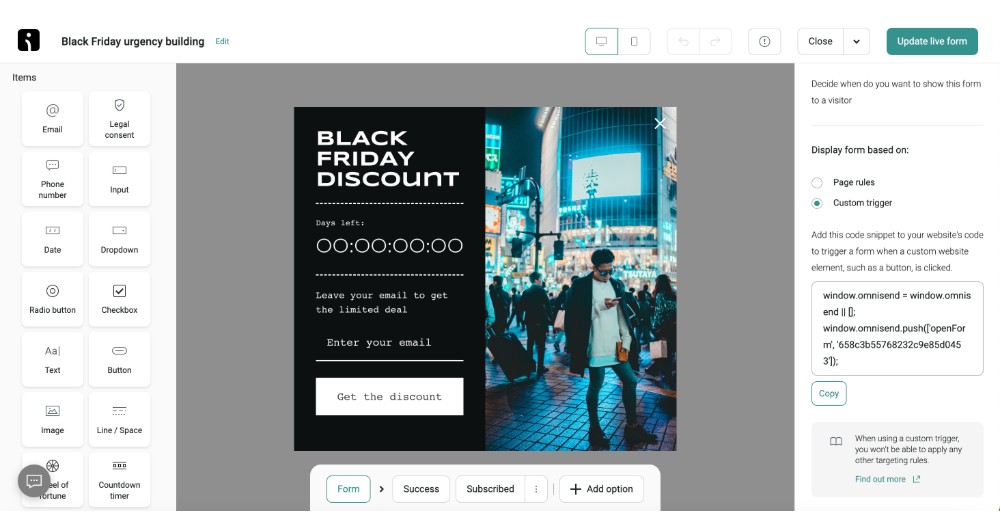
Creating pop-ups isn’t rocket science, especially when you work from pre-made BFCM templates. Omnisend’s form builder comes with pop-up forms you can restyle in your brand colors for Black Friday.
Starting from pre-made Black Friday templates saves you from building pop-ups from scratch. Omnisend’s form builder lets you restyle them in your brand colors, and our Black Friday pop-up guide has more ideas to work from.
Use retargeting ads
Retargeting ads are a clever way to reel back users who visited your website but left without making a purchase.
These ads work by using cookies to track a person’s online activities. If someone has interacted with your content, retargeting technology ensures that relevant ads follow them across various websites and platforms, keeping your brand top-of-mind.
Like pop-ups, you don’t want this to feel intrusive.
We suggest personalizing product suggestions, leading with special offers, and designing eye-catching graphics to minimize the risk of brand fatigue. This is the exhaustion and distaste a consumer feels when overexposed to a company’s marketing materials.
4. Optimize your ecommerce store
BFCM promotions can only do so much when your store is slow or hard to navigate. Before traffic picks up, make sure your site is fast, mobile-friendly, and easy to check out.
Optimize your website for speed
The first step is to check your website’s speed with a tool like PageSpeed Insights or the Pingdom Website Speed Test.
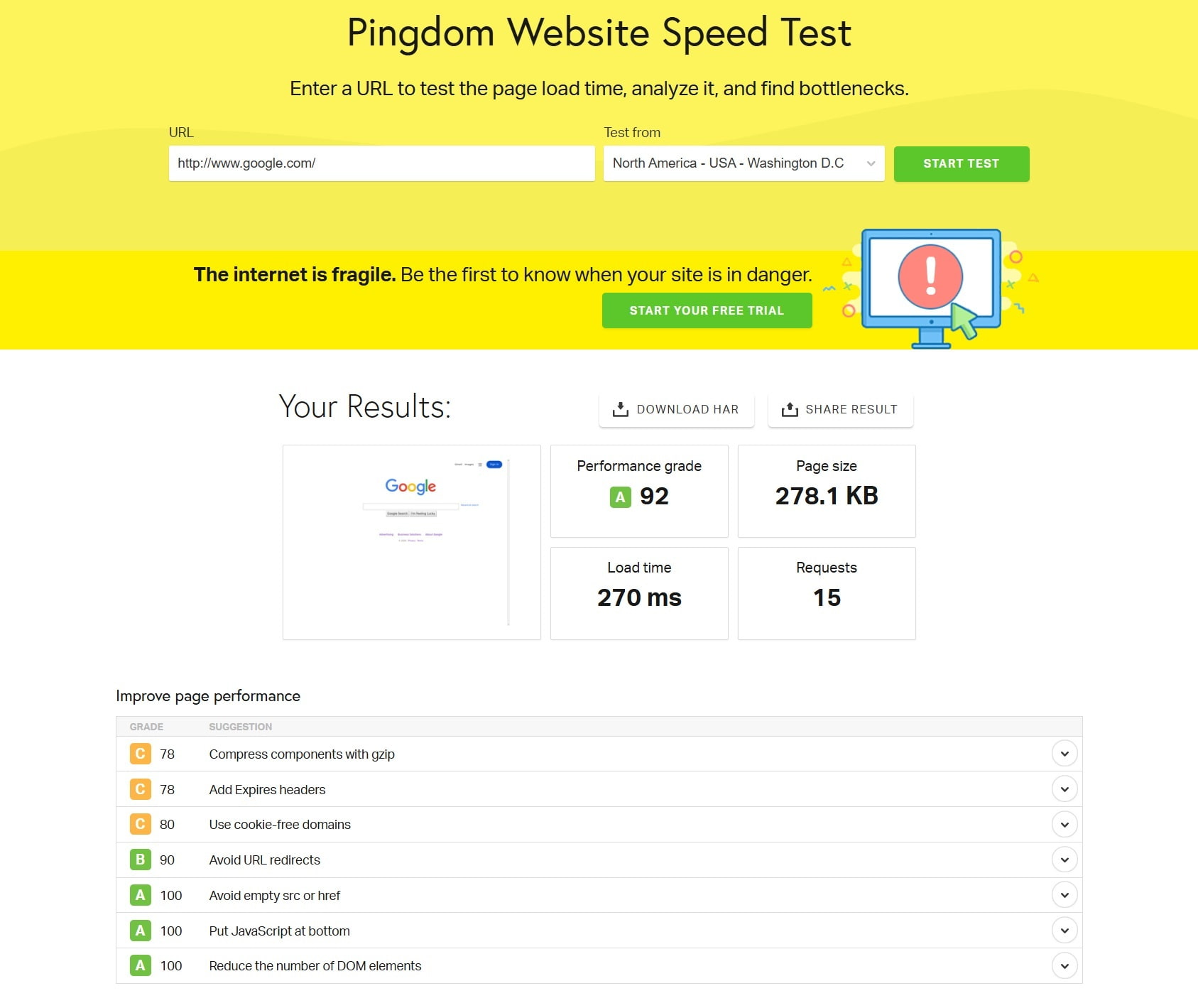
Next, optimize load times by:
- Compressing images
- Reducing HTTP requests
- Enabling caching
- Reducing and/or updating plugins
- Minifying CSS and JavaScript files
Optimize for mobile shoppers
Nailing the user experience for mobile shoppers is business-critical, especially during BFCM and other promotional events.
Most BFCM shopping now happens on a phone, so your mobile experience decides the weekend. Adobe Analytics put mobile at 61.6% of U.S. Thanksgiving sales and 57.5% of Cyber Monday sales in 2025.
Phones also lose the most carts of any device. As of June 2026, Dynamic Yield’s rolling ecommerce benchmarks put mobile abandonment at 79.92%, against 69.19% on desktop.
Luckily, the solution is straightforward.
On a phone, test product search, filters, variant selection, add-to-cart buttons, signup forms, and checkout. Check that pop-ups can be closed easily and don’t obscure essential controls.
Simplify the checkout process
The checkout process is one of the most important. If it’s clunky and complicated with too many steps, consumers will click off before completing a purchase. On the other hand, frictionless journeys facilitate sales.
Here are a few ideas for seamless checkouts:
- Allow guest checkouts
- Provide multiple payment options
- Minimize form fields and pre-populate information
- Use progress indicators
- Make sure CTAs are easy to find and read
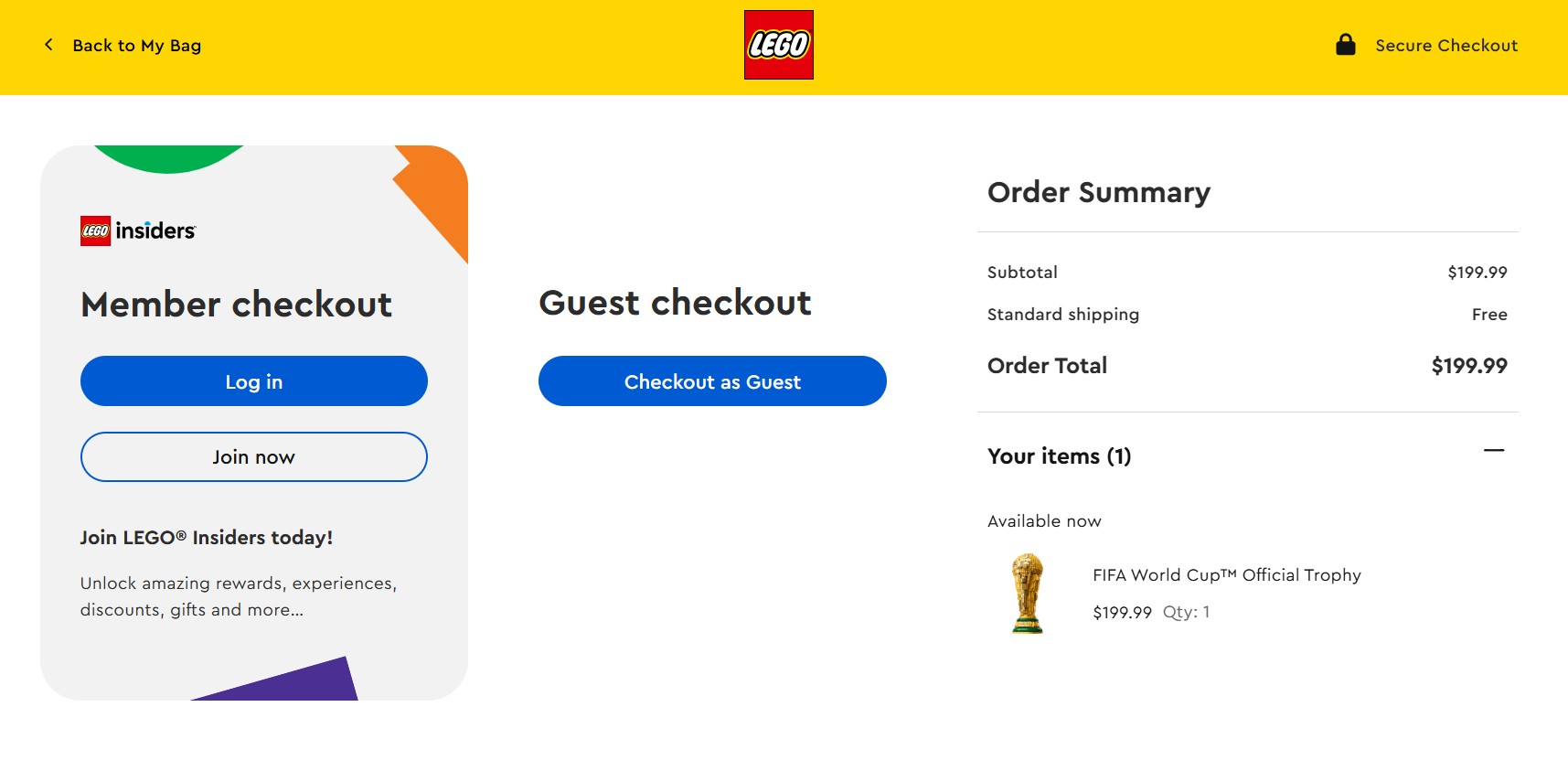
With LEGO’s checkout, you get guest checkout and account login choices. This creates a simple, streamlined entry point for both new and returning shoppers.
Update your homepage with BFCM deals
There’s no point creating incredible BFCM deals that nobody knows about. That’s why you should promote them wherever you can, especially on your homepage, which is the first thing users see when visiting your website.
Improve visibility with banners, videos, and images.
Even better, embed a countdown timer to spark excitement in the run-up to the big BFCM weekend. In this case, more really is more – drop as many references as possible without overcrowding the design.
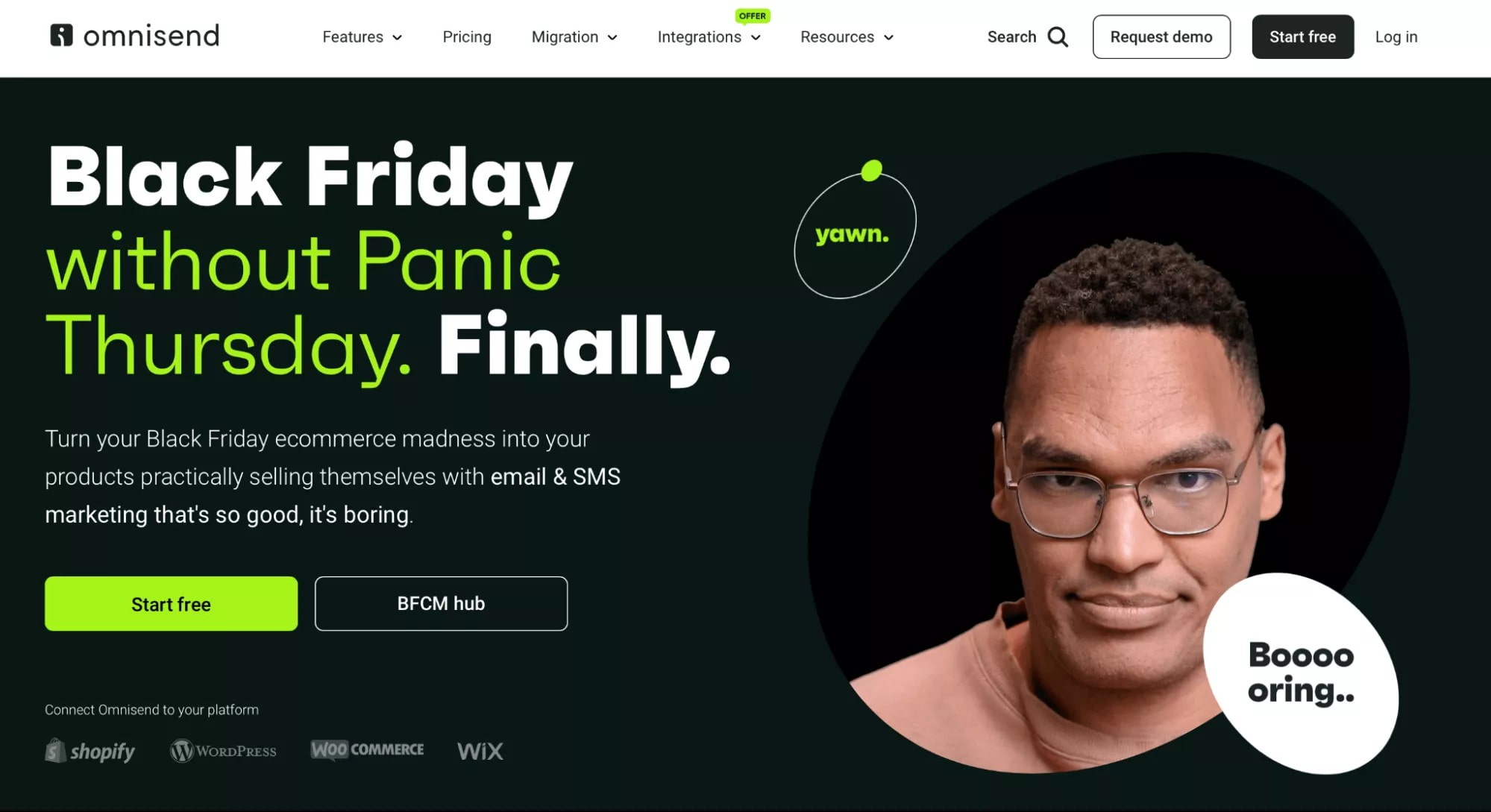
Take the Omnisend website as an example. We’ve incorporated Black Friday imagery throughout the homepage and a link to the comprehensive BFCM learning hub.
Test BFCM campaign elements
Nothing kills a Black Friday campaign like broken links, discount codes, and product pages.
Remember, consumers have little tolerance for delays, and BFCM competition is fierce.
With that in mind, double-check that campaign elements are working correctly before launch, including each step of the checkout process. Yes, it’s time-consuming, but you can’t risk weaknesses in the sales funnel.
Here are a few common issues to review:
- Follow each campaign link and confirm it opens the intended product or offer.
- Test coupon codes on eligible and excluded products, including minimum-spend and stacking rules.
- Complete a guest purchase on mobile and desktop using the payment methods you promote.
- Confirm shipping costs, delivery estimates, and order totals before payment.
- Submit signup forms and verify that subscribers enter the correct list and welcome flow.
- Confirm the test order appears correctly in your store and analytics.
- Check that order confirmation arrives and abandoned-cart reminders stop after purchase.
Upsell and cross-sell during checkout
Upselling and cross-selling are some of the best tools on this Black Friday checklist. Surprisingly, not all businesses employ these tactics, presumably because they can come across as pushy.
However, upselling and cross-selling shouldn’t feel aggressive. There are plenty of ways to naturally weave them into the shopping journey, especially at checkout when consumers are already primed to make a purchase.
Some of the most effective strategies include:
- Suggest recommended products or bundle deals at checkout
- Send a follow-up “you might also like” email
- Offer discounts over certain order values
- Introduce time-limited deals
- Display product comparisons
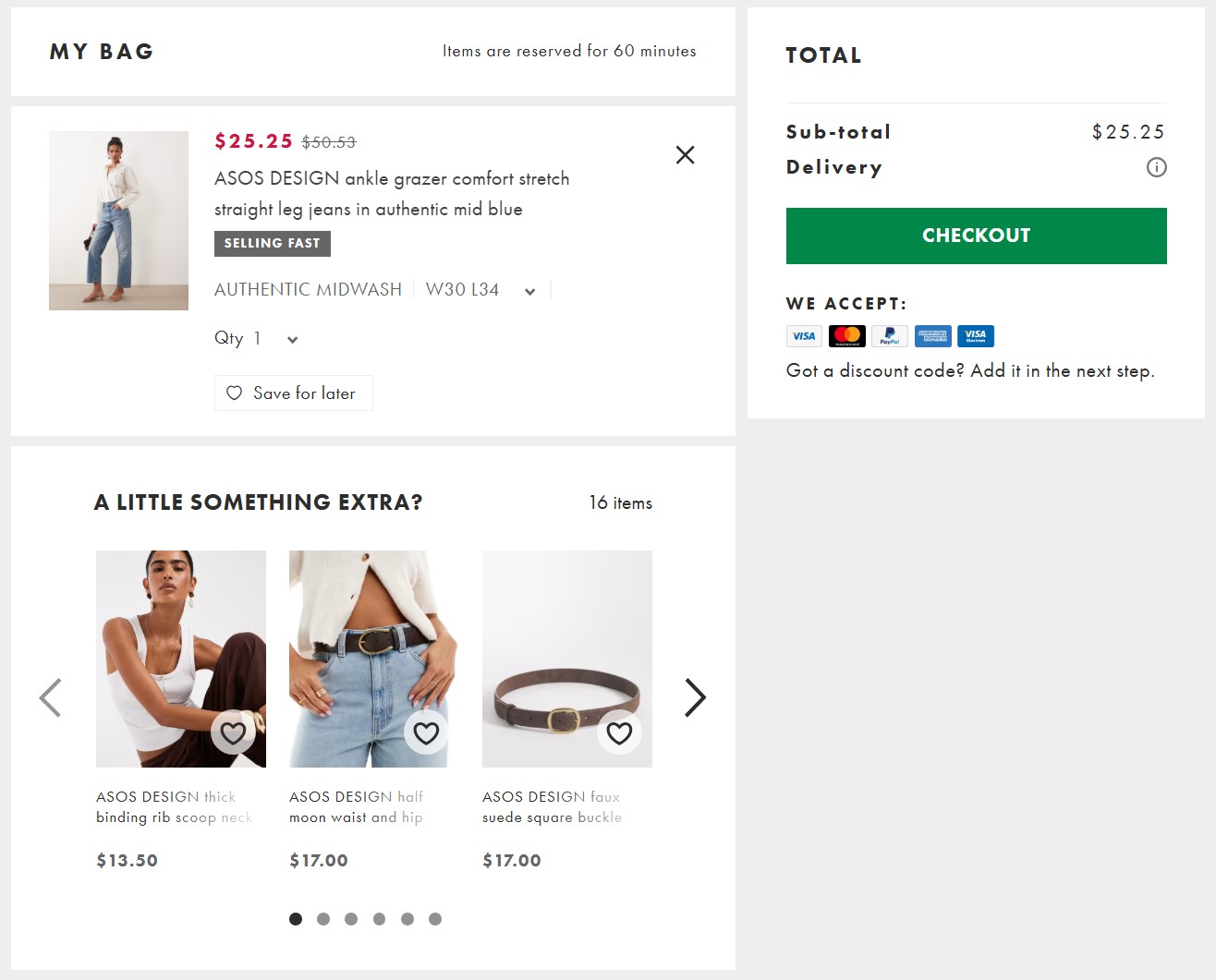
ASOS, for example, highlights complementary products in the cart, making add-ons easy to discover before checkout.
5. Prepare your operations
Operations determine whether you can deliver on every sale you make. That means organizing your inventory, shipping, customer support, and returns before BFCM demand ramps up. Knowing how to prepare your business for Black Friday starts behind the scenes.
Check your inventory
BFCM success also relies on organized backend operations, including inventory control.
Check your stock before the launch weekend. Otherwise, you’ll end up with tons of orders and no way of fulfilling them.
Equally, you don’t want to overorder and then struggle to shift pallets of unwanted products. There’s a sweet spot where you’ll see the most returns on investment.
Forecast stock by product using last year’s sales, current demand, planned promotions, supplier lead times, and available inventory. Increase orders where your forecast supports it, and agree on a backup plan for promoted products that sell out.
Set your shipping strategy
Setting an effective BFCM shipping strategy requires a multi-faceted approach.
First, ensure you have the manpower to handle the sudden influx of orders. This might include hiring additional warehouse operatives, revisiting your order fulfillment processes, and diversifying your shipping partners.
Next, manage expectations. Be honest about lead times and delays, and don’t make promises you can’t keep. We recommend providing consumers with real-time order tracking information to alleviate the burden on customer service departments.
Looking for a low-hanging fruit strategy that yields impressive results? Sweeten Black Friday deals with free or reduced shipping.
Ensure your customer support is ready
Make sure agents understand your offers, shipping deadlines, and returns policy so they can answer questions consistently.
Your customer service team must be ready for the burst of inquiries. So many brands forget about this step, but knowledgeable and patient support agents are the backbone of success.
They manage expectations, resolve issues promptly to avoid negative feedback, and communicate pain points to management so they can be addressed.
A self-service help center is how you get ready for Black Friday without tripling headcount. Order status, shipping cutoffs, and returns windows can all live there. This way, your agents are freed for the questions that actually need their input.
If hiring additional human power is outside your budget, consider using chatbots. While most consumers prefer to speak to a person, AI-powered assistants filter out the most easily fixed issues to save time.
Prepare for returns
To start preparing for returns, you need the infrastructure to handle them, as post-holiday refunds and exchanges are common. Also, alleviate pressure from your customer service and warehouse departments by making the returns policy simple to implement and understand.
Here are a few questions to answer when outlining your BFCM terms and conditions:
- What items can be returned?
- Can customers exchange items?
- What’s the time limit for returns?
- How do customers initiate the returns process?
- When will refunds be processed?
6. Monitor and optimize performance
Monitoring BFCM performance splits into the live weekend and the week after it ends. Catch a problem while the sale is running and you can still fix it. What you do the following week decides how many of those buyers ever come back.
Monitor campaigns in real time
Your Black Friday checklist must include real-time campaign monitoring so you can stay ahead of potential issues and adjust marketing strategies.
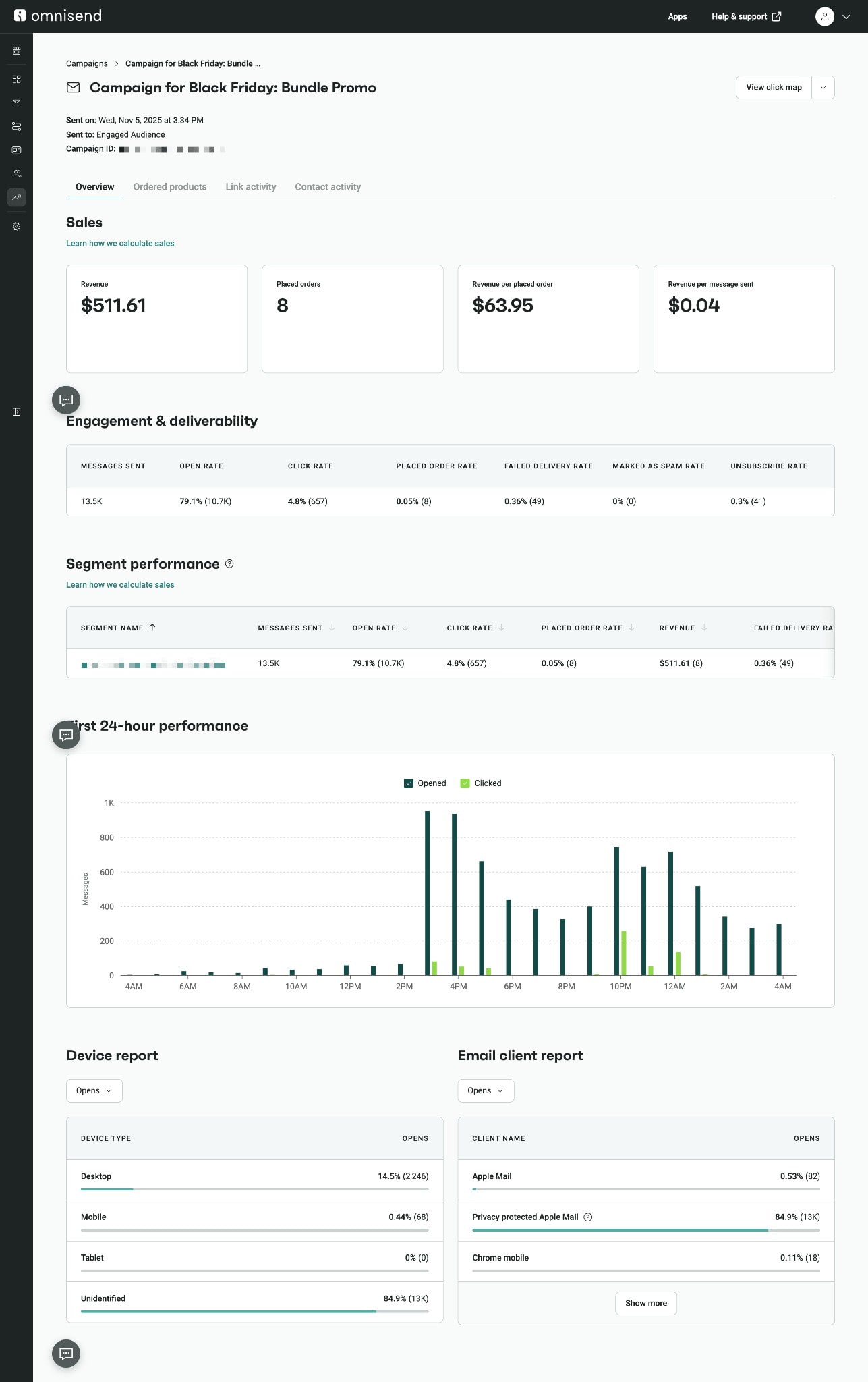
With Omnisend, businesses can analyze data using aggregated performance metrics and advanced reporting dashboards. All the information you need is in one easy-to-find place, so you don’t have to flit between different apps and platforms.
Have a post-Black Friday follow-up plan
Most Black Friday tips end at the sale, but the week after Cyber Monday is where repeat customers are made. Email does its second job here, working as aftercare rather than promotion.
There are various ways to follow up with customers, including post-sale deals or loyalty rewards to encourage repeat purchases. Besides profit, these approaches also clear out leftover stock that would otherwise go to waste.
Our comprehensive post-holiday sales campaign guide details effective email marketing strategies for ecommerce businesses.
Track and evaluate Black Friday performance
Last but not least, businesses must track and evaluate Black Friday performance to inform next year’s campaign. Performance metrics and customer feedback let you identify weaknesses to address next time.
Ask yourself the following questions:
- What campaign elements worked?
- What campaign elements didn’t work?
- Did backend operations run smoothly?
- How did we measure against our competitors?
- Did the BFCM campaign meet the goals set out at the beginning of the process?
Conclusion
Early preparation gives you the best chance of a successful Black Friday and Cyber Monday. Use the six stages above to plan ahead instead of rushing through last-minute tasks.
Great discounts alone won’t deliver strong results. You also need a solid marketing plan, a fast website, enough inventory, and customer support that’s ready for higher demand.
Keep this checklist and timeline close as you prepare for BFCM. Checking off each stage helps you stay organized and avoid costly last-minute mistakes.
Omnisend, which is built for ecommerce, brings your BFCM campaigns together in one place. Use it to manage email and SMS marketing, back-in-stock alerts and abandoned cart automation, segmentation, and reporting.
Quick sign up | No credit card required