Omnisend AI


 OFFER
OFFER









Full disclosure: Omnisend is our product. We’ve included it because we think it’s a strong option for ecommerce stores, but we’ve also tested every other tool on this list and tried to give an honest picture of each.
The best email list management software for most ecommerce stores is Omnisend — but the right choice depends on your platform, list size, and whether you need SMS.
Managing a list gets messy fast: duplicates creep in, inactive contacts pile up, and segments become less useful as your catalog grows. That is why basic mailing list management software eventually stops working, and your emails cease to be productive for your growth.
You need a tool that keeps your contacts clean, organized, and tied to real customer behavior. There are plenty of choices, but without practical guidance, the tool will not grant any success.
This guide is for store owners on Shopify, WooCommerce, or BigCommerce who want a practical way to manage growth without adding extra manual work to improve ecommerce email marketing.
We tested the leading email list management tools to see how they handle segmentation, automation, and subscriber health in real life.
TL;DR: Best email list management software
| Tool | Best for | Starting price | Free plan | Our rating |
|---|---|---|---|---|
| Omnisend | Ecommerce lifecycle automation + SMS | $11.20/month | Yes | 9.5/10 |
| Klaviyo | Advanced data segmentation | $20/month | Yes, limited | 9.2/10 |
| Mailchimp | Beginners | €9/month | Yes | 8.5/10 |
| ActiveCampaign | B2B + CRM automation | $15/month | Yes | 8.7/10 |
| Brevo | Budget-friendly sending | €6.33/month | Yes | 8.4/10 |
| GetResponse | Creators + webinars | €13.12/month | Yes, trial + free account | 8.3/10 |
| Mailgun | Developers | $15/month | Yes | 7.9/10 |
| Drip | DTC ecommerce brands | $39/month | Yes, trial | 8.6/10 |
| Kit | Digital creators | $33/month | Yes | 8.2/10 |
| HubSpot | CRM-focused businesses | €9/month | Yes | 8.4/10 |
Current pricing and free-plan details reflect the providers’ public pages at the time of writing this article, and can change over time.
How we tested and chose these tools
We spent six weeks signing up for and using each of these 10 tools to manage a test contact list of 10,000 contacts. Each tool was evaluated against 6 criteria: list segmentation depth, ecommerce integration quality, list hygiene automation, pricing transparency, ease of setup, and support quality.
That gave us a clearer view of which platforms make email contact management easier and which ones add work the moment your list gets busy.
We took all screenshots in this guide during testing from real accounts. That matters because list management looks easy in a demo, but real contact data quickly creates a separation from marketing material.
Our testing criteria
We scored every tool on six different facets that allow us to evaluate the tool’s overall usability and the benefits of email deliverability in a growing business:
- List segmentation depth tells you how well the platform can group customers by behavior, purchase history, and engagement
- Ecommerce integration quality shows how easily the tool connects to your store and keeps your customer data updated without extra work
- Email contact management means the tool helps keep your contact list clean by removing bad email addresses, tracking unsubscribes, and handling inactive contacts
- Pricing transparency shows how easy it is to understand what you will pay as your contact list gets bigger
- Ease of setup means how quickly you can connect your store and start using the tool without a complicated process
- Support quality shows how fast you can get help when something stops working or doesn’t go as planned
These criteria let us separate each tool by what it is best for, because the job is not just about sending campaigns but about keeping your list useful, your segments current, and your sender reputation healthy.
That is the difference between a good email list manager employing email marketing best practices and a tool that becomes another tab you have to babysit.
Who this article is for
This article is for ecommerce store owners who need to segment customers, automate list cleaning, and manage subscriber health at scale.
Enterprise IT teams building internal systems will probably not find this article very useful, just as transactional senders who only need API infrastructure, or pure B2B teams whose contact strategy lives inside the CRM rather than the store.
“When selecting email software for ecommerce, I prioritize how the platform handles data. So that takes more into account than list management. Customer fields, product, order, consent, preferences, and behavioral data. That data model determines what kind of segmentation, personalization, and automation is actually possible. And if you can for instance, directly pull product data into your ESP with something like a product picker, will already make a huge difference. With platforms not designed for ecommerce you will run into limits once you grow.”
– Jordie van Rijn, email marketing and MarTech selection specialist at emailvendorselection.com
Omnisend — best email list management software for ecommerce stores
Best for: Ecommerce stores on Shopify, WooCommerce, or BigCommerce that need automated list management, pre-built lifecycle segments, and SMS in one platform.
Omnisend starts at $11.20/month. The free plan includes up to 500 emails/month, plus the core tools needed to test segmentation, forms, and automation before you pay for scale.
If you want an email list manager that offers capabilities designed for ecommerce instead of just a flashy interface, Omnisend might be the option for you.
What we liked
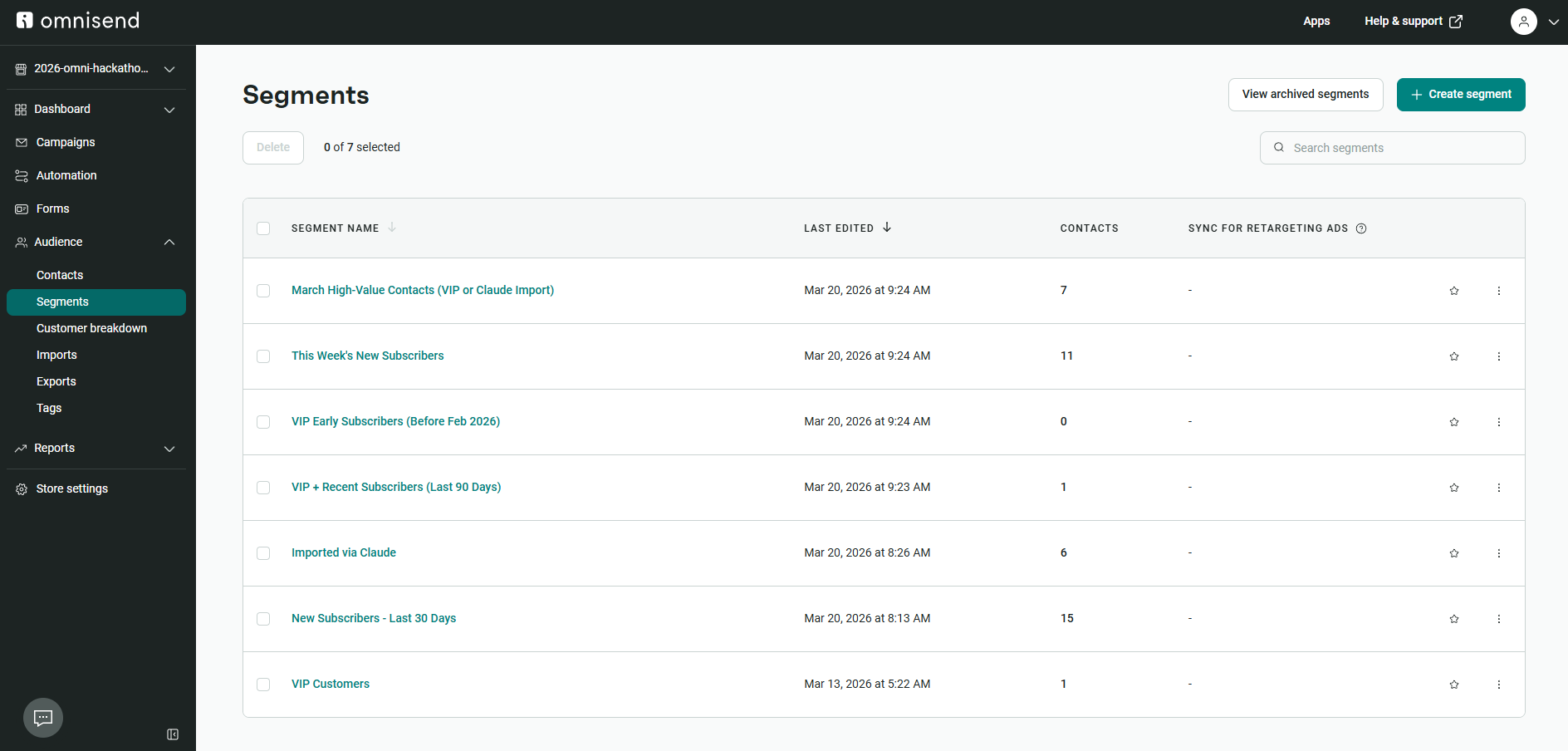
The setup is straightforward. Once a store is connected, Omnisend begins syncing customer, order, and browsing data in real time, so segmentation starts from the information your store already has.
We liked how the platform handles lifecycle work out of the box. Pre-built segments for repeat buyers, first-time customers, and inactive contacts make it easier to send the right message at the right time.
For teams that are new to automation, that saves a lot of guesswork.
List hygiene is another strength. Bounce suppression and unsubscribe sync happen automatically, and the built-in email list cleaning software helps you spot invalid or inactive contacts before they drag down performance or after re-engagement emails fail.
That is the kind of work most brands forget to do until deliverability starts slipping.
It’s not just me saying this. In the review from the Martech experts at emailvendorselection, Omnisend got 4.5 stars on list management. With e-commerce specific targeting, product picker, spam filter and hygene and list management functions highlighted as an overall ecommerce specialist.
Omnisend also keeps SMS and email together in a single customer profile, letting you manage cross-channel communication without jumping between platforms or duplicating work.
What could be better
The free plan is useful, but 500 emails/month is a tight cap for an active store. Once your audience starts responding, you will hit the limit quickly.
Advanced ecommerce customer segmentation based on custom events is also behind paid plans, so more sophisticated audiences require a subscription.
Reporting is strong for standard ecommerce use cases, but stores with complex catalogs and heavy analysis needs will find Klaviyo more detailed.
Bottom line
Omnisend is our product, and we think it’s the best choice for most mid-market ecommerce stores — particularly among the best email marketing apps for Shopify or WooCommerce for those who want automation, list hygiene, and SMS without juggling multiple tools.
If you are stuck deciding between Omnisend and Klaviyo as your primary email list management tool, Klaviyo wins in predictive analytics. At the same time, we are better suited for stores that want a cleaner setup and less manual work.
It’s not, however, the right choice for pure B2B senders or teams that need enterprise-grade CRM functionality.
Klaviyo — best for data-driven ecommerce segmentation
Best for: High-volume ecommerce stores that need predictive analytics, deep customer data segmentation, and advanced A/B testing for list management.
Klaviyo’s free plan is limited to 250 active profiles and 500 monthly email sends, and email marketing pricing starts at $20/month based on active profiles.
That makes it very different from Omnisend, where the free plan gives smaller stores more room before cost becomes the main issue.
What we liked
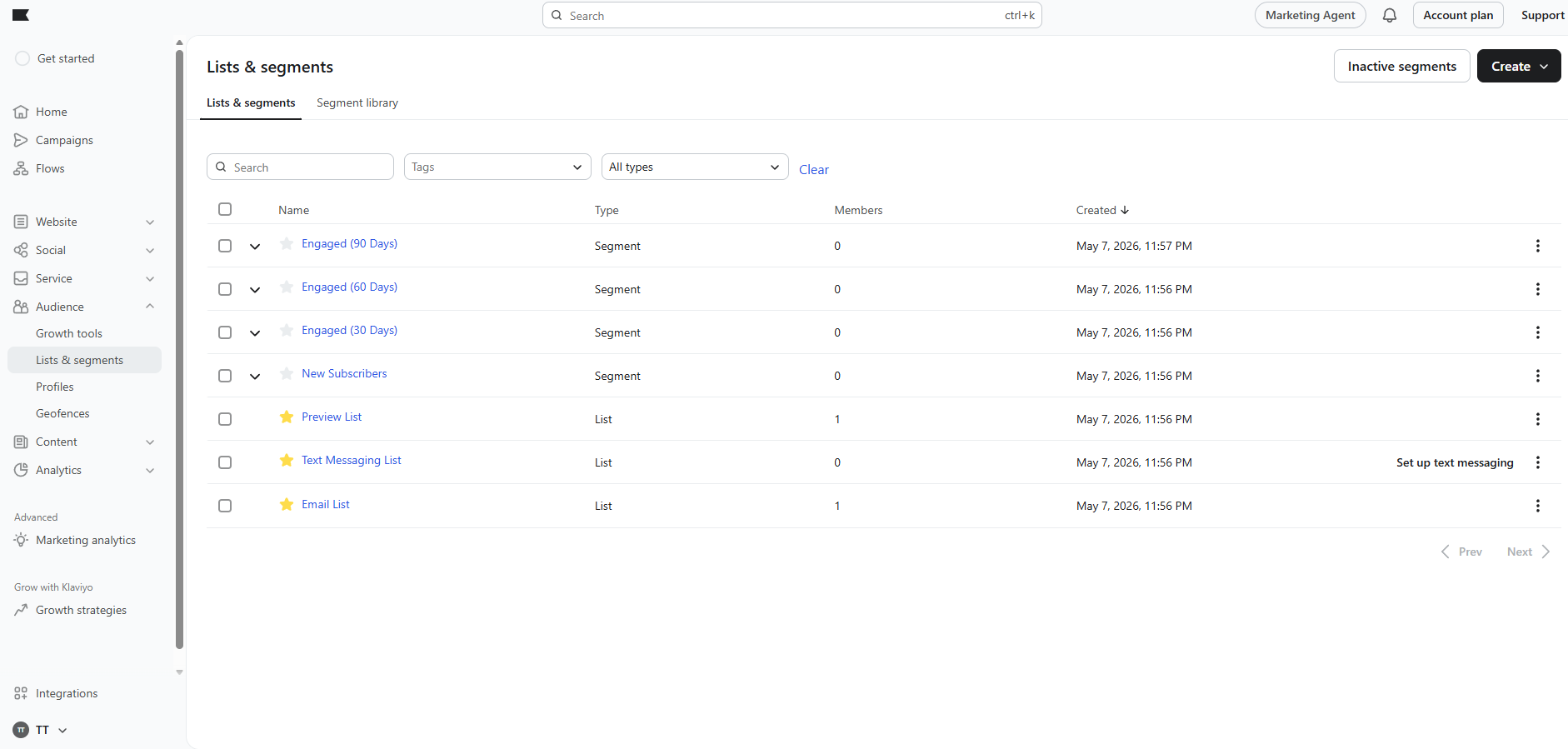
Klaviyo is built for teams that make decisions from data. Predictive segmentation lets you group customers by expected lifetime value, churn risk, and timing of their next purchase.
If you run a large store with recurring buyers, targeting them specifically will save you time and money, as you will not need to send broad messages while you focus on customers likely to buy again.
The Shopify integration is also deep, so customer and order data flow into segments without extra cleanup.
We also liked how list management works inside automation flows. Contacts can move in or out of audiences based on purchase behavior, engagement, or browsing activity, which keeps segments current without manual intervention.
It also makes Klaviyo a strong email list manager for stores that want to connect list behavior to revenue, not just opens and clicks.
What could be better
The biggest drawback is cost. Klaviyo can make sense at scale, but it does not feel forgiving once your contact count rises.
The platform also has a steeper learning curve than simpler Klaviyo alternatives like Omnisend or Mailchimp, so new customers usually need more time to get comfortable.
SMS availability is another limitation in some markets, which matters if you want one platform to handle both channels.
Bottom line
If you have 50K+ contacts and need predictive CLV segmentation, Klaviyo’s depth can justify the considerable cost.
In the Omnisend vs. Klaviyo email list management decision, Klaviyo wins on analytical depth. In contrast, we win on ease of setup and broader list hygiene for ecommerce teams seeking lower overhead.
Mailchimp — best for small businesses and beginners
Best for: Small businesses and solo operators with lists under 10,000 contacts who want a simple drag-and-drop interface and a generous free plan.
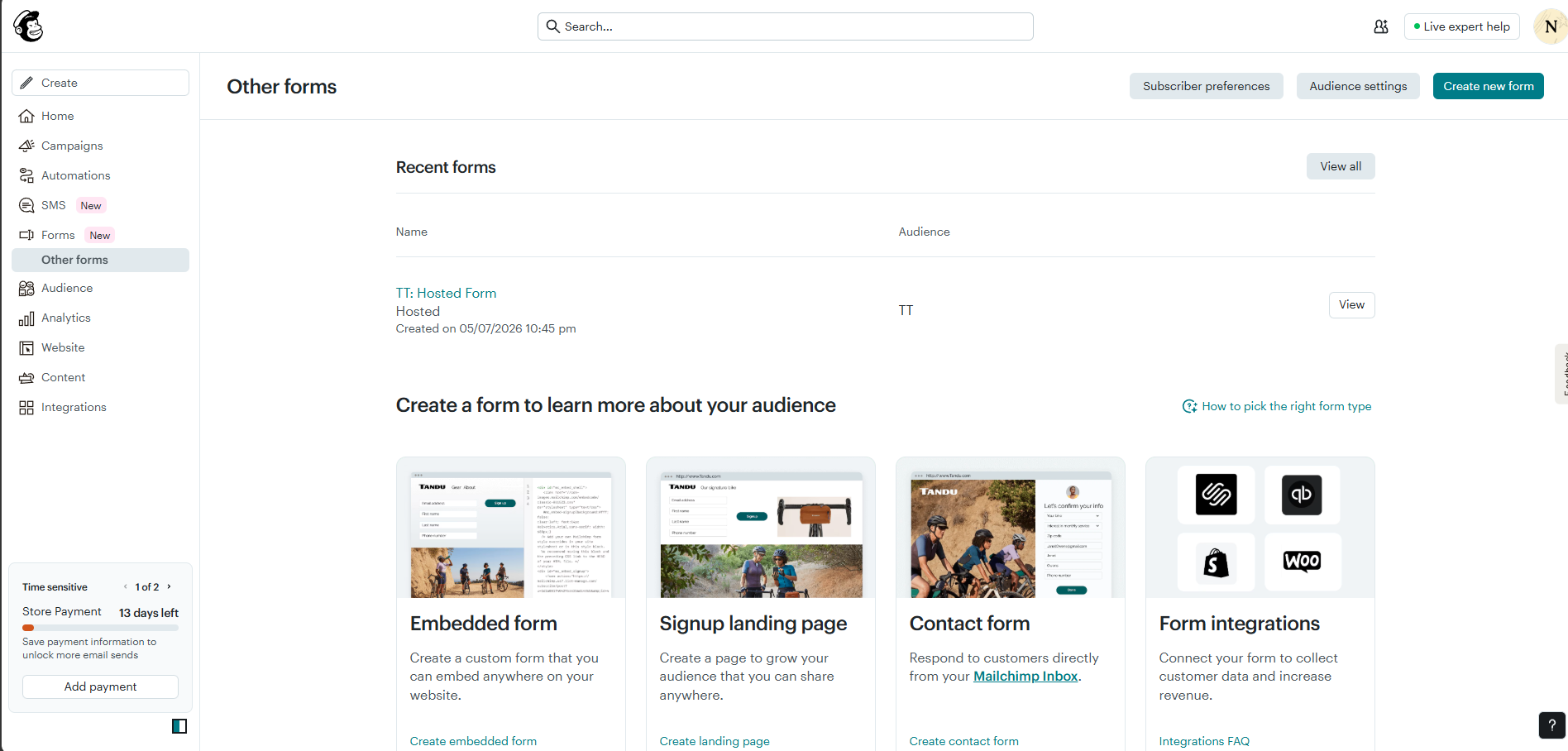
Mailchimp’s free plan includes up to 250 contacts and 500 sends per month, while Essentials starts at €9/month for up to 500 contacts and Standard starts at €14/month. That price ladder is easy to understand, but it also shows where the jump happens once you outgrow the basics.
What we liked
Mailchimp is quick to get started with. You can set up an account, upload your contacts, and send your first campaign without complicated setup, making it a solid option if you are just getting into email.
The drag-and-drop editor is simple to use, and the template library helps you create a professional-looking email without design experience. For small teams, that low friction is valuable because it prevents the project from becoming one no one wants to own.
If you just need to send newsletters, basic offers, and a few automated messages, the platform covers the essentials without making you learn a larger system on day one.
The free plan is enough to test your process and see what kind of content your audience responds to before you invest more.
What could be better
This tool’s email list management is less well-suited to ecommerce than Mailchimp alternatives designed for online stores. WooCommerce and similar integrations often require third-party connectors, which add setup and maintenance overhead.
Advanced segmentation is locked behind higher tiers, so you do not get full targeting power on the cheapest plans.
List hygiene is also more manual than automated, which means you have to pay closer attention to inactive contacts yourself.
Bottom line
The best choice if you are just starting and your priority is ease of use over ecommerce automation. Mailchimp is a practical entry point, but growing stores usually outgrow its list management limits once segmentation and hygiene become more important.
When you get into the debate of Omnisend vs. Mailchimp, the latter will triumph only for beginners who have not yet reached their true potential.
ActiveCampaign — best for advanced automation and B2B
Best for: B2B businesses and advanced email marketers who need CRM integration, complex conditional automation, and deep list tagging across multiple pipelines.
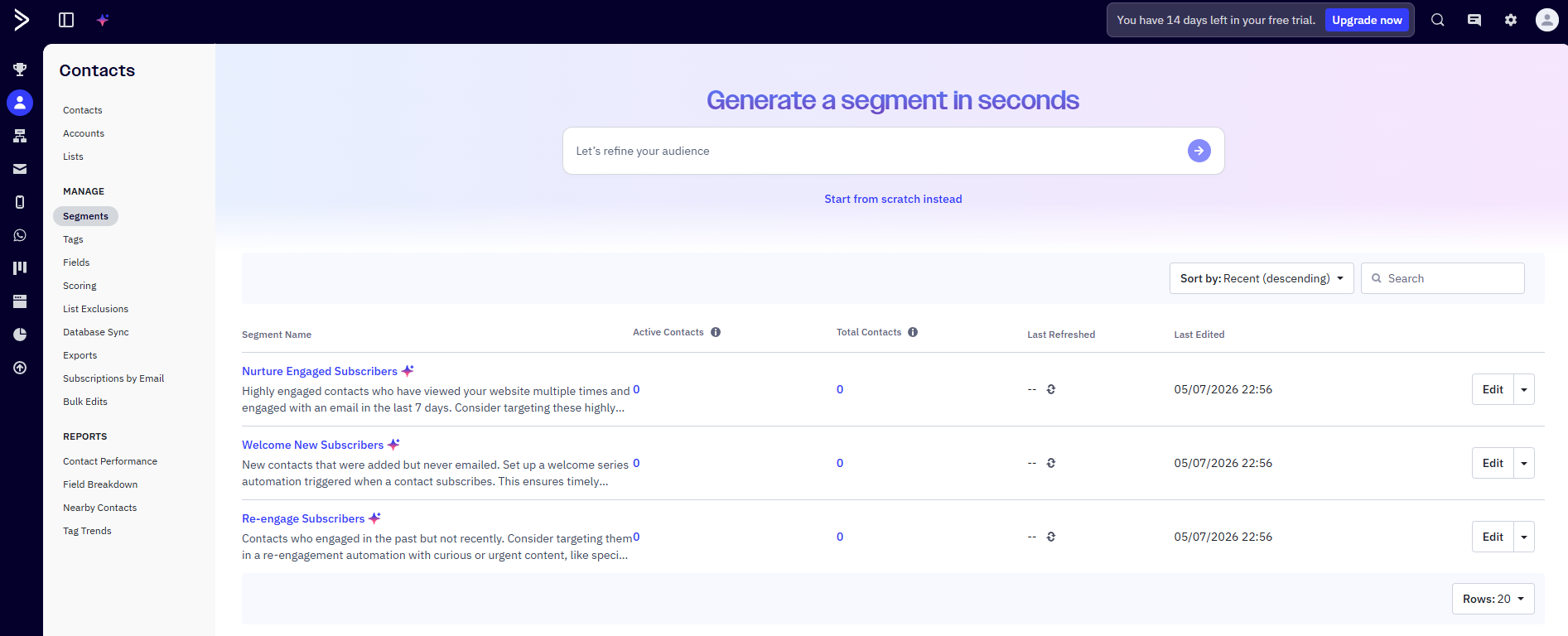
ActiveCampaign’s public pricing is quote-based, and its plans start from $15/month, offering Starter, Plus, Pro, and Enterprise tiers.
Starter includes basic ecommerce integrations for Shopify, WooCommerce, and Square, while higher tiers add advanced segmentation, predictive content, and deeper email automation. That makes it powerful, but also more demanding to set up than a store-focused tool.
What we liked
ActiveCampaign is built for contact management across a longer sales cycle. Its tagging system lets you track prospect status, intent, and engagement in a way that feels closer to a CRM than to a simple newsletter tool.
That is helpful when the same contact can move through several stages before buying.
The automation builder is also strong. Conditional logic, CRM triggers, and layered workflows let you create a detailed system for follow-up and re-engagement.
Teams that want a single email list manager connected to sales data will never stop appreciating this flexibility. You can build rules around form fills, page visits, score changes, and pipeline movement, then act on those signals without manual cleanup.
ActiveCampaign is also known for its solid deliverability, which matters when you send frequently and need the platform to do the heavy lifting well.
What could be better
ActiveCampaign is not optimized for ecommerce. The native Shopify and WooCommerce integrations are less central than they are in ecommerce-first ActiveCampaign alternatives, and the setup effort is higher.
That extra effort makes it a weaker fit for smaller stores that just need clean subscriber management and lifecycle segments.
SMS is also not a simple native answer in most markets, so cross-channel management is less convenient.
Bottom line
Choose ActiveCampaign if you are working with a B2B email program or need CRM-driven email list management. For ecommerce stores, when comparing Omnisend vs. ActiveCampaign, the setup complexity in the latter rarely justifies the cost.
ActiveCampaign email list management is powerful, but it is built for teams that are ready to work for it.
Brevo — best budget option for growing ecommerce stores
Best for: Budget-conscious ecommerce stores that want SMS + email list management without per-contact pricing.
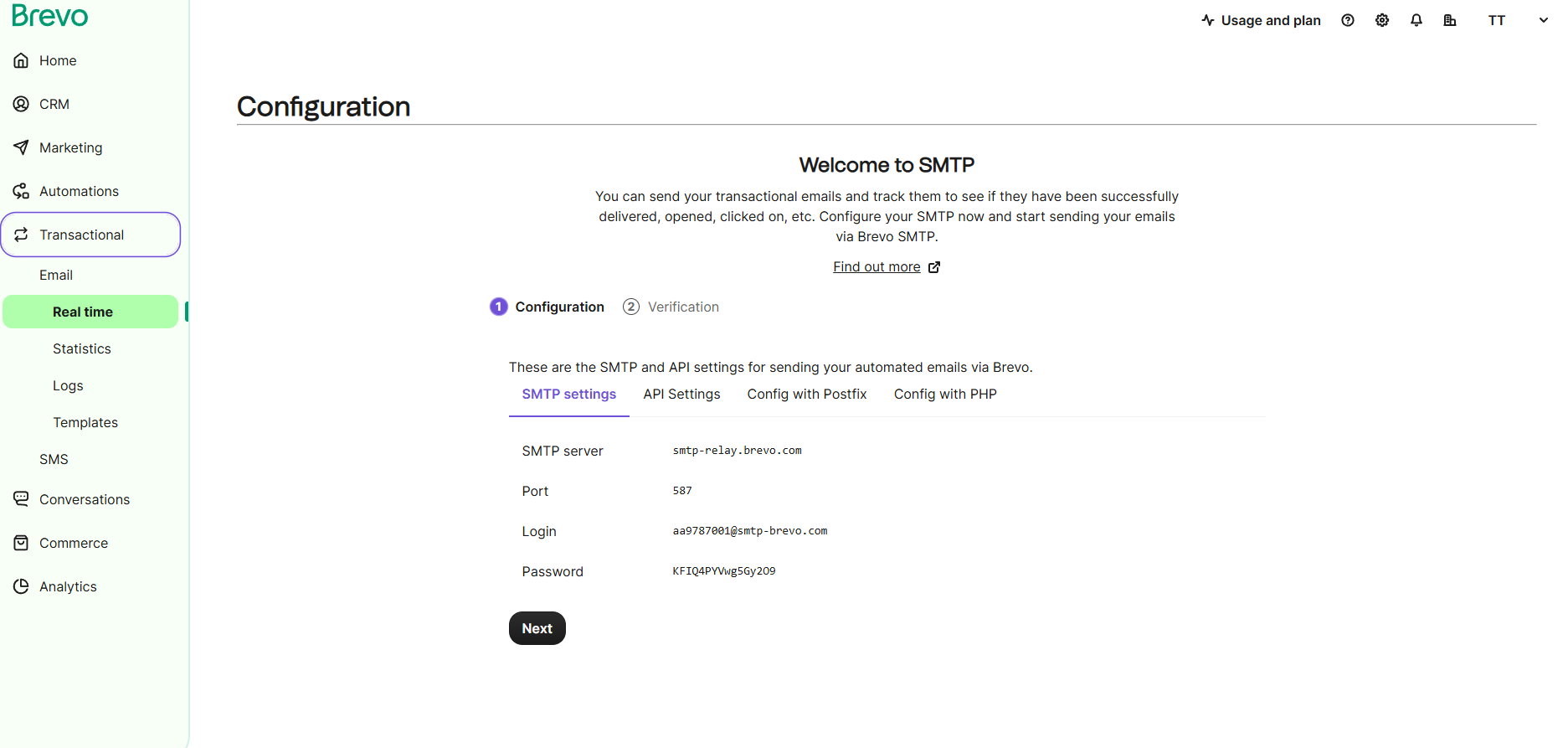
Brevo’s pricing is built around send volume, not just contact count. The Free plan is free forever, and once your account is approved for sending, you can send up to 300 emails per day. The Starter plan starts at €6.33/month and includes at least 5,000 monthly emails, making Brevo attractive for stores with a large list that do not send constantly.
What we liked
Brevo’s biggest strength is cost control. When you pay by send volume, you are not penalized simply for having a large list. That matters for ecommerce stores with many subscribers who only receive campaigns a few times a month.
The platform also includes SMS, so you can run basic email and text campaigns from the same place without adding a second platform.
We also liked that Brevo handles contact lists in a way that feels practical for growing teams. You can create audiences, trigger follow-up emails, and build segments without running into a lot of unnecessary setup.
For a budget email list manager, that is the right kind of simple. It gives you room to organize contacts without making the product feel stripped down.
What could be better
Brevo’s ecommerce segmentation is not as sophisticated as in Brevo alternatives like Omnisend or Klaviyo, so you will spend more time building your own logic.
Pre-built lifecycle segments are limited, so that you will need more setup work for repeat buyers, churn-risk audiences, or post-purchase flows.
The template editor is also less polished than Mailchimp’s, so the creative side may feel a little less refined.
Bottom line
Brevo is the best choice if cost predictability is your primary concern and you have a large list with moderate send frequency.
For stores that need deep ecommerce lifecycle segments, Omnisend is the better fit compared to Brevo.
Brevo email list management is strongest when your budget matters more than advanced customer modeling.
GetResponse — best for creators and hybrid ecommerce
Best for: Creators, course sellers, and ecommerce stores that also run webinars or lead generation campaigns.
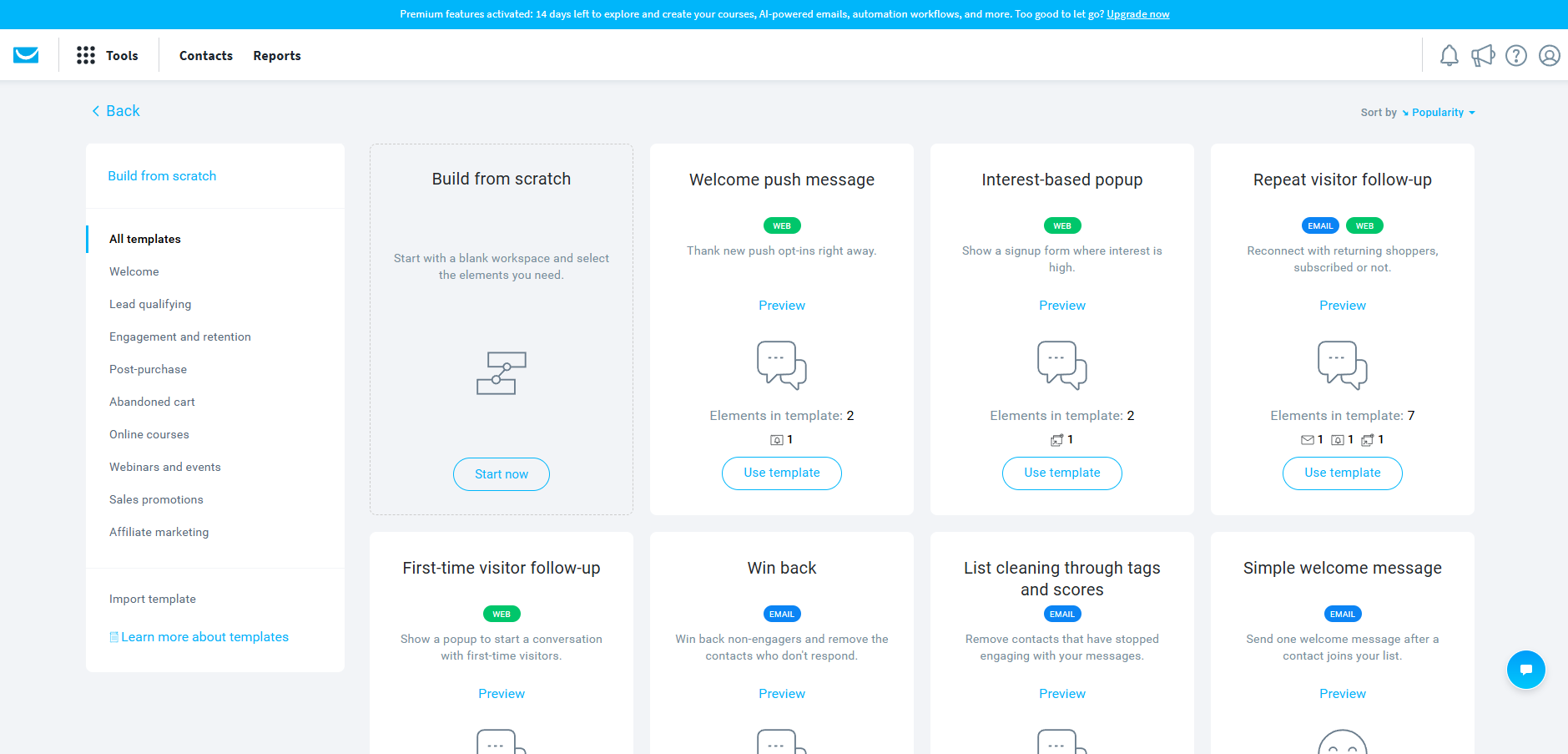
GetResponse pricing starts at €13.12/month on the public pricing page, and the Starter plan includes unlimited monthly sends, a landing page builder, signup forms, popups, and one custom automation workflow.
That gives it a wider marketing surface area than many list-first tools.
What we liked
GetResponse works well for businesses that use email for more than simple promos. The visual automation canvas makes it easier to see how contacts move through a journey, which is useful when building opt-ins, lead magnets, or webinar funnels.
The built-in landing pages and webinar tools also keep list growth connected to the same platform, so you do not have to bolt on separate systems just to capture leads and follow up.
We also liked the content creation side. The AI generator helps you move faster when you need to publish a campaign or set up a new workflow quickly.
What could be better
GetResponse does not go as deep on ecommerce data as GetResponse alternatives like Omnisend or Klaviyo. If you need extensive purchase-based segmentation, you will probably want a more store-specific tool.
Higher-tier plans are also where the more interesting features live, so that the entry-level plans can feel a bit narrow. The interface can get crowded if all you need is clean list management, not the full marketing suite.
Bottom line
GetResponse will serve you well if your business combines ecommerce with webinars, lead generation, or digital products. For pure store-first list management, Omnisend is the winner in the Omnisend vs. GetResponse race.
GetResponse email list management is most effective when list growth and content marketing are integrated into the same workflow.
Mailgun — best for developer-led email infrastructure
Best for: Development teams and technical senders who need API-first email list management with validation and suppression control.
Mailgun’s free plan includes 100 messages per day, and the Basic plan starts at $15/month.
The product is a strong technical tool but not a marketing platform, since it’s built around delivery infrastructure rather than marketing dashboards, and the docs emphasize validation, sending, and optimization over campaign design.
What we liked
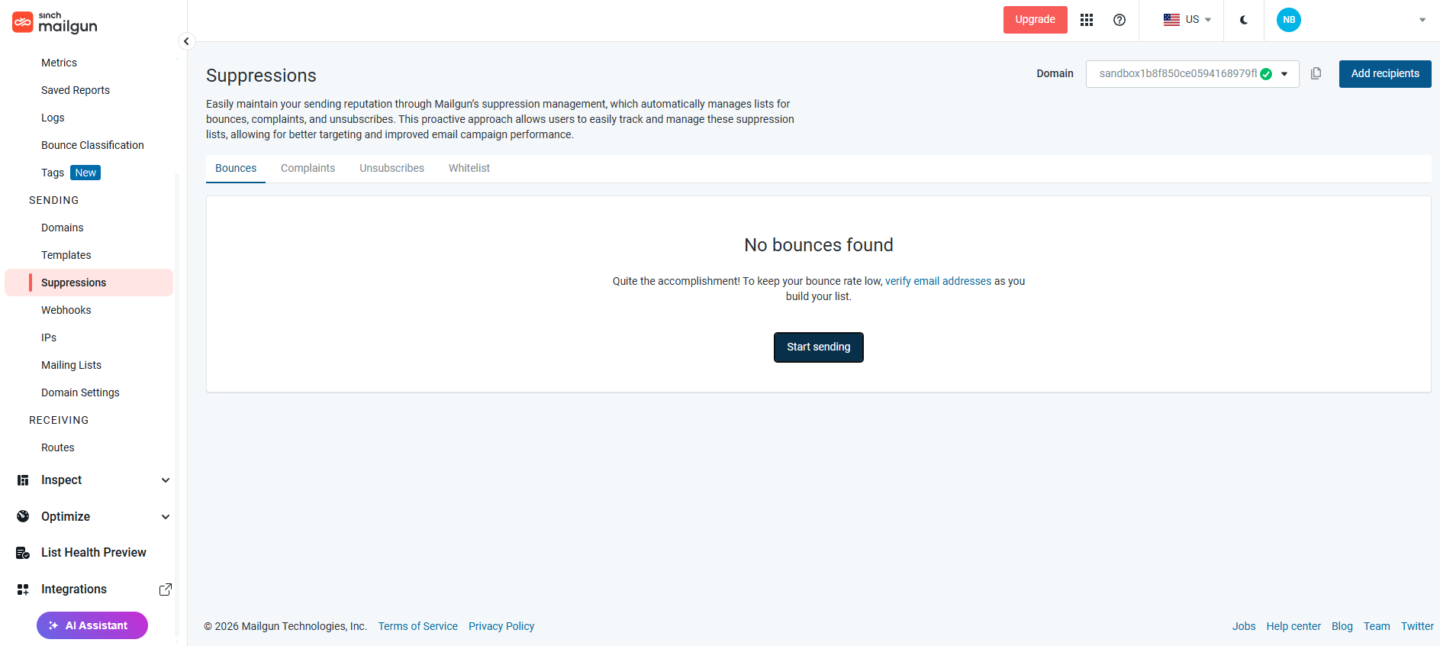
Mailgun is excellent at the parts of list management that happen before a campaign ever goes out. Its real-time validation API can catch typos, disposable addresses, and other invalid entries at signup, keeping your list cleaner from the start.
The suppression logic is also strong. Email bounces, unsubscribes, and spam complaints are managed at the system level, so bad addresses do not keep cycling back into your sends.
For teams building custom signup flows, that kind of control is exactly what they need.
We also liked the documentation. Technical teams get the kind of setup guidance that helps them build reliable workflows without having to guess how the system behaves.
If your team thinks in APIs rather than email templates, Mailgun is a solid email list manager for keeping infrastructure under control.
What could be better
Mailgun is not a marketing platform. There is no campaign builder for opt-in email marketing, no visual editor, and no ecommerce segmentation. The audience is developers, not marketers, which means a non-technical team will spend more time getting value from it.
It also lacks native ecommerce integrations, so it does not make sense as a direct replacement for an ecommerce marketing stack.
Bottom line
Mailgun is the right choice if you are building custom email infrastructure and need API-level control over validation and suppression.
For ecommerce marketing teams, Omnisend is a better fit because it combines list management with campaigns and lifecycle automation.
Drip — best for DTC ecommerce automation
Best for: Direct-to-consumer ecommerce brands that want deep behavioral segmentation and revenue-tracking built into list management.
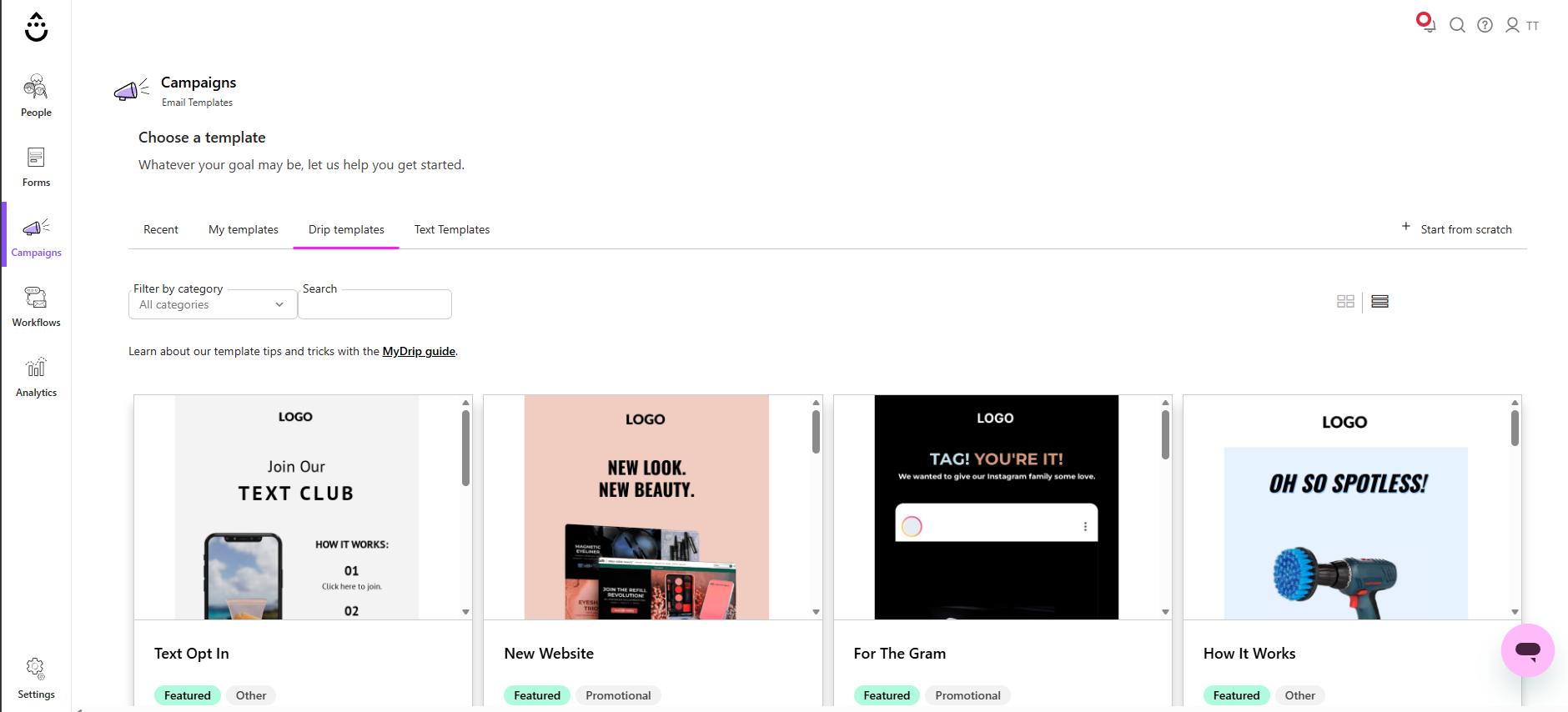
Drip starts at $39/month, with pricing based on active contacts and send volume rather than a flat fee. There is no permanent free plan, only a 14-day trial. That places it right in the serious-use category for stores that want a focused ecommerce platform for a considerable price.
What we liked
Drip is built for brands that care about revenue, not just engagement. Segment-level revenue attribution helps you see which audiences generate the most revenue, giving your email strategy a sharper business view.
If a post-purchase with winback emails segment consistently outperforms your broader newsletter audience, Drip makes that obvious. That is useful when you want the list to guide decisions rather than just store contacts.
The ecommerce integrations are also strong. Shopify, WooCommerce, and BigCommerce data flow into the platform to support behavior-based automation. It translates into abandoned cart, post-purchase, and winback workflows feeling more natural.
For DTC teams, Drip feels like a platform that understands how customers buy.
What could be better
When comparing Omnisend vs. Drip, the latter is more expensive at equivalent list sizes, which matters if you are watching every dollar. It also does not support native SMS, so you need an additional tool for cross-channel communication.
The ecosystem is smaller than Klaviyo’s, which means fewer third-party resources, fewer support communities, and fewer plug-and-play extras.
Bottom line
Choose Drip if revenue attribution per segment is your primary metric and you want a DTC-first platform. For stores that want SMS + email in one tool, Omnisend offers better value than Drip alternatives.
Drip email list management is excellent, but it works best when you are willing to pay for that focus.
Kit — best for creator-led ecommerce and digital products
Best for: Creators selling digital products, courses, or memberships who need simple list management with strong tag-based segmentation.
Kit’s Newsletter plan is free up to 10,000 subscribers. The Creator plan starts at $33/month for up to 1,000 subscribers, and the Pro plan starts at $66/month for the same subscriber range.
That free tier is generous for creators, but the platform is still built around creator commerce rather than product-based ecommerce, as you can see in our Kit review.
What we liked
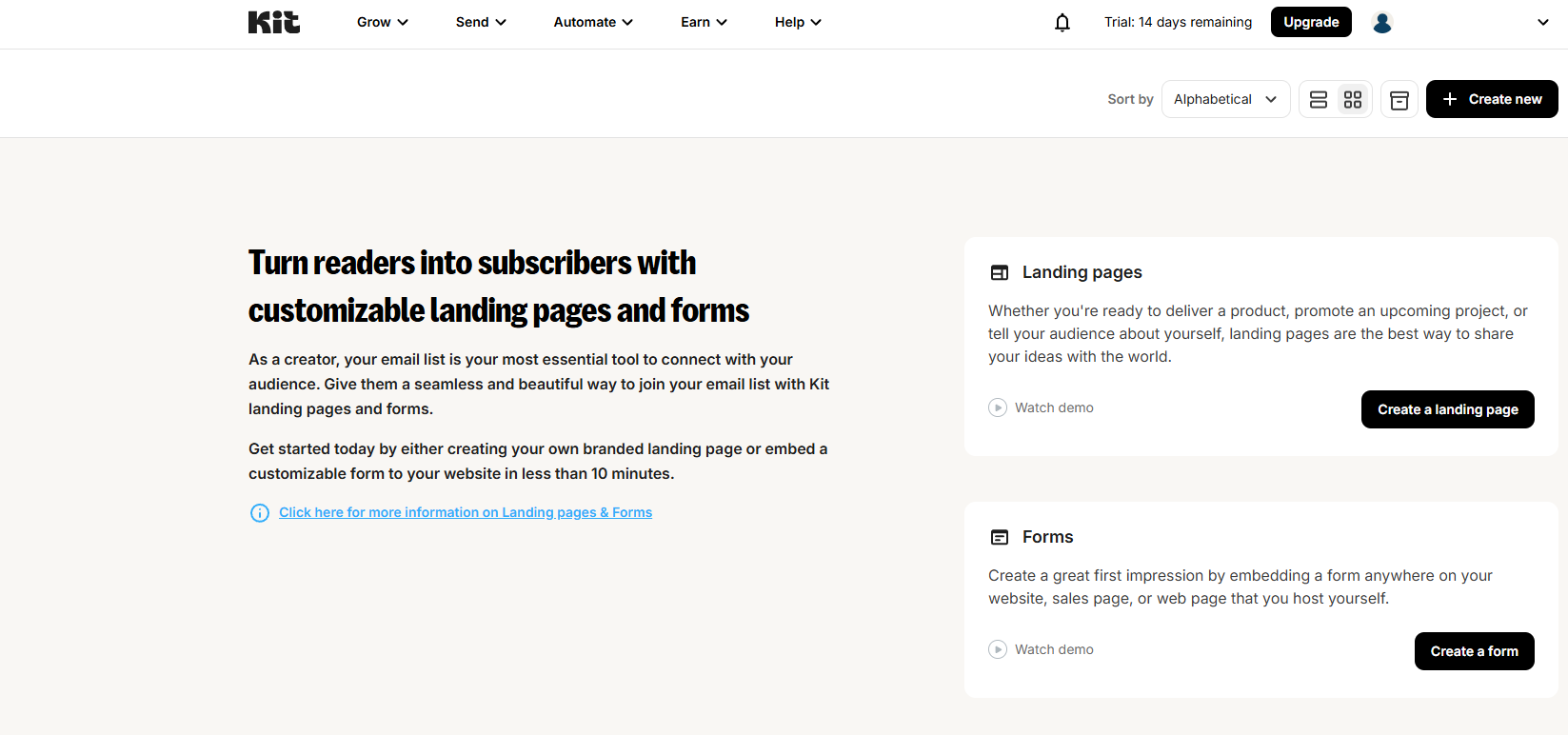
Kit keeps the contact organization simple. The tag-based system avoids the classic list-versus-audience mess, which makes it easier to understand who has signed up for what.
You can set up basic automations, landing pages, and forms without needing much technical support. For someone building a first digital product funnel, that is a good fit.
We also liked that Kit supports audience tagging, segmentation, and simple commerce features in a way that matches a content-first business.
If your list grows from blog posts, newsletters, or educational content, it is easy to see why the platform attracts creators. It behaves like an email list manager built for publishing, not for product catalogs.
What could be better
Kit is not built for physical product ecommerce. There is no native Shopify integration in the way ecommerce stores usually want it, and there is no SMS.
Reporting is also less developed than Omnisend or Klaviyo, which means you get less depth on performance and customer behavior. That is fine for creators, but less useful for stores that need campaign-level revenue data.
Bottom line
Choose Kit if you are a creator selling digital products with a content-first email strategy. For physical product ecommerce on Shopify or WooCommerce, Omnisend is the better fit. Kit’s email list management is very clean, but it is intentionally narrower than a store-first platform.
If you compare, say, Kit vs. Mailchimp, the latter is a more budget-friendly alternative for small businesses with a simple contact organization.
HubSpot — best for ecommerce businesses with CRM needs
Best for: Ecommerce businesses already using HubSpot CRM that want to manage their email list within the same platform.
HubSpot’s free tools are limited, and meaningful list management features live in Marketing Hub Starter, which starts at €9/month per seat on the current pricing page. The wider Starter Customer Platform is priced separately.
In practice, that means HubSpot works best when you are already inside its ecosystem and want your contacts, sales data, and marketing in one place.
What we liked
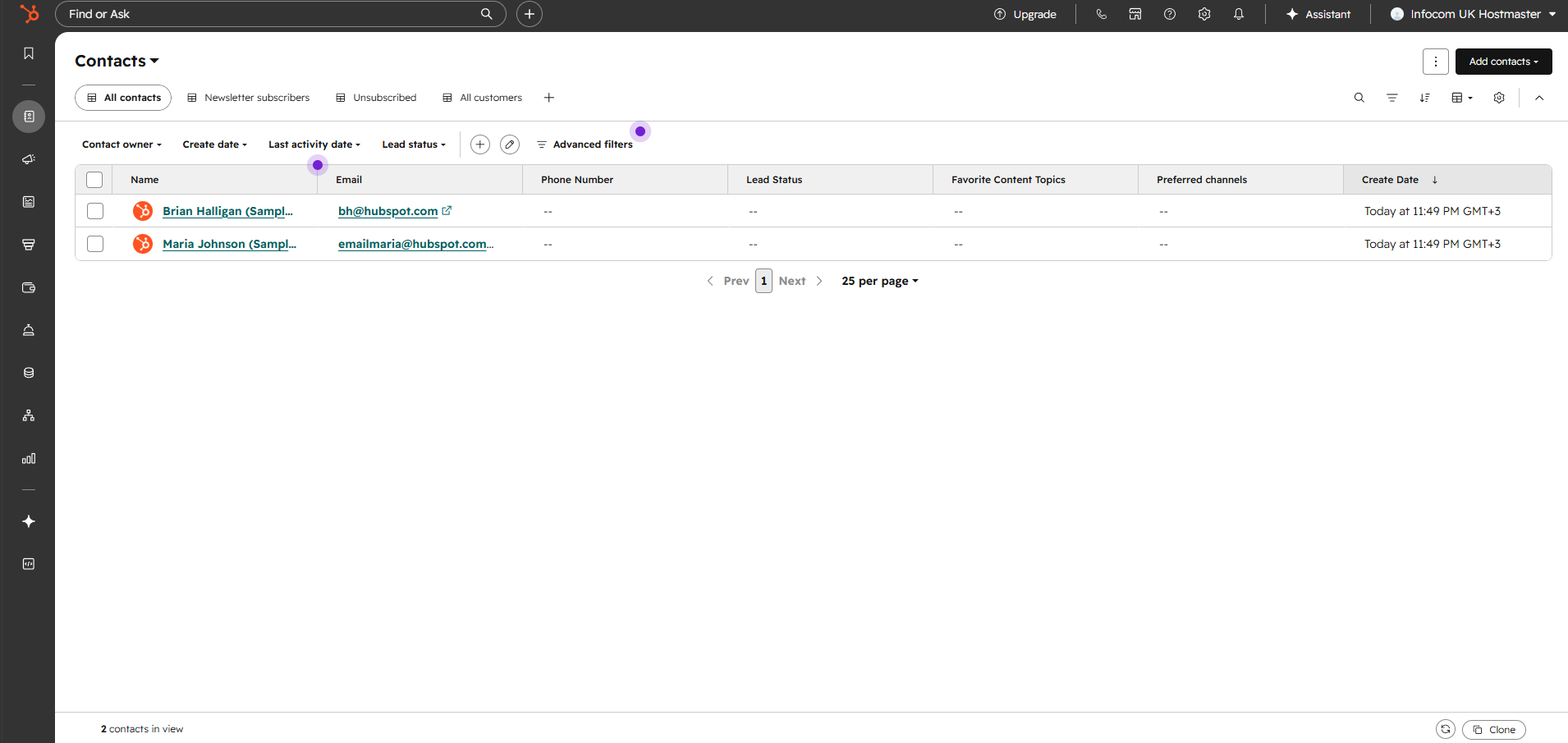
HubSpot is strong at keeping contact data connected to the rest of the business to make the best email marketing strategy. Smart CRM records, dynamic lists, and reporting all reside in the same system, making it easier to see how a contact moves from first touch to sale.
We also liked how flexible the dynamic lists are once they’re set up. Contacts update automatically as their CRM properties change, so you do not have to rebuild audiences every time someone moves stage.
That’s why HubSpot email contact management makes sense for teams that want more than a standard marketing platform.
What could be better
HubSpot is expensive for pure email use cases. Even when the free tools are enough for basic setup, the features most ecommerce teams want sit behind paid plans.
It’s also not ecommerce-first, so native Shopify and WooCommerce use usually needs more setup than Omnisend. The full platform has a real learning curve, and that can slow down teams who just want to manage and segment a list cleanly.
Bottom line
Choose HubSpot if you are already invested in the HubSpot CRM ecosystem with customer lifecycle segmentation. For ecommerce stores starting fresh, Omnisend gives you much better ecommerce integration with less setup friction.
HubSpot email list management is strong, but it is strongest when CRM already drives the workflow.
How to choose the right email list management software
Choosing the best email list management software for your ecommerce store depends on three things: your platform, your list size, and whether you need SMS alongside email.
Those three factors decide whether you should lean toward a store-first platform like Omnisend, a data-heavy tool like Klaviyo, or a broader system like HubSpot. The comparison below also shows why Omnisend is the default recommendation for most ecommerce stores.
| Tool | Ecommerce integration | Auto list hygiene | Pre-built ecom segments | SMS | Free plan | Starting price | Best for |
|---|---|---|---|---|---|---|---|
| Omnisend | ✅ | ✅ | ✅ | ✅ | ✅ | $11.20/month | Ecommerce |
| Klaviyo | ✅ | ⚠️ | ✅ | ⚠️ | ✅⚠️ | $20/month | Data-driven |
| Mailchimp | ⚠️ | ⚠️ | ❌ | ⚠️ | ✅ | €9/month | Beginners |
| ActiveCampaign | ⚠️ | ⚠️ | ❌ | ⚠️ | ❌ | $15/month | B2B |
| Brevo | ⚠️ | ⚠️ | ⚠️ | ✅ | ✅ | €6.33/month | Creators |
| GetResponse | ⚠️ | ⚠️ | ❌ | ⚠️ | ⚠️ | €13.12/month | Creators |
| Mailgun | ❌ | ✅ | ❌ | ❌ | ✅ | $15/month | Developers |
| Drip | ✅ | ⚠️ | ✅ | ❌ | ❌ | $39/month | DTC |
| ConvertKit | ❌ | ⚠️ | ❌ | ❌ | ✅ | $33/month | Creators |
| HubSpot | ⚠️ | ⚠️ | ❌ | ❌ | ✅ | €9/month | CRMD |
The table above uses auto list hygiene as the practical approach to email contact management, which keeps your list clean as it grows. Pricing, free-plan availability, and feature sets come from the providers’ current public pages.
Key features to look for
Ecommerce platform integration matters because your store data should flow automatically into the email platform. If you have to patch together connectors, your segments will age fast.
Automated bounce suppression is also essential, as bad addresses hurt deliverability and cause wasted sends. A strong platform removes the work from your plate.
Pre-built lifecycle segments are significant because they save time and provide a better starting point for welcome, retention, and winback campaigns in your lifecycle email marketing.
List cleaning automation matters because no growing store should have to clean contacts one by one. It keeps your audience healthier and your numbers more reliable. Email list cleaning is not busywork when it protects revenue.
SMS + email on one platform keeps the customer picture in one place and reduces handoff errors.
The pricing model matters because per-contact and per-send pricing behave very differently as your audience grows. If you expect a large list with moderate sends, send-based pricing can stay cheaper longer.
Email marketing automation and customer lifecycle segmentation also matter once you start building around behavior instead of static lists.
“Great list management should take friction out of email marketing operations. Reducing repetitive tasks. If list management still depends on spreadsheets, manual imports, and ETL, too many of the tasks still come down to your team. Zero touch, is what you should aim for. You want the tool to do as much of the “behind-the-scenes” of list management as possible.”
– Jordie van Rijn, email marketing and MarTech selection specialist
Who should pick which tool?
Your final decisions depend on your budget and needs, and how trustworthy each of the alternatives seems to you.
We picked the main reason why you should pick one or the other as the best email management software, and if that reason aligns with your needs and goals, you might have your winner here:
- Choose Omnisend if you are on Shopify or WooCommerce and want a lifecycle segmentation
- Choose Klaviyo if revenue modeling and predictive analytics are more important to you than ease of use
- Choose Mailchimp if a simple starting point is your main need at the moment
- Choose ActiveCampaign if your list is tied to CRM pipelines
- Choose Brevo if cost predictability matters more than deep email list segmentation
- Choose GetResponse if webinars and lead capture are part of your plan
- Choose Mailgun as the main supporter if you are building custom infrastructure
- Choose Drip if you want DTC revenue attribution
- Choose Kit if you sell digital products
- Choose HubSpot if your CRM already lives there
Remember that each tool offers its own benefits, but you might not get any use out of it if your vision is better suited to other alternatives. Be mindful before opting for the cheapest or the most promising tool without first looking into your goals.
FAQ
What is the best email list management software for ecommerce?
Omnisend is the best email list management software for ecommerce because it combines segmentation, automation, list cleaning, and SMS in a single platform built specifically for online stores. That keeps the workflow simple and removes the need to juggle separate tools.
What is the best free email list management software?
Omnisend, Klaviyo, Mailchimp, Brevo, GetResponse, Mailgun, Kit, and HubSpot are all considered among the best email marketing software tools and offer free access in some form.
Omnisend includes 500 emails/month; Klaviyo includes 250 profiles and 500 sends/month; Mailchimp includes 250 contacts and 500 sends/month; Brevo offers 300 emails/day; Kit supports up to 10,000 subscribers; and Mailgun includes 100 messages/day.
How do I manage my email list for ecommerce?
Use a tool that connects directly to your store and automates segmentation and cleaning. Omnisend provides a one-click Shopify integration and keeps your list updated automatically, making day-to-day management and Shopify email marketing much easier.
What features should I look for in email list management software?
Look for ecommerce integration, automated cleaning, segmentation, bounce suppression, SMS support, and clear pricing. Those are the features that directly affect performance, deliverability, and the amount of manual work you have to do.
What is the difference between email list management and email marketing software?
Email list management focuses on collecting, organizing, and maintaining contacts. Email marketing covers campaigns, automation, and reporting. In practice, the best tools do both well, but list management is the part that keeps the rest of the system healthy after you already know how to build an email list.
How often should I clean my email list?
You should clean your email list at least every 90 days to remove inactive contacts and maintain deliverability. If you send often or run heavy promotions, a tighter cleaning rhythm can help.
Is Omnisend good for email list management?
Yes, we built Omnisend specifically for ecommerce list management. It handles segmentation, cleaning, and SMS in one place, which keeps the workflow simple for busy stores. The main limitation is the 500 emails/month cap on the free plan.